
How AI intersects with crypto: from autonomous agents with on-chain wallets to AI-powered security audits, decentralized compute, and machine-to-machine payments—what's real, what's hype, and what to watch.
+105 sources across the wider coverage universe
 FBI reports Americans lost $11.4B to crypto fraud in 2025, up 22%, as AI-powered scams hit $893M2026-04
 Intel partners with Elon Musk's SpaceX, xAI, and Tesla on Terafab to scale chip production toward 1TW/year of compute, targeting massive AI and robotics acceleration2026-04
 Visa launches Intelligent Commerce Connect for AI agent payments, Sei-based Sumvin among pilot partners2026-04
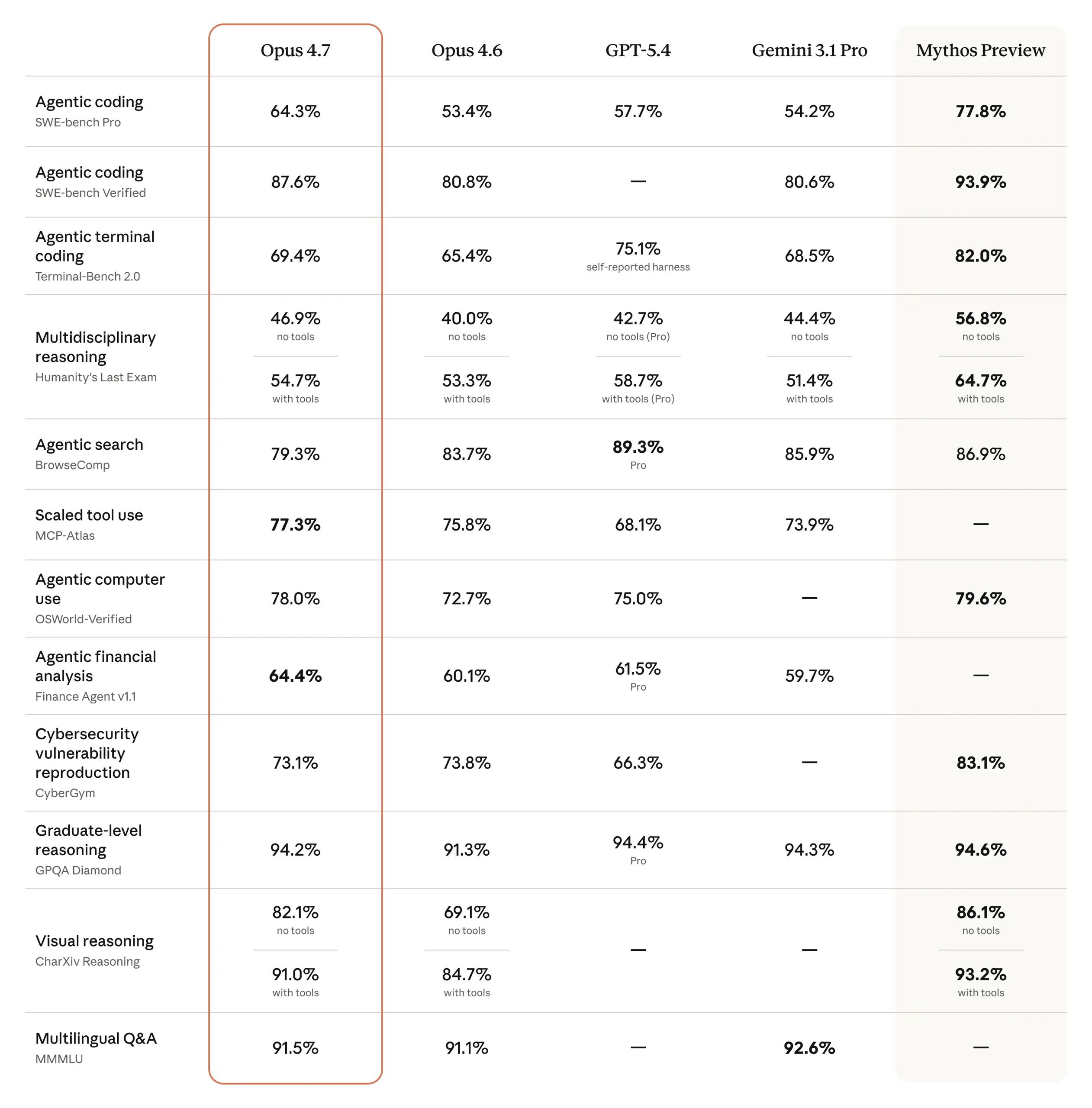 Anthropic ships Opus 4.7 with 3x coding gains and tripled image resolution, holding pricing steady2026-04
 Benthic agent ships first major update just one day after open-source debut, merging 3 Opus calls into 1 and routing trades via API2026-04
 Biconomy proposes ERC-8211 standard enabling AI agents to chain multi-step DeFi trades in one transaction2026-04
Artificial intelligence, in the context of crypto and Web3, refers to the integration of machine learning systems—ranging from large language models to autonomous software agents—into blockchain infrastructure, financial markets, and decentralized protocols.
The convergence of AI and crypto is not a single trend but a cluster of overlapping developments: AI agents that hold wallets and execute transactions, ML-powered security tools auditing smart contracts, and speculative market concentration in AI-adjacent tokens. Understanding each layer separately matters before drawing conclusions about the whole.
What AI Actually Means in a Crypto Context
"AI" gets applied loosely across crypto to mean anything from a simple recommendation algorithm to a fully autonomous agent managing a DeFi portfolio without human intervention. The practical spectrum runs roughly as follows:
Narrow automation covers bots that have existed in crypto for years—arbitrage scripts, market makers, liquidation bots. These are rule-based and not AI in any meaningful modern sense, though the label gets applied retroactively.
LLM-assisted tooling is the current dominant category. Developers use large language models to generate and audit Solidity code, summarize governance proposals, or power chatbot interfaces on protocol front-ends. Coinbase, among others, has embedded AI into its consumer products to explain transaction history and flag unusual activity.
Autonomous AI agents are the frontier category receiving the most investment and the most hype. These are software systems that can perceive inputs, form goals, select actions, and execute them—including on-chain actions like swapping tokens, signing transactions, or interacting with smart contracts—without requiring a human to approve each step.

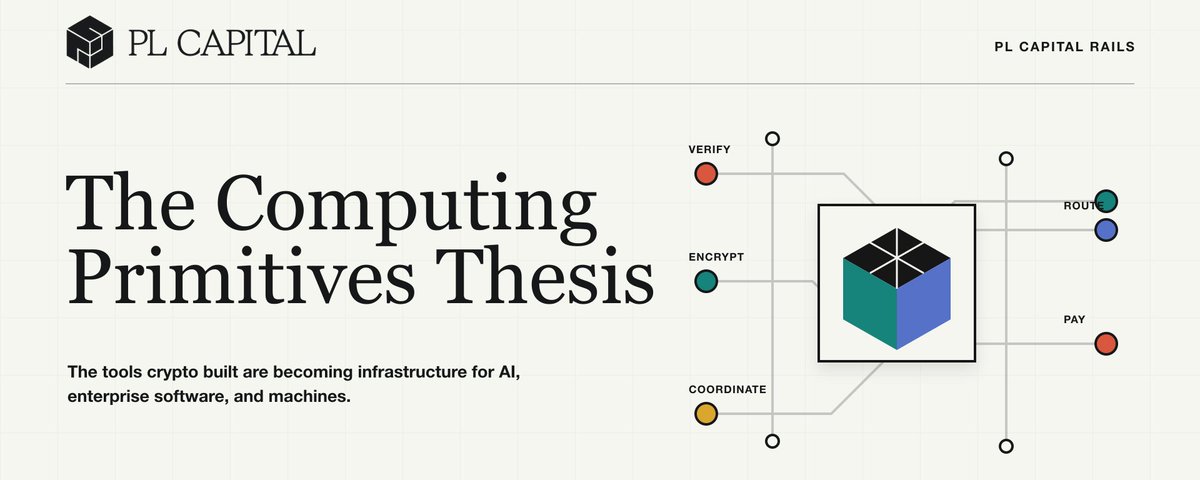
PL Capital backs crypto primitives as core infrastructure for AI and machine payments
The AI Agent Economy: Ambition and Architecture
The concept of AI agents as economic participants is the structural bet underlying most crypto-AI projects in 2026. The thesis is straightforward: if an agent can hold an Ethereum address, pay gas, and interact with any smart contract, it becomes a first-class economic actor on a permissionless network.
Several infrastructure layers are emerging to support this:
On-chain identity for agents. Injective's ERC-8004 standard assigns autonomous agents a portable, verifiable on-chain identity—a kind of passport with a reputation record built from completed actions. Trading fees route automatically back to the agent's address. The design attempts to solve a real problem: without verifiable provenance, there is no way for other parties to assess whether an agent has a track record of reliable behavior.
Compute infrastructure. Running large models—particularly the 70B+ parameter models capable of meaningful reasoning—is expensive and latency-sensitive. c0mpute's Shard system claims to distribute inference across decentralized GPUs fast enough to run 744B-parameter models at usable speeds. Whether decentralized compute can consistently match centralized cloud providers on latency remains an open empirical question, but the architectural argument is that crypto-native compute marketplaces could undercut AWS pricing while avoiding centralized points of control.
Wallet security for agents. An agent that autonomously transacts needs signing keys, and signing keys are a liability. If the agent misbehaves, gets compromised, or misinterprets instructions, it can drain a wallet before a human can intervene. The Seal MPC approach—shifting final signing authority outside the agent itself to a multi-party computation threshold—is one architectural response. Google DeepMind's published AI Control Roadmap for autonomous agents reaches a similar diagnosis: most problems in deployed agents come from misinterpretation or overeagerness, not from malicious design. The implication for crypto is that agent wallets need permission scoping, spending limits, and auditable action logs.
Payments integration. Travala's Base-powered travel protocol now processes bookings via AI agents, with over 2.2 million hotels accessible. The agent books, the protocol settles in crypto, and ERC-7715 handles the final signing authority so the agent cannot unilaterally drain funds. Billions, a payments-focused project, has explicitly reoriented its roadmap around AI agent payments, arguing that the agentic economy requires micropayment rails that card networks and bank transfers cannot serve efficiently. Crypto's programmable settlement layer is the natural substrate for machine-to-machine payments.
Readers click AI/crypto stories from two contradictory impulses simultaneously — speculative excitement about AI memecoins and agentic infrastructure, and genuine fear that AI is the most potent new attack surface against their own wallets — revealing that 'AI in crypto' is less a thesis than a live threat environment readers are trying to navigate in real time.
AI in Crypto Security: Both Sides of the Ledger
AI is reshaping the threat model for smart contracts simultaneously from offense and defense. The net effect is not straightforwardly positive.
On the defensive side, AI-powered audit tools are making smart contract review faster and cheaper. Automated static analysis catches common vulnerability patterns—reentrancy, integer overflow, unchecked return values—in seconds rather than hours. This has lowered the cost of a baseline audit, raising the floor for projects that previously shipped unaudited code. Some tools now offer continuous monitoring that flags anomalous on-chain behavior that could indicate an exploit in progress.
On the offensive side, the same capability improvements apply to attackers. Generating novel exploit patterns, fuzzing contract logic at scale, and automating the search for profitable MEV opportunities all benefit from the same underlying models. Security researchers have documented cases where LLMs can identify vulnerabilities that rule-based scanners miss.
The systemic concern is concentration: if most projects use the same two or three AI audit providers, a shared blind spot becomes a shared vulnerability across the ecosystem.

Tempo launches Mercator, a search engine for paid tools that boosts small AI models

Market Concentration and the AI Trade
Ray Dalio's observation that public markets are "highly concentrated in a small group of large AI-related companies" applies with amplification to crypto markets. A handful of AI-narrative tokens—projects that attach "agent" or "AI" to their branding—have captured a disproportionate share of speculative flows.
The pattern is familiar from prior crypto cycles: a genuine technological development attracts both legitimate builders and opportunistic token launches. The signal-to-noise ratio in "AI crypto" is low. Building an AI product in 2026 follows a recognizable template: add "agent" to the description, raise capital, then work backward toward a product. The tokens that survive the subsequent consolidation tend to be those attached to actual infrastructure with measurable usage—compute transactions, agent interactions, protocol fees.
Dalio's warning about -5% to -10% real returns in concentrated U.S. equities over a 5–10 year horizon reflects a concern that applies equally to crypto: when a single narrative accounts for a large share of market capitalization, the downside of narrative revision is severe. Diversification within the AI-crypto category means distinguishing compute infrastructure (durable if the underlying economics work) from pure-play agent tokens (more speculative) from established chains adding AI features (lower upside, lower downside).
- 01AI memecoin speculation surge
A $10B+ market cap milestone made the froth tangible and quantifiable, triggering FOMO clicks from readers sizing the trade.
- 02Agentic AI infrastructure buildout
Persistent-memory, multi-agent, self-improving systems like Hermes Agent and MemPalace signal a shift from chatbots to autonomous operators — readers tracking whether this tech is real or hype.
- 03AI as exploit and attack vector
Nation-state generative AI cyberattacks, AI-crafted wallet drainers, and rogue-agent hacks show readers that AI lowers the cost of sophisticated attacks, making every holder a potential target.
- 04Onchain AI oracle integration
ORA on Ethereum and the Polymarket-Perplexity deal represent real protocol-layer bets on AI truth-feeds, and readers clicked to understand whether decentralized AI inference is actually arriving.
- 05Corporate crypto-AI capital pivots
Tether, Bitdeer, and Coinbase all making loud AI infrastructure moves prompted clicks from readers trying to track where the serious treasury money is flowing inside the industry.
- 06AI fraud and fake DeFi projects
An AI-generated project faking arbitrage profits with Math.random() and overhyped 'AI hedge funds' run by humans crystallized reader anxiety that AI is being weaponized as a credibility costume for scams.
The Labor and Ethics Dimension
The "Liquid Machine Labor" thesis—that AI, robotics, and crypto could together dissolve traditional employment structures, replacing firms with open protocols that coordinate machine work—is a genuine analytical framework, not just boosterism. If agents can perform knowledge work tasks and settle payment in programmable money, the economic unit of production shifts from the firm with employees to the protocol with agents.
The counterargument, articulated in recent criticism of AI development practices, is that current AI systems depend heavily on human labor that is rendered invisible: data labeling, content moderation, reinforcement learning from human feedback. The concern about "digital colonialism" is that this labor is often outsourced to lower-wage markets while the economic upside concentrates among model owners. Crypto's ability to redistribute value via tokens does not automatically fix this; it depends entirely on how the tokens are allocated and whether the people doing the underlying work hold any.
Biometric data collection adds another layer. Anthropic's July 2026 policy update reserving the right to request government-issued ID and facial biometric data from paid users illustrates how identity verification requirements can create surveillance infrastructure even in contexts that began as privacy-preserving. Projects building AI that explicitly avoids this approach—keeping user data off-platform—have a genuine differentiator, though it comes with its own capability tradeoffs.
0G Labs launches Compute Finance, letting staked digital assets pay for AI compute via Ascend and iAI

Ethereum as AI Settlement Layer
The most ambitious framing of crypto's relationship to AI positions Ethereum not as a payment network but as a global settlement layer for AI-generated economic activity. The argument is that AI systems will need neutral, programmable infrastructure for identity verification, asset custody, and coordination—and that a decentralized settlement layer is preferable to any single company's API.
This is not guaranteed. Ethereum faces competition from purpose-built chains (Sui is targeting 300,000 transactions per second with explicit emphasis on AI agent workloads) and from non-blockchain infrastructure that could serve the same functions with lower latency and cost. The thesis depends on trust assumptions: whether AI agents and their users will prefer decentralized settlement because it is verifiable and censorship-resistant, or whether they will prefer centralized infrastructure because it is faster and cheaper to build on.
The identity layer argument is stronger. AI agents operating across multiple platforms need portable, verifiable credentials that no single platform controls. Blockchain-anchored identity—ERC-8004 for agents, existing decentralized identity standards for humans—provides that without requiring trust in a central registry.
- 2023-06milestone
Global VC funding falls 48% in H1 2023 despite AI hype narrative
- 2024-12launch
Worldcoin rebrands to World Network; launches 5G iris-scanning Orb device
- 2025-01milestone
DeepSeek R1 released; triggers BTC -6%, Nvidia -8.5% single-day rout
- 2025-01milestone
Sam Altman publicly praises DeepSeek R1 while vowing OpenAI superiority
- 2025-02regulatory
Microsoft publishes threat intelligence: four nation-states deploying generative AI in offensive cyberattacks
- 2025-03exploit
0xngmi exposes AI-generated DeFi project faking arbitrage profits with Math.random()
- 2025-04launch
ORA launches onchain AI oracle infrastructure on Ethereum mainnet
- 2025-05milestone
AI memecoin sector aggregate market cap surpasses $10B per CoinGecko
What to Watch
Several near-term developments will determine which parts of the AI-crypto stack mature into durable infrastructure:
- Agent wallet security. The current generation of agent wallets has known vulnerabilities. MPC-based signing, spending limits enforced at the contract level, and auditable action logs are necessary before agents managing meaningful sums of money will be acceptable to institutional users.
- Decentralized compute economics. The price differential between decentralized GPU networks and cloud providers will determine whether the decentralized compute thesis holds. Sustained below-cloud pricing with comparable uptime would unlock genuine demand.
- Regulatory treatment of autonomous agents. An AI agent that executes financial transactions raises questions about liability, AML compliance, and securities law that remain unresolved. How regulators treat agent wallets—as extensions of their operators, or as novel entities requiring new frameworks—will shape what agents can legally do.
- AI in crypto security (asymmetric risk). If offensive AI tools improve faster than defensive ones, the smart contract security environment could deteriorate despite increased automation of audits. The baseline for due diligence is rising, but so is the sophistication of attacks.
Outlook
AI and crypto are interoperating at every layer—compute, identity, payments, security, and market structure—faster than either ecosystem's governance mechanisms can assess. The durable value likely sits in infrastructure that solves real coordination problems: agent identity standards, programmable payment rails for machine-to-machine transactions, and security tooling with measurable accuracy. The speculative froth—tokens whose only claim is adjacency to AI narrative—will consolidate as it has in every prior cycle. The more consequential question is whether decentralized infrastructure can win the trust of AI developers before centralized cloud providers make the decision by default.
Latest AI news
PL Capital backs crypto primitives as core infrastructure for AI and machine paymentsTempo launches Mercator, a search engine for paid tools that boosts small AI models0G Labs launches Compute Finance, letting staked digital assets pay for AI compute via Ascend and iAI Architect partners with Apex Fintech to offer compute and AI derivatives to 42M+ brokerage customers
 Researcher outlines a $5T AI roll-up opportunity, arguing agents could transform small businesses by automating workflows and expanding EBITDA margins
 Binance Wallet launches 15-minute stock up/down prediction markets for major tech and AI stocks
Community notes
Spot something off or out of date? Drop a note. Editors review topic notes daily and roll accepted fixes into the explainer — contributors are recognized in the monthly $SQUID drop.
Loading notes…
Help improve this topic
Have a story or tip about this topic? Submit it. See something missing? Leave a note. Editors review daily; accepted submissions and fixes count toward the monthly $SQUID drop.