
Leadership in crypto — from Ethereum Foundation restructuring to Binance's executive shifts and SEC policy pivots — shapes protocol legitimacy, market confidence, and regulatory outcomes across the industry.
+21 sources across the wider coverage universe
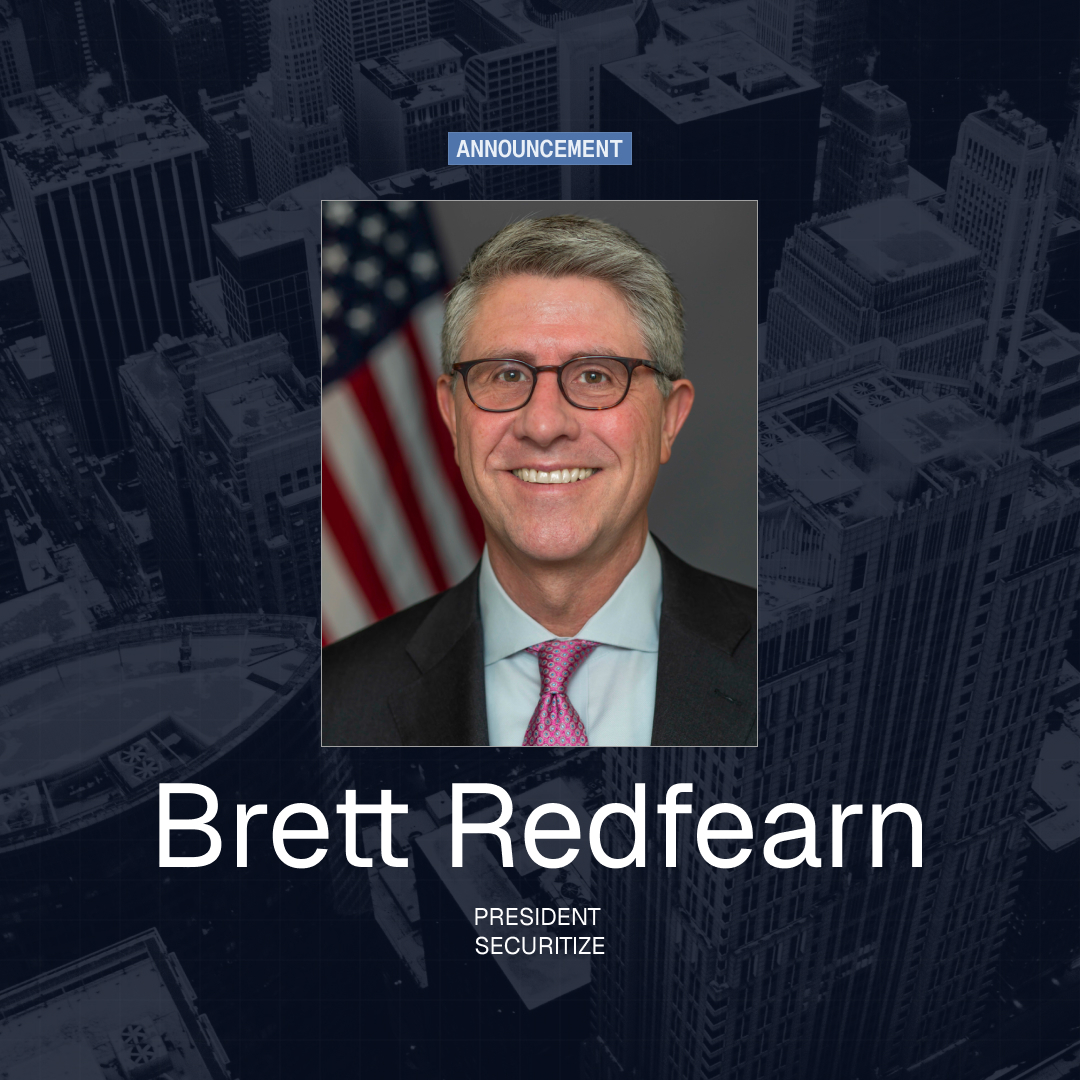 Securitize appoints former SEC and JPMorgan executive Brett Redfearn as president and board member, strengthening leadership as tokenization and digital asset markets expand2026-04
 Ethereum enters its second decade following a transformative year marked by Ethereum Foundation leadership changes and accelerating institutional adoption2026-07
 ETHGlobal co-founder Josh Stark steps down from Ethereum Foundation amid continued leadership turnover2026-04
 Former MakerDAO and Chronicle Labs contributor Marc-André Dumas joins The Graph Council, reinforcing leadership across protocol governance and treasury management2026-04
 Messari CEO steps down as company cuts staff and pivots to become an AI-first platform, with CTO Diran Li taking over leadership2026-03
 a16z Chris Dixon urges Congress to pass the CLARITY ACT, arguing clear blockchain rules will unlock tokenization, stablecoins and institutional crypto adoption while strengthening U.S. leadership2026-07
Who leads a crypto protocol, exchange, or regulatory body shapes everything from technical roadmaps to token prices — and in a decentralized industry, the question of leadership is rarely straightforward.
Why Leadership Matters More in Crypto Than Most Industries
In traditional finance, a CEO change is a governance event. In crypto, it can be an existential question about decentralization itself. Protocols stake their legitimacy on the claim that no single person or organization controls them. When that claim runs up against the reality of foundations, core development teams, and exchange operators who hold disproportionate influence, leadership transitions expose the gap between ideology and practice.
That tension played out repeatedly in 2025 and 2026 across every layer of the industry — protocol foundations, centralized exchanges, regulatory bodies, and legislative chambers.

Securitize appoints former SEC and JPMorgan executive Brett Redfearn as president and board member, strengthening leadership as tokenization and digital asset markets expand

Redfearn ran the SEC's Division of Trading and Markets from 2017-2020 — the exact office that governs ATS and NMS frameworks for how securities actually trade in the US. Securitize is bringing him on right as they're filing to go public via Cantor SPAC at a $1.25B valuation, projecting $9B AUM by year-end (up from ~$4B now). With BUIDL already near $3B and live on UniswapX, they need someone who's sat across the table from the SEC when these tokenized fund structures inevitably get scrutinized at scale.
Protocol Foundations: The Ethereum Case Study
No organization has faced more scrutiny over leadership than the Ethereum Foundation, the Swiss nonprofit that employs a significant portion of Ethereum's core protocol researchers and developers.
A wave of personnel departures through late 2025 and into 2026 escalated from routine career moves into what observers began calling a governance story. Researchers published concerns about transparency; community forums debated whether the Foundation's organizational structure was fit for purpose as Ethereum faces intensifying competition from faster, cheaper Layer 1 networks.
The Foundation's response was substantive. In its May 2026 Protocol Cluster update, it announced leadership changes across development teams while publishing detailed progress on the Glamsterdam upgrade — a combined hardfork merging the previously separate Glades and Amsterdam upgrade tracks. Developers held an interop event in Svalbard to advance testing. The structural signal was deliberate: ground decisions in technical milestones rather than personalities.
GSR researcher Carlos Guzman articulated the stakes clearly: Ethereum's long-term competitive moat rests on "credible neutrality" — the perception that no central actor can unilaterally redirect the protocol. Every leadership departure or restructuring is therefore not just an HR event but a test of whether that neutrality holds. Declining revenues from the Foundation's ETH holdings (as the asset's price fluctuates) and rising competitors like Solana and Sui compound the pressure.
The Ethereum case illustrates a structural problem common across the industry: foundations that were designed to fade into the background often remain operationally central longer than intended, making their internal politics highly consequential.
Readers click leadership stories not for the personnel gossip but for what the exit signals about a platform's strategic pivot — Messari's CEO swap into AI-first, Ethereum Foundation's repeated churn reframing as a governance crisis, and TradFi veterans arriving at tokenization firms all tell readers which sectors are winning or losing the institutional legitimacy race.
Centralized Exchanges: Leadership as Competitive Advantage
For centralized exchanges, leadership is more conventionally corporate — but the stakes remain unusual. Regulatory exposure, market-making relationships, and user trust all flow partly through named executives in ways that differ from mature financial institutions.
Binance, the world's largest exchange by volume, has navigated leadership questions under sustained pressure. Founder Changpeng Zhao (CZ) pleaded guilty to U.S. anti-money-laundering violations in late 2023 and stepped down as CEO, replaced by Richard Teng. In a May 2026 interview with ARK Invest, CZ articulated what he described as the three principles behind Binance's continued market dominance: prioritizing user protection over company revenue, maintaining global reach, and iterating faster than regulators can constrain. Whether those principles survive without their architect at the helm remains an open question.
The more subtle leadership story at Binance in 2026 was Yi He, the co-founder who oversees Binance Labs and has shaped the exchange's investment and incubation strategy since its earliest days. Her inclusion on Forbes' Most Powerful Women in Business list marked the first time a crypto-native executive earned a place on that ranking — a milestone that reflects both her individual influence and the industry's mainstreaming. Shortly after, Binance's CMO Rachel Conlan departed, opening what the company described as an opportunity for fresh marketing leadership as it pursues institutional clients.
Smaller exchanges and protocols face sharper leadership crises. Sonic Labs — the rebranded Fantom network, rebuilt around developer tools and DeFi infrastructure — disclosed significant board-level changes in mid-2026. Michael Kong, Andre Cronje, and David Richardson all resigned. Cronje, one of the most prominent DeFi architects of the 2020–2022 cycle and the creator of yearn.finance and other protocols, had been a central credibility signal for Sonic's relaunch. The announcement was notable for its directness: leadership acknowledged that "real changes" had occurred and committed to transparency about where the project stood operationally. Cronje has previously oscillated between active involvement and announced retirements from DeFi, so the market's interpretation of his departure depended heavily on prior context.
ETHGlobal co-founder Josh Stark steps down from Ethereum Foundation amid continued leadership turnover
Regulatory Leadership: The SEC's Pivot
No institutional leadership change carried more immediate market consequences than the transition at the U.S. Securities and Exchange Commission. Under Chair Gary Gensler, who resigned in January 2025, the SEC pursued an aggressive enforcement posture toward crypto — suing Coinbase, Ripple, and Binance.US, among others, and resisting the introduction of spot Bitcoin ETFs until compelled by a court ruling in 2024.
The new leadership, aligned with the Trump administration's stated goal of making the United States "the crypto capital of the world," represented a sharp reversal. The SEC opened public comment on NYSE Arca's proposal to require that 85% of crypto ETF assets meet defined listing standards — a move that signals the agency is now focused on product rules and market structure rather than existential enforcement. It also engaged substantively with market participants on proposals to rescind Regulation NMS Rule 611 (the "trade-through" rule) and Rule 610(e), responding to feedback from Pyth contributor Douro Labs and others who argued that equity-market microstructure rules designed for fragmented stock markets are a poor fit for crypto.
The CFTC, meanwhile, has its own leadership stakes. Prediction markets — including platforms like Polymarket that allow users to bet on political and economic outcomes using crypto — have become a flashpoint between state regulators who want to restrict them and a CFTC that has moved toward an accommodating framework. The agency's leadership has framed its approach as setting a "gold standard" for prediction market rules at the federal level, explicitly pushing back against state-level restrictions.
Legislative Leadership and the CLARITY Act
On Capitol Hill, leadership in crypto policy has coalesced around a small group of lawmakers who have pushed digital-asset legislation through committee and toward floor votes. The CLARITY Act — formally the Digital Asset Market Clarity Act — attempts to draw a clear jurisdictional line between the SEC and CFTC by establishing when a digital asset is a security versus a commodity. Its legislative champions have described it as the product of years of work and the necessary complement to the GENIUS Act, which addresses stablecoins.
The stablecoin question highlights a transatlantic leadership gap. While U.S. legislators have moved forward with frameworks to bring stablecoin issuance onshore under defined rules, European policymakers remain in debate about whether stablecoins can meaningfully support the euro's global role or represent a sovereignty threat. That divergence is itself a leadership contest — over which regulatory model becomes the global standard.
Former MakerDAO and Chronicle Labs contributor Marc-André Dumas joins The Graph Council, reinforcing leadership across protocol governance and treasury management
Geopolitical Leadership and Crypto Infrastructure
Crypto's relationship to geopolitical leadership has grown more explicit. President Trump signed an executive order in early 2026 directing federal agencies to treat digital assets as a strategic priority, and his administration has framed U.S. dominance in crypto and AI as linked national-security objectives. Anthropic, in a separate policy document, argued that the U.S. must tighten chip export controls and accelerate AI adoption globally by 2028 or cede standard-setting authority to China — a framing that applies equally to financial infrastructure.
The Iranian leadership's navigation of sanctions using crypto channels, and the broader pattern of sanctioned states and actors using decentralized networks to move value, has made crypto leadership a matter of foreign-policy consequence in ways that were more theoretical five years ago.
At the protocol level, infrastructure builders have begun framing leadership around the coming wave of autonomous AI agents that will transact on-chain. At conferences in 2026, executives from companies building payment rails and ownership models for agent-driven economies positioned themselves as the architects of infrastructure that human leaders will eventually delegate financial decisions to — a leadership question with no clear precedent.
- 01C-suite exits at crypto firms
Messari, Bybit, and ETHGlobal exits drove the top clicks because each departure signaled a strategic inflection — AI pivot, entrepreneurial escape, or foundation instability — not routine turnover.
- 02Ethereum Foundation governance drift
Readers treated repeated EF leadership departures as a compounding governance story, raising questions about whether decentralization rhetoric masks organizational fragility.
- 03TradFi executives entering crypto
Securitize appointing a former SEC and JPMorgan executive signaled to readers that tokenization is crossing into institutional legitimacy, making the hire a market-direction indicator.
- 04AI reshaping analyst leadership roles
The CIA deploying AI for autonomous intelligence reports resonated as a leading indicator that AI-agent workflows are displacing traditional analyst hierarchies across high-stakes institutions.
- 05Regulatory leadership signals
SEC public comments and Senate probes under new leadership were read as early-warning indicators of the regulatory posture shift that will set the compliance ceiling for the next cycle.
- 06Exchange CEO instability
Binance.US, Bithumb, and Bitcoin Depot leadership reshuffles clustered together, signaling to readers that mid-tier exchanges are under structural stress beyond just personnel churn.
Governance Tokens and Decentralized Leadership
A distinct model of leadership has emerged in decentralized autonomous organizations (DAOs) and protocol governance: token-weighted voting, where holders of a governance token collectively ratify decisions. The Graph, a decentralized indexing protocol, reinforced its Council with the addition of Marc-André Dumas, a former MakerDAO and Chronicle Labs contributor with experience in both protocol governance and treasury management. The appointment reflects a broader professionalization of DAO governance, where "decentralized" no longer means informal.
The limits of token-weighted governance are well-documented: large holders can dominate votes, voter apathy leads to low turnout, and complex technical proposals require expertise most token holders don't have. The industry is experimenting with delegation systems, elected councils, and bicameral structures that attempt to balance broad participation with functional decision-making. These experiments are still early.
What Makes Leadership Credible in Crypto
Across protocol foundations, exchanges, regulators, and legislatures, credible leadership in crypto tends to share several features:
Transparency about constraints. Sonic Labs' direct communication about its board changes was noted positively precisely because the industry default is opacity. The Ethereum Foundation's detailed technical updates served a similar function.
Technical legitimacy. In open-source communities, leadership authority derives partly from code contributions and research output, not just organizational title. Figures like Andre Cronje carry credibility because of their work product, which makes their departures more destabilizing than the loss of a conventional executive.
Regulatory relationship management. For exchanges and protocol teams operating in regulated jurisdictions, the ability to engage constructively with agencies — rather than simply evading or litigating — has become a leadership competency. The SEC's willingness to engage substantively with market-structure comments from crypto firms reflects a bidirectional shift.
Continuity signaling. Markets respond sharply to leadership voids. Binance's management of the transition from CZ, Telegram's handling of shifts that triggered a TON token rally, and the Ethereum Foundation's public governance updates all reflect awareness that uncertainty about who is in charge is itself a risk to be managed.
- 2026-03milestone
Stephen Gregory appointed Binance.US CEO, Norman Reed moves to advisory role
- 2026-03governance
Bitcoin Depot CEO Scott Buchanan exits amid ATM crackdown and revenue collapse
- 2026-04governance
ETHGlobal co-founder Josh Stark steps down from Ethereum Foundation
- 2026-04milestone
Securitize appoints Brett Redfearn (former SEC, JPMorgan) as president
- 2026-05governance
Bybit co-CEO Helen Liu steps down after five-year tenure
- 2026-05milestone
Messari CEO steps down; company pivots to AI-first platform under CTO Diran Li
- 2026-06governance
Ethereum Foundation leadership churn reframed publicly as a governance crisis, not personnel rotation
Outlook
Leadership in crypto will become more consequential, not less, as the industry matures. Legislative frameworks like the CLARITY Act will create defined regulatory counterparties, meaning the humans who lead exchanges, foundations, and custodians will bear clearer legal responsibilities. Institutional capital flowing into the asset class through ETFs and corporate treasury positions will demand governance standards closer to those of public companies. At the same time, the ideology of decentralization will continue to generate tension with the practical need for accountable decision-makers during crises. The protocols and organizations that resolve that tension most credibly — not just rhetorically — will define what the next phase of the industry looks like.
Latest Leadership news
Securitize appoints former SEC and JPMorgan executive Brett Redfearn as president and board member, strengthening leadership as tokenization and digital asset markets expandETHGlobal co-founder Josh Stark steps down from Ethereum Foundation amid continued leadership turnoverFormer MakerDAO and Chronicle Labs contributor Marc-André Dumas joins The Graph Council, reinforcing leadership across protocol governance and treasury managementMessari CEO steps down as company cuts staff and pivots to become an AI-first platform, with CTO Diran Li taking over leadershipa16z Chris Dixon urges Congress to pass the CLARITY ACT, arguing clear blockchain rules will unlock tokenization, stablecoins and institutional crypto adoption while strengthening U.S. leadership GSR Researcher, Carlos Guzman, says Ethereum’s long-term moat lies in “credible neutrality,” even as leadership exits, declining revenues, and rising competitors pressure the ecosystem
Community notes
Spot something off or out of date? Drop a note. Editors review topic notes daily and roll accepted fixes into the explainer — contributors are recognized in the monthly $SQUID drop.
Loading notes…
Help improve this topic
Have a story or tip about this topic? Submit it. See something missing? Leave a note. Editors review daily; accepted submissions and fixes count toward the monthly $SQUID drop.