
Explains what “update” means across crypto, from protocol releases and leadership shifts to liquidity fixes and regulatory moves, with examples from Bitcoin, Ethereum, exchanges, DeFi and AI, and guidance on reading these updates as a user or investor.
+93 sources across the wider coverage universe
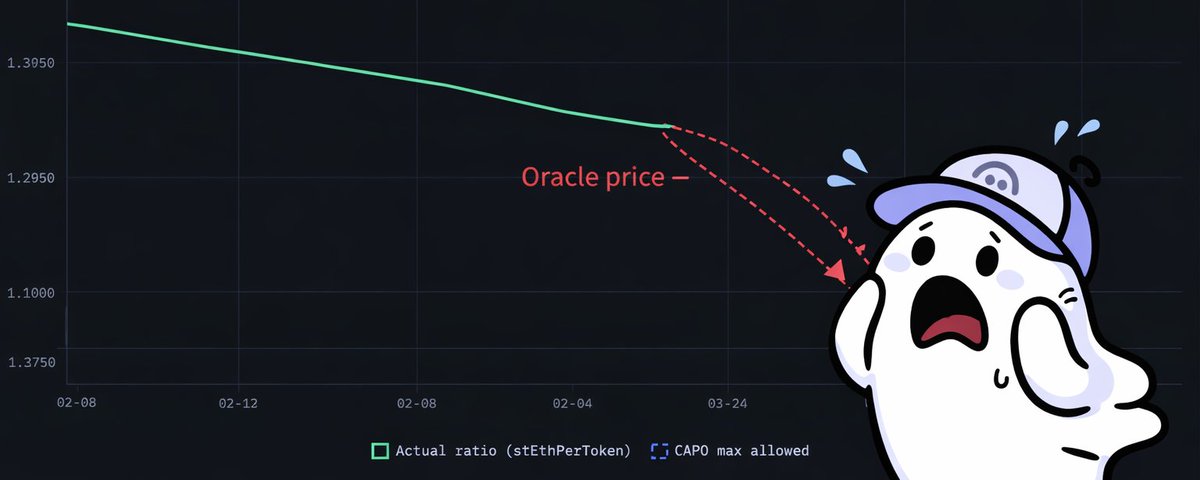 Aave suffered about $21M dollars in wrongful liquidations after an automated wstETH oracle cap update from Chaos Labs’ system underpriced collateral, briefly making healthy positions appear undercollateralized2026-03
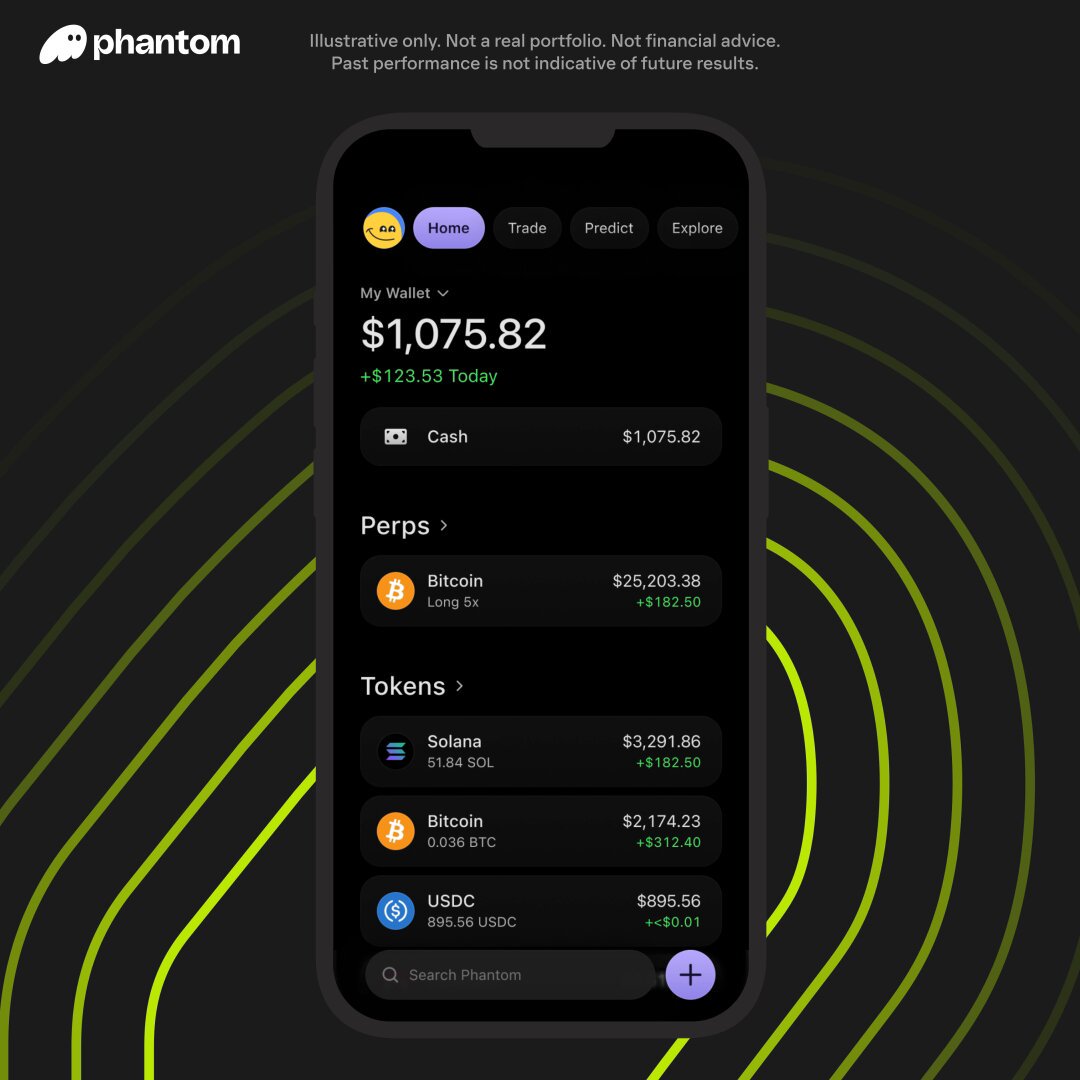 Robinhood Chain goes live on Phantom, giving users direct access to trade tokens on the network after installing the wallet's newest update2026-07
 ASIC secures A$20.5M ASX penalty over misleading blockchain CHESS replacement update2026-07
 UPDATE: Bybit’s $1.4B hack traced to signer failure as malicious DELEGATECALL transaction rewrote Safe proxy logic after hardware wallet verification was skipped.2026-03
 Irys queues Ethereum-Irys bridge transfers while LayerZero update adds verification layers2026-05
 Update: User loses almost entire $50M USDT trying to buy AAVE via Aave after accepting an extreme slippage warning Stani says which was clearly flagged in the interface, prompting debate and a 600k fee refund pledge2026-03
Change logs and checkpoints: understanding updates in crypto
In digital finance, an update is any communicated change to the state of a system, product, protocol, or narrative that users and markets rely on. In crypto, where code, liquidity, governance, and regulation all move at network speed, updates are the primary way teams signal what has changed, why it matters, and what might happen next. Because blockchains are transparent but complex, most participants do not read raw code or on‑chain events directly, and instead depend on human‑readable updates to interpret those changes. The same word covers a remarkably wide range of phenomena, from a Bitcoin protocol release to a DeFi liquidity patch, from a leadership reshuffle at a layer‑1 project to a regulatory clarification from a major exchange. Understanding what “update” really means in each context is therefore a core literacy for anyone following crypto, whether they are trading Bitcoin, building on Ethereum, using Coinbase or Binance, experimenting with AI agents, or simply trying to stay informed in volatile markets.
What “update” means in a crypto context
The word update is deceptively simple, but in crypto news it functions as a catch‑all label for many different kinds of change. At the most basic level, it can describe a software change, such as a new node version for a blockchain or a release of an AI model that interacts with crypto systems. It can equally describe a communication event, such as an “incident update” from a protocol recovering from an exploit or a “regulatory update” from an exchange responding to new rules. In both cases, the update is an inflection point in the information environment, because it changes what users know and therefore how they act.
More formally, an update in this ecosystem can be thought of as a public statement about a state transition that is relevant to stakeholders. The state being described might be technical, as when the XRP Ledger team publishes release notes for version 3.2.0 and explains which amendments are being retired and what security patches have been applied. It might be organizational, as when Sonic Labs issues a leadership update announcing that several board members have resigned and new executives are taking over. It can also be financial or risk-related, as when Abracadabra.money issues a liquidity strategy update explaining that it has injected stablecoins into a Curve pool to respond to a depeg in the MIM stablecoin. In each case, the update is a bridge between a change in reality and the perceptions of users, investors, and regulators.
This dual nature—part technical event, part communication artifact—makes updates especially important in crypto, where trust is both programmable and narrative. Protocols like Bitcoin and Ethereum rely on open-source code and consensus to enforce rules, but most participants rely on human-curated information to know which software to run, how to manage their funds, and how to interpret market moves. When the Bitcoin Taproot upgrade was activated at block height 709,632, the technical change existed as code and cryptographic rules, but users mainly learned about its implications through explanatory updates from developers, analytics firms, and media outlets. In the same way, when an exchange like Coinbase announces a “System Update” that unifies liquidity across spot and derivatives venues or plans to launch tokenized stocks for certain users, the implementation happens inside proprietary systems, but the market digests it through public updates and events.
Because updates are so central to coordination, they are also strategic. A single update can be framed to reassure, persuade, or even contest competing narratives. When Binance responded to reporting that its Markets in Crypto‑Assets (MiCA) license might be rejected, it issued an update emphasizing that the Greek regulator had actually deemed its application compliant with the new EU framework and that a final decision was still pending. The underlying regulatory process did not change at that moment, but the informational state for users and counterparties shifted, with potential implications for trust, trading behavior, and political pressure. Something similar happens when a country’s leader provides an “optimistic update” on sensitive geopolitical negotiations and Bitcoin rallies, even though the underlying risk might not yet be fully resolved.
Seen this way, updates are not mere housekeeping; they are the grammar of change in crypto. To read the space well, it is not enough to know that an update happened. One must understand what kind of update it is, how it fits into broader roadmaps, how credible it is, and how it could interact with markets, regulation, and emerging technologies like AI. The rest of this explainer unpacks those dimensions, moving from technical to organizational to market and communication perspectives, and finishes with a look at how updates themselves are evolving in an increasingly agentic, AI‑driven financial system.
Update, upgrade, launch: drawing the right distinctions
A point of frequent confusion in crypto communications is the blurred line between an update, an upgrade, and a launch. In traditional software terminology, an update generally involves enhancing parts of an existing application or operating system, often to patch security vulnerabilities or fix bugs, without fundamentally changing the architecture. An upgrade, by contrast, tends to denote a more significant jump in functionality or version, sometimes involving new hardware, major user-facing features, or even breaking changes. This distinction loosely maps onto crypto as well, but with added nuance because of consensus rules and token incentives.
Bitcoin’s Taproot change is a good example of an upgrade that is sometimes casually described as an update in news coverage. Technically, Taproot introduced a new way of aggregating digital signatures and organizing complex spending conditions, reducing the data size of certain transactions and improving privacy and flexibility for smart contract‑like constructions. It required coordination among miners and node operators, was activated at a specific block height, and was widely described as the biggest upgrade to Bitcoin in four years. Yet for end users who rely on wallets and exchanges, the event often arrived as a software update, such as a client release that added Taproot support or an exchange communication explaining that Taproot transactions were now supported. This illustrates how “update” can denote the distribution layer, while “upgrade” refers to the underlying protocol change.
Ethereum’s multi‑year roadmap further complicates this picture by using named stages such as the Merge and the Surge to describe sweeping series of upgrades aimed at improving scalability, resilience, and transaction costs. The roadmap is an ambitious set of improvements that will transition Ethereum into a fully scaled, resilient platform, with rollups and other techniques playing a central role in enabling cheaper transactions. Within each high‑level upgrade path are many smaller updates: client releases, security patches, parameter tweaks, and tooling improvements. For developers and node operators, these arrive as regular version bumps; for the broader audience, they are occasionally bundled into “upgrade” news when a consensus-level change lands.
Launches are different again. A launch generally means something genuinely new is being introduced rather than an incremental change to something existing. When Coinbase promoted its first “System Update” event as the moment it unveiled an “Everything Exchange” that would support crypto, stocks, prediction markets, perpetuals, and more in a single interface, it was effectively launching a broadened product scope even as it described the moment as a system-wide update. Subsequent System Updates, such as the one outlining plans to launch tokenized stocks for non‑U.S. users and unify liquidity across international platforms, straddle both categories: they announce future launches while also detailing ongoing updates to existing infrastructure.
The distinction matters because different types of change carry different forms of risk and opportunity. An upgrade that alters consensus rules might involve hard forks or explicit coordination thresholds, while a routine wallet update might simply improve security or usability without altering the core economic model. A launch might introduce new markets, like tokenized stocks or AI‑powered agent wallets, that add entirely new vectors of regulatory and technological risk, even if they are described in the same breath as “updates.” For readers, learning to parse whether a headline about an “update” is actually describing a minor configuration change, a major protocol upgrade, or the launch of a new product is the first step in making sense of crypto’s fast-moving change log.

New Safe Contract Live: v1.5.0 Now the Default for New Wallets
Technical updates: from node software to AI systems
Technical updates are the most literal and foundational kind of update in crypto. They encompass changes to blockchain node software, consensus rules, client libraries, wallets, exchange matching engines, AI services, and even the operating systems that underpin this software stack. Because blockchains are distributed systems without central kill switches, technical updates must navigate the tension between agility and stability: they need to improve security, functionality, or performance without fragmenting the network or stranding users on incompatible versions.
Blockchain protocol and node releases
Protocol-level updates usually arrive through new releases of node software accompanied by detailed release notes directed at validators, miners, or other operators. The XRP Ledger provides a clear example with its xrpld 3.2.0 release, which announced that long‑active protocol amendments were being retired, introduced a new cleanup amendment, and bundled various bug fixes and improvements. The same release also formalized a rebranding of the core server from “rippled” to “xrpld,” aligning the software’s name more closely with the ledger it serves and clarifying identity for developers. For operators, this update was not just a cosmetic change; it included security patches that affected features such as single‑asset vaults, a lending protocol, and a permissioned decentralized exchange, making timely adoption important for preserving the security of downstream applications.
In Bitcoin, protocol updates are less frequent but often more scrutinized. Taproot’s activation involved a series of Bitcoin Improvement Proposals, signaling mechanisms, and a dedicated activation block height, all documented in developer communications and third‑party explainers. Chainalysis, for example, described Taproot as a “massive improvement” because it enabled more advanced smart contract capabilities and improved Lightning Network efficiency while also enhancing privacy and reducing on‑chain data footprints. Argo Blockchain emphasized that Taproot’s ability to combine multiple digital signatures into one reduces the amount of space required per block, which can eventually open more room for complex transactions and DeFi‑style constructions on Bitcoin. Here, the update is both a change to the formal protocol rules enforced by nodes and a de facto invitation to developers and users to build new kinds of applications.
Ethereum’s update cadence is faster and more modular, reflecting its more expressive execution environment and rollup-centric scaling strategy. The Ethereum roadmap published by the community describes a sequence of improvements that together aim to transform the network into a fully scaled and maximally resilient platform with significantly cheaper transactions. Many of these roadmapped changes are themselves bundles of smaller updates, such as client optimizations, gas cost adjustments, or changes in how rollups settle transactions to the base layer. Each minor release might not make headlines on its own, but collectively they push the network toward the targets sketched in the roadmap. For users and developers, the key is that these updates are often additive and backward compatible, enabling gradual migration rather than abrupt forks.
In all of these cases, the technical update is inseparable from its documentation and communication. Release notes and explanatory posts translate raw code diffs into narratives about performance, security, compliance, or feature support. They specify whether an update is mandatory, recommended, or optional, what the deadlines are for adoption, and what the potential risks of running outdated software might be. For exchanges, custodians, and institutional participants who must manage operational risk, the difference between a minor optional patch and a critical consensus bug fix is material, and so is the clarity with which that difference is communicated.
Platform and exchange system updates
Exchanges and trading platforms sit at the convergence of crypto markets, traditional finance, and consumer technology, and their system updates often blend infrastructure, product, and regulatory dimensions. Coinbase has explicitly branded a series of announcements as “System Updates,” using them as tentpoles to frame multi‑faceted changes to its platform. Its first System Update event introduced the concept of an “Everything Exchange,” describing a unified platform where users could trade not just cryptocurrencies but also stocks, prediction markets, and perpetual futures in a single place, while also surfacing an underlying shift in how the company organizes liquidity and compliance across jurisdictions. Later System Updates have outlined plans to launch tokenized stocks for non‑U.S. users and to unify liquidity across its U.S. spot exchange and international derivatives venues, effectively signaling both product launches and architectural updates to backend systems.
Binance, another major exchange, issues a regular stream of system and policy updates that range from changes in portfolio margin collateral ratios to adjustments in leverage tiers for specific perpetual contracts. These updates are operational but market‑sensitive, because they alter the capital efficiency and risk parameters for traders. When Binance posts an update about changes in collateral ratios under portfolio margin or in the leverage and margin tiers for USD‑margined perpetuals, it is effectively altering the constraints under which leveraged traders operate, which can influence open interest, liquidation cascades, and market volatility. At the same time, Binance has used updates to manage its regulatory narrative, such as communicating that its MiCA license application had been reviewed by the Hellenic Capital Market Commission in Greece and found compliant with the EU’s new Markets in Crypto‑Assets framework. This kind of regulatory update has a different target audience—regulators, policymakers, institutional clients—but still functions as a system‑wide signal.
These platform updates illustrate how the language of “update” can compress many layers of change into a single label. A matching engine optimization that reduces latency, a policy change in leverage limits, and an expansion into tokenized equities are all described as updates, yet they have very different risk profiles and strategic implications. For users, the challenge is disentangling which parts of an update affect the safety of funds, which affect the opportunity set of tradable instruments, and which are primarily branding or narrative repositioning.
AI systems, release notes, and the crypto stack
As AI systems become increasingly entangled with crypto—powering trading strategies, fraud detection, user support, and even AI‑native agents that hold and spend tokens—updates to AI models and platforms also become relevant to crypto audiences. AI products often communicate changes through detailed release notes that mirror software updates in more traditional domains. The Grok AI platform, for instance, publishes release notes highlighting new features such as improvements to an “Imagine” creative interface, the renaming and redesign of the saved items page, and enhancements like compact view modes and drag‑to‑select interaction. While these examples are not crypto‑specific, they are representative of how AI services evolve in iterative increments, with each update potentially altering user behavior and integration patterns.
Crypto projects and AI services increasingly intersect in payment flows and user agents. Some teams are building AI‑powered wallets and “agentic” payment systems, where autonomous agents can move funds, subscribe to services, or participate in markets based on programmatically defined goals. In that context, an AI model update might change how an agent interprets risk, reads news, or reacts to market data, thereby indirectly influencing crypto transactions themselves. Roadmap updates from AI‑focused crypto projects, such as those announcing a strategic shift “all in on AI payments” for agent‑based economies, illustrate how AI and crypto updates converge into a single narrative about agents acting independently in markets.
Technical updates in the AI layer therefore matter for crypto participants in at least two ways. First, the AI services they rely on—whether embedded in exchanges, wallets, or analytic platforms—may behave differently after an update, changing recommendations, flags, or user experiences. Second, as AI agents gain more control over financial actions, updates to their models and constraints become a form of risk management akin to a smart contract upgrade. In this emerging stack, reading AI release notes and understanding their implications will be as important for some users as reading blockchain node release notes is for validators.
Readers click 'update' headlines most when the update itself is the incident — a collateral cap zeroed, an oracle misconfigured, an emission slashed 50% — exposing that in DeFi, 'update' functions as a crisis-disclosure wrapper, not a routine changelog label.
Governance, organizational, and roadmap updates
Not all important updates in crypto are about code. Many of the most market‑moving or trust‑shaping changes happen at the organizational level: boards reshuffle, founders step back, compliance teams expand, or strategic roadmaps are rewritten. These governance and organizational updates often reveal as much about a project’s future as its technical commits, especially in ecosystems where foundations, companies, or insurance entities sit behind ostensibly decentralized protocols.
Leadership changes and governance reforms
Sonic Labs offers a recent example of a project using an “update” framing to communicate significant leadership change. After prolonged price pressure on its S token and growing concerns from community members and investors, the project announced that three key figures—Andre Cronje, former Fantom Foundation CEO Michael Kong, and executive chairman David Richardson—were resigning from its board as part of a broader governance overhaul. The same leadership update explained that Matt Visser would assume the role of chief executive officer and Kosta Kourkoumelis would become chief operating officer, emphasizing that the new leadership’s first priorities were operational discipline and rebuilding trust rather than immediately publishing an ambitious roadmap. To reinforce governance reform, the update also committed to more transparent processes, clearer development progress communications, and the establishment of a dedicated risk and compliance committee.
The form and tone of this update are as important as its content. By acknowledging community criticism and linking leadership changes to a renewed governance framework, Sonic Labs attempted to reframe a period of instability as the beginning of a more accountable phase. The explicit mention of a risk and compliance committee signaled responsiveness to regulatory and operational expectations, while the invitation for disclosures via a dedicated contact channel aimed to normalize whistleblowing and feedback. For holders of the S token and potential ecosystem developers, this update provided information that could materially change their risk assessment, independent of any immediate code changes.
Other projects and companies issue governance updates with different emphasis. A crypto insurer such as BDIC might publish an operations update highlighting new strategic partnerships, the expansion of its managing general agents (MGA) network, and internal process improvements designed to scale underwriting and claims handling. While such an update might not mention token mechanics or protocol parameters, it directly affects the risk landscape for protocols and users relying on that insurance. Similarly, major exchanges frequently update the composition and remit of risk committees, compliance teams, and external advisors as part of ongoing governance evolution.
Strategy, pivots, and roadmap updates
Strategy updates and roadmap revisions are another major class of organizational update. In the volatile world of crypto, projects often need to pivot in response to market conditions, technological shifts, or regulatory changes. When a project like Sahara AI communicates that it is “charting a new course” and finalizing a forward path with its core team and backers, promising a full update in the near future, it is signaling that its previous trajectory is being reconsidered. For token holders, this kind of strategic update is a cue to reassess expectations, especially when the token price reflects market skepticism, as seen when Sahara AI’s token trades around the low cent range with substantial daily volume.
Routine but substantial roadmap updates are common in more mature ecosystems as well. A Zcash‑related team might publish a monthly update on its Ledger integration work, describing general progress, recounting an emergency soft‑fork response, and previewing an upcoming major upgrade. That single update weaves together execution status, crisis response, and forward‑looking changes, giving community members a structured way to understand how the project is tracking relative to prior commitments. Similarly, TRON’s ecosystem recap updates highlight recent achievements such as new winners in ecosystem programs, announcements about upgrades to specific markets like ETHB, and expansions in oracle coverage via associated projects, thus functioning as a running commentary on both network health and strategic focus.
The distinction between a roadmap and an update is instructive here. Product strategy literature notes that startup roadmaps often emphasize new themes and features, keeping plans short so teams can ship quickly, gauge response, and adjust priorities, while more established companies maintain roadmaps that blend new initiatives with maintenance for existing users. In crypto, this difference shows up in how young projects issue bold, forward‑looking roadmap updates full of disruptive ideas, whereas established networks like Ethereum publish more measured roadmaps anchored in concrete scaling, security, and resilience milestones. Updates in these contexts serve as checkpoints against which stakeholders can measure execution against the roadmap, and they often reshape that roadmap based on new information.
Community, culture, and micro‑updates
Not every update is weighty enough to move markets, yet even seemingly trivial updates play a role in ecosystem culture and expectations. A creative platform like Zora posting a brief note that “agentic swag” is coming soon is not announcing a protocol change or a new market, but instead signaling ongoing engagement with a community that values aesthetics and playful experimentation. Meme‑like updates about swag, minor UX tweaks, or social campaigns help maintain a sense of presence and momentum in communities that might otherwise grow anxious in periods of slow technical progress or sideways markets.
At the same time, community‑facing updates can serve as early indicators of deeper strategic shifts. For example, a project that increasingly frames its updates around AI‑native use cases, agent economies, or cross‑chain functionality may be foreshadowing more substantial technical upgrades and partnerships. Roadmap updates focused on AI payments, where every AI agent is envisioned as a financial actor capable of sending and receiving value, hint at future integrations between AI infrastructure and payment rails. These communications shape community expectations long before major releases, and their framing can influence how easily projects later secure buy‑in for more consequential technical or governance changes.
In sum, governance and organizational updates operate on a spectrum from crisis response to subtle cultural signaling. For readers and market participants, learning to distinguish between a structural change in who is accountable (such as board resignations and new executive appointments), a strategic pivot in what the project is trying to achieve, and a soft signal about cultural alignment or branding is key to interpreting what an “update” really implies for risk and opportunity.
Market, liquidity, and risk updates
Crypto markets are continuous, multi‑venue, and highly sensitive to new information. As a result, updates about liquidity interventions, token burns, regulatory decisions, and even public health events can have rapid and significant effects on prices, volumes, and risk perceptions. Market‑oriented updates often blend on‑chain actions with off‑chain explanations, giving traders and risk managers a narrative for why certain numbers are moving.
Liquidity interventions and DeFi risk management
Stablecoins and DeFi protocols illustrate how updates can function as real‑time risk management tools. Abracadabra.money’s response to a liquidity‑driven depeg of its MIM stablecoin is a case in point. When MIM fell significantly below its intended parity in a Curve pool due to unexpected liquidity withdrawals linked to changing DeFi incentive strategies, the team announced that it had injected approximately $100,000 worth of assets—MIM, USDT, and USDC—into a new Curve pool to stabilize liquidity and help restore balance across affected pools. This liquidity strategy update made explicit both the diagnosis (a liquidity shock rather than a fundamental insolvency) and the remedy (seeding a base of liquidity to anchor market making), providing market participants with a clear explanation of the measures taken.
Such updates are not mere public relations; they often correspond to verifiable on‑chain transactions, enabling analysts to cross‑check whether the described interventions match observable reality. Traders can inspect the relevant Curve pool contracts, confirm the inflows of stablecoins, and observe subsequent changes in the MIM price relative to its peg. The update thereby becomes a bridge between raw on‑chain data and the broader market’s interpretation of protocol health. Still, the fact that the intervention was relatively modest in scale compared to total DeFi liquidity highlights the need to contextualize numbers: a six‑figure injection may be sufficient for a specific pool, but its adequacy depends on myriad factors such as existing depth, volatility, and correlated risks.
Other projects issue similar updates when they adjust liquidity mining programs, modify incentive schedules, or rebalance treasury assets. A “liquidity strategy update” may outline how much of the treasury is being allocated to different pools, which chains or DEXes are prioritized, and how performance will be evaluated. For users, these updates signal the protocol’s approach to sustainability and risk, as aggressive yields often imply higher risk exposure, while more conservative strategies may prioritize long‑term peg stability or protocol solvency.
Token burns, supply dynamics, and performance recaps
Updates about token burns and revenue are another recurring theme in crypto markets. A project offering a weekly performance recap might note that a certain number of tokens—say, hundreds of thousands of units of a token like BEAT—were burned in a given week and a similar amount of revenue was generated, with cumulative burned supply crossing a particular threshold. Such updates serve as periodic reminders of the protocol’s monetization and deflationary mechanisms, inviting users to connect revenue growth and supply reduction with potential price appreciation.
Yet these updates require careful interpretation. The absolute amount burned or earned must be contextualized relative to total supply, fully diluted valuation, and broader market conditions. A weekly burn that seems large in isolation may represent a tiny fraction of circulating supply, and revenue figures may fluctuate with broader market cycles. For analysts, the value of such updates lies not only in the headline numbers but in the consistency and transparency of the reporting. A project that regularly publishes clear, verifiable burn and revenue statistics builds a track record of accountability, whereas sporadic or opaque updates may raise questions.
Prediction markets and gaming platforms also rely on timely updates to maintain fairness and trust. When a World Cup prediction platform issues an update confirming that a surprising match ended in a draw and that no participants correctly predicted the final score, and that rewards for other prediction categories have already been distributed, it is settling markets and closing a loop of expectations. Without such updates, participants might suspect delayed settlement, manipulation, or incompetence. The update thereby functions as a public receipt of how the platform handled edge cases.
Regulatory, macro, and public health updates
Regulatory updates can be equally market-moving, particularly for centralized exchanges and tokens with concentrated jurisdictional risk. Binance’s communications around its MiCA license in Europe are illustrative. The exchange confirmed that Greece’s Hellenic Capital Market Commission had completed its review of Binance’s MiCA license application and deemed it compliant with the EU’s landmark crypto framework, even as international media speculated about potential rejection. By positioning this as an update, Binance attempted to reassure users and counterparties that it was on the right side of regulatory processes, while also subtly framing any future negative outcome as a divergence from an initially positive review. For traders, such updates may influence decisions about where to hold funds or trade certain instruments, especially when weighed against jurisdictional diversification and counterparty risk management.
Regulatory updates from policymakers themselves—such as a U.S. state passing a new tax law affecting crypto transactions and a major CEO like Coinbase’s Brian Armstrong publicly criticizing it as “remarkably bad” and harmful to jobs and innovation—also shape market expectations. They may not immediately change protocol parameters, but they alter perceived regulatory trajectories and can influence decisions by firms about where to base operations or target products. In turn, these strategic decisions feed back into market structure, affecting liquidity distribution, product availability, and ultimately user experience.
Even public health updates can intersect with crypto markets indirectly via macro risk sentiment. The U.S. Centers for Disease Control and Prevention, for example, publishes detailed transcripts for briefings on outbreaks such as Ebola in central Africa, outlining case numbers, cross‑border spread, response measures, and coordination with partners. Although not crypto‑specific, such updates influence broader risk appetite across global markets, including Bitcoin and other digital assets. Traders frequently monitor geopolitical and health updates as part of a macro information set that informs positioning in risk‑sensitive assets. In extreme scenarios, travel restrictions, supply chain disruptions, or event cancellations prompted by public health updates could affect crypto mining operations, conferences, or on‑the‑ground adoption initiatives.
In all these cases, market, liquidity, and risk updates act as lenses through which participants interpret changing conditions. The speed and clarity of these updates can dampen panic, prevent misinformation, and enable more rational decision‑making. Conversely, delayed or vague updates in the face of material risk can exacerbate volatility and erode trust.
- 01oracle failures causing liquidations
The Aave wstETH oracle misconfiguration that triggered ~$21M in wrongful liquidations showed readers that a single automated parameter update can weaponize the liquidation engine against solvent users.
- 02exploit post-mortems and fund recovery
Headlines from Grand Base, Bybit, Kraken, and DriftProtocol drew clicks because 'update' framing signals whether stolen funds were returned, who is accountable, and whether the protocol survived.
- 03emission cuts and tokenomics restructuring
Prisma's 50% emission reduction and Osmosis OSMO 2.0's inflation cut attracted readers watching whether protocols can right-size token supply without triggering holder exits.
- 04stablecoin risk parameter zeroing
Nostra zeroing DAI collateral and debt caps to zero — citing MakerDAO's USDe exposure — illustrated how one protocol's collateral decision cascades into another's emergency governance action.
- 05wallet and UX infrastructure upgrades↗
MetaMask Multichain Accounts, the EVM Object Format overhaul, and Telegram's digital-goods update for mini apps pulled readers tracking which surface-layer changes shift onboarding friction.
- 06exchange leadership and regulatory inflection↗
The Binance CEO succession post-CZ, the Senate CRA overturning SAB 121, and the accelerated Ether ETF 19b-4 filing process each marked institutional pivot points readers wanted to track in real time.
Incident and security updates: learning from failures
Incident updates are a particular subset of updates that deal with failures, exploits, outages, or other adverse events. In crypto, where smart contracts can hold billions of dollars and cross‑chain bridges can be attacked in minutes, the quality of incident updates can make the difference between a managed crisis and a cascading loss of confidence.
Patterns of good incident communication
Best practices for incident communication have been distilled in other industries and adapted to software and cloud platforms. Atlassian, for example, suggests that incident communications should begin by acknowledging the problem, empathizing with those affected, and offering a clear apology where warranted. They should then explain what went wrong and why, to the extent that this can be disclosed without compromising security or privacy. Finally, they should describe what was done to fix the incident and what will be done to prevent recurrence, providing timelines and next steps. This structure—acknowledge, explain, remediate, prevent—offers a template that crypto teams can apply when crafting incident updates.
THORChain’s incident update during a network recovery phase exemplifies aspects of this approach. The network communicated that it was moving through final stages of recovery, specifying that every node’s key share was being verified using a new KeyVerify protocol to confirm that each vault was safe before validator churn could resume. By naming the specific step being undertaken (key share verification), identifying the tool being used (KeyVerify), and clarifying the dependency (vault safety before churn), the update provided both reassurance and a sense of process. It did not gloss over the fact that an incident had occurred; instead, it framed the current state as a controlled stage in a larger recovery plan.
Incident updates in public health, such as the CDC’s Ebola outbreak briefings, offer another instructive pattern. These updates typically provide a situational overview, discuss the likely trajectory of the outbreak, describe the interventions being deployed, and explain how different agencies are coordinating. They also explicitly address questions from reporters and stakeholders, clarifying uncertainties and correcting misconceptions. For crypto teams managing exploits or downtime, adopting a similar level of detail and responsiveness can help dispel rumors and align expectations, even when all answers are not yet known.
Security patches and silent fixes
Not all security changes are announced through dramatic incident updates. Many vulnerabilities are discovered and patched quietly before they can be exploited, and the corresponding updates appear in release notes as security patches or bug fixes. The xrpld 3.2.0 release, for instance, included security patches affecting the XRP Ledger’s single‑asset vaults, lending protocol, and permissioned DEX, even though these were not presented as responses to public exploits. For operators, these security‑focused updates require special attention, as failing to apply them in a timely fashion could expose them to future attacks if the vulnerabilities later become more widely known.
The challenge for teams is balancing transparency with security. Overly detailed descriptions of recently patched vulnerabilities can act as a blueprint for attackers targeting nodes that have not yet upgraded. At the same time, vague references to unspecified security issues may not convey enough urgency to prompt rapid adoption. Many projects thread this needle by signaling the severity of vulnerabilities (for example, noting that an update includes important security fixes and should be applied immediately) while deferring full disclosure of technical details until a majority of nodes have upgraded.
Incident updates and security patches together form a lifecycle of failure response. When a problem is discovered after exploitation, incident updates take center stage, often accompanied by emergency patches and public post‑mortems. When issues are discovered proactively, selective disclosure through release notes and advisories can preempt incidents. In both modes, the clarity and timeliness of updates strongly influence how much damage occurs, both financially and reputationally.
Communication: how updates are written and why tone matters
Because updates are the main narrative interface between complex systems and diverse audiences, the way they are written matters as much as what they contain. Crypto is unusual in that it combines retail users, professional traders, developers, regulators, journalists, and AI systems as simultaneous readers of the same updates. Striking the right balance between technical precision, accessibility, and tone is therefore a non‑trivial challenge.
Anatomy of an effective update
Effective updates, whether about software releases, governance changes, or market interventions, tend to share certain characteristics. They explain context, describe the change, articulate rationale, and outline implications. For example, the Sonic Labs leadership update structured its message by first acknowledging that there were “real changes” at the organization and that the community deserved direct communication. It then detailed which board members were stepping down, who would assume leadership roles, and what priorities the new team would emphasize, explicitly listing operational discipline and trust‑building ahead of any roadmap reveal. The update concluded with concrete governance commitments, such as more transparent processes, clearer development updates, and a new risk and compliance committee, as well as a direct channel for disclosures.
Similarly, Abracadabra.money’s liquidity strategy update did not merely state that funds had been injected into a Curve pool; it contextualized that decision as a response to a liquidity‑driven depeg and explained that the new pool allocation would serve as a base for restoring balance across multiple pools after recent liquidity withdrawals. This combination of what, why, and how offered both technical and market actors enough information to update their models of protocol risk. The THORChain incident update, by describing the specific verification process underway and the dependency on vault integrity before churn, provided a temporal roadmap for recovery without promising exact timelines.
These examples align with incident communication best practices that emphasize acknowledging the problem, explaining its cause, describing the fix, and outlining preventive measures. Even outside of crisis contexts, those elements help users understand not just that something changed, but why the change matters and how it fits into a broader trajectory.
Marketing language, hype, and trust
Crypto history is replete with over‑promised updates and under‑delivered roadmaps. Marketing‑heavy updates that emphasize “revolutionary” features, “unprecedented” returns, or “game‑changing” partnerships without providing technical detail or realistic caveats can erode trust over time. By contrast, sober updates that avoid unnecessary hype and clearly distinguish between shipped features and aspirational plans tend to build credibility, even if they do not generate immediate excitement.
The distinction between updates and launches is relevant here. When Coinbase brands an event as a “System Update,” it elevates the importance of the changes being announced, but it also invites scrutiny about whether the content matches the label. If the event primarily re‑packages existing functionality in new branding, sophisticated users may interpret it as more of a marketing campaign than a substantive systems change. Conversely, even understated release notes that quietly introduce significant functionality can gain recognition among technically savvy users and gradually reshape perceptions.
AI‑related updates introduce their own set of expectations. When projects announce “roadmap updates” that commit to going “all in on AI payments” or embracing an “agentic economy,” they tap into a broader cultural excitement around AI’s potential. Yet unless these updates are accompanied by clear descriptions of how AI models will be integrated, what safeguards will be put in place, and how value will accrue to tokens or users, they risk being perceived as opportunistic pivots. Here again, specificity and groundedness are critical; credible AI updates will often reference concrete features, user flows, or integrations, much as Grok’s release notes enumerate interface changes and new capabilities rather than abstract promises.
Frequency, noise, and update fatigue
Another communication challenge is finding the right cadence. In a 24/7 market, constant updates can overwhelm users, while infrequent updates can create an information vacuum that fuels speculation. Some projects adopt a rhythm of weekly or monthly updates, bundling small changes and progress reports into coherent narratives. Others reserve formal updates for major milestones and rely on social media for micro‑updates in between.
Update fatigue is a real phenomenon, especially for institutional readers who must process updates from dozens of protocols, exchanges, and regulators. Over time, readers learn to triage sources, prioritizing updates from teams with a track record of material information and deprioritizing those that consistently issue fluff. This selection pressure tends to reward clarity, honesty, and signal‑rich updates, and it punishes those that over‑use the word “update” for minor promotional messages.
AI can help manage this deluge by summarizing updates, clustering them by theme, and flagging those that are likely to be material based on historic patterns. However, AI systems are only as good as the training and prompting they receive, and they can misinterpret subtle cues in tone or technical detail. Teams that want their updates accurately captured by AI summarizers must write with consistent structure and explicit signaling of severity, scope, and dependencies.
Binance $4B DOJ settlement; CZ departs, Richard Teng named CEO candidate
- 2023-11governance
Ledger firmware update enables encrypted seed-phrase extraction, triggering community backlash
- 2024-04exploit
Grand Base smart contract exploited; community warned off contract
- 2024-05milestone
EigenLayer expands airdrop by 28M EIGEN, adding 100 tokens per qualifying wallet
- 2024-10exploit
Aave suffers ~$21M wrongful liquidations after Chaos Labs automated wstETH oracle cap misconfiguration
- 2025-01milestone
Curve TVL falls to $2.355B; Liquity V2 BOLD pools attract $10M in 24 hours at 40%+ yields
- 2025-02exploit
Bybit $1.4B hack: malicious DELEGATECALL rewrites Safe proxy after hardware-wallet verification skipped
- 2025-05milestone
Farcaster raises $150M led by Paradigm with a16z crypto, Haun, USV participation
Reading updates as a user or investor
For users, builders, and investors in crypto, the ability to read updates critically is a competitive advantage. Updates are raw material for decision‑making: they inform whether to upgrade software, rebalance portfolios, join a governance vote, or adjust compliance processes. Yet not all updates deserve equal weight.
Connecting updates to fundamental metrics
Analytic platforms emphasize that evaluating crypto projects requires attention to quantitative indicators such as token price changes, market capitalization, liquidity, trading volume, and return on investment, as well as qualitative factors like technology and team quality. ChainBroker, for instance, advises investors to analyze a project’s financial indicators before committing capital, while also noting that crypto projects exist to solve particular problems. Updates provide the narrative layer that explains movements in those indicators or signals future shifts.
A leadership update at a protocol foundation, for example, might not change tokenomics or transaction throughput overnight, but it could affect future decision‑making, partnerships, and regulatory posture, which in turn may influence adoption and valuation. A security update that patches critical vulnerabilities may prevent catastrophic losses that would otherwise be reflected in price and liquidity. A regulatory update that confirms license approval in a major jurisdiction can expand addressable markets and institutional participation, shifting the project’s growth trajectory.
For Bitcoin and Ethereum, updates like Taproot or roadmap milestones mapped onto narrative arcs about expanding smart contract capabilities, improving scalability, and reducing fees. Investors who understood the technical details could anticipate new categories of applications (like more expressive Lightning channels on Bitcoin or sophisticated rollups on Ethereum) and position themselves accordingly. Users unaware of such updates might experience these changes only indirectly, as improved wallet experiences or new DeFi products.
Assessing credibility and execution
Not all updates materialize as promised. To assess credibility, readers can track how often a team delivers on prior updates, how transparent they are about delays or setbacks, and how they handle adverse events. Projects that regularly publish detailed progress updates, openly discuss challenges, and document how they adapt roadmaps under changing conditions tend to inspire more confidence than those that issue sporadic, overly optimistic announcements and then go silent.
Regulatory updates are an instructive case. When Binance reports that a national regulator has found its MiCA application compliant, it is providing a factual update about a specific step in a longer process. Sophisticated readers will interpret this in context: the final outcome still depends on broader EU processes, and compliance with one regulator does not guarantee approval or future stability across all jurisdictions. Cross‑checking such updates with official regulator communications and independent coverage is prudent.
Similarly, liquidity updates from DeFi protocols can be evaluated by examining on‑chain data. If a stablecoin issuer claims to have injected funds into a pool, users can verify transaction hashes and monitor pool dynamics. If a project announces a token burn, the total supply on relevant block explorers should reflect it over time. The transparency of blockchain records enables a level of accountability that, when combined with clear updates, allows for robust trust‑but‑verify practices.
Leveraging AI and tooling
Given the sheer volume of updates across software, governance, markets, and regulation, tools that help filter and interpret information are increasingly valuable. AI models like Grok, as well as bespoke summarization and monitoring systems, can ingest release notes, blog posts, tweets, and transcripts, and produce digests that highlight key changes and potential impacts. Some services cluster updates by theme, such as “security patches,” “governance votes,” “regulatory actions,” or “AI integrations,” enabling users to focus on domains relevant to their roles.
However, reliance on summaries carries risks. Nuances in updates—such as a single sentence about a known limitation, a deferred disclosure about a security vulnerability, or a caveat about jurisdictional scope—can be lost in compression. Users and investors should therefore treat AI summaries as starting points rather than final verdicts, especially for high‑stakes decisions like upgrading critical infrastructure, moving large balances, or entering leveraged positions.
A practical approach combines automated monitoring with selective deep reading. AI agents can flag updates that meet certain criteria—for example, any update mentioning “security patch,” “governance change,” “license approval,” or “margin tiers”—and then human readers can examine the original texts. Over time, this hybrid model may itself become more automated, with AI agents authorized to execute bounded actions (such as recommending an upgrade or rebalancing a portfolio) in response to specific classes of updates, subject to human oversight.
The future of updates: automation, agents, and on‑chain signaling
As crypto systems and AI agents become more intertwined, the nature of updates is likely to evolve. Instead of being primarily written by humans for human readers, some updates may be generated by smart contracts, AI monitors, or composite systems that detect, explain, and act on changes in real time.
One trajectory involves “self‑updating” protocols that emit structured events whenever key parameters change, such as interest rates, risk weights, or governance variables. These events can be consumed by dashboards, bots, and AI agents that adjust behaviors accordingly. DeFi protocols already emit a rich stream of on‑chain logs about position changes, liquidations, and governance votes; the next step is standardizing how these events are described and connected to higher‑level concepts like “protocol risk level” or “liquidity status.”
AI agents represent another frontier. In emergent “agentic” economies, autonomous agents may hold wallets, execute trades, subscribe to services, and manage user portfolios based on predefined policies and learned strategies. For such agents, updates become not just information but triggers. A smart agent might be programmed to reduce exposure to a protocol when a security incident update is detected, to vote in governance when a proposal update crosses a quorum threshold, or to migrate liquidity when a liquidity strategy update signals a shift in incentives. This automation increases the stakes of update quality; ambiguous or misleading updates could cause synchronized agent behavior and amplify volatility.
At the same time, updates themselves may become more machine‑targeted. Protocols and platforms could publish updates in both human‑readable prose and machine‑readable schemas, enabling AI systems to parse fields like severity, effective date, affected components, and recommended actions. Regulatory bodies might likewise publish structured updates about rule changes, enforcement actions, or license decisions, facilitating automated compliance monitoring. The MiCA framework in Europe, with its focus on harmonized rules for crypto asset service providers, is an example of a regime where structured regulatory updates could markedly simplify operations for exchanges like Binance and Coinbase.
Finally, the social dimension of updates will persist even as automation grows. Communities will still look for leadership to interpret major upgrades, explain trade‑offs, and mediate between conflicting stakeholder interests. Updates that blend rigorous technical detail with accessible explanations and honest acknowledgment of uncertainty will likely remain the gold standard. The interplay between human narrative and machine-readable facts will define how effectively the crypto ecosystem navigates the continuous stream of change that “update” has come to symbolize.
Outlook
Updates are the connective tissue of crypto. They turn raw code commits, on‑chain events, governance decisions, market interventions, and regulatory actions into shared narratives that humans and machines can act on. Understanding what an update is—and what kind of update one is reading—is essential for anyone trying to make sense of Bitcoin and Ethereum’s evolving roadmaps, Coinbase and Binance’s shifting offerings, DeFi’s liquidity maneuvers, or AI‑driven product innovation. In the coming years, as AI agents participate more directly in crypto markets and regulatory frameworks like MiCA mature, the volume and complexity of updates will only grow. Those who learn to write clear, honest, and structured updates, and those who learn to read and verify them critically, will be best positioned to navigate and shape the next phase of crypto’s development.
Latest update news
Sources
18 records from 17 domains
crypto.news
chainbroker.io
chainalysis.com
coinbase.com
binance.com
x.com
xrpl.org
blog.soniclabs.com
coinmarketcap.com
grok.com
cryptorank.io
atlassian.com
argoblockchain.com
ethereum.org
cdc.gov
geeksforgeeks.org
productplan.com
Community notes
Spot something off or out of date? Drop a note. Editors review topic notes daily and roll accepted fixes into the explainer — contributors are recognized in the monthly $SQUID drop.
Loading notes…
Help improve this topic
Have a story or tip about this topic? Submit it. See something missing? Leave a note. Editors review daily; accepted submissions and fixes count toward the monthly $SQUID drop.