
Deep explainer on what “release” means across crypto and AI, covering protocol upgrades, token launches and unlocks, NFT drops, AI model rollouts, security practices, and how mainnet, testnets, CeFi and bridges coordinate high‑stakes launches.
+29 sources across the wider coverage universe
 Lighter undergoes makeover with updated Web V3 design. This release brings a refreshed interface with improvements across navigation, market views, trading workflows, and overall usability.2026-07
 US agrees to release $6B in frozen Iranian assets held in Qatar, tied to Strait of Hormuz safe passage2026-04
 Milla Jovovich and Ben Sigman release open-source AI memory system MemPalace achieving perfect score on LongMemEval Benchmark.2026-04
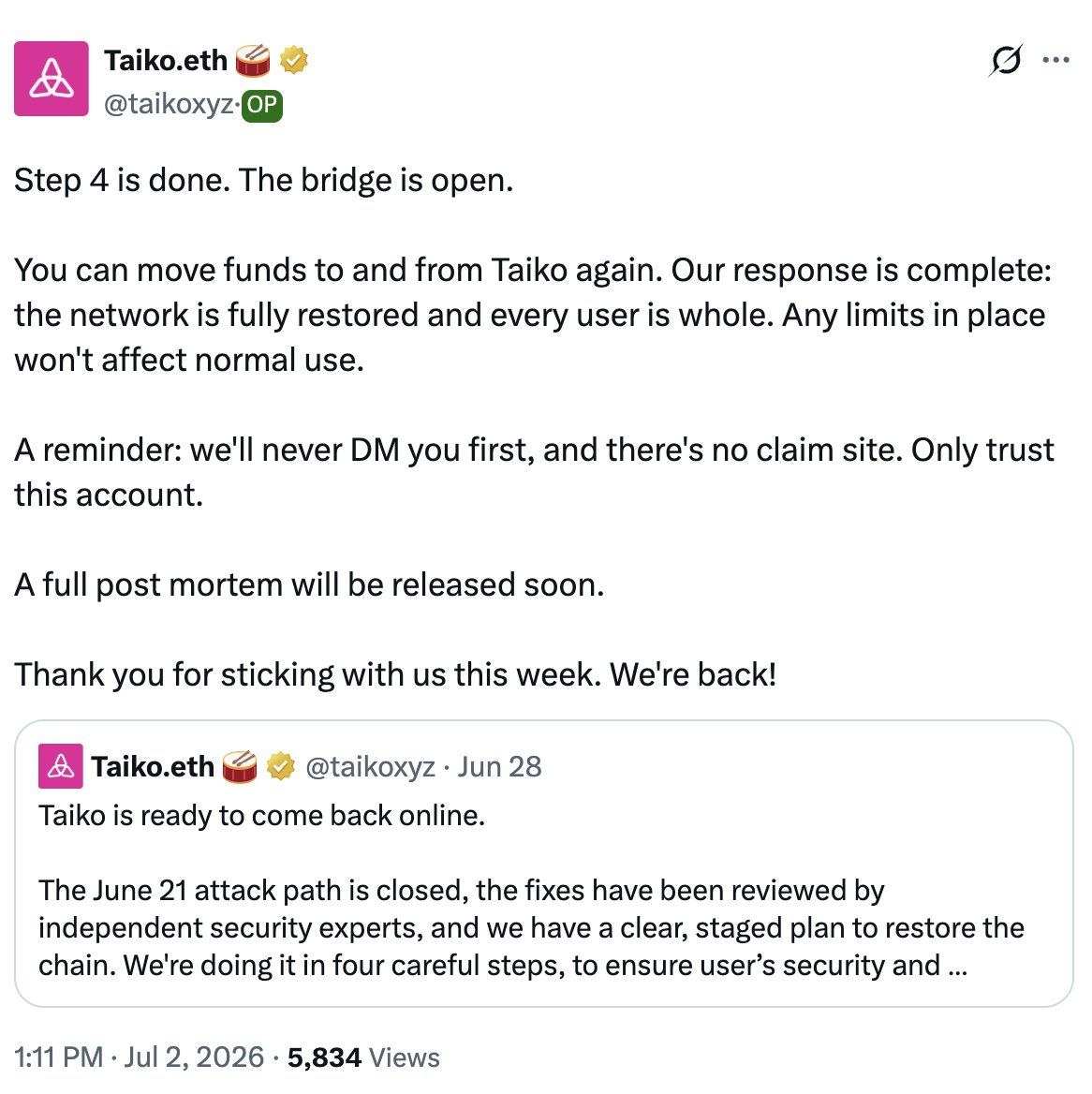 Ethereum Layer 2 Taiko finalizes post-exploit recovery with bridge reopening, confirming full network restoration as a detailed post-mortem nears release2026-07
 “Finding Satoshi” documentary gets early release via Coinbase app for US users, as Brian Armstrong praises its deep exploration of Bitcoin’s mysterious creator2026-04
 DTCC, Clearstream and Euroclear release framework to accelerate digital asset securities adoption, highlighting interoperability as key to liquidity2026-03
In crypto and AI, a release is the moment something moves from internal development to external reality: new code hits mainnet, a token becomes transferable, an AI model opens to users, or a product ships to market. It is when risk, value, and reputation all go live at once.
What “Release” Really Means In Crypto And Beyond
Across software, blockchains, and AI systems, the term release usually describes the transition of a product or component from a controlled environment into a broader, less predictable one. In traditional software engineering, the software release life cycle moves through phases such as pre‑alpha, alpha, beta, and release candidate before a final “gold” version is shipped to users. Each phase expands the audience and the stakes, from internal teams to external testers and then to the general public. Crypto and AI inherit this lifecycle logic but add financial and safety dimensions: a bad release is no longer only a usability problem, it can be a capital or security crisis. Because public blockchains and powerful models are hard to roll back, the gravity of a release is significantly higher than in most conventional web apps.
In crypto, the term spans several overlapping domains. A protocol release is what happens when a client upgrade, hard fork, or new network feature is rolled out on mainnet, as with Ethereum’s named network upgrades or Bitcoin soft forks. A token release refers either to an initial token generation event—when a new asset first comes into existence—or to subsequent vesting unlocks that gradually make previously locked supply transferable. At the application layer, releases include new decentralized finance (DeFi) products, NFT drops, layer‑2 rollups, bridges, and centralized exchange features. All of these events are interlinked: a protocol upgrade might enable a new DeFi primitive, whose launch coincides with a token release schedule and is amplified by exchange listings and public communications.
In AI, the semantics of release are influenced by safety, capability, and access control. Large language models and multimodal systems are iterated internally, then made available in staged ways, such as limited beta access, priority partners, and finally general availability. Because model capabilities can be misused, AI organizations have started talking explicitly about capability release and responsible deployment, emphasizing staged rollouts, tiered access control, and continuous monitoring in production. This mirrors security-conscious crypto teams that gate administrative powers behind multisigs and timelocks, and that monitor on-chain activity after launch.
Recent news cycles reinforce how central release has become as a concept. In AI, organizations have prepared launches for models such as GPT‑5.x or image and video generators like Grok Imagine 1.5, sparking debates over timing, safety, and competition. In Web3 and multi‑agent systems, frameworks such as Swarms v13 and major platform versions like Iroh 1.0 or RGB Lightning Node v0.0.4 frame their announcements explicitly as “releases,” with detailed notes about new capabilities, performance, and security trade‑offs. In the creative and gaming ecosystems, curated NFT series, collaborative tooling on platforms like SuperRare, and game‑world features such as Lunacia terrariums are also packaged as releases, underscoring that the term now anchors everything from infrastructure to culture.

US agrees to release $6B in frozen Iranian assets held in Qatar, tied to Strait of Hormuz safe passage
The Software Release Lifecycle Behind Crypto Launches
Even the most experimental crypto launch sits on a foundation of software engineering practices that long predate blockchains. The classic software release life cycle is structured to gradually increase exposure while decreasing uncertainty. In pre‑alpha and alpha phases, developers focus on core functionality, often with incomplete features and minimal optimization. Beta releases widen access to external testers, aiming to uncover bugs, stress performance, and refine user flows. Release candidates are close to final builds, shipped with the expectation that no further structural changes should be necessary barring critical defects. This lifecycle is not purely ceremonial; it is a risk management mechanism that crypto and AI projects adapt to the realities of public networks and adversarial environments.
On Ethereum, the release process for protocol changes has been formalized around Ethereum Improvement Proposals (EIPs) and multi‑phase testing across devnets and testnets before a mainnet rollout. New ideas begin informally on community forums and research hubs, then, once refined, become formal EIPs that are reviewed for technical soundness and consistency. Core developers discuss these proposals on regular calls, seeking “rough consensus” across client teams about feasibility and desirability. Only after this social and technical vetting do teams implement EIPs into their clients, subject them to consensus and execution tests, and deploy them on development networks for cross‑client compatibility checks. This is, in effect, a protocol-scale alpha and beta testing regimen.
Testnets play a central role in the crypto adaptation of the release life cycle. A testnet is a blockchain network running similar software to a mainnet but using valueless or simulated tokens, so that transactions carry no economic cost. Developers can deploy smart contracts, experiment with new features, or simulate attacks without risking actual assets. By contrast, a mainnet is an independent, live blockchain that runs its own protocol and native cryptocurrency, where transactions are executed with real economic consequences. Mainnet deployment of smart contracts typically involves compiling the code, broadcasting it as a transaction to the live network, and verifying successful deployment and expected behavior. The movement from testnet to mainnet is therefore a release in the strict sense: what was previously a low-stakes experiment becomes a high‑stakes reality.
Bitcoin’s history illustrates a related, but distinct, release trajectory for protocol changes. The earliest known Bitcoin soft fork was implemented in version 0.1.6 and was hardcoded to activate at a specific block height, effectively scheduling the release of new consensus rules into the live network. Over time, activation mechanisms such as miner signaling and lock‑in thresholds were introduced to coordinate upgrades in a way that minimized chain splits while ensuring that upgraded nodes could enforce stricter rules. A soft fork is a backward‑compatible release of new constraints, whereas a hard fork is a non‑backward‑compatible change that requires broad coordination to avoid network fragmentation. Both illustrate how, in a decentralized system, a release is as much a social event as a code push.
Client software releases sit at the intersection of these concerns. Ethereum consensus clients like Lighthouse routinely publish versioned releases that can be patch-level updates, feature releases, or security-critical hotfixes. A patch release may address a specific security vulnerability and include networking or synchronization improvements, but still require node operators and validators to upgrade promptly to avoid risk. In practice, this means release notes must communicate not only what changed, but how urgent the update is and what actions operators need to take. In proof‑of‑stake environments, a poorly managed release can threaten liveness or even lead to penalties, which makes communication and staging as important as the code itself.
From Idea To Pre‑Release Builds
The early part of the release journey is where ideas are still fluid but constraints should already be taken seriously. Protocol designers and application teams formulate a problem or opportunity, sketch architecture, and begin implementing prototypes. In the crypto context, this phase is ideally informed by a security mindset from the outset, especially for DeFi systems that are intended to custody funds from day one. Projects that treat security audits or formal verification as a late‑stage, pre‑release box‑ticking exercise often discover that core design flaws are expensive or impossible to fix without delaying launch.
For AI models, this ideation to prototype track includes tasks such as collecting training data, choosing architectures, and setting up evaluation pipelines. Because model training itself is costly and time‑consuming, internal “releases” of checkpoints, evaluation runs, and ablation studies occur long before anything reaches external users. Responsible deployment frameworks emphasize building safety interventions—such as content filters and jailbreak defenses—into the model stack early rather than bolting them on just before release. Crypto‑native AI projects that plan to deploy agents on-chain or interact with user funds face a compounded release risk: failure can manifest as both model misbehavior and smart contract exploits.
During pre‑release builds, teams often run local test environments and internal devnets. On Ethereum, core clients will spin up ad‑hoc development networks (devnets) with specific configurations to test their implementation of new EIPs in realistic but still controlled conditions. These devnets simulate various network conditions, node diversity, and failure scenarios. Although they are not public testnets, they mirror the logic of alpha releases, where features are functional but not yet exposed beyond a tight group of experts. The transition out of this phase is typically marked by the decision to expose code to external auditors, white‑hat hackers, or closed user groups.
Testnets, Canary Deployments, And Public Betas
The testnet phase can be thought of as the crypto analogue of a public beta. Here, participants beyond the core team can interact with the code and networks using simulated value. Public Ethereum testnets, as well as project‑specific test deployments, allow developers and early adopters to experiment with contracts, protocols, and user interfaces without risking capital. For network upgrades, core developers upgrade testnets weeks before mainnet, monitor for anomalies, and fix bugs, using this feedback loop to de‑risk the eventual mainnet release. The time between testnet and mainnet is often when ecosystem players—wallets, explorers, node operators—align their own release schedules.
DeFi and application teams sometimes adopt canary releases or guarded launch mechanisms. A canary deployment might involve launching to a limited set of markets, capping total value locked (TVL), or running in “beta mode” with explicit limits on deposits and functionality. Adevar Labs’ pre‑launch security guidance recommends pairing such guarded launches with real‑time on‑chain monitoring and alerting, so that large transfers, unusual admin calls, or abnormal transaction patterns trigger alerts and a predefined incident response. This turns the initial release window into an extended, production‑like beta, where the team remains in a heightened state of readiness.
AI release practices show parallel patterns. Responsible model deployment frameworks recommend staged rollouts where a small, trusted group of users gain access first, with strict access controls, logging, and content filters, before scaling to wider public availability. During these early phases, developers monitor for unexpected capability expression, prompt bypasses, and misuse indications, and they are prepared to roll back or tighten controls if necessary. This mirrors the ethos behind crypto’s phased launches, where contracts might be upgradable via multisig only for a limited initial period, or where timelocks give communities a buffer to react to proposed parameter changes.
Mainnet Releases And Network Upgrades
A mainnet release is the moment when code and governance decisions encounter real economic incentives. On smart contract platforms, deploying to mainnet means compiling contracts, broadcasting them as transactions, and verifying that they have been mined or included in a block, after which they become part of the live blockchain state. Unlike in traditional software, where a flawed release can be patched quickly and users can simply update, an immutable smart contract has no such escape hatch unless the system is explicitly designed to be upgradable or pausable. This makes pre‑release design choices, audits, and simulations critically important.
Ethereum’s process for network upgrades illustrates how carefully coordinated a mainnet release must be at the protocol level. After devnet and testnet testing, core developers choose a specific epoch or block height at which nodes are expected to start enforcing the new rules. Client teams release new versions of their software with this activation point encoded, and node operators are urged to upgrade in the weeks leading up to the deadline. In the days before activation, there is a concerted communication push from client teams, foundations, and community organizations to ensure that as close to 100 percent of nodes as possible are ready. Once the activation block arrives, any node still running outdated software risks falling onto a minority chain or failing to validate the new rules.
Bitcoin’s approach to soft fork activation adds another layer of complexity. The goal of a soft fork is to introduce new constraints that upgraded nodes enforce, while older nodes remain unaware of the more restrictive rules but still accept blocks that follow them. Activation mechanisms, such as miner version bits signaling and pre‑defined time windows, allow the community to gauge adoption before enforcing the new behavior. Releases at this level must therefore coordinate among miners, node operators, and ecosystem services that parse Bitcoin transactions, as any misalignment may lead to temporary fragmentation or unexpected behavior.
Application‑layer mainnet releases fall into similar patterns but with different stakeholders. For a cross-chain protocol like Circle’s Cross‑Chain Transfer Protocol (CCTP), adding support for a new network such as Stellar requires deploying contracts on the new chain, validating address handling conventions, and updating forwarding services and gateways. A release of this kind must consider not just the safety of the new contracts, but also how user interfaces, APIs, and documentation handle the added complexity so that USDC movement across domains remains intuitive. Coinbase’s own product launches, such as introducing customizable stablecoins fully backed by flexible collateral like USDC, illustrate how centralized entities blend internal software releases with regulatory, risk, and user‑education concerns.
Readers click 'release' stories not for the announcement but for the technical specifics locked inside — yield mechanics, post-mortem root causes, or primary legal documents — meaning information asymmetry, not novelty, is the actual reward driving engagement.
Token Releases: Generation, Unlocks, And Airdrops
If protocol releases define the rules of a network, token releases define its economic life. A Token Generation Event (TGE) is the technical and operational moment when a new blockchain-based project creates and issues its native digital asset, usually on a smart contract platform or its own chain. The TGE often serves to bootstrap the network, distribute governance rights, and create incentives for early contributors, developers, and users. Tokens issued during this event may be used to pay fees, access services, or participate in on-chain governance. By initiating a TGE, a project moves from the conceptual stage—whitepapers and prototypes—to an actual economic system that can attract capital and speculation.
A TGE can be purely technical, such as minting an initial supply to a treasury address, or it can coincide with public sales, private allocations, or retroactive grants. Chainlink notes that the core purpose of a TGE is to distribute tokens that serve a specific utility, like governance, network access, or fee payment, while decentralizing control among various stakeholders. Token launch checklists emphasize that utility design should be in place before the TGE; teams should be able to articulate why the token exists, what it does, and how it integrates with the protocol’s mechanics. Without such clarity, token releases risk becoming speculative cash grabs that erode trust.
Token Generation Events And Initial Distribution
In practice, a TGE is often one element in a broader launch choreography. Technical work includes deploying the token contract, configuring minting and burning logic, and setting up mechanisms for vesting, staking, or rewards distribution. Operational work covers legal structuring, exchange listings, documentation, and community communication. Many projects choose to deploy their token on established mainnets such as Ethereum because it provides robust security guarantees and widely supported tooling, including wallets and DeFi integrations. Others launch their own mainnets, aligning the release of the network with the release of its native token.
Distribution strategies are critical to the perceived fairness and long‑term health of a token. Chainlink’s analysis stresses that TGEs can be used to decentralize governance by ensuring that control is not concentrated in a small group of insiders. Checklists from market‑making and advisory firms note that allocations across team, investors, community, and ecosystem funds should be explicitly defined and communicated prior to launch, and that vesting structures should align incentives over time. Token trackers such as CryptoRank visualize how allocations are scheduled to unlock, helping market participants understand future supply overhangs.
A TGE may also coincide with novel distribution mechanisms such as auctions, bonding curves, or liquidity bootstrapping pools. While these methods differ operationally, they share the characteristic that the release is not a one‑time event but a process. Price discovery occurs in tandem with early community formation, and both are shaped by how tokens are allocated and at what pace. For regulators and centralized exchanges such as Coinbase, the details of how a token is released and who initially controls it are increasingly important in listing and compliance evaluations.
Vesting, Cliffs, And Unlock Events
Beyond the initial generation and allocation, most tokens follow a vesting schedule that controls when specific portions of supply become transferable. Vesting is designed to prevent immediate sell‑offs by insiders and to align long‑term incentives, especially for team members and early investors. Schedules can involve a cliff period—during which no tokens are released—followed by linear or stepped unlocks over months or years. Platforms like TokenUnlocks and Tokenomist.ai track these events and present graphs showing exactly how many tokens will become liquid for various stakeholder categories at different points in time.
The release of vested tokens is itself a market-moving event. Empirical analysis of over 16,000 token unlock events shows that roughly 90 percent of unlocks create negative price pressure, regardless of size or category, with price impacts often beginning up to 30 days before the actual unlock date. Larger unlocks are associated with more pronounced effects, in part because speculators and existing holders anticipate increased supply and adjust their positions accordingly. For this reason, sophisticated projects treat unlocks as mini‑releases that warrant proactive communication, potential liquidity provisioning, and, in some cases, adjustments to treasury strategies.
Unlock structures can also be used to support specific ecosystem goals. For example, ecosystem or community funds might vest in ways that align with milestones like protocol upgrades, governance participation, or cross‑chain expansion. Conversely, poorly designed vesting schedules—such as steep unlock cliffs for large insider allocations—can undermine community trust when massive supply suddenly enters circulation. Market participants increasingly scrutinize tokenomics, and data from unlock trackers make it difficult for projects to hide aggressive or misaligned release structures.
Airdrops, Liquidity, And Public Market Release
Airdrops represent another form of token release, typically oriented around user acquisition, decentralization, or retroactive rewards. Academic work on token airdrops notes that releasing a token through an airdrop often leads to the establishment of a public market, as recipients can trade the token on secondary markets, thereby creating visible price signals. Airdrops can incentivize desired behaviors, such as using a protocol, providing liquidity, or contributing to governance. However, they also create free option value for recipients who may have limited long‑term interest in the project, leading to sell pressure once tokens become transferable.
Designing an effective airdrop is therefore a balancing act. Too small and it fails to meaningfully decentralize ownership or reward loyal users; too generous and it risks overwhelming the market or attracting sybil attacks. The timing of the airdrop relative to other releases—such as protocol upgrades, NFT launches, or AI integrations—can either amplify or dilute its impact. Projects sometimes stage airdrop releases, with initial distributions followed by future tranches tied to ongoing activity, mirroring the logic of vesting but aimed at a broader user base.
From a market structure perspective, token releases, unlocks, and airdrops all contribute to the evolving float of an asset. Exchanges like Coinbase act as gatekeepers for retail access, choosing when and how to list new tokens and integrating them into products such as staking, lending, or customizable stablecoin offerings. As more sophisticated on‑chain tools and data providers emerge, both institutions and individuals can track release calendars, gauge supply‑demand dynamics, and position themselves around anticipated events. Token releases are thus not only technical milestones but also market‑shaping forces.

Milla Jovovich and Ben Sigman release open-source AI memory system MemPalace achieving perfect score on LongMemEval Benchmark.
Love it! But what is it aiming at?
Protocol Releases: Forks, Clients, And Security
Protocol-level releases move the foundations on which entire ecosystems depend. In Bitcoin and Ethereum, client software embodies the consensus rules; updating clients effectively updates the network, provided that a sufficient majority of nodes adopt the new version. A release may bundle performance improvements, security fixes, and new features. In the case of Ethereum, client releases are also how support for upcoming hard forks—such as named upgrades with bundled EIPs—is propagated. In this context, the term “release notes” has a specific function: to communicate clearly what changed, why it matters, and what actions operators must take.
The diversification of clients, especially on Ethereum where multiple independent implementations coexist, adds resilience but complicates releases. Each client team must implement the agreed‑upon EIPs, run their own test suites, and participate in common testing infrastructure. Devnets and testnets serve to catch cross‑client incompatibilities before mainnet activation. When an issue is discovered late—such as a consensus bug before or shortly after a fork—the coordinated release of patched versions becomes an emergency operation. Lighthouse’s patch releases, for example, sometimes include critical security fixes alongside networking or validator‑related bug corrections, and operators are strongly urged to upgrade promptly. The success of such releases depends on clear communication and community trust.
Security-conscious release practices stop long before code hits mainnet. Adevar Labs’ DeFi pre‑launch security checklist outlines a multi‑layer strategy: multiple independent audits that cover both business logic and low-level vulnerabilities, bug bounties with meaningful rewards relative to the maximum exploitable value, real-time on‑chain monitoring, strict multisig‑based admin key management, timelocks for sensitive operations, and pre‑written incident response plans. This framework treats deployment as one stage in an ongoing security posture rather than a one‑off event. Projects are encouraged to integrate monitoring tools that flag large transfers, unusual admin actions, and abnormal patterns, and to maintain a 24/7 response rotation so that alerts can be acted on immediately.
Hard Forks, Soft Forks, And Mainnet Rollouts
Forks are among the most complex, and controversial, forms of protocol release. A soft fork introduces new rules that are stricter than the previous ones but remain backward compatible: nodes that do not upgrade still see blocks produced under the new rules as valid, as long as they obey the old rules. Bitcoin’s earliest soft fork was hardcoded to trigger at a specific block height, effectively setting a deterministic release time for the new validation constraints. Later mechanisms such as miner signaling via version bits allowed the community to assess readiness before activation. Soft forks can be used to add features like new script opcodes or to tighten validation, but they must be carefully designed to avoid unintended interactions with existing transactions.
A hard fork, by contrast, introduces changes that are not backward compatible. Nodes that fail to upgrade will reject blocks that follow the new rules, potentially resulting in a persistent chain split if a sizable minority refuses to adopt the fork. Ethereum’s regular network upgrades are technically hard forks: they bundle multiple EIPs and change consensus or execution rules in ways incompatible with older versions. The Zurich hard fork, for instance, would be rolled out as a client release with a specified activation epoch on mainnet, after testnet evaluations, security review, and community coordination. Hard fork releases require clear social consensus, robust testing, and alignment across wallets, exchanges, and dApps to avoid disruptions.
Cross‑chain protocols and bridges introduce another layer of complexity. When Circle extends CCTP to a new chain such as Stellar, the release entails deploying contracts that govern USDC minting and burning on that chain, integrating forwarding services, and ensuring that address formats and gas considerations are handled correctly. The release must keep the invariant that USDC remains fully collateralized while enabling cross‑chain transfers without requiring users to manage destination chain gas fees. Errors at this level could lead to misrouted funds, double‑minting, or other systemic failures, which is why bridge and messaging protocol releases are among the most scrutinized in crypto.
Security, Staged Rollouts, And Responsible Release
Security and responsible deployment are increasingly central to how release processes are designed, especially as crypto intersects with AI. In the AI domain, responsible deployment frameworks recommend staged rollouts with tiered access control, content filtering, and comprehensive monitoring in production environments. Models may first be exposed only to internal teams or trusted partners, then to a limited beta cohort, and finally to the broader public. Access tiers can differentiate between consumer interfaces, API access, and privileged enterprise integrations. Monitoring pipelines log usage patterns and flag anomalous or potentially harmful behavior, enabling teams to iterate mitigations without fully halting access.
Crypto protocols can adopt analogous patterns. Admin functions for upgrading contracts, changing parameters, or pausing systems are increasingly gated behind multisig wallets, timelocks, and role-based access controls. Emergency pause functionality is often deployed and tested before launch so that, in the event of a live incident, teams can quickly halt affected components and protect user funds. A documented incident response plan with predefined roles, contact channels, and communication templates helps teams act decisively under pressure. These practices effectively turn the release into the beginning of a continuous security process, rather than a finish line.
The concept of capability release is a bridging idea between AI and crypto. In AI, it describes which model capabilities are exposed to which users under what constraints, and when. In crypto, it can describe which protocol powers—such as upgrade keys, pausing rights, or treasury controls—are active, who holds them, and how they might be progressively decentralized. Just as AI labs might gradually relax usage restrictions as they gain confidence in their safety measures, crypto teams can transfer control from core developers to community governance over time. Both domains recognize that abrupt, poorly governed releases can cause disproportionate harm.
- 01Protocol v2 yield mechanics
Liquity BOLD's stability pool details (814 clicks) show readers want concrete rate math and utilization logic, not just launch headlines.
- 02Security post-mortem disclosures
Vyper's technical post-mortem and the Curve hack's deep-release-history exploit pulled readers seeking root-cause accountability, not just incident summaries.
- 03Regulatory document releases
US Treasury Greenbook, IOSCO guidelines, BIS stablecoin report, and SEC-Binance court filings drove clicks as readers tracked how binding rules are being written in real time.
- 04Token and airdrop launch windows↗
ENA season 2 details, the FRIEND token drop, and Solana phone preorder surge show readers hunting for early economic participation before public price discovery.
- 05Testnet and developer tooling drops↗
Holesky testnet and Paradigm's Rivet open-source wallet attracted builders evaluating infrastructure that de-risks mainnet deployments.
- 06Archival and historical primary sources
120 pages of early Satoshi emails and full SEC-Binance filings show readers are drawn to primary documents that reframe crypto history or reveal legal strategy.
AI Model Releases And Their Convergence With Crypto
AI and crypto are converging not only as technologies but as release cultures. AI model release trackers now catalog every major large language model rollout from organizations like OpenAI, Anthropic, Google, Meta, and Mistral, reflecting an accelerating cadence of updates and competition. Releases range from incremental fine‑tunes to major new architectures, and they can be delivered as cloud APIs, downloadable checkpoints, or even fully open‑weight models. Each choice carries trade‑offs between innovation, safety, and decentralization. These debates echo crypto’s earlier arguments over permissionless access, open-source code, and the distribution of control.
A core dimension of AI releases is the distinction between closed and open models. Closed models are typically accessible only via APIs, with weights held by the provider, allowing for centralized monitoring and rapid iteration but requiring trust in a single entity. Open‑weight models, by contrast, make parameters publicly available for anyone to run or fine‑tune, enabling decentralization but limiting the developer’s ability to enforce safety constraints. Tools such as Evertune’s model release tracker help researchers and practitioners follow how this landscape evolves over time. As open‑weight models like GLM‑5.2 emerge, with large context windows and advanced coding capabilities, their release is treated as a significant event in both AI and crypto circles because they can power decentralized agents and on‑chain automation.
Responsible deployment frameworks emphasize that model releases need staged rollouts, robust access control, and monitoring akin to production-grade security systems. Language models can be jailbroken or coerced into revealing sensitive information or performing unintended actions, which is why neural-symbolic security architectures and red‑teaming are increasingly integrated into the pre‑release pipeline. The language of “bounding jailbreaks” and “unauthorized capability release” underscores that, in AI, the concern is not only what the model can do but what is exposed at the interface. Crypto‑AI projects that integrate agents with wallets or trading systems must consider both domains: a jailbreak might translate into unauthorized on‑chain actions.
Crypto infrastructure is starting to reflect this convergence. Multi‑agent orchestration frameworks like Swarms have released major versions that focus on scalable, concurrent collaboration between agents, with improved logging, observability, and streaming workflows. These releases resonate with crypto developers because they promise better tooling for automated market making, governance participation, or MEV strategies. Similarly, projects focused on AI‑native hardware and zero‑knowledge (ZK) proofs are packaging their R&D into public releases that may underpin future decentralized compute markets. The cadence of these releases, and the way they are communicated, increasingly mirror the ethos of open‑source client releases in crypto.

Kamino introduces Fixed Rates for fixed-term, fixed-rate on-chain credit, launching in private beta ahead of its public release in Q3 2026

Releases In NFTs, Art, Music, And Gaming
Not all releases are protocol‑level or model‑level; many are cultural. In the NFT ecosystem, a release often describes a curated drop of artworks, a new collection, or the unveiling of novel marketplace features. Artists and platforms frequently coordinate around specific times, allowlists, and price tiers, treating the release as a performative event. For instance, a curated series of algorithmic works might be released in a limited edition of 200 pieces, with an early allowlist mint priced slightly below a public mint, and denominated in ETH to anchor it in the Ethereum art economy. The release becomes a narrative about scarcity, curation, and community.
Platforms like SuperRare have extended the idea of release to collaborative features. When new functionality allows two artists to be jointly credited and share sales automatically on‑chain, the release is both a technical update and a social statement about how creative labor is recognized. Such releases usually come with explanatory content that walks artists through how to invite collaborators, accept or decline requests, and configure custom splits, emphasizing that smart contract upgrades are changing how value flows. These updates must be carefully tested on testnets or staging environments to avoid misrouting royalties or misrepresenting authorship.
Music NFTs and gaming items follow similar dynamics. Educational content on music NFT release strategies highlights questions such as whether to issue a fixed‑supply collection or an open edition, on which platforms to mint, and how to build community momentum before launch. Artists are advised to think about how many pieces they want in a collection, whether they aim for a sell‑out, and how to use social channels such as Twitter Spaces to connect with listeners and collectors ahead of the release. The goal is to treat the drop not as a one‑off sale but as the start of a long‑term relationship with a community.
In gaming, releases often take the form of new seasons, in‑game assets, or world features. When a game world like Lunacia announces the release of housing items such as terrariums, or when a competitive season resets with new rewards and mechanics, the release is both a gameplay patch and an economic event. In Web3 gaming, these releases may involve minting new NFT assets, adjusting token rewards, or integrating with broader networks like Ethereum or layer‑2 rollups. As with DeFi, bugs in releases can have economic consequences: imbalanced rewards or exploitable mechanics can destabilize in‑game economies.
- 2023-07exploit
Curve Finance exploited via Vyper compiler bug in old release
- 2023-08milestone
Vyper publishes official technical post-mortem and remediation steps
Ethereum Holesky testnet launched for smart contract testing
dYdX v4 Cosmos mainnet released with sub-2s block times
Ethena releases ENA airdrop details and Season 2 plan
- 2024-05launch
Friend.tech releases FRIEND token
- 2024-09milestone
Liquity v2 whitepaper released, detailing BOLD stability pool mechanics
- 2025-02regulatory
US Treasury releases 2025 Greenbook with updated crypto tax proposals
Centralized Platforms, Bridges, And Product Releases
Centralized platforms like Coinbase and major stablecoin issuers illustrate another dimension of release: productized crypto features backed by institutional infrastructure. When Coinbase launches a new product, such as a framework for businesses to create custom stablecoins fully backed 1:1 by collateral like USDC, the release includes legal, compliance, and operational layers beyond the raw code. Documentation must explain who can use the product, what collateral types are acceptable, how redemption works, and how on‑chain representations map to off‑chain obligations. For institutional users, the predictability and clarity of such releases can matter more than their novelty.
Bridges and cross‑chain messaging protocols also structure their progress through releases. Circle’s CCTP, which enables native USDC to move across chains via burn-and-mint mechanisms, adds new domains like Stellar through formal release cycles. Release notes detail how addressing works on the new chain, how forwarding contracts handle cross‑chain calls, and what builders must know before integrating. Because any bug in these systems can lead to permanent loss or duplication of funds, their releases are often accompanied by external audits, internal simulations, and close coordination with ecosystem partners. Developers need time to update their own integrations, and users need clear guidance on which routes are supported and safe.
Centralized and decentralized arenas intersect around releases through listings and integrations. When a new protocol or token is released, centralized exchanges may decide to list it, wallets may integrate its token standard, and DeFi dashboards may begin tracking it. Conversely, when exchanges release new features—such as staking or cross‑chain transfers—they often depend on upstream protocol releases having stabilized. Thus, behind every seemingly simple “now available” announcement is a stack of prior releases: client updates, token contracts, bridge integrations, and monitoring systems.
Outlook
As crypto and AI mature, the concept of release is becoming more structured, more transparent, and more contested. In crypto, protocol and client releases are increasingly formalized around EIPs, soft and hard fork activation mechanisms, and rigorous testnet cycles, while token releases are scrutinized for their vesting schedules, unlock dynamics, and airdrop designs. In AI, model releases are framed around responsible deployment, staged rollouts, and capability governance, with open‑weight models blurring lines between centralized and decentralized innovation. The intersection of these domains—crypto‑native AI agents, decentralized compute, on‑chain governance of models—will make release practices even more consequential.
For builders, an effective release strategy now spans technical testing, security audits, real‑time monitoring, clear documentation, and community communication. For users and investors, understanding release calendars, unlock schedules, and upgrade roadmaps is essential to assessing risk and opportunity. For regulators and policymakers, the mechanics of release determine who holds power, who bears responsibility, and how failures propagate. Despite inevitable missteps and high‑profile controversies, the industry is slowly converging on a shared understanding: a release is not a finish line, but the start of a long, observable relationship between code, capital, and community.
Latest Release news
US agrees to release $6B in frozen Iranian assets held in Qatar, tied to Strait of Hormuz safe passageMilla Jovovich and Ben Sigman release open-source AI memory system MemPalace achieving perfect score on LongMemEval Benchmark.Kamino introduces Fixed Rates for fixed-term, fixed-rate on-chain credit, launching in private beta ahead of its public release in Q3 2026Ethereum Layer 2 Taiko finalizes post-exploit recovery with bridge reopening, confirming full network restoration as a detailed post-mortem nears release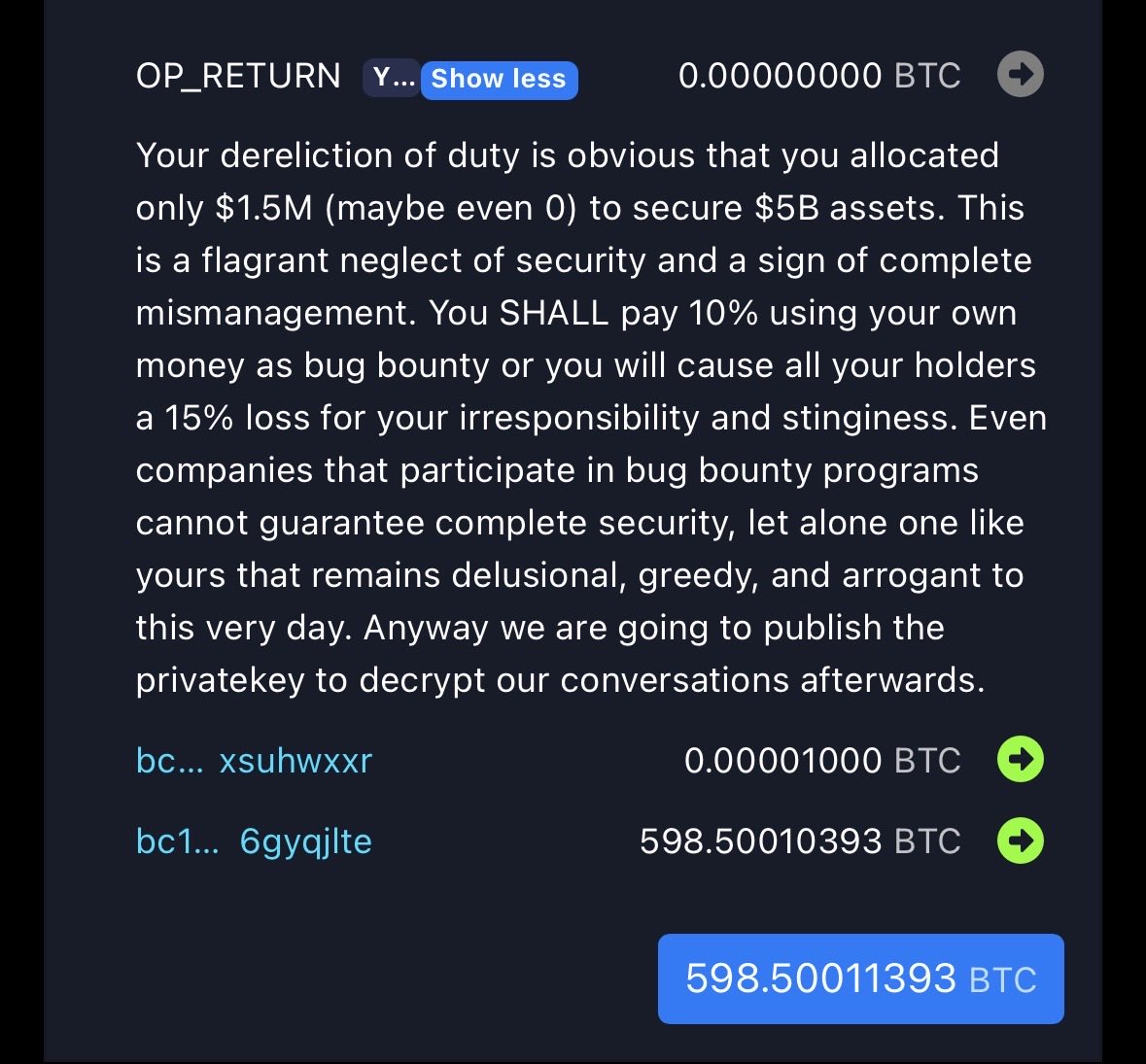 Liquid Network hackers demand 10% bounty from Blockstream, threaten to release private key dataLighter undergoes makeover with updated Web V3 design. This release brings a refreshed interface with improvements across navigation, market views, trading workflows, and overall usability.
Sources
19 records from 18 domains
en.wikipedia.org
blog.sei.io
cryptorank.io
coinmarketcap.com
evertune.ai
coinbase.com
bitcoinops.org
blog.metrika.co
kaironlabs.com
chain.link
tokenomist.ai
youtube.com
mbrenndoerfer.com
github.com
masterthecrypto.com
adevarlabs.com
keyrock.com
sciencedirect.com
Community notes
Spot something off or out of date? Drop a note. Editors review topic notes daily and roll accepted fixes into the explainer — contributors are recognized in the monthly $SQUID drop.
Loading notes…
Help improve this topic
Have a story or tip about this topic? Submit it. See something missing? Leave a note. Editors review daily; accepted submissions and fixes count toward the monthly $SQUID drop.