
In-depth explainer on Coinbase’s role as a public crypto platform, covering its exchange, derivatives, Base L2, USDC and stablecoin strategy, AI advisors and agents, regulation, tokenization and what users should know about risks and opportunities.
+45 sources across the wider coverage universe
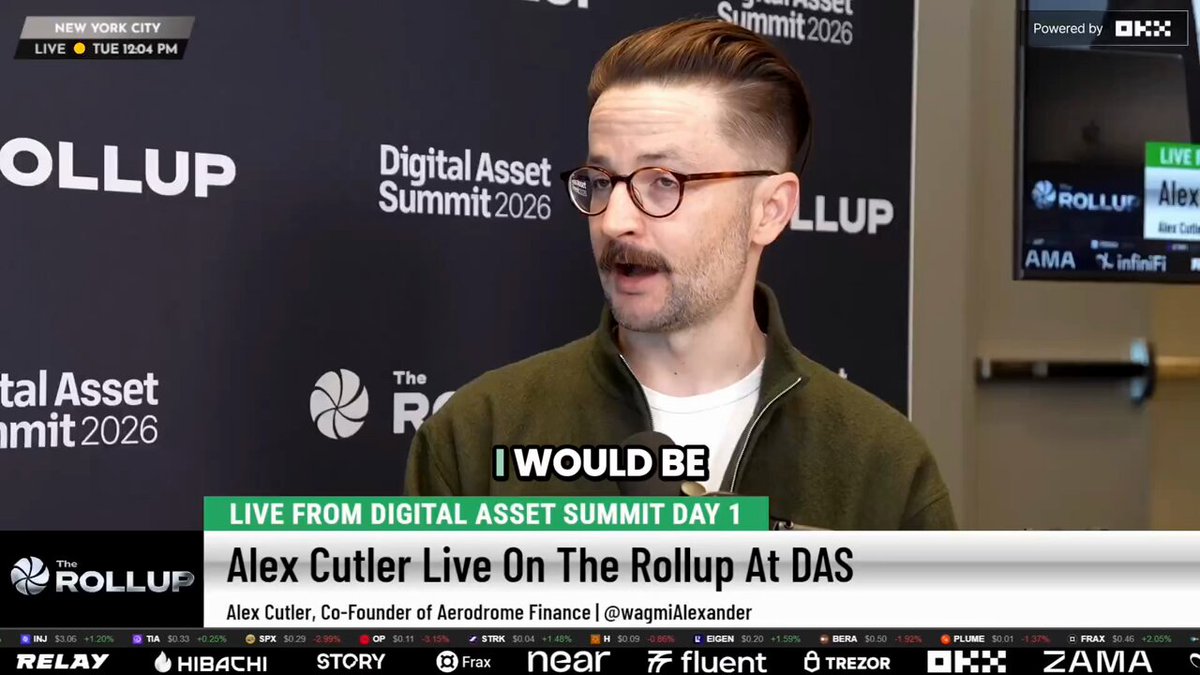 Alex Cutler of Dromos Labs argues AMMs offer advantages over traditional order books2026-04
 Coinbase acquires Hyperliquid's USDH deployer, Native Markets, to switch All USDH into USDC2026-05
 Beyond the sky: The story of how Jeff built Hyperliquid, a blockchain and crypto trading exchange, into the most profitable startup per employee on earth.2026-04
 Coinbase adds usage-based pricing to x402 for AI agents as weekly transactions crater 99% from peak2026-04
 Coinbase secures AFSL from ASIC, unlocks retail crypto derivatives and perpetual contracts in Australia2026-04
 Alchemy's AgentPay bridges Coinbase, Stripe, Visa, and Circle AI payment rails into single merchant integration2026-04
Coinbase: A Comprehensive Guide to the Public Crypto Platform
Coinbase is a publicly listed, U.S.-headquartered cryptocurrency platform that offers spot and derivatives trading, custody, payments and on-chain infrastructure for both retail and institutional users. It sits at the intersection of crypto markets, stablecoins like USDC, and emerging technologies such as AI agents, making it a key bellwether for how digital assets integrate into mainstream finance.
What Is Coinbase?
At its core, Coinbase is a centralized crypto asset platform that allows users to buy, sell, store and transfer cryptocurrencies such as Bitcoin, Ether and a growing range of other digital assets. The company describes itself as one of the most liquid regulated crypto spot exchanges globally, emphasizing a dynamic fee structure designed for high-volume trading and institutional flows. In parallel with its exchange business, Coinbase positions itself as a broader financial infrastructure provider, offering custody, staking-related services, an on-chain layer-2 network called Base, and various developer tools that connect traditional finance to crypto-native markets.
Coinbase operates under a corporate umbrella, Coinbase Global, Inc., which is listed on the Nasdaq under the ticker COIN, giving public equity investors direct exposure to a major crypto-native business. Its stated mission, repeated across investor materials, is to “increase economic freedom in the world,” an ambition that has informed its product roadmap from simple Bitcoin brokerage to a multiproduct platform spanning retail, institutional, and on-chain services. Because of its size, regulatory profile, and public-market transparency, Coinbase often serves as a proxy for broader sentiment in the crypto industry, with its financial results, listing decisions and regulatory disputes watched far beyond its own customer base.

Coinbase launches IPO access, first offering is Oura Ring, open until September 29

Origins and Evolution of Coinbase
Coinbase was founded in 2012, during a period when Bitcoin was still a niche experiment and the broader cryptocurrency ecosystem had not yet emerged. According to academic and reference accounts, entrepreneur Brian Armstrong, who would later become the company’s long-time CEO, co-founded the firm with the aim of making it easier and safer for individuals to acquire and store Bitcoin without needing to navigate command-line interfaces or self-managed private keys. In its earliest incarnation, Coinbase resembled a simple brokerage and wallet, enabling U.S. retail users to purchase Bitcoin via bank transfer or card and keep it in a hosted wallet the company managed on their behalf.
Over the following years, as Ethereum launched and thousands of new digital assets came to market, Coinbase expanded from this narrow focus into a more comprehensive exchange offering, eventually supporting hundreds of cryptocurrencies and hundreds of trading pairs. By the late 2010s, Coinbase had become one of the best-known on-ramps from fiat into crypto, particularly in the United States and Europe, and had developed a reputation (sometimes to the frustration of crypto-native traders) for relatively conservative asset listing policies and a focus on regulatory compliance. In an environment where many offshore exchanges prioritized rapid token listings and high leverage, Coinbase’s positioning as a regulated, U.S.-centric venue made it a natural partner for institutional investors and corporates testing the waters of digital assets.
The company’s evolution accelerated with its direct listing on the Nasdaq in 2021, which turned Coinbase into one of the first major crypto-native companies to gain a public equity listing in the United States. Going public forced the firm to publish detailed quarterly financials and risk disclosures, giving the market granular insight into its revenue mix, user growth, custody assets and regulatory exposures. These disclosures have shown a gradual shift from dependence on retail trading fees toward a more diversified model that includes subscription and services revenue, interest income, institutional custody and other non-trading lines of business. This diversification became particularly important during crypto bear markets, when spot trading volumes shrank and fee-based revenues became more volatile.
In parallel, Coinbase has pursued a strategy of internationalization and product expansion. The company has gradually secured licenses or registrations in multiple jurisdictions, including a notable registration with India’s Financial Intelligence Unit (FIU), which enables it to offer crypto trading services in that market. Coinbase has framed this Indian registration as a milestone in its global expansion plan, stating that it intends to launch retail services followed by additional investments and products tailored to local demand. Together with the development of Base, its own Ethereum layer-2 network, and a suite of institutional tokenization and derivatives offerings, these moves reflect Coinbase’s shift from a single-market exchange to a multi-jurisdictional financial infrastructure provider.
Readers click Coinbase stories not for price action but for institutional accountability — whether the SEC will cage it, whether Base enriches Coinbase or its users, and whether its new products (cbBTC, USDC yield, Bitcoin loans) deliver what they advertise.
Coinbase’s Core Businesses: Exchange, Custody and On-Chain Infrastructure
Spot Trading and Retail Brokerage
The foundation of Coinbase’s business remains its spot exchange and retail brokerage services, which allow users to trade cryptocurrencies against fiat currencies and stablecoins. Coinbase highlights its spot venue as one of the most liquid regulated crypto exchanges in the world, providing both retail and institutional customers with deep order books, high uptime and a fee schedule that rewards higher trading volumes. Unlike some purely crypto-to-crypto platforms, Coinbase has invested heavily in fiat connectivity, enabling users in supported jurisdictions to fund accounts via bank transfers, cards and other payment methods, which in turn supports its role as a key fiat on-ramp into Bitcoin and other digital assets.
Retail users typically interact with Coinbase through its consumer-facing app and website, which prioritize ease of use, educational materials and integrated wallet functions. The hosted wallet offers custodial storage for a user’s crypto assets, with the company managing the underlying private keys and implementing security measures such as hardware security modules and cold storage for the majority of funds, although the precise technical details are generally described at a high level in public materials. This custodial model reduces the operational complexity for beginners but introduces custodial risk, since the user does not directly control the keys to their Bitcoin or other cryptocurrencies. Coinbase complements this with separate non-custodial offerings, such as the Coinbase Wallet mobile application, that allow users to manage self-custody and interact directly with decentralized finance (DeFi) protocols, although those products sit somewhat apart from the main exchange flow.
The range of assets available on Coinbase has expanded significantly since its early focus on Bitcoin. Independent comparisons note that while some rivals, such as Kraken, now support more than 600 cryptocurrencies and over 750 trading pairs, Coinbase still supports hundreds of assets and more than 400 trading pairs, balancing breadth with regulatory and compliance screening. This listing approach reflects a trade-off: offering access to new tokens and sectors—such as DeFi, gaming, and tokenized real-world assets—while attempting to avoid securities law violations or reputational harm from low-quality projects. That tension has become more acute as regulators scrutinize whether some listed tokens might be unregistered securities, placing Coinbase’s asset review processes under legal and political pressure.
Advanced Trading, Institutional Clients and Custody
Beyond the retail interface, Coinbase operates more sophisticated trading and custody services for professional and institutional customers. The company’s exchange materials emphasize features such as advanced order types, an API for algorithmic trading, and specialized interfaces branded as Coinbase Exchange and Coinbase Advanced, aimed at traders who require granular control over execution and fee optimization. Institutional clients, including hedge funds, asset managers, corporates and other financial institutions, often access Coinbase via APIs and dedicated account teams, using the platform both as a trading venue and as a custodian for large holdings of Bitcoin, Ether, stablecoins and other assets.
Coinbase’s institutional custody business plays a central role in its diversification strategy, as it generates fee-based revenue that is less directly tied to trading volumes. Public investor materials highlight that the firm stores a significant amount of digital assets on behalf of customers, relying on segregated cold storage, internal controls and regulatory oversight, including service to a number of exchange-traded products and corporate treasuries. Custody, in this context, is more than simple storage: it underpins services such as staking-related rewards distribution, governance participation for certain protocols, and support for tokenization initiatives where real-world assets are represented on-chain and require compliant custodial frameworks.
Quarterly financial disclosures underscore the increasing importance of these institutional and service-based lines of business. Coinbase’s earnings presentations and filings break out revenue from areas such as custodial fees, blockchain rewards, interest income on customer fiat and stablecoin balances, and other subscription services, conveying to investors that the company is not solely reliant on the boom-and-bust cycles of retail spot trading. While trading fees remain a major contributor to top-line revenue, the firm’s strategic narrative emphasizes the growth of recurring revenue streams that could make its earnings less volatile over time.
Derivatives and Perpetual Futures
In addition to spot markets, Coinbase has expanded into derivatives through its Coinbase Derivatives platform, which it describes as a crypto-centric futures exchange offering a range of products across different contract sizes and underlying assets. The derivatives venue provides both institutional and eligible retail clients with tools to hedge price risk, obtain leveraged exposure and trade more complex strategies than those available in spot markets. By operating a regulated futures exchange, Coinbase places itself in closer competition with established derivatives venues and newer crypto-focused platforms that offer perpetual futures and options on major cryptocurrencies.
The firm’s move into perpetual futures has intersected with evolving regulatory debates in the United States. A recent legal dispute illustrates this complexity: CME Group filed a lawsuit against the U.S. Commodity Futures Trading Commission (CFTC) over the agency’s decision to allow platforms such as Kalshi and Coinbase to offer perpetual futures products, underscoring the tensions between incumbents, new entrants and regulators over how to structure and oversee such instruments. At the same time, Coinbase has shown a willingness to adjust its derivatives offerings in response to market or regulatory concerns, for example by suspending trading in certain perpetual contracts—such as Toncoin (TON) perpetual futures on a specified date—and automatically settling open positions at a defined final settlement price. This type of action highlights the active risk management and compliance decisions required when offering leveraged products in an uncertain regulatory environment.
Base and the Move On-Chain
A key element of Coinbase’s more recent strategy is Base, an Ethereum layer-2 (L2) network designed to make on-chain activity cheaper and more scalable for both developers and end-users. Base’s public materials emphasize interoperability across chains and ecosystems, promising that users can move value seamlessly between networks and access dApps and DeFi protocols in a more unified way. The idea is that by providing a native L2 closely integrated with Coinbase’s centralized platform, the company can lower friction for users who want to move from custodial accounts into on-chain applications, and for developers who want to build on a network that has a direct path to millions of existing Coinbase customers.
Base leverages the general concept of rollups, a category of L2 scaling solutions that aggregate many transactions off-chain and then periodically post them to the Ethereum mainnet. Rollups work by batching large numbers of individual transactions into a single transaction that is ultimately recorded on Ethereum, thereby reducing the load on the base layer while still inheriting its security guarantees. Coinbase’s own educational content explains that rollups aim to reduce network congestion, increase throughput and lower transaction fees, all while maintaining Ethereum’s high-security levels. In practice, this architecture allows users to interact with DeFi, NFTs, gaming and other dApps on Base with lower costs than transacting directly on Ethereum L1, which in turn could make on-chain activity more accessible to smaller retail users.
Base also serves as a strategic bridge between centralized and decentralized finance for Coinbase. The company has highlighted partnerships such as its designation of Centrifuge as a “Preferred Tokenization Infrastructure” for institutional-grade tokenization, with Centrifuge powering multichain, automated infrastructure that brings private credit, fixed income and equity exposure on-chain. By facilitating tokenization on Base, Coinbase positions its L2 as a venue for real-world assets, stablecoin-based financing and structured products that can integrate with its custody and trading businesses. This on-chain focus is reinforced by Coinbase’s support for protocol migrations—for example, backing the migration of Injective’s INJ token from an ERC-20 representation on Ethereum to the native Injective EVM mainnet—illustrating its desire to remain aligned with evolving multi-chain ecosystems while promoting Base as a core piece of its own stack.

Open Standard names Zach Abrams CEO; Coinbase, Mastercard, Stripe, Visa and Shopify join as founding partners

Stablecoins, USDC and the Tokenization Play
Coinbase’s Role in USDC and Stablecoin Markets
Stablecoins occupy a central place in Coinbase’s ecosystem, both as trading quote assets and as building blocks for payments, DeFi and tokenization. Among these, USD Coin (USDC) is particularly important. USDC is a U.S. dollar-referenced stablecoin issued by Circle, designed to maintain a value of approximately one U.S. dollar per token and backed by reserve assets such as cash and short-term U.S. Treasurys. In a recent announcement, Circle described “the next chapter for USDC,” noting that the stablecoin was launching on six new blockchains and emphasizing increased support from Coinbase, which deepened its relationship with Circle via an investment intended to strengthen the stablecoin’s position.
This closer alignment between Coinbase and Circle has strategic significance. USDC is widely used on Coinbase as a base asset for trading pairs, a settlement instrument, and a store of value for users who want dollar exposure without leaving the crypto ecosystem. By investing in Circle and promoting the expansion of USDC to additional blockchains, Coinbase is effectively betting that a regulated, transparent stablecoin will remain a core primitive across crypto markets, DeFi protocols, and on-chain payment networks. As stablecoins become more deeply integrated into exchanges, lending protocols and cross-border transfer platforms, Coinbase’s influence over and dependence on USDC’s adoption and regulatory status are likely to grow.
Beyond USDC, Coinbase routinely lists and supports other stablecoins and yield-bearing dollar tokens, including new entrants that tie into on-chain credit and real-world asset strategies. Recent market activity has seen Coinbase introduce trading for tokens like Re (RE) and operate trading pairs such as RE-USD and O-USD, moving them through different modes such as limit-only and full trading as liquidity and risk management processes evolve. Although each asset has its own structure and risk profile, the broader effect is to position Coinbase as a marketplace where traditional cash-like exposure, tokenized treasuries, and more complex yield-bearing dollar products are all accessible within the same interface. This expansion underscores how “stablecoins” now encompass a spectrum from fully reserved tokens like USDC to more experimental designs blending on-chain credit, structured finance, and insurance-like mechanisms.
Tokenization, Real-World Assets and Institutional Adoption
Tokenization of real-world assets (RWAs) has emerged as a key narrative for the next phase of crypto adoption, and Coinbase has placed itself near the center of this trend. Its partnership with Centrifuge, which Coinbase has named a preferred tokenization infrastructure provider, highlights a strategy of enabling institutional-grade tokenization on Base and other supported networks. Centrifuge’s infrastructure is designed to bring asset classes such as private credit, fixed income and equity on-chain, with automated workflows, multichain compatibility and institutional controls that allow asset managers and corporates to issue and manage tokenized instruments.
For Coinbase, enabling tokenization serves multiple business objectives. It can drive new assets and trading pairs to its exchange, generating volumes and fee revenue. It can enhance the value proposition of its custody and prime brokerage services, since tokenized assets often require sophisticated custody, compliance and governance support. And it can strengthen Base as an on-chain venue by seeding it with tokenized RWAs, stablecoin-based financing pools, and other institutional-grade products that may attract both DeFi users and traditional financial institutions experimenting with blockchain rails.
However, Coinbase’s engagement with tokenization and on-chain credit also exposes users and investors to new kinds of risk. DeFi lending protocols and credit platforms backed by venture arms such as Coinbase Ventures have pursued ambitious models, including uncollateralized or undercollateralized lending to businesses in emerging markets, often promising double-digit yields. When such loans perform poorly, as various high-profile cases have shown, depositors can face significant losses and extended restructurings, revealing that the presence of well-known backers does not eliminate credit or smart-contract risk. These episodes underscore the need for careful due diligence on any tokenized or yield-bearing product listed or referenced on centralized venues, even those that market themselves as regulated and conservative compared with purely on-chain platforms.
Stablecoins as Payment Rails and AI-Native Money
Stablecoins on Coinbase are not only trading instruments but also integral to its emerging payments and AI strategies. Startups focused on stablecoin payments infrastructure, such as those building cross-border settlement and B2B payment rails, have attracted backing from crypto-focused investors including Coinbase, reflecting a belief that USDC and similar tokens can lower transaction costs and enable new business models in global commerce. Coinbase’s support for such companies fits neatly with its positioning as both an exchange and an infrastructure provider, as these payment flows ultimately depend on reliable fiat on-ramps and liquid stablecoin markets.
In parallel, as Coinbase connects its platform to AI agents and advisory systems, dollar-referenced tokens like USDC become a natural “native currency” for machine-driven transactions. AI agents that manage portfolios, execute arbitrage strategies or pay for cloud services and data feeds need a programmable, low-friction medium of exchange. Stablecoins provide that function more effectively than traditional bank transfers, especially in a 24/7 global market context, making Coinbase’s USDC-centric infrastructure a potential backbone for AI-native financial workflows. This interaction between stablecoins, AI agents and tokenized assets is likely to be an important area of experimentation in the coming years, with Coinbase positioned as one of the platforms where these technologies converge.
Regulation, Compliance and the Policy Battleground
SEC, “Crypto 2.0” and Regulatory Whiplash
As a U.S.-based, publicly traded company, Coinbase sits under an intense regulatory spotlight. In securities law, one of the most consequential developments has been the U.S. Securities and Exchange Commission’s shifting approach to enforcement against crypto trading platforms. In a notable recent move, the SEC dismissed its enforcement action against Coinbase midstream, an episode that Commissioner Caroline A. Crenshaw described in public remarks as a form of “regulatory whiplash” and criticized as problematic both for market participants and the Commission’s credibility. Those remarks stressed the broader stakes of crypto regulation, including concerns about investor protection, market integrity and the proper interpretation of existing securities laws as applied to novel instruments.
This kind of regulatory volatility has direct implications for Coinbase’s business model. The unresolved question of whether and when certain tokens listed on its platform constitute securities affects everything from listing practices and disclosure standards to the design of staking, lending and yield-bearing products. The dismissal of an enforcement action does not necessarily translate into clear rules of the road, leaving Coinbase to operate under legal uncertainty while advocating for more tailored digital asset legislation. As a public company, it must also disclose these legal and regulatory risks in its filings, which can influence investor perception and valuation.
CFTC, Prediction Markets and Derivative Oversight
In derivatives and event-based markets, Coinbase must also navigate oversight from the Commodity Futures Trading Commission. The CFTC has long argued that many “event contracts” or prediction markets fall within its jurisdiction, classifying them as “swaps” under the Commodity Exchange Act. In an opinion piece reprinted on its own site, the CFTC emphasized that these markets can help participants hedge event-driven risks, manage portfolio exposures and aggregate information about future outcomes, but also stressed that they are derivative instruments and must be regulated accordingly.
Coinbase’s expansion into both perpetual futures and event-based contracts places it squarely in this policy debate. The aforementioned lawsuit by CME against the CFTC over permission for platforms such as Kalshi and Coinbase to offer perpetual futures illustrates competitive tensions between incumbent derivatives exchanges and newer entrants, as well as disagreements about product design and regulatory scope. At the same time, Coinbase finds itself in a race with both crypto-native platforms and large brokerages such as Charles Schwab, which has announced partnerships to offer yes/no S&P 500 options that effectively function as regulated prediction markets. As these event-based markets grow, regulators will need to decide how to balance innovation and informational benefits against concerns over retail speculation, gambling-type products and systemic risks, with Coinbase as one of the key intermediaries shaping—and being shaped by—those decisions.
Global Expansion, Local Compliance and Taxation
Coinbase’s international strategy further complicates its regulatory profile. The company’s registration with India’s Financial Intelligence Unit marks a major step in engaging one of the world’s largest potential crypto markets, but it also commits Coinbase to local anti–money laundering, reporting and compliance requirements that can differ significantly from U.S. norms. Coinbase has articulated a plan to launch retail trading services in India and subsequently offer more products and investment in the country, suggesting a long-term commitment but also exposing the firm to evolving Indian policies on crypto taxation, capital controls and banking access.
Similarly, within the United States, state-level policies can have outsized effects on Coinbase’s operations. Recent debates over state-specific crypto tax regimes, such as laws passed in Illinois, have elicited strong responses from Coinbase’s leadership, who argue that poorly designed tax frameworks risk pushing innovation and jobs to more favorable jurisdictions. These controversies exemplify the fragmented nature of U.S. regulation, where federal agencies, state securities regulators, tax authorities and legislatures all have overlapping and sometimes conflicting approaches toward digital assets. Coinbase must navigate this patchwork while maintaining compliance, lobbying for clearer rules and reassuring customers that their access to services will not be abruptly curtailed by regulatory shifts.
Compliance as a Strategic Differentiator
In its public messaging and investor materials, Coinbase consistently portrays regulatory compliance as a core differentiator. The company emphasizes its registration and licensing footprint, its cooperation with law enforcement, and its implementation of robust know-your-customer (KYC) and anti–money laundering (AML) controls. This positioning aims to reassure large institutions, corporate treasuries and conservative retail users that Coinbase offers a safer and more compliant environment than unregulated or offshore platforms. It also supports the firm’s bid to serve as a custodian and service provider for regulated financial instruments, such as crypto exchange-traded products and tokenized securities.
Yet compliance is also a cost center and a constraint. Extensive KYC/AML processes can make onboarding slower or more cumbersome, and strict adherence to sanctions regimes or asset delistings can prompt backlash from segments of the crypto community that prioritize censorship resistance and permissionless access. Coinbase must balance these tensions while competing with nimbler, less regulated platforms on features such as high leverage derivatives, rapid token listings and privacy-enhancing tools. How it manages this balancing act will help determine whether it remains a trusted “on-ramp” to crypto for mainstream users or loses ground to competitors offering either more regulatory certainty or more radical openness.
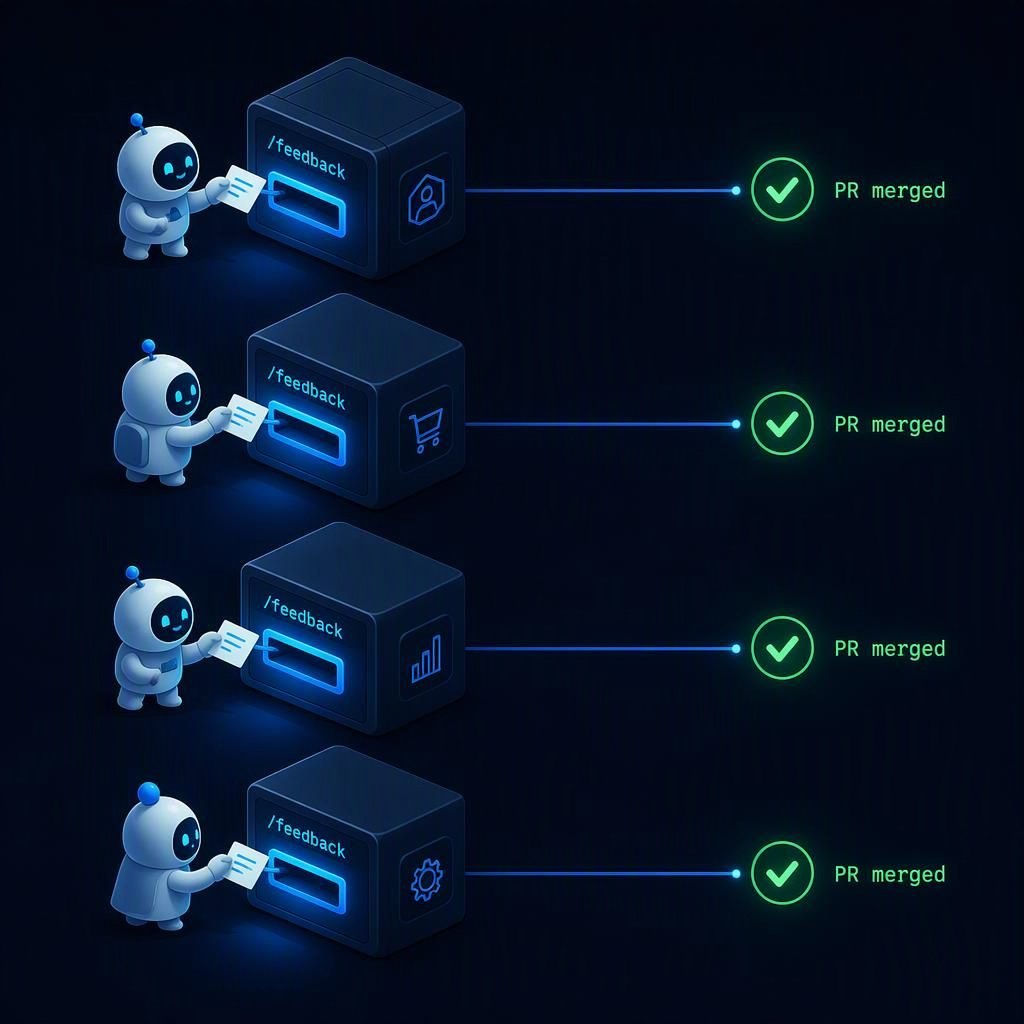
Coinbase CEO proposes /feedback endpoints so AI agents can flag bugs and missing features
Coinbase, AI and the Future of Trading
Coinbase Advisor and AI-Powered Guidance
Coinbase has moved aggressively to integrate artificial intelligence into its product suite, particularly in the realm of investment advice and market analysis. The firm introduced Coinbase Advisor as “one of the world’s first SEC-registered AI-powered investment advisors,” promising professional-style financial guidance tailored to individual users without the traditional minimum asset requirements that define much of the wealth management industry. According to Coinbase’s description, Advisor leverages AI to process market news, ideas and opportunities, translating them into individualized recommendations while operating within a regulated advisory framework overseen by the SEC.
This product reflects both a technological and a regulatory innovation. On the technological side, Advisor uses AI models to ingest large volumes of information about crypto markets, macroeconomic conditions and individual user portfolios, aiming to provide context-aware suggestions more quickly and at lower cost than human advisors. On the regulatory side, securing SEC registration for an AI-native advisory service sets a precedent for how existing securities laws can apply to machine-driven financial advice. The move may attract scrutiny from regulators and consumer advocates concerned about algorithmic bias, transparency and suitability, but it also signals that Coinbase believes AI-centric advisory models can coexist with traditional investor protection rules.
Coinbase for Agents: Letting AI Trade and Pay
Beyond advisory tools for humans, Coinbase is also building infrastructure that connects AI agents directly to user accounts. In a recent announcement, the company introduced “Coinbase for Agents,” a service that allows AI agents to trade, pay and execute workflows on behalf of users by linking directly to their Coinbase accounts. The idea is that an AI agent—such as a personal financial assistant, a trading bot or an enterprise automation tool—can monitor markets, manage portfolios, rebalance stablecoin and Bitcoin holdings, and initiate payments without requiring manual intervention for each transaction.
Coinbase’s description emphasizes that Agents can connect securely and act within user-defined permissions, suggesting a framework where users can delegate specific tasks or risk parameters to AI while retaining overall control and oversight. This concept aligns with broader industry trends in which major exchanges and brokers are turning AI agents into trading copilots, integrating research, risk analysis, order execution and portfolio management into unified, constantly running systems. In many ways, stablecoins like USDC and on-chain networks like Base provide the underlying rails for these agents, enabling near-instant settlement and programmable logic that would be harder to implement with traditional bank transfers or legacy brokerage systems.
AI, Market Structure and Systemic Implications
AI-driven trading and advisory systems raise important questions for market structure and regulation. As AI agents become more prevalent in crypto and traditional markets, platforms like Coinbase must consider how to manage issues such as algorithmic herding, flash crashes and the amplification of volatility through automated strategies. Crypto markets already operate on a 24/7 basis, and the addition of continuously running AI agents could further accelerate price discovery but also intensify short-term swings, especially in less liquid tokens.
Regulators may also scrutinize AI-native platforms for transparency and accountability. Questions about who is responsible when an AI agent makes a harmful or unsuitable trade, how conflicts of interest are managed in AI-generated advice, and how to audit complex models will become increasingly important. Coinbase’s decision to work within SEC and CFTC frameworks for its AI offerings, and to characterize tools like Advisor as registered advisory services, suggests an attempt to anticipate these concerns rather than operate on the regulatory periphery. Whether that strategy proves successful will depend not only on Coinbase’s internal governance but also on how quickly regulators and lawmakers adapt rules to address AI-specific risks in both crypto and traditional asset markets.
- 01SEC regulatory war of attrition↗
Multiple high-click headlines tracked Coinbase's court fights, shareholder suits, and the eventual Trump-era SEC retreat — readers followed the outcome as a bellwether for the whole industry.
- 02Base chain centralization risk↗
A single protocol capturing 68% of Base state and Andre Cronje's exposure of sequencer fees flowing to Coinbase directly raised questions about who the L2 actually benefits.
- 03cbBTC product transparency↗
From early hints to Aave's rapid supply-cap doubling to the 'Bitcoin-backed loans not backed by real BTC' controversy, readers scrutinized whether Coinbase's tokenized Bitcoin products matched their marketing.
- 04Institutional adoption signals↗
South Korea's national pension buying Coinbase shares and Larry Fink's conversion from skeptic to champion gave readers concrete evidence of TradFi legitimization.
- 05USDC yield vs. banks↗
Coinbase's 4% USDC yield offer and MakerDAO's $250M collateral move through Coinbase showed readers the exchange competing directly with savings accounts.
- 06Friend.tech Base ecosystem boom and bust↗
From $20M revenue debut to a 98% token collapse and shutdown, Friend.tech's arc on Base illustrated the speculative risk baked into Coinbase's L2 ecosystem.
Coinbase in the Broader Crypto Ecosystem
Competition, Market Share and Benchmarks
Coinbase operates in a competitive landscape that includes both long-established crypto exchanges and newer platforms experimenting with novel products. Comparisons such as those by Investopedia contrast Coinbase with rivals like Kraken, noting that Kraken supports more than 600 cryptocurrencies and over 750 trading pairs, while Coinbase offers a narrower but still extensive selection of 282 cryptocurrencies and over 400 trading pairs. This difference reflects a strategic choice: Coinbase has typically prioritized regulatory vetting and liquidity concentration over listing as many tokens as possible, positioning itself as a relatively conservative venue for users who prefer exposure to larger-cap or better-known assets.
Despite this more selective listing approach, Coinbase remains a major source of liquidity and price discovery for major assets such as Bitcoin and Ether, especially against fiat currencies like the U.S. dollar and euro. Its regulated status and public listing make it an attractive partner for institutional investors seeking to execute large trades, custody assets or gain exposure through structured products and funds. At the same time, its retail footprint and user-friendly app ensure that it continues to serve as a first point of contact for newcomers to crypto, who often buy their first Bitcoin or stablecoin through Coinbase before exploring DeFi, NFTs or other parts of the ecosystem.
Because of this dual role, Coinbase’s listing decisions and market practices often serve as benchmarks for the broader industry. The addition of a new asset can signal a degree of mainstream validation, while the suspension or delisting of a token—such as the halt of Toncoin perpetual futures trading and automatic settlement of remaining positions—can reinforce perceptions of regulatory or risk concerns. In this way, Coinbase exerts soft power over the crypto ecosystem, influencing which projects gain traction among more cautious retail and institutional audiences and which remain confined to more experimental, on-chain-only venues.
Ventures, DeFi and Ecosystem Bets
Coinbase extends its influence through its venture arm, which invests in startups across the crypto and Web3 stack. These investments span DeFi protocols, infrastructure, stablecoin payment firms and tokenization platforms, often creating synergies with Coinbase’s exchange, custody and Base network businesses. The firm’s backing of DeFi lending protocols and on-chain credit experiments, for instance, reflects a belief that future financial primitives will be built on open, programmable infrastructure, even as the risks of such models—highlighted by episodes of loan defaults and high realized loss rates—remain significant for depositors.
Similarly, Coinbase’s participation in funding rounds for stablecoin payments companies indicates strategic interest in using USDC and similar tokens as rails for cross-border commerce and B2B settlement. By aligning itself with projects that build wallets, payment gateways and treasury tools atop USDC and other stablecoins, Coinbase aims to ensure that transactional flows ultimately intersect with its exchange and custody businesses, whether through liquidity provision, fiat on-ramps or institutional services. These ecosystem bets are inherently risky, as individual projects can fail or face regulatory headwinds, but they also position Coinbase to capture upside from successful new protocols and applications built on the infrastructure it supports.
Prediction Markets, Event Contracts and Traditional Finance
Another area where Coinbase interacts with the broader ecosystem is prediction markets and event-based derivatives. The growth of platforms like Polymarket and Kalshi has demonstrated demand for markets that allow participants to trade on the outcomes of elections, economic indicators and other real-world events. Regulators such as the CFTC have characterized many of these “event contracts” as swaps, emphasizing that they are derivative instruments designed to allow speculation on future market conditions without owning the underlying asset and stressing their role in hedging event-driven risk and aggregating information.
Coinbase’s exploration of event-based S&P 500 options and similar products places it in direct competition not only with crypto-native prediction market platforms but also with large brokerage firms such as Charles Schwab, which has announced yes/no options on the S&P 500 in partnership with Cboe. This convergence of traditional brokers, regulated derivatives exchanges and crypto platforms around event-based markets reflects a broader trend: the lines between “crypto markets” and conventional financial derivatives are blurring, with on-chain infrastructure and stablecoins increasingly used to settle or collateralize trades that reference traditional indices and macro variables. Coinbase’s participation in this space will likely influence how prediction markets evolve, especially if it can combine its regulatory footprint, retail user base and on-chain infrastructure to create hybrid products that appeal to both crypto-native and traditional investors.
Using Coinbase: Benefits, Risks and Practical Considerations
Access, Liquidity and Market Structure
From a user perspective, Coinbase offers several advantages as an entry point into crypto. Its status as a regulated, U.S.-listed company provides a degree of transparency and oversight not always present in offshore exchanges, and its investor materials emphasize robust security practices, including significant holdings of customer assets in cold storage and comprehensive risk management frameworks. The exchange’s liquidity in major trading pairs is generally deep, supporting market and limit orders for Bitcoin, Ether, USDC and other large-cap tokens across a variety of fiat and crypto pairs. For many users, this combination of perceived safety, fiat connectivity and liquidity makes Coinbase a default choice for buying and selling crypto, especially in jurisdictions where it has established regulatory footholds.
However, users must balance these benefits against costs and trade-offs. Fee schedules on Coinbase’s retail-facing platform can be higher than those of some competitors, especially for small-volume users who rely on simple buy/sell functionality rather than advanced trading interfaces. Sophisticated traders may prefer Coinbase Exchange or Coinbase Advanced to access lower fees and more granular control over orders, but they may also compare pricing, supported assets and derivatives offerings with rival platforms like Kraken, which supports more cryptocurrencies and trading pairs and sometimes offers more flexible margin and staking options. The right choice for any given user depends on their priorities: regulatory comfort and fiat integration versus asset variety, leverage, and fee optimization.
Custodial vs Self-Custodial Use
Another key consideration is the distinction between custodial and self-custodial use. When users keep assets on Coinbase’s main platform, the company controls the private keys and holds the assets in custody on their behalf, subject to its terms of service and operational procedures. This model simplifies account recovery, tax reporting and fiat withdrawals, but it also introduces counterparty risk: if Coinbase were to face severe operational or legal difficulties, customers could face delays or restrictions in accessing funds, depending on the jurisdiction and regulatory protections in place.
By contrast, self-custodial tools such as the Coinbase Wallet mobile app allow users to hold their own private keys and interact directly with on-chain applications, including DeFi protocols on Ethereum, Base and other supported networks. Coinbase’s educational materials on rollups and L2 networks explain how users can bridge assets to such platforms to benefit from lower fees and faster transactions, while still settling activity on the underlying layer-1 blockchain. This self-custodial path increases responsibility: users must securely store seed phrases, manage transaction risks and understand smart contract behavior. For many, a hybrid approach—using Coinbase’s custodial services for larger balances and off-chain liquidity, while maintaining smaller self-custodial wallets for DeFi and experimentation—offers a pragmatic balance of convenience and control.
Investment Exposure via COIN Stock
For those who want exposure to the crypto industry without holding tokens directly, Coinbase’s public listing provides another vector. Shares of Coinbase Global, Inc. (COIN) trade on the Nasdaq and represent equity ownership in the company, encompassing its exchange, custody, derivatives, Base network and other business lines. Investor relations materials and quarterly earnings reports detail the firm’s financial performance, including revenues from trading, subscription and services, interest income and other sources, as well as operating expenses, regulatory contingencies and strategic initiatives.
COIN shares are not a direct proxy for Bitcoin or any single crypto asset; rather, they offer exposure to the business of crypto market infrastructure and services. The stock’s performance reflects both crypto market cycles—since trading volumes and user engagement tend to rise and fall with asset prices—and company-specific factors such as product launches, regulatory outcomes, cost control and competitive positioning. Major institutional investors, including prominent asset managers, frequently adjust their exposure to COIN in response to these variables, sometimes increasing positions when they view Coinbase’s AI, tokenization and derivatives strategies as underappreciated growth drivers and trimming exposure when they favor other platforms or perceive regulatory risks as elevated.
Security, Risk Management and Personal Responsibility
Finally, users of Coinbase—and any crypto platform—must confront broader issues of security and risk. While Coinbase emphasizes its security practices, regulatory compliance and financial transparency, no centralized platform is entirely free of risk, whether from cyberattacks, operational failures, regulatory actions or extreme market events. Past industry crises, including exchange insolvencies and abrupt regulatory crackdowns, illustrate that even apparently robust platforms can face unanticipated stress.
Coinbase’s suspension of specific markets, such as TON perpetual futures, and its sometimes rapid adjustments to product offerings in response to legal or market developments, underscore the need for users to monitor platform announcements and understand the terms governing their positions. Additionally, exposure to complex products—whether leveraged derivatives, DeFi tokens, or tokenized real-world assets—requires careful risk assessment beyond the reputational halo of Coinbase’s brand or venture backing. Education, diversification and a clear understanding of custody arrangements are crucial, regardless of whether one engages with Coinbase primarily as a trader, long-term holder, DeFi participant or AI-assisted investor.
SEC files lawsuit against Coinbase alleging unregistered securities exchange
Friend.tech launches on Base, notches $20M revenue in debut weeks
- 2024-01regulatory
SEC's hacked X account falsely announces spot Bitcoin ETF approval; Coinbase execs mock the incident
Coinbase launches cbBTC; Aave onboards it and doubles supply cap to 900 cbBTC within days
South Korea's national pension fund discloses $19.9M Coinbase share position
Andre Cronje publicly exposes Base sequencer fees flowing to Coinbase, bypassing the Base ecosystem
Trump-era SEC reassigns 50+ lawyers and scales back crypto enforcement posture
Coinbase secures registration in India, expanding regulated international footprint
Outlook
Coinbase occupies a unique position at the intersection of crypto markets, public equity markets, stablecoins, tokenization and AI-driven finance. Its evolution from a simple Bitcoin broker into a multiproduct, globally oriented infrastructure provider reflects both the maturation of the crypto industry and the ongoing uncertainties that surround regulation, market structure and technological change. The company’s deep integration with USDC, its development of the Base layer-2 network, and its moves into tokenization and real-world assets through partnerships like Centrifuge suggest a long-term bet that on-chain finance will increasingly underpin payments, credit and capital markets.
At the same time, Coinbase’s embrace of AI—via products like Coinbase Advisor and Coinbase for Agents—signals a conviction that automated, AI-native financial services will shape how individuals and institutions interact with crypto and traditional assets alike. Whether AI agents become trusted trading copilots or flashpoints for new forms of systemic risk will depend on how platforms like Coinbase implement safeguards, transparency and regulatory compliance, and on how quickly policymakers adapt to AI-driven market dynamics.
Regulatory outcomes remain a central uncertainty. The SEC’s shifting posture, CFTC debates over event-based contracts, state-level tax experiments and international licensing regimes all affect Coinbase’s ability to launch new products, expand into new markets and maintain its reputation as a compliant yet innovative platform. Still, as long as it remains a major entry point into Bitcoin, stablecoins and on-chain markets for both retail and institutional users, Coinbase is likely to continue serving as a barometer for the broader health and direction of the crypto ecosystem. For traders, developers, policymakers and AI agents alike, understanding Coinbase’s role offers a window into how digital assets and traditional finance may converge in the years ahead.
Latest Coinbase news
Coinbase launches IPO access, first offering is Oura Ring, open until September 29Open Standard names Zach Abrams CEO; Coinbase, Mastercard, Stripe, Visa and Shopify join as founding partnersCoinbase CEO proposes /feedback endpoints so AI agents can flag bugs and missing features Brooklyn man sentenced to up to 12 years for $16M Coinbase social engineering theft
 Coinbase and Microsoft dismantle EvilTokens, an AI cybercrime platform, leading to arrests
 Coinbase Agents can now trade 6,000+ stocks, while x402 enables agents to pay for live stock analytics and market data directly from their USDC balance
Sources
19 records from 12 domains
coinbase.com
investor.coinbase.com
ebsco.com
base.org
circle.com
sec.gov
investopedia.com
tradingview.com
cftc.gov
x.com
centrifuge.io
cryptorank.io
Community notes
Spot something off or out of date? Drop a note. Editors review topic notes daily and roll accepted fixes into the explainer — contributors are recognized in the monthly $SQUID drop.
Loading notes…
Help improve this topic
Have a story or tip about this topic? Submit it. See something missing? Leave a note. Editors review daily; accepted submissions and fixes count toward the monthly $SQUID drop.