
In‑depth explainer on Coinbase Prime, Coinbase’s institutional crypto platform for custody, trading, derivatives, financing and staking, and how it shapes BTC, ETH and SOL markets, seizure liquidations and institutional adoption.
+8 sources across the wider coverage universe
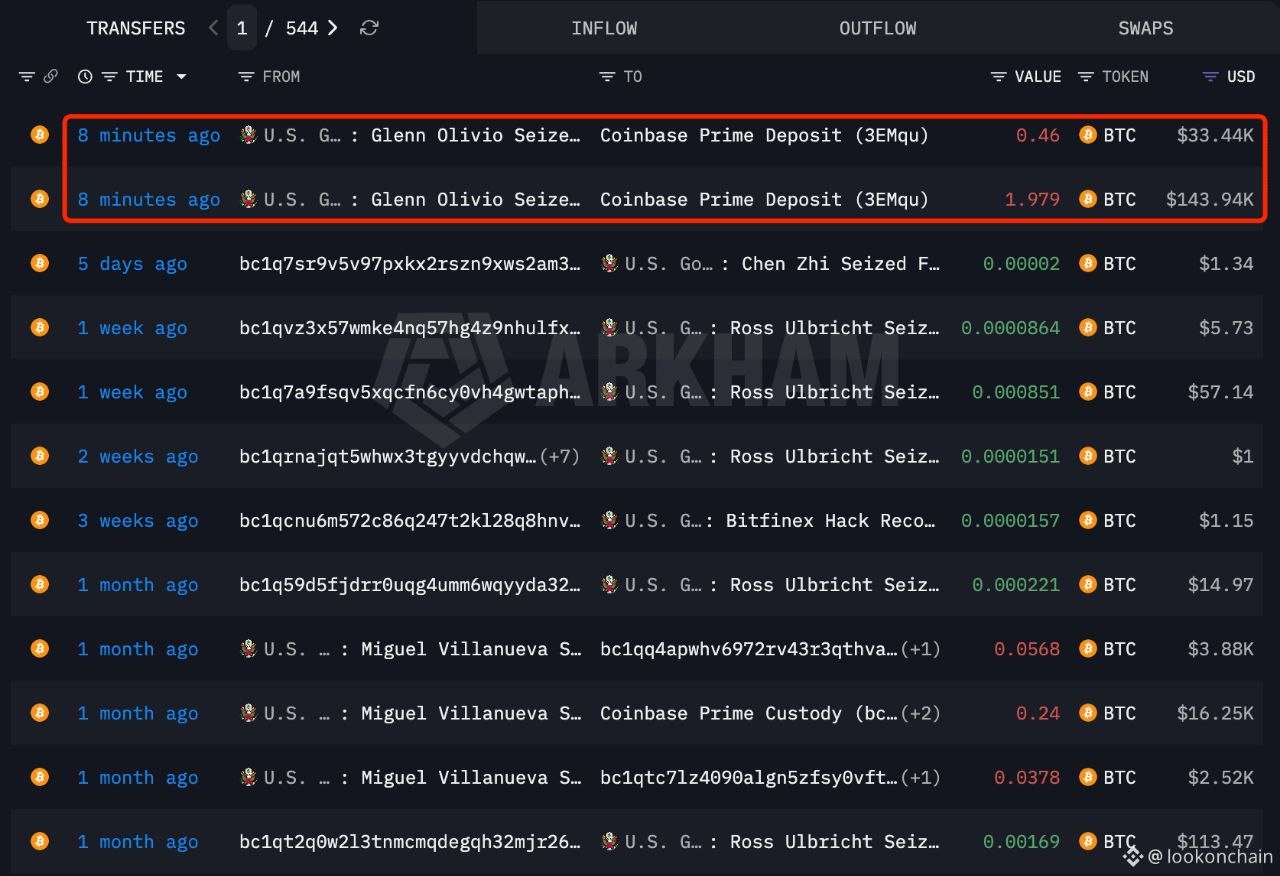 Bitcoin linked to suspected steroid distribution conspiracy moved by U.S. authorities to Coinbase Prime, highlighting continued handling of seized crypto assets2026-04
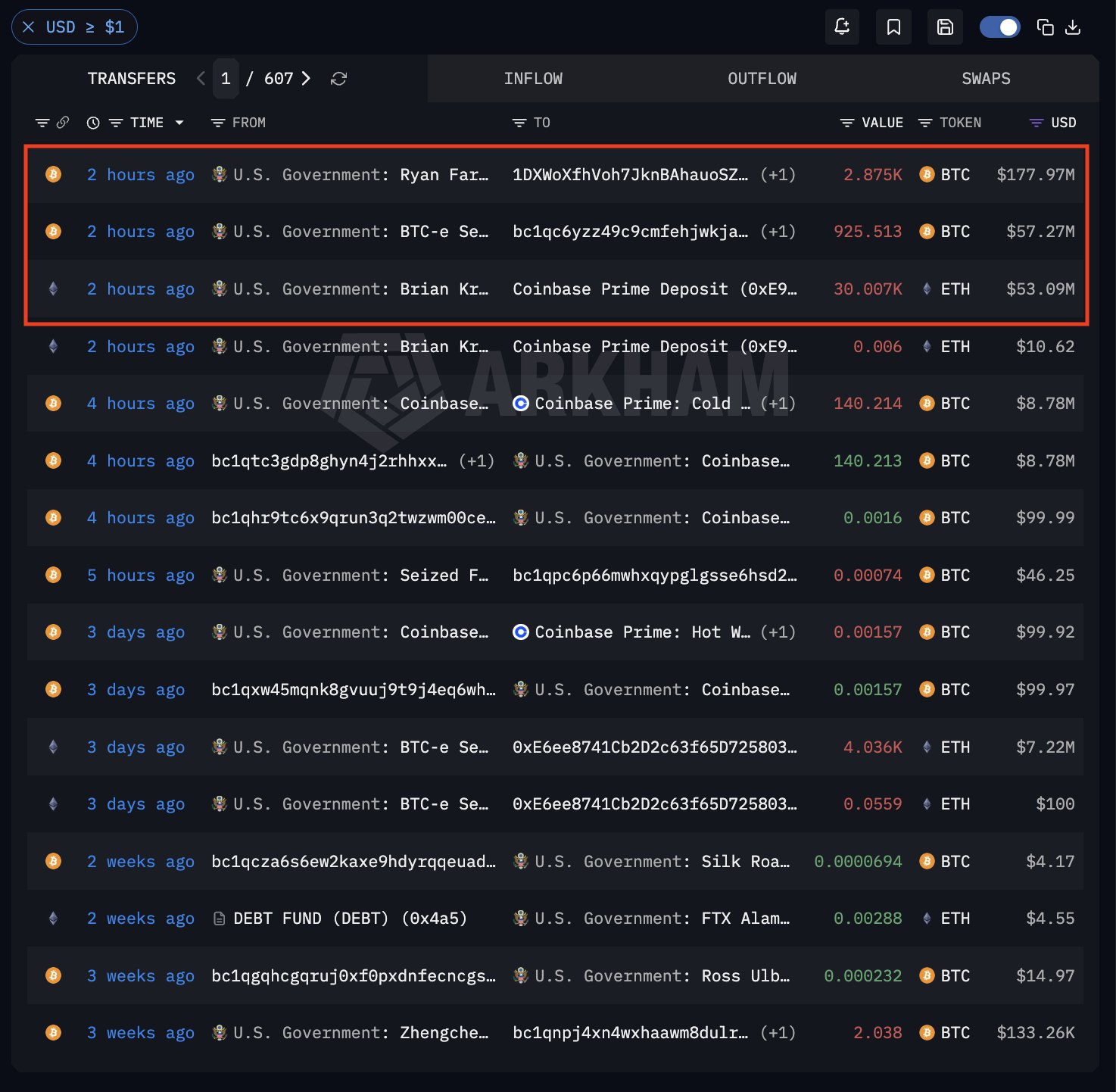 U.S. government-linked wallets move $297M in seized BTC and ETH to Coinbase Prime2026-07
 A BlackRock-linked wallet shifted 2,156 BTC (~$186M) to Coinbase Prime.2025-12
 US government just transferred 3940 BTC ($243M) of funds from the Silk Road hack to Coinbase Prime2024-06
 *DOJ SILK ROAD WALLET MOVES 2,000 BTC ($139 MILLION) TO SAME COINBASE PRIME WALLET: ONCHAIN DATA AND ARKHAM LABELS - THE BLOCK PRO2024-04
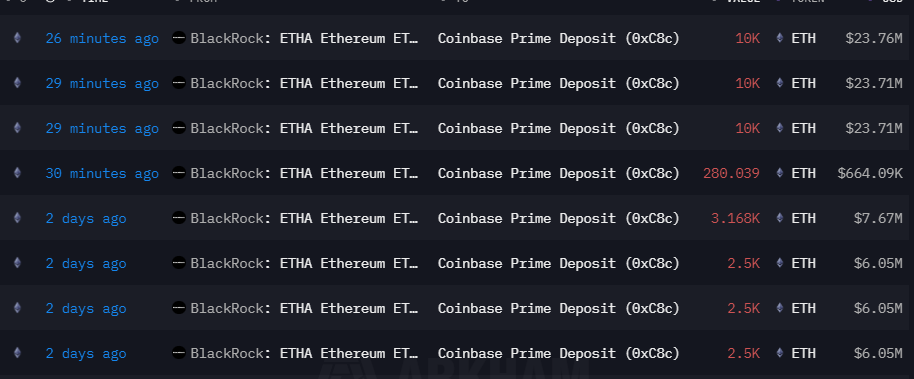 BlackRock shifts BTC and ETH to Coinbase Prime.2025-02
Coinbase Prime: Inside the Institutional Operating System For Crypto
Coinbase Prime is Coinbase’s institutional-only platform that combines high-security crypto custody, professional trading tools, derivatives access, financing, and staking into a single “prime brokerage” stack designed for asset managers, corporates, hedge funds, and governments. In practice, it has become one of the main venues where large Bitcoin, Ether, Solana, and other major-token flows are executed or custody is maintained, meaning Coinbase Prime now sits at the center of institutional adoption, government seizure liquidations, and the broader evolution of crypto market structure.
What Coinbase Prime Is – And How It Differs From Regular Coinbase
At its core, Coinbase Prime is Coinbase’s answer to the question of how large, regulated institutions should safely hold, trade, and finance digital assets without stitching together a patchwork of custodians, exchanges, and lenders on their own. Where the regular Coinbase app is built for retail investors and smaller traders, Prime is positioned as a “fully integrated prime brokerage platform” tailored to institutions and high-net-worth clients that need robust security, compliance alignment, and operational scale. The platform integrates cold storage vaults, agency execution across multiple liquidity venues, margin financing, derivatives, and staking infrastructure into a single system that Coinbase itself describes as an institutional operating system. That framing matters, because it signals that Prime is not just another exchange interface but an attempt to replicate the full-service prime brokerage role Wall Street firms play in traditional markets, now applied to Bitcoin, Ether, Solana, and other crypto assets.
To understand what makes Coinbase Prime distinct, it is useful to start with the idea of prime brokerage in traditional finance. In equities and derivatives markets, hedge funds and professional traders often rely on prime brokers to provide custody of their securities, centralized reporting, margin lending, securities lending, financing, and access to multiple trading venues through a single relationship. The prime broker sits at the heart of the client’s capital markets workflow, managing collateral, aggregating liquidity, and handling operational tasks that would otherwise require many bilateral relationships. Coinbase Prime explicitly aims to transport that model into crypto markets by separating custody, financing, and execution but tying them together via consolidated margin and multi-venue trading tools. For institutions that cannot or do not want to manage keys, connect to dozens of exchanges, or negotiate bilateral lending lines, this kind of integrated stack can be materially simpler.
A second key distinction between Prime and retail Coinbase involves who the platform is built for and how risk is managed. Prime is targeted at entities such as asset managers, hedge funds, corporates, pensions, foundations, family offices, and government bodies rather than individual speculators. That focus shows up in the product design: multi-user approvals and governance, institutional onboarding and compliance checks, reporting suitable for auditors, and integration with fund administrators and service providers. The custody solution is marketed as “more than cold storage,” combining physical security, consensus-driven key management, and strict process controls that align with institutional expectations around segregation and control of client assets. From an institutional perspective, the promise is that Prime can feel closer to working with a traditional custodian or prime broker than logging into a retail crypto exchange.
Prime Brokerage In Traditional Finance As The Template
Prime brokerage in traditional finance emerged as hedge funds and large trading firms needed a single counterparty to provide leverage, custody, securities lending, and operational support. Rather than holding stocks and bonds at a patchwork of brokers, a fund could maintain its primary relationship with a prime broker, which would, in turn, give it access to other venues and clearinghouses. The prime broker would extend margin against the client’s portfolio, facilitate short selling, and often act as a key source of financing and risk management tools. Over time, this model became foundational to institutional trading, particularly in equities and derivatives.
Coinbase Prime seeks to port that familiar structure into crypto, where the underlying assets are bearer instruments controlled by private keys and markets trade around the clock on dozens of centralized and decentralized venues. Instead of relying on a single exchange account, an institution can hold assets in Coinbase’s custody environment while simultaneously using Prime’s execution tools to access liquidity from multiple sources. Financing and lending tools are layered on top so that clients can borrow against their crypto positions or deploy them as collateral to support trading and derivatives exposures. In principle, this reduces the operational burden of managing multiple wallets, keys, and exchange accounts and lowers the complexity of monitoring risk across fragmented venues.
One important difference, however, is that in crypto markets the line between “custodian,” “exchange,” and “broker” has historically been blurred, with many trading platforms also holding client assets and extending leverage. Prime brokerage in crypto is partly an attempt to disentangle these roles while still offering an integrated experience. Coinbase emphasizes that in Prime, custody, financing, and execution are logically separated even as they are offered through a unified front end. That design is meant to appeal to risk-conscious institutions who want a single operating system but do not want a single opaque bucket where all of their assets, leverage, and trades are commingled without transparency.
Where Coinbase Prime Fits In The Coinbase Ecosystem
Coinbase as a company operates several distinct but interconnected businesses: a retail brokerage and wallet, a centralized order-book exchange, an advanced trading interface, a derivatives platform, and institutional services including custody and Prime. Coinbase Prime sits on top of this stack as an institutional front end that can route orders to Coinbase’s spot exchange, to third-party venues, and to Coinbase Derivatives, while also connecting to Coinbase Custody and Prime Vaults for asset storage. From an architecture standpoint, the idea is that institutional users can access spot, futures, perpetuals, financing, and staking from a single interface and collateral pool, even though those services may be provided by distinct legal entities under the Coinbase umbrella.
Coinbase Derivatives, for example, is a regulated futures exchange that lists margined crypto futures contracts and is supervised by the U.S. Commodity Futures Trading Commission (CFTC). It has partnered with Nodal Clear and is working to integrate USDC stablecoin as collateral for U.S. futures trading, which would allow clients to post digital dollars as margin in a regulated futures context. Meanwhile, Coinbase has also launched “Coinbase Advanced” for sophisticated retail and smaller professional traders to access spot and perpetual futures with low fees and USDC rewards. Prime, by contrast, targets the segment above this—entities that need institutional onboarding, robust custody, governance workflows, and connectivity into both the derivatives venue and the broader liquidity network. By positioning Prime as the “institutional operating system” behind products like ETHB, an Ether-backed vehicle, Coinbase underscores that Prime can also serve as the infrastructure layer for asset managers building wrapped or structured products on top of crypto holdings.
In practice, this means that flows from major institutions, such as ETFs or corporate treasuries, will often be routed through Coinbase Prime even if the underlying trading occurs on Coinbase Exchange, Coinbase Derivatives, or OTC liquidity pools. When BlackRock and Fidelity reportedly moved around 81 million dollars’ worth of Ether into Coinbase Prime amid market sell-off concerns, the activity signaled that large asset managers were repositioning or safeguarding their Ether exposures using Coinbase’s institutional rails. Similarly, when SpaceX is reported to hold over 8,000 Bitcoin with Coinbase Prime custody, it is relying on this institutional infrastructure rather than a retail app. Understanding Prime therefore becomes essential for interpreting how large pools of capital interact with crypto markets via Coinbase as a whole.

Bitcoin linked to suspected steroid distribution conspiracy moved by U.S. authorities to Coinbase Prime, highlighting continued handling of seized crypto assets

2.4 BTC from a steroid dealer getting the full Coinbase Prime custody treatment tells you how seriously the SBR pipeline is being enforced — every forfeiture, no matter how small, gets routed into the reserve now instead of hitting the USMS auction block. Coinbase is quietly becoming the government's de facto Bitcoin bank under that $32.5M custody contract, and at 328K+ BTC in the stockpile, the U.S. is accumulating faster through criminal forfeitures than most sovereign wealth funds do through open market buys. The old playbook of auctioning seized BTC at a discount (RIP Tim Draper-style deals) is dead.
Core Components: Custody, Trading, Financing, And Staking
The promise of Coinbase Prime is that institutions can manage the entire life cycle of their crypto assets—acquisition, storage, financing, hedging, and yield generation—from a single, integrated platform. That vision is built on four pillars: high-security custody and vaults, agency execution and liquidity access, financing and margin, and staking and rewards. Each pillar reflects both institutional expectations imported from traditional finance and the specific challenges of handling digital bearer assets like Bitcoin and Solana at scale.
Institutional Crypto Custody And Prime Vaults
Custody is the foundation on which the rest of Coinbase Prime is built. Coinbase markets its institutional custody as going beyond simple cold storage, emphasizing a combination of physical security, consensus-based key management, and strict procedural controls in its Vault product. In practical terms, this typically means that private keys for client assets are stored offline in secure facilities, with access protected through multilayer authentication, geographic dispersion, and multi-person approval models. Coinbase’s description of “Vault storage” highlights that withdrawals from these vaults may require time delays and multiple approvals, making it harder for a single compromised credential or insider to move large balances without detection.
For institutions, the key value proposition is that they can outsource the operational risk of key management while maintaining legal and practical control over their assets through contractual agreements and robust governance settings. Prime allows organizations to configure roles and permissions for employees, such as requiring two or more authorized signers for large withdrawals or imposing whitelists on destination addresses. These controls are essential in environments like hedge funds or corporates, where different teams handle trading, compliance, and treasury operations, and where internal fraud or misconfiguration can be as dangerous as external hacking. Coinbase’s custody platform is also designed to support audit trails and reporting required by regulators, boards, and external auditors, which helps bridge the gap between crypto-native technology and traditional corporate governance.
Asset support within Coinbase Prime Vaults, however, is not static. Coinbase periodically evaluates which tokens to continue supporting, taking into account liquidity, regulatory posture, and technical maintenance requirements. For example, Coinbase announced that it would suspend Prime Vault wallet support for a set of smaller tokens such as NOIA, DVI, PSP, BZRX, NATION, CBAT, EWTB, UMEE, DAD, RFOX, and others on March 27, 2026, at around 2 pm ET. This illustrates an important operational risk for institutions: they must monitor which assets their custodian supports and be ready to migrate or liquidate positions if support is withdrawn. While the primary blue-chip assets like BTC, ETH, or SOL are unlikely to face abrupt discontinuation, smaller or legally contentious tokens can see their custodial options narrow over time.
Execution And Liquidity: Spot, OTC, And Multi‑Venue Routing
Beyond custody, Coinbase Prime offers trading and execution tools that aim to give institutions deep liquidity and best execution while minimizing market impact. Rather than simply placing orders on Coinbase’s own spot exchange, Prime can act as an agency broker, routing orders across multiple venues and liquidity pools. Coinbase itself has described Prime as providing “multi-venue” access while consolidating margin and risk across those venues. In practice, this may involve directing parts of an order to Coinbase Exchange, crossing with internal or external OTC desks, and accessing other exchanges or liquidity providers, all while presenting a unified interface to the client.
This multi-venue approach is particularly important for large Bitcoin or Ether trades that could move prices on a single exchange. Institutional users may use algorithmic execution strategies that slice orders into smaller pieces, time them to match natural liquidity, or selectively source quotes from multiple counterparties. Coinbase Prime has advertised an evolving algorithmic trading toolkit as part of its institutional platform, designed specifically to reduce slippage and information leakage for big blocks. Public on-chain data and reporting have shown that when entities such as BlackRock accumulate thousands of BTC over several days, Coinbase Prime often features prominently as the custodian or execution hub for those flows, reinforcing its role as a key venue for block trading.
From a market-structure standpoint, this agency model distinguishes Prime from purely proprietary exchanges. Instead of forcing clients to trade exclusively on a single order book, Coinbase presents Prime as an operating system capable of orchestrating liquidity access wherever it resides, while still anchoring custody in Coinbase’s Vaults. For institutions wary of over-reliance on a single exchange, this can be appealing, though in practice Coinbase’s own venues still play a major role in the liquidity mix. The trade-off is that while multi-venue routing can improve execution quality, it also adds complexity to risk management and regulatory oversight, because regulators must understand how client orders are handled across different legal entities and jurisdictions.
Financing, Margin, And Unified Cross‑Margin
Financing and margin are the third core pillar of Coinbase Prime, enabling institutions to borrow against their crypto assets or use them as collateral to support leveraged trading. Coinbase describes Prime as offering consolidated margin and, more recently, unified cross-margin, which allows exposures across spot, derivatives, and regulated perpetual futures markets to be evaluated and collateralized together within a single portfolio framework. Instead of posting separate collateral to different venues or product silos, clients can maintain one pooled margin account whose equity reflects their aggregate positions.
In conceptual terms, consolidated margin refers to the idea that an institution’s long and short exposures across various pairs and venues can offset one another when determining how much collateral is required. Unified cross-margin extends this further by integrating derivatives exposures, so that a long BTC position in spot might partially offset a short BTC perpetual position on the derivatives side for margin calculation purposes. For sophisticated traders, this can significantly improve capital efficiency, because less idle collateral needs to sit in isolated buckets that cannot talk to each other. It also makes portfolio-level risk management more coherent, as margin calls and liquidation thresholds are determined by the net risk of the portfolio rather than each line item in isolation.
However, unified cross-margin also introduces new forms of risk and complexity. When margin is pooled and risks are cross-margined, losses in one part of the portfolio can rapidly consume available equity and trigger forced deleveraging across otherwise unrelated positions. Our newsroom’s recent coverage has highlighted concerns that Coinbase Prime’s cross-margin feature could amplify losses for institutions if risk models are too optimistic or if extreme market moves cause correlated drawdowns across spot and derivatives books. This dynamic is well understood in traditional futures markets, where cross-margin can both reduce collateral requirements and accelerate contagion when markets gap. Institutions using Prime must therefore understand that capital efficiency comes with the need for robust internal risk governance.
Staking And Yield Through Coinbase Prime
Staking is the fourth pillar of Coinbase Prime’s integrated offering, particularly relevant for proof-of-stake networks like Ethereum and Solana. Coinbase has emphasized that Prime includes integrated staking infrastructure, liquidity solutions, and custody, and has publicly described Prime as the institutional operating system behind vehicles like ETHB, which depend on staking infrastructure and secure custody. Through Prime, institutions can stake their ETH or other supported assets while keeping them in Coinbase’s custodial environment, receiving staking rewards without running validator infrastructure themselves.
For institutional investors, staking introduces both an opportunity and a constraint. On one hand, staking yields can be meaningful, particularly in a low-yield traditional environment, and can help offset volatility or provide a baseline return on long-term holdings. On the other hand, staking often involves lock-up or unbonding periods and may introduce additional protocol-specific risks, such as slashing if validators misbehave. Coinbase’s institutional staking aims to abstract away many operational details, but clients must still account for the fact that staked assets may not be instantly liquid and that the legal treatment of staking rewards can vary by jurisdiction. In the case of large Ether positions managed via Coinbase Prime, staking decisions can affect not only yield but also the ability to respond quickly to market moves.
Staking also interacts with Prime’s broader positioning as a full-stack institutional platform. For example, institutions could theoretically use Prime to custody ETH, stake a portion of it, trade derivatives to hedge price exposure, and borrow stablecoins against their remaining collateral, all within one system. This kind of integrated functionality embodies the “operating system” metaphor but also increases the importance of understanding how different components interact under stress. If a market crash coincided with validator penalties or a rush to exit staked positions, institutions would need clarity on how Coinbase handles unbonding, liquidity, and margin in the face of simultaneous shocks. As staking becomes more central to institutional strategies around ETH and possibly SOL, the design of platforms like Prime will influence how smoothly large actors can combine yield, liquidity, and risk management.
Readers click Coinbase Prime stories not for the platform's features but because it has become the single on-chain chokepoint where U.S. government seizure liquidations and the world's largest institutional BTC positions converge — making every large transfer a potential market-moving event.
Derivatives And 24/7 Futures On Coinbase Prime
Derivatives are an increasingly prominent part of Coinbase Prime’s institutional stack, especially since Coinbase Derivatives introduced 24/7 trading for margined futures contracts and began integrating with Prime’s cross-margin framework. In traditional markets, futures exchanges operate with defined trading hours and clearing cycles, but crypto markets have long been accustomed to round-the-clock activity. Coinbase’s move to offer 24/7 futures trading in a CFTC-regulated environment, combined with Prime’s ability to treat spot and derivatives exposures within a single portfolio, is a significant step in aligning institutional practices with crypto-native trading rhythms.
Coinbase Derivatives And Regulated Futures
Coinbase Derivatives is a U.S.-regulated futures exchange that lists bitcoin and other crypto futures products and is supervised by the CFTC. Historically, trading hours on the exchange aligned with traditional futures industry norms, typically operating Sunday through Friday with daily shutdowns. However, in May 2025 Coinbase Derivatives became the first CFTC-regulated derivatives exchange to offer 24/7 trading for margined futures contracts, compressing downtime to a one-hour weekly maintenance window on Fridays. This change brought regulated U.S. futures trading closer to the always-on nature of crypto spot markets and helped institutions manage risk more continuously rather than navigating overnight gaps.
A notable development around Coinbase Derivatives is its collaboration with Nodal Clear to integrate USDC, a major U.S. dollar stablecoin, as collateral for U.S. futures trading. Using USDC as margin collateral allows clients to post an on-chain, dollar-pegged asset rather than relying solely on traditional bank transfers or fiat collateral. That integration reflects a broader trend of blending traditional regulated derivatives infrastructure with crypto-native payment and collateral rails. For institutions already holding USDC in Coinbase Prime, being able to deploy it as collateral for regulated futures trading tightens the integration between custody, spot trading, and derivatives.
From the perspective of Coinbase Prime users, these developments mean that futures and, increasingly, perpetual futures can be accessed from within the Prime interface, with collateral and risk managed holistically. Coinbase has framed this as “for the first time, futures fully integrated natively into the Prime trading experience,” emphasizing that custody, routing, financing, operations, and futures now operate together as one system. This integration is a central plank of the idea that the future of finance—particularly leveraged and hedged institutional crypto trading—is being built on top of Coinbase Prime’s unified infrastructure.
Margin Trading Mechanics And Risk Management For Institutions
Margin trading with crypto derivatives allows traders to borrow funds from an exchange or broker to open positions larger than their available capital, magnifying both gains and losses. In the context of Coinbase Derivatives and Prime, institutions can open futures or perpetuals positions by posting initial margin, which is a fraction of the notional exposure, and must maintain a minimum maintenance margin to avoid liquidation. If market moves erode the equity in the margin account below the maintenance margin level, the exchange may begin liquidating positions to restore compliance, potentially realizing losses at unfavorable prices. This basic dynamic is similar to traditional futures markets but can be more volatile given the 24/7, high-beta nature of assets like BTC and SOL.
Coinbase’s educational materials highlight several key risk management practices around margin trading that are equally applicable to institutions using Prime. One is leverage control: using lower leverage can reduce exposure to abrupt market swings and provide more room to manage positions without triggering automatic liquidation. Another is the use of stop-loss orders, which can close positions automatically when losses reach a predefined threshold, limiting downside while allowing traders to step away from the screen. Diversification across assets and strategies can also help mitigate risk by reducing concentration in a single token or market narrative. Finally, combining fundamental analysis (examining macro trends, protocol health, regulatory developments) with technical analysis (price patterns, order-book dynamics) can support more informed decisions about when and how to use leverage.
For institutional users, Prime’s unified cross-margin and portfolio margin features complicate and enrich this picture. Rather than managing separate margin accounts for each derivatives venue and product, institutions may be able to use a single collateral pool across Prime’s spot, futures, and perpetuals offerings. This can improve efficiency but also makes internal risk controls crucial, because a misjudgment in one part of the portfolio can quickly propagate. Our newsroom’s coverage has pointed out that if Prime’s cross-margin models underestimate correlation risks—for example, between BTC, ETH, and SOL during a market-wide sell-off—institutions could experience faster and deeper losses than they anticipated. When BTC and SOL both fall sharply while a fund is long spot BTC and levered long SOL futures, cross-margin may allow both exposures to eat into the same collateral buffer, forcing rapid deleveraging.
One Unified Platform For Spot, Derivatives, And Perpetuals
Coinbase has repeatedly described the latest iteration of Prime as a single unified platform for institutional trading, where spot, futures, financing, custody, and derivatives are accessible through one interface. This evolution includes a new, customizable trading UI; integrated 24/7 futures and perpetuals; and cross-margin and portfolio margin features that span both spot and derivatives markets. For institutions, the appeal is the promise of a coherent environment where treasury teams, portfolio managers, and traders can see their positions and risk across products in real time, while operations and compliance teams have access to consistent reporting and control surfaces.
The integration of regulated perpetual futures, in particular, marks a convergence between crypto-native instruments and traditional regulatory frameworks. Perpetual futures, or “perps,” are a staple of offshore crypto derivatives exchanges but have historically been challenging to offer in fully regulated U.S. environments. Coinbase’s stated aim to include regulated perps within the Prime experience, alongside CFTC-supervised futures, signals an effort to bring the most widely used crypto hedging tools into a structure that large institutions and regulators can accept. When these perps are cross-margined with spot and other derivatives, institutions gain more flexibility in how they hedge, lever, and rebalance their holdings.
Nevertheless, this level of integration also raises questions about operational risk and systemic importance. If a significant fraction of institutional BTC, ETH, and SOL exposure is managed through a single operating system that unifies custody, execution, and derivatives, disruptions or failures in that system could have outsized market impacts. From a risk-management perspective, institutions may therefore seek to complement their use of Prime with secondary custodians or trading venues, even as they benefit from the convenience and capital efficiency of a unified Coinbase platform. The balance between integration and redundancy will be an ongoing theme as Prime and its competitors continue to develop.
U.S. government-linked wallets move $297M in seized BTC and ETH to Coinbase Prime
Who Uses Coinbase Prime? Governments, Corporates, Funds, And Crypto Natives
While Coinbase markets Prime as open to a broad range of institutional players, much of what we know about who actually uses it comes from recent disclosures, regulatory filings, and on-chain forensics. In the past several years, large public companies, asset managers, hedge funds, crypto-native treasuries, and even government entities have been linked to Coinbase Prime addresses. These flows provide a window into how Prime is used in practice—whether for custody, liquidation of seized assets, or active trading—and help explain why on-chain watchers pay close attention to Prime-related movements of BTC, ETH, SOL, and other tokens.
Governments And Seized Crypto Assets
One of the most striking developments in the institutionalization of crypto markets is the extent to which government agencies now interact with platforms like Coinbase Prime. U.S. authorities, in particular, have seized substantial amounts of Bitcoin and other tokens from criminal cases, exchange hacks, and corporate bankruptcies, and must then decide how to store and eventually liquidate them. On-chain data and reporting have repeatedly shown that government-linked wallets sometimes transfer seized Bitcoin to Coinbase Prime deposit addresses, prompting speculation about impending sales.
Recent examples include Bitcoin tied to the 2016 Bitfinex hack being moved by the U.S. government to Coinbase Prime, a transfer that sparked debate about whether an auction or OTC sale might be imminent. Similarly, U.S. authorities have moved Bitcoin linked to a suspected steroid distribution conspiracy into Coinbase Prime, again raising questions about whether the tokens were being positioned for liquidation or simply for safer custody. More recently, a U.S. government-linked address transferred around 2.438 BTC, worth roughly 177,000 dollars at the time, from seized assets to Coinbase Prime deposits in two transactions, an event that fed into market chatter about government-driven sell pressure even though the amounts were small relative to overall liquidity.
Perhaps more consequential are transfers related to high-profile bankruptcies and frauds. The U.S. government has moved nearly 984,000 dollars in seized FTX and Alameda-linked crypto, with about 768,000 dollars’ worth of Chainlink tokens reportedly going to Coinbase Prime. These assets are expected to be used to help repay creditors of the FTX estate, meaning that eventual liquidation is likely, even if the precise timing and execution method remain uncertain. In such cases, Prime functions as a bridge between law enforcement custody and market-facing liquidity, allowing large liquidations to be handled through block trades, auctions, or gradual sales that aim to minimize market disruption.
The key nuance is that while transfers from government wallets to Coinbase Prime often precede eventual sales, they do not guarantee immediate market impact. Some transfers may reflect routine consolidation, risk management, or a move into a more secure institutional custody environment. Nonetheless, the repeated use of Coinbase Prime by U.S. authorities underscores that, from the government’s perspective, Prime offers a familiar, compliant venue for handling seized BTC and other assets—similar in spirit to how seized securities might be handled through traditional prime brokers.
Corporates And Treasuries: SpaceX, KULR, And Forward Industries
Corporate treasuries have also turned to Coinbase Prime as they experiment with holding Bitcoin and other crypto assets on their balance sheets. One prominent case is SpaceX, which has been reported to hold approximately 8,285 bitcoins in Coinbase Prime custody, worth around 545 million dollars at the time of reporting. While SpaceX’s broader rationale for holding BTC is outside the scope of this explainer, the choice of Coinbase Prime as a custodian reflects a desire for institutional-grade security, regulatory familiarity, and operational reliability. For a large private company with complex governance and risk requirements, using an institutional custodian rather than self-managing keys is often the most practical option.
Another example is KULR Technology, a publicly traded company that acquired a sizable BTC position and then appeared to use Coinbase Prime when repositioning that exposure. As of July 2025, KULR had reportedly spent roughly 101 million dollars to buy 1,021 BTC at an average price of about 98,627 dollars, leaving it with a substantial unrealized loss when prices later fell. A subsequent on-chain event showed KULR depositing 300 BTC—over 24 million dollars’ worth at the time—into Coinbase Prime. Market participants interpreted this as a likely precursor to selling part of its position or at least positioning it to be sold, highlighting how Prime can serve as a staging ground for corporate treasury adjustments.
Forward Industries, described as one of the largest Solana treasury holders, offers a similar case study on the altcoin side. Since launching its Solana strategy in 2025, Forward Industries reportedly spent around 1.59 billion dollars to accumulate 6.83 million SOL at an average price of about 232 dollars per token, only to see the value of those holdings drop significantly amid market volatility. After a period of wallet inactivity, Forward Industries deposited 455,784 SOL, worth roughly 31.87 million dollars, to Coinbase Prime. Observers noted that in previous instances, large SOL transfers to Coinbase Prime by this entity were later confirmed as sales, reinforcing the perception that such deposits often foreshadow liquidity events. For SOL traders and on-chain analysts, these flows have become part of the interpretive framework for assessing potential sell pressure.
What these examples share is the pattern of corporates using Coinbase Prime both as a long-term custody solution and as the venue through which large balance-sheet adjustments are executed. Whether the asset is BTC, ETH, or SOL, Prime allows corporate treasuries to integrate crypto into their financial strategies while leveraging familiar workflows such as board approvals, treasury policies, and coordinated execution. At the same time, on-chain observers watch these Prime-linked flows closely, because a corporate decision to reduce BTC or SOL exposure via Coinbase Prime can have meaningful short-term effects on order books.
Asset Managers, ETFs, And The BlackRock/Fidelity Connection
Institutional asset managers, including ETF sponsors, have emerged as some of the most important users of Coinbase Prime. While not every relationship is publicly disclosed in detail, it is widely known that Coinbase provides custodial services to several spot Bitcoin ETFs, and that large asset managers route flows through Coinbase’s institutional infrastructure when they create or redeem ETF shares. More recently, our newsroom has reported that BlackRock and Fidelity deposited around 81 million dollars’ worth of ETH into Coinbase Prime amid concerns about market sell-offs, suggesting that major managers now rely on Prime for Ether as well as Bitcoin.
These flows matter because they connect retail investment vehicles—such as U.S.-listed Bitcoin and Ether ETFs—with the deep liquidity and custody environment of Coinbase Prime. When an ETF experiences net inflows and needs to acquire more BTC, the authorized participants and sponsors may interact with Coinbase Prime to source and custody the underlying coins. Conversely, when outflows or redemptions occur, coins may move from ETF custody back into Prime-linked addresses, potentially setting up for sale or reallocation. Prime thus forms a key link in the chain that runs from retail brokerage accounts, through ETF shares, to actual on-chain BTC and ETH balances.
Coinbase itself has touted that Prime is the institutional operating system behind products like ETHB, a vehicle that depends on integrated custody, staking, and liquidity solutions. For asset managers constructing such products, Prime offers a way to manage token custody, run staking infrastructure, handle derivatives overlays, and execute large block trades without building everything in-house. As BlackRock, Fidelity, and their peers expand their crypto offerings, the importance of a robust, integrated platform like Prime only grows. For the broader market, this means that Prime-centric flows—both inflows and outflows—are increasingly intertwined with the behavior of mainstream investment products.
Hedge Funds, Trading Firms, And Crypto Natives
Hedge funds, proprietary trading firms, and crypto-native funds represent another major segment of Coinbase Prime’s client base. Coinbase has explicitly positioned Prime as a platform designed to meet hedge funds’ needs by unifying trading, financing, and custody with integrated risk management and capital efficiency. For these clients, the key selling points are often access to deep liquidity, ability to cross-margin spot and derivatives positions, robust API connectivity, and compliance and reporting features that satisfy institutional investors and regulators.
In many cases, crypto-native trading firms already operate on dozens of centralized and decentralized venues and maintain sophisticated internal risk systems. For them, Prime may serve as a central hub for certain strategies, particularly those involving regulated derivatives, large OTC blocks, or long-term custody of corporate or fund treasury assets. Traditional hedge funds, by contrast, may rely more heavily on Prime as a one-stop shop, using its multi-venue routing and financing tools instead of building direct connectivity to multiple exchanges. Coinbase’s own marketing emphasizes that Prime allows such funds to consolidate their operational footprint while improving capital efficiency via cross-margin.
The presence of these players on Prime also shapes how on-chain flows are interpreted. Large BTC deposits into Prime from hedge fund-associated addresses may be taken as signals of upcoming selling or the closing of long positions, while sizable withdrawals can sometimes indicate accumulation or the movement of assets into self-custody. However, as with corporates and governments, such inferences are probabilistic rather than deterministic: funds may move BTC into Prime simply to post it as derivatives collateral, or withdraw it for repo-style financing deals elsewhere. For market participants, understanding the diversity of users behind Prime addresses is essential when drawing conclusions from blockchain data.
How Coinbase Prime Shapes Institutional Crypto Market Structure
As Coinbase Prime has grown, it has effectively become part of the infrastructure that underpins institutional crypto market structure. By bundling custody, execution, financing, and derivatives within a single operating system, Prime influences how liquidity is provisioned, how risk is managed, and how traditional capital interacts with Bitcoin, Ether, Solana, and other assets. This influence carries both benefits and trade-offs, particularly as more of the largest actors in the market route activity through a handful of institutional platforms.
Coinbase Prime As An Institutional Operating System
Coinbase’s own description of Prime as an “institutional operating system” underscores that it is meant to be more than just a trading front end. An operating system in this context is a software and service layer that coordinates multiple components—custody, trading, margin, derivatives, staking, and reporting—into a coherent environment. Institutions can plug their internal systems into Prime via APIs, embed it into treasury workflows, and rely on it as the source of truth for positions and risk across multiple products.
The addition of unified cross-margin across spot and derivatives markets reinforces this operating system metaphor. Rather than treating each exchange or product silo as a separate environment, Prime’s portfolio-margin framework allows institutions to view their exposures as a single risk engine would, netting longs and shorts across BTC, ETH, SOL, and other assets. This creates a kind of internal clearinghouse inside Coinbase’s infrastructure, where collateral can be allocated dynamically based on the net risk of the portfolio. When combined with integrated 24/7 futures and perps, this gives institutions a toolkit that more closely resembles their traditional capital-markets stack, but adapted to the idiosyncrasies of crypto markets.
However, this centralization of functionality also increases Coinbase’s role as a critical infrastructure provider. If many major funds, corporates, and governments rely on Prime for custody and trading, a disruption—whether technical, regulatory, or security-related—could have outsized impacts. This is analogous to the way that outages at major prime brokers or clearinghouses can ripple through traditional markets. For regulators and risk managers, the rise of Prime and similar platforms raises the question of how to ensure resilience and transparency in a landscape where a few operating systems intermediate much of the institutional flow.
Impact On Liquidity, Price Discovery, And Market Signals
Coinbase Prime’s role as a nexus for large trades and custody has direct implications for liquidity and price discovery. When BlackRock accumulates thousands of BTC through Coinbase Prime, or when the U.S. government liquidates seized Bitcoin via Prime-connected venues, those flows contribute to supply and demand conditions across the broader market. Because Prime can route orders to multiple venues and use OTC liquidity, the visible impact on the Coinbase Exchange order book may be muted, but the net effect on global markets can still be significant.
On-chain analysts and traders increasingly treat large transfers to and from Coinbase Prime deposit addresses as signals about upcoming market activity. For instance, sizable BTC deposits from corporate or government wallets into Prime often prompt speculation about impending sales, while large withdrawals can be interpreted as accumulation or movement into long-term storage. Similar dynamics are now observed for ETH and SOL, especially when linked to high-profile treasuries like Forward Industries’ Solana holdings. Yet the relationship between flows and market moves is not straightforward, because deposits can also represent re-collateralization, internal accounting, or shifts between custodial setups rather than outright selling.
Prime also influences price discovery through its derivatives integration. As Coinbase Derivatives and regulated perps become more deeply connected to Prime’s cross-margin engine, the platform helps shape how futures and spot markets converge. When institutional traders use Prime to arbitrage differences between spot BTC and futures, or to hedge spot holdings with perps, their strategies contribute to the alignment of prices across venues and instruments. Over time, this can make Coinbase-linked prices more central benchmarks for the broader market, especially if ETFs and other products reference or rely on Coinbase-sourced liquidity. The net result is a feedback loop in which Prime both reflects and shapes the state of institutional crypto markets.
BTC, ETH, SOL And The Multi‑Asset Landscape
Bitcoin, Ether, and Solana provide useful lenses through which to view Coinbase Prime’s multi-asset role. BTC remains the flagship asset for corporate treasuries, governments, and many ETFs, and is therefore the token most frequently associated with Prime in public disclosures. SpaceX’s BTC custody, KULR Technology’s BTC deposits, and U.S. government BTC seizures all intersect with Prime, illustrating how the platform straddles long-term storage, balance-sheet management, and liquidation of seized Bitcoin. For Bitcoin, Prime functions both as a digital vault and as the staging ground for large, sometimes market-moving transactions.
Ether, by contrast, sits at the intersection of custody, staking, and derivatives. When BlackRock and Fidelity move tens of millions of dollars in ETH into Coinbase Prime, they may be doing so to rebalance ETF exposures, stake ETH for yield, or manage derivatives overlays, all within an institutional framework. Coinbase’s role as the operating system behind ETH-linked products like ETHB reflects this multi-dimensional use case, where Prime’s staking, custodial, and trading components must work together. For ETH, Prime is not just a warehouse for coins but also a conduit through which staking yields, derivatives hedges, and long-only exposure are orchestrated.
Solana adds a third dimension, more speculative and volatile. Institutions like Forward Industries that hold billions of dollars’ worth of SOL and then move portions of those holdings into Coinbase Prime illustrate how altcoin treasuries intersect with institutional infrastructure. SOL’s higher beta and smaller market depth relative to BTC and ETH mean that large transfers to Prime may have outsized signaling effects, especially when prior transfers were later confirmed as sales. At the same time, SOL may also be used in derivatives or DeFi strategies that intersect with Prime’s custody and trading facilities, making its behavior within Prime more complex. Together, BTC, ETH, and SOL show how Prime serves different roles for different assets: a store of value and seizure target for BTC, a stakable yield-bearing asset for ETH, and a high-risk treasury and trading asset for SOL.
Regulatory And Compliance Considerations
Coinbase Prime operates within a regulatory environment that is still evolving, particularly in the United States. Coinbase Derivatives’ status as a CFTC-regulated futures exchange and its partnership with Nodal Clear to integrate USDC as collateral for U.S. futures trading highlight the company’s efforts to align part of its derivatives business with existing regulatory regimes. For institutions that require clear regulatory oversight—such as U.S.-registered funds or publicly listed companies—this alignment is a key factor in choosing a platform. The use of regulated entities for futures and perps, combined with robust KYC/AML processes across the Coinbase ecosystem, is meant to provide the compliance foundation these clients need.
At the same time, the integrated nature of Prime raises questions about where regulatory responsibility lies when multiple legal entities and product types converge. For example, how risk is shared or separated between the spot exchange, the derivatives venue, and the custody provider may be critical in a stress event. Coinbase’s decision to suspend Prime Vault support for certain tokens also indicates an active internal risk and compliance process that can affect client holdings. Institutions must therefore monitor not only market risks but also regulatory and platform risks, including changes in token support, regulatory enforcement actions, or licensing shifts that might alter how Prime can operate in certain jurisdictions.
The fact that U.S. government agencies use Coinbase Prime for seized assets further underscores regulators’ comfort with the platform’s compliance posture. When law enforcement moves Bitcoin from seized wallets to Prime, it signals a degree of trust in Coinbase’s ability to secure assets, comply with court orders, and facilitate orderly liquidation. However, this also raises broader policy questions about the concentration of seized and institutional assets in a small number of custodians and the systemic implications of those custodians’ risk management and governance practices. As Prime grows, regulators are likely to focus more on its resilience, transparency, and interoperability with other parts of the financial system.
A BlackRock-linked wallet shifted 2,156 BTC (~$186M) to Coinbase Prime.

"BlackRock’s Bitcoin ETF operations require periodic rebalancing between custodians, liquidity providers, and settlement venues, according to regulatory filings. Coinbase Prime serves as one of the largest institutional Bitcoin settlement platforms in the United States, the company has reported. The transfer may connect to ETF share creations or redemptions, liquidity preparation ahead of volatile periods, OTC execution for large investors, or month-end and quarter-end flow management, according to analysts who track institutional cryptocurrency movements."
Risks, Criticisms, And Operational Complexity
Despite its advantages, Coinbase Prime is not without risks and critics. Some concerns are inherent to any centralized institutional platform in crypto, while others are specific to Prime’s unified, cross-margined design. Understanding these trade-offs is crucial for institutions deciding how much to rely on Prime for their BTC, ETH, SOL, and broader crypto operations.
Custody And Counterparty Risk
The most fundamental risk in using Coinbase Prime is counterparty and custody risk. While Coinbase’s Vault storage is marketed as combining physical security, consensus computation, and strict process controls into a world-class solution, no centralized custodian can eliminate all risk of hacking, insider compromise, or legal/regulatory intervention. Institutions that hold large Bitcoin or Ether balances with Prime must trust that Coinbase will maintain robust security practices, keep client assets segregated, and avoid the kinds of governance failures that have plagued some other centralized platforms in the past.
There is also legal and jurisdictional risk. Assets held with Coinbase entities are subject to the laws of the jurisdictions in which those entities operate, and in extreme cases, government actions such as sanctions, asset freezes, or court orders could affect access to funds. For example, if a government were to impose restrictions on certain tokens or counterparties, Coinbase might have to restrict activity in ways that directly affect institutional clients. The convenience of a centralized operating system comes with the reality that institutions are embedding themselves within Coinbase’s legal and regulatory footprint, which may not always align perfectly with their own global operations.
Some critics argue that the centralization of custody in a few large institutions like Coinbase runs counter to crypto’s ethos of self-sovereignty and increases systemic risk. If a major incident affected Coinbase Prime’s custodial operations, the impact could cascade through markets given the number of corporates, funds, and government agencies relying on the platform. Institutions must weigh these systemic considerations alongside their internal capabilities; many conclude that the trade-off still favors using a professional custodian, but it remains an active area of debate, especially for the largest BTC and ETH holders.
Cross‑Margin, Leverage, And Amplified Losses
Another area of concern is the potential for Prime’s unified cross-margin to amplify losses during market stress. As Coinbase itself explains in its educational materials, margin trading with crypto derivatives allows traders to control positions larger than their capital by borrowing from the exchange or broker, leading to magnified gains and losses. In a cross-margined environment, where spot and derivatives exposures share a common pool of collateral, losses in one area can rapidly erode the buffer supporting the entire portfolio. Our newsroom has highlighted this dynamic, noting that cross-margin features, while enhancing capital efficiency, can also make institutional portfolios more fragile if not managed with rigorous internal risk controls.
The mechanics of margin are straightforward but unforgiving. Traders must post initial margin to open a position and keep their account equity above maintenance margin to avoid liquidation. If the market moves against them and equity falls below maintenance, the platform can initiate forced liquidation, potentially at a time of thin liquidity and elevated slippage. When multiple positions across BTC, ETH, and SOL share the same collateral pool, sudden, correlated price drops can trigger a cascade of margin calls and liquidations that might not occur if positions were fully isolated. This effect is exacerbated in 24/7 markets, where sharp moves can occur at times when risk desks are less staffed.
Institutions using Prime can mitigate these risks by imposing their own leverage limits, stress-testing portfolios, and using tools like stop-loss orders to cap downside. However, critics worry that the convenience and capital efficiency of cross-margin could encourage over-leveraging, especially among funds under pressure to generate returns in competitive markets. The history of traditional finance offers examples of firms that underestimated correlation risks or relied too heavily on internal models, with painful results. In crypto, where price swings can be more extreme, the margin for error is even narrower.
Fees, Complexity, And Vendor Lock‑In
Beyond risk considerations, Coinbase Prime also faces criticism around fees, complexity, and potential vendor lock-in. Prime’s institutional services are not free; clients may pay trading fees, custody fees, financing spreads, and other charges that can add up, especially for active traders or large treasuries. Some institutions argue that Coinbase’s institutional fee structure is steep relative to building a bespoke solution with multiple providers, particularly for those with significant volumes or long-term holdings. However, the comparison must account for the cost of internal infrastructure, staffing, and compliance required to replicate Prime’s capabilities, which can be substantial.
Operational complexity is another point of tension. While Prime aims to simplify institutions’ interaction with crypto, its own feature set—cross-margin, portfolio-margin, multi-venue routing, staking, 24/7 futures—can be daunting. Institutions must invest in understanding how these components interact, how risk is calculated, and what failure modes are possible. Our newsroom’s coverage has noted that Prime’s integrated system can raise custody risks, fee burdens, and operational complexities for institutions that lack deep in-house crypto expertise. In some cases, funds may misconfigure approvals, misinterpret margin metrics, or underestimate how quickly positions can change in a round-the-clock market.
Vendor lock-in is a subtler concern. As institutions integrate Prime more deeply into their workflows—connecting it to internal risk systems, compliance pipelines, and treasury policies—they may find it difficult to switch providers or diversify across multiple platforms. The more Prime becomes the “operating system” for a firm’s crypto operations, the higher the switching costs and the greater the dependency on Coinbase’s business and regulatory fortunes. This is a familiar pattern in enterprise software and prime brokerage, but in the context of a relatively young and evolving asset class like crypto, it raises questions about long-term flexibility and competition.
Governance, Controls, And Best Practices For Institutions
Given these risks and complexities, institutions using Coinbase Prime must establish robust internal governance and control frameworks. This includes defining who within the organization has authority to initiate transfers, trades, and margin adjustments; setting limits on leverage and counterparty exposure; and implementing monitoring systems that can detect unusual activity promptly. Multi-sig approvals, whitelists, and segregation of duties—separating trading, risk, and treasury roles—are all mechanisms that can be configured within Prime’s governance tools to reduce the risk of errors or fraud.
Institutions also need policies around how on-chain signals and Prime-related flows are interpreted internally. For example, some firms may have guidelines that limit how much BTC or SOL can be deposited into Prime at once, both to manage counterparty risk and to avoid sending unintended market signals that on-chain analysts might misread as pending liquidation. Others may adopt a multi-custodian strategy, holding a portion of assets with Prime and the rest with alternative custodians or in carefully managed self-custody, to reduce concentration risk. The interplay between Prime’s capabilities and an institution’s own governance design ultimately determines how safely and effectively the platform can be used.
In addition, institutions must stay abreast of platform changes, such as Coinbase’s decisions to add or remove support for certain tokens in Prime Vaults, or to adjust margin requirements and risk models. These changes can have material implications for portfolio construction and operational planning. Regular communication between institutions and Coinbase, including dedicated account coverage and technical support, can help mitigate surprises. Ultimately, successful use of Prime hinges on treating it not as a black box but as a critical infrastructure partner whose behavior and constraints must be well understood.
- 01DOJ Silk Road BTC liquidations↗
Two headlines totaling 314 clicks showed the U.S. government routing hundreds of millions in Silk Road seizure proceeds through a single Coinbase Prime wallet, framing the platform as the government's preferred off-ramp.
- 02BlackRock ETF custody flows↗
Multiple BlackRock BTC and ETH transfers to Coinbase Prime attracted sustained clicks because they signal whether the world's largest asset manager is accumulating or rebalancing, with direct ETF price implications.
- 03SpaceX treasury custody reshuffle
SpaceX's quiet 1,163 BTC move sparked speculation about strategic repositioning, drawing readers who track corporate treasury behavior as a leading indicator of institutional sentiment.
- 04Seized-asset government sell pressure↗
Headlines about steroid-bust BTC, Alameda/FTX LINK, and Bitfinex hack proceeds all routing to Coinbase Prime created a recurring fear-of-supply-dump narrative readers track closely.
- 05Cross-margin amplified loss risk↗
Low-click but present risk headlines warned that unified cross-margin across spot and derivatives could amplify institutional drawdowns, a concern that mirrors systemic leverage fears.
- 06Integrated futures platform launch↗
Coinbase Prime's rollout of 24/7 futures natively alongside custody and spot attracted niche but real clicks from readers tracking whether Prime can displace traditional prime brokers.
Reading Coinbase Prime Flows: Signals, Narratives, And Limits
Because Coinbase Prime has become a hub for large BTC, ETH, and SOL movements by governments, corporates, and funds, on-chain flows into and out of Prime-linked addresses are now closely watched by traders and analysts. These flows feed into narratives about institutional adoption, government selling, and whale behavior, but interpreting them requires caution.
Interpreting Large Bitcoin Transfers To And From Prime
Large Bitcoin transfers into Coinbase Prime from identifiable wallets—such as corporate treasuries, government seizure wallets, or long-dormant addresses—often trigger immediate speculation about impending selling. When KULR Technology deposited 300 BTC into Prime, for example, observers interpreted the move as likely positioning for sales, given the company’s unrealized losses and public filings. Similarly, transfers of BTC from U.S. government wallets associated with the Bitfinex hack or other seizures to Prime addresses have sparked fears of imminent auctions or OTC block trades. In a market where supply and demand dynamics are sensitive, the idea that a major actor may be about to sell tens or hundreds of millions of dollars in BTC can move sentiment and sometimes prices.
However, not all deposits are equal. Some may reflect internal restructurings, collateral reallocation, or simply a decision to move assets from one custodial setup to another for security reasons. Government agencies, for instance, might consolidate seized BTC in Prime for safekeeping while legal processes unfold, with no immediate sale planned. Corporates might move BTC into Prime to post as collateral for derivatives hedges rather than to liquidate. Even transfers from long-dormant wallets might represent a shift into institutional custody, reflecting a desire for more robust governance around significant holdings. Analysts must therefore contextualize each transfer within broader patterns, public disclosures, and market conditions rather than treating every deposit as a guaranteed sale.
Outbound transfers from Prime also carry ambiguous signals. When large amounts of BTC leave Prime for unknown addresses, some interpret this as accumulation by long-term holders moving coins into self-custody. In other cases, it could represent a shift to another institutional custodian, or even a reorganization of Coinbase’s internal wallets. The limitations of on-chain transparency—where only addresses and amounts are visible, not intentions—mean that any reading of Prime flows must be probabilistic. For institutional risk managers and traders alike, the key is to incorporate these signals as one input among many, rather than as definitive indicators.
Seizures, Liquidations, And Market Overhang
The handling of seized crypto assets via Coinbase Prime is a particularly sensitive area because it relates to perceived “overhang”—the risk that large quantities of BTC or other tokens will be sold into the market by governments or bankruptcy estates. When the U.S. government moves seized Bitcoin from high-profile cases such as the Bitfinex hack or large-scale frauds to Prime, market participants often brace for eventual sales, which could be conducted via auctions, OTC block trades, or gradual drips. The same is true for assets connected to FTX and Alameda, where seized tokens are ultimately expected to be sold or otherwise monetized to repay creditors.
Coinbase Prime offers a venue where such liquidations can be conducted in a more orderly fashion than dumping assets directly onto retail-oriented exchanges. By using OTC blocks, algorithmic execution, and multi-venue routing, large sellers can aim to minimize market disruption and slippage. This aligns with the interests of both governments, which generally prefer not to crash markets unnecessarily, and creditors, who want to maximize recovery values. Nonetheless, the knowledge that a large trove of seized BTC or SOL is sitting in Prime can weigh on markets, particularly during periods of weak demand.
For long-term investors, these overhang concerns underscore the importance of distinguishing between short-term flow-driven volatility and fundamental value. Government and estate-related liquidations are finite events; once completed, they can remove a source of uncertainty and sometimes even lead to supply constraints if coins are purchased by long-term holders via Prime-facilitated transactions. Understanding how Coinbase Prime fits into this process—serving as an intermediary between public sector or bankruptcy entities and private-market buyers—helps contextualize these episodes within the broader maturation of crypto markets.
On‑Chain Transparency Versus Off‑Exchange Opacity
A final interpretive challenge is the tension between the transparency of on-chain data and the opacity of off-exchange activity within Coinbase Prime. Blockchain records make it possible to see when BTC, ETH, or SOL enter or leave addresses associated with Prime deposits, and in some cases to link those addresses to known entities such as government agencies or corporates. However, once assets are deposited into Prime, subsequent trading, collateralization, or transfers within Coinbase’s internal ledger are largely invisible to the public. This is similar to how shares deposited into a traditional prime brokerage account may be rehypothecated, lent, or used as collateral in ways that are not immediately obvious from public securities records.
This opacity limits the precision with which on-chain observers can infer behavior. A deposit of 10,000 BTC into Prime might be split into multiple trades across spot and derivatives venues, used as collateral for leveraged strategies, or simply left idle in custody. Conversely, apparent stability in Prime’s on-chain balances does not guarantee that no trading is occurring; internal ledger entries could move economic exposure without moving coins on-chain. For institutions and regulators, this reinforces the importance of internal reporting and audits. For external analysts, it serves as a reminder that on-chain data is powerful but incomplete.
In the longer term, the coexistence of on-chain transparency and off-exchange opacity may drive demand for new forms of attestation and proof-of-reserves from platforms like Coinbase Prime. Institutions may want stronger assurances about how their assets are held and used, while regulators may seek more granular insight into systemic leverage and collateralization patterns. Coinbase’s positioning of Prime as a regulated, institutional-grade operating system suggests that it will need to continue evolving its transparency and reporting practices alongside its technical features.
Outlook
The trajectory of Coinbase Prime reflects the broader institutionalization of crypto markets. As more governments, corporates, asset managers, hedge funds, and crypto-native treasuries entrust BTC, ETH, SOL, and other assets to institutional platforms, the demand for integrated operating systems that combine custody, trading, derivatives, financing, and staking will likely grow. Prime’s role as a central node in this ecosystem seems poised to expand, particularly as regulated futures, perpetuals, and tokenized products proliferate and as ETF and fund structures deepen their reliance on Coinbase infrastructure.
At the same time, the risks and trade-offs associated with this centralization will come into sharper focus. Unified cross-margin and 24/7 derivatives access will continue to test institutional risk management practices, especially during periods of market stress or correlated sell-offs. Regulatory scrutiny of large custodians and prime brokers will likely intensify, pushing Coinbase to further formalize its risk models, disclosure practices, and resilience measures. Competitive pressures from other custodians, exchanges, and prime brokerage platforms will also shape how Prime evolves, potentially spurring innovation in areas such as proof-of-reserves, interoperability, or modular service offerings.
For market participants, understanding Coinbase Prime will remain essential to interpreting institutional flows, government seizures and liquidations, and the behavior of major Bitcoin and Ether holders. Whether a headline concerns BlackRock’s ETF flows, a U.S. government wallet moving seized BTC, a SOL treasury depositing tokens ahead of a rumored sale, or a corporate treasury rebalancing its balance sheet, Coinbase Prime will often be part of the story. As crypto matures from a niche asset class into a more integrated component of global finance, platforms like Prime will be both enablers and focal points of that transition.
Coinbase Prime launched for institutional clients
BlackRock selects Coinbase Prime as Bitcoin ETF custodian in SEC filing
BlackRock IBIT Bitcoin ETF goes live; Prime begins ETF custody operations
DOJ begins routing Silk Road seized BTC tranches to Coinbase Prime wallet
- 2025-07milestone
SpaceX transfers 1,163 BTC to Coinbase Prime-linked wallet; total holdings reach 6,095 BTC
Coinbase Prime launches 24/7 integrated futures alongside spot custody
Prime introduces unified cross-margin across spot, derivatives, and regulated perps
- 2026-03governance
Prime suspends vault support for 14 tokens including NOIA, BZRX, and CETH
Conclusion
Coinbase Prime has emerged as one of the central infrastructures of institutional crypto, integrating high-security custody, multi-venue execution, financing, derivatives, and staking into a single platform targeted at sophisticated actors. By modeling itself on traditional prime brokerage and positioning as an institutional operating system, Prime offers governments, corporates, asset managers, hedge funds, and crypto-native funds a way to interact with Bitcoin, Ether, Solana, and other assets that aligns with their governance, compliance, and operational requirements. The platform’s evolution—particularly the integration of 24/7 regulated futures, unified cross-margin across spot and derivatives, and institutional staking—has deepened its influence on liquidity, price discovery, and risk management across crypto markets.
At the same time, Prime concentrates key functions—custody, leverage, and execution—in a single provider, raising legitimate concerns about counterparty risk, systemic importance, and vendor lock-in. Its cross-margin and leverage features, while improving capital efficiency, can amplify losses if not handled with robust internal controls and conservative risk management. Institutions using Prime must therefore treat it as a powerful but potentially dangerous tool, embedding it within strong governance frameworks, multi-custodian strategies, and continuous monitoring of platform changes and regulatory developments.
On-chain evidence shows that Prime is now a nexus for some of the most consequential flows in crypto, from U.S. government liquidation of seized BTC and FTX-related assets, to corporate treasury adjustments by firms like SpaceX, KULR, and Forward Industries, to large-scale ETF and asset-manager rebalancing involving BTC and ETH. These flows both reflect and shape market narratives about institutional adoption, sell pressure, and long-term accumulation, even as the true intentions behind each transfer are obscured within Coinbase’s internal ledgers. In this sense, Coinbase Prime is not only a technical platform but also a lens through which the broader institutionalization of crypto can be observed.
Looking ahead, the continued growth and evolution of Coinbase Prime will be intertwined with the broader fate of crypto as an asset class. If Bitcoin, Ether, and Solana continue to embed themselves into corporate balance sheets, public investment vehicles, and government financial processes, the demand for platforms like Prime will likely increase. The challenge—for Coinbase, its clients, and regulators alike—will be to harness the benefits of an integrated institutional operating system without allowing it to become a single point of failure. Navigating that balance will be central to the next chapter of crypto’s integration into global finance.
Latest Coinbase Prime news
Bitcoin linked to suspected steroid distribution conspiracy moved by U.S. authorities to Coinbase Prime, highlighting continued handling of seized crypto assetsU.S. government-linked wallets move $297M in seized BTC and ETH to Coinbase PrimeA BlackRock-linked wallet shifted 2,156 BTC (~$186M) to Coinbase Prime. SpaceX quietly shifted 1,163 BTC to a Coinbase Prime-linked wallet, sparking speculation about a strategic custody reshuffle. With holdings now at 6,095 BTC, analysts say it’s restructuring.
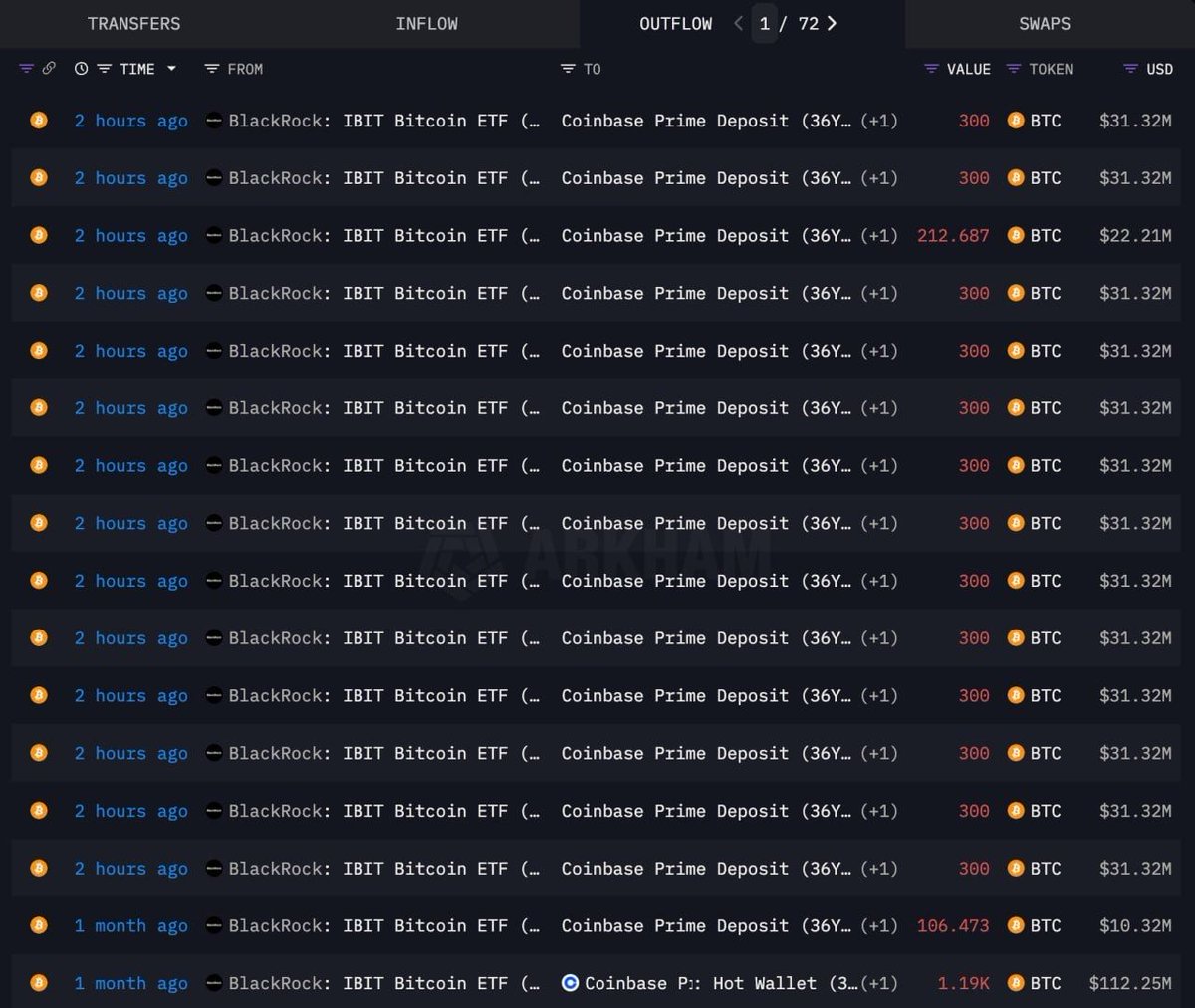 BlackRock transferred 4,113 BTC worth $429.4M to Coinbase Prime earlier today.BlackRock shifts BTC and ETH to Coinbase Prime.
Sources
18 records from 5 domains
coinbase.com
- coinbase.com· prime
- coinbase.com· de / prime
- coinbase.com· derivatives-trading
- coinbase.com· derivatives
- coinbase.com· learn / futures / advanced-guide-to-margin-trading-with-crypto-derivatives
- coinbase.com· prime / custody
- coinbase.com· learn / futures / 24-7-trading
- coinbase.com· blog / coinbase-prime-the-institutional-os-ushering-in-the-next-era-of-crypto-tra…
- coinbase.com· blog / welcome-to-the-prime-brokerage-era-for-institutional-crypto
- coinbase.com· blog / why-hedge-funds-are-turning-to-coinbase-prime
youtube.com
crypto.news
x.com
news.bitcoin.com
Community notes
Spot something off or out of date? Drop a note. Editors review topic notes daily and roll accepted fixes into the explainer — contributors are recognized in the monthly $SQUID drop.
Loading notes…
Help improve this topic
Have a story or tip about this topic? Submit it. See something missing? Leave a note. Editors review daily; accepted submissions and fixes count toward the monthly $SQUID drop.