
BlackRock, the world's largest asset manager with ~$13.9T AUM, leads institutional crypto adoption through IBIT (spot Bitcoin ETF), ETHA (Ethereum ETF), BITA (Bitcoin income ETF), and the BUIDL tokenized money market fund.
+17 sources across the wider coverage universe
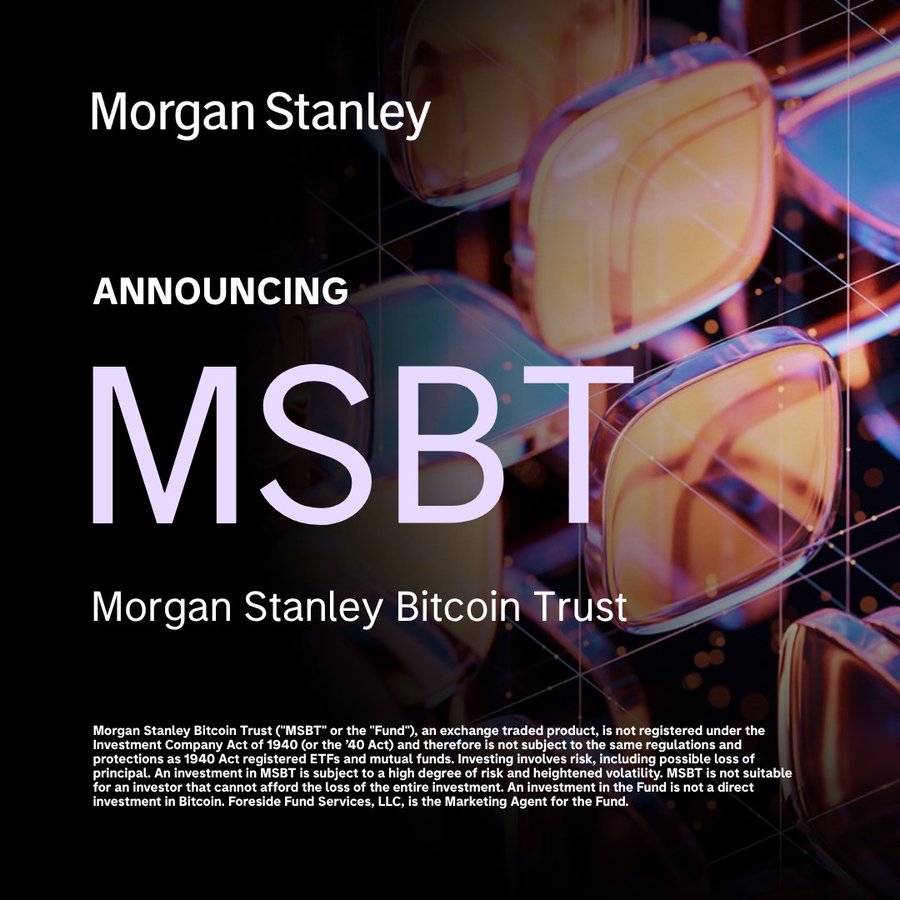 Morgan Stanley debuts spot Bitcoin ETF at 0.14% fee, undercutting BlackRock and Fidelity2026-04
 BlackRock IBIT absorbs $292M as Fidelity and ARK bleed funds, Bitcoin ETFs inch toward $100B2026-04
 BlackRock, Fidelity and Goldman Sachs back Clarity Act as Senate's August recess nears2026-07
 BlackRock adds Ethena's USDe to Aladdin as $100M facility opens BUIDL-to-stablecoin swaps2026-06
 U.S. spot Bitcoin ETFs suffered a record $4.5B in June outflows, with BlackRock's IBIT leading withdrawals as investors rotated capital toward SpaceX's historic IPO2026-07
 Grove opens $1B Basin facility for instant redemptions from BlackRock and Janus Henderson tokenized funds2026-05
The world's largest asset manager by assets under management, BlackRock oversees roughly $13.9 trillion in client assets and has emerged as one of the most consequential institutional forces in the cryptocurrency market since 2023.
What BlackRock Is — and Why It Matters to Crypto
Founded in 1988 and headquartered in New York, BlackRock built its franchise on index funds, risk analytics, and fixed income. Its Aladdin technology platform alone processes risk data for an estimated $21 trillion in assets across the broader financial industry. The firm's decision to move deliberately into digital assets therefore carries outsized symbolic and structural weight: when BlackRock enters a market, distribution networks, regulatory comfort, and institutional capital tend to follow.
For crypto markets specifically, that entry point came in stages — a cautious internal debate about Bitcoin in 2021–2022, a pivot toward product filing by 2023, and then a cascade of live products through 2024 and into 2026. The firm's CEO Larry Fink, once openly skeptical of Bitcoin, publicly reversed his stance and now frames BTC as "digital gold" and a legitimate portfolio diversifier in environments of currency debasement and geopolitical uncertainty.

BlackRock reveals US 10-year Treasury yield tops 5% for first time since 2023 as government borrowing costs continue rising

The IBIT Moment: Spot Bitcoin ETF Launch
The January 2024 approval of U.S. spot Bitcoin ETFs was a structural inflection point for crypto markets. BlackRock's iShares Bitcoin Trust — ticker IBIT — quickly became the dominant product in that cohort. By early 2026, IBIT's assets under management peaked above $54 billion, representing hundreds of thousands of BTC held in custody through Coinbase Prime. No ETF in history had gathered assets at that pace.
IBIT, alongside Fidelity's FBTC, has since cemented what analysts call a two-fund duopoly. Together they account for the overwhelming majority of net inflows into U.S. spot Bitcoin ETFs, even as the broader category experiences normal week-to-week volatility. On June 16, 2026, IBIT led the category with $16.4 million in daily net inflows; two days later, on June 18, it posted a single-day net outflow of $96.7 million — illustrating the two-sided flow dynamics that now characterize institutionally traded crypto products.
That volatility is normal for any ETF tied to a risk asset. What it reflects structurally is that IBIT has become the marginal price-discovery vehicle for Bitcoin in U.S. regulated markets. Flows in and out of IBIT are now reported alongside traditional macro data as indicators of institutional risk appetite.
Readers aren't clicking BlackRock for the brand name — they're tracking BUIDL's quiet emergence as the preferred reserve substrate for DeFi's largest stablecoins, revealing that the world's biggest asset manager is being handed the role of on-chain settlement infrastructure by Frax, Ethena, MakerDAO, and Sky simultaneously.
Spot Ethereum ETFs: ETHA
BlackRock extended the ETF blueprint to Ethereum with the iShares Ethereum Trust (ETHA), which launched following SEC approval of spot ETH ETFs in mid-2024. ETHA has similarly competed for category leadership, with the fund recording $9.6 million in net inflows on June 16, 2026 — the same day IBIT led BTC inflows. Ethereum's ETF category remains smaller than Bitcoin's in total AUM, reflecting the asset's different investor base and the absence of a staking yield component in the current U.S. regulatory framework. Nonetheless, ETHA gives BlackRock a two-asset footprint across the two largest proof-of-work and proof-of-stake networks respectively.

Ondo launches three tokenized portfolios using BlackRock-developed strategies for non-US investors

Productizing Bitcoin: The BITA Income ETF
The evolution from simple spot exposure toward yield-bearing products marks the next chapter. In June 2026, BlackRock registered and launched BITA — the iShares Bitcoin Premium Income ETF — on Nasdaq. BITA is not a spot BTC fund. It holds IBIT shares and sells covered call options against that position, generating monthly option premium income distributed to shareholders.
The design targets investors who want Bitcoin-correlated exposure with a cash-flow component — institutions with income mandates, insurance companies, or advisors structuring retirement accounts around regular distributions. The tradeoff is explicit: if Bitcoin appreciates sharply (50–100%+), covered call sellers cap their upside because the options get exercised and the underlying appreciation is surrendered. In flat, modestly up, or declining markets, BITA is designed to outperform both raw BTC and IBIT by generating premium income that partially offsets losses.
BlackRock filed the product at a 0.65% expense ratio — below the two largest covered call ETFs on the market — positioning it competitively against existing income alternatives. The launch is notable because it completes a product stack: spot exposure (IBIT), Ethereum exposure (ETHA), and now income generation (BITA). Wall Street is, in effect, productizing Bitcoin the same way it packaged equity volatility into structured notes and dividend strategies.
BUIDL: Tokenizing the Boring Stuff
While the ETF products address public market investors, BlackRock's deeper onchain bet is BUIDL — the BlackRock USD Institutional Digital Liquidity Fund. Launched in March 2024 in partnership with tokenization platform Securitize, BUIDL is a money market fund investing in U.S. Treasury bills and overnight repos, with ownership represented by tokens on blockchain networks including Ethereum.
By mid-2026, BUIDL held approximately $2.4–2.85 billion in assets, making it the largest tokenized real-world asset (RWA) fund globally. It helped catalyze a broader tokenized money market category that has grown from roughly $1 billion in early 2024 to more than $15 billion by mid-2026 — alongside comparable products from Franklin Templeton (BENJI), Fidelity, and Janus Henderson.
BUIDL tokens have since found utility beyond simple yield-bearing settlement. RedStone and other DeFi oracle providers have enabled BUIDL to serve as collateral in decentralized finance protocols, alongside Apollo fund tokens. This closes a loop: institutional-grade, regulated assets denominated in U.S. dollars, yielding Treasury rates, now function as always-on DeFi collateral — a bridge between the world's deepest fixed-income market and permissionless lending protocols.
BlackRock has continued expanding the BUIDL infrastructure. In May 2026, the firm filed with the SEC for additional tokenized fund products and onchain share classes for an existing $7 billion money market fund, signaling that tokenization is a platform strategy, not a one-off experiment.
BlackRock paper explores how AI adoption could drive new demand across digital assets

Saw this and i was impressed. This is a read for everyone 👌🏾
Research Posture: Quantum, Macro, and Institutional Education
Beyond products, BlackRock has used its research function to normalize crypto considerations inside institutional investment frameworks. In 2026, the firm published a dedicated report on quantum computing and blockchain — examining what advances in quantum computation could mean for Bitcoin's cryptographic security model, Ethereum's smart contract layer, and stablecoin infrastructure. Publishing that research under the BlackRock brand brings conversations that were previously confined to cryptography conferences into the mainstream institutional investment committee.
BlackRock's macro research team has also framed Bitcoin allocation arguments in terms of portfolio theory, currency debasement hedges, and geopolitical risk diversification — the same frameworks applied to gold. Jay Jacobs, BlackRock's head of thematic and active ETFs, has publicly argued that U.S. crypto ETFs are pulling Bitcoin holders into traditional financial infrastructure, as much as they are pulling TradFi capital into crypto.
- 01BUIDL as DeFi reserve layer
Multiple top-clicked headlines showed protocols (Frax, Ethena, MakerDAO, Sky, Arbitrum STEP) actively competing to onboard BUIDL as their backing asset, signaling a structural shift in how DeFi treats TradFi yield.
- 02Bitcoin ETF accumulation scale
Readers tracked IBIT's ascent from seed filing through capturing nearly 4% of all bitcoin supply, framing BlackRock as the dominant institutional BTC custodian — outpacing even MicroStrategy.
- 03Ethereum ETF regulatory arc
The SEC comment period, Larry Fink's public Ether support, and ETHA's $1B inflow milestone gave readers a sequential narrative of ETH gaining the same institutional legitimacy as BTC.
- 04Stablecoin backing competition
Ethena's USDtb, Circle's USDC reserve, Midas, Bridge's USDB, and frxUSD all named BUIDL or BlackRock money-market funds as their reserve, making this a race readers could track in real time.
- 05TradFi tokenization land grab
Headlines about central banks, crypto hiring sprees, and the $14 trillion tokenization opportunity framed BlackRock not as an ETF issuer but as the first mover in a systemic restructuring of global asset rails.
Competitive Position
BlackRock's crypto franchise is distinct from other institutional participants in a few respects:
- Scale of distribution: IBIT is available through virtually every major U.S. brokerage and advisory platform, giving it reach that no crypto-native exchange product can match.
- Brand trust as regulatory cover: Many institutional allocators who could not hold unregistered digital assets can hold IBIT in the same accounts as S&P 500 index funds, because it is a registered 1940 Act product.
- Product layering: The progression from IBIT → ETHA → BITA → BUIDL represents a deliberate build-out of a full-stack crypto exposure suite inside a regulated wrapper.
- RWA infrastructure: BUIDL positions BlackRock as both a client and infrastructure provider for the tokenized asset ecosystem, rather than purely a fee-taker.
Fortune's inaugural Crypto 100 list (2026) ranked BlackRock at the top of the ETF category, an acknowledgment of its structural dominance in bringing regulated digital asset products to market.
Risks and Criticisms
BlackRock's size and influence are also sources of concern within crypto communities. Critics argue that concentrated ETF custody — predominantly through Coinbase — creates systemic risk: a regulatory action against Coinbase, or a large-scale redemption event, could move Bitcoin's market price substantially. The June 18, 2026 single-day IBIT outflow of $96.7 million is a preview of that dynamic at modest scale.
There is also a philosophical tension. Bitcoin was designed as a self-custodied, permissionless bearer asset. When the majority of new institutional Bitcoin exposure is routed through a $13.9 trillion asset manager holding BTC in custody on behalf of shareholders who receive ETF shares rather than keys, questions arise about what that means for the decentralization thesis over time.
Additionally, covered call strategies like BITA introduce complexity that many retail buyers may not fully understand. The income premium is not free money — it is compensation for surrendering upside optionality, a tradeoff that can significantly underperform in trending bull markets.
- 2024-01launch
BlackRock IBIT Bitcoin ETF launches; most successful ETF debut in three decades
- 2024-03launch
BlackRock unveils BUIDL tokenized U.S. Treasury fund on Ethereum via Securitize
- 2024-05regulatory
SEC opens 21-day comment period for BlackRock Ethereum ETF (ETHA)
- 2024-07launch
BlackRock ETHA Ethereum ETF launches following SEC approval
- 2024-11launch
Ethena unveils USDtb stablecoin backed by BlackRock BUIDL as primary reserve
- 2024-12milestone
ETHA becomes first Ethereum ETF to surpass $1 billion in net inflows
- 2025-01governance
Frax community vote goes live to onboard BUIDL as frxUSD stablecoin backing
- 2025-03milestone
BUIDL fund ($530M) opens deUSD minting with Elixir and Curve Finance
Outlook
BlackRock's trajectory in crypto is unlikely to reverse. The firm's product development pace — from ETF filing to income product to tokenized fund expansion — reflects a strategic commitment rather than a trial run. The more interesting questions concern the next layer: whether tokenized fund shares will become acceptable collateral across a broader set of DeFi protocols, whether BITA-style income products expand to cover Ethereum volatility, and whether BlackRock files for additional spot crypto ETFs (Solana is a candidate frequently discussed by analysts).
Macro conditions will shape flows. In a rising rate environment, the income from BITA's covered calls competes with fixed income alternatives; in a Bitcoin bull run, that same income strategy caps the upside. BUIDL's yield is directly tied to Treasury bill rates, making it sensitive to Federal Reserve policy. BlackRock's macro research team flagged in June 2026 that inflation pressures — potentially driven by energy supply shocks — could be a headwind for risk assets broadly, including crypto.
What is clear is that BlackRock has transformed from a skeptic to a structural participant in digital asset markets in under three years. For better or worse, the contours of institutional crypto adoption are now substantially shaped by decisions made in lower Manhattan.
Latest BlackRock news
BlackRock reveals US 10-year Treasury yield tops 5% for first time since 2023 as government borrowing costs continue risingOndo launches three tokenized portfolios using BlackRock-developed strategies for non-US investorsBlackRock paper explores how AI adoption could drive new demand across digital assetsCommunity notes
Spot something off or out of date? Drop a note. Editors review topic notes daily and roll accepted fixes into the explainer — contributors are recognized in the monthly $SQUID drop.
Loading notes…
Help improve this topic
Have a story or tip about this topic? Submit it. See something missing? Leave a note. Editors review daily; accepted submissions and fixes count toward the monthly $SQUID drop.