
CBDCs are digital currencies issued directly by central banks. The U.S. is moving toward a ban through 2030 while China, the EU, and UK pursue active development — with stablecoins emerging as a private-sector alternative.
+7 sources across the wider coverage universe
 South Korea’s central bank nominee supports CBDC-first approach, limiting stablecoin role and prioritizing compliance, oversight, and anti-money laundering frameworks2026-04
 Ex-UK PM Liz Truss backs Bitcoin, slams Bank of England's QE and calls CBDCs 'part of the surveillance state2026-04
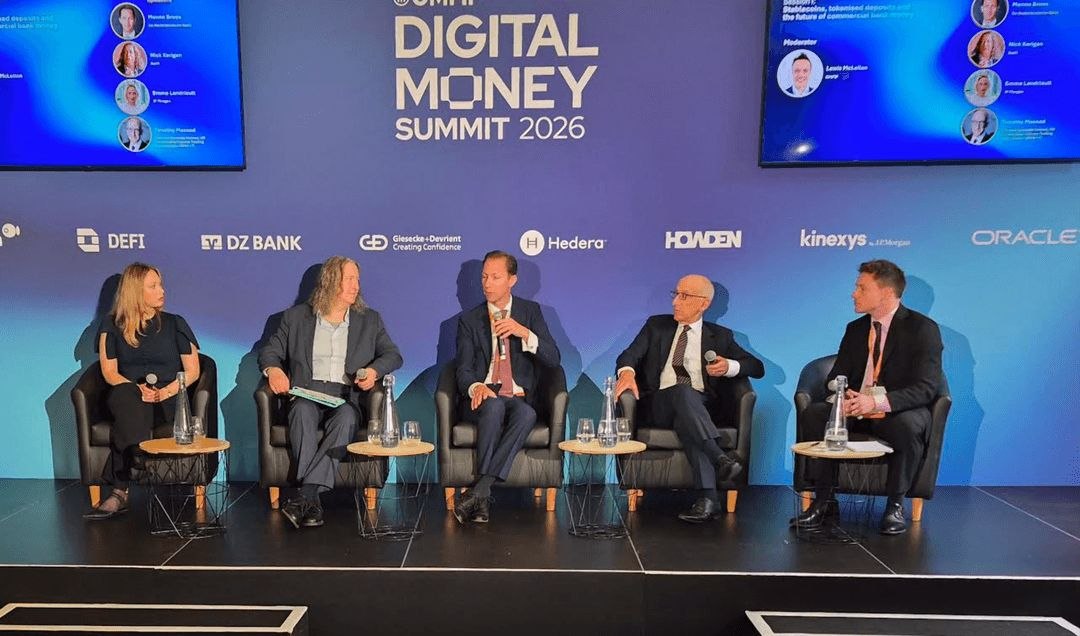 Former CFTC Chair Timothy Massad says a U.S. CBDC is still being discussed privately despite Trump’s public opposition, arguing digital dollar adoption is inevitable2026-05
 South Korea reaffirmed its blockchain strategy, advancing digital asset legislation, CBDC-linked tokenized bonds, and spot crypto ETFs despite prioritizing AI investments2026-07
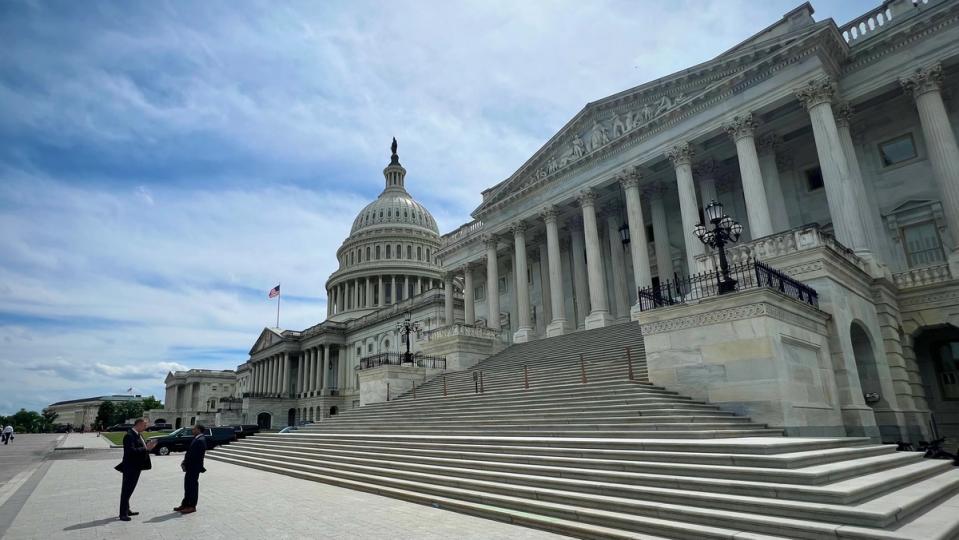 U.S. Senate passes housing bill containing a four-year ban on a Federal Reserve CBDC, advancing efforts to formally block a digital dollar despite limited Fed development2026-06
 Bank of Korea nominee Shin Hyun-song backs CBDC and bank deposit tokens over stablecoins as core of digital money system2026-04
A Central Bank Digital Currency (CBDC) is a sovereign government's legal tender issued in digital form directly by a central bank — functionally the national currency, but programmable, traceable, and settled without commercial bank intermediaries.
Central banks have debated digital currencies for years, but the conversation has sharpened considerably as stablecoins, crypto payments, and tokenized finance have moved from fringe experiments to regulated financial infrastructure. The policy choices governments make now — issue, ban, or defer — will shape the architecture of money for decades.
What a CBDC Actually Is (and Isn't)
Unlike a bank deposit or a stablecoin, a CBDC is a direct liability of the central bank itself. Think of it as a digital banknote: the state issues it, the state backs it, and in its retail form, ordinary citizens can hold it in a wallet without a commercial bank in between.
There are two distinct design categories:
- Retail CBDC — issued directly to households and businesses, functioning like digital cash
- Wholesale CBDC — restricted to financial institutions, used for interbank settlement and cross-border payments
The distinction matters enormously. Wholesale CBDCs are relatively uncontroversial; central banks already settle transactions electronically among themselves. Retail CBDCs are politically explosive because they give governments unprecedented visibility into individual spending — a concern that has driven the most aggressive legislative pushback, particularly in the United States.
CBDCs are also distinct from stablecoins. A stablecoin like USDC or USDT is a private-sector liability backed by dollar reserves; it's not legal tender and does not carry the full faith and credit of a government. Some central banks, including the Bank of England, are now exploring a "multi-money" model where retail CBDCs, tokenized commercial bank deposits, and regulated stablecoins coexist — but the governance, risk profiles, and political implications differ sharply between them.

South Korea’s central bank nominee supports CBDC-first approach, limiting stablecoin role and prioritizing compliance, oversight, and anti-money laundering frameworks

Shin Hyun-song spent 12 years at BIS literally writing the unified ledger playbook that Project Hangang now implements — so this isn't a policy preference, it's the architect returning to build his own blueprint. KRW1 already launched in February under the bank-led model he's pushing, and Hangang phase 2 is live with 9 banks. The contested piece isn't CBDC vs stablecoin — it's the BOK's proposed 51% bank consortium ownership requirement for stablecoin issuance, which the FSC is pushing back on as a fintech killswitch. Korea's building the rails either way; the fight is over who gets to run trains on them.
The Global Race: Where Central Banks Stand
China remains the furthest along among major economies. The digital yuan (e-CNY) has been live in pilot cities since 2020, integrated into payments infrastructure, and distributed via apps tied to major banks. It operates as a retail CBDC and has been used for government transfers and consumer subsidies. The e-CNY's design — including programmable expiry on stimulus funds — is precisely what critics of Western CBDCs cite as a surveillance and control risk.
The European Central Bank is in a preparation phase for a digital euro, having concluded its investigation period in late 2023 and moved into iterative development. The ECB has stressed privacy by design, with offline payment capability and limits on central-bank visibility into transactions. A legislative framework is still being debated in the EU Parliament.
The Bank of England has taken a measured, multi-track approach. BoE Deputy Governor Sarah Breeden confirmed in mid-2026 that the bank would publish draft stablecoin rules "next month" and finalize them by year-end, framing the UK's path as a retail payment system featuring tokenized deposits, stablecoins, and retail CBDC working in parallel — rather than a CBDC-first monoculture. The Bank of Korea nominee Shin Hyun-song similarly backed CBDC and bank deposit tokens as the core of the digital money system, assigning stablecoins a more limited, niche role subject to strict compliance and anti-money laundering frameworks.
India has a wholesale and retail pilot underway (the digital rupee, or e₹), with the Reserve Bank of India running interbank settlement trials alongside a retail pilot across select banks.
In contrast, the United States — historically the center of gravity for dollar-denominated finance — has moved toward an explicit rejection of a retail CBDC.
Readers click CBDCs not as a monetary policy curiosity but as a proxy battle over state financial control — the most-engaged angles pit live government implementations (China's yuan, Brazil's pilot) directly against an emergent US political coalition treating CBDCs as an existential threat to financial privacy.
The U.S. Reversal: Legislative and Executive Opposition
The Trump administration has made "no CBDC" a stated policy position. Treasury Secretary Scott Bessent reiterated in 2026 that the administration opposes a U.S. CBDC and is instead pushing Congress to bring digital assets onshore via regulatory clarity — framing stablecoins and tokenized private-sector instruments as the preferred path for digital dollar infrastructure.
Congress has followed. The U.S. Senate and House reached a bipartisan deal on a housing bill that includes a provision banning the Federal Reserve from issuing a CBDC through 2030. Republican lawmakers have separately called for a permanent ban, and the Anti-CBDC Surveillance State Act — backed by members including Rep. Gabe Evans — reflects the view that a Federal Reserve-issued retail CBDC would represent an unconstitutional surveillance tool.
The Federal Reserve has confirmed it has no active plans to build or issue a CBDC. Fed legal official Brett Guynn stated in 2026 that there are no active development programs, and the institution has endorsed stablecoins and tokenized deposits as the realistic near-term alternatives. Former CFTC Chair Timothy Massad has pushed back, arguing that digital dollar adoption is, in his view, "inevitable" and that CBDC discussions continue privately despite public opposition — but that position is currently a minority one in U.S. policy circles.
State-level action has reinforced the federal trend. South Carolina enacted S.163, a law banning state agencies from accepting or testing CBDCs, exempting crypto payments from state tax, and codifying self-custody rights. Similar legislation has moved in other Republican-leaning states.
The European Union has taken a separate but related action: as part of its sweeping crypto sanctions on Russia, the EU banned CBDC use as one mechanism to curb sanction evasion — illustrating that CBDCs' programmability can cut both ways in geopolitical contexts.
China triples its e-CNY network in 2026 as the PBOC adds 20 operators, including eight banks joining the CBDC push this week

The Surveillance Argument
The most persistent objection to retail CBDCs — voiced by libertarians, Bitcoin advocates, former politicians, and privacy researchers alike — centers on programmability and traceability.
A central bank digital currency, by design, creates a complete ledger of every transaction. Unlike physical cash, which leaves no data trail, a retail CBDC allows the issuing authority to see, and potentially control, what citizens buy, when, and from whom. Critics argue this creates infrastructure for financial censorship: accounts can be frozen, spending can be restricted to approved categories, and currencies can be programmed to expire.
Former UK Prime Minister Liz Truss, in remarks backing Bitcoin, called CBDCs "part of the surveillance state" and criticized the Bank of England's quantitative easing policies in the same breath — reflecting a broader ideological alignment between anti-CBDC sentiment and hard-money skepticism of central bank power.
Some analysts have gone further, arguing that governments are actively racing to eliminate physical cash by 2030, using CBDCs as the mechanism, and positioning Bitcoin, Monero, and gold as censorship-resistant alternatives. That framing is contested, but the structural concern — that a fully digital, centrally issued currency has no analog to cash's privacy properties — is technically accurate and widely acknowledged even among CBDC proponents, who argue the design choices can mitigate (though not fully eliminate) the risk.
- 01China digital yuan live testing
Readers wanted first-person, ground-level evidence of whether the world's most advanced CBDC actually works — performance, UX, and offline capability drew outsized curiosity.
- 02Global central bank adoption pace
BIS survey data quantifying how many central banks are actively building CBDCs gave readers a concrete scoreboard for a trend that otherwise feels abstract.
- 03Retail vs wholesale CBDC pivot
Canada and Australia's public retreat from retail CBDCs signals that the citizen-facing digital currency dream is stalling, which reframes the entire policy debate.
- 04US anti-CBDC political opposition
Trump, DeSantis, and legislative bills framing CBDCs as surveillance infrastructure activated a crypto-libertarian readership that sees financial privacy as a core political issue.
- 05Stablecoins as CBDC backdoor
The argument that dollar stablecoins already deliver state-level financial control without the political fight recast a familiar asset class as a covert policy instrument.
- 06DeFi infrastructure for wholesale CBDCs
Project Mariana's use of Curve v2 and cross-border tests using Curve infrastructure showed central banks quietly adopting DeFi primitives, a concrete convergence readers found surprising.
CBDCs vs. Stablecoins: Competing Visions for Digital Money
The debate over CBDCs has increasingly sharpened around an alternative: private-sector stablecoins, operating under public oversight. The U.S. GENIUS Act and CLARITY Act — both moving through Congress in 2026 — would establish a regulatory framework for dollar-backed stablecoins issued by banks and non-bank entities, effectively outsourcing digital dollar infrastructure to private issuers under federal rules.
The Bank of England's model is similar: rather than a pure central-bank-issued retail CBDC, it envisions tokenized commercial bank deposits and regulated stablecoins operating alongside a potential CBDC in a mixed system. This is closer to the current architecture of the existing banking system — state backstop, private issuance — translated into programmable rails.
The tension between these models matters for the crypto industry. A well-regulated stablecoin regime could see companies like Circle or new bank entrants dominate digital dollar payments, with market incentives driving innovation. A CBDC regime concentrates that infrastructure — and its data — inside the central bank. The Federal Reserve's stated preference for the stablecoin-plus-tokenized-deposit path, at least for now, is a significant signal in that debate.
Ex-UK PM Liz Truss backs Bitcoin, slams Bank of England's QE and calls CBDCs 'part of the surveillance state
On Peter McCormack's Bitcoin podcast, former UK PM Liz Truss said she backs Bitcoin because it "takes power away from central banks," and warned CBDCs are "part of the surveillance state" that give governments "overweening" power. She ripped the Bank of England as "unaccountable," blamed its prolonged QE for "huge levels of inflation" and asset price spikes, and defended her 2022 mini-budget. She's also launching CPAC Great Britain in London this July, tying monetary reform to a broader conservative push.
Cross-Border Payments and Wholesale Use Cases
Away from the retail controversy, wholesale CBDC experimentation is accelerating with less political friction. The Bank for International Settlements has run multiple multi-central-bank pilots — including Project mBridge, which connects Hong Kong, Thailand, the UAE, and China — aimed at making cross-border settlements faster and cheaper than correspondent banking allows today.
Correspondent banking, the current backbone of international payments, is slow (often T+2 or more), expensive (averaging 6.25% for remittances), and fragmented by jurisdiction. Wholesale CBDCs settling directly between central banks on shared infrastructure could dramatically reduce friction — though they raise their own governance questions about which jurisdictions set the rules for shared settlement rails.
The geopolitical dimension is live. China's participation in mBridge has drawn scrutiny from U.S. policymakers concerned about dollar dominance and sanction evasion: a CBDC-based cross-border network that excludes the dollar could, in theory, provide a settlement layer for transactions that currently require dollar intermediation through the SWIFT system.
- 2023-06milestone
BIS survey: 94% of central banks engaged in CBDC work
- 2023-07launch
Brazil central bank selects 14 CBDC pilot participants including Visa and Microsoft
- 2023-09milestone
Project Mariana tests Curve v2 AMM for wholesale cross-border CBDC pools
- 2023-10milestone
BIS Project Tourbillon unveils quantum-safe privacy architecture for retail CBDC
- 2023-11milestone
UK Regulated Liability Network completes experimental tokenization and CBDC phase
- 2024-03regulatory
Congressman Emmer reintroduces Anti-CBDC Surveillance State Act
- 2024-11milestone
BIS survey reports 91% of central banks exploring CBDCs in 2024; wholesale outpacing retail
- 2025-01regulatory
Trump administration formally vows to block US CBDC, backs private stablecoins
Retail CBDC Design Choices That Determine Everything
For countries that do proceed with a retail CBDC, the design parameters matter more than the decision to issue. Key choices include:
- Account-based vs. token-based: Does the CBDC track identities (like a bank account) or bearer instruments (like physical cash)? Token-based designs allow greater privacy.
- Tiered privacy: Some proposals allow low-value transactions to settle with minimal data, with greater disclosure required above thresholds — similar to cash reporting rules.
- Programmability: Should the CBDC be inert digital cash, or can it carry conditions (expiry dates, merchant restrictions, negative interest rates)? Programmability is where surveillance and control concerns concentrate.
- Offline functionality: Can it work without internet connectivity? Critical for financial inclusion in rural or infrastructure-poor areas.
- Intermediary model: Does the central bank issue directly to individuals, or through commercial banks that manage the customer relationship? Most current designs use the latter to preserve the banking sector's role.
None of these are technical afterthoughts. They are political choices that determine whether a CBDC functions more like digital cash or more like a financial panopticon.
Outlook
The global picture is diverging rather than converging. China will continue expanding e-CNY. The EU will push toward a digital euro, constrained by privacy legislation. The UK is threading a multi-money model that gives stablecoins room to operate. And the United States, at least through 2030 under current legislative trajectory, has placed its bet on private stablecoin infrastructure under federal oversight rather than direct central bank issuance.
That U.S. choice will have structural consequences for the rest of the world, given the dollar's reserve status. If dollar-denominated stablecoins become the dominant form of programmable money — rather than a Fed-issued CBDC — the governance of that system will sit partly with private companies, partly with Congress, and only at a distance with the Federal Reserve. Whether that is more or less dangerous than a central bank holding the ledger is the question at the center of one of the most consequential monetary debates of the decade.
Latest CBDC news
South Korea’s central bank nominee supports CBDC-first approach, limiting stablecoin role and prioritizing compliance, oversight, and anti-money laundering frameworksChina triples its e-CNY network in 2026 as the PBOC adds 20 operators, including eight banks joining the CBDC push this weekEx-UK PM Liz Truss backs Bitcoin, slams Bank of England's QE and calls CBDCs 'part of the surveillance stateFormer CFTC Chair Timothy Massad says a U.S. CBDC is still being discussed privately despite Trump’s public opposition, arguing digital dollar adoption is inevitable eCurrency demonstrates secure offline CBDC solution for areas without network connectivitySouth Korea reaffirmed its blockchain strategy, advancing digital asset legislation, CBDC-linked tokenized bonds, and spot crypto ETFs despite prioritizing AI investments
Community notes
Spot something off or out of date? Drop a note. Editors review topic notes daily and roll accepted fixes into the explainer — contributors are recognized in the monthly $SQUID drop.
Loading notes…
Help improve this topic
Have a story or tip about this topic? Submit it. See something missing? Leave a note. Editors review daily; accepted submissions and fixes count toward the monthly $SQUID drop.