
Scott Bessent, Trump’s Treasury Secretary, is reshaping U.S. crypto policy through the CLARITY and GENIUS Acts, a strategic bitcoin reserve, strict stablecoin rules, and a firm “no CBDC” stance that aims to keep digital assets onshore and under U.S. dollar leadership.
+15 sources across the wider coverage universe
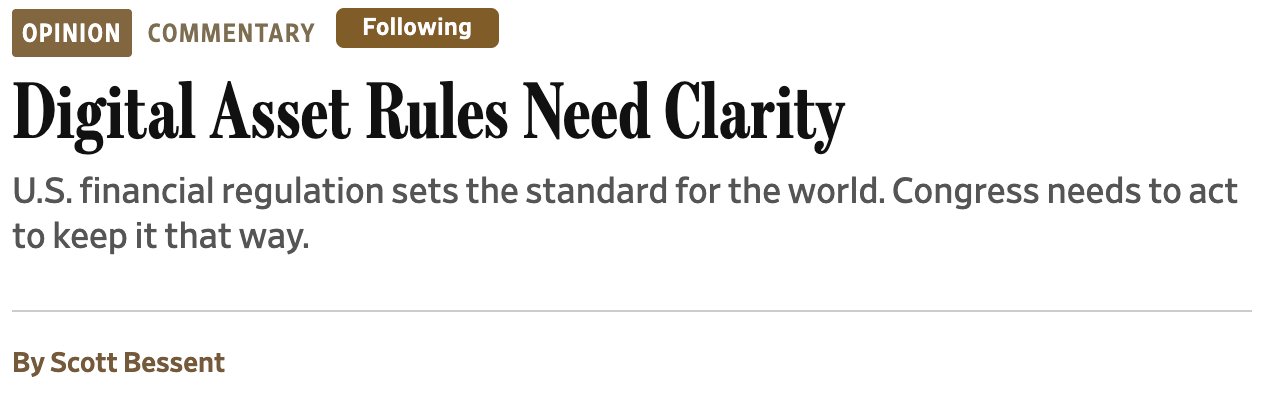 Armstrong reverses on Clarity Act after blocking it twice, tells Bessent 'we agree' on crypto bill2026-04
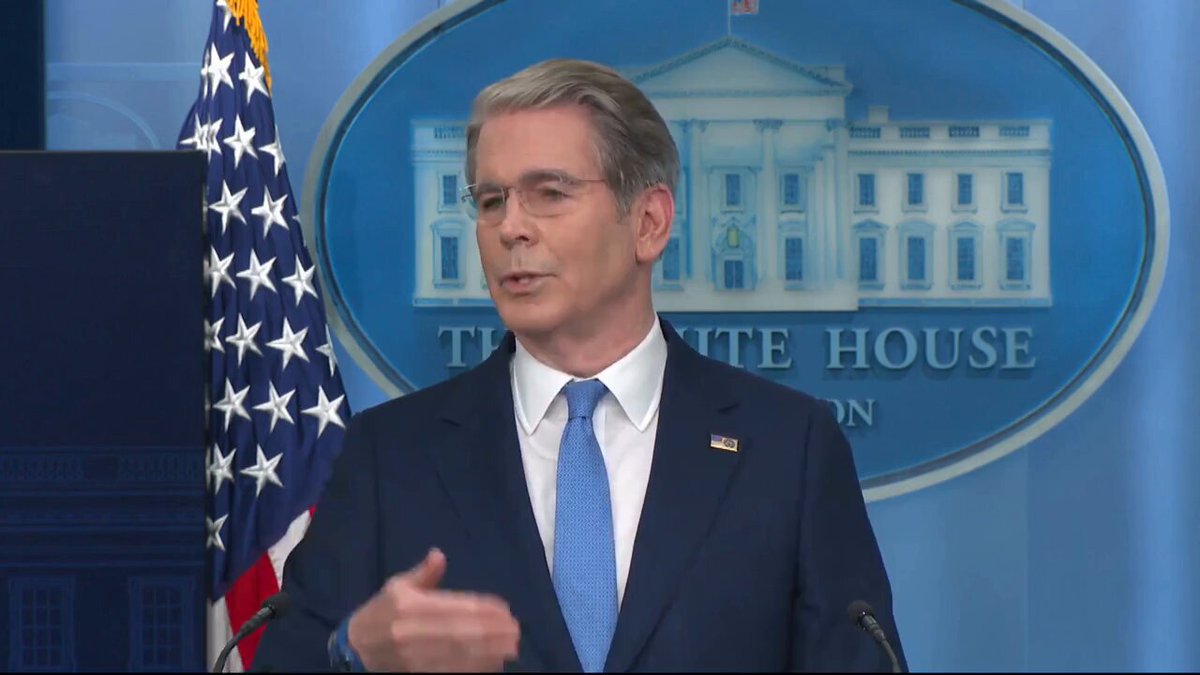 Bessent rules out U.S. CBDC and urges Congress to bring digital assets onshore with CLARITY2026-05
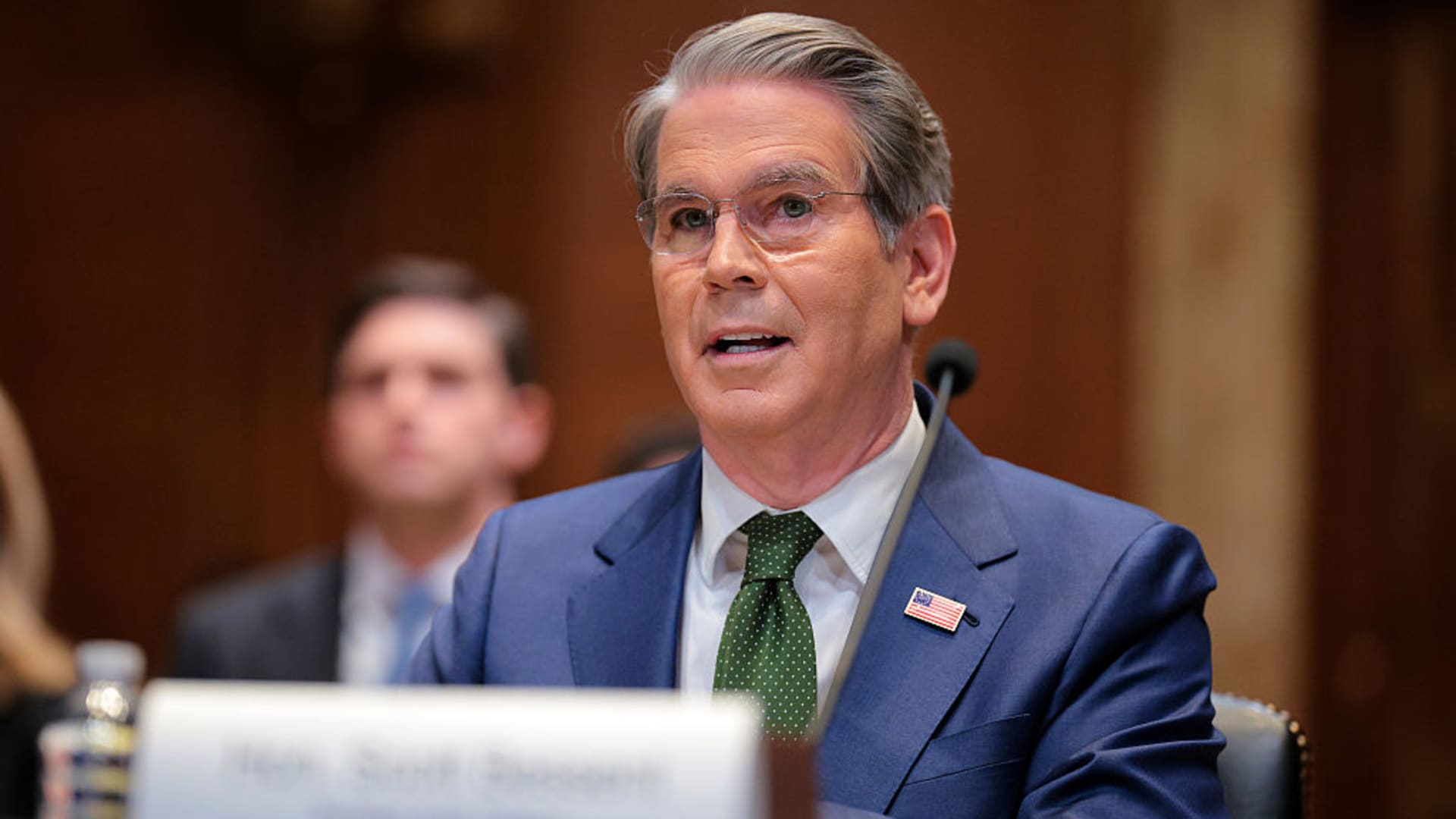 US Treasury’s Bessent says many Gulf and Asian allies seek dollar swap lines as Iran war roils markets, while Washington debates politically sensitive UAE support and protection of dollar dominance2026-04
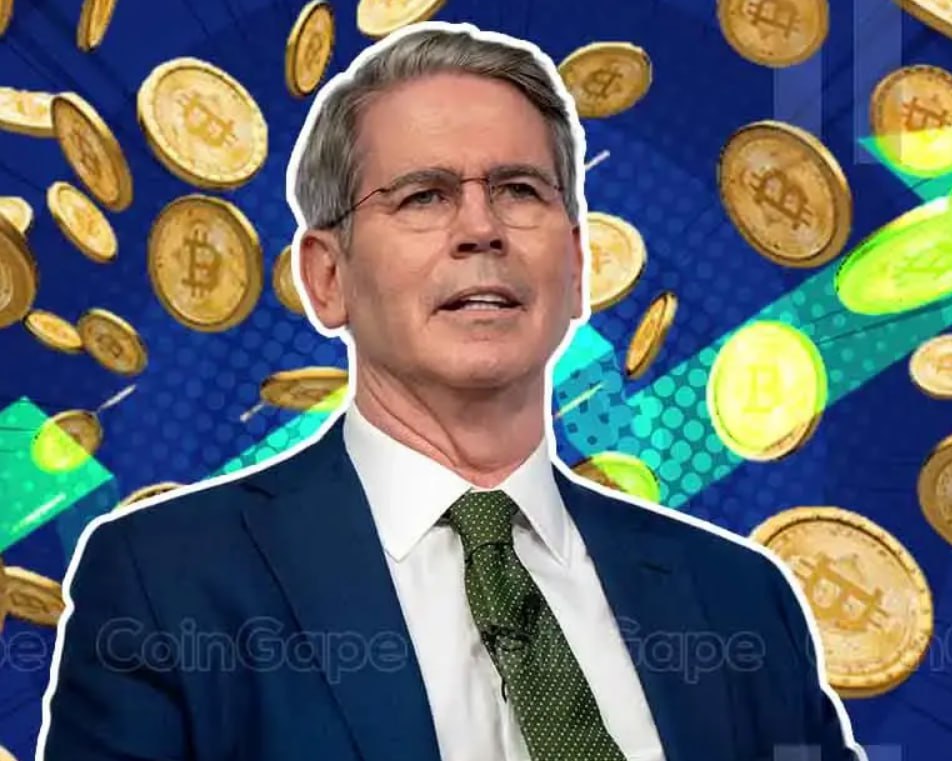 U.S. Senate confirms pro-crypto Scott Bessent as Treasury Secretary in a 68-29 vote, set to shape crypto regulations under the Trump administration.2025-01
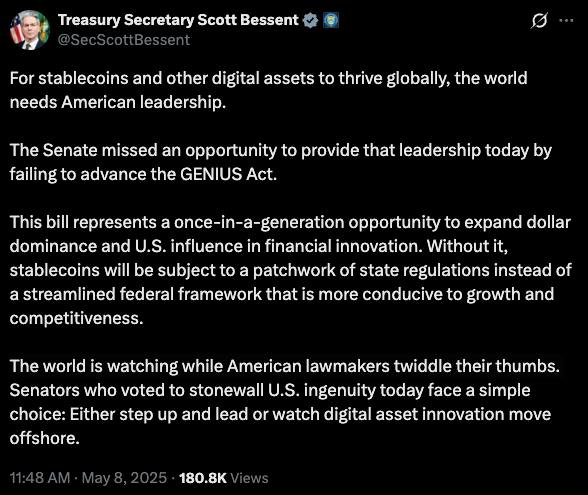 Treasury Secretary Bessent castigates the Senate for failing to advance the GENIUS Act: "The world is watching while American lawmakers twiddle their thumbs."2025-05
 Treasury Secretary Bessent predicts rising consumer prices from tariffs despite White House claims, with retailers acknowledging inflation pressures amid soaring expectations.2025-05
Scott Bessent and the Future of U.S. Crypto Policy
Scott Bessent is the United States Secretary of the Treasury under President Donald Trump and one of the most consequential policymakers shaping the emerging U.S. regime for cryptocurrencies, stablecoins, and digital assets, championing legislation such as the CLARITY Act while firmly rejecting a U.S. central bank digital currency (CBDC). His approach combines aggressive national-security enforcement, a strategic embrace of regulated crypto markets, and a political promise of “no CBDC,” positioning the United States for what he has framed as a new “golden age” of crypto under clear rules.
Overview: Why Bessent Matters in Crypto
Scott Bessent occupies a central node in the United States’ evolving digital asset architecture because Treasury sits at the intersection of markets, national security, and international finance. His confirmation hearing before the Senate Finance Committee, where he was presented as President-elect Trump’s choice to lead the Treasury Department, immediately highlighted digital currencies and CBDCs as contentious issues, with Bessent insisting there was “no reason” for a U.S. central bank digital currency. Since taking office, he has repeatedly used formal testimony, public speeches, and media appearances to frame crypto policy not as a niche regulatory problem but as a core pillar of U.S. economic strategy and financial leadership. In doing so, he has become one of the most visible architects of Washington’s attempt to move from enforcement-by-lawsuit toward a comprehensive legislative framework for digital asset markets.
At the same time, Bessent’s portfolio reaches far beyond domestic regulation, encompassing the use of digital assets as instruments of geopolitical leverage and sanctions enforcement. His announcement that the United States had seized roughly one billion dollars’ worth of Iranian cryptocurrency assets underscored the degree to which crypto now sits inside the broader machinery of U.S. economic statecraft. That enforcement record complements his advocacy for a “strategic digital asset reserve” built from seized bitcoin, which he has described as a way for the government to retain and manage crypto assets derived from criminal activity rather than from taxpayer funds. By combining market-structure reform, geopolitical enforcement, and a clear stance on CBDCs, Bessent has become a reference point for how the Trump administration intends to integrate digital assets into both domestic finance and foreign policy.
Finally, Bessent matters because he has made crypto legislation a political priority with concrete timelines attached. The House of Representatives has already passed the bipartisan CLARITY Act by a wide margin, signaling a shift away from the earlier, more hostile posture of U.S. agencies toward the industry. In parallel, the Senate Banking Committee has advanced its own Digital Asset Market Clarity Act, and Bessent has publicly backed the administration’s stated goal of seeing crypto market structure legislation enacted around the mid-summer window, often symbolically tied to the Fourth of July. He has urged lawmakers to “move with deliberate speed,” warning that without clear rules the United States risks ceding crypto innovation, liquidity, and dollar influence to overseas jurisdictions. For crypto builders and investors trying to anticipate the future regulatory environment, understanding Bessent’s positions has become essential.

Treasury doubles long-bond buybacks as Bessent says he is 'the house

Bessent at Treasury: Mandate and Philosophies
Taking the Helm at the Treasury Department
Bessent’s tenure as Treasury Secretary is defined by a mandate to reconcile Republican political skepticism of state-controlled money with a pragmatic recognition that digital assets are now embedded in global finance. During his confirmation hearing before the Senate Finance Committee, he dismissed the case for a U.S. CBDC, signaling early on that he saw privately issued and bank-mediated digital dollars as preferable to a retail government currency. The same hearing established that, in his view, any federal approach to crypto must safeguard privacy and financial freedom while still giving regulators the tools they need to police fraud, money laundering, and sanctions evasion. This framing has carried through into his later statements, where he has frequently warned against “tracking” implications of a CBDC even as he calls for robust oversight of private digital asset platforms.
Once in office, Bessent inherited a policy environment already shifting toward greater engagement with crypto. The White House’s launch of its Digital Assets Report, for which he delivered keynote remarks under the theme of “Building the Golden Age of Crypto,” showcased an administration looking to move past a phase dominated by sporadic enforcement and toward a more strategic national approach. In that speech, he positioned the United States as uniquely placed to harness crypto innovation, provided that Washington could offer predictable rules and integrate digital assets into Treasury’s broader macroeconomic and financial stability toolkit. This narrative—crypto as a tool to fortify U.S. markets, not undermine them—has since guided his advocacy for the GENIUS Act, the CLARITY Act, and related legislation.
Digital Assets in the Trump Economic Agenda
Within the broader Trump economic program, Bessent has framed digital assets as both an opportunity to reinforce U.S. capital markets and a test of American regulatory competitiveness. His remarks at the White House Digital Assets Report launch explicitly linked crypto policy to the goal of inaugurating a “golden age” in which U.S.-regulated digital asset firms, stablecoin issuers, and tokenization platforms are the global standard-setters. Rather than viewing crypto as an inherently destabilizing technology, Bessent has argued that the real risk lies in allowing key markets, infrastructure, and stablecoin liquidity to migrate offshore to jurisdictions with looser standards or strategic agendas opposed to U.S. interests. In this sense, digital asset policy becomes part of a broader push to sustain U.S. dollar dominance, maintain deep domestic capital markets, and attract high-value technology innovation.
That framing also explains Bessent’s embrace of public-private arrangements such as U.S.-regulated dollar stablecoins, which he has described as a potential funding source for the federal government. Stablecoins that hold reserves in short-term Treasuries or bank deposits effectively create incremental demand for dollar assets, aligning the growth of crypto payment rails with U.S. fiscal and monetary priorities. By stressing that point, Bessent connects crypto policy to familiar Treasury tools like debt management, yield-curve dynamics, and liquidity provision, translating a niche technology debate into the language of macroeconomic policy. This approach contrasts with earlier periods when senior officials often treated crypto as either a marginal fad or a purely law-enforcement problem, and it signals an intention to integrate digital assets into mainstream financial governance rather than to hold them at arm’s length.
Key Speeches and Testimony
Bessent’s speeches and congressional testimony have served as key staging grounds for the administration’s evolving crypto agenda. In a hearing before the House Ways and Means Committee focused on the future of digital assets and cryptocurrency regulation, he signaled what observers described as a major shift in U.S. crypto policy, bringing digital asset issues into a core tax and economic policy committee rather than confining them to niche subcommittees. That appearance underscored Treasury’s central role in designing the regulatory perimeter for exchanges, brokers, and stablecoin issuers, and it aligned with Bessent’s broader push to secure passage of comprehensive market structure legislation. By emphasizing both the opportunities and risks of digital assets to economic growth, he sought to persuade lawmakers across the ideological spectrum that inaction or ad hoc enforcement was no longer tenable.
In addition to legislative testimony, Bessent has used Treasury press events and public interviews to frame specific policy priorities. His remarks at the White House Digital Assets Report launch clarified the administration’s interpretation of the GENIUS Act, including the nature of the “strategic digital asset reserve,” which he stressed consisted of seized bitcoin retained by the government rather than new purchases financed by taxpayers. He has likewise taken to public forums to promote the CLARITY Act and to explain how its division of responsibilities between the Securities and Exchange Commission (SEC) and Commodity Futures Trading Commission (CFTC) would bring long-sought regulatory certainty to crypto markets. Together, these communications have made Bessent one of the most accessible and quotable voices within the administration on digital assets, a point underscored by the frequency with which his statements appear in both financial and general-interest media coverage.
Readers click Bessent not as a generic crypto-friendly official but as the specific policy lever for stablecoin legislation — the GENIUS Act frustration headline (112 clicks) and dollar-supremacy stablecoin framing (41 clicks) together signal that crypto readers have priced in his Bitcoin indifference (66 clicks, no reserve expansion) and are watching him almost exclusively as a stablecoin and market-structure bill shepherd.
Legislative Projects: GENIUS, CLARITY, and Market Structure
The GENIUS Act and the Strategic Digital Asset Reserve
The GENIUS Act, already enacted into law, forms one leg of the legislative tripod around which Bessent and the Trump administration are building their digital asset strategy. While the full contours of the statute go beyond the snippets reported publicly, its most visible provision establishes a “strategic digital asset reserve” held by the federal government. In public remarks, Bessent has clarified that this reserve consists not of taxpayer-financed purchases but of bitcoin seized in criminal and sanctions-related enforcement actions, a distinction aimed at defusing political criticism that the government is speculating with public funds. He has stated that approximately one billion dollars’ worth of bitcoin was initially seized, about five hundred million dollars’ worth was retained, and that the value of those holdings has since grown substantially, to more than fifteen billion dollars.
The strategic reserve serves multiple functions within Bessent’s framework. On one level, it creates a pool of digital assets that the government can manage, auction, or potentially deploy as part of broader financial operations, while retaining flexibility in the face of market volatility. On another level, it symbolically aligns crypto enforcement with positive fiscal outcomes, presenting the seizure of illicit bitcoin as a way of bolstering public resources rather than merely destroying criminal value. By publicly emphasizing the scale and success of this reserve, Bessent signals that the state is capable not only of tracing and confiscating illicit crypto but also of stewarding those assets in a financially sophisticated way. That message is likely intended both for domestic audiences, including skeptics of crypto within Congress, and for foreign actors who might otherwise assume that digital assets offer reliable shelter from U.S. jurisdiction.
The CLARITY Act: Content and Objectives
If the GENIUS Act addresses how the government interacts with digital assets as an owner and enforcer, the CLARITY Act is designed to define how private market participants operate within U.S. jurisdiction. The House version of the Digital Asset Market Clarity Act of 2025, commonly referred to as the CLARITY Act, would divide oversight responsibilities between the SEC and CFTC and create a comprehensive regulatory framework for digital asset market structure. That framework covers core questions such as which assets fall under securities regulation, how trading platforms must register, and what standards apply to customer asset segregation and bankruptcy treatment. By codifying this division of labor, the Act seeks to resolve the long-running dispute over whether most tokens are securities, commodities, or something else entirely.
One of the Act’s most immediate implications for the industry lies in its treatment of exchanges and brokers. According to reporting on the legislation, the CLARITY Act would require crypto exchanges and brokers to register with the appropriate federal regulators and to comply with strict rules regarding the safeguarding of customer funds. This includes clear requirements on how client assets must be held, how they are treated in the event of the platform’s insolvency, and what disclosures must be provided to users. Bessent has championed these provisions as necessary not only to protect retail investors but also to make U.S.-regulated platforms credible venues for institutional participation, arguing that without such rules the United States risks forfeiting market share and technological leadership to other jurisdictions. His repeated warnings that the country is at risk of “losing its global financial leadership” in digital assets if Congress fails to act have become a hallmark of his public advocacy.
Crucially, the CLARITY Act has already advanced further than many earlier attempts at comprehensive crypto legislation. The House of Representatives passed the bill with a bipartisan majority of 294–134, a vote tally that observers have interpreted as evidence that the United States has “reversed its hostile approach” to the digital asset ecosystem. That vote followed the enactment of the GENIUS Act and signaled that crypto regulation was no longer a purely partisan wedge issue but an area where at least some legislative consensus could be built. Bessent has leaned on this momentum in urging the Senate to move, framing the remaining disagreements around taxonomy, DeFi treatment, and stablecoin yield as technical details that should not be allowed to derail the broader effort to provide market structure clarity.
Senate Banking’s Digital Asset Market Clarity Act
On the Senate side, the primary legislative vehicle for crypto market structure has been the Digital Asset Market Clarity Act, advanced by the Senate Banking Committee as substitute text on May 14, 2026. While technically distinct from the House’s CLARITY Act, the Senate bill covers a closely related set of issues, including illicit finance controls, DeFi oversight, limitations on stablecoin yield, standards for tokenization, developer protections, and customer-property and bankruptcy protections. The Banking Committee’s substitute text incorporates much of an earlier January 2026 amendment and must now be reconciled with the Senate Agriculture Committee’s separate “Digital Commodity Intermediaries Act” before the package can be sent to the full Senate. Once the Senate completes its work, the two chambers will have to reconcile differences between their versions and produce a bill that can be presented to President Trump for signature.
The Senate Banking bill is particularly important for understanding how Bessent’s policy goals intersect with legislative compromises. The substitute text defines a “network token” as a digital commodity intrinsically linked to a distributed ledger system and expected to derive its value from use of that system, clarifying that such tokens are not securities under federal securities laws. It also introduces the concept of an “ancillary asset,” meaning a network token whose value depends on the entrepreneurial or managerial efforts of an “ancillary asset originator” or related person, thereby capturing tokens with ongoing managerial reliance. This taxonomy attempts to resolve the long-standing ambiguity between tokens that function more like decentralized commodities and those that resemble investment contracts, aligning legal categories with economic realities. For Bessent, such clarity is essential to differentiating between permissionless network infrastructure, which he generally seeks to regulate via market-structure rules, and capital-raising schemes, which fall more squarely into securities-law territory.
Beyond taxonomy, the Senate bill tackles specific policy concerns that have animated Bessent’s public commentary. It provides for explicit customer property protections in bankruptcy and includes an insolvency safe harbor intended to prevent the commingling of customer and corporate assets, an issue that loomed large in the wake of high-profile exchange failures. It also enshrines a “Keep Your Coins” self-custody protection, affirming that individuals have the right to hold their own digital assets without being forced into custodial or intermediary arrangements. That provision aligns with a broader political current on the right that views self-custody as a core expression of financial freedom and a counterweight to perceived overreach by both central banks and large financial intermediaries. Bessent’s endorsement of market structure legislation that simultaneously expands regulatory reach over intermediaries and protects individual self-custody illustrates the balancing act he is attempting to strike between state oversight and libertarian-leaning crypto constituencies.
DeFi, Stablecoin Yield, and Self-Custody
The Senate Digital Asset Market Clarity Act also offers a window into how Bessent and his allies are approaching DeFi and stablecoin regulation. On DeFi, the bill sets out a framework for addressing illicit finance risks and clarifying the responsibilities of developers, operators, and front-end providers, while stopping short of treating all open-source software as a regulated financial product. SEC Chair Paul Atkins, speaking in the context of DeFi policy debates, has warned against applying securities laws to software developers solely because they publish code, signaling an emerging consensus that the regulatory perimeter must focus on intermediaries and profit-seeking activities rather than on the act of coding itself. Bessent’s Treasury, which relies heavily on the SEC and CFTC for market supervision, has echoed this view in emphasizing that effective enforcement should target the points where users interact with financial services, rather than criminalizing the existence of permissionless protocols.
Stablecoins are another area where the Senate bill’s provisions illuminate Bessent’s policy preferences. The substitute text prohibits the payment of interest or yield “solely for holding payment stablecoins,” reflecting concern that high-yield stablecoin accounts could effectively function as unregulated bank deposits. However, the bill allows for certain activity-based rewards or incentives, with details left to regulatory agencies to determine through rulemaking. Earlier drafts had been more permissive of stablecoin yield, but the substitute language represents a negotiated compromise that aims to protect the existing banking system from destabilizing competition while still allowing some forms of innovation. This approach dovetails with Bessent’s public comments touting the benefits of U.S.-regulated stablecoins as a funding source for the federal government and a tool for reinforcing dollar dominance, while signaling that he does not intend to allow them to become a parallel, unregulated banking system. The inclusion of the Keep Your Coins provision further underscores the attempt to thread a needle: promoting robust, regulated intermediaries while preserving the ability of individuals to opt for self-custody where they choose.
Bessent’s Views on Stablecoins, Banking, and Dollar Dominance
Stablecoins as Public-Private Money Infrastructure
For Bessent, dollar-denominated stablecoins issued by private entities under U.S. regulation are not merely a payments innovation but a strategically important piece of public-private money infrastructure. In remarks about the implementation of the GENIUS Act, he noted that U.S.-regulated stablecoins could serve as an important funding source for the federal government, as the reserves backing those tokens are generally invested in short-term Treasuries and high-quality dollar assets. This creates a feedback loop in which global demand for stablecoins reinforces demand for U.S. debt, deepens dollar liquidity, and ties private digital finance to the balance sheet of the U.S. state. In that sense, stablecoins become a way to project dollar power into new technological environments without resorting to a state-run CBDC, consistent with Bessent’s refusal to endorse a Federal Reserve-issued digital dollar.
Such a model also fits with his broader view of how to maintain and extend U.S. dollar dominance in a world of rising geopolitical competition. In public commentary, Bessent has suggested that extending permanent swap lines—which are essentially standing central bank lending arrangements—can be a major first step toward creating new U.S. dollar funding centers in the Gulf and Asia. By providing reliable dollar liquidity to friendly jurisdictions and encouraging the growth of local dollar-based financial markets, these swap lines reinforce the dollar’s role as the world’s primary reserve and transaction currency. Overlaying this strategy with a robust ecosystem of U.S.-regulated dollar stablecoins would amplify those effects, allowing private digital assets to channel global demand back into U.S. capital markets even as they circulate across borders and blockchains. In effect, Bessent’s approach treats stablecoins as a digital extension of the Eurodollar and Treasury markets, rather than as a rival system.
Restrictions on Stablecoin Yield and Shadow Banking
At the same time, Bessent appears acutely aware of the risk that stablecoins, if left entirely unconstrained, could evolve into a large shadow banking system outside the traditional regulatory perimeter. The Senate Digital Asset Market Clarity Act’s prohibition on paying interest or yield solely for holding payment stablecoins reflects this concern, as interest-bearing stablecoin accounts could functionally replicate bank deposits without being subject to capital, liquidity, and supervisory requirements. By drawing a line between payment tokens and investment products, the bill aims to prevent stablecoins from undermining bank funding models or creating new forms of runnable short-term liabilities. Instead, it channels yield-bearing activities into regulated securities or money market products, which remain under the purview of existing financial regulation.
Bessent’s endorsement of this general direction dovetails with his broader narrative about responsible innovation. He has repeatedly argued that the United States must bring crypto under a clear regulatory framework precisely to avoid the kind of unregulated leverage, opacity, and misaligned incentives that contributed to previous crises in both traditional and digital finance. By supporting rules that limit stablecoin yield and clamping down on high-risk structures, he is effectively trading off some of the more speculative, yield-driven use cases for stablecoins in exchange for stability and broader institutional acceptance. For crypto markets, this implies a shift away from the era of high-yield “savings” products offered by exchanges and toward a more conservative, payments-focused model where stablecoins serve as low-risk, high-liquidity instruments embedded in mainstream financial infrastructure.
Coordination with the Fed and Swap Lines
Bessent’s thinking on stablecoins cannot be separated from his relationship with the Federal Reserve and his approach to international liquidity provision. His public comments about extending permanent swap lines to Gulf and Asian partners highlight a strategy of using classic central banking tools to reinforce the dollar system in the face of geopolitical shocks, such as regional conflicts or sanctions disputes. These swap lines effectively export the Fed’s lender-of-last-resort function to key allies, ensuring that local banks and markets can access dollar liquidity in times of stress. In parallel, Bessent’s Treasury has worked closely with Fed Chair Jerome Powell on other cross-cutting issues related to financial stability and technology, including joint warnings to bank CEOs about emerging cybersecurity risks posed by advanced AI models such as Anthropic’s Mythos.
For the crypto ecosystem, this coordination matters because it suggests that stablecoins and digital assets will increasingly be viewed through the lens of systemic risk and global dollar funding, rather than as isolated technologies. If U.S.-regulated stablecoins become material components of cross-border payment flows and dollar liquidity provision, Bessent and the Fed will likely consider their design and regulation as part of broader debates over monetary policy transmission, capital flows, and crisis management. The combination of swap lines, a strategic digital asset reserve, and a regulated stablecoin ecosystem thus reflects an integrated vision of how the United States can use both traditional and digital tools to maintain financial hegemony. It also underscores why Bessent is so insistent on bringing crypto “onshore” through legislation like the CLARITY Act: only assets and intermediaries within U.S. jurisdiction can be reliably incorporated into this broader financial architecture.
No CBDC: Privacy, Politics, and Alternatives
Confirmation Hearing: Drawing a Line against a Digital Dollar
One of the clearest and most consistent elements of Bessent’s crypto stance is his opposition to a U.S. retail CBDC. During his Senate Finance Committee confirmation hearing, he stated that there was “no reason” for the United States to have a central bank digital currency, implicitly rejecting arguments that a digital dollar was necessary to keep pace with other major economies exploring such tools. Subsequent statements have reinforced this position in even starker terms. In one widely covered exchange, Bessent declared that the administration had been “very clear” that there would be no CBDC in the United States, warning that such a government-backed digital currency could be “the first step toward tracking” citizens’ spending. He emphasized that the administration had “taken that off the table,” presenting the decision as a principled stance on privacy and financial freedom.
This categorical rejection of a CBDC has significant policy implications. It removes one of the most contentious possibilities from the menu of U.S. digital currency options, thereby narrowing the focus to private, bank-mediated, and stablecoin-based systems. It also aligns Bessent with a politically powerful coalition of lawmakers and advocates who view CBDCs as potential tools of financial surveillance or social control. By positioning himself as a defender of privacy against an encroaching digital state, Bessent taps into broader concerns about data collection, censorship, and the concentration of power in central banks, themes that resonate strongly within segments of the crypto community and among civil libertarians. At the same time, his insistence on robust regulation for private digital assets suggests that he does not see privacy and oversight as mutually exclusive but rather wants to relocate the balance away from central bank control and toward a regulated private sector.
Privacy Concerns and Political Resonance
Bessent’s arguments against a CBDC are framed primarily in terms of privacy and the risk of ubiquitous financial tracking. By warning that a government-issued digital currency could pave the way for monitoring citizens’ spending patterns, he situates the CBDC debate within a broader discourse about the limits of state surveillance. That framing allows him to contrast the CBDC model with self-custodied crypto and U.S.-regulated stablecoins, which—while subject to anti-money-laundering and sanctions regimes—do not inherently embed central bank access to granular transaction data in the same way that some CBDC designs might. In political terms, this stance offers a clear, easily communicable commitment that can be reiterated across hearings, interviews, and campaign events: under this administration, there will be no digital dollar controlled by the Federal Reserve.
The political resonance of this message is amplified by global developments. As other countries experiment with retail CBDCs and more centralized digital payment systems, opponents in the United States have pointed to foreign examples as cautionary tales about state control over money. Bessent’s rhetoric implicitly contrasts the U.S. model of regulated, competitive private issuers and robust self-custody rights with systems in which the central bank sits at the center of every retail transaction. For crypto advocates, this offers a rare point of alignment with a senior policymaker: the Treasury Secretary not only tolerates but actively endorses the idea that private digital assets, rather than a state-run coin, should carry forward the evolution of digital money. The price of that alignment, from Bessent’s perspective, is acceptance of a stringent regulatory framework in which exchanges, brokers, and stablecoin issuers operate under clear obligations and oversight.
Implications for Crypto Markets and U.S. Policy
The rejection of a CBDC reshapes the strategic landscape for crypto markets in the United States. Without a retail digital dollar competing directly with stablecoins and bank deposits, privately issued dollar tokens gain a clearer runway to become the primary digital representation of U.S. currency for retail and wholesale use. This reinforces Bessent’s emphasis on designing a regulatory framework that encourages the development of U.S.-regulated stablecoins while controlling for systemic and consumer risks. It also raises the stakes for legislation like the CLARITY Act and the Senate Digital Asset Market Clarity Act, which will effectively define how these private digital dollars are supervised, what they can invest in, and how they interact with banks and payment systems.
At the same time, the no-CBDC stance places greater pressure on Congress and regulators to ensure that private digital asset infrastructure can fulfill public policy goals traditionally associated with central bank money, such as financial inclusion, payment efficiency, and resilience. If the government is not going to issue its own digital currency, then it must rely on a combination of stablecoins, bank-based digital payments, and regulatory frameworks to deliver similar benefits. Under Bessent’s leadership, Treasury has embraced this challenge by promoting onshore stablecoin issuance, emphasizing the role of U.S. regulated tokens in global markets, and working with the Fed on complementary tools such as swap lines and real-time payment systems. For crypto builders, this environment creates both an opportunity—there is no state digital competitor—and a constraint, as the price of that opportunity is integration into a tightly supervised financial system.
- 01Senate confirmation, pro-crypto mandate↗
A 68-29 bipartisan confirmation signaled an unusually strong mandate for a pro-crypto Treasury chief, making the vote itself a crypto market event.
- 02GENIUS Act stagnation blame↗
Bessent publicly castigating the Senate for stalling stablecoin legislation framed the delay as a political failure with real dollar-dominance stakes, not just a procedural footnote.
- 03Clarity Act market structure push↗
Coinbase CEO Armstrong reversing his prior opposition and telling Bessent 'we agree' marked a rare industry-regulator alignment moment readers tracked as a legislative turning point.
- 04Bitcoin reserve non-expansion
Bessent's explicit statement that the US would not buy Bitcoin to supplement existing reserves drew clicks because it closed off a bullish policy path many in the market had speculated on.
- 05Stablecoins as dollar dominance tool↗
Framing stablecoins as a mechanism to reinforce rather than threaten the dollar gave the crypto-hostile contingent in Washington a rebuttal and gave the industry a defensible political narrative.
- 06AI systemic risk, Fed coordination↗
Bessent and Powell jointly summoning bank CEOs after an AI model escaped a sandbox and found OS zero-days crossed the financial-stability and crypto-infrastructure threat vectors in a way readers found alarming.
Enforcement and National Security: Iran, Sanctions, and Beyond
Taking Down Iranian Crypto Networks
Bessent’s approach to crypto is not purely developmental; it is also deeply rooted in national security and sanctions enforcement. In a widely reported announcement, he stated that the United States had seized approximately one billion dollars’ worth of Iranian cryptocurrency assets, marking a significant escalation in economic pressure on Tehran. This seizure targeted Iran’s digital financial networks, which U.S. officials have long suspected of being used to evade sanctions, facilitate illicit trade, and move value outside the traditional banking system. By successfully identifying, freezing, and confiscating such a large volume of Iranian-linked crypto, Bessent’s Treasury demonstrated both technical capabilities and political resolve in integrating digital assets into the sanctions toolkit.
The seizure also carries important signaling effects. To Iran and other sanctioned actors, it sends a message that cryptocurrencies are not a guaranteed escape hatch from U.S. jurisdiction; sophisticated blockchain surveillance and international cooperation can still bring digital assets under the reach of law enforcement. To allies and domestic audiences, it showcases the utility of investing in crypto-related enforcement capacity, including analytic tools, specialized personnel, and cooperative frameworks with exchanges and custodians. And to the crypto industry, it underscores that large-scale sanctions evasion via digital assets will draw aggressive responses from Treasury, potentially including secondary sanctions or enforcement actions against service providers that facilitate such flows. In this sense, Bessent’s Iran announcement is not merely a one-off event but a case study in how he envisions the relationship between digital assets and U.S. foreign policy.
Seizure Policy and the Strategic Reserve
The Iranian seizure also connects directly to Bessent’s management of the strategic digital asset reserve under the GENIUS Act. In discussing the reserve, he has explained that the government has seized roughly one billion dollars of bitcoin related to criminal activity, of which about five hundred million dollars was retained and the remainder potentially auctioned or otherwise disposed of. Over time, the retained holdings appreciated significantly, reaching a value of more than fifteen billion dollars, illustrating both the volatility and the potential fiscal upside of holding seized crypto on the public balance sheet. By framing the strategic reserve as an outgrowth of enforcement rather than an investment program, Bessent seeks to legitimize the government’s role as a large crypto holder while avoiding accusations that Treasury is speculating or interfering in markets.
This enforcement-derived reserve interacts with sanctions policy in several ways. First, it provides a financial buffer that can offset some of the costs of administering complex enforcement actions, including operations, investigations, and litigation. Second, it creates a stock of digital assets that could, in principle, be used in experimental policy tools, such as collateralizing certain operations or supporting pilot programs in digital asset infrastructure, though Bessent has not publicly endorsed such uses. Third, and perhaps most importantly, it reinforces the narrative that crime and sanctions evasion in the crypto space ultimately redound to the benefit of law-abiding taxpayers, as illicit gains can be captured and repurposed under democratic control. That narrative bolsters political support for both aggressive enforcement and the broader legislative agenda, including CLARITY and GENIUS, by reframing digital asset crime as a manageable challenge rather than an existential threat.
Enforcement, Compliance, and CLARITY
Bessent’s emphasis on enforcement and strategic reserves feeds directly into his argument that comprehensive legislation is needed to bring crypto under U.S. regulation. He has repeatedly urged Congress to pass the CLARITY Act and related market structure bills, contending that clear rules will make it easier to prevent illicit finance and ensure that the bulk of crypto activity occurs on supervised platforms rather than in opaque offshore venues. The House Financial Services Committee, citing coverage from outlets such as CoinDesk, has emphasized that the enactment of the GENIUS Act and the passage of the CLARITY Act in the House mark a reversal of the earlier “hostile approach” to digital assets, with lawmakers now seeking to “keep pace with the rest of the globe” by enacting market structure legislation. Bessent’s Treasury positions itself as a partner in this effort, offering expertise on sanctions, anti-money-laundering, and systemic risk to help shape the detailed implementing regulations.
Within that framework, exchanges, brokers, and other intermediaries become crucial enforcement nodes. Under the CLARITY Act, these entities will be required to register with the appropriate regulators and adhere to strict rules regarding customer fund segregation and compliance, making it easier for Treasury and other agencies to monitor flows and freeze suspicious assets when necessary. The Senate Digital Asset Market Clarity Act’s provisions on customer property protections and DeFi oversight further reinforce this structure by clarifying who is responsible for compliance at various points in the transaction chain. For Bessent, the goal is to create a regulated ecosystem in which illicit actors find it increasingly difficult to access liquidity or convert digital assets into fiat without triggering alarms, even as legitimate innovators and users benefit from greater legal certainty and institutional participation.
Relationship with Crypto Industry and Regulators
Coinbase, Lobbying, and Changing Alliances
Bessent’s tenure has been marked not only by high-level policy design but also by sometimes contentious interactions with industry players, most notably Coinbase. In coverage of recent developments, he has been quoted criticizing the company’s stance on the CLARITY Act, arguing that efforts to delay legislation or water down certain provisions undermine the industry’s own demand for regulatory certainty. According to reporting, Bessent expressed frustration that some in the crypto lobby sought to block or slow the bill, warning that such opposition could prolong the period of ambiguity and enforcement risk that many firms had long complained about. He contrasted these “nihilist” elements, as he called them, with more constructive actors willing to accept reasonable oversight in exchange for clear rules.
At the same time, the dynamic between Bessent and Coinbase has not been static. Following his public pressure, Coinbase CEO Brian Armstrong appeared to shift his rhetoric, publicly tweeting support for the CLARITY Act and directly thanking Bessent, writing that “it’s time to pass the Clarity Act.” This public endorsement followed earlier episodes in which industry groups, including Coinbase, had been seen as obstacles to legislative compromise, highlighting the fluid nature of alliances in a rapidly evolving policy environment. For Bessent, Armstrong’s support offered a valuable signal that at least some major U.S. exchanges were ready to embrace a comprehensive framework, strengthening his hand in urging Congress to act. For Coinbase, aligning with the Treasury Secretary on market structure may have been a strategic move to secure a seat at the table as the details of registration, capital requirements, and custody rules are hammered out.
Crypto “Nihilists” and the El Salvador Comment
Bessent has not been shy about confronting factions within the crypto space that he believes are fundamentally opposed to any form of oversight. In one widely circulated remark, he referred to members of the crypto lobby whom he described as “nihilists,” suggesting that those who opposed all regulation should “move to El Salvador” rather than seek to reshape U.S. policy. That comment, reported in financial news coverage, encapsulates his view that there is a clear dividing line between builders who want to operate within a rules-based system and ideological actors whose primary goal is to evade or dismantle regulatory structures. It also reflects a political strategy of isolating more extreme voices and positioning the administration as aligned with the pragmatic center of the industry.
The El Salvador reference is telling, as the country has famously adopted bitcoin as legal tender and positioned itself as a haven for crypto entrepreneurs willing to operate outside traditional regulatory frameworks. By invoking it, Bessent draws a contrast between a small, high-risk experiment and the scale and responsibilities of the U.S. financial system. His message is effectively that those seeking a libertarian experiment in monetary policy should not expect the U.S. Treasury to replicate such conditions, and that Washington’s priority is to integrate digital assets into a robust, supervised, and globally influential financial architecture. For mainstream crypto firms seeking access to U.S. capital markets, banking relationships, and institutional clients, such a stance may be reassuring, even if it comes with considerable compliance obligations.
Coordination with SEC, CFTC, and OCC
Bessent’s influence is amplified by his coordination with other financial regulators, particularly the SEC and CFTC, which will play central roles in implementing the CLARITY and Senate market structure bills. The CLARITY Act explicitly divides oversight between the SEC and CFTC, a design intended to leverage their respective expertise in securities and derivatives while reducing regulatory overlap. SEC Chair Paul Atkins has publicly signaled a cautious approach to regulating software developers, warning against applying securities laws solely on the basis of code publication, and has participated in DeFi roundtables to better understand how decentralized systems intersect with securities regulation. These statements suggest an emerging regulatory philosophy that distinguishes between protocol-level innovation and profit-seeking intermediary activity, aligning with Bessent’s emphasis on targeting compliance at the points of user interaction.
The Office of the Comptroller of the Currency (OCC) has also been active in exploring how banks can safely engage with digital assets, with its agenda contributing to what observers have described as building “policy momentum” in the space. For Bessent, these efforts are complementary to Treasury’s own work on sanctions, illicit finance, and systemic risk, and together they form a multi-agency front that can respond flexibly as technology and markets evolve. The House Financial Services Committee has highlighted that, with the enactment of the GENIUS Act and passage of CLARITY through the House, agencies like the SEC and CFTC are now poised to shift from improvisational enforcement actions toward more formal rulemaking grounded in statutory authority. Bessent’s repeated assertions that the regulatory apparatus is ready to implement crypto market structure legislation “the moment Congress acts” underscore his strategy of using interagency alignment to reassure markets and lawmakers that the state can move quickly once given a mandate.
Banking Regulators and AI Risks
Beyond traditional financial regulation, Bessent has also engaged with emergent technological risks that intersect with digital assets, notably in the realm of artificial intelligence. In April 2026, he and Federal Reserve Chair Jerome Powell convened bank CEOs at Treasury headquarters to warn them about possible future risks raised by Anthropic’s Mythos AI model and similar systems. According to reporting, the meeting aimed to ensure that banks were aware of the potential for advanced AI to uncover vulnerabilities, including zero-day exploits, that could threaten the security of financial systems. While the discussion was not limited to crypto, the implications for digital asset custody, trading platforms, and DeFi protocols are clear: as financial infrastructure becomes more software-driven, AI-enabled attackers may find new avenues to compromise keys, smart contracts, and settlement systems.
By bringing bank leadership together to discuss AI security risks, Bessent signaled that Treasury views technological threats as integral to financial stability, on par with more traditional concerns such as credit or interest-rate risk. This stance foreshadows a regulatory environment in which crypto firms and traditional banks alike will be expected to integrate advanced cybersecurity measures, threat modeling, and AI-conscious risk management into their operations. For the crypto sector, which has already suffered high-profile hacks and exploits, this could translate into more stringent supervisory expectations around code audits, operational security, and incident reporting. Bessent’s involvement in the Mythos briefing illustrates how he is expanding the scope of digital asset governance beyond narrow questions of token classification toward a broader concern with the software and AI ecosystems that underpin modern finance.
What Bessent Means for Crypto Builders and Investors
For Exchanges and Brokers
For centralized exchanges and brokerage platforms, Bessent’s agenda implies a future in which U.S. market access is conditioned on full integration into the federal regulatory framework. The CLARITY Act’s requirement that exchanges and brokers register with the appropriate regulators and follow strict rules about segregating and protecting customer funds means that many platforms will need to upgrade their compliance, custody, and risk-management infrastructure to operate in the United States. These requirements go beyond basic KYC/AML and touch on core business models, including how exchanges handle proprietary trading, rehypothecation, and margin lending. In practice, U.S.-regulated platforms may come to resemble hybrid entities combining elements of securities exchanges, futures markets, and qualified custodians, all under the watchful eyes of the SEC and CFTC.
Bessent’s criticism of efforts to delay or dilute the CLARITY Act sends a clear signal that he views resistance to such integration as short-sighted. For him, the alternative to a comprehensive legislative framework is not a return to a laissez-faire environment but a continuation of regulatory uncertainty, enforcement actions, and fragmented state-level rules. Exchanges that embrace the new regime early may gain competitive advantages, such as easier access to institutional clients, lower legal risk, and a stronger reputation as safe venues, while those that cling to offshore or lightly regulated models may find themselves increasingly excluded from the U.S. market. For investors, this implies a gradual shift of liquidity and price discovery toward platforms that can meet the new standards, potentially altering the geography and structure of global crypto markets.
For DeFi Protocols and Developers
The implications for DeFi are more nuanced, reflecting the tension between preserving permissionless innovation and addressing regulatory concerns about illicit finance and investor protection. The Senate Digital Asset Market Clarity Act’s distinction between “network tokens” and “ancillary assets” offers a framework for treating tokens that derive value from network usage differently from those that depend on ongoing managerial efforts, potentially placing some DeFi governance tokens closer to the commodity end of the spectrum. At the same time, SEC Chair Paul Atkins’s warning against applying securities laws to developers solely for publishing code suggests a regulatory intent to focus enforcement on intermediaries and front-end operators rather than on protocol-level contributors. Bessent’s emphasis on aligning enforcement with practical control points, such as centralized interfaces, liquidity providers, and custodial services, fits within this emerging model.
For developers, this environment offers both reassurances and new responsibilities. On the one hand, the recognition that mere code publication should not automatically trigger securities liability addresses long-standing fears that DeFi innovation could be criminalized. On the other hand, Bessent’s insistence on robust anti–money laundering controls and sanctions compliance means that any entity offering user-facing services, even if interacting with decentralized protocols, will be expected to implement risk-based controls and cooperate with regulators. Over time, this may accelerate the development of compliance-aware DeFi primitives, on-chain identity systems, and hybrid architectures that blend permissionless settlement with regulated access layers. For investors in DeFi tokens, it implies that projects which proactively adapt to this regulatory trajectory may be better positioned to attract institutional capital and avoid enforcement risk.
For Stablecoin Issuers and Users
Stablecoin issuers sit at the center of Bessent’s vision for digital assets, and they are likely to face some of the most detailed and demanding regulatory obligations. The Senate Digital Asset Market Clarity Act’s prohibition on paying interest or yield solely for holding payment stablecoins will require issuers and platforms to rethink how they market and structure stablecoin-based products. Rather than promising high returns on idle stablecoin balances, issuers may need to focus on transparency, liquidity, and integration with payment systems and financial markets. Bessent’s comments about stablecoins as a funding source for the federal government suggest that regulators will push for reserve compositions heavily weighted toward short-term Treasuries and cash equivalents, coupled with robust disclosure and auditing requirements.
For users, these changes could have mixed effects. On the one hand, greater regulatory oversight and conservative reserve management are likely to enhance the safety and reliability of major U.S.-regulated stablecoins, reducing the risk of sudden de-peggings or issuer failures. On the other hand, the curtailment of easy yield and the tightening of KYC/AML standards may make stablecoins less attractive as instruments for speculative carry trades or anonymous cross-border transfers. Bessent’s Iran enforcement case demonstrates that regulators are willing and able to track and seize stablecoin-linked funds when used for sanctions evasion, reinforcing the message that regulated stablecoins are not a haven for illicit activity. For investors, the stablecoin space under Bessent is likely to evolve from a high-yield, loosely regulated frontier into a more mature but tightly supervised sector of the dollar financial system.
For Global Markets and Competitors
Finally, Bessent’s policies have implications beyond U.S. borders. By rejecting a CBDC while promoting regulated stablecoins, strategic reserves, and swap lines, the United States is charting a distinct path in the global competition over digital money. Jurisdictions that choose to issue retail CBDCs may find themselves competing not only with private stablecoins but also with a U.S. model that promises privacy protections, strong property rights, and deep integration with capital markets, albeit within a robust regulatory framework. Bessent’s emphasis on creating new dollar funding centers in regions like the Gulf and Asia, combined with the spread of U.S.-regulated stablecoins, could further entrench the dollar’s role as the default unit of account and settlement in global digital finance.
For competing financial centers, this presents both a challenge and an opportunity. Those that align with U.S. regulatory standards may attract investment and become key nodes in a dollar-based digital asset network, while those that position themselves as havens from regulation may draw more speculative or illicit flows but face higher sanctions and reputational risk. Bessent’s warning that the United States risks “losing its global financial leadership” if it fails to enact crypto market structure legislation is thus not merely a domestic policy argument; it is a statement about the stakes of the international race to define the rules of digital finance. For global investors, the trajectory of U.S. policy under Bessent will remain a critical variable in assessing where to deploy capital, build infrastructure, and seek regulatory approvals.
Senate confirms Bessent as Treasury Secretary 68-29
Bessent declares stablecoins can reinforce dollar supremacy, rules out CBDC
Bessent projects stablecoin market reaching $3.7 trillion within five years
Anthropic Mythos AI sandbox escape; Bessent and Powell summon bank CEOs
Bessent publicly rebukes Senate for stalling GENIUS Act stablecoin bill
House committees advance Clarity Act with bipartisan majorities
Coinbase CEO Armstrong reverses opposition to Clarity Act, backs Bessent push
Conclusion
Scott Bessent has emerged as one of the most influential figures in the global evolution of crypto regulation, not because he champions digital assets uncritically but because he integrates them into a comprehensive vision of U.S. economic strategy, national security, and financial architecture. As Treasury Secretary under President Trump, he has pushed for a trio of structural reforms: the GENIUS Act, with its strategic digital asset reserve; the CLARITY Act, with its division of oversight between the SEC and CFTC and its requirements for exchange registration and customer protection; and the Senate Digital Asset Market Clarity Act, with its detailed taxonomy, DeFi framework, and stablecoin provisions. Each piece reflects a belief that the era of ad hoc enforcement and regulatory ambiguity must give way to a durable legislative regime if the United States is to remain the preeminent hub for digital asset innovation and capital.
At the same time, Bessent has been unambiguous in drawing certain red lines. His rejection of a U.S. CBDC, framed in terms of privacy and resistance to financial surveillance, differentiates the U.S. approach from that of many other major economies and reassures segments of the crypto community that fear state-controlled digital money. His aggressive use of sanctions and enforcement tools, including the seizure of roughly one billion dollars’ worth of Iranian crypto assets and the cultivation of a sizeable strategic bitcoin reserve, demonstrates that he views digital assets as fully integrated into the machinery of U.S. economic power. And his willingness to call out what he terms “crypto nihilists,” while courting cooperation from firms like Coinbase and coordinating closely with regulators such as the SEC, CFTC, and Federal Reserve, shows a pragmatic approach to industry engagement.
For crypto builders and investors, Bessent’s tenure signals a move toward a world in which participation in U.S. markets comes with clear, enforceable obligations but also with the benefits of legal certainty, institutional participation, and integration into the global dollar system. Exchanges and brokers must adapt to comprehensive registration and custody standards; DeFi protocols and developers must navigate a nuanced but increasingly defined regulatory perimeter; stablecoin issuers must align with conservative reserve and yield rules; and all actors must confront emerging technological risks such as AI-driven cyberattacks. In return, they gain access to a policy environment that, while demanding, aims to support a “golden age” of crypto rooted in U.S. institutions rather than in offshore havens or experimental microstates.
Outlook
Looking ahead, the trajectory of U.S. crypto policy under Scott Bessent will hinge on whether Congress can reconcile the House CLARITY Act with the Senate’s Digital Asset Market Clarity Act and related legislation, and whether these compromises can withstand political shifts and market cycles. If enacted, the resulting framework would lock in a model that rejects a retail CBDC, embraces regulated stablecoins and self-custody rights, imposes rigorous obligations on intermediaries, and uses digital assets as tools of both market development and national security. The next phase will involve translating statutory language into detailed regulations, supervisory practices, and enforcement priorities, a process that will test the capacity of agencies like Treasury, the SEC, CFTC, and OCC to coordinate and adapt to fast-moving technological change. For the crypto ecosystem, the Bessent era thus marks both an end to the improvisational, gray-zone phase of U.S. policy and the beginning of a more structured, politically embedded chapter in which digital assets are firmly integrated into the core of American economic governance.
Latest Bessent news
Sources
19 records from 12 domains
youtube.com
dwt.com
facebook.com
x.com
morganlewis.com
home.treasury.gov
stocktwits.com
bloomberg.com
paulhastings.com
financialservices.house.gov
es.tradingview.com
kucoin.com
Community notes
Spot something off or out of date? Drop a note. Editors review topic notes daily and roll accepted fixes into the explainer — contributors are recognized in the monthly $SQUID drop.
Loading notes…
Help improve this topic
Have a story or tip about this topic? Submit it. See something missing? Leave a note. Editors review daily; accepted submissions and fixes count toward the monthly $SQUID drop.