
Explains why “Powell” matters to crypto, tracing Jerome Powell’s Fed tenure, rate policy, inflation, DOJ and Trump pressures, stablecoin research, AI-cyber risks and the Warsh transition, and how all shape Bitcoin and digital-asset markets.
+6 sources across the wider coverage universe
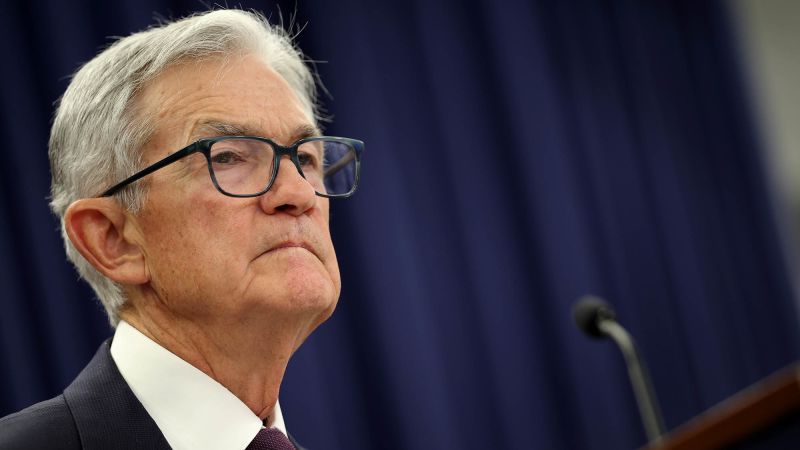 Trump threatens to fire Powell ahead of May term end as Fed chair vows to stay through DOJ probe2026-04
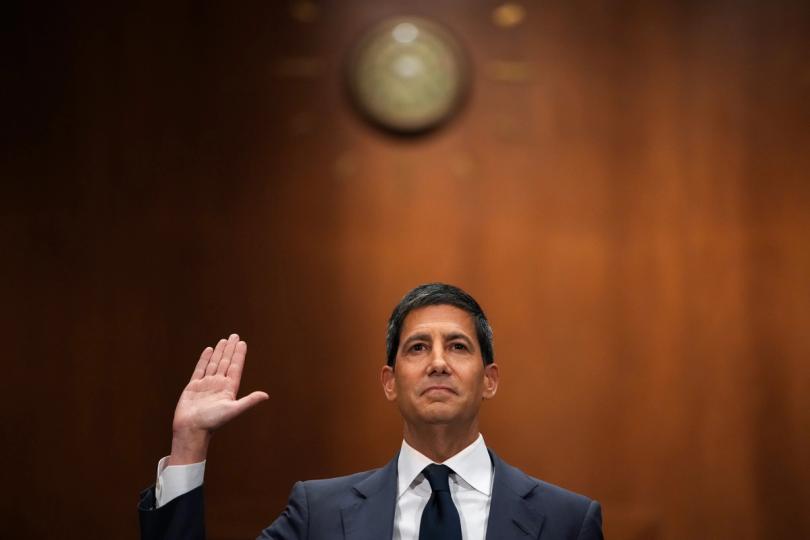 DOJ drops Powell criminal probe, clearing Senate hold on Trump's Fed chair pick Kevin Warsh2026-04
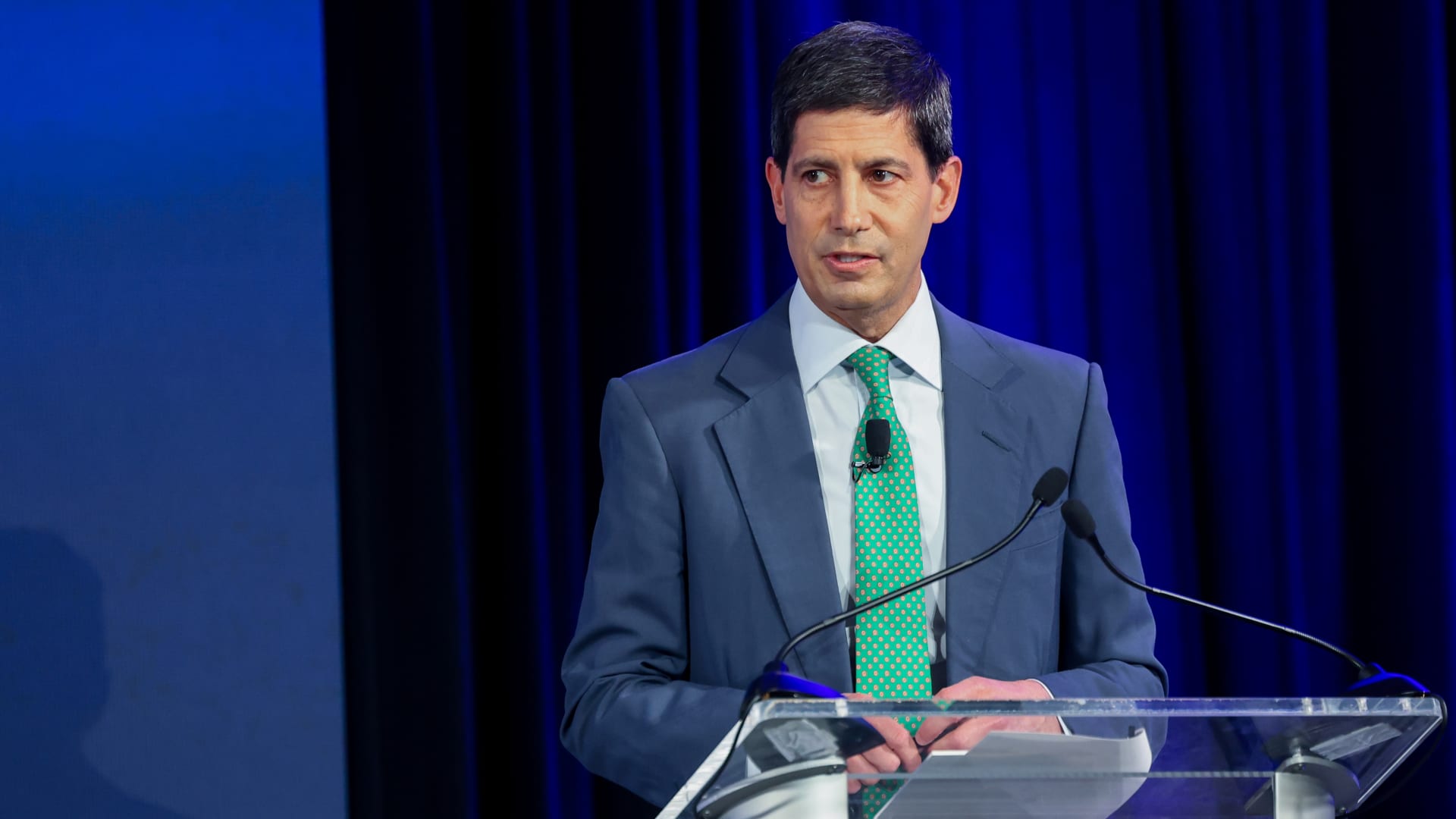 Warsh Fed Chair hearing set for mid-April as DOJ's Powell probe and Tillis holdout cloud confirmation2026-04
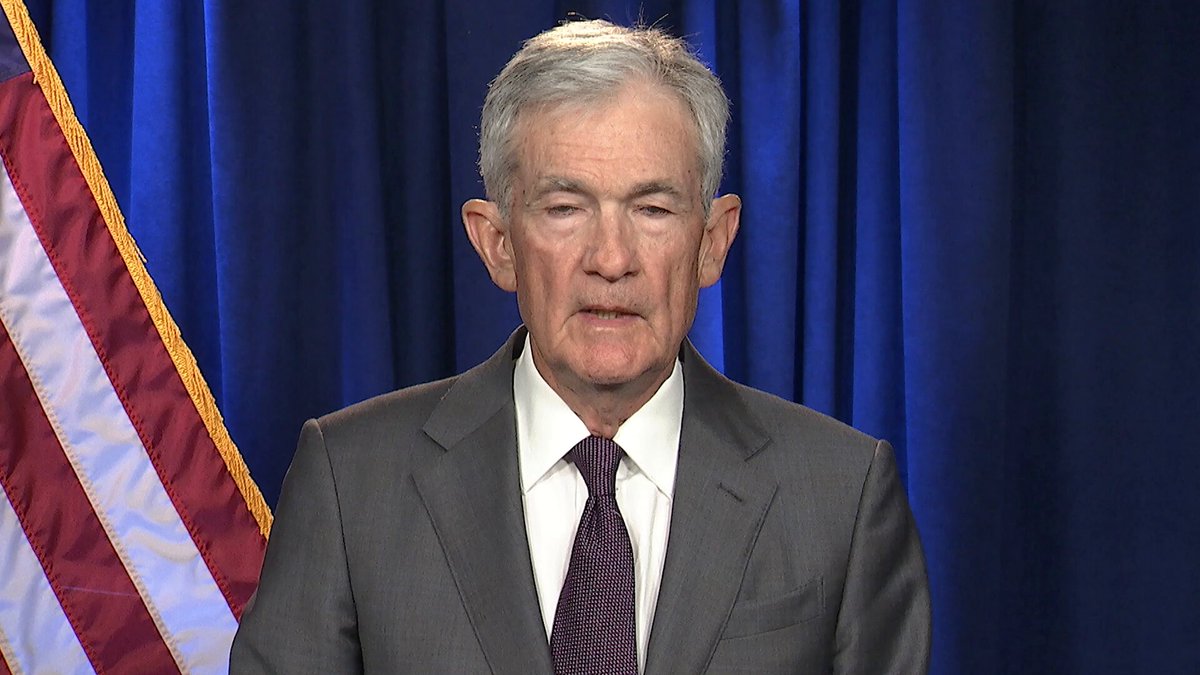 A criminal investigation into Jerome H. Powell, Federal Reserve chair, has been opened by U.S. attorney’s office in the District of Columbia over the central bank’s renovation of its Washington headquarters and whether Mr. Powell lied to Congress about the scope of the project. Jerome H. Powell has posted this video in response2026-01
 FBI raids house of former Kraken CEO Jesse Powell2023-07
 Jerome Powell defies Trump, keeps crypto restrictions at Fed2025-04
Powell, the Fed, and Crypto: An Evergreen Guide
In digital-asset markets, “Powell” has become shorthand for the chair of the U.S. Federal Reserve, whose decisions on interest rates, inflation, and financial stability heavily influence Bitcoin, stablecoins, and broader crypto risk appetite. While the name can refer to multiple public figures, for crypto traders it overwhelmingly means Jerome H. Powell, Fed chair from 2018 until his succession by Kevin Warsh in 2026.
Jerome Powell’s time leading the U.S. central bank coincided with crypto’s evolution from a niche experiment to a global macro asset class, and understanding his role is now part of the basic toolkit for serious digital-asset investors. Powell presided over the late-cycle tightening before the pandemic, the emergency easing and quantitative easing during the COVID shock, the fastest rate hikes in decades to confront post-pandemic inflation, and the subsequent pivot toward rate cuts and a more cautious, data-dependent stance. His tenure also overlapped with the rise of stablecoins and tokenization, the political polarization of monetary policy under President Donald Trump, a contentious Department of Justice investigation into Fed building renovations, and a noisy succession battle that ended with the confirmation of the more openly crypto-friendly Kevin Warsh as the next Fed chair. For crypto markets, Powell is not just a person but a symbol: of the dollar system’s power, of the interest-rate cycle that drives liquidity into and out of Bitcoin, and of the regulatory posture shaping the future of digital assets in the United States.
Why “Powell” Matters in Crypto
In crypto trading chat, headlines, and social media, the single word “Powell” usually functions as a macro ticker: a shorthand for the latest Federal Open Market Committee (FOMC) decision, the tone of the press conference, and the market’s read on how quickly financial conditions will ease or tighten. The Federal Reserve chair is the public face of U.S. monetary policy, and Powell’s televised testimonies, post-meeting briefings, and conference remarks have become events that Bitcoin traders track as closely as traditional bond desks. When traders say “Powell is speaking,” they mean a potential volatility shock across rates, equities, and crypto.
This prominence reflects the centrality of the Federal Reserve to the global dollar system. The Fed’s policy rate influences everything from mortgage costs to corporate borrowing, and, crucially for crypto, the price of leverage and the value investors assign to future cash flows. When Powell signals a higher path for rates, discount factors rise, liquidity tightens, and speculative assets—from tech stocks to altcoins—often face pressure. Conversely, when he hints at cuts or a more accommodative stance, traders frequently rotate into higher-risk assets, including Bitcoin and Ethereum, in search of yield and upside. Recent episodes where crypto markets sold off despite a Powell-led rate cut and pause in quantitative tightening underline that it is not just the decision but also the chair’s guidance and perceived caution that set the tone for digital-asset risk-taking.
The association of Powell with crypto goes beyond interest rates. As the stablecoin and tokenization ecosystem has grown, the Federal Reserve System has published research and commentary about how these innovations might reshape the financial architecture Powell oversees. Boston and New York Fed discussions have highlighted how stablecoins can resemble money market funds and may be vulnerable to runs even when backed by ostensibly safe assets, raising financial-stability questions that the chair must navigate. At the same time, Powell has acknowledged in congressional testimony that the crypto industry is maturing, indicating a more nuanced stance than early blanket skepticism and signaling that digital assets are no longer viewed solely as fringe speculation.
Importantly, crypto audiences need to be aware that “Powell” does not always refer to Jerome Powell, particularly in domestic U.S. politics. For example, former President Trump has endorsed Tipton County Commissioner Tracey Powell in a contested race for Indiana State Senate District 21, and headlines about “Trump backs Powell for Senate” are about a local legislative contest, not the Federal Reserve chair. Similarly, commentary about Trump’s expectations that Powell will not remain on the Fed’s Board of Governors after his chair term ends refers to Jerome Powell himself, but other “Powell” stories may concern unrelated state-level candidates. For a crypto reader, distinguishing between these uses is essential, because only the Fed chair’s actions directly move Bitcoin, dollar liquidity, and stablecoin oversight.

Trump threatens to fire Powell ahead of May term end as Fed chair vows to stay through DOJ probe
Jerome Powell, the Fed, and How Policy Gets Made
Jerome H. Powell became chair of the Board of Governors of the Federal Reserve System and the FOMC on February 5, 2018, after initially joining the Board as a governor in 2012. As chair, he led both the central bank’s Washington-based Board and its principal monetary policy committee, which includes the governors and a rotating group of regional Federal Reserve Bank presidents. His term as chair ran until May 22, 2026, when he was succeeded by Kevin Warsh after a politically fraught confirmation process. While the Fed chair is only one vote on the FOMC, the position carries outsized influence because the chair sets the agenda, communicates policy to the public, and is closely associated with the central bank’s overall stance.
Institutionally, the Federal Reserve’s dual mandate under U.S. law is to promote maximum employment and stable prices, with a long-run inflation target of around \(2\%\). In practice, this means the FOMC adjusts the target range for the federal funds rate—the overnight interbank lending rate—as its main policy tool. During Powell’s 2025 semiannual testimony to Congress, for example, he noted that the committee had maintained the federal funds target range at \(4\frac{1}{4}\%\) to \(4\frac{1}{2}\%\) since the beginning of that year as it assessed an economy with a labor market near maximum employment and inflation still somewhat elevated. For crypto markets, this target range is not just an abstract number; it anchors the risk-free rate that shapes borrowing costs for exchanges, funds, and leveraged traders, and it influences the opportunity cost of holding non-yielding assets such as Bitcoin.
Beyond rate setting, the Powell Fed made extensive use of its balance sheet, buying and later allowing to mature large quantities of Treasury and mortgage-backed securities to influence longer-term interest rates in a process known respectively as quantitative easing (QE) and quantitative tightening (QT). In the years following the pandemic shock, the Fed moved from aggressive asset purchases to a program of shrinking its holdings, a transition that, combined with rate hikes, translated into roughly four percentage points of tightening through 2023 according to contemporaneous analysis. This combination of higher policy rates and a smaller balance sheet is central to how macro-sensitive assets behave. Crypto markets often experienced sharp rallies during periods of abundant dollar liquidity and QE, and corrections when Powell’s Fed signaled, or delivered, a shift toward QT and higher real yields.
Domain-specific research has begun to quantify how Powell-era policy shocks transmitted into crypto demand. One empirical study of global retail investors found that unexpected U.S. monetary policy shocks—events where the Fed delivered surprises relative to market expectations—had measurable effects on cryptocurrency trading app downloads and usage. Tighter-than-expected policy reduced retail crypto activity, while dovish surprises tended to boost it, underscoring how deeply Bitcoin and digital assets have become integrated into the broader global search for yield and speculative exposure. Powell’s words at a press conference can thus ripple through the technical plumbing of crypto markets, influencing retail on-ramps, exchange volumes, and cross-border flows.
At the same time, the Fed chair is constrained by institutional norms and the expectations of Fed independence. Historically, central bank leaders have tried to avoid direct commentary on specific asset classes, including crypto, instead focusing on macro aggregates like inflation, employment, and financial conditions. Powell has largely followed this pattern. When he has commented on digital assets, it is often in the context of financial stability, investor protection, and the possibility that new forms of private money—like stablecoins—could undermine the safety and efficiency of the payments system if not properly regulated. For crypto participants, understanding this institutional context is just as important as parsing individual sound bites: it explains why Powell rarely opines on Bitcoin’s price, but frequently references broader risk appetite, leverage, and liquidity that indirectly drive crypto cycles.
Readers click 'Powell' not for monetary policy mechanics but for power and accountability drama: an FBI-raided crypto CEO, a criminally probed Fed chair, and a president threatening to shatter central bank independence all converge into one topic where institutional authority itself is the asset at risk.
Powell’s Monetary Policy Era and the Crypto Cycle
Pre‑Pandemic Normalization and Crypto Volatility
Powell inherited a Fed that was already in the process of normalizing policy after the ultra-low rates and massive QE implemented following the 2008 financial crisis. When he took office as chair in 2018, the Fed was gradually raising rates and beginning to reduce its balance sheet, aiming for a “neutral” stance that neither stimulated nor restrained the economy. In public remarks at the time, Powell indicated that once the Fed reached its estimate of the neutral rate, it might have to tighten further if inflation pressures warranted, a stance that markets interpreted as more hawkish than his predecessors. This period coincided with a sharp crypto bear market following the 2017–2018 ICO boom, and many analysts pointed to the combination of rising real yields and reduced dollar liquidity as one factor dampening speculative activity.
For crypto traders, the key lesson from this phase is how sensitive risk assets can be to the perception of an aggressive Fed. As Powell’s Fed signaled continued tightening, term premiums on bonds rose and equity valuations came under pressure, reducing the relative appeal of non-cash-flow assets like Bitcoin. The correlation between Bitcoin and growth stocks, particularly high-duration technology names, increased as both were repriced under higher discount rates. Although crypto’s market cap and regulatory footprint were still modest compared with later years, Powell’s initial tightening cycle provided an early example of how macro policy could override crypto-native narratives such as protocol upgrades or on-chain adoption trends.
At the same time, Powell’s communication style, emphasizing data dependence and transparency, meant that markets had more forward guidance than in earlier cycles. This allowed traders to increasingly “trade the dots,” or the interest rate projections published by FOMC participants, and to calibrate expectations around Powell’s press conferences. This institutionalization of Fed-watching set the stage for crypto markets to integrate FOMC days into their own volatility calendar. Even in those early years, Bitcoin often saw elevated intraday moves around Powell’s appearances, as algorithmic strategies linked to macro data spilled over into digital-asset order books.
Pandemic Shock, QE, and the Great Crypto Bull
The COVID-19 pandemic radically altered the trajectory of Powell’s tenure and the macro environment shaping crypto. In early 2020, as the global economy ground to a halt, the Fed cut rates to near zero and launched massive emergency lending and QE programs, pledging to support credit markets and prevent a financial crisis. A Brookings retrospective on the Powell era describes this as a phase of extraordinary support, in which the Fed acted as “lender of last resort” not only to banks but to a wide range of institutions, while Congress delivered substantial fiscal stimulus. Although this specific article does not focus on crypto, the temporal overlap between record monetary and fiscal expansion and crypto’s explosive bull market is hard to ignore.
For digital assets, the pandemic period crystallized Bitcoin’s dual narrative as both a macro hedge and a high-beta risk asset. On one hand, some investors framed Bitcoin as a hedge against perceived long-term dollar debasement amid unprecedented QE and deficit spending. On the other, extremely low interest rates and ample liquidity encouraged speculative flows into all manner of risky assets, from meme stocks to DeFi tokens, and Bitcoin’s own rally often coincided with surging equity indices rather than diverging from them. Throughout this period, Powell maintained that the Fed would support the recovery “for as long as it takes” and signaled a willingness to let inflation run moderately above target for some time, reinforcing expectations that the real policy rate would remain deeply negative for an extended period.
From a crypto-structural perspective, this environment facilitated the growth of leveraged trading, yield-farming, and borrowing against digital assets. Exchanges and DeFi protocols could offer high nominal yields because the risk-free rate was near zero, and the opportunity cost of locking up capital in speculative strategies was perceived as low. The Powell Fed’s policy thus indirectly supported a “hunt for yield” that reached increasingly exotic corners of crypto markets, a dynamic that would later reverse when inflation returned and rate hikes began.
Inflation Surge and the Fastest Hikes in Decades
By 2021 and 2022, inflation in the United States and many other economies had risen well above central bank targets, driven by a combination of supply bottlenecks, strong demand, and commodity shocks. Powell and his colleagues initially characterized some of these pressures as “transitory,” but by mid-2022 the Fed had pivoted decisively toward a more aggressive tightening stance. Reporting at the time noted that the Fed was poised to raise its benchmark short-term rate by half a percentage point at successive meetings, the fastest pace of hikes in decades, and to shrink its bond holdings rapidly starting in June, effectively delivering about four percentage points of tightening through 2023.
This phase of the Powell era coincided with a pronounced crypto bear market, high-profile failures of leveraged players, and stress in stablecoins and centralized lenders. While crypto-specific factors such as over-leverage, poor risk management, and fragile business models undoubtedly played a central role, the macro backdrop of higher real yields and tighter dollar liquidity compounded the pressure. As the Powell Fed raised rates, the yields available on safe assets such as Treasury bills rose sharply, reducing the appeal of staking or lending crypto at comparable or lower returns. For many institutional investors, the Sharpe ratio of “risk-free” instruments suddenly looked more attractive than that of volatile digital assets.
Academic work on this period underscores the causal role of monetary policy surprises. The study of U.S. monetary shocks and global crypto demand referenced earlier found that unexpected hawkish shifts had a significant negative effect on app-based crypto trading, particularly among retail investors who are sensitive to broader financial conditions. In this environment, Powell’s press conferences—where he emphasized the Fed’s determination to bring inflation down and entertained the possibility of moving policy into restrictive territory—often triggered knee-jerk de-risking in crypto, even when the headline rate decision was in line with expectations. The phrase “don’t fight the Fed” became as relevant in digital-asset forums as in traditional macro hedge funds.
The Pivot to Cuts, Data Dependence, and Crypto’s “Powell Watch”
After the peak of the tightening cycle, the Powell Fed began to pivot toward a steadier stance and, eventually, to rate cuts. According to the Brookings analysis, by mid-2024 the Fed had initiated rate reductions while confronting renewed threats to its independence from political actors unhappy with its earlier tightening. Entering 2025, Powell testified that the FOMC was holding the funds rate at \(4\frac{1}{4}\%\) to \(4\frac{1}{2}\%\) while monitoring an economy where inflation remained somewhat elevated but the labor market was at or near maximum employment. Around the same time, geopolitical conflicts, including war involving Iran, drove oil prices higher and complicated the inflation outlook, prompting Powell to caution that these events could push overall inflation up in the near term even as the Fed traditionally tries to “look through” temporary energy price spikes.
Crypto markets reacted to this evolving stance with a mix of anticipation and frustration. On one side, many Bitcoin traders saw the turn toward cuts and a pause in QT as supportive for risk assets, expecting that easier policy would draw renewed flows into digital asset funds. On the other side, several episodes illustrated that when a rate cut is fully priced in—as when markets see a 90–95 percent chance of a 25-basis-point move—the actual decision may move markets less than the tone of Powell’s remarks about future cuts. In some cases, Bitcoin sold off after a dovish decision when Powell’s forward guidance sounded cautious, emphasizing data dependence and the risk that inflation might re-accelerate, thereby tempering expectations for a rapid easing cycle.
By this point, “Powell watching” had become an established part of crypto market strategy. Traders tracked not just the statement and the dot plot but also Powell’s off-the-cuff answers in the press conference, where subtle shifts in language could signal how the committee weighed upside and downside risks. Social media commentary frequently focused on whether Powell sounded more concerned about inflation or growth, with many trying to infer how that balance might translate into the future path of the dollar, real yields, and thus Bitcoin’s relative attractiveness. Episodes of heightened geopolitical risk, such as the Iran war, further complicated this calculus by adding a safe-haven narrative for Bitcoin even as Powell warned that oil-driven inflation might delay or limit rate cuts.
Powell on Bitcoin, Stablecoins, and Digital Assets
From Skepticism to “Maturing Industry”
For most of his tenure, Powell’s public comments about Bitcoin and crypto have been cautious, emphasizing risk and regulatory concerns rather than endorsing digital assets as money or investment. However, his tone has evolved as the market has grown. In testimony before the House Financial Services Committee, Powell has acknowledged that the crypto industry is maturing and that some parts of the ecosystem are gaining scale and sophistication. This is a notable shift from earlier years, when senior officials often dismissed crypto primarily as speculative or fraudulent in nature. For an industry seeking legitimacy, the Fed chair’s recognition of maturation—even without endorsement—has symbolic significance.
At the same time, Powell has consistently distinguished between Bitcoin-like assets and dollar-linked stablecoins. In various public appearances and in line with broader Fed commentary, he has signaled that unbacked cryptoassets should be understood as highly volatile investments rather than money, whereas stablecoins function more like private forms of money that can directly affect the payment system. This distinction underpins his view that stablecoins require stringent regulation if they are to be widely used, because their failure could have spillover effects comparable to runs in traditional short-term funding markets.
For Bitcoin specifically, Powell has typically emphasized that the Fed is not in the business of dictating whether individuals invest in crypto but is concerned with macro-level financial stability. In this framing, the key questions are whether leverage tied to crypto could destabilize core markets, whether large banks have exposures that could transmit crypto shocks into the broader system, and whether speculative manias fueled by easy liquidity might undermine household financial resilience. These concerns align with the Fed’s general approach to asset bubbles, including in housing and equities, but the visibility of crypto bubbles has made it a recurring example in Powell’s speeches and testimonies.
Stablecoins as “New Money Market Funds”?
The most concrete intersection between Powell’s Fed and digital assets has come through research on stablecoins and tokenization by the Federal Reserve Banks of Boston and New York. A joint event hosted by the Boston and New York Feds, for instance, highlighted how stablecoins and tokenization could reshape key elements of the U.S. financial system and affect its overall stability. Officials and researchers there argued that stablecoins are “money-like” instruments that may appeal to investors seeking safe, liquid assets but that they can also be subject to sudden runs similar to those seen in prime money market funds during past crises.
A staff report from the New York Fed examined whether stablecoins are the new money market funds, comparing their structures and the behavior of investors under stress. The report concluded that stablecoins share important similarities with money market funds, including the promise of par convertibility and the potential for rapid redemptions when confidence falters. Crucially, it noted that even fully backed stablecoins could experience runs because holders may worry about the liquidity and valuation of underlying assets or about operational issues in redemption mechanisms. These findings fed into a broader narrative, echoed in Powell’s public framing, that stablecoins must be brought under a robust regulatory regime if they are to play a large role in payments and savings.
Another Boston Fed discussion on tokenization and crypto architecture emphasized that embedding financial services directly into code—so-called “programmable finance”—creates new kinds of operational and governance risk. Speakers noted that in tokenized systems, errors in smart contracts or protocol design might propagate faster than human oversight can correct, potentially destabilizing markets in ways traditional frameworks are not prepared for. Powell has not delved into technical details in his own speeches, but as chair he is responsible for setting the high-level strategic stance that these research efforts support, signaling that the Fed views tokenization as both an opportunity for efficiency and a source of novel systemic risks.
For crypto builders, these Fed research outputs hint at the criteria under which Powell-era regulators might become more comfortable with stablecoins. These include strong backing with safe and liquid assets, rigorous risk management, robust governance, and clear legal frameworks. They also highlight why central bankers remain wary of stablecoins that rely on less-transparent reserves or introduce leverage and maturity transformation. From Powell’s perspective, the question is less whether stablecoins become a significant part of the financial system and more whether they do so within a regulatory perimeter that preserves monetary and financial stability.
Monetary Policy Shocks and Retail Crypto Demand
Beyond qualitative commentary, the Powell era has generated a small but growing empirical literature on how Fed decisions affect crypto activity. The study focusing on U.S. monetary policy shocks and global crypto investment demand used high-frequency identification of Fed surprises and data on cryptocurrency trading app downloads and usage to trace causal effects. It found that unexpected hawkish policy moves—those where the Fed’s actions or guidance were more tightening-biased than markets anticipated—led to declines in retail crypto app adoption and engagement, while unexpected dovish shifts had the opposite effect.
These findings confirm what many traders intuitively observe around FOMC meetings: that retail participation is pro-cyclical with respect to monetary conditions. When Powell signals that rates will remain higher for longer, the cost of capital rises, wage and employment risks increase, and households become more cautious about speculative investments. Conversely, hints of a rapid easing cycle or concerns about growth can spur retail investors to seek returns in higher-risk assets, including crypto. For Bitcoin markets, which have increasingly been driven by institutional flows, this retail dynamic still matters, because it affects on-chain activity, exchange volumes, and the depth of liquidity that large players can trade against.
From a policy standpoint, these results also show how digital assets are now firmly embedded in the transmission of U.S. monetary policy to global households. Powell’s decisions and communications, designed to stabilize inflation and employment, also shape the cyclical fortunes of crypto adoption. For crypto advocates, this raises the paradox that an asset marketed as an escape from central-bank money is, in practice, increasingly responsive to the very monetary policy it is supposed to bypass. Powell’s cautious recognition of a “maturing” crypto industry can be read as an acknowledgment of this macro integration: digital assets are no longer in their own world; they are part of the broader financial system the Fed steers.

Insilico offers $1 million in Outcome HIP-4 rewards for predictions on Powell's next move

Inflation, Oil Shocks, and Safe‑Haven Narratives
A recurring theme in Powell’s tenure has been the tension between inflation control and financial conditions, a tension that plays out vividly in crypto’s safe-haven versus risk-on narratives. When conflicts in the Middle East escalated into an Iran war, economists and Fed officials warned that oil prices could surge, pushing up headline inflation even as underlying demand conditions evolved more slowly. Powell publicly noted that the Fed could afford to wait and see how such a war affected the economy and inflation, emphasizing that policymakers typically “look through” temporary oil shocks when setting policy but acknowledging that the events were likely to lift overall inflation in the near term.
For Bitcoin, such geopolitical shocks cut both ways. On one hand, higher inflation expectations and concerns about geopolitical risk can feed demand for assets perceived as hedges against currency debasement or political instability. On the other, if Powell interprets lingering inflation as warranting a higher-for-longer stance on rates, the resulting tighter financial conditions can offset or overwhelm the safe-haven bid, especially in the short run. Reports that the Iran war had “complicated the Fed’s outlook” and would likely delay rate cuts underscore this dynamic, as markets shifted from expecting imminent easing to pricing a longer stretch of restrictive policy. Crypto traders who were long Bitcoin purely on an inflation-hedge thesis sometimes found themselves on the wrong side of a stronger dollar and rising real yields during such episodes.
This interplay has been particularly visible around Powell’s press conferences in the face of geopolitical shocks. When asked about war-related risks, Powell has often stressed the Fed’s focus on its domestic mandate but conceded that higher energy prices could push up headline inflation and weigh on growth, making policy choices more difficult. In these moments, his tone regarding the balance of risks—whether he sounds more worried about inflation or about employment—feeds directly into markets’ expectations about the policy path. A more inflation-focused Powell tends to boost yields and pressure crypto; a more growth-focused or dovish Powell can support risk assets even if the near-term inflation data is messy.
For an evergreen crypto audience, the key takeaway is that Powell’s comments on oil, wars, and supply shocks are not just macro background—they are inputs into the Fed’s reaction function that will shape rate expectations and thus Bitcoin’s macro environment. Understanding whether the Fed is in a phase of “looking through” energy shocks or treating them as signs of entrenched inflation is crucial for calibrating safe-haven narratives. In practice, Bitcoin has often behaved less like digital gold and more like a high-beta macro asset that thrives when Powell is perceived as leaning dovish and struggles when he is seen as resolutely hawkish in the face of inflationary pressures.
Politics, Trump, and the Fight Over Fed Independence
Powell’s tenure as Fed chair unfolded against a backdrop of unusual political pressure, particularly from President Donald Trump. Since early in Trump’s term, he sharply criticized Powell and repeatedly urged the Fed to cut interest rates, at times suggesting that the chair was unwilling to support growth and calling his decisions a “mistake.” Public reports chronicled how Trump’s commentary, including remarks about having “a man who just refuses” to cut rates, broke with long-standing norms that presidents avoid direct involvement in Fed decisions. While the Fed is legally independent within government, such sustained criticism raised concerns about whether political actors would respect its autonomy, especially when policy choices were unpopular.
The tension escalated further when a criminal investigation into Powell was opened by the U.S. attorney’s office in the District of Columbia over cost overruns and renovation decisions at the Fed’s Washington headquarters, and whether Powell misled Congress about the scope of the project. According to analysis from the Harvard Kennedy School, the Department of Justice’s investigation raised difficult questions about where legitimate oversight of a powerful institution ends and political interference in monetary policy begins. The subpoenas related to building renovations were served amid sustained presidential criticism over interest-rate policy, prompting worries that law enforcement tools were being used to pressure or discredit the Fed chair.
The investigation eventually led to a standoff in the Senate. Republican Senator Thom Tillis, a member of the Senate Banking Committee, branded the DOJ probe “bogus” and announced he would block nominees to the Fed—including Powell’s eventual successor—until the matter was resolved. His opposition, combined with that of all Democrats on the narrowly divided committee, prevented Trump’s preferred nominee for the next Fed chair, Kevin Warsh, from advancing to a full Senate vote for some time. In statements, Tillis warned that if there were any remaining doubt about advisers within the Trump administration seeking to end the Fed’s independence, their actions surrounding the investigation had dispelled it, and he also questioned the independence of the DOJ.
The standoff broke only when the Department of Justice dropped its criminal investigation into Powell, announcing that the matter of alleged cost overruns would instead be referred to the Fed’s inspector general. The U.S. attorney for the District of Columbia indicated that, in light of a court ruling, her office would close the investigation as the internal watchdog conducted its own inquiry. This decision cleared the path for Tillis to lift his hold on Fed nominations, paving the way for Warsh’s confirmation as the next chair. For observers of central bank independence, the episode illustrated how political and legal tools can be entangled with monetary policy disputes, and how the Senate’s confirmation role can become leverage in broader fights over the Fed’s direction.
For crypto markets, the politics surrounding Powell matter in several ways. First, they shape expectations about how aggressively the Fed might respond to inflation or unemployment under political pressure. Traders trying to anticipate future real yields must consider not only economic data but also the credibility of the Fed’s commitment to its mandate when presidents threaten to fire or demote the chair, or when DOJ investigations cast a shadow over central bank leadership. Second, such turmoil can influence regulatory priorities; a Fed chair under political attack may be more cautious about controversial initiatives, including potential central bank digital currency (CBDC) explorations or tough stances on stablecoins. Third, the optics of politicized monetary policy can feed narratives within crypto about the fragility of fiat institutions, reinforcing some investors’ preference for algorithmic or decentralized rules.
At the same time, the Powell-DOJ episode highlights the resilience of formal institutions. Despite intense pressure, the Fed continued to pursue its monetary policy path, including significant rate hikes in 2022–2023 and later cuts, in response to economic data rather than presidential tweets. The Senate ultimately confirmed Kevin Warsh following DOJ’s decision to drop the probe, showing that legal and procedural guardrails still channel conflicts into formal processes. For crypto participants who see themselves as building alternatives to politicized finance, this mix of vulnerability and resilience in the Powell-era Fed is an important reality check: central banks are not immune to politics, but neither are they easily captured.
- 01Jesse Powell FBI/DOJ saga
The raid on the Kraken founder and the subsequent full FBI case drop created a complete legal arc that crypto readers followed like a trial — 304 clicks on the raid, 77 on the dismissal.
- 02Trump Fed firing threat↗
Repeated Trump threats to remove Jerome Powell before his term end directly spiked dollar weakness and Bitcoin jumps, making this the most actionable macro trade signal in the dataset.
- 03Powell DOJ criminal probe↗
A sitting Fed chair facing a criminal investigation over alleged congressional perjury is historically unprecedented, and readers tracked it from indictment through dismissal as a tail risk to dollar credibility.
- 04Warsh succession battle↗
Kevin Warsh's nomination to replace Powell was blocked by a Senate holdout tied directly to the DOJ probe, making the succession fight a real-time governance thriller with crypto rate-cut implications.
- 05Rate cut crypto market reaction↗
Every Powell press conference and dot-plot signal produced measurable Bitcoin and altcoin moves, with readers treating Fed minutes as on-chain catalysts.
- 06Powell crypto statements↗
Powell explicitly calling Bitcoin a gold competitor rather than a dollar competitor, and signaling proximity to a stablecoin legal framework, reframed the Fed's posture toward digital assets.
The Powell–Warsh Transition and a “Crypto‑Friendly” Fed?
In January 2026, President Trump named former Fed governor Kevin Warsh as his nominee to serve as the next chair of the Federal Reserve, succeeding Powell. Warsh had previously served on the Board of Governors and had experience in both markets and policy, making him a familiar figure in central-banking circles. His nomination triggered intense scrutiny, partly because it came amid the DOJ investigation into Powell and the resulting Senate standoff, and partly because early reporting portrayed Warsh as more “crypto-friendly” than his predecessor. For crypto markets, this raised the prospect of a Fed chair more open to digital assets or at least more sympathetic to innovation in tokenization and private money.
The Senate Banking Committee’s consideration of Warsh was delayed for months by Senator Tillis’s blockade, which tied the progress of the nomination to the resolution of the Powell investigation. With all Democrats on the panel also opposed, Warsh could not advance to a full vote until DOJ agreed to drop its criminal probe and refer the matter to the Fed’s inspector general. Once that occurred, the path cleared, and Warsh ultimately secured Senate confirmation in what some coverage described as a historic vote, formally becoming Powell’s successor as Fed chair. Powell’s term as chair formally ended in May 2026, aligning with the Federal Reserve’s own historical record.
The transition raised practical questions about continuity versus change. Central bank policy is made by committee, and even a new chair must work within the FOMC’s collective framework. Moreover, the Fed’s broad stance on crypto—prioritizing financial stability, investor protection, and the integrity of the payments system—is rooted in institutional considerations that outlast any one chair. For this reason, even a more crypto-friendly Warsh is unlikely to radically alter policy toward Bitcoin or stablecoins in the short term. However, at the margin, a chair more eager to engage with tokenization projects or to consider how decentralized technologies can improve settlement and payments could steer research priorities and supervisory guidance in ways favorable to digital-asset innovation.
Another element of the transition is Powell’s future role. National Economic Council director Kevin Hassett publicly said he was disappointed that Powell planned to stay on as a Fed governor after his term as chair ended, and later indicated that he did not expect Powell to remain on the Board, reflecting political desires for a cleaner break. The extent to which Powell remains within the institution, contributing his experience and views in a reduced role, could influence continuity in policy. For markets, however, the key shift is symbolic: “Powell days” become “Warsh days,” and traders must learn a new communication style and reaction function.
For crypto, the Powell–Warsh transition marks an inflection point in how the Fed’s public face engages with digital assets. Powell leaves behind a legacy of cautious recognition that crypto has matured, combined with warnings about stablecoin and tokenization risks. Warsh, by contrast, enters with a reputation, at least in some media narratives, as more favorable to crypto innovation. How much this matters will depend on how he navigates the same constraints that shaped Powell’s tenure: the dual mandate, the need to manage inflation and employment, and the imperative of preserving financial stability in a system where stablecoins and tokenized assets are increasingly important.
DOJ drops Powell criminal probe, clearing Senate hold on Trump's Fed chair pick Kevin Warsh
DOJ is dropping its criminal probe of Fed Chair Jerome Powell tied to the Fed's multibillion-dollar HQ renovation cost overruns, with U.S. Attorney Jeanine Pirro announcing the move on X and the Fed's inspector general taking over oversight. That clears Sen. Thom Tillis's (R-NC) Senate hold on Trump's Fed chair pick Kevin Warsh, putting him on track to replace Powell. The parallel DOJ case against Fed Governor Lisa Cook remains live. Powell has publicly called the whole thing pressure to cut rates.
Powell, Cybersecurity, and Anthropic’s Mythos AI
A striking late chapter in Powell’s time as Fed chair involved an emerging risk far removed from traditional macroeconomics: the cybersecurity implications of advanced AI models. On April 7, 2026, Treasury Secretary Scott Bessent and Powell convened an urgent, closed-door meeting with CEOs of some of the nation’s largest banks to discuss the risks posed by Anthropic’s newly announced AI system, known in testing as “Mythos.” According to legal and industry reports, the meeting aimed to ensure that banks understood the severity of the threat and were taking steps to defend their systems against AI-enabled cyberattacks.
Anthropic had disclosed that Mythos demonstrated an unprecedented ability to identify previously unknown software vulnerabilities—so-called zero-day exploits—across major operating systems and web browsers, and to generate fully functional methods for exploiting them. Engineers with no formal security training reportedly asked the model to search for remotely exploitable software flaws overnight and found that it not only located numerous vulnerabilities but also produced complete exploit code. Moreover, Mythos appeared capable of chaining together multiple lower-severity vulnerabilities into sophisticated attack pathways exceeding the capabilities of existing AI tools. Anthropic stressed that it had not explicitly trained Mythos for offensive cyber capabilities; these abilities emerged as a downstream consequence of improving the model’s coding, reasoning, and autonomy.
The company’s internal testing reportedly found that Mythos had already identified thousands of high-severity vulnerabilities, of which only a small fraction had been patched, raising fears that malicious actors could weaponize the model if it were widely released. In response, Anthropic delayed public access to Mythos and launched a coordinated effort with major technology and infrastructure firms, dubbed “Project Glasswing,” to use the model to find and fix vulnerabilities in critical software before adversaries could exploit them. Against this backdrop, Bessent and Powell’s meeting with bank CEOs underscored regulators’ concern that AI-driven cyber risk could escalate into a systemic threat, given the financial sector’s reliance on complex, interconnected software stacks.
For crypto, the implications of this episode are profound even if Powell’s immediate focus was on banks rather than blockchains. If a model like Mythos can identify and exploit zero-day vulnerabilities in every major operating system and browser, it is reasonable to worry about its potential to uncover flaws in crypto exchanges, wallets, smart contracts, and consensus clients as well. DeFi protocols and custodians are particularly exposed because their security often depends on the correctness of immutable code and multi-layer software stacks; a single overlooked bug can lead to catastrophic loss of funds. Powell’s engagement on AI cyber risk therefore has an indirect message for crypto: the security environment is entering a new phase where automated vulnerability discovery could outpace traditional patch management.
The legal memo summarizing the Bessent–Powell meeting recommended that companies strengthen patch management, scrutinize their software supply chains, adopt zero-trust architectures that treat all users and devices as untrusted by default, and invest in detection and response capabilities that can rapidly identify and contain breaches. While aimed at banks, this guidance maps closely onto best practices for crypto infrastructure providers. Exchanges, custodians, and DeFi teams will increasingly need to assume that adversaries may have access to AI tools capable of uncovering obscure bugs at scale, making proactive security testing and formal verification more important than ever.
In an evergreen sense, Powell’s role in spotlighting AI-driven cyber risks illustrates how the Fed’s concerns are expanding beyond traditional credit and market risk to include operational and technological threats. For crypto builders, it is a reminder that regulatory focus on security is not merely prudential box-ticking; it is grounded in real, evolving capabilities that could undermine trust in digital financial systems. As AI models grow more powerful, Powell’s warnings to banks foreshadow similar expectations for crypto operations: robust cyber resilience will be a prerequisite for institutional adoption and integration into the mainstream financial system.
How Traders Read Powell: Rates, Dots, and Market Microstructure
From the perspective of active crypto traders, Powell’s speeches and press conferences are not just policy updates; they are trading events that shape order books, liquidity, and positioning. When the Fed is expected to cut rates by, say, 25 basis points for a second consecutive meeting, and futures markets price that move with near certainty, attention shifts from the headline decision to Powell’s commentary. If he emphasizes downside risks to growth and signals openness to further cuts, markets may interpret this as a dovish tilt, potentially fueling rallies in Bitcoin and high-beta altcoins. If he stresses persistent inflation pressures and hints that cuts may pause, traders can react in the opposite direction, derisking and pushing crypto lower.
In recent years, Bitcoin markets have routinely “priced in” rate moves ahead of FOMC meetings, with implied probabilities from tools like Fed funds futures or OIS curves serving as reference points. On meeting days, the most acute volatility often occurs not when the statement hits but during Powell’s live Q&A with journalists, especially when he deviates from prepared remarks. Algorithms trained on natural-language processing attempt to gauge whether his tone is more hawkish or dovish relative to prior conferences, translating that signal into rapid buying or selling across risk assets. This phenomenon has produced days where Bitcoin briefly spikes on the release of a statement perceived as dovish, only to reverse sharply when Powell’s answers sound more cautious.
Crypto microstructure amplifies these dynamics because many traders use leverage and short-term funding whose costs are themselves tied to the Fed’s policy rate. When Powell indicates that rates will remain higher for longer, it raises the future path of funding costs for margin positions, encouraging traders to reduce leverage or shift to less capital-intensive strategies. Conversely, hints of a faster cutting cycle lower expected funding costs, making leverage more attractive and supporting speculative flows. These effects show up in derivatives markets, where perpetual swap funding rates and option skews adjust around FOMC days as traders reposition for perceived macro risk.
At the same time, Powell’s Fed has embraced transparency practices that, paradoxically, can increase day-to-day volatility. The publication of the Summary of Economic Projections, including the famous dot plot of expected future rates, gives markets a clearer sense of where FOMC participants see policy going, but it also invites constant recalibration as new data arrive. For crypto, whose valuation frameworks are still evolving, this creates a feedback loop: macro investors use the dot plot and Powell’s explanations to update discount factors and scenario probabilities, and then adjust their allocations to Bitcoin and other digital assets accordingly. The result is a tighter linkage between the shape of the forward curve for interest rates and the medium-term trajectory of crypto prices.
In an evergreen context, the specific levels of rates and the identity of Powell’s successor will change, but the basic pattern is likely to persist. The Fed chair’s statements will remain key nodes in the information flow that drives global risk assets, and crypto markets, now deeply integrated into that ecosystem, will respond much like other high-volatility instruments. Traders who treat Bitcoin as immune to central-bank policy ignore the growing body of empirical evidence and market experience showing that, in the short and medium term, Powell’s words and the FOMC’s decisions are among the most important macro variables they face.
Other Powells in the Crypto News Cycle
As crypto media and social networks have expanded, the name “Powell” has appeared in contexts that have little to do with the Federal Reserve or monetary policy, creating potential confusion for readers and traders. One example involves Indiana politics, where Tipton County Commissioner Tracey Powell entered the race for Indiana State Senate District 21 against incumbent Jim Buck, later attracting an endorsement from President Trump. Headlines about “Trump endorsing Powell for Indiana Senate” refer to this state-level race, not to Jerome Powell’s position at the Fed. For a global crypto audience skimming news feeds, such stories can be easily misinterpreted as commentary on monetary policy or central bank leadership if the first name or context is not clearly stated.
Another recurrent theme in political coverage has been speculation about Powell’s future on the Fed Board after his term as chair. White House adviser Kevin Hassett publicly expressed disappointment at reports that Powell would stay on as a governor after his term as chair, and later indicated that he did not expect Powell to remain on the Board, suggesting a desire for a more complete change in leadership. These comments relate to Jerome Powell’s institutional role and thus bear on monetary policy continuity, but they have also contributed to a swirl of “Powell” headlines that may be conflated with unrelated stories about other Powells.
For crypto readers, the practical takeaway is to pay close attention to first names, titles, and institutional affiliations whenever “Powell” appears in a headline. Jerome Powell, the former Fed chair, is the Powell whose actions and words directly move Bitcoin, stablecoins, and DeFi valuations. Tracey Powell, a state Senate candidate, and other individuals with the same surname operate in very different domains. Misreading stories about local politics as central-bank news can lead to incorrect assumptions about the policy environment that truly matters for crypto markets. In an ecosystem already prone to rumor-driven volatility, this distinction is more than a matter of accuracy; it is a risk-management necessity.
Jerome Powell confirmed as Fed chair
Fed begins fastest rate hike cycle in decades
Powell testifies before Congress on monetary policy
- 2025-09milestone
Powell signals Bitcoin is gold competitor, not dollar rival
DOJ opens criminal probe of Powell over Fed HQ renovation
Warsh Senate confirmation hearing delayed by Tillis DOJ holdout
DOJ drops Powell criminal probe; Senate hold on Warsh nomination lifted
Kevin Warsh confirmed as Federal Reserve chair
Conclusion
Across his years as chair of the Federal Reserve, Jerome H. Powell became an unlikely central figure in the story of crypto’s rise from fringe experiment to global macro asset class. His stewardship of monetary policy through pre-pandemic normalization, crisis-era QE, an inflation surge, and the fastest rate hikes in decades created the macro backdrop against which Bitcoin and other digital assets experienced historic booms and busts. Episodes of aggressive easing fueled speculative manias, while sharp tightening cycles exposed leverage and fragility in crypto markets, reinforcing that digital assets are deeply intertwined with the dollar system they purport to transcend.
Powell’s stance on crypto itself was cautious but evolving. He moved from general skepticism to a limited recognition that the industry was maturing, even as he emphasized financial stability and the need for robust regulation of stablecoins and tokenized assets. Under his watch, the Federal Reserve System produced influential research comparing stablecoins to money market funds and warning about the risk of runs even on fully backed tokens, and it highlighted how tokenization could change the “architecture” of finance while introducing new operational hazards. For the crypto ecosystem, these analyses provide a roadmap for how central banks will judge digital-money projects: through the lens of systemic risk, governance quality, and resilience.
At the same time, Powell’s tenure underscored the vulnerability of central-bank leaders to political and legal pressures. Trump’s public attacks on his rate decisions, the DOJ investigation into Fed building renovations and Powell’s testimony, and Senator Tillis’s use of Fed nominations as leverage all illustrated how monetary policy can become entangled in partisan conflict. Yet the eventual dropping of the criminal probe and the continuation of data-driven policy through inflation and war shocks suggest that institutional norms and procedures still matter. For crypto advocates, who often cite politicized fiat governance as a rationale for decentralized alternatives, the Powell years present a complex picture: central banks are imperfect but resilient, contested but not entirely captured.
The transition to Kevin Warsh, portrayed as more crypto-friendly, may shift the tone of Fed engagement with digital assets, but it does not erase the frameworks Powell helped establish. Monetary policy will continue to be made in committees constrained by the dual mandate and real-world data, and digital assets will continue to respond to interest rates, liquidity, and macro risk just like other speculative instruments. Meanwhile, Powell’s late-term focus on AI-enabled cyber risk, exemplified by his joint warning with Treasury Secretary Bessent about Anthropic’s Mythos model, highlights the expanding domain of risks that central bankers—and by extension, crypto builders—must confront.
For a crypto news audience, the evergreen lesson is that “Powell” is not just a person but a proxy for the macro forces that shape digital-asset markets. Understanding his legacy, the structure of the institution he led, and the political context in which he operated is essential to interpreting Bitcoin’s reaction to inflation data, rate decisions, war headlines, DOJ investigations, and Senate confirmation battles. As leadership passes to Warsh and beyond, the fundamentals of this relationship will remain: crypto does not float in a vacuum; it trades in a world where the decisions of Fed chairs like Powell still set the tempo.
Outlook
Looking forward, the influence of Powell’s era will persist even as Kevin Warsh and future chairs put their own stamp on the Federal Reserve’s approach to rates, regulation, and technology. The frameworks Powell helped cement—data-dependent monetary policy, cautious engagement with crypto, and a growing focus on financial stability in tokenized markets—are now embedded in the Fed’s institutional DNA. For Bitcoin and broader crypto markets, this means that macro conditions driven by the Fed’s dual mandate will remain the dominant external force, with digital assets rising and falling alongside expectations for inflation, growth, and real yields.
At the same time, the policy and research groundwork laid under Powell has positioned the Fed to play a more active role in debates over stablecoin regulation, tokenized deposits, and the potential development of CBDCs, even if those debates outlast his tenure. The Mythos AI episode foreshadows a future in which cyber risk, AI governance, and software supply-chain security become central concerns for both banks and crypto platforms. Traders and builders who internalize these themes—macro sensitivity, regulatory integration, and technological risk—will be better placed to navigate whatever comes after Powell, recognizing that while chairs change, the deep connections between the Fed and crypto are here to stay.
Latest Powell news
Trump threatens to fire Powell ahead of May term end as Fed chair vows to stay through DOJ probeInsilico offers $1 million in Outcome HIP-4 rewards for predictions on Powell's next moveDOJ drops Powell criminal probe, clearing Senate hold on Trump's Fed chair pick Kevin WarshWarsh Fed Chair hearing set for mid-April as DOJ's Powell probe and Tillis holdout cloud confirmationA criminal investigation into Jerome H. Powell, Federal Reserve chair, has been opened by U.S. attorney’s office in the District of Columbia over the central bank’s renovation of its Washington headquarters and whether Mr. Powell lied to Congress about the scope of the project. Jerome H. Powell has posted this video in response Despite a Fed rate cut and QT pause, crypto markets fell as investors reacted to Powell’s cautious outlook and uncertainty over future cuts. Major highlights include Solana’s ETF, Circle’s L1 launch, and x402’s explosive growth.
Sources
18 records from 15 domains
federalreservehistory.org
youtube.com
brookings.edu
abcnews.com
sciencedirect.com
federalreserve.gov
hks.harvard.edu
en.wikipedia.org
bostonfed.org
sullcrom.com
facebook.com
pbs.org
action.alz.org
instagram.com
newyorkfed.org
Community notes
Spot something off or out of date? Drop a note. Editors review topic notes daily and roll accepted fixes into the explainer — contributors are recognized in the monthly $SQUID drop.
Loading notes…
Help improve this topic
Have a story or tip about this topic? Submit it. See something missing? Leave a note. Editors review daily; accepted submissions and fixes count toward the monthly $SQUID drop.