
In‑depth explainer on how the U.S. Federal Reserve shapes crypto markets, from rates, inflation and QE/QT to CBDCs, stablecoins and tokenized deposits, with a focus on Bitcoin, digital dollars, key Fed figures and what policy shifts mean for traders.
+54 sources across the wider coverage universe
 Fed confirms no plans to build or issue a CBDC, backs stablecoins and tokenized deposits as alternatives2026-03
 Fed's Waller went in ready to cut rates, but Iran war oil spike forced a hold — says cuts still possible later in 20262026-03
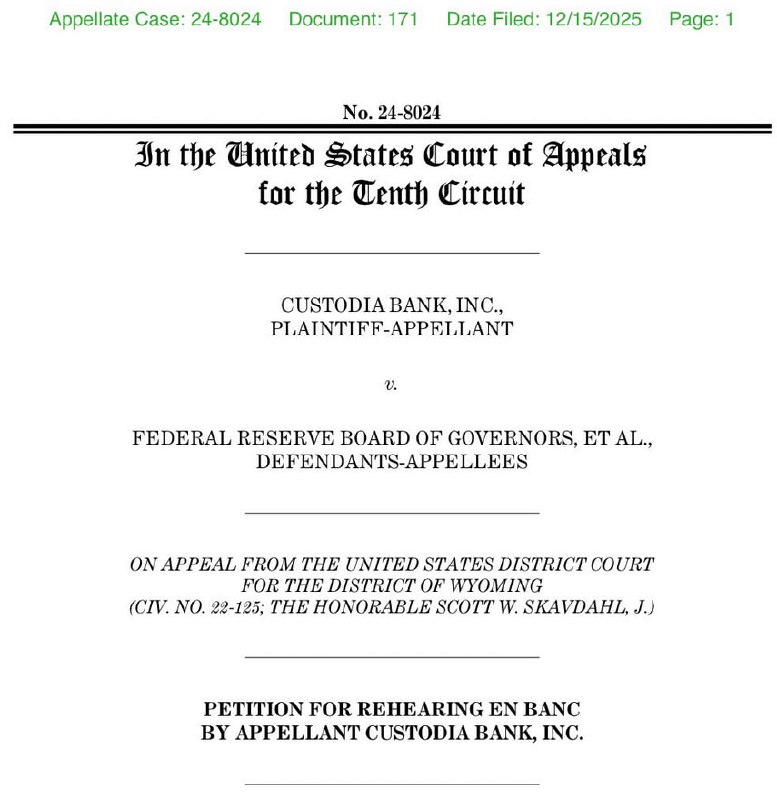 Custodia Bank asks full federal appeals court to reconsider ruling upholding the Fed’s denial of its master account, arguing the decision misreads banking law and undermines state authority.2025-12
 Market week ahead: Fed’s Expected December Rate Cut Poised to Set the Tone for Global Central Banks in a Pivotal Week for Monetary Policy.2025-12
 AI, which FED Governor Barr sees as a transformative general‑purpose technology, is likely to boost long‑run productivity but brings significant near‑term risks for workers, inequality, and inflation, so he argues monetary policy should remain cautious while society manages potential labor dislocation. (2026-02
 The Coinbase Bitcoin Premium flipped positive for the first time in weeks, signalling a rebound in US demand as silver hits a record high and hard-asset appetite returns. With seller exhaustion and Fed-pivot hopes rising, Bitcoin could see a more active December.2025-11
The Federal Reserve, Crypto, And The Future Of Money
The Federal Reserve (the Fed) is the United States’ central bank, responsible for setting interest rates, managing dollar liquidity, and supervising much of the banking system, and its decisions now shape every major move in Bitcoin, stablecoins, and wider crypto markets. As rate cuts, inflation, and digital‑dollar debates dominate headlines, understanding how the Fed works has become as important to crypto investors as knowing how blockchains or on‑chain liquidity pools function.
The Fed In A Nutshell: Why It Matters For Crypto
At its core, the Federal Reserve exists to manage the value and stability of the U.S. dollar, which remains the unit of account for most global trade, finance, and, crucially, for the pricing of Bitcoin and other cryptoassets in major markets. Congress has given the Fed a mandate to pursue maximum employment, stable prices, and moderate long‑term interest rates, objectives that together define its approach to monetary policy. In practice, this means adjusting short‑term interest rates, managing the Fed’s multi‑trillion‑dollar balance sheet, and communicating its outlook in an effort to keep inflation around a 2 percent target while avoiding deep recessions. For crypto participants who often think in BTC, ETH, or stablecoins, these goals might sound remote, but the Fed’s tools directly influence global liquidity, risk appetite, and the opportunity cost of holding volatile assets such as Bitcoin rather than cash or Treasury bills.
The Fed also plays a central role in supervising banks and maintaining the plumbing of the dollar system, functions that have become increasingly important as stablecoins and tokenized deposits attempt to plug themselves into traditional payment rails. Because major stablecoins are backed by U.S. dollar assets and depend on commercial banks, money market funds, and Treasuries, they are indirectly exposed to Fed policy even when they circulate on public blockchains. Likewise, crypto‑focused banks and financial institutions must often seek access to Fed payment services or master accounts, bringing them directly under the Fed’s supervisory umbrella. This combination of macroeconomic influence and regulatory authority makes the Fed one of the most consequential institutions for crypto, even though it does not directly regulate most spot crypto markets.
As crypto markets have matured and institutional participation expanded, the relationship between Fed policy and digital assets has grown tighter. Studies now document that Bitcoin futures react measurably to Federal Open Market Committee (FOMC) announcements and major macroeconomic data releases, sometimes within minutes. Episodes of quantitative easing (QE) appear to support Bitcoin prices through the liquidity channel, while aggressive tightening cycles have coincided with “crypto winters” marked by deleveraging and collapsing valuations. For traders gaming Fed rate‑cut odds, long‑term investors thinking about Bitcoin’s role as “digital gold,” or builders designing stablecoin protocols around tokenized Treasuries, the Fed is no longer an abstract macro backdrop but an everyday variable in strategy and risk management.
Mandate and core responsibilities
The Fed’s statutory mandate, often referred to as the “dual mandate,” requires it to conduct monetary policy in a way that fosters maximum employment and stable prices, with the understanding that moderate long‑term interest rates are a natural by‑product of those conditions. Stable prices are typically interpreted as inflation averaging around 2 percent over time, a target the Fed has repeatedly reaffirmed in its statements and strategy documents. Maximum employment is more qualitative: the Fed does not target a specific unemployment rate but instead balances labor‑market strength against inflationary pressures, accepting some slack if inflation is too high and tolerating very low unemployment when inflation is subdued. This balancing act is what drives the cycle of interest‑rate hikes, pauses, and cuts that macro‑sensitive markets attempt to forecast.
Beyond monetary policy, the Fed is a key supervisor of banks, particularly state‑chartered banks that choose to become members of the Federal Reserve System, large bank holding companies, and systemically important financial institutions. It conducts stress tests, sets capital and liquidity standards, and issues supervisory guidance, including on exposure to emerging risks such as crypto‑assets and stablecoins. These supervisory decisions shape whether and how banks can custody crypto, provide fiat on‑ and off‑ramps for exchanges, or support stablecoin issuance, making the Fed a powerful gatekeeper for the interface between the dollar system and on‑chain finance. The Fed also acts as the banker to the U.S. government, runs critical payment systems such as Fedwire, and serves as lender of last resort during crises, roles that underpin the trust on which both the dollar and dollar‑pegged stablecoins ultimately rely.
For crypto participants, it is important to recognize that the Fed’s mandate is not to support asset prices, crypto innovation, or any particular industry, but to stabilize the macroeconomy. When inflation runs above target, the Fed will tighten policy even if crypto markets suffer; when unemployment spikes, the Fed may cut rates and expand its balance sheet in ways that indirectly support risk assets, including Bitcoin. Understanding this macro‑first lens is essential to interpreting Fed communications and to avoiding the trap of assuming that crypto‑specific developments, such as an ETF approval or a major protocol launch, can override the gravitational pull of monetary policy.
Institutional structure and decision‑making
The Federal Reserve System is a hybrid public‑private structure composed of the Board of Governors in Washington, D.C., and twelve regional Federal Reserve Banks spread across the United States. The Board of Governors is a federal agency led by up to seven governors appointed by the President and confirmed by the Senate, including the Chair and Vice Chair, who serve as the public face of the Fed. The regional Reserve Banks are chartered as independent entities with their own boards and presidents, but they operate under the oversight of the Board of Governors and carry out many of the Fed’s operational and supervisory responsibilities in their districts. This distributed structure is meant to combine national policy coherence with regional input from different parts of the U.S. economy.
Monetary policy decisions are made by the Federal Open Market Committee (FOMC), which consists of the seven Board governors, the president of the New York Fed, and four of the eleven remaining regional bank presidents, who serve one‑year rotating terms. The FOMC meets regularly, typically eight times per year, to assess economic conditions and set a target range for the federal funds rate, which is the interest rate at which banks lend reserves to each other overnight. After each meeting, the Committee releases a statement summarizing its decision and outlook, and the Chair holds a press conference to explain the rationale and answer questions, events that have become must‑watch programming for traders across all asset classes.
In its March 18, 2026 meeting, for example, the FOMC decided to hold the federal funds rate target range at 3.5 to 3.75 percent, emphasizing that future adjustments would depend on incoming data, the evolving outlook, and the balance of risks. The statement reiterated the Committee’s strong commitment to supporting maximum employment and returning inflation to its 2 percent objective, language that signaled both confidence in progress and caution against prematurely declaring victory over inflation. The voting record listed Chair Jerome Powell and a broad majority in favor of holding, with only one member preferring a 0.25 percentage point cut, illustrating how internal disagreements on timing and magnitude of moves can still coexist with a unified public stance. Crypto markets, like other risk assets, parsed these details to fine‑tune expectations for the path of rates and the pace of any future easing.
Policy tools: interest rates, balance sheet, and communication
The Fed’s primary policy lever is the target range for the federal funds rate, which influences a wide array of other interest rates in the economy, from Treasury yields and corporate borrowing costs to mortgage rates and yields on money market funds. By raising the federal funds rate, the Fed makes borrowing more expensive, tends to cool demand, and puts downward pressure on inflation; by cutting it, the Fed encourages borrowing and spending, supports growth, and may risk higher inflation if it moves too far or too fast. For a crypto audience, the federal funds rate can be thought of as a benchmark “risk‑free rate” in dollars, against which the expected returns of holding Bitcoin or providing liquidity in DeFi are implicitly measured.
In addition to setting short‑term rates, the Fed uses its balance sheet as a tool of quantitative easing (QE) and quantitative tightening (QT), buying or allowing the runoff of Treasury and agency securities to influence longer‑term yields and overall financial conditions. During QE, the Fed purchases assets, paying with newly created reserves, which tends to lower long‑term interest rates, support asset prices, and increase system‑wide liquidity. During QT, the Fed allows securities to mature without reinvestment or sells them, effectively draining liquidity and putting upward pressure on long‑term yields. These balance‑sheet operations are especially important for crypto because they directly affect the availability of dollar liquidity and the attractiveness of alternative stores of value, including Bitcoin.
Finally, the Fed has increasingly relied on forward guidance and other forms of communication as policy tools in their own right. By signaling its likely path for rates and balance‑sheet policy, the Fed attempts to shape expectations and thereby influence current financial conditions even before any actual move is made. The publication of FOMC meeting minutes, speeches by governors and regional bank presidents, and periodic economic projections all help markets understand the Fed’s reaction function. Crypto markets have become adept at parsing these communications, with traders using everything from manual “Fed‑watching” to AI‑driven language models to classify remarks as hawkish or dovish in real time and adjust Bitcoin positioning accordingly.

Fed confirms no plans to build or issue a CBDC, backs stablecoins and tokenized deposits as alternatives

Fed literally telling us they are in support of Stablecoins is relieving
Monetary Policy, Rates, And Crypto Market Cycles
The most immediate way the Fed affects crypto is through its control of interest rates and, by extension, financial conditions. In an environment of low rates and abundant liquidity, investors often reach for yield and growth, favoring riskier assets such as tech stocks, venture capital, and cryptocurrencies. Conversely, when the Fed embarks on an aggressive hiking cycle to combat inflation, borrowing costs rise, leverage becomes more expensive, and capital tends to migrate back toward safer assets with improved yields, often leading to drawdowns in speculative markets. This cyclicality has shown up repeatedly in Bitcoin’s history, with bull runs frequently coinciding with periods of easing or expectations of cuts, and bear markets often overlapping with tightening cycles.
The key concept for crypto investors is that it is not just the level of rates that matters, but also the direction and surprise relative to expectations. If a rate cut is widely anticipated and fully priced into futures and options markets, the announcement itself may have little impact, and attention will instead shift to the Fed’s tone and guidance for future meetings. On the other hand, a surprise hike or a hawkish shift in projected rate paths can rapidly reprice risk assets, including Bitcoin, as traders reassess the path of dollar liquidity and the discount rate they implicitly use to value future returns. Understanding how the Fed’s decisions transmit into crypto prices requires unpacking these channels in more detail.
The federal funds rate and financial conditions
The federal funds rate is the interest rate at which depository institutions lend balances held at the Fed to each other overnight, and the FOMC sets a target range for this rate as its main policy instrument. Although the fed funds market itself is relatively small and technical, the target range serves as an anchor for the broader term structure of interest rates, influencing everything from bank deposit rates to the yields demanded by investors on corporate bonds. When the Fed raises the target range, it typically does so in increments of 0.25 percentage points, though larger moves are possible during crises; when it cuts, it applies similar increments in the opposite direction.
In its March 18, 2026 decision to keep the target range at 3.5 to 3.75 percent, the Fed signaled a willingness to hold policy at what it considers a “restrictive” level until there is greater confidence that inflation is moving sustainably toward 2 percent. This holding pattern came after a series of prior hikes and subsequent pauses, reflecting both progress on inflation and ongoing concerns about upside risks, including energy shocks and supply‑side disruptions. Macro analysts at major banks, such as J.P. Morgan, have projected that the Fed is likely to keep rates on hold for the remainder of 2026, with the next move potentially being a hike in late 2027 if inflation pressures re‑emerge, though they acknowledge that the risk of an earlier move remains. For crypto markets, this outlook suggests a protracted period of relatively high but stable rates, during which expectations about future cuts—but not necessarily immediate action—could drive narrative shifts and positioning.
The federal funds rate affects crypto assets in several ways. First, it determines the baseline return available on dollar cash and short‑term Treasuries, which investors compare against the expected return and volatility of Bitcoin, altcoins, and DeFi yields. Second, it influences the cost of leverage for both institutional and retail investors, since many margin loans and financing facilities are tied directly or indirectly to short‑term rates. Third, it affects the profitability of banks and money market funds that hold the reserves and Treasuries backing major stablecoins, thereby shaping the economics of issuing and holding dollar‑pegged tokens. These channels mean that a change in the Fed’s policy stance can reverberate through every layer of the crypto ecosystem, from exchange order books to stablecoin treasuries.
Rate cuts, risk appetite, and Bitcoin
Lower interest rates tend to be supportive of risk assets, and cryptocurrencies have often behaved like high‑beta plays on this dynamic. When the Fed cuts rates, borrowing becomes cheaper, the yield on safe assets falls, and investors often turn toward equities, credit, and crypto in search of higher returns. Over the long run, this pattern has been visible in multiple Bitcoin cycles, where periods of accommodative monetary policy coincided with sharp increases in BTC prices and speculative activity across altcoins and DeFi. While correlation does not prove causation, empirical research and market experience both suggest that looser monetary policy is generally favorable to crypto markets through several channels.
One channel is liquidity. Rate cuts are often accompanied by more accommodative funding conditions and, in some cases, by renewed asset purchases or slower balance‑sheet runoff, which increase the availability of dollar liquidity in the financial system. A study of U.S. quantitative easing from 2017 to 2023 found that QE had a fluctuating but overall positive effect on Bitcoin prices, with a temporary uplift around announcements and a longer‑term positive impact via the liquidity channel. This suggests that when the Fed injects liquidity into the financial system, some of that liquidity eventually finds its way into Bitcoin and other cryptoassets, either directly via speculative flows or indirectly via increased risk appetite and portfolio rebalancing.
Another channel is relative valuation. For assets like equities, cutting rates increases the present value of future cash flows by lowering the discount rate; for assets like Bitcoin that do not generate cash flows, the mechanism is more about the relative attractiveness of holding a non‑yielding but potentially appreciating asset versus a safe, interest‑bearing one. When cash and Treasuries yield very little, the opportunity cost of holding Bitcoin or locking funds in a DeFi pool is low, making speculative positions more appealing. Conversely, when dollar yields are attractive, especially relative to perceived crypto risk, the hurdle rate for speculative bets rises. This is why lower‑for‑longer rate environments have historically coincided with stronger crypto performance, and why traders watch every hint of a “Fed pivot” toward cuts as a possible catalyst for renewed rallies.
Short‑term, however, the immediate reaction to a rate cut can be volatile and counterintuitive. The CoinLedger analysis notes that when the Fed announces a cut, crypto markets often experience a burst of volatility in the short term, followed by a tendency for prices to rise afterward as lower rates work their way through the system. But if a cut is widely expected and priced, the market may instead focus on the Fed’s guidance; a small cut accompanied by hawkish commentary about inflation risks can actually tighten financial conditions, dampening the hoped‑for boost to crypto. This “buy the rumor, sell the news” dynamic is a recurring theme in Fed‑driven crypto cycles.
Rate hikes, deleveraging, and “risk‑off” regimes
Rate hikes operate in the opposite direction. When inflation is above target, the Fed raises rates to slow demand and prevent price growth from becoming entrenched, even at the cost of tighter financial conditions and lower asset prices. In crypto markets, such tightening cycles often manifest as deleveraging, reduced speculative activity, and prolonged drawdowns, especially when hikes surprise the market or signal a more aggressive path than previously expected. Investors who had borrowed cheaply to leverage Bitcoin or yield‑farm in DeFi find their funding costs rising while asset prices fall, forcing liquidations and risk reduction.
One important aspect of rate hikes is their impact on safe‑asset yields. When the Fed raises rates, yields on Treasury bills and money market funds rise in tandem, making cash‑like instruments more attractive relative to volatile assets. Large institutional investors, and increasingly sophisticated retail savers, can now earn substantial risk‑free returns in dollars, reducing the need to venture into speculative territories for yield. This effect has contributed to the surge of assets in U.S. money market funds, which, during periods of high rates, have reached record levels, reflecting a preference for safe income over risk assets. While this specific figure comes from recent coverage rather than a particular study, the underlying mechanic is a standard feature of monetary transmission.
Hiking cycles also interact with stablecoins and bank deposits in complex ways. Research discussed by the Bank Policy Institute notes that growth in yield‑bearing stablecoins appears to reduce bank deposits and lending, as savers move funds from low‑yield bank accounts into stablecoins that invest in higher‑yielding assets. During a high‑rate environment, the yield differential between bank deposits and T‑bill‑backed stablecoins can be significant, incentivizing such shifts. From the Fed’s perspective, large flows out of traditional bank deposits into stablecoins could weaken the traditional banking system and alter the transmission of monetary policy, raising concerns about financial stability. From a crypto perspective, high rates both boost the yield that stablecoins can pass to users and compete with speculative flows into riskier tokens, producing a nuanced and sometimes contradictory effect on market dynamics.
Quantitative easing, QT, and the liquidity channel
Beyond raising and lowering short‑term rates, the Fed also uses its balance sheet to influence longer‑term yields and overall liquidity conditions through quantitative easing and quantitative tightening. During QE, the Fed buys large quantities of Treasury and agency securities, paying with newly created reserves, which tends to lower long‑term yields and compress risk premia. This can support higher asset prices and encourage investors to move into riskier assets, including crypto, especially when yields on safe assets are driven down to historically low levels. During QT, the reverse happens: as securities roll off without reinvestment or are actively sold, long‑term yields may rise and liquidity may be drained from the system, pressuring valuations and tightening financial conditions.
The study on the impact of U.S. QE on Bitcoin prices from 2017 to 2023 provides empirical support for the notion that QE has a positive impact on Bitcoin via the liquidity channel. The authors find that the effects of QE on Bitcoin prices fluctuate over time but that there is a temporary positive impact around QE actions and a longer‑term positive effect linked to increased liquidity in the financial system. This finding is consistent with the broader narrative that when central banks expand their balance sheets and inject liquidity, some portion of that liquidity flows into alternative assets like Bitcoin, either through direct speculative demand or through portfolio rebalancing away from low‑yielding safe assets.
Crypto markets are also sensitive to QT and balance‑sheet normalization, even when short‑term rates remain unchanged. A pause in QT can be perceived as a marginal easing, while an acceleration can be seen as an additional form of tightening. Recent coverage has highlighted episodes in which the Fed’s decision to pause QT was interpreted as supportive for risk assets, including crypto, even as the official message remained cautious about future rate cuts. This underscores the importance for crypto investors of not only watching the policy rate but also tracking the trajectory of the Fed’s balance sheet and understanding how QE and QT feed into market liquidity.
Fed and macro announcements as price shocks
It is not just actual policy moves that matter; announcements and macroeconomic data releases can themselves be powerful shocks to crypto markets. A study titled “Do FOMC and macroeconomic announcements affect Bitcoin prices?” examined intraday movements in Bitcoin futures around key events and found that FOMC announcements and major macro releases do affect Bitcoin prices. The researchers observed that Bitcoin futures prices adjust rapidly, often within a minute after FOMC announcements, indicating that crypto traders are actively integrating new information about monetary policy into pricing. While the magnitude of these moves may be smaller than for highly leveraged traditional assets, the pattern is clear: Bitcoin is not insulated from macro news but increasingly acts like a macro‑sensitive asset.
This sensitivity extends beyond FOMC decisions to include inflation data, such as the Consumer Price Index (CPI) and the Fed’s preferred Personal Consumption Expenditures (PCE) price index, as well as labor‑market indicators like nonfarm payrolls and unemployment rates. The Fed closely monitors these indicators in making its policy decisions, and markets extrapolate from each release to update expectations about the timing and size of future hikes or cuts. Crypto markets have followed suit, with Bitcoin often rallying on weaker‑than‑expected inflation or labor data that increases the odds of rate cuts, and selling off on upside inflation surprises that point to a more hawkish Fed path. Thin liquidity during holidays or off‑hours trading can amplify these responses, leading to outsized moves and liquidations across derivatives venues.
For traders, this means that Fed policy has both a structural component, via the long‑term stance on rates and balance‑sheet size, and a tactical component, via the rhythm of data releases and policy communications that create event‑driven volatility. FOMC meetings, press conferences by Chair Powell, speeches by influential governors, and monthly CPI or jobs reports have become key dates on the crypto trading calendar, around which liquidity providers adjust spreads and risk managers recalibrate exposures. The days when Bitcoin could be treated as a purely idiosyncratic, crypto‑native asset, disconnected from macro data, are largely over.
Inflation, employment, and the Fed’s reaction function
Behind each Fed decision lies an implicit reaction function linking inflation, employment, and other variables to changes in the policy stance. The Fed’s stated objective is to achieve inflation averaging 2 percent over time, and its March 2026 FOMC statement reiterated the Committee’s strong commitment to returning inflation to that target while supporting maximum employment. When inflation is significantly above 2 percent, as it has been at various points in recent years, the Fed tends to prioritize price stability, raising rates and maintaining a hawkish tone even if this slows the labor market. When inflation is at or below target and unemployment is elevated, the Fed is more inclined to cut rates and adopt an accommodative stance.
Crypto markets need to track not only the current levels of inflation and unemployment but also how the Fed interprets them. The Fed looks at a wide range of indicators—headline and core inflation measures, wage growth, labor‑force participation, GDP growth, and financial conditions—and weighs their implications for future inflation and employment. For example, a temporary spike in inflation due to a commodity price shock, such as an oil surge driven by geopolitical conflict, might lead to a more cautious approach to cutting rates even if underlying demand appears soft. Conversely, evidence that inflation expectations remain anchored and that wage growth is moderating could give the Fed confidence to ease policy despite isolated data points suggesting residual price pressures.
Crypto traders often compress this complex reaction function into narratives like “higher for longer” or “Fed pivot,” but the underlying reality is more nuanced. Fed officials, including those who are open to rate cuts, frequently emphasize that any move must be contingent on sustained progress toward the inflation target and on managing risks from financial instability or geopolitical shocks. For instance, Federal Reserve Governor Christopher Waller has publicly indicated that while he sees a case for rate cuts, evolving conditions, such as energy‑price spikes, can justify delaying action until the balance of risks is clearer. These subtleties matter for timing: Bitcoin may rally on rising expectations of cuts months in advance, but it is vulnerable to abrupt repricing if the Fed signals that data or shocks have shifted its calculus.
Readers click Fed/crypto stories primarily to track a power struggle — who controls the Fed, whether Powell bends to Trump, and what that political outcome means for crypto's regulatory survival — not to understand monetary mechanics.
Digital Dollars: CBDCs, Stablecoins, And Tokenized Deposits
While the Fed’s rate decisions dominate macro discussions, its stance on digital dollars is just as critical for the future of crypto. Over the past decade, stablecoins have grown from niche instruments into a core piece of crypto market infrastructure, providing dollar‑denominated liquidity on public blockchains and enabling cross‑border payments, trading, and DeFi participation. At the same time, central banks around the world have explored central bank digital currencies (CBDCs)—digital forms of sovereign money accessible to the public—raising questions about whether official digital dollars might compete with or complement private stablecoins. The Fed’s evolving position on CBDCs, stablecoins, and tokenized bank deposits will shape how public and private money coexist in a tokenized economy.
What a U.S. CBDC would be — and where the Fed stands
A central bank digital currency is generally defined as a digital liability of a central bank that is widely accessible to the public, analogous to physical cash but existing in electronic form. The Federal Reserve notes that a CBDC would be the safest digital asset available to the general public, carrying no credit or liquidity risk because it is a direct claim on the central bank rather than on a commercial bank or private issuer. In principle, a U.S. CBDC could offer fast, low‑cost digital payments, support financial inclusion, and provide a default risk‑free asset for digital transactions, but it also raises complex questions about privacy, cybersecurity, the role of banks, and the structure of the financial system.
The Fed has been exploring the potential benefits and risks of a CBDC through research, experimentation, and public consultation. Its official materials emphasize that it has made no decision on whether to pursue or implement a CBDC and that any decision would require clear support from the executive branch and Congress. At the same time, more recent reporting indicates that the Fed has explicitly stated it has no current plans to build or issue a U.S. CBDC, and instead is signaling support for alternative digital dollar frameworks such as regulated stablecoins and tokenized bank deposits. This combination of cautious exploration and explicit non‑commitment reflects both the political sensitivity of CBDCs in the United States and the Fed’s desire to avoid unintended disruption to the banking system.
For crypto markets, the Fed’s stance reduces the near‑term probability of a direct official competitor to dollar stablecoins, at least in the form of a retail CBDC issued and managed by the central bank. A widely adopted U.S. CBDC could have profoundly reshaped the demand for private stablecoins, particularly for everyday payments, and could have altered the business models of commercial banks by enabling individuals to hold digital accounts directly with the Fed. The Fed’s decision not to pursue such a path for now leaves private issuers and bank‑based solutions as the primary vehicles for digital dollars on public and permissioned networks.
Stablecoins and tokenized deposits as Fed‑backed alternatives
Rather than building a CBDC, the Fed has signaled openness to stablecoins and tokenized deposits as alternative architectures for digital dollars, provided they are subject to appropriate oversight and risk management. Stablecoins are digital tokens that aim to maintain a fixed value relative to a reference asset, typically the U.S. dollar, backed by reserves such as bank deposits, Treasuries, or other high‑quality liquid assets. Tokenized deposits, by contrast, are essentially traditional bank deposits represented as tokens on a distributed ledger, remaining direct liabilities of the issuing bank but gaining programmability and interoperability with other tokenized financial instruments. Both models can, in principle, integrate with existing payment and regulatory frameworks while leveraging blockchain technology for efficiency and innovation.
The Fed’s interest in these approaches is evident in its participation in research and conferences on stablecoins and tokenization. For example, the Federal Reserve Banks of Boston and New York co‑hosted a conference on stablecoins and tokenization that brought together policymakers, academics, and industry participants to discuss the opportunities and risks of integrating these instruments into the financial system. Internationally, jurisdictions such as the United Kingdom are moving forward with plans to integrate rules for stablecoins and tokenized deposits into their payments regulation, indicating a trend toward treating certain digital‑asset constructs as part of mainstream financial infrastructure rather than as purely speculative instruments. The Fed is clearly paying attention to these developments as it refines its own approach.
At the same time, the growth of stablecoins, especially yield‑bearing stablecoins that pass through returns from underlying assets like Treasuries, poses challenges for traditional banks and monetary policy. Research highlighted by the Bank Policy Institute finds that increased adoption of yield‑bearing stablecoins can reduce bank deposits and lending, as funds migrate from low‑yield bank accounts into higher‑yield digital tokens. From the Fed’s vantage point, such shifts can weaken banks’ funding bases, potentially increase the fragility of the financial system, and complicate the transmission of monetary policy, since a growing share of “money‑like” instruments sit outside traditional deposit channels. Balancing the benefits of innovation against these systemic risks is at the heart of the Fed’s emerging stablecoin policy.
Bank supervision, crypto activities, and the withdrawal of special guidance
The Fed’s stance toward banks’ involvement in crypto has evolved notably in recent years. In 2022 and 2023, the Board issued supervisory letters that set out expectations for state member banks intending to engage in crypto‑asset activities, including a requirement for advance notification to supervisors and, in some cases, a formal non‑objection process for activities involving dollar tokens. These measures reflected heightened concern about the rapid growth of crypto‑related activities and the need to ensure that banks had robust risk‑management frameworks before engaging with such assets. They also created a sense among some in the industry that crypto activities were being singled out for special, more restrictive treatment compared with other forms of innovation.
In April 2025, however, the Fed announced the withdrawal of this special guidance. Specifically, the Board rescinded its 2022 supervisory letter that had established an expectation that state member banks provide advance notification of planned or current crypto‑asset activities, and it also rescinded its 2023 letter regarding the supervisory non‑objection process for state member bank engagement in dollar‑token activities. The Fed stated that these actions were intended to ensure that its expectations remain aligned with evolving risks and to further support innovation in the banking system by returning oversight of crypto activities to the normal supervisory process. At the same time, the Fed, together with the Federal Deposit Insurance Corporation, joined the Office of the Comptroller of the Currency in withdrawing from two 2023 joint statements that had addressed banks’ crypto‑asset activities and exposures.
For crypto‑friendly banks, this shift has two important implications. First, it suggests that crypto activities will now be evaluated under general risk‑based supervisory frameworks rather than under bespoke, crypto‑specific regimes, potentially reducing uncertainty and the perception of stigma. Second, it underscores that the Fed is less interested in categorically prohibiting banks from engaging with crypto than in ensuring that they manage the associated risks—such as volatility, operational vulnerabilities, AML/CFT concerns, and potential impacts on deposits and liquidity—in a prudent manner. For crypto markets, this opens the door to more integrated bank participation in custody, settlement, and stablecoin issuance, while still subjecting such activities to careful oversight.
Custodia Bank and the battle over access to the Fed
One of the most closely watched flashpoints in the relationship between the Fed and crypto has been the case of Custodia Bank, a Wyoming‑chartered institution focused on digital assets that sought a master account at the Federal Reserve Bank of Kansas City. A master account would have given Custodia direct access to the Fed’s payment systems and the ability to hold reserves at the central bank, privileges that are highly valuable for institutions aiming to provide dollar settlement and stablecoin services at scale. After the Kansas City Fed formally denied Custodia’s application, the bank sued, arguing that under the Monetary Control Act and related statutes it had a legal entitlement to such an account.
The ensuing litigation raised fundamental questions about whether entities with novel business models and state‑level charters, such as Wyoming’s special purpose depository institutions (SPDIs), have an automatic right to Fed access or whether the Fed has discretion to deny accounts based on concerns about risk and financial stability. The court ultimately rejected Custodia’s arguments, upholding the Fed’s denial and affirming the central bank’s discretion in granting master accounts. This outcome has significant implications for the crypto banking ecosystem: it suggests that simply obtaining a state charter tailored to digital assets is not sufficient to guarantee direct access to Fed payment rails, and that crypto‑focused institutions may need to rely on correspondent relationships with more traditional banks.
From the Fed’s perspective, the Custodia dispute highlights the tension between innovation and prudential oversight. Direct access to the Fed’s balance sheet and payment systems is a privilege that carries systemic implications, and the central bank is understandably cautious about granting it to institutions whose risk profiles and business models deviate from established norms. For crypto, the case underscores the central role of regulation and supervisory trust in gaining full integration into the dollar system. It also illustrates that, for the foreseeable future, the path to embedding crypto deeply into U.S. financial infrastructure will run through partnerships with banks that meet the Fed’s standards rather than through parallel, lightly regulated institutions.
How far the Fed’s crypto jurisdiction reaches
It is important to distinguish between what the Fed does and does not directly regulate in the crypto ecosystem. The Fed’s authority centers on monetary policy, bank supervision, and payment systems; it does not regulate spot crypto exchanges, securities offerings, or commodity derivatives, areas that fall under the jurisdiction of agencies like the Securities and Exchange Commission (SEC), the Commodity Futures Trading Commission (CFTC), and state regulators. However, because most crypto businesses rely on bank accounts, dollar payment rails, and, in some cases, access to central‑bank services, the Fed exerts a significant indirect influence on their operations.
Through supervisory expectations and guidance, the Fed can shape banks’ appetite for providing services to crypto firms, such as fiat on‑ and off‑ramps, custodial services, and infrastructure for stablecoin reserves. It can encourage robust risk assessments, limit certain types of exposure, or push for enhanced due diligence on crypto clients, affecting the availability and cost of banking relationships for the industry. Through its views on stablecoin structures and tokenized deposits, it can influence which models are likely to be considered compatible with safety and soundness, and thus which have the best chance of scaling within the regulated financial system. Through its decisions on master accounts and payment‑system access, it can determine whether specialized crypto banks can plug directly into the core of the dollar system or must operate through intermediaries.
For crypto participants, the takeaway is that the Fed is a macro and infrastructural regulator, not a market‑conduct regulator. Its primary concern is the stability and efficiency of the monetary and banking system, not the protection of individual crypto investors or the regulation of token issuance per se. But because stablecoins and crypto‑friendly banks sit at the intersection of on‑chain finance and the dollar system, the Fed’s evolving approach to digital dollars is one of the most important determinants of how deeply crypto can integrate into mainstream finance.

Fed's Waller went in ready to cut rates, but Iran war oil spike forced a hold — says cuts still possible later in 2026
People, Politics, And Communication: Powell, Trump, And The Modern Fed
Fed policy is often described in abstract, technocratic terms, but it is made and communicated by people operating in a political environment. For crypto markets, understanding the personalities of key Fed officials, the pressures they face, and the way they communicate can be almost as important as tracking the data. Chair Jerome Powell’s cautious, plain‑spoken style, Governor Christopher Waller’s frank comments on policy options, Governor Michael Barr’s focus on structural shifts such as AI, and the external political pressure from figures like Donald Trump all shape how the Fed’s stance is perceived and how markets, including crypto, interpret its signals.
Chair Jerome Powell and his approach to crypto and markets
Jerome Powell, chair of the Federal Reserve Board since 2018, has become one of the most scrutinized figures in global finance. Under his leadership, the Fed navigated the pandemic, a rapid inflation surge, and one of the most aggressive hiking cycles in decades, all while maintaining a strong commitment to transparency and communication. Powell typically emphasizes the Fed’s data‑dependent approach and the primacy of its dual mandate, repeatedly stressing the goal of returning inflation to 2 percent and sustaining a strong labor market. His press conferences after FOMC meetings are dissected line by line by traders, journalists, and policymakers worldwide, with crypto markets increasingly joining this cottage industry of “Powell‑watching.”
Powell’s stance on crypto has been cautious but evolving. In testimony before Congress, he has acknowledged that the crypto industry is maturing and becoming more intertwined with the traditional financial system, which increases both its potential utility and the risks it poses to financial stability. He has underscored the need for robust regulation of stablecoins, viewing them as a form of private money that should be subject to standards comparable to those applied to bank deposits or money market funds. At the same time, he has reiterated that the Fed does not intend to steer innovation directly and that any move toward a U.S. CBDC would require support from the executive branch and Congress. This blend of openness to innovation, insistence on robust safeguards, and respect for legislative prerogatives sets the tone for the Fed’s broader approach to digital assets.
From a crypto‑market perspective, Powell’s communication style matters as much as his substantive views. He tends to shy away from dramatic rhetoric, favoring carefully calibrated language that often conveys caution and conditionality, especially when discussing potential rate cuts or pauses. For instance, when the FOMC holds rates steady, Powell often emphasizes that the Committee is prepared to adjust policy as appropriate if risks to inflation or employment emerge, leaving room for both hikes and cuts depending on the data. Crypto traders accustomed to binary narratives—bullish vs. bearish, pivot vs. higher‑for‑longer—must adapt to this more nuanced language, which intentionally resists giving markets a one‑way bet.
Internal debates: Waller, Barr, and the spectrum of views
The Fed is not monolithic, and internal debates among governors and regional bank presidents can shape market expectations, particularly when they hint at shifts in consensus. Governor Christopher Waller has emerged as one of the more outspoken voices on the FOMC, often articulating his views on the appropriate timing of rate moves in speeches and interviews. At times, Waller has indicated that he believes the Fed could soon cut rates if inflation continues to fall and labor‑market conditions soften, but he has also emphasized that geopolitical risks and commodity price shocks—such as surging oil prices driven by conflict—may justify delaying cuts to avoid reigniting inflation. This willingness to acknowledge both the case for easing and the constraints imposed by external shocks makes Waller a key bellwether for the Committee’s tolerance for risk.
Governor Michael Barr, the Fed’s Vice Chair for Supervision, has focused more on structural changes in the economy and their implications for labor markets, inequality, and inflation. In a speech on artificial intelligence and the labor market, Barr described AI as a transformative general‑purpose technology that is already reshaping sectors from pharmaceutical research to customer service and computer coding. He argued that while AI has the potential to boost long‑run productivity, it also poses significant near‑term risks for workers, potentially increasing inequality and disrupting traditional employment patterns. These dynamics could affect inflation both by altering the balance of power in labor markets and by changing the pace of technological diffusion, leading Barr to urge caution in monetary policy as society navigates the transition.
For crypto markets, Barr’s perspective on AI underscores the Fed’s awareness that structural forces—not just cyclical demand—will shape the future path of inflation and interest rates. AI also intersects with crypto in practical ways, from AI‑driven trading algorithms in digital‑asset markets to the use of machine learning in analyzing on‑chain data and detecting illicit activity. As the Fed grapples with how AI might change productivity, wages, and price dynamics, crypto investors should recognize that these same technologies are reshaping their own markets and the tools used to interpret policy.
Trump, politics, and public pressure on interest rates
Although the Fed is designed to be independent, it operates in a political environment where presidents and lawmakers sometimes publicly pressure it to adopt particular policies. Former President Donald Trump has been especially outspoken in criticizing Fed chairs and calling for aggressive rate cuts, both during his presidency and afterward. In one notable instance, he publicly demanded a “big cut” from the Fed while calling Chair Powell “incompetent,” despite inflation running significantly above the Fed’s 2 percent target at the time. In that episode, inflation metrics such as headline and core CPI were roughly 50 percent above the target, yet Trump insisted that the Fed should prioritize growth and markets by slashing rates.
Such political pressure poses challenges for the Fed, which must maintain credibility as an apolitical guardian of price stability and employment. Yield curves and inflation expectations incorporate not only current policy settings but also anticipations of how future political dynamics might influence the Fed’s ability to stay the course. For crypto markets, Trump’s commentary has added another layer of narrative, especially as he has increasingly embraced digital assets as part of his political and business brand. His media company’s partnerships around prediction markets that let users bet on Fed decisions with crypto illustrate how monetary policy has become fodder for speculative activity in both traditional and digital domains, even as the Fed insists on its independence.
The interplay between politics and the Fed is particularly relevant around election cycles and during debates over appointments to the Board of Governors and the Chair. Markets often speculate on whether a particular administration will favor more dovish or hawkish nominees and how that might shift the Fed’s bias over time. Crypto traders, who tend to be attuned to macro narratives, frequently incorporate political factors, such as Trump’s calls for “big cuts” or proposals for tariffs that could stoke inflation, into their views on the path of rates and the likely timing of any pivot toward easing.
Narrative, “Fed speak,” and the rise of prediction markets
In today’s information‑saturated environment, the Fed’s communication is itself a market‑moving force. Every statement, speech, and Q&A from Powell and other officials is parsed not only by human analysts but also by algorithms trained to quantify sentiment and detect shifts in emphasis. The practice of “Fed‑watching” has expanded from specialist macro desks to retail investors and crypto traders, who share real‑time reactions on social media and adjust their positions in response to perceived hawkish or dovish signals. AI‑assisted tools now scan and summarize FOMC minutes, press conferences, and speeches by officials like Barr and Waller, generating quick takes that filter into trading strategies across asset classes, including DeFi governance tokens and BTC perpetual futures.
Prediction markets and derivatives platforms provide another lens on how Fed expectations are formed and traded. Fed funds futures, options on interest‑rate swaps, and rates‑linked prediction markets (including those built with crypto rails) allow participants to express views on the probability of rate cuts or hikes at specific meetings. In crypto circles, betting on FOMC outcomes has become a popular macro trade, often intertwined with positions in Bitcoin and altcoins that are expected to benefit from dovish or hawkish surprises. The emergence of platforms that let users wager on Fed decisions using crypto has further blurred the line between monetary policy as a policy process and as a speculative event.
For crypto investors, navigating this environment requires distinguishing between narrative and signal. Not every shift in wording from Powell or Waller implies a meaningful change in the Fed’s reaction function, and not every political soundbite from Trump translates into actual policy pressure. Yet narratives can themselves move markets, particularly in thinly traded periods or when leveraged positions are skewed in one direction. Understanding the Fed thus involves not only reading official documents and data but also tracking the ecosystem of commentary, prediction markets, and AI‑driven analysis that translates policy into trade ideas.
- 01Powell vs. Trump standoff
The single most-clicked headline is Powell defying Trump on crypto restrictions, and a second cluster covers Trump's threats to replace Powell early — readers treat Fed independence as the master variable for crypto's regulatory fate.
- 02Rate cut timing & BTC price trigger↗
Multiple high-click headlines map Fed rate decisions directly onto Bitcoin price moves, ETF inflows, and money-market capital rotation, signaling readers use rate-cut signals as a live crypto trading trigger.
- 03Stablecoin monetary policy tension↗
NY Fed researchers warning stablecoin growth could destabilize finance, plus the argument that large stablecoin supply undermines Fed rate transmission, generated three separate top-ranked headlines showing readers see this as an unresolved structural conflict.
- 04Fed crypto deregulation pivot↗
The Fed retracting bank crypto directives and declining to build a CBDC while endorsing stablecoins and tokenized deposits reads to readers as a structural policy reversal bullish for the sector.
- 05DeFi & dollar dominance thesis
Fed Governor Waller's repeated claim that DeFi and dollar-pegged stablecoins entrench USD global dominance reframes crypto not as a threat to the Fed but as an extension of its power — an angle that recurred across multiple clicked stories.
- 06Tokenized treasuries & rate sensitivity
Circle's S-1 showing 99% of revenue tied to interest rates and ONDO's yield product directly exposed to rate cuts demonstrated to readers that DeFi yield products are leveraged Fed-rate instruments, not independent assets.
Transmission To Crypto: From Fed Decisions To Bitcoin, Stablecoins, And DeFi
Having surveyed the Fed’s mandate, tools, and key personalities, it is useful to drill down into how its decisions specifically affect different parts of the crypto ecosystem. Bitcoin, stablecoins, DeFi protocols, and tokenized assets each interact with monetary policy in distinct ways. Empirical research, recent market episodes, and the growing overlap between traditional finance and crypto all point to a picture in which Fed decisions are central to crypto price dynamics, liquidity conditions, and risk management strategies.
Evidence that Bitcoin reacts to Fed and macro news
The question of whether Bitcoin reacts to Fed actions is no longer purely anecdotal. Academic research has documented that Bitcoin futures prices respond to FOMC and macroeconomic announcements in statistically significant ways. The aforementioned study on Bitcoin futures found that FOMC statements and policy decisions produce measurable price adjustments, often within the first minute after the announcement, indicating that traders closely monitor and rapidly incorporate Fed news. Macro data releases, such as employment and inflation figures, also generate responses, though the magnitude and direction can vary depending on how the data influence expectations about the Fed’s future path.
These findings align with more general observations from market data and industry analyses. The CoinLedger report notes that when the Fed announces an interest rate cut, crypto markets often experience heightened short‑term volatility and subsequently tend to move higher as lower rates support risk assets. Conversely, unexpected hawkishness—such as a larger‑than‑anticipated rate hike or projections indicating higher terminal rates—has been associated with immediate sell‑offs in Bitcoin and other major cryptocurrencies. Over longer horizons, periods of sustained QE and low rates have coincided with bull markets in crypto, while aggressive tightening has contributed to prolonged drawdowns and “crypto winters.”
It is crucial to recognize that correlation does not imply that the Fed is the only driver of Bitcoin prices. Crypto‑native factors, such as halvings, protocol upgrades, regulatory developments, and major hacks, also play significant roles. But the evidence increasingly supports the view that Bitcoin behaves as a macro‑sensitive asset, reacting to changes in the global dollar liquidity environment and to the pricing of inflation and growth risks. For market participants, this means that Fed‑related events deserve a central place in any analysis of crypto price cycles, alongside on‑chain metrics and sector‑specific news.
Market playbook around rate cuts and hikes
In practice, crypto markets have developed informal “playbooks” for trading around Fed decisions, even if these playbooks must be applied with caution. Ahead of key FOMC meetings, traders often reduce leverage, widen spreads, and reposition portfolios in response to evolving probabilities of cuts or hikes derived from futures and prediction markets. Stablecoin inflows to exchanges sometimes rise as participants park capital in dollar‑pegged tokens while waiting for clarity on the Fed’s next move, while funding rates on perpetual futures can swing as traders hedge or speculate on volatility around the announcement.
When a rate cut is widely anticipated—say, a 25‑basis‑point move that futures markets see as a near certainty—the immediate crypto reaction often hinges more on the Fed’s guidance than on the cut itself. If the Fed accompanies the cut with dovish language, signaling openness to further easing or downplaying inflation risks, Bitcoin and other risk assets may rally as markets price in a lower path for rates and a more supportive liquidity environment. If, instead, the Fed signals that the cut is likely a one‑off move and emphasizes persistent concerns about inflation, markets may interpret the action as “hawkish easing,” leading to a muted or even negative reaction. Episodes in which Bitcoin sold off immediately after a long‑anticipated cut, while gold and cash instruments rallied, underscore this nuance.
Similarly, on the hiking side, a well‑telegraphed 25‑basis‑point increase may have limited impact if markets had already priced it, with attention shifting to projections of the terminal rate and the distribution of FOMC participants’ forecasts. An unexpected hike or a higher‑than‑expected projected path, particularly if accompanied by a firm message from Powell that the Fed is prepared to keep rates elevated “for as long as it takes” to bring inflation down, can prompt sharp sell‑offs in Bitcoin, especially if positioning was skewed toward a dovish outcome. Because crypto markets operate 24/7 and often feature high leverage, these events can trigger cascading liquidations, amplifying the impact of Fed surprises beyond what is seen in some traditional markets.
Stablecoins, money‑market funds, and yield competition
Stablecoins occupy a unique position at the intersection of Fed policy and crypto markets. On one hand, they are direct beneficiaries of the dollar’s dominance and of Fed‑anchored trust in U.S. monetary stability: their promise of one‑to‑one convertibility into fiat dollars depends on the credibility of their backing assets and the resilience of the banking and Treasury systems in which those assets are held. On the other hand, they are competitors to traditional bank deposits and, increasingly, to money market funds and other cash‑equivalent instruments, especially as stablecoin issuers explore passing through yield from Treasuries and reverse repos to users.
High Fed policy rates increase yields on T‑bills and reverse repos, raising the returns stablecoin issuers can earn on their reserves. If issuers retain these earnings, their profitability rises; if they share them with users—through explicit yield or via yield‑bearing stablecoin structures—stablecoins become more attractive as savings vehicles relative to non‑interest‑bearing bank deposits. As the Bank Policy Institute notes, research indicates that growth in yield‑bearing stablecoins can reduce bank deposits and lending, as funds shift away from traditional bank accounts into higher‑yielding digital tokens. This dynamic raises concerns for the Fed, which relies on banks as the primary conduit for credit creation and monetary transmission, and which is wary of a large volume of “shadow deposits” migrating into less regulated spaces.
At the same time, high Fed rates make traditional money‑market funds more attractive, offering yields that compete with or exceed what stablecoins and DeFi yields can provide on a risk‑adjusted basis. Recent data show U.S. money market funds reaching record asset levels during periods of elevated rates, reflecting both institutional and retail demand for safe, interest‑bearing dollar instruments. From a crypto perspective, this environment can dampen speculative flows into volatile assets, as investors can earn meaningful returns in cash without venturing into on‑chain risk. However, as markets anticipate future Fed rate cuts, analysts often argue that some portion of the trillions parked in money funds could rotate into risk assets, including Bitcoin and altcoins, in search of higher returns once cash yields decline, potentially fueling the next leg of a crypto bull market.
The interplay between stablecoins, money‑market funds, and Fed policy highlights a broader theme: crypto does not exist outside the dollar system but is deeply entangled with it. Decisions about reserve composition, yield distribution, and regulatory treatment of stablecoins are all influenced by Fed policy, even when they play out on public blockchains and DeFi protocols. As tokenized versions of Treasuries and money‑market funds grow, these connections will only intensify.
Bitcoin, gold, and the dollar in rate‑cut cycles
Bitcoin is often compared to gold as a potential store of value and hedge against monetary debasement, leading many to examine how both assets respond to Fed policy and rate‑cut cycles. Historically, gold has tended to perform well when real interest rates fall, particularly in environments where inflation expectations rise faster than nominal yields or where central banks are seen as dovish. Recent episodes underscore this pattern: for example, spot gold has reached record highs above $4,000 per ounce on safe‑haven demand amid Fed rate‑cut expectations, central‑bank buying, and a weaker U.S. dollar. Gold futures have also rallied in anticipation of cuts, reflecting both traditional hedging demand and speculative positioning.
Bitcoin’s behavior in such periods has been more variable but increasingly exhibits parallels to gold. In episodes where markets anticipated imminent Fed rate cuts—especially in response to weakening labor data or growing recession fears—Bitcoin has often rallied alongside gold, as investors sought exposure to “hard assets” perceived as less vulnerable to currency debasement and financial repression. At the same time, Bitcoin has retained characteristics of a high‑beta risk asset, sometimes selling off with equities when cuts are interpreted as signals of severe economic stress rather than as mild easing in a healthy economy. The coexistence of these two identities—“digital gold” and “macro‑sensitive tech trade”—means that Bitcoin’s response to Fed cuts can differ depending on the broader narrative.
To clarify the similarities and differences, it can be useful to juxtapose gold and Bitcoin across a few dimensions relevant to Fed policy:
| Asset | Backing / Nature | Typical response to falling rates | Role in portfolios amid Fed easing |
|---|---|---|---|
| Gold | Physical commodity, scarce supply | Tends to rise as real yields fall, especially on inflation fears | Traditional hedge against inflation, currency risk, and geopolitical stress |
| Bitcoin | Digital asset with fixed issuance schedule | Often rallies with risk assets on liquidity and rate‑cut bets; increasingly trades as “digital gold” in some regimes | Speculative store‑of‑value and high‑beta macro asset; hedge narrative depends on adoption and regulation |
While gold’s relationship to Fed policy is well established, Bitcoin’s is still evolving. For crypto investors, the key is to recognize the conditional nature of Bitcoin’s role: in environments where rate cuts are seen as modest and supportive, Bitcoin may behave like a high‑beta beneficiary of easier liquidity; in environments where cuts are seen as a response to systemic stress, Bitcoin’s performance may depend on whether it is viewed more as a risk asset or as a haven. Monitoring correlations with gold, the dollar index, and real yields can provide clues to which regime is dominant at any given time.
Leverage, volatility, and Fed‑driven liquidations
A distinctive feature of crypto markets is the prevalence of leverage through derivatives such as perpetual futures, margin borrowing on centralized exchanges, and on‑chain lending protocols. This leverage amplifies the impact of Fed‑related shocks. When markets are heavily positioned for a dovish outcome—expecting, for instance, a rate cut or a softening of hawkish rhetoric—a hawkish surprise can trigger rapid deleveraging as long positions are liquidated and collateral values fall. Because liquidations in crypto are often automated and executed through market orders, they can exacerbate price moves, leading to cascades far larger than the initial shock would justify.
Fed events provide repeated examples of this dynamic. Ahead of high‑stakes meetings, funding rates on Bitcoin and Ethereum perpetual futures can turn strongly positive as traders anticipate bullish reactions to anticipated cuts, or negative if they expect hawkish surprises. On announcement, if the outcome diverges from positioning, funding spreads can flip dramatically, and prices can swing by several percentage points or more in minutes. Thin liquidity conditions—such as during holidays or outside traditional trading hours—can further intensify these moves, as fewer limit orders stand between the prevailing price and liquidation thresholds for leveraged positions.
From a risk‑management standpoint, the combination of Fed uncertainty and crypto leverage argues for caution around key macro events. Position sizing, diversification across assets and time, and the use of options or hedges can help mitigate the risk of forced liquidations driven by policy surprises. For long‑term investors in Bitcoin or major DeFi protocols, understanding these mechanics is important even if they do not actively trade around Fed decisions, because Fed‑driven liquidation cascades can create short‑term price dislocations and liquidity stress that affect portfolio valuations and project funding.

Custodia Bank asks full federal appeals court to reconsider ruling upholding the Fed’s denial of its master account, arguing the decision misreads banking law and undermines state authority.

"The petition argues the panel misinterpreted the Monetary Control Act, which it says gives any eligible bank a right to a master account, undermined state banking authority, and raised serious constitutional concerns."
Innovation, AI, And The Future Relationship Between The Fed And Crypto
Looking ahead, the relationship between the Fed and crypto will be shaped not only by cyclical macro forces but also by structural shifts in technology, finance, and regulation. Artificial intelligence, tokenized finance, and global competition in digital‑asset policy are all changing the context in which the Fed operates and in which crypto evolves. As these forces interact, the lines between traditional monetary policy, digital‑asset innovation, and macro‑market structure will become increasingly blurred.
AI, productivity, and the future path of inflation
Artificial intelligence is emerging as a major driver of economic change, with direct implications for the Fed’s mandate and its view of the neutral interest rate. In his speech on AI and the labor market, Governor Michael Barr described AI as a transformative general‑purpose technology that is already increasing the speed of pharmaceutical drug discovery, the efficiency of customer service, and the pace of computer coding. He emphasized that AI has the potential to boost long‑run productivity, which could be disinflationary by increasing output without requiring proportional increases in labor or capital. At the same time, he warned that AI could disrupt labor markets, displacing workers and exacerbating inequality, with uncertain implications for aggregate demand and inflation dynamics.
For the Fed, AI complicates the task of estimating key unobservable variables, such as the natural rate of unemployment and the neutral real interest rate. If AI significantly raises productivity and changes how and where people work, historical relationships between unemployment, wages, and inflation may no longer hold, making it harder to calibrate policy. Barr argued that monetary policy should remain cautious in the face of such structural changes, ensuring that the transition to an AI‑rich economy does not produce unmanageable inflation or deflation. These considerations will shape the baseline for interest rates over the coming decade and, by extension, the macro environment in which crypto markets operate.
AI also intersects with crypto more directly. AI‑driven trading algorithms now play a significant role in digital‑asset markets, scraping news, social media, and on‑chain data to execute high‑frequency strategies. AI tools are used to detect anomalies and risks in DeFi protocols, to analyze Bitcoin’s on‑chain flows, and to forecast macro‑driven price moves. Central banks, including the Fed, are likely to adopt AI for their own analysis and supervision, enhancing their ability to process large datasets but also raising questions about model transparency and bias. As AI becomes embedded in both monetary policy and crypto trading, feedback loops between the two domains may intensify: Fed communications will be interpreted through AI models, which in turn drive crypto price moves that the Fed must monitor as part of its financial‑stability remit.
Tokenized finance and the evolving payments architecture
Tokenization—the representation of real‑world assets as digital tokens on distributed ledgers—promises to reshape the financial infrastructure through which monetary policy operates. Tokenized deposits, tokenized Treasuries, and stablecoins backed by traditional money‑market instruments are early examples of this trend, offering the possibility of 24/7 programmable finance built on top of regulated, dollar‑denominated claims. The Fed’s engagement with conferences and research on stablecoins and tokenization, as well as its openness to tokenized deposits as an alternative to CBDCs, suggests that it sees these developments as part of the future payments architecture.
International initiatives highlight where this may be heading. The United Kingdom, for instance, has set out plans to integrate rules covering stablecoins and tokenized deposits into mainstream payments regulation, aiming to ensure that digital representations of money are subject to similar standards as traditional bank deposits and payment instruments. Such frameworks signal to central banks, including the Fed, that tokenized finance can be brought inside the regulatory perimeter in ways that preserve monetary control and financial stability while enabling innovation. For crypto markets, this could mean a future where highly regulated stablecoins and tokenized bank money coexist with more experimental DeFi protocols, with the former serving as a bridge between the Fed‑controlled dollar system and decentralized networks.
As tokenization spreads, the Fed will need to consider how its traditional tools—such as reserve requirements, interest on reserves, and open‑market operations—interact with tokenized claims on banks and central bank money. If banks issue tokenized deposits that can move seamlessly on public or permissioned ledgers, demand for physical cash may fall, and the velocity of digital money could rise, potentially altering the dynamics of monetary transmission. The Fed’s decision not to pursue a retail CBDC, while supporting private and bank‑based digital dollar solutions, suggests that it is betting on tokenized finance evolving within the existing two‑tier banking system rather than replacing it.
Crypto as competitor, complement, and testbed for policy
Crypto’s relationship with the Fed and the dollar system is multifaceted: it is at once a competitor, a complement, and a laboratory for new financial models. Bitcoin positions itself as an alternative, non‑sovereign monetary asset, explicitly designed to be immune to discretionary monetary policy and inflationary debasement. In this sense, it is a competitor to fiat currencies, including the dollar, and a potential hedge against extreme scenarios in which central banks lose control of inflation or engage in aggressive financial repression. This narrative gains traction whenever Fed credibility is questioned or when real yields turn deeply negative.
At the same time, stablecoins and tokenized dollars highlight crypto’s complementary role. Dollar‑pegged tokens extend the reach of the Fed‑anchored monetary system into new domains—cross‑border payments, on‑chain trading, programmable escrow—that traditional bank infrastructure struggles to serve efficiently. They increase global demand for dollar assets and entrench the dollar’s role as the dominant unit of account in crypto markets. Far from undermining the dollar, properly regulated stablecoins and tokenized deposits could reinforce its primacy, provided that central banks and regulators manage the associated risks.
Finally, crypto serves as a testbed for financial innovation that may eventually inform mainstream policy. Algorithmic stablecoins, AMM‑based exchanges, flash loans, and on‑chain governance have all pushed the boundaries of what is possible in programmable finance, even when some experiments have ended in failure. Central banks and regulators can observe these experiments, learn from both successes and blow‑ups, and adapt useful elements to regulated settings. For example, lessons from algorithmic stablecoin failures have underscored the importance of credible backing and redemption mechanisms, reinforcing the appeal of fully reserved, transparent stablecoins that hold high‑quality liquid assets—principles that align with central‑bank thinking about safe money.
Regulatory convergence and global competition
As crypto and tokenized finance mature, regulatory frameworks around the world are evolving, creating both fragmentation and convergence. The European Union’s Markets in Crypto‑Assets (MiCA) regulation, the UK’s plans for stablecoins and tokenized deposits, and various Asian initiatives all offer competing models for integrating digital assets into financial regulation. The Fed, along with U.S. agencies such as the SEC and CFTC, is watching these developments as it shapes its own approach to digital dollars and bank involvement in crypto. Jurisdictions that provide clearer rules and more accommodating regimes may attract more crypto activity, including stablecoin issuance and tokenization projects, potentially influencing where dollar‑linked innovation occurs.
At the same time, there is pressure for convergence on certain core principles, such as ensuring that stablecoins used for payments are fully backed by high‑quality assets, subject to robust supervision, and integrated into existing AML/CFT frameworks. Conferences and working groups involving the Fed and other central banks play a role in promoting best practices and aligning regulatory expectations, especially for cross‑border stablecoins and tokenized instruments. Over time, this may lead to a more harmonized global regime for digital forms of money, with the Fed’s positions on CBDCs, stablecoins, and tokenized deposits influencing and being influenced by international counterparts.
For crypto markets, global regulatory competition and convergence both matter. If the U.S. lags in providing clear frameworks for stablecoins and tokenized finance, activity may migrate elsewhere, affecting liquidity and innovation. Conversely, if the Fed and U.S. regulators strike a balance that supports innovation while safeguarding stability, the U.S. could remain the epicenter of dollar‑based digital finance, with implications for Bitcoin’s role, stablecoin dominance, and the structure of DeFi ecosystems.
Fed begins rate-cut cycle; crypto ETF inflows resume
Fed retracts crypto and dollar-token supervisory guidance for banks
Fed speech argues DeFi stablecoins could entrench dollar dominance globally
Fed holds rates; Iran oil price spike cited as blocking planned cut
Conclusion
The Federal Reserve is no longer a distant institution that crypto investors can ignore. Its mandate to maintain maximum employment and stable prices, its control over interest rates and the dollar liquidity environment, and its role in supervising banks and shaping the architecture of digital dollars all make it a central actor in the crypto story. Bitcoin, once viewed as an asset operating entirely outside the traditional financial system, now responds measurably to FOMC announcements and macroeconomic data, behaving as a macro‑sensitive, liquidity‑dependent asset in many regimes. Stablecoins and tokenized deposits, built on top of dollar claims and Treasury assets, are directly linked to Fed policy and decisions about bank supervision and payment‑system access.
Understanding the Fed requires appreciating both its technocratic framework and its human and political dimensions. Chair Jerome Powell’s cautious communication, Governor Waller’s openness to cuts balanced by concerns about inflation risks, Governor Barr’s focus on AI and structural change, and political pressure from figures like Donald Trump all shape expectations and narratives around the path of rates and the future of digital dollars. Fed policy is transmitted to crypto markets through multiple channels: the opportunity cost of holding volatile assets versus safe‑yielding cash, the impact of QE and QT on liquidity, the sensitivity of leveraged derivatives to policy surprises, and the evolving regulatory treatment of banks’ crypto activities.
The Fed’s current stance—no immediate plans for a U.S. CBDC, openness to stablecoins and tokenized deposits under appropriate oversight, and a cautious approach to rate cuts as it seeks to bring inflation sustainably back to 2 percent—sets the backdrop for crypto over the coming years. For market participants, this means that Fed‑watching is now as integral to crypto investing as on‑chain analysis and protocol research. Those who understand how monetary policy works, how it affects risk appetite and liquidity, and how it shapes the regulatory environment for digital dollars will be better positioned to navigate the cycles of euphoria and fear that characterize crypto markets.
Outlook
Looking ahead, the interplay between the Fed and crypto is likely to deepen rather than diminish. As of the latest available policy decisions, the FOMC has held the federal funds rate in a moderately restrictive range of 3.5 to 3.75 percent, emphasizing its commitment to returning inflation to 2 percent while supporting maximum employment. J.P. Morgan’s research suggests the Fed may remain on hold through the rest of 2026, with the next move potentially being a hike in 2027, although the balance of risks could shift if inflation or growth diverge from current projections. Within the Fed, voices like Governor Waller’s signal that rate cuts remain possible if inflation falls and the labor market weakens, but that geopolitical shocks and commodity‑price volatility can delay easing. For crypto markets, this implies a prolonged period in which expectations about future cuts, rather than immediate policy changes, will drive much of the narrative.
On the digital‑dollar front, the Fed’s decision not to pursue a retail CBDC in the near term places the spotlight firmly on stablecoins and tokenized deposits as the main vehicles for dollar tokenization. Conferences on stablecoins and tokenization hosted by the Fed and its regional banks, along with developments in jurisdictions such as the UK, point toward a future in which well‑regulated digital representations of bank money coexist with traditional accounts and payment systems. This environment will likely favor stablecoins and tokenized deposits that meet high standards of transparency, backing, and supervision, while marginalizing more opaque or risky structures. For crypto builders, aligning stablecoin and tokenization projects with these emerging standards will be key to achieving scale and regulatory acceptance.
Structural forces such as AI‑driven productivity gains and demographic changes will shape the long‑run path of interest rates and inflation, influencing the context in which Bitcoin’s “digital gold” narrative competes with its identity as a speculative macro asset. If AI boosts productivity without stoking persistent inflation, the neutral rate could remain relatively low, supporting risk assets; if AI and other factors generate persistent supply‑side inflation or deepen inequality in ways that complicate policy, rate volatility and macro uncertainty could increase. In either scenario, the Fed’s reaction function—its systematic response to inflation, employment, and financial‑stability risks—will remain a central determinant of crypto cycles.
For crypto investors and builders, the essential task is to integrate Fed literacy into their toolkit. Tracking FOMC decisions, understanding the implications of QE and QT, monitoring debates about CBDCs and stablecoins, and situating Bitcoin’s price action within the broader context of dollar liquidity and safe‑asset yields are no longer optional. They are prerequisites for navigating a world in which the Fed and crypto are intertwined parts of a single, evolving monetary and financial ecosystem.
Latest FED news
Fed confirms no plans to build or issue a CBDC, backs stablecoins and tokenized deposits as alternativesFed's Waller went in ready to cut rates, but Iran war oil spike forced a hold — says cuts still possible later in 2026Custodia Bank asks full federal appeals court to reconsider ruling upholding the Fed’s denial of its master account, arguing the decision misreads banking law and undermines state authority.Market week ahead: Fed’s Expected December Rate Cut Poised to Set the Tone for Global Central Banks in a Pivotal Week for Monetary Policy.AI, which FED Governor Barr sees as a transformative general‑purpose technology, is likely to boost long‑run productivity but brings significant near‑term risks for workers, inequality, and inflation, so he argues monetary policy should remain cautious while society manages potential labor dislocation. (The Coinbase Bitcoin Premium flipped positive for the first time in weeks, signalling a rebound in US demand as silver hits a record high and hard-asset appetite returns. With seller exhaustion and Fed-pivot hopes rising, Bitcoin could see a more active December.Sources
19 records from 11 domains
federalreserve.gov
youtube.com
coinledger.io
bpi.com
law.justia.com
jpmorgan.com
globalplayer.com
gibsondunn.com
facebook.com
sciencedirect.com
mexc.com
Community notes
Spot something off or out of date? Drop a note. Editors review topic notes daily and roll accepted fixes into the explainer — contributors are recognized in the monthly $SQUID drop.
Loading notes…
Help improve this topic
Have a story or tip about this topic? Submit it. See something missing? Leave a note. Editors review daily; accepted submissions and fixes count toward the monthly $SQUID drop.