
Explainer on tariffs as import taxes shaping inflation, Fed policy, global trade and risk sentiment, with a focus on how Trump‑era and China–EU tariff battles feed into Bitcoin, DeFi markets and crypto trading strategies.
+5 sources across the wider coverage universe
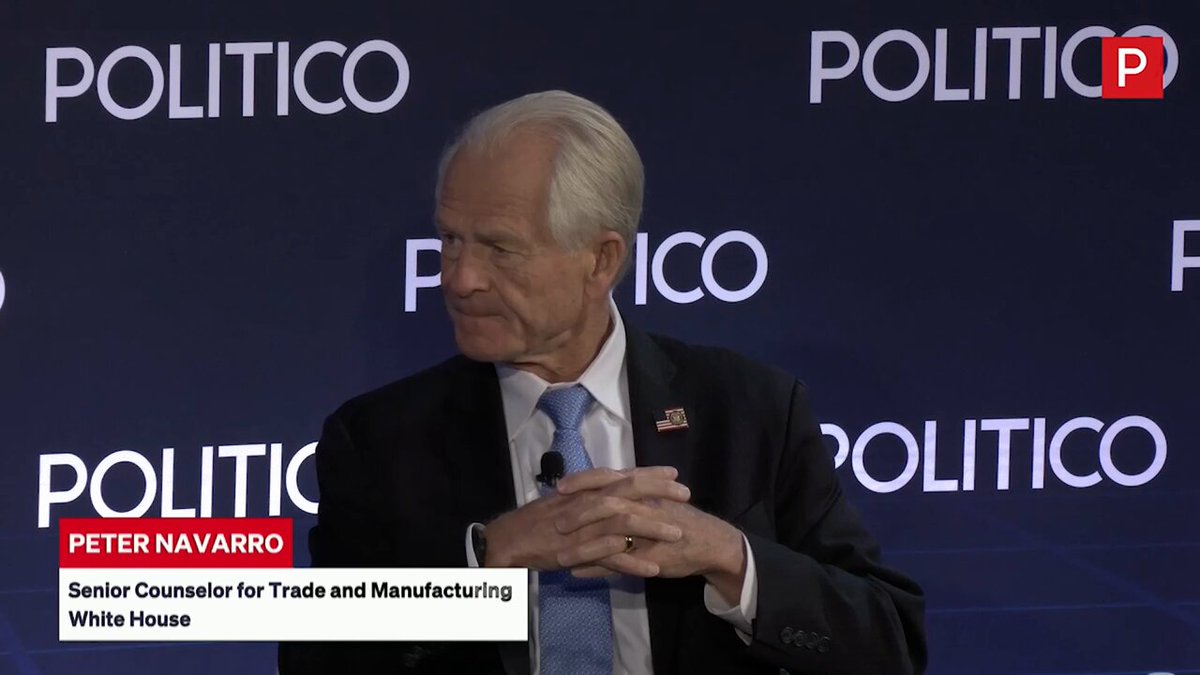 Navarro confirms White House plan to hike global tariff from 10% to 15% is 'in process2026-03
 Corporate America is bracing for a messy tariff reckoning as companies rush to court to preserve billions in potential refunds if the Supreme Court overturns Trump-era levies.2025-12
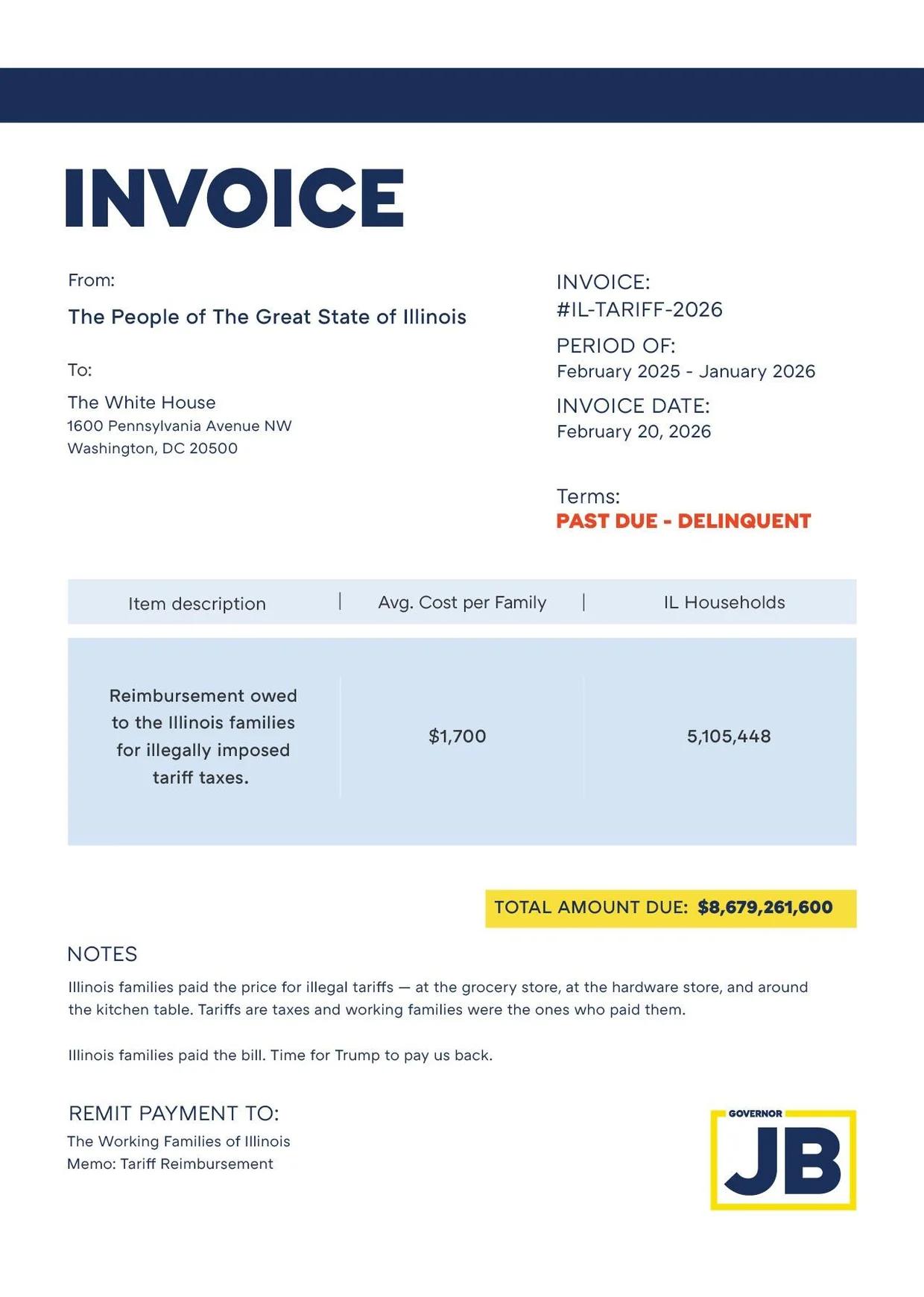 Pritzker levies $8.7B clawback demand against Trump, issuing past-due invoice for $1,700 per household following tariff invalidation2026-02
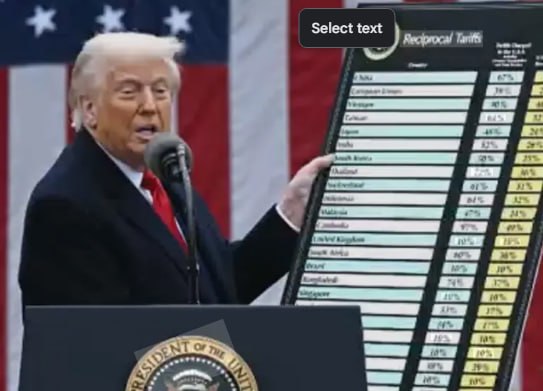 Supreme Court Rules Trump Overstepped Authority by Imposing Global Tariffs Without Clear Congressional Approval. (2026-02
 Nintendo demands tariff refund with interest from U.S. government, joining Costco and 1,000+ firms suing over levies ruled unlawful2026-03
 Jamie Dimon on tariffs, markets, and a possible upcoming recession - "it's a likely outcome"2025-04
Tariffs, Trade Wars, and Crypto: An Evergreen Guide
A tariff is a tax that a government charges on goods as they cross a border, most commonly on imports, raising the cost of foreign products for domestic buyers. In the modern economy, tariffs are not just dull trade policy; they sit at the intersection of geopolitics, inflation, Federal Reserve decisions, corporate strategy, and the boom‑and‑bust cycles that increasingly shape Bitcoin and the broader crypto market.
What Is a Tariff?
At its core, a tariff is a government‑imposed tax on goods and services entering a country from abroad. In most modern systems, the tariff is calculated as a percentage of the import’s value, which economists call an ad valorem tax, though some tariffs are “specific” flat charges per unit of quantity, like a fixed amount per ton of steel or per liter of fuel. The importer of record, usually a domestic company, is responsible for paying the tariff to the customs authority when the goods cross the border, as U.S. Customs and Border Protection does at hundreds of ports of entry in the United States. While political rhetoric often frames tariffs as “making foreign countries pay,” in practice it is the domestic importer that remits the tax, which is then typically passed through in whole or in part to downstream businesses and consumers via higher prices. This basic mechanical reality is essential for crypto traders to grasp, because it directly links tariff announcements to inflation data, corporate earnings, and risk sentiment that feed into Bitcoin’s macro narrative.
Economists distinguish several forms of tariffs that differ in how they bite into trade flows and prices. An ad valorem tariff is a percentage of the good’s value, such as 10 percent on every smartphone imported above a certain price, which scales automatically with prices and exchange rates. A specific tariff is a flat amount per unit, for example a charge of a set number of local currency units per liter of a petroleum product, regardless of the good’s current market price. Some regimes use compound tariffs that combine both approaches, layering a per‑unit fee on top of a percentage charge, which can make effective protection higher for low‑value shipments and more complex for firms to model. For macro and crypto traders, the exact tariff form matters less than the aggregate “effective tariff rate” in the economy, but these distinctions explain why the same headline rate can have different inflation and growth effects depending on how it is structured.
Governments deploy tariffs for several overlapping reasons, and these motivations help explain why they have returned to the center of political debate in the United States, China, and the European Union. Historically, tariffs were a primary source of government revenue before modern income taxes, and they still raise substantial sums for treasuries, especially when rates rise sharply. More recently, tariffs have been used as a protectionist tool to shield domestic industries that are seen as strategic or politically important from foreign competition by making imported alternatives more expensive. They also serve as an instrument of geopolitical leverage: by threatening or imposing tariffs, leaders from Washington to Beijing seek to pressure trading partners in broader disputes over technology, security, or industrial policy. For markets, this mix of fiscal, industrial, and geopolitical motives is precisely what makes tariff policy so unpredictable and so potent as a driver of volatility.
From an economic perspective, tariffs act like a wedge between world prices and domestic prices, with knock‑on effects for inflation, growth, and competitiveness. When a tariff is imposed, the direct effect is to raise the cost of imported goods, which can increase consumer price indices if firms pass the higher costs along in retail prices. The higher prices may reduce import volumes as buyers substitute toward domestically produced alternatives, which is often the explicit policy goal, but this substitution is rarely perfect, especially when complex global supply chains are involved. If domestic producers face less competition, they may enjoy more pricing power and higher margins in the short run, while exporters in the targeted foreign country may see reduced sales or attempt to cut prices to preserve market share. These adjustments reverberate into employment, investment, and ultimately the macroeconomic data that central banks and crypto markets watch closely, making tariffs a key link between political headlines and Bitcoin’s price action.

Navarro confirms White House plan to hike global tariff from 10% to 15% is 'in process

This is a brutal. 50% increase just like that
How Modern Tariffs Work in Practice
The abstract mechanics of tariffs became concrete for markets during the Trump administration’s tariff campaigns, which have continued to shape global trade architecture and market psychology well beyond their initial implementation. In 2018, the United States invoked Section 232 of its trade laws to impose tariffs of 25 percent on steel and 10 percent on aluminum, citing national security concerns and extending the measures to major suppliers including allies. These duties were followed by a series of escalating tariffs on a wide range of Chinese goods and threats to extend high tariffs to imports from Mexico, Canada, and the European Union, with proposed rates as high as 25 percent across entire categories of trade. By early 2020, the average U.S. tariff on Chinese exports had risen to about 19.3 percent from roughly 3 percent in early 2018, and after further rounds, average U.S. rates on Chinese goods have reached nearly 47.5 percent, covering essentially all bilateral trade. China responded with its own multi‑round tariff increases, lifting average tariffs on U.S. exports to around 31.9 percent and also extending coverage to almost all traded goods, turning a bilateral spat into a full‑blown trade war with far‑reaching implications.
The Trump administration’s more recent tariff stance has extended this aggressive approach beyond China to broader trade relationships, sometimes using tariffs less as a targeted economic tool and more as a general instrument of leverage. In addition to maintaining and in some cases expanding tariffs on Chinese imports, the administration has announced across‑the‑board baseline tariffs on all U.S. imports, initially on the order of 10 percent, and floated or imposed sector‑specific surcharges far above that level. Threats of tariffs of 25 percent or more on all goods from major partners such as Mexico and Canada, along with proposals for 50 percent tariffs on key European Union exports, have generated repeated episodes of market stress as investors attempt to price in the potential growth and inflation shocks. These measures have not always persisted at their highest announced rates, and negotiations have sometimes produced partial rollbacks or exemptions, such as carve‑outs for certain electronics or phased reductions following interim trade deals. Yet the pattern of rapid escalation, complex carve‑outs, and headline‑driven reversals has embedded “tariff risk” into the way global equity, bond, and crypto markets trade around political events.
China’s response illustrates how tariff strategy is now integrated into a broader playbook of economic statecraft that includes both retaliation and selective liberalization. On the one hand, China raised tariffs on U.S. imports across categories including agriculture, industrial goods, and consumer products, matching or offsetting U.S. moves and signaling its willingness to bear economic pain in defense of strategic interests. On the other hand, Beijing has used tariff reductions and trade agreements with other partners to diversify its economic relationships and reduce vulnerability to U.S. pressure, as seen in its decision to apply agreed lower tariff rates on certain imports from the Republic of the Congo under a bilateral arrangement. Such deals not only deepen China’s links with resource‑rich developing economies but also show how tariffs can be selectively relaxed to cultivate allies and secure vital inputs, including commodities used in batteries, electronics, and infrastructure. For crypto, the lesson is that tariffs are part of a wider retuning of globalization, in which parallel trade networks and currency blocs may evolve in ways that intersect with digital asset adoption and stablecoin usage.
Transatlantic and North American trade politics have also been reshaped by tariff bargaining, with the European Union and Mexico facing periods of acute uncertainty over U.S. trade policy. The imposition of steel and aluminum tariffs on allies strained longstanding economic relationships and triggered retaliatory measures, while the threat of sweeping automotive and general tariffs on the EU raised the prospect of a major rift with one of America’s closest partners. Episodes in which U.S. leaders have both threatened and then temporarily paused new tariffs on European goods in exchange for negotiation progress have produced a stop‑start pattern that markets must track closely, as looming tariff deadlines coincide with Federal Reserve meetings and major corporate earnings releases. Similarly, U.S.–Mexico tensions over migration and trade saw the United States initially imposing steep tariffs on Mexican steel and later moving toward a deal to scrap those tariffs in favor of import caps tied to historical trade volumes, illustrating how tariffs often morph into quota‑like arrangements once the political drama subsides. Each twist in these relationships has generated measurable shifts in equity indices, bond yields, and safe‑haven assets, feeding into Bitcoin’s growing role as a macro‑sensitive asset.
Corporations have reacted to tariff uncertainty not only by adjusting prices but also by rethinking their supply chains and investment plans, with Apple providing one prominent example. Facing U.S. tariffs on Chinese‑manufactured products, Apple reported hundreds of millions of dollars in additional annual costs directly attributable to tariffs and projected that these charges would rise into the billions if existing measures persisted. Analysts have noted that shifting substantial iPhone production to the United States would likely take several years and require large capital expenditure and workforce development, with some estimates suggesting that fully onshored models could be significantly more expensive for consumers. In response, Apple has announced or signaled expanded commitments to U.S. manufacturing and domestic investment, in part to mitigate tariff exposure and in part to align more closely with U.S. industrial policy priorities. This kind of corporate adaptation is relevant to crypto because it affects technology sector profitability, capex cycles, and investor appetite for growth stocks, all of which correlate with demand for crypto assets during risk‑on phases.
Recent legal developments underscore that tariff policy is not only an economic and geopolitical issue but also a constitutional and administrative one, adding another layer of uncertainty for markets. In a major decision reviewing the scope of presidential power under the International Emergency Economic Powers Act (IEEPA), the U.S. Supreme Court rejected the notion that the president can unilaterally impose tariffs of unlimited amount, duration, and scope on imports absent clear congressional authorization. The Court held that statutory language granting authority to “regulate importation” did not specifically encompass the broad use of tariff powers claimed by the executive, thereby narrowing the legal foundation for some recent tariff actions. Following this and related rulings, U.S. Customs and Border Protection opened a process for importers to claim refunds on overturned Trump‑era tariffs, estimating that American firms are owed on the order of $166 billion in refunds plus interest, with repayments expected to flow over months as claims are processed. These legal reversals have prompted a wave of corporate and investor efforts to secure refunds and compensation, while sparking political reactions from state and federal leaders debating how to treat the fiscal windfall or clawbacks, further intertwining tariffs with domestic fiscal debates that influence markets and, indirectly, crypto liquidity conditions.
Readers click tariff content not for trade mechanics but for the macro cascade logic — tariffs drain foreign Treasury demand, pressure the Fed toward renewed QE, and strengthen the hard-money case for Bitcoin as a dollar-debasement hedge rather than framing tariffs as a direct crypto threat.
Macroeconomic Effects: Growth, Inflation, and the Fed
Understanding how tariffs feed into inflation and growth is crucial for interpreting Federal Reserve policy and, by extension, the behavior of Bitcoin and other crypto assets that have become sensitive to interest‑rate expectations. In principle, a tariff raises the price of imported goods at the border, but the final impact on consumer prices depends on how the cost is shared among foreign exporters, domestic importers, and end consumers. Empirical analysis during the recent U.S.–China trade conflict suggests that, at least initially, a large share of tariff costs were absorbed by U.S. firms in the form of squeezed margins rather than fully passed on to consumers, with some portion also borne by foreign exporters cutting prices to maintain market share. Estimates from major financial institutions indicated that in the early phase of the tariffs, roughly 60 percent of the total cost was borne by U.S. businesses, about 20 percent by foreign companies, and about 20 percent by U.S. consumers through higher prices. Over time, however, the balance shifted as U.S. firms adjusted their pricing and supply chains, with consumers ultimately bearing a majority of the tariff burden—around 55 percent in more recent estimates—while the share absorbed by domestic businesses declined to roughly 22 percent.
This evolving incidence of tariffs has direct implications for inflation data that the Federal Reserve monitors closely. When firms initially absorb a tariff shock by compressing margins, the immediate impact on consumer prices is muted, but investment and hiring may slow as profits fall, creating a drag on growth rather than a spike in inflation. As supply chains and contracts are renegotiated and firms regain pricing power, more of the tariff cost is passed through to consumers, directly raising prices for tariffed goods and indirectly affecting related products through substitution and input‑cost effects. Research by Federal Reserve economists has estimated that U.S. tariffs implemented through late 2025 raised core goods prices in the personal consumption expenditures (PCE) index by about 3.1 percent by early 2026, a nontrivial contribution to underlying inflation pressures. This transmission channel complicates the Fed’s task because it introduces what officials call “inflation persistence” from policy‑driven shocks, which can look different from cyclical wage‑demand dynamics but still keep inflation above target for longer than expected.
Federal Reserve officials have begun to frame tariffs explicitly as a recurring source of supply‑side inflation shocks that may require careful interpretation rather than automatic policy tightening. In public remarks, policymakers have described tariff increases as “rogue waves” hitting the inflation data, emphasizing that while each shock may be transitory in isolation, a sequence of them can create a pattern of elevated and sticky prices. This raises the question of how aggressively the Fed should respond to tariff‑driven price increases that do not reflect overheating demand but nonetheless erode purchasing power, especially for lower‑income households more exposed to price spikes in goods. Some officials argue that the Fed should look through pure relative‑price changes if they do not feed into longer‑run inflation expectations, while others worry that repeated tariff shocks can entrench expectations of higher inflation and therefore justify a firmer stance. This internal debate mirrors the tension in crypto markets, where participants must decide whether tariff news primarily affects short‑term risk sentiment or fundamentally alters the path of real interest rates that anchor Bitcoin valuations.
Beyond prices, tariffs also influence real economic activity, employment, and investment, often in ways that are more diffuse but equally important for markets. By raising input costs for manufacturers and disrupting established supply chains, tariffs can reduce productivity and lead to delays or cancellations of capital projects, particularly in sectors that rely heavily on imported intermediate goods. For example, the steel and aluminum tariffs not only affected foreign producers but also increased costs for U.S. companies in industries from autos to construction, forcing them either to absorb higher costs or pass them on, reducing competitiveness. The uncertainty generated by ongoing tariff threats can lead firms to postpone decisions about new plants or hiring, as they wait to see whether trade restrictions will become permanent or be reversed. These dynamics are evident in data from China as well, where rising tariff pressure has coincided with a slump in factory activity and purchasing managers’ indices that signal contraction, underscoring how trade tensions can weigh on global manufacturing cycles.
The combination of weaker growth and higher prices associated with tariffs raises the specter of “stagflation,” a scenario that has important implications for both traditional and crypto markets. In a stagflationary environment, central banks face a difficult trade‑off between supporting growth and controlling inflation, as aggressive rate hikes risk deepening a slowdown while accommodating high inflation undermines currency stability and real incomes. Analysts in the digital‑asset space have noted that tariffs can be an early driver of such conditions by pushing up import prices while dampening trade and investment, especially if they provoke retaliatory measures and global supply chain reconfiguration. From a Bitcoin perspective, stagflation is double‑edged: in the short term, rising real yields and risk aversion can weigh on BTC as a high‑beta asset, but over the medium term, concerns about fiat currency debasement and sustained inflation can bolster the narrative of Bitcoin as a hedge. For traders, recognizing where the economy sits along this continuum when tariff news hits is crucial for interpreting price moves in both macro and crypto markets.

Corporate America is bracing for a messy tariff reckoning as companies rush to court to preserve billions in potential refunds if the Supreme Court overturns Trump-era levies.

"In a complaint filed last week with the trade court in New York, Costco said it is demanding the money back now “to ensure that its right to a complete refund is not jeopardized.″ The operator of warehouse-sized stores expressed concern that it might struggle to get a refund once its tariff bills have been finalized — a process called “liquidation” — by the Customs and Border Protection agency, a process Costco says will start Dec. 15. Importers have 180 days after liquidation to protest the tariff bills. Costco worries that “their timeline might be whittled away depending on how long it takes to get a Supreme Court decision,” Adetutu said. Revlon and canned seafood and chicken producer Bumble Bee Foods have made similar arguments in the trade court."
Tariffs, Financial Markets, and Risk Sentiment
Empirical research on the 2018–2019 U.S.–China trade war provides a detailed window into how tariff shocks ripple through financial markets, offering a template for understanding newer episodes. One study examining high‑frequency financial data found that identified “trade war shocks” tied to tariff announcements led to immediate declines in U.S. equity prices, with the S&P 500 dropping about 0.45 percent on impact, implying a wealth loss on the order of tens of billions of dollars given prevailing market capitalization. The same shocks were associated with lower U.S. Treasury yields, wider corporate credit spreads, lower oil futures prices, a stronger U.S. dollar, a weaker Chinese yuan, and higher gold prices, reflecting a classic risk‑off reaction in which investors seek safety and reduce exposure to growth‑sensitive assets. Variance decomposition in that study suggested that tariff shocks could explain up to about 38 percent of fluctuations in the S&P 500 over the period examined, highlighting how central trade policy had become to equity market dynamics. These findings underscore that tariff news is not a marginal factor but a major driver of cross‑asset movements, which now include crypto assets as a growing component of the risk universe.
A complementary line of research has looked at the longer‑run effects of tariff levels and trade policy uncertainty on stock markets beyond the immediate headline‑driven reactions. Analyses using time‑series models find that a one standard deviation increase in tariffs—representing a substantial but realistic policy shock—leads to significant long‑term declines in major U.S. stock indices such as the S&P 500, the Nasdaq, and the Dow Jones Industrial Average, with cumulative drops in the range of roughly 7 to 10 percent over a two‑year horizon. In addition, measures of trade policy uncertainty themselves are associated with significant long‑run reductions in equity prices, as firms and investors struggle to plan under conditions where tariff regimes could change abruptly. While the short‑term responses of stock prices to tariff shocks can be noisy and sometimes statistically insignificant, the longer‑term effects emerge clearly after a few months, suggesting that markets gradually internalize the implications for earnings, investment, and global supply chains. For macro‑sensitive crypto assets, these results imply that even when Bitcoin appears to shrug off a tariff headline in the moment, the underlying risk environment may still deteriorate in ways that affect its performance over quarters rather than days.
Safe‑haven assets have historically played a prominent role during tariff escalations, with gold and the U.S. dollar often benefiting from flight‑to‑quality flows, and Bitcoin increasingly joining this cohort in complex ways. During the earlier trade war episodes, investors moved capital into gold as fears of a prolonged global trade conflict grew, helping push bullion prices higher even as stocks and cyclical commodities such as oil weakened. The U.S. dollar tended to appreciate as well, reflecting both safe‑haven demand and the impact of tariffs on relative growth and monetary policy expectations, while the Chinese yuan faced depreciation pressure amid concerns about export demand and capital outflows. Bitcoin’s role has been more variable: at times it has traded more like a high‑beta technology asset, falling alongside equities when risk sentiment deteriorates, but at other moments it has decoupled and acted as a perceived hedge against systemic risk, as during certain banking and geopolitical crises. Research from digital‑asset analysts points out that Bitcoin’s rolling correlation with the Nasdaq has at times reached high levels during speculative booms but has also dropped sharply, and in some stress episodes Bitcoin has rallied even as equities slumped, illustrating its dual identity as both a risk asset and a potential hedge.
Tariffs can also catalyze volatility and structural shifts in market microstructure, including in crypto derivatives and decentralized finance platforms. In periods of intense tariff‑related uncertainty, such as when major new tariffs are announced or looming deadlines approach, leveraged traders across asset classes often adjust positions aggressively, leading to spikes in implied and realized volatility. In the crypto space, this has translated into surges in perpetual futures and options volumes, with perpetual decentralized exchanges reporting record monthly volumes exceeding one trillion dollars as traders seek on‑chain venues that remain continuously accessible and transparent during turbulent periods. Episodes in which centralized exchanges experience outages or liquidations on the order of tens of billions of dollars amid tariff‑driven market moves have reinforced the perception that DeFi platforms, despite their own risks, can offer more robust infrastructure under stress, as they operate via smart contracts that do not depend on discretionary risk managers. For traders, the interplay between tariff shocks, centralized exchange fragility, and DeFi resilience is increasingly part of the narrative that shapes where and how they take directional or hedged positions.
Direct case studies of tariff headlines and Bitcoin price action reveal how different combinations of macro conditions can change the sign of the market’s response. In some episodes, surprise tariff announcements or the expiration of tariff pauses have contributed to sharp sell‑offs in equities and crypto, with Bitcoin plunging below key psychological levels such as 63,000 dollars alongside outflows from spot exchange‑traded funds, as traders de‑risk across the board. News of high inflation readings linked partly to tariff‑driven goods prices has at times reinforced fears that the Federal Reserve will need to maintain higher interest rates for longer, adding pressure on long‑duration assets, including growth stocks and Bitcoin. In other instances, however, the same tariff headlines have been reframed as potentially bullish for crypto, especially when they coincide with weak employment data that increases the odds of future Fed rate cuts, or when investors see tariffs contributing to fiscal and political strains that could undermine confidence in traditional assets. For example, periods in which tariff threats coincided with concerns about U.S. government shutdowns or geopolitical tensions in Europe and Asia have seen Bitcoin rally sharply, as some traders anticipate a flight to alternative stores of value and future monetary easing. These contrasting patterns underline that the impact of tariffs on Bitcoin is conditional, mediated by how they affect expectations for growth, inflation, and policy rather than by the tariffs alone.
- 01Liberation Day market paralysis↗
The countdown to Trump's April 2 reciprocal tariff reveal froze crypto traders in a cautious holding pattern, then the announcement itself (20% EU, 34% China, 25% autos) became the single highest-clicked story on the topic.
- 02Gold ATH as tariff hedge signal↗
Gold's biggest quarterly surge in nearly four decades during tariff escalation telegraphed where institutional money fled, raising the live question of whether Bitcoin would follow or lag as an alternative safe haven.
- 03CEX collapse vs DeFi resilience↗
Binance's $19B liquidation system failure during tariff shock — while Uniswap and Aave processed volume without incident — gave readers a real-time stress test comparing centralized and decentralized infrastructure under macro pressure.
- 04Treasury selloff → money printing thesis↗
Arthur Hayes' argument that tariff-reduced US exports force foreign buyers to dump Treasuries, compelling the Fed to print, directly chained trade policy to a bullish Bitcoin macro narrative that readers found more actionable than price headlines alone.
- 05US-China deal as BTC price trigger
Multiple headlines on the US-China agreement to suspend 24% tariffs each corresponded with BTC trading above $105K, training readers to treat bilateral trade diplomacy as a direct crypto price signal.
- 06Stablecoins as tariff-era dollar rail
Tether CEO Paolo Ardoino's framing of stablecoins as the backbone of Trump's tariff gambit positioned dollar-pegged crypto as a structural beneficiary of the dollar demand that trade war settlements create.
Tariffs and the Structure of the Global Crypto Economy
While most discussion of tariffs centers on goods like steel, autos, and electronics, these measures also intersect with the physical and institutional infrastructure that underpins the crypto ecosystem, from mining rigs to data centers to corporate headquarters. Mining operations, for example, rely heavily on specialized hardware such as ASICs and high‑end GPUs, which are manufactured in a handful of countries and shipped worldwide, making them vulnerable to tariffs on electronics and high‑tech exports. When a major consuming country imposes tariffs on imported hardware or when exporting countries restrict shipments in response to geopolitical tensions, the cost of setting up or expanding mining farms can rise significantly, affecting the geographic distribution of hash power and the economics of securing proof‑of‑work networks like Bitcoin. These pressures may push miners to relocate to jurisdictions with more favorable trade and energy policies, adding a trade dimension to the already complex calculus of regulatory, energy, and climate considerations that shape mining geography. Over time, such shifts can influence debates about decentralization, network security, and the political perception of crypto, particularly if hash power clusters in countries engaged in tariff conflicts.
Exchanges and crypto service providers are also exposed to tariff‑related frictions, albeit in more indirect ways that blend with broader regulatory and tax considerations. Many major centralized exchanges operate global entities that manage infrastructure and staff across multiple jurisdictions, relying on cross‑border flows of hardware, software services, and human capital that can be affected by tariffs and non‑tariff barriers. While most governments do not currently impose tariffs on intangible digital services per se, there is growing interest in digital services taxes and other measures that could blur the line between customs duties and consumption taxes for online platforms, potentially catching some crypto businesses in the net. In addition, tariffs on imported servers, networking hardware, or power‑intensive equipment can increase capital expenditures for data centers and co‑location facilities that host exchange infrastructure, affecting cost structures and potentially encouraging more on‑chain alternatives. As governments experiment with new trade and tax tools aimed at large technology firms, crypto platforms may find themselves entangled in debates over digital trade that have historically focused on big tech.
National strategies toward tariffs increasingly intersect with differing regulatory approaches to crypto, creating a patchwork in which trade and digital‑asset policies interact. The United States has leaned heavily on tariffs to reorient supply chains and assert leverage over China and other partners, while simultaneously moving toward a clearer but still evolving regulatory framework for crypto assets, stablecoins, and exchanges. China, by contrast, has used tariffs and industrial policy to support its strategic sectors and deepen ties with emerging partners, such as through preferential tariff treatment for imports from countries like the Republic of the Congo, even as it has cracked down on domestic crypto trading and mining while exploring its own central bank digital currency. The European Union has often sought to de‑escalate tariff conflicts through negotiation and trade agreements while focusing its regulatory energy on comprehensive frameworks for digital assets and data protection, positioning itself as a rule‑maker rather than a tariff aggressor. For crypto projects and investors, this divergence means that jurisdictions which are aggressive on tariffs may or may not be hospitable to digital assets, and vice versa, creating a multidimensional landscape of political risk.
Emerging and resource‑exporting economies occupy a distinct position in this picture, as tariff agreements can materially influence their growth trajectories and, in some cases, their populations’ interest in alternative monetary systems. When large economies like China lower tariffs on imports from developing partners, as in the case of certain goods from the Republic of the Congo, they can stimulate export revenues and provide fiscal space that might reduce immediate macroeconomic stress. Conversely, when these same countries face tariff barriers or commodity price volatility linked to trade tensions among major powers, their currencies and financial systems can be strained, leading households and firms to seek ways to hedge against local currency risk. In some countries with weak banking systems or high inflation, Bitcoin and stablecoins have already emerged as tools for cross‑border payments, savings, or remittances, even when official policy remains hostile. Tariff‑driven shocks to trade income and exchange rates could reinforce these tendencies, though the relationship is complex and shaped by local regulation, access to technology, and the stance of authorities toward crypto.

Pritzker levies $8.7B clawback demand against Trump, issuing past-due invoice for $1,700 per household following tariff invalidation
Well, that’s one way to send a bill! 👀 $1,700 per household is bold wonder if Trump will mark this one “return to sender” or just add it to his tab? Either way, someone is keeping account
Building a Crypto Strategy Around Tariff Risk
For crypto traders and long‑term investors, tariffs are best understood not as isolated policy moves but as part of a cycle that includes political signaling, negotiation, implementation, litigation, and eventual adjustment. The cycle often begins with campaign rhetoric or public statements by leaders promising to impose or raise tariffs on certain countries or sectors, which can move markets even before any legal measures are drafted. Once in office, governments may issue executive orders or invoke existing trade statutes to implement tariffs, sometimes under national security or emergency powers, as occurred with Section 232 steel and aluminum tariffs and certain broader measures asserted under IEEPA. Trading partners may then retaliate, launching their own tariffs or other trade restrictions, while affected industries lobby for exemptions or reductions, adding complexity and opacity to the policy landscape. Over time, courts may review the legality of some actions, as in the Supreme Court’s limitation of presidential tariff authority under IEEPA and the subsequent opening of refund claims, creating a feedback loop in which legal risk influences future policy design and investor expectations.
Each stage of this cycle can carry distinct implications for markets and, by extension, for crypto positioning. Initial tariff threats may generate sharp but short‑lived volatility as traders react to headlines and attempt to front‑run policy developments, often without clear information on timing, scope, or exemptions. When specific tariffs are formally announced with concrete implementation dates, markets may enter a pricing‑in phase, during which analysts quantify likely effects on inflation, growth, and corporate earnings, and central banks adjust their forecasts, influencing interest‑rate expectations. The actual effective date of tariffs can be a focal point for volatility if it coincides with key macro data releases or central bank meetings, as investors reassess whether policymakers will prioritize inflation control or growth support. Later, signs of negotiations, tariff pauses, or trade deals—such as unexpected U.S.–China agreements that reduce average tariffs—can trigger relief rallies in risk assets, including Bitcoin, particularly if they are seen as reducing the probability of severe stagflation. Finally, legal challenges and refund battles, while slower‑moving, can alter corporate balance sheets and fiscal dynamics in ways that affect market sentiment and the perceived durability of tariff regimes.
From a macro perspective, the key link between tariffs and Bitcoin runs through the interplay of growth, inflation, and monetary policy, which determines the cost of capital and the attractiveness of non‑yielding assets. When tariffs are expected to be short‑lived or limited in scope, and when central banks signal that they will not react aggressively to temporary price spikes, markets may view tariff news as noise, with limited impact on long‑term discount rates. However, when tariffs are large, broad, and persistent, and when they coincide with tight labor markets or supply constraints, they can contribute to a sustained period of elevated inflation that central banks feel compelled to counter with higher policy rates. Higher real yields tend to weigh on risk assets and on Bitcoin, as investors demand greater compensation for holding volatile assets with no cash flows, leading to de‑leveraging in both traditional and crypto markets. Conversely, if tariffs contribute to a growth slowdown that pushes central banks toward easing, especially in an environment where inflation remains above target but is decelerating, markets may anticipate lower real rates and weaker fiat currencies, which can be supportive for Bitcoin as a perceived hedge against monetary and fiscal strain. Navigating these cross‑currents requires careful attention to both the direct economic effects of tariffs and the evolving stance of the Fed and other central banks.
On the level of portfolio construction and risk management, tariff risk is one of several macro factors that crypto‑focused investors increasingly incorporate into their frameworks. Diversified portfolios that include both traditional safe‑havens like gold and Treasuries and higher‑beta assets like equities and crypto can potentially buffer the effects of tariff‑driven shocks, though no allocation is immune to extreme events. Within the crypto allocation, traders may adjust their mix of Bitcoin, which tends to play more of a macro and store‑of‑value role, and altcoins, which are often more tightly correlated with the technology and growth equity complex. In times of heightened tariff uncertainty, some participants may favor strategies with lower leverage, wider collateral buffers, and greater use of on‑chain venues that have shown resilience during centralized exchange outages or liquidation cascades. Others may use crypto derivatives, such as perpetual futures and options, to hedge exposure to directional moves or volatility spikes linked to tariff announcements, while keeping in mind the liquidity and counterparty risks that can emerge in stressed markets. The key is to treat tariffs as a recurring source of macro volatility rather than an isolated anomaly, integrating them into a broader framework that also considers geopolitics, regulation, and technological developments.
Decentralized finance and on‑chain trading infrastructure have, in several episodes, demonstrated relative robustness during tariff‑related market stress, reinforcing a narrative of crypto as both a beneficiary and a transmission channel for macro volatility. When equity and futures markets have sold off sharply on tariff news, and centralized crypto exchanges have faced record liquidations and occasional system strains, decentralized perpetual exchanges and automated market makers have continued to operate with high volumes and continuous price discovery. These experiences have strengthened the argument that transparent, permissionless markets can complement or, in some niches, substitute for centralized venues, especially when geopolitical and trade tensions increase the risk of regulatory or operational disruptions. At the same time, DeFi remains intertwined with the traditional financial system through stablecoins, fiat on‑ramps, and the physical infrastructure that underlies node and validator operations, which can still be affected by trade policy and tariffs on hardware and energy. For builders and policymakers, the challenge is to recognize both the resilience and the dependencies of crypto market infrastructure in a world where tariffs and trade fragmentation are likely to remain persistent features.
Trump 'Liberation Day': 20% EU tariff, 34% China, 25% autos announced
Gold hits all-time high on tariff fears, biggest quarterly surge in ~40 years
Binance records $19B liquidation event during tariff shock; Uniswap and Aave unaffected
- 2025-05regulatory
US-China suspend 24% tariffs, maintain 10% base tariff on ~$300B in goods
- 2025-05milestone
China PMI drops to 48.3, sharpest contraction since 2022 under tariff pressure
US monthly tariff revenue reaches $22B driven by steel, aluminum, and China duties
- 2025-07regulatory
Trump sets July 9 as hard tariff-pause deadline with no extension planned
DEX trading hits record $1.36T monthly volume amid tariff-driven volatility surge
Conclusion
Tariffs, once viewed primarily as technical instruments of trade policy, have reemerged as central levers of economic strategy and political signaling in the relationships among the United States, China, the European Union, and other major actors. Their direct effects on import prices, corporate margins, and government revenues are now interwoven with their indirect impacts on inflation dynamics, Federal Reserve decision‑making, and cross‑asset risk sentiment. Empirical evidence from the recent trade war era shows that tariff shocks can account for a significant share of volatility in equity markets, influence bond yields and currency valuations, and drive flows into traditional safe‑haven assets like gold and the U.S. dollar. As Bitcoin and other crypto assets have matured and become more integrated into global portfolios, they have been drawn into this macro web, at times behaving like high‑beta technology stocks and at other times taking on a quasi‑hedge role in periods of systemic stress.
For a crypto audience, the crucial takeaway is that tariffs are not an isolated policy niche; they are a recurring source of macro shocks that can shift the balance between growth and inflation, alter the trajectory of interest rates, and reconfigure investor demand for risk and safety. Tariff policies under leaders like Donald Trump and their responses by China, the EU, and others have shown how rapidly trade measures can escalate, how negotiation and legal challenges can reshape them, and how markets can swing between fear and relief as deals are struck or deadlines approach. Corporations from manufacturing to technology, exemplified by firms like Apple, have had to absorb and adapt to tariff costs, with implications for earnings, investment, and supply chains that feed back into asset prices and macro data. In this environment, Bitcoin and crypto derivatives trade as part of a broader complex of assets that respond to shifts in real yields, inflation expectations, and liquidity conditions that tariffs help to shape.
Ultimately, tariffs also intersect with the structural evolution of the crypto ecosystem itself, influencing mining economics, exchange infrastructure, and the regulatory environments in which digital‑asset businesses operate. The legal and constitutional boundaries around tariff authority, highlighted by Supreme Court decisions and refund battles, add another dimension of uncertainty that markets must consider when assessing the durability and scope of trade policies. As geopolitical competition, industrial policy, and digital transformation continue to unfold, tariffs are likely to remain a prominent tool in statecraft and economic management. For Bitcoin and the broader crypto space, this means that trade headlines, once a peripheral concern, will continue to be a central part of the macro landscape that shapes cycles of exuberance and fear.
Outlook
Looking ahead, the interplay between tariffs, the Federal Reserve, and global growth will remain a defining variable for both traditional and crypto markets. Even if specific tariff rates are reduced in particular bilateral relationships, the broader trend toward using trade policy as a flexible instrument of geopolitical pressure suggests that tariff risk is now a structural feature of the global economy rather than a temporary aberration. As long as tariffs contribute to episodic inflation shocks and supply chain realignments, central banks will face recurring dilemmas over how much to lean against their effects, and investors will need to monitor how those choices influence real yields and currency values. For Bitcoin, this likely means continued episodes in which tariff fears trigger short‑term risk‑off moves, interspersed with periods when the same policies fuel narratives of fiat fragility, fiscal stress, and the appeal of scarce digital assets.
For crypto participants, an evergreen strategy involves treating tariffs as a core macro variable to track rather than a sporadic source of noise, integrating trade policy developments into analyses of inflation, growth, and central bank reactions. As decentralized trading infrastructure matures and Bitcoin’s role in portfolios evolves, the asset class may become an even more sensitive barometer of tariff‑driven shifts in global risk appetite, while also serving as one of several potential hedges against policy‑induced disruptions. The challenge, and the opportunity, lies in understanding tariffs not just as taxes on trade, but as signals of deeper economic and political currents that digital assets are increasingly poised to reflect.
Latest Tariff news
Navarro confirms White House plan to hike global tariff from 10% to 15% is 'in processCorporate America is bracing for a messy tariff reckoning as companies rush to court to preserve billions in potential refunds if the Supreme Court overturns Trump-era levies.Pritzker levies $8.7B clawback demand against Trump, issuing past-due invoice for $1,700 per household following tariff invalidationSupreme Court Rules Trump Overstepped Authority by Imposing Global Tariffs Without Clear Congressional Approval. (Nintendo demands tariff refund with interest from U.S. government, joining Costco and 1,000+ firms suing over levies ruled unlawful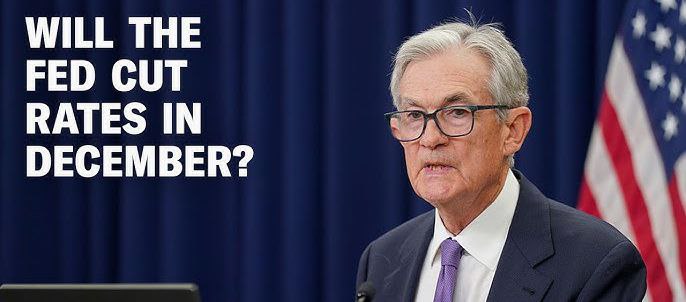 The Fed is now heavily divided on the issue of December rate cut; Some officials are expressing concerns about sticky inflation and tariff effects, while some believe that weak employment and slowing demand deserves more attention.
Sources
19 records from 15 domains
oxfordeconomics.com
schwab.com
cfr.org
federalreserve.gov
blackrock.com
coinshares.com
facebook.com
brookings.edu
latimes.com
english.www.gov.cn
wits.worldbank.org
piie.com
sciencedirect.com
cryptoslate.com
supremecourt.gov
Community notes
Spot something off or out of date? Drop a note. Editors review topic notes daily and roll accepted fixes into the explainer — contributors are recognized in the monthly $SQUID drop.
Loading notes…
Help improve this topic
Have a story or tip about this topic? Submit it. See something missing? Leave a note. Editors review daily; accepted submissions and fixes count toward the monthly $SQUID drop.