
In-depth explainer on inflation for crypto investors, covering how CPI, PCE and central bank policy drive markets, Bitcoin’s complex inflation-hedge role, Ethereum’s “ultrasound” tokenomics, stablecoins in high-inflation economies, and key risks for portfolios.
+12 sources across the wider coverage universe
 Fed's Waller went in ready to cut rates, but Iran war oil spike forced a hold — says cuts still possible later in 20262026-03
 Kalshi launches Kalshi Research: Kalshi Research will provide internal Kalshi data to academics and other researchers interested in exploring topics related to prediction markets. The first research piece is live.2025-12
 Multicoin Capital proposes to cut Solana inflation, replacing it with market-based emissions2025-01
 Synthetix eliminates SNX token inflation, reallocates resources to buybacks and burns after passing governance proposal SIP-20432023-12
- Ethereum Gas Fees Hit New Low for 2023 as DeFi, NFT Activity Drops.With activity waning, Ethereum’s “ultrasound money” meme is under attack as supply is currently growing at an annual inflation of 0.44%.2023-10
- Cosmos community votes to limit Atom inflation rate to 10% amidst highest-ever turnout, reducing staking yield from 19% to 13.4%2023-11
Inflation, Monetary Policy, and Crypto: An Evergreen Guide
In macroeconomics, inflation is a sustained increase in the general price level of goods and services, which erodes the purchasing power of money over time. For crypto markets, inflation is more than a macro backdrop: it shapes central bank policy, interest rates, risk appetite, Bitcoin’s “digital gold” narrative, Ethereum’s “ultrasound money” meme, and even the design of stablecoins and DeFi yields, making it one of the most important forces every digital asset investor needs to understand.
What Inflation Actually Is
Economists define inflation as a broad, persistent rise in the overall price level, not just the cost of one or two items like gasoline or rent. The Federal Reserve emphasizes that an isolated jump in the price of a specific product does not constitute inflation; what matters is the average movement of a wide basket of goods and services across the economy. When that average basket gets more expensive over time, each unit of currency buys less, which is another way of saying the currency’s purchasing power has declined. This is why a dollar, euro, or peso today typically buys less than it did a decade ago, even if some individual prices fall along the way.
A useful way to think about inflation is to distinguish between nominal and real values. Nominal wages, asset prices, or returns are expressed in current dollars, while real values adjust those figures for changes in the price level. If a crypto portfolio is up 8% over a year in nominal terms but consumer prices rose 5%, the real gain is closer to 3% in terms of actual purchasing power. From a household’s perspective, inflation functions like a silent tax: it reduces the real value of cash balances and fixed-income claims, while borrowers who owe fixed nominal amounts may benefit if inflation turns out higher than expected. For crypto investors, understanding this real-versus-nominal distinction is critical when evaluating returns, particularly in high-inflation environments where headline gains can mask stagnating real wealth.
Importantly, inflation is not inherently “good” or “bad” in absolute terms; context matters. Most modern central banks, including the Federal Reserve, target a low and stable positive rate of inflation—commonly around 2% per year—rather than aiming for zero. This target is viewed as sufficiently low that it does not distort long-run decisions, yet high enough to reduce the risk of deflation, which can exacerbate recessions by encouraging households and firms to delay spending. For crypto, that 2% target is a reference point: Bitcoin’s fixed supply and declining issuance schedule are often contrasted with fiat’s deliberate, modest inflation, while protocols that design token emissions sometimes explicitly compare their “monetary inflation” to fiat benchmarks.
Finally, inflation should be separated from other, related concepts such as relative price changes and asset price bubbles. If a particular technology stock or a niche altcoin surges 300% because of speculative demand, that is not inflation in the macroeconomic sense; it is a revaluation of a specific asset. Similarly, if energy prices spike due to a geopolitical shock while most other prices remain flat, the economy is experiencing a change in relative prices and a temporary cost shock rather than a broad-based inflationary regime. This distinction becomes important when crypto traders react to headlines: not every price spike, even in oil or food, signals a lasting change in the underlying inflation trend.

Fed's Waller went in ready to cut rates, but Iran war oil spike forced a hold — says cuts still possible later in 2026
How Inflation Is Measured: CPI, PCE, PPI and Beyond
Because inflation refers to an aggregate price level, it cannot be observed directly; instead, statistical agencies construct price indexes that track the cost of representative baskets of goods and services over time. The most widely cited metric in markets is the Consumer Price Index (CPI), published monthly in the United States by the Bureau of Labor Statistics. CPI measures the cost of a fixed basket of goods and services purchased by urban consumers, including housing, transportation, food, and medical care, and compares its cost to a base period to compute the rate of change. When commentators say “inflation came in at 3.1%,” they are usually referring to the year-on-year change in some version of CPI.
The Federal Reserve, however, formally targets inflation as measured by the price index for personal consumption expenditures (PCE), produced by the U.S. Department of Commerce. PCE covers a somewhat broader set of expenditures than CPI and allows for substitution between items, which many economists view as a more accurate reflection of real-world spending behavior. In its long-run strategy, the Federal Open Market Committee (FOMC) has affirmed that an annual 2% increase in PCE inflation is most consistent with its dual mandate of maximum employment and price stability. Fed communications, including Chair Jerome Powell’s speeches, often emphasize progress toward this 2% PCE goal when discussing the stance of interest-rate policy.
Market participants also pay attention to other inflation indicators, particularly when trying to anticipate future CPI or PCE readings. One important gauge is the Producer Price Index (PPI), which measures changes in prices received by domestic producers for their output. Surprises in PPI can foreshadow future movements in consumer prices if cost increases are passed down the supply chain. Analysts also monitor measures of core inflation, which strip out volatile categories such as food and energy in an attempt to capture the underlying trend. Because food and energy prices can swing sharply from month to month, the Fed routinely looks at both headline and core inflation, as well as subcomponents and alternative core measures, to determine whether a given spike is temporary or likely to persist.
To situate these key metrics, it is helpful to compare how they are constructed and used:
| Measure | Scope and Method | Primary Use in Policy and Markets |
|---|---|---|
| CPI | Fixed basket of consumer goods and services purchased by urban households; calculated by the Bureau of Labor Statistics | Widely used gauge of household cost of living; key event for financial and crypto markets that trade around monthly releases |
| PCE | Broader set of consumer expenditures, including those paid on behalf of households; allows substitution; calculated by the Department of Commerce | Fed’s official inflation target; central input into interest-rate decisions and forward guidance |
| PPI | Prices received by domestic producers for goods and services at various stages of processing | Early signal of cost pressures in the pipeline that may feed into consumer prices |
Beyond these headline measures, inflation expectations themselves are tracked via surveys and market instruments such as breakeven inflation rates derived from inflation-linked bonds. Academic research has even linked Bitcoin’s price to forward inflation expectations: time-series studies using vector autoregressive models find that shocks to Bitcoin’s price Granger-cause changes in forward inflation rates, with positive Bitcoin shocks associated with a lasting rise in anticipated inflation. This suggests that, at least in some periods, crypto markets and inflation expectations are tightly intertwined, with Bitcoin’s moves providing information about how investors see future price dynamics.
Central banks, including the Fed, stress that inflation data can be noisy, and they therefore look at averages over several months or longer to assess the underlying trend. Policymakers also examine subcategories within price indexes to understand whether changes are driven by volatile items such as energy or by broad-based increases in services and shelter. For crypto markets, this means that a single surprising monthly CPI or PCE print can trigger large, short-term price swings in Bitcoin and Ethereum, even though central banks themselves are focusing on the longer-term trajectory.
Readers click hardest on protocols voting to cut their own token emissions — not on macro CPI prints — exposing that crypto-native supply dilution is a more visceral concern to this audience than fiat monetary policy, and that governance legitimacy is now the primary battlefield for tokenomics reform.
Why Inflation Happens: Money, Supply Shocks, and Expectations
There is no single cause of inflation, but a standard starting point is the quantity theory of money, summarized by the equation \(MV = PQ\), where \(M\) is the money supply, \(V\) is the velocity of money, \(P\) is the price level, and \(Q\) is real output. All else equal, if the money supply grows faster than the economy’s ability to produce goods and services—that is, if \(M\) grows faster than \(Q\)—and velocity does not fall, the theory implies that \(P\) must rise, which is inflation. Educational materials from the Federal Reserve Bank of St. Louis emphasize this logic: when the money supply increases without a corresponding increase in output, the result is more money chasing the same quantity of goods, bidding up prices.
In practice, however, inflation is driven by a mix of demand-side and supply-side forces, along with expectations about the future. On the demand side, strong aggregate demand, fueled by low interest rates, fiscal stimulus, or rapid credit growth, can push the economy beyond its productive capacity, leading firms to raise prices. On the supply side, shocks such as energy price spikes, supply-chain disruptions, or new tariffs can reduce the availability of key inputs, raising the cost of production and feeding into higher consumer prices. For example, Federal Reserve officials have noted that recent upticks in goods inflation appear to be driven more by higher tariffs than by broad underlying demand, highlighting how policy-induced cost shocks can filter into headline inflation readings.
Geopolitical events can magnify these dynamics. When conflict in a major oil-producing region threatens supply, crude prices tend to rise, pushing up transportation and production costs globally. Recent coverage of an oil-price surge linked to conflict with Iran described how this development “revived the inflation trade” in traditional markets and spurred interest in new stablecoin strategies pitched as benefiting from higher nominal yields. From the perspective of crypto investors, such episodes underline that inflation risk is often tied to energy markets and geopolitical instability, not just domestic monetary policy.
Expectations play a central role as well. If households and businesses come to believe that inflation will remain elevated, they may act in ways that make those expectations self-fulfilling. Workers demand higher wages to keep up with anticipated price increases, and firms preemptively raise prices to cover expected cost growth, creating a wage–price spiral. Central banks therefore monitor survey-based and market-based measures of inflation expectations closely and seek to keep them “anchored” around the target, using both interest-rate changes and forward guidance to influence expectations. When expectations drift higher, policymakers may feel compelled to tighten more aggressively, even if current inflation is only modestly above target.
Crypto narratives often simplify this rich set of drivers into a single story about “money printing,” but the reality is more complex. Rapid growth in fiat money aggregates can indeed create inflationary pressures when it outpaces real output, yet those pressures can be muted if velocity falls or if the economy has spare capacity. Conversely, inflation can rise even in the absence of explosive money growth if supply shocks and expectations align. For digital assets, which are often marketed as hedges against fiat debasement, understanding these nuances is important: Bitcoin’s supply schedule may be hard-coded, but the forces driving fiat inflation—and thus the demand for crypto as a hedge—are varied and contingent.
Inflation, Interest Rates, and Traditional Markets
Once inflation is in motion, central banks respond primarily through adjustments in short-term interest rates. Many central banks, including the Fed, have adopted explicit or implicit inflation targets of around 2% per year. When inflation rises above this target and appears likely to persist, policymakers typically raise policy rates to dampen demand, cool credit growth, and signal a commitment to price stability. Conversely, if inflation falls below target or deflation threatens, central banks may cut rates and employ unconventional tools such as asset purchases to support economic activity. This reaction function—tightening when inflation is too high, easing when it is too low—links price dynamics to broader financial conditions.
The Federal Reserve’s dual mandate is to achieve maximum employment and stable prices, meaning that it must balance inflation concerns against labor-market conditions. In a recent speech, Chair Jerome Powell highlighted this balancing act: economic growth had moderated, job gains had slowed and downside risks to employment had risen, yet inflation remained somewhat elevated relative to the 2% goal. With total PCE inflation running around 2.7% year-on-year and core PCE at 2.9%, both above target, the Fed judged it appropriate to keep policy “modestly restrictive” even as it took a small step toward neutrality by trimming the federal funds rate range by 25 basis points. Such decisions illustrate how inflation readings, employment data, and risk assessments jointly determine the policy path.
Interest rates, in turn, influence traditional asset markets through several channels. Higher policy rates push up yields on government bonds and other low-risk assets, raising the discount rate applied to future cash flows and thereby reducing the present value of stocks and other long-duration assets. This is why equity valuations typically compress when central banks embark on aggressive tightening cycles, all else equal. At the same time, higher rates increase borrowing costs for households and firms, dampening demand and earnings expectations. In this environment, investors often rotate toward shorter-duration or inflation-protected instruments, and away from riskier equities and speculative assets.
Globally, the interplay between inflation, interest rates, and markets is not uniform. The Bank of Japan, long associated with ultra-low rates, has begun cautiously raising policy rates as domestic inflation risks have emerged. Reports from early 2026 indicated that a rate hike to 0.75% was followed by a nearly 3% drop in Bitcoin shortly afterward, underscoring how even a modest shift in a previously dormant central bank can ripple through risk assets. At other times, rate moves, such as a later hike toward 1%, appeared to have limited impact on crypto, reminding investors that market reactions depend on positioning, expectations, and the broader macro context. For digital assets, which lack intrinsic cash flows and are priced largely on expectations about future adoption and liquidity, the stance of global monetary policy can be a powerful driver of valuation.
Finally, inflation dynamics influence not just the level of rates but also their expected path, which is critical for markets. Persistent PCE inflation running at 2.8% year-on-year and core at 3.1% has led many analysts to predict that the Fed will keep its policy rate in a 3.5–3.75% range for longer than previously thought, delaying expected rate cuts. Medium-term interest-rate expectations, reflected in bond futures and swap curves, feed directly into equity valuations, currency markets, and crypto prices. This is why traders scrutinize every phrase from Fed officials and every inflation release: they are all inputs into the evolving probability distribution for future rates.

Kalshi launches Kalshi Research: Kalshi Research will provide internal Kalshi data to academics and other researchers interested in exploring topics related to prediction markets. The first research piece is live.

Wow, this is really big step.. hands up to Kalshi for this
How Inflation Shapes Crypto Markets Day to Day
Crypto markets, particularly Bitcoin and Ethereum, have become acutely sensitive to inflation data releases in the United States and other major economies. Monthly CPI prints in particular have evolved into high-volatility events for digital assets, much like nonfarm payrolls or Fed decisions are for traditional markets. Ahead of a recent U.S. CPI release, for instance, economists forecast a 0.4% month-on-month rise and a 3.1% annual inflation rate, which would mark the first time CPI surpassed 3% in that year. Analysts noted that if the reading came in above 3.1%, it could be bearish for risk assets, including crypto, by signaling more persistent inflation and potentially higher-for-longer interest rates.
Market commentary around these events often highlights scenario analysis: a higher-than-expected CPI print implies a stronger U.S. dollar, reduced odds of near-term rate cuts, and a headwind for Bitcoin and Ethereum as speculative assets. Conversely, a lower-than-expected reading—say, a 0.1% monthly rise implying roughly 1.2% annualized inflation—would be interpreted as a sign that inflation is under control, increasing the likelihood of rate cuts and encouraging liquidity inflows into risk assets. In this scenario, Bitcoin and Ether often rally, sometimes sharply, as traders reposition for a more accommodative Fed. This conditional logic—“hot CPI is bad, cool CPI is good”—has become embedded in crypto trading playbooks.
The same logic applies to PCE, the Fed’s preferred inflation gauge, albeit with slightly less headline drama. When PCE inflation prints at 0.3% month-on-month and 2.8% year-on-year with core at 3.1%, it reinforces the narrative that inflation remains above target, delaying policy easing. Yet, if the data also show signs of disinflation in key categories or align with market expectations, risk assets can still rally on relief that the numbers were “as feared” rather than worse. Crypto coverage has described episodes where Bitcoin “eyes a rematch” with prior highs as PCE readings, while still elevated, fuel a broader rally in stocks and digital assets, reflecting optimism that the inflation problem is gradually being contained.
Geopolitical shocks complicate this picture. Oil-price spikes linked to Middle East conflict have revived concerns about inflation, led Fed officials like Governor Christopher Waller to argue for holding rates steady rather than cutting, and contributed to both risk-off episodes and rapid reversals once fears proved overdone. In crypto markets, such shocks can initially trigger broad sell-offs as traders de-risk on rising uncertainty and expectations of tighter policy. Yet if subsequent inflation data come in cooler than anticipated or if central banks signal that they view the shock as temporary, Bitcoin and Ethereum can rebound strongly, sometimes making new highs as the narrative shifts back to “inflation scare averted.”
It is equally important to note that not every central bank move or inflation scare moves crypto in dramatic fashion. The Bank of Japan’s recent rate hikes, motivated in part by inflation risks, did not always produce significant or lasting impacts on digital asset markets. At times, Bitcoin’s price reaction was muted, suggesting that global crypto markets were more focused on U.S. inflation and Fed policy than on Japanese rates. This illustrates a broader point: while inflation is a global phenomenon, markets care most about regimes and data releases that materially alter the path of dominant reserve currencies, particularly the U.S. dollar.
Bitcoin and Inflation: Hedge, Risk Asset, or Both?
Bitcoin’s relationship with inflation is one of the most contested narratives in crypto. On paper, Bitcoin’s fixed supply cap of 21 million coins and its predictable, declining issuance schedule make it an obvious candidate as an inflation hedge: a form of digital scarcity designed to contrast with fiat currencies whose supply is controlled by central banks. Fidelity and other institutional commentators have noted that Bitcoin’s monetary inflation—its rate of new coin issuance—falls over time, especially after each halving, in contrast to fiat systems where inflation can rise if money supply growth outpaces real output. This built-in scarcity is often marketed as protection against currency debasement.
However, empirical evidence paints a more nuanced picture. Fidelity’s research has pointed out that while Bitcoin and other major cryptocurrencies have been touted as hedges against inflation, in recent years Bitcoin has started to move in tandem with other risk assets such as stocks. When central banks tighten monetary policy to fight inflation, raising interest rates and draining liquidity, “most assets are adversely affected and can lose their value,” and Bitcoin has often been no exception. In the 2021–2022 period, for example, as inflation surged and the Fed embarked on aggressive rate hikes, Bitcoin’s price fell sharply alongside high-growth equities, reflecting its role as a speculative, long-duration asset.
Academic studies deepen this nuance. One paper that examines Bitcoin’s response to macroeconomic shocks finds that Bitcoin tends to appreciate in response to positive inflation and inflation-expectation shocks, supporting its inflation-hedging property. At the same time, the study shows that Bitcoin prices decline significantly when financial uncertainty shocks—proxied by the VIX volatility index—hit, indicating that Bitcoin is not a safe-haven asset in times of acute market stress. The authors emphasize that Bitcoin’s responses differ markedly from gold’s, challenging the popular claim that Bitcoin is straightforwardly “digital gold.” In other words, Bitcoin may hedge inflation risk in some circumstances but fails to protect against broader financial turmoil.
Another time-series analysis using a vector autoregressive model finds that fluctuations in Bitcoin’s price Granger-cause changes in forward inflation expectations, rather than the other way around. The study reports that a one-standard-deviation shock to Bitcoin leads to a sustained rise in anticipated inflation, implying that Bitcoin’s price action often precedes shifts in market expectations about future inflation. This is consistent with the idea that investors sometimes treat Bitcoin as a barometer of macro sentiment: when Bitcoin surges, it can signal growing concern about future inflation or monetary debasement, which then shows up in bond markets and inflation swaps.
Real-world episodes illustrate these dual roles. WisdomTree’s analysis of the 2021 cycle notes that the total crypto market cap briefly reached around $3 trillion in early November 2021, driven in part by narratives about inflation and institutional adoption, before collapsing back toward roughly $1.87 trillion during a subsequent tightening cycle. During periods when inflation fears are rising but central banks are still perceived as “behind the curve,” Bitcoin can rally strongly as investors seek hedges. Yet when inflation forces central banks into aggressive tightening, the resulting hit to liquidity and risk appetite can drag Bitcoin down alongside other high-beta assets. For crypto investors, the key is to understand that Bitcoin’s inflation-hedge characteristics are conditional: time horizon, policy regime, and the source of inflation shocks all matter.
- 01Protocol governance emission cuts
Solana, Synthetix, Cosmos, Osmosis, and Curve all ran high-stakes votes to slash token inflation, making supply-schedule governance the defining story across multiple ecosystems.
- 02Ethereum ultrasound money erosion↗
The Dencun upgrade shifted fee burn dynamics enough that ETH supply crept back toward pre-merge levels, directly attacking the deflationary narrative that had attracted long-term holders.
- 03Bitcoin as macro inflation hedge↗
Fed rate pivots, stagflation fears, and hot CPI prints repeatedly drove readers to articles framing BTC as a refuge from fiat debasement, though the actual hedge performance drew skeptical takes too.
- 04Fed and CPI signals for crypto markets↗
Rate-cut timing, tariff-driven price spikes, and stagflation echoes of the 1970s pulled in readers who treat macro data as a leading indicator for crypto positioning.
- 05ERC-4626 vault inflation attacks
OpenZeppelin's disclosure of a donation-based share-price manipulation exploit in ERC-4626 vaults flagged a technical inflation attack vector that affects a wide class of yield-bearing DeFi contracts.
- 06Tokenomics redesigns and buyback pivots
Protocols like Synthetix and Mantra moved beyond simple emission cuts toward buybacks, burns, and full tokenomics refreshes, signaling a maturation away from inflationary growth incentives.
Ethereum, Token Inflation, and “Ultrasound Money”
If Bitcoin is the archetype of a hard-capped digital asset, Ethereum represents a more flexible, programmably adaptive monetary system. Unlike Bitcoin, Ethereum has no fixed supply cap; instead, its supply dynamics are governed by protocol rules that developers and the community can adjust via upgrades. New ETH is issued to validators for securing the network, while some ETH is destroyed through fee burning, meaning net supply can be either inflationary or deflationary depending on usage. After the introduction of EIP-1559, a portion of transaction fees began to be burned, and following the Merge from proof-of-work to proof-of-stake, issuance to validators fell dramatically.
By early 2026, Ethereum’s circulating supply stood at roughly 120.7 million ETH, with more than 36 million—around 30% of the total—locked in staking contracts. That staked ETH helps secure the network and earn yield, but it is not actively trading on exchanges, effectively reducing the liquid supply available to buyers and sellers. Data show that ETH’s net supply grew by only about 0.18% in 2025, and by roughly 0.24% year-on-year in a recent period, reflecting the combined impact of reduced issuance and ongoing fee burns. Compared to many fiat currencies and even other crypto assets, this is an extremely low rate of monetary inflation.
These dynamics birthed the “ultrasound money” meme: if Bitcoin is “sound money” with a fixed cap, Ethereum enthusiasts argue that ETH can become “ultrasound” by actually shrinking in net supply when network activity is high. The core idea is that when gas usage generates enough fee revenue, the burn mechanism can exceed new issuance, turning ETH into a deflationary asset over time. Ulrasound.money, a popular dashboard, tracks ETH supply, issuance, and burn rates, highlighting periods when net supply has fallen or remained flat. This has become a central pillar of Ethereum’s monetary narrative, especially among long-term holders who view ETH as both a utility asset and a store of value.
However, Ethereum’s monetary policy is not static. The Merge, which shifted the network from proof-of-work to proof-of-stake, cut new issuance by roughly 88%, dramatically lowering ETH’s underlying monetary inflation. More recently, the Dencun upgrade and the rise of layer-2 networks have shifted a significant portion of activity off the Ethereum base layer, reducing the fee burn that previously helped keep net supply growth minimal. As a result, ETH supply has become slightly inflationary again, even as its inflation rate remains well below typical fiat levels. This underscores a key distinction with Bitcoin: Ethereum’s monetary parameters can change in response to technological and governance decisions, which may offer flexibility but also introduces policy risk.
For investors, it is crucial to distinguish between monetary inflation of a token supply and consumer price inflation in the broader economy. ETH may be mildly inflationary or deflationary in supply terms, but its price relative to goods and services depends on demand, risk appetite, and broader macro conditions. A world with low fiat inflation and strong growth in Ethereum usage could see ETH outperform dramatically in real terms, while a world with high fiat inflation but severe risk aversion could see ETH underperform despite a declining supply. Additionally, many other crypto projects use token inflation—via block rewards or staking emissions—as a tool to bootstrap participation, and protocols periodically vote to cut these inflation rates to reduce sell pressure, as seen in proposals to halve emissions or concentrate rewards among stakers. Such governance-driven changes are conceptually similar to central banks adjusting policy, albeit in a very different institutional setting.

Cosmos has kicked off a formal push to redesign ATOM’s tokenomics, focusing on revenue-driven sustainability, lower inflation, higher long-term staking incentives, and positioning ATOM as the network’s unified reserve, gas, and settlement asset.
Stablecoins, Emerging Markets, and Living with High Inflation
Outside of developed markets with relatively stable inflation, the everyday reality of price instability is more acute, and this has been a major driver of stablecoin adoption. Research on Latin America highlights the region as a prime growth area for stablecoins, noting that many countries there have faced economic volatility, high inflation, and frequent currency devaluations. In such environments, dollar-pegged stablecoins like USDC or USDT offer a way for households and businesses to hold a digital claim linked to the U.S. dollar, which has historically exhibited much lower and more predictable inflation than many local currencies. For users in Argentina, Venezuela, or parts of Brazil and Mexico, stablecoins are not just a trading instrument but a practical tool for preserving purchasing power.
As stablecoin infrastructure matures, projects have begun experimenting with yield generation products marketed specifically to users in high-inflation countries. One research report describes stablecoin yield generation as a “next big thing” in Latin America, arguing that by combining access to dollar-pegged assets with yield strategies, stablecoins can help users not only escape local inflation but also potentially earn returns that outpace U.S. inflation. In practice, these yields may come from lending markets, basis trades, or token incentives, and they carry risks, including counterparty, smart-contract, and regulatory risk. Still, the demand for such products is a direct reflection of the reality that, in many economies, simply holding local currency is a losing proposition over time.
Inflation shocks in global commodities can further amplify interest in stablecoins and related strategies. The oil-price surge linked to conflict with Iran, which “revived the inflation trade” in traditional markets, also inspired new stablecoin proposals that sought to capitalize on higher nominal yields while offering investors an on-chain access point to dollar assets. Conceptually, these instruments blend traditional money-market fund economics—earning returns on short-term government debt—with crypto-native wrappers and distribution channels. For inflation-weary investors, the appeal is straightforward: combine perceived safety of dollars with returns that cushion the blow of rising prices.
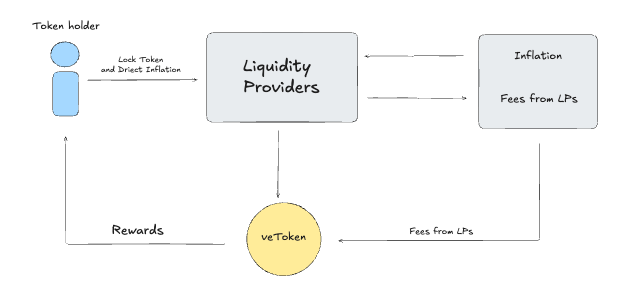
At the same time, DeFi protocols operating on various chains have introduced complex reward structures for stablecoin pools where participants receive high emissions of native governance tokens. While not always labeled as such, these reward schemes are a form of token inflation: new tokens are minted and distributed to liquidity providers, diluting existing holders but making high nominal yields possible. From a macro perspective, this resembles a high-inflation currency regime: if the token’s supply is growing rapidly and demand does not keep pace, its price can fall even as headline yields appear attractive. Crypto investors navigating stablecoin and DeFi opportunities therefore need to evaluate not just the nominal yield but also the inflation dynamics of both the underlying peg and any reward tokens involved.
Inflation, Tax Policy, and Crypto Portfolios
Inflation does not only matter for prices and returns; it also interacts with tax systems in ways that are particularly relevant for crypto investors. In many jurisdictions, capital gains taxes are levied on nominal gains—the difference between the purchase and sale price of an asset—without adjusting for inflation. When inflation is modest and holding periods are short, this may not matter much. But in high-inflation environments or over long horizons, nominal gains can significantly overstate real gains. An investor who buys Bitcoin or Ether, holds through several years of moderate price appreciation and elevated inflation, and then sells may face a tax bill on what is largely an inflation-driven nominal gain rather than an increase in real purchasing power.
Some countries have historically used inflation indexation to adjust the cost basis of assets for tax purposes, reducing the effective taxation of purely inflationary gains. Debates in countries such as Australia about replacing capital gains tax discounts with inflation indexation reflect a broader recognition that failing to account for inflation can distort investment decisions, especially for volatile assets like crypto. While specific policy proposals vary and may evolve over time, the underlying principle is that taxation should, ideally, be neutral with respect to the inflation component of returns, taxing only the real increase in wealth.
For crypto investors, this means that understanding the inflation environment is essential when planning long-term strategies and assessing after-tax returns. A nominal 10% annual gain in Bitcoin during a period of 7% inflation and high capital gains taxes might leave far less real, after-tax wealth than a 5% gain in a low-inflation environment with more favorable tax treatment. Central banks’ pursuit of a 2% inflation target, as formalized by the Fed for PCE inflation, can thus be seen as part of the macro backdrop within which tax systems and investment strategies operate. Stable inflation simplifies planning; volatile or high inflation complicates it, particularly when tax codes lag behind economic reality.
Moreover, inflation affects not only capital gains but also the real value of yield earned on crypto assets, whether through staking, lending, or stablecoin products. A 4% staking yield in an environment where CPI is running at 1.5% represents a real gain of roughly 2.5%, ignoring taxes and compounding. The same nominal yield in a 6% inflation environment implies a negative real return. Evaluating crypto yield opportunities therefore requires careful attention to inflation benchmarks, especially those that central banks actually target and respond to, such as PCE in the U.S. As inflation rises and falls, the balance of risk and reward across different crypto strategies shifts in subtle but important ways.
Hedging and Trading Inflation: From TIPS to Perps to Prediction Markets
Traditional finance offers several tools for hedging inflation risk, including inflation-linked government bonds, inflation swaps, and commodity exposure. U.S. Treasury Inflation-Protected Securities (TIPS), for example, adjust their principal based on CPI, providing bondholders with protection against rising consumer prices. While such instruments remain largely outside the on-chain world, their yields and breakeven inflation rates influence investor expectations and, by extension, demand for crypto assets as alternative inflation hedges. When breakeven inflation rates rise, signaling that markets expect higher future inflation, some investors may rotate into Bitcoin or other scarce assets, while others may rely more on conventional hedges.
Within crypto, inflation hedging is pursued via several channels. Bitcoin itself is often treated as a long-term hedge against fiat debasement, despite the nuances discussed earlier. Ethereum’s evolving monetary policy, especially during periods when net supply becomes deflationary, has also attracted investors seeking assets with favorable supply dynamics. Stablecoin yields, particularly those backed by short-term U.S. government securities, can function as a way to earn returns that partly offset inflation while maintaining dollar exposure. At the same time, DeFi derivatives markets offer ways to express view on macro data: traders can take leveraged positions that implicitly bet on how inflation reports will affect interest rates, equity indexes, and crypto prices.
One notable development in the broader derivatives landscape is the growth of event-based prediction markets and derivatives tied directly to inflation outcomes. Kalshi, a U.S.-regulated event-exchange platform, has introduced contracts that allow institutional users to hedge specific economic risks, including payroll costs under inflationary pressure. In a recent update, Kalshi Research highlighted how the platform’s block trading function, now available to Eligible Contract Participants (ECPs), enables institutions to take targeted positions on inflation-related events. While these products are not crypto-native, they reflect a convergence between macro risk management and the kind of parametric, event-focused betting that on-chain prediction markets have long experimented with.
In principle, similar instruments can be built directly on public blockchains: decentralized prediction markets and structured products that pay out based on CPI, PCE, or other inflation indicators. These would allow DAOs, stablecoin issuers, and crypto businesses with fiat-denominated expenses to hedge inflation exposure without relying on traditional intermediaries. Although liquidity and regulatory constraints have thus far limited the scale of such products, the conceptual foundation aligns well with crypto’s programmable nature. As stablecoin adoption deepens, particularly in high-inflation regions, demand for inflation-hedging tools—both within and outside crypto—seems likely to grow.
For individual crypto investors, practical inflation hedging often boils down to portfolio construction rather than explicit derivatives. Holding a mix of assets whose performance is differently sensitive to inflation—such as Bitcoin, Ethereum, stablecoins, and tokenized real-world assets—can provide some diversification if inflation surprises to the upside or downside. But no single approach is foolproof. The evidence suggests that Bitcoin may hedge inflation shocks in some regimes while behaving like a high-beta risk asset in others, and that Ethereum’s supply engineering does not guarantee outperformance in real terms. Ultimately, hedging inflation in crypto is less about discovering a perfect shield and more about understanding how macro conditions feed into different components of the digital asset universe.
- 2023-09governance
Cosmos ATOM inflation capped at 10% via governance vote
Ethereum gas fees hit 2023 low; ETH supply growth turns positive at 0.44% annualized
Ethereum Dencun upgrade reduces L1 blob fees, accelerating ETH supply re-inflation
- 2024-06governance
Osmosis OSMO 2.0 approved: 50% token inflation reduction plus fee sharing
- 2024-12governance
Synthetix passes SIP-2043: SNX inflation eliminated, pivoting to buybacks and burns
- 2024-12milestone
Curve marks year with CRV inflation slashed and record token lock volume
- 2025-03governance
Solana SIMD-228 reaches quorum with 71.85% approval to cut SOL inflation up to 80%
- 2025-06governance
Multicoin Capital proposes market-based SOL emissions to replace fixed inflation schedule
Risks, Misconceptions, and How Crypto Investors Should Think About Inflation
There are several recurring misconceptions about inflation in crypto circles that can lead to poor decisions. One is the belief that any increase in nominal money supply automatically and proportionally translates into higher price inflation. While, as the St. Louis Fed’s educational materials emphasize, money supply growth that exceeds the economy’s ability to produce goods and services can indeed generate inflation, the relationship is mediated by velocity, expectations, and real-side constraints. During periods when velocity falls or the economy is operating below capacity, central banks can expand their balance sheets significantly without immediately sparking high inflation. Conversely, supply shocks and expectations can generate inflation even without dramatic changes in monetary aggregates.
Another common misunderstanding is the conflation of token supply inflation with macro inflation. A protocol that reduces its native token emissions by 50% has changed its internal monetary policy, potentially lowering sell pressure and altering tokenomics. This is conceptually analogous to a central bank tightening policy, but it does not directly affect consumer price inflation in the broader economy. Similarly, Ethereum’s transition to near-zero or slightly negative net supply growth has been celebrated as “ultrasound money,” yet this does not immunize ETH holders from macro-driven drawdowns when global liquidity tightens. For crypto investors, appreciating the difference between asset-specific supply schedules and economy-wide inflation dynamics is crucial.
Short-termism is another risk. Central banks themselves typically avoid overreacting to any single monthly inflation print, instead looking at averages over several months or longer and examining the subcomponents of price indexes. The Fed routinely evaluates whether an uptick is driven by volatile items like food and energy or by more persistent categories such as housing and services, and it uses this decomposition to judge whether the trend is likely to persist. Crypto traders, by contrast, often treat each CPI or PCE release as a binary “up or down” catalyst, with outsized leverage and sharp intraday moves. While trading such events can be profitable, it can also be hazardous if it ignores the longer-term trajectory that central banks and institutional investors care about.
Finally, there is a tendency to assume that Bitcoin or any other single asset can serve as a universal, one-size-fits-all inflation hedge. Fidelity’s analysis warns against overconcentration in any single asset class, including cryptocurrencies, emphasizing that while Bitcoin has attributes such as scarcity and independence from direct government control, it has also behaved like a risk asset during periods of tightening policy. Academic work similarly shows that Bitcoin is not a safe haven in the face of financial uncertainty shocks, even if it responds positively to inflation shocks. For investors, the implication is that diversification remains essential: viewing Bitcoin, Ethereum, stablecoins, and traditional assets as part of a broader toolkit for navigating inflation, rather than betting everything on one narrative, is a more robust approach.
Outlook
Looking ahead, inflation is likely to remain a central macro driver for crypto markets, even if its precise path is uncertain. The Federal Reserve and other major central banks appear committed to 2% inflation targets, with PCE or similar measures as their guiding benchmark. As long as inflation runs meaningfully above these targets, policy is likely to stay relatively restrictive, keeping real yields elevated and exerting a gravitational pull on valuations for risk assets, including Bitcoin and Ethereum. In such an environment, crypto narratives will continue to oscillate between “store of value” and “high-beta tech,” depending on whether inflation prints and policy signals are perceived as benign or threatening.
At the same time, structural forces—from demographics and technology to deglobalization and climate policy—will shape the longer-term inflation regime, with important implications for digital assets. In emerging markets where inflation is chronically high, demand for dollar-linked stablecoins and yield-bearing on-chain instruments is likely to persist or grow, embedding crypto more deeply into everyday financial life. In advanced economies, the interplay between fiscal deficits, energy transitions, and central bank independence will influence how credible inflation targets remain and how valuable crypto hedges are perceived to be. Episodes like oil-price shocks tied to geopolitical conflict, and the resulting “inflation trades” they provoke, will periodically test these narratives.
For crypto investors, the most durable edge may lie not in predicting the exact inflation rate next month but in understanding how inflation data, central bank reactions, and risk sentiment interact over time—and how those interactions filter into Bitcoin, Ethereum, stablecoins, and the broader token ecosystem. Recognizing that inflation is both a macroeconomic phenomenon and a design parameter inside many protocols can help investors navigate markets where price levels, interest rates, and token supplies are all in flux. In that sense, inflation is not merely a statistic to trade around once a month; it is a continuous story about money, value, and trust—one in which crypto has firmly inserted itself.
Latest Inflation news
Fed's Waller went in ready to cut rates, but Iran war oil spike forced a hold — says cuts still possible later in 2026Kalshi launches Kalshi Research: Kalshi Research will provide internal Kalshi data to academics and other researchers interested in exploring topics related to prediction markets. The first research piece is live.Cosmos has kicked off a formal push to redesign ATOM’s tokenomics, focusing on revenue-driven sustainability, lower inflation, higher long-term staking incentives, and positioning ATOM as the network’s unified reserve, gas, and settlement asset. U.S. inflation and jobs data this week could jolt crypto markets as thin holiday liquidity amplifies volatility. Traders watch PPI and PCE closely for clues on the Fed’s next move.
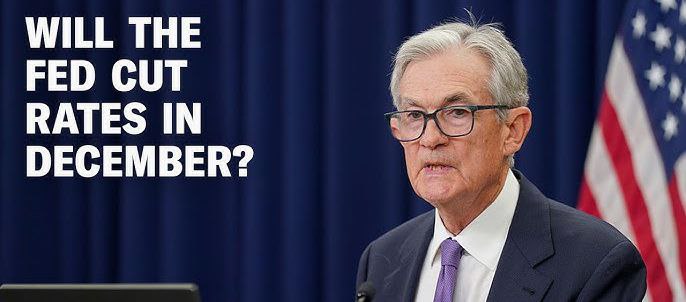 The Fed is now heavily divided on the issue of December rate cut; Some officials are expressing concerns about sticky inflation and tariff effects, while some believe that weak employment and slowing demand deserves more attention.
 Chicago Fed’s Goolsbee warns government shutdown leaves central bank “half-blind” on inflation, shifting focus from jobs to price risks amid missing data.
Sources
20 records from 19 domains
federalreserve.gov
stlouisfed.org
investopedia.com
usbank.com
fidelity.ca
pmc.ncbi.nlm.nih.gov
ultrasound.money
richmondfed.org
wisdomtree.com
sciencedirect.com
tradingview.com
crypto.leverageshares.com
fr.tradingview.com
facebook.com
coincentral.com
traderralph.com
youtube.com
research.m0.org
x.com
Community notes
Spot something off or out of date? Drop a note. Editors review topic notes daily and roll accepted fixes into the explainer — contributors are recognized in the monthly $SQUID drop.
Loading notes…
Help improve this topic
Have a story or tip about this topic? Submit it. See something missing? Leave a note. Editors review daily; accepted submissions and fixes count toward the monthly $SQUID drop.