
How Trump's second term reshaped U.S. crypto policy — from World Liberty Financial and the USD1 stablecoin to the Clarity Act, Bitcoin reserves, and Iran-driven market volatility.
+88 sources across the wider coverage universe
 CZ accuses rival US exchanges of spending millions to block his Trump pardon, fearing Binance's US return2026-04
 Trump-backed World Liberty Financial dismisses liquidation fears over its Dolomite borrowing position, insisting its collateralized loans remain safe despite rising scrutiny2026-04
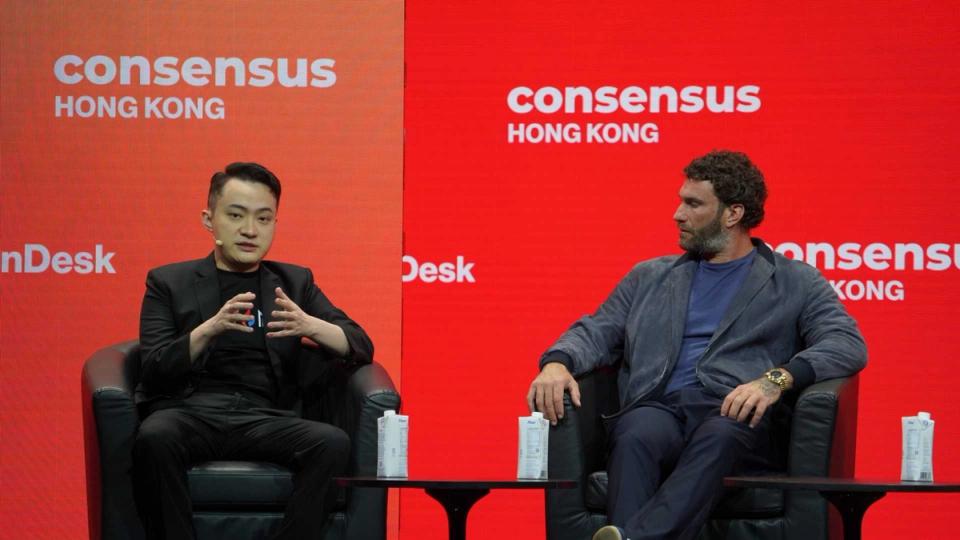 Justin Sun denounces Trump-backed WLFI as a 'personal ATM' after it borrows $75M on a platform its own adviser co-founded2026-04
 Hyperliquid oil perps surge 7% after Trump orders naval blockade of Strait of Hormuz2026-04
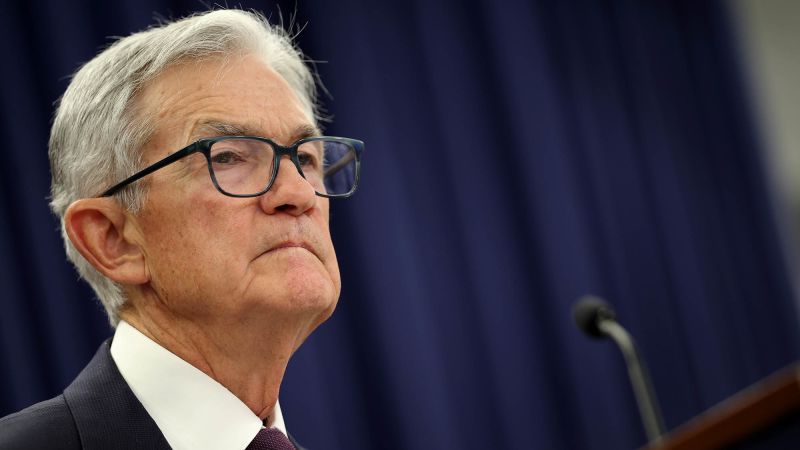 Trump threatens to fire Powell ahead of May term end as Fed chair vows to stay through DOJ probe2026-04
 CZ drops 364-page memoir after Trump pardon, reveals offering Gensler a Binance adviser role in 20182026-04
Donald Trump's return to the White House in January 2025 has made him the most consequential political figure in cryptocurrency history — simultaneously the industry's most powerful patron and its most prominent conflict-of-interest debate.
From Skeptic to Crypto Champion
Trump's relationship with digital assets has reversed almost completely since his first term, when he publicly dismissed Bitcoin as a scam and directed Treasury Secretary Steve Mnuchin to scrutinize crypto activity. By 2024, he had reinvented himself as the industry's loudest political advocate, pledging to make the United States the "crypto capital of the world," commuting the sentence of Silk Road founder Ross Ulbricht, and accepting Bitcoin donations for his campaign.
The shift was not purely ideological. Trump's adult sons — Eric and Donald Jr. — became co-founders of World Liberty Financial (WLFI), a decentralized finance protocol that issued governance tokens in late 2024. The project raised over $550 million in its token sale, drawing scrutiny from ethics watchdogs who noted that a sitting president's family operating a crypto business creates unprecedented conflicts of interest when that same administration is writing the rules for the industry.

White House adviser defends Trump's crypto ties after Clarity Act fails in Senate

World Liberty Financial and the USD1 Stablecoin
World Liberty Financial has emerged as one of the most watched crypto ventures of 2025–2026. The project launched USD1, a dollar-pegged stablecoin, and has reportedly entered discussions with the Office of the Comptroller of the Currency (OCC) about obtaining a federal trust charter — a designation that would allow WLFI to issue USD1 directly as a regulated financial institution rather than relying on third-party bank partners.
If approved, this would represent a significant regulatory milestone: a stablecoin project with direct family ties to the sitting president operating under federal bank-equivalent oversight. Critics, including Democratic lawmakers, have raised concerns that the OCC approval process may be accelerated or influenced by Trump's position. Supporters counter that regulatory clarity for stablecoin issuers is precisely what the industry has long needed, regardless of who benefits first.
USD1 has already found commercial use. The stablecoin was used to back bonus payouts at a UFC event in mid-2026, giving it retail-facing visibility beyond the DeFi ecosystem.
Readers click Trump-crypto stories not for policy mechanics but for the personal enrichment angle — the pattern of Trump family members extracting direct financial value from the crypto deregulation environment they themselves created.
The Regulatory Pivot: From Enforcement to Embrace
Under the Biden administration, the Securities and Exchange Commission pursued an aggressive enforcement strategy against crypto firms, filing suits against Coinbase, Ripple, Binance, and others. Trump's return reversed that posture almost immediately.
The SEC under acting and then confirmed Trump-appointed leadership began dismissing or deprioritizing pending cases. Coinbase, which had been locked in litigation with the SEC over whether its exchange constituted an unregistered securities marketplace, saw its legal exposure materially reduced. The company, which had spent hundreds of millions lobbying for clearer rules, became a prominent beneficiary of the regulatory reset.
Trump also signed an executive order directing agencies to treat digital assets as a strategic priority and established a White House working group on crypto policy. A Bitcoin strategic reserve — the idea that the federal government should hold Bitcoin as a reserve asset alongside gold — moved from fringe proposal to official policy consideration, though Congress has not yet authorized direct purchases.
The GENIUS Act, Clarity Act, and Legislative Reality
Two major pieces of crypto legislation have dominated Washington debate in 2025–2026:
- The GENIUS Act — focused on stablecoin regulation, establishing federal standards for issuance, reserve requirements, and oversight. It passed the Senate in May 2026 after contentious negotiations over whether Trump-linked stablecoin projects should face additional disclosure requirements.
- The Clarity Act — a broader market structure bill that would divide regulatory jurisdiction between the SEC and Commodity Futures Trading Commission (CFTC). The White House has targeted a July 4, 2026 signing date, framing it as a symbolic gift on America's 250th anniversary. Analysts and congressional watchers note that timeline is logistically implausible: with only nine Senate working days remaining before the holiday, the chamber would need to complete committee text mergers, resolve disputes over Trump-specific ethics guardrails, clear a 60-vote cloture threshold, and return the bill to the House — a sequence that has rarely, if ever, been compressed into that window.
The ethics dispute is revealing. Some lawmakers, including a handful of Republicans, have sought provisions that would require the president and senior officials to divest from crypto holdings or disclose conflicts before agency rulemaking. The White House has resisted these guardrails, and their fate will shape how the final legislation is read by markets and institutional investors.
Crypto Markets and the Trump Signal
Financial markets have learned to treat Trump's statements as a leading indicator. When he announced a peace framework with Iran in June 2026, Bitcoin climbed toward $66,000 as traders interpreted reduced geopolitical risk as positive for risk assets broadly. When his subsequent comments on "further Iran broadsides" created uncertainty, crypto markets gave back gains and entered choppy trading.
The Iran dynamic illustrates a recurring pattern: Trump's foreign policy pronouncements — whether on tariffs, sanctions, or military posture — carry immediate implications for crypto prices because they affect the dollar, oil, global risk appetite, and the behavior of sanctioned-economy actors who often use crypto to move value across borders.
The Federal Reserve dimension compounds this. Markets track Trump's public pressure on the Fed closely. His stated preference for lower interest rates, combined with speculation about whether he might attempt to remove or pressure Fed Chair Jerome Powell, has created volatility in risk assets including crypto whenever those rumors resurface.
- 01Trump family memecoin launches
The $TRUMP and $MELANIA memecoins, Barron's speculated pump.fun activity, and the timing-before-inauguration angle made personal presidential crypto enrichment viscerally real to readers
- 02World Liberty Financial extraction
Reuters-reported 75% profit share and $400M in fees going to the Trump family exposed the gap between crypto-populist rhetoric and insider extraction at World Liberty Financial
- 03SEC deregulation under Trump
Reassigning 50+ enforcement lawyers and appointing pro-crypto acting SEC chair Mark Uyeda signaled a structural regime shift that readers recognized as market-moving
- 04Strategic Bitcoin reserve push
Trump and Senator Lummis pitching a US Bitcoin reserve as a debt-reduction tool combined with Bitcoin crossing $106k created a feedback loop readers tracked closely
- 05Tariff-crypto market correlation
Reciprocal tariff announcements moved gold and macro risk assets in ways readers were mapping onto crypto portfolio exposure
- 06Trump conflict-of-interest investigations
Senator Warren's probe into whether Trump officials profited from dropping crypto enforcement crystallized the systemic corruption concern readers were circling
The Political Economy of Crypto PACs
Trump's crypto alignment has reshuffled political funding in ways that cut across traditional party lines. A prominent Trump-aligned crypto super PAC made headlines in mid-2026 when it backed Ritchie Torres, a Democratic congressman from New York, in a primary — signaling that the crypto industry's political investment is increasingly pragmatic rather than partisan. Torres has been a consistent crypto-friendly voice in the House.
This cross-aisle spending reflects a broader industry calculation: with Democrats divided on crypto and Republicans broadly supportive, maximizing friendly votes requires finding exceptions on both sides.
The Iran Backdrop
The Iran situation in mid-2026 has become unexpectedly central to Trump's political narrative, and crypto markets have been caught in the crosscurrents. Trump has emphasized the rollback of Iranian military capabilities as proof that a tougher posture produces results, explicitly contrasting it with what he characterizes as the Obama-era approach of cash transfers and accommodation.
The geopolitical volatility — including a last-minute cancellation of US-Iran talks in Switzerland, Iran's Revolutionary Guard issuing warnings about a "devastating historical defeat," and Trump's public demand for "unconditional surrender" — has created whipsaw conditions for oil prices and, by extension, inflation expectations that feed directly into crypto market sentiment.
For crypto specifically, Iran matters because Iranian traders have historically been significant participants in peer-to-peer Bitcoin markets as a means of circumventing sanctions. Any lasting diplomatic resolution that reintegrates Iran into global financial networks would affect those flows — and potentially reduce the dollar-avoidance demand that has supported some crypto volume in the region.
Ethics, Promotion, and the Media Problem
The promotional dimension of Trump's crypto alignment has generated recurring controversy. His endorsement of the MyHonor app — praised for a "great daughter" associated with the project — was flagged by ethics observers as an example of the president's media platform being used to drive attention (and potentially token value) toward personal or family-adjacent projects.
More broadly, Trump's use of Truth Social and public statements to promote ventures ranging from NFT trading cards to WLFI has blurred the line between political communication and commercial promotion in ways that are novel in American politics. Unlike public company CEOs, who face SEC regulations on market-moving statements, no equivalent constraint exists for a sitting president making statements about assets in which family members hold financial interests.
The media ecosystem around Trump and crypto has become mutually reinforcing: crypto-focused outlets amplify his pro-crypto statements, while Trump's team recognizes that the crypto community represents a motivated, high-donation-propensity constituency worth cultivating.
- 2024-11milestone
Trump wins presidential election; prediction markets called it
- 2025-01launch
$TRUMP and $MELANIA memecoins launched before inauguration
- 2025-01regulatory
Mark Uyeda appointed acting SEC Chair, replacing Gary Gensler
- 2025-01governance
White House Digital Assets Summit hosted by Trump
- 2025-01milestone
Bitcoin crosses $106k on strategic reserve hints
- 2025-01milestone
World Liberty Financial acquires TRX for treasury
- 2025-04regulatory
Trump announces reciprocal tariffs including 34% on China
- 2025-04regulatory
Trump exempts phones, chips from reciprocal tariffs
Prediction Markets and State Pushback
One underappreciated front in the Trump-crypto story is prediction markets. Platforms like Polymarket and Kalshi allow users to trade contracts on political and real-world events, and they surged in visibility during the 2024 election cycle — with Trump contracts being among the most actively traded.
The White House has been broadly favorable toward prediction markets as expressions of free markets and free speech. But state-level pushback has complicated the picture. Kentucky moved in 2026 to regulate or restrict prediction market activity under state gambling law — a potential conflict with the Trump administration's permissive federal posture, and a reminder that crypto-adjacent innovation can face resistance from red states as well as blue.
Outlook
Trump's crypto policy posture is likely to remain expansive for the remainder of his term, but the gap between ambition and legislative delivery is widening. The Clarity Act's July 4 deadline will almost certainly slip; the more realistic window is late 2026, assuming the Senate can resolve ethics disputes. WLFI's OCC charter application will serve as a test case for whether Trump-linked entities receive expedited treatment — and the answer will either validate or intensify conflict-of-interest concerns.
Bitcoin's price trajectory remains loosely correlated with Trump's geopolitical decisions, particularly on Iran and China trade relations. For crypto investors, the practical implication is that monitoring White House communications has become a form of market research. Whether that represents a healthy integration of crypto into mainstream finance — or an unhealthy concentration of market-moving power in a single political actor — may be the defining question of this regulatory era.
Latest Trump news
Community notes
Spot something off or out of date? Drop a note. Editors review topic notes daily and roll accepted fixes into the explainer — contributors are recognized in the monthly $SQUID drop.
Loading notes…
Help improve this topic
Have a story or tip about this topic? Submit it. See something missing? Leave a note. Editors review daily; accepted submissions and fixes count toward the monthly $SQUID drop.