
In-depth explainer on Joe Biden’s legacy in U.S. crypto policy, covering his executive orders, SEC/DOJ “crackdown,” DeFi tax rules, Binance case, Polymarket bets, and how his record contrasts with Trump’s emerging pro‑crypto turn.
+7 sources across the wider coverage universe
 U.S. Commerce draft to greatly expand control over AI chip exports clashes with President Trump’s push to loosen Biden-style restrictions and use advanced chips as leverage in global deals2026-03
 Trump’s “anti-war” image fractures as his presidency launches a deadly regime-change war in Iran and expands airstrikes across seven countries, testing MAGA’s faith in his promise of peace
He's attacked 7 nations, three of which had never been targeted by U.S. military strikes.
He authorized more individual air strikes in 2025 than Biden did in four years.2026-03
Trump’s “anti-war” image fractures as his presidency launches a deadly regime-change war in Iran and expands airstrikes across seven countries, testing MAGA’s faith in his promise of peace
He's attacked 7 nations, three of which had never been targeted by U.S. military strikes.
He authorized more individual air strikes in 2025 than Biden did in four years.2026-03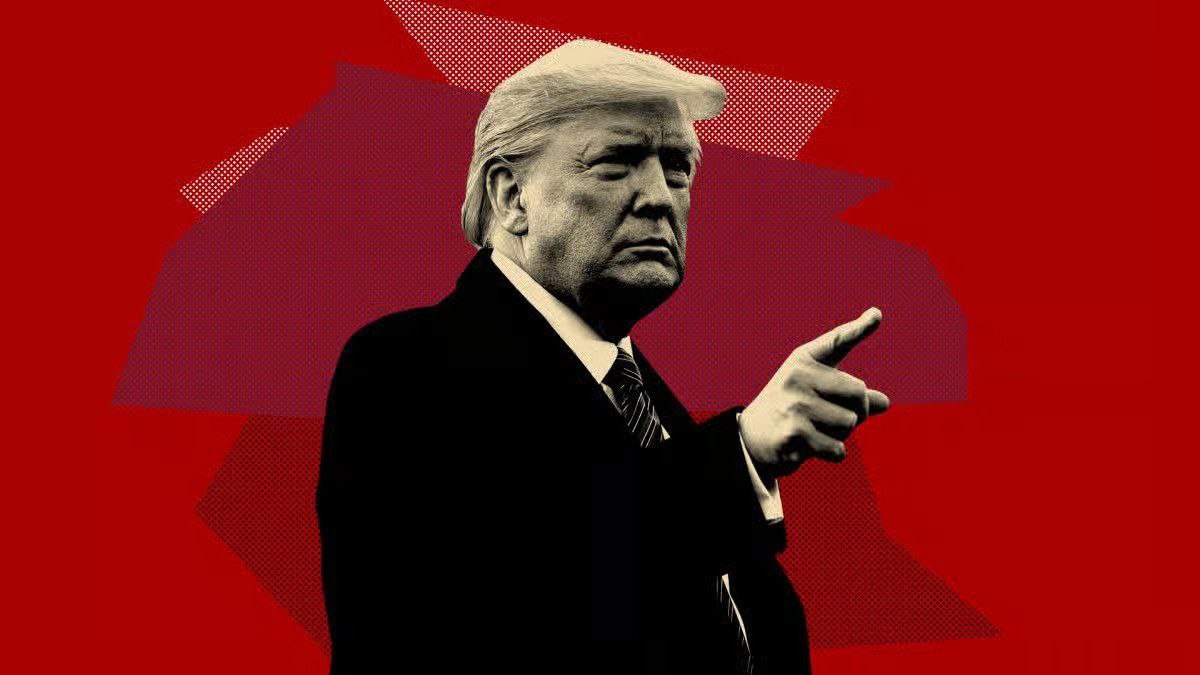 Trump says he won’t pardon jailed FTX founder Sam Bankman-Fried, who is serving a 25-year sentence for fraud, despite clemency attempts; Bankman-Fried was a major Biden donor in 2020, while Trump has pardoned other crypto figures in the past.2026-01
 The New York Times publishes an anti-crypto opinion piece by ex-SEC official John Reed Stark, who advocated for Biden's harsh clamp downs on the industry.2025-04
 Announcing he "will not support measures that jeopardize the well-being of consumers and investors," President Biden vetoes SAB 121 - a resolution enabling regulated banking groups to offer crypto custody services2024-06
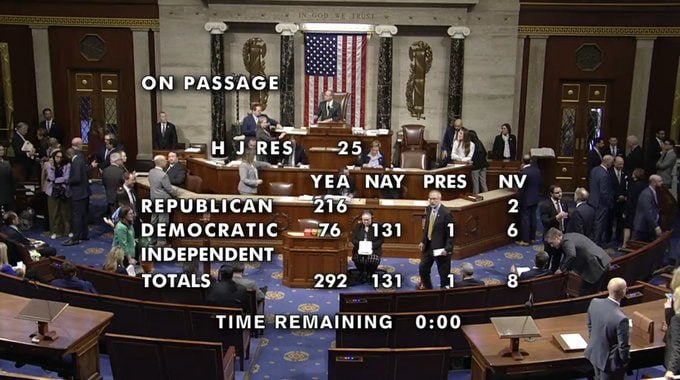 The widely detested Biden-era broker rule is dead after the US House overturns it with a 292-131 vote, following the Senate’s 70-27 decision. The rule would have harmed DeFi and added KYC requirements for non-custodial wallets.2025-03
Biden and Crypto: How One Presidency Redefined U.S. Digital Asset Policy
The Biden administration marked a turning point in how the United States treats cryptocurrencies, shifting digital assets from a largely peripheral issue to the center of debates about financial stability, national security, and technological competitiveness. For crypto traders, builders, and policy-watchers, understanding Biden’s record is essential to making sense of today’s more overtly pro‑crypto turn under Donald Trump, as well as the enduring regulatory structures and enforcement precedents that still shape markets.
Biden in Brief: Why This Presidency Matters to Crypto
Joe Biden did not campaign as a “crypto president” and rarely talked directly about digital assets on the trail, yet the explosion of market capitalization, the rise of stablecoins, and highly visible scandals like FTX’s collapse meant that his administration had little choice but to develop a coherent stance on the sector. Biden’s White House framed digital assets primarily through the lenses of consumer and investor protection, financial stability, and the mitigation of illicit finance, rather than as a new frontier of retail speculation or monetary revolution. That starting point helps explain why many in the industry perceived the Biden years as a regulatory crackdown, even when specific policy documents carried titles promising “responsible development” rather than outright prohibition. At the same time, the administration recognized that the United States risked ceding leadership in global finance and fintech if it ignored blockchain entirely, and its flagship executive order explicitly acknowledged potential benefits for efficiency and inclusion. This duality—cautious acknowledgment of innovation alongside assertive risk control—defines Biden’s enduring imprint on crypto policy.
The broader political context also matters. Biden followed Donald Trump’s first term, in which federal agencies took enforcement actions against some crypto actors but the White House itself did not articulate a holistic digital asset framework. He was then succeeded by a second Trump administration that moved quickly to roll back or redirect several Biden-era approaches, including at the Securities and Exchange Commission (SEC) and in the treatment of central bank digital currencies (CBDCs). As a result, Biden’s years can be seen as an interregnum in which Washington first grappled seriously with the scale of the crypto phenomenon, building regulatory and enforcement architectures that subsequent administrations would either embrace, modify, or dismantle. For market participants trying to anticipate the next swing of the policy pendulum, Biden’s choices remain the baseline against which newer moves are measured.
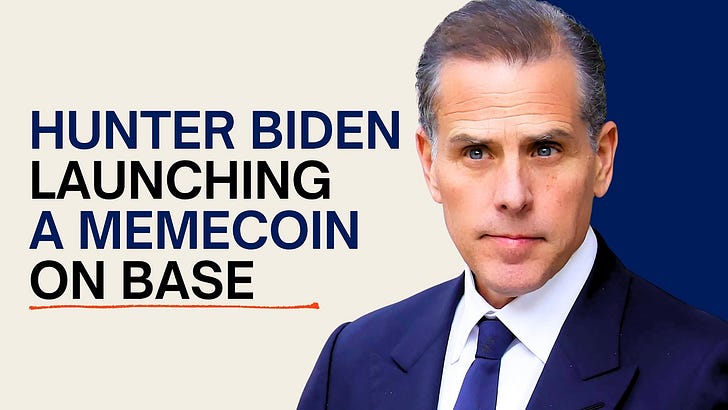
Hunter Biden's $LAPTOP memecoin launch on Base draws pre-launch backlash and scrutiny over trading incentives
The Biden Digital Asset Framework
The 2022 Executive Order on “Ensuring Responsible Development of Digital Assets”
The most explicit articulation of Biden’s crypto policy vision came in March 2022, when the White House issued an executive order titled “Ensuring Responsible Development of Digital Assets.” Analysts at Brookings and other think tanks have emphasized that the document functioned less as a detailed roadmap and more as a call to action for federal agencies, setting priorities and asking for reports rather than specifying precise rules. The order opened with broad policy statements—such as the need to protect consumers, investors, and businesses, and the goal of supporting technological advances that promote responsible digital asset use—that were designed to be noncontroversial and bipartisan. Yet beneath that conciliatory language lay clear direction: agencies were tasked with assessing risks to financial stability, national security, and the integrity of the global financial system, especially in relation to money laundering, sanctions evasion, and regulatory arbitrage.
One of the executive order’s key contributions was to situate digital assets within a whole-of-government framework rather than treating them as a niche concern of any single agency. It explicitly called for coordination among the Treasury, the Federal Reserve, the SEC, the Commodity Futures Trading Commission (CFTC), the Department of Justice (DOJ), and national security bodies, signaling that crypto touched nearly every major policy silo. The order laid out objectives that ranged from advancing U.S. leadership in the global financial system to promoting financial inclusion and ensuring that technological innovation reflected democratic values. At the same time, it devoted substantial attention to the threat that digital assets could be misused for illicit finance or to undermine sanctions, making the mitigation of those risks one of its central goals. For an industry that often prefers to be treated primarily as a technological innovation, this embedding within security and supervisory structures underscored the seriousness of official scrutiny.
Although some commentators hoped the executive order would immediately resolve regulatory uncertainty, its real-world impact was more incremental. Agencies produced reports examining the environmental footprint of crypto mining, the risks and opportunities of stablecoins, and the feasibility of a U.S. CBDC, among other topics. These documents in turn informed future policy choices, even if they did not instantly harmonize regulatory approaches. For example, they provided additional analytical backing for the SEC’s and CFTC’s respective claims over various digital asset markets, and they fed into the Treasury’s work on sanctions and anti–money laundering controls. In this sense, Biden’s order functioned as scaffolding for what became a more assertive regulatory posture, particularly on the enforcement side.
The 2022 White House “Comprehensive Framework”
In September 2022, the White House released a fact sheet heralding what it called the “First-Ever Comprehensive Framework for Responsible Development of Digital Assets.” This fact sheet distilled the conclusions of the agency reports triggered by the executive order and provided insight into how the administration’s thinking about the sector had evolved over the preceding months. Among its themes were the imperative of strengthening consumer and investor protections, improving payment systems using digital technology, and reinforcing U.S. leadership in the global financial system while supporting innovation. It also underscored continued concern about risks related to illicit finance, including the use of cryptocurrencies for ransomware, fraud, and sanctions evasion, echoing earlier emphasis on national security.
Unlike the executive order, which was primarily procedural, the fact sheet read more like a policy statement, signaling where the administration believed regulators should head next. It encouraged agencies to pursue investigations and enforcement actions against unlawful practices in the digital asset space, as well as to consider rulemaking that would clarify regulatory boundaries and protect users. At the same time, the document nodded toward the importance of international cooperation, recognizing that digital asset markets are inherently transnational and that unilateral U.S. moves could be undermined if large jurisdictions adopted conflicting standards. For the crypto community, the framework was thus both a warning—of stepped-up enforcement—and a sign that the United States was taking its role in shaping global rules seriously.
Crucially, the White House framed its approach as “responsible development,” suggesting that the goal was not to suppress the industry outright but to channel it into forms that align with existing regulatory expectations and broader policy goals. Critics in the crypto space argued that the cumulative effect of enforcement and stringent interpretations of securities and tax laws, when combined with these high-level documents, amounted to a de facto “war on crypto.” Supporters countered that, in the absence of clear statutory guidance from Congress, the administration had an obligation to protect consumers and the financial system using the tools at hand. Whatever one’s view, the fact sheet cemented Biden’s reputation as the first U.S. president to put forward an integrated digital asset policy, even as its implementation remained uneven and contested.
National Security and Illicit Finance Focus
National security concerns were not incidental to Biden’s digital asset framework; they were central. The executive order explicitly identified the need to “mitigate the illicit finance and national security risks” posed by misuse of digital assets as one of its core objectives, reflecting worries about money laundering, terrorist financing, and sanctions evasion. This focus intensified after Russia’s invasion of Ukraine, when policymakers feared that cryptocurrencies might be used to bypass Western sanctions, and as ransomware attacks involving crypto payments proliferated. In the administration’s view, any responsible approach to digital assets had to first minimize these risks before broader adoption could be encouraged.
This security orientation aligned the crypto debate with other contentious national security topics, including allegations that the Biden administration had mishandled or suppressed certain forms of whistleblower testimony related to the COVID-19 pandemic. While those specific controversies involved intelligence and public health rather than digital assets, they contributed to an environment in which parts of the public grew skeptical of official narratives, including statements about crypto’s risks and benefits. When a CIA-affiliated COVID-19 whistleblower appeared before the Senate Homeland Security Committee alleging a coverup, critics used the episode to argue that key institutions might not be fully transparent in areas ranging from pandemic origin debates to financial regulation. For some in the crypto community, this reinforced the appeal of decentralized systems that operate outside traditional gatekeepers, even as the administration remained focused on bringing such systems within existing national security frameworks.
The net effect was that digital assets came to be viewed, inside the Biden White House, as an interconnected bundle of financial innovation, consumer risk, and geopolitical challenge. This multi-dimensional framing made it difficult to silo crypto policy as mere financial regulation or tech governance. Instead, decisions about exchange licensing, stablecoin oversight, mining, and anti–money laundering reporting were all filtered through a security lens. For industry participants, that meant that engagement with the administration often required not just financial compliance expertise but also a sophisticated understanding of sanctions law, intelligence concerns, and diplomatic priorities.
Readers clicked Biden/crypto stories not for regulatory theory but for concrete battles with scorecards: they tracked each specific rule Biden deployed against crypto, then tracked each one Congress killed or Trump reversed — making this topic a running win/loss ledger more than a policy debate.
Regulatory Practice under Biden: Agencies, Rules, and Crackdown Narrative
SEC and CFTC: Enforcement-Led Regulation
Perhaps the most visible aspect of Biden-era crypto policy was the stepped-up enforcement activity by the SEC, accompanied by continued CFTC actions. A legal analysis of CFTC trends noted that, “meanwhile, the SEC has also seen a steady increase in cryptocurrency enforcement actions under Biden,” citing reporting that referred to this trend as part of a broader “crypto crackdown.” Under Chair Gary Gensler, the SEC repeatedly asserted that many tokens traded on U.S. platforms fit the definition of securities under the Howey test, and therefore fell squarely under the agency’s jurisdiction. Although the details of individual cases go beyond the scope of the search results presented here, the pattern was clear: large exchanges, token issuers, and lending platforms found themselves in the crosshairs, with enforcement often occurring before comprehensive bespoke rulemaking was in place.
This “regulation by enforcement” approach drew criticism from many in the industry, who argued that it created uncertainty and disincentivized good-faith compliance efforts. Advocates for the SEC countered that the underlying securities laws were technology-neutral and that issuing a token on a blockchain did not exempt a project from obligations to disclose, register, or avoid fraud. In the absence of new legislation from Congress, they argued, the agency had little choice but to apply existing doctrines to new instruments. The Biden White House did not micromanage specific enforcement operations but signaled support for strong oversight, consistent with its broader emphasis on consumer and investor protection in the executive order and fact sheet. This alignment between the administration’s rhetoric and the SEC’s practice reinforced perceptions that Washington had shifted decisively toward a more skeptical stance on unregulated digital asset activity.
The CFTC, for its part, continued to assert jurisdiction over crypto derivatives and certain spot markets involving commodities like bitcoin, complementing but sometimes overlapping with SEC actions. Some commissioners and outside commentators called for clearer legislative delineation of which agency should oversee which segments of the crypto market, but Congress did not deliver comprehensive reform during Biden’s term. As a result, industry participants faced a patchwork environment where the same token might be treated differently depending on context, and where enforcement risk varied dramatically based on how aggressively an agency interpreted its mandate. This ambiguity would later become a key target for reform efforts in the second Trump administration, which signaled an interest in creating clearer categorizations and limiting the scope of enforcement-first strategies.
Treasury, the Infrastructure Bill, and the “Broker” Definition
While the SEC and CFTC battled over the contours of securities and commodities law, the Treasury Department and the Internal Revenue Service played central roles in defining how crypto transactions would be reported and taxed. One of the most consequential legislative episodes came in the form of the Infrastructure Investment and Jobs Act, a massive 1,039‑page bill focused primarily on physical infrastructure but containing a relatively small number of pages devoted to new reporting requirements for certain cryptocurrency transactions. As a Gibson Dunn analysis observed, those few pages had “sweeping implications” for the digital asset ecosystem, largely because they expanded the definition of a “broker” required to report customer information to the IRS.
Critics argued that the statutory language and subsequent regulatory interpretations were so broad that they could, in theory, encompass actors who had no practical way to collect the required data, such as miners, node operators, or developers of decentralized protocols. This concern became acute under a late Biden-era Treasury regulation that extended broker-style reporting obligations deep into the decentralized finance (DeFi) stack. The rule, which came to be known colloquially as the “DeFi Broker Rule,” required those participating on decentralized exchanges and similar platforms to satisfy extensive reporting obligations, including collecting sensitive taxpayer information and filing it with the IRS. Industry stakeholders warned that these requirements were “unworkable and overly burdensome,” particularly for systems designed to operate without centralized intermediaries.
The political backlash to the DeFi Broker Rule culminated after Biden left office, when the House of Representatives voted overwhelmingly to roll back the measure. In 2025, the House passed H.J.Res. 25, a resolution under the Congressional Review Act introduced by Representative Mike Carey, which disapproved of the last-minute regulation expanding federal reporting requirements for those involved in decentralized digital asset transactions. The resolution’s supporters argued that the rule would “cripple American digital asset leadership, stifle innovation, and burden American entrepreneurs” by forcing them into an impossible compliance posture. The fact that this rollback attracted bipartisan support underscored how controversial the Biden-era approach to crypto reporting had become, even among some Democrats who otherwise favored stronger oversight in traditional finance.
IRS, DeFi Broker Rule, and Crypto Tax Frictions
Beyond the specific controversy over the DeFi Broker Rule, the Biden administration presided over a period in which crypto tax enforcement and reporting gained prominence. The IRS had long treated digital assets as property for tax purposes, meaning that each sale, swap, or spending event could trigger a taxable gain or loss, but under Biden the focus shifted to ensuring that the government had the data needed to enforce those obligations. The expanded broker reporting requirements in the infrastructure bill, and the implementing regulations that followed, were central pillars of this strategy. By bringing more intermediaries into the information-reporting net, the administration hoped to reduce the so‑called “tax gap” associated with underreported crypto income and gains.
However, DeFi challenged the assumptions underlying this framework. Traditional brokers such as centralized exchanges or custodial wallet providers can, at least in principle, track customer identities and transaction histories and issue consolidated tax forms. In decentralized systems, by contrast, liquidity pools, automated market makers, or self-hosted wallets may interact without any entity possessing a full view of an individual user’s tax-relevant events. When the Treasury regulation extended broker-style obligations into this space, critics accused the administration of ignoring technological reality and threatened to move operations offshore or further into anonymity-enhancing technologies. The House’s move to roll back the regulation, using Biden-era policy as a cautionary example, reflected a growing consensus that tax compliance measures must be tailored to the technical and architectural specifics of blockchain systems rather than simply copy-pasted from traditional finance.
At the narrative level, the tax debates fed into a broader industry perception that the Biden White House viewed crypto primarily as a source of compliance headaches and potential evasion rather than as an engine of innovation. Supporters of the administration countered that robust tax enforcement is a basic requirement of any modern state and that failing to apply it to crypto risked unfairly privileging digital assets over other asset classes. The tension between these perspectives—taxpayer fairness versus perceived overreach—continues to shape how subsequent administrations, including Trump’s, approach reporting obligations, safe harbors, and the design of more nuanced rules for DeFi and self-custody.
DOJ, Binance, and the Perception of a “Hostile” Crypto Environment
The Binance/CZ Case as a Biden-Era Landmark
No single enforcement action did more to crystallize perceptions of a Biden-era “crypto crackdown” than the Department of Justice’s case against Binance, the world’s largest cryptocurrency exchange, and its founder Changpeng Zhao (CZ). In November 2023, DOJ announced that Binance and CZ had pleaded guilty to federal charges as part of a resolution totaling over 4 billion dollars. The case centered on violations of the Bank Secrecy Act, failure to register as a money services business, and insufficient controls to prevent money laundering and sanctions evasion, among other issues. Binance admitted that it had allowed transactions that benefited sanctioned entities and individuals and had not implemented adequate know-your-customer and anti–money laundering procedures commensurate with its scale and global reach.
For U.S. regulators and law enforcement, the Binance resolution was evidence that even the largest and most powerful players in the crypto space were not above the law. DOJ officials framed the case as a message that platforms facilitating illegal activity, or failing to implement basic compliance measures, would face substantial penalties regardless of their market share. The Biden White House, while not directly involved in the day-to-day prosecution, had repeatedly emphasized in its executive order and subsequent fact sheet the importance of combating illicit finance in digital asset markets, making the Binance action a high-profile demonstration of that commitment. Other agencies, including the Treasury and the CFTC, also participated in the coordinated settlement, underscoring the cross-agency nature of Biden-era crypto enforcement.
From an industry perspective, however, the Binance case reinforced concerns that the U.S. was becoming one of the most aggressive jurisdictions in the world for crypto-related enforcement. Some argued that such actions would push innovation abroad, particularly if they were seen as inconsistent or politically motivated. Yet even critics often conceded that Binance’s compliance track record raised serious questions and that some form of regulatory and criminal response was unavoidable. The key point of contention was whether the tone and breadth of U.S. enforcement under Biden reflected a neutral application of existing laws or a more ideologically driven hostility to the sector.
CZ’s Critique and Claims of Bias
In the wake of his plea and imprisonment, Changpeng Zhao gave interviews in which he cast himself as a victim of what he described as a “hostile environment” toward crypto created by the Biden administration. Speaking on Fox Business, CZ argued that U.S. authorities had targeted Binance not only because of its dominance in global crypto trading but also, he suggested, in part because of his ethnicity and the exchange’s foreign roots. He portrayed the enforcement actions as excessive compared to the company’s missteps and contrasted the harsh response with what he saw as a more permissive attitude toward traditional financial institutions that had facilitated money laundering or sanctions violations.
These claims resonated with some in the crypto community who already believed that the Biden administration was predisposed against digital assets, especially when juxtaposed with Donald Trump’s subsequent courting of crypto traders as a distinct political constituency. However, others cautioned that framing the Binance case primarily as a product of political bias risked obscuring the substantive compliance failures acknowledged in the plea agreement. From a legal standpoint, the case fit within a broader pattern of DOJ actions against financial intermediaries—both crypto-native and traditional—that violated core anti–money laundering and sanctions laws, often resulting in large settlements, monitorships, and leadership changes. The fact that Binance’s resolution was negotiated rather than the result of a contested trial further complicated efforts to draw clear conclusions about alleged bias.
Nonetheless, CZ’s rhetoric fed into a potent narrative: that the Biden-era DOJ, working in concert with other regulators, had created an environment so adversarial that major players felt unwelcome in the U.S. market. Whether or not this narrative fully captured reality, it shaped how other exchanges, DeFi projects, and service providers weighed the risks of operating in or serving U.S. users. Some tightened their compliance efforts and proactively sought licenses, while others restricted U.S. access or moved infrastructure abroad. In this sense, the Binance case became a reference point not only for legal risk but for strategic decisions about jurisdiction and engagement.
DOJ’s Broader Posture and Double-Standard Debates
The perception of a hostile crypto environment cannot be separated from broader debates about the Biden-era DOJ’s impartiality in politically sensitive cases. Critics pointed to the contrast between the aggressive FBI search of Donald Trump’s Mar‑a‑Lago estate and the more cooperative approach taken when Biden’s own lawyers searched his home for classified documents, with DOJ choosing not to send FBI agents to monitor those searches. According to reporting, the Justice Department and the president’s attorneys agreed that Biden’s legal team would conduct the searches, in part because the president was cooperating, and legal experts suggested there was no evidence at that time that would justify the extraordinary step of seeking a search warrant for a sitting president’s private residence. Separate reporting revealed that a key DOJ official had raised red flags about aspects of the Mar‑a‑Lago raid, including questions about declassification, before it occurred, fueling arguments that the operation may have been more aggressive than necessary.
These controversies did not directly involve crypto, yet they colored perceptions of DOJ’s neutrality across policy domains. For some, the juxtaposition of hard-charging actions against a former president and crypto firms like Binance with more restrained handling of sensitive matters involving the sitting president suggested a double standard. Others argued that the cases were not comparable, given differences in factual context, cooperation, and the legal status of a former versus a current officeholder. Regardless of which view one finds more persuasive, the politicization of DOJ in public discourse spilled over into how crypto enforcement actions were interpreted, particularly by those already skeptical of the administration’s motives.
Add to this mix allegations that pandemic-related whistleblower complaints, including those suggesting that figures like Anthony Fauci had misled Congress, were mishandled or buried by agencies under Biden, and the picture becomes more complex. A widely discussed Senate hearing featured a CIA COVID‑19 whistleblower offering explosive testimony about alleged coverups, which critics cited as evidence that transparency problems extended across domains. For parts of the crypto community, which often valorize transparency and distrust centralized authority, such episodes reinforced ideological commitments to decentralization and censorship resistance. The Biden administration’s emphasis on enforcement and oversight in the digital asset space thus unfolded against a backdrop of broader institutional trust challenges, making its efforts both more urgent in the eyes of supporters and more suspect among detractors.

U.S. Commerce draft to greatly expand control over AI chip exports clashes with President Trump’s push to loosen Biden-style restrictions and use advanced chips as leverage in global deals

The Trump's era. Roll with it
Partisan Politics: Biden, Trump, Congress, and the Senate
Crypto as a 2024 Election Issue
During Biden’s term, crypto moved from the policy periphery into the heart of partisan politics, particularly as the 2024 presidential election approached. Donald Trump, once a vocal critic of bitcoin, began actively courting cryptocurrency traders, positioning himself as a champion of their interests in contrast to what he described as Biden’s antagonistic regulatory stance. At a Mar‑a‑Lago event promoting his own non-fungible token (NFT) collection, Trump told crypto backers that they “better vote” for him because of the way the Biden administration had unleashed a regulatory crackdown on the industry, adding bluntly that “they are against it.” He also publicized his personal crypto holdings—estimated at 2.8 million dollars as of August of one campaign year—as proof that he had skin in the game.
Commentators noted that this was the first time crypto had become a salient issue in a general-election presidential race, with one Politico report describing Trump’s strategy as “making presidential history” by directly courting traders as a bloc. This contrasted sharply with Biden, who rarely discussed digital assets in retail or cultural terms and instead allowed his agencies and technocratic frameworks to define the administration’s posture. For voters who experienced the Biden years through the lens of enforcement headlines and high-profile cases like Binance, the cleavage between a regulation-focused Democrat and a newly crypto-friendly Republican became a powerful political narrative, regardless of the nuances of agency-level policy. That narrative was further amplified by Trump’s own media and social media presence, which frequently framed Biden-era economic and regulatory policies, including those affecting crypto, as part of a broader story of national decline corrected only by his return to office.
Democratic Divisions: Warren, Biden, and the Pro-Crypto Wing
Biden’s party was itself divided on digital assets. Senator Elizabeth Warren emerged as perhaps the most prominent Democratic critic of the crypto industry, famously calling for an “anti-crypto army” to combat what she saw as risks to consumers, financial stability, and sanctions enforcement. While Biden never embraced Warren’s rhetoric wholesale, his administration’s cautious, enforcement-heavy approach created the impression of alignment with her concerns. Yet as the regulatory burden on certain segments of the industry increased, some Democrats began to question whether the White House and Warren‑aligned skeptics had gone too far.
A striking illustration came when 32 House Democrats joined Republicans to support legislation rolling back an SEC crypto-related rule, sending the measure to Biden’s desk. According to reporting, these lawmakers were motivated by a mix of policy concerns, interest in supporting innovation, and ties to industry and constituents active in digital assets, and some explicitly said they “wanted to send a message” that blanket hostility to crypto was not a consensus position inside the party. This legislative rebellion, modest in absolute numbers but significant symbolically, showed that “Biden’s crypto crackdown,” as some media labelled it, did not command universal Democratic support. It also hinted at future coalitions that might form around more industry-friendly legislation, particularly if Republicans continued to champion digital assets as a growth sector.
The picture grew even more nuanced when family dynamics entered the scene. In a widely shared social media post, Hunter Biden—long a lightning rod for partisan controversy—declared that “fiat is a sham, the banking class is corrupt, [and] decentralized digital currency and the blockchain are the inevitable future.” His comments, which came in the context of online exchanges that included responses to Warren’s anti-crypto positioning, reignited debates about the future of money and the legitimacy of establishment financial institutions. While Hunter’s statements did not represent official administration policy, they were seized upon by some in the crypto community as evidence of an internal tension: the president’s own son was publicly embracing the ethos of decentralization and distrust of banks even as the White House presided over a stringent regulatory regime. This contrast highlighted the cultural and generational divides within the Democratic coalition over how to interpret and integrate crypto into broader economic narratives.
The DeFi Broker Rule Rebellion and Congressional Review
The late Biden-era DeFi Broker Rule became another focal point for congressional pushback. As noted earlier, the regulation significantly expanded federal reporting requirements for those involved in decentralized digital asset transactions, effectively treating many DeFi participants as brokers required to collect and report extensive taxpayer information. Industry advocates argued that this would “devastate the American digital asset industry” by imposing obligations that decentralized platforms and protocols could not realistically fulfill, thereby driving innovation offshore or into gray areas. The Ways and Means Committee, under new leadership after Biden left office, framed the rule as a paradigmatic example of midnight regulation, imposed in the waning days of an administration without adequate consultation.
In response, Congress used the Congressional Review Act, a powerful but relatively infrequently deployed tool, to attempt to disapprove the regulation. H.J.Res. 25, introduced by Representative Mike Carey of Ohio, explicitly sought to repeal the IRS’s DeFi Broker Rule and restore what its supporters framed as a more balanced approach to tax reporting in the digital asset space. The House passed the resolution with strong bipartisan support, signaling that skepticism about the rule’s feasibility and proportionality extended beyond the Republican conference. The debate surrounding this vote also highlighted the Senate’s role, as any CRA resolution must pass both chambers and avoid a presidential veto to take effect. In this case, because Biden was no longer in office, the focus shifted from the question of whether he would defend his administration’s rule to whether the new political configuration would complete the rollback.
For the crypto industry, the episode underscored that no single administration’s policies are final. Biden’s attempt to extend traditional reporting frameworks into DeFi met institutional resistance once political control shifted, revealing the extent to which digital asset policy is now a live battlefield in Congress. It also demonstrated that, while presidential rhetoric and executive orders matter, durable rules may require bipartisan legislative compromise that takes seriously both innovation and enforcement imperatives.
- 01SAB 121 veto & banking custody↗
Biden's veto of the bipartisan CRA overturning SAB 121 was the single sharpest crypto-hostile act of his presidency, directly blocking regulated banks from offering crypto custody, and readers followed every vote.
- 02Biden political exit & prediction markets
Polymarket's $80M in bets on Biden's withdrawal — confirmed hours before his announcement — made crypto prediction markets the most accurate political forecaster of the cycle, pulling readers who cared about both the politics and the medium.
- 03Broker rule DeFi & KYC fight↗
The Biden-era broker rule threatened to impose KYC on non-custodial wallets and DeFi protocols, making its bipartisan 292-131 House repeal a landmark DeFi policy victory readers tracked closely.
- 04Trump vs Biden regulatory contrast↗
Trump's explicit crypto-reserve pitch and CFTC-over-SEC reorientation were framed directly against Biden's SEC enforcement regime, giving readers a clear before/after policy contrast to follow.
- 05Mixer & enforcement crackdowns
The Biden administration's targeting of crypto mixers as national-security money-laundering hubs signaled that privacy-layer infrastructure was the next enforcement frontier, drawing readers focused on DeFi compliance risk.
- 06Last-minute Bitcoin seizure sale & rule changes
Senator Lummis's probe into the Biden administration's eleventh-hour sale of billions in seized Bitcoin and rushed banking rule changes framed the outgoing administration as deliberately sabotaging the incoming pro-crypto regime.
Hunter Biden, Whistleblowers, and Narrative Spillovers into Crypto
Hunter Biden’s Crypto-Curious Rhetoric
Hunter Biden’s comments about digital assets stand out because they juxtapose an explicitly pro‑crypto ethos with the more cautious and regulatory stance of his father’s administration. In social media posts, including those highlighted on Instagram, Hunter asserted that “fiat is a sham” and that “the banking class is corrupt,” concluding that decentralized digital currency and blockchain technology represent the “inevitable future.” These remarks echoed longstanding themes in crypto culture, where skepticism toward central banks and incumbent financial intermediaries is common, and where blockchain is often framed as a tool for democratizing access to money and finance. The fact that such rhetoric came from the president’s son, who has himself been the subject of intense political scrutiny, amplified its impact in media coverage and online discourse.
In our newsroom’s coverage, these comments were linked to ongoing debates within the Democratic Party about figures like Elizabeth Warren’s “anti-crypto army,” with Hunter’s remarks seen by some as a kind of counter‑messaging. While there is no evidence that Hunter’s views influenced official policy, their resonance within crypto circles illustrates how personalities and family dynamics can shape perceptions of an administration’s posture toward digital assets. For critics of Biden’s regulatory approach, Hunter’s statements were sometimes used rhetorically to question why the White House did not more fully embrace the transformative potential that his son appeared to see. For supporters, they were dismissed as individual opinion, unrelated to the responsibilities of governing a complex financial system.
The broader lesson for crypto observers is that public narratives around digital assets do not arise solely from formal policy documents or regulatory actions. They are also constructed through the statements of high-profile figures, even those without official portfolios, whose comments can validate or challenge prevailing narratives about fiat currency, central banking, and the legitimacy of decentralized alternatives. In this sense, Hunter Biden’s posts became part of the symbolic landscape within which the industry interprets the Biden years.
Pandemic Whistleblowers and Trust in Institutions
Trust in institutions is a critical, if sometimes underappreciated, driver of how the public and markets respond to policy. During Biden’s term, allegations that whistleblower complaints related to COVID-19 origins and the conduct of officials such as Anthony Fauci were mishandled or buried—though hotly contested—contributed to a broader atmosphere of skepticism toward official narratives. A dramatic example came when a CIA COVID‑19 whistleblower testified before the Senate Homeland Security Committee, offering what was described as explosive testimony about alleged coverups in the pandemic response. While the details of those claims fall outside the scope of crypto policy, they intersect with the digital asset space through the lens of trust.
Many crypto advocates view blockchain technology as a way to create verifiable, tamper-resistant records precisely because they distrust centralized authorities to manage information fairly. When high-profile allegations of institutional opacity or manipulation emerge in areas like public health or intelligence, they can reinforce the appeal of decentralized systems in finance and data management. The Biden administration’s digital asset framework, which emphasizes both innovation and strong oversight, thus operated within a cultural environment where a significant subset of the population was inclined to doubt official assurances. For these individuals, statements about the dangers of crypto or the necessity of stringent enforcement might be interpreted less as neutral risk assessments and more as attempts to preserve incumbent power structures.
This dynamic does not mean that all skepticism is warranted or that all regulation is illegitimate. Rather, it underscores the importance of transparency and clear communication in policymaking, particularly in areas like digital assets where mistrust of institutions is already a core part of the ecosystem’s ideological DNA. The Biden administration’s challenge—and that of any successor—has been to craft rules and enforcement strategies that protect users and the financial system without unnecessarily feeding narratives of clandestine control or favoritism.
Document Controversies and DOJ Credibility
The controversies over how classified documents were handled by Donald Trump and Joe Biden respectively became another prism through which institutional trust was shaped. As noted earlier, the Justice Department considered but ultimately decided against sending FBI agents to monitor Biden’s attorneys as they searched his Delaware home for classified materials, with both sides agreeing that the president’s lawyers would conduct the searches themselves in light of their cooperation. Legal experts quoted in coverage observed that, at least based on publicly known facts at the time, there did not appear to be evidence that would justify obtaining a search warrant for the sitting president’s private residence, a step that would have been unprecedented. Nonetheless, the contrast with the FBI’s armed search of Mar‑a‑Lago, which proceeded under different circumstances, fueled claims of a double standard.
A newly disclosed email showing that a top DOJ official had raised questions about declassification issues before the Mar‑a‑Lago raid further complicated the picture, suggesting internal debates about how aggressively to proceed. For critics of Biden’s administration, these episodes provided fodder for the argument that DOJ had been weaponized against political opponents while showing leniency toward allies. For defenders, they illustrated the messy reality of applying different processes to a former and a current president under divergent factual scenarios. Either way, DOJ’s reputation became contested terrain, and its actions in non-political domains, including crypto enforcement, were seen through this polarized lens.
From the perspective of digital asset markets, perceptions of DOJ bias or inconsistency matter because they shape expectations about future enforcement. If market participants believe that prosecutions or investigations may be influenced by political considerations, they may place less weight on formal guidance and more on informal assessments of shifting political winds. This environment increases the premium on transparent, principled policy, such as the more structured approach to crypto regulation that the SEC has begun to articulate under the Trump administration’s second term, even as debates over enforcement continue. Biden’s legacy in this area is thus inseparable from the broader story of institutional credibility during his presidency.
Comparing Biden and Trump on Crypto Policy
Policy Goals and Messaging
Comparisons between Biden and Trump on crypto must account for both rhetoric and substance. Biden’s executive order and subsequent framework documents spoke the language of balance: supporting responsible innovation while protecting consumers, investors, and national security. His administration rarely celebrated crypto as an inherently positive force; instead, it saw digital assets primarily as technologies that needed to be brought within the bounds of existing law and regulatory norms. The messaging emphasized continuity with long-standing priorities such as combating illicit finance, preserving financial stability, and maintaining U.S. leadership in the global financial system.
By contrast, Trump’s second term began with a sharp rhetorical and policy pivot. A Georgetown analysis of the SEC’s evolving crypto playbook notes that the Trump administration issued a new executive order that, among other things, prohibited the creation of a U.S. CBDC, citing concerns about financial stability, privacy, and private-sector innovation. Rather than framing digital assets primarily as a risk, the order treated cryptocurrencies as a potential driver of economic innovation and international competitiveness, with particular emphasis on dollar-backed stablecoins as tools for maintaining monetary sovereignty. The White House’s own “365 Wins in 365 Days” fact sheet, while focused on a wide array of topics from immigration to economic growth, portrayed Trump’s return as marking a “new era of success and prosperity” that reversed what it characterized as failures of the Biden years. Within this narrative, a more favorable stance toward crypto fit alongside tax cuts, deregulation, and aggressive economic messaging.
Trump’s overt courting of crypto traders during his campaign—urging them to vote for him because of Biden’s alleged hostility to the sector—further highlighted the difference in messaging. Whereas Biden rarely addressed the crypto community directly, letting agencies and technocrats carry the policy load, Trump directly linked digital assets to his broader populist and growth-oriented agenda. For market participants, this contrast creates both opportunities and risks: more explicitly pro‑crypto rhetoric may lead to favorable policy changes, but it also ties the sector’s fortunes more tightly to partisan politics and electoral cycles.
CBDCs, Stablecoins, and Financial Infrastructure
Central bank digital currencies became a key fault line between Biden and Trump. Under Biden, the executive order tasked the Federal Reserve and other agencies with exploring the potential benefits and risks of a U.S. CBDC, without committing to issuing one. The administration’s framework acknowledged that a well-designed CBDC could, in theory, support more efficient and inclusive payment systems, but it also emphasized concerns about privacy, financial stability, and the role of the dollar in global finance. The net result was a cautious exploratory stance: CBDCs were put on the table as an option, but no decision was made.
Trump’s second-term executive order effectively took that option off the table by prohibiting the creation of a U.S. CBDC altogether, citing precisely those risks as reasons for rejecting the concept. Instead, the order highlighted dollar-backed stablecoins—privately issued but presumably well‑regulated tokens pegged to the U.S. dollar—as the preferred means of leveraging blockchain technology while maintaining monetary sovereignty. It also called for a Presidential Working Group on Digital Asset Markets, chaired by David Sacks as Special Advisor for AI and Crypto, to propose a federal framework for digital assets, including stablecoins, within 180 days. This represented a significant shift from Biden’s more open‑ended explorations, signaling a philosophical commitment to a particular model of digital money that favored private-sector innovation over state-issued digital currency.
These differences have practical implications for market structure and competitive dynamics. Under Biden’s approach, market participants had to account for the possibility that a U.S. CBDC might one day compete with or complement private stablecoins, potentially reshaping demand and regulatory requirements. Under Trump’s CBDC prohibition, by contrast, the center of gravity shifts toward creating a robust, regulated stablecoin ecosystem as the primary interface between crypto and the dollar. For stablecoin issuers and DeFi protocols that rely on dollar-pegged assets, this change offers greater clarity about the competitive landscape, even as debates continue over the appropriate level of oversight and reserve requirements.
Regulation by Enforcement vs Forward-Looking Frameworks
A central critique of Biden-era crypto policy was that regulators, especially the SEC, relied too heavily on enforcement to define the rules of the road. As noted earlier, SEC enforcement actions against exchanges, token issuers, and lending platforms increased steadily during Biden’s term, prompting Axios and legal commentators to describe the trend as a “crypto crackdown.” Many industry actors complained that they were being subjected to lawsuits and investigations in the absence of clear, tailored regulation that would allow them to register or comply proactively. Biden’s executive order and framework provided high-level principles but did not translate into the kind of granular, sector-specific rulemaking that many had hoped would replace ad hoc enforcement.
In Trump’s second term, there are signs of a recalibration, at least at the SEC. The Georgetown analysis reports that the SEC rescinded Staff Accounting Bulletin 121 in January 2025, removing a requirement that companies holding crypto assets for customers record them as liabilities on their balance sheets, a rule that had discouraged banks from offering custody services. In February 2025, Commissioner Hester Peirce proposed a four-part framework to categorize crypto assets and sought public input on how securities laws should apply, signaling openness to more precise guidance. The SEC also established a dedicated Crypto Task Force and, notably, dismissed a civil enforcement action against Coinbase, citing the task force’s work to develop clearer policies. In March 2025, former Acting Chair Mark Uyeda announced that the agency would not require crypto firms to register as alternative trading systems, reducing some regulatory burdens.
These moves do not eliminate enforcement; the SEC continues to list cryptocurrencies as a key examination priority for 2025. But they suggest a shift away from relying almost exclusively on enforcement to shape behavior. From an industry perspective, the contrast with the Biden years lies not only in specific outcomes but also in procedural posture: whereas Biden’s administration was seen as reacting to crypto growth with existing tools, Trump’s second term is seeking to proactively rewrite the playbook. Whether this yields a more stable and innovation-friendly environment remains to be seen, but it underscores how Biden’s enforcement-heavy paradigm has become the reference point for subsequent reform.
To crystallize the comparison, it is useful to summarize key differences in a compact format:
| Dimension | Biden Era (2021–2025) | Trump Second Term (from 2025) |
|---|---|---|
| Overall framing | “Responsible development” with emphasis on consumer protection and illicit finance risks | Crypto as driver of innovation and competitiveness; rollback of perceived overreach |
| CBDC stance | Exploratory, no decision, studying risks and benefits | Explicit prohibition on U.S. CBDC; preference for dollar-backed stablecoins |
| SEC posture | Increased enforcement; described as “crypto crackdown” | Rescission of SAB 121; creation of Crypto Task Force; more guidance-oriented |
| DeFi/tax reporting | Expanded “broker” definition and DeFi Broker Rule; heavy pushback | Congressional moves to roll back Biden-era rules; search for more tailored reporting |
This table should be read not as an exhaustive account but as a snapshot of how Biden’s legacy is being actively reinterpreted and revised in the Trump era.
Trump’s “anti-war” image fractures as his presidency launches a deadly regime-change war in Iran and expands airstrikes across seven countries, testing MAGA’s faith in his promise of peace He's attacked 7 nations, three of which had never been targeted by U.S. military strikes. He authorized more individual air strikes in 2025 than Biden did in four years.
🤡🤡🤡 trophy
Crypto Taxes and Reporting from Biden to Trump
The Infrastructure Bill’s Legacy
As noted earlier, the Infrastructure Investment and Jobs Act’s crypto provisions are one of Biden’s most enduring legacies in the tax and reporting domain. By expanding the definition of “broker” to include a wide range of entities that facilitate digital asset transactions for others, the law created a statutory hook for detailed regulations that could compel more extensive information reporting to the IRS. This approach aligned with the administration’s broader emphasis on closing the tax gap and ensuring that income derived from crypto trading and investment did not escape the tax net simply because of technological novelty. In practice, however, the breadth of the law’s language sowed confusion about which actors were covered and how they could comply, especially in decentralized contexts.
Even as Trump’s administration and a more crypto-sympathetic Congress move to soften or roll back some of the most controversial Biden-era regulations, the infrastructure bill itself remains on the books. Repealing or significantly amending its crypto-related provisions would require new legislation, a more complex and politically demanding process than altering a single regulation through the CRA or agency rulemaking. Consequently, market participants must still plan around a legal environment in which the federal government expects significant transaction data from intermediaries, even if the precise scope of who counts as a broker may be narrowed or clarified in coming years. This underscores how Biden’s policy choices, particularly those anchored in statute, will continue to shape the tax landscape for digital assets long after his departure.
DeFi, Self-Custody, and Information-Reporting Challenges
The DeFi Broker Rule controversy highlighted the mismatch between traditional tax reporting concepts and decentralized architectures. In conventional finance, brokers such as stock exchanges, clearing firms, or custodial banks have a clear view of customer identities and transactions, making them logical points for imposing information-reporting obligations. In DeFi, by contrast, liquidity pools may be controlled by smart contracts, and users may interact pseudonymously through self-hosted wallets, leaving no single entity with the necessary data to produce standardized tax forms. When the Biden-era Treasury attempted to extend broker-style reporting into this environment, critics argued that the rule was both technologically naive and potentially destructive, threatening to criminalize participation in open-source software development or non-custodial services that lacked the capacity to collect know-your-customer information.
The House’s bipartisan move to roll back the DeFi Broker Rule under the Trump administration reflects a growing recognition that tax compliance in decentralized systems may require new tools and paradigms. These could include voluntary reporting frameworks, privacy-preserving analytics, or safe harbor periods during which innovators can experiment with different models for tracking and reporting tax-relevant data without facing immediate punitive enforcement. Whatever path is chosen, Biden’s attempt to force DeFi into the mold of traditional brokerage has become a cautionary tale about the limits of simply transplanting legacy regulatory concepts into blockchain-based ecosystems. For builders and investors, the episode underscores the importance of engaging early with policymakers to educate them on the technical realities of decentralized finance.
Prediction Markets, Polymarket, and the Edges of Financial Regulation
Crypto-based prediction markets occupy a particularly ambiguous space at the intersection of tax, securities, and commodities law. Polymarket, a prominent on-chain platform, allows users to trade contracts based on the outcomes of real-world events, ranging from elections to policy decisions such as potential presidential pardons. One of the most closely watched markets during Biden’s presidency involved speculation on whether he would pardon Sam Bankman-Fried (SBF), the disgraced founder of FTX, with the market resolving to “Yes” if SBF received a presidential pardon, commutation, or reprieve for any crime of which he was convicted. While such markets are often treated as entertainment by retail participants, they raise serious regulatory questions about whether the contracts constitute unregistered securities or derivatives and how insider trading rules should apply.
A dramatic illustration of these concerns came after Biden left office, when two linked wallets on Polymarket reportedly made about 320,000 dollars by flawlessly betting on several pardons made in his final minutes as president. Analysts who reviewed the on-chain activity warned that the pattern raised red flags for potential insider trading, suggesting that the trader might have had advance knowledge of the pardons. Because blockchain transactions are transparent, investigators and journalists were able to reconstruct the timing and magnitude of the bets, but the legal status of such activity remains murky: U.S. law has relatively little precedent on how insider trading concepts apply to decentralized prediction markets, especially when the underlying event is a discretionary governmental act like a pardon.
From a Biden-era perspective, prediction markets like Polymarket sit at the frontier of financial innovation and regulatory reach. They exemplify how digital assets can transform not only investment but also political engagement, allowing traders to express views on the likelihood of policy choices such as pardons, re-election bids, or regulatory actions. At the same time, they challenge regulators to adapt frameworks designed for equity markets and corporate insiders to a world where information, incentives, and participants are distributed across pseudonymous addresses. Biden’s administration did not develop a comprehensive approach to this niche, leaving it as one of many unresolved issues for subsequent policymakers.
Biden executive order on digital assets
White House digital asset development framework published
Binance and CEO plead guilty; $4B DOJ resolution
Biden vetoes SAB 121 CRA after Senate passes it 70-27
- 2024-07milestone
Biden withdraws from 2024 presidential race
Trump wins presidency; crypto-hostile era ends
House passes bipartisan broker rule repeal 292-131
- 2025-04regulatory
Treasury moves to ease Biden-era CAMT on unrealized crypto gains
Biden, Polymarket, and On-Chain Politics
Betting on Biden: Pardons, Elections, and Policy Outcomes
Beyond SBF-related markets, Polymarket hosted a variety of contracts tied to Biden’s actions and fate, including markets on who he might pardon, whether he would seek or win re-election, and how key policy initiatives would fare. These markets provided a running, on-chain measure of collective expectations about the president’s decisions, aggregated from the bets of thousands of participants with varying information and motivations. For political analysts and crypto-native traders alike, such markets offered a complementary lens to traditional polling or prediction models, sometimes adjusting in real time to new information about investigations, congressional dynamics, or health scares.
In the pardon context, the suspicious trading activity near the end of Biden’s term, where linked wallets profited handsomely from last-minute clemency decisions, underscored both the promise and perils of on-chain political betting. On the one hand, the transparent ledger made it possible to detect unusual patterns that might suggest access to non-public information, a form of monitoring that is more challenging in opaque over-the-counter markets. On the other hand, the episode raised thorny questions about whether political insiders—or their associates—could use crypto platforms to monetize privileged knowledge about governmental acts without leaving traditional paper trails. For an administration already facing scrutiny over DOJ impartiality and whistleblower handling in other domains, such concerns added another layer of complexity to the story of Biden-era governance intersecting with digital assets.
Insider Trading, Market Integrity, and Blockchain Transparency
The Polymarket pardon-trader saga illustrates how blockchain transparency can both mitigate and highlight risks to market integrity. Because all trades on the platform are recorded on-chain, independent analysts were able to trace the timing, size, and counterparties of the suspicious bets, leading to calls for investigation and tighter oversight. Yet the same pseudonymity that protects user privacy also complicates enforcement: while wallet addresses can be linked to patterns of behavior, tying them to real-world identities often requires subpoenas, cooperation from centralized exchanges, or other investigative tools. The Biden administration did not publicly articulate a policy specific to prediction market insider trading, leaving enforcement to existing frameworks that may or may not map neatly onto this novel context.
From a policy-design perspective, the case raises questions about whether new rules are needed to govern the use of non-public information in markets where the underlying events are political or administrative rather than corporate. Traditional insider trading law is built around the misuse of material non-public information about a security, often tied to fiduciary duties owed by insiders to shareholders. Applying that logic to pardons, regulatory decisions, or legislative outcomes is not straightforward. Nonetheless, Biden-era enforcement against other forms of misuse of privileged information, combined with the administration’s general emphasis on combating illicit finance in the digital asset space, suggest that regulators could be inclined to treat such behavior as problematic if legal tools can be identified.
Blockchain’s radical transparency complicates this calculus in another way: it enables “armchair enforcement” by journalists, analysts, and the public, who can scrutinize wallets and trading patterns without waiting for subpoenas or official probes. In a polarized environment where accusations of bias against Biden’s DOJ were already rampant, open-source investigations into on-chain political betting could either enhance accountability or fuel conspiratorial narratives, depending on how evidence is interpreted. For future administrations, including Trump’s, crafting clear guidelines for how law enforcement and regulators will treat on-chain political prediction markets will be an important part of building trust in both digital asset markets and democratic institutions.
What Prediction Markets Reveal about Policy Expectations
Stepping back from the specifics of pardons or elections, on-chain prediction markets like Polymarket offer a window into how the crypto community and broader public perceive the trajectory of policy under different administrations. During Biden’s term, markets pricing the likelihood of aggressive regulation, SEC enforcement outcomes, or legislative breakthroughs provided a form of sentiment data that complemented more traditional analyses. Traders incorporated signals ranging from congressional hearings and agency speeches to leaks about pending enforcement actions, updating prices as new information emerged. This process reflected not only the content of Biden-era policies but also the degree of confidence market participants had in institutions’ stability and credibility.
For example, a pattern of increasingly aggressive SEC actions under Biden, described by some observers as a “crypto crackdown,” likely influenced prices in markets tied to the approval of new crypto financial products or the success of specific platforms. Conversely, after Trump’s return and the announcement of more industry-friendly moves such as the rescission of SAB 121 and the creation of an SEC Crypto Task Force, markets quickly adjusted expectations for future regulatory outcomes. In this sense, prediction markets serve as an ongoing referendum on how Biden’s legacy is being revised, providing quantitative snapshots of confidence in, or resistance to, policy continuity.
For crypto investors and builders, monitoring these markets can provide early warning signs of shifts in regulatory risk, even if they do not replace detailed legal analysis. They also highlight the deep entanglement of digital assets with politics, demonstrating that the fortunes of coins, protocols, and exchanges are intertwined with the decisions of presidents, congresses, and agencies. Biden’s presidency played a crucial role in bringing that entanglement into focus.
Practical Lessons for Crypto Market Participants
For a crypto-focused audience, the key question is not merely how to assess Biden’s presidency in historical or partisan terms, but what practical lessons can be drawn for navigating current and future regulatory environments. One lesson is that executive orders and high-level frameworks, such as Biden’s “Ensuring Responsible Development of Digital Assets” and the subsequent comprehensive fact sheet, are important signals but not definitive guides to day-to-day enforcement. Market participants must pay close attention to how agencies implement these directives through specific rulemakings and cases, recognizing that language about “responsible innovation” can coexist with a heavy reliance on enforcement tools.
A second lesson is that tax and reporting policy can be as consequential as headline-grabbing enforcement actions. The infrastructure bill’s expansion of broker reporting requirements and the DeFi Broker Rule show how seemingly small statutory or regulatory changes can dramatically alter compliance obligations and business models. Even as Trump’s administration and Congress move to soften or reverse some of these measures, the underlying drive to collect taxable information on digital asset activity is unlikely to disappear, meaning that builders should design systems with traceability and reporting in mind where legally required. At the same time, engaging constructively with policymakers to explain the technical limitations of certain proposals, as industry did in opposing the DeFi Broker Rule, can shape outcomes and avoid worst-case scenarios.
A third lesson is the importance of monitoring the broader political and institutional context. Perceptions of DOJ impartiality, Senate hearings on topics like COVID-19 whistleblowers, and public disputes over document handling all influence how enforcement actions in the crypto space are interpreted and, potentially, prioritized. As prediction markets on platforms like Polymarket demonstrate, traders are already factoring these broader signals into their assessments of policy risk, betting on everything from pardons to regulatory decisions. For serious investors and projects, incorporating such political analysis into risk management is no longer optional.
Finally, comparing Biden’s record with Trump’s emerging second-term approach highlights the volatility of crypto policy across administrations. Biden’s focus on enforcement and cautious exploration of CBDCs has given way to a CBDC prohibition, a more explicit embrace of stablecoins, and steps toward clearer SEC guidance. Yet some Biden-era legacies, like the infrastructure bill’s tax provisions and the precedence of high-profile enforcement cases, will continue to shape regulatory expectations. Navigating this environment requires flexibility, legal sophistication, and an awareness that digital asset policy is now firmly part of the geopolitical and domestic political landscape, not a niche concern.
Outlook
Looking ahead, Biden’s presidency will likely be remembered as the moment when U.S. policymakers took crypto seriously enough to place it at the intersection of financial regulation, national security, and technological strategy. His executive order and framework put digital assets on the agenda of every major economic and security agency, ensuring that subsequent administrations could not ignore the sector. At the same time, the heavy reliance on enforcement and the attempt to shoehorn DeFi into traditional tax reporting structures generated backlash that is now driving reforms under Trump and in Congress.
For the crypto industry, the task is to learn from this period rather than simply celebrate or condemn it. Biden’s focus on illicit finance and consumer protection reflects legitimate policy concerns that any durable regulatory framework must address. Trump’s more industry-friendly posture offers opportunities for innovation but will be sustainable only if it can demonstrate that it does not sacrifice market integrity or security. Prediction markets, agency rulemakings, court decisions, and the evolving stance of key legislators in both the House and Senate will all play roles in shaping this balance.
In that sense, Biden’s role in crypto history is not closed but ongoing. His administration’s choices created structures, expectations, and precedents that successive governments will either entrench or dismantle. Crypto traders, developers, and institutions who understand this legacy in detail will be better positioned to anticipate and adapt to the next wave of policy shifts, regardless of who occupies the White House.
Latest Biden news
Hunter Biden's $LAPTOP memecoin launch on Base draws pre-launch backlash and scrutiny over trading incentivesU.S. Commerce draft to greatly expand control over AI chip exports clashes with President Trump’s push to loosen Biden-style restrictions and use advanced chips as leverage in global dealsTrump’s “anti-war” image fractures as his presidency launches a deadly regime-change war in Iran and expands airstrikes across seven countries, testing MAGA’s faith in his promise of peace
He's attacked 7 nations, three of which had never been targeted by U.S. military strikes.
He authorized more individual air strikes in 2025 than Biden did in four years.Trump says he won’t pardon jailed FTX founder Sam Bankman-Fried, who is serving a 25-year sentence for fraud, despite clemency attempts; Bankman-Fried was a major Biden donor in 2020, while Trump has pardoned other crypto figures in the past. Trump defended pardoning Binance founder CZ Zhao, claiming he “didn’t know him” and believed the Biden administration’s prosecution was a witch hunt. Critics allege the pardon links to his family’s crypto dealings.
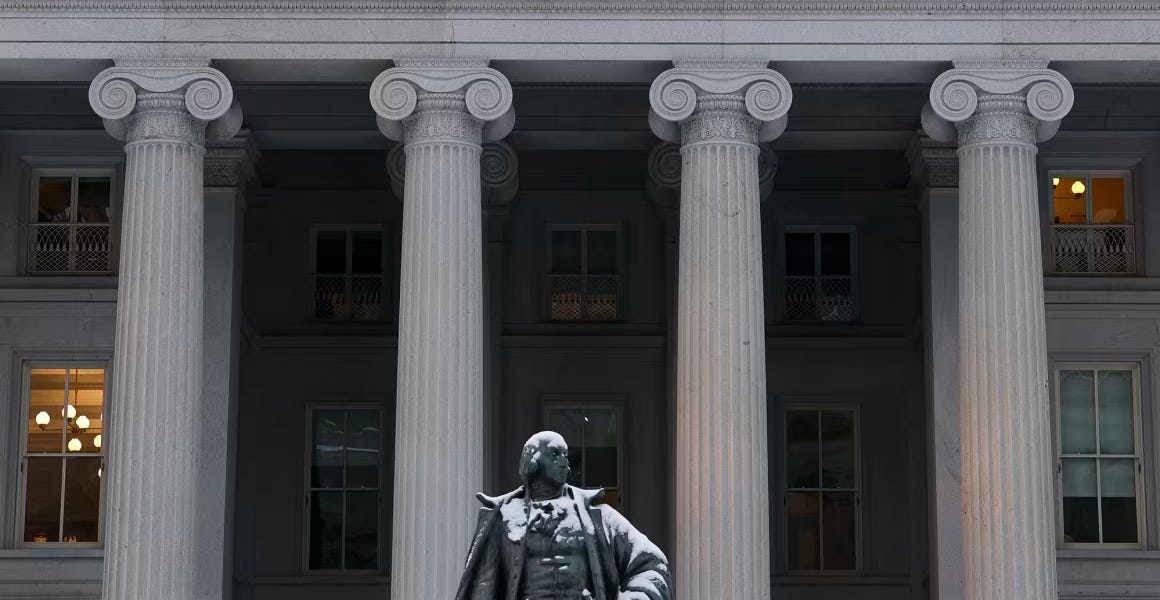 Treasury set to ease Biden-era CAMT rule that could have forced firms like Michael Saylor’s Strategy to pay billions on unrealized Bitcoin gains, as crypto taxation heads to a Senate hearing.
Sources
18 records from 16 domains
waysandmeans.house.gov
brookings.edu
dechert.com
justice.gov
foxbusiness.com
gibsondunn.com
polymarket.com
instagram.com
youtube.com
abcnews.com
katten.com
politico.com
facebook.com
justthenews.com
law.georgetown.edu
whitehouse.gov
Community notes
Spot something off or out of date? Drop a note. Editors review topic notes daily and roll accepted fixes into the explainer — contributors are recognized in the monthly $SQUID drop.
Loading notes…
Help improve this topic
Have a story or tip about this topic? Submit it. See something missing? Leave a note. Editors review daily; accepted submissions and fixes count toward the monthly $SQUID drop.