
Explainer on how the White House shapes U.S. crypto policy, from stablecoins and the CLARITY Act to AI security, prediction markets and UFC‑style spectacle, with a focus on Trump‑era events, ethics, regulation and market implications.
+30 sources across the wider coverage universe
 White House warns staff against Iran war bets after Polymarket traders net $600K on ceasefire timing2026-04
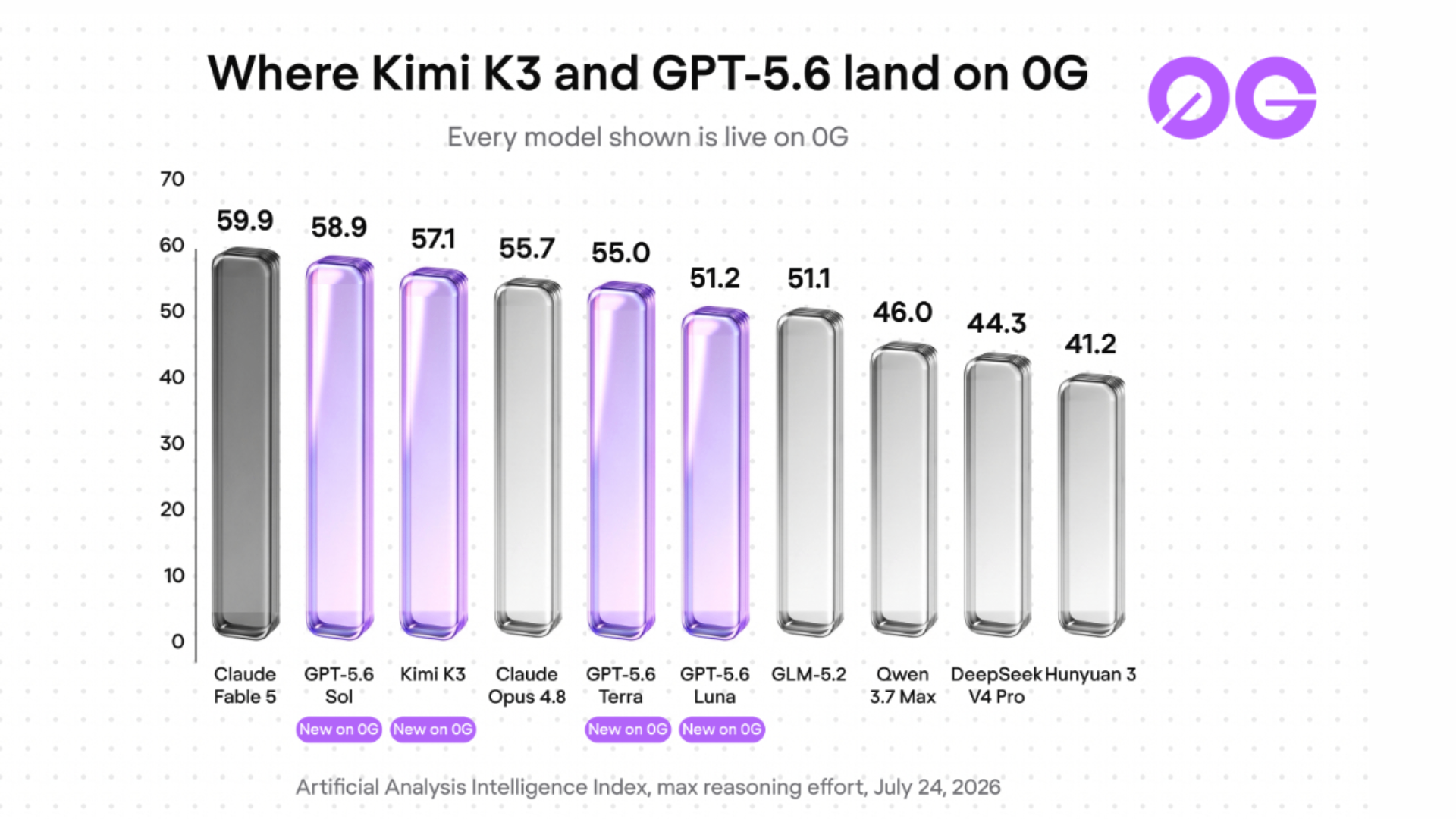 0G added Moonshot's Kimi K3 to its decentralized AI routing network, exposing the Chinese frontier model through a hardware-attested path despite mounting scrutiny from Washington2026-07
 US crypto “Clarity Act” faces new impasse as big banks reject White House compromise on stablecoin rewards, drawing fire from President Trump and casting doubt on the bill’s passage this year2026-03
 White House reportedly made Tether-backed three-year GENIUS Act grace period a red line before Bo Hines joined Tether2026-07
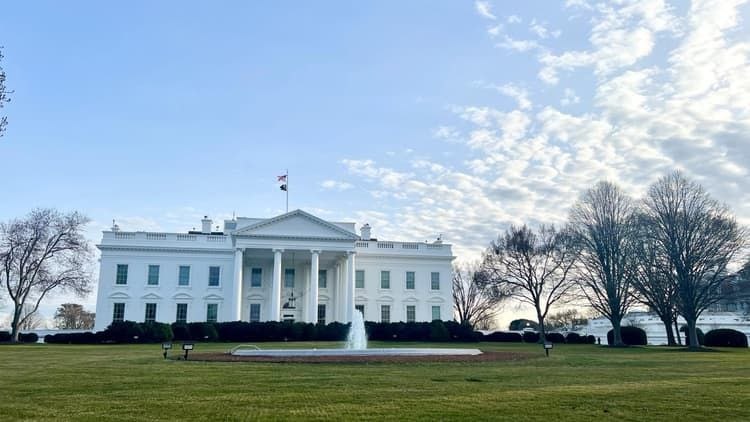 The White House will meet with law enforcement groups to address concerns over illicit-finance provisions as lawmakers push forward with the Clarity Act2026-06
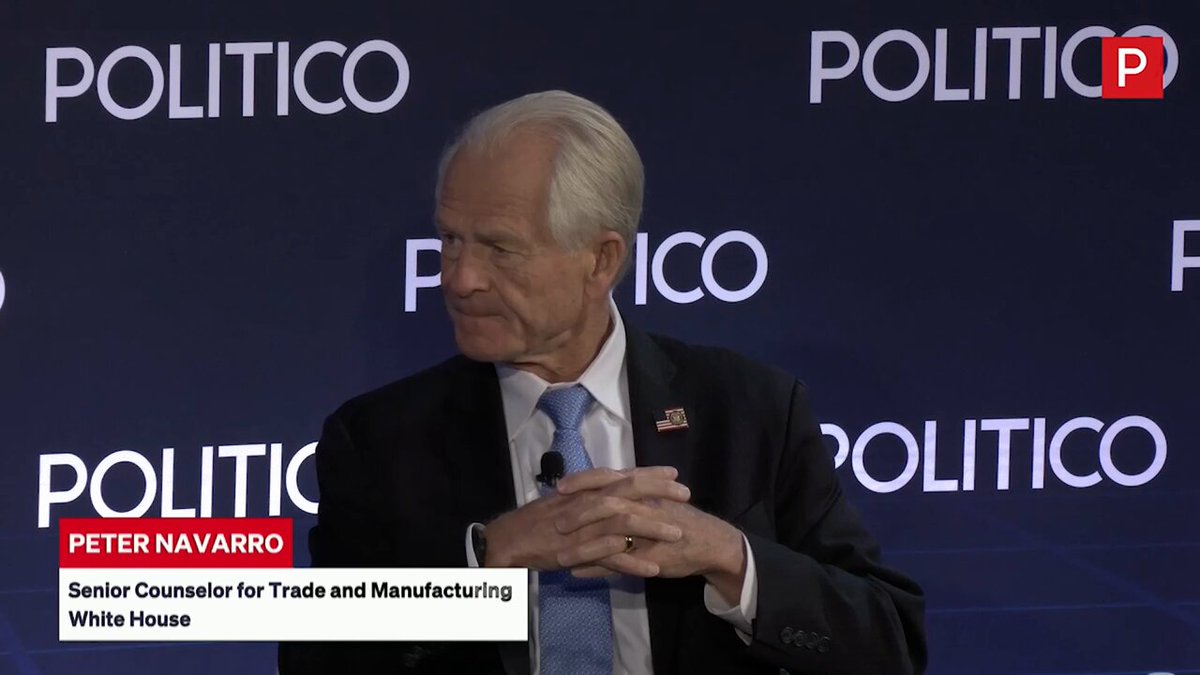 Navarro confirms White House plan to hike global tariff from 10% to 15% is 'in process2026-03
The White House, Crypto, and the Future of U.S. Digital Asset Policy
The U.S. White House is both a physical complex in Washington, D.C., and shorthand for the presidency and its policy‑making apparatus, which leads the executive branch of the federal government. For crypto markets, “the White House” has become a crucial signal for how the United States will regulate digital assets, stablecoins, AI and prediction markets—and, increasingly, a literal stage on which crypto is showcased.
The White House in the U.S. Constitutional System
Understanding what the White House can and cannot do for crypto begins with its place in the U.S. constitutional structure. The federal government is divided into three branches—legislative, executive and judicial—to ensure a separation of powers. Congress, composed of the House of Representatives and the Senate, writes and passes laws, including statutes that define securities, commodities, bank regulation and criminal offenses. The White House sits atop the executive branch, which is responsible for implementing and enforcing those laws, while the judiciary interprets statutes and the Constitution in concrete disputes. For crypto, this means the White House is powerful but not omnipotent: it cannot unilaterally rewrite securities law or create new crimes, but it can shape how existing rules are interpreted and enforced, and it can drive legislative agendas that eventually become binding law.
As both a building and a symbol, the White House has always been more than a private residence. It houses the president’s senior staff and the Executive Office of the President, which includes policy councils, economic advisers, and national security officials who coordinate across agencies. In practice, when headlines say “the White House backs X,” they refer not to the physical mansion but to this broader institutional network. For digital assets, that network includes a growing constellation of crypto‑focused advisers, National Economic Council staff, Office of Science and Technology Policy officials and, in the current administration, a named White House crypto adviser whose public statements now move markets. These actors translate the president’s political priorities into specific instructions for regulators such as the Securities and Exchange Commission (SEC) and the Commodity Futures Trading Commission (CFTC), and into negotiation positions for legislation like the CLARITY Act.
The White House wields distinct tools that matter for crypto. It can issue executive orders and presidential memoranda that direct agencies to study particular risks or coordinate their enforcement posture, as seen in the AI domain. It can appoint the heads of key regulatory bodies—subject to Senate confirmation—and thereby indirectly shape how aggressively the SEC pursues token issuers, or how expansively the CFTC treats crypto derivatives. It can propose legislative language, set deadlines for interagency working groups, and veto or sign bills that emerge from Congress. And it can deploy powerful messaging—from Rose Garden press conferences to social media posts—that frame crypto as either innovation to be nurtured or risk to be contained. Yet the ultimate legal power to define most aspects of digital asset regulation still lies with Congress and the courts, which makes understanding the White House’s constraints as important as understanding its ambitions.
For crypto traders and builders, the White House therefore operates as a kind of macro‑regulatory oracle. When it signals support for a comprehensive market‑structure bill or for a permissive regime for stablecoins, that can unlock industry investment and influence the global positioning of the United States as a crypto hub. When it emphasizes enforcement, consumer protection and national security risks, that can presage more aggressive actions by agencies and a chill across certain business models. Decoding those signals requires situating individual events—such as UFC fighters being paid in a Trump‑linked stablecoin on the South Lawn of the White House—within this broader institutional context.

White House adviser defends Trump's crypto ties after Clarity Act fails in Senate

How the White House Makes Policy for Crypto and Digital Assets
The main channels through which the White House affects crypto are legal, institutional and rhetorical. At the legal level, executive orders and memoranda are the most formal tools. Although they cannot contradict statutes, they can set priorities and processes that materially change how the existing legal framework is applied. The recent executive order on “Promoting Advanced Artificial Intelligence Innovation and Security” illustrates this pattern: it declares a national policy of fostering AI innovation while emphasizing security, and instructs agencies to create voluntary frameworks with AI developers, including mechanisms for early access to frontier models by “trusted partners” to strengthen cybersecurity for critical infrastructure. Similar instruments in the digital asset realm could require agencies to share data, harmonize definitions of digital commodities and securities, or prioritize certain types of enforcement, even without new legislation.
Institutionally, the White House exerts influence by appointing key personnel and steering interagency coordination. The president nominates SEC commissioners, the SEC chair, CFTC commissioners, Treasury officials and banking regulators, all of whom sit at the center of crypto oversight. A White House inclined toward strict investor protection may favor SEC leaders who interpret most tokens as securities under the Howey test, while a more market‑structure‑focused administration may push to empower the CFTC as a primary regulator for spot digital commodities. The Digital Asset Market Clarity Act—commonly known as the CLARITY Act—emerged partly from this institutional tug‑of‑war, aiming to delineate the respective domains of the SEC and CFTC in digital asset markets. White House support or skepticism toward such a bill can determine whether congressional momentum translates into law.
The following simplified table highlights the contrast between what the White House can do directly and what requires Congress or independent regulators in the crypto context.
| Domain | White House Direct Tools | Requires Congress / Independent Agencies |
|---|---|---|
| Defining securities vs. commodities | Influence via appointments and policy guidance | Statutory definitions; SEC and CFTC rulemaking and enforcement |
| Stablecoin legal framework | Support or oppose legislative proposals; sign or veto bills | Payment stablecoin statutes like the GENIUS Act |
| Enforcement intensity | Prioritize certain crimes; coordinate interagency action | DOJ prosecutions; SEC/CFTC cases and settlements |
| AI and cyber defenses | Issue executive orders; coordinate with private sector | Appropriations; structural reforms to security agencies |
In addition to formal structures, the White House shapes crypto through advisory roles. The presence of a dedicated “crypto adviser” within the West Wing, such as Patrick Witt, signals that digital assets are treated as a strategically important policy area rather than a niche issue. Witt has described the CLARITY Act as “pro‑regulatory” and “pro‑enforcement,” framing it as a bill that would both regularize markets and strengthen law enforcement powers. Such messaging not only influences public debate but also frames how negotiators within the administration approach compromises on stablecoin yield, DeFi treatment and ethics guardrails. When an adviser in that role publicly warns that failure to pass CLARITY this year could push comprehensive crypto legislation off the agenda until the next decade, markets take notice—not because the adviser is a legislator, but because they reflect internal White House assessments about political timing and opportunity cost.
Rhetorically, the White House now uses crypto‑inflected events to send broader signals about innovation, national strength and cultural alignment. The staging of a UFC card, branded as the “Freedom 250,” on the White House South Lawn—with fighters’ bonuses paid in a Trump‑family‑linked stablecoin—was not only a sporting event but also a political communication about the administration’s comfort with integrating crypto into national spectacle. At the same time, that event highlights the ethics and conflict‑of‑interest questions that arise when an administration’s policy footprint overlaps with family‑owned digital asset ventures, raising concerns about whether private projects may benefit from public branding and regulatory forbearance. As crypto matures, the White House’s role will increasingly be judged not only on substantive regulation but on whether it maintains institutional norms meant to separate public power from private gain.
Readers aren't clicking White House crypto coverage for policy details — they're tracking a single power transfer: whether crypto industry money and access have permanently displaced Wall Street banks as Washington's dominant financial-sector constituency.
The Trump White House and the New Crypto Moment
The current Trump administration occupies a distinctive place in the evolution of U.S. crypto policy. Earlier in his political career, Donald Trump was openly skeptical of Bitcoin and digital assets. Over time, however, his political apparatus has moved toward a selective embrace of crypto—particularly stablecoins and tokenized fan engagement—framing them as tools for American financial strength and technological leadership. This evolution is visible both in policy initiatives, such as support for the CLARITY Act, and in spectacle, such as the UFC Freedom 250 event at the White House.
One defining feature of this period is the intertwining of the presidency’s public image with Trump‑linked crypto ventures. World Liberty Financial, a Trump family–associated cryptocurrency business, operates the USD1 stablecoin, which is marketed as a fiat‑collateralized token pegged 1:1 to the U.S. dollar. Documentation from a partner platform describes USD1 as backed by corresponding fiat reserves held in custodial accounts, placing it in the category of so‑called “synthetic dollars” designed to track the value of real USD without being legal tender. When UFC fighters at the White House received bonuses in USD1 rather than in traditional U.S. dollars, that decision effectively turned a high‑profile presidential event into a showcase for a private family business. Critics have argued that this blurs the line between public office and private promotion, particularly in a domain—stablecoins—where federal policy is actively being written and where the president’s signature is required to turn bills into law.
The Trump White House’s stance toward legislation adds another layer. The CLARITY Act, which passed the House of Representatives in July 2025, aims to resolve long‑standing jurisdictional friction between the SEC and the CFTC by extending the Commodity Exchange Act framework to certain spot digital commodity intermediaries while preserving SEC authority over digital asset securities. This bill emerged after years of lobbying by major crypto firms, including Coinbase, seeking clearer rules of the road. Yet, in early 2026, Coinbase CEO Brian Armstrong publicly withdrew support for the Senate Banking Committee’s draft, citing concerns with its treatment of stablecoins and other provisions. That move prompted the Committee to postpone a scheduled markup, exposing divisions within the industry and casting doubt on the bill’s near‑term prospects. Within this context, White House crypto adviser Patrick Witt has defended the bill as “pro‑regulatory” and “pro‑enforcement,” signaling the administration’s desire to maintain enforcement muscle even as it supports greater market clarity.
The administration’s politics of timing also matter. According to recent reporting, White House officials had floated July 4—America’s 250th birthday—as a symbolic target date for signing CLARITY into law, positioning it as a patriotic modernization of U.S. financial infrastructure. Yet legislative math makes such a timeline implausible: only a handful of Senate working days remain, committee texts must still be reconciled, ethics disputes over Trump‑related guardrails resolved, a 60‑vote cloture threshold met, and House approval of any final Senate compromises achieved before the president can sign. This tension between aspirational timelines and institutional reality underscores a key theme of the Trump White House’s crypto posture: bold narrative commitments to being “pro‑crypto” and “pro‑innovation” collide with the slow, contested process of U.S. lawmaking.
The administration’s interactions with individual crypto figures further define its image. The most prominent example is Sam Bankman‑Fried, the convicted former FTX CEO who has formally requested a presidential pardon. Public records from the Department of Justice list his clemency petition as “pending,” and White House spokespeople have emphasized that his odds of receiving a pardon are slim. Even so, the very existence of such a petition, directed at a White House that brands itself as more open to crypto than its predecessors, raises questions about how executive clemency might be perceived in an industry where enforcement credibility is crucial. If the White House appears too lenient toward high‑profile offenders, it risks signaling tolerance for misconduct; if it appears excessively punitive, it may dampen legitimate innovation. Navigating this balance is a recurring challenge for any administration engaged with crypto, but especially for one as closely associated with the sector’s cultural and financial elites as the current Trump White House.
Case Study: UFC Freedom 250 and Stablecoins on the South Lawn
The UFC Freedom 250 event at the White House has become a touchstone for understanding how crypto, politics and spectacle intersect in the current era. Billed as a celebration of America’s 250th birthday, the card was staged on the South Lawn, with major UFC stars competing under the banner of “Freedom 250.” The promotion’s social media hype highlighted Crypto.com as the presenting partner and teased questions like “Who will win the CRO bonus?”, underscoring the deep integration of digital asset branding into the event’s marketing. President Trump and UFC leadership framed the night as an “epic celebration” of American history, strength and resilience, blending patriotic imagery with the aesthetics of combat sports and crypto sponsorship.
The financial structure of the event broke new ground. Rather than paying fighter bonuses in U.S. dollars, organizers announced a $250,000 bonus pool denominated in USD1, the Trump‑linked stablecoin issued by World Liberty Financial. USD1 is described in publicly available materials as a fiat‑collateralized stablecoin pegged 1:1 to the U.S. dollar, with each token backed by corresponding fiat reserves. In practice, this means that fighters who won bonuses were paid not in cash they could immediately use anywhere, but in a token whose liquidity, redemption mechanics and regulatory status depend on a private issuer closely tied to the presidential family. Proponents argued that this showcased innovation and gave athletes exposure to digital finance. Critics viewed it as an unprecedented conflation of presidential prestige with a family business operating in a lightly regulated corner of financial markets, especially at a moment when Congress and the administration are actively defining the rules for stablecoins and their yields.
Those ethics concerns did not arise in a vacuum. Stablecoins sit at the center of ongoing legislative and regulatory debates in Washington, particularly around reserve safety, consumer protection and systemic risk. If a White House event effectively advertises or creates demand for a specific stablecoin that might later be subject to regulation, questions naturally follow: Would regulators feel pressure to treat that coin more favorably? Could future enforcement actions be chilled by the fear of political backlash? And what if the coin experiences a depegging or bank‑run‑like event—would the administration face accusations that it had endorsed a risky product to the public? These are not purely hypothetical issues; they echo broader conversations about the marketing of financial instruments from within political institutions and the need for robust ethics rules in an age where digital assets can be minted by, and for, political actors.
Security dimensions intensified the story. Shortly after the event, the FBI disclosed that it had disrupted an alleged plot involving explosive‑laden drones and a sniper attack targeting the White House UFC card. According to officials, the plot raised concerns not only about physical security but also about how high‑profile, crypto‑branded events at symbolic locations might attract both ideological and opportunistic adversaries. The episode intersected with President Trump’s push for a “DronePort” on the roof of a new White House ballroom and bunker complex, which he has described on social media as possibly the most advanced drone defense facility in the world, necessary for protecting Washington, D.C. from modern threats. Court challenges to that construction have focused on historic preservation, separation of powers and spending, but the administration has repeatedly invoked national security, including the need for fortified underground facilities, blast‑resistant construction, and advanced weaponry beneath the East Wing. In this context, a drone plot aimed at a crypto‑sponsored sports event on the South Lawn is more than an isolated security incident; it is part of a broader narrative in which the White House becomes a literal target in the tokenized spectacle economy.
The UFC case study also illuminates how the White House functions as a branding platform for both the United States and private firms. Crypto.com, World Liberty Financial and other digital asset entities did not merely purchase advertising slots; they embedded themselves in an event that blended state symbolism with entertainment and finance. For crypto audiences, this suggests both opportunity and risk. On the one hand, proximity to the White House confers a patina of legitimacy that many projects crave, signaling that digital assets are no longer relegated to the fringes of policy. On the other hand, over‑identification with a particular administration or political brand can backfire, especially in a deeply polarized environment. When the White House changes hands, the same imagery that once signaled alignment with presidential power can be reframed as evidence of capture, favoritism or poor judgment. The UFC Freedom 250 event, with its USD1 bonuses and accompanying controversy, will likely be remembered as an early test case in this evolving dynamic.
Stablecoins, Yield, and the White House Regulatory Agenda
Stablecoins occupy a central place in the White House’s crypto agenda because they sit at the intersection of payments, banking, markets and monetary sovereignty. The first major federal statute to address them comprehensively, known as the GENIUS Act, has been described as the inaugural law to create a holistic regulatory framework for payment stablecoins in the United States. Although details vary by implementation, the GENIUS Act establishes baseline requirements for issuers of payment stablecoins, including reserve composition, redemption rights and oversight by federal or state regulators. It reflects a policy consensus that dollar‑pegged tokens should be treated less like unregulated digital play money and more like narrow‑purpose banks or money‑market funds, with correspondingly stringent safeguards. The White House’s support for such a bill—and its eventual signing—signaled a willingness to bring stablecoins into the regulatory perimeter rather than attempting to ban them outright.
Yet GENIUS did not settle the most contentious question in the stablecoin arena: yield. Should holders of fiat‑backed stablecoins be able to earn interest‑like returns on their balances, either directly from issuers or via exchanges and platforms that pass through a share of the underlying reserve income? Banks have argued that allowing non‑bank issuers and trading platforms to pay stablecoin yield undermines the traditional deposit and savings model, effectively turning stablecoins into shadow bank deposits without equivalent capital and supervisory constraints. Crypto firms counter that yield is essential for competitiveness and for reflecting the real economic value of the Treasury securities and cash equivalents backing many stablecoins. The White House has found itself in the middle, balancing concerns about disintermediation of the banking system with the desire to maintain U.S. leadership in digital finance.
The CLARITY Act’s Senate Banking Committee draft brought this conflict into sharp relief. According to reporting on the draft text, it contains broad language prohibiting exchanges, brokers and affiliated entities from offering yield—directly or indirectly—on stablecoin balances in ways that are economically or functionally equivalent to bank interest. This would effectively close the structural workarounds that allowed platforms like Coinbase to continue passing stablecoin rewards to users even after the GENIUS Act placed restrictions on issuers themselves. One widely circulated explanation of the draft described it as a potential end to passive stablecoin yield on U.S. exchanges if enacted as written, emphasizing that the prohibition is framed expansively to cover creative financial engineering designed to mimic interest without using that label. For the White House, backing such language aligns with a “pro‑enforcement” stance and with bank lobbying priorities, but it risks alienating the very crypto constituencies that have celebrated the administration’s symbolic alignment with digital assets at events like Freedom 250.
Crypto industry pushback has been significant. Coinbase’s withdrawal of support for the Senate version of CLARITY explicitly cited the treatment of stablecoins and related issues as reasons it could not endorse the bill in its current form. That withdrawal, in turn, led the Senate Banking Committee to postpone its markup, revealing both the political fragility of the coalition behind CLARITY and the practical reality that without robust industry backing, complex financial legislation is difficult to pass. For the White House, this episode highlights the trade‑offs inherent in aligning closely with traditional banks on yield issues. While doing so may reduce systemic risk and protect the fractional‑reserve banking model, it can also slow the repatriation of stablecoin activity from offshore venues and encourage users to seek yield in less regulated environments or in decentralized protocols that may be harder to supervise.
The USD1 stablecoin controversy adds a layer of complexity. As a fiat‑collateralized token marketed by a Trump‑family‑linked business, USD1 is conceptually similar to other payment stablecoins that would fall under the GENIUS and CLARITY frameworks. If the White House supports legislation that effectively bans yield on these instruments in regulated U.S. venues, it would also be placing constraints on the future business model of its own family‑associated stablecoin issuer, at least domestically. That fact could be used to argue that the administration is not favoring its own ventures, or conversely, skeptics might worry that enforcement will be uneven, with family‑linked projects receiving softer treatment. Either way, the intersection of personal financial interests and policy design underscores why ethics safeguards, transparency about reserves, and arm’s‑length regulation are central to maintaining trust in stablecoin governance.
- 01stablecoin yield bank standoff↗
Six separate headlines on whether stablecoins can pay yield — and who wins the rule-writing between banks and crypto — drove sustained clicks because readers understood this one clause would determine the economics of U.S. digital dollar infrastructure.
- 02Trump administration crypto pivot
The first-ever White House Digital Assets Summit and the '100 days' retrospective pulled readers wanting confirmation that the regulatory climate had genuinely reversed, not just softened rhetorically.
- 03FIT21 and CLARITY Act passage odds↗
Readers clicked repeatedly on legislative milestone updates because FIT21 and CLARITY represent the first real chance at statutory market-structure rules, making every procedural signal high-stakes.
- 04David Sacks czar appointment and exit
Sacks was the single named official connecting White House power to crypto policy, so both his appointment and his departure under the 130-day federal cap were treated as bellwether events for how durable the administration's commitment would be.
- 05crypto political funding nexus↗
Headlines linking $300M ballroom donations, WLFI, and $26M in Trump-tied political spending revealed readers wanted to understand the transactional architecture behind the policy shift, not just its outcomes.
- 06prediction markets and White House regulation↗
Election prediction market clicks — and the follow-on White House warning about Iran war bets — showed readers tracking whether the administration would greenlight or curtail the fastest-growing crypto use case touching politics directly.
AI, Crypto, and the Executive Branch
Artificial intelligence is increasingly intertwined with crypto markets, from algorithmic trading and on‑chain surveillance to AI‑driven cyberattacks on exchanges and wallets. The White House has taken explicit notice of AI’s dual‑use nature. An executive order on “Promoting Advanced Artificial Intelligence Innovation and Security” articulates a national policy of fostering AI innovation while simultaneously strengthening security. It instructs the Attorney General to prioritize enforcement of federal computer crime and fraud statutes—including 18 U.S.C. 1028 (identity theft), 18 U.S.C. 1030 (computer fraud and abuse) and 18 U.S.C. 1343 (wire fraud)—against actors who use AI to illegally access or damage computer systems or who employ AI agents to obtain data for criminal purposes. These directives are directly relevant to crypto, where AI‑assisted phishing, automated smart‑contract exploitation and credential theft are escalating threats.
The executive order also calls for voluntary frameworks with AI developers that would give selected trusted partners in the federal government early access to “covered frontier models” to promote secure innovation and harden critical infrastructure. If implemented robustly, such arrangements could allow agencies responsible for financial stability and market integrity to test how advanced AI systems might be used to manipulate crypto markets, deanonymize illicit flows or detect systemic vulnerabilities in DeFi protocols. At the same time, early government access to proprietary models raises questions about competitive advantage and surveillance: if the White House, through its agencies, gains privileged insight into AI capabilities, how will it ensure that this knowledge is not used to tilt the playing field toward favored incumbents or to conduct overly intrusive monitoring of blockchain activity?
Beyond regulatory frameworks, the White House is directly engaging with leading AI companies whose technologies underpin both traditional finance and crypto infrastructure. According to reporting confirmed by CNBC, OpenAI CEO Sam Altman has been in ongoing talks with the White House about the possibility of the U.S. government taking an equity stake in OpenAI. Such a stake, if realized, would represent an unprecedented entanglement between the federal government and a frontier AI developer whose models are widely used for coding assistance, trading strategy research, and risk analytics in the crypto sector. From a national security perspective, a government stake could be justified as a way to ensure access to and influence over critical computation. From a market perspective, it could raise concerns about favoritism, conflicts of interest and the concentration of technological power in entities effectively partnered with the state.
The risks of AI misuse for both political and financial targets are vividly illustrated by recent revelations about Meta’s experimental AI support flow on Instagram. Investigative reporting has documented claims by hackers that they were able to hijack high‑profile Instagram accounts—including the archived Barack Obama White House handle—by simply asking Meta’s AI support chatbot to change the accounts’ associated email addresses. In video evidence, attackers demonstrate a conversation where they instruct the AI bot to “just link my new email address” to a target username, after which the bot proceeds to update the account’s contact details, granting the attacker control. This episode shows how AI systems, when not properly constrained, can be socially engineered into performing sensitive account‑level actions, effectively automating what would otherwise require more sophisticated hacking. For crypto, the parallel danger is that AI‑mediated support flows at exchanges or wallet providers might be tricked into resetting credentials, disabling two‑factor authentication, or authorizing withdrawals.
The broader administrative state tasked with cyber defense has also been under strain. While not detailed in the cited search results, public reporting has described how staffing and budget cuts, combined with shifting priorities, have weakened agencies like the Cybersecurity and Infrastructure Security Agency (CISA) and sidelined them from central roles in coordinating AI‑related cybersecurity planning from the White House. Against this backdrop, the executive order’s call for prioritizing AI‑enabled cybercrime enforcement is both necessary and incomplete. Crypto markets rely on a resilient, secure digital infrastructure, and the White House’s ability to mobilize that infrastructure—through funding, coordination and policy direction—will shape the risk profile of everything from centralized exchanges to permissionless DeFi protocols.
Prediction Markets, Sports Trading, and Executive Power
Prediction markets sit at the intersection of speech, finance and gambling, making them a particularly tricky domain for regulation and for White House policy. The Trump administration has already confronted this space in multiple ways. One strand involves general prediction markets that allow trading on political, economic or societal outcomes. According to contemporary reporting, the administration proposed new federal regulations for prediction markets that appeared to leave much of the booming industry intact, suggesting a relatively hands‑off approach as long as certain guardrails were observed. Another strand involves sports‑related event contracts, where distinctions between betting, hedging and investment can be even blurrier.
On this latter front, the CFTC has recently moved to formalize rules that would allow prediction markets to offer the functional equivalent of sports betting nationwide, subject to specific restrictions. In a 267‑page proposal, the Commission outlines new rules that would permit contracts tied to sports events, including final scores, point differentials, win outcomes, tournament progression, player statistics and season performance metrics. However, it would prohibit contracts referencing micro‑events, such as a single pitch in baseball or a single foul in basketball, as well as trades related to physical altercations, injuries, officiating calls, and pre‑collegiate sports events. The proposal also maintains a ban on event contracts referencing games of pure chance, like roulette, and on those involving assassination or warfare, citing national security and public interest concerns. As with other aspects of market structure, the White House plays a key role by reviewing, supporting or opposing such regulatory proposals and by shaping the public narrative around them.
Some of these contracts, and many of their more experimental variants, are built on or intersect with crypto rails. Blockchain‑based prediction protocols allow pseudonymous users to wager on real‑world events using tokens, often without going through registered intermediaries. The Trump White House’s simultaneous openness to prediction markets and rhetorical support for law enforcement thus creates a complex signaling environment. On one hand, there is enthusiasm about using markets to aggregate information and to position the United States as a hub for innovative financial products. On the other, there are concerns about insider trading, market manipulation and the potential for these platforms to become vehicles for political corruption.
These tensions surfaced in a recent legislative proposal, not captured in the search results but described by contemporary coverage, that would ban insider trading on prediction markets for many categories of federal officials while notably excluding White House staff. For crypto audiences, such carve‑outs are a reminder that ethics rules often lag behind technological innovation, and that the proximity of prediction markets to politics can generate unique conflicts of interest. If White House aides can legally trade on markets predicting policy outcomes they help shape, while members of Congress cannot, perceptions of fairness and integrity may suffer. This is one area where clearer, more uniform standards across branches of government would benefit both democratic legitimacy and market confidence.
The White House’s review of the CFTC’s sports trading proposal, and President Trump’s public support for centralized federal control over this domain, underscore another theme: executive power is increasingly exercised through gatekeeping over rulemakings at independent commissions. While the CFTC is formally independent, its leadership and agenda are influenced by the administration that appoints its commissioners and sets broad policy priorities. For crypto‑native prediction markets, which often operate at the edges of regulatory visibility, the message is that the era of regulatory ambiguity is closing. How the White House chooses to balance innovation, consumer protection and moral hazard in this space will shape whether on‑chain prediction platforms can operate openly in the U.S. or remain relegated to gray or offshore jurisdictions.
Security, Symbolism, and the Tokenized White House
The White House has always been a symbol as much as a workplace: a visual shorthand for American power, continuity and vulnerability. In the crypto era, that symbolism has become entangled with new forms of risk and representation. The FBI’s disruption of an alleged explosive drone and sniper plot targeting the UFC Freedom 250 event is a case in point. The target was not just a sporting match but a crypto‑branded spectacle on the South Lawn, featuring fighters whose bonuses were denominated in a Trump‑linked stablecoin. For adversaries, striking such an event could offer a potent combination of physical harm, psychological impact and financial symbolism—attacking both the seat of government and a high‑visibility showcase of digital asset culture.
President Trump’s “DronePort” proposal emerges against this backdrop. In public posts and renderings, he has described a new rooftop drone facility atop a planned White House ballroom as perhaps the most sophisticated in the world, essential for safeguarding Washington, D.C. against contemporary threats. The associated construction proposal, which has already led to the dismantling of the existing East Wing, envisions a vast underground complex including a bunker, hospital, advanced weaponry and other security features that no previous president has requested. Legal challenges argue over the scope of executive authority to reshape a historic building and allocate resources; in response, the administration has repeatedly cited national security, including the need for blast‑resistant construction and enhanced protection for visiting dignitaries. In the age of drone‑enabled attacks and AI‑assisted targeting, there is a non‑trivial security rationale for updated physical defenses. Yet the scale, secrecy and personalization of the project raise questions about transparency, accountability and precedence.
Crypto intersects with these security narratives in several ways. First, digital assets form part of the financial substrate of both attackers and defenders. Ransomware groups, sanctions evaders and terrorist organizations have used cryptocurrencies to move and launder funds, while law enforcement agencies increasingly use on‑chain analytics to trace and seize those flows. Second, tokenized fan communities and on‑chain governance systems can amplify political messages and coordinate real‑world actions at a speed and scale that traditional organizations struggle to match. A high‑profile White House event that explicitly caters to such communities—through stablecoin payouts, NFT ticketing, or token‑gated access—may therefore attract a different class of attention, including from actors who see disrupting or co‑opting those events as symbolically valuable.
The pardoning power adds another symbolic layer. Sam Bankman‑Fried’s formal application for clemency, and the White House’s public insistence that his chances are slim, highlight the executive’s unique authority to override the outcomes of judicial processes in individual cases. For crypto markets, which have suffered reputational damage from high‑profile frauds, the expectation is that serious offenders will face meaningful consequences. A perception that the White House might selectively pardon or commute sentences for well‑connected crypto figures could erode that expectation and invite moral hazard. At the same time, the clemency process allows for correction of miscarriages of justice, and any administration must weigh case‑specific facts against broader policy implications. The current White House’s cautious rhetoric on Bankman‑Fried underscores an awareness of these stakes.
Finally, the White House continues to function as a stage for global diplomacy and soft power, with events such as state visits from figures like King Charles underscoring its ceremonial role. Crypto branding layered onto such events—for example, if stablecoin issuers or exchanges were to sponsor associated cultural performances—would raise thorny questions about the commercialization of diplomacy and the neutrality of U.S. state symbolism. As digital assets become more embedded in culture, the line between acceptable sponsorship and inappropriate co‑option of national symbols will need to be navigated carefully, ideally through clear ethics guidelines informed by both security and reputational considerations.
- 2024-05regulatory
FIT21 passes House; White House declines veto threat
- 2024-11governance
David Sacks named White House AI and Crypto Czar
- 2025-01milestone
First-ever White House Digital Assets Summit
- 2025-01regulatory
White House releases digital asset report proposing Bitcoin strategic reserve
- 2025-03regulatory
Senate votes to repeal IRS crypto reporting rule; White House signals support
- 2025-05governance
David Sacks exits after 130-day federal cap, moves to co-chair PCAST
- 2025-06regulatory
Coinbase exits CLARITY Act talks; White House calls it a 'rug pull'
GENIUS Act signed; CLARITY Act stablecoin yield terms still contested
How Crypto Markets Should Read “White House Risk”
For traders, builders and institutional allocators, “White House risk” has become an important component of the U.S. crypto landscape. This concept encompasses not only the immediate policy choices of the sitting administration but also the stability and predictability of those choices over time. One axis of White House risk is regulatory direction: whether the executive branch will lean toward enforcement‑first approaches, emphasizing fraud, consumer protection and national security, or toward innovation‑friendly frameworks that prioritize clarity and competitiveness. The executive order on AI, with its dual emphasis on innovation and security, exemplifies an attempt to straddle this line. The administration’s support for CLARITY, framed as “pro‑regulatory” and “pro‑enforcement,” signals a similar duality in the crypto space.
Another axis is personnel risk. Because the White House nominates the heads of agencies like the SEC and CFTC and fills key Treasury posts, shifts in administration can overhaul the regulatory ecosystem even without new statutes. Markets watch these appointments closely, treating them as forward indicators of enforcement intensity and interpretive stances on core questions like whether major tokens are securities or commodities. The CLARITY Act is, in part, an attempt to reduce this personnel‑driven volatility by codifying the boundaries between the SEC and CFTC, but as long as the bill remains stalled in the Senate, agency leadership will continue to wield considerable discretion. Crypto participants therefore track both legislative developments and White House nomination strategies as intertwined drivers of regulatory trajectory.
A third axis involves ethics and institutional integrity. The entanglement of the White House with Trump‑linked crypto businesses, exemplified by the USD1 stablecoin bonuses at the UFC Freedom 250 event, raises concerns about conflicts of interest and the impartiality of future regulation. Similarly, legislative proposals that carve out exceptions for White House staff from insider trading bans on prediction markets, even as they restrict other federal officials, can create perceptions of unfairness and political capture. For global institutional investors assessing U.S. regulatory risk, the question is not only whether the United States is “pro‑crypto” or “anti‑crypto” but also whether its policy‑making process is seen as principled and predictable. Weaknesses in ethics regimes can be as destabilizing as aggressive enforcement, because they invite sudden reversals, scandals and legal challenges.
White House risk also interacts with broader macro and geopolitical dynamics. The GENIUS Act and CLARITY debates occur against a backdrop of competition with other jurisdictions—such as the European Union, the U.K., Singapore and the UAE—that have adopted or are adopting comprehensive crypto frameworks. If U.S. policy is seen as overly restrictive on issues like stablecoin yield, DeFi and AI‑enabled innovation, capital and talent may flow elsewhere, impacting valuations of dollar‑pegged assets and U.S.‑centric projects. Conversely, if the United States is perceived as lax on enforcement—especially in the wake of high‑profile frauds like FTX—its reputation for financial integrity could be damaged, potentially undermining the dollar’s soft power and motivation for other countries to accept U.S. compliant stablecoins. The White House sits at the nexus of these tensions, shaping whether the U.S. retains leadership in setting global norms or cedes that role to others.
Finally, markets must account for temporal risk: the gap between ambitious policy timelines and legislative reality. The White House’s aspirational goal of signing the CLARITY Act on July 4 as a symbolic “America’s 250th birthday” present collides with the complexities of the Senate calendar, inter‑committee negotiations, ethics disputes over Trump‑related provisions, and the need to secure filibuster‑proof support. Delays can create periods of heightened uncertainty where regulatory agencies continue to operate under ambiguous mandates, leading to sporadic enforcement that may appear inconsistent. During such periods, crypto markets may experience increased volatility as participants attempt to front‑run potential outcomes or hedge against adverse scenarios. Understanding these temporal dynamics is part of reading White House risk correctly: promises of imminent clarity should be discounted unless backed by realistic legislative pathways.
Conclusion
The White House plays a multifaceted role in the crypto ecosystem, combining formal powers of appointment, agenda setting and executive action with informal influence over narratives, ethics norms and security posture. Structurally, it operates within a system of separated powers that renders it both potent and constrained: it cannot legislate definitions of securities or commodities, but it can shape how agencies interpret and enforce those definitions, and it can drive or stall legislative initiatives like the GENIUS and CLARITY Acts. Symbolically, the White House has now become a literal stage for crypto, as evidenced by the UFC Freedom 250 event, where fighters received bonuses in a Trump‑linked stablecoin on the South Lawn even as Congress debates how to regulate such instruments. This intertwining of state symbolism and digital finance carries both opportunities for mainstreaming and risks of conflict of interest.
Substantively, the administration’s policy posture reflects a balancing act. On stablecoins, it has supported bringing issuers into a regulated framework while flirting with restrictions on yield that align with bank interests but threaten some crypto business models. On AI, it has issued an executive order that recognizes the need for innovation while emphasizing enforcement against AI‑enabled cybercrime, a stance with direct implications for crypto infrastructure security. On prediction markets, it has overseen regulatory proposals that move toward formalizing sports‑related trading while grappling with ethics issues such as insider trading by government officials. On security, it has confronted drone plot threats to White House crypto events and advocated for ambitious physical upgrades, like a DronePort and expanded bunker complex, in the name of national defense. Each of these domains reveals a White House struggling to reconcile enthusiasm for innovation, political theater and national prestige with the demands of rule‑of‑law governance and long‑term institutional credibility.
For the crypto industry and its observers, the net lesson is that White House signals must be interpreted with nuance. A UFC event on the South Lawn may suggest cultural acceptance but says little about the fine print of stablecoin yield restrictions. A crypto adviser’s rhetoric about being “pro‑enforcement” may indicate a willingness to tackle fraud but also foreshadow aggressive actions against business models that blur lines between banking and tokens. A pardon request from a disgraced exchange founder, publicly dismissed as unlikely, still reminds markets that executive clemency exists as a wildcard factor in individual enforcement trajectories. And a proposed government stake in an AI giant like OpenAI hints at deeper entanglements between the state and the computational infrastructure upon which future crypto trading, compliance and security tools will be built. Navigating this landscape requires more than headline‑driven reactions; it demands a systematic understanding of how the White House operates, what it values and how it is constrained.
Outlook
Looking ahead, the relationship between the White House and crypto is likely to become more, not less, complex. Several trajectories stand out. First, the fate of the CLARITY Act will be pivotal. If it passes in some form, with or without stringent stablecoin yield restrictions, the balance of power between the SEC and CFTC in digital asset markets will be redefined, and the White House will have to implement that balance through appointments and guidance. If it stalls indefinitely, as some fear, the burden of interpretation will fall back on agencies and courts, making personnel and enforcement choices even more consequential. Second, AI’s integration into both crypto innovation and cybercrime will deepen. Future executive actions are likely to expand on the existing AI order, potentially introducing more detailed requirements for frontier model access, auditability and integration into financial supervision. Crypto firms that build AI into trading, compliance and security will need to track these developments closely.
Third, the White House’s use of cultural events and symbolism will continue to matter. Whether through future sports spectacles, state visits with embedded tech demonstrations, or public‑private partnerships on digital infrastructure, the administration will keep using the White House as a communications platform. The challenge will be to do so without crossing ethics lines or creating perceptions that public power is being leveraged for private gain, particularly in areas like stablecoins where Trump‑linked ventures are active. Finally, security considerations—physical, cyber and informational—will remain central. The rise of drone threats, AI‑enabled account takeover techniques like those exploited against Meta’s systems, and the enduring risk of financial crime in the crypto ecosystem guarantee that the White House will treat digital assets as both an opportunity and a vulnerability. For the crypto community, engaging constructively with this evolving executive landscape—through transparent lobbying, technical collaboration on security, and rigorous self‑regulation—will be essential to ensuring that the “White House risk” embedded in digital asset valuations trends toward stability rather than volatility.
Latest White House news
Sources
19 records from 14 domains
fortune.com
instagram.com
eco.com
x.com
facebook.com
foxnews.com
fintechweekly.com
journals.library.columbia.edu
whitehouse.gov
paulhastings.com
404media.co
usatoday.com
axios.com
house.gov
Community notes
Spot something off or out of date? Drop a note. Editors review topic notes daily and roll accepted fixes into the explainer — contributors are recognized in the monthly $SQUID drop.
Loading notes…
Help improve this topic
Have a story or tip about this topic? Submit it. See something missing? Leave a note. Editors review daily; accepted submissions and fixes count toward the monthly $SQUID drop.