
Explainer on SEC Chair Paul Atkins’ crypto agenda, covering token taxonomy, safe harbors, GENIUS Act stablecoins, Project Crypto, CLARITY/PARITY bills, SEC–CFTC coordination, and implications for DeFi and onchain markets.
+8 sources across the wider coverage universe
 SEC launches “Material Matters” podcast, signaling softer crypto stance as Atkins, Peirce, and Uyeda push for pro-innovation policies and clearer rules2026-04
 SEC Chair Paul Atkins backs CFTC Chairman Michael Selig amid concerns the agency lacks resources to oversee booming prediction markets and future crypto regulation efforts2026-06
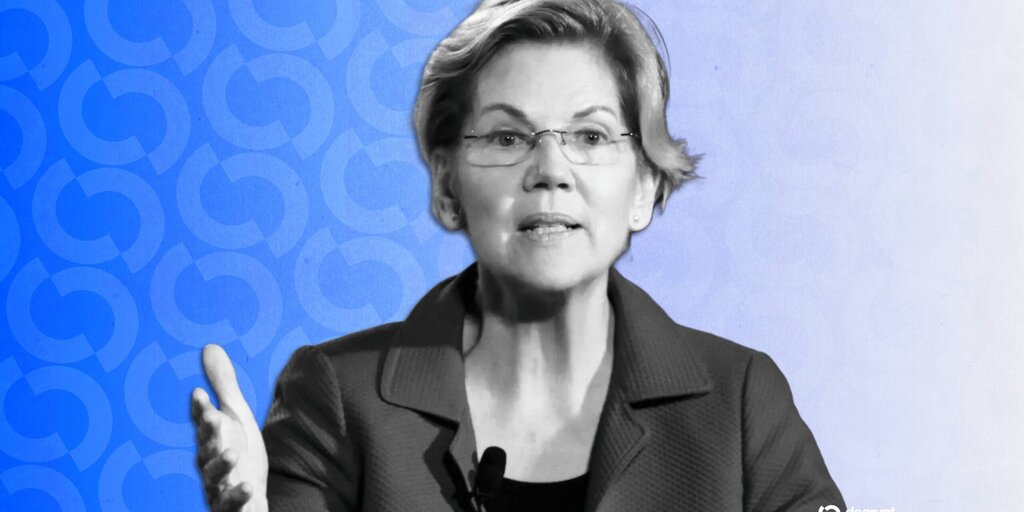 Elizabeth Warren accuses SEC Chair Paul Atkins of misleading Congress over declining enforcement actions, raising concerns about investor protection2026-04
 SEC chair Atkins says agency is modernizing rules to move U.S. markets onchain2026-07
 SEC enforcement chief resigned after clashing with Atkins over softened Justin Sun, Musk settlements2026-03
 SEC’s Paul Atkins says turf wars between SEC and CFTC are ending as new coordination on definitions, oversight, and data sharing aims to deliver clearer, streamlined rules for market participants2026-03
Paul Atkins and the SEC’s Crypto Reset: An Evergreen Guide
Paul S. Atkins is the current Chair of the U.S. Securities and Exchange Commission (SEC), appointed under President Donald J. Trump, and has become one of the most consequential regulators for crypto, DeFi, tokenization and onchain markets in the United States. His tenure marks a sharp pivot from an enforcement-first posture toward a more permissive, rulemaking-driven framework that aims to clarify when digital assets are securities, how token projects can raise capital, and how blockchain-based market infrastructure should be regulated.
Atkins’ SEC sits at the center of a broader policy realignment that includes Trump-era executive orders on digital assets, the GENIUS Act stablecoin law, pending tax and market-structure legislation in Congress, and a coordinated agenda with the Commodity Futures Trading Commission (CFTC). Under his leadership, the Commission has launched a formal token taxonomy, floated safe harbor concepts for token offerings, supported congressional efforts such as the CLARITY Act, and opened the door to onchain trading of tokenized securities through an “innovation exemption,” even as critics in Congress warn that investor protection and enforcement may be weakening. For crypto builders, DeFi protocols, exchanges, and institutional investors, understanding Atkins’ background, his regulatory philosophy, and the concrete rule changes now in motion has become essential to navigating the evolving U.S. landscape.
Who Is Paul S. Atkins?
Career background and earlier SEC role
Paul S. Atkins is not a newcomer to the SEC or to securities regulation more broadly. He previously served as a Commissioner of the SEC from 2002 to 2008, having been appointed by President George W. Bush, during a period that spanned the implementation of Sarbanes–Oxley reforms and the early growth of electronic trading platforms. During that earlier tenure, Atkins developed a reputation as a deregulatory conservative, skeptical of what he saw as overly prescriptive rules and supportive of market-based solutions, traits that would later shape his approach to digital assets and financial innovation. His long-standing focus on cost–benefit analysis, disclosure rather than merit regulation, and competitive capital markets has made him a familiar figure in debates over how far the SEC should go in reshaping emerging markets, including crypto.
After leaving the Commission in 2008, Atkins remained active in policy circles and advisory roles, including consulting on financial regulatory issues and participating in industry think tanks that often advocated for lighter-touch regulation and a more restrained SEC. This background positioned him as a natural ally for a Trump administration eager to frame digital assets as an engine of American competitiveness rather than purely a source of consumer risk. By the time crypto markets had matured into a multi-trillion-dollar asset class and decentralized finance protocols were beginning to challenge traditional intermediaries, Atkins had accumulated both the institutional memory and political capital necessary to redirect the SEC’s trajectory.
Return to the SEC as Chair under Trump
Atkins’ return to the SEC came as part of a broader restructuring of financial regulation under President Donald J. Trump’s second term. He was nominated on January 20, 2025, confirmed by the U.S. Senate on April 9, 2025, and sworn in as the 34th Chairman of the SEC on April 21, 2025. His appointment was widely understood as a deliberate break with the enforcement-centric posture of his predecessor, Gary Gensler, whose tenure was marked by aggressive litigation against crypto exchanges, issuers, and decentralized platforms under expansive interpretations of the Howey test. The new Chair inherited a docket crowded with crypto-related enforcement actions, contested rulemakings, and high-stakes litigation that had left many in the industry uncertain about how to operate in the U.S. without triggering securities-law liability.
From his earliest public statements as Chair, Atkins emphasized that his goal was not to “deregulate” crypto entirely, but rather to bring what he called a rational, principled, and coherent approach to digital assets within the SEC’s statutory mandate. He signaled openness to revisiting key staff guidance and no-action positions, to narrowing the range of tokens classified as securities, and to using formal rulemaking rather than ad hoc enforcement to clarify how decades-old securities laws should apply to blockchain-based projects and markets. That orientation set the stage for a series of moves—rescinding controversial staff bulletins, launching a Crypto Task Force, and unveiling a token taxonomy—that collectively amount to a regulatory reset for the sector.

SEC launches “Material Matters” podcast, signaling softer crypto stance as Atkins, Peirce, and Uyeda push for pro-innovation policies and clearer rules
The Policy Context: From Gensler-Era Enforcement to an Atkins Crypto Reset
The enforcement-heavy approach before 2025
To understand why Atkins’ tenure represents such a break, it is important to recall the SEC’s stance on crypto under Chair Gary Gensler. Gensler’s Commission leaned heavily on the Howey test, a 1946 Supreme Court case defining an “investment contract,” to argue that most token distributions, exchange operations, and staking programs involved securities offerings and thus required registration or exemptions. The agency pursued enforcement actions against major platforms, including a high-profile case against Coinbase, and insisted that trading venues listing tokens deemed securities must register as national securities exchanges or alternative trading systems (ATSs), often without providing workable paths to do so. Critics in the industry and in some corners of Congress characterized this as “regulation by enforcement,” arguing that the SEC had not adopted clear rules or safe harbors tailored to decentralized networks and onchain markets.
This enforcement-heavy posture had several practical consequences. First, it pushed many token projects and trading venues offshore, where they sought more certain regulatory environments, particularly in jurisdictions that had already enacted dedicated digital asset statutes or licensing regimes. Second, it raised legal and operational risks for banks and custodians considering entering the crypto space, particularly after the SEC issued Staff Accounting Bulletin 121 (SAB 121), which required public companies safeguarding crypto assets for customers to treat those assets as liabilities on their balance sheets, raising capital and accounting burdens. Third, it created a chilling effect on tokenization of traditional securities and real-world assets, since issuers perceived the SEC as skeptical of onchain experimentation and unlikely to grant exemptions or no-action relief.
Trump’s digital asset executive order and policy vision
The policy environment began to shift with President Trump’s executive order on “Strengthening American Leadership in Digital Financial Technology,” signed on January 23, 2025. That order articulated a national strategy that explicitly framed digital assets as a domain in which the United States should lead, not merely react, and it laid out several concrete initiatives meant to support the crypto industry while maintaining some guardrails. Among these, the order prohibited the development of a U.S. central bank digital currency (CBDC), citing concerns about financial stability, privacy, and potential crowding out of private-sector innovation. In place of a CBDC, it emphasized the role of dollar-backed stablecoins in preserving U.S. monetary sovereignty on global blockchain networks, signaling political support for privately issued but tightly regulated digital dollars.
The executive order also established a Presidential Working Group on Digital Asset Markets, chaired by David Sacks in his role as Special Advisor for AI and Crypto, and tasked it with proposing a federal regulatory framework for digital assets—including stablecoins—within 180 days. It further called for the creation of a “National Digital Asset Stockpile” of seized cryptocurrencies, framed as a strategic resource to enhance U.S. competitiveness in global finance, and directed agencies to ensure that individuals and businesses could access open blockchain networks and banking services without undue restrictions. In practice, these directives signaled that the White House expected agencies like the SEC, CFTC, and Treasury to recalibrate their approaches away from implicit hostility and toward structured engagement with the ecosystem.
Appointment of Atkins and early moves at the SEC
When Atkins took over the SEC in April 2025, some of the executive order’s priorities were already being reflected in the agency’s actions. On the same day the order was signed, the SEC rescinded SAB 121, removing a major accounting obstacle that had discouraged banks and other institutions from offering crypto custody services. The SEC then launched a dedicated Crypto Task Force on January 21, 2025, led by Commissioner Hester Peirce, with a mandate to clarify how federal securities laws apply to crypto assets and to recommend policy measures that would both foster innovation and protect investors. According to the SEC, the Task Force’s remit spans assets often referred to as digital assets, crypto assets, cryptocurrencies, coins, tokens, and even protocols themselves, with an emphasis on drawing clear regulatory lines and crafting tailored disclosure frameworks.
Over the course of 2025, the Crypto Task Force convened a series of public roundtables on topics ranging from how securities laws should apply to digital assets, to the regulation of crypto trading platforms, to custody of crypto assets, tokenization of real-world assets, and regulatory paths for decentralized finance. These dialogues informed the Commission’s gradual shift away from blanket enforcement toward more nuanced guidance and rulemaking. In February 2025, the SEC dismissed its civil enforcement action against Coinbase, a symbolic move that underscored the agency’s desire to reset its relationship with major crypto intermediaries. Shortly thereafter, former Acting Chair Mark Uyeda announced that the SEC would not require crypto firms to register as alternative trading systems as had been implied under earlier guidance, reducing regulatory burdens and opening space for new market-structure proposals. Taken together, these steps laid the groundwork for Atkins to advance a more systematic rethinking of how securities law should apply in the age of blockchain and AI.
Readers click Atkins not for ideology but for delivery schedules — the top-clicked stories are all about whether his policy pivots produce concrete mechanisms (innovation exemption timing, taxonomy framework, SEC-CFTC harmonization portal) rather than speeches, revealing a market audience stress-testing regulatory promises against institutional follow-through.
Token Taxonomy and the Safe Harbor Vision
The new token categories and narrowing the securities perimeter
One of Atkins’ most consequential initiatives for the crypto industry is the SEC’s new token taxonomy and associated investment contract interpretation, announced in remarks at the DC Blockchain Summit. In that speech, Atkins declared that the SEC’s longstanding failure to provide clarity on when a crypto asset is a security was finally over, and he outlined a framework that carves digital assets into four categories that are not, in themselves, deemed securities: digital commodities, digital collectibles, digital tools, and payment stablecoins issued in compliance with the GENIUS Act. With those four categories defined, the only category of crypto asset that remains squarely within the securities perimeter is “digital securities,” namely traditional securities that are tokenized on a blockchain or other distributed ledger.
This taxonomy represents a significant narrowing of the SEC’s claims over the crypto asset landscape. Under Atkins’ interpretation, many tokens that had previously existed in a gray area—such as governance tokens, utility tokens used to access network services, or protocol-level rewards—can now qualify as digital commodities or tools rather than securities, provided they are not sold in a way that creates an investment contract. At the same time, the taxonomy acknowledges that the method of offering and sale still matters: even a crypto asset that is not a security in and of itself can be pulled into the securities regime if it is offered and sold as part of an arrangement that meets the Howey test. By distinguishing the underlying asset from the surrounding contractual promises, Atkins aims to return the Commission, in his words, to its core mission of regulating securities transactions, rather than attempting to regulate “everything” built on or around blockchain technology.
Reframing Howey and the “end” of the investment contract
A central innovation in Atkins’ approach is his attempt to clarify not only when an investment contract begins, but when it ends. The Howey test, which asks whether there is an investment of money in a common enterprise with a reasonable expectation of profits to be derived from the efforts of others, has often been applied to token sales on the basis that purchasers rely on the issuer’s ongoing managerial or entrepreneurial efforts. However, Atkins argues that the representations or promises that generate reliance under Howey must be explicit and unambiguous with respect to the essential managerial efforts the project team intends to undertake. In other words, vague optimism or generalized statements about a project’s potential should not be enough to transform a token distribution into a securities offering; what matters is whether the issuer has made clear, specific commitments that purchasers reasonably rely on.
Equally important, Atkins posits that at some point the investment contract relationship can come to an end, even if the tokens themselves continue to trade or be used on a network. His interpretive framework contemplates circumstances in which the issuer has completed, or permanently ceased, all essential managerial efforts that it promised under the investment contract, such that ongoing token transfers no longer involve an expectation of profits based on the issuer’s work. At that point, the tokens may continue to exist as digital commodities, tools, or collectibles, but without being tethered to the securities laws, at least insofar as they are not being sold in new investment contracts. This concept of “contract termination” offers a potential path for projects to evolve from securities-regulated fundraises into genuinely decentralized networks, an idea that had been sketched in earlier proposals by Commissioner Peirce but now has more formal backing from the Chair’s office.
Startup and fundraising exemptions for token projects
In conjunction with the token taxonomy, Atkins has outlined what he describes as potential safe harbors or exemptions to give crypto innovators bespoke pathways to raise capital in the United States while providing appropriate investor protections. The first of these would be a “startup exemption,” envisioned as a time-limited registration exemption for offerings of investment contracts involving certain crypto assets. Under this concept, developers would have up to four years to raise a modest amount of capital, perhaps around \( \$5 \) million, while they work toward network maturity and decentralization. This exemption would be non-exclusive, meaning that traditional exemptions under the federal securities laws would remain available, and it would require principles-based disclosures about the investment contract and the underlying crypto asset, akin to the whitepapers commonly used in token projects, made publicly available online.
A second proposed avenue is a “fundraising exemption,” which would function as a new offering exemption for larger investment-contract raises tied to crypto assets. Under this framework, entrepreneurs could raise up to a significantly higher threshold, for example \( \$75 \) million in any twelve-month period, while still retaining access to other exemptions. Issuers relying on this exemption would file a disclosure document with the SEC, including the same principles-based disclosures as in the startup exemption, along with a discussion of the issuer’s financial condition and financial statements. These requirements echo the kind of information investors expect in traditional offerings but are adapted to the realities of token projects, where network metrics and protocol design may be as important as corporate balance sheets. Both exemptions are framed as proposals that the Commission expects to release for public comment, rather than final rules, underscoring the iterative nature of this regulatory shift.
Investment contract safe harbor and relation to Peirce’s Safe Harbor 2.0
The third pillar in Atkins’ safe harbor vision is an “investment contract safe harbor” from the definition of security for certain crypto assets, applied at the point when the issuer has fulfilled its essential promises. This safe harbor would provide a rule-based standard under which issuers and market participants could determine with greater certainty when a crypto asset is no longer subject to federal securities laws, even if it was initially distributed as part of an investment contract. The idea is to align this safe harbor with the principles articulated in the Commission’s interpretive release on token taxonomy, thus creating a coherent framework that connects offering-phase compliance with end-state decentralization. Importantly, Atkins emphasizes that issuers would not be required to rely on this framework; it would be an optional path for those that wish to transition out of securities regulation as their networks mature.
Commissioner Hester Peirce’s earlier “Token Safe Harbor Proposal 2.0,” released in 2020, provides an important antecedent to Atkins’ thinking. Peirce’s proposal offered network developers a three-year grace period during which they could facilitate token participation and secondary trading without registering the tokens as securities, provided they met disclosure obligations and demonstrated progress toward decentralization. At the end of the grace period, the tokens would either no longer be treated as securities, if the network was sufficiently decentralized or functional, or would need to come into compliance with the securities laws. While Atkins’ framework differs in details, especially in its integration with the new token taxonomy and GENIUS Act stablecoin regime, it reflects a similar desire to create time-limited safe spaces for innovation while maintaining a bridge back to investor protection norms.
The GENIUS Act and the Treatment of Stablecoins
A federal framework for payment stablecoins
The GENIUS Act, signed into law by President Trump on July 30, 2025, constitutes the first comprehensive federal regulatory framework for stablecoins in the United States. The law is explicitly framed as a vehicle for “making America the leader in digital assets” and for strengthening the reserve currency status of the U.S. dollar in a world where value increasingly moves on digital rails. It subjects stablecoin issuers to the Bank Secrecy Act, integrating them into the anti-money laundering and counter-terrorist financing infrastructure that applies to banks and money services businesses. Critically, the statute requires 100 percent reserve backing for qualifying payment stablecoins, with reserves held in liquid assets such as U.S. dollars or short-term Treasuries, and mandates monthly public disclosures of the composition of those reserves.
The GENIUS Act also includes stringent marketing rules designed to protect consumers from deceptive claims about the nature and backing of stablecoins. Issuers are barred from suggesting that their stablecoins are backed by the U.S. government, are federally insured, or constitute legal tender, thereby drawing a bright line between private stablecoins and sovereign currency. In the event of an issuer insolvency, the law prioritizes stablecoin holders’ claims over those of other creditors, providing an additional layer of consumer protection that is meant to distinguish regulated payment stablecoins from unsecured deposit-like instruments. By harmonizing state and federal oversight, the GENIUS Act aims to reduce regulatory arbitrage and provide a consistent framework across the country, a precondition for large-scale institutional adoption of stablecoins.
Payment stablecoins as non-securities and the PARITY Act’s tax treatment
Atkins’ token taxonomy builds directly on the GENIUS Act by classifying GENIUS-compliant payment stablecoins as a separate category of crypto asset that is not, by default, a security. In his remarks, he identifies “payment stablecoins under the GENIUS Act” as one of four non-security categories, alongside digital commodities, collectibles, and tools, thereby removing persistent uncertainty about whether transacting in regulated stablecoins might trigger securities law obligations. That classification does not insulate stablecoin issuers from other regulatory regimes, including banking, payments, and BSA/AML requirements, but it clarifies that they are not subject to the SEC’s corporate disclosure and investor-protection framework absent some separate investment-contract arrangement.
On the tax side, the pending Digital Asset Protection, Accountability, Regulation, Innovation, Taxation, and Yields (PARITY) Act would complement this securities-law treatment by creating a “deemed-basis rule” for certain regulated, dollar-pegged payment stablecoins. Under this rule, qualifying stablecoins would be treated like cash for purposes of tracking small gains and losses, such that no gain or loss is recognized on the sale or exchange of a stablecoin if the taxpayer’s basis is at least 99 percent of its redemption value, and the acquirer’s basis is deemed to be \( \$1 \). To qualify, the asset must be a payment stablecoin issued by a permitted issuer under the GENIUS Act and acquired at a price within one percent of \( \$1.00 \). This structure is intended to spare consumers the administrative burden of monitoring tiny capital gains every time they spend or move stablecoins, removing a practical obstacle to their use as a medium of exchange.
The PARITY Act also addresses other tax frictions in the crypto ecosystem, including what its sponsors call the “phantom income” problem associated with newly created staking and mining rewards. It would allow validators to elect to defer income from such rewards for up to five years, rather than recognizing ordinary income upon receipt, with any disposition during the deferral period treated as ordinary income or loss. In addition, the bill would extend established securities tax rules to digital assets by applying the wash sale rule and constructive sale rule, expanding securities-lending treatment to digital asset lending, and permitting dealers and active traders in digital assets to make a mark-to-market election similar to that available for securities. Together with the GENIUS Act and the SEC’s token taxonomy, these provisions illustrate how the legal system is progressively carving out more precise categories for different types of digital assets, which in turn affects how DeFi protocols and stablecoin-based applications can be designed.
Implications for DeFi and dollar dominance
For DeFi and other onchain ecosystems, the GENIUS Act and the associated tax proposals are not merely technicalities; they shape the economic logic of protocol design and user behavior. By creating a category of tightly regulated, fully reserved payment stablecoins that are not securities but are integrated into the BSA framework, the law encourages the proliferation of dollar-pegged tokens that can serve as foundational collateral, settlement assets, and unit-of-account instruments in DeFi protocols. Protocols that integrate GENIUS-compliant stablecoins can plausibly argue that they are dealing with non-securities under both the SEC’s taxonomy and tax rules, reducing one layer of regulatory uncertainty. At the same time, their reliance on fully reserved, regulated issuers aligns DeFi more closely with the traditional financial system’s risk frameworks, potentially making it easier for banks and institutional investors to participate.
From a geopolitical perspective, the GENIUS Act reflects the Trump administration’s explicit goal of bolstering the U.S. dollar’s reserve currency status by channeling global demand for digital money into dollar-backed instruments rather than into foreign CBDCs or unregulated algorithmic stablecoins. By prioritizing stablecoin holders in insolvency and mandating robust disclosure, the Act seeks to distinguish regulated U.S. dollar stablecoins from riskier alternatives that have experienced depeggings or collapses, thereby reinforcing the perception that the safest form of digital money remains tightly linked to the U.S. Treasury and banking system. For builders, this suggests that designs relying on GENIUS-compliant stablecoins may enjoy a more favorable regulatory and political environment than those built around experimental forms of algorithmic or synthetic stable value. However, as DeFi protocols increasingly plug into these regulated stablecoins, they may also face greater pressure to incorporate compliance features, such as KYC-based access gates or transaction monitoring, blurring the line between permissionless finance and regulated financial infrastructure.

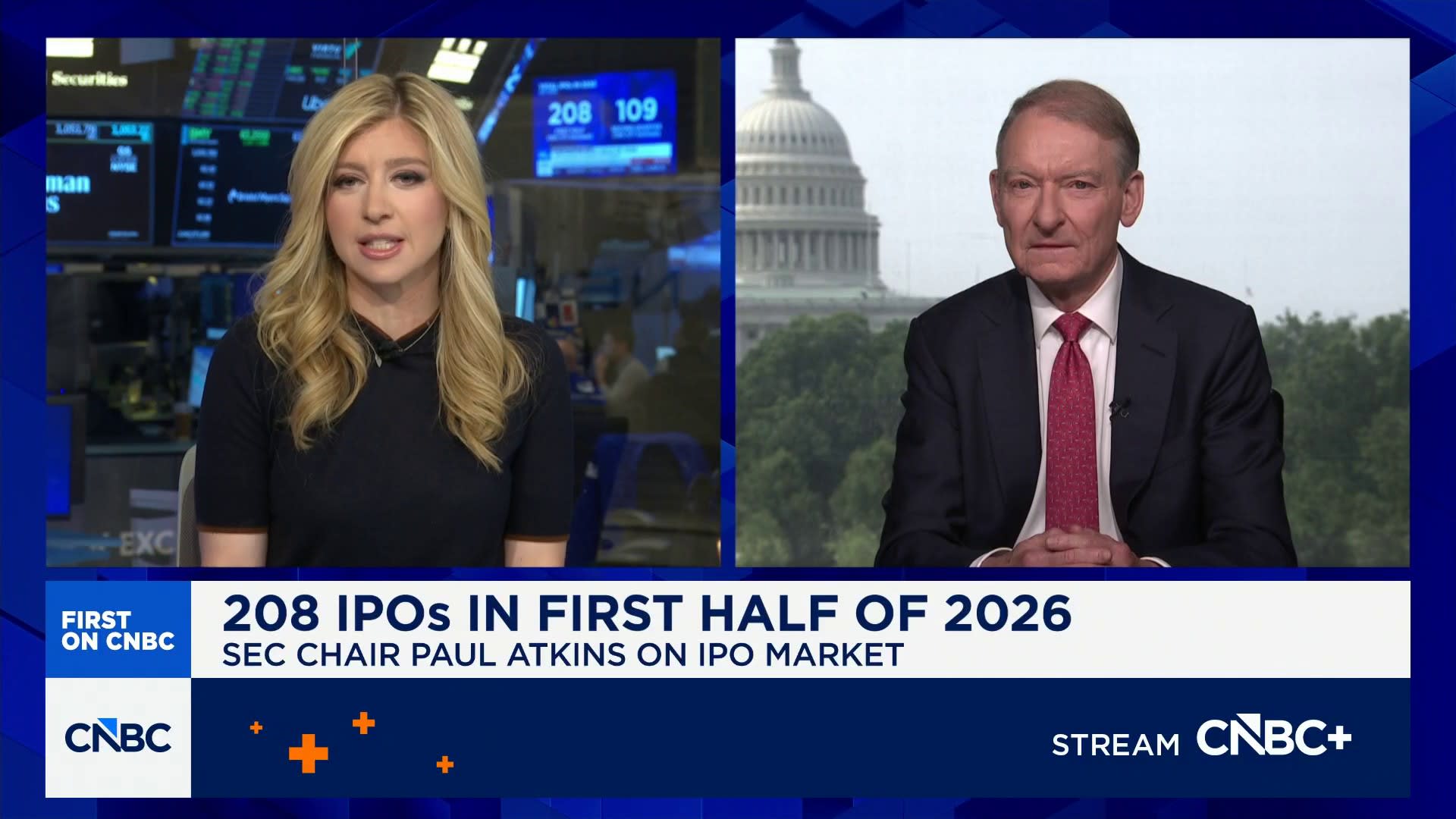
SEC Chair Paul Atkins says agency will issue crypto rules if Congress fails to pass CLARITY Act
Market Structure: SEC–CFTC Divide and the CLARITY Act
SEC versus CFTC jurisdiction over digital assets
One of the enduring complexities in U.S. crypto regulation is the division of authority between the SEC and the Commodity Futures Trading Commission (CFTC). The SEC’s jurisdiction extends to securities and securities-based derivatives, including stocks, bonds, investment contracts, options on securities, and certain security-based swaps. By contrast, the CFTC has comprehensive regulatory authority over derivatives such as futures, options on commodities, and swaps, while its jurisdiction in spot markets is largely limited to enforcing anti-fraud and anti-manipulation rules. For digital assets, the key threshold question is whether a given token is a security or a commodity; if it is the former, the SEC typically has primary jurisdiction, while if it is the latter, the CFTC may regulate related derivatives but not the underlying spot trading except in cases of fraud or manipulation.
Over the past decade, the CFTC has taken the position that certain major cryptocurrencies, such as bitcoin, qualify as commodities, a view that has been accepted by courts and other regulators. However, for many other tokens, particularly those distributed through initial coin offerings or accompanied by ongoing managerial commitments, the SEC has argued that they are securities under Howey, thereby pulling them into its orbit. This overlapping and sometimes contested jurisdiction has created challenges for market intermediaries, which must determine whether the products they list or the activities they facilitate are subject to SEC registration and disclosure requirements, CFTC oversight, or some combination of both. It has also complicated congressional efforts to write comprehensive digital asset legislation, since any market-structure statute must delineate the respective roles of the two agencies.
Ancillary assets, digital commodities, and market-structure exemptions
Congress has begun to address these jurisdictional questions through proposed legislation such as the House’s CLARITY Act and the Senate Banking Committee’s “Responsible Financial Innovation Act of 2025.” The CLARITY Act would create a new exemption from registration under Section 4(a)(8) of the Securities Act for offerings of digital commodities, allowing issuers to raise up to \( \$50 \) million over a twelve-month period, so long as no purchaser acquires more than 10 percent of the total outstanding units of the digital commodity. In turn, the Senate draft introduces the concept of an “ancillary asset,” defined as an intangible, commercially fungible asset—potentially a digital commodity—that is offered or sold in connection with a security through an arrangement constituting an investment contract. This category is meant to capture tokens that are functionally distinct from the primary security but are distributed alongside it, a structure common in tokenized fundraising.
Under the Senate proposal, issuers relying on the ancillary asset exemption could raise up to the greater of \( \$75 \) million per calendar year over four years or 10 percent of the total dollar value of ancillary assets outstanding at the time of offer or sale. To qualify, they would need to meet disclosure and other conditions, but they would not be required to register the ancillary asset as a full-fledged security. In combination with the CLARITY Act’s digital commodity exemption, these legislative efforts aim to create more predictable paths for token issuance and trading that reflect the functional differences among digital assets, while still preserving the SEC’s ability to regulate genuinely security-like instruments and conduct. Atkins has publicly expressed support for such market-structure legislation and has stated that the SEC and CFTC stand ready to implement frameworks like the CLARITY Act once Congress acts, underscoring his preference for legislative clarity over purely administrative line-drawing.
Coordination between SEC and CFTC under Atkins and Selig
Coordination between the SEC and CFTC has grown more prominent under Atkins’ leadership, particularly as both agencies grapple with the rise of prediction markets, DeFi protocols, and novel derivatives tied to digital assets. The CFTC, under Chairman Michael Selig, retains primary authority over derivatives markets, including those offering crypto-based futures, options, and swaps, but faces resource constraints as the volume and complexity of such products expand. Atkins has publicly backed Selig’s calls for additional funding and staffing to oversee booming prediction markets and future crypto-regulation efforts, recognizing that a lopsided regulatory apparatus could create gaps or inconsistencies in oversight. While these statements have not yet been codified into formal inter-agency agreements, they signal a willingness to coordinate more closely across derivatives and spot markets in the digital asset space.
The renewed SEC–CFTC coordination also reflects a convergence around shared policy goals. Both agencies have an interest in preventing fraud, manipulation, and systemic risk in markets that increasingly blur the line between securities and commodities, centralized and decentralized platforms, and human-led and algorithmic trading. Atkins’ emphasis on onchain market structure and AI-driven financial applications, coupled with the CFTC’s experience in overseeing complex derivatives and trading systems, creates opportunities for joint guidance and harmonized rules around topics like cross-margining, clearing, and risk management for crypto-related products. At the same time, differences remain in institutional culture and statutory mandates, and the ultimate allocation of regulatory turf will likely depend on how Congress chooses to define terms like “digital commodity,” “ancillary asset,” and “digital security” in final legislation.
- 01Innovation exemption rollout timeline↗
Four separate headlines across 'announced', 'weeks away', 'clearing OMB', and 'year-end target' generated sustained re-engagement as readers tracked whether the exemption would actually materialize.
- 02Atkins appointment and early priorities↗
His selection, confirmation reluctance, and swearing-in speech drew the most clicks of any single cluster, reflecting market demand for a read on how durable the pro-crypto pivot would be.
- 03SEC-CFTC turf war ending↗
Readers engaged heavily with the substituted-compliance and joint-review announcements, signaling that jurisdictional clarity between the two agencies is a live commercial concern for DeFi and derivatives builders.
- 04Token taxonomy and securities definition↗
The landmark taxonomy framework and Atkins' 'very few tokens are securities' stance pulled readers tracking how the reclassification affects existing token projects and listing decisions.
- 05Enforcement softening and internal dissent↗
The enforcement chief's resignation over softened Sun and Musk settlements signaled that the policy shift was generating internal friction, making the durability of the new direction a live question.
- 06Tokenization as banking infrastructure↗
Atkins' predictions that banks will adopt on-chain settlement within years, paired with the Chainlink CEO meeting, framed tokenization as an imminent structural trade rather than a speculative bet.
Project Crypto, Onchain Markets, and Tokenization
Inside “Project Crypto”: modernizing the rulebook
Atkins has framed the SEC’s internal modernization efforts around a multi-year initiative known as “Project Crypto,” which he has described as the agency’s next step in the digital finance revolution. The project’s aim is to apply what he calls basic fairness and common sense in adapting the securities rulebook to the realities of blockchain-based assets and markets, rather than forcing novel technologies into frameworks designed for certificates, paper-based settlement, and human intermediaries. Project Crypto encompasses workstreams on token taxonomy, registration pathways for digital asset intermediaries, disclosure requirements tailored to protocol-based businesses, and inter-agency coordination, as well as public engagement through roundtables and requests for comment.
A particularly visible component of Project Crypto is the agency’s focus on tokenized securities and onchain trading systems. Atkins has stated at public forums, including the Economic Club of Washington, that the SEC is on the cusp of releasing an “innovation exemption” to facilitate trading of tokenized securities onchain, a move that would mark a significant evolution in how traditional securities can be issued, traded, and settled. He has also emphasized that Washington is no longer debating whether tokenized securities belong in the market, but rather writing the rules for their coexistence with the existing legacy financial system. The project thus serves as a bridge between the SEC’s historical role overseeing stock and bond markets and its emerging role in an environment where those instruments may increasingly live on public or permissioned blockchains.
Onchain trading, crypto vaults, and hybrid market structures
In speeches at events such as the AI+ Expo in Washington, Atkins has highlighted how blockchain-based systems and AI-driven financial applications are reshaping market structure in ways that challenge traditional regulatory categories. He notes that existing securities rules were built around discrete intermediaries—brokers, exchanges, and clearinghouses—each with defined functions, whereas many onchain protocols combine these roles within a single piece of software. A single protocol can execute trades, manage collateral, route liquidity, execute trading strategies via vault structures, and settle transactions, often at machine speed and across multiple chains. This raises questions about how to apply existing definitions of “exchange,” “broker-dealer,” and “clearing agency” to systems that are partially decentralized, partially automated, and partially governed by token holders.
Atkins has suggested that the SEC should recognize the hybrid nature of many onchain market structures, which blend elements of what are commonly referred to as “traditional” and “decentralized” finance, rather than insisting on shoehorning them into legacy categories. He has indicated that the Commission is considering formal rulemaking to clarify how securities laws apply to onchain trading systems, blockchain settlement infrastructure, automated financial applications, and crypto vaults, and that it may use its exemptive authorities where necessary and prudent to allow experimentation. This represents a departure from an earlier era in which the SEC attempted to treat decentralized exchanges and automated market makers as unregistered traditional exchanges, without fully accounting for the technological and governance differences. In Atkins’ telling, the agency’s role is to set the rules of play and referee the game, not to pick winning technologies or business models.
Innovation exemption for tokenized securities
The contemplated “innovation exemption” for tokenized securities is a key pillar of Project Crypto’s market-structure agenda. As Atkins has explained, the goal is to create a regulatory sandbox in which broker-dealers, alternative trading systems, and perhaps even novel onchain venues can facilitate the trading of tokenized versions of traditional securities under a more flexible rule set, while still providing baseline protections. This could involve exemptions from certain recordkeeping, settlement, or custody requirements that are difficult to satisfy in a blockchain context, provided that functionally equivalent safeguards are implemented through smart contracts, cryptographic proofs, or third-party assurance mechanisms. The exemption would likely be time-limited, subject to quantitative caps, and conditioned on disclosures about technological risks, code audits, and governance structures.
The SEC’s Division of Corporation Finance has already acknowledged in separate statements that tokenized securities fall into at least two broad categories: securities that are tokenized by or on behalf of their issuers, and securities tokenized by third parties without issuer involvement. Both types raise questions about transfer restrictions, investor rights, and the role of intermediaries in ensuring compliance with securities laws. An innovation exemption could allow issuers and market operators to test tokenized securities models under controlled conditions, generating data and experience that could inform permanent rule changes. From the perspective of crypto-native firms, such an exemption offers the prospect of bringing real-world assets onchain, with potential benefits in terms of 24/7 trading, fractionalization, and programmable cash flows, while reducing the risk of enforcement simply for experimenting with new forms of market infrastructure.
Tokenized securities versus native crypto assets
It is important to distinguish between tokenized securities and native crypto assets in Atkins’ framework. Tokenized securities are fundamentally traditional financial instruments—equity, debt, or other securities—whose form of representation or settlement has been shifted to a blockchain, but whose underlying legal character remains unchanged. As such, they remain subject to the full suite of securities law obligations, including registration (unless exempt), periodic reporting, and broker-dealer and exchange regulation for intermediaries. The SEC has made clear that merely placing a security on a blockchain does not remove it from the securities laws, although it may justify adjustments in the details of compliance.
By contrast, native crypto assets, such as protocol governance tokens, utility tokens, or certain stablecoins, may fall outside the securities perimeter altogether if they qualify as digital commodities, tools, collectibles, or GENIUS-compliant payment stablecoins under the token taxonomy. Even when these assets are initially distributed through investment contracts, Atkins’ proposed safe harbors envision a path by which they can eventually shed their securities status as networks mature. For DeFi builders, this duality means that tokenization and native asset issuance require different compliance strategies, even if they ultimately share infrastructure and users. A protocol facilitating trading in tokenized U.S. Treasuries will need to operate under a different regulatory regime than one facilitating swaps among governance tokens or stablecoins, even if both live on the same blockchain and use similar smart contracts.
Reporting, Disclosure, and the “ACT” Strategy
Semiannual reporting and a more flexible disclosure regime
While much attention has focused on Atkins’ crypto-specific policies, his broader approach to public company disclosure also has implications for tokenized securities and crypto-related issuers. Under his leadership, the SEC has proposed changes to allow companies that go and remain public to meet their Exchange Act interim reporting obligations by filing semiannual reports on a new Form 10-S instead of the traditional quarterly Form 10-Q. The Commission has also proposed corresponding amendments to Regulation S-X to facilitate this change, reflecting concerns that quarterly reporting can incentivize short-termism and impose disproportionate costs, particularly on smaller issuers. These reforms would not eliminate the need for timely disclosure of material events, but they would give companies more options in how they structure their reporting cadence.
For crypto and tokenization markets, a shift toward more flexible reporting could influence how issuers think about taking tokenized securities public or listing them on national exchanges. If companies can rely on semiannual financial reporting, while using continuous or event-driven disclosures to update investors on material developments, they may find it easier to integrate tokenized instruments into their capital structures without being overwhelmed by incremental compliance burdens. At the same time, crypto-native projects that evolve into public companies or that issue tokenized securities may need to navigate a hybrid disclosure environment, where onchain transparency (for example, visible protocol revenues or treasury holdings) coexists with traditional SEC filings. Atkins’ disclosure reforms thus form part of a larger effort to align regulatory requirements with the information flows and technologies of modern markets.
Material Matters podcast and soft-law guidance
In addition to formal rulemaking, Atkins has made use of softer forms of guidance and public engagement, including launching the SEC’s “Material Matters” podcast. The podcast, hosted by the Chairman, features conversations with leading experts aimed at breaking down the complexities of modern markets, including digital assets, AI-driven finance, and emerging risks. While not a substitute for official interpretations or rules, the podcast functions as a signaling device, indicating which issues the SEC considers salient and how its leadership is thinking about them. For crypto market participants, episodes touching on tokenization, DeFi, or AI-powered trading can offer insights into the Commission’s evolving stance that may not yet be reflected in formal guidance.
This “soft law” approach complements more structured initiatives like the Crypto Task Force’s roundtables and public statements by Commissioners such as Hester Peirce. By creating multiple channels through which industry, academics, and policymakers can exchange ideas, Atkins aims to reduce the information asymmetry that often characterizes regulatory transitions. However, critics worry that relying too heavily on informal signals, podcasts, and speeches can create uncertainty about the legal status of particular practices, especially if enforcement and examination staff interpret them differently. The balance between clear, binding rules and flexible, dialogic guidance remains a contested space, especially in fast-moving fields like crypto and AI.
Advance, Clarify, Transform: Atkins’ regulatory philosophy
Atkins has described his overall strategy as an “ACT” agenda—advancing, clarifying, and transforming the SEC’s rulebook and regulatory frameworks. In prepared remarks, he has emphasized that advancing means updating outdated rules to reflect current market dynamics; clarifying means resolving ambiguities that have allowed for inconsistent or overly expansive interpretations; and transforming means rethinking core concepts where necessary to accommodate fundamentally new technologies such as blockchain and AI. The token taxonomy, Project Crypto’s work on onchain market structure, and the exploration of innovation exemptions all exemplify this philosophy, in that they use the SEC’s existing statutory authorities to modernize how securities laws apply without waiting for Congress to rewrite the entire regime.
At the same time, Atkins is explicit that there are limits to what the SEC can or should do on its own. He has repeatedly acknowledged that only Congress can provide durable, comprehensive rules for digital asset markets, and that administrative interpretations—however carefully crafted—remain vulnerable to judicial challenges and future leadership changes. This recognition has led him to welcome legislative efforts like the CLARITY Act and the PARITY Act, even as he pushes the SEC to act where legislative gridlock has persisted. For market participants, this dual-track strategy means that they must monitor both agency-level rulemakings and congressional developments to understand the full regulatory picture.
SEC Chair Paul Atkins backs CFTC Chairman Michael Selig amid concerns the agency lacks resources to oversee booming prediction markets and future crypto regulation efforts
Political and Regulatory Tensions
Elizabeth Warren’s criticisms and investor protection debate
Atkins’ pro-innovation agenda has not gone unchallenged. Senator Elizabeth Warren, a prominent voice on financial consumer protection and systemic risk, has emerged as one of his most vocal critics. In a letter reported by CNBC, Warren warned Atkins about risks tied to President Trump’s executive order that cleared a path for crypto to be included in retirement accounts, expressing concerns about volatility, weak investor protections, and lack of transparency. She argued that contemporaneous crypto market-structure legislation could create a “tokenization loophole” through which nearly any financial product offered on the blockchain might sidestep the SEC’s authority to regulate securities, thereby putting Americans’ retirement savings and investments at risk. Her critiques underscore a broader worry among skeptics that Atkins’ narrowing of the securities perimeter could lead to regulatory arbitrage and the migration of complex financial products into less regulated onchain wrappers.
Separately, Warren has called on the SEC Chair to release delayed enforcement data, citing the public’s right to transparency regarding how aggressively the agency is policing markets under his leadership. This reflects concerns that a sharp drop in enforcement actions, especially in high-risk areas like crypto, may leave retail investors exposed to frauds, scams, and improperly disclosed risks. She has suggested that inconsistencies between Atkins’ public statements and internal enforcement patterns could raise questions about whether Congress is receiving a fully accurate picture of the agency’s activities, a charge that, if substantiated, would have significant implications for oversight and appropriations. While Atkins and his supporters argue that a strategic pivot away from headline-grabbing enforcement toward clearer rules will ultimately better protect investors, the political debate over the proper balance remains intense.
Enforcement pullback, staff tensions, and data transparency
The transition from an enforcement-heavy approach to a more permissive, innovation-focused regime has also generated tensions within the SEC itself. Reporting has suggested that the agency’s enforcement division has clashed with Atkins over decisions to soften or settle cases against prominent figures and firms in the crypto and tech sectors, and that at least one enforcement chief resigned in protest over what he viewed as undue leniency in settlements involving high-profile defendants. Although specific personnel moves are not fully documented in public filings, they resonate with a broader narrative of internal disagreement about how rapidly and how far the SEC should retreat from litigation-driven policy.
From the perspective of regulated entities and market participants, the enforcement pullback presents a mixed picture. On one hand, fewer aggressive lawsuits and more reliance on guidance and rulemaking reduce the fear that novel products or protocols will be declared unlawful ex post without clear advance notice. On the other hand, if enforcement becomes too light-touch, bad actors may feel emboldened, and compliant firms may find themselves competing against unscrupulous rivals who ignore rules with minimal consequences. The dispute over delayed enforcement data, highlighted by Senator Warren’s transparency demands, is emblematic: the same statistics that supporters might cite as evidence of a more reasonable, focused enforcement strategy can be framed by critics as proof of abdication. For now, market participants must navigate an environment in which formal enforcement risk is lower but political scrutiny is higher.
Risks, gaps, and what critics worry about
Critics of Atkins’ approach point to several potential risks and regulatory gaps. First, by narrowing the securities perimeter and creating exemptions for digital commodities, ancillary assets, and certain token offerings, the SEC may enable complex financial instruments to migrate from heavily regulated environments into lightly regulated onchain structures, even if they pose similar risks to investors. Second, the emphasis on innovation exemptions and safe harbors could lead to a proliferation of experimental platforms and products without sufficient guardrails or stress testing, raising the possibility of failures that harm retail users and undermine confidence in markets. Third, the shift from enforcement to rulemaking and guidance may be slow, creating periods in which neither clear rules nor vigorous enforcement is in place, leaving a vacuum that bad actors can exploit.
There are also concerns about systemic risk and financial stability. As more tokenized securities, stablecoins, and DeFi protocols integrate with traditional finance, shocks in onchain markets could transmit rapidly into banks, broker-dealers, and asset managers, especially if risk-management frameworks have not been fully updated to account for 24/7 markets and smart-contract-based leverage. The GENIUS Act’s focus on fully reserved stablecoins mitigates some risks but does not address those arising from rehypothecation, composability, and complex protocol interactions in DeFi. Moreover, the prohibition on a U.S. CBDC, while designed to preserve private-sector innovation and privacy, limits the Federal Reserve’s ability to offer a risk-free digital settlement asset that could serve as a backstop in stressed conditions. How Atkins’ SEC coordinates with prudential regulators and international bodies to monitor and address these cross-cutting risks remains an open question.
Trump selects Paul Atkins as SEC Chair nominee
Atkins sworn in; pledges 'firm regulatory foundation' for digital assets
Atkins unveils 'Project Crypto' — SEC's formal digital-asset regulatory agenda
First public remarks as chair at SEC Crypto Task Force; drops Gensler-era enforcement cases
SEC enforcement chief resigns after clashing with Atkins over softened Sun and Musk settlements
Atkins and CFTC Acting Chair Pham issue joint statement pledging coordination; harmonization portal announced
Landmark token taxonomy framework released; Atkins calls it 'end of the beginning' pending Congressional action
Innovation exemption for on-chain tokenized securities clears OMB review; rollout described as weeks away
What Atkins’ SEC Means for Builders, Investors, and DeFi
Capital formation and fundraising pathways
For crypto builders and token issuers, the most immediate impact of Atkins’ tenure lies in the evolving pathways for capital formation. The combination of a clarified token taxonomy, proposed startup and fundraising exemptions, and congressional initiatives like the CLARITY Act and ancillary asset regime offers more structured options for launching tokens in the U.S. without defaulting to offshore jurisdictions. Early-stage teams may be able to raise modest sums under a time-limited startup exemption, relying on principles-based disclosures in lieu of full registration, while more mature projects can pursue larger raises under a fundraising exemption or ancillary asset offering, subject to enhanced financial and risk disclosures. These mechanisms are designed to mirror, in spirit, the multi-tiered regime that exists for traditional securities (for example, Regulation D, Regulation A, and full registration), but adapted to token economics and network development cycles.
However, these opportunities come with conditions. Issuers must be thoughtful about the explicit promises they make regarding their future managerial efforts, since those representations play a central role in determining whether a distribution constitutes an investment contract. They must plan for the eventual end of the investment contract relationship, both in terms of decentralizing governance and in ensuring that token holders understand how their rights and expectations will evolve over time. And they must be prepared to live with hybrid oversight, particularly if their tokens function as both digital commodities (within DeFi protocols) and as instruments associated with corporate entities or revenue streams. The days of “regulation by whitepaper” are ending; in their place, Atkins envisions a regime in which serious projects can raise capital with more legal certainty, but only if they engage seriously with securities law concepts from the outset.
Compliance playbook for tokens, DeFi, and onchain protocols
For DeFi protocols, onchain exchanges, and other infrastructure providers, the compliance playbook under Atkins is still emerging, but some outlines are visible. Protocols that facilitate trading or lending in digital securities or tokenized traditional assets will likely fall under the SEC’s innovation exemption regime and must design their systems to meet functional equivalents of exchange, broker-dealer, and clearing-agency requirements, even if the specific rules are adapted for blockchain context. This could involve onchain KYC or whitelist mechanisms, smart-contract-based controls on who can trade or hold certain tokens, and robust offchain governance and audit processes to satisfy regulators about operational resilience and investor protection. Protocols that deal primarily in non-security digital assets—such as GENIUS-compliant stablecoins and digital commodities—will focus more on CFTC-related considerations, BSA/AML compliance, and consumer-protection issues.
Atkins’ acknowledgment of hybrid market structures provides some leeway for experimentation, but it also underscores the need for careful functional analysis. A protocol that aggregates order flow, matches trades, and routes them to onchain vault strategies may be treated as an exchange or broker-dealer, even if the code is open source and governance is decentralized. Similarly, a smart contract that automates collateral management and settlement could be viewed as a clearing agency function, with corresponding regulatory expectations. The Crypto Task Force’s efforts to provide realistic paths to registration for crypto intermediaries are critical here, as they will influence whether compliance is practically achievable for start-ups and DAOs, or whether only large, well-capitalized institutions can meet the bar. For now, builders must assume that regulators will look beyond formal labels and examine what their protocols actually do in economic and functional terms.
Institutional participation, ETFs, and custody
From the perspective of institutional investors, Atkins’ SEC has taken steps to reduce barriers to participation in crypto markets. The rescission of SAB 121 removed a major accounting impediment to banks and trust companies providing crypto custody, making it easier for institutions to hold digital assets on behalf of clients without incurring large balance-sheet penalties. The Commission has also approved new crypto-related exchange-traded products, including spot bitcoin and ether ETFs, under a more accommodative reading of the securities laws governing exchange-traded products, signaling a willingness to allow mainstream exposure to certain digital assets within regulated vehicles. As tokenization and onchain settlement advance, institutional flows into tokenized Treasuries, money-market funds, and other real-world assets may likewise benefit from the SEC’s openness to innovation exemptions and onchain market experiments.
At the same time, institutions must pay close attention to the evolving distinction between digital securities and non-securities, especially in light of the GENIUS Act and token taxonomy. Holding a GENIUS-compliant stablecoin, a digital commodity governance token, and a tokenized corporate bond may involve three distinct regulatory treatments, even if all three live in the same wallet and are used within the same DeFi protocol. Custody solutions will need to integrate controls and reporting tailored to each asset class, including segregation of client assets, reconciliation of onchain and offchain records, and incident-response plans for smart-contract exploits or chain reorganizations. As Project Crypto rolls out new guidance on crypto vaults and AI-augmented trading systems, institutions will also face evolving expectations around algorithmic risk management, model governance, and cybersecurity, further blending the worlds of traditional securities regulation and cutting-edge financial technology.
Conclusion
Paul Atkins’ chairmanship of the SEC marks a pivotal chapter in the evolving relationship between U.S. securities regulation and the crypto ecosystem. Building on Trump-era executive orders and new legislation like the GENIUS Act, his Commission has moved to narrow the securities perimeter through a token taxonomy, to create structured safe harbors and exemptions for token offerings, and to modernize the rulebook for tokenized securities and onchain trading systems. These initiatives reflect an “ACT” philosophy of advancing, clarifying, and transforming existing frameworks to accommodate technologies that were unimaginable when the securities laws were first written, while still seeking to protect investors and maintain fair, orderly markets. For crypto builders, DeFi protocols, and institutional investors, Atkins’ tenure offers both new opportunities and new responsibilities: opportunities to raise capital, innovate, and integrate with traditional finance under more predictable rules; responsibilities to engage seriously with disclosure, governance, and risk management in a more sophisticated regulatory environment.
At the same time, Atkins’ pro-innovation stance has intensified political and policy debates about the proper balance between fostering growth and guarding against abuse. Critics like Senator Elizabeth Warren warn that the combination of narrowed securities definitions, innovation exemptions, and relaxed enforcement could create loopholes through which complex and risky financial products migrate into less regulated onchain channels, potentially endangering retail investors and retirement savers. Internal tensions within the SEC, questions about transparency around enforcement data, and unresolved jurisdictional issues with the CFTC and other regulators underscore that the regulatory reset is still very much a work in progress. The ultimate success or failure of Atkins’ approach will likely be judged not only by the vibrancy of U.S. digital asset markets, but also by the incidence of fraud, systemic shocks, and investor losses in the years to come.
Atkins himself acknowledged only Congress can make crypto rules 'stick', meaning the innovation exemption and dropped enforcement cases can be unwound by a future SEC chair without legislation.
Elizabeth Warren formally accused Atkins of misleading Congress over declining enforcement actions, and the enforcement chief's resignation over Sun/Musk settlements suggests reduced deterrence for well-connected actors.
The harmonization push reduces but does not eliminate dual-regulator risk; substituted-compliance frameworks are still being written and the CFTC has flagged resource constraints on prediction markets and crypto oversight.
Atkins himself warned that blockchain's transaction-linkage capability makes crypto a potent financial surveillance tool if the regulatory framework is set incorrectly, flagging a national-security design tension in any compliant on-chain product.
The innovation exemption clearing OMB review introduces a procedural chokepoint outside the SEC's control; delays there push product launches back and create a window of continued regulatory uncertainty.
The GENIUS Act passage and active market-structure drafting in Congress reduce the risk that SEC exemptions become the only legal footing for crypto products, but stablecoin and market-structure bills remain in flux.
Outlook
Looking ahead, the durability of Atkins’ crypto agenda will hinge on several factors beyond the SEC’s immediate control. Legislative outcomes on the CLARITY Act, PARITY Act, and related market-structure bills will determine how cleanly the lines between digital commodities, digital securities, and ancillary assets are drawn, and whether the SEC and CFTC can implement a coherent joint regime. Judicial responses to the SEC’s new token taxonomy and investment-contract interpretation will test the legal foundations of its attempt to declare certain categories of crypto asset non-securities, while still relying on Howey for offerings and sales. International developments, including the European Union’s Markets in Crypto-Assets (MiCA) framework and evolving regulations in Asia, will shape whether U.S. markets regain or lose ground in the competition to host the next generation of crypto and DeFi innovation.
For the crypto industry and its observers, the key takeaway is that the era of pure “regulation by enforcement” in U.S. crypto policy appears to be giving way to a more textured landscape of rulemaking, safe harbors, legislative reform, and inter-agency coordination. Under Paul Atkins, the SEC has signaled that it is no longer trying to be the “securities and everything commission,” but rather a securities regulator adapting to a world where value, code, and markets blur together onchain. Whether this recalibration ultimately unlocks a sustainable innovation boom or sets the stage for future crises will depend on how well regulators, lawmakers, and market participants manage the trade-offs between openness and oversight. For now, anyone building or investing in crypto in the United States must treat Atkins’ SEC not as a distant adversary, but as a central actor whose evolving rules and philosophy will shape the contours of the digital asset frontier for years to come.
Latest Atkins news
SEC launches “Material Matters” podcast, signaling softer crypto stance as Atkins, Peirce, and Uyeda push for pro-innovation policies and clearer rulesSEC Chair Paul Atkins says agency will issue crypto rules if Congress fails to pass CLARITY ActSEC Chair Paul Atkins backs CFTC Chairman Michael Selig amid concerns the agency lacks resources to oversee booming prediction markets and future crypto regulation effortsElizabeth Warren accuses SEC Chair Paul Atkins of misleading Congress over declining enforcement actions, raising concerns about investor protectionSEC chair Atkins says agency is modernizing rules to move U.S. markets onchainSEC enforcement chief resigned after clashing with Atkins over softened Justin Sun, Musk settlementsSources
19 records from 11 domains
sec.gov
- sec.gov· about / sec-commissioners / paul-s-atkins
- sec.gov· newsroom / speeches-statements / atkins-remarks-regulation-crypto-assets-031726
- sec.gov· securities-topics / crypto-task-force
- sec.gov· newsroom / speeches-statements / uyeda-statement-proposing-semiannual-reporting-0…
- sec.gov· newsroom / speeches-statements / corp-fin-statement-tokenized-securities-012826-s…
- sec.gov· newsroom / speeches-statements / peirce-statement-token-safe-harbor-proposal-20
- sec.gov· newsroom / speeches-statements / atkins-remarks-sec-speaks-031926-prepared-remark…
- sec.gov· newsroom / podcasts / material-matters-sec-chairman-paul-atkins
- sec.gov· newsroom / speeches-statements / atkins-111225-secs-approach-digital-assets-insid…
klgates.com
youtube.com
tax.thomsonreuters.com
facebook.com
paulhastings.com
whitehouse.gov
law.georgetown.edu
si-news.ai
x.com
cryptonews.net
Community notes
Spot something off or out of date? Drop a note. Editors review topic notes daily and roll accepted fixes into the explainer — contributors are recognized in the monthly $SQUID drop.
Loading notes…
Help improve this topic
Have a story or tip about this topic? Submit it. See something missing? Leave a note. Editors review daily; accepted submissions and fixes count toward the monthly $SQUID drop.