
Explainer on the U.S. CLARITY Act, the sweeping digital asset market‑structure bill that defines crypto asset classes, splits SEC–CFTC oversight, sets stablecoin yield limits, and protects non‑custodial developers and self‑custody.
+34 sources across the wider coverage universe
 Senator Cynthia Lummis calls for passing the Clarity Act, blaming prior US policies for driving crypto firms offshore and urging clear rules to bring the digital asset industry back2026-04
 Armstrong reverses on Clarity Act after blocking it twice, tells Bessent 'we agree' on crypto bill2026-04
 Tillis-Alsobrooks draft bans passive stablecoin yield, preserves activity rewards to unblock CLARITY Act2026-04
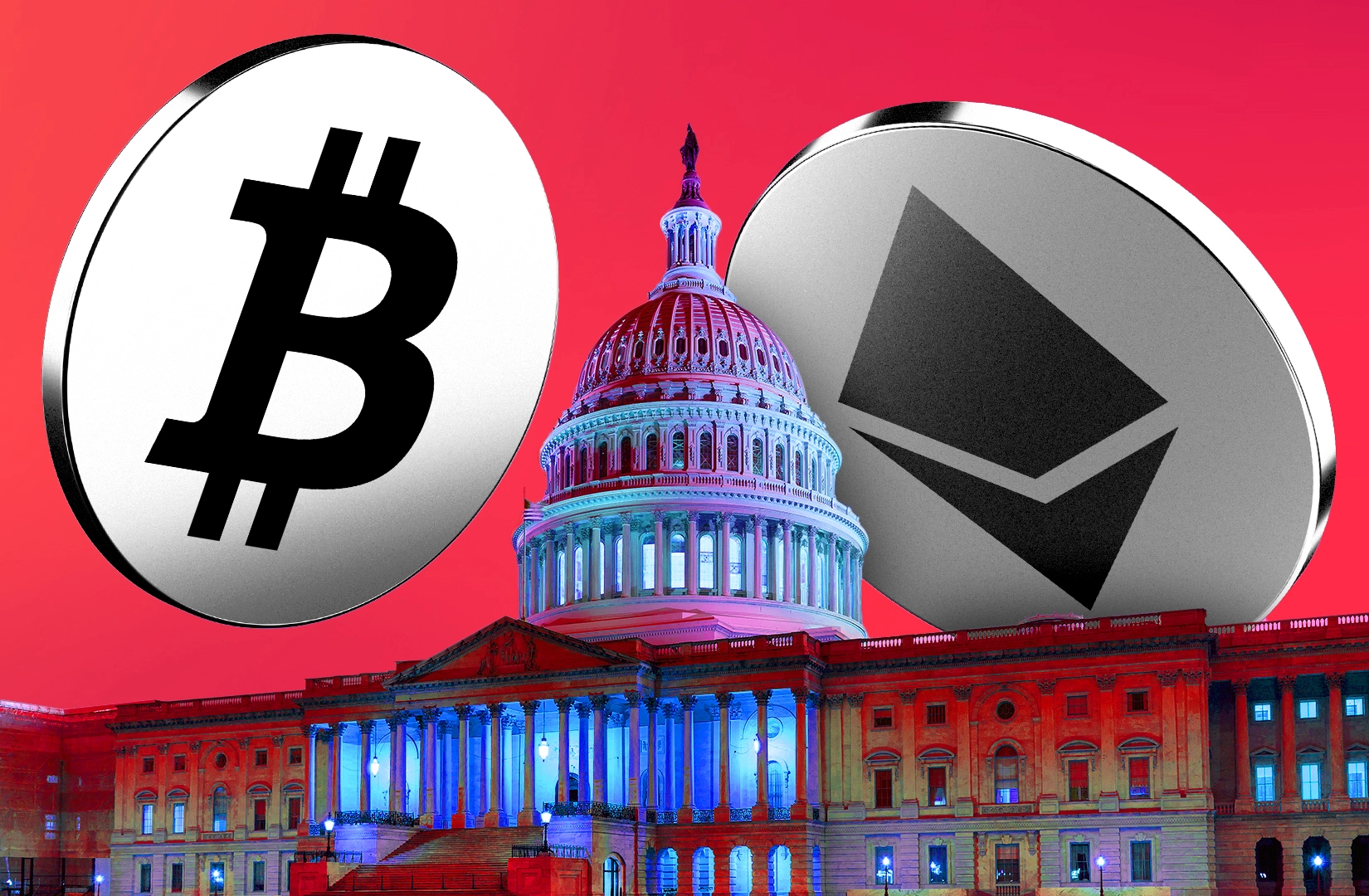 Clarity Act vote, SEC innovation exemption, and MiCA expiry converge in Q2 to test crypto's regulatory future2026-04
 The Solana Policy Institute urges the U.S. Senate to advance the Clarity Act before Congress shifts to election season, calling regulatory certainty critical for crypto innovation2026-07
 Clarity Act punts stablecoin yield language to late-April markup while idle-balance yield ban stays intact2026-04
The CLARITY Act: U.S. Crypto Market Structure Bill, Explained
The CLARITY Act is a proposed U.S. law that would create a comprehensive market-structure framework for digital assets, dividing tokens among securities, commodities, and stablecoins and assigning clear regulatory lanes. It is designed to end “regulation by enforcement,” balance consumer protection with innovation, and finally resolve the SEC–CFTC turf war that has defined U.S. crypto policy so far.
Origins and big‑picture goals
For more than a decade, U.S. crypto regulation has evolved through lawsuits, enforcement actions, and agency guidance rather than clear statutes. The Securities and Exchange Commission (SEC) has treated many token sales as unregistered securities offerings, while the Commodity Futures Trading Commission (CFTC) has asserted jurisdiction over bitcoin, ether, and other “commodities” in derivatives and spot-fraud cases. At the same time, states have layered on money transmitter licensing and bespoke crypto rules, leaving market participants to navigate a confusing patchwork framework with little advance certainty about how new projects will be classified. House sponsors of the CLARITY Act explicitly frame the bill as a response to this “regulation-by-enforcement” environment, arguing that it has stifled innovation while failing to fully protect consumers.
The House version of the Digital Asset Market Clarity (CLARITY) Act, H.R. 3633, was introduced on May 29, 2025 by House Financial Services Committee Chair French Hill and House Agriculture Committee Chair G.T. Thompson, with bipartisan co-sponsorship. The bill advanced out of both the Financial Services and Agriculture Committees with bipartisan support on June 10, 2025, a sign that, at least in the House, there is cross-party appetite for a durable digital asset framework. In broad terms, the House text aims to establish “clear, functional requirements” for digital asset market participants, close regulatory gaps, and “restore confidence” in the American regulatory environment so that crypto businesses do not feel compelled to leave the U.S. market.
In parallel, the Senate has been developing its own market structure bill. On May 14, 2026, the Senate Banking Committee advanced substitute text styled as the Digital Asset Market Clarity Act, a wide-ranging framework that addresses illicit finance, decentralized finance (DeFi), limitations on stablecoin yield, tokenization standards, developer protections, and customer and bankruptcy protections. That substitute incorporates much of an earlier amendment the committee released in January 2026, and now must be reconciled with the Senate Agriculture Committee’s Digital Commodity Intermediaries Act before any unified Senate package can be brought to the floor. Ultimately, whatever emerges from the Senate will need to be harmonized with the House CLARITY Act, creating a single cross-chamber crypto market structure bill.
Despite institutional differences, the core goals of these efforts are aligned. Both House and Senate texts seek to draw bright lines between the SEC and CFTC, create registration regimes for digital asset firms, impose disclosure and segregation requirements to protect customers, and cement consumer-property rights in bankruptcy. At the same time, they attempt to foster innovation by defining “digital commodities,” creating safe harbors for non-custodial developers, protecting self-custody, and specifying how stablecoins can be used and marketed without undermining banking stability.
Sponsors emphasize that many of the substantive rules already exist in scattered regulations and enforcement theories, but have never been brought together in a single statute covering digital assets. They present the CLARITY Act as the process of writing down those rules, filling in gaps, and giving both innovators and regulators a common language. As one prominent summary puts it, the bill aims to “end crypto’s jurisdictional limbo” by codifying the lanes regulators already claim, rather than inventing an entirely new supervisory regime.

White House adviser defends Trump's crypto ties after Clarity Act fails in Senate

How the CLARITY Act classifies digital assets and settles SEC–CFTC turf wars
Three buckets: securities, commodities, and stablecoins
At the heart of the CLARITY framework is a taxonomy that sorts digital assets into three primary categories: securities, commodities, and stablecoins. The House bill defines a “digital commodity” as a digital asset that is intrinsically linked to a blockchain system and whose value is derived from, or reasonably expected to be derived from, the use of that blockchain system. This category is meant to capture tokens like bitcoin that function more like commodities or utility tokens than like claims on a business enterprise. Securities, by contrast, remain subject to the traditional securities law tests and fall under the SEC’s jurisdiction when tokens represent investment contracts or other securities instruments. Stablecoins are addressed as a separate category, with their issuance and backing treated in dedicated legislation such as the GENIUS and STABLE Acts, and their market-structure treatment integrated into CLARITY’s broader framework.
A simplified view of the House structure looks like this:
| Category | Core concept | Primary federal regulator(s) |
|---|---|---|
| Digital asset securities | Tokens that are investment contracts or otherwise meet securities definitions | SEC |
| Digital commodities | Digital assets intrinsically linked to a blockchain whose value comes from its use | CFTC (market oversight); SEC anti-fraud on certain venues |
| Payment stablecoins | Tokens used for payments/settlement, redeemable for a fixed monetary value, backed by reserves | Banking regulators, OCC, Fed, Treasury; CLARITY and GENIUS/STABLE define details |
The CLARITY Act gives the CFTC primary regulatory jurisdiction over digital commodities and establishes provisional registration requirements for digital commodity exchanges, brokers, and dealers. However, when digital commodities are traded on SEC-registered exchanges or through SEC-registered broker-dealers, the SEC retains anti-fraud and market-manipulation authority, ensuring dual protections on those platforms. This functional division is meant to replace ad hoc battles over whether the SEC or CFTC should lead on particular tokens or platforms, and the House summary explicitly states that the bill “establishes clear lines between the SEC and CFTC.”
The Senate Banking substitute adds further nuance by introducing the concepts of “network tokens” and “ancillary assets.” It defines a network token as a digital commodity intrinsically linked to a distributed ledger system and expected to derive its value from the use of that system, which is not considered a security under federal securities laws. An “ancillary asset” is defined as a network token whose value still relies upon the entrepreneurial or managerial efforts of an “ancillary asset originator” or related person, effectively codifying a class of tokens that are functionally dependent on a central team. This split is designed to recognize that many tokens evolve over time: they may start life as securities-like instruments financing a development team, but eventually become decentralized network tokens that no longer justify full securities regulation.
Certification, disclosures, and the path from security to commodity
To operationalize this transition, the Senate text creates a rebuttable presumption and a certification process. A token originator, and in some cases an intermediary, may submit written certification to the SEC, supported by reasonable evidence, that a network token is not an ancillary asset. In essence, they can argue that the token has sufficiently shed reliance on entrepreneurial or managerial efforts and should now be treated as a non-security digital commodity. For tokens that are treated as ancillary assets, the bill sets out a disclosure framework requiring initial and periodic disclosures by the ancillary asset originator. The SEC is instructed to tailor these obligations according to factors such as the size of the originator, the amount sold to the public, and whether the system is subject to “coordinated control” that indicates centralization.
Crucially, the framework allows for termination of disclosure obligations through a certification process once the relevant entrepreneurial or managerial efforts have ceased, giving token projects a statutory route to exit securities-style reporting as they decentralize. This is intended to replace the vague notion of “sufficient decentralization” that has appeared in enforcement discourse with a more concrete, procedurally defined path. Commentators view this as one of the most consequential aspects of the Senate bill, because it offers a life cycle for tokens that mirrors how many open-source networks actually develop.
Why this matters in practice
For token issuers, being classified as a digital asset security, ancillary asset, network token, or digital commodity will directly determine their registration and disclosure obligations as well as their access to trading venues. A token that can successfully certify as a network token or digital commodity may be freely traded on CFTC-regulated digital commodity exchanges without treating each transaction as a securities trade, whereas an ancillary asset will likely require ongoing disclosures and limitations on where it can trade until it meets statutory criteria for reclassification.
Exchanges, brokers, and dealers will have to map their business models onto these categories and choose their regulator accordingly. The CLARITY Act sets up comprehensive registration regimes so that digital asset firms can serve customers lawfully, with digital commodity platforms registered under the CFTC and securities platforms under the SEC. The bill also creates provisional registration pathways so that existing exchanges and brokers can move into compliance without abrupt shutdowns, reducing systemic disruption to crypto markets while imposing more formal oversight. For stablecoins, CLARITY’s categorization ensures that they are not automatically treated as securities or bank deposits simply because they hold a peg or offer limited rewards, reserving those questions for specialized stablecoin legislation and banking regulators.
In aggregate, this taxonomy aims to transform what has been an informal, contested allocation of authority into a codified division of labor between the SEC and CFTC, with other agencies handling stablecoin issuance and banking concerns. Advocates argue that this ends crypto’s “jurisdictional limbo” and replaces regulatory guesswork with a clearer, if still complex, compliance roadmap.
Readers aren't clicking for abstract policy — they're tracking the yield ban as a regulatory moat mechanism: the most-clicked angle is specifically that the stablecoin yield prohibition disadvantages DeFi protocols (Aave, Uniswap, dYdX) while entrenching Circle's centralized model, revealing readers are stress-testing which business models survive the bill's passage.
Market structure: intermediaries, tokenization, and customer protection
Registration regimes for digital asset firms
Beyond classification, CLARITY reshapes how customer-facing crypto firms interface with regulators. The House bill establishes comprehensive registration regimes that permit exchanges, brokers, dealers, custodians, and other digital asset firms to lawfully serve customers under federal oversight. It requires these firms to provide appropriate disclosures to customers, segregate customer funds from their own, and address conflicts of interest through registration conditions, operational requirements, and transparency. The objective is to prevent a repeat of failures where exchanges commingled customer assets with proprietary trading activities, leading to large customer losses during insolvencies.
The Senate Banking substitute overlays this with anti–money laundering (AML) and sanctions obligations. It treats certain digital commodity intermediaries as subject to Bank Secrecy Act requirements, including AML programs, customer identification, monitoring and reporting of suspicious activity, and compliance with U.S. sanctions. The bill also delineates a specific framework for digital asset kiosks, including registration obligations and consumer protections such as clear disclosures and receipts, designation of a compliance officer, confirmation steps, holding periods and transaction limits, refund rights, and access to a customer service helpline. This represents the first attempt to craft a distinct regulatory regime for crypto ATMs and similar kiosks, which have historically operated in a gray area and attracted both low-income users and fraudsters.
Tokenization and banks’ use of distributed ledgers
Another pillar of the Senate text concerns tokenization and the role of banks and credit unions. The substitute includes provisions allowing banks and credit unions to use digital assets or distributed ledger systems in activities they are already authorized to conduct. That language is narrower than some earlier drafts, which contemplated tokenization of a wider range of real-world assets, but it sends a clear signal that regulated institutions may adopt blockchain rails for functions like payments, clearing, and custody without fear of overstepping their charters.
Importantly, the substitute sets forth a framework for the tokenization of securities and other financial instruments and specifies that tokenized instruments are treated the same as the underlying instrument for regulatory purposes. This means that tokenizing a bond, stock, or fund share does not change its status under securities or banking law; rather, it simply changes the technology used to represent and transfer it. For both Wall Street and crypto-native tokenization platforms, this is a double-edged sword: it forecloses attempts to evade regulation through tokenization but also provides certainty that on-chain representations can plug into existing regimes without bespoke new rules for every asset class.
Customer property and bankruptcy protections
The CLARITY Act also addresses the thorny issue of what happens to customer digital assets if a platform becomes insolvent. Senate Banking’s substitute includes customer-property protections in bankruptcy and an insolvency safe harbor intended to ensure that users’ digital assets held by custodial intermediaries are treated as customer property rather than the property of the bankruptcy estate. This is a response to high-profile bankruptcies in which courts have had to decide whether exchange customers were unsecured creditors or beneficial owners of on-chain assets.
Coupled with the House bill’s requirement that customer-facing digital asset firms segregate customer funds from their own, these provisions seek to create a more robust legal framework for custody that mirrors protections in traditional securities and commodity markets. In theory, they should reduce the risk that customers lose their holdings in a platform failure and give institutional investors greater comfort in using digital asset custodians. In practice, the effectiveness of these protections will depend on how agencies write implementing rules and how courts interpret key concepts like “control” over private keys and the legal nature of omnibus wallets.
Senate’s Clarity Act rejection benefits traditional banks by shielding deposits from yield-bearing stablecoins, while overseas crypto hubs like Dubai gain an edge
Developer protections, DeFi, and the right to self‑custody
Safe harbors for non‑custodial developers
One of the most distinctive and hotly debated aspects of the CLARITY Act is its treatment of developers and infrastructure providers. Section 601 of the bill would add a new §15H to the Securities Exchange Act, creating explicit safe harbors for blockchain developers. Under this provision, a person is not subject to Exchange Act registration requirements solely because they relay or validate transactions on distributed ledger networks, operate nodes, oracles, or bandwidth infrastructure, develop, publish, or maintain distributed ledger technology systems, or create or distribute self-custody tools such as non-custodial wallets. The idea is that writing code or running infrastructure that does not give unilateral control over customer funds should not, by itself, make someone a broker, dealer, or exchange.
Section 604 incorporates the Blockchain Regulatory Certainty Act and creates a federal safe harbor from money services business registration under 31 U.S.C. §5330 and from criminal money transmission prosecution under 18 U.S.C. §1960 for “non-controlling” developers. The safe harbor covers publishing or maintaining distributed ledger software, providing hardware or software that supports customer self-custody, and providing infrastructure support to maintain decentralized services, so long as the developer does not have unilateral control over user assets. It explicitly does not cover centralized exchanges, hosted wallets, or any service that exercises unilateral control over customer funds, which must still obtain appropriate money transmitter licenses.
The bill further clarifies that these safe harbors do not, by implication, expand the SEC’s jurisdiction; regulators cannot argue that because certain development activities are exempt, adjacent activities must necessarily fall under SEC authority. This is meant to prevent agencies from using the safe harbor language to backdoor new claims of power over areas Congress did not intend to regulate. Taken together, these provisions amount to a legislative recognition that there is a meaningful distinction between software development and financial intermediation.
Not surprisingly, these protections have become a focal point in the political debate. More than 60 crypto CEOs and founders have publicly urged the Senate to pass the CLARITY Act with developer protections intact, emphasizing that “a developer who does not control user funds is not a money transmitter” and that drawing this line correctly is crucial for open-source innovation. DeFi projects, non-custodial wallet providers, and infrastructure firms see §15H and the related safe harbor as foundational for their business models, and worry that weakening them would reintroduce the chilling effect of uncertain money-transmission liability.
Law enforcement and illicit finance tools
At the same time, CLARITY bolsters law enforcement’s toolkit. Section 603 grants the U.S. Treasury authority to impose special measures against offshore platforms and services that pose money laundering or sanctions risks, even when those platforms claim to be non-custodial protocols. This power is modeled on Treasury’s existing authority under the Bank Secrecy Act to designate “primary money laundering concerns” and impose restrictions on dealings with them, and it is intended to allow regulators to respond to emerging threats like mixers or privacy tools used for illicit purposes.
The Senate Banking substitute reinforces this by explicitly subjecting certain digital commodity intermediaries to Bank Secrecy Act requirements, including AML programs, customer identification, and suspicious activity reporting, and by imposing a compliance regime on digital asset kiosks. Sponsors argue that regulatory ambiguity has not only hurt legitimate builders but also created gaps that bad actors can exploit, and that by clarifying who is a financial institution and what obligations they have, the CLARITY Act closes those gaps. Civil liberties advocates and some DeFi developers, however, warn that broad “special measures” powers could be used too aggressively and might push innovative protocols out of the U.S. if applied in a heavy-handed way.
Protecting the right to self‑custody
Another high-profile element of the bill is its explicit protection for self-custody. Section 605 prohibits federal agencies from restricting individuals’ ability to self-custody digital assets using self-hosted wallets for lawful purposes. This “Keep Your Coins” provision, which is echoed in the Senate Banking substitute’s inclusion of self-custody protections, aims to ensure that regulators cannot ban private wallets or impose rules that effectively force all users into custodial platforms under the guise of AML or consumer protection.
The provision is carefully balanced. It states that protecting self-custody does not impair the government’s ability to enforce the Bank Secrecy Act, sanctions laws, anti-fraud statutes, or to prosecute illicit finance. Law-abiding users are guaranteed the right to hold their own keys; criminals remain subject to investigation and enforcement. For many in the crypto community, seeing self-custody recognized at the statutory level is a key victory, because it preserves the core architecture of permissionless networks even as intermediaries become more tightly regulated.
- 01stablecoin yield ban winners/losers↗
The top-clicked headline names specific protocols hurt (Aave, Uniswap, dYdX) and one winner (Circle), making the yield prohibition a concrete competitive-moat story rather than an abstract rule.
- 02DeFi developer liability shield↗
Multiple high-click headlines focus on the last-minute removal of a DeFi developer safe harbor and a Senate amendment that could expose protocol builders to SEC oversight, making developer legal exposure a distinct storyline.
- 03Senate passage math and gridlock↗
Headlines about the 60-vote filibuster threshold, seven swing-vote Democrats, and Coin Center's warning that gridlock leaves crypto one administration away from DOJ crackdowns drew sustained clicks across weeks of markup delays.
- 04Armstrong and Coinbase position flip
Armstrong reversing after twice blocking the bill and the Dimon-Armstrong Davos confrontation gave readers a named-executive conflict to follow, turning an abstract lobbying story into a personality-driven drama.
- 05institutional adoption unlock
a16z framing the bill as crypto's '1933 Securities Act moment' and Y Combinator claiming it would embed crypto across its entire portfolio (including Airbnb and DoorDash) attracted readers looking for upside scenarios, not just risk.
- 06anti-manipulation language lobbying↗
The revelation that Coinbase, Kraken, and Gemini lobbied to strip anti-manipulation provisions raised questions about whether the bill was being weakened to benefit incumbent exchanges at the expense of market integrity.
Stablecoins and the fight over yield
How CLARITY interacts with the GENIUS and STABLE Acts
Stablecoins occupy a distinct but overlapping legislative space. The GENIUS Act (Guiding and Establishing National Innovation for U.S. Stablecoins Act), passed by the Senate in 2025, aims to establish a federal regulatory framework for payment stablecoins—digital assets used for payments or settlement, redeemable for a fixed amount of monetary value, and backed one-to-one by reserves such as U.S. dollars or Treasury bills. Under GENIUS, payment stablecoins would not be classified as securities or national currency, and only permitted payment stablecoin issuers (PPSIs) with a federal license would be allowed to issue them in the United States. PPSIs include subsidiaries of insured depository institutions, federally qualified nonbank issuers approved by the Office of the Comptroller of the Currency (OCC), and state-qualified issuers approved by state regulators, all subject to liquidity, audit, and transparency requirements.
The STABLE Act similarly seeks to regulate stablecoins by defining payment stablecoins as claims expressed in a national currency that are not “deposits” under the Federal Deposit Insurance Act or “accounts” under the Federal Credit Union Act, and by confining issuance primarily to subsidiaries of federally insured depository institutions and federally licensed nonbanks under a “federal-first” oversight model. State-chartered issuers can participate where their oversight regimes are deemed equivalent to federal standards, and all issuers must comply with AML and consumer protection laws.
Within this landscape, the CLARITY Act addresses where stablecoins sit in the broader taxonomy and how they may be marketed—especially with respect to yield. The House bill treats stablecoins as a distinct category alongside digital commodities and securities, while the Senate Banking substitute focuses heavily on restrictions around paying interest or yield on payment stablecoins to avoid destabilizing the traditional banking system. The result is a division of labor: GENIUS and STABLE handle who can issue stablecoins and how they must be backed, while CLARITY shapes how those stablecoins compete with bank products and other digital assets in the marketplace.
The stablecoin yield controversy
The question of whether and how stablecoin holders should be able to earn yield has become one of the most contentious issues in the CLARITY debate. Banking industry groups have long voiced concern that if payment stablecoins can pay interest or rewards comparable to bank deposits, they will siphon away retail deposits, undermining the funding base of community and regional banks and threatening local lending. Crypto firms, by contrast, argue that yield-bearing stablecoins simply reflect underlying interest rates or reward structures already present in financial markets, and that consumers should be free to choose between bank accounts, money market funds, and tokenized alternatives.
The Senate Banking substitute reflects a negotiated compromise. It prohibits the payment of interest or yield “solely for holding payment stablecoins,” but recognizes certain activity-based rewards or incentives. Section 404 of the bill bans digital asset service providers from paying what is effectively deposit-like interest for mere passive holding of payment stablecoins, while permitting rewards tied to engagement or specific activities, subject to detailed disclosure rules. Providers are barred from comparing stablecoin rewards to bank deposit rates, suggesting FDIC insurance, marketing programs as “risk-free” or “bank-interest” equivalents, or claiming that issuers are paying yield when the rewards come from third parties. Issuers are only deemed to be paying yield if they direct or fund the rewards programs themselves.
Community banks have mounted an aggressive campaign against even this constrained approach. A lobbying group representing small and mid-sized banks has launched a public advertising blitz targeting the CLARITY Act’s “rewards” provisions, warning that allowing users to earn rewards on stablecoin deposits could trigger a mass exodus of retail deposits and destabilize regional finance. Their ads emphasize the risk of deposit flight from local lenders into crypto platforms and urge senators to remove or significantly tighten the rewards carveouts in the bill. Crypto industry advocates counter that stablecoin rewards are a natural evolution of digital finance and that GENIUS Act reserve rules, combined with CLARITY’s marketing and disclosure guardrails, are sufficient to mitigate systemic risk while expanding consumer choice.
In practice, how regulators and courts interpret the line between prohibited “interest or yield” and permitted “activity-based rewards” will have major implications for stablecoin business models. A restrictive reading could confine payment stablecoins to pure payments instruments with minimal yield, leaving investment-like returns to tokenized money market funds or other products; a more permissive interpretation might allow structured rewards that approximate yield while technically complying with the law. The outcome will shape everything from how exchanges design “earn” products to how fintechs and banks integrate stablecoins into their own offerings.
Crypto PAC Fairshake commits $30M against Sherrod Brown days after the Senate’s Clarity Act setback, marking its largest 2026 spending move

Politics, lobbying, and the bill’s uncertain path
Supporters: crypto industry, venture capital, and fintech
Despite the complexity and compromises, much of the crypto industry views the CLARITY Act as a historic opportunity to secure durable rules of the road. Over 200 crypto firms have joined a coalition urging the Senate to bring the bill to a vote, arguing that the status quo of ambiguous enforcement and jurisdictional overlap is unsustainable. This coalition includes exchanges, DeFi projects, infrastructure providers, and custodians who often disagree on other issues but have coalesced around the need for statutory clarity.
Venture capital and startup ecosystems have also weighed in. Y Combinator, one of the most influential startup accelerators, has publicly urged Congress to pass the CLARITY Act, stating that stablecoins and crypto technology will eventually be used by all of its portfolio companies once legal uncertainty is resolved. From YC’s perspective, clear classification and compliance paths will make it easier for mainstream applications in areas like e-commerce, gig work, and enterprise SaaS to incorporate tokenized payments, rewards, and governance without running afoul of securities or commodities laws.
Some large crypto firms see CLARITY as the missing complement to the already enacted GENIUS stablecoin legislation. Ripple’s CEO, for example, has argued that defining which businesses can issue stablecoins and under what conditions, as GENIUS does, is only part of the puzzle; the broader question of which regulator oversees which parts of the crypto market, answered by CLARITY, is just as important to unlocking institutional participation. He has also criticized opponents such as JPMorgan’s Jamie Dimon for, in his view, prioritizing incumbent banking profits over transparent regulation that would benefit the broader system.
Skeptics: Coinbase, banks, and parts of Wall Street
Yet support is far from unanimous. In early 2026, Coinbase withdrew its backing from a draft version of the CLARITY Act that would have defined all cryptocurrencies as securities by default unless projects could prove they were “sufficiently decentralised,” at which point they would fall under CFTC oversight. Coinbase’s CEO argued that codifying such a presumption would effectively ratify the SEC’s expansive view of its jurisdiction and create a high bar for tokens to escape securities status, making the bill “materially worse than the current status quo.” This highlighted a fundamental tension: to some, CLARITY is too deferential to existing enforcement theories; to others, it offers too much flexibility for crypto assets to slip out of securities regulation.
Traditional banking interests have their own concerns. Beyond community banks’ attack on stablecoin rewards, major Wall Street figures like Jamie Dimon have publicly criticized crypto and expressed skepticism that it merits a bespoke regulatory framework, framing it instead as a speculative or criminal tool. At the same time, many large financial institutions are exploring their own stablecoins and tokenization projects under frameworks like the GENIUS Act, suggesting that they see strategic value in the technology even as they resist competition from non-bank stablecoins that might erode deposit bases and payment revenues. This ambivalence makes banks a complex constituency: they seek clarity for their own use of blockchain rails while lobbying to limit competitive threats from crypto-native players.
Legislative calendar and passage odds
Procedurally, the CLARITY Act has advanced further than any previous comprehensive U.S. crypto market-structure bill but still faces an uncertain path. The Senate Banking Committee advanced its substitute text in May 2026, and at one point the Administration publicly expressed a desire to have crypto market structure legislation enacted by July 4, symbolically framing it as a “birthday present” of regulatory clarity. In reality, legislative math and timing make that target highly unlikely: Senate leaders must still merge the Banking and Agriculture committee texts, resolve disputes over ethics provisions and “Trump guardrails,” secure 60 votes for cloture, and then navigate House approval and presidential signature.
Market analysts have begun assigning probabilities. Galaxy Digital’s head of research recently cut his estimate of the CLARITY Act’s chances of passage in 2026 from 75% to 60%, citing unresolved issues around developer protections, law enforcement concerns, DeFi treatment, stablecoin yield, and the tight congressional calendar with only a handful of working weeks before recess. JPMorgan has suggested the odds may now be below 50%, noting that second-half crypto market sentiment could be influenced by the fate of the CLARITY Act alongside other factors such as corporate funding strategies and macroeconomic conditions. For traders, this means the bill’s progress—or stalling—has become one of several macro variables to watch when assessing U.S. regulatory risk.
Meanwhile, House committees have been advancing related crypto tax reforms, including debates over the new Form 1099‑DA reporting regime for digital asset “brokers,” which will intersect with whatever definitions and registration categories CLARITY ultimately codifies. Legal commentators point out that even if the current bill fails to clear all these hurdles, its detailed architecture—digital commodity and ancillary asset definitions, safe harbors for non-controlling developers, stablecoin yield restrictions, and self-custody protections—will likely serve as a template for future legislation.
House Clarity Act of 2025 final draft published
House Financial Services releases updated Clarity Act one-pager and final text
Senate Banking Committee holds closed-door executive session on Digital Asset Market Clarity Act
Tillis-Alsobrooks compromise draft bans passive stablecoin yield, preserves activity rewards
Senate Banking Committee advances Clarity Act 15-9 with DeFi developer shield removed
200-plus crypto firms urge Senate floor vote; Galaxy cuts passage odds to ~60%
Senate Banking Committee formally approves Clarity Act after Democratic defections; 60-vote floor threshold remains unresolved
What the CLARITY Act means for builders, investors, and markets
For token projects, CLARITY would formalize the life cycle from securities-style fundraising to potentially commodity-like decentralization. Early-stage tokens whose value is heavily tied to a core team’s efforts would likely be treated as digital asset securities or ancillary assets, subject to disclosures and more limited trading venues. As projects mature, they could seek certification that their tokens qualify as network tokens or digital commodities once reliance on entrepreneurial efforts wanes, exiting securities-style oversight in a more predictable way than under current informal “sufficient decentralization” tests. This will encourage teams to document decentralization milestones and governance changes explicitly with an eye toward regulatory reclassification.
For DeFi and infrastructure developers, the bill’s safe harbors offer an opportunity to build non-custodial, open-source tools without automatically becoming financial institutions. To rely on those protections, teams will need to avoid design choices that give them unilateral control over user funds, such as centralized admin keys or opaque upgrade powers, and to be prepared to demonstrate their non-controlling status if challenged. At the same time, they will have to factor in Treasury’s expanded “special measures” authority, which could be used against high-risk protocols even if the underlying code is non-custodial, pushing serious projects to invest in optional compliance modules and risk-mitigation features.
Centralized exchanges, brokers, and custodians will likely face higher compliance costs but gain greater regulatory legitimacy. Provisional registration with the CFTC as digital commodity exchanges or intermediaries will require enhanced AML programs, surveillance capabilities, and robust custody arrangements, while platforms that list digital asset securities will need to navigate SEC rules or consider segregating securities from commodity trading. Firms that can adapt may find it easier to attract institutional investors and offer tokenized versions of traditional assets in a compliant way, while smaller or less compliant platforms may struggle under the weight of new obligations.
For investors, CLARITY promises to transform regulatory uncertainty into a more predictable set of risks. Clearer classifications should reduce the chance of sudden delistings when regulators retroactively declare a widely traded token to be a security, though this risk will not disappear entirely. Stablecoin investors will have to recalibrate expectations about yield: simple “park and earn interest” products tied to payment stablecoins may be curtailed, while structured rewards and DeFi-based returns continue under tighter disclosures and possibly outside the narrow definition of payment stablecoins. Macroeconomic research notes that the bill’s fate is now a factor in crypto price dynamics, with major banks and crypto firms linking their outlooks to whether CLARITY ultimately passes and how stringent its final form becomes.
Outlook
The CLARITY Act is the most ambitious attempt yet to move U.S. crypto oversight from ad hoc enforcement to a coherent statutory regime, combining asset taxonomy, SEC–CFTC lane-setting, developer safe harbors, self-custody rights, and stablecoin yield rules in a single package. Even if the current Congress does not send it to the president’s desk, its core ideas—digital commodities and ancillary assets, non-controlling developer protections, carefully constrained stablecoin rewards, and explicit self-custody protections—are likely to shape the next phase of American crypto regulation and, by extension, how global markets price U.S. regulatory risk in the years ahead.
Latest CLARITY Act news
White House adviser defends Trump's crypto ties after Clarity Act fails in SenateSenate’s Clarity Act rejection benefits traditional banks by shielding deposits from yield-bearing stablecoins, while overseas crypto hubs like Dubai gain an edgeCrypto PAC Fairshake commits $30M against Sherrod Brown days after the Senate’s Clarity Act setback, marking its largest 2026 spending moveSources
19 records from 15 domains
dwt.com
financialservices.house.gov
youtube.com
americascreditunions.org
hodder.law
dlnews.com
facebook.com
foxbusiness.com
tradingview.com
mexc.com
blockchair.com
thedefiant.io
coinpedia.org
license.aiying.cc
x.com
Community notes
Spot something off or out of date? Drop a note. Editors review topic notes daily and roll accepted fixes into the explainer — contributors are recognized in the monthly $SQUID drop.
Loading notes…
Help improve this topic
Have a story or tip about this topic? Submit it. See something missing? Leave a note. Editors review daily; accepted submissions and fixes count toward the monthly $SQUID drop.