
WLFI is the governance token of Trump-backed World Liberty Financial, a DeFi lending protocol embroiled in a Justin Sun blacklisting lawsuit, a $75M Dolomite loan under SEC scrutiny, and a 62B-token vesting overhaul.
+7 sources across the wider coverage universe
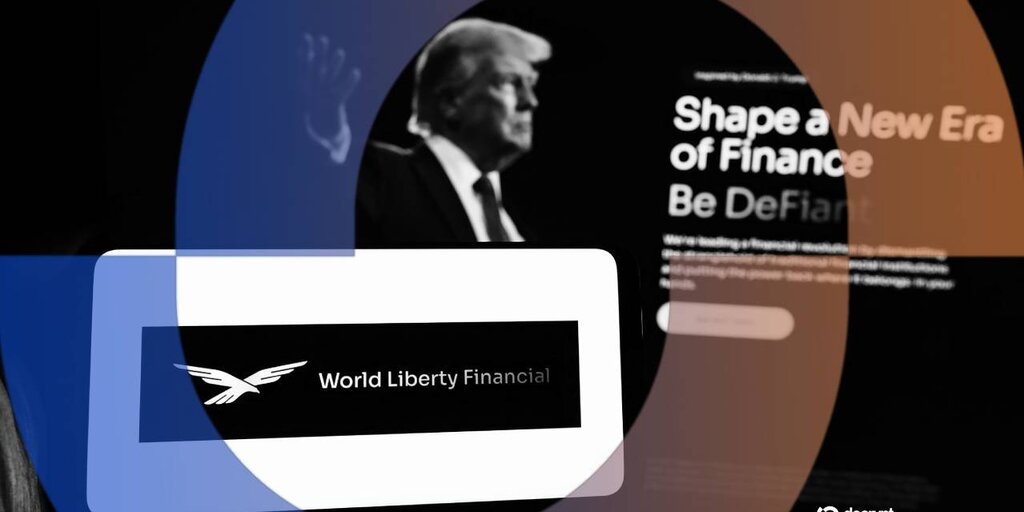 World Liberty borrows $150M from advisor-linked Dolomite, WLFI plunges 14% wiping $427M in value2026-04
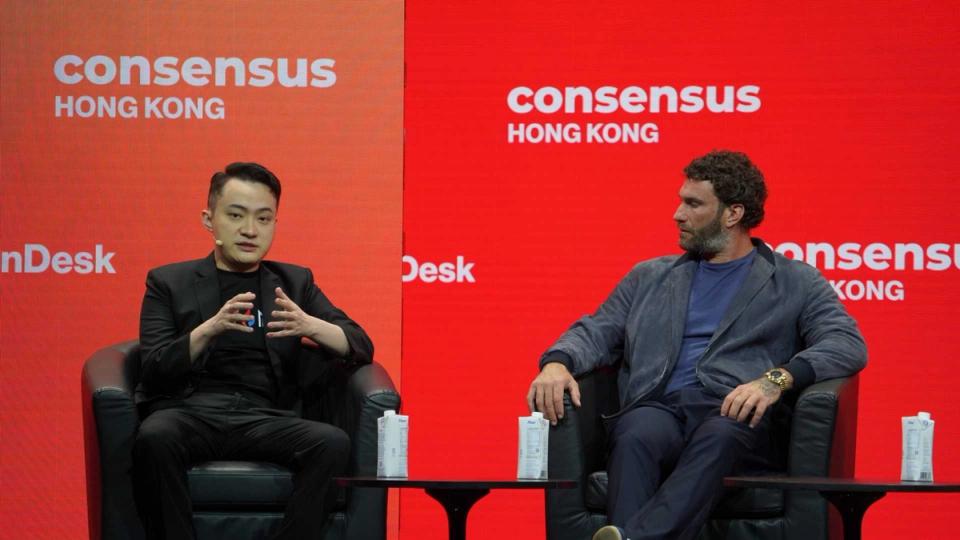 Justin Sun denounces Trump-backed WLFI as a 'personal ATM' after it borrows $75M on a platform its own adviser co-founded2026-04
 Justin Sun accuses World Liberty Financial of blacklisting his $75M WLFI stake via hidden contract backdoor2026-04
 World Liberty Financial proposes burning up to 10% of insider WLFI allocation in 62.3B token vesting overhaul2026-04
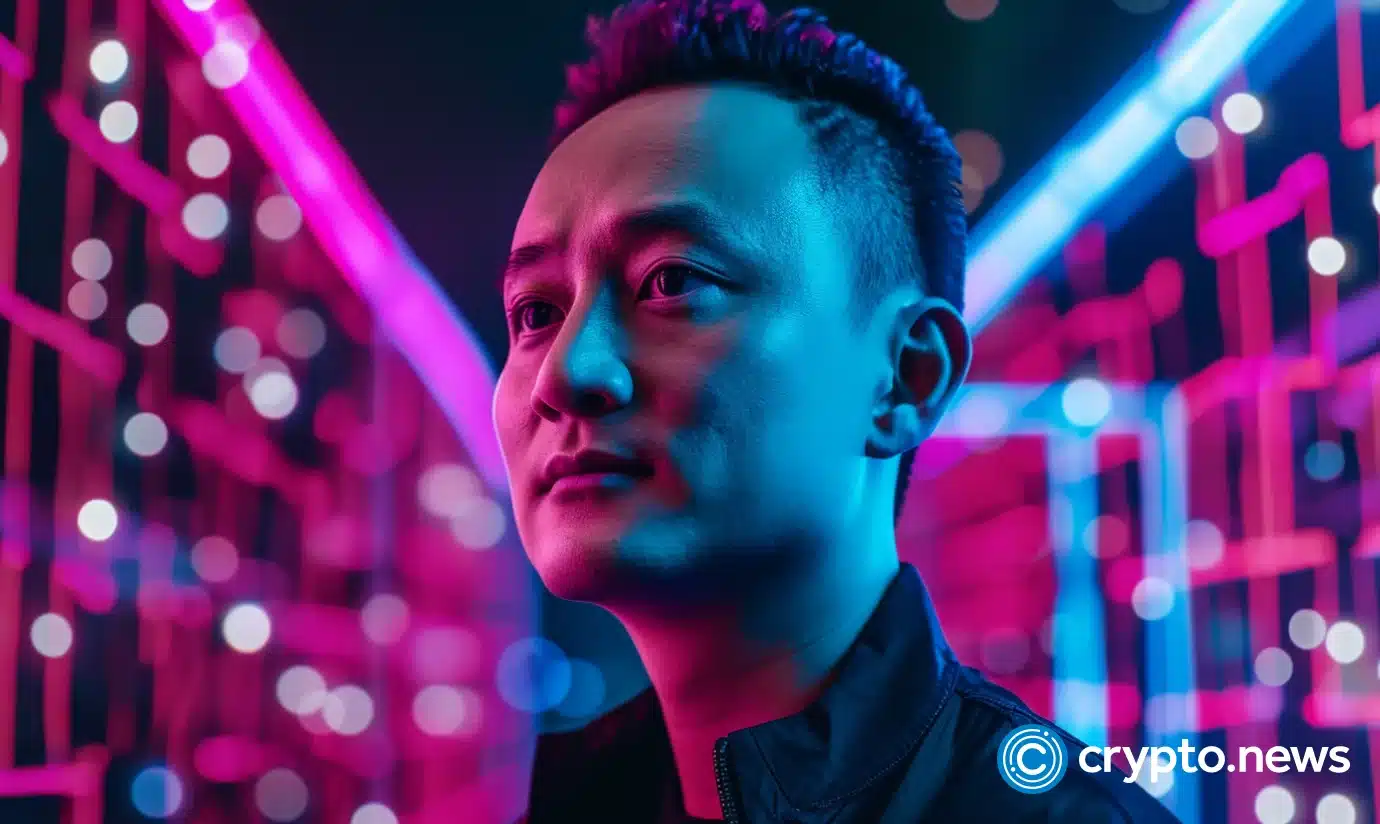 Syed Sameer steps in to mediate Justin Sun–WLFI dispute, proposing private deal to unfreeze blacklisted tokens as retail investors push back2026-04
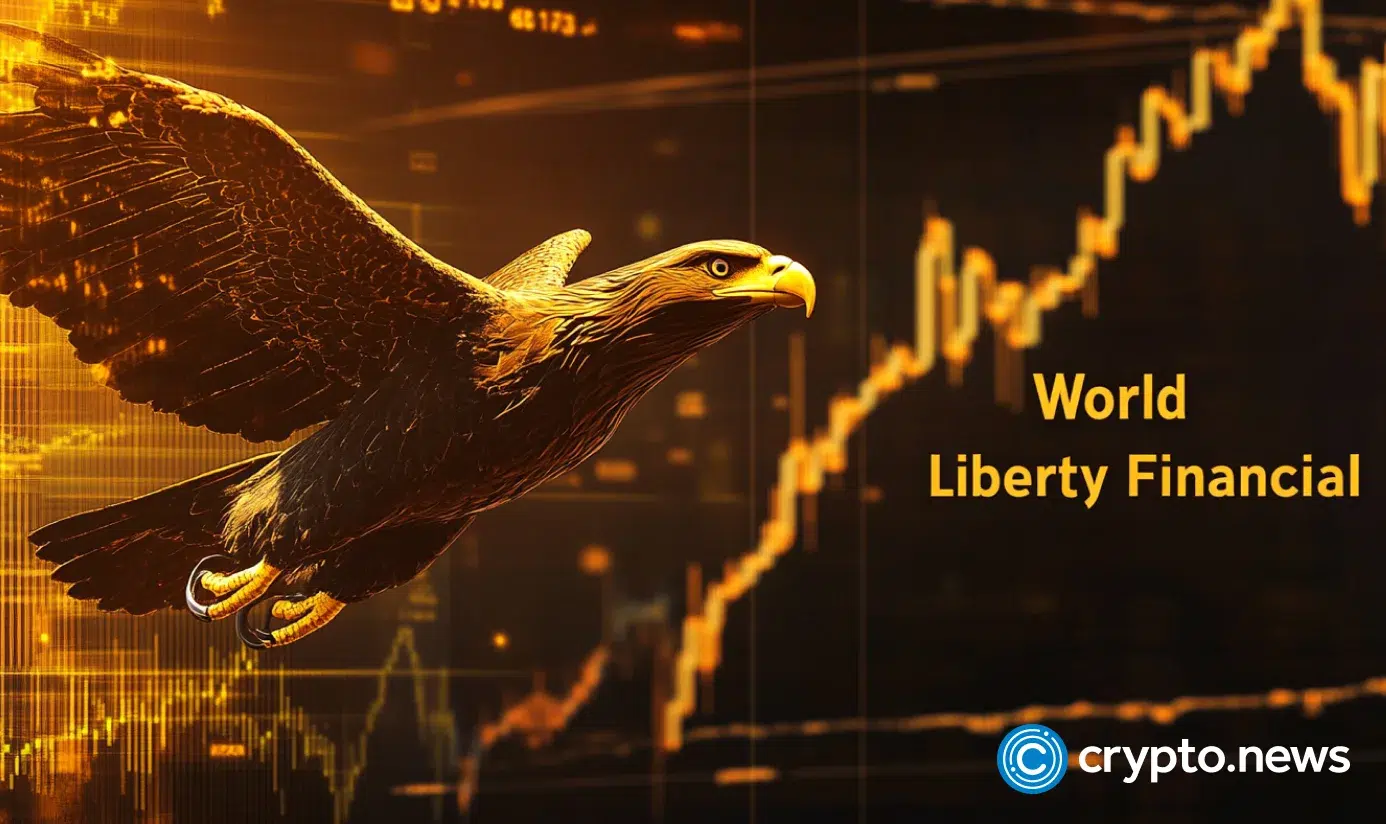 WLFI co-founder Zach Witkoff faces scrutiny after 2022 arrest video resurfaces, as Justin Sun lawsuit over frozen tokens adds pressure on DeFi project2026-04
A governance and utility token issued by World Liberty Financial (WLF), WLFI sits at the intersection of political celebrity, decentralized finance ambition, and a mounting series of controversies that have tested its credibility with retail and institutional investors alike.
What Is World Liberty Financial?
World Liberty Financial is a decentralized finance protocol launched in late 2024 with public backing from Donald Trump and members of his family, including his sons Eric and Donald Trump Jr., as well as co-founder Zach Witkoff. The project describes itself as a lending and borrowing platform built on Ethereum-compatible infrastructure, with governance rights assigned to holders of the native WLFI token.
Unlike most DeFi governance tokens that emerge from anonymous or pseudonymous teams, WLFI was deliberately marketed on its principals' public profiles — particularly Donald Trump's return to political prominence ahead of the 2024 U.S. presidential election. That positioning attracted unusual attention from regulators, politicians, and large-scale crypto investors, most notably Justin Sun, the founder of the Tron blockchain.
WLFI tokens are not freely tradeable in the conventional sense; they were sold in restricted tranches to accredited investors, with significant lockup provisions baked into the original structure. That design choice would later become the flashpoint for one of the protocol's most serious governance crises.

World Liberty borrows $150M from advisor-linked Dolomite, WLFI plunges 14% wiping $427M in value
$440M in illiquid WLFI tokens collateralizing $150M in stables on a protocol co-founded by your own advisor, with the USD1 pool sitting at 93% utilization — Dolomite depositors are the exit liquidity and they literally cannot exit. 55% of a protocol's entire TVL from one related-party borrower is the Celsius "anchor depositor" playbook wearing a DeFi skin. Team calling this "generating yield for everyone" while $40M already moved to Coinbase Prime tells you exactly who the yield is for.
Tokenomics and the USD1 Stablecoin
The WLFI token supply is large by design — the total issuance runs into the tens of billions of tokens, with allocations carved out for founders, the team, advisors, partners, and the public sale. The sheer scale of the insider allocation relative to public float created structural tension from the outset: governance votes could, in theory, be heavily influenced by a small number of insiders or large private purchasers.
World Liberty Financial subsequently launched USD1, a dollar-pegged stablecoin intended to anchor the protocol's lending activity. USD1 became the basis for several retail incentive campaigns: Binance ran a promotion allocating 178 million WLFI tokens to users who held USD1 in spot, funding, margin, and futures accounts, distributing $13 million in WLFI rewards across eligible holders. The Binance campaign was extended through late June 2026, signaling continued effort to build retail liquidity around the stablecoin.
However, not all exchange relationships have been smooth. HTX — the exchange where Justin Sun has historically held significant influence — halted both WLFI and USD1 trading and rerouted all USD1 holders into USDT following what was described internally as a "sanctions squall." The episode underscored how closely World Liberty Financial's fortunes are tied to the regulatory and reputational environment surrounding its named backers.
Readers clicked WLFI not for DeFi mechanics but for the collision of political power and financial self-dealing — the Trump family's 75% revenue stake, sanctioned-nation buyers, and Justin Sun's frozen-token lawsuit reveal a project where governance theater masks concentrated insider control.
Justin Sun and the Governance Dispute
No single figure has complicated WLFI's narrative more than Justin Sun, the Tron founder and one of the project's largest early investors. Sun's involvement initially appeared to be a vote of confidence — his public association with the project and large token purchases were cited by supporters as evidence of institutional legitimacy.
That relationship deteriorated sharply in 2026. Sun filed a lawsuit against World Liberty Financial alleging that his WLFI tokens had been blacklisted — effectively frozen — without warning or due process, stripping him of the governance rights he had purchased. He described the existence of a "hidden freeze backdoor" as an existential threat to investor trust, arguing that any protocol capable of unilaterally freezing tokens is not genuinely decentralized.
The dispute escalated into a public feud. Sun called a proposed governance vote "absurd," and led what observers characterized as an investor revolt against a World Liberty Financial proposal to extend token lockups well beyond Trump's second presidential term. A third-party mediator, Syed Sameer, stepped in to propose a private settlement to unfreeze the blacklisted tokens, but retail investors pushed back on the optics of resolving a governance dispute through backroom negotiation rather than on-chain process. The episode exposed a fundamental tension in projects that brand themselves as decentralized while retaining significant administrative control over token status.
Co-founder Zach Witkoff faced separate scrutiny during the same period, after a 2022 arrest video resurfaced publicly, adding reputational pressure to a project already navigating multiple simultaneous controversies.
The 62.3 Billion Token Vesting Overhaul
The most consequential governance action in WLFI's history to date is a proposal covering approximately 62.28 billion tokens — a restructuring of the vesting schedule for founders, team members, advisors, and partners.
Under the proposal, which was approved and implemented in mid-2026:
- 45.24 billion tokens held by insiders adopted a two-year cliff followed by three-year linear vesting, meaning no tokens from that pool could be sold or transferred for at least two years.
- 4.52 billion tokens — approximately 10% of the insider allocation — were proposed for permanent burn, reducing total supply and nominally increasing scarcity for remaining holders.
- The remaining tokens in the 62.3 billion pool followed phased unlock schedules that gave early investors some near-term liquidity while deferring the bulk of supply to later years.
Supporters framed the proposal as a mature commitment to long-term value. Critics, including Sun, argued that locking tokens for years beyond Trump's presidency amounted to a de facto freeze on investor capital without adequate compensation or transparency about who would control governance in the interim. The tension between "long-term alignment" and "investor liquidity rights" maps onto a well-worn debate in token economics, but the political dimension made it unusually public.
World Liberty Financial ultimately executed the token burn and began the vesting schedule for the 40.7 billion team tokens, describing the action as a step toward rebuilding credibility.
Justin Sun denounces Trump-backed WLFI as a 'personal ATM' after it borrows $75M on a platform its own adviser co-founded
- Tron founder Justin Sun, WLFI's largest outside backer with $75M invested, publicly accused the Trump-family venture of treating users as a "personal ATM" — a sharp reversal from his earlier vocal support of the project. - The criticism follows WLFI pledging 5 billion tokens on Dolomite, a DeFi lending platform co-founded by WLFI CTO Corey Caplan, to borrow $75M+ in stablecoins — with over $40M subsequently moved to Coinbase Prime. - WLFI previously blacklisted Sun's wallet after he transferred ~$9M in tokens, effectively freezing ~$100M of his holdings. Sun accused the project of hiding a backdoor freeze function in the token contract. - WLFI token has cratered to an all-time low of $0.08, an 82% decline from its September 2025 peak, as the insider-lending controversy and Sun's public break compound selling pressure.
The Dolomite Loan and Congressional Scrutiny
One of the most structurally significant elements of World Liberty Financial's activity has been its use of Dolomite, a DeFi lending protocol, to take out a $75 million loan backed by locked WLFI tokens.
Senator Elizabeth Warren formally requested that the SEC investigate the arrangement. Her letter raised questions about whether the loan — collateralized by tokens that cannot be freely traded — constituted a mechanism for the Trump family to extract value from what are effectively illiquid assets, potentially creating conflicts between the financial interests of insiders and the governance rights of ordinary token holders.
The Dolomite position itself created practical risks for the protocol. Reports indicated that WLFI's leverage position had pushed Dolomite to the limits of its available liquidity, raising concerns about systemic exposure within a DeFi ecosystem that relies on healthy collateral ratios and deep liquidity buffers. The episode illustrated how a large, politically connected position can create second-order effects for protocols that may not have anticipated that scale of concentrated exposure.
The SEC inquiry remains ongoing as of mid-2026, and no formal enforcement action has been announced.
- 01Trump family financial extraction
The 75% revenue share to DT Marks DEFI LLC and 22.5B token allocation without an employee role framed WLFI as a political brand monetization vehicle, not a DeFi protocol.
- 02Fundraise failure and token sale struggles
A 90% goal slash and less than 4% of Trump's token allocation sold signaled deep market skepticism beneath the brand hype.
- 03Justin Sun investor dispute
Sun's $30M investment turning into a blacklisted stake, lawsuit over frozen tokens, and 'personal ATM' accusation exposed severe governance and counterparty risk at the project's core.
- 04Sanctions and regulatory exposure
Sales to wallets tied to North Korea, Iran, and banned platforms put WLFI under direct regulatory scrutiny and raised questions about KYC controls on a politically connected token.
- 05EIP-7702 exploit and security flaws
Ethereum's Pectra upgrade exposing a wallet-draining flaw in WLFI's architecture — and the subsequent emergency kill-switch burning $22M — showed the project's smart-contract risk was not theoretical.
- 06USD1 stablecoin and governance expansion
Airdrop proposals, RWA partnerships via Aster, and AgentPay SDK launches showed WLFI pivoting from failed token sale to stablecoin infrastructure, pulling readers tracking whether the pivot is real.
WLFI-Linked AI Financial and Going-Concern Flags
A separate entity described as WLFI-linked AI Financial disclosed material uncertainty about its ability to continue as a going concern, citing mounting losses. The entity's relationship to the core World Liberty Financial protocol is not fully transparent in public disclosures, but the flag drew attention because it suggested that the broader ecosystem around WLFI — including affiliated ventures — is under financial strain at the same time the core token is navigating governance disputes and regulatory attention.
Going-concern disclosures are typically required when an auditor or management team has significant doubt about an organization's ability to operate for the next twelve months. In the context of a nascent DeFi project with a politically exposed backer, such a flag carries reputational weight that extends beyond the specific entity involved.
Governance Architecture and Its Limitations
WLFI's governance model follows a familiar DeFi pattern: token holders vote on proposals that shape protocol parameters, treasury allocations, and operational decisions. In practice, however, the concentration of tokens among insiders — prior to the vesting overhaul — meant that governance outcomes could be heavily influenced by a small number of wallets.
The blacklisting controversy raised a deeper question: if a protocol's administrators can freeze tokens and revoke governance participation, what does on-chain voting actually protect? This is not a problem unique to WLFI — many DeFi protocols retain administrative keys or multisig controls that can override community votes — but the scale of the dispute and the identities involved made it a prominent case study.
The token unlock proposal was itself subject to a governance vote, creating a situation where the parties most affected by the outcome — including Sun's allegedly frozen tokens — disputed whether their votes would even count. The resolution involved a combination of on-chain mechanics and off-chain negotiation, which critics argued set a troubling precedent for how disputes would be resolved in the future.
Justin Sun accuses World Liberty Financial of blacklisting his $75M WLFI stake via hidden contract backdoor
- TRON founder Justin Sun alleges World Liberty Financial embedded a hidden blacklisting function in the WLFI token smart contract that lets the team unilaterally freeze, restrict, or confiscate any holder's tokens without notice or recourse - Sun, who made the largest private investment at $75M, says his wallet was blacklisted and claims investors were never disclosed the capability before purchasing tokens - He accuses WLF of rigging governance votes by withholding information and extracting fees without proper community authorization - Sun demands immediate unlocking of blacklisted tokens, full transparency, and governance conducted with integrity, calling the backdoor "a trap door marketed as an open door"
Market Dynamics and Investor Sentiment
WLFI's price history reflects the volatility typical of politically associated tokens. Optimistic forecasts circulated in early 2026 suggested potential appreciation toward the $0.80 range; analysts pointing to those targets cited the Trump administration's broadly favorable posture toward the crypto industry and the potential for WLFI to benefit from regulatory tailwinds.
Against that backdrop, the governance disputes, the Dolomite leverage concerns, and the going-concern flags at affiliated entities acted as headwinds. Retail sentiment has been mixed: some investors view dips as buying opportunities, while others remain wary of a project where the terms of token ownership — including the possibility of blacklisting — are not fully legible from the outside.
The Binance USD1 campaign and similar distribution events served to broaden awareness and build on-exchange liquidity, but converting that attention into durable holders requires sustained protocol activity and trust — both of which remain contested.
- 2024-09launch
WLFI token details revealed: Ethereum launch, 20% early unlock, governance structure
- 2024-11milestone
America elects first DeFi project co-founder as president
- 2025-01milestone
Justin Sun invests $30M, becomes largest WLFI investor
- 2025-03milestone
WLFI live event at Mar-a-Lago with President Trump
- 2025-05exploit
Pectra EIP-7702 exploit exposes wallet-draining flaw; emergency kill-switch burns 166.7M WLFI ($22M)
- 2025-05regulatory
Watchdog reports WLFI sold to wallets tied to North Korea, Iran, and banned platforms
- 2025-06governance
Justin Sun accuses WLFI of blacklisting his stake via hidden backdoor; files lawsuit over frozen tokens
- 2025-06governance
USD1 airdrop to WLFI holders governance proposal passes with 99.94% yes vote
Regulatory and Political Context
World Liberty Financial operates in a legal environment that is unusually attentive to its principals. The Trump family's involvement means that every significant development — the Dolomite loan, the SEC inquiry, the stablecoin launch — gets filtered through a political lens that amplifies both positive and negative coverage.
Senator Warren's SEC referral is part of a broader pattern of congressional scrutiny directed at the overlap between political office and crypto asset ownership. The core legal questions involve disclosure obligations, potential conflicts of interest, and whether locked tokens used as loan collateral constitute a security requiring registration. None of these questions have been definitively resolved by courts or regulators, leaving the project in a state of legal ambiguity that is likely to persist through 2026 and beyond.
Outlook
World Liberty Financial and its WLFI token face a confluence of challenges that are likely to define the project's trajectory over the next two to three years. The vesting overhaul — including the 4.5 billion token burn and the extended lockup schedules — represents a genuine attempt to align long-term incentives, but it has also concentrated governance power in ways that have alienated at least one major investor. The resolution of the Justin Sun dispute, and whether it occurs transparently on-chain or through private settlement, will serve as a signal about the project's actual commitment to decentralized governance.
The Dolomite loan and attendant congressional scrutiny add regulatory overhang that is difficult to price. USD1's growth and the Binance partnership provide a constructive data point, but a stablecoin's success ultimately depends on the credibility of its backing institution — which remains under active contestation. Investors weighing WLFI should treat it as a high-risk asset with asymmetric political exposure, where external events entirely outside the protocol's control can move prices as much as any on-chain development.
Latest WLFI news
World Liberty borrows $150M from advisor-linked Dolomite, WLFI plunges 14% wiping $427M in valueJustin Sun denounces Trump-backed WLFI as a 'personal ATM' after it borrows $75M on a platform its own adviser co-foundedJustin Sun accuses World Liberty Financial of blacklisting his $75M WLFI stake via hidden contract backdoorWorld Liberty Financial proposes burning up to 10% of insider WLFI allocation in 62.3B token vesting overhaul Justin Sun wins court ruling to keep lawsuit public against World Liberty Financial.Syed Sameer steps in to mediate Justin Sun–WLFI dispute, proposing private deal to unfreeze blacklisted tokens as retail investors push back
Community notes
Spot something off or out of date? Drop a note. Editors review topic notes daily and roll accepted fixes into the explainer — contributors are recognized in the monthly $SQUID drop.
Loading notes…
Help improve this topic
Have a story or tip about this topic? Submit it. See something missing? Leave a note. Editors review daily; accepted submissions and fixes count toward the monthly $SQUID drop.