
Deep explainer on crypto lending, covering DeFi protocols like Aave, Morpho and Curve, the role of USDC and stablecoins, risk and liquidation mechanics, institutional adoption, and how onchain credit differs from traditional loans.
+35 sources across the wider coverage universe
 Fireblocks launches Earn, enabling institutions to generate yield on stablecoins via Aave and Morpho2026-04
 DeFi sees $840M+ in tokenized asset deposits, marking growth of RWAs from theory to execution as advisors explore new risk and yield opportunities2026-04
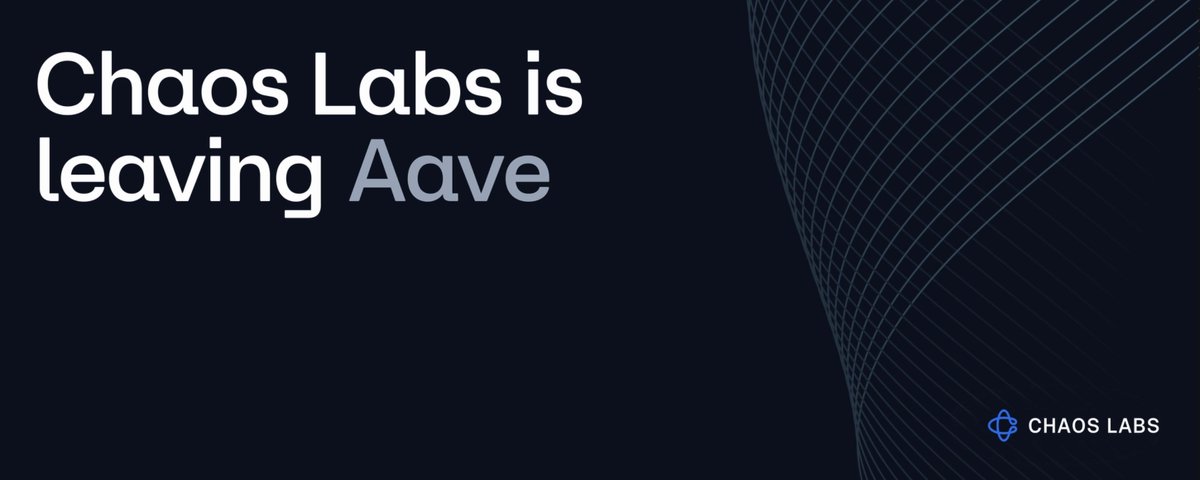 Chaos Labs Walks Away From $5M Aave Risk Mandate Over V4 Architecture, Underfunded Risk Budget, And Fundamental Disagreement On How Risk Should Be Managed At DeFi’s Largest Lending Protocol.2026-04
 Tangent cracks interest-free DeFi lending — 0% $USG loans on Curve LPs, funded by redirecting your collateral's emissions2026-04
 Robinhood Earn is rolling out to eligible US customers. Lend USDG onchain through a self-custody wallet and earn an estimated 7% APY. Lending itself runs on Morpho.2026-07
 Jupiter launches Earn on Recurring, letting USDC in DCA orders earn yield through Jupiter Lend until each scheduled purchase is executed2026-07
Lending in Crypto and DeFi: How Onchain Credit Markets Work
In crypto markets, lending refers to using digital assets as collateral or inventory for loans, either through centralized platforms or decentralized protocols governed by smart contracts. It is one of the core building blocks of the digital-asset ecosystem, powering yields, leverage, and liquidity across trading, DeFi, and institutional finance.
What Lending Means In Crypto
Lending in any financial system is the mechanism that allows capital to move from those who have a surplus today to those who need it, in exchange for interest that compensates lenders for time, risk, and opportunity cost. In traditional finance this happens through banks and credit markets; in crypto it happens through a mix of centralized companies and decentralized protocols, but the underlying economic relationship is the same: one party supplies capital, another borrows it, and they agree on terms of repayment and interest. Conceptually, there is “no major difference between DeFi lending and traditional lending” at this basic level, as Circle notes in its description of DeFi interest markets. What changes in crypto is the infrastructure, the actors involved, and the risk profile.
In decentralized finance, or DeFi, lending is implemented by smart contracts that hold users’ assets, algorithmically set interest rates, and enforce collateral and liquidation rules without relying on a bank or broker. These protocols are borderless and generally permissionless: anyone with a compatible wallet and the required collateral can participate, regardless of geography or credit history. Circle’s analysis of USDC’s role in DeFi emphasizes that this borderless access, combined with programmable money, allows borrowers and lenders to retain direct control over their funds while still tapping markets that look and feel similar to money markets and margin lending in traditional finance. The result is a global credit layer that operates on blockchains rather than bank ledgers, but serves a similar economic function.
As of mid-2026, DeFi lending has grown into one of the largest segments of decentralized finance by total value locked (TVL). Research that tracks protocols across chains shows that lending is second only to liquid staking in terms of assets deposited, with roughly 54 billion dollars of crypto locked in lending contracts across more than 380 active protocols on over 80 chains, and with the top ten protocols capturing the vast majority of this activity. The leading platforms, from Aave and Spark to Morpho and JustLend, now sit at the center of the crypto funding stack and increasingly connect to centralized exchanges, custodians, and banks. Against this backdrop, “lending” in crypto no longer refers to a niche service; it describes the core credit infrastructure of Web3.
Collateral, Overcollateralization, and Health Factors
Because most crypto users are pseudonymous and lack onchain credit histories, the dominant model of DeFi lending is overcollateralized borrowing. Instead of relying on income verification, credit scores, or legal recourse, protocols require borrowers to lock up assets worth more than the value of the loan. A borrower might, for example, deposit 10,000 dollars’ worth of ether as collateral and then borrow up to 6,000 dollars in a stablecoin, with the precise limit determined by parameters such as the maximum loan‑to‑value ratio and liquidation threshold defined by protocol governance. These parameters are set for each collateral asset, reflecting its volatility and liquidity, and are one of the key levers for risk management.
Most DeFi lending systems track a health factor or similar metric that summarizes whether a position is safely collateralized. When the value of the collateral falls, or the value of the borrowed asset rises, this health factor declines. If it crosses below a critical threshold, the position can be liquidated, meaning third‑party liquidators can repay the debt and seize collateral at a discount, restoring solvency at the level of the protocol. JustLend DAO’s documentation describes this structure in the context of its Tron-based money market, where suppliers deposit assets to earn interest and borrowers post collateral and pay a floating rate, with liquidation mechanisms kicking in when a position becomes undercollateralized. This overcollateralized model has become the standard template for DeFi lending because it is simple to implement onchain and does not depend on offchain enforcement.
Overcollateralization fundamentally reshapes the use cases for crypto lending compared with traditional consumer credit. Rather than borrowing because they lack capital, most DeFi borrowers already own valuable crypto and are using loans for leverage, liquidity, or tax optimization. They may borrow against ether, bitcoin, or governance tokens to buy more of the same asset, amplifying their exposure, or they may borrow stablecoins like USDC while retaining upside in their long‑term holdings. The risk is that market volatility can trigger liquidations, turning temporary price swings into realized losses, especially when borrowers stack multiple positions or use loops to increase leverage.
Centralized, Decentralized, and Hybrid Lending
The crypto lending landscape spans a spectrum from fully centralized platforms to fully decentralized protocols, with an increasing number of hybrid models that wrap DeFi under a centralized interface. Centralized lenders, often referred to as CeFi, resemble traditional brokers or fintech lenders. They custody customer assets, make credit decisions internally, and extend loans that may or may not be transparently backed one‑to‑one by collateral. In the last cycle, several high‑profile CeFi lenders ran into insolvency amid poor risk management and opaque rehypothecation, fueling a narrative that “crypto lending is broken” even though a number of DeFi protocols continued to function as designed.
Decentralized lenders, by contrast, implement all of their critical behavior as smart contracts on public blockchains. Lenders supply liquidity directly to autonomous lending pools, and borrowers interact with those pools via their own wallets rather than accounts at a company. Aave, for example, operates as a non‑custodial protocol where users can instantly lend and borrow cryptocurrencies without relying on a central intermediary, relying instead on smart contracts to track deposits, loans, and interest accrual. Circle notes that in this model, “all processes are conducted by smart contracts,” which means that core actions take place onchain and can be audited by anyone. While protocol governance and development teams still play a role, they are structurally distinct from brokers holding customer funds.
The hybrid category is increasingly important for mainstream adoption. Institutional platforms like Fireblocks and large exchanges like Coinbase integrate directly with DeFi protocols under the hood while offering a familiar user experience and risk controls on top. Fireblocks, for instance, allows enterprise customers to supply stablecoins into Aave’s markets and curated Morpho vaults via its “Earn” product, generating yield while relying on Fireblocks’ security and policy framework. Coinbase’s crypto‑backed loan product uses the Morpho onchain lending protocol deployed on Base to power USDC loans against bitcoin collateral, even though from the customer’s perspective the interaction is with Coinbase rather than with Morpho contracts directly. These integrations blur the lines between CeFi and DeFi and are a major channel through which institutional and retail capital flows into onchain credit markets.

EU banking authority calls for crypto lending rules in MiCA review

How DeFi Lending Works Under the Hood
Although there are hundreds of active DeFi lending protocols, they are built around a common set of primitives. The Eco analysis of lending architectures emphasizes that every onchain lending protocol implements the same three basic actions: deposit, borrow, and liquidate. What differs across designs is how these primitives are composed, how risks are partitioned, and how interest rates are determined.
Core Primitives: Deposit, Borrow, Liquidate
Depositing into a DeFi lending protocol means sending an asset to a smart contract that aggregates liquidity from many users. In return, the depositor typically receives a tokenized representation of their position—sometimes called a cToken, aToken, or vToken—whose balance grows over time as interest accrues. A lender who deposits USDC into an Aave or Compound pool, for example, receives a derivative token that reflects both their share of the pool and the accumulated interest. Circle describes how USDC holders can lend their tokens on protocols such as Aave and Compound by sending them to a smart contract; those tokens then become available for other users to borrow. Depositors are exposed to protocol risk but generally do not need to manage individual borrowers.
Borrowing is the mirror operation. A user supplies one asset as collateral and then draws another asset from the pool, within the borrowing power defined by loan‑to‑value ratios and other risk parameters. Aave’s documentation explains that borrowers must maintain overcollateralized positions; if they fall below required thresholds, liquidations can be triggered. JustLend DAO adopts a similar pattern on Tron, where borrowers interact directly with the protocol rather than with a centralized desk, paying a variable interest rate that is set algorithmically based on real‑time supply and demand. This overcollateralized model also serves as the foundation for more complex products such as leverage loops and carry trades.
Liquidation is the enforcement mechanism that keeps the system solvent. When market movements or additional borrowing push a position’s health factor below a predetermined level, third‑party liquidators are allowed (and incentivized) to repay a portion or all of the outstanding debt in exchange for collateral at a discount. This mechanism, which is central to protocols like Aave, JustLend, and Curve’s Llamalend, turns market volatility into a self‑correcting process at the level of the protocol, albeit sometimes at the cost of steep losses for liquidated borrowers. The design of liquidation incentives, discounts, and penalties is therefore a critical part of a protocol’s liquidation engine, an area that specialized analyses have emphasized as crucial for DeFi risk management.
Algorithmic Interest Rates and Utilization
One of the signature features of DeFi lending is that interest rates are set algorithmically, rather than by a centralized risk committee. Both industry documentation and academic research highlight that these rates typically depend on the utilization of a given asset in a lending pool, meaning the ratio of borrowed funds to total supplied funds. When utilization is low, protocols set relatively low borrow rates and correspondingly modest supply rates. As utilization climbs and liquidity becomes scarce, the algorithm increases rates to attract more deposits and discourage additional borrowing, aiming to keep enough unborrowed liquidity in the pool for depositors to withdraw and for the system to remain fluid.
Academic work on “optimal risk‑aware interest rates” formalizes this intuition by modelling interest rate curves that balance revenue for lenders, affordability for borrowers, and the risk of illiquidity or default. A simple example is a piecewise‑linear “jump rate” model, where the borrow rate increases slowly with utilization up to a target level and then accelerates sharply beyond that point. Supply rates are derived from borrow rates after accounting for the protocol’s reserve factor—a percentage of interest diverted to a reserve fund—and any spread captured by intermediaries. JustLend’s whitepaper describes how its interest rates on Tron are dynamically adjusted based on real‑time supply and demand, aligning with this utilization‑driven paradigm.
These algorithmic rates operate in the background of many institutional products. Fireblocks, for instance, routes its customers’ stablecoin balances into Aave markets and Morpho vaults, where the yield those customers earn is ultimately determined by the underlying protocols’ utilization-based interest rate models. Coinbase’s USDC loans against bitcoin collateral, powered by Morpho on Base, similarly expose borrowers and lenders to the interest rate dynamics of the Morpho markets they tap. Even when users interact only with a centralized interface, the economic logic is inherited from DeFi’s algorithmic curves.
Market Architectures: Monolithic Pools, Isolated Markets, Modular Vaults, Hybrids
While the primitives of deposit, borrow, and liquidate are universal, protocols differ significantly in how they structure markets and isolate risk. The Eco survey of DeFi lending highlights four main architectural families that have emerged: monolithic pools, isolated markets, modular vaults, and lending‑plus‑DEX hybrids.
Monolithic pool designs, pioneered by platforms like Aave and Compound, concentrate all deposits into a single, shared contract where any supported asset can be lent or borrowed against any other, subject to per‑asset risk parameters. Governance sets loan‑to‑value caps, liquidation thresholds, and reserve factors for each token, and borrowers are free to construct multi‑asset portfolios within those rules. The advantage is deep, shared liquidity and a simple user experience; the trade‑off is that risk from one volatile or thinly traded asset can, in extreme cases, propagate through the system, affecting the entire pool if liquidations fail or oracles are manipulated.
Isolated market architectures, adopted by protocols like JustLend DAO and newer lending platforms, create separate markets or “pools” for different sets of assets, so that risks are compartmentalized. JustLend’s V2 design is described as an isolated‑collateral protocol, meaning that certain collateral and borrow assets are paired in ways that prevent a problem asset from contaminating unrelated markets. From a user perspective, isolated markets introduce more complexity because borrowers must choose specific markets and cannot always mix any assets they like. But from a risk perspective, this compartmentalization is a powerful tool for containing the blast radius of potential failures.
Modular vault architectures generalize the isolated market idea by making each lending configuration a distinct vault that can be deployed permissionlessly with its own oracle, interest‑rate model, collateral parameters, and liquidation incentives. Morpho’s evolution toward an “open credit network for the world” reflects this modular approach, where each vault represents a specific credit market and curators or front‑end platforms allocate depositor funds across vaults. Euler similarly exposes multiple independent vaults, and with its Unlink integration it can serve institutional users who want to access these modular markets through a privacy layer. In this architecture, the protocol becomes a toolkit for building credit markets, and much of the differentiation happens at the vault or strategy level.
Lending‑plus‑DEX hybrids combine lending with decentralized exchange functionality, often by using liquidity provider (LP) tokens or concentrated liquidity positions as collateral, or by designing mechanisms where deposit liquidity simultaneously powers trading. Curve’s Llamalend exemplifies this category. It allows users to lend and borrow crvUSD while relying on Curve’s sophisticated LLAMMA liquidation engine to manage collateral more efficiently than traditional “hard” liquidations. Protocols like Lista further blur the lines by enabling users to deposit LP positions in USDC and USDT savings vaults as “smart collateral,” earning swap fees while also using those positions to back loans or leveraged strategies. These hybrid designs reflect the reality that in DeFi, lending and market making are deeply intertwined.
Oracles, Liquidation Engines, and LLAMMA
The viability of overcollateralized lending depends critically on accurate, timely price feeds and robust liquidation mechanisms. Oracles bring offchain price information into smart contracts, allowing a protocol to compute the value of collateral and debt in real time. If an oracle is manipulated or fails, positions can be liquidated incorrectly or not at all, leading to undercollateralization and potential bad debt. Protocols therefore devote significant effort to oracle design, redundancy, and risk management, with many relying on established providers such as Chainlink or on time‑weighted average price mechanisms.
Liquidation engines transform price feeds into concrete actions. Traditional lending protocols often use a simple model: when a position’s health factor falls below 1, liquidators can repay a portion of the loan and seize collateral at a fixed or slightly variable discount, earning a profit that compensates them for gas and risk. Educational analyses of DeFi liquidation engines emphasize parameters such as liquidation thresholds, bonuses, and close factors as key determinants of how smoothly a protocol responds to market stress. If incentives are too weak, liquidations may lag; if too strong, borrowers may be punished excessively or liquidators may front‑run each other.
Curve’s LLAMMA engine, which underlies its Llamalend markets for crvUSD, explores a different design space by trying to make liquidations more continuous and less binary. Instead of waiting for a cliff event at which collateral is suddenly seized, LLAMMA gradually rebalances collateral and debt across a range of prices, conceptually akin to an automated market maker managing a band of liquidity. Curve’s Llamalend interface highlights LLAMMA as a “cutting edge liquidation engine” that makes collateral use more efficient, with tens of millions of dollars’ worth of crvUSD supplied in its markets. While technical details are complex, the key point is that innovation in liquidation mechanics is one of the frontiers of DeFi lending, as protocols seek to reduce liquidation shocks and improve capital efficiency without compromising solvency.
Stablecoins as the Unit of Account
Stablecoins play a critical role in crypto lending by providing a relatively stable unit of account and a medium of exchange that is less volatile than bitcoin or ether. Circle underscores that dollar‑denominated stablecoins such as USDC mitigate the price volatility that would otherwise make borrowing and lending purely in crypto assets extremely risky. In practice, many DeFi lending positions involve stablecoins on one side of the trade: lenders deposit USDC, DAI, or other stable assets to earn interest, and borrowers either draw stablecoins against volatile collateral or borrow volatile assets while denominating their liabilities in dollars.
USDC in particular has become a fixture of DeFi lending markets. Circle notes that USDC holders can lend their tokens on protocols like Aave and Compound by depositing them into autonomous lending pools, and that such lending platforms have historically dominated DeFi by simulating traditional borrowing and lending services while relying on decentralized networks. Institutional platforms reflect this centrality. Fireblocks’ Earn product is explicitly designed to “earn yield on stablecoin balances,” integrating with Aave markets and curated Morpho vaults so that corporate treasuries can put idle USDC and similar assets to work. Coinbase’s crypto‑backed loan product also uses USDC as the borrowed asset, allowing users to borrow up to one million dollars in USDC against bitcoin collateral, with loans powered by the Morpho protocol on Base.
At the same time, protocol‑native and algorithmic stablecoins such as crvUSD on Curve further entwine lending and stablecoin design. Llamalend markets allow users to lend and borrow crvUSD, and the behavior of LLAMMA directly influences the stability and collateralization of that stablecoin. As more real‑world assets are tokenized and used as collateral—from tokenized Treasury bills to private credit—the role of stablecoins as the primary unit of account in DeFi lending is likely to persist, even as the composition of collateral evolves.
Readers click lending stories not for yield rates but to track which architectural bets — oracle-free AMM pricing, soft-liquidation curves, undercollateralized credit scoring — are displacing the overcollateralized status quo that has defined DeFi borrowing since 2020.
Protocol Spotlights: Aave, Morpho, Curve, JustLend, Euler and Beyond
The DeFi lending ecosystem is diverse, but a few protocols serve as keystones for understanding how onchain credit markets work in practice and how they are evolving.
Aave: From ETHLend to Multichain Liquidity Layer
Aave is one of the most widely used DeFi lending protocols and a canonical example of the monolithic pool architecture. It began life as ETHLend, a peer‑to‑peer platform, but pivoted in 2018 to a pool‑based model in which users deposit assets into shared liquidity pools and borrowers take out overcollateralized loans from those pools. This shift improved efficiency by eliminating the need to match individual lenders and borrowers, and it set the template for many subsequent protocols. Aave runs on smart contracts that automate deposits, loans, and liquidations, removing the need for intermediaries and allowing anyone with a compatible wallet to participate.
Aave’s footprint today is multichain and substantial. As of April 2026, Aave V3 was the largest DeFi lending protocol by TVL, with about 19.4 billion dollars in deposits spread across more than fifteen EVM‑compatible chains, according to DefiLlama data summarized by Eco. This scale means that Aave often serves as a base layer for other protocols and products. For example, Fireblocks’ Earn feature supplies stablecoins from institutional customers directly into Aave markets, with interest rates that adjust dynamically based on supply and demand. The fact that Coin Metrics dedicated a detailed report to examining Aave’s infrastructure underscores its prominence as a piece of crypto financial plumbing.
The AAVE token plays several roles within the ecosystem. It functions as a governance token, allowing holders to vote on Aave Improvement Proposals that determine parameters, new assets, and protocol upgrades. It can also be used as collateral on the platform and can be staked in a safety module that absorbs shortfalls, with stakers receiving incentives from the protocol. This combination of governance, utility, and risk‑backstop roles reflects a broader pattern in DeFi, where protocol tokens align user incentives with protocol health, though they also introduce their own governance and regulatory considerations.
Aave was also the first major DeFi protocol to introduce flash loans in 2020, a novel construct that allows users to borrow funds without collateral as long as the loan is repaid within the same block. Flash loans exploit the atomicity of blockchain transactions: if all steps in a transaction succeed, the state changes are applied; if not, the transaction reverts. Borrowers can use flash loans to perform arbitrage, refinance positions, or execute complex trading strategies, all without upfront capital, provided they can repay with fees in the same transaction. While flash loans have been used in some high‑profile exploits, they also illustrate how programmable lending can enable entirely new types of financial operations that do not exist in traditional markets.
Morpho: Toward an Open Credit Network
Morpho represents a newer wave of DeFi lending focused on modularity, optimization, and integration with both DeFi and CeFi. The project describes itself as “the open credit network for the world,” emphasizing that every lending position has two sides—a lender and a borrower—and that its goal is to connect these sides to the best possible opportunities globally. Eco’s survey of lending architectures notes Morpho Blue as one of the largest protocols by TVL, with around 4.9 billion dollars in deposits as of April 2026, illustrating that it has quickly become a core player.
Morpho’s design philosophy is closely aligned with the modular vault paradigm. Rather than a single monolithic pool, it exposes configurable markets, or vaults, each with its own parameters such as oracle choice, interest‑rate model, and loan‑to‑value settings. This structure allows different risk profiles to coexist on the same protocol and gives front‑ends and curators the ability to direct depositor funds into tailored strategies. Fireblocks, for example, integrates not only with Aave but also with curated Morpho vaults in its Earn product, enabling institutions to earn yield on stablecoins through exposures that have been pre‑screened and managed within Fireblocks’ governance framework.
Morpho’s growing importance is reflected in its traction with both investors and major platforms. In mid‑2026, it secured a 175 million dollar funding round from top venture capital firms to “turbocharge DeFi’s march into the mainstream,” as one news summary put it. Coinbase’s crypto‑backed loans, which allow customers in selected jurisdictions to borrow up to one million dollars in USDC using bitcoin as collateral, are powered by the Morpho onchain lending protocol on the Base network. This setup lets Coinbase offer loans with no Coinbase fees while relying on Morpho to handle the core lending logic and risk parameters at the protocol level. It is a concrete example of how an open credit network can sit beneath multiple front‑ends and business models.
Morpho is also involved in expanding trust‑minimized bitcoin lending beyond custodial wrappers. Citrea, a project focused on enabling bitcoin to be used on a fully programmable layer, has highlighted its integration with Morpho as a way to create the first trust‑minimized BTC‑backed lending market on its platform. For years, users wanting to put BTC to work in DeFi often had to rely on custodial representations such as wrapped bitcoin issued by centralized entities. The Morpho–Citrea approach aims to combine trust‑minimized BTC with a native stablecoin built specifically for the bitcoin ecosystem, signalling a shift toward more decentralized and transparent bitcoin‑based credit markets.
Curve’s Llamalend and the LLAMMA Engine
Curve Finance is best known as a decentralized exchange optimized for stablecoins and pegged assets, but it has progressively moved into lending via products such as Llamalend. Llamalend allows users to lend and borrow crvUSD, Curve’s overcollateralized stablecoin, against selected collateral assets. According to Curve’s interface, users can lend tens of millions of dollars’ worth of crvUSD in these markets, and Llamalend is “powered by the cutting edge LLAMMA liquidation engine.”
LLAMMA (often interpreted as a “Logarithmic Mean Market Maker” architecture) is designed to make collateral management more efficient and less abrupt than traditional liquidation schemes. Rather than waiting for a simple threshold breach to trigger a large liquidation, LLAMMA maintains positions across a range of prices, gradually converting collateral into stablecoins as prices fall and reversing the process if prices recover. FinanceFeeds’ educational coverage on liquidation engines in DeFi highlights Llamalend as an example of how advanced mechanisms can smooth out liquidation flows and potentially reduce the severity of market cascades, even if the details are complex and still evolving.
By integrating a specialized liquidation engine with its existing exchange infrastructure, Curve’s Llamalend blurs the boundary between AMMs and lending protocols. Liquidity in Curve pools, price discovery, and collateral management become part of a unified system, and crvUSD itself is deeply intertwined with the health of Llamalend markets. This kind of lending‑plus‑DEX hybrid foreshadows a future in which credit, trading, and collateral swaps are tightly composable and protocol‑native.
JustLend DAO: Tron’s Lending Hub
JustLend DAO is the primary decentralized lending protocol on the Tron network and illustrates how the Aave‑style model has been adapted to different ecosystems. Its whitepaper describes JustLend as a Tron-based money market protocol that establishes algorithmically managed liquidity pools where interest rates are determined by the real‑time supply and demand of Tron‑based assets. Users act either as suppliers, depositing assets to earn interest, or as borrowers, taking out loans by providing collateral and paying a floating interest rate. Both roles interact directly with the protocol, not with a central company, and the markets are governed by code and DAO decisions.
Recent upgrades have seen JustLend DAO transition to an isolated‑collateral model in its V2 architecture, aligning it with the “isolated market” family of designs that seek to compartmentalize risk. Eco’s survey notes that JustLend is among the largest lending protocols by TVL, with about 2.4 billion dollars in deposits as of April 2026, underlining the significance of Tron’s ecosystem in the broader DeFi lending landscape. The protocol’s evolution—including reported overhauls of its model to improve collateral isolation and efficiency—illustrates how DeFi lending platforms iterate rapidly in response to both market conditions and research advances.
Euler and Unlink: Privacy for Institutional Lending
Euler Finance, though not described in full detail in the provided sources, is widely known as a modular, permissionless lending protocol that allows tailor‑made markets for different assets. Its recent integration with Unlink highlights another frontier in DeFi lending: privacy‑preserving institutional participation. According to ETH Daily’s coverage, Euler is integrating Unlink to give institutions access to its modular markets while routing their activity through a privacy layer. This layer keeps balances, transaction history, and vault selection out of the normal public transaction path, reducing the visibility of institutions’ strategies and positions to competitors.
Crucially, Unlink’s design, as described in that coverage, leaves the protocol’s core parameters public and verifiable. Vault configurations, collateral relationships, oracle inputs, and liquidation logic remain transparent so that anyone—retail or institutional—can underwrite a market’s risk before entering it. What changes is the link between a specific wallet and the vaults it uses, which is obscured by the privacy layer, while still preserving the records institutions need for internal monitoring, audit, and reporting workflows. This approach attempts to reconcile DeFi’s transparency with institutional requirements around confidentiality and compliance, and it suggests a path for making public credit markets compatible with traditional asset‑management practices.
Institutional Rails: Coinbase, Fireblocks, Ripple, and Banks
As DeFi lending matures, centralized institutions are increasingly plugging into onchain credit markets rather than building everything from scratch. Coinbase’s crypto‑backed loans and stablecoin‑backed credit cards are emblematic. The company’s borrow product allows customers in eligible U.S. jurisdictions to borrow USDC against bitcoin collateral, with loan sizes up to one million dollars and no Coinbase fee. The lending engine is provided by Morpho on Base, meaning that Coinbase leverages an existing DeFi protocol deployed on a layer‑2 network to power a regulated consumer product.
Fireblocks, a leading infrastructure provider for institutional crypto custody and operations, has taken a similar path. Its Earn product gives enterprise customers native access to onchain lending by letting them supply stablecoins directly into Aave markets and curated Morpho vaults from within the Fireblocks platform. Interest rates adjust dynamically based on supply and demand in the underlying protocols, while institutions benefit from Fireblocks’ security, governance, and policy controls. This model illustrates how DeFi can be abstracted behind institutional‑grade platforms without losing its core properties.
Traditional financial institutions are also engaging with crypto lending more directly. Ripple Labs, for example, secured a 200 million dollar debt facility from Neuberger Specialty Finance to expand its Ripple Prime business, which provides lending and financing solutions to clients operating across traditional and digital markets. Coverage notes that the financing will increase Ripple Prime’s lending capacity, effectively using a traditional debt facility to scale a hybrid crypto‑and‑TradFi lending platform. Banks such as Cross River have similarly committed capital to digital‑asset‑backed loan originators, signalling that bank balance sheets are beginning to treat tokenized loans and crypto‑secured credit as a recognizable asset class.
Crypto Lending vs Traditional Lending
To understand the significance of crypto lending, it is useful to compare it with traditional lending along several dimensions: access, underwriting, collateral, transparency, speed, and regulatory treatment. While both paradigms move capital from savers to borrowers in exchange for interest, the mechanics and risks differ substantially.
Traditional lending, as described in consumer‑facing explanations, typically requires extensive documentation, credit checks, and longer processing times. Banks and other financial institutions act as intermediaries, evaluating borrowers’ creditworthiness based on income, employment history, credit scores, and collateral, and then extending loans that are recorded on bank balance sheets. The interest rates offered to borrowers and paid to depositors are influenced by central bank policy, internal risk models, and competition, but change relatively infrequently compared with the block‑by‑block adjustments in DeFi. The upside is that borrowers can obtain undercollateralized loans—such as mortgages or student loans—based on future income, and there is legal recourse if contracts are breached.
In crypto lending, the primary form is overcollateralized, onchain credit that does not require identity verification or credit scoring. Bitsgap’s comparison of crypto and traditional loans highlights that crypto lending can offer near‑instant access because there is no manual underwriting; users simply deposit collateral and borrow within the limits set by the protocol. Circle emphasizes that DeFi platforms are borderless and can be used by anyone, with processes conducted entirely by smart contracts. This means that someone in a country with limited banking access can obtain a dollar‑denominated loan by locking up crypto, even if they lack a traditional credit file. The trade‑off is that if their collateral value falls, they can be liquidated automatically, with no opportunity to renegotiate terms.
The following table summarizes some of these differences:
| Dimension | Traditional bank lending | Centralized crypto lending | DeFi lending (onchain) |
|---|---|---|---|
| Intermediary | Banks and regulated lenders control funds and decisions | Companies custody assets and make credit decisions | Smart contracts hold funds; rules governed by code and DAOs |
| Access | Often restricted by jurisdiction and credit checks | KYC required; jurisdictional geofencing | Borderless, permissionless access with a wallet and collateral |
| Underwriting | Income, credit score, legal recourse | Internal risk models; sometimes opaque | Primarily overcollateralization and real‑time collateral valuation |
| Collateral | Optional; often real‑world assets | Crypto collateral or none (for unsecured CeFi loans) | Almost always crypto collateral, often volatile |
| Rate setting | Committee decisions, macro benchmarks | Company policy; market conditions | Algorithmic curves based on supply and demand/utilization |
| Transparency | Limited public visibility into loan books | Limited; depends on disclosures | Onchain positions and parameters visible, subject to privacy layers |
| Settlement speed | Days to weeks | Hours to days | Near‑instant; block‑time settlement |
Although this comparison highlights the openness and programmability of DeFi, it also underscores that crypto lending is not a drop‑in replacement for traditional consumer credit. The lack of identity‑based underwriting means that DeFi is poorly suited today to financing long‑duration, undercollateralized obligations such as mortgages. Instead, its sweet spot lies in collateralized, market‑driven credit—margin trading, liquidity provisioning, treasury management, and short‑term funding—that can tolerate mark‑to‑market volatility and automatic liquidations.
Regulatory treatment further differentiates the paradigms. In traditional finance, securities and lending are governed by well‑developed frameworks, and tokenized versions of securities are increasingly being pushed towards those same structures. Commentary by U.S. regulators has emphasized that tokenized securities are not unregulated “wrappers,” but are being steered toward market structures where platforms must deliver the same investor protections and compliance as traditional venues. As tokenized real‑world assets, including corporate debt and treasuries, are increasingly deposited into DeFi lending protocols, the line between securities regulation and DeFi architecture becomes an active area of policy debate.
- 01Aave Base chain dominance↗
A single protocol locking in top-dog status on a fast-growing L2 signals where the next liquidity concentration is forming, and readers want the early read before TVL compounds.
- 02Curve LLAMMA soft liquidation↗
A mechanism that weathered a volatile week with only $4K in liquidations — versus cascade wipeouts on rival protocols — pulled in readers who have been burned by hard-liquidation spirals before.
- 03Oracle-free and undercollateralized primitives
BAMM, 3Jane, and Clearpool each attack the same overcollateralization constraint from a different angle; readers are tracking whether any design can hold as real infrastructure rather than a one-cycle experiment.
- 04Institutional DeFi credit markets↗
Maple's direct lending to Web3 firms and Morpho's $50M raise from a16z and Ribbit signal that crypto-native credit is attracting serious institutional capital, and the audience is sizing how fast that channel scales.
- 05Silent and unreported exploit drains
An ongoing attacker quietly draining multiple protocols while projects stayed silent spooked readers who need to know which markets are safe before allocating capital.
- 06TradFi regulatory skepticism
European banking authorities explicitly calling DeFi lending niche due to AML and hack exposure gave readers a concrete benchmark for how far regulated institutional adoption actually is.
Risk, Interest Rates, and Liquidations
Crypto lending promises open, programmable credit markets, but it also introduces novel risks and failure modes. Understanding these risks is essential for both retail users and institutions considering participation.
Smart Contract and Protocol Risk
The most fundamental risk in DeFi lending is that of smart contract bugs or insecure protocol design. If a vulnerability allows an attacker to drain funds or mint unbacked assets, depositors can lose capital even if they never take out a loan. Eco’s survey of DeFi lending notes that cumulative losses from hacks and exploits in lending protocols exceed 2.1 billion dollars, according to DefiLlama’s hack tracker. While audits, formal verification, and bug bounties have improved over time, they cannot guarantee safety, especially when protocols are complex and composable with other systems.
Governance risk is adjacent to smart contract risk. Many lending protocols allow DAO governance to adjust risk parameters, whitelist collateral types, or upgrade contracts. Poor governance choices, such as listing an illiquid token with overly generous loan‑to‑value ratios, can create systemic risk. Eco emphasizes that audits, oracle architecture, liquidation parameters, and governance posture all matter when assessing the risk profile of a lending protocol. Institutional users often seek managed access via platforms like Fireblocks precisely to add additional layers of review and control on top of protocol governance.
Market Risk and Liquidation Cascades
Market risk in crypto lending largely manifests through price volatility and the possibility of liquidation cascades. When collateral prices drop rapidly, many positions can breach their liquidation thresholds at once. If liquidity is thin, liquidators may struggle to unwind positions without pushing prices down further, exacerbating the problem. Educational deep dives on DeFi liquidation engines argue that the design of liquidation incentives, the granularity of liquidation steps, and the integration with decentralized exchanges are critical for avoiding such cascades.
The evolution of liquidation engines, from simple “hard” liquidations to more continuous mechanisms like LLAMMA, reflects attempts to mitigate these risks. By gradually adjusting collateral and debt positions across a price range, LLAMMA aims to reduce the sudden shocks associated with all‑at‑once liquidations and to make collateral usage more efficient. However, these innovations also add complexity, and their behavior under extreme stress is still being studied. For users, the practical takeaway is that even in sophisticated systems, overleveraged positions can be liquidated quickly, and using high loan‑to‑value ratios on volatile collateral is inherently risky.
Stablecoin depegs add another layer of market risk. When stablecoins used as collateral or borrowed assets lose their peg, the assumed stability in positions can vanish. Protocols must decide how to value such assets in their oracles and whether to treat them as safe collateral. The experience of stablecoin depeggings has led many lending platforms to adopt conservative parameters for algorithmic or less liquid stablecoins and to rely heavily on well‑capitalized, fiat‑backed tokens like USDC for core markets.
Interest Rate Risk and Algorithmic Design
DeFi’s algorithmic rate models are a strength in terms of transparency and responsiveness, but they also create interest rate risk for both borrowers and lenders. Because rates are driven by utilization, they can spike rapidly during periods of high demand, turning what seemed like a low‑cost loan into an expensive liability. Conversely, supply rates can collapse when new capital floods into a market, reducing yields for lenders. Academic work on risk‑aware interest rates emphasizes that the shape of the rate curve—where the “kink” in utilization sits, how steep the slope is above and below that point—has direct implications for protocol stability and user experience.
Protocols like JustLend and Aave adjust rates based on real‑time supply and demand, but the specific parameters are chosen by governance and can change over time. Institutional interfaces like Fireblocks Earn and Coinbase Borrow must therefore manage expectations and provide transparency about the underlying variable‑rate nature of these products. For sophisticated users, variable rates provide opportunities for carry trades and dynamic allocation; for less experienced users, they can introduce surprises if not well understood.
Operational and Privacy Risks for Institutions
Institutions entering DeFi lending face additional operational and privacy risks. On the operational side, they must manage private keys, monitor positions around the clock, and integrate onchain data into their risk systems. Platforms like Fireblocks have emerged to address this with secure custody, transaction policy controls, and integrated access to protocols like Aave and Morpho, offering a more familiar operational environment. On the privacy side, the radical transparency of public blockchains can pose challenges. Competitors or counterparties might be able to observe large positions and front‑run or trade against them.
The Euler–Unlink integration is a notable response to this privacy concern. By routing activity through a privacy layer that obscures balances, transaction history, and vault selection from the public path, Unlink lets institutions supply, borrow, and manage positions on Euler without broadcasting their strategies to the world. At the same time, Unlink preserves the records institutions need for monitoring and regulatory reporting and keeps the core protocol parameters transparent. This balance between privacy and verifiability is likely to become increasingly important as larger asset managers and corporates consider onchain credit markets.
Conclusion
Lending in crypto has evolved from a handful of experimental money markets into a sprawling, multi‑chain ecosystem that underpins much of the liquidity and leverage in digital‑asset markets. At its core, the economic relationship remains familiar: lenders supply capital, borrowers take out loans, and interest rates compensate lenders for time and risk. What is different is the infrastructure. In DeFi, smart contracts and DAOs replace bank credit committees and back‑office systems, borders disappear, and interest rates are set by algorithmic curves that react in real time to changing supply and demand.
Protocols like Aave, Morpho, Curve’s Llamalend, JustLend, and Euler illustrate the range of architectural choices that have emerged. Aave’s monolithic pools offer deep, shared liquidity and have grown to tens of billions of dollars in deposits across many chains, making it a foundational piece of DeFi infrastructure. Morpho’s modular vaults and “open credit network” vision show how lending can be decomposed into configurable markets, enabling integrations from Coinbase’s BTC‑backed USDC loans to Fireblocks’ institutional yield products. Llamalend’s LLAMMA engine and Lista’s smart collateral vaults demonstrate that lending is increasingly intertwined with advanced AMM mechanics and LP positions. JustLend and Tron’s ecosystem highlight that these ideas are not confined to Ethereum and its L2s, but are spreading across alternative base layers as well.
At the same time, crypto lending remains a high‑risk, high‑innovation domain. Cumulative DeFi lending losses of more than two billion dollars from hacks and exploits remind participants that smart contracts are not infallible. Liquidation engines must be carefully tuned to handle volatile markets without triggering cascades, and oracle design remains a critical dependencies. Algorithmic interest rates can both stabilize utilization and surprise users, depending on how curves are designed. The regulatory environment is in flux, especially as tokenized real‑world assets and tokenized securities are steered toward existing regulatory frameworks.
Nonetheless, the trajectory is clear. From borderless access to dollar credit via stablecoins like USDC to institutional lending desks that are funded through DeFi protocols and bank credit lines, onchain lending is becoming integrated into a broader financial stack. The distinction between DeFi and TradFi credit markets is likely to blur further as banks participate as depositors or borrowers in onchain pools, as privacy layers make institutional strategies compatible with public ledgers, and as regulatory clarity improves. For a crypto‑savvy audience, understanding lending is therefore essential not only to navigating DeFi yields and leverage, but also to grasping how digital assets are reshaping the mechanics of credit itself.
Curve launches crvUSD with LLAMMA soft-liquidation mechanism on Ethereum
Curve deploys one-way Llama Lend markets, opening isolated overcollateralized lending on Curve
- 2023-11exploit
Onyx Protocol oVUSD lending market exploited for $3.2M
- 2024-01exploit
Wise Lending hack intercepted by white hat c0ffeebabe.eth before full drain
Morpho secures $50M funding round led by Ribbit Capital with a16z, Coinbase Ventures, and Pantera
Decentralized lending TVL surpasses $30B for the first time since mid-2022 market peak
- 2025-02governance
Chaos Labs exits $5M Aave risk mandate, citing V4 architecture disagreement and underfunded risk budget
Aave confirmed as top lending protocol on Base by TVL, consolidating L2 lending dominance
Outlook
Looking ahead, crypto lending is poised to move from being primarily a speculative leverage engine to serving as a generalized credit layer for digital and tokenized assets. Several converging trends support this view. First, the continued rise of modular vault architectures, exemplified by Morpho and Euler, will make it easier to spin up specialized credit markets for everything from long‑tail tokens to tokenized treasuries, each with its own risk parameters and interest‑rate curves. Second, improvements in liquidation engines, such as LLAMMA and other continuous mechanisms, may reduce the violence of liquidation cascades and improve capital efficiency, making higher loan‑to‑value ratios safer and lending more attractive for productive use cases.
Third, the integration of DeFi lending into institutional workflows via platforms like Fireblocks, Coinbase, and Ripple Prime will likely continue, bringing more professionally managed capital into onchain pools. As banks and asset managers gain comfort with tokenized collateral and onchain settlement, we can expect more hybrid structures where traditional credit facilities backstop or leverage DeFi markets, and where DeFi protocols in turn finance traditional loans by accepting tokenized claims as collateral. Finally, the regulatory treatment of tokenized securities and stablecoins will shape which lending models can scale globally, with regulators already insisting that tokenized securities operate within familiar market structures and comply with existing investor‑protection regimes.
For now, participation in crypto lending still requires a high tolerance for smart contract, market, and regulatory risk. But the direction of travel is toward deeper integration, greater sophistication in risk management, and broader use beyond speculative leverage. As lending remains one of the largest categories by DeFi TVL and sits at the crossroads of trading, stablecoins, and tokenized real‑world assets, it will remain a central lens through which to understand the evolution of crypto markets.
Latest Lending news
Sources
19 records from 15 domains
eco.com
ledger.com
morpho.org
bitsgap.com
circle.com
curve.finance
justlend.org
x.com
ethdaily.io
arxiv.org
coinbase.com
sahmcapital.com
fireblocks.com
financefeeds.com
instagram.com
Community notes
Spot something off or out of date? Drop a note. Editors review topic notes daily and roll accepted fixes into the explainer — contributors are recognized in the monthly $SQUID drop.
Loading notes…
Help improve this topic
Have a story or tip about this topic? Submit it. See something missing? Leave a note. Editors review daily; accepted submissions and fixes count toward the monthly $SQUID drop.