
In‑depth explainer on Euler Finance, a modular DeFi lending protocol built around isolated credit vaults, cross‑collateralization, RWAs and institutional integrations, with analysis of its 2023 hack, architecture, governance and role vs Aave and peers.
- x.com30
- etherscan.io4
- dlnews.com3
- thedefiant.io2
- euler.finance2
- leviathannews.substack.com1
- securitize.io1
+3 sources across the wider coverage universe
 DeFi lending is shifting from shared pools to modular risk isolation as Morpho, Aave, and Euler battle to become the institutional backbone for onchain credit2026-06
 Euler takes HyperEVM lending in-house as HypurrFi winds down Mewler and Clearstar stays curator2026-05
 New security audit released for CoWSwap’s CoW-Euler integration, enabling atomic leverage on Euler2026-05
 VanEck's VBILL Treasury fund goes live on Euler as tokenized collateral for DeFi loans2026-05
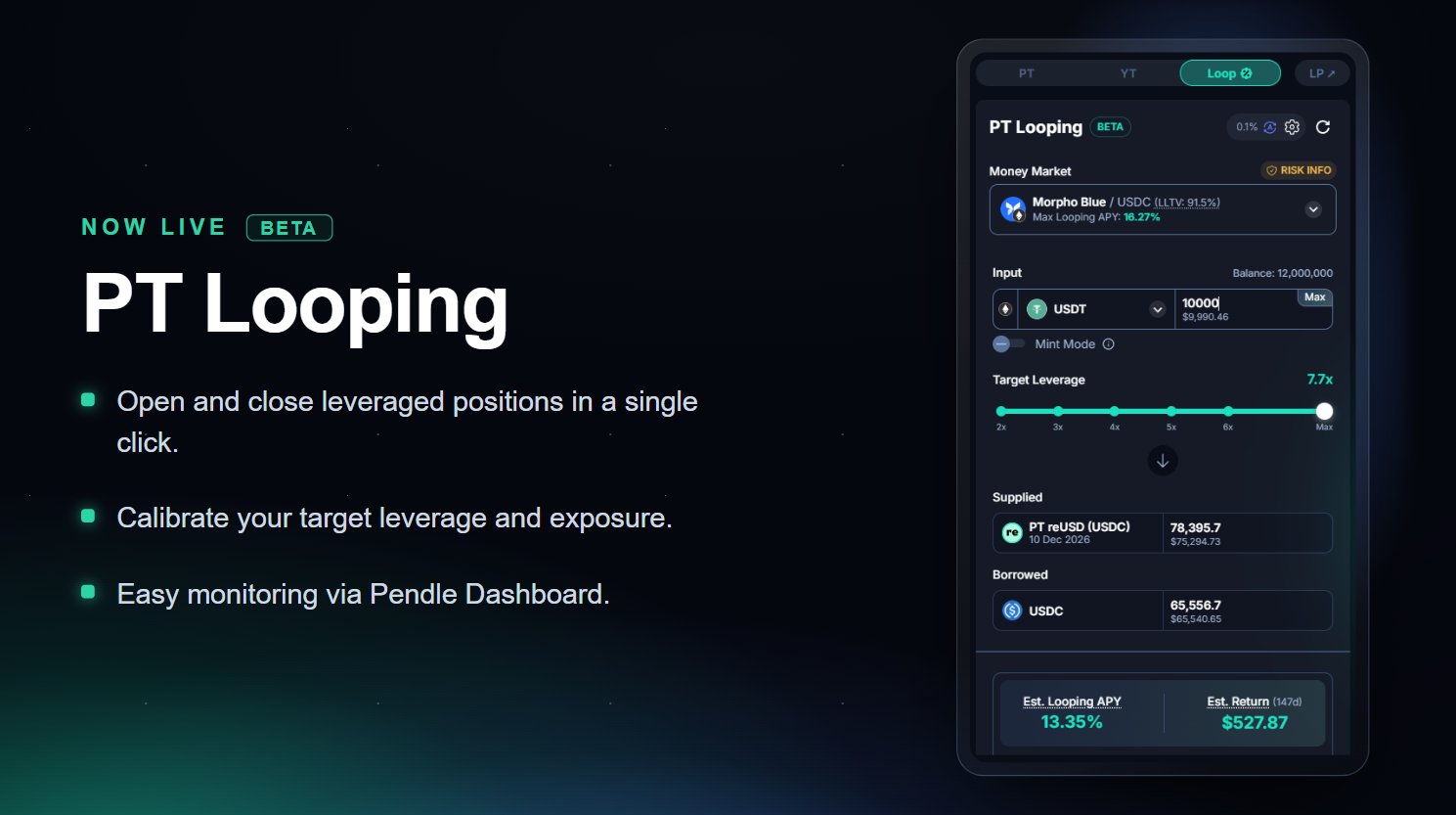 Pendle launches one-click PT looping beta on Aave V3 and Morpho, with Aave V4 and Euler support planned2026-07
 Fira launches fixed-rate lending on Ethereum with $450M in deposits migrated from Euler Finance2026-03
Euler Finance: Modular DeFi Credit And The Rise Of Vault-Based Lending
Euler is a modular decentralized lending protocol built on Ethereum that lets users create and interact with isolated “credit vaults” for virtually any ERC‑20 asset, aiming to serve as a neutral credit layer for onchain finance. By combining a flexible vault framework, cross‑collateral technology, and integrations with tokenized real‑world assets and institutional risk managers, Euler sits at the center of a broader shift in DeFi lending from monolithic shared pools toward specialized, risk‑isolated credit infrastructure.
What Is Euler?
Euler is a non‑custodial lending protocol that allows users to deposit assets to earn interest, borrow against posted collateral, and build new credit markets on top of a modular vault system. The protocol is deployed on Ethereum and is designed around the idea that lending markets should be both permissionless and risk‑aware: anyone should be able to spin up a market for a token, but that market should be isolated so that failures do not cascade across the entire system. Built by Euler Labs, a company based in London with backing from over thirty investors including Coinbase Ventures and Haun Ventures, Euler aims to be a kind of neutral “credit infrastructure” that other DeFi and fintech applications can plug into. This positioning has become more explicit over time, as Euler has marketed itself as “the credit layer of the internet” and focused its roadmap on institutional and real‑world asset (RWA) integrations.
Euler originally launched with a more traditional money‑market design, but the protocol’s trajectory has been shaped heavily by a high‑profile flash‑loan attack in March 2023 that briefly drained nearly 200 million dollars of user funds from Euler v1. In the aftermath, Euler Labs not only led one of the most remarkable recovery efforts in DeFi history—eventually securing the return of roughly 240 million dollars in assets—but also initiated a deep architectural rethink that culminated in Euler v2. This second version, built around the Euler Vault Kit (EVK) and the Ethereum Vault Connector (EVC), abandons the idea of a single shared liquidity pool in favor of isolated, configurable vaults that can be composed like building blocks. Euler v2 thus reflects a broader industry trend in which leading protocols such as Aave, Morpho and Euler itself are re‑architecting lending around modular risk units rather than monolithic pools.
From the perspective of an everyday DeFi user, Euler looks like a sophisticated but familiar money market: depositors earn variable yield, borrowers pay interest, and liquidations keep the system solvent during volatility. Under the hood, however, the protocol’s design is closer to a generalized credit engine than a single application. Vaults are implemented as ERC‑4626 tokenized vaults with added borrowing functionality, so each lending market can be treated as a programmable primitive in its own right. These vaults can be combined through the Ethereum Vault Connector, which allows positions in one vault to serve as collateral for borrowing in another, enabling cross‑margin behavior while preserving risk isolation at the vault level. For builders, this means Euler is not just a place to park USDC, but a substrate on which they can design custom credit products, from tokenized Treasury financing to institutional loan books.
Euler’s positioning has increasingly tilted toward institutional and RWA‑heavy use cases as the protocol has matured. Integrations with tokenization specialist Securitize and asset manager VanEck have brought a tokenized U.S. Treasury fund (VBILL) onchain as collateral on Euler, enabling investors to borrow against short‑term Treasuries while preserving regulatory guardrails. Partnerships with firms like Concrete and Unlink aim to bring institution‑grade risk curation and transaction privacy, respectively, into Euler’s vault ecosystem. At the same time, Euler has cultivated a more retail‑facing narrative around efficiency: its documentation emphasizes capital efficiency, reactive interest rates, and permissionless listing as core design goals, positioning the protocol as both a sophisticated institutional tool and a competitive alternative to incumbent DeFi lenders such as Aave.
Despite its institutional ambitions, Euler remains firmly rooted in DeFi’s open, composable ethos. The Euler Vault Kit is open‑source, allowing any developer to deploy vaults that follow ERC‑4626 and plug seamlessly into the broader Euler system. EulerEarn, a complementary protocol, sits on top of accepted ERC‑4626 vaults and provides non‑custodial risk management by routing user liquidity into pre‑approved strategies. Together, this stack paints a picture of Euler as a layered credit ecosystem: base‑layer vaults define markets for specific underlying assets, the vault connector lets those markets interact safely, and higher‑level protocols like EulerEarn and third‑party curators design and distribute risk‑managed products to different types of lenders.

DeFi lending is shifting from shared pools to modular risk isolation as Morpho, Aave, and Euler battle to become the institutional backbone for onchain credit
From Shared Pools To Modular Credit Infrastructure
To understand Euler’s significance, it helps to situate the protocol within the evolution of DeFi lending architectures over the last several years. Early money markets such as Compound and Aave popularized the concept of a single shared pool per asset, where all deposits and borrows for that asset are commingled and priced via an interest‑rate curve based on utilization. This model was simple and efficient for blue‑chip assets like ETH and USDC, but it struggled when protocols tried to list long‑tail tokens. If a lightly traded asset could be used as collateral in the same global risk pool as highly liquid assets, a failure in that long‑tail market could threaten the entire protocol.
Euler’s v1 design operated within this shared‑pool paradigm and became one of the clearest examples of its limitations. The 2023 flash‑loan attack exploited a vulnerability in Euler’s liquidation and collateral accounting logic, allowing the attacker to manipulate the protocol’s perception of risk and drain funds without immediately triggering protective mechanisms. Chainalysis’ analysis of the incident highlighted how tightly coupled collateral management and pool‑wide solvency were within Euler v1, making it difficult to contain the blast radius once the exploit sequence began. Although Euler ultimately recovered the funds after negotiations with the attacker, the episode underscored the need for a more compartmentalized approach to risk.
Across DeFi, this realization has contributed to a wider move toward modular and isolated lending architectures. Research from Tiger Research describes how protocols like Aave, Morpho and Euler are increasingly “modularizing” DeFi lending by separating risk layers and specializing operational components, seeking to balance capital efficiency with more granular risk control. In this new model, instead of one giant pool, there are many smaller, purpose‑built markets—each with its own risk parameters, curators and sometimes admission criteria—that can be composed programmatically. The idea is that exposure to a given asset or strategy can be tightly controlled without sacrificing the composability that makes DeFi appealing.
Euler v2 is emblematic of this modular turn. Rather than treating lending as a single application, Euler now offers a toolkit for constructing “credit vaults” that each function as an isolated mini‑protocol. Because each vault is an ERC‑4626 contract, it has a standardized interface for deposits, withdrawals and accounting, which means any other protocol that understands ERC‑4626 can integrate Euler vaults as if they were ordinary yield‑bearing tokens. At the same time, the vaults include borrowing functionality and risk controls tailored to their specific asset, so systemic exposure is limited when something goes wrong.
A key challenge in moving away from shared pools is preserving the user experience of cross‑asset borrowing and margining. Traders and hedgers want to post one asset and borrow another without managing a patchwork of disconnected markets. Euler addresses this with the Ethereum Vault Connector (EVC), which effectively creates a collateral “bridge” between vaults, allowing positions in one vault to back borrowing in another while enforcing risk constraints at the connector level. This preserves much of the flexibility of shared‑pool lending while keeping the underlying markets structurally separate.
The modularization of DeFi lending also reflects shifting user segments. As more institutions consider onchain credit, they demand environments where risks can be clearly scoped and governed according to familiar standards. Tiger Research notes that risk‑isolated structures are particularly attractive for institutional players, who may prefer to participate in curated or whitelisted markets rather than fully permissionless pools. Euler’s vault framework, with the ability to designate curators like Concrete and to integrate compliance layers such as Securitize’s DS Protocol, is explicitly designed to meet these expectations. In this sense, Euler is both a beneficiary and a driver of the broader migration from monolithic pools toward modular credit infrastructure.
Readers clicked the arrest and cryptic-hacker-messages stories nearly 3× more than any single v2 technical headline, revealing that Euler's audience is drawn primarily to the human accountability drama of a $197M theft — who held the money, who got caught, and whether the criminal chose reform — not to protocol mechanics.
Inside The Euler Architecture: Vaults, EVK And The EVC
At the core of Euler v2 lies the Euler Vault Kit, a system for constructing “credit vaults” that are fully compliant with the ERC‑4626 tokenized vault standard but extended to support borrowing. An ERC‑4626 vault represents fractional ownership of an underlying asset, with shares tracking a user’s claim on the vault’s assets and any yield generated. Euler’s credit vaults build on this by allowing certain users to borrow the underlying asset from the vault, paying variable interest that accrues back to depositors. This design means that every Euler market can plug seamlessly into any ecosystem that already understands ERC‑4626—bridging the gap between simple yield vaults and full‑fledged lending protocols.
The Euler Vault Kit provides the scaffolding for deploying these vaults in a relatively standardized way. Protocol developers can specify the underlying asset, set risk parameters such as collateralization thresholds and liquidation penalties, and define how interest rates respond to utilization. Because EVK is modular, it can also support different types of oracles, fee models and access controls depending on the needs of a particular market. In practice, this means a stablecoin vault might use a conservative interest‑rate curve and robust price feeds, while a more experimental asset could be placed in a tightly controlled vault with strict collateral caps or even limited participation.
A crucial aspect of Euler’s architecture is that each vault is “isolated.” This isolation has at least two dimensions. First, the assets and liabilities of one vault are segregated from those of other vaults at the smart‑contract level, so a shortfall in one market does not automatically compromise the solvency of another. Second, risk parameters and governance can be customized per vault, enabling more nuanced treatment of different asset classes—from blue‑chip crypto collateral to tokenized Treasuries and private credit instruments. This separation is a direct response to the systemic risk issues exposed by Euler v1 and other shared‑pool designs.
The Ethereum Vault Connector sits on top of these isolated markets and provides a cross‑vault collateralization layer. Conceptually, the EVC maintains a map of a user’s positions across multiple vaults and enforces a portfolio‑level risk model: if the total value of a user’s collateral (as defined by the connector’s valuation logic) falls below the thresholds required to support their borrows, liquidation is triggered. Because the connector is a distinct component, the risk engine can be upgraded or specialized without modifying each individual vault, and different connectors could in theory coexist for different user segments or strategies.
This architecture also gives Euler unusual flexibility in how it supports new assets. In the past, listing a new token in a shared‑pool protocol required careful consideration of protocol‑wide risk; today, an Euler integrator can deploy a new credit vault for a token with relatively contained consequences. For example, a market for a novel liquid staking token could be introduced in a vault with conservative borrowing limits and perhaps only a subset of compatible collateral assets. If that token later becomes more established, its parameters can be loosened, or it could be included in portfolios governed by institutional curators.
The modular design extends beyond the vaults themselves. EulerEarn, for instance, is built as a protocol that sits on top of “accepted” ERC‑4626 vaults, especially those built with EVK. It allows liquidity providers to deposit into EulerEarn and have their assets allocated across different underlying vaults according to risk‑managed strategies, all without giving up custody to a centralized manager. Because EulerEarn only works with whitelisted vaults that meet its risk criteria, it can serve as a kind of “meta‑vault” for users who want exposure to Euler’s credit ecosystem but do not wish to hand‑craft a portfolio of individual markets.
Taken together, EVK, the EVC, and protocols like EulerEarn illustrate how Euler aims to be more infrastructure than interface. The public Euler app provides a front‑end for direct interaction with vaults, but much of the protocol’s intended usage is through other smart contracts, aggregators and institutional platforms that treat Euler as an underlying credit engine. This is visible in the growing number of integrations, from privacy‑preserving routers to tokenization platforms, that channel capital into Euler vaults while adding their own value‑added layers on top.
User Flows: Lending, Borrowing, Leverage And Risk Management
For end users, Euler’s complexity manifests as a set of relatively intuitive flows for depositing, borrowing and managing risk. A user who wants to earn yield on idle USDC, for example, can deposit the stablecoin into a USDC credit vault via the Euler app or an integrated interface. Upon deposit, the user receives ERC‑4626 vault shares that represent their claim on the underlying USDC plus accrued interest; the vault then makes those assets available to borrowers at a floating interest rate that depends on utilization. As more USDC is borrowed relative to the supplied amount, the borrow rate increases, which in turn raises the supply APY paid to depositors, as illustrated by real‑time vault stats showing utilization, supply and borrow APYs.
Because vault shares are tokenized, they can themselves be used in other protocols or strategies. A user might deposit USDC into Euler, receive vault shares, and then use those shares as collateral in a different DeFi application, although specific integrations depend on whether that application recognizes the vault token. Alternatively, users can simply hold their shares and periodically withdraw back to USDC as needed, knowing that the underlying lending activity within the vault is non‑custodial and governed by open‑source code.
Borrowing on Euler follows the familiar over‑collateralized model, but with the additional nuance of the Ethereum Vault Connector. A borrower first deposits collateral into one or more vaults, such as ETH or tokenized Treasuries, thereby establishing a collateral position within the EVC’s accounting system. The borrower can then draw loans from supported vaults, for example borrowing USDC against VBILL shares, as long as their portfolio remains within the connector’s risk limits. Interest on the borrowed asset accrues according to the borrowing vault’s rate model and must be repaid, along with principal, to close the position.
Leverage and more complex strategies emerge when users combine vaults and collateral types. A trader might deposit liquid staking tokens as collateral, borrow stablecoins, and then deploy those stablecoins into another strategy, effectively taking a leveraged long on the staked asset. Another user might implement a form of basis trade by borrowing a token they are shorting elsewhere, using collateral in a different vault to back the position. The EVC’s portfolio‑level risk assessment is what determines how far such users can push their leverage before triggering liquidations.
Risk management in this context is both automated and human‑curated. At the automated level, each vault has parameters such as collateralization ratios, liquidation discounts and interest‑rate curves that define how risk is priced and when positions become eligible for liquidation. Liquidators are incentivized to close under‑collateralized positions by repaying part of a borrower’s debt and seizing a discounted portion of their collateral, a mechanism common across DeFi money markets. Because vaults are isolated, a failure in one market generally does not threaten the solvency of others, although poor parameter choices can still lead to losses for that vault’s participants.
On top of this algorithmic core, Euler has introduced the idea of “curators”—entities that help design and oversee specific vaults, especially those aimed at institutional users. Concrete, for example, has partnered with Euler to act as a curator within the vault framework, applying institutional risk standards to isolated lending markets and actively managing their risk profiles. This involves decisions about which assets to list, how to size exposure, and which counterparties or investor classes to admit, using Euler’s modular infrastructure as the execution layer. The result is a spectrum of markets on Euler, from fully permissionless crypto‑native vaults to curated environments tailored to regulated institutions.
Privacy is another dimension of user experience that Euler has addressed via integrations rather than base‑layer changes. Unlink, a privacy‑focused protocol, is integrating with Euler to route capital into Euler vaults through a smart‑contract‑based privacy layer. The goal is to allow institutional lenders and borrowers to access Euler’s credit markets without exposing their transaction flows on public blockchains, while still preserving compliance requirements and allowing risk managers to monitor aggregate exposures. This approach reflects a broader pattern in which Euler focuses on providing transparent, composable credit primitives, leaving specialized concerns such as privacy or identity to dedicated partners.
Finally, many users may not wish to micromanage vault selection and risk. For them, EulerEarn offers a higher‑level interface: it accepts deposits into a non‑custodial contract that allocates funds across a set of accepted ERC‑4626 vaults, particularly EVK vaults, according to risk/reward strategies. The protocol only uses vaults that have been explicitly accepted, providing an additional layer of screening, and aims to balance yield with safety in a transparent, onchain way. This kind of automated, yet non‑custodial, risk management is especially relevant as the Euler ecosystem expands to include not just crypto‑native assets but also tokenized bonds, equities and private credit.

Euler takes HyperEVM lending in-house as HypurrFi winds down Mewler and Clearstar stays curator
Institutional Adoption, RWAs And Curated Markets
One of the most notable trends around Euler is its pivot toward institutional adoption and real‑world assets, reflecting a broader DeFi push to become infrastructure for traditional finance rather than a parallel system. Tokenization platform Securitize and asset manager VanEck have been at the center of this story, using Euler as part of a pipeline that brings regulated U.S. Treasuries into DeFi lending markets. VanEck’s VBILL fund, which invests in short‑term U.S. Treasury bills, is tokenized and issued onchain via Securitize, then made available as collateral on Euler.
The arrival of VBILL on Euler means that qualified investors can hold a token representing a share of a Treasury fund, earn the underlying yield, and simultaneously borrow against it within DeFi. This replicates a familiar pattern from traditional finance—using Treasuries as collateral for short‑term borrowing—but does so entirely onchain, with smart contracts managing both the lending and the enforcement of regulatory constraints. Securitize’s DS Protocol, which underpins VBILL, ensures that only eligible investors can hold the token and that transfer restrictions are respected, even as the asset interacts with Euler’s permissionless contracts. In practice, this allows VBILL to function as collateral in Euler vaults while preserving the compliance perimeter mandated by securities law.
The integration highlights why modular lending architectures are attractive for RWAs. A VBILL vault can be configured with collateral and borrowing rules tailored to its risk profile, without forcing the rest of the protocol to absorb its idiosyncrasies. At the same time, the EVC allows VBILL holders to unlock liquidity across multiple vaults, for example by borrowing USDC or ETH, amplifying the utility of holding tokenized Treasuries. For institutions, this offers a way to deploy balance‑sheet assets into DeFi while maintaining familiar safeguards; for Euler, it represents a concrete step toward being a general‑purpose credit layer that can handle both crypto‑native and traditional exposures.
Concrete’s role as a curator within Euler’s vault framework deepens this institutional orientation. According to coverage of their partnership, Concrete is working with Euler to build “institution‑ready” DeFi lending environments, combining Concrete’s risk‑management expertise with Euler’s modular infrastructure. In practice, this means Concrete can design and manage specific vaults on Euler—choosing assets, setting risk parameters, and implementing safeguards—while leveraging Euler’s battle‑tested core contracts for execution. Institutional participants can, in turn, choose to interact primarily with curated markets that meet their internal risk standards, rather than directly with fully permissionless vaults.
This curated‑market pattern is likely to recur as more RWAs come onchain. Beyond Treasuries, Euler’s architecture is well‑suited to support tokenized equity indices, private credit instruments, and other securitized products that require careful control over who can participate and how risk is distributed. Recent coverage of tokenized S&P 500‑style products, for instance, has raised questions about how such assets should be treated as collateral given their underlying risk and liquidity profiles. Even if those specific tokens are not yet widely used on Euler, the protocol’s isolated vaults and curator roles offer a template for containing collateral risks associated with such RWAs while still enabling onchain leverage.
Euler’s institutional strategy also sits within a competitive landscape. Maple Finance, a protocol focused explicitly on onchain private credit, has amassed billions in assets under management and strong revenue growth by originating loans to institutions via whitelisted pools, while Euler operates more as a neutral infrastructure layer that other originators or curators can use. Yet performance data from 2025 indicates that Euler, Maple and 0xFluid have been among the few lending platforms delivering strong returns to token holders, with Euler’s TVL reportedly growing dramatically and its governance token, EUL, reaching new price highs. This suggests that Euler’s combination of modular credit architecture and institutional partnerships has resonated with both users and investors, even amid a broader downturn in DeFi lending volumes.
Still, institutional adoption is far from straightforward. Commentators and builders have noted that variable‑rate, over‑collateralized money markets like Aave, Morpho and Euler often fail to meet the needs of borrowers who require predictable, fixed‑rate financing over longer horizons. Discussions about the future of onchain credit increasingly emphasize the importance of integrating fixed‑rate lending and more sophisticated interest‑rate markets with highly capital‑efficient variable‑rate protocols. In this context, Euler’s role may be less about directly offering every possible credit product, and more about serving as a flexible credit engine that fixed‑rate layers, structured credit platforms and fintech front‑ends can build on, using its vaults as funding sources and collateral backstops.
Privacy and operational robustness are also key institutional concerns. The Unlink integration, which routes capital into Euler vaults through a privacy‑preserving smart‑contract layer, addresses fears about exposing sensitive trading or funding data on public blockchains. Meanwhile, Euler’s focus on front‑end reliability and data‑fetching architecture reflects a recognition that institutions expect professional‑grade interfaces. Euler has publicly discussed improvements to its app’s performance, including rethinking Web3 data fetching to reduce unnecessary re‑renders and simplify caching, an approach aligned with broader best practices articulated in developer literature on handling multiple data sources in DeFi frontends. For large users, these seemingly mundane optimizations can be the difference between a system that feels experimental and one that feels like a viable piece of financial infrastructure.
- 01Exploiter arrest and hacker psychology↗
The Paris arrest and the hacker's own on-chain messages urging peers toward bug bounties turned a DeFi exploit into a true-crime narrative, generating by far the highest combined click volume of any Euler angle.
- 02Hack-to-full-recovery arc↗
Readers tracked Euler's improbable resurrection — from $197M stolen to $693M in deposits two years later — as a live proof-of-concept that a DeFi protocol can survive a catastrophic exploit and rebuild credibility.
- 03v2 modular vault architecture↗
The open-source Euler Vault Kit and live v2 launch attracted builders curious whether a post-hack ground-up redesign could deliver genuinely new DeFi primitives rather than a patched v1.
- 04Institutional RWA collateral integration↗
BlackRock's sBUIDL and VanEck's VBILL landing on Euler as on-chain loan collateral signaled to readers that tokenized real-world assets were finding a credible DeFi lending home, not just a marketing headline.
- 05TVL growth scoreboard↗
Successive milestones — $133M, $387M, $600M, $2.15B — gave readers a concrete scoreboard to judge whether the post-hack comeback was durable or a temporary liquidity spike.
- 06CEO exit and institutional pivot
Michael Bentley stepping down and Euler pivoting explicitly toward institutional credit and RWAs raised questions about whether the protocol's community-DeFi identity was being traded for a TradFi-adjacent repositioning.
Security, The 2023 Exploit And Risk Culture
No discussion of Euler is complete without examining the March 2023 flash‑loan exploit and its aftermath, which have profoundly shaped the protocol’s design and culture. On March 13, 2023, attackers orchestrated a complex series of transactions on Euler v1, using flash loans to manipulate the protocol’s internal accounting and drain approximately 197 million dollars in assets spanning DAI, wrapped BTC, staked ETH and USDC. Chainalysis’ forensic analysis explains that the attacker exploited a vulnerability in Euler’s code that allowed them to donate borrowed funds to a reserve, artificially change the health factor of positions, and then liquidate in a way that extracted value from the protocol. The exploit caused Euler’s native EUL token to fall by more than 45 percent in the immediate aftermath and became one of the most widely discussed DeFi hacks of that year.
Euler Labs responded by pausing the protocol, initiating a community investigation, and working with law‑enforcement and onchain analysts to trace the funds. In an extraordinary turn of events, the attacker eventually engaged with the Euler team and began returning funds, sending large tranches of ETH and other assets back to the protocol over several weeks. Euler’s own “War & Peace” retrospective recounts how, as the price of ETH rose during the negotiation period, the total value of the returned assets reached roughly 240 million dollars—more than the estimated 197 million dollars initially stolen, meaning users were made whole despite the turmoil. The episode culminated in the return of essentially all stolen funds to Euler users, an outcome that stands out in the history of DeFi hacks.
Beyond the financial recovery, the exploit catalyzed a deep reassessment of Euler’s risk assumptions and architecture. Euler Labs has described Euler v2 as a protocol “redesigned from the ground up with modularity, security and capital efficiency at its core,” emphasizing the move to isolated vaults and a more compartmentalized approach to collateral and liquidation logic. The idea is that even if a bug exists in one vault’s implementation or risk parameters, it should be possible to contain the damage to that vault, rather than exposing the entire protocol to systemic failure. This mindset is reflected in the way EVK encourages standardized, audited components and the centralization of cross‑vault risk logic in the EVC, which can be more thoroughly scrutinized and upgraded over time.
The hack also influenced Euler’s stance on external integrations and bridges. As DeFi has learned repeatedly, vulnerabilities often emerge not just from core protocol code but from surrounding infrastructure: cross‑chain bridges, oracle providers, or even front‑ends can become entry points for attackers. Euler’s cautious response to incidents involving related components—such as temporarily suspending certain bridge connections when upstream issues arise—reflects a more defensive posture that prioritizes containment over aggressive growth. This is consistent with a risk culture shaped by hard experience: Euler has already lived through the reputational and operational shock of a major exploit and is acutely aware of how fragile trust can be.
Security for Euler is not limited to smart contracts. Front‑end integrity and data correctness are increasingly important as more users and institutions rely on protocol interfaces rather than interacting directly with contracts. Euler has shared insights into how it improved its own front‑end performance and maintainability by rethinking how it fetches and manages onchain data, moving away from hook‑heavy patterns toward a simpler “fetch → mapper → hook” architecture. While this might sound like a purely technical concern, it has direct implications for risk: clearer data flows and caching reduce the likelihood of UI inconsistencies that could misrepresent user positions or market conditions, thereby reducing operational risk for traders and risk managers who rely on the app.
Euler’s post‑hack trajectory also underscores the importance of transparent communication and community engagement in DeFi security crises. Throughout the recovery process, Euler Labs published regular updates, coordinated with white‑hat researchers, and ultimately turned a catastrophic exploit into a case study in crisis management. The decision to negotiate with the attacker, while controversial, was vindicated by the full return of user funds and has informed how other protocols think about their options in similar situations. For Euler, the episode appears to have reinforced a culture that is both security‑conscious and pragmatic, willing to adapt its design and processes in the face of new information.
Governance, Team And Token Economics
Euler’s technical architecture is only part of the story; the protocol’s governance and organizational choices also influence how it evolves and how credible it appears to large users. Euler Labs, the development company behind the protocol, is headquartered in London and has attracted backing from a roster of prominent crypto investors, including Coinbase Ventures and Haun Ventures among its thirty‑plus backers. This investor base has provided resources for development, audits and integrations, while also signaling to institutions that Euler is not an anonymous or ephemeral project.
Leadership transitions at Euler Labs illustrate how the organization is adapting to a more mature, institution‑focused phase. Michael Bentley, a co‑founder and long‑time public face of Euler, announced that he was stepping down as day‑to‑day CEO after nearly six years, transitioning into an advisory and product‑focused role. Coverage of the move emphasized that this shift coincided with Euler’s explicit pivot toward institutional and fintech credit markets and real‑world assets, suggesting a need for leadership structures and operational practices suited to larger, more regulated counterparties. Such transitions are common as protocols move from founder‑driven experimentation toward longer‑term infrastructure roles.
Governance of the protocol itself is centered around the EUL token, which serves as Euler’s native governance asset. While details of token economics and governance mechanics evolve over time, the broad pattern is similar to other DeFi protocols: EUL holders can vote on proposals that adjust risk parameters, list or delist assets, authorize new curators, and allocate treasury funds for development or incentives. The fact that Euler’s architecture is modular means governance can, in principle, become quite granular, with different vaults subject to different governance processes or curator arrangements. Over time, this could allow the protocol to support both fully permissionless markets and tightly governed institutional vaults within a unified governance framework.
Euler’s business model blends protocol fees with ecosystem growth. Interest paid by borrowers generally accrues to depositors, but the protocol can also capture a portion of fees to fund development, risk management and incentives. As Euler expands across chains and vault types, it has explored ways of routing fee flows back to EUL holders and ecosystem participants, including auction‑style mechanisms for distributing protocol revenues. Reporting has highlighted proposals to aggregate fees from multiple chains and auction them as rewards, aligning token incentives with multi‑chain lending activity, though the specifics are subject to governance and may evolve as the regulatory landscape around protocol tokens develops.
Front‑end strategy is another dimension of governance and business. Rather than relying on a single official UI, Euler supports a model in which multiple front‑ends and integrators can interact with its contracts. This approach encourages competition and innovation in user experience while reducing the concentration of risk in any one interface. At the same time, Euler Labs’ own app remains a flagship, and its performance and reliability improvements—as documented in Q1 retrospectives and technical write‑ups—are part of the protocol’s value proposition, especially for institutional users who expect a polished, low‑latency interface to complex onchain operations.
The interplay between governance and external partners is particularly important in Euler’s curated markets. Curators like Concrete operate under agreements and governance frameworks that define their responsibilities and the boundaries of their authority over specific vaults. Questions such as who can list RWAs, how access‑control lists are managed, and how disputes between curators and token holders are resolved will likely become increasingly salient as more value flows through these markets. Euler’s success in navigating these governance challenges will be as critical to its long‑term credibility as its smart‑contract design.

New security audit released for CoWSwap’s CoW-Euler integration, enabling atomic leverage on Euler
Euler In Practice: Use Cases And Example Flows
Although much of Euler’s narrative centers on architecture and institutional strategy, the protocol ultimately lives or dies by its concrete use cases. One of the most straightforward is stablecoin lending, where users deposit assets like USDC to earn yield and facilitate borrowing for traders, arbitrageurs and market makers. A USDC credit vault on Euler might show, at a given point in time, total supply in the low millions of dollars, a similar magnitude of total borrows, and supply and borrow APYs in the mid‑single‑digit range, though these figures fluctuate with market conditions. For a retail user, this offers a familiar value proposition: put idle stablecoins to work in a non‑custodial, transparent lending market.
For borrowers, stablecoin vaults provide working capital that can be deployed elsewhere in DeFi. A market maker might borrow USDC from Euler to provide liquidity on a decentralized exchange or to fund basis trades between perpetual futures and spot markets. Because the borrowing is over‑collateralized and managed by the EVC, Euler does not require know‑your‑customer checks at the protocol level for crypto‑native markets, preserving the permissionless access that many DeFi users value. At the same time, curated vaults with RWAs or specific institutional counterparties can layer additional identity and compliance checks via partners like Securitize and Concrete, creating a spectrum of access models within the same ecosystem.
Tokenized Treasuries like VBILL introduce a different class of use case. An institutional investor holding VBILL might be attracted by its short‑duration U.S. Treasury exposure and daily liquidity, which together offer a relatively low‑risk, yield‑bearing asset in tokenized form. By depositing VBILL into an Euler vault that recognizes it as collateral, the investor can unlock additional liquidity while maintaining exposure to the underlying Treasury yield, borrowing USDC or other assets against their holdings. This onchain repo‑style pattern can be particularly powerful for funds or treasuries that want to remain fully invested in safe assets while having the flexibility to deploy capital quickly into opportunities across DeFi.
Structured strategies can be built on top of these primitives. For example, an asset manager could construct a product that deposits client funds into a mix of VBILL, stablecoin lending vaults and curated private‑credit vaults on Euler, using EulerEarn or custom contracts to manage allocations. The manager could then issue their own token representing a slice of this diversified onchain credit portfolio, effectively building a fund‑of‑vaults on top of Euler’s infrastructure. Because each component vault is isolated and transparently configured, investors and regulators can, in principle, inspect the portfolio’s risk profile onchain.
Retail and semi‑professional traders may use Euler for leverage and hedging strategies that would be difficult to implement in traditional finance. A user with a long‑term ETH position could deposit staked ETH derivatives into a vault, borrow stablecoins, and then purchase put options or short perpetuals elsewhere, constructing a hedged or yield‑enhanced position. The key is that Euler provides the credit rails: it does not dictate how borrowed funds are used, but its modular vaults and connector define the boundaries of leverage and liquidation. For sophisticated users, this offers a sandbox for capital‑efficient positioning that can be integrated with DEXs, derivatives protocols and aggregators.
To illustrate Euler’s positioning within the lending ecosystem, it is helpful to compare it to peers like Aave and Morpho across several dimensions.
| Aspect | Euler | Aave (v3 paradigm) | Morpho (peer‑to‑pool / Modularity) |
|---|---|---|---|
| Core architecture | Isolated ERC‑4626 credit vaults with vault connector | Shared pools with risk‑isolated “eMode” and isolated assets | P2P overlay on top of existing pools; evolving modular design |
| Risk isolation | Per‑vault isolation plus portfolio‑level EVC | Asset‑level configuration within large shared pools | Matches lenders/borrowers while inheriting underlying pool risk |
| Institutional focus | Curated vaults, RWAs, privacy and compliance integrations | Aave Arc, permissioned markets, institutional deployments | Focus on improved capital efficiency for existing DeFi users |
| Tokenized RWA integrations | VBILL Treasuries via Securitize DS Protocol | Select RWA markets via partners on some deployments | Early exploration of RWAs via external pools |
| Modularity as a design goal | Central to EVK and EVC, “credit layer” positioning | Growing modularization, but anchored in pool model | Emphasized in research on modular lending |
This comparison underscores how Euler differentiates itself less by basic functionality—lending and borrowing are now commodity features—and more by its role as a modular, integrator‑friendly credit backbone. Aave remains a dominant retail and institutional pool‑based lender; Morpho optimizes yields by matching lenders and borrowers on top of existing pools; Euler, by contrast, seeks to be the substrate on which specialized markets and credit products are built, especially those involving RWAs and curated risk.
$197M flash-loan exploit drains Euler v1
Exploiter returns nearly all funds after on-chain negotiation
Euler v2 mainnet launch with Euler Vault Kit open-sourced
$133M TVL reached — 38× growth in three months post-v2
BlackRock sBUIDL integrated as tokenized RWA collateral on Euler
$600M TVL surpassed; $2.15B TVL reported by mid-2025 with 575% annual growth
- 2025-11governance
Michael Bentley steps down as CEO; Euler pivots to institutional credit and RWAs
- 2026-01regulatory
Exploiter arrested in Paris
Euler In The Broader DeFi Lending Landscape
Euler’s evolution is intertwined with the fortunes of DeFi lending as a whole. After the explosive growth of 2020–2021, total deposits across major lending protocols have fluctuated alongside broader crypto market cycles, with phases of contraction as large platforms like Aave, Maker and others have seen reductions in total value locked during risk‑off periods. Recent coverage drawing on analytics providers such as Artemis has noted that deposits across major lending protocols have fallen significantly from their peaks, with some protocols shedding tens of billions of dollars in aggregate. In this environment, Euler’s reported TVL growth and token performance stand out as exceptions rather than the rule, reflecting successful positioning within niche but growing segments like tokenized private credit and RWAs.
Competition remains intense. Aave continues to dominate generalized crypto lending, particularly for blue‑chip assets and stablecoins, and has launched its own initiatives around RWAs and institutional access. Morpho has carved out a role by improving capital efficiency through peer‑to‑peer matching on top of existing pools, appealing to sophisticated DeFi users seeking better yields and borrowing terms. Maple, meanwhile, has shown that onchain private credit can scale when paired with professional underwriting and whitelisted counterparties, although this model is quite different from Euler’s permissionless vault framework. Euler must continue to differentiate itself through its technical architecture, integrations, and ability to serve as a neutral credit primitive for others.
Interest‑rate volatility poses another structural challenge. Variable‑rate money markets, including Euler, Aave and Morpho, are excellent at clearing markets quickly and adjusting to changing conditions, but they offer limited predictability for borrowers who need fixed costs over longer horizons. Institutional borrowers, in particular, often require fixed‑rate financing to match liabilities and regulatory expectations, which has led to the emergence of specialized fixed‑rate protocols and structured credit platforms. Analysis of onchain credit markets increasingly suggests that the winning configuration may involve tight integration between fixed‑rate layers and variable‑rate engines like Euler, with the latter providing deep, liquid funding and collateral markets that fixed‑rate products can tap into.
Regulation and compliance will heavily influence Euler’s trajectory. The integration of Securitize’s DS Protocol for VBILL demonstrates that it is possible to bring regulated securities into permissionless credit markets while maintaining investor eligibility and transfer restrictions. However, scaling this model to a wider range of RWAs—especially corporate credit, real estate or complex structured products—will require careful navigation of securities law across multiple jurisdictions. Curators such as Concrete can help by acting as intermediaries that translate traditional risk standards into onchain vault configurations, but regulators may still scrutinize how much responsibility lies with protocol governance versus offchain service providers.
Interoperability and multi‑chain expansion present both opportunities and risks. Euler’s credit engine is, in principle, chain‑agnostic: EVK and EVC concepts can be deployed on any EVM‑compatible chain, and integrations with emerging platforms like HyperEVM or rollups such as Base and Avalanche are natural extensions of this capability. However, cross‑chain deployments introduce additional attack surfaces, particularly around bridges and messaging layers. Incidents involving bridged assets and cross‑chain exploits across DeFi have shown that even if a protocol’s core contracts are secure, weaknesses in the surrounding infrastructure can lead to losses. Euler’s cautious approach—pausing certain bridge connections during upstream incidents, for instance—reflects an awareness that its brand as a credit layer depends critically on perceived safety.
Ecosystem partnerships further shape Euler’s position. Keyring’s experimentation with zk‑verified vaults, for example, points to a future in which Euler vaults can enforce complex verification conditions (such as proof of solvency or identity) without revealing underlying data, leveraging zero‑knowledge proofs to balance privacy and compliance. Integrations with mainnet‑scale stablecoin networks like Plasma, which has announced broad participation from DeFi protocols including Euler, suggest that Euler will play a role in routing large stablecoin flows into structured credit and RWA strategies. Each of these integrations extends Euler’s reach but also increases the complexity of its risk surface and governance responsibilities.
Against this backdrop, Euler’s internal evolution—such as leadership changes, front‑end architectural improvements, and governance refinements—can be seen as efforts to professionalize the protocol for a future in which it may be judged less against other DeFi apps and more against traditional financial infrastructure. Q1 retrospectives from Euler Labs emphasize that the protocol has functioned as intended through periods of market stress, while also acknowledging areas for improvement and opportunities in new markets. The combination of a hard‑earned security mindset, modular technical design, and deliberate focus on institutional and RWA integrations positions Euler as one of the more serious contenders in the race to define the onchain credit stack.
Outlook
Euler sits at the intersection of several powerful trends: the modularization of DeFi lending, the tokenization of real‑world assets, and the gradual entry of institutions into onchain credit markets. Its shift from a traditional shared‑pool money market to a vault‑based credit engine reflects a broader industry move toward risk‑isolated, composable financial primitives, and its integrations with partners like Securitize, VanEck, Concrete and Unlink show how that engine can be adapted to different regulatory and privacy requirements. The protocol’s history—including a major exploit and full recovery—has forged a risk culture that is at once ambitious and cautious, prioritizing modularity and containment in its design choices.
The medium‑term outlook for Euler will depend on its ability to deepen institutional relationships, scale curated RWA markets, and integrate seamlessly with fixed‑rate and structured credit layers that can deliver the predictability many borrowers need. Competition from Aave, Morpho, Maple and emerging lenders will remain intense, but Euler’s identity as an infrastructural “credit layer” rather than a monolithic app gives it a distinctive role to play in the onchain financial stack. If it can maintain security, navigate governance and regulatory challenges, and continue to attract high‑quality integrations, Euler is likely to remain a key reference point in discussions about how decentralized credit infrastructure should be built.
For a crypto‑savvy audience watching the evolution of DeFi lending, Euler offers a compelling case study in adaptation: from a vulnerable shared‑pool lender to a modular vault ecosystem courting Wall Street and Web3 natives alike. Whether its model becomes the dominant blueprint or one of several coexisting architectures, the protocol’s experiments with isolated credit vaults, curated risk, and tokenized RWAs will shape how onchain credit markets evolve in the years ahead.
Latest Euler news
DeFi lending is shifting from shared pools to modular risk isolation as Morpho, Aave, and Euler battle to become the institutional backbone for onchain creditEuler takes HyperEVM lending in-house as HypurrFi winds down Mewler and Clearstar stays curatorNew security audit released for CoWSwap’s CoW-Euler integration, enabling atomic leverage on EulerVanEck's VBILL Treasury fund goes live on Euler as tokenized collateral for DeFi loansPendle launches one-click PT looping beta on Aave V3 and Morpho, with Aave V4 and Euler support plannedFira launches fixed-rate lending on Ethereum with $450M in deposits migrated from Euler FinanceSources
20 records from 13 domains
euler.finance
docs.euler.finance
x.com
github.com
app.coinpedia.org
securitize.io
en.coin-turk.com
cryptonews.net
binance.com
dev.to
meme-insider.com
app.euler.finance
chainalysis.com
Community notes
Spot something off or out of date? Drop a note. Editors review topic notes daily and roll accepted fixes into the explainer — contributors are recognized in the monthly $SQUID drop.
Loading notes…
Help improve this topic
Have a story or tip about this topic? Submit it. See something missing? Leave a note. Editors review daily; accepted submissions and fixes count toward the monthly $SQUID drop.