
In crypto, “pools” aggregate capital, hashpower, or rewards into shared structures that power DEX liquidity, lending, staking, mining, stablecoin FX and incentives. This explainer maps key pool types, risks, designs and their role in onchain markets.
+11 sources across the wider coverage universe
 Delphi Digital says crypto privacy is finally “coming together” as advances in zero-knowledge pools, FHE, and wallet integration reshape compliance and default user anonymity2026-04
 Aero unveils Predictive Allocation to stream rewards and revenue across liquidity pools in real time2026-07
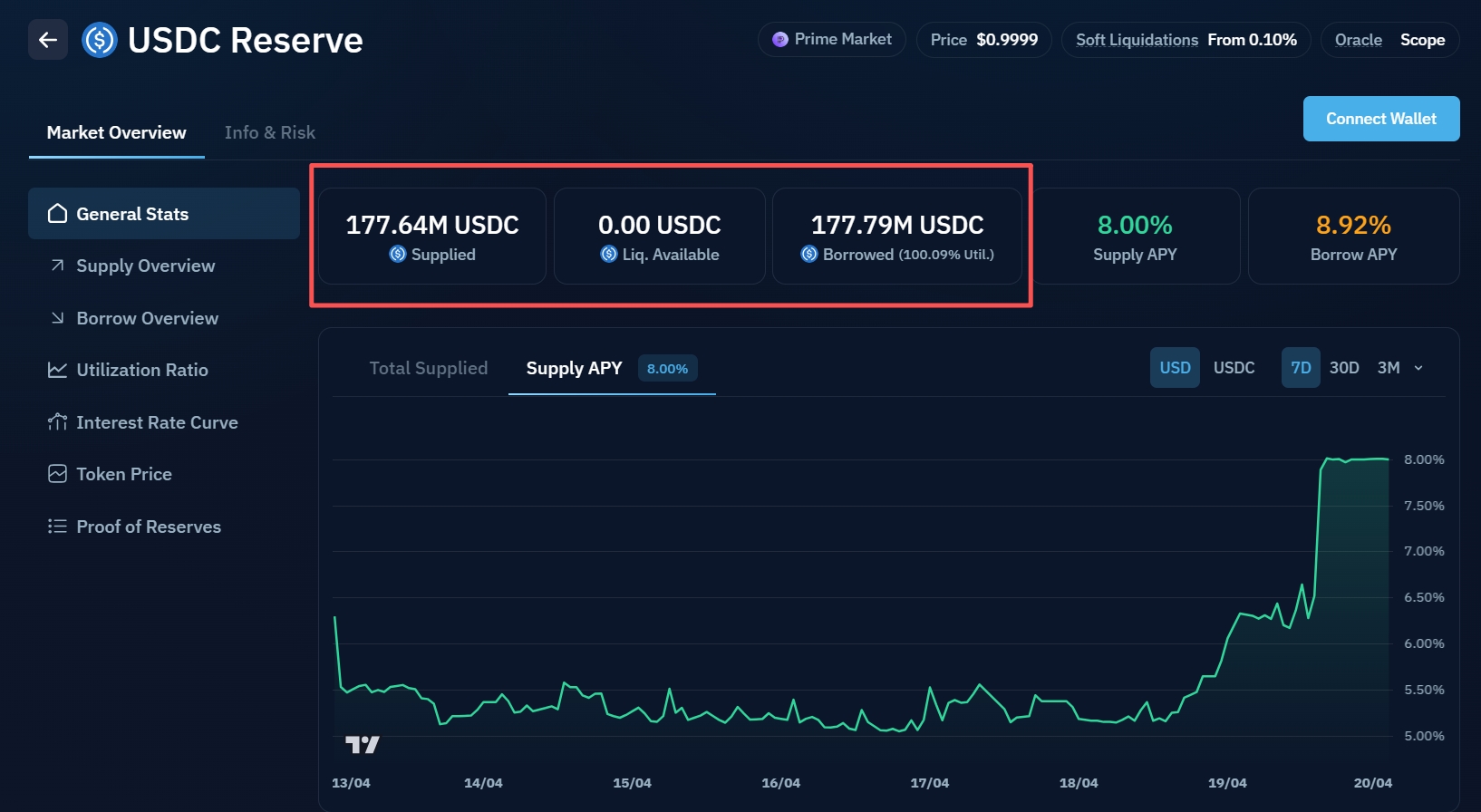 DeFi outflows spill into Solana after KelpDAO rsETH hack, pushing Kamino USDC markets to extreme stress with 100% utilization and zero liquidity in key lending pools2026-04
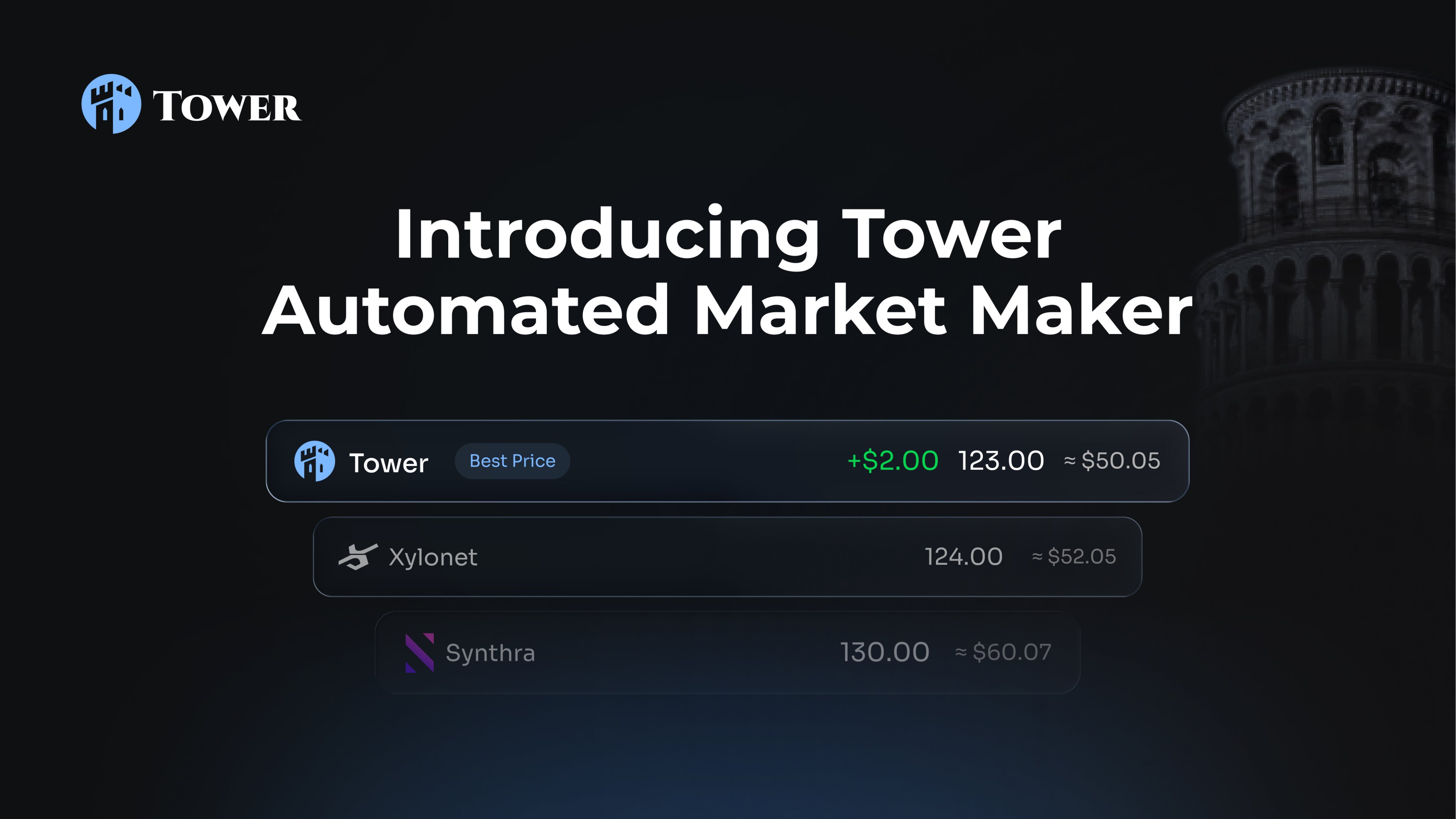 Tower Exchange launches Tower AMM on ARC, boosting onchain liquidity, improving trade execution and laying the groundwork for public liquidity pools2026-07
 Rhea Finance exploit losses surge to $18.4M after post-mortem, as attackers manipulated liquidity pools using fake tokens2026-04
 Symbiotic launches Core V2 collateral markets for insurance, credit, and RWAs, 70% more efficient than standalone pools2026-07
Pools in Crypto and DeFi: An Evergreen Explainer
Across the crypto ecosystem, the word “pool” refers to capital, computing power, or rewards that are aggregated from many participants and managed under shared onchain or platform rules. Pools are now a core market primitive, shaping how liquidity, credit, security, and incentives are organized across exchanges, lending markets, stablecoins, mining, and more.
From Cash Piles to Onchain Primitives: What “Pool” Means in Crypto
In traditional finance, a pool usually means a commingled fund: a money market fund, a syndicated loan, or a prize pool for a contest. In crypto and DeFi, the concept has been reimplemented onchain and generalized. A pool can be a smart contract holding a pair of tokens to enable swapping on a decentralized exchange, a lending contract handling deposits and loans, or a server cluster combining mining hash power. In all cases, participants contribute a resource to a shared structure and receive some combination of access, returns, or governance in exchange.
The most influential innovation in this area has been the liquidity pool on automated market maker (AMM) decentralized exchanges. A liquidity pool is typically a smart contract that holds reserves of one or more tokens and lets users swap between them according to an algorithmic pricing rule, rather than relying on a traditional order book. Liquidity providers deposit assets into these pools and earn a share of trading fees or other incentives, while traders get continuous, onchain liquidity even in long-tail markets that would struggle to attract market makers on centralized exchanges. This model has become the backbone of onchain markets, especially for stablecoins, governance tokens, and new token launches.
Yet pools extend far beyond AMM liquidity. Large proof-of-work networks rely on mining pools that combine the hash power of many miners and share block rewards, smoothing income and increasing the chance of winning blocks in competitive environments. Staking pools and liquid staking protocols similarly aggregate stake to secure proof-of-stake networks, often issuing liquid tokens that can be reused across DeFi. Lending markets, grant programs, marketing campaigns, and prize ecosystems frequently use pools to organize capital and rewards. Across all these cases, pooling as a design pattern underpins how onchain systems handle markets, risk-sharing, and incentives at scale.
As onchain activity expands to stablecoins, FX-style trading, tokenized equities, and more complex credit, pools are becoming the programmable “back end” of financial infrastructure. Institutional desks can now interact with custom OTC-style liquidity pools, retail traders route through thousands of DEX pools via aggregators, and sophisticated protocols dynamically direct incentives toward specific pools to shape liquidity and risk. Understanding what pools are, how they differ, and where the risks lie is increasingly essential for anyone following crypto markets.

Retain launches liquidity tool for Robinhood Chain's tokenized asset pools

Liquidity Pools: The Core Market Engine of DeFi
How Liquidity Pools Work
A liquidity pool in DeFi is a set of tokens locked inside a smart contract that enables users to swap between those tokens without relying on centralized order books or intermediaries. In the simple case of a two-token AMM such as the Uniswap v2 model, the pool holds reserves of token \(x\) and token \(y\), and the product of these reserves is kept approximately constant at \(k\): \(x \cdot y = k\). Traders who buy one token and sell the other move along this curve, and the price they receive is implied by the relative balances of the two reserves. Because the liquidity is always available as long as the pool has non-zero reserves, traders are not dependent on a matching counterparty at the exact moment they want to trade.
Liquidity providers (LPs) deposit both tokens into the pool, usually in proportion to the current price, and receive pool tokens that track their share of the total liquidity. When other users trade against the pool, they pay a fee that accrues to LPs, providing a yield that compensates for risk. In many DEX ecosystems, LPs also receive protocol tokens or external incentives for adding liquidity, further boosting effective returns. The simplicity of this provisioning model—just deposit tokens and receive a proportional share of fees—has made AMM-based pools the default way to launch new pairs and support long-tail assets that would struggle to attract traditional market makers.
Because the pricing is purely algorithmic and tied to the pool’s reserves, deeper pools generally offer tighter spreads and less price impact for a given trade size. In this context, “liquidity” refers to the combined reserves of the token pair: more reserves mean that a trade of a given size changes the reserve ratio less, resulting in a smaller price movement and better effective execution. That relationship has driven protocols and projects to compete aggressively for deep pools in key pairs like USDC, major governance tokens, and popular stablecoins.
Impermanent Loss and Risk for Liquidity Providers
Providing liquidity to AMM pools is not risk-free. One of the most important—and often misunderstood—risks is impermanent loss. Impermanent loss occurs when the price of the tokens in a liquidity pool diverges from their price at the time of deposit, such that the value of an LP’s pooled position is lower than what they would have had by simply holding the tokens outside the pool. In constant-product AMMs, the pool continually rebalances as traders buy and sell, so LPs effectively “sell low and buy high” relative to passive holding when prices move sharply, even though they earn fees in the process.
A growing academic literature has examined impermanent loss, especially in the context of volatile token pairs and complex AMM designs. A systematic review of AMM risk highlights that impermanent loss can be substantial in high-volatility environments and can at times outweigh fee income, particularly in pools with low trading volume or poorly calibrated fees. Stablecoin pools, which pair assets designed to track the same or similar pegs, often have much lower impermanent loss risk because price deviations are limited, though tail events such as depegs or collateral failures can still be devastating. For LPs, understanding the trade-off between expected fees and price divergence is critical when selecting pools and sizing positions.
Beyond impermanent loss, LPs face smart contract risk, oracle risk in more complex AMMs, and governance risk if protocol parameters can be changed in ways that dilute or reallocate value. Liquidity pools are typically governed by publicly accessible smart contracts, and their transparency allows for independent review and security audits. However, vulnerabilities, misconfigurations, and economic exploits remain regular features of the DeFi landscape. The case of Raydium, a prominent Solana-based DEX, illustrates this clearly: attackers exploited deprecated AMM v3 liquidity pools, draining roughly 1.34 million dollars from several inactive pools tied to the retired program, forcing the protocol to commit to reimbursing affected users. These incidents underscore that even “inactive” or “legacy” pools can carry risk until they are fully decommissioned.
Concentrated Liquidity and Next-Generation AMM Pools
Traditional constant-product pools distribute liquidity uniformly across all possible prices, which is capital-inefficient for assets that trade within relatively narrow ranges. Concentrated liquidity AMMs such as Uniswap v3 change this by allowing LPs to allocate liquidity only in specific price ranges where they expect trading to occur. In Uniswap v3, the concept of “liquidity” is redefined as a function of the reserves in a given price band, and LPs can choose narrow or wide ranges depending on their risk tolerance and market view. Within the chosen band, the constant-product invariant still applies, but outside it, the LP’s liquidity becomes inactive until the price reenters the range.
This design has inspired a wave of new pool types and infrastructure. On BNB Chain, for example, concentrated liquidity tools integrated with PancakeSwap Infinity allow builders to create flexible V4 pools, including programmable 0-tax structures designed specifically for token launches and sophisticated LP strategies. These architectures enable teams to shape how liquidity behaves during the critical early trading period of a token’s life, and to automate transitions from internal launch curves to public DEX pools as markets mature. In parallel, Solana’s Raydium has developed a concentrated liquidity market maker (CLMM) suite that gives pool creators more control over fee structures and order behavior, illustrating how concentrated pools can blur the line between AMMs and more traditional market-making tooling.
A further frontier is MEV-aware and MEV-resistant pools. Maximal extractable value (MEV) refers to the value that can be extracted by reordering, inserting, or censoring transactions within a block, often via DEX arbitrage, liquidations, or sandwich attacks. Because AMM pools are transparent and deterministic, they are natural targets for searchers and block producers looking to exploit small price discrepancies or user slippage. Some newer pool designs, such as those advertised by protocols like Aerodrome, are experimenting with MEV-resistant architectures that change how swaps are batched, priced, or ordered, attempting to preserve value for organic LPs and traders rather than for MEV extractors. How effective these designs are in practice is an active and crucial question for the future of onchain markets.
Stablecoin and PegKeeper Pools
Stablecoins and FX-style markets are among the largest consumers of liquidity pools. Protocols like Curve pioneered specialized stablecoin AMMs that use tailored bonding curves and multiple-asset pools to provide low-slippage swaps between different dollar-pegged assets. More recently, algorithmic and overcollateralized stablecoins have begun using PegKeeper-style pools and targeted incentives to anchor their pegs in DeFi liquidity rather than relying only on centralized market makers. Frax’s frxUSD offers an example: onchain data and ecosystem commentary highlight that PegKeeper pools pairing frxUSD with other stablecoins have seen record trading volumes, even during periods when bitcoin prices are soft, with dozens of protocols and projects choosing frxUSD pairs as their default stablecoin route.
These PegKeeper pools often sit at the heart of stablecoin FX markets, where users trade between USDC, USDT, FRAX-based assets, and newer stablecoins like crvUSD or msUSD. For instance, leading pools on Curve and other DEXs now feature crvUSD and Metronome’s msUSD as core stablecoin constituents alongside established names, reshaping the composition of onchain dollar liquidity. When liquidity dries up or shifts due to changing incentives, protocols may actively reallocate capital to new pools to stabilize markets. The team behind MIM, for example, has described funding a new Curve liquidity pool with MIM, USDT, and USDC as a base to restore balance after unexpected liquidity withdrawals in other pools, highlighting how pool management has become an active macro tool for DeFi stablecoin teams.
In these FX-like stablecoin markets, the choice of base pool matters for everything from routing efficiency to peg stability. A stablecoin that secures deep USDC pairs on major DEXs will likely be more resilient and easier to use as collateral than one confined to shallow, fragmented pools. As more of traditional FX and interest rate markets move onchain, specialized stablecoin pools, interest-bearing stablecoins, and cross-chain pool architectures are likely to become the basic building blocks for onchain foreign exchange.
Readers click pool exploits not for the hack mechanics but for the contagion — when a single pool failure cascades to 100% utilization and zero liquidity in adjacent lending markets, the real story is which protocol absorbs the loss and who pays.
Credit and Lending Pools: From Shared Liquidity to Modular Risk
Traditional Shared-Liquidity Lending Pools
Beyond trading, lending pools are another pillar of DeFi. Protocols like Aave and Compound use shared liquidity pools where depositors supply assets such as ETH, BTC derivatives, or stablecoins, and borrowers draw liquidity from the same pool, paying interest that is dynamically adjusted based on utilization. While specific implementation details differ, the core idea is that depositors receive a tokenized claim on the pool, which accrues interest as borrowers pay fees, and the pool itself is overcollateralized to protect against defaults.
In this shared-liquidity model, all depositors in a given asset pool share risk. If there is a bad debt event due to an oracle failure, governance exploit, or extreme market move, losses are socialized across all depositors in that asset pool. This has historically made lending pools efficient for general-purpose borrowing and leveraged trading, but it also raised concerns for more risk-sensitive users, especially institutions that must adhere to stringent risk buckets, capital controls, and reporting requirements.
Shared pools have also been crucial for leveraged liquidity provision, allowing users to borrow stablecoins or volatile assets to provide to DEX liquidity pools, thereby amplifying yields and risks. Many stablecoin farms and LP strategies, particularly during earlier yield-farming cycles, combined lending pool leverage with AMM pools to chase high yields on assets like USDC and newer stablecoins. While this composability is one of DeFi’s most potent advantages, crises in one layer of the stack can spill through to others when risk is not properly siloed.
Modular and Isolated Risk Pools
As DeFi matures and more institutional and professional capital arrives, there is an evident shift from one-size-fits-all shared pools to more modular risk isolation. Recent analyses of the lending landscape emphasize that protocols such as Morpho, Aave, and Euler are in a strategic contest to define the institutional backbone for onchain credit, with differing approaches to how risk is pooled or segregated. In this framing, a protocol like Aave is often compared to a universal bank where many different borrower types and risk profiles share large, generalized pools, whereas Morpho’s model aligns more closely with prime brokerage, enabling more customized pairings between liquidity providers and borrowers.
Euler and other newer protocols have experimented with architectures that allow different collateral types or strategies to reside in separate pools, with configurable risk parameters and, in some cases, distinct tranches for junior and senior capital. This modularization allows certain pools to target higher-risk, higher-yield lending (for example, to newer stablecoins or long-tail tokens), while more conservative pools focus on blue-chip assets like USDC or staked ETH. Institutions can then build portfolios across pools according to their mandates, rather than being forced into a monolithic risk structure.
These modular lending pools increasingly intersect with DEX liquidity pools and stablecoin markets. A stablecoin that is deeply integrated into large, conservative lending pools can serve as a base asset across DeFi, facilitating leveraged trading, market-making in DEX pools, and participation in structured products. Conversely, risk-isolated pools can provide a bootstrapping path for new assets that are not yet ready to share risk with more established markets, allowing them to build track records before integrating into broader shared-liquidity pools.
Yield Strategies and Stablecoin Deposit Pools
From a user perspective, lending pools often function as yield pools for stablecoins and blue-chip assets. Retail and institutional users alike deposit USDC, USDT, or other stablecoins into lending pools to earn protocol interest plus, in many cases, additional token incentives. Campaigns like Lorenzo’s stablecoin-focused pools, for instance, showcase how DeFi protocols design specific pools around assets such as USD stablecoins and layer in large reward allocations over defined periods to attract depositors. The economics are straightforward: depositors provide liquidity; borrowers and protocols pay for it; incentives tilt the equation to compete for capital.
Other ecosystems use lending-like pools as the infrastructure for grant allocations and ecosystem growth. The Prezenti grant round on Celo, organized into two pools—one focused on apps that drive real onchain usage and volume, and another on “frontier” agentic apps and infrastructure—illustrates how the pool metaphor is being extended to innovation funding. Rather than handing out ad hoc grants, ecosystems define pools with specific mandates and timelines, then invite builders to compete for or be allocated capital from those pools based on measurable milestones in onchain markets and activity.
The line between lending pools, yield pools, and grant pools is becoming increasingly blurry. In all cases, capital is aggregated, governed by explicit rules, and allocated in ways that reflect broader strategic goals: increasing liquidity in key DEX markets, bootstrapping new stablecoins, or seeding applications that drive real volume.
Mining Pools and Staking Pools: Aggregating Security
Mining Pools in Proof-of-Work Networks
In proof-of-work (PoW) systems like Bitcoin, mining pools emerged early as a way to smooth the highly volatile income of individual miners. A mining pool is an organized group of miners who combine their computational resources over a network to increase the probability of discovering blocks and earning rewards. Individual miners connect their mining hardware to the pool’s server infrastructure, submit proofs of work (shares), and receive payouts proportional to their contributed hash power when the pool successfully mines a block. This model can significantly reduce variance for small and medium-sized miners, who might otherwise wait long periods between block rewards if mining solo.
The landscape of mining pools is diverse, with large pools controlling significant portions of network hash rate. Websites that track mining pools, such as Mining Pool Stats, report real-time distributions of hashrate across known PoW pools, allowing observers to monitor levels of centralization or concentration in block production. These data show that a handful of pools often control a majority of mining power, raising concerns about potential collusion or censorship, although the economic and reputational incentives to behave honestly are strong in mature networks like Bitcoin.
Mining pool operators and key personnel are often influential figures in the broader crypto ecosystem. The co-founder of a major pool such as F2Pool, for example, can become a recognizable public figure whose actions and projects extend beyond mining, illustrating how mining pools operate not just as technical infrastructure but also as institutional actors with broader ambitions. As PoW’s role in crypto evolves and new narratives such as space exploration or energy innovation appear, the culture around mining pools continues to intersect with larger technological and geopolitical trends.
Staking Pools and Liquid Staking
In proof-of-stake (PoS) networks, the analogous concept is the staking pool. Validators in PoS systems must stake tokens to participate in consensus and earn rewards; staking pools aggregate tokens from many holders who either cannot or do not want to run their own validator infrastructure. Some pools are custodial, operated by exchanges or service providers; others are non-custodial, using smart contracts to coordinate delegation and reward distribution.
A major development in this area is liquid staking, where users deposit assets like ETH into a protocol and receive a liquid token that represents their staked position, often referred to as a liquid staking token (LST). Lido, for instance, describes itself as a leading liquid staking protocol for Ethereum, offering a tokenized representation of staked ETH that can be used in other DeFi protocols while underlying validators secure the network and earn staking rewards. Because these LSTs can be traded, lent, or used as collateral, staking pools are no longer just about security; they have become a core source of yield-bearing collateral that feeds into DEX pools, lending pools, and structured products.
This composability introduces new feedback loops. A liquid staking token might be used as collateral in a lending pool, which in turn funds traders who provide liquidity in DEX pools where that same token is paired with stablecoins. If something goes wrong in any of these layers—a smart contract bug, a depeg of the staking token, or a validator slashing event—losses can cascade through multiple pool types. Designing staking pools, DEX pools, and lending pools with robust risk controls and clear boundaries is therefore essential for systemic stability.
Security, Governance, and Centralization Concerns
Both mining and staking pools raise concerns about centralization and governance. In PoW, if a small number of mining pools control a large fraction of hashrate, they could theoretically coordinate to censor transactions or attempt a 51% attack, although direct economic incentives and the openness of mining often mitigate these risks. In PoS, large staking pools or liquid staking providers can accumulate significant voting power in protocol governance, potentially skewing decision-making or creating single points of failure.
To manage these risks, ecosystems are experimenting with decentralizing pool operators, requiring multiple independent node operators, and designing governance mechanisms that limit the control of any single pool over key protocol parameters. Users, in turn, must weigh convenience and yield against centralization risk when choosing which mining or staking pool to join.
- 01pool exploit accountability↗
Three separate pool exploits — Aave V2 ($229k), Rhea Finance ($18.4M via fake token manipulation), and Raydium's deprecated V3 pools ($1.34M) — drew the highest aggregate clicks because readers are tracking not just the breach but whether protocols reimburse, how losses are categorized, and what governance follows.
- 02ZK shielded pool privacy
Both the Delphi Digital privacy-convergence thesis and the EIP-8182 shielded pool proposal attracted readers watching whether ZK-powered privacy is graduating from opt-in tooling to a default protocol-layer primitive.
- 03liquidity stress cascade
The KelpDAO rsETH hack instantly pushing Kamino USDC lending pools to 100% utilization and zero available liquidity showed readers how quickly a targeted exploit in one protocol bleeds into the borrowing capacity of unrelated markets.
- 04permissionless pool deployment risk↗
Uniswap hooks enabling pool creation without approvals — counterpointed by one hook spawning 100K pools and raising rug-pull fears — drew readers focused on whether removing gatekeepers transfers systemic risk onto end users.
- 05modular vs shared lending pools
Morpho, Aave, and Euler competing to replace shared-pool credit markets with isolated-risk vaults attracted readers who understand that pool architecture determines who bears bad-debt contagion in a liquidation cascade.
- 06FX and stablecoin pool infrastructure↗
Polygon, Frax, and Curve deploying six onchain FX liquidity pools with frxUSD as the base pair pulled in readers tracking whether DeFi pool infrastructure can credibly substitute for forex market depth.
Incentive, Grant, and Prize Pools: Bootstrapping Liquidity and Usage
Promotional and Prize Pools on Exchanges and Protocols
Beyond core infrastructure, incentive pools are increasingly used as marketing and bootstrapping tools. Centralized platforms and hybrid venues often run prize pools that reward trading activity, referrals, or participation in new product features. For example, the WOO X Pro ecosystem has periodically highlighted promotional prize pools spread across its web interface and social channels, offering users the chance to earn rewards for engaging with specific markets or campaigns. These initiatives usually allocate a fixed amount of tokens or stablecoins to a reward pool, then distribute that pool according to a formula based on volume, points, or other metrics.
Onchain, DEXs and DeFi protocols use similar mechanisms. Aerodrome, for instance, has made certain USDC pools tied to fan tokens such as $PSG and $AFC eligible for protocol emissions, directing ongoing AERO token rewards to LPs in those pools as a way to deepen liquidity and stimulate trading interest. By making emissions configurable at the pool level, protocols can encourage liquidity in markets they deem strategically important, such as stablecoin pairs, governance tokens, or cross-chain bridges.
These incentive schemes can significantly affect yield profiles and capital allocation across DeFi. Liquidity often flows to pools with the highest combined projected yield from fees and incentives, even if the underlying asset or counterparty risk is higher. As a result, evaluating an incentive pool requires not only understanding the advertised APR, but also assessing the durability of incentives, the soundness of the underlying pool design, and the sustainability of the tokenomics funding those rewards.
Grant and Ecosystem Development Pools
Ecosystems also use grant pools to seed growth in targeted areas. The Celo ecosystem’s Prezenti grants, organized into distinct pools such as “Anchor” for apps delivering real onchain transactions and volume and “Frontier” for agentic apps and infrastructure, exemplify how pool-based structures can channel funding toward specific strategic goals. By specifying the size of each pool, the eligibility criteria, and the application timeline, ecosystems make the process more transparent and measurable, aligning capital distribution with onchain signals of usage and impact.
These grant pools indirectly shape markets because funded teams often launch their own tokens, stablecoins, or DeFi primitives, each of which requires liquidity pools and potentially lending pools. A grant to an onchain FX app, for example, might translate into deeper stablecoin pools and specialized FX AMMs. Grant pools are thus upstream levers that eventually influence the composition and depth of other pools downstream in the ecosystem.
Structured Yield and Liquidity Campaigns
Protocols increasingly structure yield campaigns around specific pools to attract liquidity and test new products. DeFi yield platforms might announce limited-time pools focused on specific stablecoins or tokenized assets, with large reward allocations over fixed durations—for example, a campaign that offers hundreds of thousands of dollars worth of governance tokens to users who deposit particular stablecoins into designated pools over a sixty-day window. These campaigns are often coupled with nuanced routing logic, fee tiers, or risk parameters that demonstrate new protocol capabilities.
Curve and its ecosystem partners have long used targeted incentives to guide liquidity into particular pools, especially around new stablecoin releases such as crvUSD. Similarly, projects like YieldBasis roll out new pool versions in iterative “seasons,” with v3 pools designed to replace earlier ones and planned migration paths for LPs. As governance approves new pool architectures, all existing LP positions must move to the updated pools to continue earning, reinforcing the idea that pools are living market infrastructure rather than static endpoints.
In parallel, infrastructure providers such as Binance Wallet DeFi aggregate access to hundreds or thousands of pools across multiple protocols, allowing users to manage positions, loans, and liquidity through a consolidated interface. These aggregators effectively create meta-pools of access, where users can allocate capital across many underlying pools without having to interact with each protocol individually. From a market perspective, this can accelerate capital mobility, as users can quickly exit underperforming pools and migrate to new opportunities.
Pools, Stablecoins, and Onchain FX
Stablecoins as Base Assets for Pools
Stablecoins like USDC, USDT, and newer entrants such as frxUSD, crvUSD, and msUSD occupy a central role in the pool-based infrastructure of DeFi. Because they are designed to track relatively stable reference values, usually the U.S. dollar, they serve as both the quote asset in trading pools and the primary deposit asset in lending pools. Stablecoin–token pairs on DEXs such as USDC–ETH or USDC–governance tokens function as the basic building blocks for price discovery and liquidity, while stablecoin-only pools provide the backbone for low-slippage movement between different dollar-denominated assets.
The success of a stablecoin is increasingly tied to the health and depth of its associated pools. For example, frxUSD has seen its PegKeeper pools on DEXs become key venues for maintaining its peg and supporting FX-like trading between frxUSD and other stablecoins. When volume through these pools grows, as highlighted by record monthly volumes even during periods when major crypto assets like bitcoin are in drawdown, it signals market confidence in the stablecoin’s liquidity and utility. Conversely, when stablecoin liquidity fragments across many thin pools or retrenches because of incentive changes, it can impair routing efficiency and widen effective spreads.
Stablecoin liquidity also shapes credit markets. Lending pools denominated in or collateralized by stablecoins can recycle stablecoin liquidity into leveraged positions in DEX pools, into structured products, or into real-world asset strategies. For institutions, the availability of deep, stablecoin-based liquidity pools with robust risk controls is a prerequisite to treating onchain markets as reliable venues for FX and funding operations.
Onchain FX and Cross-Asset Pools
As more fiat currencies, commodities, and even equities are tokenized, onchain FX is emerging as a distinct market segment. FX-like trading onchain often occurs through pools that pair different fiat-pegged stablecoins or through routing paths that approximate FX exposures via dollar rails. For example, a user might trade EUR-pegged and USD-pegged stablecoins in a specialized pool designed for low-slippage FX, or they might synthetically construct FX positions using a combination of stablecoin pools, perpetual futures, and option protocols.
Some DEXs and DeFi platforms are explicitly positioning themselves as onchain FX venues, highlighting features such as MEV-resistant pools, predictive allocation of liquidity, and integration with cross-chain messaging. Aerodrome’s promotion of MEV-resistant pools and commentary on “the future of FX onchain” reflects how pool-level design—such as how swaps are ordered, how fees are structured, and how emissions are allocated—can be tailored to FX-style trading needs. Deep, low-cost, and MEV-aware pools are critical for institutions that want to execute large FX trades onchain without incurring prohibitive slippage or front-running risks.
Custom liquidity pools are also being developed in OTC-style environments. Platforms like CROSSx have advertised “custom liquidity pools” that connect institutions to curated sets of market makers, bridging centralized and decentralized liquidity with tighter spreads and minimal fees. While these pools may not always be fully onchain in the same way AMM pools are, they share the same conceptual grounding: multiple liquidity providers contributing to a shared pool whose rules govern access and pricing, supporting FX and other cross-asset trading at scale.
Stablecoins, FX, and Risk Transmission Through Pools
The close coupling of stablecoin pools and FX-like markets means that stress in one segment can propagate quickly. A depeg event in a major stablecoin can trigger imbalances in pools, with some assets trading at discounts and others at premiums, altering collateral values in lending pools and solvency margins in structured products. If liquidity flees a stressed stablecoin’s pools but remains sticky in others, onchain FX spreads can widen dramatically, and routing algorithms may begin to favor alternative stablecoin corridors.
On the positive side, diversified and well-designed pools can absorb shocks by providing arbitrage opportunities that nudge prices back toward pegs. Liquidity incentives can be temporarily increased in key pools to attract stabilizing capital, as seen when protocols fund new pools with combinations of their own stablecoins and established assets like USDC and USDT to rebalance liquidity after shocks. The interplay between pool design, incentive programs, and FX-like dynamics is becoming one of the core challenges of onchain monetary engineering.
Uniswap V3 introduces concentrated liquidity, allowing LPs to specify price ranges
- 2022-03launch
Aave V3 launches with isolation mode to silo risk per asset pool
- 2023-07exploit
Curve Finance reentrancy exploit drains $70M+ across multiple pools
Uniswap V4 deploys hooks framework enabling permissionless custom pool logic
Comparing Pool Archetypes: Design Dimensions and Trade-offs
Key Dimensions: Access, Risk, Liquidity, and Governance
Despite their diversity, crypto pools can be analyzed along several common dimensions. One is access: whether a pool is permissionless, allowing anyone to add liquidity or borrow, or permissioned, restricting participation to whitelisted addresses or KYC’d institutions. Another is risk sharing: some pools aggregate risks broadly, socializing losses across many participants, while others isolate risk by asset, strategy, or tranche. A third is liquidity profile: constant-product pools provide continuous, predictable liquidity across price ranges, while concentrated or range-bound pools offer higher capital efficiency but can become inactive if prices move outside chosen bands. Governance is a fourth: pools may be governed by token holders, by protocol teams, by offchain committees, or by smart-contract-enforced rules with limited upgradability.
These dimensions interact in complex ways. A highly permissionless pool with shared risk can attract large amounts of retail capital and serve as a general-purpose venue but might be less suitable for risk-constrained institutions that require clear, isolated exposures. A permissioned institutional FX pool, by contrast, may offer tight spreads and robust legal frameworks at the cost of open access. Concentrated liquidity pools can deliver superior pricing in normal conditions but require more active management and can be exposed to larger swings in impermanent loss when markets move rapidly.
A Comparative Table of Pool Types
The following table summarizes several major crypto pool archetypes and their core characteristics:
| Pool Type | Primary Resource | Main Use Case | Risk Sharing | Typical Access |
|---|---|---|---|---|
| AMM Liquidity Pool | Tokens (e.g., USDC/ETH) | Spot trading on DEXs | Shared across LPs | Permissionless |
| Concentrated Liquidity Pool | Tokens in price bands | Capital-efficient trading | Shared within ranges | Permissionless / semi |
| Lending Pool | Tokens (e.g., USDC) | Borrowing and leveraged strategies | Shared or isolated | Often permissionless |
| Mining Pool | Hash power | Block production in PoW networks | Shared by miners | Open, via registration |
| Staking / Liquid Staking Pool | Staked tokens (e.g., ETH) | PoS security and yield | Shared across stakers | Varies (custodial/non) |
| Incentive / Grant Pool | Tokens or stablecoins | Bootstrapping liquidity or ecosystems | Discretionary allocation | Governed / curated |
| OTC / Custom Liquidity Pool | Tokens, quotes | Institutional trading and FX | Bilateral or curated | Permissioned |
Each category can spawn variants. For example, a lending pool might be overcollateralized and permissionless or undercollateralized and permissioned. An AMM liquidity pool might be constant-product, stable-swap, or hybrid, with varying sensitivity to price divergence and impermanent loss. Incentive pools can be one-off campaigns or rolling emissions that constantly funnel rewards to certain pools according to governance votes.
For users and institutions, the key is to understand not just what returns a pool offers, but how the pool is structured along these design dimensions. A high-yield pool that mixes volatile tokens and novel stablecoins in an untested AMM formula with minimal governance constraints carries meaningfully different risk than a long-standing USDC lending pool in a conservative protocol.
Participating in Pools: User and Institutional Considerations
Evaluating Liquidity Pools for Trading and LPing
For traders, the primary questions around pools are depth, fees, and routing. Deep pools in pairs like USDC–ETH on major DEXs will generally offer better execution with less slippage than thin pools in exotic assets. Aggregators that traverse multiple pools and chains can provide improved pricing by splitting large orders across several pools. MEV-aware routing, including the use of private transaction relays or MEV-resistant pools, can further improve realized execution by avoiding sandwich attacks or unnecessary frontrunning.
For LPs, evaluation is more complex. They must consider the volatility of the paired assets, expected trading volume and fee income, impermanent loss risk, incentive structures, and smart contract and governance risk. Pairing a stablecoin like USDC with a blue-chip asset may generate steady fees but carries directional risk if the asset rallies or crashes, leading to impermanent loss. Stablecoin–stablecoin pools offer lower impermanent loss risk but may generate lower net yields unless volumes or incentives are high. Concentrated liquidity pools can improve capital efficiency but require active management of ranges and rebalancing strategies.
Security considerations are paramount. Users should review whether pools are part of actively maintained contracts, whether they have undergone formal audits, and whether there have been prior incidents such as exploits in deprecated pools. The Raydium exploit in legacy v3 pools highlights the importance of avoiding abandoned or deprecated pools that may no longer be closely monitored or secured, even when they appear on respected platforms. Institutions may prefer pools with clearly defined upgrade paths, robust time-locks, and transparent governance processes.
Navigating Lending and Credit Pools
When depositing into lending pools, users and institutions must assess counterparty risk, collateral composition, interest rate dynamics, and potential contagion paths. Shared-liquidity pools expose depositors to systemic risk within the pool: a malfunction affecting a single collateral type can create bad debt that is socialized across all depositors in that asset. Modular lending designs that isolate risk per asset or per market can mitigate this but may limit liquidity or increase complexity.
Institutions evaluating onchain credit pools often seek clear information about who can borrow, under what conditions, and with what collateral. Protocols like Morpho, which emphasize a more targeted pairing between borrowers and lenders, can offer finer-grained risk control, aligning more closely with traditional credit underwriting models while still reaping onchain transparency and efficiency. For stablecoin yield hunters, the attraction lies in relatively predictable returns, but they must remain vigilant about protocol-level risks and the stability of the stablecoins they are effectively lending out or holding.
Mining, Staking, and Institutional Pathways
For miners and validators, pools provide access to smoother revenue but also introduce dependence on pool operators. Mining pools dictate reward distribution schemes and may exercise influence over protocol upgrades or signaling. Staking pools and liquid staking protocols similarly centralize operational responsibilities and, potentially, governance power. Institutional participants considering exposure to staking yields or mining revenue via pools must evaluate operator track records, decentralization metrics, and regulatory considerations.
In the Bitcoin ecosystem, new products are emerging that package exposure to mining pool economics into structured products or institutional vaults, blending pool-based revenue with DeFi lending and trading strategies. In PoS ecosystems, liquid staking tokens derived from staking pools are increasingly used as collateral in lending pools and liquidity in DEX pools, creating new channels for institutional capital to access staking yields without running infrastructure directly. As these institutional pathways expand, the design and governance of underlying pools will become more scrutinized.
Outlook
Pools have evolved from simple shared buckets of capital into versatile, programmable primitives that underpin nearly every corner of crypto and DeFi. Liquidity pools shape onchain markets, enabling DEX trading, token launches, and stablecoin FX at scale. Lending pools are moving from monolithic shared-liquidity structures toward modular, risk-isolated architectures aimed at supporting institutional credit. Mining and staking pools aggregate security while feeding liquid staking tokens back into DeFi. Incentive, grant, and prize pools orchestrate growth, bootstrapping new ecosystems and usage patterns.
The next phase will likely see deeper integration between these pool types and between onchain and offchain liquidity venues. MEV-resistant and MEV-aware pool designs, along with richer governance frameworks, will be crucial in determining how value is distributed among traders, LPs, and infrastructure providers. Stablecoin and FX pools will continue to be battlegrounds where protocols compete to anchor their assets as default payment and collateral rails, with PegKeeper and other targeted designs vying to keep pegs robust in volatile markets. Institutional adoption will hinge on the emergence of reliable, well-governed pools that offer clear, transparent risk profiles and efficient access to yields.
For crypto news audiences and market participants, tracking the evolution of pools is increasingly synonymous with tracking the evolution of onchain finance itself. Whether a headline is about record volumes in stablecoin pools, exploits in deprecated liquidity pools, new modular lending pools for institutions, or aggressive incentive campaigns around USDC trading pairs, the underlying story is almost always about how pooled resources are being structured, governed, and competed for. As more assets, from FX to stocks and beyond, come onchain, pools will remain the foundational abstraction upon which new markets are built.
Latest Pools news
Sources
17 records from 9 domains
youtube.com
keyrock.com
rareskills.io
miningpoolstats.stream
lido.fi
x.com
- x.com· tiger_research_ / article / 2067068857676972062
- x.com· fraxfinance / status / 2066934532096262452
- x.com· coingecko / status / 2064906740823449949
- x.com· _WOO_X / status / 2068604836845883514
- x.com· WuBlockchain / status / 2064767313556197512
- x.com· BNBCHAIN / status / 2056419604038037773
- x.com· LorenzoProtocol / status / 2060254280171569257
- x.com· fraxfinance / status / 2056852961582555611
- x.com· AerodromeFi / status / 2061466559835779379
ethereum.org
investopedia.com
sciencedirect.com
Community notes
Spot something off or out of date? Drop a note. Editors review topic notes daily and roll accepted fixes into the explainer — contributors are recognized in the monthly $SQUID drop.
Loading notes…
Help improve this topic
Have a story or tip about this topic? Submit it. See something missing? Leave a note. Editors review daily; accepted submissions and fixes count toward the monthly $SQUID drop.