
Explainer on “BUILD” in crypto: how it evolved from meme to operating system for BTC, DeFi, stablecoins and AI agents, why ownership and tokenization matter, and how infra like Base, Arch and UAE rails signal the ecosystem’s long-term direction.
+79 sources across the wider coverage universe
 MagicBlock launches BUILD initiative to support developers and creators on Solana2026-07
 A Delhi IT worker says he used ChatGPT to build a fake payment site that captured a scammer’s photo and location, triggering panic and pleas for mercy. The viral Reddit case shows AI is reshaping DIY scambaiting.2025-12
 Crypto needs an ownership overhaul: Crypto succeeded in building global, permissionless markets. But it never clearly defined what those markets entitle you to own. This is not a token design problem. It is an ownership crisis. The next era of crypto will not be defined by "better tokens", but by better ownership structures.2025-12
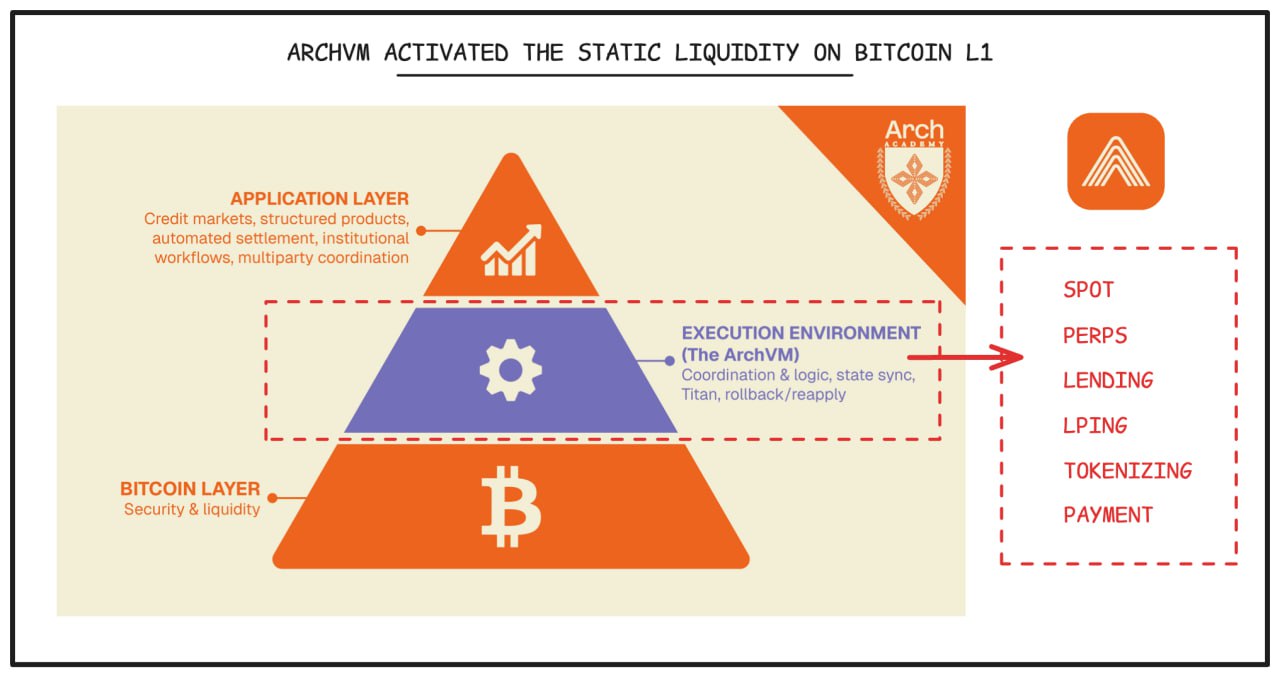 Bitcoin programmability: the complete picture. Arch Network aim to build the ArchVM, the logic layer needed for lending, payouts, credit, and coordination to run natively on Bitcoin. By executing financial instructions and generating standard transactions, it enables complex, multiparty activity without leaving the base layer. ArchVM turns Bitcoin from static reserve into dynamic capital.2025-12
 Pumpfun remains a dominant consumer crypto app, but struggles to build a sustainable creator-token model beyond short-lived hype like Bagwork. Its strong revenues and buybacks contrast with uncertainty around streaming, incentives, and long-term direction into 2026.2025-12
 The UAE isn’t Just regulating tokenization, it’s building its economy around it. As other jurisdictions stall in regulatory debate, the UAE is institutionalizing tokenization, moving it to the core of its economic infrastructure. That distinction is what makes the UAE arguably the world’s most advanced living lab for tokenized economies.2025-12
In crypto, the word "build" has evolved from a simple verb into a shorthand for a whole philosophy: keep shipping real products, infrastructure, and ownership systems, regardless of where the market cycle is. In its capitalized form—BUILD or BUIDL—it signals alignment with the long game of making blockchains useful rather than merely tradable.
What “BUILD” Means in Crypto Culture
The term BUILD crystallized during prior bear markets, when prices were down, liquidity was thin, and speculative interest faded, but core teams kept writing code, deploying upgrades, and redesigning token economics. In that context, BUILD became an identity marker separating those focused on constructing protocols, wallets, and markets from those chasing short-term price action or meme coin cycles. The mantra effectively said: ignore the noise, focus on tools and rails that will still matter when the next cycle arrives. Over time, that ethos seeped into project marketing, community memes, and even protocol roadmaps that explicitly frame multi-year “build programs” as the main narrative, rather than promises of immediate yields or token price appreciation.
A related meme, BUIDL, emerged as a deliberate twist on HODL, the classic crypto slang for holding assets through volatility rather than trying to time tops and bottoms. Where HODL emphasizes passive endurance, BUIDL and BUILD center active contribution. HODL might describe someone dollar-cost averaging into Bitcoin and leaving it in cold storage, while BUILD describes contributors adding new modules to DeFi protocols, shipping NFT standards, or designing governance experiments. The two mindsets are complementary: HODL supplies patient capital, while BUILD aims to give that capital more productive venues and clearer ownership claims over time.
As the industry matured, BUILD also came to signify a rejection of the perception that crypto is nothing more than a speculative casino. In an influential essay, a16z crypto described two cultures around blockchains: the “computer,” which views blockchains as programmable infrastructure for new kinds of networks, and the “casino,” which sees them primarily as trading venues. In that framing, BUILD aligns squarely with the “computer” culture. It is about standing up community-owned rails for payments, identity, markets, and coordination, and accepting that tokens are not just chips in a casino but tools for assigning and transferring rights within those networks. This is why discussions of BUILD almost always lead back to ownership, governance, and long-term architecture, rather than to the latest token pump.
That does not mean BUILD is purely idealistic. The theme shows up in hard metrics as well. DeFi platforms highlight months of continuous token burns, new product launches, and traction milestones as evidence that they are building through the cycle rather than treating quiet markets as downtime. A recent monthly recap from a major DEX framed its own updates—perpetuals in “simple mode,” synthetic stock markets landing on Ethereum, and crossing millions of cumulative traders—under the banner “BUILD, BUILD, BUILD,” reflecting a self-conscious embrace of this ethos. The message is that in a sector defined by volatility, the only durable edge is steady shipping and deep technical moats.
Finally, BUILD has become a cultural touchstone within crypto’s creator and developer communities. Narrative projects like The Code Chronicles portray builders as protagonists in a multi-episode saga: answering “the call of code,” enduring the “neverending grind,” and aiming for “eternal legacy” through open infrastructure rather than short-lived apps. This storytelling reinforces the idea that the real status in crypto is earned not by being early to a trade, but by leaving behind protocols, standards, and tools that others adopt. In this sense, BUILD is less a slogan and more a social contract: builders accept years of uncertainty and fragmented regulation in the hope of shaping the infrastructure of a new financial and computing stack.
BUILD, BUIDL, and HODL: Comparing Mindsets
To understand BUILD in practice, it helps to contrast it with the more familiar HODL meme. HODL originated from a misspelled 2013 forum post in which a frustrated Bitcoin trader declared they were “HODLing” instead of trying to out-trade the market. Over time, it became shorthand for long-term conviction, often glossed as “Hold On for Dear Life,” and is associated with strategies like dollar-cost averaging, ignoring short-term price swings, and focusing on multi-year adoption curves. It is essentially a behavioral finance hack: a way to sidestep the emotional turbulence of volatile markets by pre-committing to patience.
BUIDL, by contrast, repurposed that energy toward active contribution. It suggests that the best way to benefit from crypto’s long-term upside is not only to hold, but to build the protocols, apps, and standards that will attract the next wave of demand. The emergence of institutional products like BlackRock’s BUIDL tokenized fund on Ethereum adds another layer of meaning to the term. That fund represents interests in a portfolio of cash, U.S. Treasury bills, and repos via an ERC-20 token targeting a stable value of one dollar, and pays out accrued yield directly to investors’ wallets as new tokens. Here, BUIDL is not just an ethic but a product: a way to package traditional yield-bearing assets in a programmable, composable format.
At a high level, the different mindsets can be summarized as follows:
| Concept | Core behavior | Primary focus | Example expression |
|---|---|---|---|
| HODL | Buy and hold assets long term | Price appreciation and scarcity | Long-term Bitcoin holder ignoring drawdowns |
| BUIDL | Contribute code or products | Ecosystem functionality and adoption | Developer shipping a DeFi primitive |
| BUILD | Systematically ship infra and ownership rails across cycles | Durable markets, rights, and coordination | Protocol teams rolling out new layers, governance, and compliance rails |
While HODL and BUIDL started as memes, BUILD is increasingly used as an organizing principle for institutions, regulators, and even non-crypto tech companies entering the space. For instance, infrastructure teams on major L2s frame entire quarters around “Base Build” initiatives, shipping upgrades like Flashblocks to reduce perceived latency and make the chain feel more responsive for end users. The term thus spans individual behavior, project roadmap philosophy, and even national economic strategy, as some jurisdictions explicitly pitch themselves as places that are “building” tokenized economies rather than simply regulating speculative trading.
BUILD and the “Computer vs Casino” Debate
The BUILD narrative cannot be separated from the long-running debate over what blockchains are fundamentally for. As a16z’s “computer vs casino” framing argues, public chains have drawn in both those who see them as neutral execution environments for permissionless applications, and those who see them as global high-beta trading venues. When token prices dominate headlines, the casino culture seems to win. But when regulators crack down on unregistered securities offerings or when speculative mania fades, the industry’s survival depends on whether enough value is being created at the “computer” layer.
From that vantage point, BUILD is a bet that the computer side will ultimately prove more important. It treats tokens not as detachable financial wrappers but as essential primitives for community ownership and coordination. The a16z essay stresses that tokens enable people to own slices of a network in a way that can be transferred, pledged, or governed, and that this property is not incidental but foundational. Attempts to remove tokens entirely, whether by technical design or regulation, risk neutering the very mechanism that makes decentralized ownership possible. BUILD, therefore, includes work on better token and ownership structures rather than assuming that tokens are the problem.
This emphasis on ownership is particularly visible in calls for an “ownership overhaul” in crypto. Critics argue that while the industry succeeded in creating global, permissionless markets, it never clearly defined what market participants truly own when they hold a token. Is it a share of future cash flows, governance rights, access to services, or nothing at all beyond speculative resale? This ambiguity fuels both regulatory scrutiny and user disillusionment. BUILD, in this context, means architecting clearer claims—via tokenization of off-chain assets, programmable rights, and legally recognized registries—so that markets can settle not just on price but on enforceable entitlements.
That same tension appears in debates over non-fungible tokens, governance tokens, and so-called “utility tokens.” The casino view sees them as chips in a global game of musical chairs; the computer view sees them as pointers to rights, obligations, or access slots. BUILD-oriented teams tend to push toward the latter: using NFTs as on-chain titles to real-world assets, deploying governance tokens with explicit on-chain and off-chain powers, and embedding cash-flow rights into token contracts. The goal is to make the “computer” legible not only to coders but to courts and regulators.

MagicBlock launches BUILD initiative to support developers and creators on Solana
BUILDing Ownership: From Tokens to Tokenization
If the next era of crypto is about fixing ownership rather than merely issuing better tokens, the center of gravity shifts toward tokenization—bringing real-world assets and rights on-chain in legally and economically meaningful ways. Firms like Equiniti (EQ) describe this shift as a transformation of capital markets, where tokenized instruments can reshape ownership, access, and governance by enabling fractional participation and programmatic rules, but only if the underlying trust framework is robust. In other words, tokenization without clear governance, disclosures, and counterparties merely extends the casino; tokenization with carefully defined rights can extend the reach of the computer.
Institutional experiments give this thesis concrete form. The United Arab Emirates has positioned itself not merely as a regulator of digital assets but as a jurisdiction building its broader economy around tokenization. Public statements and demonstrations emphasize that tokenized bonds, fractional real estate, regulated stablecoins, and a retail digital dirham are not theoretical pilots but already live or in advanced deployment. Treating these instruments as part of core economic infrastructure, rather than edge cases, turns the country into a kind of living lab for tokenized economies. Regulators like the Abu Dhabi Global Market (ADGM) have supported this by implementing comprehensive digital asset frameworks designed to give institutions clear pathways to launch tokenized products while addressing risks around custody, market abuse, and consumer protection.
The emergence of products like BlackRock’s BUIDL fund on Ethereum shows how this plays out at the asset-manager level. The BlackRock USD Institutional Digital Liquidity Fund tokenizes shares in a conservative portfolio of cash, U.S. Treasury bills, and repos, wrapping them in a blockchain-based BUIDL token that seeks to maintain a stable net asset value of one dollar. Investors subscribe through a regulated platform, Securitize, and receive yield as newly minted tokens paid directly to their wallets each month. On one level, this is simply an on-chain money market fund. On another, it is a proof-of-concept that traditional financial instruments can be represented, subscribed, and redeemed via smart contracts, opening the door to composability with DeFi and programmable cash management.
The thread connecting these examples is an attempt to answer the ownership question more precisely. When an investor holds a tokenized fund share, the legal documentation can specify that the token represents a claim on underlying assets under a defined jurisdiction and regulatory framework. When a government issues a tokenized bond or a retail digital currency, the corresponding statutes and regulations clarify the obligations and protections involved. In this way, BUILD at the ownership layer is not just about writing solidity contracts; it is about harmonizing code with law, disclosures, and investor expectations.
Ownership, Governance, and the Crisis of Entitlement
The sense of an “ownership crisis” in crypto stems from the gap between the formal properties of tokens and the expectations of those who buy them. Many governance tokens promise influence over protocol parameters but prove to have limited or revocable powers. Many “utility tokens” confer access to services that never materialize or that can be unilaterally changed. Price action often precedes product delivery by months or years, so markets end up trading claims whose underlying rights are ill-defined or in flux. BUILD-minded critics argue that this is unsustainable if crypto is to become a foundational layer for finance and coordination.
In response, some teams are designing tokens that more explicitly embed ownership claims. Real-world asset (RWA) projects, for example, issue tokens backed by off-chain loans, treasuries, or real estate, with legal structures that give token holders creditor rights or beneficial interests in the underlying pools. Incubators like Obex, which raised tens of millions of dollars to support “yield-generating stablecoins” backed by RWAs, are experimenting with structured products that blend on-chain liquidity with off-chain collateral and legal recourse. The hypothesis is that if users understand exactly what they own—whether it is a share of Treasury yield, a slice of invoice receivables, or a participation in a credit fund—they are more likely to treat tokens as financial instruments rather than lottery tickets.
At the governance layer, projects are moving toward narrower but clearer mandates. Rather than promising token holders generalized control over a protocol, they might confine governance to discrete parameters, reward scopes, or upgrade approvals. That can make the rights more intelligible and reduce the risk that tokens will be treated as implicit equity without corresponding obligations. This trend is visible in both DeFi protocols that formalize their on-chain governance charters and in networks exploring foundation-based or council-based oversight structures that blend token input with legal stewardship.
Equiniti’s analysis underscores that trust remains critical even in fully digital capital markets. Token holders need not only cryptographic guarantees that their tokens cannot be arbitrarily copied or censored, but also confidence that issuers will honor redemption rights, maintain collateral, and disclose relevant information. In that sense, BUILD at the ownership level involves overlapping layers of trust: trust in code, trust in legal frameworks, and trust in institutions. The challenge for the next wave of builders is to weave these layers together without sacrificing the openness and programmability that made blockchains attractive in the first place.
Readers click 'BUILD' content not for technical tutorials but for credibility signals — they want to know who is putting real money, institutional weight, or governance risk behind the claim that crypto can be more than speculation, which is why grant announcements, treasury proposals, and critiques from insiders all outperform generic 'innovation' narratives.
Infrastructure BUILD: Chains, Markets, and Latency
Beyond ownership structures, BUILD is most visible in the relentless expansion of crypto’s base infrastructure. One dimension of this is making chains faster and more responsive while preserving security. Base, an Ethereum Layer 2, recently shipped Flashblocks, a system that streams 200-millisecond “sub-blocks” to builders during the two-second block interval, enabling sub-second transaction preconfirmations and making dApps feel up to ten times faster. The implementation, developed with Flashbots, required re-architecting parts of the block-building pipeline and carefully tuning incentives so that builders have strong reasons to honor preconfirmations. This is quintessential BUILD activity: deep engineering changes that most end users never see directly but that underpin smoother user experiences and more competitive markets.
On Bitcoin, a different flavor of BUILD is underway. Historically, Bitcoin’s base layer has been optimized for security and simplicity, making it difficult to implement complex financial logic directly on-chain. Arch Network positions itself as “Bitcoin-native financial rails” by building a chain that executes financial logic and then settles the resulting state to Bitcoin. Its ArchVM is designed to let institutions and users issue, trade, and settle instruments like credit, yield products, and swaps without bridging, wrapping, or leaving their wallets, while still anchoring final settlement to Bitcoin’s consensus. This effectively turns Bitcoin from a static reserve asset into dynamic capital, without forcing participants to fully leave the Bitcoin ecosystem. Whether Arch and similar efforts are ultimately treated as sidechains, L2s, or something in between, they embody the BUILD philosophy of respecting a base protocol’s constraints while layering new capabilities on top.
Trading infrastructure is another core arena for BUILD. Orderly Network, for example, promotes “launch your own perpetual DEX in minutes,” promising that developers can spin up a derivatives exchange without writing any code themselves. Behind that marketing is a set of primitives—shared order books, margin engines, risk management, and settlement rails—that handle the heavy lifting. In a similar spirit, some perpetuals-focused chains and platforms have rolled out simplified user interfaces (“simple mode” perps), synthetic stock markets bridged onto EVM chains, and unified liquidity venues that aggregate spot, futures, and structured products. These efforts converge on a common outcome: lowering the barrier to deploying and accessing sophisticated markets, and making DeFi feel more like mature trading environments without sacrificing self-custody.
Consumer-facing applications illustrate both the potential and the risks of BUILD in trading. Pump.fun on Solana, for instance, provides what it calls “the fairest way to launch and trade memecoins,” offering instant tradability via transparent bonding curves that automatically manage liquidity without requiring project creators to seed pools. The platform’s viral growth and strong revenues have made it a dominant consumer app in parts of the ecosystem, but coverage also highlights challenges in building sustainable creator-token models beyond short-lived hype cycles, as seen in experimental campaigns like “Bagwork.” The platform’s design showcases how BUILD can democratize market access, but also how difficult it is to architect long-term value and reputation around assets that may be designed for ephemerality from day one.
At the very low level of infrastructure, other teams focus on gas costs and developer ergonomics. Projects like Arc (as highlighted in recent coverage) treat stablecoin-denominated gas—paying for computation in USDC rather than volatile native tokens—as a way to stabilize cost structures and simplify accounting. That approach reflects an understanding that if blockchain is to be a serious computing platform, its cost model must be predictable enough for product managers and CFOs to budget around. BUILD in this context means treating gas not as a speculative lever but as an operational line item.
BUILD on Bitcoin, EVMs, and Emerging Chains
The distribution of BUILD across ecosystems is uneven but increasingly interconnected. On Bitcoin, aside from Arch’s capital markets infrastructure, treasuries like Capital B are raising significant funding rounds to expand their Bitcoin holdings and related AI initiatives, reflecting a view of Bitcoin as both a balance-sheet asset and a strategic technology. At the same time, cases like Smart Digital Group—whose stock reportedly crashed after announcing a poorly specified plan to build a Bitcoin-Ethereum asset pool, drawing regulatory scrutiny—show how quickly markets can punish vague or opportunistic “we’re building in crypto” narratives when not backed by credible detail.
On EVM-compatible chains, building takes many forms. Hyperliquid, a derivatives-focused network with its own EVM environment, has cultivated a community that explicitly thanks core contributors “for all the hard work done to build Hyperliquid,” underscoring how much an exchange’s success depends on continuous improvement of risk engines, matching performance, and liquidation logic. Stablecoin issuers like USDT0 that run validators and commit to supporting ecosystem growth over multiple proposals and governance cycles frame themselves as long-term builders rather than transient liquidity providers, promising to “support and build with Hyperliquid regardless of the outcome” of specific treasury votes.
Meanwhile, generalized EVM platforms like Base are turning BUILD into a public narrative by documenting their own internal engineering efforts. The detailed Flashblocks deep dive explains not only how sub-block streaming works but how the team discovered attack vectors, adjusted incentive structures, and validated performance before rolling out sub-second preconfirmations to production. Publishing that process not only educates developers but signals a culture of “building in public” that is central to crypto’s appeal for many engineers and users.
Finally, new chains like those emerging from the Berachain ecosystem, backed by significant capital injections to build treasuries and serve as reserve assets, represent an attempt to tie chain-level economics directly to broader liquidity and governance structures. When investment firms lead nine-figure deals to build such treasuries and align them with on-chain institutions like Greenlane, they are betting that deep, protocol-native balance sheets are an essential part of sustainable BUILD.

A Delhi IT worker says he used ChatGPT to build a fake payment site that captured a scammer’s photo and location, triggering panic and pleas for mercy. The viral Reddit case shows AI is reshaping DIY scambaiting.
BUILDing with Stablecoins and Tokenized Funds
Stablecoins are arguably the most successful product of the crypto era so far, and they sit at the center of many BUILD initiatives. They provide a relatively stable unit of account and medium of exchange for DeFi, exchanges, and cross-border payments, and are increasingly used as base money in on-chain financial systems. BUILD at the stablecoin layer involves both scaling existing dollar-pegged designs and experimenting with new backing models linked to real-world assets and yields.
Cross-border payments offer one of the clearest use cases. Nigerian fintech giant Flutterwave has partnered with Polygon Labs to launch a stablecoin-powered payment network across 34 African countries, aiming to lower costs and speed up settlements compared to traditional remittance and correspondent banking channels. By using stablecoins as settlement rails, the network can provide near-instant finality and reduce FX overhead, while Polygon’s infrastructure offers scalability and interoperability with other EVM ecosystems. This is BUILD in a very practical sense: replacing costly legacy rails with programmable money in regions where financial inclusion and cross-border flows are acute challenges.
On the capital markets side, incubators like Obex are raising dedicated funds to support yield-generating stablecoin projects backed by real-world assets. Their thesis is that the next generation of stablecoins will be less about pure fiat reserves and more about tokenized treasuries, credit portfolios, and other yield-bearing instruments, allowing users to hold a stable medium of exchange and earn programmatic returns in the same asset. This dovetails with institutional experiments like BlackRock’s BUIDL fund, where token holders effectively hold a tokenized slice of a money market fund and receive yield as new tokens directly in their on-chain wallets.
Stablecoin-native execution environments, such as EVMs where gas is paid in USDC, push this logic deeper into the stack. By decoupling execution costs from volatile native tokens, they aim to make crypto infrastructure feel more like cloud computing: you pay a fairly stable fee for a given amount of computation, denominated in a currency that your finance team already understands. This is particularly relevant for AI agents and other automated systems that may need to budget transaction fees over long horizons. If gas suddenly doubles in dollar terms, those agents must reoptimize; a stablecoin-native environment minimizes this friction.
In parallel, on-chain stablecoins are becoming key pillars of exchange and derivatives ecosystems. On Hyperliquid’s EVM, for example, USDT0 has emerged as a major stablecoin, operated by an issuer that runs validators and explicitly commits to aligning its growth with the chain’s long-term development. That sort of “ecosystem-stablecoin” model ties liquidity, governance, and infrastructure together, offering a potential blueprint for other chains that wish to reduce dependency on external stablecoins while still remaining composable with broader DeFi.
Tokenized Funds and RWA as BUILD Primitives
Beyond conventional stablecoins, tokenized funds and RWA-backed instruments are increasingly treated as first-class primitives in DeFi. BlackRock’s BUIDL shows how short-term government debt can be wrapped in a token that behaves like on-chain cash while allowing for direct, automated distribution of yield. Other projects tokenizing treasuries, invoices, or real estate follow a similar pattern: define a legal wrapper for the underlying assets, issue tokens representing claims, and then integrate those tokens into DeFi protocols as collateral, liquidity, or building blocks for structured products.
From a BUILD perspective, the question is how to integrate these instruments without recreating opaque shadow banking systems on-chain. That means clear disclosures, on-chain proof-of-reserves or attestations, risk tranching, and robust redemption mechanisms. It also means designing protocols that can gracefully handle situations where off-chain assets are frozen, impaired, or restructured, in ways that are transparent to token holders. The institutions that succeed will likely be those that treat regulatory compliance and investor protection as integral components of their build, rather than as afterthoughts.
These instruments also create interesting bridges between crypto-native communities and traditional finance. When tokenized fund shares, tokenized bonds, or RWA-backed stablecoins are available on chains like Ethereum, they can be held in the same wallets as governance tokens, NFTs, and meme coins. That offers users a continuum from speculative to yield-bearing instruments, and offers protocols the chance to design risk waterfalls and composable strategies that incorporate both. BUILD here is about constructing that continuum responsibly, with user interfaces and risk disclosures that make the distinctions clear rather than obscuring them.
- 01utility vs casino critique↗
An Ethereum Foundation insider framing crypto as a 'value-extracting casino' hit the highest click count, signaling readers want credible insiders to validate or challenge the industry's self-image.
- 02cross-chain liquidity grants
A seven-figure Wormhole Foundation grant to Curvance drew strong engagement because it frames interoperability not as theory but as funded, institutional-grade infrastructure work.
- 03stablecoin trilemma solutions
f(x) Protocol's dual-token model and Frax's pursuit of a US payment charter tapped readers hungry for concrete engineering answers to decentralization, stability, and capital efficiency trade-offs.
- 04protocol treasury governance
Two separate Benny/Curve treasury proposals — redirecting crvUSD fees and 3pool revenue — each cleared 125+ clicks, reflecting deep reader interest in how protocols self-fund without diluting token holders.
- 05DEX hook composability
Uniswap v4 hooks and Andre Cronje's Solidly v2-on-Uniswap-v4 proposal attracted readers who see hook-based extensibility as the next composability frontier, not just a version bump.
- 06institutional infrastructure deals
Polygon's $200K/year L2 offer to ApeCoin and Frax hiring an ex-Mastercard VP both surfaced the tension between crypto's permissionless ethos and its growing dependence on enterprise distribution to scale.
BUILD Meets AI: Agents, Identity, and the Machine Economy
Another frontier for BUILD is the intersection of crypto with artificial intelligence. As AI systems evolve from tools into agents capable of acting autonomously in digital and physical spaces, new questions arise about how they will coordinate, transact, and establish trust. The Ethereum Foundation recently announced a dedicated “dAI” team with the mission of making Ethereum a preferred settlement and coordination layer for AI agents and the broader machine economy. The idea is that decentralized infrastructure—smart contracts, tokens, and on-chain registries—can offer AI agents censorship-resistant rails for payments, data access, and multi-agent coordination.
A16z has argued that AI agents operating real systems will require verifiable execution environments and public ledgers to log actions, resolve disputes, and manage shared resources. Unlike humans, who can rely on social and legal context to establish trust, AI agents lack an innate sense of reputation or shared norms; they need explicit, machine-readable guarantees. Blockchains, in this view, function as a “ledger of truth” for AI societies, recording commitments and outcomes in a way that any agent can independently verify. BUILD at this frontier involves designing protocols that are not only human-friendly but agent-friendly: APIs, settlement standards, and incentive structures that can be safely consumed by autonomous software.
Trust and identity are central challenges here. As experts in decentralized identity have emphasized, AI agents will likely operate under delegated authority from humans or organizations, using cryptographically verifiable credentials to prove their permissions and constraints. Frameworks for decentralized identity and verifiable credentials can provide chains of trust, where a root authority (such as a company or government) issues credentials to a human, who in turn delegates constrained rights to an AI agent. Emerging standards like ERC-804 explore how to record agent registries on-chain, including capabilities and associations with communities or sponsors. Open-source projects like Hyperledger already provide working examples of how these identity components can be woven into concrete use cases.
Selective disclosure is another critical principle. Agents must be able to prove certain attributes or rights without revealing all underlying data, both for privacy and for security. Decentralized identity technologies offer mechanisms for such proofs, allowing AI agents to demonstrate, for instance, that they are authorized to sign a transaction on behalf of a user without revealing all of that user’s identities or holdings. BUILD in this context means integrating privacy-preserving proofs, attestation registries, and delegation patterns into the core fabric of smart contract platforms, so that AI-native use cases can emerge without compromising user safety.
Real-world anecdotes highlight both the power and the risks of AI in financial contexts. The viral story of a Delhi IT worker using ChatGPT to construct a fake payment site to trick a scammer, capturing their photo and location and triggering a panicked response, shows how AI lowers the barrier to complex social engineering, including “DIY scambaiting.” At the same time, scammers themselves will increasingly use AI agents to automate fraud across DeFi platforms, as seen in the Polymarket case where a hacker used a prediction market’s comment section to steal over half a million dollars from unsuspecting users. This underscores why security education and robust guardrails are as much part of BUILD as new products: if users cannot distinguish legitimate agent behavior from phishing or spoofing, the entire experiment risks being discredited.
Tech giants are also exploring AI-native marketplaces that intersect with security and coordination. Microsoft’s forthcoming Security Store, for instance, aims to host cybersecurity SaaS solutions and AI agents built atop its Sentinel platform, enabling security teams to craft custom agents for threat detection and response. While not strictly on-chain, it reflects similar design questions around ownership of models, accountability for agent actions, and interoperability of tools. Crypto builders watching this space are asking how decentralized alternatives could embed open, verifiable agents into on-chain workflows, potentially using stablecoins to meter usage and blockchains to log and adjudicate agent behavior.
Crypto needs an ownership overhaul: Crypto succeeded in building global, permissionless markets. But it never clearly defined what those markets entitle you to own. This is not a token design problem. It is an ownership crisis. The next era of crypto will not be defined by "better tokens", but by better ownership structures.
So much to build here. Builders are real winners 🏆
BUILDing Safer and More Regulated Crypto Economies
Security and regulation are often framed as constraints on BUILD, but they are increasingly recognized as prerequisites for sustainable growth. The Polymarket scam case, where a hacker exploited a comment section on a prediction market to siphon off funds, illustrates how small UX vulnerabilities can cascade into significant losses. Beyond smart contract exploits, social engineering and poor wallet hygiene remain persistent attack vectors. Builders now routinely treat user education, permission management, and safe defaults as part of their mandate, integrating features like transaction simulation, human-readable signing prompts, and default spending caps.
On the regulatory side, jurisdictions like the UAE and institutions like ADGM offer a view of what pro-BUILD regulation can look like. ADGM’s digital asset framework sets out clear processes for firms seeking authorization, requiring regulatory plans, internal controls, and capital adequacy before granting financial services permissions. The process includes initial consultations, application review, interviews with key personnel, and conditional approvals that must be satisfied before a license is issued. Although such procedures add overhead, they also create a predictable environment in which firms can plan multi-year investments. When paired with public-sector initiatives like the UAE’s digital dirham and tokenized bond programs, they show that regulation and BUILD can be mutually reinforcing rather than antagonistic.
In traditional finance, consortium efforts like the Canton Network and the GlobalSync Foundation, which have attracted members including HSBC and BNP Paribas, seek to build interoperable blockchain infrastructure with strong privacy and governance for regulated markets. The emphasis on privacy, control, and interoperability mirrors Equiniti’s observation that digital capital markets require both programmable ownership and robust trust frameworks. These networks focus on institution-to-institution use cases—settlement of tokenized assets, cross-border securities processing, and synchronized ledgers across custodians—rather than retail trading, but they still embody the BUILD ethos by constructing shared rails that multiple stakeholders can rely on.
At the same time, regulators are scrutinizing abrupt “crypto pivot” announcements from listed companies, especially those light on detail. Smart Digital Group’s stock collapse after unveiling a vague plan to build a Bitcoin-Ethereum asset pool, combined with regulatory probing of similar pivots, signals that markets are increasingly differentiating between credible, well-specified build strategies and opportunistic buzzword adoption. For serious builders, this is a positive development: it reduces the noise from companies using “blockchain” as a marketing ploy and rewards those who can articulate concrete architectures, risk frameworks, and revenue models.
Central banks are selectively adopting blockchain-inspired models as well. The People’s Bank of China’s digital RMB initiative, for instance, is exploring new cross-border payment mechanisms and the possibility of a dual-platform model combining blockchain and digital asset infrastructure. While the e-CNY is not a public-chain token, its design and pilot programs influence global thinking about how state-issued digital currencies might interact with private stablecoins and DeFi-like rails. Similarly, African governments watching Flutterwave’s stablecoin network or the growth of tokenized bond markets in the Gulf may choose to build their own public-private partnerships around shared ledger infrastructure.
The overarching theme is that BUILD is no longer confined to startups and crypto-native DAOs. It increasingly involves regulators, central banks, global banks, and big tech companies. The challenge—and opportunity—for crypto-native builders is to ensure that public, permissionless infrastructures remain competitive and interoperable as permissioned, regulated networks proliferate.
- 2024-01launch
Uniswap v4 hooks framework announced as imminent; Atrium Academy course published
BlackRock BUIDL tokenized fund launches on Ethereum
- 2024-11launch
Uniswap v4 deployed on mainnet with hook-extensible architecture
- 2025-02milestone
Curvance awarded seven-figure Wormhole Foundation grant for unified liquidity layer
US tokenized treasuries market surpasses $7B; BlackRock BUIDL leads at ~$2.9B
- 2025-05launch
Ethereum Foundation launches dAI Team to position Ethereum as AI coordination layer
- 2025-05governance
Lido cuts 15% of staff to reduce costs and build toward sustainability
- 2025-06regulatory
Maldives signs $8.8B deal with MBS Global to build a blockchain hub in Malé
BUILD as Strategy: For Founders, Investors, and Users
For founders, BUILD is both a roadmap and a filter. It suggests prioritizing infrastructure and ownership clarity over short-lived hype, designing products that can survive multiple market cycles, and aligning token incentives with actual usage rather than pure speculation. That might mean focusing on cross-border payments in under-served regions, as Flutterwave and Polygon are doing in Africa, or on tokenization of high-quality assets with transparent legal wrappers, as BlackRock and various RWA startups are experimenting with. It might mean building low-level infrastructure like Bitcoin-native capital markets via Arch, or execution enhancements like Flashblocks on Base. In all cases, the question becomes: if token prices went sideways for three years, would this product still matter?
Investors interpreting BUILD must distinguish between rhetoric and evidence. Rhetorical BUILD is cheap: anyone can declare that they are “here to build.” Evidential BUILD shows up in shipped code, audited contracts, growing usage, and transparent write-ups of failures and iterative improvements. It also shows up in how teams respond to regulatory pressure and security incidents. Platforms that retrofit compliance, documentation, or user safety only when forced to do so might be less resilient than those that consider these factors part of their core build from day one. Funding rounds, such as those for SpaceComputer’s “space-native computing infrastructure” or Kredete’s credit tools for African immigrants, can be seen as bets on teams’ capacity to build real systems over long horizons, not just to capture a meme.
For everyday users, embracing BUILD does not require writing code. It can mean favoring products that exhibit clear ownership structures and transparent governance over those that offer only viral rewards. It can mean learning enough about wallets, private keys, and transaction signing to avoid scams like the Polymarket comment attack. It can mean participating in open-source communities, reporting bugs, or contributing documentation. In a world where AI agents increasingly act on users’ behalf, BUILD might also involve setting up safe delegation patterns, using verifiable credentials to tell agents what they can and cannot do, and insisting that any agent interacting with your funds logs its actions on verifiable rails.
Finally, for regulators and policymakers, BUILD offers a framework for proactive engagement. Instead of treating crypto as a binary—either ban it or fully embrace it—they can focus on which forms of building they wish to encourage. That might include tokenization of real assets under clear investor-protection regimes, cross-border payment pilots with transparent FX and KYC processes, or experiments in digital identity that preserve privacy while reducing fraud. It might also include supporting research into AI-plus-blockchain coordination, so that future machine economies do not ossify around closed, proprietary platforms.
Outlook
As crypto enters its third decade, BUILD has become more than a rallying cry for developers grinding through bear markets. It is emerging as the core organizing principle for an ecosystem that spans Bitcoin and EVM chains, DeFi and institutional finance, stablecoins and tokenized funds, human traders and AI agents. The next phase will test whether this philosophy can deliver on its promise: ownership structures that are clear and enforceable, markets that are deep and resilient rather than purely speculative, and infrastructure that is robust enough for both people and machines to rely on.
The trajectory is not guaranteed. Misaligned incentives, regulatory missteps, and security failures could still derail parts of the experiment. Yet the proliferation of serious BUILD efforts—from Arch’s Bitcoin-native capital markets and Base’s Flashblocks, to UAE’s tokenized economic infrastructure, Flutterwave’s stablecoin payments, and Ethereum’s dAI initiative—suggests that a critical mass of actors now see blockchains as computers to be built upon, not just casinos to be played in. If that momentum continues, the term BUILD may eventually fade from discourse, not because the ethos has failed, but because it has become the default assumption for what serious work in crypto looks like.
Latest BUILD news
MagicBlock launches BUILD initiative to support developers and creators on SolanaA Delhi IT worker says he used ChatGPT to build a fake payment site that captured a scammer’s photo and location, triggering panic and pleas for mercy. The viral Reddit case shows AI is reshaping DIY scambaiting.Crypto needs an ownership overhaul: Crypto succeeded in building global, permissionless markets. But it never clearly defined what those markets entitle you to own. This is not a token design problem. It is an ownership crisis. The next era of crypto will not be defined by "better tokens", but by better ownership structures.Bitcoin programmability: the complete picture. Arch Network aim to build the ArchVM, the logic layer needed for lending, payouts, credit, and coordination to run natively on Bitcoin. By executing financial instructions and generating standard transactions, it enables complex, multiparty activity without leaving the base layer. ArchVM turns Bitcoin from static reserve into dynamic capital.Pumpfun remains a dominant consumer crypto app, but struggles to build a sustainable creator-token model beyond short-lived hype like Bagwork. Its strong revenues and buybacks contrast with uncertainty around streaming, incentives, and long-term direction into 2026.The UAE isn’t Just regulating tokenization, it’s building its economy around it. As other jurisdictions stall in regulatory debate, the UAE is institutionalizing tokenization, moving it to the core of its economic infrastructure. That distinction is what makes the UAE arguably the world’s most advanced living lab for tokenized economies.Sources
18 records from 16 domains
bitsofblocks.io
a16zcrypto.com
arch.network
pump.fun
instagram.com
x.com
dabafinance.com
moomoo.com
docs.chainstack.com
equiniti.com
youtube.com
blog.base.dev
public.com
m0.org
adgm.com
a16zcrypto.substack.com
Community notes
Spot something off or out of date? Drop a note. Editors review topic notes daily and roll accepted fixes into the explainer — contributors are recognized in the monthly $SQUID drop.
Loading notes…
Help improve this topic
Have a story or tip about this topic? Submit it. See something missing? Leave a note. Editors review daily; accepted submissions and fixes count toward the monthly $SQUID drop.