
In-depth explainer on a16z’s role in crypto, covering its funds, theses on money flows and tokenization, policy pushes on stablecoins and CLARITY, research on prediction markets and consensus, and how it bridges onchain finance with AI agents.
+12 sources across the wider coverage universe
 a16z’s Guy Wuollet says Wall Street is embracing blockchains not for ideology, but to solve finance’s massive coordination and settlement problems2026-05
 Former SEC Chief Economist backs a16z-backed safe harbor, arguing tokenized securities on DeFi can cut costs, enable 24/7 markets, and boost transparency despite regulatory tradeoffs2026-04
 Mintlify raises $45M Series B led by Andreessen Horowitz (a16z) and Salesforce Ventures to scale AI knowledge infrastructure2026-04
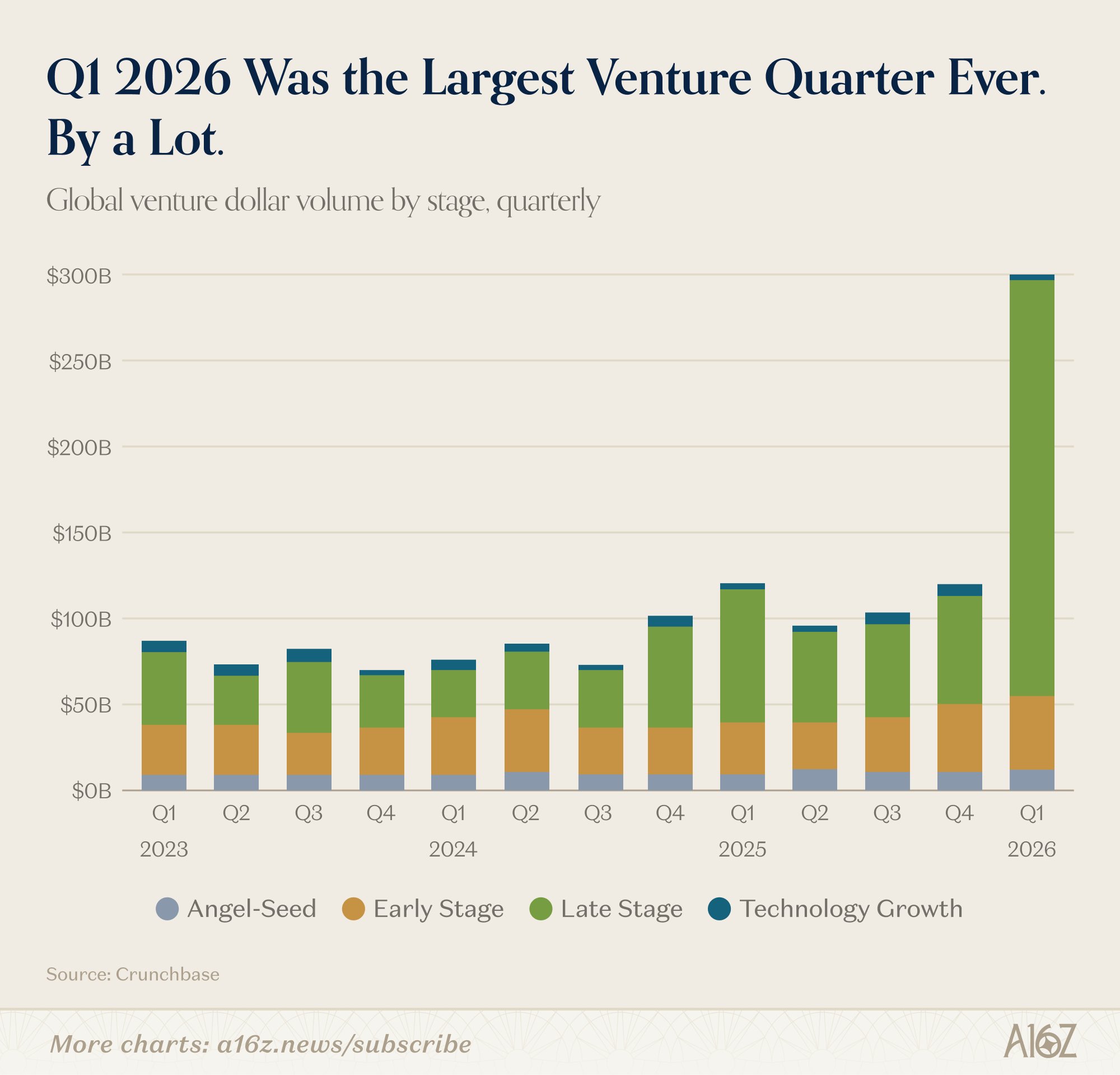 a16z reports Q1 2026 as the largest venture funding quarter on record, signaling renewed investor appetite and accelerating capital flows into tech and startup ecosystems2026-04
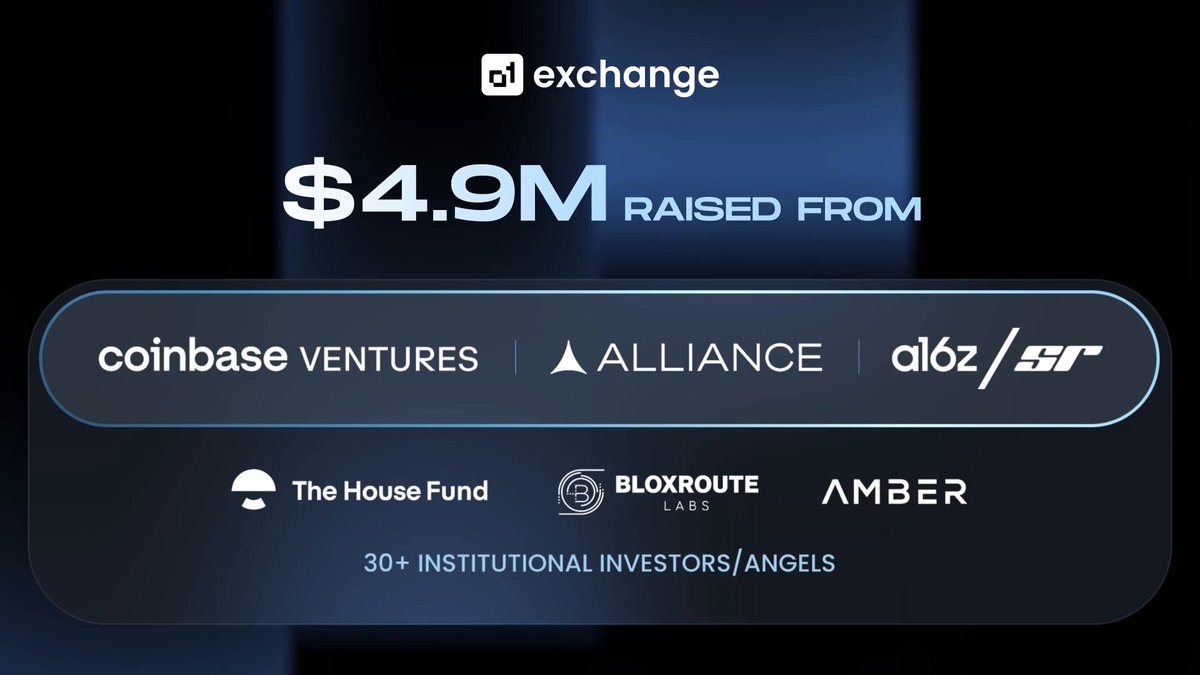 o1.exchange secures $4.8m seed from Coinbase Ventures and a16z to bring AI trading terminal to Base.2026-06
 a16z backs Ethos as startup uses AI voice agents to transform hiring, expert networks and fractional work, with top users already earning over $10K monthly2026-05
a16z: Venture Capital’s Power Player In Crypto, Onchain Finance, And The AI Economy
Andreessen Horowitz, better known as a16z, is a Silicon Valley venture capital firm that has grown into one of the most influential backers of crypto, onchain finance, and AI, using multibillion‑dollar funds to shape markets, regulation, and technical research across these emerging sectors. For a crypto audience, understanding a16z means understanding how capital, policy, and technology narratives converge around stablecoins, tokenized assets, DeFi, prediction markets, and the coming world of AI agents.
Origins And Structure Of a16z
Andreessen Horowitz was founded in 2009 by Marc Andreessen and Ben Horowitz on the conviction that “software would eat the world,” and that technology companies would become far more valuable than traditional investors expected. The firm’s unusual name compresses “Andreessen Horowitz” into the initial “a,” the final “z,” and the sixteen letters in between, a bit of engineer humor that also reflects its attempt to brand itself differently from older Sand Hill Road partnerships. From the beginning, a16z positioned itself not merely as a capital provider but as a “platform” firm, building large internal teams in marketing, talent, legal, policy, and other operating disciplines to support portfolio companies as they scale. That platform model became a template that newer venture firms have tried to emulate, especially those active in capital‑intensive sectors like crypto infrastructure and AI.
Over time, a16z has expanded from a generalist software investor into a multi‑vertical institution with more than $100 billion in assets under management across multiple funds as of late April 2026, spanning AI, bio and healthcare, consumer, crypto, enterprise, fintech, games, infrastructure, and what it calls “American dynamism.” Within that broader universe, the firm is explicitly stage‑agnostic, investing in seed, venture, and growth‑stage companies, and increasingly in token networks and onchain protocols rather than just equity in corporations. This breadth matters for crypto because it lets a16z link blockchain projects to adjacent sectors such as AI, fintech, or gaming, and to coordinate narratives across them through its media channels and policy work.
The crypto effort sits inside this larger machine as a dedicated vertical. Branded a16z crypto, it operates dedicated venture funds that invest in crypto and blockchain startups, protocols, and networks at every stage, from seed‑stage experiments to large‑scale late‑stage raises. While legal structure and fund details change over time, the key point is that a16z crypto functions both as a specialized crypto native investor and as a bridge back to a much larger pool of capital and influence. That combination makes the firm central to how onchain ecosystems interface with regulators, institutional finance, and the emerging AI economy.

a16z and DeFi Education Fund propose DEX safe harbor as SEC advances Project Crypto

Inside a16z Crypto
From Early Blockchain Bets To Dedicated Mega‑Funds
a16z has been investing in crypto and blockchain startups since around 2013, long before most mainstream venture firms treated crypto as a standalone asset class. Over the years, what began as a set of opportunistic investments evolved into a dedicated multi‑fund strategy. a16z crypto today describes itself simply as “a venture capital fund that invests in crypto and blockchain startups,” but the scale is striking: the group has raised more than $9.8 billion across five funds devoted to the sector. That capital is deployed across tokens and equity, in both centralized companies and decentralized protocols, and in both infrastructure and consumer‑facing products.
The firm’s decision to carve out a branded crypto arm reflects both regulatory and strategic considerations. On the regulatory side, dedicated crypto funds make it easier to manage issues like custody, token distribution, and fund structure in a way that is compatible with securities law and tax rules. On the strategic side, it signals to founders and other investors that crypto is not a side bet but a core franchise, with its own partners, operating specialists, and research output. a16z crypto maintains its own website, publishes a large volume of technical and policy research, and runs its own programs for founders and operators, while still leveraging the broader a16z network in areas like AI and fintech.
This structure also allows a16z to pursue a “full‑stack” crypto strategy. The firm can back early‑stage teams exploring novel protocol designs, follow on into token launches or equity growth rounds, support ecosystem projects that sit atop those base layers, and then connect winners into adjacent sectors like payments or AI tooling. Because its funds are large, a16z can underwrite long development cycles for infrastructure such as modular blockchains, tokenized capital markets, or privacy‑preserving systems while still participating in faster‑moving application experiments. In practice, that means a16z often appears at multiple layers of the same onchain stack.
How a16z Crypto Invests: Stages, Sectors, And Geographies
Officially, a16z describes its investing posture as stage‑agnostic, spanning seed through late‑stage growth across technology sectors including crypto. In crypto specifically, that translates into a portfolio that touches foundational layers like base blockchains and rollups, middleware and developer tools, DeFi protocols and exchanges, consumer and gaming applications, wallets and custody providers, and compliance or security tooling. The firm’s check sizes range from small seed investments into novel primitives such as AI‑native onchain agents to leading nine‑figure growth rounds in institutional tokenization or settlement platforms.
Geographically, a16z’s crypto portfolio is global, with founders and users across North America, Europe, Asia, and emerging markets. But its policy and lobbying focus is heavily centered on the United States, where it has argued that clear rules for tokens, stablecoins, and yield‑bearing vaults are critical to keeping crypto innovation and capital onshore. That tension between global protocol reach and domestic regulatory priorities runs through much of its writing and advocacy. It also shapes a16z’s preference for projects that can navigate compliance while still retaining enough decentralization and composability to function as genuinely onchain infrastructure.
Sector‑wise, a16z crypto’s activity reflects a set of recurring themes: permissionless finance and credit markets, stablecoins and tokenized real‑world assets, new forms of market infrastructure such as prediction markets and institutional settlement networks, technical research into censorship resistance and protocol design, and the intersection of blockchains with AI, especially around autonomous agents, identity, and payments. These themes show up in both their portfolio and their public research, often reinforcing each other. For builders, paying attention to a16z’s essays is often a good proxy for where the firm expects future investment flows.
Case Studies: Goldfinch, Morpho, And Legend In Onchain Finance
Several recent investments illustrate how a16z’s crypto strategy plays out in practice, particularly in onchain credit and consumer finance. In the previous cycle, a16z and Coinbase Ventures backed the DeFi credit protocol Goldfinch, which sought to provide uncollateralized loans to real‑world businesses in emerging markets, using social trust and off‑chain underwriting rather than over‑collateralized onchain positions. The protocol offered depositors yields around 10% on the promise that carefully selected borrowers in Africa and Asia could service loans even without crypto collateral. When defaults and restructurings mounted, with tens of millions in troubled loans and realized loss rates far above marketing expectations, depositor losses underscored how difficult it is to price and manage credit risk onchain without robust, transparent underwriting and enforceable collateral. That experience sharpened the community’s understanding of the difference between protocol‑level security and asset‑level risk.
A newer example is Morpho, an onchain lending protocol pitching itself as an “open credit network that connects lenders and borrowers to the best possible opportunities worldwide.” Morpho has already amassed roughly $11 billion in deposits and counts major centralized exchanges such as Coinbase, Binance, and Kraken among its users, indicating that its rails are becoming integrated into mainstream crypto liquidity flows. The Morpho Association recently raised $175 million in a round co‑led by Paradigm, a16z crypto, and Ribbit Capital, explicitly to build out global onchain credit infrastructure. For a16z, Morpho fits neatly into the thesis that the biggest crypto businesses will sit at the center of money flows, handling lending, settlement, and liquidity transformation rather than just offering standalone trading or staking.
Not every a16z‑backed onchain finance project succeeds. The consumer‑focused onchain finance app Legend, funded with about $15 million from a16z and Coinbase Ventures, recently announced that it would shut down after two years of operation, keeping the app live only briefly before going offline. That closure highlights how difficult it is to achieve durable product‑market fit in consumer DeFi, even with strong backers and a functioning product. For observers, these contrasting cases — Goldfinch’s painful credit losses, Morpho’s rapid growth, Legend’s shutdown — show how a16z’s strategy embraces high‑risk experiments in onchain finance, not all of which will work, even as the firm pushes an overarching thesis about money flows and tokenized markets.
Readers click a16z stories not to track VC returns but to audit the gap between the firm's decentralization rhetoric and its systematic accumulation of governance leverage—every headline about a major investment round doubles as a story about who controls DeFi infrastructure.
Investment Themes: Money Flow, Credit, And Tokenized Markets
“The Money Flow Is The Moat”: How a16z Thinks About Financial Infrastructure
One of a16z crypto’s most explicit theses about onchain finance is captured in the essay “The money flow is the moat,” which argues that the biggest crypto businesses will be built by sitting directly “in the money flow” rather than on its periphery. The piece notes that traditional financial giants like Visa and Mastercard extract a 2–3% fee on card transactions simply by owning critical links in the payment chain, and that other activities such as custody, lending, foreign exchange, securitization, settlement, and market making similarly capture value by intermediating flows of funds. In the crypto context, a16z suggests that protocols and companies that become indispensable routing points for stablecoins, tokenized assets, and onchain credit will build the deepest moats and most durable revenue streams.
This thesis helps explain a16z’s emphasis on lending and credit networks like Morpho, institutional settlement projects like the Canton network, and stablecoin infrastructure, rather than only on speculative trading venues. It is not enough to facilitate one‑off transactions or speculative bursts; the target is systems that everyday users and institutions depend on to move money, settle trades, issue and redeem tokenized assets, and manage liquidity. By controlling or heavily influencing those chokepoints — ideally in a sufficiently decentralized and composable way that they become shared infrastructure — protocols can earn sustainable revenues from fees or spreads without needing to constantly attract speculative flows. For crypto builders, “money flow is the moat” reframes the question of where to sit in the stack: not just “what can we tokenize,” but “where do we become unavoidable in the life of a transaction.”
The thesis also addresses an enduring criticism of DeFi: that much of its activity is circular, with high yields driven by leverage and token incentives rather than by underlying real‑world economic activity. a16z’s focus on money flows implies that long‑term winners will be those that intermediate real payments, real credit, and real settlement for real users and institutions. Token incentives may still bootstrap liquidity and usage, but the destination is to become critical infrastructure for onchain versions of payments, credit markets, securities settlement, and derivatives clearing — functions where the traditional system already generates significant fee revenue.
Onchain Credit, Vaults, And The Search For Sustainable Yield
Within this framework, onchain credit and yield‑bearing vaults become central battlegrounds. Protocols like Goldfinch and Morpho illustrate two ends of a spectrum: one pushing into uncollateralized, real‑world lending in emerging markets, the other optimizing the routing of collateralized crypto loans and liquidity between lenders and borrowers already active onchain. Both are part of a broader hunt for sustainable yield that does not depend solely on speculative token emissions.
As these structures grow, regulators have increasingly focused on how to treat yield‑bearing crypto “vaults” that package various strategies and lend out user funds. In response, the Crypto Council for Innovation (CCI) launched a Vault Coalition as a focused industry effort to advance policy clarity and workable regulatory frameworks for these vault models. The coalition is anchored by Galaxy and Morpho, with participation from a16z, the Avalanche Policy Coalition, BitGo, and Sharplink, and its goal is to produce rigorous legal and policy analysis and develop consensus‑driven principles for vault regulation. For a16z, which has stakes in both underlying lending protocols and higher‑level vault products, this kind of industry coordination is a way to align participants around standards that could satisfy regulators without killing innovation.
The tension is that regulators worry about retail investors being exposed to complex, risky strategies marketed as safe yield, while DeFi advocates argue that onchain transparency and composability allow users to understand and manage risk better than in opaque TradFi products. The Vault Coalition attempts to demonstrate that industry participants can articulate standards for risk disclosure, asset segregation, governance, and stress testing that make these products safer. Given a16z’s vocal support for comprehensive legislation such as the CLARITY Act and the GENIUS stablecoin framework, its participation also signals that it sees yield‑bearing vaults as a core part of the future crypto stack rather than a short‑lived bull‑market phenomenon.
Tokenized Assets And The Next Phase Of Onchain Markets
Beyond pure credit, a16z crypto has devoted significant research to tokenized real‑world assets (RWAs) — everything from government bonds and commodities to private credit and alternative investments. In a detailed market data and charts piece, the firm argues that tokenized assets have already “proved the concept,” with meaningful adoption and transaction volumes, but that “now comes the hard part.” In most cases, tokenization has not yet reinvented the underlying assets themselves; instead, it has changed how those assets move and settle, making transfers faster and more transparent while leaving the legal and economic structure of the assets largely intact.
The same research notes that tokenized asset markets are gradually diversifying beyond U.S. Treasurys and simple commodities, with new categories steadily capturing a larger share of onchain finance. That trend includes tokenized money market funds, private credit pools, and structured products, often aimed at institutional or accredited investors. However, a16z highlights several persistent challenges: scalability, regulatory clarity about custody and settlement finality, interoperability between tokenization platforms, and the risk that tokenization merely recreates siloed, permissioned systems that cannot interoperate with the broader DeFi ecosystem.
The Canton Network and its developer Digital Asset, which recently raised $355 million in funding led by a16z crypto, exemplify this institutional tokenization wave. Canton is pitched as a privacy‑enabled, interoperable blockchain network designed for regulated financial markets, allowing financial institutions to tokenize and settle assets within a shared infrastructure while maintaining necessary controls and confidentiality. The new funding is explicitly earmarked to accelerate Canton's adoption across regulated financial markets, with an eye toward connecting banks, broker‑dealers, custodians, and other intermediaries. Critics, however, warn that Canton’s permissioned architecture and institutional governance may entrench centralization and replicate the gatekeeping of existing capital markets, raising questions about how much “decentralization” truly remains.
For a16z, this trade‑off is acceptable if it brings substantial real‑world assets and traditional institutions onto tokenization rails. The firm’s broader RWA thesis suggests that tokenization will start with incremental improvements — better settlement, interoperability between custodians, more transparent collateral chains — and only later evolve into fully programmable, composable assets that integrate seamlessly with open DeFi protocols. If networks like Canton can serve as bridges between regulated asset issuance and a more open onchain environment, they fit neatly into the “money flow” thesis, even if they spark decentralization debates in the process.
a16z introduces Cosign, a curated professional network for the startup community

Policy, Regulation, And Stablecoin Strategy
The GENIUS Act, Stablecoins, And Federal–State Alignment
Stablecoins sit at the heart of a16z’s crypto vision because they are the primary medium of exchange and unit of account in most onchain markets. In policy terms, that has led the firm to engage deeply with proposed U.S. stablecoin legislation, particularly the GENIUS Act, a draft framework for regulating payment stablecoins. In a policy article on how state regimes can comply with the federal act, a16z crypto sets out principles for harmonizing federal oversight with existing state‑level regimes. The core argument is that making key GENIUS definitions and requirements uniform across states is essential to preserve the fungibility of stablecoins and provide a path for stablecoin companies to grow and compete nationally.
a16z warns that if states adopt diverging requirements — for example, around reserve composition, disclosure, redemption rights, or operational standards — stablecoins could become fragmented, with different tokens effectively usable only in certain jurisdictions, undermining the core promise of frictionless digital dollars. At the same time, the firm argues that states with strong regulatory regimes, such as New York, should not be sidelined entirely in favor of federal pre‑emption; instead, the GENIUS framework should recognize compliant state regimes as part of the regulatory perimeter, provided they align with uniform definitions and baseline standards. That position reflects a pragmatic attempt to knit together the existing patchwork of state money transmitter and stablecoin rules with a higher‑level federal standard, in a way that maintains the U.S. as a competitive hub for stablecoin issuance.
This stance matters not only for native stablecoin issuers but also for firms like Circle, the issuer of USDC, which recently sold hundreds of millions of ARC tokens in a private round backed by a16z, BlackRock, and Apollo to fund its layer‑1 ambitions. The interplay between private token raises, stablecoin issuance, and regulatory frameworks like GENIUS will shape how such issuers expand their network effects and how deeply their tokens can penetrate consumer payments, corporate treasury management, and DeFi liquidity pools.
The CLARITY Act Debate And The Coinbase Split
Beyond stablecoins, a16z has embraced the proposed CLARITY Act as a potential turning point for U.S. crypto regulation, describing it as a possible “1933 Securities Act moment” for digital assets in recent commentary. The CLARITY framework aims to provide statutory definitions and safe harbors for decentralized networks and digital assets, clarifying when tokens are or are not securities and how decentralization affects that classification. In 2024 and 2025, a broad swath of the U.S. crypto industry spent heavily to support candidates and legislation seen as favorable to such reforms, with Coinbase and a16z among the most prominent players.
However, a Fortune report describes a notable split between Coinbase and a16z over key provisions of the CLARITY Act, particularly around stablecoin rules and yield mechanisms. Coinbase, whose business model is heavily exposed to stablecoin yields and related services, prioritized language that would preserve or expand those revenue streams, whereas a16z crypto’s Chris Dixon publicly urged policymakers to move the CLARITY Act forward even if some disagreements on stablecoin issues remained unresolved. The divergence reflects deeper differences in strategic focus: Coinbase is an exchange and financial services platform with a large retail user base; a16z is primarily a network and infrastructure investor whose primary concern is regulatory certainty for decentralized protocols and token networks.
For the crypto ecosystem, this split underscores that “the industry” does not speak with one voice, even when firms are aligned in wanting clearer rules. It also illustrates how a16z’s policy stance is informed by its portfolio and theses: clarity for token networks, prediction markets, and tokenized assets may matter more to its long‑term bets than any single stablecoin yield product or exchange revenue line. At the same time, a16z’s advocacy for CLARITY and GENIUS shows that it sees U.S. federal legislation as the key to unlocking the next wave of onchain innovation and institutional adoption.
Vaults, Yield Products, And U.S. Regulatory Coalitions
The Vault Coalition mentioned earlier is one concrete example of how a16z participates in industry‑led regulatory initiatives. Yield‑bearing vaults occupy a gray area between traditional investment funds, bank deposits, and derivatives, and regulators worry about both systemic risk and consumer protection. By joining a coalition anchored by players like Galaxy and Morpho, a16z is betting that clear, consensus standards for vault design can forestall heavier‑handed regulation or enforcement. Those standards might include requirements around diversification, leverage limits, transparent onchain reporting of positions, and well‑defined governance rights for depositors.
This effort is closely linked to the “Show Me Era” in crypto communications that a16z has championed: regulators and users alike are less impressed by theoretical arguments about decentralized risk management than by hard data showing how vaults performed through stress events, what their actual drawdowns and default rates were, and how governance mechanisms handled losses. For vault products, the ability to demonstrate robust, transparent risk management with onchain evidence could be the difference between being recognized as regulated investment products and being targeted as unregistered, risky schemes. a16z’s participation suggests it views yield‑bearing vaults as a durable part of the onchain financial system that regulators will eventually accommodate, rather than as something that will be regulated out of existence.
Research, Frameworks, And The “Show Me Era”
From Narratives To Proof: Paul Cafiero’s “Show Me Era”
One of a16z crypto’s most widely cited essays in the past cycle is Paul Cafiero’s piece on the “Show Me” era in crypto communications. The article argues that for much of the industry’s history, founders and protocols operated on what he calls “promissory logic”: the idea that a compelling vision, whitepaper, and narrative could justify large valuations and user attention even before a product existed or had meaningful traction. In that world, fundraising decks, tokenomics charts, and high‑level mission statements carried enormous weight, and communications often led substance.
Cafiero contends that this era is over. In its place, he describes a communications environment where the starting question is no longer “What are you building?” but “What have you built, and who is using it?” To answer that question credibly, teams must present what he calls a “proof stack”: quantitative and qualitative evidence that their protocol works and has real product‑market fit. That includes onchain metrics like transaction volumes, active wallets, revenue, and retention curves; real partnerships that involve deployed integrations rather than vague “in talks with” announcements; audits and third‑party research; and organic community growth that precedes PR pushes rather than being manufactured by them.
For a16z, this framing is not just media advice; it shapes how the firm evaluates investments and supports portfolio companies. In the wake of high‑profile credit losses in protocols like Goldfinch, investors and journalists increasingly use onchain analytics platforms such as Dune and CoinMarketCap to verify claims about user growth, total value locked, and yield sustainability. Cafiero notes that journalists covering crypto have become more sophisticated and are doing their own onchain verification, making it much harder for teams to exaggerate traction without being quickly called out. In that sense, the “Show Me Era” aligns the information environment with the transparent nature of blockchains themselves.
Prediction Markets As Information Engines
Another pillar of a16z’s research agenda is prediction markets, which the firm views as powerful tools for aggregating information and forecasting future events. In a Substack essay, an a16z crypto economist emphasizes that prediction markets are simply markets in which event‑specific assets pay off if a given outcome occurs, and participants trade these assets based on their beliefs about whether the outcome will happen. By gathering information directly from market participants and aggregating it into a price, prediction markets can encode the crowd’s belief about the probability of events ranging from election results to AI milestones to regulatory decisions.
The essay argues that prediction markets have key advantages over traditional polls. Polls typically capture a snapshot in time and are sensitive to sampling bias and respondents’ willingness to reveal preferences, whereas prediction markets update continuously as new information arrives and as traders adjust positions. Because participants have financial incentives to be correct, they may process and incorporate information more efficiently than survey respondents, especially when the markets are liquid and widely accessible. For a16z, this makes prediction markets not just a curiosity but a potential backbone for better forecasting in policy, business planning, and even AI risk management.
However, prediction markets also sit at the intersection of securities, gambling, and derivatives regulation, which has led to repeated clashes with regulators. a16z’s support for CLARITY and other digital asset legislation is partly motivated by a desire to create a clear legal framework in which decentralized prediction markets can operate without constant fear of shutdown. In a world where AI systems and autonomous agents start making more decisions, prediction markets could also serve as oracles or risk signals for automated strategies, further intertwining them with onchain finance and AI.
Technical Research: Censorship Resistance, Protocol Design, And Latency
Beyond application‑level themes, a16z crypto funds and publishes theoretical research on core blockchain protocol design. One notable example is its work on the latency cost of censorship resistance in Byzantine fault‑tolerant (BFT) consensus protocols. In that paper, the authors prove that any censorship‑resistant BFT protocol in a partially synchronous network requires a minimum good‑case latency of at least five rounds when the number of faults exceeds one‑fifth of the participants. Intuitively, the more robust a protocol is against adversaries trying to selectively exclude or delay certain transactions, the more coordination and message‑passing steps honest nodes must perform, increasing latency.
At first glance, that result seems discouraging, especially for users demanding low‑latency experiences comparable to centralized exchanges. But the paper also emphasizes that strong censorship resistance can reduce the worst‑case waiting time for users to get their transactions included, because adversaries have fewer opportunities to indefinitely delay or ignore certain transactions. In other words, while censorship resistance imposes a fixed latency tax on everyone in the good case, it prevents much worse denial‑of‑service outcomes in the bad case. For protocol designers, this clarifies a fundamental trade‑off: there is no free lunch where systems can be both ultra‑fast and highly censorship‑resistant without cost; instead, they must choose where to operate on that spectrum.
By publishing and promoting such research, a16z aims to influence how future layer‑1 and layer‑2 designs balance performance, decentralization, and censorship resistance. It also bolsters the firm’s public argument that crypto networks are not just speculative casinos but are underpinned by real advances in distributed systems and cryptography. For regulators and policymakers, such work provides a technical basis for understanding what design choices are possible and why certain trade‑offs may be necessary.
Tokenization, Market Structure, And Onchain Data
In its tokenization research, a16z supplements conceptual arguments with data‑driven charts and market structure analysis, tracking the growth of different RWA categories, their share of onchain total value locked, and their interactions with DeFi primitives. They highlight, for example, that tokenized assets have mostly changed how assets move and settle but not yet what those assets are or who can access them, and that many tokenization projects remain siloed. That perspective informs their support for interoperability initiatives like the Canton Network and for open standards that might allow tokenized assets to be used as collateral or building blocks across multiple protocols.
This data‑first approach echoes the “Show Me Era” ethos: rather than simply asserting that tokenization will be huge, a16z publishes concrete metrics and trendlines, inviting others to scrutinize and debate them. The same applies to their essays on money flows, where they break down how much value different parts of the traditional financial stack capture and how crypto protocols might replicate or disrupt those roles. For crypto founders and investors, these research pieces serve as both intellectual frameworks and practical playbooks for where to build and what metrics to track.
Communicating In A Transparent, Data‑Rich Environment
Cafiero’s “Show Me Era” essay also contains practical advice for communications teams and founders: the story should emerge from the facts, not the other way around. That means leading with the data point you are most confident in, even if it is modest, and being precise about what you are claiming rather than hiding behind vague assertions of “growth” or “traction.” In this environment, PR cannot paper over thin fundamentals for long, because onchain data gives journalists, analysts, and competitors the tools to verify or debunk claims quickly.
a16z’s own practitioners echo these themes in other contexts. Eddy Lazzarin, a longtime a16z crypto leader recently promoted to general partner, has argued that crypto hacks often appear worse than traditional finance breaches not because crypto is uniquely insecure, but because blockchain transparency reveals the exact magnitude and timing of losses immediately, whereas TradFi incidents can be hidden, delayed, or under‑reported. That transparency, combined with onchain analytics, creates a harsher but ultimately healthier environment for risk management and public accountability. Similarly, Lazzarin has warned that humans are inherently “prompt injectable” in the era of AI, meaning that social engineering attacks can exploit cognitive biases just as cleverly as large language models are steered by malicious prompts, and that onchain consensus mechanisms, multisig wallets, and cryptographic controls are critical defenses against such manipulation.
In sum, a16z’s communications and research agenda aims to reshape crypto’s reputation from a speculative, narrative‑driven casino into a field grounded in verifiable data, rigorous theory, and transparent risk‑taking. Whether all of its portfolio bets live up to that standard is another question, but the directional push is clear.
a16z founders launch Horowitz Andreessen Academy in San Francisco to train young builders through AI-driven projects

a16z, AI, And Onchain Agents
AI As A Core Vertical For a16z
Within the broader a16z firm, AI is a top‑level vertical alongside crypto, bio, consumer, and other sectors. The firm runs dedicated AI funds and publishes a steady stream of content on foundation models, AI infrastructure, and applications. On its AI page, a16z notes that a list of investments made by its managed funds is publicly available, while reminding readers that past performance is not indicative of future results. The message is that AI, like crypto, is treated as a foundational technology that will permeate every industry, rather than as a narrow specialty. This context matters for crypto because a16z is one of the few major firms deeply committed to both areas and actively exploring their convergence.
Marc Andreessen himself has written extensively about a future in which AI, reusable rockets, orbital compute, and abundant energy — powered in part by companies like SpaceX — enable humanity to become a multiplanetary, hyper‑productive civilization. In that vision, autonomous systems and AI agents handle much of the cognitive workload, while programmable financial rails handle resource allocation and coordination at planetary or even interplanetary scale. For crypto audiences, this might sound like science fiction, but it underpins why a16z sees blockchains as more than just trading venues: they are potential coordination substrates for complex AI‑driven economies.
Why a16z Thinks Blockchains Matter For AI Agents
A particularly direct articulation of the AI–crypto link comes from an a16z crypto analysis referenced by the Billions Network, which summarizes five gaps holding back the “agent economy”: identity, governance, payment, verification, and user control. The argument is that as AI agents proliferate — software entities that can autonomously interact with services, sign transactions, and carry out tasks on behalf of humans or organizations — they need infrastructure for persistent identity, rules for how they are governed and updated, mechanisms for earning and spending money, ways to verify actions and state, and guarantees that end users retain ultimate control over what agents can and cannot do.
Blockchains, in this view, address several of these gaps simultaneously. They provide a global, neutral, tamper‑resistant ledger on which agent identities can be registered and authenticated, permissions can be encoded in smart contracts, and actions can be logged for later audit. Payment rails like stablecoins and tokenized assets give agents the ability to transact with other agents and services without relying on any single bank or jurisdiction. Governance frameworks like DAOs and onchain voting allow communities to collectively decide how agents’ capabilities evolve over time. Verification tools, including zero‑knowledge proofs, permit agents to prove facts about their state or actions without revealing sensitive underlying data. And cryptographic keys, managed through user‑friendly wallets and account‑abstraction schemes, ensure that human users ultimately control the assets and access rights delegated to agents.
For a16z, this stack creates a natural intersection between its AI and crypto bets. Projects that build agentic tooling on top of onchain identity, payments, and governance are candidates for capital from both verticals. Conversely, crypto‑native projects that incorporate AI agents as liquidity managers, risk monitors, or UX layers align with the firm’s thesis that AI will be deeply embedded in financial infrastructure. The Billions Network piece suggests that some builders already see themselves as implementing the onchain agent architecture that a16z has described.
Security, Social Engineering, And Human “Prompt Injection”
The move toward AI‑driven agents also heightens security concerns. As mentioned earlier, Eddy Lazzarin has argued that humans are themselves “prompt injectable” in the sense that skilled attackers can manipulate people’s decisions through persuasive messaging, especially when AI tools can generate increasingly tailored and convincing content. This frame extends traditional worries about phishing and social engineering into a world where AI systems can generate and test attack variants at scale. In a crypto context, where a single mistaken signature can drain a wallet, the stakes are obvious.
a16z’s answer is that multisig and consensus systems — both at the protocol level and at the organizational level — become even more important in an AI era. If single individuals can no longer be trusted to resist sophisticated manipulation, then sensitive decisions and transaction approvals should require multiple independent approvals, ideally from parties with diverse incentives and security setups. DAOs, multi‑key corporate treasuries, and even consumer wallets with built‑in social recovery mechanisms all reflect this philosophy. This focus on structural defenses complements the firm’s technical research into censorship resistance and protocol security, and again binds together AI and crypto concerns: both are about designing systems that remain robust even when parts of the environment become adversarial or unpredictable.
Capital Flows At The AI–Crypto Intersection
a16z’s influence at the AI–crypto intersection is not limited to its own funds. Former partners and alumni are spinning out to launch their own vehicles, often explicitly targeting the “ripple effects” of AI and its overlap with blockchain. One example is ex‑a16z partner Michele Griffin joining Lightning Capital to spearhead a $100 million fund focused on AI’s broader impact, with a hands‑on approach reminiscent of a16z’s platform model. Moves like this indicate that a16z’s internal thinking and talent are seeding a wider ecosystem of capital allocators who share similar theses and networks, effectively amplifying the firm’s influence even outside its current funds.
At the same time, deals like Circle’s ARC token sale — backed by a coalition of a16z, BlackRock, and Apollo — show that leading AI and fintech investors are converging on the same core payments and settlement rails that DeFi has long used. As AI agents start to participate more actively in markets, having robust, compliant stablecoin and tokenization infrastructure will be critical. a16z’s dual presence in AI and crypto positions it to profit from and shape that transition, especially if its policy efforts succeed in creating regulatory clarity for onchain agents and payments.
- 01blockbuster portfolio round signaling↗
Readers use a16z deal announcements as a real-time consensus signal for which protocols are considered institutionally credible, making each round a proxy for market-wide conviction.
- 02a16z rhetoric vs. token conduct
Headlines exposing the contradiction between a16z partners' public statements on decentralization and their actual token sale and NFT activity drew outsized engagement because they reframe the firm as a self-interested actor inside the ecosystem it claims to steward.
- 03debanking and regulatory war↗
Marc Andreessen's Rogan rant and the Operation Chokepoint 3.0 framing gave readers a villain narrative that made abstract regulatory hostility feel personal and immediate.
- 04AI x crypto crossover bets↗
Readers engaged with both the hype exposure (AI hedge funds secretly run by humans) and the genuine thesis (blockchains as open identity and agent payment rails), reflecting ambivalence about whether a16z is shaping or merely monetizing the AI narrative.
- 05governance token accumulation
The OP private purchase and UNI unstaking ahead of key governance votes illustrated how a16z converts capital into protocol-level political power, which readers recognized as a structural conflict of interest.
- 06annual state-of-crypto benchmarks↗
a16z's data reports on ownership milestones and 2026 predictions function as industry scorecards, pulling in readers who treat them as authoritative even while questioning the firm's objectivity.
Governance, Market Power, And Criticisms
Centralization Debates Around Institutional Networks
As a16z backs institutional tokenization projects like Canton, critics have raised familiar concerns about centralization. Canton is designed as a network of interconnected “apps” for regulated financial institutions, offering data privacy, permissioned access, and interoperable settlement among trusted parties. The $355 million round led by a16z crypto is intended to accelerate its role across capital markets, making it a hub for tokenized equities, bonds, and other instruments in environments where strict compliance is non‑negotiable.
Skeptics argue that such permissioned networks reproduce the power structures of traditional finance rather than truly decentralizing control. Governance may concentrate in the hands of a few large institutions and their backers; access may be restricted by compliance requirements that effectively exclude smaller players; and assets on such networks may not be natively composable with open DeFi protocols. While Canton’s proponents emphasize privacy, regulatory acceptance, and interoperability among institutions, critics worry that it could become just another isolated settlement system, with “blockchain” serving more as a buzzword than as a commitment to open, neutral infrastructure.
a16z’s position, implicit in its investment, is that institutional adoption and regulatory compatibility are worth some centralization trade‑offs, especially in the short to medium term. By bringing major financial institutions onto tokenization rails at all, the argument goes, Canton and similar networks expand the scope of assets that can eventually interact with open DeFi systems, even if through bridges or carefully defined interfaces. From a market power perspective, however, this approach also reinforces a16z’s role as a key architect of how tokenization will look in practice, potentially giving it outsized influence over standards and governance.
Token Holdings, Whales, And Onchain Influence
Another recurring criticism of a16z in crypto circles concerns its token holdings and onchain governance influence. Onchain analysts have observed that wallets believed to be linked to a16z crypto have become significant holders of governance tokens in certain protocols, such as HYPE, where linked wallets reportedly rank among the largest external holders. These positions raise concerns about whether a16z, as a venture investor, could exert effective control over protocol decisions, fee structures, or upgrade paths.
From a16z’s perspective, significant token ownership is often justified as necessary to align incentives, support long‑term development, and provide the capital and liquidity that early‑stage protocols need. Tokens typically come with vesting schedules and sometimes with explicit governance commitments, such as delegation to community stewards. However, for community members, the presence of large venture “whales” complicates narratives of decentralization. Even if voting power is not actively exercised, the threat that it could be used — for example, to block proposals unfavorable to investors or to push through fee changes — can shape governance dynamics.
These tensions are not unique to a16z, but the firm’s size and prominence make it a focal point. Discussions around governance minimization, non‑transferable voting power, quadratic voting, and other mechanisms are partly responses to the challenge of balancing capital provision with distributed control. For crypto builders and users, scrutinizing who holds what and how governance tokens are structured remains essential, especially when large VCs are involved.
Portfolio Risks, Failed Experiments, And Reputational Questions
As the Goldfinch and Legend cases show, a16z’s portfolio includes both high‑profile successes and painful failures in onchain finance. When Goldfinch’s loan book soured and depositors reported losses far exceeding headline default rates, critics questioned whether the protocol’s underwriting was adequate, whether yields were appropriately risk‑adjusted, and whether venture backers had done enough diligence on real‑world counterparties. In Legend’s shutdown after a relatively short life despite strong backers, others saw evidence that consumer DeFi apps still struggle to find sustainable use cases beyond speculative mania.
For a16z, these outcomes are the price of pushing into uncharted territory. Venture capital is explicitly about funding risky experiments, many of which will fail. But because crypto projects are transparent and often retail‑facing, failures can feel more visceral than a SaaS startup quietly shutting down after missing sales targets. They also raise reputational questions: to what extent should venture firms be held accountable for the downstream consequences of projects they promote, especially when those projects market themselves to non‑professional investors?
In response, a16z’s emphasis on the “Show Me Era,” rigorous risk analysis, and transparent data can be read as both a genuine intellectual shift and a reputational repair strategy. By insisting on proof of traction, third‑party audits, and realistic risk disclosures, the firm can argue that future failures, when they occur, will stem from known risks rather than from avoidable hype or misrepresentation. Whether that standard is consistently applied across its portfolio remains a live question for journalists and onchain sleuths.
Talent Churn And The Competitive Landscape
No discussion of a16z’s role in crypto would be complete without acknowledging the broader competitive landscape. Other major venture firms and crypto‑native funds, such as Paradigm, compete with and sometimes co‑invest alongside a16z, as seen in Morpho’s $175 million round. Talent moves between firms, with former a16z partners like Michele Griffin launching new funds focused on AI ripple effects. This fluidity means that a16z’s influence is diffused through a network of alumni and co‑investors, even as the firm itself remains a heavyweight.
At the same time, some founders and communities are increasingly wary of large, generalist VCs, preferring to work with smaller, crypto‑native funds or to bootstrap via community token sales and grants. The perception that a16z’s involvement might invite regulatory scrutiny, governance centralization, or aggressive token unlocks can be a deterrent. In response, a16z has experimented with structures like delegated governance, community co‑investment, and transparent vesting schedules, but skepticism persists in some quarters. The resulting dynamic is a complex dance: many projects still want a16z’s capital, network, and validation, but they also want to preserve the appearance and reality of decentralization.
How a16z Shapes Crypto Markets And Narratives
Market Cycles, Fundraising, And Dry Powder
Because a16z crypto controls nearly $10 billion in dedicated crypto capital across its funds, its deployment decisions can significantly affect fundraising conditions and valuations, especially in slower markets. The firm has a history of raising large funds or announcing new crypto vehicles near market peaks, then deploying capital over multiple years, including during downturns. That pattern can generate criticism that a16z and similar firms “top tick” retail cycles, but it also means that they often provide critical lifelines to builders when other funding sources dry up.
In practical terms, a16z’s dry powder allows it to lead or anchor large rounds in infrastructure projects like Digital Asset’s $355 million raise, even when public token markets are choppy. It can also fund long‑term R&D in areas like cryptographic research, AI–crypto infrastructure, and complex regulatory engagements that may not produce obvious returns for years. For founders, having a16z on the cap table can open doors to later‑stage capital and corporate partnerships; for other investors, a16z’s participation often serves as a signal that a project has passed a certain threshold of technical and commercial diligence.
Relationship With Coinbase, Circle, And Major Platforms
Historically, a16z was an early investor in Coinbase, and the two have often appeared aligned in U.S. policy debates. Co‑investments in projects like Goldfinch and Legend demonstrate their shared interest in onchain finance experiments. However, the CLARITY Act split described earlier shows that as the industry matures, different business models and strategic priorities can pull previously aligned players apart. Coinbase, as a public company with heavy exposure to trading and stablecoin revenue, may weigh short‑term regulatory outcomes differently than a private venture fund focused on long‑term protocol adoption.
Circle’s ARC token sale, backed by a16z, BlackRock, and Apollo, illustrates another axis of influence, in which a16z aligns with major TradFi asset managers to fund the expansion of stablecoin and tokenization infrastructure. These collaborations blur the lines between “crypto” and “traditional” finance, and underscore that for all its decentralization rhetoric, the future of onchain finance will be shaped partly by the same institutions that dominate today’s markets — often with a16z as a bridge between worlds. For a crypto‑savvy audience, the key is to track not only what protocols a16z invests in, but also which incumbents it partners with and how that shapes design decisions.
Media, Thought Leadership, And Public Debate
Finally, a16z’s influence extends well beyond capital through its media and thought‑leadership apparatus. The firm operates a16zcrypto.com as a standalone content hub, publishes on Substack, and runs podcasts and events that feature both internal partners and external experts. Its essays on prediction markets, tokenized assets, consensus theory, and communications strategy often set the tone for how founders, regulators, and journalists discuss these topics. Because the content is polished and framed in accessible yet authoritative language, it can shape the Overton window of what is considered reasonable policy or product design.
Of course, this content also serves marketing purposes, both for the firm and for its portfolio. By defining core concepts like the “Show Me Era” or “money flow as the moat,” a16z positions itself as the originator of frameworks that others adopt and repeat. In doing so, it reinforces its brand as the place where serious thinking about crypto happens, even as critics note that the firm’s financial interests are never far from the surface. For a critical reader, a16z’s research is best consumed as high‑quality input into debate rather than as a neutral oracle; its arguments are often insightful, but they are not disinterested.
- 2022-05milestone
a16z acquires $90M of OP tokens in private sale
- 2023-11milestone
a16z announces London office and UK Crypto Startup School expansion
- 2024-02milestone
a16z leads $100M investment into EigenLayer at $8B TVL
a16z publishes State of Crypto 2024: 617M global owners, record active addresses
- 2024-09milestone
a16z invests additional $55M in LayerZero ZRO tokens with 3-year lockup
- 2024-11regulatory
Marc Andreessen's Joe Rogan appearance reignites crypto debanking controversy
- 2024-12governance
AI16z DAO rebrands to ElizaOS following a16z trademark request
Morpho secures $50M round with a16z, Coinbase Ventures, Ribbit participation
Outlook
For the crypto ecosystem, a16z is likely to remain a central, if polarizing, force. On the capital side, its dedicated crypto funds and broader $100‑billion‑plus platform ensure that it will continue to lead large raises in onchain credit networks, tokenization platforms, AI–crypto infrastructure, and stablecoin issuers. On the policy side, its advocacy for frameworks like the CLARITY Act and GENIUS stablecoin legislation, along with participation in industry coalitions such as the Vault Coalition, will shape how U.S. regulators and legislators conceptualize digital assets, yield products, and decentralized networks. On the research side, its essays and technical papers on prediction markets, consensus, and tokenized assets will keep influencing how builders design protocols and how journalists frame narratives.
At the same time, the very scale and visibility that make a16z powerful also make it a lightning rod. Critics will continue to scrutinize its token holdings, governance influence, and the real‑world outcomes of its portfolio projects, from credit losses to protocol shutdowns. Debates over centralization in institutional networks like Canton, and over the role of VCs in “decentralized” governance, are unlikely to fade. As AI agents become more capable and integrated into financial markets, a16z’s dual bets on AI and crypto will tie it even more closely to questions about security, surveillance, and the distribution of power in digital economies.
For a crypto news audience, the takeaway is straightforward: understanding a16z — its theses, its policy positions, its successes and failures — is essential to understanding where crypto, onchain finance, and AI are headed. The firm is neither a villain nor a savior, but a highly capable, deeply motivated player with its own interests, frameworks, and blind spots. As the “Show Me Era” continues, the best way to assess a16z’s impact will be the same as for any protocol or project: watch what it actually builds and backs, measure the real‑world traction and resilience of those systems, and keep the analysis anchored in data rather than narrative.
Latest a16z news
Sources
17 records from 10 domains
a16zcrypto.com
- a16zcrypto.com
- a16zcrypto.com· about
- a16zcrypto.com· posts / article / show-me-era-in-communications-crypto
- a16zcrypto.com· posts / article / tokenized-asset-rwa-market-data-charts
- a16zcrypto.com· posts / article / latency-cost-censorship-resistance
- a16zcrypto.com· posts / article / genius-act-principles-federal-state-implementation
- a16zcrypto.com· posts / article / money-flow-moat-network-tokens
a16z.com
nvca.org
fortune.com
a16zcrypto.substack.com
blog.digitalasset.com
morpho.org
cryptoforinnovation.org
x.com
billions.network
Community notes
Spot something off or out of date? Drop a note. Editors review topic notes daily and roll accepted fixes into the explainer — contributors are recognized in the monthly $SQUID drop.
Loading notes…
Help improve this topic
Have a story or tip about this topic? Submit it. See something missing? Leave a note. Editors review daily; accepted submissions and fixes count toward the monthly $SQUID drop.