
Paradigm is a crypto-native VC and research firm co-founded by Matt Huang and Fred Ehrsam, known for DeFi investments, open-source tooling, policy advocacy, and emerging product development in prediction markets and stablecoin infrastructure.
+16 sources across the wider coverage universe
 Paradigm leads El Dorado's $9M Series A as the LatAm payments app scales to 100K+ users, targeting a cross-border payments market estimated at up to $1T annually2026-06
 Morpho Association raises $175M from Paradigm, a16z, and Ribbit to build open credit network2026-07
 Paradigm-backed credit protocol 3Jane hits full $50m USD3 cap as launch liquidity is fully deployed2026-06
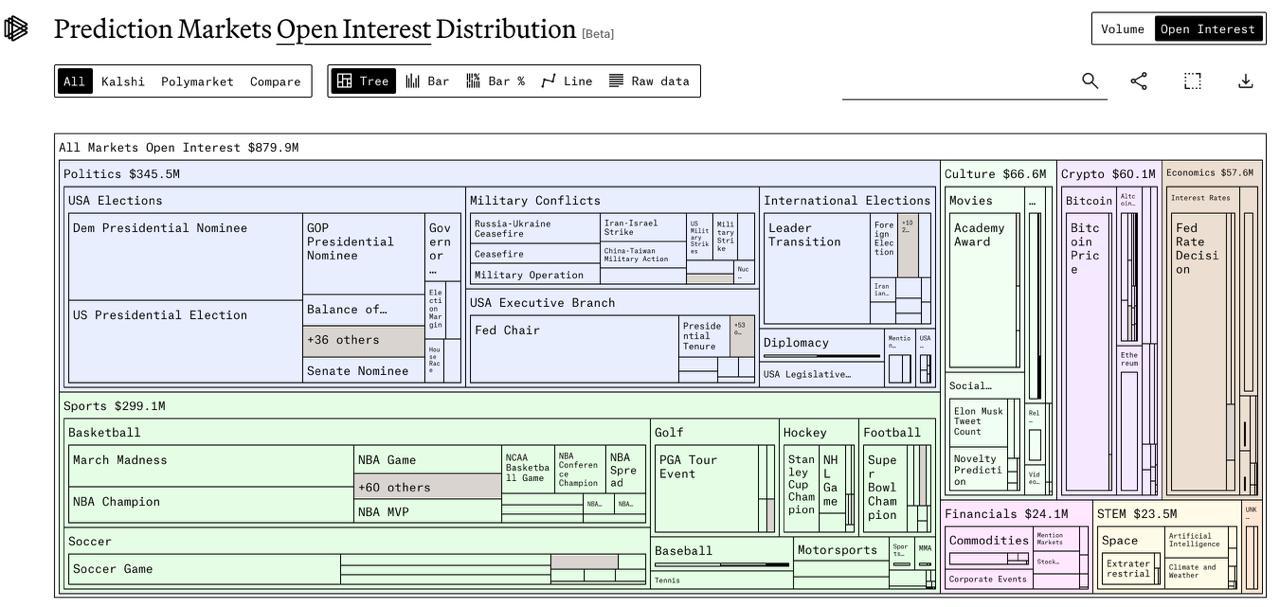 Paradigm ships v2 of its prediction markets dashboard with richer charts and high-dimensional data navigation2026-03
 Paradigm and Tempo open source Centaur, a self-hosted agent runtime for secure multi-user workflows2026-05
 DoorDash to offer Dasher payouts in stablecoins via Stripe and Paradigm's Tempo L12026-04
Founded in 2018, Paradigm is one of the most influential research-driven venture capital firms in the cryptocurrency and decentralized finance space, known for blending deep protocol-level technical work with early-stage and growth-stage investing across crypto infrastructure, DeFi, and consumer applications.
What Paradigm Is and Where It Came From
Paradigm was co-founded by Matt Huang, a former partner at Sequoia Capital, and Fred Ehrsam, a co-founder of Coinbase. From the outset, the firm positioned itself differently from generalist technology VCs by embedding engineers and researchers directly into its investment process — writing open-source tooling, publishing protocol papers, and in some cases contributing code to the projects it backs. That orientation toward building, rather than just capital deployment, has defined its identity.
The firm raised its debut fund of $400 million in 2018 and followed that with a $2.5 billion fund in 2021, one of the largest dedicated crypto funds ever raised. Those vintages reflect the broader arc of crypto market cycles: the 2021 fund was raised near the top of the bull market, and like a16z Crypto and other large vehicles, Paradigm has since navigated a painful drawdown in portfolio valuations and pressures to return capital to limited partners. Reports in 2025 and 2026 noted that top crypto VCs including Paradigm and a16z faced shrinking portfolios amid market corrections and increased investor distributions — a reminder that even the best-resourced funds are not insulated from cycle risk.
Despite the macro headwinds, Paradigm has continued to deploy capital actively and has increasingly extended its footprint into policy advocacy and direct product development, making it one of the more operationally complex actors in the crypto venture landscape.

Paradigm leads El Dorado's $9M Series A as the LatAm payments app scales to 100K+ users, targeting a cross-border payments market estimated at up to $1T annually
Investment Philosophy: Research as a Competitive Moat
What distinguishes Paradigm from most venture firms is the degree to which it treats technical research as a first-class output, not just a diligence tool. The firm has published foundational work on automated market maker mathematics, MEV (maximal extractable value), CFMM (constant function market maker) design, and smart contract security — work that has been cited widely across academic and practitioner communities.
This research-forward culture shapes its portfolio selection. Paradigm tends to back projects at the intersection of cryptographic primitives, economic mechanism design, and real-world application layers. It has historically concentrated on DeFi infrastructure, layer-1 and layer-2 protocols, developer tooling, and more recently payments and prediction markets.
The firm also publishes open-source tooling. Foundry, the Ethereum smart contract development framework, emerged in significant part from Paradigm's research team and became a dominant standard for Solidity developers. This kind of contribution creates network effects for deal flow — builders know Paradigm and tend to seek it out.
Readers click Paradigm content not for its investment returns but for its intellectual output — the research papers, security disclosures, and public policy positions that actively shape Ethereum's technical and regulatory trajectory.
Key Portfolio Companies and Recent Investments
Paradigm's portfolio spans some of the most consequential infrastructure projects in crypto. Uniswap, the dominant decentralized exchange, received early backing from Paradigm, as did Compound, one of the original DeFi lending protocols, and Optimism, a major Ethereum layer-2 network.
Among more recent deals, two stand out for their scale and strategic signal.
Morpho raised $175 million in a round co-led by Paradigm and a16z Crypto, with participation from Ribbit Capital. Morpho is building what it describes as an "open credit network" — modular, permissionless lending infrastructure. The protocol already held approximately $11 billion in deposits at the time of the raise, and counted Coinbase, Binance, and Kraken among its institutional users. A $175 million round for a lending protocol at that deposit scale signals continued conviction in DeFi credit infrastructure as a durable market, even as retail sentiment has been mixed.
El Dorado, a Latin American payments application, raised a $9 million Series A led by Paradigm. El Dorado had grown to over 100,000 users and was targeting the cross-border payments corridor in a market estimated at up to $1 trillion annually. The investment reflects a thesis that stablecoin-denominated payment rails will displace legacy remittance infrastructure in emerging markets — a bet that aligns Paradigm with a broader industry movement that also includes Stripe's stablecoin payment integrations.
Smaller seed rounds have included PixieChess, a consumer-facing gaming application, which raised $5.2 million in a Paradigm-led seed round. The investment suggests the firm has not entirely stepped back from consumer application bets despite the difficulty of the gaming and consumer crypto categories.

Morpho Association raises $175M from Paradigm, a16z, and Ribbit to build open credit network
Tempo: Paradigm's Layer-1 Infrastructure Play
Among the more strategically significant developments in Paradigm's recent history is its association with Tempo, a layer-1 blockchain with a focus on stablecoin payment throughput. Paradigm's connection to Tempo has manifested in several ways.
Stripe, the payments infrastructure company that reentered crypto in 2024 with stablecoin payout features, integrated Tempo's blockchain for DoorDash's Dasher payout program — allowing gig workers to receive earnings in stablecoins. The Stripe and Paradigm/Tempo relationship illustrates how institutional fintech infrastructure is beginning to route payments through purpose-built crypto rails rather than treating crypto as an add-on.
RedStone, a decentralized oracle and data feed provider, was integrated into Tempo as its canonical price feed layer, giving the chain access to reliable on-chain price data for DeFi applications built on top of it. Oracle reliability has historically been a critical failure point in DeFi systems, and the RedStone integration reflects a mature approach to infrastructure layering.
Paradigm's researcher Georgios Konstantopoulos proposed a design called MPP Sessions (presumably Multi-Party Payment Sessions or a related acronym) as a mechanism to scale stablecoin payments to millions of transactions per API call using off-chain channels with minimal on-chain settlement. The design borrows conceptually from Lightning Network-style state channels but targets the specific needs of stablecoin payment infrastructure. If widely adopted, it would allow payment processors to batch enormous transaction volumes while preserving the trust and auditability properties of an underlying settlement layer.
Policy Work: Shaping the Regulatory Landscape
Paradigm has emerged as one of the most active voices in crypto policy in the United States, employing a dedicated policy team and filing detailed comment letters with regulators. This is increasingly important as the U.S. legislative environment around digital assets has matured from hostility to active rulemaking.
A significant recent focus has been the GENIUS Act, a proposed framework for stablecoin issuers in the United States. Paradigm, working in coordination with the Hyperliquid Policy Center, pushed back on a specific anti-money laundering rule attached to the GENIUS Act that would have imposed broad AML compliance obligations on on-chain stablecoin transactions and their issuers. Paradigm and Hyperliquid argued that the proposed rule was technically overbroad — that it would treat every on-chain stablecoin transfer as a potential AML trigger, which would be operationally unworkable for decentralized infrastructure and would effectively regulate network-layer activity in ways the statute was not designed to cover.
Their joint comment urged Treasury to narrow the rule to apply only to issuers with meaningful custodial control over transfers, not to permissionless protocol participants. This kind of technical distinction — between what an issuer controls versus what a protocol facilitates — is exactly the sort of argument that requires both legal and cryptographic expertise to make clearly, and Paradigm's technical reputation lends weight to its policy submissions.
Paradigm's engagement here is not purely altruistic. Its portfolio companies, including stablecoin-adjacent projects, would be directly affected by overbroad AML rules. But its ability to engage substantively at the regulatory level — rather than simply lobbying broadly — represents a real institutional capability.

Paradigm-backed credit protocol 3Jane hits full $50m USD3 cap as launch liquidity is fully deployed
Building Products: The Prediction Markets Terminal
In an unusual move for a venture firm, Paradigm has been developing its own prediction markets trading terminal — a product rather than an investment. Paradigm is also a significant investor in Kalshi, the regulated prediction markets exchange, and holds a board seat there.
The firm shipped a first version of the terminal and subsequently released version 2 with richer charting tools and high-dimensional data navigation — features aimed at sophisticated traders who want to analyze correlations across many simultaneous prediction markets, not just trade individual contracts.
The move raises legitimate questions about conflicts of interest: a board member at a prediction markets exchange is simultaneously building competing trading infrastructure. Paradigm has not publicly addressed the governance implications in detail. But the product development also speaks to a broader trend of VCs building internal tools that reflect their conviction about a space — and occasionally spinning those tools into separate entities or open-sourcing them.
- 01Mega-round VC dealmaking
Paradigm leading or co-leading nine-figure rounds across L1s, wallets, and DEXes signals where institutional capital is placing conviction bets in the cycle.
- 02Ethereum protocol influence
Paradigm researchers publishing on Prague hard fork EIPs, MEV taxes, and Ethereum resilience frames the firm as a de-facto R&D arm of Ethereum core development.
- 03samczsun security leadership
samczsun's North Korea threat-group exposé and the Security Alliance launch signal that Paradigm's security brand extends beyond portfolio protection into industry-wide threat intelligence.
- 04Blast yield bridge controversy
Paradigm publicly distancing itself from Blast's bridge-before-L2 launch despite being an investor revealed the firm's willingness to criticize its own portfolio for precedent-setting reasons.
- 05Open-source developer tooling
Releasing Rivet wallet tooling and the Dune Python client shows Paradigm using open-source infrastructure as a talent and ecosystem funnel, not just a goodwill gesture.
- 06Crypto regulatory positioning
A policy paper defending stablecoins and a policy director forecasting US regulatory stagnation shows Paradigm building a lobbying and narrative apparatus ahead of the next legislative window.
AI, Agents, and Security
Paradigm and Tempo collaborated to open-source Centaur, described as a self-hosted agent runtime for secure multi-user workflows. Centaur allows multiple users to interact with AI agents in a shared context while maintaining isolation and auditability between their sessions. The open-source release positions it as infrastructure for teams building AI-assisted workflows in environments where data sovereignty and session security matter — a natural fit for financial and compliance-adjacent applications.
The intersection of AI and on-chain security is also shaping how the industry thinks about smart contract auditing. AI tools capable of discovering novel contract vulnerabilities — including previously unknown attack surfaces in major DeFi protocols like Balancer and Yearn — are raising the baseline expectation for what a serious security review looks like. Paradigm's research team has historically published on formal verification and smart contract safety, and the emergence of AI-driven continuous auditing as a discipline extends that tradition into a new tooling paradigm.
The term "continuous auditing" is significant: traditional smart contract audits are point-in-time exercises completed before deployment. As protocols are upgraded via governance, the attack surface evolves between audits. AI-assisted continuous monitoring represents a shift from one-time certification toward persistent threat modeling — a meaningful architectural change for the security posture of on-chain systems.
The Broader Competitive Context
Paradigm operates in direct competition with a16z Crypto (Andreessen Horowitz's dedicated crypto vehicle) for the largest and most competitive deals, though the two firms have also co-invested repeatedly — the Morpho round being the most prominent recent example. Both firms share a belief that crypto infrastructure is the most defensible long-term investment category, and both have made similar moves into policy, publishing, and talent-as-signal.
Where Paradigm differentiates is in its relative restraint on media and marketing. a16z has built a substantial content and media operation; Paradigm publishes selectively and tends to let its research papers and open-source tools speak for themselves. Whether that relative quietness is a strategic choice or a reflection of team culture is difficult to determine from the outside.
- 2023-11launch
Blast L2 launch funded by Paradigm and Standard Crypto
- 2023-11governance
Paradigm publicly criticizes Blast bridge-before-L2 decision
- 2024-02milestone
Paradigm leads $225M Monad Labs Series B
- 2024-05launch
Paradigm releases Rivet open-source EVM developer wallet
- 2024-05milestone
Paradigm raises $850M third venture fund
- 2024-08launch
Georgios Konstantopoulos launches Ithaca with $20M Paradigm backing
- 2024-10milestone
samczsun exposes North Korea's broader crypto hacking groups beyond Lazarus
- 2025-05milestone
Paradigm leads $150M Farcaster fundraise with a16z and others
Outlook
Paradigm enters the mid-2020s as a firm in transition — from pure capital deployer to a more complex institution that invests, advocates, publishes, and builds. Its portfolio reflects a durable bet on decentralized credit, stablecoin payment rails, and on-chain infrastructure at a time when both regulatory clarity and institutional adoption are accelerating, however unevenly. The contraction in portfolio valuations and the pressure on fund returns are real headwinds, but the firm's research credibility and policy engagement give it durable standing in the ecosystem regardless of market cycles. How it resolves the tension between its investment positions and its own product ambitions — particularly in prediction markets — will be worth watching as those markets mature.
Latest Paradigm news
Paradigm leads El Dorado's $9M Series A as the LatAm payments app scales to 100K+ users, targeting a cross-border payments market estimated at up to $1T annuallyMorpho Association raises $175M from Paradigm, a16z, and Ribbit to build open credit networkParadigm-backed credit protocol 3Jane hits full $50m USD3 cap as launch liquidity is fully deployedParadigm ships v2 of its prediction markets dashboard with richer charts and high-dimensional data navigationParadigm and Tempo open source Centaur, a self-hosted agent runtime for secure multi-user workflowsDoorDash to offer Dasher payouts in stablecoins via Stripe and Paradigm's Tempo L1Community notes
Spot something off or out of date? Drop a note. Editors review topic notes daily and roll accepted fixes into the explainer — contributors are recognized in the monthly $SQUID drop.
Loading notes…
Help improve this topic
Have a story or tip about this topic? Submit it. See something missing? Leave a note. Editors review daily; accepted submissions and fixes count toward the monthly $SQUID drop.