
In-depth explainer on Balancer, covering its AMM design, LBPs, V3 hooks, DAO governance, 2025 exploit, Balancer Labs shutdown, security lessons, tokenomics debates and outlook as a post-hack, DAO-led DeFi liquidity primitive.
+6 sources across the wider coverage universe
 Balancer came within inches of full shutdown before founder intervened with tokenomics overhaul, 0xngmi reveals2026-03
 $128M exploit on Balancer V2 reveals how a rounding error slipped past 11 audits from firms like OpenZeppelin, Certora and many more2026-03
 Balancer's $120M exploiter reactivates after 5 months, launders $11M through THORChain mirroring Kelp DAO route2026-04
 Balancer opens two governance proposals targeting tokenomics overhaul and protocol priorities2026-03
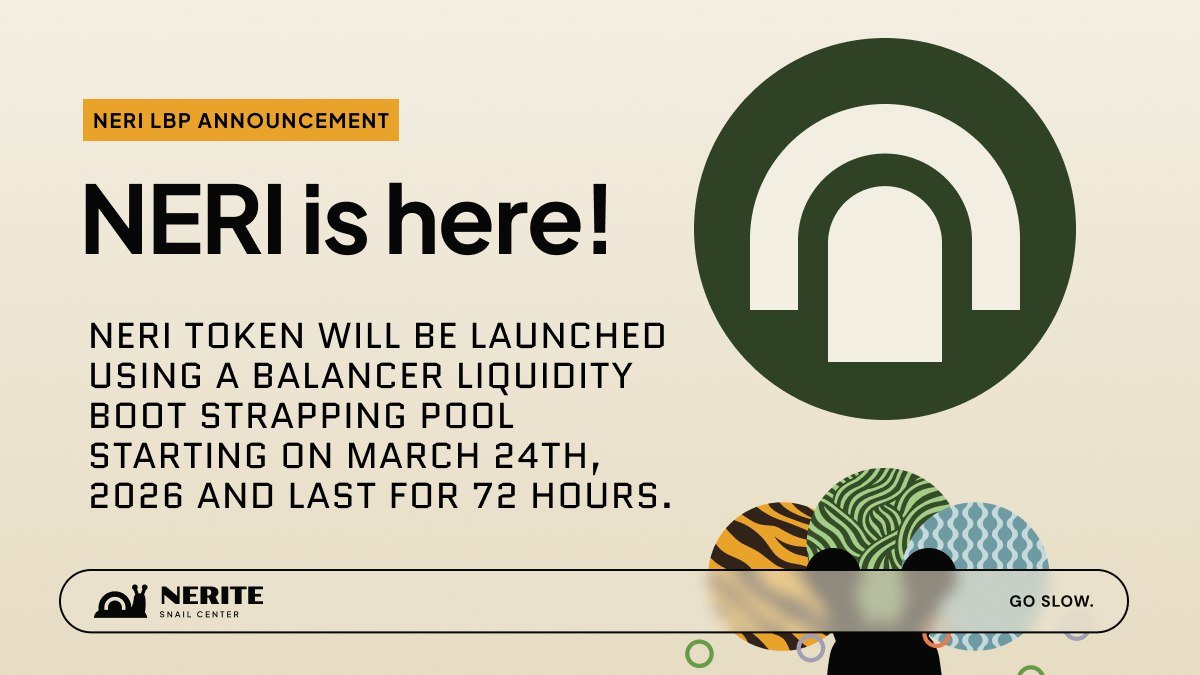 Nerite, arbitrum's Liquity v2 fork, will release their $NERI governance token tomorrow on a Balancer LBP2026-03
 Balancer published the largest analysis of LBP performance to date!2026-02
A decentralized automated market maker, Balancer is a DeFi protocol that lets users trade and provide liquidity through customizable token pools on Ethereum and other EVM-compatible chains. After a major 2025 exploit and the wind-down of its original development company, the protocol now operates under DAO governance as it attempts to rebuild trust, rework tokenomics, and harden its smart contracts against future attacks.
Balancer: Architecture, Governance and Post-Exploit Reinvention
What Balancer Is And Why It Matters
Balancer is an open-source decentralized finance protocol that functions as both an automated market maker and a decentralized exchange, originally built on Ethereum and later extended to multiple layer-2 networks and EVM-compatible chains. At its core, Balancer allows users to create and trade against liquidity pools composed of multiple tokens with arbitrary weightings, turning portfolios into self-balancing index-like structures that automatically reallocate as traders interact with them. Unlike order book exchanges, prices on Balancer are determined algorithmically by pool invariants rather than by a centralized matching engine, which makes the protocol inherently non-custodial and permissionless. This design has positioned Balancer as a base-layer liquidity primitive that other applications and aggregators can build on, integrating its pools for efficient token swaps and complex DeFi strategies. Over time, Balancer’s product suite has expanded to include specialized stable pools and liquidity bootstrapping pools, making it one of the most flexible AMM designs in DeFi.
From a governance and organizational perspective, Balancer is more than code deployed to a blockchain; it is also a DAO ecosystem backed by a formal legal structure and, until recently, a for-profit development entity known as Balancer Labs. Governance decisions around protocol parameters, fee flows, emissions, and strategic priorities are made by BAL token holders voting off-chain via Snapshot, with execution carried out through the Balancer Foundation and other service providers that act as agents of the DAO. At its peak, this structure supported a sizeable engineering and operations organization working across multiple chains and products, but that model came under severe stress following a catastrophic exploit in late 2025 that drained more than 120 million dollars from Balancer’s V2 Composable Stable Pools. In the months that followed, Balancer Labs announced it would shut down due to legal exposure and unsustainable economics, while the protocol itself would continue under a leaner, DAO-led model focused on resilience and sustainable revenue. Understanding Balancer today therefore requires looking not only at how the AMM works, but also at how the DAO, tokenomics, security model, and post-hack restructuring fit together.

MAXYZ proposes an official Balancer fork that could migrate liquidity, contributors, partners and IP to a new protocol, with a Snapshot vote expected this weekend

Core Design: From Weighted Pools To Liquidity Bootstrapping And V3 Hooks
Weighted And Stable Pools As The Heart Of Balancer
Balancer’s original innovation was to generalize the constant product AMM model popularized by Uniswap into a constant mean market maker that supports multiple assets and arbitrary weights. Instead of only supporting pools with two tokens at equal weighting, such as 50/50 pools, Balancer pools can hold several tokens, for example four or eight, with each assigned a configurable weight such as 80/20 or 60/20/20 depending on the desired exposure and liquidity profile. The pool’s invariant is designed so that trades are executed while maintaining the weighted value balance of the assets, allowing the pool to function like a self-rebalancing portfolio in which traders pay implicit fees to arbitrage deviations back toward the target weights. This flexibility allows for index-like investment products, liquidity for long-tail assets, and sophisticated portfolio designs that would be difficult to express in simpler AMM frameworks.
Over time, Balancer extended this concept beyond volatile token portfolios to include specialized stable pools optimized for assets that should trade near parity, such as stablecoins or different versions of staked ETH. These stable pools rely on modified invariant functions designed to offer lower slippage around the peg, making them competitive with other “stable-swap” AMMs that cater to highly correlated assets. One of the more advanced designs in this category was the Composable Stable Pool introduced in Balancer V2, which allowed for nested pools and reuse of liquidity across multiple trading pairs while still providing efficient stable swaps. By increasing capital efficiency and composability, these pools became a central component of Balancer’s value proposition, but they also introduced additional mathematical and implementation complexity that later played a pivotal role in the 2025 rounding-error exploit.
The evolution from simple weighted pools to complex stable and composable architectures illustrates a broader trend in DeFi AMMs: as protocols compete on capital efficiency and feature richness, the underlying code and math become more intricate, increasing the surface area for subtle bugs. Balancer’s core design remains powerful and flexible, but its trajectory demonstrates that the same features which attract sophisticated users and integrations can also make risk management and auditing substantially more challenging. This trade-off between innovation and simplicity lies at the heart of many of Balancer’s recent struggles and informs the ongoing discussion about how far AMMs should push complexity before security and transparency begin to suffer.
Liquidity Bootstrapping Pools And Fair Token Launches
One of Balancer’s most influential contributions to DeFi has been the Liquidity Bootstrapping Pool, or LBP, a pool type that allows projects to launch tokens using dynamically changing weights to shape price discovery over time. In a typical LBP, a project seeds a pool with its token and a more stable asset like ETH or a stablecoin, initially setting a high weight on the project token, for example 90 or 99 percent, and a low weight on the counter-asset. Over a configured period, the weights are gradually shifted toward a more balanced configuration, such as 50/50, which tends to push the token’s price down if there is no buying pressure, since the pool invariant must adjust to the changing weights. This mechanism discourages early aggressive buying by whales and bots, because paying a large premium at the start is economically unattractive when the price is expected to trend lower as weights adjust.
From a market structure standpoint, LBPs are designed to promote more equitable token distribution by creating a kind of descending-price auction embedded in an AMM. Rather than relying on fixed-price sales or order-book auctions, projects can rely on the pool math and weight schedule to manage supply and demand, allowing retail participants to wait for prices that better reflect the market’s valuation once initial hype subsides. Balancer documentation emphasizes that this design reduces the advantage of fast traders and MEV bots, while still letting the market freely determine the final clearing price. Over several cycles of bull and bear markets, LBPs have been used by a wide range of teams to conduct launches and fundraisers, and Balancer has worked with analytics providers such as Dune to analyze historical LBP performance at scale, providing data on price trajectories, liquidity behavior, and participant composition.
Recent coverage points to LBPs returning as a central part of Balancer’s V3 strategy, with new launches, such as governance token distributions for protocols like Nerite on Arbitrum, choosing Balancer LBPs as their primary mechanism. The protocol’s own research suggests that LBPs remain one of the most resilient and “fair-launch”-aligned tools in the DeFi toolbox, especially compared to highly gamed IDOs or centralized exchange listings. At the same time, using LBPs responsibly still requires teams to communicate clearly about weight schedules, caps, and risk, and participants must recognize that although the design dampens some forms of predation, it does not eliminate market risk or fundamental information asymmetry. As Balancer V3 expands and LBPs become “first-class citizens” again in the protocol’s roadmap, they are likely to continue shaping how new tokens enter the market and how communities think about bootstrapping liquidity in a post-ICO environment.
The V2 And V3 Architectures And The Rise Of Hooks
Balancer’s V2 architecture, launched prior to the 2025 exploit, introduced a “Vault” design that consolidated token balances for different pools into a single contract, allowing for gas-efficient multi-hop trades and more flexible pool implementations sharing the same token store. This approach enabled advanced pool types like the Composable Stable Pools to reuse liquidity and routing logic without maintaining separate token balances for each logical pool, thereby reducing capital fragmentation and improving the efficiency of routing large trades. However, it also meant that a vulnerability in a single pool implementation could affect funds spread across multiple logical pools and even multiple chains, especially when bridged deployments and batch swap operations were involved. The rounding error vulnerability exploited in 2025 lived in a core piece of math used by these pools, specifically the function responsible for scaling token balances to a common precision, making it an architectural issue rather than a trivial edge-case bug.
In response to both the need for flexibility and the lessons from V2, Balancer V3 has focused on a modular, hook-based design that allows developers to attach custom logic to core AMM operations without modifying the critical invariant math directly. The “hooks” framework provides defined extension points, for example before or after a swap or liquidity change, where additional functionality such as dynamic fees, on-chain oracles, or strategy logic can be executed. To encourage experimentation and early adoption of this model, Balancer organized initiatives like the V3 Hookathon, inviting developers from across DeFi to build novel hook-based strategies and integrations, with the contest running over several weeks and supported by regular office hours. By isolating custom code from the invariant calculations, V3 aims to strike a balance between composability and safety, making it easier to audit the core engine while leaving room for innovation at the edges.
The launch of Balancer V3 on emerging high-performance EVM chains, such as Monad as reported in recent coverage, underscores the protocol’s strategy to position V3 as a chain-agnostic liquidity layer. Deploying to new networks with lower fees and higher throughput allows Balancer to target fresh ecosystems and use cases, from high-frequency trading to novel derivatives, while reusing the same hook-based core architecture. However, deploying across many chains also multiplies the operational and security burden, as demonstrated by the 2025 exploit that affected multiple networks concurrently. The success of V3 will therefore depend not only on the elegance of the hook system and the attraction of developer programs, but also on Balancer’s ability to embed robust security practices, continuous monitoring, and conservative governance around which hooks are endorsed or incentivized by the DAO.
Readers click Balancer exploits not for the mechanics but for the audit-accountability gap: $128M drained through a rounding flaw that passed eleven named security firms, exposing that audit coverage lists are risk theater, not risk protection.
Governance, The DAO And Tokenomics In Transition
BAL, Snapshot Voting And The Legal Shell
Balancer governance revolves around the BAL token, which acts both as a governance asset and a unit of voting power in the DAO. BAL holders can participate in governance by delegating their tokens per chain through Snapshot’s Delegate Registry and then voting on proposals hosted on Snapshot, an off-chain voting platform widely used in DeFi. To pass, a proposal must meet a quorum requirement of 10 million BAL and achieve the necessary majority, after which the approved changes are implemented by the Balancer Foundation and associated service providers that manage the protocol’s multisigs and operational infrastructure. This model decouples the decision-making process, which is gas-free and accessible, from execution, which remains on-chain but is mediated by a legal entity acting as an agent of the DAO rather than as a traditional corporation with shareholders.
The legal structure underpinning Balancer’s governance consists of the Balancer Foundation, incorporated in the Cayman Islands, and Balancer OpCo Ltd in the British Virgin Islands, which historically served as operational vehicles and interfaces with regulators, contractors, and partners. The Foundation is explicitly described as an agent of the DAO without shareholders, a design meant to minimize conflicts between tokenholder governance and corporate fiduciary duties. In practice, this structure also aimed to reduce jurisdictional risk and provide a clearer framework for hiring, paying service providers, and entering into agreements, while still leaving strategic and parameter decisions in the hands of BAL holders. Governance documents emphasize community engagement and collaborative proposal development, encouraging proposers to seek feedback, work with core teams, and prepare technical payloads before bringing a vote to Snapshot. Over time, this process has been used to decide on a wide range of issues, including deployments to new chains, fee model changes, incentive programs, and the restructuring of protocol emissions.
However, the events of 2025 exposed a tension between the DAO’s theoretical sovereignty and the practical liabilities borne by the development entities and individuals associated with them. When a protocol custodies user funds through smart contracts, governance may be decentralized, but regulators, courts, and counterparties often look to identifiable persons and entities in the event of failures or exploits. Balancer’s subsequent decision to wind down Balancer Labs, the for-profit company that had long been seen as the de facto core team, reflects a broader shift in DeFi toward minimizing the legal attack surface of centralized entities while strengthening the operational role of the DAO, foundation, and distributed service providers. In Balancer’s case, that shift is happening under pressure, with governance now tasked not only with steering technical development but also with redesigning tokenomics and funding models for a post-Labs era.
From Balancer Labs To A Lean DAO-Led Model
According to public statements by co-founder Fernando Martinelli and reporting on the restructuring, Balancer Labs is being shut down after a difficult period marked by a large exploit, mounting legal risk, and an unsustainable revenue model. The company had served for years as the core development shop for the protocol, employing engineers, product managers, and other staff who shipped new versions, maintained the UI, and supported integrations. The 2025 exploit, which drained around 128 million dollars from Balancer V2’s Composable Stable Pools across six networks, triggered intense scrutiny from auditors, regulators, and affected users, amplifying the legal exposure faced by the Labs entity. At the same time, bear market conditions and declining trading volumes put pressure on protocol revenues and, by extension, the budgets available to pay a centralized team, especially after the exploit damaged Balancer’s reputation and user confidence.
Martinelli has described the wind-down as a pivot toward a leaner, DAO-led structure in which the protocol is maintained and extended by a collection of independent contributors, grant-funded teams, and specialized service providers rather than a single for-profit company. The Balancer Foundation and other DAO-aligned entities are expected to play a coordinating role, but the intention is to reduce the perception that Balancer relies on one corporate sponsor while also limiting the legal and regulatory liabilities that come with that arrangement. Importantly, the shutdown of Balancer Labs does not imply the shutdown of the Balancer protocol itself; on-chain contracts continue to operate, and the DAO retains the authority to upgrade, pause, or reconfigure components as needed. This mirrors a pattern seen across DeFi in which founding teams gradually step back or reorganize, leaving DAOs as the primary stewards of protocol evolution.
The transition, however, is not without challenges. As Balancer Labs exits, governance must confront the reality that critical tasks such as auditing, UI maintenance, documentation, and BD have to be funded and coordinated in a more decentralized fashion, often with smaller, time-limited mandates. In addition, the exploit and subsequent TVL decline mean that the pool of protocol revenue available to fund these activities is smaller than it once was, increasing the importance of efficient spending and clear prioritization by the DAO. The restructuring is therefore both an ideological move toward decentralization and a pragmatic response to financial and legal constraints, and its success will likely hinge on whether the DAO can align tokenholder incentives with the long-term health of the protocol.
Emissions, Risk Premiums And The Fight For Liquidity
Balancer, like many DeFi protocols, historically relied on token emissions—paying out BAL tokens to liquidity providers—to attract TVL and bootstrapping activity in key pools. During bull markets, this approach can be highly effective, as the value of emitted tokens may justify aggressive liquidity provision even in the face of smart contract, market, and governance risks. However, emissions are ultimately a form of dilution, and as the DeFi market matured and risk-free yields fell, communities began questioning whether ongoing emissions were creating sustainable liquidity or simply subsidizing mercenary capital that would leave once rewards dropped. Balancer governance has debated and partially implemented emission reductions, aiming to align incentives around more productive pools in V3 while curbing dilution in underperforming or risky segments of the protocol.
Analyses such as the “risk premium problem” essay have argued that Balancer’s attempt to eliminate or drastically reduce emissions ran into the reality that liquidity providers demand a significant risk premium for supplying capital to a protocol with a history of exploits and reputational damage. The argument is that superior technology or more flexible pool designs alone are not enough to attract sticky liquidity when TVL has fallen sharply and competing protocols or centralized venues offer safer or better-compensated opportunities. In Balancer’s case, TVL has reportedly dropped by more than 90 percent from its peak, a decline that reflects both the impact of the 2025 exploit and broader DeFi headwinds. Without emissions, the remaining organic fee revenue may be insufficient to compensate liquidity providers for smart contract, governance, and market risk, leading to a negative feedback loop in which liquidity dries up, volume falls, and revenues shrink further.
As part of the post-exploit overhaul, governance discussions have included proposals to end or re-target emissions, restructure fee flows, and potentially implement token buybacks or other mechanisms to support the BAL price and align interests between the DAO and LPs. Some proposals focus on concentrating incentives on V3 pools and newer deployments with improved security properties, while letting legacy pools either wind down or operate with minimal subsidies. Others emphasize the need to recognize that after a major exploit, users and LPs will demand higher risk premiums, at least until the protocol can demonstrate a sustained track record of security and transparency. These debates situate Balancer at the center of a broader DeFi question: can AMMs transition from high-emission, growth-at-all-costs models to leaner, fee-driven sustainability without losing the liquidity that makes them useful in the first place?
- 01V2 rounding exploit accountability↗
The fact that a stable-pool invariant rounding flaw bypassed OpenZeppelin, Trail of Bits, Certora, and eight other auditors — then drained over $120M — made readers want to understand who was responsible and why no one would comment.
- 02Balancer-Aura flywheel mechanics↗
The tokenomics coupling between veBAL and Aura represented a genuinely novel liquidity incentive loop, and readers clicked through to understand whether the flywheel was durable or reflexively fragile.
- 03LVR-resistant AMM design
The CoW Protocol collaboration to eliminate loss-versus-rebalancing drew readers who recognized that LVR is the hidden tax conventional AMMs charge LPs, making this a structural competitive differentiation story.
- 04Near-shutdown tokenomics overhaul↗
The revelation that Balancer came close to full shutdown before founder intervention — followed by governance proposals targeting emissions and protocol priorities — pulled readers looking for existential governance drama.
- 05Audit firm credibility crisis↗
Named firms declining to comment on the largest hack of the quarter turned an exploit story into a professional-accountability story, which is a rarer and more shareable angle.
- 06V3 product evolution and rebrand↗
Readers engaged with the brand refresh and V3 launch as a signal of whether Balancer could reinvent itself after TVL decline and serial exploits — a recovery narrative with real stakes.
Security Track Record: Exploits, Hacks And Smart Contract Risk
The 2025 Composable Stable Pool Exploit
On November 3, 2025, Balancer V2’s Composable Stable Pool contracts were hit by a sophisticated exploit that ultimately drained approximately 128.64 million dollars across six blockchain networks in under half an hour. The attack targeted a rounding error vulnerability in the internal function responsible for “upscaling” token balances to a shared precision, a process necessary when pools contain tokens with different decimal configurations. In Composable Stable Pools, the _scalingFactor function was overridden to incorporate non-unitary exchange rates, meaning it applied more complex scaling logic, and this override interacted with the existing _upscale rounding behavior in a way that created exploitable truncation under certain low-liquidity conditions. By repeatedly manipulating the pool into states where balances were extremely low and rounding errors became significant, the attacker could cause the pool invariant and Balancer Pool Token (BPT) pricing to diverge from true economic values, allowing them to mint or acquire BPTs at artificially low prices and then redeem them for a higher share of the underlying assets.
OpenZeppelin’s post-mortem explains that the exploit operated in repeating “triplets” of swaps: first priming the pool into a state where truncation would occur, then executing the swap that realized the rounding loss, and finally resetting the balances so the sequence could be replayed. These triplets were carried out via carefully crafted batchSwap operations, enabling the attacker to chain multiple manipulative steps into a single transaction and extract value while paying relatively modest gas costs. Check Point Research, whose monitoring tools detected the attack in real time, notes that the vulnerability allowed the attacker to artificially suppress BPT prices, then accumulate BPTs at that depressed valuation and immediately redeem them at full, non-suppressed value, effectively siphoning value from legitimate LPs. Because Balancer V2’s design allowed Composable Stable Pools to operate across multiple chains and share core math, the vulnerability had cross-chain implications, with similar attack patterns executed on different networks until mitigations were deployed.
Strikingly, the rounding error vulnerability had been present in the Balancer codebase for roughly four years and across at least eleven separate audits by major firms, including OpenZeppelin and Certora. As Zircuit’s post-incident analysis emphasizes, this does not mean auditors were negligent; rather, it illustrates how certain classes of bugs can remain deeply hidden in complex mathematical and architectural designs, especially when they require a confluence of unusual conditions, such as extremely low liquidity states and specific interactions of overridden functions. The exploit underscores that formal verification, multiple audits, and battle-tested deployments can substantially reduce risk but cannot eliminate it, particularly when protocols support a wide range of customizable pools and configurations that may not all be covered exhaustively by test suites or economic simulations. For Balancer, the attack was both a financial and reputational shock, challenging its status as a mature, heavily audited blue-chip DeFi protocol and forcing a fundamental reassessment of its security processes.
Aftermath, Laundering Routes And Whitehat Recovery
In the months following the exploit, on-chain investigators and analytics firms tracked the attacker’s movements and the protocol’s mitigation steps, including pausing vulnerable pools and coordinating with partners to limit the expansion of damage. Some funds were reportedly rescued by whitehat actors who front-ran or mirrored parts of the exploit pattern to siphon assets into safer addresses, to be later returned to affected users through a claims process organized by the Balancer community and its partners, though precise figures and timelines have varied by chain and asset. Consistent with many large DeFi incidents, recovery efforts have involved a mix of direct communication attempts with the attacker, legal filings where appropriate, and complex on-chain tracing to identify flow paths and potential chokepoints. The case also sparked discussion at other protocols that had integrated Balancer pools or relied on its stable pool math, including Gnosis, which considered a controversial hard fork to recover approximately 9.4 million dollars in funds lost to the exploit.
In early 2026, blockchain analytics flagged renewed movement from a wallet associated with the Balancer exploit that had been dormant for roughly five months. According to reporting on the incident, the wallet moved 1,100 ETH, worth around 2.55 million dollars at the time, through the cross-chain protocol THORChain, swapping the ETH into BTC as part of a laundering operation. This route mirrors patterns observed in other major hacks, including the Kelp DAO bridge exploit in which attackers moved roughly 75,701 ETH, about 175 million dollars, into fresh wallets and laundered funds through THORChain. The appeal of THORChain in this context is that it enables native cross-chain swaps between assets like ETH and BTC without relying on centralized intermediaries or KYC processes, providing exploiters a relatively censorship-resistant way to diversify and obscure holdings. THORChain itself has also suffered exploits, losing more than 11 million dollars across at least nine chains in one 2024 incident, illustrating the interconnected and compounding risks of DeFi infrastructure.
The Balancer exploiter’s reactivation reinforces a grim reality for protocol communities and victims: funds stolen in major DeFi hacks often remain in motion for months or years, migrating through bridges, mixers, and cross-chain DEXs in search of liquidity and obfuscation. Even when whitehats recover a portion of funds, substantial losses can remain outstanding, and the attacker’s ability to continue laundering reflects gaps in on-chain enforcement, jurisdictional coordination, and infrastructure-level controls. Balancer’s governance and partners have attempted to mitigate harm through claims, code upgrades, and community communication, but the long tail of exploit-related activity continues to cast a shadow over the protocol. For users evaluating Balancer today, the post-exploit landscape includes not only technical patched code but also a complex web of partial recoveries, unresolved losses, and ongoing legal and reputational fallout.
Lessons For Smart Contract Auditing And AI-Driven Security
The Balancer exploit has quickly become a case study in the limits of conventional smart contract auditing and the need for continuous, adversarial testing that goes beyond static code review. Traditional audits focus on reading code, exploring known vulnerability classes, and checking invariants, but as Balancer’s experience shows, even experienced auditors can miss deep, emergent bugs in complex systems, especially those involving intertwined math functions and rare state conditions. The fact that the rounding error survived multiple audit rounds across four years suggests that the vulnerability was not obvious and would have required either highly targeted fuzzing or an attacker’s willingness to simulate extreme, likely unrealistic pool states to see how rounding behaved at the edges of allowed parameter space. Attackers, motivated by potentially nine-figure payouts, are increasingly willing to deploy such compute and experimentation, whereas audit budgets are constrained and must cover many aspects of the code in limited time.
Recent research on AI-assisted auditing frameworks, including benchmarks like EVMbench, argues that automated agents can help bridge this gap by systematically probing smart contracts under adversarial conditions and across many possible state combinations. In the context of Balancer and the related Yearn exploit described by Zircuit, where a deep vulnerability also slipped past audits before being exploited, the lesson is that DeFi protocols may need to adopt continuous auditing paradigms that combine human expertise, automated fuzzing, formal methods, and AI-driven scenario exploration. Such systems can, for example, search for rounding anomalies, invariant violations, or unexpected behaviors under low-liquidity, high-slippage states that human reviewers might discount as unlikely. They can also run perpetually, re-testing the protocol as new upgrades, pool types, and external integrations alter the effective attack surface, providing early warning signals that complement static pre-deployment audits.
The exploit has also spurred discussion about how DAOs allocate budget and authority for security, including whether certain classes of changes—such as modifications to invariant math or scaling factors—should require higher governance thresholds or additional independent reviews. In Balancer’s case, the vulnerability arose from the interaction of an overridden scaling function in Composable Stable Pools with previously audited rounding behavior, highlighting the risk of treating audited components as universally safe when reused in new contexts. One response is to adopt stricter policies around backward compatibility and to insist that new pool types undergo end-to-end testing under conditions that mimic realistic and adversarial economic scenarios, not just unit-level code paths. For Balancer’s future, and for DeFi more broadly, the key takeaway is that security must be treated as an ongoing process—embedded in governance, development, and monitoring—rather than a one-off box checked by a finite number of audits before launch.
Balancer V2 launches with vault architecture
Critical V2 vulnerability disclosed; users urged to withdraw composable stable pool LPs
Multi-chain V2 composable stable pool exploit drains $120M–$128M via rounding flaw
November 3 exploit drains remaining affected pool funds; Balancer releases full post-mortem
Balancer Labs winds down; DAO assumes control of protocol future
Governance proposals open for tokenomics overhaul and protocol priority reset
Balancer V3 goes live with hooks architecture and brand refresh
Balancer exploit in 2025 ripples across chains; Berachain validators halt network
Balancer In The DeFi Stack: Integrations, Yearn And Use Cases
A Base-Layer Liquidity Primitive For Other Protocols
From its early days, Balancer has been positioned as a base-layer AMM and DEX that other DeFi protocols can use as infrastructure rather than as a standalone trading venue competing purely on user-facing features. Its flexible pool architecture allows projects to design custom liquidity configurations tailored to their tokenomics, such as treasury index pools, meta-governance pools that combine governance tokens, or stable pools oriented around liquid staking derivatives and yield-bearing assets. Developers can permissionlessly deploy pools that fit their specific asset mix and risk profile, and aggregators like 1inch or CoW Swap can route trades through Balancer to access deeper or more efficiently priced liquidity for long-tail tokens. This infrastructural role is underscored by Balancer’s multi-chain strategy, with deployments on Ethereum mainnet and various layer-2s and sidechains, allowing it to serve as a common liquidity backbone across a growing DeFi landscape.
Balancer’s smart pools and programmable parameters have also enabled novel governance experiments, such as treasury-controlled pools whose weights or fees can be adjusted via DAO governance to reflect strategic priorities. For example, a DAO could use a Balancer pool as a treasury management tool, maintaining diversified exposure to multiple assets while earning trading fees and controlling key parameters through on-chain or Snapshot-based governance. Liquidity bootstrapping pools provide another avenue for DAO treasuries or new projects to distribute tokens and raise capital in a way that is more market-driven and less reliant on centralized intermediaries. Collectively, these features make Balancer a powerful building block for “money lego” constructions in DeFi, where composability and permissionless integration are central design principles.
At the same time, the protocol’s role as a base-layer primitive means that its security and reliability are critical not only for direct users but also for downstream protocols that integrate its pools into their own strategies. When Balancer suffered its 2025 exploit, second-order effects were felt beyond direct LPs as protocols that had either parked treasury funds in Balancer pools or built on top of them experienced unexpected losses or disruptions. This interconnectedness amplifies both the upside of Balancer adoption and the systemic risk that arises when a widely used primitive experiences a catastrophic failure. For builders considering Balancer as an integration point, the question is therefore not only whether the pool types they use are attractive but also whether the protocol’s governance, security processes, and post-exploit reforms adequately mitigate the risk of future systemic incidents.
Comparison With Yearn And Other Yield Platforms
Balancer is often compared with Yearn Finance, not because they offer the same core service, but because both have been central DeFi primitives whose sophisticated designs attracted significant capital and, in 2025, major exploits. Balancer is primarily an AMM and DEX: it facilitates token swaps and liquidity provision via pools with algorithmic pricing, and its revenues come mainly from trading fees and, potentially, value capture from protocol-owned liquidity or fee switches. Yearn, by contrast, is a yield aggregator that routes user deposits into strategies that farm returns across multiple protocols, including AMMs like Balancer, lending markets, and other DeFi opportunities. Where Balancer exposes LPs directly to impermanent loss and swap-related risks, Yearn users delegate strategy selection to vaults that may, in turn, interact with Balancer pools and other infrastructure.
The following simplified table illustrates some of the key differences and overlaps between Balancer and Yearn as of the mid-2020s:
| Dimension | Balancer | Yearn Finance |
|---|---|---|
| Core function | AMM / DEX, liquidity pools | Yield aggregation via vault strategies |
| Primary users | Traders, LPs, token projects | Yield-seeking depositors |
| Revenue source | Swap fees, protocol fees | Performance and management fees on yield |
| Governance token | BAL | YFI |
| Governance process | Snapshot + DAO, Foundation as agent | DAO-driven, similar Snapshot-based model |
| 2025 exploit | Rounding error in Composable Stable Pools | Separate deep vulnerability in strategy logic |
| Integration relationship | Pools used by other protocols and aggregators | May allocate capital into Balancer pools |
Zircuit’s analysis of “When audits fail: inside the Balancer and Yearn exploits of 2025” positions the two incidents as related examples of complex protocols where vulnerabilities evaded multiple rounds of auditing and years of live usage. In Yearn’s case, a deep bug in a particular strategy or vault implementation remained undetected until attackers leveraged it, echoing Balancer’s experience with the rounding error in its pool math. Both incidents underscore that as protocols layer strategies on top of other primitives, the combined system’s behavior becomes harder to reason about, and vulnerabilities can arise from interactions between components that are each individually audited. For users, the lesson is that staking capital in Yearn vaults or providing liquidity on Balancer involves exposure not just to one project’s code but to a web of smart contracts and integrations that may include multiple protocols with varying security postures.
From a governance and tokenomics perspective, Balancer and Yearn also face similar challenges in aligning tokenholder incentives with protocol sustainability. Both rely on governance tokens (BAL and YFI) for decision-making and historically used emissions or rewards to incentivize participation, and both must navigate the question of how to maintain sustainable fees, fund ongoing development, and reward tokenholders without over-diluting supply or driving away users. In both communities, recent exploits have prompted renewed focus on security funding, insurance mechanisms, and the role of risk-adjusted yields, with the recognition that DeFi users increasingly differentiate between protocols based on their perceived security and governance quality rather than just headline APYs.
User Experience, UI And Access
While Balancer is primarily known as a protocol, most users interact with it through a web-based UI at balancer.fi or via partner front-ends and aggregators that integrate its contracts under the hood. The official interface typically allows users to connect their wallets, view available pools by chain, and perform actions such as swapping tokens, providing or withdrawing liquidity, and, where supported, participating in LBPs or other specialized pool types. For LPs, the UI exposes information about pool composition, historical volume, fees, and, in some cases, estimated returns, helping them evaluate whether a given pool aligns with their risk appetite and investment thesis. Governance-related information, such as active Snapshot proposals, previous votes, and BAL-related metrics, is often linked from or surfaced alongside the main trading and pooling interface, reflecting the close connection between user activity and DAO decision-making.
However, the shutdown of Balancer Labs raises questions about how the UI and related infrastructure will be maintained going forward, given that much of the front-end development and operations work historically came from the Labs team. In a DAO-led model, UI maintenance may be handed off to new service providers or community contributors funded via governance budgets, with differing levels of resourcing and roadmap clarity compared to a centralized product team. Users may increasingly rely on third-party aggregators and wallets that integrate Balancer pools directly, sometimes without ever visiting the protocol’s own site, which can be positive for decentralization but may introduce inconsistencies in how information and risk disclosures are presented. As a result, understanding Balancer’s current state requires not only reading its own interface but also recognizing that multiple, possibly independent, UIs may offer access to the same underlying contracts with differing UX quality and security practices.
From a security standpoint, interacting with Balancer via any UI involves familiar DeFi risks: users must verify URLs, beware of phishing sites, carefully review token approvals, and understand that signing transactions gives smart contracts permission to move or manage their assets. The Balancer exploit itself was purely contract-side and did not involve front-end compromise, but the general pattern of DeFi attacks includes many cases where malicious front-ends have tricked users into approving unintended transfers or interacting with spoofed contracts. As Balancer moves further into a DAO-operated era, the ecosystem’s ability to maintain high-quality, secure, and well-audited UIs will be an important part of rebuilding trust, particularly for non-expert users for whom the interface is effectively the protocol.
A rounding error in the stable pool invariant drained approximately $128M across chains despite eleven audits from top-tier firms, and a separate meta-stable pool vulnerability required white-hat recovery in the same period.
Balancer's own governance analysis acknowledged that eliminating emissions failed to retain TVL, because capital demands risk premiums that superior AMM technology alone does not supply.
The DAO took formal control of the protocol's future after Balancer Labs wound down, but the near-shutdown episode revealed that a single founder's intervention was decisive — a structural single-point-of-recovery risk.
Tokenomics overhaul proposals and the Balancer-Aura flywheel create governance interdependency where veBAL holders' incentives may diverge from broader protocol health, particularly around emissions allocation.
BAL token value is tightly coupled to the veBAL-Aura flywheel, meaning sentiment shocks — such as exploit news or TVL drawdowns — can compress incentive flows and trigger reflexive liquidity exits.
The V2 composable stable pool exploit propagated across multiple chains simultaneously, and a subsequent Balancer-related exploit caused Berachain validators to halt the entire network — demonstrating cross-chain blast radius.
Risks, Regulation And The Path To Sustainability
Legal And Regulatory Pressures After The Exploit
Although Balancer is deployed as permissionless smart contracts, the wind-down of Balancer Labs highlights that the individuals and entities behind major DeFi protocols cannot fully escape legal and regulatory pressures. After the 2025 exploit, Balancer Labs faced not only technical and reputational fallout but also heightened legal risk, as regulators and potentially affected users scrutinized the role of the company and its executives in designing, auditing, and promoting a protocol that had experienced a nine-figure failure. In public statements, co-founder Fernando Martinelli cited legal exposure stemming from the exploit, alongside unsustainable revenue, as a key reason the entity was no longer viable, even though the on-chain protocol would continue to operate under DAO governance. This underscores that while DAOs and foundations provide some insulation, courts and enforcement agencies can still view the people who design and market DeFi systems as responsible actors, especially when large amounts of user funds are involved.
The restructuring also reflects a shift in how DeFi projects manage jurisdictional risk. Balancer’s governance docs already emphasized the role of the Cayman-based Foundation and the BVI-based OpCo as agents of the DAO, likely chosen for their relatively favorable regulatory environments. Shuttering the Labs entity further distances day-to-day development and management from any one corporate jurisdiction, distributing responsibilities among contractors, independent teams, and the DAO itself. At the same time, this distribution complicates accountability and may make it harder for users to know who, if anyone, can be held responsible in the event of future issues. The Gnosis community’s consideration of a hard fork to recover funds lost through Balancer suggests that in the absence of clear legal remedies, DeFi communities may increasingly turn to protocol-level interventions—upgrades, rollbacks, or forks—to respond to catastrophic losses, raising difficult questions about immutability and governance legitimacy.
More broadly, Balancer’s experience will likely feed into ongoing regulatory debates about the classification and supervision of DeFi protocols, especially those that serve as critical infrastructure for large parts of the ecosystem. Regulators may see the exploit and subsequent Labs shutdown as evidence that DeFi can produce systemic risks requiring stronger oversight, while DeFi advocates can point to Balancer’s transition to DAO governance and quick mitigation efforts as proof that decentralized systems can self-correct. Either way, Balancer’s story illustrates that legal risk is now part of the core risk profile of major protocols, alongside smart contract risk and market risk, and that governance decisions—such as how to structure foundations, DAOs, and corporate entities—are central to how projects navigate that landscape.
Protocol Economics, Risk Premiums And Long-Term Viability
Economically, Balancer faces the challenge of rebuilding TVL and trading volume in an environment where risk-aware users and LPs have many options, including centralized exchanges, other AMMs, and yield platforms like Yearn. DeFi Llama data shows that Balancer’s TVL has shrunk dramatically since its peak, and the exploit accelerated this decline by undermining its blue-chip reputation. At the same time, market conditions have changed: base rates in traditional finance are higher than during the 2020–2021 boom, and DeFi yields in many sectors have normalized, meaning that protocols must offer either compelling risk-adjusted returns or unique value propositions to attract capital. For Balancer, this means demonstrating that its V3 architecture, hook framework, and LBP offerings provide a differentiated and secure environment where LPs can earn sustainable yields commensurate with the risks they take.
The concept of a “risk premium problem,” as applied to Balancer, captures the idea that users now demand compensation for both the usual DeFi risks and for Balancer’s specific history of exploits and governance transitions. If the protocol significantly cuts emissions to reduce dilution, but fee revenues and base volumes remain depressed, the net yield to LPs may not justify the elevated perceived risk, leading rational capital to leave in search of better-adjusted opportunities. Conversely, if Balancer reintroduces heavy emissions to entice liquidity back, it may further dilute BAL holders and delay the transition to a sustainable, fee-driven model, especially if liquidity is mercenary and leaves once rewards are reduced again. This delicate balancing act is at the heart of current governance debates, where some stakeholders prioritize long-term sustainability and security investments, while others emphasize the need to quickly restore competitive depth and volumes to prevent further erosion of relevance.
One possible path forward involves focusing on a narrower set of high-value use cases where Balancer’s unique technology—such as weighted pools, LBPs, and V3 hooks—offers clear differentiation, while deprecating or minimizing support for more generic pool types that compete directly with better-capitalized AMMs. Concentrating incentives and development resources on these niches could help Balancer build defensible markets where risk-adjusted returns are attractive and where the protocol’s brand is associated with innovation and fairness rather than only with past exploits. At the same time, governance will need to ensure that a meaningful portion of revenues is earmarked for ongoing security work, audits, and monitoring—potentially including AI-assisted continuous auditing tools—so that users see a credible commitment to avoiding repeat incidents. Whether Balancer can thread this needle will depend on the DAO’s ability to coordinate diverse stakeholders, including LPs, tokenholders, builders, and partners, and to make sometimes difficult trade-offs between short-term growth and long-term resilience.
Outlook
Balancer now stands at a crossroads, embodying both the promise and the perils of advanced DeFi infrastructure. Its flexible AMM design, powerful liquidity bootstrapping pools, and forward-looking V3 hook architecture remain compelling tools for builders and token projects, particularly in a multi-chain world that values composability and customizable strategies. At the same time, the 2025 exploit, the winding down of Balancer Labs, and the sharp decline in TVL highlight the real costs of subtle smart contract vulnerabilities and the fragility of reputations in a market where users can migrate capital at the click of a button. The reactivation and laundering efforts of the Balancer exploiter, including the use of cross-chain protocols like THORChain, serve as a reminder that the legacy of major hacks persists long after headlines fade, influencing perceptions of risk and trust.
In the years ahead, Balancer’s trajectory will likely be shaped by three intertwined factors: its ability to institutionalize robust, AI-augmented security practices; the effectiveness of its DAO in steering tokenomics and funding toward sustainable, risk-adjusted growth; and the ecosystem’s appetite for advanced, customizable AMM primitives relative to simpler, more conservative alternatives. If V3’s hooks framework gains traction and LBPs continue to prove their value in fair token launches, Balancer could carve out a durable niche as a specialized liquidity layer powering novel DeFi applications on Ethereum, layer-2s, and new EVM chains. If, however, liquidity remains thin, governance fragmented, and security incidents recur, the protocol may struggle to reclaim its former standing, even as its contracts continue to operate under DAO stewardship. For users, developers, and observers, Balancer thus offers an instructive lens on the evolution of DeFi: an experiment in complex, programmable liquidity trying to adapt to a world where smart contract security, governance legitimacy, and sustainable economics matter more than ever.
Latest Balancer news
Sources
19 records from 18 domains
balancer.fi
openzeppelin.com
dorahacks.io
docs.balancer.fi
cryptocurrencyjobs.co
news.bitcoin.com
research.checkpoint.com
unchainedcrypto.com
github.com
aogr.com
sagix.io
defillama.com
docs-v2.balancer.fi
rfp.wiki
cdn.openai.com
zircuit.com
trmlabs.com
greenfdc.org
Community notes
Spot something off or out of date? Drop a note. Editors review topic notes daily and roll accepted fixes into the explainer — contributors are recognized in the monthly $SQUID drop.
Loading notes…
Help improve this topic
Have a story or tip about this topic? Submit it. See something missing? Leave a note. Editors review daily; accepted submissions and fixes count toward the monthly $SQUID drop.