
In‑depth explainer on tokenomics as the economic design of crypto and tokenized assets, covering supply, utility, incentives, RWAs, institutional adoption, SEC policy, and how token models shape onchain markets and investment decisions.
+11 sources across the wider coverage universe
 GSR taps Standard Chartered-backed tokenization firm in web3 investment bank push2026-04
 DigiShares integrates Aptos to expand RWA infrastructure, leveraging sub-second finality and Move-based security to deliver scalable, institutional-grade asset tokenization globally2026-04
 Diamante secures $1.5M from Jefferson Capital and Minexx to scale its quantum-safe Layer 1, targeting $2.4T in vulnerable crypto and advancing real-world asset tokenization2026-04
 Securitize appoints former SEC and JPMorgan executive Brett Redfearn as president and board member, strengthening leadership as tokenization and digital asset markets expand2026-04
 Sam Altman-linked World project cuts WLD token unlock pace by 43%, aiming to manage supply pressure after 49% of tokens entered circulation2026-04
 Morgan Stanley CFO eyes tokenization as the next frontier for its $9.3T wealth platform2026-04
Tokenomics: The Economic Design Behind Crypto and Tokenized Assets
Tokenomics is the economic blueprint encoded into a crypto asset or tokenized instrument, defining how it is created, distributed, used, and retired over its lifecycle. It sits at the intersection of monetary policy, game theory, and software engineering, shaping everything from blockchain security and protocol governance to the pricing of real‑world assets brought onchain through tokenization.
Tokenomics has moved from a niche design concern for early cryptocurrencies into a central discipline for understanding how value flows through the broader digital asset ecosystem. As more assets, from U.S. Treasuries to private credit and even high‑profile equities, are tokenized on public and permissioned chains, the tokenomics underpinning these instruments increasingly determines who bears risk, who captures yield, and how robust the resulting markets can become. At the same time, regulators like the U.S. Securities and Exchange Commission (SEC) are sketching the boundaries for tokenized securities, while global financial institutions, payment networks, and exchanges expand their own tokenization initiatives. For crypto investors, builders, and policymakers, understanding tokenomics is no longer optional; it is the lens through which the next wave of onchain finance, institutional adoption, and real‑world asset markets will be designed and contested.
Defining Tokenomics in the Context of Crypto and Tokenization
Tokenomics is best understood as the set of economic principles and incentive mechanisms embedded in a blockchain protocol or smart contract system that govern a digital asset’s lifecycle. This lifecycle spans how tokens are minted, how and to whom they are distributed, what rights or utility they confer, how they accumulate or redirect value, and under what conditions they are removed from circulation. Where traditional finance relies on external legal contracts, central banks, and regulatory frameworks to define these parameters, tokenomics encodes them directly into software, making rules transparent and, ideally, predictable for all market participants. In practice that means tokenomics is not only about supply schedules or yield rates; it is also about incentive compatibility, aligning the interests of users, validators, developers, and investors so the system can sustain itself over time.
It is useful to distinguish tokenomics from tokenization, even though the two are increasingly intertwined in today’s markets. Tokenization refers to the process of representing an asset—such as a bond, equity, real estate interest, or carbon credit—as a digital token on a ledger, typically a blockchain. Tokenomics, by contrast, concerns the economic characteristics and incentive design of the resulting token itself, regardless of whether it represents a native crypto asset or an offchain real‑world claim. A tokenized U.S. Treasury bill and a pure governance token for a DeFi protocol both require tokenomics: the former to define how interest and redemption work onchain, the latter to define how fees, voting power, and inflation are distributed. As tokenization expands into larger and more complex asset classes, the economic design questions that first arose around cryptocurrencies are simply being transplanted into a broader financial context.
The concept also spans multiple analytical layers. At the micro level, tokenomics encompasses specific features such as total supply, emission schedules, vesting arrangements, fee structures, staking rewards, and burning or buyback mechanisms. At the meso level, it looks at how these features interact to influence user behavior, network security, liquidity, and governance outcomes—for example, whether short‑term incentives for yield farming undermine long‑term decentralization. At the macro level, tokenomics intersects with broader economic forces: interest rates, regulatory changes, and capital market cycles that affect both crypto‑native assets and tokenized instruments. Research from market makers and macro strategists suggests that simpler, well‑specified models that capture key tokenomic features may be more useful for investors than overly complex theoretical constructions, particularly until some of the physical and regulatory constraints around digital infrastructure are eased.
In practice, tokenomics now reaches far beyond public cryptocurrencies and DeFi governance tokens. Payment networks are experimenting with stablecoins and tokenized deposits that embed programmable rules for settlement, compliance, and risk management. Institutions are structuring tokenized funds and securities whose cash flows and control rights are partially defined in smart contracts rather than only in paper prospectuses. Even loyalty points, in‑app credits, and gaming assets increasingly incorporate tokenomic design choices, whether or not they trade on open markets. The result is a spectrum of tokens, from speculative governance assets to heavily regulated tokenized securities, all of which rely on coherent tokenomics to balance incentives and maintain trust.
Tokenomics versus Tokenization: Two Sides of the Same Coin
As the vocabulary of digital assets expands, the distinction between tokenomics and tokenization can blur, yet it is essential for understanding what is at stake in current market debates. Tokenization in its purest form is a mapping exercise: it takes a right or asset defined offchain and expresses it as a digital token, often to improve settlement speed, fractionalize ownership, or broaden access. The economic characteristics of the underlying asset—such as a bond’s coupon or a share’s dividend rights—may pre‑exist the token and are governed by traditional law and regulation. In these cases, tokenization primarily changes the form of the asset, not its fundamental economics, although it can enable new market structures such as 24/7 trading or composable use as collateral.
Tokenomics, by contrast, is usually about designing the economics of the token itself, often from first principles, and this is especially visible in crypto‑native systems that have no offchain analogue. Bitcoin’s halving schedule, a proof‑of‑stake chain’s inflation rate, a DeFi protocol’s fee‑sharing rules, or a platform’s decision to burn a portion of transaction fees are all tokenomic choices, not acts of tokenization. Yet as real‑world assets move onchain, these domains converge. A tokenized private credit fund may use tokenomics to determine how protocol tokens share in origination fees, how governance decides risk parameters, or how incentive tokens reward investors who lock up capital for longer maturities. In this sense, tokenization provides the bridge between offchain assets and blockchain infrastructure, while tokenomics determines how value and risk are allocated within the resulting onchain ecosystem.
Regulators increasingly recognize this distinction. The SEC, for example, has emphasized that tokenized securities generally fall into two categories: tokens issued by or on behalf of the issuer that directly represent the security, and tokens that reference a security without issuer involvement, such as depository receipts or synthetic exposures. In both cases, the underlying security remains subject to securities laws; tokenization does not erase those obligations. However, the tokenomics layered on top—how fees, voting, or secondary market incentives are structured—can affect everything from trading dynamics to conflicts of interest, making economic design a critical focus for both compliance and investor protection.

CFTC Chair Michael Selig says markets must prepare for “mass tokenization” as onchain finance, AI and 24/7 trading reshape financial markets
Core Components of a Tokenomics Model
Although every token project is different, most robust tokenomics models revolve around a common set of components: supply and emissions, distribution and ownership, utility and value capture, and governance and control. Each component may be implemented in many ways, but together they form a kind of economic constitution for the network or asset. For investors and regulators, these components can be analyzed independently, yet they are deeply interdependent in practice. A generous yield design may be undermined by poor distribution or concentrated ownership; a fixed supply may not prevent value erosion if utility is weak or misaligned.
Understanding these building blocks is especially important as digital assets move beyond speculative cycles into more utilitarian roles. In networks that aim to support payments, tokenized markets, and institutional finance, tokenomics must work under stress as well as in favorable conditions. That constraint pushes designers away from opaque or purely promotional tokenomic schemes and toward more transparent, quantitatively articulated models with clear trade‑offs, documented assumptions, and verifiable onchain behavior. In this section we examine each of the core components in turn.
Supply, Emissions and Burn Mechanics
Supply is the most visible and often the most misunderstood element of tokenomics. It includes both the absolute amount of tokens that can ever exist—if there is a cap at all—and the schedule under which new tokens enter circulation. Some assets adopt a fixed‑supply model, in which the total number of tokens approaches a hard cap over time. Others embrace inflation, either permanently or for a defined period, to fund security, development, or ecosystem incentives. Still others combine these approaches with mechanisms to remove tokens from circulation, such as fee burns or one‑off burn events, which introduce deflationary pressure that partially offsets inflation or unlocks.
A recent example of a nuanced supply design is Astar Network’s “Tokenomics 3.0,” which transitions its ASTR token from a more open‑ended inflation model to one with a defined ceiling and a lower maximum annual inflation rate. The updated framework reduces the upper bound of ASTR inflation from 7% to 5.5% per year and explicitly defines how new tokens are minted and distributed, including rewards to validators and ecosystem funds. In practice, ASTR’s total supply approaches the fixed ceiling as block rewards are issued, while network fees include a burn component that permanently removes a portion of tokens with every transaction. This creates a dynamic in which theoretical maximum supply is never fully reached onchain because usage drives incremental burns, and it ensures that long‑term holders can model supply trajectories with more confidence.
Burn mechanics are an increasingly common part of tokenomics design and can operate in several ways. In some systems, a base fee on each transaction is destroyed, reducing circulating supply as network activity grows; Ethereum’s EIP‑1559 mechanism is the best‑known example of this approach. Other projects conduct periodic or programmatic burns tied to protocol revenue or usage metrics. Ionet’s IO token, for instance, publicly reports burn events where sizable quantities of tokens—nearly 500,000 in one instance—are permanently removed from supply as a direct result of product usage, positioning this as a form of “utility‑driven tokenomics.” In such models, the more the underlying protocol is used, the more tokens are destroyed, which can, under certain demand conditions, support price appreciation or at least mitigate dilution from emissions.
However, burning is not the only way to manage surplus value, and its economic merits are debated. Some investors and researchers argue that systematic token burning can resemble “destroying capital” that might otherwise be productively deployed in a protocol treasury or reinvested into growth. The venture firm Placeholder, for example, has advocated for a “buyback‑and‑make” model, in which protocols use revenue to repurchase tokens on the open market and then deploy them within the ecosystem—for instance, by redistributing them to productive contributors or using them as liquidity—rather than simply burning them. The key point is that supply schedules should be evaluated not just on whether they are inflationary or deflationary, but on how they interact with actual value generation and capital allocation. A deflationary token with weak utility and governance may underperform a modestly inflationary token that invests heavily in growth and resilience.
Mathematically, investors can think of supply as evolving according to a simple identity. If \(S_t\) is the circulating supply at time \(t\), \(M_t\) the newly minted tokens during period \(t\), and \(B_t\) the tokens burned or otherwise removed, then \(S_{t+1} = S_t + M_t - B_t\). Different tokenomics models specify different functional forms for \(M_t\) and \(B_t\), such as geometric decay in emissions, burn rates linked to transaction volume, or conditional minting tied to governance decisions. What matters in practice is the net effect on future circulating supply and how that interacts with expected demand for the token’s utility or cash flows.
Distribution, Vesting and Ownership Concentration
Distribution determines who receives tokens and when, shaping both the economic and governance profile of a project. In crypto‑native protocols, it is common for tokens to be allocated among the founding team, early investors, the community (via airdrops, liquidity mining, or user rewards), and various ecosystem funds. However, the headline allocation at launch is only part of the story. Vesting schedules, cliffs, and lockups control the timing of when these allocations enter circulation, creating a supply overhang that can weigh on prices if large tranches unlock into thin liquidity. For tokenized securities or real‑world asset funds, distribution may be constrained by regulatory requirements, with tokens sold only to qualified investors or via regulated intermediaries.
Transparency around distribution is therefore a key dimension of sound tokenomics. The Blockchain Council, in its guidance on tokenomics audits, highlights missing or inconsistent information about total supply, allocations, and vesting as a primary red flag for new token launches. It notes that investors should be wary when projects cannot clearly articulate their cap, minting permissions, or a modeled supply curve that reconciles all promised allocations. Similarly, projects that reserve large shares of supply for insiders without long‑term lockups, or that retain the unilateral ability to modify vesting contracts, may be signaling misaligned incentives. These issues are particularly acute for tokens that promise high yields or aggressive growth incentives, since any mismatch between emission rates and organic demand can lead to sustained sell pressure as early beneficiaries exit.
Ownership concentration also bears directly on both market behavior and governance outcomes. A token may appear broadly distributed on paper but still exhibit high concentration among a few wallets, whether due to over‑allocation to insiders or consolidation through over‑the‑counter deals and secondary accumulation. Some protocols now treat ongoing transparency as a design principle, publishing regular onchain reports that track not only network health and transaction activity but also staking, fee flows, governance participation, and tokenomics metrics. For instance, projects such as MANTRA Chain emphasize weekly onchain updates summarizing staking distribution, governance proposals, and protocol fees, positioning this transparency as part of a “habit” rather than a one‑off disclosure. For investors, these practices provide a more reliable basis for assessing whether tokenomics are functioning as advertised.
Tokenization adds further layers to distribution and ownership. Tokenized real‑world assets frequently incorporate whitelists, transfer restrictions, and onchain compliance checks to ensure only eligible investors can hold tokens, in line with securities laws. These constraints can segment the holder base and restrict liquidity, but they also create a more defined investor universe—often institutional or high‑net‑worth—whose expectations about governance and reporting are shaped by traditional markets. The challenge for designers is to respect these constraints while still using programmable tokenomics to ensure fair access, align incentives across service providers, and avoid trapping value within opaque intermediary structures.
Utility, Value Capture and Demand Sinks
Utility is the engine that gives a token economic meaning beyond speculation. In crypto, utility commonly takes the form of rights to pay fees, access services, stake for network security, participate in governance, or claim a portion of protocol revenues. A token that merely exists as a speculative object without clear utility is vulnerable to being crowded out as attention shifts to more functional assets. By contrast, tokens that embody multiple, well‑defined use cases—payment of gas, collateral in lending markets, access to premium features, and governance—tend to have more robust demand across market cycles. Tokenomics must therefore specify not only where tokens come from, but also where they go when they are used.
Value capture is closely related to utility but focuses on how the economic benefits generated by a network or application are directed. Some protocols route a share of transaction fees, interest spreads, or other revenues to token holders via buybacks, staking rewards, or fee rebates. Others may direct most revenues to service providers or treasuries, with token holders primarily benefiting from potential appreciation tied to growth. Aster’s tokenomics offer a clear illustration of an explicit value‑capture loop. The protocol’s documentation states that 99% of daily platform fees are automatically used to buy back the ASTER token on the open market, with the purchased tokens distributed to veASTER stakers as additional loyalty rewards. In addition, a majority of ASTER’s supply is reserved for community rewards, with gradual distribution over time to support long‑term protocol sustainability. This structure creates an endogenous demand sink for ASTER—platform fees constantly generate buy pressure—while rewarding those who lock their tokens and participate in governance.
Demand sinks, in tokenomics, refer to mechanisms that remove tokens from the tradable float or reduce their effective supply, at least over relevant horizons. Staking, time‑locked governance positions, collateralization in lending protocols, and tokens consumed as “fuel” for services all serve this function. Where tokenomics are designed such that meaningful utility requires locking or spending tokens, and where the underlying service has real demand, these sinks can stabilize or support token value even in the face of moderate emissions. In the realm of real‑world assets, for example, protocols that tokenize treasuries and private credit are increasingly aware that “the yield layer underneath has to be real,” meaning that token rewards must be backed by actual interest income rather than purely inflationary incentives. If yield tokens rely solely on emissions without a sustainable revenue base from the underlying assets, any demand sink created by staking will eventually be overwhelmed by sell pressure when rewards unlock.
The design of utility and value capture thus interacts directly with questions of sustainability. Maple and other credit‑focused platforms emphasize features like incentive yield burns, treasury yield caps, and compounding credit yields to ensure that token payouts are grounded in real economic activity rather than circular token flows. In these models, tokenomics are an expression of prudential discipline as much as marketing: they encode hard limits on how aggressive yields can be, linking reward levels to measurable performance of underlying loans or vaults. As tokenization brings more traditional capital onchain, these practices may serve as a template for combining DeFi‑style programmability with conservative risk management.
Governance and Control
Governance is the final core component of tokenomics and one that frequently determines whether a system can adapt over time. Governance tokens typically allow holders to vote on protocol upgrades, parameter changes, treasury allocations, and sometimes even core business decisions. Tokenomics design must therefore specify how voting power is distributed, whether it is proportional to token holdings, time‑weighted, or delegated, and what quorum and supermajority thresholds apply. Because governance often controls key levers such as emission schedules and fee ratios, the economic model of a token is rarely static; instead, it evolves through explicit governance processes.
From a risk perspective, the Blockchain Council notes that governance and upgradeability are critical parts of a tokenomics audit. Unclear or centralized admin privileges, absence of timelocks on critical contracts, and discrepancies between deployed code and audited specifications are highlighted as major red flags. These features can allow insiders to alter supply, vesting, or fee distributions in ways that are not apparent from the initial tokenomics documentation, undermining investor trust. Best practice involves documenting admin privileges, implementing staged decentralization with explicit timelines and criteria, and using onchain governance contracts that are auditable and subject to delay mechanisms, giving markets time to react to significant changes.
Tokenized securities and real‑world asset platforms add an extra layer of complexity, as governance must often balance token‑holder voting with regulatory oversight and fiduciary obligations. For instance, a tokenized fund may need to ensure that decisions affecting underlying assets are made within the legal framework of the fund’s jurisdiction and not solely by onchain votes. In some cases, governance tokens may confer only limited powers around secondary market features, while core investment decisions remain with licensed managers. In others, tokens may represent actual equity or partnership interests, with governance rights that closely mirror traditional shareholder voting. In every case, tokenomics must be clear about what form of control and residual claim token holders truly have, which in turn influences how regulators classify the instrument and how investors model its risk–return profile.
Readers click tokenomics stories not for mechanism design but for power mapping — they want to know whether BlackRock, central banks, and DTCC are capturing the tokenization stack the same way incumbents captured traditional finance, while simultaneously checking whether DeFi protocols can fix their own broken emission schedules before insiders exit.
Tokenomics Meets Tokenization and Real‑World Assets
The surge in tokenization of real‑world assets (RWAs) has turned tokenomics from an abstract design concern into a practical question for mainstream finance. Over the past few years, tokenized bonds, money market funds, and equities have grown dramatically, even as broader crypto markets weather volatility and regulatory uncertainty. Research summarized by Binance and reported in industry analyses indicates that the market for active tokenized RWAs has risen by nearly 600% since early 2025, with bonds and money‑market products adding about 6.5 billion dollars in value and tokenized stocks jumping more than 400% over a similar period. This growth has been accompanied by increasing diversity in the sector, with platforms offering tokenized precious metals, carbon credits, and private credit instruments alongside more traditional treasury and equity products.
Tokenomics plays a central role in how these assets behave onchain. A tokenized U.S. Treasury fund, for example, must translate the mechanics of coupon payments and share redemptions into smart contract logic, deciding whether yield is reflected in the token’s price, distributed as additional tokens, or paid out in a separate stablecoin. A tokenized private credit vault must define how interest and principal repayments from borrowers flow through to token holders, how defaults are handled, and how fees are allocated among originators, servicers, and platform operators. In many cases, these choices are made not only for operational convenience but also to suit particular tokenomic goals, such as encouraging longer‑duration capital commitments or rewarding early participants in new lending strategies.
Why Tokenization Needs Thoughtful Tokenomics
Tokenization has often been pitched as primarily a technical or legal innovation: a way to improve settlement speed, enable fractional ownership, or expand market access using blockchain infrastructure. Yet as early pilots evolve into larger platforms, it is becoming clear that tokenomics is the missing piece that determines whether tokenized assets will function well as investable instruments rather than mere technological proofs of concept. Without coherent tokenomics, tokenization risks creating fragile markets in which fees, yields, and risks are misaligned among stakeholders.
Consider, for instance, tokenization of U.S. Treasuries. Platforms that tokenize treasury bills or money‑market funds must decide whether their tokens behave more like fund shares, bank deposits, or DeFi yield tokens. Some designs treat the token as a transferable claim on a specific fund share, redeemable at net asset value with yield reflected in the redeemable balance. Others package the exposure into an interest‑bearing token whose value accrues over time, making it more suitable as composable collateral in DeFi. Each approach implies different tokenomics for fees, liquidity, and regulatory treatment. Fees might be taken as a percentage of assets under management, as spread between underlying yields and investor payouts, or as explicit onchain charges, and these choices will influence both the token’s expected returns and its attractiveness relative to offchain alternatives.
Carbon credits and environmental assets present another area where tokenomics and tokenization intersect. Tokenizing carbon credits can, in principle, make markets more transparent and allow for new forms of climate finance, but poorly designed tokenomics can lead to double counting, perverse incentives to issue low‑quality credits, or over‑concentration of market power. Projects must define how tokens are created when new credits are verified, how retirements are recorded, and how secondary trading interacts with underlying registries. Tokenomics can be used to encourage long‑term holding or to reward entities that retire credits, but misaligned incentives may end up subsidizing greenwashing rather than genuine emissions reductions. In each case, the task is not simply to “put it onchain” but to embed a durable incentive structure into the lifecycle of the token.
The key lesson is that tokenization does not eliminate the need for thoughtful economic design; instead, it magnifies its importance. By automating settlement and opening assets to a wider universe of onchain interactions, tokenization makes tokenomics a first‑class determinant of how markets function. Mispriced or poorly structured incentive schemes can be exploited at machine speed, while well‑designed models can harness composability to create new forms of liquidity and risk sharing.
Examples: Bonds, Stocks and Alternative Assets Onchain
In practice, the most visible experiments in tokenomics‑enabled tokenization have occurred in bond and equity markets. On the debt side, multiple platforms now offer tokenized exposure to U.S. Treasuries and corporate credit, using smart contracts to issue and manage claims backed by offchain portfolios. Industry analyses report that bonds and money market funds account for a large share of the growth in tokenized RWA value, contributing billions in incremental onchain assets as investors seek yield in a more transparent and programmable wrapper. Tokenomics in these systems must deal with questions of duration, reinvestment, and default, often using tiered token structures—senior and junior tranches, for example—to allocate risk and return.
Equities have seen equally striking developments. Tokenized stocks have expanded from niche products to major trading venues, with platforms like Ondo Global Markets driving demand for exposure to high‑profile companies via onchain tokens. A watershed moment came when SpaceX’s much‑anticipated IPO was mirrored onchain on the same day, with tokenized SpaceX exposure (SPCXon) launching across Solana, Ethereum, and BNB Chain. Within 24 hours, trading volume in tokenized SpaceX stocks on Solana alone reportedly reached around 100 million dollars, surpassing prior totals for tokenized equity trading on that chain. As tokenized equity markets matured, Solana’s ecosystem logged a seven‑day all‑time high of roughly 1.04 billion dollars in tokenized equity volume, setting a record for any blockchain and underscoring the speed at which tokenization can scale when market appetite and infrastructure align.
These equity tokens have their own tokenomics, distinct from the underlying shares they reference. Platforms must define how corporate actions, dividends, and voting rights (if any) are handled for token holders, as well as what fees apply for issuance, custody, and trading. Many tokenized equities function as depository receipts, with tokens representing claims on securities held by a regulated intermediary; the SEC classifies such arrangements within its framework for tokenized securities, emphasizing that the digital wrapper does not change the fundamental nature of the underlying asset. Tokenomics in this context often focus on ensuring that token holders receive fair economic treatment while also compensating service providers and maintaining robust compliance controls.
Alternative assets, including collectibles and trading cards, are increasingly entering the tokenization arena as well. Analysts have noted that the global trading card market, estimated in the tens of billions of dollars, could be transformed by tokenization into an investable asset class with growing onchain adoption. In such markets, tokenomics must address issues of scarcity, provenance, and royalties. Projects may use non‑fungible tokens (NFTs) to represent individual cards, with programmable royalties to original issuers or artists on secondary sales, or they may use fungible tokens to represent fractional interests in high‑value collections. Either way, the economics of ownership, trading, and curation are defined by tokenomic choices rather than solely by offchain contractual terms.
Credit rating agencies and data providers are also adapting to this tokenized environment. Moody’s, for example, has begun offering onchain risk ratings and analytics for tokenized products, bringing traditional credit analysis tools into the realm of smart contracts and public ledgers. These services can be embedded into tokenomics, influencing how capital requirements, collateral ratios, or tranche structures are determined and adjusted over time. When tokenomics can incorporate external risk signals directly into protocol parameters, the line between automated market mechanisms and regulated financial infrastructure begins to blur.
Institutional Tokenization and Market Infrastructure
Institutional adoption is one of the strongest drivers of tokenization, and it is reshaping tokenomics as large asset managers, custodians, and banks bring their own expectations and constraints into the space. State Street’s 2025 Digital Assets Outlook, surveying institutional investors globally, found that nearly sixty percent of respondents planned to increase their digital asset allocation in the following year, with average exposure expected to double within three years. By 2030, a majority of these institutions anticipated that between ten and twenty‑four percent of their investments would be executed through tokenized instruments, highlighting a decisive shift toward onchain representations of traditional assets. The same report indicated that private equity and private fixed income are seen as the first asset classes likely to undergo significant tokenization, reflecting a focus on unlocking liquidity and efficiency in traditionally illiquid markets.
These trends have spurred the emergence of specialized tokenization infrastructure. Coinbase’s Base network, for instance, has become a focal point for institutional tokenization through partnerships with platforms like Centrifuge, which positions itself as preferred infrastructure for tokenizing private credit, fixed income, and equity exposures. Assets are already moving onchain through such pipelines, with structured vault tokens and note tokens representing shares in offchain loan pools or funds and designed to meet the operational requirements of institutional investors. Tokenomics in this context must harmonize blockchain‑native features like programmable fees and onchain governance with the risk and reporting standards of regulated credit markets.
Geopolitically, jurisdictions are competing to become hubs for tokenization and digital asset innovation. In the Asia‑Pacific region, for example, policymakers and industry leaders in Australia have argued that the country is well positioned to become a leading tokenization hub, emphasizing the importance of integrating digital assets into the foundational infrastructure of their financial systems. Regional strategies often stress a long‑term approach, combining regulatory clarity with support for compliant experimentation, mirroring the “regulatory sandbox” concept discussed by SEC Commissioner Hester Peirce in the context of tokenized securities. These policy choices directly influence how tokenomics can be implemented, particularly around issues such as investor eligibility, disclosure, and secondary market design.
Payment networks and card schemes are also weaving tokenization and tokenomics into the fabric of commerce. Visa has announced a suite of innovations around AI, stablecoins, and tokenized deposits, framing stablecoins as reshaping the “back end” of commerce while AI transforms the front end. The company reports that it has already moved billions of dollars in stablecoins across its VisaNet settlement network, with an annualized run rate of roughly seven billion dollars as of early 2026, and is expanding settlement pilots across multiple blockchains and currencies. Visa is also building a technology layer to allow banks to turn traditional deposits into programmable, always‑on digital money—often described as tokenized deposits—giving banks a way to match the speed and flexibility of stablecoins while keeping funds on balance sheet. These innovations rely on tokenomics that define how tokens map to liabilities, how credit and liquidity risks are managed, and how incentives align among banks, merchants, and consumers.
Tooling, Standards and the RWA Lifecycle
The increasing complexity of tokenization and tokenomics has driven demand for specialized tooling and standards. On the infrastructure side, platforms like Hedera have released tools such as the Asset Tokenization Studio, an open‑source toolkit for issuing, managing, and customizing compliant tokenized assets. This kind of software allows issuers to configure token properties such as supply, transfer restrictions, and compliance rules, helping bridge the gap between legal requirements and onchain implementation. For developers working with RWAs, these tools provide a starting point for embedding tokenomics directly into asset lifecycles, from issuance and secondary trading to redemption and retirement.
On Ethereum and compatible chains, standards like ERC‑20 and ERC‑721 provide baseline interfaces for fungible and non‑fungible tokens, while more specialized standards such as ERC‑4626 and ERC‑7540 address the complexities of tokenized vaults and asynchronous settlement. ERC‑4626 standardizes accounting for yield‑bearing vaults, making it easier for DeFi protocols to integrate tokenized funds and lending products as collateral or building blocks. ERC‑7540, focused on asynchronous deposits and redemptions, responds to the practical challenge that real‑world assets and traditional securities do not settle with the same assumptions as crypto‑native assets, requiring more sophisticated handling of pending transactions and liquidity buffers. These standards can be seen as codifying aspects of tokenomics—such as how yields are accrued and redeemed—into inter‑operable interfaces.
The concept of an “RWA tokenization audit proof chain lifecycle” has emerged as a way to describe the sequence of checks and attestations needed to build trust in tokenized markets. At each stage—asset origination, onchain representation, secondary trading, and redemption—tokenomics must be reconciled with real‑world constraints and verifiable data. For example, the number of tokens in circulation must never exceed the underlying asset units held in custody, and any burn or retirement events must be matched by corresponding offchain actions such as bond maturity or share cancellation. Onchain transparency tools and periodic proof reports, akin to proof‑of‑reserves in the stablecoin world, are increasingly seen as integral components of tokenomics for RWAs rather than optional extras.
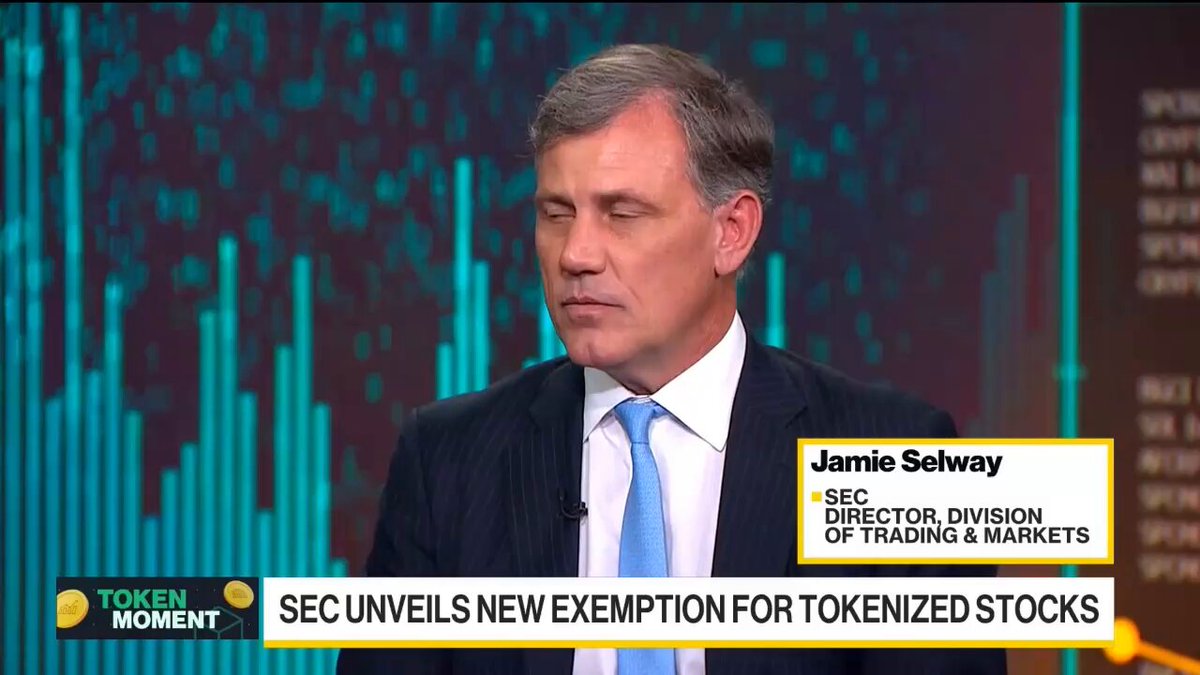
SEC trading director says tokenization and crypto aren't naturally politicized, calls for bipartisan support
Design Patterns in Modern Tokenomics
As the digital asset ecosystem has matured, certain tokenomic patterns have emerged as recurrent archetypes. While no single design fits every project, recognizable patterns help investors and regulators quickly categorize tokens and anticipate their behavior under different market conditions. These patterns also reflect an evolutionary process: early designs are refined, recombined, and sometimes discarded as empirical evidence accumulates about what works and what breaks in practice.
Broadly, contemporary tokenomics can be grouped into fixed‑supply and disinflationary models, inflationary staking and reward‑based models, burn and buyback‑centric structures, and governance‑heavy tokens that resemble equity in decentralized organizations. Each pattern carries its own strengths and vulnerabilities, and many real‑world tokens combine elements of several patterns. In this section we focus on three key axes: supply trajectory, value‑distribution mechanism, and governance rights, using concrete examples from both crypto‑native and tokenized asset markets.
Fixed‑Supply and Disinflationary Models
Fixed‑supply tokenomics derive much of their appeal from the concept of digital scarcity. Bitcoin, the archetypal fixed‑supply asset, limits its total issuance to 21 million coins, with a halving schedule that reduces block rewards approximately every four years. Many other layer‑1 blockchains and protocol tokens have adopted similar designs, either with a strictly fixed cap or with emissions that decline toward an asymptote, making new issuance negligible after a certain point. The theoretical advantage is that investors can model long‑term supply with high certainty, focusing attention on demand factors such as adoption and utility rather than on dilution risk.
Astar’s Tokenomics 3.0 illustrates a nuanced evolution from open‑ended inflation to a more constrained, effectively disinflationary model. By imposing a ceiling on total ASTR supply and lowering the maximum annual inflation rate, Astar aligns its tokenomics more closely with the fixed‑supply narrative while still allocating meaningful rewards to security and ecosystem growth. The inclusion of a fee burn mechanism that permanently removes a portion of tokens from circulation on each transaction introduces a mild deflationary bias as network usage increases, further strengthening the scarcity profile. Many investors view such hybrid models—combining a clearly defined supply ceiling with moderate, predictable emissions and usage‑based burns—as an attractive compromise between pure store‑of‑value narratives and the practical need to fund ongoing operations.
However, fixed‑supply tokenomics are not a panacea. Absent strong and growing demand, a token with no inflation and no utility beyond speculation may suffer from chronic illiquidity and high volatility. Moreover, strict caps can pose challenges when protocols need to fund security or maintenance in perpetuity. Designers often address this by reserving a portion of supply for long‑term development funds or by adopting governance mechanisms that allow the community to introduce limited additional issuance if necessary. In such cases, tokenomics must balance credibility—respecting the spirit of scarcity—with flexibility to adapt to unforeseen circumstances.
Inflationary, Staking and Reward‑Based Models
Inflationary tokenomics, especially in proof‑of‑stake networks and DeFi protocols, view issuance as a tool to secure the network and incentivize productive behavior. New tokens are minted each block or epoch and distributed to validators, delegators, liquidity providers, or other contributors, typically in proportion to their stake or activity. Staking rewards, liquidity mining programs, and incentive campaigns all fall under this umbrella. The central design question is whether emissions are calibrated to maintain adequate security and growth without overwhelming organic demand.
In many proof‑of‑stake chains, inflation is explicitly treated as a security budget: token holders who lock up their assets to validate transactions or delegate to validators earn a share of new issuance, while those who do not stake are diluted. This creates a strong incentive to participate in securing the network. Astar’s 5.5% annual inflation cap, for example, is distributed in part to collators and stakers, helping maintain a competitive yield that encourages participation while limiting dilution. Similar logic applies in DeFi protocols that reward liquidity providers with newly minted tokens, aiming to bootstrap deep markets for trading or lending.
The danger in inflationary and reward‑based models lies in over‑incentivization. When emissions are too high relative to real demand for the token’s utility, investors may chase short‑term yields only to sell rewards immediately, exerting continuous downward pressure on price. This dynamic can resemble a “farm and dump” spiral, particularly if vesting schedules are short and protocol revenues do not grow fast enough to offset emissions. That is why institutions focused on tokenized RWAs, such as Maple and others, stress that token yields should be rooted in “real” underlying income, whether from treasury interest, credit spreads, or transaction fees on meaningful volume, rather than purely inflationary rewards.
Designers partly mitigate these risks by implementing emission decays, halving schedules, or dynamic reward curves that respond to market conditions. Nevertheless, the most sustainable models are those that marry moderate inflation to clear utility and value capture, ensuring that newly issued tokens are met with legitimate demand from users who need the token to access services, participate in governance, or share in verifiable revenues.
Burn, Buyback and Fee‑Sharing Mechanisms
Burn and buyback mechanisms form another prominent set of tokenomic patterns, focused on using protocol revenues or onchain activity to support token value. Three broad variants can be distinguished: direct burns, buyback‑and‑burn, and buyback‑and‑distribute (sometimes extended into buyback‑and‑make). Each has different implications for capital allocation, holder returns, and long‑term protocol resilience.
The table below summarizes key differences among these approaches.
| Mechanism | Description | Main Benefits | Key Trade‑offs |
|---|---|---|---|
| Direct burn | Tokens are destroyed as a function of usage or events | Simple, creates scarcity, easy to verify | Destroys capital, no direct cash flow to holders |
| Buyback‑and‑burn | Protocol buys tokens on market then burns them | Supports price and reduces supply, links burns to revenue | Still destroys capital, may favor short‑term price over reinvestment |
| Buyback‑and‑distribute | Protocol buys tokens and redistributes to holders (e.g., stakers) | Shares revenue, can boost yields, aligns with long‑term holders | Requires governance over treasury, potential regulatory questions |
| Buyback‑and‑make | Protocol buys tokens and deploys them productively in ecosystem | Retains capital for growth while supporting token value | More complex, depends on effective capital allocation |
In direct burn models, tokens are destroyed as they are used. Ionet’s publicized burn of nearly half a million IO tokens, framed as “utility‑driven tokenomics,” exemplifies this approach: tokens used within the protocol are effectively consumed and removed from supply. This creates a clear link between protocol usage and scarcity, and it is straightforward to audit onchain. However, critics argue that such burns metaphorically “burn money” that could instead be reinvested into development, marketing, or ecosystem growth.
Buyback‑and‑burn models seek a compromise by using revenues earned in a stable currency (often a stablecoin) to repurchase tokens on the open market and then destroy them. This directly transfers value from revenue to token holders via reduced supply and may support price by creating steady buy pressure. Yet it still eliminates capital from the system, which some view as suboptimal for early‑stage protocols that need funds to compete and innovate.
Buyback‑and‑distribute and buyback‑and‑make models align more closely with traditional corporate finance practices like dividends and share repurchases combined with capital allocation. Aster’s tokenomics, in which 99% of daily platform fees are automatically used to buy back ASTER and then distributed to veASTER stakers as loyalty rewards, exemplifies a buyback‑and‑distribute scheme. Placeholder’s “buyback‑and‑make” concept extends this by suggesting that repurchased tokens could be redeployed in ways that enhance the protocol’s productive capacity, such as funding grants, providing liquidity, or bootstrapping new features. These models treat tokenomics not only as a way to create scarcity but as a framework for managing cash flows and strategic investment.
In all cases, the credibility of burn and buyback mechanisms depends on transparent, rules‑based execution. Onchain automation, published schedules, and verifiable reporting help ensure that tokenomics are not merely marketing narratives but enforceable economic structures.
Governance‑Heavy Tokens and Tokenized Securities
The final major pattern encompasses tokens that carry significant governance and cash‑flow rights, often straddling the line between crypto‑native governance assets and traditional securities. Governance tokens in DeFi may entitle holders to vote on protocol parameters and access a share of revenues, while tokenized securities explicitly represent equity, debt, or fund interests subject to securities laws. In both cases, tokenomics must carefully specify voting rights, revenue distribution, and transfer restrictions, as these elements heavily influence regulatory classification and investor protections.
The SEC, in its statement on tokenized securities, notes that such instruments typically fall into two categories: tokens issued by or on behalf of the issuer that directly represent a security (for example, a tokenized share of stock), and tokens that reference a security without issuer involvement, such as products that hold or track a basket of securities. The Commission emphasizes that the use of distributed ledger technology or tokens does not alter the fundamental obligations under securities laws, including registration, disclosure, and anti‑fraud rules. Industry groups like SIFMA have further stressed that tokenized securities markets require strong investor protections and should not be given broad exemptions that could undermine market integrity.
As a result, tokenomics for governance‑heavy tokens increasingly incorporate mechanisms to meet these expectations. This can include enhanced disclosure of risks and conflicts of interest, detailed documentation of smart contract functionality, and explicit controls over who can access certain features or information. In institutional tokenization platforms, governance tokens may be limited to accredited investors or used only for specific onchain decisions, with core fiduciary duties remaining with regulated entities. Regulatory developments such as the SEC’s consideration of a conditional exemptive order for tokenized securities—allowing certain activities to proceed under specified conditions related to market integrity, disclosures, recordkeeping, and capital adequacy—highlight how tokenomics and compliance are converging.
- 01TradFi institution tokenization race↗
Chainlink standardizing UBS, Swift, Mastercard, and JPMorgan on a single tokenization layer — alongside DTCC acquiring Securrency — signals infrastructure lock-in is happening now, not someday, and readers are tracking who wins the rails.
- 02Token unlock and vesting scrutiny↗
Binance and CoinMarketCap surfacing unlock schedules, combined with BERA's VC-loaded allocation controversy and ANIME tokenomics reveal, shows readers actively scanning for when insider supply hits the market.
- 03DeFi protocol economic redesigns↗
Aave's revenue redistribution and Umbrella safety overhaul, Astar's shift from inflation to a fixed 10.5B cap, and PancakeSwap 3.0 represent a wave of mature protocols publicly admitting their original tokenomics were broken.
- 04Central bank and sovereign positioning
BIS framing tokenization as a threat to monetary policy transmission, HKMA launching a dedicated sandbox, and the UK Finance CBDC platform test made readers realize tokenization's stakes extend well beyond crypto yield.
- 05Equity tokenization frontier↗
Robinhood pushing the SEC, Kraken predicting tokenized equities will outgrow stablecoins, and DTCC/Chainlink pilots signal that public equities on-chain are the next multi-trillion battleground readers are pre-positioning around.
- 06Institutional RWA yield products↗
Ethena's USDtb backed by BlackRock BUIDL, Superstate's tokenized public funds, and Moody's AA rating on Libeara show institutional-grade on-chain yield becoming a real, rated asset class rather than a white paper promise.
Risks, Red Flags and Regulatory Considerations
Despite the sophistication of contemporary tokenomics, the space remains rife with poorly designed or intentionally misleading economic models. For every protocol that publishes a detailed, auditable tokenomics specification, there are others that obscure or misrepresent key parameters such as total supply, emissions, and insider allocations. The rapid rise of tokenized RWAs and complex DeFi structures only heightens the potential for misaligned incentives and hidden risks. In this environment, both investors and regulators are developing frameworks to identify red flags and to align tokenomics with established standards of investor protection and market integrity.
At the same time, tokenomics itself can be a tool for risk mitigation. Protocols that encode conservative leverage limits, transparent fee structures, and robust governance checks into their tokenomics may be better positioned to withstand market stress. Conversely, those that rely on aggressive yields, opaque vesting, and centralized control may amplify systemic risks if they grow large enough. The challenge is to distinguish between innovation that extends the frontier of financial design and schemes that merely repackage old forms of speculation in new jargon.
Tokenomics Red Flags for Investors
From an investor’s perspective, certain tokenomic patterns recur in projects that later experience sharp collapses or regulatory interventions. The Blockchain Council’s tokenomics audit checklist provides a useful taxonomy of these red flags, emphasizing that they often cluster together in the highest‑risk launches. A common issue is incomplete or inconsistent disclosure of fundamental parameters, such as the total token supply, the enforcement of caps, minting permissions, and the precise formulas governing emissions. When projects cannot produce a coherent supply curve that accounts for all promised allocations and vesting schedules, investors have little basis for modeling dilution or understanding who may be incentivized to sell.
Distribution and vesting are another major concern. Projects that allocate a large share of tokens to insiders, advisors, or a small group of early backers without long‑term lockups effectively create a time bomb of selling pressure. The risk is heightened when vesting terms can be modified unilaterally by project administrators or when lockups are implemented offchain without enforceable smart contracts. Tokenomics documents that present polished pie charts but fail to provide verifiable vesting contract addresses or unlocking calendars should be treated with skepticism. In some cases, onchain analysis has revealed that “locked” tokens were, in fact, accessible to insiders, allowing them to sell while public investors believed supply was constrained.
Unrealistic yields and nebulous promises of “risk‑free” income are also recurrent warning signs. When a token offers annual percentage yields that are orders of magnitude higher than plausible underlying revenues, and when these yields are funded primarily by emissions rather than fees or external income, the tokenomics may amount to little more than a self‑referential inflation loop. In such scenarios, early participants may be able to exit with profits, but later entrants bear the brunt of collapsing demand when emissions outpace new capital inflows. Tokenomics models that explicitly align rewards with verifiable revenue streams, and that present stress‑test scenarios showing how yields adjust under adverse conditions, are generally more credible.
Liquidity and market structure constitute a further axis of risk. Tokens that debut with minimal liquidity, heavily controlled by insiders or market makers without transparent agreements, are vulnerable to manipulation. Thin liquidity can mask the true impact of upcoming unlocks or major sell events. While there is nothing inherently wrong with market‑making support, tokenomics that depend on such support to maintain the appearance of healthy trading may hide structural weaknesses. Investors should look for clear disclosures about liquidity programs, including time‑bound commitments and the relationship between protocol treasuries and external market makers.
Finally, governance and centralization risks can undermine otherwise attractive tokenomics. When a small group of administrators controls upgrade keys, minting rights, or treasury wallets with no timelocks or community oversight, the entire economic model rests on trust rather than code. Projects that delay or avoid implementing decentralized governance structures, while retaining unilateral control over emission rates or fee allocations, effectively ask investors to underwrite key‑person and governance risks without compensation. In some cases, centralized control may be necessary for regulatory or operational reasons, especially in early‑stage RWA platforms. But tokenomics should make these trade‑offs explicit rather than presenting an illusion of decentralization.
Transparency and Onchain Reporting
In response to these concerns, an emerging best practice among serious projects is to treat transparency as an ongoing commitment rather than a one‑time marketing exercise. This involves publishing a quantitative tokenomics specification with explicit formulas, tables, and a full unlock calendar, as well as deploying vesting and timelock contracts early and sharing verifiable addresses. It also includes documenting admin privileges, upgrade paths, and planned stages of decentralization, with explicit dates and conditions under which control will migrate from core teams to broader communities. Such measures transform tokenomics from a static whitepaper section into a living, auditable framework.
Onchain reporting plays a crucial role in sustaining this transparency over time. Projects like MANTRA Chain, which issue weekly reports covering network health, staking distributions, transaction activity, fees, tokenomics, governance decisions, and ecosystem developments, exemplify this approach. By committing to regular, data‑rich updates, these projects make it easier for investors, analysts, and regulators to track whether tokenomics are functioning as intended. This is especially important when protocols change key parameters, such as adjusting reward rates, modifying fee allocations, or implementing new burn mechanisms; timely reporting allows markets to digest and react to these changes rather than being blindsided.
The rise of onchain analytics tools further supports this trend. Third‑party platforms can independently reconstruct supply curves, monitor large holder movements, and detect anomalies in minting or burning patterns. For tokenized RWAs, similar tools can be used to verify that onchain token counts are consistent with offchain asset holdings and that redemption and retirement events align across both domains. Over time, these capabilities may reduce the information asymmetry that has historically characterized both traditional and crypto markets, making tokenomics a more empirical and less narrative‑driven field.
Regulatory Perimeter: SEC, Exemptions and Investor Protection
Regulatory frameworks are rapidly catching up with the realities of tokenization and tokenomics, particularly in major jurisdictions like the United States. The SEC’s stance on tokenized securities is clear: whether a security is represented by a traditional certificate or by a digital token on a blockchain, it remains subject to the same legal requirements. In its public statements, the SEC has emphasized that tokenized securities generally fall into two broad categories—those issued by or on behalf of the issuers of such securities and those that represent interests in or track the value of securities without issuer involvement—and that both categories must comply with registration, disclosure, and anti‑fraud obligations.
At the same time, regulators recognize the potential benefits of tokenization for market efficiency and investor access. SEC Commissioner Hester Peirce has advocated for a “regulatory sandbox” approach in which firms can experiment with tokenization of securities in a live but controlled environment, subject to conditions designed to protect investors and maintain market integrity. The SEC’s Crypto Task Force has been considering a conditional exemptive order that would grant limited relief from certain registration requirements for tokenized securities platforms, provided they comply with a set of safeguards. These safeguards may include robust disclosures about products, services, operations, conflicts of interest, and smart contract risks; comprehensive recordkeeping and reporting; ongoing monitoring and examination by SEC staff; and adequate financial resources for operations.
Industry groups like SIFMA have responded by stressing that any such exemptions must not come at the expense of investor protections. SIFMA has argued that broad exemptive relief for tokenized trading activities could undermine investor confidence and lead to market disruptions if implemented without appropriate guardrails. Instead, the group calls for strong protections analogous to those in existing securities markets, including clear disclosure regimes, safeguards against manipulation, and robust custody and operational controls. For tokenomics, this implies that models which embed revenue‑sharing, governance rights, or complex risk‑transfer mechanisms must be designed with regulatory scrutiny in mind, particularly when marketed to retail investors.
One implication is that tokenomics may increasingly need to differentiate between instruments designed for institutional, regulated environments and those aimed at retail or permissionless markets. Institutional tokenization platforms working with firms like Coinbase, State Street, and global banks may adopt conservative, disclosure‑heavy tokenomics with limited or no speculative features, focusing instead on operational efficiency and improved settlement. Retail‑oriented DeFi protocols, by contrast, may retain more experimental tokenomics but are likely to face greater regulatory attention as they grow in scale and systemic importance. In both contexts, alignment between tokenomics and regulatory expectations will be crucial for durable adoption.

Raoul Pal: tokenization will rebuild the whole economy, not just enable weekend stock trading

Tokenomics in Market Cycles and Portfolio Construction
As digital asset markets evolve, tokenomics has become an important lens for understanding price behavior and portfolio construction. While early crypto cycles were dominated by broad “macro beta”—with most assets moving in tandem in response to interest rates, liquidity conditions, or regulatory headlines—more recent periods have exhibited increasing dispersion. Some assets trade like macro proxies, moving primarily with Bitcoin and Ethereum, while others respond to idiosyncratic forces such as security incidents, governance disputes, or major tokenomics changes. For active investors, this dispersion underscores the importance of granular analysis.
Market research from trading firms suggests that while Bitcoin and a few large assets remain highly sensitive to macro variables, many altcoins now exhibit pricing driven by token‑specific narratives, including changes to supply schedules, fee distributions, or burn mechanisms. For instance, announcements like Astar’s Tokenomics 3.0 or Aster’s shift to using nearly all platform fees for buybacks can catalyze repricing as investors reassess long‑term value capture and dilution profiles. Similarly, news of major tokenized RWA launches, such as the onchain mirroring of high‑profile IPOs or the expansion of tokenized treasury offerings, can affect both the tokens directly involved and broader segments of the market tied to RWA narratives.
For portfolio construction, tokenomics analysis can help differentiate between assets with structurally attractive economics and those dependent on transient hype. Investors may assess factors such as projected circulating supply trajectories, the relationship between protocol revenues and tokenholder rewards, governance structures, and regulatory risk exposure. For RWA tokens, analysis must also consider offchain factors like credit risk, legal enforceability of claims, and settlement frictions. In many cases, yield‑bearing RWA tokens may offer more predictable cash flows but carry higher counterparty and regulatory risks, while pure DeFi tokens may offer greater upside tied to network growth but with more uncertain fundamentals.
Tokenomics can also influence how investors think about diversification and risk budgeting. Tokens with strong, transparent value capture mechanisms and conservative emission schedules may be more suitable as long‑term core holdings, akin to dividend‑paying equities, while high‑inflation incentive tokens may be better treated as tactical positions tied to specific opportunity windows. Stablecoins, tokenized deposits, and cash‑equivalent RWAs form another category, serving as liquidity buffers and collateral rather than return drivers. As institutional adoption grows, the interplay among these categories—governed in large part by tokenomics—will shape the risk–return landscape of onchain portfolios.
- 2024-03regulatory
HKMA launches Project Ensemble Sandbox for interbank asset tokenization
- 2024-05milestone
DTCC and Chainlink complete fund tokenization pilot with JPMorgan, BNY Mellon, Franklin Templeton
- 2024-07regulatory
BIS delivers tokenization monetary-policy risk report to G20 Brasil
State Street 2025 Digital Assets Outlook signals institutional doubling-down on tokenization
Morrison Foerster analysis: SEC considers conditional exemption for tokenized securities
SEC Corp Fin issues formal statement on conditional framework for tokenized securities
Solana records $10.4B in weekly tokenized equity volume, a first for any blockchain
Visa announces AI stablecoin and programmable token commerce suite at Visa Payments Forum
Outlook
Tokenomics is entering a new phase. What began as a set of ad hoc design experiments in early cryptocurrencies has become a discipline that spans public blockchains, DeFi protocols, tokenized securities, and institutional settlement platforms. The convergence of tokenization and tokenomics is particularly striking: as more assets move onchain, from treasuries and private credit to equities and collectibles, the economic rules embedded in tokens increasingly determine how markets function, who captures value, and how risks are distributed.
Looking ahead, several trends are likely to shape the evolution of tokenomics. First, regulatory frameworks such as the SEC’s work on tokenized securities and conditional exemptions will push tokenomics toward greater transparency, formalization, and alignment with investor protection norms. Second, institutional adoption and partnerships—whether through Coinbase‑backed tokenization infrastructure, State Street’s digital asset initiatives, or Visa’s stablecoin and tokenized deposit programs—will favor tokenomics that are robust under scrutiny and compatible with existing risk management practices. Third, technological advances, including AI‑driven analytics and standardized tokenization toolkits like Hedera’s Asset Tokenization Studio, will make it easier to design, audit, and monitor complex tokenomics at scale.
At the same time, competition among jurisdictions, from Australia’s ambition to become an APAC tokenization hub to Dubai’s efforts to foster tokenization pilots through entities like the DMCC, will create fertile ground for experimentation with new tokenomic models. Market narratives are already shifting from undifferentiated crypto cycles to a world where dispersion dominates and token‑specific fundamentals—security, governance, and tokenomics—drive outcomes. In that world, understanding tokenomics will be as essential for navigating onchain markets as studying balance sheets and prospectuses is in traditional finance.
Latest Tokenomics news
CFTC Chair Michael Selig says markets must prepare for “mass tokenization” as onchain finance, AI and 24/7 trading reshape financial marketsSEC trading director says tokenization and crypto aren't naturally politicized, calls for bipartisan supportRaoul Pal: tokenization will rebuild the whole economy, not just enable weekend stock trading Ondo teases 'next evolution of tokenization' announcement for tomorrow
 EU financial regulator ESMA will make AI and tokenization a supervisory priority in 2027, mapping firms’ use of both technologies and launching targeted checks
 RWA Foundation launches rwaf.xyz, a data and news hub for the tokenization sector
Sources
20 records from 17 domains
citadelsecurities.com
exp.science
xbto.com
investors.statestreet.com
pluang.com
astar.network
docs.asterdex.com
x.com
sec.gov
placeholder.vc
investor.visa.com
blockchain-council.org
solanacompass.com
hedera.com
tradingview.com
sifma.org
mofo.com
Community notes
Spot something off or out of date? Drop a note. Editors review topic notes daily and roll accepted fixes into the explainer — contributors are recognized in the monthly $SQUID drop.
Loading notes…
Help improve this topic
Have a story or tip about this topic? Submit it. See something missing? Leave a note. Editors review daily; accepted submissions and fixes count toward the monthly $SQUID drop.