
Grayscale is the world's largest digital asset investment platform, offering Bitcoin, Ethereum, and altcoin exposure through ETFs, trusts, and staking products — alongside institutional-grade crypto research.
+14 sources across the wider coverage universe
 Grayscale says Bitcoin has post-quantum solutions but lacks governance to deploy them2026-04
 Grayscale highlights generational shift as 45% of Gen Z and Millennials own crypto vs 18% of older investors, with $110T wealth transfer seen as major adoption tailwind2026-04
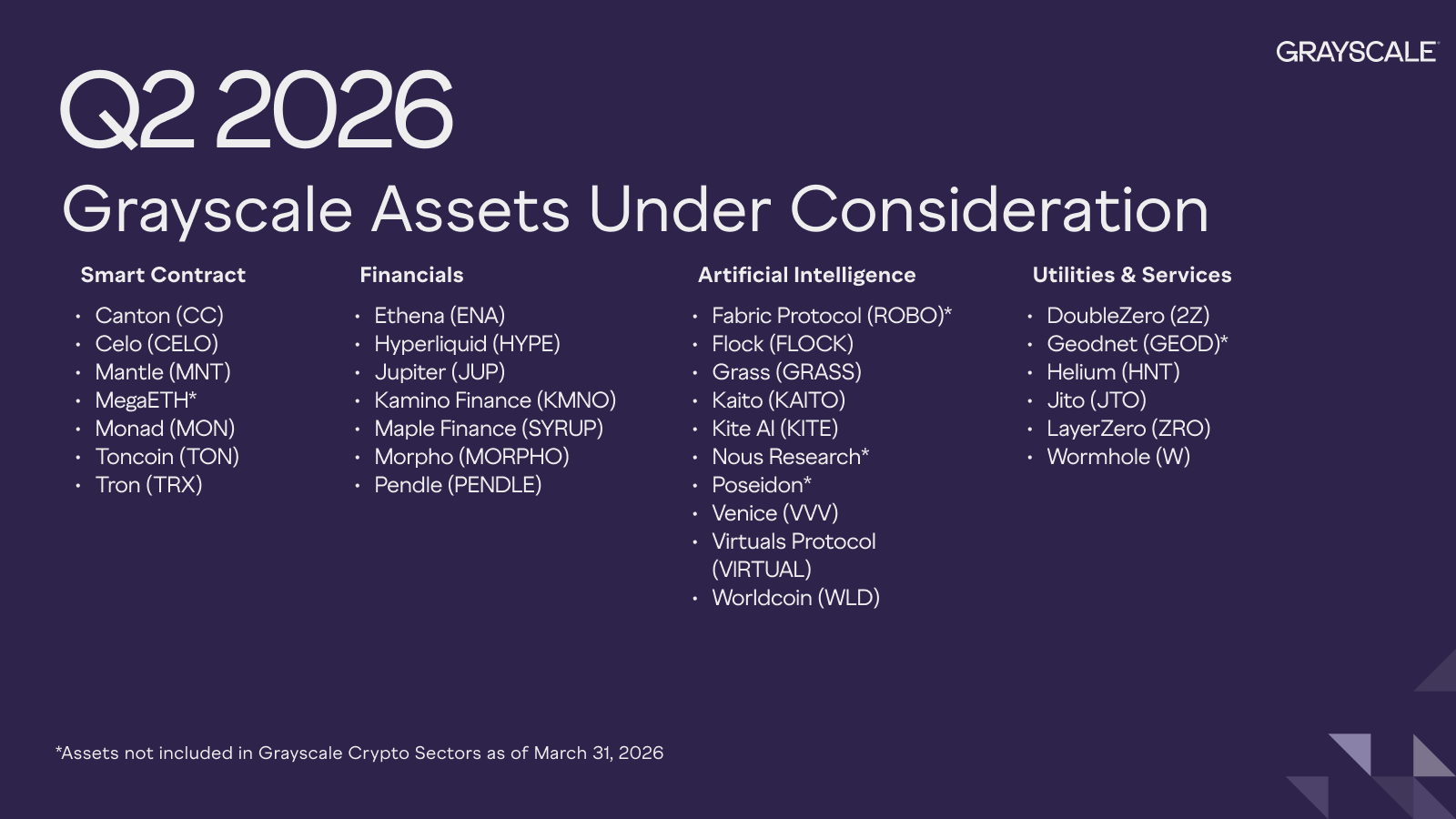 Grayscale adds HYPE, PENDLE, VIRTUAL, and MegaETH among 30 assets to Q2 consideration list2026-04
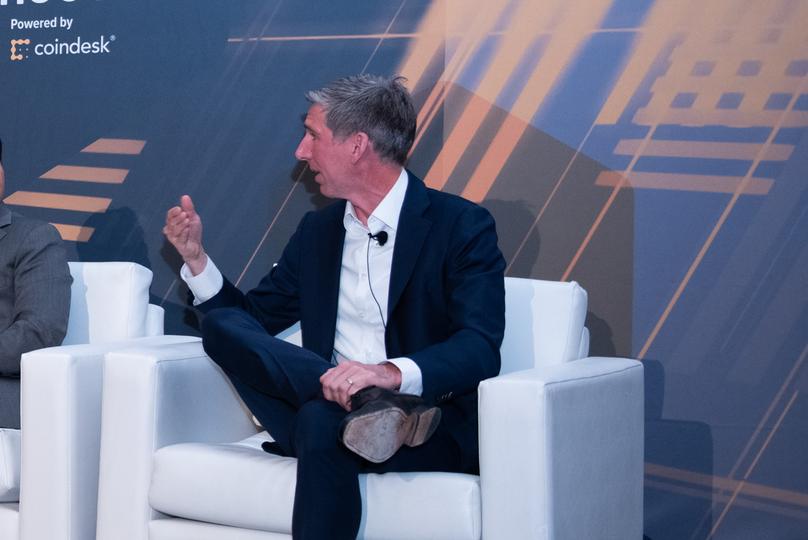 Bitwise locks in 0.67% fee and BHYP ticker for Hyperliquid ETF as Grayscale, VanEck chase HYPE exposure2026-04
 Grayscale warns Bitcoin may struggle to find a sustainable bottom after Strategy's BTC sale since 2022, arguing new buyers must replace the firm's historically dominant demand2026-06
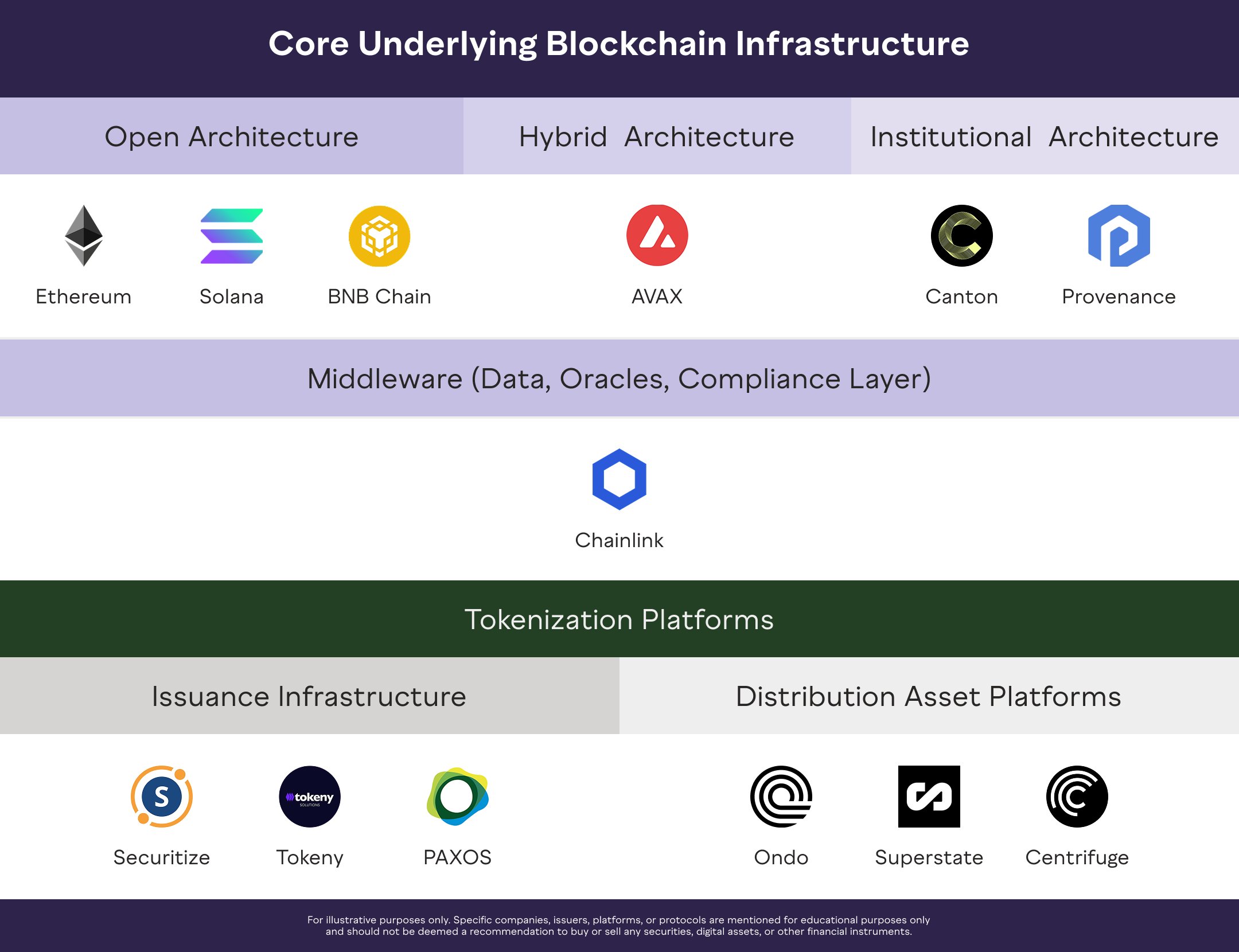 Grayscale says tokenization will reshape capital markets, with Canton leading near-term institutional adoption while Ethereum and Solana compete for long-term dominance2026-05
Founded in 2013, Grayscale is the world's largest digital asset investment platform, offering institutional and retail investors regulated access to cryptocurrencies through trusts, exchange-traded products, and research.
What Grayscale Is
Grayscale Investments was established by Digital Currency Group (DCG) with a single mandate: make crypto investable without requiring a wallet, a private key, or an exchange account. The firm's model is straightforward — it pools investor capital into vehicles that hold digital assets directly, then issues shares tradable through conventional brokerage accounts. For many institutions with compliance constraints and for retail investors who find self-custody technically daunting, that wrapper matters enormously.
By mid-2026, Grayscale manages assets spanning Bitcoin, Ethereum, Solana, and a growing roster of DeFi and Layer-1 tokens. Fortune Magazine recognized it on its inaugural Crypto 100 list, placing it alongside the companies most influential in shaping how digital assets are owned and understood.

Grayscale says AI compute demand will outpace supply for years as power, data centers, GPUs and permits create bottlenecks across the infrastructure pipeline

From Trusts to ETFs: A Structural Evolution
Grayscale's earliest product, the Grayscale Bitcoin Trust (GBTC), launched in 2013 as a private placement and became the dominant vehicle for institutional Bitcoin exposure for nearly a decade. Shares traded on OTC markets, often at significant premiums or discounts to underlying Bitcoin because the trust had no redemption mechanism — investors could buy in but not redeem shares directly for BTC.
That structural limitation became a persistent friction point. When U.S. spot Bitcoin ETFs were approved by the SEC in January 2024, Grayscale converted GBTC into an ETF, finally enabling arbitrage that narrowed the discount. The firm also launched the Grayscale Bitcoin Mini Trust ETF (ticker: BTC), a lower-fee alternative designed to retain cost-sensitive investors who might otherwise migrate to competing products from BlackRock or Fidelity.
The ETF transition has not been without turbulence. GBTC experienced persistent outflows through 2024 and into 2025, partly because its management fee remained higher than newer entrants. On June 10, 2025, for example, Grayscale's products saw some of the largest single-day inflows even as the broader Bitcoin ETF market recorded $214 million in net outflows — a sign that the firm's flows now move independently of the category. Grayscale's Ethereum Trust ETF (ETHE) similarly led outflows on several days in mid-June 2026, reflecting ongoing fee competition and investor rotation.
Grayscale readers aren't chasing yield stories — they're tracking the institutional on-ramp: every top click is about whether a new wrapper (spot ETF, trust, thematic fund) will legitimize a specific asset class for Wall Street money.
The Research Function: Fundamental Analysis of Digital Assets
Beyond product management, Grayscale has built a research practice that treats crypto as a legitimate asset class deserving rigorous valuation — not just price speculation. The Head of Research, known publicly as LowBeta (Zach Pandl), has been vocal about applying traditional financial frameworks to on-chain assets.
A June 2026 report on Aave (AAVE) is illustrative. Grayscale estimated Aave's 2026 protocol revenue at approximately $60 million and applied a 20x–25x fintech earnings multiple to arrive at a fair value range of $80–$100 per token, with a base-case one-year price target of $175. At the time, AAVE was trading near $75 — which the firm characterized as undervalued. The methodology matters as much as the conclusion: Grayscale is explicitly treating cash-flow-generating DeFi protocols the way a traditional analyst would treat a fintech stock.
This valuation taxonomy has become a public framework. As LowBeta articulated: crypto assets sit on a spectrum. Bitcoin is a digital commodity, priced by supply and demand dynamics analogous to gold. Tokens like HYPE — the native asset of the Hyperliquid perpetuals exchange — derive value from platform revenue and can be modeled with discounted cash flows. Ethereum sits somewhere between: a programmable settlement layer where, as LowBeta put it at EthConf, "tokenized assets can be thought of as a rising tide that lifts all boats, and ETH is in many ways the biggest boat."
Grayscale Research has also weighed in on macro-structural questions. After Strategy (formerly MicroStrategy) sold 32 BTC in 2026 — a small but symbolically significant reversal — Pandl argued that Bitcoin needed to find new marginal buyers to establish a sustainable price floor, noting that Strategy's leveraged accumulation model had historically been a dominant demand source and that pressure on its preferred-share prices could amplify volatility.
New Products: Staking ETFs and Novel Network Exposure
Grayscale's product pipeline has accelerated into categories that didn't exist three years ago.
The Hyperliquid Staking ETF (HYPG) launched in mid-2026 as the first U.S.-listed ETP to offer HYPE exposure with staking yield embedded. Grayscale positioned HYPG as the lowest gross management fee HYPE ETP available in the U.S. The product lets investors sit in a standard brokerage account — no Hyperliquid wallet, no L1 bridging — while still capturing a portion of the protocol's staking rewards. Hyperliquid's perpetuals volume exceeded $2.99 trillion, making HYPE one of the few tokens whose cash flows are large enough to backstop a revenue-based valuation.
The Canton Network ETF represents a more speculative frontier bet. Grayscale filed an S-1 with the SEC to launch an ETF holding $CC, the native token of the Canton Network — a permissioned blockchain focused on institutional financial markets and privacy-preserving smart contracts. The filing signals Grayscale's interest in tokenized real-world assets and enterprise blockchain infrastructure, categories that drew significant attention from Wall Street in 2025–2026 as tokenized Treasuries and private credit instruments grew to billions in on-chain value.
Sui Network has appeared in Grayscale Research commentary as well. The firm's research lead noted that Sui targets 300,000 transactions per second and is positioning itself as infrastructure for scalable AI agent activity — a thesis connecting blockchain throughput to the emerging category of autonomous AI workflows.
Solana products also sit in Grayscale's lineup. The firm has offered Solana exposure through its trust structure, and Solana's inclusion alongside Bitcoin and Ethereum in Grayscale's coverage reflects broader institutional recognition of the network as a major Layer-1 with meaningful staking yields and developer activity.
- 01spot ETF conversion race
GBTC and ETHE converting from closed-end trusts to spot ETFs was the highest-stakes regulatory event in crypto institutional history, and readers tracked every SEC filing and court ruling.
- 02institutional ETF flow signals
Headlines about DRW holdings, Goldman Sachs authorized-participant talks, and BlackRock vs. Grayscale inflow comparisons gave readers a live read on where institutional money was actually moving.
- 03trust premium and discount dynamics
GBTC's multi-year discount and LINK trust's 700% premium exposed how arbitrage gaps and retail hunger for exposure diverge sharply from NAV, pulling in readers looking for mispricing signals.
- 04SEC regulatory battles
The Grayscale lawsuit victory against the SEC was a watershed moment that readers treated as a proxy for the entire crypto-ETF approval landscape.
- 05thematic fund expansion (AI, DeFi)
Grayscale's moves into Bittensor/Render/Filecoin AI baskets and boosting Lido in its DeFi fund told readers which narratives Grayscale was betting institutional capital on next.
- 06new asset ETF filings pipeline
Serial Solana, Litecoin, and Hyperliquid ETF filings signaled that Grayscale was commoditizing the ETF wrapper itself, and readers used each filing as a leading indicator for the next approved asset.
The Decentralized AI Thesis
Grayscale Research has taken a notable position on the intersection of AI and crypto. Following reports about potential Anthropic shutdown scenarios in 2026, the firm published analysis arguing that such risks make a strong case for decentralized AI infrastructure — the idea that AI training, inference, and governance should not be concentrated in a handful of companies that can be shut down by regulators or investors.
This is consistent with a broader research posture: Grayscale uses macro events — regulatory shifts, corporate failures, geopolitical uncertainty — to argue for the structural value of decentralized systems. It's a narrative strategy as much as an investment thesis, but one grounded in genuine structural arguments about systemic risk concentration.
Competitive Landscape
Grayscale no longer operates without meaningful competition. BlackRock's iShares Bitcoin Trust (IBIT) launched in January 2024 and rapidly accumulated assets, benefiting from a lower fee and an established institutional distribution network. Fidelity's FBTC consistently posts competitive inflows — on June 17, 2026, FBTC recorded the largest single-day net inflow among Bitcoin spot ETFs at $14 million. ARK Invest, VanEck, and Bitwise each offer ETF alternatives across Bitcoin and Ethereum.
Grayscale's response has been product differentiation: the Mini Trust at lower fees, staking-integrated ETPs like HYPG, and exposure to emerging networks that peers haven't yet touched (Canton Network, Sui, Hyperliquid). The research function also serves as a moat — producing institutional-grade analysis that positions Grayscale as an information source, not just a product shelf.
- 2023-08regulatory
DC Circuit Court rules SEC must review GBTC-to-ETF application
- 2023-10regulatory
Grayscale refiles for spot Bitcoin ETF after court victory
- 2024-01milestone
SEC approves spot Bitcoin ETFs; GBTC converts, leads AUM at $23.8B
- 2024-01governance
FTX debtors authorized to liquidate $744M in Grayscale and Bitwise shares
- 2024-05regulatory
SEC solicits public comment on Grayscale, Bitwise, Fidelity spot Ethereum ETFs
- 2024-07launch
Spot Ethereum ETFs launch; ETHE sees heavy outflows, Mini Trust discloses 0.20% fee
- 2024-11milestone
Grayscale adds Solana and AI tokens to Top 20 List ahead of 2025
- 2025-02launch
Grayscale files S-1 for spot Hyperliquid ETF on NASDAQ
Regulatory Context
Grayscale played a pivotal role in shaping U.S. crypto regulation. Its 2022 lawsuit against the SEC — challenging the agency's rejection of its Bitcoin ETF application while approving Bitcoin futures ETFs — resulted in a D.C. Circuit Court of Appeals ruling in Grayscale's favor in August 2023. That ruling was a direct catalyst for the SEC's eventual approval of spot Bitcoin ETFs in January 2024, one of the most consequential regulatory developments in crypto history.
The firm operates under FinCEN registration and SEC oversight for its registered products. Its willingness to engage regulators through litigation, rather than avoidance, has made it a reference point in how crypto asset managers navigate U.S. securities law.
Fees, Structure, and Investor Considerations
Grayscale's management fees have historically run higher than traditional ETF categories — GBTC charged 1.5% annually even after the ETF conversion, compared to 0.25% for IBIT. The Mini Trust launched at a lower rate to address this. Staking ETPs like HYPG can partially offset fee drag through yield, depending on network staking rates.
Investors in Grayscale products hold shares, not the underlying crypto directly. They cannot redeem shares for coins (in ETF structures, authorized participants handle creation/redemption in kind). This means performance tracks the underlying asset minus fees and any operational costs, without the optionality of self-custody.
For institutions — pension funds, endowments, family offices — that cannot hold crypto natively under their mandates, this structure is not a limitation but a feature. For self-directed retail investors comfortable with custody, direct exchange purchases typically offer lower cost.
Outlook
Grayscale enters the second half of the 2020s as a mature institution in a market that no longer needs to be convinced crypto is real — it needs to be convinced which products, at what fees, under which regulatory structures, make sense for specific portfolios.
The firm's near-term trajectory depends on several factors: whether staking-integrated ETPs gain traction with advisors, how quickly the Canton Network ETF clears SEC review, and whether Grayscale's research-led positioning on DeFi tokens like AAVE attracts flows from investors who think in fundamental terms. The HYPE staking ETF is an early test of whether investors will pay for novel exposure packaged inside familiar brokerage infrastructure.
Longer term, Grayscale's bet is that regulated access to the full spectrum of digital assets — commodities, cash-flow tokens, staking networks, institutional blockchains — is a durable business, not a transitional wedge. Whether that bet pays depends as much on regulatory evolution and institutional adoption rates as on any single token's performance.
Latest Grayscale news
Community notes
Spot something off or out of date? Drop a note. Editors review topic notes daily and roll accepted fixes into the explainer — contributors are recognized in the monthly $SQUID drop.
Loading notes…
Help improve this topic
Have a story or tip about this topic? Submit it. See something missing? Leave a note. Editors review daily; accepted submissions and fixes count toward the monthly $SQUID drop.