
In-depth explainer on crypto vaults, covering how smart-contract vaults work, ERC‑4626/7540 standards, yield and stablecoin vaults, RWA and institutional products, security incidents, and what users should weigh when chasing onchain yields.
+23 sources across the wider coverage universe
 Wintermute Ventures highlights shift toward vaults, on-chain FX, and privacy DeFi as builders focus on real products over tokens, with VCs backing traction-driven startups post-EthCC2026-04
 Neutrl launches Credit Vault on Monad, offering delta-neutral yield strategies with AUSD deposits and layered returns from sNUSD and ecosystem incentives2026-04
 Uniswap adds Morpho-powered lending vaults for USDC, USDT and ETH to Web App and Wallet on Ethereum Mainnet2026-07
 Kamino rolls out Whitelisted Reserves, enforcing smart contract-level controls to restrict lending vault allocations to verified markets and protect user funds from exploits2026-04
 Analysis says SEC Commissioner Hester Peirce's DeFi guidance does not automatically classify vaults or onchain lending as securities, with protocol design remaining key2026-07
 Catalysis launches the first vault-native risk coverage infrastructure for institutional DeFi.2026-04
Crypto Vaults: The Onchain Containers Powering Yield, Security, and Institutional DeFi
In crypto and decentralized finance, a vault is a smart-contract-based container that holds digital assets and applies predefined rules to how those assets are invested, secured, or made available to other users. At their best, vaults abstract away complexity by turning sophisticated onchain strategies and risk controls into a simple “deposit, hold, and withdraw” experience for both retail users and institutions.
What Are Crypto Vaults?
At a high level, a crypto vault is a programmatic account controlled by code rather than a single private key, typically implemented as a smart contract on a blockchain such as Ethereum. Instead of simply storing assets, a vault encodes rules about what those assets can be used for, whether that means earning yield in lending markets, securing a cross-chain protocol, or enforcing institutional compliance requirements. In practice, a user deposits a token such as USDC or ETH into a vault and receives a vault share or receipt token in return, which represents a proportional claim on everything held inside that structure. This share-based design lets vaults pool deposits, execute strategies at scale, and distribute gains and losses algorithmically over time.
The term vault is intentionally evocative of traditional safes and custodial vaults, but in DeFi the emphasis is less on physical security and more on transparent, auditable logic. Funds in a vault are locked by the smart contract’s rules, not by a custodian’s promises, and those rules are visible onchain for anyone to inspect. That contrasts with a standard wallet, where the owner can arbitrarily move funds at any time, and with a simple liquidity pool, where deposits passively provide liquidity without additional strategy logic. A vault can, for example, automatically route stablecoins into a curated set of lending markets or derivatives positions, rebalance between them, and harvest yields without user intervention.
Vaults also play a critical role in protocol-level security. In cross-chain systems such as THORChain, validator nodes collectively control multi-party computation (MPC) vaults that custody the network’s pooled liquidity, and specialized processes like KeyVerify are used to confirm each node’s encrypted key share before a scheduled rotation (or “churn”) of vault keys takes place. In this context, a vault is less about yield and more about safely holding the assets that underpin a cross-chain exchange or bridge. The same underlying idea—assets governed by code and by a multi-party trust model rather than a single signer—recurs across staking, lending, and real-world-asset (RWA) protocols.
Over time, the industry has converged on tokenized vaults as a standard interface, most prominently via Ethereum’s ERC‑4626 specification. Under ERC‑4626, each vault issues its own ERC‑20–compatible “share” token, and the standard defines how deposits, withdrawals, and accounting must behave. This seemingly technical detail turns vaults from bespoke silos into interoperable building blocks that other protocols, wallets, and even centralized exchanges can integrate. When combined with newer standards for asynchronous operations like ERC‑7540, vaults are increasingly capable of handling complex, offchain-settling assets such as tokenized treasuries or private credit without breaking composability.
For end users, the experience of a vault is deceptively simple: you deposit supported assets and, if the strategy performs as intended, your balance grows over time. Behind that simplicity sit many design choices about pricing, risk, and governance that determine whether the vault behaves as promised under stress. Understanding those mechanics is essential for anyone evaluating the proliferating universe of yield, staking, RWA, and institutional vault products now appearing across networks and centralized platforms.

Morpho proposes classifying vaults as noncustodial or discretionary as institutional interest grows

How DeFi Vaults Work Under the Hood
Although vaults can differ widely in purpose, most modern DeFi vaults share a common conceptual model based on shares and assets. The vault holds a set of underlying assets, such as USDC or staked ETH, and issues shares to depositors in exchange for those assets. At any given time, the value of one share is given by an exchange rate of the form \( p = \frac{\text{totalAssets}}{\text{totalShares}} \), so that a user’s claim on the vault is simply their share balance multiplied by this price. When the strategy earns yield—say, by lending USDC into money markets or receiving rewards from a staking protocol—the vault’s total assets increase while the total number of shares stays constant, causing the price per share to rise. That rising share price is how depositors realize yield without the vault needing to constantly mint and distribute additional reward tokens.
Deposits and withdrawals are just transformations between assets and shares at the prevailing rate. A user who deposits 100 USDC into a vault where each share is currently worth 2 USDC would receive 50 vault shares; a later withdrawal of those 50 shares when the price has risen to 2.2 USDC per share would return 110 USDC before fees. ERC‑4626 formalizes this pattern by defining standard functions such as deposit, withdraw, mint, and redeem, each of which operates in terms of either asset units or share units. This standardization not only simplifies integrations, it also makes it easier for auditors and risk teams to reason about how a vault should behave under different market conditions.
Where vaults become complex is in their strategy layer. Many yield vaults are effectively strategy routers: they take in a single asset and then deploy it into a curated set of onchain opportunities, such as lending markets, liquidity pools, or restaking programs. Coinbase’s onchain USDC product, for instance, creates a smart contract wallet that connects to the Morpho protocol through vaults curated by Steakhouse Financial; those vaults then allocate USDC deposits across different lending markets to optimize returns. Users still see a simple USDC balance in the Coinbase interface, but under the hood their funds are flowing into ERC‑4626-style vaults on Morpho that are continuously rebalanced based on risk and yield parameters.
This “set-and-forget” model appears in other protocols as well. Euler’s EulerEarn offers a similar experience by allowing users to deposit a single asset into a managed vault that automatically allocates that capital across a portfolio of ERC‑4626 strategies selected by the protocol. Because these vaults themselves comply with ERC‑4626, their share tokens can be used by other protocols, creating a nested structure where vaults hold other vaults’ shares, composing multiple strategies together. This composability is one of the reasons vaults have become central to the modern DeFi stack: they allow sophisticated strategies to be packaged behind a simple interface that other contracts can treat like any other token.
Not all vault operations can be handled synchronously, however, especially when vaults integrate with RWAs or cross-chain systems. Traditional ERC‑4626 assumes that deposits and redemptions can be fulfilled immediately at a deterministic exchange rate, but when assets are being moved to offchain custodians, bridged across networks, or deployed into instruments that only settle periodically, that assumption breaks down. The ERC‑7540 standard extends ERC‑4626 by introducing asynchronous deposit and redemption requests, allowing vaults to queue user actions and fulfill them only once underlying settlements complete. In this model, a user submits a request specifying an amount of assets or shares, the vault records it and eventually marks it as processed once it has acquired or freed the necessary liquidity, at which point the user can finalize the operation.
Asynchronous flows are particularly important for RWA and credit vaults, where the underlying instruments may settle with bank-like or T+N settlement cycles rather than the instant finality of a blockchain. A vault that tokenizes treasuries or private credit can accept deposits onchain, but the actual acquisition or redemption of the underlying securities may not be immediate; ERC‑7540 provides a standardized way to represent that lag without breaking the accounting invariants of ERC‑4626. Industry commentary has increasingly stressed that the main challenge with RWA vaults is not tokenization but settlement, since treasuries, real estate, and private credit do not settle under the same assumptions as crypto-native assets. As standards like ERC‑7540 mature, they aim to bridge this gap by allowing vaults to model pending requests and incomplete settlements explicitly in their state, rather than relying on ad-hoc queues.
Behind the accounting and flow design sits the question of security. Vault contracts often manage large pools of capital, so any flaw in their math or logic can be catastrophic. The recent exploit of a deprecated Thetanuts Finance options vault on Ethereum illustrates the stakes: an attacker abused a bug in the vault’s redemption math, which used a formula of the form \( \text{payout} = \text{backing} \times \text{amount} / \text{totalSupply} \), to withdraw more than their fair share, draining roughly 2.1 million dollars before a white-hat used the same vector to rescue much of the remaining funds. The issue lay in how the vault computed the backing per share in edge cases, which highlights how even seemingly straightforward arithmetic can become dangerous when combined with rounding, fee logic, and time-varying supply.
Secure vault design therefore borrows heavily from general smart contract security best practices: reuse well-tested libraries, minimize custom code for critical math, and subject contracts to rigorous auditing and formal verification where possible. Practices such as clear separation between core accounting and strategy modules, limitations on who can upgrade or pause vaults, and conservative use of external calls all help reduce attack surfaces. In multiparty vaults like THORChain’s, additional layers such as keyshare verification and periodic churns of vault keys are used to reduce the risk that a subset of compromised nodes can unilaterally drain pooled assets. In all cases, the more value a vault holds, the more its design must anticipate adversarial conditions as a norm rather than an edge case.
Finally, modern vaults increasingly incorporate privacy and compliance features without sacrificing onchain composability. Zama, Morpho, and Steakhouse, for example, have launched a confidential yield vault that routes encrypted cUSDC into a Steakhouse-managed strategy on Ethereum, allowing institutions to earn yield on USDC while keeping individual positions confidential. Underneath, the design reuses public ERC‑4626 vaults, but deposits are made via Zama’s confidential token layer, so that onchain observers see only aggregated flows into the public vault, not each depositor’s exact amount. Similar ideas are emerging in institutional lending, where projects like Unlink integrate privacy layers into Euler’s vaults so that transaction-level details can be shielded while the vault’s aggregate state remains auditable. This tension between transparency, composability, and privacy is becoming a defining design axis for the next generation of onchain vaults.
Readers click vault stories as yield-narrative entry points, not yield-rate comparisons — restaking-native and RWA-integrated vaults dwarf every other angle in engagement, while the second-biggest pull is governance battles over who captures the economics those vaults generate, revealing that vault interest tracks emerging primitives first and APYs second.
Types of Vaults Across the Crypto Ecosystem
Because “vault” is a flexible architectural pattern rather than a single product category, the term now covers a wide range of use cases, from simple savings products to complex institutional credit lines. At one end of the spectrum are straightforward yield aggregation vaults that accept a single token, such as USDC, and deploy it into a curated set of lending markets. Coinbase’s integration with Morpho, where user deposits of USDC are funneled into onchain vaults curated by Steakhouse to earn competitive yields, is a clear example in this category. Users interact through the Coinbase interface, but their funds end up in ERC‑4626-style vaults that algorithmically select venues and manage rebalancing. EulerEarn’s ERC‑4626-based vaults perform a similar role by abstracting multiple lending and liquidity strategies into a single deposit experience.
Lending and credit protocols themselves are increasingly adopting a vault-first architecture. JustLend DAO’s Supply and Borrow Market V2 introduces a dual-layer structure of Vaults and Markets, where isolated-collateral vaults sit beneath lending markets that define interest rate curves and risk parameters. In this setup, vaults can be tailored to specific collateral assets or risk profiles, while markets aggregate borrowing and lending activity across those vaults, creating modularity and improving risk isolation. Morpho, for its part, has enabled bespoke credit markets and vaults such as the Armitage by Wintermute vaults, which are designed to route capital into specialized onchain credit facilities like Wildcat for institutional borrowers. These designs show how vaults can serve not just as simple savings vehicles but as the base layer of programmable credit infrastructure.
Stablecoin and savings vaults have become a particularly important category as onchain dollars such as USDC become core to DeFi. Coinbase’s USDC lending product, which advertises competitive yields powered by Morpho vaults, highlights how centralized platforms are using onchain vaults to augment returns for users who would otherwise simply hold stablecoins in their exchange accounts. Ethena and Coinbase have also launched a high-yield vault backed by Ethena’s synthetic dollar USDe, giving Coinbase users a way to access onchain yields via a curated vault structure rather than manually managing derivative positions. Shortly after launch, USDe held in the Coinbase vault crossed 100 million dollars in under four days, illustrating both user appetite for yield-bearing stablecoin vaults and the scale at which such structures can grow. At the more aggressive end of the spectrum, yield-looping vaults such as those offered by AllezLabs on Exponent Finance use leverage to amplify stablecoin yields; one such vault reached a two-million-dollar cap in just six days, prompting calls for higher limits once risk could be reassessed.
Another rapidly developing class is RWA and institutional income vaults. Plume, for instance, has partnered with Bybit to offer institutional fixed-income vaults that allow Bybit users to put idle stablecoins to work in products backed by traditional fixed income instruments from managers like PIMCO and CMB International. These vaults sit at the intersection of crypto and traditional finance, tokenizing exposure to mortgage-backed securities and corporate bonds while providing onchain access and settlement through Bybit’s Earn interface. Similar thinking is visible in institutional staking products such as Luganodes’ stVaults in Lido V3, which provide compliance-ready ETH staking solutions for asset managers, ETF issuers, and DAOs who need segregated, modular staking vaults with clear operational controls. In both cases, vaults serve as wrappers that encode not only investment strategy but also institutional-grade constraints around custody, reporting, and regulatorily acceptable counterparties.
Regional stablecoin vaults are emerging as well, highlighting how vaults can be used to bootstrap local onchain credit markets. Morpho’s collaboration with Bitso’s buildwithjuno launched Mexican peso (MXNB) credit markets and vaults on Base, curated by Gauntlet, giving users the ability to obtain MXNB liquidity against USDC and BTC or to deploy MXNB into yield-generating vault strategies. This model turns vaults into infrastructure for cross-currency, cross-border lending that can be transparently monitored onchain, while still abstracting away strategy complexity for end users. By combining stablecoin collateral like USDC with regional stablecoins such as MXNB, these vaults also illustrate how onchain credit can be tailored to local markets without sacrificing composability.
Vaults also underpin more specialized risk and payoff profiles, including options and derivatives. Thetanuts Finance, a DeFi options protocol, built vaults that sold and managed options strategies on behalf of depositors, and although a deprecated vault was recently exploited due to flawed redemption math, the broader category of options vaults remains a key venue for structured yield products. In parallel, ecosystems like Pendle have enabled protocols such as Wintermute’s Armitage USDC vault on Morpho to allocate capital into yield-bearing instruments whose returns can be further sliced into principal and yield tokens, creating layered products on top of underlying vault yields. These derivatives-oriented vaults appeal to more sophisticated users and institutions seeking yield with specific duration or risk characteristics, but they also amplify the importance of robust accounting, as small mispricings can be leveraged through composability to create systemic vulnerabilities.
Privacy-focused vaults are an increasingly important niche as institutions seek onchain yield without exposing sensitive position data. Zama, Morpho, and Steakhouse have launched what they describe as the first confidential USDC yield vault on Ethereum, routing encrypted cUSDC into Steakhouse’s strategy while allowing users to benefit from the public ERC‑4626 vault’s liquidity and integrations. The vault design, elaborated in Zama’s research notes, lets holders of confidential tokens deposit into public vaults without revealing their individual deposit amounts, effectively separating the privacy of individual positions from the transparency of the aggregate pool. On the lending side, Unlink’s integration with Euler uses a privacy layer that routes capital into Euler’s vaults while shielding transaction-level details, providing a template for privacy-preserving institutional lending that still interoperates with public DeFi primitives.
Finally, vaults appear in operational and security contexts that go beyond pure investment. HyperMove’s Bitcoin-backed payment SDK for AI agents, for example, uses vault-secured signing to allow agents to initiate payments via BTC collateral and specialized transaction rails without exposing private keys directly. In cross-chain networks like THORChain, as mentioned earlier, validator nodes hold assets in shared vaults whose key shares are periodically verified via protocols like KeyVerify before vault churn can proceed, ensuring that the integrity of each node’s portion of the key has not been compromised before rotating to a new vault configuration. Even base-layer protocols such as the XRP Ledger are incorporating “Single Asset Vaults” and similar constructs in their core software to enforce better segregation and risk controls across lending and DEX functions, with security patches periodically shipped to harden these vault components. Taken together, these cases underscore that vaults are not merely user-facing yield products but fundamental primitives for how capital is stored, governed, and moved in onchain systems.
To summarize these diverse categories, it is useful to compare their primary purposes, underlying assets, risks, and typical users:
| Vault type | Primary purpose | Typical underlying assets | Key risks | Typical users | Example ecosystems/products |
|---|---|---|---|---|---|
| Yield aggregation vault | Passive yield optimization | USDC, other stablecoins, blue-chip | Smart contract, strategy, market risk | Retail and prosumers | Coinbase–Morpho USDC vaults; EulerEarn |
| Lending/credit vault | Isolated collateral and loan provisioning | Stablecoins, major tokens | Counterparty, liquidation, rate model risk | Traders, credit funds | JustLend SBM V2 vaults; Morpho Armitage vaults |
| Stablecoin savings / synthetic | Dollar-like savings with variable or high APY | USDC, USDe, similar stable assets | Depeg, strategy risk, smart contract risk | Retail, exchanges’ users | Coinbase USDe vault; Exponent yield-looping vaults |
| RWA / fixed-income vault | Onchain access to tradfi yield | Tokenized treasuries, MBS, corp debt | Legal, settlement, credit, custodial risk | Institutions, HNW, exchanges | Plume–Bybit PIMCO/CMBI-backed vaults |
| Staking / restaking vault | Stake delegation, restaking, liquidity | ETH, liquid staking tokens | Protocol, slashing, liquidity risk | Asset managers, DAOs, ETF issuers | Lido stVaults with Luganodes validators |
| Options/derivatives vault | Structured yield/hedging strategies | Options, yield-bearing tokens | Model risk, extreme market moves, logic flaws | Sophisticated DeFi users, funds | Thetanuts options vaults; Armitage allocations to Pendle PTs |
| Privacy/confidential vault | Confidential positions with public liquidity | Encrypted stablecoins such as cUSDC | Implementation risk, compliance uncertainty | Institutions, privacy-conscious users | Zama–Morpho–Steakhouse confidential USDC vault; Unlink–Euler integration |
| Security/infrastructure vault | Safekeeping protocol-level assets | Cross-chain liquidity, native coins | Key compromise, network-level attacks | Validators, core protocol operators | THORChain MPC vaults with KeyVerify; base-layer Single Asset Vaults |
This diversity is precisely why “vaults” have become a central organizing concept in DeFi and institutional crypto alike. Rather than being a niche product, vaults are increasingly the unit of account for how capital is structured, risk-managed, and exposed to strategies onchain.
Zest Protocol launches Bitcoin collateral vaults demo on mainnet. Users deposit BTC into personal Taproot vaults on Bitcoin Layer 1 and borrow USDC from Ethereum liquidity.
Risks, Failures, and Design Pitfalls
Alongside their benefits, vaults concentrate risks in ways that users and institutional allocators must understand. The most obvious risk category is smart contract and logic risk: because vaults hold pooled funds and often integrate with multiple external protocols, a single bug can compromise the entire pool. The Thetanuts Finance incident illustrates this starkly. A flaw in the redemption math of an old, deprecated vault allowed an attacker to manipulate the calculation of how many assets they were owed per share, using a formula that miscomputed backing in certain states, and as a result they were able to redeem more than their rightful share and drain roughly 2.1 million dollars’ worth of assets. Although a white-hat later reproduced the exploit to move additional funds to safety, the episode showed that legacy vaults, even when no longer actively promoted, can remain live attack surfaces unless they are properly decommissioned or upgraded.
This kind of bug underscores why security guidelines emphasize rigorous testing, code reviews, and the reuse of well-audited libraries wherever possible. Nethermind’s best practices for smart contract development stress using standardized, battle-tested components, minimizing custom arithmetic, and thoroughly testing edge cases, especially around rounding and extreme values. In the context of vaults, that means validating deposit and withdrawal math under scenarios such as very small or very large deposits, rapid share-price changes, and zero-liquidity edge cases where one depositor could become a majority shareholder. It also means checking how fee logic interacts with these edge cases; poorly implemented performance or withdrawal fees can inadvertently create arbitrage opportunities or loss of funds for the remaining depositors.
Beyond pure contract logic, vaults also embed strategy risk. Yield and lending vaults typically allocate user assets into one or more external protocols, such as money markets, DEXs, or derivatives platforms. If those underlying venues suffer losses due to bad debt, hacks, or governance attacks, the vault’s depositors bear those losses in proportion to their share holdings. For instance, a USDC vault that loops deposits as collateral and borrows more USDC to re-lend—a common “yield-looping” strategy—amplifies both returns and risk. The AllezLabs Yield Looping Vault on Exponent Finance, which rapidly filled its two-million-dollar cap, demonstrates how attractive such strategies can be when they work, but any liquidation event or collateral depeg could equally magnify losses for depositors in that vault. Vault design needs to explicitly model such risks, set leverage and concentration limits, and communicate them clearly to users, rather than presenting headline APYs in isolation.
Stablecoin vaults add another layer: asset risk. Depositors often treat dollar-denominated vaults as near-cash equivalents, but this depends heavily on the stability and backing of the underlying stablecoins or synthetic assets. Coinbase’s USDC vaults and Ethena-backed USDe vault both rely on the assumption that USDC and USDe maintain their pegs and that their underlying collateral and hedging strategies remain robust. A depeg or severe impairment in either asset would flow directly into vault share prices, potentially surprising users who perceived these as bank-like savings products. For vaults that hold multiple stablecoins or synthetic assets, correlations between those assets in stress scenarios need to be considered; the assumption that diversification across stablecoins always reduces risk is not necessarily valid.
RWA and institutional vaults introduce their own failure modes rooted in the mismatch between onchain and offchain settlement. As commentators have noted, tokenizing treasuries or private credit is the easier part; the harder problem is ensuring reliable settlement and reconciliation between blockchain records and offchain registries or custodians. A vault that represents shares in a pool of treasuries must accurately reflect corporate actions, interest payments, redemptions, and potential defaults that are determined in traditional financial systems. Asynchronous vault standards like ERC‑7540 help encapsulate delays and partial fills at the smart contract level, but they cannot eliminate legal or operational risks, such as a custodian failure or a court order freezing underlying assets. This means RWA vaults carry a stacked risk profile that combines typical DeFi risks with those of traditional finance, and institutions must perform due diligence on both layers.
Operational risk is equally important, especially when vaults are offered through centralized platforms. Coinbase’s USDC yield product, for example, uses a smart contract wallet to connect user funds to Morpho vaults curated by Steakhouse. While the underlying vault logic is onchain and transparent, users are dependent on Coinbase’s infrastructure for deposit and withdrawal flows, as well as for how risks are disclosed and managed. Any misconfiguration in the bridge between the centralized exchange’s systems and the onchain vaults—say, an accounting mismatch or delayed update—could create situations where user balances diverge from the actual onchain state. Similar concerns apply to Bybit’s integration of Plume’s institutional fixed-income vaults: Bybit must ensure that user interfaces, custody processes, and legal disclosures accurately reflect the onchain vault positions and their underlying RWA exposures.
Governance and upgrade risk also play a major role in vault safety. Many vaults are upgradable, meaning an admin or governance process can deploy new logic while preserving the vault’s stored assets and share balances. This is attractive for evolving strategies or fixing bugs, but it also creates potential for governance capture or admin key compromises. Protocols sometimes mitigate this by using time locks, multi-signature admin keys, or more sophisticated non-custodial vault governance structures, including those used by regulated asset managers seeking to become the first to run non-custodial vaults under specific licensing regimes. Such structures can reduce unilateral control but still require users to trust that governance participants are competent and aligned, and that emergency procedures will be used judiciously.
Network and infrastructure risks round out the picture. In THORChain’s recovery process, for example, the network is using a new KeyVerify protocol to validate every node’s key share before initiating vault churn, a process by which old vault keys are rotated out and new ones are generated. This is necessary because if even a subset of nodes had compromised key shares, churning vaults could inadvertently hand control of pooled liquidity to an attacker. The same logic applies to any MPC-based or shared custody vault: key management, rotation, and verification procedures must be robust and regularly tested. When base-layer protocols like the XRP Ledger roll out security patches for their vault components, such as Single Asset Vaults used in lending and DEX subsystems, it underscores that vaults are embedded in the critical path of network-level operations, and bugs there can have cascading effects across an ecosystem.
From a user perspective, these risks point to the importance of not treating vaults as black boxes. Even when integrated into slick interfaces and branded as “high-yield savings” or “fixed-income” products, vaults are programmable containers that expose depositors to a chain of underlying risks. Understanding who controls upgrades, how strategies are selected, what assets are involved, and how edge cases are handled is essential, particularly in institutional settings where fiduciary duties apply. The very features that make vaults powerful—pooled capital, composability, and automation—also make them critical points of failure that the entire DeFi stack relies on.
- 01LRT restaking vault launches↗
Nektar's LRT vault trio drew the single highest click count in the dataset, confirming that restaking-native yield vehicles are the leading edge readers track inside the vault category.
- 02RWA savings vault integration↗
MANTRA's Ondo-powered vault was the second-most clicked story, showing that vaults bridging tokenized real-world yield (USDY, private credit) attract outsized reader attention beyond typical DeFi yield stories.
- 03Governance capture of vault economics
The Compound 'Golden Boys' governance attack, Aave Labs revenue-diversion accusations, and the crvUSD fee-share vote all clustered near the top, revealing readers track who controls fee flows and vault allocations, not just yield rates.
- 04Curve-Morpho curated yield stack↗
Multiple headline clusters — crvUSD MetaMorpho vault, Stake DAO frxUSD curated vault, and Curve weekly yields — show a dedicated readership following this specific composable yield stack as a living ecosystem.
- 05Vault operational slippage and loss
The $3.73M stkGHO-to-USDC slippage loss during a routine vault swap pulled readers for the same reason as exploits — concrete, quantified damage from a step readers assumed was mechanical and safe.
- 06Protocol vault shutdown and abandonment
Badger DAO closing its vault series and MakerDAO's Deco unit going AWOL both attracted clicks from readers who monitor protocol health through the lifecycle and continuity of vault products.
How to Evaluate a Vault: Yield, Risk, and Design
Evaluating a vault starts with understanding its economic proposition: what yield it offers, in what asset, and in exchange for which risks. Headline APY numbers can be enticing, especially in a low-rate environment, but they are only meaningful in the context of volatility and tail risks. Coinbase’s USDC vaults, for instance, have advertised yields up to around ten percent in some periods, reflecting curated exposure to onchain lending via Morpho; those yields must be weighed against smart contract and counterparty risks in the underlying markets. Ethena’s USDe vault on Coinbase similarly offers elevated yields because USDe’s strategy involves delta-hedged derivatives positions that are inherently more complex than holding fully collateralized USDC, even if the product is wrapped in a user-friendly vault interface. Yield-looping vaults on platforms like Exponent push this trade-off further, boosting returns via leverage but exposing depositors to liquidation cascades and spread risks.
Beyond yield, one of the first design questions is whether the vault conforms to standards like ERC‑4626 and, where relevant, ERC‑7540. A standard-compliant vault exposes predictable functions for depositing, withdrawing, and reading balances, making it easier for external tools, auditors, and other protocols to interact with it safely. ERC‑7540’s asynchronous request model, though newer, is particularly relevant for vaults that touch RWAs or cross-chain assets, because it encodes delays and partial fulfillment as first-class concepts. A bespoke vault interface is not necessarily unsafe, but it does require extra scrutiny, and it limits the vault’s composability with other DeFi primitives that increasingly expect ERC‑4626 semantics.
Asset quality and diversification are the next key considerations. A USDC-only vault, such as many Morpho-based lending vaults curated by Steakhouse, exposes users primarily to USDC and the specific lending markets where it is deployed. A multi-asset vault that combines stablecoins, governance tokens, and RWAs may offer diversification benefits but also introduce correlated risks, especially in market stress when correlations tend to spike rather than fall. RWA vaults like Plume’s fixed-income products on Bybit must be assessed not only on the quality of the tokenized bonds or mortgage-backed securities they hold, but also on the custodial arrangements and legal structures that stand behind those tokens. Staking vaults, such as Lido’s stVaults, require analysis of validator performance, slashing history, and the liquidity profile of staked derivatives like stETH.
Liquidity and access are equally important, particularly for institutional users. Vaults integrated into large centralized platforms like Coinbase or Bybit benefit from distribution and fiat onramps, but they may impose additional internal settlement constraints or withdrawal limits that differ from the underlying onchain vault’s behavior. A vault token that is widely accepted across DeFi as collateral, such as an ERC‑4626 share token from a major protocol, offers more flexibility; users can often borrow against it, trade it, or deposit it into other strategies, effectively stacking yields. However, using vault shares as collateral also ties the health of borrowing positions to the performance of the vault strategy itself, which can create complex feedback loops if not carefully risk-managed.
Operational governance and transparency are crucial for institutional adoption. Regulated asset managers exploring non-custodial vaults must be able to demonstrate to supervisors that they understand and can control key parameters: who can upgrade the vault, how strategy selection works, what happens in emergencies, and how conflicts of interest are managed. Institutional vault products like Luganodes’ stVaults for Lido V3 or Plume’s PIMCO-backed fixed-income vaults on Bybit are explicitly targeting this audience, emphasizing clear counterparty arrangements, reporting, and risk committees alongside the underlying smart contract logic. Privacy-enhancing vaults such as Zama’s confidential USDC vault introduce a further dimension, where institutions may gain comfort from not broadcasting position sizes while still benefiting from the transparency of the underlying public vault’s aggregate metrics.
Security posture is the final and perhaps most important lens. Prospective depositors should consider whether a vault has been audited, whether it reuses standardized components such as battle-tested ERC‑4626 implementations, and how it responds to newly discovered vulnerabilities. The Thetanuts exploit shows the danger of leaving deprecated vaults active without adequate controls; protocols should have clear mechanisms for winding down old vaults, migrating users, and disabling problematic code paths. Networks like THORChain demonstrate how continuous improvement in key management, via protocols like KeyVerify and structured vault churn, can harden security over time, but these processes also require social coordination and robust validator incentives. The presence of bug bounties, formal verification reports, and public post-mortems after incidents can be indicative of a mature security culture around vault design.
For retail users, a pragmatic framework is to ask a series of questions: what does this vault actually do with my assets; who controls it; what are the worst plausible scenarios; and can I exit quickly if conditions change. For institutions, those questions expand into detailed due diligence on legal structures, counterparties, and how vault positions fit into broader portfolio and risk management frameworks. In both cases, the starting point is recognizing that vaults are not simply higher-yield savings accounts; they are programmable vehicles whose safety and utility depend on the quality of both their code and their governance.
Firelight partners with Veda to bring on-chain protection to yield vaults
Vaults and the Evolution of Onchain Finance
Vaults are more than just products; they are becoming the basic unit of organization for capital in onchain finance. Lending protocols like JustLend are re-architecting themselves around vault-market structures, where vaults represent isolated collateral silos and markets sit on top to orchestrate supply and demand. This design allows more granular risk management—bad debt or volatility in one vault does not automatically spill over into others—and facilitates specialized vaults for particular asset classes, from blue-chip crypto collateral to RWAs. Similarly, Morpho’s ecosystem of curated vaults, including institutional strategies like Wintermute’s Armitage and regional credit vaults like the Bitso-backed MXNB markets, show how a single base protocol can support many vaults tailored to different risk appetites and regulatory environments.
Composability is central to this evolution. Because ERC‑4626 vault shares are themselves ERC‑20 tokens, they can be used as building blocks throughout DeFi. A user might deposit USDC into a Morpho vault via Coinbase, receive an internal representation of their vault position, and then use that as collateral in another protocol to borrow a different asset, all while the underlying vault continues to generate yield. EulerEarn’s design, where its vaults allocate into a diversified basket of ERC‑4626 strategies, exemplifies multi-layered composability: vaults holding vaults holding underlying positions in money markets and DEXs. Each layer adds complexity but also modularity, allowing risk to be segmented and managed at different tiers.
This modularity also extends to privacy and compliance. Zama’s confidential vault architecture demonstrates how private wrappers around public vaults can allow institutions to participate in public DeFi while meeting internal confidentiality requirements. Unlink’s integration with Euler indicates a similar trajectory for institutional lending, where a privacy layer routes capital into public vaults while shielding sensitive transaction data. By decoupling individual position privacy from aggregate vault transparency, these designs sustain the auditability and composability that DeFi relies on while addressing legitimate confidentiality concerns of corporate treasurers, funds, and high-net-worth individuals.
Stablecoins and onchain dollars sit at the heart of this shift. Products like Coinbase’s USDC vaults and the Ethena-backed USDe vault are effectively onchain money-market funds in programmatic form, offering yields tied to lending rates, derivatives markets, or RWA yields, but accessible through familiar exchange interfaces. Regional initiatives like Morpho’s MXNB vaults extend this paradigm beyond the U.S. dollar, enabling local-currency credit and savings products that are nonetheless fully onchain. As more RWAs such as treasuries, corporate bonds, and private credit are tokenized and deposited into vaults like Plume’s Bybit-based fixed-income products, the line between traditional fixed-income funds and onchain vaults will blur further. In this sense, vaults are becoming the bridge not only between CeFi and DeFi, but also between global and local currencies, and between crypto-native and traditional yield sources.
For trading and capital allocation, vaults are increasingly used as risk-segregated funding structures. Carrotfunding, for example, uses vaults as capital pools backing onchain prop trading accounts, where traders prove their skill through onchain challenges and then receive access to funded accounts while the underlying capital remains secured in vaults that enforce risk limits and payout rules. In such setups, vaults encode the “trust stack” that would traditionally be managed by legal agreements and operational oversight, replacing or augmenting them with code-enforced constraints and transparent onchain metrics. Similar patterns can be seen in AI-focused infrastructure like HyperMove’s vault-secured signing for Bitcoin-backed payments, where vault logic governs when and how AI agents can initiate transactions against collateral, reducing the risk of runaway or malicious behavior.
As base-layer protocols embed vault-like constructs into their core architectures, the influence of vaults reaches down to the substrate of onchain finance. THORChain’s emphasis on secure, verifiable vaults for cross-chain liquidity, with procedures like KeyVerify and controlled churns, underscores that vaults are integral to how multi-chain value is custodied and swapped. The XRP Ledger’s work on Single Asset Vaults and related security patches suggests a future where base chains provide native vault abstractions for lending, DEXs, and other financial primitives, rather than leaving all vault logic to application-layer smart contracts. Over time, this could yield a layered model in which base-layer vaults handle fundamental custody and risk segregation, while higher-level application vaults focus on specific yield or trading strategies.
The interplay between vault standards and RWAs is likely to be one of the defining themes of the next phase of DeFi. As industry observers have noted, tokenization is only half the problem; the more difficult part is aligning settlement, legal rights, and operational processes of real-world assets with the instantaneous, permissionless nature of blockchains. Standards like ERC‑4626 have already standardized vault accounting for yield-bearing onchain assets, while ERC‑7540 addresses asynchronous deposits and redemptions, paving the way for vaults to safely handle assets whose settlement cycles are measured in days rather than seconds. The “next generation” of RWA vaults will need to layer on legal frameworks, insurance, and perhaps even standardized dispute-resolution mechanisms that are legible to both DeFi protocols and traditional courts.
In this broader context, vaults can be seen as the programmable containers that hold and transform value in an increasingly onchain financial system. Whether they contain USDC, synthetic dollars like USDe, regional stablecoins like MXNB, staked ETH, or tokenized treasuries, vaults encapsulate both the economic properties of those assets and the rules by which they are deployed. As vaults become more interoperable, private, and institutionally acceptable, they are likely to form the backbone of how yield, credit, and liquidity are provisioned across chains and jurisdictions.
ERC-4626 tokenized vault standard ratified on Ethereum mainnet
- 2023-10governance
Badger DAO announces closure of auraBAL, cvxCRV, and CVX vault series
- 2023-10launch
PoolTogether v5 launches fully permissionless yield-lottery vaults
EIP-7540 proposes async deposit and redemption flows for tokenized vaults
Euler unveils v2 codebase including modular vault kit and price oracle layer
- 2024-09launch
GMX launches GLV liquidity vaults, integrating perp liquidity with yield vaults
- 2025-03launch
MANTRA launches RWA savings vault powered by Ondo Finance USDY
Nektar LRT vaults launch with stUSD restaking, dlcBTC, and Re7 ETH series
Outlook
Vaults have evolved from niche DeFi experiments into core infrastructure for both crypto-native and institutional finance, and that trajectory is unlikely to reverse. The convergence around ERC‑4626 and the emerging ERC‑7540 standard provides a solid technical foundation for interoperable, composable vaults that can handle both instantaneous crypto-native assets and slower-settling RWAs. At the same time, integrations like Coinbase’s Morpho-based USDC vaults, Ethena’s USDe vault on Coinbase, and Plume’s institutional fixed-income vaults on Bybit demonstrate that major centralized platforms view onchain vaults as essential to offering competitive yields and differentiated products to their user bases. As these integrations deepen, the average user may interact with vaults primarily through familiar CeFi interfaces, even though their assets are ultimately governed by onchain code.
Institutional adoption will likely hinge on continued progress in three areas: security, privacy, and governance. Incidents like the Thetanuts legacy vault exploit are reminders that contract-level mistakes can undermine even well-regarded protocols, reinforcing the importance of strict deprecation practices, audits, and formal verification for vault logic. Privacy-oriented designs such as Zama’s confidential USDC vault and Unlink’s privacy layer for Euler show promising paths for reconciling institutional confidentiality needs with public-chain transparency and composability. Governance structures that distribute control over vault upgrades and strategies in transparent but accountable ways will be crucial, particularly as regulated asset managers seek to operate non-custodial vaults within existing legal frameworks.
For users, vaults will increasingly become the default way to hold and deploy digital assets, particularly stablecoins and tokenized RWAs. Rather than passively sitting in wallets or exchange balances, USDC, USDe, and other stablecoins are likely to flow into curated vaults that route funds into lending, staking, and fixed-income strategies, all dictated by user-selected risk profiles. Regional and sector-specific vaults, like Morpho’s MXNB markets or stVaults for ETH staking, will further tailor onchain yield opportunities to local currencies and institutional mandates. As standards and best practices mature, the line between “wallet” and “vault” may blur, with wallets becoming interfaces that connect users to a portfolio of underlying vaults rather than static asset stores.
The longer-term question is how vaults will reshape the structure of financial markets as more assets migrate onchain. If vaults continue to serve as the primary containers for yield, credit, and liquidity, then control over vault standards, governance frameworks, and interoperability layers will amount to control over the plumbing of a global onchain financial system. The competition between open, permissionless vault ecosystems and more permissioned, institutionally oriented ones will likely define key regulatory and strategic debates. Yet regardless of which models prevail in specific niches, the core concept of the vault—assets governed by transparent, programmable rules rather than opaque intermediaries—is poised to remain central to how crypto and DeFi evolve.
Latest Vaults news
Morpho proposes classifying vaults as noncustodial or discretionary as institutional interest growsZest Protocol launches Bitcoin collateral vaults demo on mainnet. Users deposit BTC into personal Taproot vaults on Bitcoin Layer 1 and borrow USDC from Ethereum liquidity.Firelight partners with Veda to bring on-chain protection to yield vaults Kamino launches Fixed Rates on Solana with HastraFi and Figure, introducing an AUTO/wYLDS Fixed Rate Multiply vault offering rolling 30-day terms at 5.3%
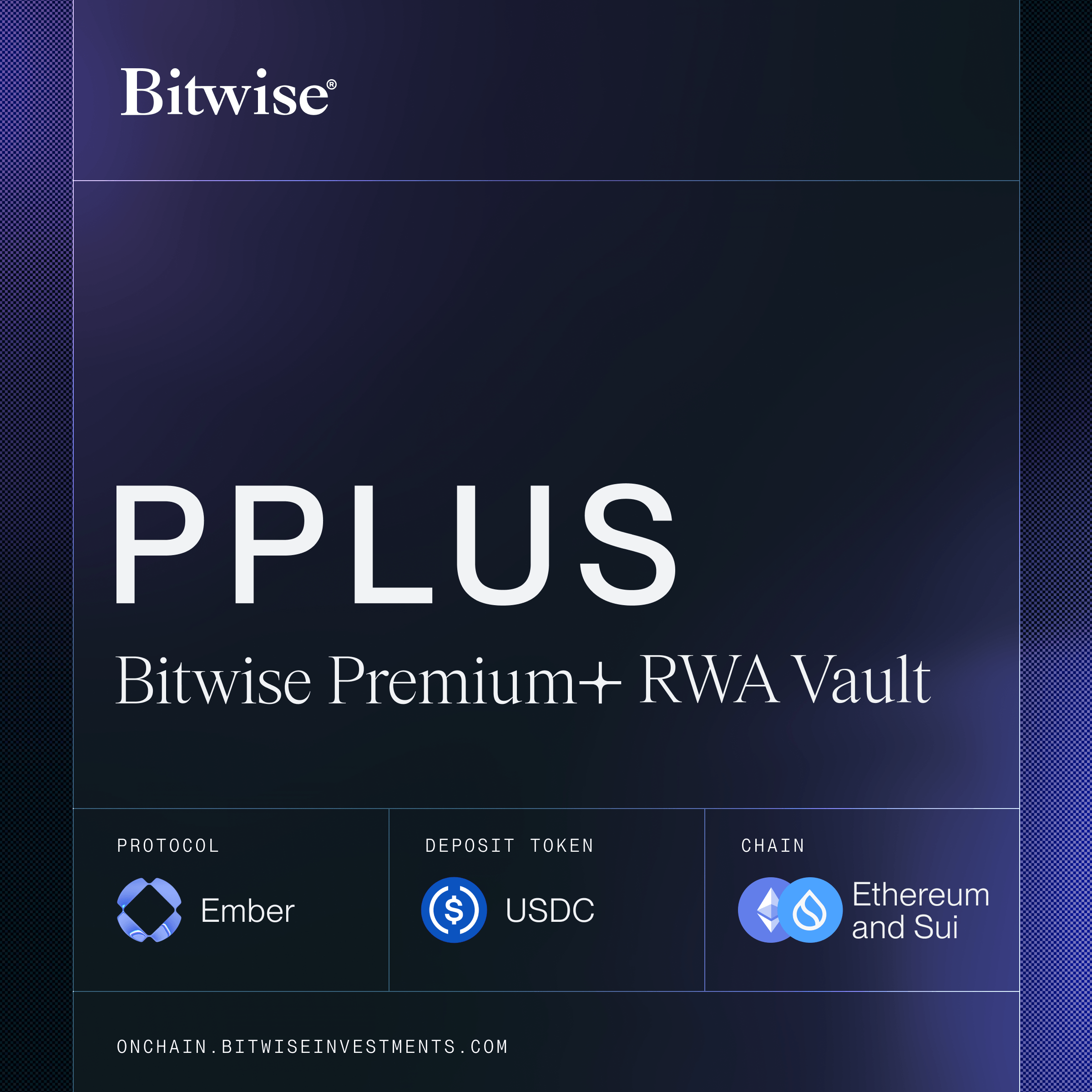 Bitwise launches PPLUS, a leveraged RWA vault on Ember Protocol targeting 10%+ yield for non-U.S. investors
 Plume launches nPRIME vault offering yield from Figure's $30 billion home equity lending market
Sources
20 records from 13 domains
binance.com
rockawayx.com
ethereum.org
eips.ethereum.org
x.com
- x.com· leviathan_news / status / 2068230645667819770 / photo / 1
- x.com· Cointelegraph / status / 2065298148273135795
- x.com· plumenetwork / status / 2066462538695376993
- x.com· solsticefi / status / 2067995186169593962
- x.com· top7ico / status / 2066462387369078816
- x.com· Morpho / status / 2066937641975869666
- x.com· ClementWalter / article / 2067228482082406827
- x.com· ethena / status / 2066470877617926298
cryptopolitan.com
thedefiant.io
forum.morpho.org
nethermind.io
coinbase.com
support.justlend.org
lido.fi
euler.finance
Community notes
Spot something off or out of date? Drop a note. Editors review topic notes daily and roll accepted fixes into the explainer — contributors are recognized in the monthly $SQUID drop.
Loading notes…
Help improve this topic
Have a story or tip about this topic? Submit it. See something missing? Leave a note. Editors review daily; accepted submissions and fixes count toward the monthly $SQUID drop.