
In-depth explainer on Trump-linked World Liberty Financial, covering WLFI governance token design, USD1 stablecoin mechanics, bank charter ambitions, governance battles with Justin Sun, regulatory scrutiny, and how the project fits into the wider stablecoin landscape.
+11 sources across the wider coverage universe
 Trump-backed World Liberty Financial dismisses liquidation fears over its Dolomite borrowing position, insisting its collateralized loans remain safe despite rising scrutiny2026-04
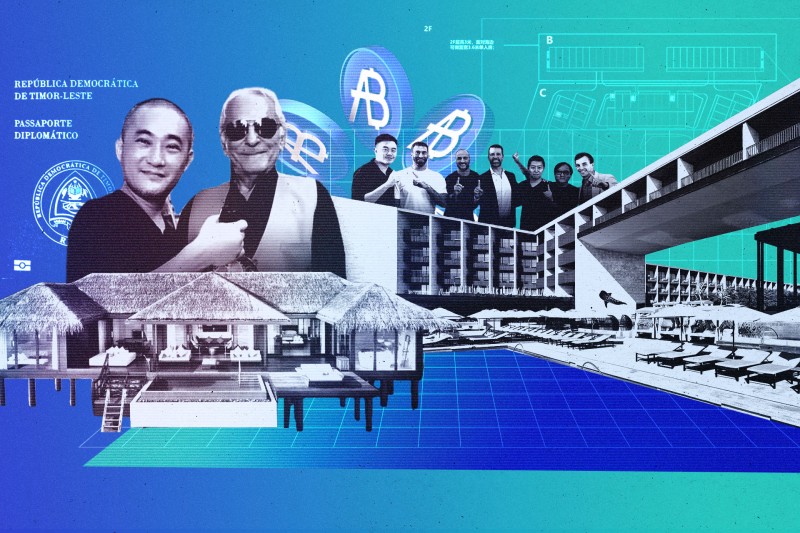 World Liberty Financial partner pursued Timor-Leste crypto resort with U.S.-sanctioned Prince Group affiliates2026-04
 Justin Sun accuses World Liberty Financial of blacklisting his $75M WLFI stake via hidden contract backdoor2026-04
 World Liberty Financial proposes burning up to 10% of insider WLFI allocation in 62.3B token vesting overhaul2026-04
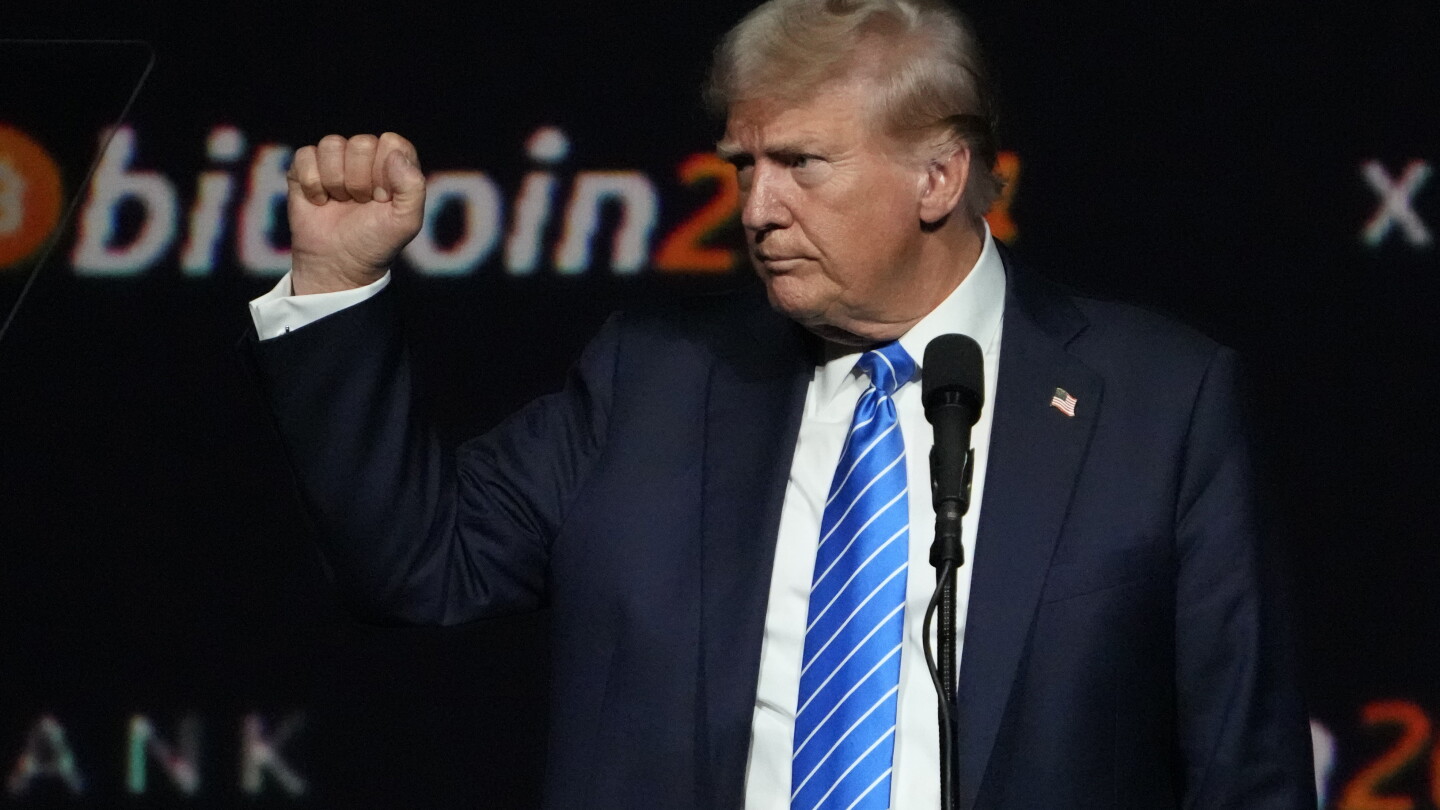 Trump-backed World Liberty Financial nears OCC trust charter to issue USD1 directly2026-06
- Tron founder Justin Sun sues World Liberty Financial over frozen WLFI tokens, alleging loss of governance rights and threat of token burn, as dispute exposes tensions in crypto project control2026-04
A high-profile Trump-linked crypto venture at the intersection of decentralized finance, stablecoins, and U.S. politics, World Liberty Financial combines a governance token (WLFI), a dollar-pegged stablecoin (USD1), and an ambitious bank-charter bid that has made it a focal point for both crypto investors and regulators.
Background and Origins of World Liberty Financial
World Liberty Financial emerged in 2024 as a decentralized finance, or DeFi, protocol developed by a company of the same name, positioning itself as an on-chain financial platform built around a governance token and a U.S. dollar stablecoin. The project was initially launched by entrepreneurs Zachary “Zak” Folkman and Chase Herro, together with Alex and Zach Witkoff, and subsequently became closely intertwined with the Trump family, who are now central to both its branding and control. Public disclosures and investigative reporting show that what began as a crypto startup backed by Trump-aligned investors evolved into a venture in which entities linked to Donald Trump and his family hold a controlling stake and the largest economic claim on revenues. That combination of crypto innovation, political celebrity, and substantial fundraising has turned World Liberty Financial into one of the most scrutinized experiments in tokenized finance.
The core pitch of the project has been to create a “next-generation” financial platform anchored by two digital assets: WLFI, a governance and utility token that confers voting power over the protocol, and USD1, a dollar-pegged stablecoin intended for payments, DeFi yields, and cross-chain liquidity. Unlike purely decentralized experiments, World Liberty Financial has from the outset embraced a hybrid model that blends traditional corporate structures, prospective banking licenses, and centralized control with on-chain governance mechanics. This approach is reflected both in its plan to operate a national trust bank to issue USD1 and in its revenue-sharing arrangements with the Trump family. For crypto market participants, the project thus serves as a test case for how far a politically connected, highly centralized issuer can go while still claiming the mantle of DeFi and open governance.
Financially, the scale of the fundraising has been striking. A Reuters-based analysis cited by lawmakers indicates that World Liberty Financial raised more than 500 million dollars through token sales structured as an exempt securities offering in the United States, marketed primarily to accredited investors. The tokens, sold under the WLFI ticker, were initially non-transferable and framed as governance instruments that entitled holders to vote on protocol revisions rather than trade for speculative gains. Yet the economics of the raise were unusually generous to insiders: reporting indicates that Trump family entities hold a claim on roughly 75 percent of net revenues from WLFI token sales, with an additional cut from overall platform operations. After accounting for co‑founder compensation, one analysis suggested that only about 5 percent of the roughly 550 million dollars raised would remain available to fund development of the actual platform.
The project’s power structure crystallized in early 2024, when fine‑print disclosures on the World Liberty website were updated to show that control had formally shifted to WLF Holdco LLC, an entity in which Trump-affiliated companies reportedly hold approximately 60 percent. At the same time, co‑founders Folkman and Herro were removed as controlling parties and recast as minority owners alongside Trump-linked vehicles such as DT Marks DeFi LLC. This consolidation of control is crucial for understanding subsequent conflicts over governance, token unlocks, and alleged freezing of investor funds, because it underscores the degree to which “World Liberty” is, in practice, governed by a small group closely aligned with the Trump family.
The broader political context has further amplified scrutiny. Donald Trump had already experimented with NFTs and other crypto ventures before World Liberty Financial, and he has increasingly courted the digital-asset industry as part of his wider political platform. In that sense, WLFI and USD1 are not just financial instruments but also symbols in a larger debate about whether political leaders should be able to profit from crypto ventures while in or near public office, and about how regulators should treat projects that straddle the line between private enterprise and political brand-building. This intersection of politics, finance, and technology explains why lawmakers, advocacy groups, and crypto users alike have seized on World Liberty Financial as a bellwether for the future of regulated stablecoins and token governance in the United States.

Trump-backed World Liberty Financial dismisses liquidation fears over its Dolomite borrowing position, insisting its collateralized loans remain safe despite rising scrutiny

$458M in WLFI collateral backing $75M in borrows looks overcollateralized until you check the depth chart — that position is 55% of Dolomite's entire TVL with near-zero secondary liquidity. Any liquidation cascade would vaporize token price before the collateral unwinds, and depositors can't even exit because pool utilization already hit 100%. Corey Caplan co-founded Dolomite and advises WLFI — a related-party transaction that TradFi would never let fly without independent board approval.
Architecture and Business Model
At a high level, World Liberty Financial can be understood as a vertically integrated digital-asset ecosystem built around three pillars: a governance token (WLFI), a fiat-pegged stablecoin (USD1), and a proposed national trust bank designed to hold reserves and provide custodial services. The company’s public materials describe WLFI as the governance and utility token that enables holders to vote on protocol changes and certain economic parameters, including how reserves are managed and how new products are launched. USD1, in turn, is presented as a U.S. dollar-pegged stablecoin issued across multiple blockchains, with the trust company managing the reserves that are meant to back those tokens on a one‑to‑one basis. The national trust bank, if approved by the U.S. Office of the Comptroller of the Currency (OCC), would sit at the center of this system, serving as the legal issuer and redeemer of USD1 while also providing custody for reserve assets and potentially other digital-asset services.
The business model relies heavily on revenue derived from token issuance and related fees. According to reporting highlighted by members of Congress, World Liberty Financial has already generated hundreds of millions of dollars by selling WLFI governance tokens in private rounds, with Trump family entities entitled to roughly three‑quarters of the net revenues from those sales. Additional revenue streams are expected to come from spread and fee income on USD1, including interest on reserve assets, conversion fees, and possibly DeFi-related yield strategies where permitted by regulation. The project’s architecture thus resembles that of other centralized stablecoin issuers, but with the notable twist that governance tokens are used both to legitimize decisions via on-chain votes and to distribute economic upside among early investors and insiders.
Crucially, World Liberty Financial’s design embeds a strong centralization of legal and operational control even as it advertises itself as a DeFi protocol. The WLFI token provides a formal mechanism for community input, yet in practice the Trump family and early insiders hold large allocations and control key corporate entities, giving them outsize influence over governance outcomes and strategic decisions. The proposed WL Trust Company would be a national bank-chartered institution supervised by the OCC, not a DAO-owned smart contract, and it would be responsible for issuing, redeeming, and potentially freezing USD1 tokens in line with compliance obligations. This hybrid of token-based voting and conventional corporate governance is not unique in crypto, but World Liberty’s particular mix—with a politically powerful family at the apex, extensive off‑chain revenue rights, and explicit freeze powers over tokens—makes its governance model unusually sensitive to questions about fairness, transparency, and regulatory integrity.
From a DeFi standpoint, the project aims to leverage USD1 and WLFI to form the backbone of an on-chain financial network that can plug into liquidity pools, lending platforms, and cross-chain bridges. USD1’s multi-chain footprint allows it to function as a settlement and collateral asset on networks ranging from Ethereum and BNB Chain to Tron, Solana, and Aptos, while WLFI is meant to align incentives of governance participants, validators, and early backers. Exchange listings of WLFI and trading pairs such as WLFI/USDT and WLFI/USD1 on platforms like HTX and KuCoin were marketed as the infrastructure that would connect the governance token to broader secondary-market liquidity. In turn, promotional tie‑ins—such as funding UFC fighter bonuses in USD1 at a high-profile event on the White House lawn—have been used to drive brand awareness and push USD1 into the mainstream lexicon of crypto users.
At the same time, the architecture contains mechanisms that have become flashpoints for controversy. Like most centralized stablecoins, USD1 supports address freezing and blacklisting, a tool that can be used for sanctions compliance, law-enforcement requests, or internal risk controls. In the case of World Liberty Financial, that capability has been at the center of a dispute with the HTX exchange, which delisted USD1 after accusing the issuer of freezing exchange-linked addresses in the midst of a governance conflict. Similarly, the WLFI token contract was designed with lock‑up and vesting mechanics that limit transferability of large allocations and enable the issuer to structure multi‑year unlock schedules, including governance proposals that can permanently lock tokens unless holders opt into new terms. These design features, while not inherently unusual in crypto, take on a different resonance when combined with concentrated insider holdings and a highly political brand.
Readers are not clicking World Liberty Financial for DeFi innovation — they are clicking to map the extraction architecture: who gets paid, by how much, and whether the project's stated DeFi mission is cover for direct political monetization of a presidential brand.
The WLFI Governance Token
Design and Purpose
The WLFI token sits at the core of the World Liberty Financial ecosystem as both a governance asset and a utility token conferring certain platform rights. According to exchange disclosures, WLFI allows holders to vote on key protocol decisions such as reserve strategies for USD1, upgrades to smart contracts, and other governance parameters that shape the project’s direction. The token was initially distributed through private sales and strategic allocations to early backers, insiders, and certain institutional investors, and these distributions were structured as non-transferable during the early life of the project to emphasize their governance character and to restrict speculative trading. In theory, this design was meant to align WLFI with a “governance-first” ethos, where tokenholders participate in decision-making rather than treat the asset purely as a speculative instrument.
In practice, WLFI has combined this governance function with more conventional tokenomics. Early purchasers acquired tokens at fixed prices in private rounds—such as 0.015 and 0.05 dollars per token, according to some tokenomics analyses—with the expectation that eventual listing and unlocks would enable them to realize gains on their allocations. The token’s role as a governance instrument has also been intertwined with economic rights, as holders can influence proposals related to token burns, unlock schedules, and other measures that directly affect price and supply. This combination of governance, economic exposure, and staged liquidity is now common in DeFi and layer‑1 ecosystems, but in the World Liberty context it is complicated by the degree of off‑chain control exercised by Trump-linked entities and the contentious nature of key proposals.
Distribution, Listing, and Price Dynamics
WLFI’s distribution began with sizable allocations to project insiders, Trump family-affiliated entities, and early private investors during 2024, as part of a fundraising drive that generated more than half a billion dollars. For much of that period, tokens were non-transferable and functioned primarily as governance claims, with the understanding that a future governance vote could unlock trading for the broader market. That vote eventually took place, and in mid‑2025 the token became transferable following community approval, opening the way for listings on centralized exchanges. Platforms such as HTX and KuCoin announced world‑premiere listings of WLFI, with trading pairs denominated in USDT and in the USD1 stablecoin itself, giving investors their first opportunity to trade the governance token on liquid markets.
As trading commenced, WLFI’s market performance quickly became a subject of debate. Exchange data and press reports indicate that the token has lost a substantial portion of its peak value, falling into the low‑cent range and dropping roughly 80 percent or more over a one‑year period in some analyses. A CBS report, for example, noted that WLFI tokens had declined about 81 percent over twelve months and were trading near six cents, underscoring the gap between early fundraising valuations and subsequent secondary-market pricing. Critics have seized on this performance to argue that the token sales primarily enriched insiders while leaving later-stage investors with steep losses, although project supporters counter that token prices in a volatile crypto market do not necessarily reflect long-term value or the potential of the underlying platform.
Tokenomics and the Multi-Phase Unlock Schedule
Beyond simple price action, WLFI’s tokenomics have been controversial in their own right. World Liberty Financial adopted a multi-phase unlock schedule for early supporters and insiders, combining time-based cliffs with governance-triggered events intended to “mitigate supply shocks.” The first major liquidity event, sometimes referred to as Phase 1, was scheduled for September 2025, when 20 percent of the tokens held by early backers in the 0.015 and 0.05 dollar rounds became transferable. This initial release was framed as a way to give early supporters some liquidity and governance influence while introducing a limited circulating supply to the ecosystem.
Subsequent phases were designed to stretch over several years. For many early supporters, the remaining balance of their allocations entered a vesting pattern that involved an initial 24‑month cliff followed by a 24‑month linear vesting schedule, meaning tokens would gradually unlock on a daily basis over two years after the cliff expired. Under this structure, full vesting for these holders would not conclude until near the end of 2030, ostensibly to prevent large holders from exiting all at once and to stabilize the token’s supply trajectory. Such long-dated vesting schedules are not unheard of in crypto, but they can create tension when market conditions change, especially if investors feel they were not fully informed of the implications or if governance proposals attempt to change the terms midstream.
That tension came to a head with a high-profile governance proposal often described as the “62 billion token unlock” plan. In early 2026, executives at World Liberty Financial proposed restructuring the remaining 80 percent of locked WLFI supply by unlocking roughly 62 billion tokens—valued at about 5 billion dollars at the time—over a new multi‑year schedule. Under the proposal, approximately 45.2 billion WLFI tokens belonging to insiders would be subject to a one‑time 10 percent burn, removing about 4.5 billion tokens from insider holdings permanently as a way to manage inflation and signal long-term alignment. The remaining 90 percent of those insider tokens would then unlock over a three‑year period beginning in 2028, roughly coinciding with the end of Donald Trump’s second presidential term if he remains in office.
Public investors would be treated differently. Around 17 billion WLFI tokens purchased by the public in 2024 and 2025 were slated to unlock over two years, starting in 2028, without being subject to the same 10 percent burn imposed on insiders. However, the proposal contained a contentious clause: tokenholders who did not affirmatively accept the new schedule during a ten‑day “acceptance window” would remain locked indefinitely under the previous terms, with no ability to transfer or sell their WLFI. The proposal further emphasized that tokens belonging to non‑consenting holders “will not be recoverable under any future governance action,” a formulation that critics described as coercive and tantamount to forcing investors into the new deal or face permanent illiquidity.
Investor Revolt and Governance Allegations
The 62 billion token proposal triggered an investor revolt that has since become one of the defining stories around World Liberty Financial. Among the most vocal critics was Justin Sun, the controversial founder of the Tron blockchain and a major investor in WLFI, who denounced the plan as an “absurd governance scam” and urged fellow holders to oppose it. In commentary cited by multiple outlets, Sun and other critics argued that conditioning liquidity on acceptance of revised terms effectively held tokenholders hostage, undermining the notion of fair governance and entrenching insider control over the protocol. One widely circulated analysis framed the arrangement as “World Tyranny, not World Liberty,” accusing the project of packaging what it characterized as a deeply one‑sided governance maneuver in the language of “alignment” and “long‑term commitment.”
At the same time, some investors and analysts tried to interpret the proposal more sympathetically. Supporters of World Liberty argued that the 10 percent insider burn and extended vesting period reflected a genuine effort to limit immediate sell pressure and demonstrate insiders’ willingness to lock up their holdings beyond Trump’s political horizon. They suggested that offering a new liquidity path, even one tied to an acceptance window, could ultimately benefit holders relative to the existing schedule, under which certain tokens might have remained locked until 2030 or beyond. Yet these arguments did little to quell the outrage among large holders like Sun, who perceived the plan as a vehicle for management to extract value and reshape contractual rights after the fact.
This governance conflict intersected with broader market sentiment. Some traders began positioning against WLFI, with commentators on trading-focused channels openly discussing strategies to short the token or to bet on its underperformance relative to larger assets like Bitcoin, Ethereum, or Solana. Others questioned whether WLFI’s governance was meaningfully decentralized at all, given the concentration of voting power in Trump-linked entities and the use of token contract features to enforce lockups and freezes. Taken together, the WLFI saga has become a case study in how the language of decentralized governance can coexist with—and sometimes obscure—highly centralized control structures.
World Liberty Financial partner pursued Timor-Leste crypto resort with U.S.-sanctioned Prince Group affiliates
The USD1 Stablecoin
Design and Multi-Chain Deployment
USD1 is World Liberty Financial’s U.S. dollar-pegged stablecoin, conceived as the transactional and liquidity backbone of the broader ecosystem. It is marketed as maintaining a 1:1 parity with the U.S. dollar, with tokens issued and redeemed by entities affiliated with World Liberty and, prospectively, by a national trust bank that would be chartered and supervised by the OCC. The project’s trust company, identified in regulatory filings as World Liberty Trust Company or WLTC Holdings, has applied for a national trust bank charter specifically to “issue and convert USD1 stablecoins, manage required reserves, and engage in custodial services,” underscoring that USD1 is designed to be a bank‑linked rather than purely algorithmic or over‑collateralized stablecoin.
From a technical standpoint, USD1 is explicitly multi-chain. Support documentation describes it as having launched first on Ethereum and BNB Chain, before expanding to roughly ten networks including Tron, Solana, Aptos, and newer chains. On Solana alone, World Liberty Financial announced that it had minted 100 million USD1 tokens to bootstrap liquidity and support trading pairs across DeFi protocols and centralized exchanges. The stablecoin’s presence across multiple chains allows it to function as a routing asset for cross-chain transfers and a collateral asset in DeFi protocols, while also positioning it to compete with established stablecoins such as USDC and USDT for trading volume and on-chain usage.
USD1’s design incorporates standard centralized-stablecoin capabilities such as address blacklisting and freezing, which allow the issuer to prevent specific accounts from transferring or redeeming tokens under certain conditions. These features are generally justified as necessary for compliance with sanctions, anti-money-laundering requirements, and court orders, but their existence also highlights the centralized nature of control over USD1. As subsequent events have shown, the exercise of these powers—especially when entangled with investor disputes—can have acute reputational and market consequences.
Adoption, Promotions, and Exchange Integration
World Liberty Financial has aggressively promoted USD1 as both a DeFi building block and a marketing vehicle. On the integration side, USD1 has been listed on major exchanges and paired with both WLFI and other cryptocurrencies, enabling users to trade in and out of the World Liberty ecosystem without relying solely on third‑party stablecoins. Exchanges like HTX advertised trading pairs in WLFI/USDT and WLFI/USD1 around the time of the governance token’s listing, signaling their intent to support USD1 alongside more established assets. DeFi platforms on networks where USD1 has been deployed have also begun to incorporate it into liquidity pools and lending markets, though its overall share of stablecoin volume remains small relative to incumbents.
Beyond pure integration, World Liberty has used USD1 in high-visibility promotions aimed at mainstream audiences. One of the most notable was its role as the payout currency for a 250,000 dollar bonus pool for fighters at the UFC Freedom 250 event, staged on the White House lawn during President Trump’s birthday. Fighters who earned bonuses on that card were reportedly compensated in USD1, a move that functioned both as a real-world payment use case and as a branding exercise designed to associate the stablecoin with patriotism, combat sports, and the Trump political persona. Such stunts are consistent with a broader strategy of weaving the stablecoin into cultural events and political symbolism, differentiating it from more neutral brands like USDC.
The project has also minted significant amounts of USD1 to support DeFi growth. Recent reporting has highlighted new issuances of roughly 25 million USD1 in support of yield strategies and liquidity provisioning, as well as substantial mints accompanying each expansion to a new chain. These mints are generally framed as providing “liquidity expansion,” seeding pools so that other users can trade into USD1 or use it as collateral, and thereby kickstarting network effects. The ultimate success of this strategy depends on whether users trust USD1’s backing and governance enough to hold it over alternatives—a question that has been complicated by controversy over freezing and investor disputes.
HTX Delisting and Freeze Controversies
The most prominent controversy around USD1 to date centers on the decision by HTX, an exchange historically associated with Justin Sun, to delist the stablecoin after alleging that World Liberty Financial had frozen exchange-linked addresses. According to reporting, HTX announced it was “kicking out” USD1 after WLFI froze certain addresses on-chain, effectively immobilizing funds controlled by the exchange. HTX framed the move as an overreach that undermined trust in the stablecoin and highlighted the dangers of centralized issuers unilaterally freezing assets in the context of corporate or political disputes.
World Liberty Financial’s detailed rationale has not been fully disclosed in public filings, but the freeze occurred against the backdrop of escalating conflict with Justin Sun, who had accused the project of blocking his ability to sell WLFI tokens and had sued for fraud in a separate legal action. In its own lawsuit, World Liberty alleged that Sun had engaged in a “public smear campaign” designed to damage the business and that he had bet against WLFI while using straw purchasers to conceal his accumulation of tokens. Within that context, the freezing of addresses associated with HTX and the subsequent delisting of USD1 have been widely interpreted as part of a broader power struggle between the Trump-linked project and the Tron founder, rather than purely a matter of neutral compliance risk management.
For market participants, the HTX episode illustrates both the necessity and the peril of freeze mechanisms in centralized stablecoins. While almost all major fiat-backed stablecoins reserve the right to freeze or blacklist addresses, in practice those tools are usually invoked for clearly articulated reasons, such as sanctions compliance or law-enforcement requests, and are typically accompanied by public explanations. When freezes appear to overlap with corporate governance disputes or investor conflicts, they raise sharper concerns about arbitrary or politicized use of issuer power. This is particularly salient for USD1 given its close association with a politically influential family and the ongoing regulatory and legal scrutiny surrounding its broader ecosystem.
USD1 Versus USDC and Other Stablecoins
To understand USD1’s place in the stablecoin landscape, it is useful to compare it to more established competitors such as USDC. While detailed public information about USD1’s reserve composition and transparency practices is still evolving, some basic contrasts can be drawn in terms of issuer structure, regulatory posture, and governance.
| Feature | USD1 (World Liberty Financial) | USDC (Circle) |
|---|---|---|
| Issuer | World Liberty Financial affiliates; proposed OCC trust bank | Circle Internet Financial (and partners) |
| Peg | U.S. dollar 1:1 target | U.S. dollar 1:1 target |
| Reserve manager | Proposed World Liberty Trust Company | Regulated financial institutions, custodians |
| Networks | Ethereum, BNB, Tron, Solana, Aptos, others | Multiple major L1s and L2s |
| Governance token link | Yes, via WLFI governance token | No native governance token |
| Freeze/blacklist powers | Yes; exercised in HTX dispute | Yes; used mainly for sanctions/compliance |
| Political affiliation | Closely tied to Trump family | None publicly declared |
While USDC has positioned itself as a relatively neutral, institutionally oriented stablecoin with extensive disclosures and regulatory partnerships, USD1 is deeply entangled with a specific political brand and with WLFI token governance. That entanglement creates novel risks as well as opportunities. On the one hand, the Trump connection may help USD1 gain traction among certain communities and provide political backing in its quest for a federal trust charter. On the other hand, it amplifies concerns that regulatory decisions, freeze actions, or governance proposals could be shaped by political considerations rather than purely financial or compliance criteria. For users and DeFi builders deciding whether to integrate USD1, these structural differences are likely to remain central to risk assessments.
- 01Trump family revenue extraction↗
Headlines exposing the 75% profit share, $400M fee structure, and DT Marks DEFI LLC's 22.5B token allocation drew readers seeking the actual financial architecture behind the political brand.
- 02Justin Sun / TRX treasury ties↗
The project's largest early whale was Justin Sun, whose $30M buy and subsequent address blacklisting created a high-drama narrative about insider politics inside an already politically charged project.
- 03USD1 stablecoin launch and expansion↗
A Trump-branded dollar-pegged stablecoin deploying on Ethereum, BNB Chain, and Solana represented a direct intersection of political power and monetary infrastructure that readers found uniquely alarming.
- 04Token blacklisting and censorship power↗
World Liberty Financial freezing Justin Sun's $540M in tokens — and the Polygon dev's public accusation of a 'scam of all scams' after his funds were blocked — exposed that the project holds and has exercised unilateral censorship over holder balances.
- 05Aave governance partnership
Readers tracking DeFi governance closely engaged with WLFI's Aave v3 deployment proposal, which passed with 8B votes and granted WLFI a 20% fee share, raising questions about protocol capture by a politically connected entity.
- 06EIP-7702 exploit and wallet security
Ethereum's Pectra upgrade surfaced a specific vulnerability in WLFI's architecture that SlowMist warned could allow total wallet drainage via malicious delegate contracts, giving a technical security hook to an otherwise political story.
Legal, Regulatory, and Political Scrutiny
OCC Trust Charter and Banking Ambitions
A defining feature of World Liberty Financial’s regulatory strategy is its pursuit of a national trust bank charter from the OCC for its affiliated trust company. Filings indicate that WLTC Holdings, the parent of World Liberty Trust Company, seeks approval to operate a national trust bank that would issue and convert USD1 stablecoins, hold and manage the required reserves, and provide custodial services for digital assets. If granted, this charter would place the institution under federal banking supervision, potentially giving USD1 a regulatory status closer to that of bank-issued deposits than to purely offshore stablecoins.
Crypto industry observers have noted that a successful OCC charter could help legitimize USD1 in the eyes of institutional users and regulators, positioning World Liberty Financial as a flagship for a “regulated stablecoin” model tied to U.S. banking law. At the same time, the application has sparked controversy because of the Trump family’s deep involvement in the project and the risk of perceived political influence over bank chartering decisions. Advocacy organizations such as the National Community Reinvestment Coalition (NCRC) have submitted detailed comment letters urging the OCC to scrutinize the charter carefully, raising concerns about consumer protection, financial stability, and potential disparities in how politically connected firms are treated compared with others.
Recent coverage has suggested that the OCC is nearing a decision on the World Liberty trust charter, prompting heated exchanges on Capitol Hill. In one widely reported hearing, Comptroller Jonathan Gould was pressed by Democratic lawmakers on whether he was acting as a “Trump fixer” in relation to the application, a characterization he firmly rejected, stating that the only political pressure he had felt was from those attempting to influence him against the project. Although these remarks come from political testimony rather than formal rulemaking, they underscore the fraught atmosphere surrounding the charter request and the broader debate over how stablecoin issuers should be supervised.
SEC Oversight and Securities-Law Questions
Parallel to the OCC process, World Liberty Financial has drawn attention from securities regulators and lawmakers focused on investor protection. Representative Maxine Waters, the ranking member of the House Financial Services Committee, and Senator Elizabeth Warren, the ranking member of the Senate Banking Committee, sent a joint letter to the SEC’s acting chair raising concerns about the project. In that letter, they requested that the SEC preserve all records and communications regarding World Liberty Financial, citing a Reuters investigation that documented Trump family members’ direct affiliation with the company and their claim to 75 percent of net revenues from token sales. The lawmakers questioned whether these tokens might constitute unregistered securities and asked whether Trump’s financial ties could influence SEC decision-making.
The underlying securities-law questions are complex. WLFI tokens were sold in private placements as governance instruments, but their marketing and economic structure—large raises from investors, expectation of future trading and appreciation, and concentration of revenue rights in a centralized issuer—closely resemble features that regulators have previously identified as hallmarks of securities offerings. Some legal academics, including a Duke University law lecturer featured in media coverage, have argued that WLFI fits comfortably within the SEC’s Howey framework for investment contracts, strengthening the case for treating it as a security. If the SEC were to adopt this view, World Liberty Financial could face enforcement risks around unregistered offerings, disclosure obligations, and secondary-market trading.
For USD1, the analysis is more nuanced. Fiat-backed stablecoins are sometimes argued to fall outside traditional securities classifications when structured as bank deposits or stored-value instruments, especially if the issuer is subject to banking oversight. However, when a stablecoin is closely intertwined with a governance token that has been used to raise capital and distribute profits, regulators may examine whether the combined arrangement constitutes an investment scheme. In that sense, the fate of WLFI and USD1 could influence how U.S. regulators frame the boundary between stablecoins, securities, and banking products, with implications that extend far beyond this single project.
Consumer Advocates and Civil-Society Concerns
Beyond formal regulation, World Liberty Financial has attracted scrutiny from consumer advocacy groups concerned about financial inclusion, systemic risk, and the integrity of the regulatory process. The NCRC’s comment letter on the WL Trust Company charter raised several issues, including questions about the adequacy of proposed reserves for USD1, the potential for rapid growth in a politically connected stablecoin to amplify systemic risk, and the possibility that the project’s design could exacerbate disparities in access to safe financial products. The letter also emphasized the need for robust community reinvestment obligations and safeguards against discriminatory practices, reflecting broader concerns that stablecoin issuers should not be allowed to bypass responsibilities imposed on traditional banks.
More broadly, civil-society critics have questioned whether it is appropriate for a sitting or recently serving president and his family to control a major financial institution and a global stablecoin. They argue that this raises conflicts of interest, particularly if regulators responsible for overseeing the institution are themselves appointed or influenced by the political figure in question. Supporters of World Liberty respond that there is nothing inherently improper about political figures engaging in private business, provided that regulatory processes remain independent and that all legal requirements are met. Nonetheless, the perception of political entanglement complicates public discourse around the project and heightens calls for transparency.
Legal Battles with Justin Sun
The legal conflict between World Liberty Financial and Justin Sun has become an emblem of the project’s governance turmoil. In April, Sun filed a lawsuit accusing the startup of fraud, alleging that he had been illegally prevented from selling WLFI tokens worth up to one billion dollars and that his governance rights had been effectively neutralized by freezes and contractual maneuvers. He claimed that the company had blocked his tokens in ways not disclosed in initial documentation, undermining his ability to manage his investment and participate fully in governance decisions.
World Liberty Financial responded with its own lawsuit in a Florida state court, accusing Sun of defamation and alleging that he had orchestrated a “public smear campaign” to damage the project. The company’s complaint asserted that Sun had bet against WLFI’s price, built short positions, and engaged in “straw purchases” using third parties to conceal his identity as he accumulated tokens. According to the filing, these actions were part of a deliberate strategy to profit from a decline in WLFI’s value while simultaneously undermining investor confidence through negative public statements.
These dueling lawsuits have injected additional uncertainty into the project’s trajectory. On a practical level, they raise questions about the enforceability of WLFI’s token contracts, the scope of freeze powers, and the reliability of governance processes when large stakeholders are locked in litigation. On a reputational level, they reinforce perceptions that the ecosystem is dominated by high-stakes power plays among wealthy insiders, rather than by the kind of transparent, community-driven governance that many DeFi projects aspire to. For everyday tokenholders and potential USD1 users, the Sun–World Liberty dispute serves as a reminder that centralized features embedded in token contracts can become flashpoints in investor conflicts, with real consequences for liquidity and trust.
Justin Sun accuses World Liberty Financial of blacklisting his $75M WLFI stake via hidden contract backdoor
- TRON founder Justin Sun alleges World Liberty Financial embedded a hidden blacklisting function in the WLFI token smart contract that lets the team unilaterally freeze, restrict, or confiscate any holder's tokens without notice or recourse - Sun, who made the largest private investment at $75M, says his wallet was blacklisted and claims investors were never disclosed the capability before purchasing tokens - He accuses WLF of rigging governance votes by withholding information and extracting fees without proper community authorization - Sun demands immediate unlocking of blacklisted tokens, full transparency, and governance conducted with integrity, calling the backdoor "a trap door marketed as an open door"
Assessing Risks, Opportunities, and Ecosystem Impact
Centralization, Control, and Governance Risk
One of the most important analytical lenses for World Liberty Financial is the balance—or imbalance—between decentralization and centralized control. On paper, WLFI is a governance token and the platform is styled as a DeFi protocol, but the underlying corporate structure and token distribution patterns reveal a high degree of concentration. Entities linked to the Trump family hold controlling stakes in the corporate parent, WLF Holdco LLC, and enjoy rights to 75 percent of net revenues from token sales, with additional revenue claims on operating income. Large insider allocations of WLFI further strengthen their influence over governance votes, particularly when participation by smaller holders is limited.
The design of the token unlock mechanisms and freeze powers compounds this centralization risk. Proposals that can indefinitely lock non-consenting tokenholders out of liquidity, or burn insider tokens in exchange for extended control, raise questions about the extent to which governance outcomes are determined by genuine consensus versus by coercive contractual levers. The ability to freeze token balances or addresses—whether WLFI or USD1—adds another layer of centralization, especially when freezes occur in contexts that appear to be intra-investor disputes rather than purely regulatory obligations. For users accustomed to genuinely permissionless DeFi systems, these features may appear closer to a centrally managed digital bank with a token wrapper than to a decentralized protocol.
From a risk perspective, this centralization can cut both ways. Proponents argue that having clearly identifiable, well-resourced sponsors with political clout can provide stability, regulatory access, and a clear chain of accountability that purely decentralized projects lack. They contend that an OCC-supervised trust bank issuing a stablecoin, combined with transparent tokenomics and governance, could offer a more robust alternative to offshore or opaque issuers. Critics counter that when control is concentrated in a politically powerful family, the risks of governance abuse, self-dealing, and regulatory capture outweigh any stability benefits. For now, World Liberty Financial remains a live experiment in whether such a centralized governance model can command durable trust in the crypto ecosystem.
Stablecoin Design Trade-Offs
USD1’s design highlights many of the core trade-offs facing fiat-backed stablecoins in an era of tighter regulation and greater scrutiny. On one hand, seeking a federal trust charter and framing USD1 as a fully reserved, bank-supervised token aligns with policymakers’ calls for safer, more transparent stablecoins. A chartered institution holding USD1 reserves and subject to OCC examination could, in principle, offer higher assurance to users about solvency, asset quality, and operational resilience than an unregulated offshore issuer.
On the other hand, centralization of control—especially when combined with aggressive freeze powers and politicized branding—introduces distinct risks. If users worry that their USD1 balances might be frozen not just for clear-cut compliance reasons but also in the context of investor disputes or political pressure, they may be reluctant to hold large balances or to integrate USD1 deeply into DeFi protocols. The HTX delisting episode underscores how quickly exchange support can evaporate when an issuer’s freeze decisions are viewed as arbitrary or self-interested. For DeFi builders, integrating a stablecoin that may be subject to sudden freezes or governance upheavals can pose smart-contract and liquidity risks, as pools may become imbalanced or collateral suddenly impaired.
Comparisons with USDC and other “blue-chip” stablecoins are inevitable. Circle’s USDC, for example, has spent years cultivating a reputation for regulatory compliance, transparency, and operational neutrality, even while retaining freeze powers for sanctions and law enforcement. USD1 will need to demonstrate equally robust transparency and a clear, principled framework for exercising its centralized powers if it is to win similar trust. At the same time, its explicit political branding and revenue-sharing arrangements with the Trump family may make such neutrality difficult to sustain in practice.
Market Adoption Prospects
Despite controversies, World Liberty Financial continues to attract attention as a potential major player in crypto markets, particularly if its OCC charter is approved and if USD1 can secure additional exchange and DeFi integrations. Multi-chain deployment gives USD1 a technical foundation for growth, and marketing tie-ins like the UFC bonus program help raise awareness beyond the crypto-native audience. In an environment where regulators are increasingly pushing for stablecoins to be issued by well-regulated entities, a successful bank charter could also give USD1 a competitive edge with institutions that are wary of less regulated alternatives.
However, market adoption is not determined by regulatory status alone. WLFI’s price performance and governance controversies have already eroded confidence among some investors, and the public dispute with Justin Sun has highlighted the risks of concentrated insider control. HTX’s delisting of USD1 demonstrates that even large exchanges aligned with key stakeholders may pull support when issuer actions are perceived as hostile or unpredictable. For USD1 to gain meaningful market share, it will need not only regulatory approval but also a track record of consistent, transparent decision-making that reassures exchanges, DeFi protocols, and end users.
Moreover, the politicization of the brand is a double-edged sword. While Trump’s involvement may attract a base of supporters who see USD1 and WLFI as aligned with their political identity, it may repel others who prefer apolitical financial infrastructure or who worry about potential backlash if political fortunes change. This polarization could limit the project’s adoption in jurisdictions or institutions that seek to avoid overtly political associations in core payment and settlement systems. In this respect, World Liberty Financial is testing whether a politically branded stablecoin can achieve broad, cross-partisan adoption in a global, permissionless financial network.
Implications for Crypto Regulation and Ethics
Beyond its immediate ecosystem effects, World Liberty Financial is shaping debates about crypto regulation, ethics, and the appropriate boundaries between public office and private profit. Lawmakers like Warren and Waters have framed the project as emblematic of potential conflicts of interest when powerful political figures oversee agencies that regulate industries in which they and their families have substantial financial stakes. Their push for SEC scrutiny of World Liberty has been coupled with calls for stronger ethics rules, transparency requirements, and recusal standards for officials interacting with crypto ventures.
Within the crypto industry, the Sun–World Liberty conflict and the controversy over token unlocks have prompted reflection on best practices for governance and investor relations. Some participants argue that the backlash against what critics have called an “absurd governance scam” may ultimately clarify expectations for fair unlock mechanisms, transparent vesting, and the limits of contract-based coercion in token projects. Legal experts and policy advocates have suggested that contentious episodes like this one, while damaging in the short term, may “clear the decks” for more serious conversations about crypto ethics, including rules around political involvement in token projects and standards for governance disclosures.
In that sense, World Liberty Financial is functioning as a stress test for multiple layers of the crypto system: technological (multi-chain stablecoin infrastructure), financial (large-scale token fundraising and revenue-sharing), legal (securities classification and bank chartering), and ethical (political conflicts of interest and governance fairness). How regulators, courts, and markets respond will influence not just the fate of WLFI and USD1, but also the contours of the emerging regulatory regime for stablecoins and tokenized governance.
WLFI project announced with Trump endorsement
Token economics Gold Paper published; DT Marks DEFI LLC 75% revenue share disclosed
Trump's inauguration day: $5B WLFI raise claimed; Justin Sun's $30M buy disclosed
$550M public token sale completed across 85,000+ KYC-verified participants
USD1 stablecoin launched on Ethereum and BNB Chain
WLFI blacklists Justin Sun's address, freezing $540M in tokens
- 2025-05exploit
EIP-7702 Pectra upgrade exposes delegate-contract wallet drain vector; SlowMist issues warning
- 2025-06milestone
WLFI announces Maldives resort loan tokenization, pivoting toward real-estate-backed assets
Outlook
World Liberty Financial sits at a volatile intersection of DeFi innovation, dollar stablecoins, and U.S. politics, making its trajectory unusually consequential for the broader crypto ecosystem. Its governance token, WLFI, illustrates both the promise and pitfalls of tokenized control, with ambitious tokenomics colliding with investor expectations and legal disputes. Its stablecoin, USD1, aims to leverage a prospective OCC trust charter and multi-chain deployment to compete with established players like USDC, even as controversies over freezes and political branding raise questions about trust and neutrality.
In the near to medium term, several milestones will shape the project’s outlook: the OCC’s decision on the World Liberty Trust charter; the resolution of SEC inquiries and potential enforcement actions; the outcome of litigation with Justin Sun; and the implementation (or abandonment) of the contested token unlock proposals. If World Liberty can secure a bank charter, stabilize its governance, and demonstrate a principled approach to freeze powers and investor relations, it could emerge as a powerful, if controversial, hub in a more regulated stablecoin landscape. If, instead, legal setbacks, regulatory pushback, and market distrust deepen, WLFI and USD1 may come to be remembered more as cautionary tales than as enduring pillars of the crypto economy.
For crypto users, builders, and institutional investors, the prudent stance is to treat World Liberty Financial as a high‑impact, high‑uncertainty experiment. Its successes and failures will inform not only investment decisions around WLFI and USD1, but also broader judgments about how much centralization, political entanglement, and regulatory engineering the crypto ecosystem is willing to accept in pursuit of mainstream adoption.
Latest World Liberty Financial news
Trump-backed World Liberty Financial dismisses liquidation fears over its Dolomite borrowing position, insisting its collateralized loans remain safe despite rising scrutinyWorld Liberty Financial partner pursued Timor-Leste crypto resort with U.S.-sanctioned Prince Group affiliatesJustin Sun accuses World Liberty Financial of blacklisting his $75M WLFI stake via hidden contract backdoorWorld Liberty Financial proposes burning up to 10% of insider WLFI allocation in 62.3B token vesting overhaul Justin Sun wins court ruling to keep lawsuit public against World Liberty Financial.Trump-backed World Liberty Financial nears OCC trust charter to issue USD1 directly
Sources
18 records from 15 domains
en.wikipedia.org
gemini.com
bitcoinfoundation.org
ncrc.org
youtube.com
bitget.com
cbsnews.com
democrats-financialservices.house.gov
eco.com
dlnews.com
facebook.com
businesstimes.com.sg
tradingview.com
coingape.com
economictimes.indiatimes.com
Community notes
Spot something off or out of date? Drop a note. Editors review topic notes daily and roll accepted fixes into the explainer — contributors are recognized in the monthly $SQUID drop.
Loading notes…
Help improve this topic
Have a story or tip about this topic? Submit it. See something missing? Leave a note. Editors review daily; accepted submissions and fixes count toward the monthly $SQUID drop.