
Deep explainer on USD1, the Trump‑aligned stablecoin from World Liberty Financial, covering reserves, real‑time proof‑of‑reserves, exchange and DeFi integrations, governance, risks, and how it stacks up against USDT and USDC.
- x.com7
- decrypt.co3
- businesswire.com1
- medium.com1
- governance.worldlibertyfinancial.com1
- vote.worldlibertyfinancial.com1
- chainwire.org1
+10 sources across the wider coverage universe
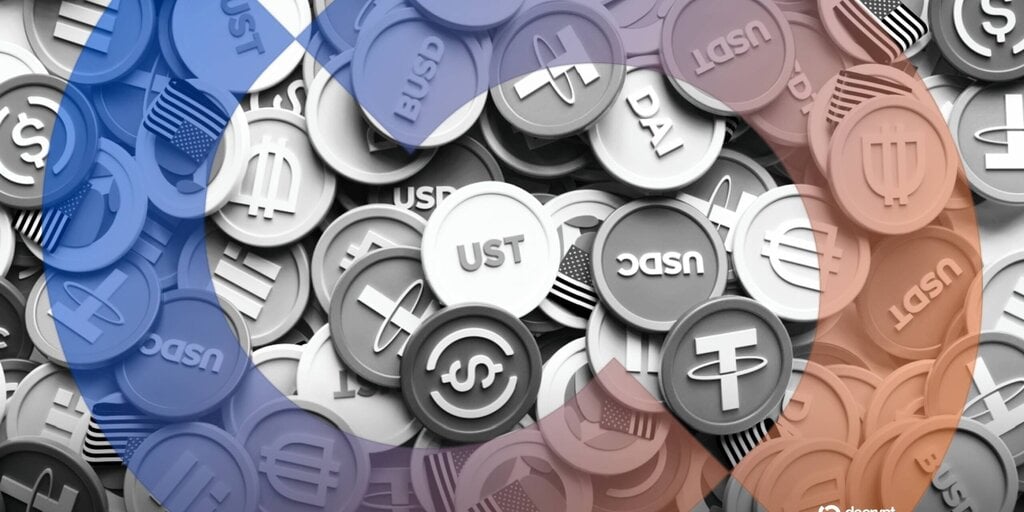 Stablecoin supply climbed past $314B in 2025, but usage told a different story as Tether led transaction activity, followed by RLUSD and USDC, while the Trump-backed USD1 surged into the top tier months after launch.2025-12
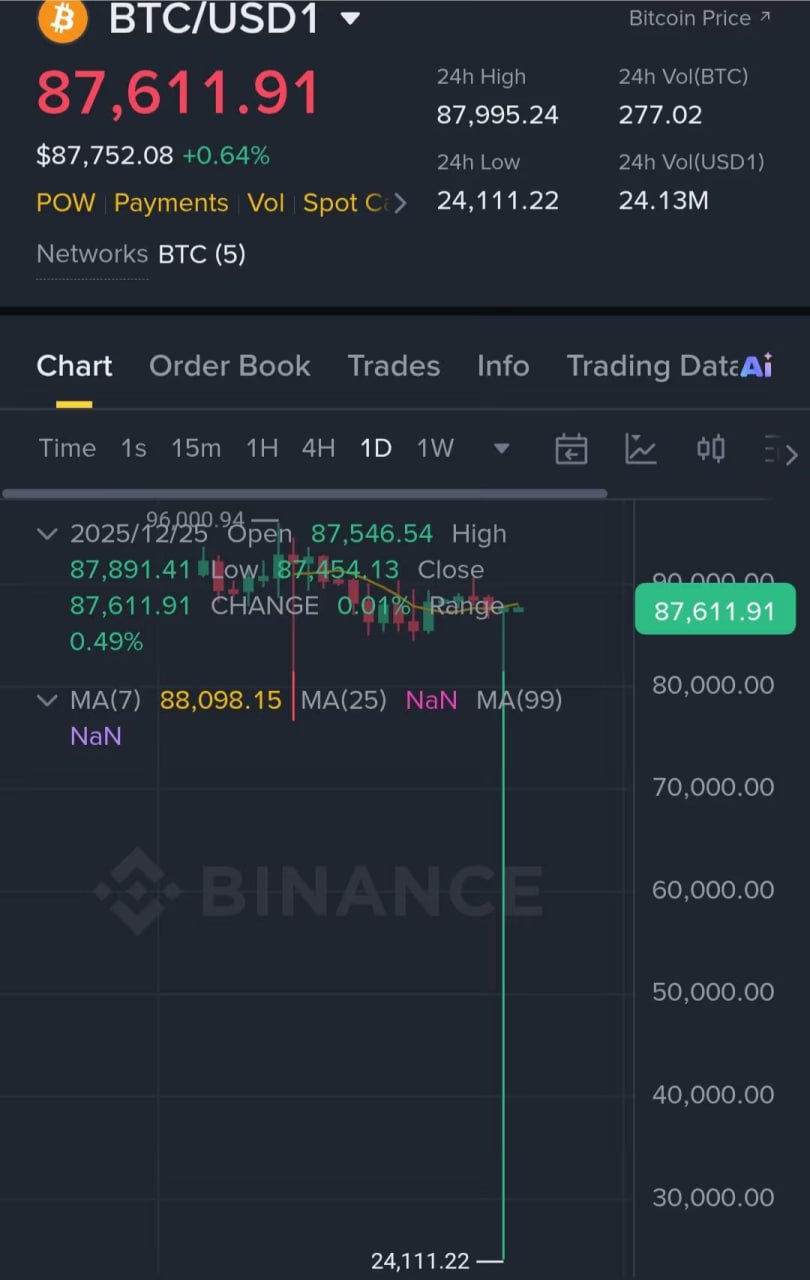 Bitcoin briefly trades at $24,000 on Binance’s USD1 pair in flash move. Such sudden price changes are often due to thin liquidity and can be exacerbated by fewer active traders during quieter hours.2025-12
 World Liberty Financial announces that WLTC Holdings LLC has submitted an application for a National Trust Bank Charter to issue and custody USD1 stablecoins.2026-01
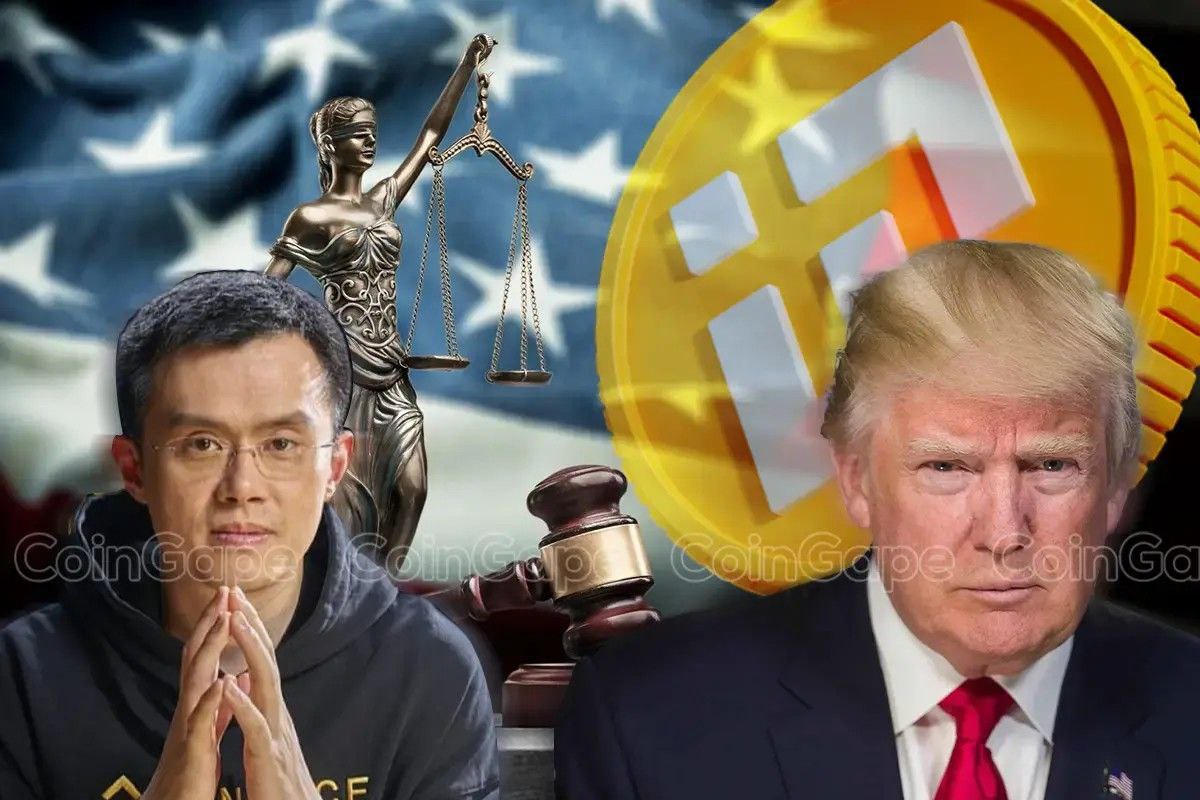 World Liberty Financial’s USD1 stablecoin is now integrated into Binance, trading against BNB, Ethereum, and Solana. Expansion follows founder CZ Zhao’s October pardon and boosts user access without trading fees.2025-12
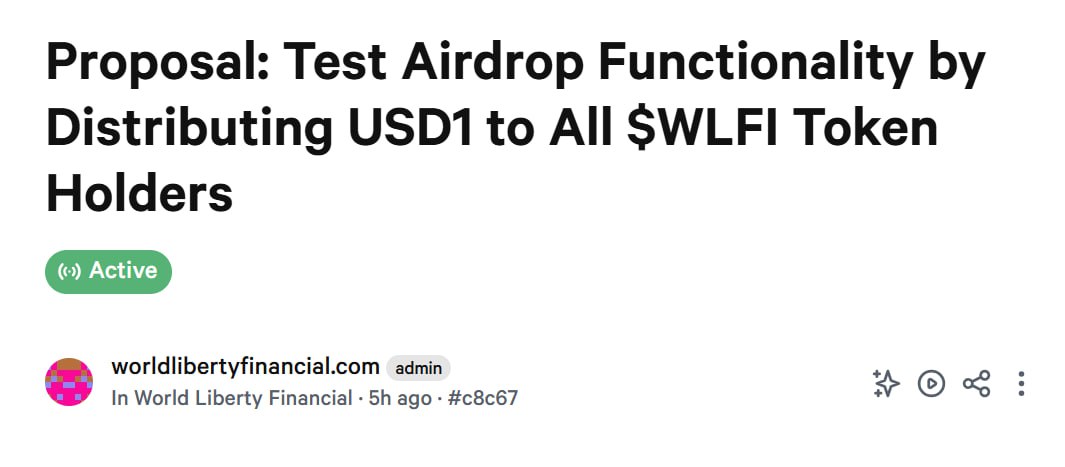 A new Snapshot vote is live to airdrop $USD1 to all eligible $WLFI holders2025-05
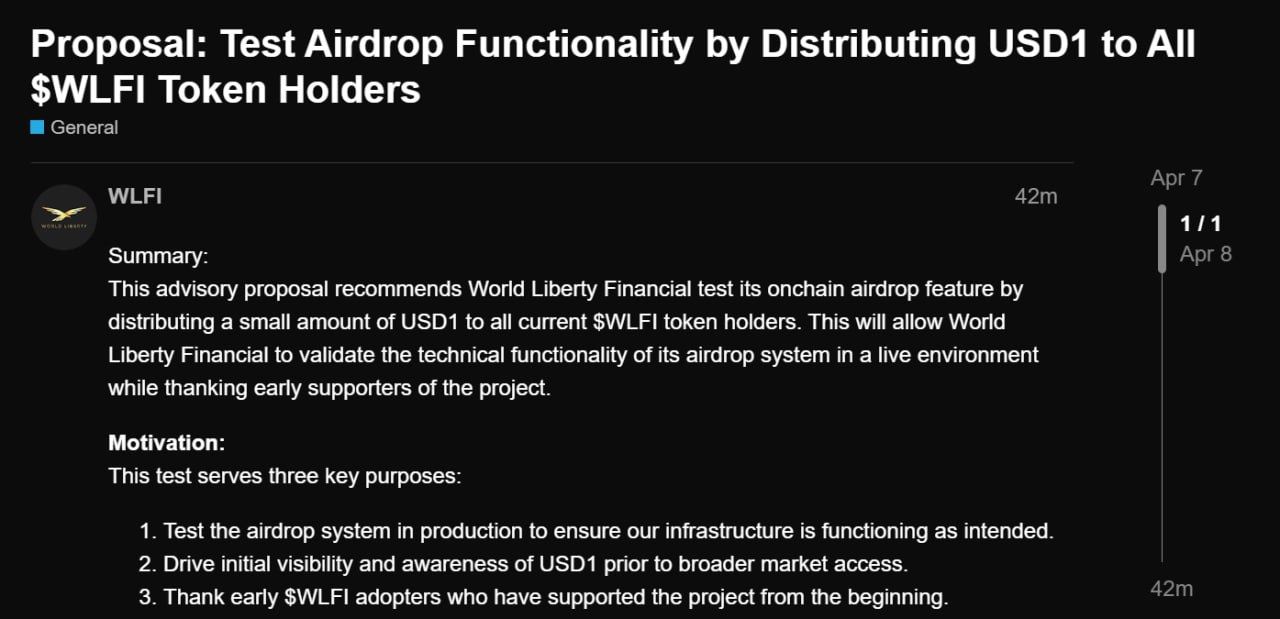 A new proposal live on the World Liberty Financial governance forum - test airdrop functionality by distributing USD1 to all $WLFI token holders2025-04
USD1 Stablecoin Explained: Design, Governance, Adoption, and Risk
USD1 is a U.S. dollar–pegged stablecoin issued by World Liberty Financial (WLFI), a Trump‑aligned DeFi project that aims to combine regulated dollar reserves, real‑time proof‑of‑reserves, and multi‑chain interoperability into an “institutional‑ready” on‑chain dollar. Within months of launch, USD1 secured major centralized exchange listings, growing liquidity campaigns, and a rapidly expanding DeFi footprint, positioning it as one of the most closely watched new entrants in the global stablecoin market.
Stablecoins, Politics, and the Context for USD1
Understanding USD1 begins with the broader evolution of stablecoins as a core infrastructure layer of crypto markets. Stablecoins are digital assets designed to maintain a stable value, most commonly pegged to the U.S. dollar, and are typically backed by some combination of cash, cash equivalents, and short‑term government securities. They emerged to solve a practical problem: traders and protocols needed a way to move dollar‑like value on‑chain without the volatility of assets such as bitcoin or ether, and without depending on traditional banking rails that are slower and more restricted. Over the past decade, tokens such as Tether’s USDT and Circle’s USDC have grown into multi‑billion‑dollar instruments, used for trading, payments, and remittances across centralized and decentralized platforms.
Stablecoins have also become central to the macro structure of crypto adoption. A 2025 report from TRM Labs found that stablecoins accounted for roughly 30% of all on‑chain crypto transaction volume, with over USD 4 trillion in stablecoin transactions recorded between January and July 2025 alone, an 83% increase over the same period in the previous year. This scale means that design choices around reserves, transparency, governance, and regulation have systemic implications, both for crypto markets and for broader financial stability debates. Stablecoins are no longer peripheral experiments; they are now a primary interface between legacy financial systems and public blockchains.
Against this backdrop, political branding and regulatory alignment have begun to differentiate new stablecoin entrants. Earlier stablecoins largely presented themselves as neutral financial utilities, but newer projects are increasingly tied to specific corporate, regional, or ideological identities. USD1 stands out in this landscape because its issuer, World Liberty Financial, explicitly emphasizes inspiration from and alignment with former U.S. president Donald J. Trump, positioning the token not just as a technical product but as part of a broader political and cultural project. Kaiko, a crypto market data provider, has described USD1 as a DeFi initiative launched by the Trump family, noting that on‑chain activity surged following major exchange listings.
At the same time, the regulatory environment around stablecoins has tightened. Policymakers and advocacy groups have pressed for clearer rules governing reserve quality, disclosures, redemption rights, and systemic risk, especially for dollar‑pegged tokens that effectively compete with bank deposits. This has created space for stablecoins that highlight strong U.S. regulatory ties, transparent reserve structures, and institutional‑grade custodial practices. USD1 attempts to position itself precisely in this niche, combining political branding, explicit U.S. regulatory ambitions, and a technology stack designed to appeal to both DeFi users and traditional financial institutions.
These intersecting trends—mass stablecoin adoption, politicization of financial infrastructure, and rising regulatory scrutiny—provide the frame through which USD1 should be analyzed. It is not merely another dollar token: it is an attempt to build a Trump‑branded, institution‑friendly, multi‑chain stablecoin that competes directly with incumbents like USDT and USDC while promising a different mix of governance and transparency features.

Stablecoin supply climbed past $314B in 2025, but usage told a different story as Tether led transaction activity, followed by RLUSD and USDC, while the Trump-backed USD1 surged into the top tier months after launch.

Tether (USDT) $187.033b USD Coin (USDC) $75.3b Ethena USDe (USDe) $6.293b Sky Dollar (USDS) $5.858b Dai (DAI) $4.493b PayPal USD (PYUSD) $3.6b World Liberty Financial (USD1) $3.36b
What USD1 Is: Issuer, Peg, and Design Goals
USD1 is a U.S. dollar stablecoin developed by World Liberty Financial Inc. (WLFI), a financial technology company and DeFi governance platform associated with the Trump political brand. The token is designed to maintain a one‑to‑one peg with the U.S. dollar, such that one unit of USD1 should be redeemable for one U.S. dollar, and its reserves are held in a mixture of short‑term U.S. government treasuries, dollar deposits, and other cash equivalents. Coinbase, which lists USD1 under the name “World Liberty Financial USD,” describes it as a stablecoin explicitly engineered to preserve parity with the U.S. dollar, reinforcing its positioning as a fully collateralized asset rather than an algorithmic or partially backed design.
WLFI first announced USD1 as an “institutional‑ready” stablecoin, emphasizing reserve quality, regular audits, and regulatory alignment as core design pillars. In its launch communications, the company stressed that USD1 would be 100% backed by a portfolio of short‑term U.S. treasuries and cash‑equivalent assets, with the backing audited on a recurring basis by an independent accounting firm. This puts USD1 squarely in the “fiat‑backed” stablecoin category and aligns it conceptually with other reserve‑backed tokens that prioritize conservative asset composition and transparency over more experimental mechanisms such as algorithmic stabilization or crypto‑collateral alone.
From the outset, multi‑chain deployment was part of USD1’s strategy. WLFI announced that USD1 would be minted initially on Ethereum and Binance Smart Chain (now commonly referred to as BNB Chain), with plans to expand to additional networks. Subsequent integrations have seen USD1 deployed on other ecosystems such as Solana, where social media coverage highlighted the launch of a Trump‑backed USD1 token distribution and its alignment with rapid‑throughput DeFi applications. This multi‑chain focus is not incidental; it reflects a view that a modern stablecoin must be present across the major smart‑contract environments to function as a universal dollar rail.
The basic economic objective of USD1 is straightforward: maintain \(P_{USD1} \approx 1 \, \text{USD}\) at all times, where each token is backed by an equivalent claim on underlying reserve assets. Maintaining this peg depends not only on reserve adequacy but also on market liquidity, redemption mechanisms, and user confidence. WLFI’s early messaging, along with exchange listings on platforms like Coinbase and Binance, sought to establish that confidence by signaling both regulatory seriousness and market support. The Trump branding adds another dimension: for supporters, it may create a form of political affinity value, while for skeptics, it may introduce perceived reputational or policy risk.
In sum, USD1 can be understood as a fiat‑backed, multi‑chain U.S. dollar stablecoin issued by a politically branded DeFi organization that aims to compete with incumbent stablecoins by pairing conservative reserves and real‑time transparency with aggressive ecosystem growth and high‑profile partnerships.
Readers click USD1 for its governance power plays — airdrops, treasury mints, and charter filings — not its peg mechanics, revealing that the real story is whether Trump-aligned political capital can manufacture stablecoin market share fast enough to displace Tether before regulatory scrutiny catches up.
How USD1 Works Under the Hood
Reserve Composition, Custody, and Redemption
The core of any fiat‑backed stablecoin is its reserve stack and redemption process. WLFI has stated that USD1 is fully collateralized by short‑term U.S. government treasuries, U.S. dollar deposits, and other cash equivalents, with the goal that total reserves equal or exceed the total USD1 in circulation at all times. These are the same types of instruments commonly used by other major stablecoins, largely because they are considered highly liquid and low‑risk, and because short‑term treasuries generate predictable interest income without exposing the issuer to excessive duration risk.
Custody is provided by specialized third parties rather than self‑custody by WLFI itself. Documentation from Eco, which integrates USD1 into its own products, notes that USD1 reserves are custodied by BitGo, a prominent regulated digital asset custodian. The reserves are held in money‑market‑fund structures that invest in conservative assets, essentially wrapping traditional cash‑management products in a form that can be referenced by on‑chain accounting and proof‑of‑reserves systems. The use of a professional custodian is intended to reduce operational risk and to align USD1 with institutional expectations for segregation of assets and oversight.
Redemption mechanics are critical to maintaining the peg. While detailed, end‑user redemption terms are often communicated via WLFI’s own channels rather than third‑party documentation, the stated design is that authorized users can redeem USD1 for U.S. dollars at a one‑to‑one rate, subject to standard compliance checks. In practice, this normally means that large holders, market makers, and institutional clients can arbitrage any persistent de‑pegging by buying discounted USD1 on exchanges and redeeming it for dollars at par, or vice versa, thereby pulling the price back toward \(1 \, \text{USD}\). For retail users, redemption typically occurs indirectly by trading USD1 against other assets on exchanges such as Coinbase, Binance, or decentralized venues.
One subtle but important aspect of this model is that the yield generated by the reserve portfolio—primarily interest on treasuries and money‑market funds—generally accrues to the issuer rather than being passed directly to token holders. This structure is typical of centralized stablecoins and has been a major source of revenue for issuers like Tether and Circle. While WLFI has not made exhaustive public disclosures about how it allocates reserve income, its positioning of USD1 as an “institutional‑ready” stablecoin backed by treasuries and cash equivalents implies a similar economic pattern: the reserves earn traditional fixed‑income yield, and those earnings can be used to support operations, ecosystem incentives, and possibly future governance decisions around WLFI’s token economy.
Multi‑Chain Architecture and Chainlink CCIP
Beyond reserve backing, USD1’s distinct technical feature is its multi‑chain architecture, which uses Chainlink’s Cross‑Chain Interoperability Protocol (CCIP) to bridge the token across more than ten blockchain networks. Eco’s integration notes describe USD1 as being “Chainlink CCIP‑enabled,” allowing the stablecoin to move between chains in a standardized and verifiable way. Instead of issuing completely separate versions of USD1 on each chain with ad hoc bridges, CCIP facilitates cross‑chain transfers guided by a decentralized oracle network and message‑passing system, aiming to reduce the security risks historically associated with custom cross‑chain bridges.
The basic idea is that a canonical representation of USD1 and its reserves exists at the issuance layer, while CCIP manages the minting and burning of USD1 tokens on various chains as they are moved by users. When a user sends USD1 from one chain to another, CCIP coordinates the burning of USD1 on the source chain and the minting of an equivalent amount on the destination chain, all while maintaining consistency with total supply and reported reserves. This architecture is designed to preserve the invariant that total USD1 tokens across all supported chains never exceed the underlying treasury and cash‑equivalent backing.
Multi‑chain deployment has strategic consequences. It means USD1 can serve as a base asset for DeFi applications on Ethereum, BNB Chain, Solana, and other networks, making it more attractive to protocols and users that operate across ecosystems. WLFI has explicitly positioned USD1 as a kind of “universal dollar rail” for the next era of digital finance, and integrating CCIP is a technical expression of that ambition. However, this also introduces complexity and new failure modes: cross‑chain messaging, oracle security, and chain‑specific liquidity conditions all become relevant to the asset’s stability and user experience.
Real‑Time Proof of Reserves
Transparency has become a major differentiator among stablecoins, and USD1 attempts to distinguish itself through real‑time, on‑chain proof‑of‑reserves (PoR). Public statements from WLFI leadership announced that “live, on‑chain, verifiable” proof of reserves for USD1 had gone live, emphasizing that, unlike monthly or delayed attestations, this system is designed to continuously reflect the state of reserves relative to circulating supply. The core claim is that users can verify reserve sufficiency at any time, rather than relying solely on periodic reports or “trust us” assurances.
In practice, real‑time PoR involves linking on‑chain data about USD1 issuance with off‑chain data about reserve holdings through oracles and third‑party attestations. Reserve custodians such as BitGo, or the money‑market vehicles in which assets are held, periodically publish data that can be read and transmitted by oracles into smart contracts, where it can be compared to total token supply. As long as the reported reserve value remains at or above the circulating supply of USD1, the peg is considered fully collateralized. This is conceptually similar to PoR frameworks used elsewhere in crypto, including for centralized exchange balances, but applied specifically to stablecoin reserves.
The advantage of such a system, if implemented correctly, is that it can reduce information asymmetry between issuer and market. Users and protocols integrating USD1 can monitor reserve sufficiency in near real time, and any significant discrepancy would be immediately observable, limiting the window in which a shortfall could go unnoticed. Critics caution, however, that PoR is only as trustworthy as its data sources and that, like all oracle‑based systems, it introduces dependencies on external reporting and potential attack surfaces. Even so, in a market where questions about opaque reserves have dogged major issuers, real‑time PoR is a meaningful signaling mechanism.
Chain Footprint and Expansion Strategy
USD1’s chain footprint has expanded in phases. WLFI’s initial plan was to mint USD1 on Ethereum and BNB Chain, reflecting the dominance of those networks for DeFi and exchange connectivity. Over time, the project extended issuance and liquidity to additional networks, including Solana, where social media coverage highlighted an initial 100 million USD1 token launch and the token’s role in Solana‑based DeFi and trading pairs. Eco’s documentation and WLFI communications indicate that, through Chainlink CCIP, USD1 now operates across more than ten chains, giving it a wide footprint that includes both general‑purpose smart‑contract platforms and application‑specific ecosystems.
This expansion is closely tied to the project’s exchange and protocol integration strategy. Being present on multiple chains makes it easier for decentralized exchanges, lending platforms, liquid‑staking protocols, and real‑world‑asset tokenization projects to add USD1 as a base asset or collateral, since they can plug into whichever chain they already support. For users, it reduces the need to off‑ramp to fiat or to use other stablecoins when moving between ecosystems. At the same time, it forces WLFI to manage cross‑chain liquidity, ensure consistent user experience, and coordinate with a diverse set of infrastructure partners ranging from bridges and oracles to wallets and analytics tools.
Overall, USD1’s technical design combines a conservative reserve model with an aggressive multi‑chain deployment strategy and real‑time transparency tooling. This combination is intended to appeal both to institutional actors who demand robust collateralization and to DeFi users who value composability, chain optionality, and on‑chain verifiability.
- 01WLFI airdrop governance votes↗
Three separate headline events — proposal, vote, and pass — each drew triple-digit clicks, showing readers tracked this governance action as a live drama with real token stakes.
- 02Displacing Tether and USDC↗
The explicit claim that USD1 could become the top stablecoin by 2028 framed a concrete competitive threat, pulling in readers who track stablecoin market structure.
- 03DeFi vault collateral risks↗
Lista DAO's public warning about soaring borrowing rates and zero repayments in the USD1 Re7Labs vault surfaced real on-chain stress that countered the bullish launch narrative.
- 04BNB Chain and Binance expansion↗
Deployment on BSC followed by Binance listing with zero-fee pairs signaled a deliberate capture of Binance's liquidity network, which readers recognized as structurally significant.
- 05Flash liquidity crash on USD1 pair↗
Bitcoin briefly printing $24,000 on the Binance USD1/BTC pair exposed thin order book depth and drew readers concerned about whether a politically connected stablecoin could handle real market stress.
- 06Trust bank charter and custody infrastructure↗
The WLTC Holdings LLC national trust bank application signaled an attempt to legitimize USD1 issuance at the regulatory layer, attracting readers tracking the institutional credibility gambit.
World Liberty Financial, WLFI Governance, and Institutional Ambitions
WLFI’s Vision and Political Branding
World Liberty Financial positions itself as a DeFi protocol and governance platform seeking to “democratize access to decentralized finance” through user‑friendly tools and transparent infrastructure. According to company statements and partner announcements, WLFI aims to give individuals more control over their financial lives by integrating stablecoins, lending, governance, and real‑world‑asset tokenization into a single ecosystem. What differentiates WLFI from many other DeFi platforms is its explicit alignment with Donald J. Trump and his political movement, which it leverages for brand recognition, community mobilization, and media attention.
Press releases describe WLFI as “inspired by President Donald J. Trump,” while coverage by analytics firms like Kaiko refers to USD1 as a stablecoin project launched by the Trump family. This political branding functions as both a marketing channel and a polarizing factor. On one hand, it creates a built‑in audience among Trump supporters who may be inclined to adopt “Trump‑backed” financial products, sometimes colloquially referred to as “Trump Bucks.” On the other, it may deter users and institutions that prefer politically neutral infrastructure or are concerned about regulatory responses to politically branded financial instruments. As such, the Trump connection is central to USD1’s identity but also introduces unique reputational and policy considerations.
WLFI Token, Treasury, and Governance Mechanics
At the heart of WLFI’s ecosystem is its own governance token, WLFI, which is used for voting, staking, and incentive alignment. WLFI’s governance portal, which lists on‑chain proposals and voting outcomes, shows that token holders have participated in decisions ranging from early‑supporter and founder/team token unlock schedules to the design of a WLFI governance staking system. This indicates a typical DAO‑like structure in which token‑weighted voting influences protocol parameters, incentive programs, and treasury management. Although USD1 itself is a centralized stablecoin with off‑chain reserves, its strategic direction and ecosystem incentives are thus at least partially influenced by WLFI token governance.
USD1 is deeply integrated into WLFI’s treasury strategy. Public communications and governance discussions have referenced large mints of USD1 into the WLFI treasury, for example a 205 million USD1 allocation designed to support ecosystem growth, liquidity incentives, and campaign funding. From an economic perspective, this structure means that WLFI is not only the issuer of the stablecoin but also a major holder, using USD1 as a programmable balance sheet asset. In addition, governance proposals have considered and in some cases approved airdrops of USD1 to WLFI holders, using the stablecoin as a tool for community distribution and engagement.
These moves create a feedback loop between governance and stablecoin adoption. On one side, WLFI’s DAO can direct USD1 flows toward particular exchanges, DeFi protocols, or user segments, effectively subsidizing liquidity or rewarding participation. On the other, the growth of USD1 as a widely used stablecoin increases WLFI’s economic footprint and the value of its treasury, potentially enhancing the influence and stakes of WLFI governance token holders. This structure gives the USD1 ecosystem a distinctly political‑economic character: which communities receive USD1 distributions, and under what terms, becomes a governance question, not just a technical one.
WLTC Trust Bank Charter and the TradFi Bridge
One of the most significant institutional moves around USD1 is WLTC Holdings LLC’s application for a U.S. national trust bank charter. A public comment letter from the National Community Reinvestment Coalition (NCRC) describes WLTC’s proposal as seeking authority to issue and convert USD1 stablecoins, manage the reserves backing those tokens, and provide custodial services and related trust‑bank activities. In other words, WLTC aims to function as the regulated banking entity that underpins USD1, anchoring the stablecoin in the traditional U.S. banking system rather than operating purely as an offshore or lightly regulated issuer.
The NCRC’s commentary underscores both the potential significance and the risks of such a move. The organization notes that a national trust bank charter would give WLTC access to the U.S. financial system and regulatory infrastructure, and it stresses the need for robust consumer protection, anti‑money‑laundering controls, and community reinvestment commitments. While the letter is not an endorsement, it signals that civil society groups and regulators view USD1’s banking aspirations as materially important, with implications for financial inclusion, systemic risk, and fairness. If approved, the charter could place USD1 under a more stringent regulatory framework than many existing stablecoins, but it would also tie its fate more closely to U.S. regulatory and political dynamics.
Parallel to the charter effort, WLFI has pursued partnerships that position USD1 at the intersection of DeFi and traditional finance. For instance, WLFI announced plans to tokenize loan revenue interests in Trump International Hotel & Resort Maldives in collaboration with Securitize, a regulated platform for tokenizing real‑world assets, and DarGlobal, a publicly listed luxury real‑estate developer. While this initiative is not strictly part of USD1’s core mechanics, it illustrates WLFI’s broader thesis: that tokenized real‑world assets, financed and settled in stablecoins like USD1, can create new channels for investment and yield, all under a regulatory umbrella that includes both securities law compliance and bank‑style oversight.
Taken together, WLFI’s governance design and institutional initiatives frame USD1 not simply as a trading instrument but as the monetary layer of a politically branded, regulation‑seeking DeFi superstructure. Its success or failure will depend not only on technical execution but also on the interplay between DAO decision‑making, bank charter outcomes, and the willingness of regulators and institutions to embrace a Trump‑aligned stablecoin as legitimate financial infrastructure.

Bitcoin briefly trades at $24,000 on Binance’s USD1 pair in flash move. Such sudden price changes are often due to thin liquidity and can be exacerbated by fewer active traders during quieter hours.
"A single large market sell, a liquidation, or an automated trade routed through the pair can sweep bids quickly, forcing the price to print far below the true market level until buy orders reappear. Such dislocations can also be triggered by temporary pricing issues tied to spread widening, faulty quotes from a market maker, or trading bots reacting to abnormal prints."
Market Adoption: Listings, Liquidity, and Use Cases
Centralized Exchange Listings: Binance, Coinbase, and Gate
One of the clearest markers of USD1’s rapid rise has been its listing and integration on major centralized exchanges. Coinbase lists World Liberty Financial USD (USD1) as a tradeable dollar‑pegged asset, noting that it is designed to maintain a one‑to‑one peg with the U.S. dollar and reporting a circulating supply in the multi‑billion‑dollar range. For many retail users in the United States and other regulated jurisdictions, Coinbase listing functions as a reputational signal and a practical access point, since it allows users to acquire, trade, and custody USD1 within a familiar interface.
Binance, the world’s largest cryptocurrency exchange by trading volume, has gone even further in integrating USD1. In a major announcement, WLFI and Binance disclosed that users could trade BNB/USD1, ETH/USD1, and SOL/USD1 spot pairs, effectively putting USD1 at the center of some of Binance’s highest‑volume markets. At the same time, Binance announced that it would convert all collateral assets backing its Binance‑Peg BUSD (B‑Token) into USD1 on a one‑to‑one basis, signaling a broader transition away from its previous in‑house stablecoin toward USD1 as a core collateral asset. This conversion not only deepened USD1’s integration into Binance’s infrastructure but also aligned it with the exchange’s efforts to rebuild and expand stablecoin offerings following earlier regulatory pressure on BUSD.
Binance’s integration has extended beyond spot markets. Promotional campaigns have encouraged users to trade derivatives using USD1 as margin, often with discounted fees or other incentives, framing USD1 as a cost‑efficient settlement currency for perpetual futures and other leveraged products. WLFI also allocated substantial WLFI token rewards to Binance campaigns centered on holding or using USD1, underscoring its strategy of using governance‑token emissions to bootstrap stablecoin adoption. These campaigns have been framed as limited‑time initiatives but illustrate the project’s willingness to aggressively subsidize liquidity and user acquisition.
Other exchanges, including Gate, have also embraced USD1. Public commentary by WLFI executives has highlighted milestones such as USD1 becoming the largest stablecoin by liquidity on Gate and the introduction of zero‑fee trading for selected USD1 spot pairs, which are designed to draw both retail traders and market makers into the ecosystem. The combination of top‑tier exchange listings and fee incentives has contributed to rapid growth in on‑chain activity, with Kaiko reporting a surge in USD1 transaction volume and address activity following the Binance integration.
Institutional Access and FalconX
USD1’s institutional strategy is anchored by partnerships with trading and custody platforms that serve professional investors. FalconX, a major institutional digital‑asset platform, announced support for USD1 across its trading, credit, and custody offerings, allowing clients to trade USD1, hold it in secure custody, and use it as collateral for certain derivatives and financing transactions. According to FalconX, this integration provides “deep and reliable liquidity” in USD1 at competitive pricing, effectively normalizing the stablecoin as a tool for trading desks, hedge funds, and corporates that already rely on FalconX for access to digital assets.
WLFI has supplemented this by investing directly in USD1’s institutional infrastructure. Public coverage has pointed to an investment on the order of tens of millions of dollars by Trump‑aligned entities into USD1 liquidity and tooling via FalconX, intended to ensure that when institutions want to move in and out of USD1, the required liquidity and operational support are available. Although the precise return profile of such investments is not fully transparent, the strategic logic is clear: at the institutional level, liquidity begets more liquidity, and early commitments can lock in relationships that later become difficult to dislodge.
By embedding USD1 into institutional workflows, WLFI hopes to position the stablecoin as not just a retail trading tool but a professional settlement asset. In this sense, the partnership with FalconX functions as a counterpart to listings on Binance and Coinbase, together covering much of the retail‑institutional spectrum. For institutions with mandates around transparency and regulatory alignment, USD1’s reserve structure, real‑time PoR, and potential bank‑charter backing are key selling points. At the same time, the Trump association may be a double‑edged sword, appealing to some institutional clients while making others cautious due to reputational or policy concerns.
DeFi Integrations: Lista, Dolomite, StakeStone, and Beyond
USD1’s role in decentralized finance has expanded quickly through integrations with lending protocols, decentralized exchanges, and cross‑chain liquidity platforms. Lista DAO, a DeFi protocol focused on lending and yield strategies, has incorporated USD1 into its vaults and liquidity pools, offering users opportunities to earn yield on USD1 positions and to use USD1 as collateral for borrowing. At one point, Lista reported over one hundred million dollars in total value locked (TVL) in pools and strategies involving USD1, highlighting its emerging role as a base asset within that ecosystem.
The relationship with Lista has also drawn attention to the risks of leverage built on top of USD1. In governance communications, Lista DAO warned about mounting risks in certain third‑party vaults, including a USD1‑denominated vault managed by Re7Labs, where soaring borrowing rates and lack of repayments raised concerns about collateral safety. These warnings underscore that while USD1 itself may be fully reserved, its use within DeFi introduces additional layers of smart‑contract, counterparty, and leverage risk that end users must assess separately from the stablecoin’s own design.
Other protocols have adopted USD1 as a primary liquidity or quote asset. Dolomite, a DeFi trading and lending platform, has shifted key Ethereum liquidity pools to pair its native DOLO token against USD1, signaling confidence that USD1 will maintain liquidity and stability over the long term. On BNB Chain, WLFI has publicly supported projects that choose USD1 as their primary trading pair, including purchasing tokens from memecoin projects that adopt USD1 in their core liquidity pools. This form of ecosystem support, where WLFI effectively rewards projects for standardizing on USD1 pairs, is designed to create a network effect in which more tokens denominate liquidity and quotes in USD1, reinforcing its position as a unit of account.
Cross‑chain liquidity providers such as StakeStone have also integrated USD1, building infrastructure that allows users to move USD1 liquidity between chains and to allocate it into yield‑bearing strategies linked to tokenized real‑world assets. These initiatives are aligned with WLFI’s broader RWA tokenization ambitions and show how USD1 can serve as a settlement and collateral asset in emerging cross‑chain financial primitives. By enabling seamless fund transfers, yield opportunities, and flexible access to on‑chain and off‑chain assets, such integrations aim to make USD1 a foundational asset in the multi‑chain DeFi economy.
Mainstream Marketing: UFC Sponsorship and Public Campaigns
Beyond the crypto‑native sphere, WLFI has used mainstream marketing to push USD1 into public consciousness. A BusinessWire release announced that World Liberty Financial would join as an official partner for UFC Freedom 250, a high‑profile mixed‑martial‑arts event staged on the grounds of the White House. As part of that sponsorship, WLFI contributed a substantial sum—reported as hundreds of thousands of dollars—in USD1 to a “fighter of the night” bonus pool, effectively using the stablecoin as a promotional and prize‑distribution currency.
This kind of sponsorship serves multiple purposes. It showcases a real‑world use case for USD1 as a payment and reward mechanism, puts the token in front of a mainstream sports audience, and associates the brand with themes of patriotism and “freedom” that are central to WLFI’s political marketing. At the same time, it invites scrutiny from regulators and commentators who are wary of financial products that blur the lines between political campaigns, commercial ventures, and consumer finance.
Taken together, USD1’s adoption narrative is one of rapid, multi‑channel growth: major centralized exchange listings, institutional integration via FalconX, deepening DeFi use cases in protocols like Lista and Dolomite, and high‑visibility marketing via platforms like the UFC. This growth has propelled USD1 into the upper tier of stablecoins by volume and liquidity within a relatively short period, even as its long‑term durability and risk profile remain under active debate.
World Liberty Financial announces USD1 stablecoin on ETH and BSC
Binance lists USD1 with major trading pairs and converts BUSD collateral
USD1 circulating supply crosses $1B; FalconX receives $10M WLFI investment for infrastructure
Lista DAO flags collateral risks in Re7Labs USD1 Vault over soaring borrowing rates
WLFI governance proposal to airdrop USD1 to all eligible WLFI holders passes Snapshot vote
WLTC Holdings LLC submits National Trust Bank Charter application to issue and custody USD1
Bitcoin flash-crashes to $24,000 on Binance USD1/BTC pair due to thin liquidity
Risk Profile: Liquidity, Counterparty, Governance, and Political Exposure
Peg and Liquidity Risk: Lessons from the BTC/USD1 Flash Crash
Despite robust reserve designs, stablecoins are always exposed to market structure risks, particularly around liquidity. A striking example involving USD1 occurred when Bitcoin briefly traded down to roughly 24,000 dollars on Binance’s BTC/USD1 pair, even as prices on other exchanges and pairs remained near 87,000 to 88,000 dollars. This event, analyzed as a “flash crash,” was confined to the BTC/USD1 order book on Binance and did not reflect a broader collapse in Bitcoin’s market value.
Investigations into the episode concluded that the crash was driven by low liquidity and order‑book imbalances on the BTC/USD1 pair, rather than by fundamental problems with Bitcoin or USD1. When liquidity is shallow, a small number of large market orders can dramatically move the price, particularly during off‑peak trading hours when fewer participants are active. As buy orders are consumed by aggressive sells, the price can cascade downward until resting orders are exhausted, after which new bids or arbitrageurs quickly move the price back toward the broader market level.
In this case, Bitcoin’s price on BTC/USD1 rebounded from around 24,000 dollars back to the prevailing market range within seconds, illustrating the transitory nature of such dislocations. Regulators and investigators did not find evidence that Binance or major market makers such as Wintermute had deliberately engineered the crash, nor that it reflected systemic manipulation. Nevertheless, the incident underscores a crucial point for users: the apparent price of assets on less liquid pairs, including those denominated in newer stablecoins, can be highly unstable and may not reflect broader market reality.
For USD1, the flash crash was not a de‑pegging event in the conventional sense—there was no sustained divergence of USD1 from one dollar—but it demonstrated that liquidity conditions around USD1 pairs can create unusual trading dynamics, especially in the early phases of adoption. It highlights the importance of robust market‑making, deep order books, and cross‑venue arbitrage in ensuring that USD1‑denominated pairs behave predictably, particularly when used as margin or reference prices in leveraged products.
Counterparty, Reserve, and Regulatory Risk
At the core of USD1’s risk profile lie the same questions that surround all fiat‑backed stablecoins: Who holds the reserves, what are they invested in, and how are they regulated and audited? USD1’s reserves are held by custodians such as BitGo in money‑market‑fund structures that invest in short‑term U.S. treasuries, dollar deposits, and cash equivalents. While these are considered low‑risk assets by traditional standards, they are not entirely without risk: money‑market funds can, in extreme circumstances, “break the buck,” and concentrated exposure to short‑term treasuries introduces some sensitivity to interest‑rate and liquidity conditions in U.S. sovereign‑debt markets.
The trust framework around USD1 is still evolving. WLTC Holdings’ application for a national trust bank charter is an attempt to formalize and regulate the relationship between reserves, issuance, and custodial obligations under U.S. banking law. If approved, this would place USD1’s core issuing entity under direct federal oversight, with associated requirements for capital, liquidity, compliance, and risk management. However, until such a charter is granted and its terms clarified, USD1’s legal status remains closer to that of other private stablecoins operating under a mosaic of money‑transmitter and trust‑company licenses. The transition path from this regime to a national trust bank framework is uncertain and may be influenced by political dynamics, especially given WLFI’s overt alignment with a polarizing political figure.
There is also the question of redemption and legal claims. While WLFI has stated that USD1 is redeemable one‑to‑one for U.S. dollars and fully backed by reserves, the precise contractual rights of token holders, especially retail users, depend on the terms and conditions of WLFI, WLTC, and any intermediary platforms. In many stablecoin arrangements, only certain categories of users (for example, verified institutional clients) can redeem directly with the issuer, while others must rely on secondary markets. This structure can introduce basis risk during stress events, when the stablecoin trades at a discount or premium to one dollar in open markets even if the issuer remains solvent on paper.
Real‑time proof‑of‑reserves is a mitigating factor but not a cure‑all. While continuous on‑chain reporting can reveal whether reserves nominally match circulating supply, it cannot fully account for legal risks, operational failures at custodians, or sudden regulatory interventions that freeze or reclassify reserves. Nor can it protect users from blacklisting or freezes at the token level, should WLFI or its banking partners be compelled to block transactions for legal or compliance reasons. These are structural risks inherent to centralized, fiat‑backed stablecoins and apply to USD1 no less than to USDT or USDC.
Governance Centralization and DeFi‑Layer Risks
Another dimension of risk arises from WLFI’s governance structure and its use of USD1 within DeFi. WLFI’s governance token concentration, treasury holdings, and control over key parameters such as minting policies, airdrop rules, and liquidity campaigns give a relatively small group of actors substantial influence over USD1’s trajectory. While community voting and public governance forums add a layer of decentralization, real‑world control often rests with core teams, board members, and associated entities, especially when it comes to reserve management, regulatory negotiations, and major institutional partnerships.
This concentration can be a double‑edged sword. On one hand, it allows WLFI to move quickly—pursuing large exchange integrations, negotiating with regulators, and mobilizing marketing campaigns without the friction of fully decentralized decision‑making. On the other, it means that changes in leadership, internal conflicts, or shifts in political strategy could significantly alter USD1’s policies, including fee structures, blacklist criteria, and ecosystem support priorities. For users and protocols building atop USD1, this introduces governance risk that must be weighed alongside purely technical factors.
The DeFi layer adds further complexity. As seen in Lista DAO’s warnings about USD1‑denominated vaults, protocols that use USD1 as collateral or leverage it in yield strategies can expose users to leverage and counterparty risk that is only indirectly related to USD1’s own solvency. If a protocol managing USD1 collateral fails, is exploited, or mismanages risk, users can incur losses even if USD1 itself remains fully backed and redeemable. These risks are intrinsic to DeFi and not unique to USD1, but USD1’s rapid spread as a base asset means that such scenarios may become more common and more systemically significant over time.
Political and Reputational Risk
Finally, USD1 carries political and reputational risk to a degree unmatched by most other stablecoins. Its explicit association with Donald J. Trump and his political movement is a central feature of its branding and appeal, particularly among supporters who view participation in the USD1 ecosystem as a form of political alignment. However, this same association may attract heightened regulatory scrutiny and could affect how banks, payment companies, and institutional investors perceive the token.
Future shifts in the U.S. political landscape could materially impact USD1’s trajectory. Changes in administration, congressional control, or regulatory leadership might influence whether regulators view a Trump‑aligned stablecoin as a benign financial innovation, a political funding vehicle, or a systemic risk. For example, if regulators become concerned that USD1 is being used for campaign finance, sanctions evasion, or other politically sensitive activities, they could impose restrictions on its banking relationships or on exchanges that list it. Conversely, a favorable political environment might accelerate efforts to grant WLTC a bank charter and integrate USD1 more deeply into the U.S. financial system.
Reputational risk also plays out at the level of users and corporate partners. Some institutions may hesitate to integrate USD1 due to concerns about being perceived as taking a political stance, while others may view its alignment with Trump as a competitive differentiator that resonates with certain customer segments. This polarization does not automatically undermine USD1’s viability, but it does mean that its adoption curve is likely to be shaped by political as well as purely economic factors.
In aggregate, USD1’s risk profile is a composite of standard stablecoin risks—reserve and counterparty exposure, liquidity dynamics, DeFi‑layer leverage—and unique vulnerabilities stemming from political branding and evolving regulatory scrutiny. Users and builders who adopt USD1 must therefore evaluate not just its technical features but also the broader governance and political context in which it operates.
USD1 issuance, treasury minting, and governance are controlled by World Liberty Financial entities with direct ties to the Trump family, creating a single political-commercial point of failure with no credible decentralization roadmap.
The WLTC Holdings LLC national trust bank charter application is under public comment scrutiny from groups including NCRC, and USD1's political parentage makes it a likely target in any future stablecoin legislation.
A flash crash to $24,000 on the Binance USD1/BTC pair demonstrated that thin order books on new trading pairs can produce severe dislocations, even on a major exchange.
USD1 is deployed on both Ethereum and BNB Chain with Wintermute running initial test transfers, meaning cross-chain bridge and minting contract surface area is expanding faster than public audit coverage.
Lista DAO publicly flagged the Re7Labs USD1 Vault for soaring borrowing rates and no repayments, indicating that early DeFi integrations may be stress-testing collateral quality before the market is ready.
Despite surging into the stablecoin top tier by supply, USD1 trailed Tether and USDC in actual transaction activity in 2025, suggesting supply growth is outpacing genuine usage.
How USD1 Compares to Major Stablecoins
To situate USD1 within the broader market, it is helpful to compare it conceptually to two of the most prominent stablecoins: Tether’s USDT and Circle’s USDC. Tether remains the world’s largest stablecoin by market capitalization and is widely used on centralized exchanges and in DeFi, while USDC has positioned itself as a more tightly regulated, U.S.‑centric alternative. USD1 enters this landscape as a newer, politically branded competitor that emphasizes real‑time transparency and U.S. institutional integration.
USDT is issued by Tether Limited and is backed by a portfolio of cash, cash equivalents, short‑term commercial paper, and other assets, with disclosures and attestations published periodically. Over the years, Tether has faced criticism over the opacity and composition of its reserves, though it has made strides in improving disclosures and reducing riskier instruments in its backing. USDC, issued by Circle, is backed primarily by cash and short‑term U.S. treasuries, with reserves held in U.S.‑regulated financial institutions and audited regularly, making it attractive to users who prioritize regulatory alignment and transparency.
USD1 shares several features with USDC, particularly its focus on backing by short‑term U.S. treasuries, cash equivalents, and dollar deposits, along with third‑party custody and auditing. However, it attempts to go further on transparency by implementing real‑time PoR rather than relying solely on monthly or quarterly attestations. At the same time, USD1 is more overtly political than either USDT or USDC, aligning itself explicitly with a specific political figure and movement. This makes it simultaneously more differentiated and more controversial.
From a usage perspective, stablecoin supply and transaction‑volume data show that legacy players still dominate. The overall stablecoin supply surpassed roughly 314 billion dollars in 2025, but transaction activity remained concentrated in USDT, with other tokens like USDC and newer entrants such as RLUSD capturing substantial but smaller shares. Within months of its launch, USD1 nonetheless emerged near the top tier in terms of transaction volumes and on‑chain activity, thanks in part to aggressive exchange integrations, fee incentives, and DeFi campaigns. While it remains far smaller than USDT by market cap, its growth trajectory has been steep relative to its age.
A high‑level comparison can be summarized as follows:
| Feature | USD1 (World Liberty Financial) | USDT (Tether) | USDC (Circle) |
|---|---|---|---|
| Issuer | World Liberty Financial / WLTC (trust‑bank applicant) | Tether Limited | Circle Internet Financial |
| Backing assets | Short‑term U.S. treasuries, USD deposits, cash equivalents | Cash, cash equivalents, treasuries, other instruments | Cash and short‑term U.S. treasuries |
| Custody | BitGo and affiliated custodians | Various custodians and banks | U.S.‑regulated banks and custodians |
| Transparency | Real‑time proof‑of‑reserves, periodic audits | Periodic attestations, evolving disclosures | Regular audited statements, regulatory filings |
| Chain footprint | Multi‑chain via Chainlink CCIP across 10+ chains | Broad multi‑chain presence | Primarily Ethereum and major L2s, expanding gradually |
| Political branding | Explicitly Trump‑aligned | Generally apolitical branding | Corporate/Fintech branding, apolitical |
| Regulatory trajectory | National trust bank charter application in U.S. | Mix of international regulatory frameworks | U.S. money‑transmitter and related licenses |
| Major exchange adoption | Binance, Coinbase, Gate, others | Widely listed globally | Widely listed, especially on U.S.‑compliant venues |
This table underscores that USD1’s main differentiators are its real‑time PoR, its pursuit of a U.S. trust‑bank charter, and its political alignment. Technically, its reserve structure is not radically novel; the innovation lies more in transparency tooling and the integration of multi‑chain interoperability via CCIP. Strategically, USD1 is attempting to carve out a niche as the stablecoin of choice for a politically mobilized user base, for DeFi protocols seeking a multi‑chain dollar with strong marketing support, and for institutions that value both U.S. regulatory anchoring and on‑chain verifiability.
Whether USD1 can meaningfully displace or rival USDT and USDC will depend on multiple factors: the depth and resilience of its liquidity, the outcome of WLTC’s bank‑charter bid, the durability of its political brand, and its ability to avoid major technical or governance missteps. Some industry participants, including executives at crypto companies, have publicly speculated that USD1 could eventually overtake incumbents in market share, but such projections are contingent on a series of favorable developments that are far from guaranteed.
World Liberty Financial announces that WLTC Holdings LLC has submitted an application for a National Trust Bank Charter to issue and custody USD1 stablecoins.
"WLTC plans to offer three core services under federal supervision: -Stablecoin issuance and redemption: Minting and redeeming USD1 with no fees at launch -On-ramp and off-ramp services: Converting between U.S. dollars and USD1 with no fees at launch -Custody and conversion: Secure custody for USD1 and other accepted stablecoins, with conversion services at prevailing market rates"
How Traders, Builders, and Institutions Use USD1
Traders and Retail Users
For traders and retail participants, USD1 functions first and foremost as a dollar‑denominated unit of account and medium of exchange. On centralized exchanges like Binance and Coinbase, users can hold USD1 as a stable store of value between trades, use it as a base asset to buy and sell cryptocurrencies, or deploy it as collateral in derivatives products. Promotions that offer reduced trading fees for using USD1 as margin on perpetual futures or as the quote currency in spot pairs are especially attractive to high‑volume traders, who can save significantly on transaction costs by migrating activity to USD1 markets.
Retail users may also use USD1 as a quasi‑bank account substitute in jurisdictions where access to the U.S. dollar banking system is limited or expensive. Because USD1 can be transferred on‑chain at any time of day, with settlement finality that is often faster and cheaper than traditional wires, it can serve as a cross‑border payment rail or a way to hold dollar exposure in inflationary economies. TRM’s adoption data, which show that stablecoin usage is strong in countries like India, Pakistan, the Philippines, and Brazil, suggests that USD‑pegged tokens are increasingly used for purposes beyond speculative trading. USD1 could tap into similar demand if users trust its reserves, find it easy to acquire, and can access it through localized platforms.
However, retail users must also navigate the risks discussed earlier. They need to understand that holding USD1 exposes them to issuer and counterparty risk, that DeFi yields on USD1 are not risk‑free, and that liquidity on certain pairs may be thinner than on more established stablecoins, leading to price anomalies like the BTC/USD1 flash crash. Educated users will often spread their stablecoin exposure across multiple tokens to diversify these risks, rather than concentrating solely in USD1 or any single issuer.
Builders and DeFi Protocols
For builders, USD1 presents both an opportunity and a set of design considerations. DeFi protocols can integrate USD1 as a collateral asset in lending markets, as a base currency for decentralized exchanges, or as a settlement asset in derivatives and structured products. The availability of USD1 on multiple chains, combined with Chainlink CCIP support, allows protocols to design cross‑chain products where USD1 can move between networks as users rebalance positions or pursue yield opportunities.
In practice, integrations such as Lista’s USD1 vaults, Dolomite’s DOLO/USD1 pools, and StakeStone’s cross‑chain liquidity offerings illustrate how USD1 can serve as financial “plumbing” in DeFi. Builders can leverage WLFI’s marketing support and liquidity incentives to bootstrap usage, especially when WLFI is willing to direct treasury USD1 or WLFI token rewards toward protocols that adopt USD1 as a primary pair or collateral asset. This can accelerate growth but also create reliance on continued subsidies; if WLFI reduces incentives, protocols may need to adjust yields or pivot to other stablecoins to maintain activity.
Risk management is critical for builders. DeFi projects integrating USD1 must account not only for smart‑contract and oracle risk but also for the possibility of blacklisting, changes in issuance policy, or regulatory actions that affect USD1’s usability. For example, if WLFI or WLTC were compelled by regulators to freeze certain addresses or restrict flows to specific regions, protocols would need contingency plans to protect users and maintain solvency. Builders must also evaluate whether their user base is comfortable with USD1’s political branding and whether that branding aligns with their own governance and community values.
Institutions and Real‑World‑Asset Platforms
Institutions engage with USD1 mainly through trading, treasury management, and real‑world‑asset platforms. On the trading side, integrations with platforms like FalconX allow funds and corporates to hold USD1 as a cash‑management tool, to use it as collateral in OTC derivatives or financing deals, and to move liquidity between venues and strategies. For institutional treasuries, the appeal lies in combining the programmability and 24/7 settlement of on‑chain dollars with conservative reserve backing and real‑time transparency.
Real‑world‑asset platforms see USD1 as a logical settlement currency for tokenized bonds, loans, and revenue‑sharing instruments. WLFI’s collaboration with Securitize and DarGlobal to tokenize loan revenue interests in Trump's Maldives resort is an example of this thesis in action: on‑chain representations of real‑estate cash flows can be denominated in USD1, with investors receiving USD1 distributions that are themselves redeemable for U.S. dollars. In parallel, cross‑chain liquidity providers like StakeStone can route USD1 between chains where different RWA tokens live, creating a multi‑chain capital market anchored in stablecoin settlement.
Institutions considering USD1 must conduct due diligence on reserve structures, regulatory status, and governance. They will evaluate WLTC’s bank‑charter progress, review PoR mechanisms, and assess the stability of USD1’s exchange listings and liquidity. Political risk is also a nontrivial factor; compliance teams may ask whether using a Trump‑aligned stablecoin exposes the firm to reputational risk or regulatory scrutiny that would not attach to a more neutral asset like USDC. For some institutions, particularly those seeking alignment with certain political constituencies or marketing narratives, this may be a feature rather than a bug. For others, it will be a deterrent.
In all these contexts—retail, DeFi, and institutional—the key is that USD1 is more than a static dollar token. It is a programmable, politically branded, multi‑chain instrument that interacts with governance processes, regulatory regimes, and market structures in complex ways. Users at every level must therefore think not only about price stability but also about the broader ecosystem and incentive structures that shape how USD1 is issued, used, and governed.
Governance and Regulatory Trajectory
The future of USD1 will be shaped as much by governance and regulation as by technology and market adoption. WLFI’s DAO structures, WLTC’s charter ambitions, and the broader evolution of stablecoin policy in the United States and internationally will together determine how USD1 is classified, supervised, and integrated into the financial system.
On the governance side, WLFI continues to develop and refine its DAO mechanisms, with proposals covering topics such as governance staking, team and partner token unlocks, and the design of incentive programs linked to USD1 campaigns. Proposals to airdrop USD1 to WLFI holders, or to use USD1 for test distributions and ecosystem grants, indicate that stablecoin issuance is increasingly intertwined with governance experiments. As USD1’s scale grows, the stakes of these decisions will rise as well; allocating or withholding USD1 from particular communities or protocols could meaningfully influence DeFi market structure and user behavior.
Regulatory trajectory is more uncertain. Globally, stablecoins have attracted the attention of central banks, securities regulators, and banking supervisors, who are concerned about potential runs, systemic spillovers, consumer protection, and illicit finance. The United States has debated various legislative and regulatory approaches to stablecoins, focusing on issues such as reserve quality, segregation of client assets, redemption rights, and the appropriate types of charters for issuers. In this landscape, WLTC’s pursuit of a national trust bank charter is both a sign of regulatory ambition and a recognition that large‑scale stablecoin issuance will likely require bank‑level oversight.
If regulators approve WLTC’s charter and set clear conditions, USD1 could become one of the more formally regulated stablecoins in the market, potentially boosting its appeal to institutions and risk‑averse users. Strict reserve requirements, regular examinations, and explicit supervisory guidance could reduce some of the uncertainties that have historically surrounded stablecoin issuers. On the other hand, stringent regulation could also constrain USD1’s flexibility—for example, by imposing limitations on how reserves are invested, how quickly redemptions must be processed, and how WLFI can use token blacklisting or off‑ramp controls.
Political dynamics add another layer of complexity. Because USD1 is associated with Donald J. Trump, its regulatory treatment may be influenced, or at least perceived as influenced, by partisan considerations. Supportive political leadership might be more inclined to facilitate its integration into the banking system and to view it as a vehicle for innovation and financial freedom. Less sympathetic leadership might scrutinize its activities more aggressively, particularly if concerns arise around campaign finance, disinformation, or sanctions evasion. While regulators are formally independent, political context often shapes enforcement priorities and the speed at which new charters and approvals are processed.
In this environment, USD1’s governance and regulatory trajectory will likely be path‑dependent. Early decisions about transparency, reserve management, and engagement with regulators could set precedents that either build trust or invite skepticism. WLFI’s ability to maintain robust internal controls, avoid major compliance lapses, and manage conflicts of interest between political, commercial, and community priorities will be crucial. At the same time, external events—from market shocks to election outcomes—could significantly alter the landscape in which USD1 operates.
Outlook
USD1 has rapidly evolved from a headline‑grabbing “Trump stablecoin” into a serious contender in the global stablecoin arena, combining conservative reserve design, real‑time transparency, multi‑chain interoperability, and aggressive ecosystem expansion. Its deep integrations with Binance, Coinbase, FalconX, Lista, and other platforms have propelled it into the upper tier of stablecoins by activity, even as it remains much younger than incumbents like USDT and USDC.
Looking ahead, USD1’s trajectory will hinge on several key variables. The outcome of WLTC’s national trust bank charter application will shape how regulators, institutions, and users perceive its long‑term viability and safety. The durability of its exchange listings and DeFi integrations will determine whether its liquidity remains deep and resilient, or whether it remains vulnerable to episodes like the BTC/USD1 flash crash. Its real‑time proof‑of‑reserves system must continue to function reliably and remain credible in the face of market stress.
Most importantly, USD1 must navigate the interplay between political branding and financial infrastructure. If WLFI can maintain strong compliance, transparent governance, and stable reserves, the Trump association may prove to be an asset, providing a unique distribution channel and community of users. If, however, political entanglements lead to regulatory headwinds or reputational damage, they could undermine confidence and limit institutional adoption. In an environment where stablecoins already represent a significant share of on‑chain activity and continue to grow in systemic importance, the margin for error is shrinking.
For a crypto news audience and for market participants, USD1 is thus a project to watch closely—not only for what it reveals about the evolution of stablecoins, but also for what it may signal about the convergence of politics, regulation, and programmable money in the years ahead.
Latest USD1 news
Stablecoin supply climbed past $314B in 2025, but usage told a different story as Tether led transaction activity, followed by RLUSD and USDC, while the Trump-backed USD1 surged into the top tier months after launch.Bitcoin briefly trades at $24,000 on Binance’s USD1 pair in flash move. Such sudden price changes are often due to thin liquidity and can be exacerbated by fewer active traders during quieter hours.World Liberty Financial announces that WLTC Holdings LLC has submitted an application for a National Trust Bank Charter to issue and custody USD1 stablecoins.World Liberty Financial’s USD1 stablecoin is now integrated into Binance, trading against BNB, Ethereum, and Solana. Expansion follows founder CZ Zhao’s October pardon and boosts user access without trading fees. Lista DAO flags mounting risks in MEVCapital’s USDT Vault and Re7Labs’ USD1 Vault as collateral faces soaring borrowing rates and no repayments, urging both projects to act immediately
 Blockstreet's co-founder Kyle Klemmer believes Trump-backed USD1 to supplant Tether, USDC as top stablecoin by 2028
Sources
19 records from 14 domains
bitcoinfoundation.org
x.com
robinhood.com
eco.com
ncrc.org
businesswire.com
en.wikipedia.org
falconx.io
ccn.com
coinbase.com
instagram.com
vote.worldlibertyfinancial.com
trmlabs.com
kaiko.com
Community notes
Spot something off or out of date? Drop a note. Editors review topic notes daily and roll accepted fixes into the explainer — contributors are recognized in the monthly $SQUID drop.
Loading notes…
Help improve this topic
Have a story or tip about this topic? Submit it. See something missing? Leave a note. Editors review daily; accepted submissions and fixes count toward the monthly $SQUID drop.