
Deep dive explainer on crypto interoperability, covering cross-chain tech, Chainlink CCIP, LayerZero, USDC’s CCTP, bank-led tokenized deposits, Swift pilots, and real-world asset tokenization across Ethereum and beyond.
+12 sources across the wider coverage universe
 Ripple announced plans to expand its $1.3B RLUSD stablecoin to Ethereum layer-2 networks next year, including Optimism, Base, Kraken’s Ink, and Unichain, using Wormhole for interoperability. The move aims to boost DeFi adoption, payments, and on-chain utility as Ripple pushes a multichain strategy, following recent approval to pursue a national trust banking charter.2025-12
 Sui bridge goes live on mainnet today, providing native interoperability between the Ethereum and Sui blockchains.2024-09
 Barclays is exploring the use of a digital pound in the UK, focusing on merchant payments, securing delivery transactions, and ensuring interoperability with commercial bank money.2024-09
 Today Unichain mainnet is live, unlocking a powerful new platform for DeFi builders. Unichain is a Superchain L2 that’s built to be the home for liquidity across chains: enabling fast blocks, cheaper execution, and cross-chain interoperability.2025-02
- Lava Network secures $15M in funding, Launches Magma Access Layer for seamless Blockchain data retrieval and Interoperability.2024-02
 Libre Capital announces integration with Layer Zero to expand institutional-grade tokenized assets across over a 120 blockchains2025-04
Interoperability in Crypto: An Evergreen Explainer
The ability for blockchains to exchange data and value reliably—often referred to as interoperability—is emerging as the critical layer that turns a fragmented collection of ledgers into a connected digital asset ecosystem. In practice, interoperability spans everything from simple token transfers between chains to complex cross-network applications, cross-border payment systems, and institutional tokenized deposit platforms, making it one of the defining battlegrounds for crypto, finance, and infrastructure projects alike.
Interoperability in Context: Why It Matters
In the early years of public blockchains, each network largely existed as an island, with its own native assets, applications, and developer culture. As new layer 1s, layer 2 rollups, and application-specific chains proliferated, this “island model” created significant fragmentation: users had to juggle multiple wallets, bridges, and liquidity pools, while liquidity and state remained siloed. Interoperability aims to reverse this fragmentation by allowing blockchains to send messages, data, and tokens between one another, much like the internet allowed previously isolated networks to connect through shared protocols.
The stakes have grown far beyond retail DeFi and NFT trading. Large stablecoin issuers and payment firms are positioning interoperability as the missing piece for global money movement, arguing that the lack of seamless connectivity between on-chain networks and existing payment rails keeps costs high and user experience poor. Circle, for example, has framed payment interoperability as one of the central obstacles to making stablecoins like USDC function as a truly global settlement medium, and has invested in cross-chain transfer protocols to address that gap. As DeFi interfaces increasingly abstract away individual chains, users are starting to assume that value can move as easily between networks as between bank accounts, putting pressure on infrastructure to deliver.
At the same time, regulated institutions are building their own tokenization and interoperability stacks, often on permissioned or semi-public networks, while looking for secure ways to connect to public chains. HSBC has piloted tokenized deposits on the Canton Network, demonstrating the issuance, movement, and atomic settlement of tokenized bank money alongside other digital assets, with explicit emphasis on interoperability between its deposit ledger and external networks. In Hong Kong, a licensed fiat-backed stablecoin (HKDAP) has been issued under the supervision of the monetary authority and has already completed its first end-to-end transaction on Ethereum mainnet, illustrating how regulated on-chain money can operate on public infrastructure. Central banks such as the Monetary Authority of Singapore and the Deutsche Bundesbank are likewise experimenting with tokenization and cross-border settlement standards, explicitly targeting interoperable platforms for payments, foreign exchange, and securities flows.
This convergence of crypto-native protocols, stablecoin issuers, banks, clearing houses, and messaging networks such as Swift has transformed interoperability from a niche technical topic into a central strategic concern for digital finance. Chainlink’s leadership in cross-chain messaging via CCIP, LayerZero’s omnichain token standard, Hyperlane’s permissionless messaging, Circle’s CCTP for native USDC transfers, and institutional projects like Canton are all responses to the same underlying problem: how to make a multi-chain world behave more like a single, coherent financial system.

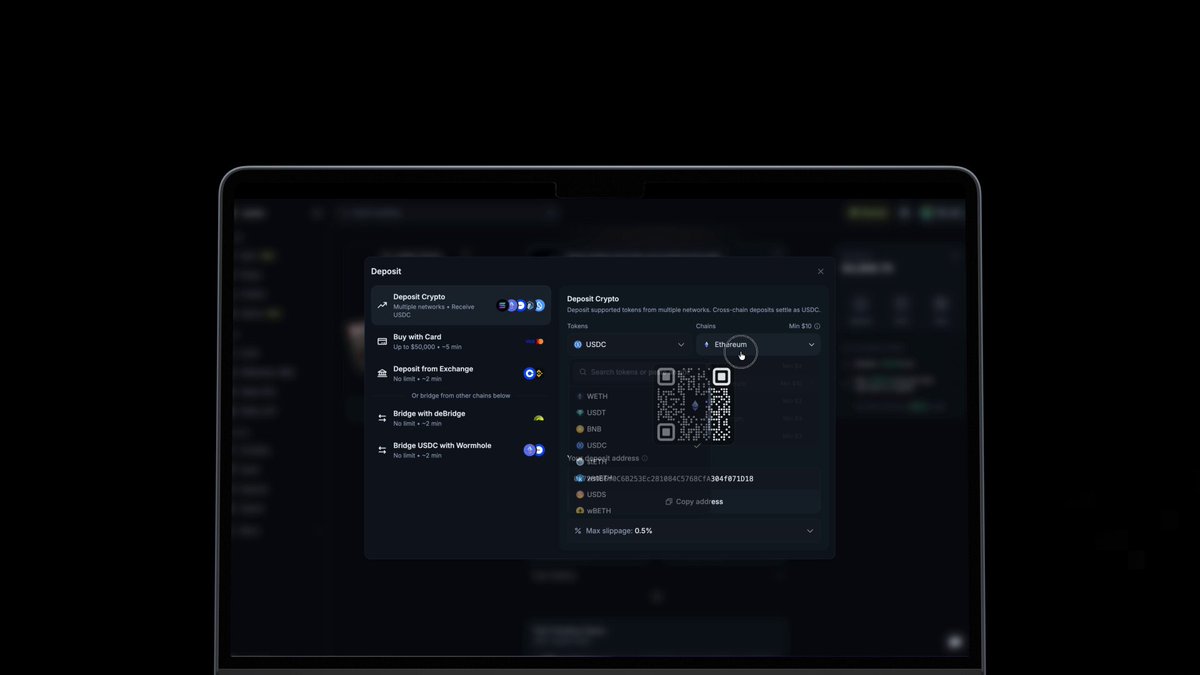
Jupiter launches Universal Deposit for cross-chain transfers to Solana with flat $0.30 fee.
Core Concepts and Definitions
At its simplest, blockchain interoperability is the capacity of distinct blockchain networks to “talk” to one another by sending and receiving messages, data, and assets in a secure and verifiable way. Chainlink’s educational materials define interoperability as the ability of blockchain networks to communicate across boundaries, allowing information and tokens to move between them, while maintaining the security guarantees of the underlying chains. Academic surveys emphasize that interoperability spans both technical aspects—such as consensus differences, state verification, and message routing—and socio-economic dimensions like governance, regulatory compliance, and trust assumptions among participants.
The term cross-chain is often used interchangeably with interoperability, but it is useful to distinguish a few related concepts. A system is “multi-chain” when the same application or asset exists on more than one blockchain, but without necessarily providing a unified experience or shared state across them. “Cross-chain” solutions explicitly move data or assets between chains, but may rely on wrapped tokens, custodial bridges, or ad hoc relayers. “Omnichain” designs go further by allowing a single asset or application to exist natively across multiple chains as a unified object, with interoperability baked into its core standard, as seen with omnichain fungible token (OFT) models. In practice, these labels often overlap, but they point to different degrees of integration.
For readers focused on Ethereum, it is helpful to situate interoperability relative to Ethereum’s own ecosystem. Ethereum mainnet refers to the canonical production network where ETH and many major ERC-20 tokens originate, and it increasingly serves as a settlement layer for a growing constellation of rollups and sidechains. Cross-chain and interoperability tooling in the Ethereum ecosystem covers everything from canonical bridges between mainnet and rollups, to generalized messaging systems, to standards for shared state across chains. Because rollups inherit security from Ethereum while maintaining separate execution environments, interoperability between rollups and mainnet becomes a crucial design space in its own right.
Interoperability also intersects with emerging forms of on-chain money. Stablecoins such as USDC or regulated fiat tokens like HKDAP represent tokenized claims on off-chain assets or bank liabilities, while tokenized deposits are direct representations of commercial bank money issued on-chain by regulated institutions. These differ from central bank digital currencies (CBDCs), which represent liabilities of the central bank itself, and from volatile cryptoassets like ETH or BTC. For all these instruments, the value proposition depends significantly on how easily they can move between networks, interact with smart contracts, and bridge into traditional payment rails, which is why interoperability has become central to their design.
Readers click interoperability stories not for the technology but for the moment a major DeFi protocol or regulated institution publicly picks a specific set of rails — LayerZero, Chainlink CCIP, or Wormhole — signaling which infrastructure is winning the race to become the connective tissue of multi-chain finance.
Technical Approaches to Blockchain Interoperability
Token Bridges and Lock-and-Mint Models
The first generation of interoperability infrastructure was dominated by token bridges that use a lock-and-mint or lock-and-release model. In this design, a user sends tokens to a bridge contract on the source chain, where they are locked or escrowed, while an equivalent representation is minted or released on the destination chain. From the user’s perspective, assets seem to “move” between chains, but in reality the original tokens remain on the first chain, and wrapped or mirrored versions circulate on the second. This approach is relatively straightforward to implement, which is why it became popular early in DeFi’s multi-chain expansion.
However, lock-and-mint bridges introduce substantial security and UX challenges. Because they often rely on a separate set of validators, oracles, or a multisig to attest to events on the source chain, the bridge itself can become a single point of failure more vulnerable than the chains it connects. Over the past few years, multiple high-profile hacks have exploited vulnerabilities in bridge contracts, signature schemes, or validator sets, resulting in significant losses. Even when secure, lock-and-mint designs fragment liquidity: users can end up with multiple wrapped versions of the same token across different chains, each with different trust assumptions and liquidity profiles, complicating pricing and risk management.
Despite their limitations, token bridges remain widely used and continue to evolve, particularly within ecosystems like Ethereum where canonical bridges are used to connect mainnet and its rollups. These canonical bridges often adopt stricter security models, such as direct verification of rollup state roots or inclusion proofs, but the general problem of securing cross-chain attestations remains challenging. As newer interoperability protocols emerge, many aim either to replace lock-and-mint models with more robust primitives or to wrap them in additional safety and monitoring layers.
Burn-and-Mint and Native Cross-Chain Assets
A more advanced approach to interoperability is the burn-and-mint model, in which the token’s issuer or protocol treats multiple chains as part of a single unified supply. Circle’s Cross-Chain Transfer Protocol (CCTP) is a prominent example in the context of USDC. Rather than locking USDC on one chain and creating a synthetic version on another, CCTP burns the user’s USDC on the source chain and instructs Circle’s minting infrastructure to create an equivalent amount of native USDC on the destination chain. This “teleportation” of USDC ensures that there is only ever one canonical version of the token on each chain, avoiding the proliferation of wrapped assets and associated liquidity fragmentation.
Because CCTP operates as a permissionless on-chain utility, any application or bridge can integrate it to offer native cross-chain USDC transfers while relying on Circle as the issuer for the mint and burn process. From a payment and DeFi perspective, this design simplifies user experience and improves capital efficiency, since users and protocols no longer need to track multiple representations of the same stablecoin. Circle has argued that this kind of stablecoin interoperability is essential to making USDC a truly universal settlement asset across chains, especially as the stablecoin integrates with new exchanges and DeFi platforms.
A similar philosophy underlies omnichain fungible token standards such as LayerZero’s OFT. In this model, an asset’s total supply is managed across multiple chains through a single token contract standard that includes built-in cross-chain messaging and accounting logic, rather than relying on external bridges to wrap and unwrap tokens. The Korea Gold Exchange Digital Asset (KorDA) project, for instance, has launched a tokenized gold asset, KGLD, using LayerZero’s OFT standard so that the same gold-backed token can move across chains as a unified asset without creating separate wrapped versions. By keeping the asset “native” wherever it goes, OFT-style designs aim to combine interoperability with coherent monetary supply and reduced fragmentation.
Generalized Cross-Chain Messaging Protocols
Beyond moving tokens, many applications need to send arbitrary data and instructions across chains. Generalized messaging protocols provide this capability, enabling use cases like cross-chain governance, multi-chain lending, or coordinated state across rollups. Chainlink’s Cross-Chain Interoperability Protocol (CCIP) is one of the leading efforts in this category. CCIP is designed as an open standard for decentralized inter-blockchain messaging, data, and token movements, enabling developers to build cross-chain applications that interoperate across multiple networks through a single interface. Chainlink positions CCIP as playing a role analogous to TCP/IP in the early internet, standardizing how messages and value move between hundreds of public and private blockchains.
CCIP combines Chainlink’s existing oracle infrastructure with cross-chain messaging capabilities, offering features such as configurable risk management, rate limiting, and built-in compliance and privacy options for institutional users. It supports both simple token transfers and more complex cross-chain function calls, with security anchored in Chainlink’s decentralized oracle networks and defense-in-depth architecture. This design makes CCIP attractive to both DeFi protocols seeking robust cross-chain communication and traditional financial institutions piloting tokenized assets and cross-border transfers in collaboration with Chainlink.
LayerZero, by contrast, focuses on being a lightweight messaging layer that applications can customize according to their own security preferences. Its core innovation is the use of an Ultra Light Node architecture, where an application selects an “oracle” and a “relayer” to independently transmit and verify block headers and transaction proofs, allowing for flexible security models. On top of this messaging layer, standards like the OFT token format and integration with DeFi protocols like GMX enable seamless multi-chain deployments. Hyperbridge builds on interoperability frameworks like LayerZero by offering adapters that implement messaging interfaces such as ILayerZeroEndpointV2 while routing messages through its own transport, ISMP, which can be used to connect existing omnichain tokens without re-deploying them.
Hyperlane takes a different tack as an open and permissionless interoperability network that specializes in cross-chain messaging for both tokens and arbitrary data. After TRON’s integration with Hyperlane, the TRON network is now connected to more than 150 chains, enabling developers to send not only assets but also programmatic instructions across this expanded universe. Hyperlane emphasizes its ability to let developers configure security and routing while supporting a wide variety of chains, from Ethereum rollups to alternative layer 1 networks. Collectively, protocols like CCIP, LayerZero, Hyperlane, and Hyperbridge are converging on a vision where cross-chain messaging infrastructure is as ubiquitous and configurable as RPC endpoints are today.
Shared Security, Rollups, and Interconnected Networks
Another branch of interoperability research focuses on shared security and interconnected networks, where chains are designed from the outset to work together. Rollup-centric roadmaps, such as Ethereum’s, envision a base layer that provides security and data availability, while multiple rollups handle execution for different use cases or throughput needs. In such an architecture, interoperability between rollups and mainnet is not an optional add-on but a core design requirement. The Ethereum ecosystem supports a range of tools and patterns for cross-chain messaging and shared state across mainnet, rollups, and other networks, including canonical bridges, messaging layers, and emerging standards.
Academic surveys also discuss interoperability solutions such as relay chains and hub-and-zone architectures, where a central chain coordinates security and messaging among connected chains. These designs seek to minimize the need for ad hoc bridges by providing protocol-level mechanisms for cross-chain communication. However, they still face challenges linked to heterogeneous consensus mechanisms, finality guarantees, and security assumptions among participating chains. As rollup ecosystems expand and “superchain” visions gather momentum, the distinction between intra-ecosystem and cross-ecosystem interoperability is becoming increasingly blurred.
Institutional and Permissioned Interoperability
While public crypto networks experiment with permissionless bridges and messaging layers, regulated financial institutions are building interoperability solutions that operate under stringent compliance and governance frameworks. The Canton Network exemplifies this: a public network designed for regulated institutions with configurable privacy, on which HSBC successfully simulated the issuance, transfer, and atomic settlement of tokenized deposits alongside other digital assets. Crucially, the pilot demonstrated interoperability between HSBC’s internal tokenized deposit ledger and external applications on Canton, highlighting how on-chain money issued by banks can interact with broader digital asset markets.
In the United States, The Clearing House, owned by many of the country’s largest banks, has announced an initiative to enable on-chain clearing and settlement of tokenized deposits between banks. The project is explicitly framed as an interoperability solution, combining existing payment infrastructure—such as the RTP and CHIPS networks—with blockchain-enabled programmability. It envisions a connectivity layer that links blockchain activity with established fiat rails, enabling movement between tokenized commercial bank money and traditional balances. This initiative also targets use cases like programmable treasury operations, real-time liquidity management, cross-border payments, and automated financial workflows, all of which rely on interoperable platforms.
Swift, the global interbank messaging network, is likewise advancing a blockchain-based shared ledger designed to enable interoperability between banks’ tokenized deposits, facilitating 24/7 cross-border payments. After a design phase with a group of global banks, Swift is preparing an MVP that will support real-world transactions, allowing payments to be executed using tokenized deposits while leveraging existing compliance processes and multiple settlement options. Meanwhile, Singapore’s MAS and the Deutsche Bundesbank have agreed to collaborate on cross-border digital asset settlement, aiming to promote common standards that enhance interoperability between different digital asset platforms, especially for cross-border payments and securities flows. These developments suggest that interoperability is becoming a design requirement not only for DeFi protocols but for the next generation of bank-led and central bank–supported payment systems.
To summarize differing technical approaches, the following table provides a high-level comparison.
| Approach | How it works | Example protocols or projects |
|---|---|---|
| Lock-and-mint bridges | Lock assets on source chain and mint wrapped tokens on destination chain, often via external validators. | Early token bridges between Ethereum and alternative L1s; many legacy DeFi bridges. |
| Burn-and-mint / native transfer | Burn tokens on source chain and mint native tokens on destination chain as part of a unified supply. | Circle’s CCTP for USDC moving between supported chains. |
| Omnichain token standards | Manage an asset’s total supply across chains within a unified cross-chain token contract. | LayerZero’s OFT standard used for KGLD and other omnichain assets. |
| Generalized messaging layers | Send arbitrary data and function calls between chains via secure messaging networks. | Chainlink CCIP, LayerZero messaging, Hyperlane interoperability framework. |
| Permissioned interoperable ledgers | Connect bank or institutional ledgers and tokenized assets across networks under regulated governance. | Canton Network, The Clearing House tokenized deposit initiative, Swift shared ledger pilots. |
Leading Interoperability Protocols and Networks
Chainlink CCIP and Cross-Chain Data
Chainlink occupies a central position in the interoperability landscape because of its dual role as a data oracle network and a cross-chain messaging provider. Its Cross-Chain Interoperability Protocol (CCIP) offers developers a standardized way to send messages, transfer tokens, and execute cross-chain function calls across multiple blockchains. Announced as a “new global standard” for decentralized inter-blockchain messaging, CCIP is designed to let developers build cross-chain applications that interact with many networks through a single uniform interface. Chainlink’s materials explicitly compare CCIP’s potential role to that of TCP/IP in the early internet, emphasizing the goal of standardizing how data and value move between heterogeneous networks.
CCIP leverages Chainlink’s existing decentralized oracle networks to monitor source chains and securely relay messages and state changes to destination chains. It supports a programmable risk management network that can enforce policies like rate limits and value caps, offering additional safeguards for high-value transfers. For institutional users, CCIP offers features such as built-in compliance tools and configurable privacy, making it attractive to banks, asset managers, and infrastructures seeking to connect permissioned environments with public chains. At industry events, infrastructure leaders have underscored that genuine blockchain progress hinges on robust interoperability, with executives like the CTO of DTCC Digital Assets highlighting Chainlink’s role in enabling secure, seamless data and value transfer across networks.
Swift’s experiments with tokenized assets and cross-border payments have also intersected with Chainlink’s interoperability capabilities, as the two organizations explore how bank messaging standards and blockchain interoperability protocols can complement each other. While details evolve, the direction of travel is clear: traditional financial messaging networks are increasingly treating Chainlink-style cross-chain infrastructure as a bridge between legacy rails and on-chain settlement, positioning CCIP as a key connector in a hybrid financial system.
LayerZero and Omnichain Token Standards
LayerZero positions itself as a generalized interoperability protocol that makes decentralization “possible, scalable, and inevitable” by enabling applications and assets to operate across many blockchains. Its core architecture allows developers to send messages between chains using independent oracles and relayers, which jointly attest to the validity of events on source chains. This approach gives applications flexibility in choosing their security and liveness trade-offs, while LayerZero focuses on providing robust messaging primitives.
On top of this messaging layer, LayerZero has introduced the Omnichain Fungible Token (OFT) standard, which enables fungible tokens to be native across multiple blockchains without relying on wrapping or external bridges. The KorDA tokenized gold project illustrates how this works in practice: KGLD, backed by physical gold reserves, is issued as an OFT so that it can exist simultaneously on multiple chains as a unified asset. Instead of creating separate wrapped versions on each chain, the OFT standard coordinates supply and movements through LayerZero’s messaging, allowing gold-backed liquidity to flow where it is most needed while maintaining a single asset identity. This design is positioned as a blueprint for the next phase of real-world asset (RWA) adoption in Asia and beyond.
LayerZero’s interoperability stack has also become an important building block for DeFi protocols and institutional tokenization platforms. GMX, a leading derivatives protocol, has engaged with the LayerZero ecosystem to select bridging and messaging partners, emphasizing technical merit, security, and alignment in its governance discussions. Institutional projects like Libre Capital have announced plans to integrate LayerZero to expand tokenized assets across more than one hundred blockchains, highlighting the appeal of a standardized messaging and token framework for complex multi-chain portfolios. In parallel, protocols like Hyperbridge are launching adapters that speak LayerZero’s endpoint interfaces while routing messages via alternative transports, signaling an emerging modular ecosystem around LayerZero-compatible messaging.
Hyperlane, Hyperbridge, and Modular Interoperability
Hyperlane is an interoperability framework designed to connect assets and applications across more than 150 blockchains via a single integration. It distinguishes itself from traditional token bridges by focusing on arbitrary cross-chain messaging rather than just asset transfers and by being permissionless: any chain can integrate, and any developer can deploy cross-chain applications without central approval. When TRON integrated with Hyperlane, the network gained connectivity to this expanded universe of chains, enabling developers to build TRON-based applications that interact seamlessly with ecosystems ranging from Ethereum rollups to alternative layer 1s. Hyperlane’s messaging supports both asset transfers and data or instruction passing, which is key for sophisticated cross-chain logic.
Hyperbridge, meanwhile, is positioning itself as an “interoperability hyperstructure,” focusing on modular transport layers and adapters. Its relaunch has included an OFT adapter that implements the ILayerZeroEndpointV2 interface but routes messages via Hyperbridge’s ISMP transport. This means that existing omnichain tokens designed for LayerZero’s OFT standard can, in principle, communicate over Hyperbridge’s transport without code changes, illustrating how interoperability protocols themselves can become interoperable. By composing transports, endpoint standards, and security models, Hyperbridge aims to reduce the friction of integrating multiple interoperability systems and to give developers more freedom to optimize for cost, latency, and trust assumptions.
These developments reinforce a broader trend toward modular interoperability. Rather than a single monolithic protocol dominating cross-chain communication, the ecosystem is moving toward a layered stack where messaging, transport, endpoint interfaces, and token standards can all be composed. For builders and institutions, this modularity is both an opportunity and a complexity: it allows for tailored solutions but requires careful evaluation of overlapping trust and security assumptions.
Circle’s CCTP and Stablecoin Interoperability
Circle’s Cross-Chain Transfer Protocol (CCTP) exemplifies a specialized interoperability solution built around a specific asset—USDC—rather than a general-purpose messaging framework. CCTP enables USDC to move natively across supported blockchains via burn-and-mint semantics, unifying liquidity and simplifying user experience. When a user initiates a cross-chain transfer, USDC is burned on the source chain, and a signed attestation from Circle authorizes the minting of an equal amount of USDC on the destination chain. Because this process is permissionless at the smart contract level, any protocol can integrate CCTP to offer native USDC transfers while leaving the issuance and redemption logic to Circle.
This design addresses two of the biggest problems with previous USDC bridges: fragmentation and trust ambiguity. Instead of multiple wrapped versions of USDC, each controlled by a different bridge and backed by its own reserves, CCTP ensures that there is one canonical USDC contract per chain, always backed by Circle’s reserves. This not only simplifies liquidity management for DeFi protocols but also reduces the surface area for security failures related to bridging. Circle has explicitly framed such interoperability as “the missing layer” for global money movement, arguing that without robust cross-chain and cross-rail connectivity, digital payments cannot realize their full efficiency gains.
CCTP also illustrates how interoperability at the asset level can coexist with interoperability at the messaging or protocol level. Bridges and messaging protocols can integrate CCTP as a building block for safe USDC transfers, while using their own messaging infrastructure for other data. As USDC expands to new mainnets and DeFi platforms, Circle has emphasized that fast, nearly instant cross-chain interoperability will be a core differentiator, positioning USDC as a kind of “network-of-networks” settlement medium across chains.
Wormhole, NTT Standards, and Stablecoin Expansion
Wormhole is another prominent multichain interoperability protocol, known for its generalized messaging and its role in connecting a wide array of layer 1 and layer 2 networks. One of its recent contributions is the Native Token Transfers (NTT) standard, which aims to provide a secure, transparent framework for moving tokens across chains while minimizing fragmentation. Ripple’s plans for its Ripple USD (RLUSD) stablecoin illustrate how NTT is being leveraged in practice. Ripple has announced that RLUSD will expand from its native network to Ethereum layer 2s such as Optimism, Base, Ink, and Unichain, using Wormhole’s NTT standard to manage cross-chain movements.
In testing, RLUSD will be deployed to these L2s ahead of its broader launch, subject to regulatory approvals, in order to validate interoperability and security properties. Ripple expects to roll out RLUSD on additional chains in subsequent phases, again subject to approval by New York’s Department of Financial Services, underscoring how regulatory constraints and interoperability design are intertwined. By relying on an established interoperability protocol like Wormhole and a standard like NTT, Ripple can focus on the stablecoin’s monetary design and compliance while delegating multi-chain messaging complexity to a specialist layer. This pattern—of stablecoin issuers integrating with interoperability protocols to deliver multi-chain functionality—is likely to become increasingly common as on-chain money systems mature.
Ripple announced plans to expand its $1.3B RLUSD stablecoin to Ethereum layer-2 networks next year, including Optimism, Base, Kraken’s Ink, and Unichain, using Wormhole for interoperability. The move aims to boost DeFi adoption, payments, and on-chain utility as Ripple pushes a multichain strategy, following recent approval to pursue a national trust banking charter.

Hopefully, it goes well for them
Use Cases in the Wild: DeFi, Payments, and Tokenized Assets
DeFi Composability Across Chains
DeFi’s original superpower on a single chain was composability: the ability for smart contracts to interact like “money legos,” with one protocol building on another’s functionality. In a multi-chain environment, composability becomes a cross-chain problem. Protocols such as GMX, which offers perpetuals and spot trading, have had to navigate how to maintain a coherent user experience and liquidity profile while expanding across multiple networks. Governance discussions around GMX’s choice of bridging and messaging partner reveal the factors at stake: security guarantees, audit history, censorship resistance, ecosystem support, and alignment with the protocol’s long-term roadmap.
Interoperability protocols like LayerZero and Hyperlane enable DeFi applications to synchronize state across chains, coordinate governance decisions, and route orders or liquidity between instances. For example, a lending protocol might allow users to deposit collateral on one chain and borrow on another, or a derivatives protocol might net exposures across multiple deployments to manage global risk. Beyond headline DeFi platforms, even seemingly simple bridge contracts and DEX aggregators are becoming more sophisticated, embedding cross-chain routing and messaging to minimize slippage and maximize access to liquidity.
New networks are also designing interoperability into their core positioning. Unichain, launched as a Superchain L2 designed to be a home for cross-chain liquidity, explicitly markets its role as a hub for fast, cheap execution that is natively integrated with broader ecosystems. Sui’s native bridge to Ethereum, which went live on mainnet, similarly illustrates how base-layer teams are prioritizing secure interoperability with Ethereum from day one. These moves reflect an understanding that DeFi users increasingly expect chains and rollups to act as parts of a broader system, not as isolated destinations.
Stablecoins, Payment Interoperability, and Global Money Movement
Stablecoins sit at the intersection of crypto-native activity and mainstream payments, making their interoperability particularly consequential. Circle has highlighted how payment interoperability—across blockchains, among digital asset platforms, and between on-chain networks and traditional payment rails—remains a major challenge for efficient global money movement. Without consistent standards and infrastructure for interoperable settlements, businesses face friction, fragmentation, and operational complexity when using digital dollars across borders and networks. This is one reason Circle has invested in CCTP and in expanding USDC to new platforms that emphasize interoperability and liquidity.
Regulated fiat tokens like HKDAP further illustrate how stablecoins are moving into tightly supervised environments. As Hong Kong’s first officially approved stablecoin, HKDAP operates under the oversight of the Hong Kong Monetary Authority and has already completed its initial mainnet transmission sequence on the public Ethereum blockchain. This live, end-to-end financial transaction demonstrates that compliant, regulated digital assets can interoperate with public DeFi infrastructure while satisfying regulatory requirements. In such settings, interoperability is not only about technical messaging but about integrating compliance, identity, and monitoring into cross-chain flows.
On the banking side, The Clearing House’s tokenized deposit initiative explicitly aims to modernize money movement across on-chain and traditional rails, linking blockchain-based activity with established networks like RTP and CHIPS. By enabling on-chain clearing and settlement of tokenized deposits between banks, with 24/7 availability and programmable workflows, the project seeks to bring the benefits of digital payments—such as automation and rich data—to the established banking framework. Swift’s shared ledger pilot for tokenized deposits is similarly motivated, aiming to enable 24/7 cross-border payments using tokenized bank money while maintaining consistency with existing compliance processes. In aggregate, these efforts point toward a future where stablecoins, tokenized deposits, and possibly CBDCs coexist and interoperate, with messaging networks and interoperability protocols knitting them together.
Tokenized Real-World Assets and Commodities
Real-world asset tokenization is another domain where interoperability is critical. KorDA’s tokenization of gold through KGLD offers a compelling case study. Backed by physical reserves and linked to the Korea Gold Exchange, KGLD uses LayerZero’s interoperability infrastructure and OFT standard to operate as a unified asset across multiple blockchains. This allows gold-backed tokens to move seamlessly between networks without creating wrapped versions, which is important for maintaining consistent pricing, liquidity, and regulatory treatment. As more RWAs—such as private credit, real estate, and funds—are tokenized, the ability to manage them across chains without fragmenting ownership will become a key requirement for issuers and investors.
Institutional efforts also highlight the importance of interoperable RWA platforms. HSBC’s Canton pilot did not only test tokenized deposits; it also simulated atomic settlement against other digital assets on Canton-enabled applications, demonstrating how different types of tokenized assets can interoperate within a shared environment. Singapore’s MAS and the Deutsche Bundesbank, through their MoU, are explicitly promoting shared standards for tokenized assets to reduce the cost and processing time of cross-border transfers, signaling an interest in interoperable security and FX flows as well as payments. For asset managers and investors, this could enable portfolios that span tokenized securities, money market instruments, and real assets across multiple jurisdictions and chains.
Projects like Libre Capital, which integrate with interoperability protocols such as LayerZero to distribute institutional-grade tokenized assets across an array of blockchains, are betting that interoperability will be a critical feature for attracting both issuers and investors. Rather than forcing asset managers to pick a single chain, interoperable tokenization platforms can offer exposure across many networks, aligning with the reality that liquidity, regulatory comfort, and application ecosystems vary across jurisdictions and blockchains.
Tokenized Deposits and On-Chain Bank Money
Tokenized deposits—blockchain-based representations of commercial bank money—are emerging as a distinct category of on-chain money that sits alongside stablecoins and potential CBDCs. HSBC’s Tokenised Deposit Service (TDS) pilot on the Canton Network marks a significant milestone in this area. In the pilot, HSBC simulated issuing tokenized deposits, moving them between accounts, and achieving atomic settlement against other digital assets, all within a Canton-based environment. This showed that bank-issued money can be represented on-chain and used in programmable workflows while still operating within the bank’s regulatory perimeter. Importantly, it also demonstrated interoperability by connecting HSBC’s deposit ledger with an external blockchain network, highlighting how tokenized deposits may need to interact with other platforms rather than staying siloed.
The Clearing House’s initiative goes further by creating a shared on-chain system for clearing and settling tokenized deposits between multiple banks, with integrated connectivity to traditional payment rails. By maintaining the existing regulatory, operational, and settlement frameworks while layering on blockchain programmability and interoperability, TCH aims to preserve banks’ roles in credit creation and economic growth while upgrading their settlement infrastructure. Swift’s shared ledger, designed to knit together tokenized deposits across banks and jurisdictions, complements these efforts by focusing on cross-border interoperability and always-on settlement. Collectively, these projects suggest that a bank-led on-chain money system may emerge in parallel with stablecoin ecosystems, with interoperability standards and protocols determining how these worlds interact.
For crypto-native builders and users, tokenized deposits raise important questions. How will on-chain bank money interact with DeFi protocols? Will interoperability layers like CCIP or LayerZero play a role in connecting permissioned tokenized deposit networks with public chains, or will banks prefer closed systems linked via Swift-like messaging? Will tokenized deposits be interoperable with stablecoins and tokenized RWAs at the contract level, or only via off-chain reconciliation? These questions are still open, but the trajectory is clear: interoperability will shape not only technical architecture but also competitive dynamics between banks, fintechs, and crypto projects.
- 01LayerZero as DeFi default bridge↗
GMX and Libre Capital both chose LayerZero in close succession, framing it as an emerging institutional default for cross-chain messaging rather than a commodity choice.
- 02Chainlink CCIP institutional validation↗
DTCC, Aave's GHO vote on Arbitrum, and multi-currency CBDC testnets all named CCIP explicitly, converting a protocol launch story into a standard-setting narrative.
- 03TradFi banks going cross-chain↗
Barclays digital pound interoperability, HSBC and BNP on Canton Network, and the Singapore-Germany MoU positioned bank-grade interoperability as an imminent regulatory and commercial requirement, not a distant experiment.
- 04Stablecoin multichain expansion↗
GHO on Arbitrum via CCIP, RLUSD on L2s via Wormhole, and Circle on Hyperliquid showed readers that a stablecoin's cross-chain reach now determines which chains capture meaningful DeFi liquidity.
- 05New chain bridge launch moments
Sui bridge mainnet and Unichain's Superchain integration drew top clicks by offering a concrete before-and-after event — a chain becoming reachable from the rest of crypto.
- 06AI agent cross-protocol calls
Ask Caesar on Virtuals/ACP surfaced an emerging reader interest in autonomous agents using interoperability layers to call external services without direct API integration, a distinct new use case.
Risks, Security Challenges, and Design Trade-offs
The promise of interoperability comes with significant risks and design challenges. Academic surveys emphasize that security is the fundamental concern for blockchain interoperability, because errors or attacks in cross-chain protocols can compromise assets and state across multiple networks. Differences in consensus mechanisms, finality guarantees, and transaction semantics between chains complicate secure message verification. A protocol that incorrectly assumes finality or fails to handle chain reorganizations can be exploited to mint unbacked assets or execute fraudulent cross-chain calls.
Bridges and messaging protocols also introduce new trust assumptions. Some rely on a small validator set or multisig that becomes an attractive target for attackers; others depend on off-chain oracles whose incentives and failure modes must be carefully analyzed. Protocols like Chainlink’s CCIP and LayerZero mitigate these risks by using decentralized oracle networks, configurable security modules, and layered defenses, but the complexity of these systems makes formal verification and auditing non-trivial. Interoperability providers must constantly balance the need for performance and usability with the need to minimize trusted parties and single points of failure.
Another class of risk arises from interoperability’s success. As more assets, protocols, and institutions become interconnected, systemic risk can propagate more easily across chains. A bug or attack in a widely used messaging protocol could affect many dependent applications, much as flaws in widely deployed libraries can cascade through traditional software ecosystems. The growing number of chains connected via a single interoperability framework, like Hyperlane’s linkage of more than 150 networks, increases both opportunity and exposure. Network expansions bring new users, liquidity, and applications but also complicate monitoring, risk management, and governance.
Interoperability also raises regulatory and policy challenges. When tokenized deposits or regulated stablecoins move across chains and jurisdictions, questions arise about which regulator has oversight, what compliance checks apply at each hop, and how sanctions or AML requirements are enforced. Projects like The Clearing House’s tokenized deposit system and Swift’s shared ledger attempt to address these concerns by embedding interoperability within existing regulatory frameworks and governance structures. Similarly, Chainlink’s CCIP includes compliance and privacy features tailored for institutional users. Still, as public protocols and permissioned networks interconnect, conflicts between open-source composability and regulated constraints are likely to intensify.
Even seemingly peripheral systems can create interoperability pitfalls. Naming systems, such as chain-specific ENS-like namespaces, can introduce confusion or security issues if names collide across networks or if users assume that a handle on one chain maps to the same identity on another. Differences in address formats, encoding schemes, and metadata standards can lead to subtle bugs and user mistakes. As more cross-chain abstractions emerge—such as wallets that route transactions across multiple chains or interfaces that hide chain boundaries—designers must guard against misleading representations that obscure underlying risks.
Developer and Investor Considerations
For builders, choosing an interoperability stack is now a major architectural decision rather than a minor integration detail. Governance discussions in protocols like GMX show how communities weigh different options based on technical merit, security track record, decentralization, ecosystem support, and alignment with long-term protocol goals. Developers must consider whether they need only asset transfers, or also generalized messaging; whether they prioritize maximum security, minimum latency, or flexibility; and whether they prefer standardized protocols like CCIP, customizable frameworks like LayerZero, or permissionless networks like Hyperlane.
Ethereum’s cross-chain tooling provides a useful reference point. The ecosystem offers canonical bridges between mainnet and many rollups, as well as third-party interoperability protocols that span Ethereum and other chains. Developers can choose to deploy on a single rollup and rely on canonical bridges for connectivity, or adopt a multi-rollup strategy with shared state managed via messaging protocols. They can also integrate specialized tools like CCTP for stablecoin transfers or OFT standards for omnichain assets. Each choice carries implications for user experience, liquidity distribution, security assumptions, and regulatory exposure.
Investors, whether in tokens or in infrastructure projects, also need to understand interoperability’s nuances. The value of a multi-chain token or DeFi protocol often depends on the robustness and adoption of the underlying interoperability layers. A token that exists on many chains but relies on weak bridges may face higher risk and lower institutional comfort than one built atop audited, widely adopted protocols. Conversely, infrastructure tokens tied to interoperability protocols may benefit from network effects if developers converge on a few leading standards, but they also bear systemic risk if those standards are compromised.
From a strategic standpoint, interoperability may end up mirroring the internet’s evolution. Rather than a single interoperability protocol dominating, we may see a small number of widely used standards (like CCIP, LayerZero messaging, CCTP, NTT) coexisting and interfacing, with gateways and adapters like Hyperbridge enabling translation between them. Institutional and public-sector projects—such as Canton, The Clearing House tokenized deposits, Swift’s shared ledger, and central bank collaborations—will likely adopt their own governance-heavy standards, which may interface with public protocols via carefully controlled bridges. For both builders and investors, understanding where each protocol sits in this emerging stack is crucial to making informed decisions.
Singapore and Germany’s central banks have signed an MoU to develop faster, cheaper cross-border digital asset settlement systems. The deal builds on Singapore’s Project Guardian to promote tokenization and interoperability.


"Based on the MoU, MAS and Deutsche Bundesbank will team up on a number of technological and financial initiatives. The two central banks would work on developing new settlement solutions with the goal of making cross-border transactions cheaper and faster between the two countries."
Beyond Blockchains: Broader Interoperability Trends
Although this explainer focuses on blockchains, the concept of interoperability extends to adjacent domains that are increasingly entangled with crypto. Agent platforms and AI-powered systems, for instance, are beginning to integrate with on-chain data and protocols through interoperability frameworks that allow agents to call external APIs or other agents without direct integration. In such settings, interoperability is about standardizing how different intelligent services interact, much as cross-chain protocols standardize communication between blockchains.
In financial infrastructure, central banks and regulators are pushing for interoperable standards that bridge tokenized assets, legacy systems, and emerging payment networks. The MAS–Deutsche Bundesbank MoU explicitly targets cross-border settlement solutions that reduce costs and processing times by promoting common standards across digital asset platforms. Swift’s pilot shared ledger for tokenized deposits similarly aims to align new on-chain representations of money with existing compliance processes and settlement options, ensuring that interoperability does not come at the expense of regulatory clarity.
Even within crypto media and research ecosystems, interoperability is becoming a practical issue. As research agents, data providers, and analytic platforms integrate into DeFi dashboards and trading interfaces, the ability for one tool to query another’s data or insights without bespoke integrations mirrors the cross-chain problem in informational form. The drive toward interoperable agent frameworks parallels the evolution of cross-chain protocols: both seek to reduce friction, promote modularity, and enable complex compositions of services.
Chainlink announces CCIP at SmartCon
Chainlink CCIP enters Mainnet Early Access
CCIP goes live on Ethereum, Polygon, Optimism, and Avalanche
MAS and Deutsche Bundesbank sign MoU on tokenisation and cross-border settlement
- 2025-02launch
Unichain Superchain L2 mainnet launches with native cross-chain liquidity
Ripple announces RLUSD expansion to Ethereum L2s via Wormhole NTT
- 2025-06launch
Sui bridge goes live on mainnet connecting Ethereum and Sui
Major US banks unveil bank-led on-chain tokenized deposit interoperability system via The Clearing House
Conclusion
Interoperability has evolved from a technical afterthought to a foundational layer of the crypto and digital asset stack. It encompasses a spectrum of approaches, from simple lock-and-mint bridges to sophisticated burn-and-mint stablecoin protocols, omnichain token standards, generalized messaging networks, rollup-centric shared security models, and permissioned interoperable ledgers for banks and central banks. Each approach reflects different priorities and trade-offs among security, performance, decentralization, regulatory compliance, and user experience.
Crypto-native projects such as Chainlink’s CCIP, LayerZero and its OFT standard, Hyperlane, Hyperbridge, Circle’s CCTP, and Wormhole’s NTT push the boundaries of what can be done in a permissionless, composable environment. At the same time, institutional initiatives like the Canton Network, The Clearing House tokenized deposit system, Swift’s shared ledger, and central bank collaborations around tokenized assets underscore that interoperability is equally central to the future of regulated finance. Stablecoins, tokenized deposits, and RWAs all depend on interoperable infrastructure to deliver on promises of efficiency, programmability, and global reach.
The path forward is complex. Security risks, governance challenges, regulatory constraints, and systemic exposure all increase as more assets and systems interconnect. Nevertheless, the direction of travel is clear: a multi-chain world without interoperability is not tenable at scale. Just as TCP/IP and related standards transformed a patchwork of networks into the internet, interoperable protocols and ledgers are gradually turning fragmented blockchain ecosystems into a more coherent, if still heterogeneous, financial network. For builders, investors, and institutions, understanding interoperability’s mechanisms, trade-offs, and emerging standards is no longer optional; it is essential to navigating the next decade of crypto and digital finance.
Outlook
Looking ahead, several themes are likely to shape the trajectory of interoperability in crypto and beyond. First, convergence around a handful of widely adopted interoperability standards seems probable, even if no single protocol dominates outright. CCIP, LayerZero, Hyperlane, CCTP, NTT, and institutional ledgers like Canton and Swift’s shared ledger will likely coexist, with adapters and hyperstructures like Hyperbridge making them increasingly interoperable with each other. Second, interoperability will become more deeply embedded into asset and application design: stablecoins, tokenized deposits, RWAs, and DeFi protocols will treat cross-chain functionality as a native property, not an afterthought.
Third, regulatory and governance frameworks will exert growing influence over which interoperability architectures gain traction, especially where bank money and securities are involved. Permissionless protocols will continue to innovate at the frontier, but their interfaces with regulated systems will be mediated by compliance-aware bridges, shared ledgers, and standardized messaging layers. Finally, the line between “crypto interoperability” and broader digital interoperability—connecting AI agents, data services, and legacy infrastructures—will blur as more systems integrate with blockchains. For a crypto news audience, the takeaway is straightforward: interoperability is no longer just about moving tokens between chains. It is becoming the connective tissue of a new, hybrid financial system, and the protocols and standards that win this race will quietly define how money, assets, and information move for years to come.
Latest Interoperability news
Jupiter launches Universal Deposit for cross-chain transfers to Solana with flat $0.30 fee.Ripple announced plans to expand its $1.3B RLUSD stablecoin to Ethereum layer-2 networks next year, including Optimism, Base, Kraken’s Ink, and Unichain, using Wormhole for interoperability. The move aims to boost DeFi adoption, payments, and on-chain utility as Ripple pushes a multichain strategy, following recent approval to pursue a national trust banking charter.Singapore and Germany’s central banks have signed an MoU to develop faster, cheaper cross-border digital asset settlement systems. The deal builds on Singapore’s Project Guardian to promote tokenization and interoperability. DTCC Digital Assets CTO Dan Doney stressed at SmartCon 2025 that true blockchain progress depends on interoperability, praising Chainlink for enabling secure, seamless data and value transfer across chains.
 Ask Caesar agent is now available within Virtuals Protocol ecosystem. Through Butler, users can access insights from Ask Caesar’s best-in-class research capabilities. Agents can also call upon Ask Caesar through the interoperability offered by the ACP framework without the need to integrate directly with the Caesar API.
 Circle and USDC expansion with Hyperliquid, bringing trusted liquidity, interoperability, and support for builders into one of the most innovative platforms in crypto.
Sources
20 records from 16 domains
chain.link
prnewswire.com
layerzero.network
blog.hyperbridge.network
circle.com
financefeeds.com
marketsmedia.com
newsfilecorp.com
theclearinghouse.org
x.com
bankingjournal.aba.com
sciencedirect.com
ripple.com
mas.gov.sg
gov.gmx.io
ethereum.org
Community notes
Spot something off or out of date? Drop a note. Editors review topic notes daily and roll accepted fixes into the explainer — contributors are recognized in the monthly $SQUID drop.
Loading notes…
Help improve this topic
Have a story or tip about this topic? Submit it. See something missing? Leave a note. Editors review daily; accepted submissions and fixes count toward the monthly $SQUID drop.