
Explains how interviews shape crypto markets, DeFi narratives, security, and policy, covering livestreams, tokenized access (SQUID Pass), Tether and TON case studies, DPRK “Contagious Interview” threats, and how AI agents and onchain identity will redefine the interview format.
+10 sources across the wider coverage universe
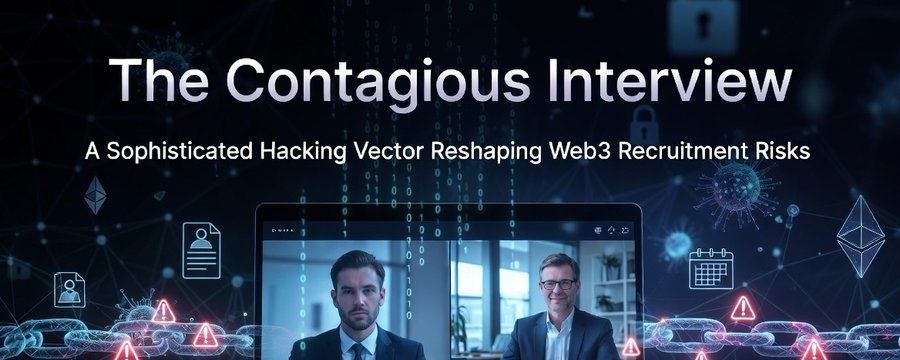 DPRK-linked Contagious Interview campaign turns Web3 job tests into wallet-stealing malware2026-05
 Beyond crypto: how tokenization is quietly rewiring markets. In the interview, BlackRock’s CEO Larry Fink says that tokenization could have a greater impact than AI.2025-12
 "Gemach: Where the Playing Field Finally Levels" - a new written interview by DAdvisoor with Assune, founder of Gemach, winners of the SQUID Written Interview Pass!
Read to learn about the ambitious project aiming to bring DeFi to literally everyone.
Enjoy!2025-12
"Gemach: Where the Playing Field Finally Levels" - a new written interview by DAdvisoor with Assune, founder of Gemach, winners of the SQUID Written Interview Pass!
Read to learn about the ambitious project aiming to bring DeFi to literally everyone.
Enjoy!2025-12 Robert Leshner introduces USTB Token to challenge stablecoins, offering investors a profitable solution for On-Chain Cash. In an exclusive interview, Superstate's CEO unveils the USTB token, designed to provide institutional investors with a high-yield alternative to stablecoins, revolutionizing the way they earn returns on their on-chain cash holdings.2024-02
- In Wall Street Journal video interview, Coinbase CEO Brian Armstrong says he'll fight the SEC for the good of the crypto industry.2023-06
 Ripple President Monica Long discusses the company’s stablecoin, tokenization of real-world assets, and what Trump’s return could mean for crypto in a new CNBC interview.2025-04
Interviews in Crypto: Formats, Functions, and Best Practices
Interviews in crypto are structured conversations—live or recorded, verbal or written—designed to extract information, perspective, and accountability from people or entities that shape the digital asset ecosystem. In a market defined by pseudonymity, 24/7 price discovery, and rapid narrative shifts, interviews have become one of the core mechanisms by which investors, builders, regulators, and communities make sense of Bitcoin, DeFi, stablecoins, and the broader onchain economy.
As the industry has matured, the interview itself has become a kind of infrastructure: a repeatable, recognizable format that carries everything from Bitcoin Core engineering debates to Tether’s reserve disclosures, from Larry Fink’s views on tokenization to Telegram’s TON adoption strategy, from Leviathan News livestreams and SQUID Interview Passes to investigative reporting on DPRK-linked job scams. Interviews move markets, shape regulation, surface security risks, and increasingly involve not only humans but AI agents and bots, raising new questions about identity, authenticity, and onchain verification. This explainer maps the landscape of “interview” as a media and social primitive in crypto, examining its types, its role in market and narrative formation, best practices for conducting and consuming interviews, and how AI, tokenization, and security threats are reshaping the form itself.
Introduction: Why Interviews Matter in Crypto
In any information-poor, hype-rich environment, the ability to ask good questions in public is a form of risk management. Crypto amplifies this dynamic because most protocols are global, composable, and open-source, yet their governance, treasuries, and roadmaps are frequently controlled by small teams or foundations. An interview with the founder of a new perpetual DEX, the CFO of a major exchange, or the CEO of a stablecoin issuer often provides the first, and sometimes only, structured glimpse into how critical decisions are made behind the scenes. When Paolo Ardoino explains Tether’s asset mix and Bitcoin holdings on stage at Bitcoin 2025, he is not merely giving a talk; he is participating in an interview that helps markets understand the risk profile of what has become a core piece of crypto plumbing.
Mainstream business media have long understood the signaling power of interviews with high-profile figures, and crypto is no exception. When Larry Fink tells an interviewer that tokenization could make asset trading faster, safer, and more efficient, and potentially transform finance even more than AI, that quote ricochets across trading desks and Telegram chats as a datapoint about institutional conviction rather than just a personal opinion. Similarly, when Bitwise CIO Matt Hougan tells CNBC that crypto retail is in “max desperation,” that leverage has been flushed, and that Bitcoin could end the year at new all-time highs above \(125{,}000\) to \(130{,}000\) dollars, traders interpret those statements as both sentiment and soft guidance. In each case the content is inseparable from the interview format, which enforces a conversational rhythm, allows follow-ups, and anchors soundbites that can be replayed and scrutinized.
At the same time, the crypto ecosystem has developed its own interview-native media. DeFi-focused outlets like Leviathan News run daily livestreams on YouTube, blending news recap with long-form interviews of protocol founders, researchers, and risk experts, often in front of a live chat of traders and DAO contributors. Wu Blockchain produces in-depth podcast and written interviews with the builders of projects like Hyperliquid and GMTrade, diving into token design, oracle choices, and onchain liquidity architectures. These crypto-native interviews differ from legacy finance broadcasts not just in tone but in their assumption that the audience understands concepts like MEV, LSTs, or Fraxtal and is willing to engage in multi-hour technical discussions.
Interviews have also become interactive community events rather than one-way broadcasts. TON Foundation leadership appears in creator-hosted interviews to talk through entrepreneurship, collectibles, prediction markets, and the path to a billion wallets, often in formats that allow Telegram users to submit questions in real time. Projects sponsor interview series, DAOs vote on which guests to invite, and platforms like Leviathan experiment with tokenized access via SQUID Interview Pass auctions that let teams and community members bid for a slot on a livestream or a written feature. The medium has blurred into the market itself, with slots for visibility and narrative-building traded almost like any other digital asset.
Finally, interviews in crypto are not always benign. Security researchers at Unit 42 have documented “Contagious Interview” campaigns in which DPRK-linked threat actors pose as recruiters, invite software developers to online job interviews, and then persuade them to download malware disguised as a video-call application. Here, the same social expectations that make interviews a powerful tool for collaboration—trust, curiosity, professional ambition—are weaponized to steal keys and drain wallets. This duality underscores why understanding the interview as a format is itself an essential piece of crypto literacy.

DPRK-linked Contagious Interview campaign turns Web3 job tests into wallet-stealing malware
Types of Interviews in the Digital Asset Ecosystem
The word “interview” in crypto can refer to several distinct, though overlapping, formats. Each has its own conventions, audience expectations, and security profile. For clarity, it is useful to distinguish editorial newsroom interviews, livestream and broadcast segments, podcasts and long-form conversations, written Q&A features, technical or developer interviews, and job or due diligence interviews. These categories often blend—for instance, a livestreamed podcast that is later transcribed as a written Q&A—but thinking about them separately helps clarify how and why they are used.
At one end of the spectrum sit editorial interviews conducted by journalists in the context of news reporting or feature writing. These are typically one-on-one conversations, sometimes embargoed, that inform articles on topics like stablecoin regulation, exchange solvency, or a major protocol upgrade. The interviews themselves may or may not be published verbatim, but they shape the angle, quotes, and fact pattern of the final piece. When a South Korean ex–National Assembly secretary-general tells a reporter that KRW stablecoins must be listed on major overseas exchanges like Binance and Coinbase to gain global recognition, and that overseas traders should be allowed to trade on domestic platforms like Upbit and Bithumb, that is a classic policy interview whose key lines appear in a broader analysis of Korean crypto regulation.
A different category is livestream and broadcast interviews, where the conversation itself is the product. CNBC’s segments with figures like Bitwise’s Matt Hougan or Tether’s Paolo Ardoino fall into this bucket. So do livestreamed event interviews, such as on-stage conversations at conferences like Bitcoin 2025 or the Ethereal Summit, where journalists or hosts ask questions in front of a live audience, often intercut with charts and pre-produced explainer segments. In the crypto-native world, platforms like Leviathan News and THORChain-centric shows run similar live interviews on YouTube and X, exposing protocol teams to unscripted questions while a public chat reacts in real time. The live format raises the stakes technically and editorially, because there is little room for post-production correction or legal review.
Podcasts and long-form audio or video interviews occupy another important space. These conversations typically last anywhere from 30 minutes to two hours and are consumed on-demand. The Index Podcast’s interview with Billions Network CEO Evin McMullen, exploring what happens when more than half of the internet is no longer human and how to assign unique identities to AI agents, exemplifies this deep-dive format. Wu Blockchain’s interview series with builders like Hyperliquid’s Jeff Yan and GMTrade’s William similarly takes the time to unpack the evolution of their protocols, from GMX forks to bespoke Layer 1 chains, discussing oracle integrations, LP yield sources, and performance trade-offs. Long-form interviews are particularly well suited to crypto, where complex topics like MEV resistance or onchain derivatives benefit from extended exploration.
Written Q&A interviews remain crucial, especially for global audiences. On Substack or news sites, transcripts may be lightly edited, translated, and formatted into readable articles, allowing readers to skim or search for specific topics. Written interviews also enable asynchronous participation: teams in different time zones can respond to a set of questions when convenient, review for accuracy, and coordinate among co-founders. Leviathan News has experimented with written interviews as X Articles, including its first-ever written interview with the creator of the MAdoll NFT series and SQUID-related projects, and with SQUID Written Interview Passes that allow projects like Gemach to secure coverage as part of a curated written feature. This format is especially valuable when language barriers, bandwidth constraints, or security concerns make live video less feasible.
Technical, developer, and research-focused interviews form a more specialized category. These conversations aim to translate protocol-level details into digestible narratives for technically literate audiences. For example, an interview with Bitcoin Core developer Gloria Zhao at the MIT Bitcoin Expo explores her work on mempool policy, package relay, and feerate estimation, topics that are critical for Bitcoin’s scalability but opaque to most casual BTC holders. Similarly, Hyperliquid’s Jeff Yan describes the project’s evolution from an application into a Layer 1 blockchain, emphasizing performance, scalability, and the goal of supporting “all of finance” on-chain. These interviews blur the line between documentation and storytelling, often becoming canonical references for how a protocol explains itself to the world.
Finally, there are job, due diligence, and adversarial interviews. Many Web3 developers and contributors undergo interviews for roles at protocols, exchanges, or security firms. Most of these are legitimate, but as Unit 42 has documented, some have been co-opted by North Korean threat actors who pose as recruiters, contact software developers via platforms like LinkedIn, and invite them to a supposed online interview where the candidate is asked to install a booby-trapped video application that deploys malware. Investors and DAO treasuries conduct their own “interviews” with project teams, whether on private calls or public community calls, probing token economics, governance mechanisms, and security practices. These are higher-stakes conversations where misrepresentation can have legal or criminal consequences, making recording, verification, and clear mutual expectations essential.
To clarify the landscape, it is helpful to compare these formats along a few dimensions.
| Interview format | Typical platform | Primary purpose | Strengths | Risks / limitations |
|---|---|---|---|---|
| Editorial newsroom Q&A | Newsroom calls, email, chat | Inform reporting and features | Rigorous, fact-checked, flexible anonymity options | Final article may condense nuance; off-record vs on-record can be misunderstood |
| Livestream / broadcast | TV, YouTube, X Live, conference stage | Real-time market reaction, public accountability | High visibility, immediacy, audience interaction | Technical failure, misstatements are instantly public; limited editing |
| Podcast / long-form conversation | Podcast apps, YouTube | Deep dives, thought leadership | Nuance, narrative arc, room for follow-ups | Time-consuming; can privilege charismatic speakers over quieter experts |
| Written Q&A / async interview | News sites, Substack, X Articles | Global accessibility, translation, archival use | Precise wording, review for accuracy, searchable | Less spontaneity; can feel sanitized; harder to assess tone |
| Technical / developer interview | Conferences, dev blogs, technical pods | Explain complex systems to technical audiences | High signal-to-noise, durable documentation | Niche appeal; interviewer must be technically informed to avoid misrepresentation |
| Job / due diligence / adversarial | Video calls, chat apps, private calls | Hiring, investment, or risk assessment | High-stakes truth-testing; can reveal red flags quickly | Social engineering and malware risk; power asymmetries; legal and reputational risk |
Each format plays a distinct role in the crypto information ecosystem, and projects typically engage in several simultaneously: a founder might appear in a Leviathan livestream, a Wu Blockchain podcast, a written Q&A, and a series of private investor diligence calls, all within the same month. Understanding which format you are in, and what norms govern it, is the first step toward using interviews effectively rather than being overwhelmed by them.
Leviathan readers click crypto interviews not for technical analysis but for candor under pressure — the hacker explaining the exploit, the rugger bragging about insider access, SBF reflecting from prison, Armstrong threatening to fight regulators — accountability confessions consistently outperform educational or promotional interview formats.
Interviews as Market Infrastructure and Narrative Engine
In traditional finance, quarterly earnings calls and scheduled media appearances by CEOs are recognized as key moments of information release that can materially impact valuations. Crypto, with its always-on global markets and onchain data firehose, might seem less dependent on human communication. Yet in practice, interviews are arguably more important here, because so much of a protocol’s value rests on expectations about future behavior, regulatory arbitrage, and technological roadmaps rather than current cash flows.
At the macro level, interviews are a primary vehicle for articulating narratives about the future of Bitcoin, stablecoins, tokenization, and DeFi. When BlackRock CEO Larry Fink tells an interviewer that tokenization could transform finance by making asset trading faster, safer, and more efficient, and suggests that tokenization may ultimately have more impact than AI, he is re-framing how institutional investors conceptualize the utility of blockchains. Such statements from a conventional finance heavyweight legitimize narratives that crypto-native builders have championed for years, including the idea that “all major assets will move over blockchain-based rails,” as Bitwise’s Matt Hougan put it in a CNBC interview when describing the inevitability of stablecoin payment rails. These interviews become touchstones in pitch decks, DAO governance forums, and sovereign digital asset policy debates.
At the meso level—the level of individual protocols and ecosystems—interviews function as a kind of public infrastructure for discovery and due diligence. Consider the TON ecosystem, where the combination of Telegram’s distribution and TON Foundation’s technical roadmap has become a major point of speculation. In interviews, TON’s CEO and president explain how Telegram-native wallets, seamless user experiences, and support for payments, gaming, and creator tools are designed to bring crypto to the mainstream while treating accessibility as the primary barrier to adoption. They emphasize real use cases like micro-payments, in-game items, prediction markets, and creator monetization, and they connect these product choices to a broader vision of a “super app” where users can shop, pay for meals, and interact with dApps without leaving Telegram. These interviews not only inform users but also shape which builders choose to deploy on TON versus other chains.
Interviews with founders of DeFi protocols also function as reputation infrastructure. Hyperliquid’s Jeff Yan, for example, explains in an interview how the project transitioned from being primarily an application into a Layer 1 blockchain, and why the focus now is on making the chain as performant and scalable as possible while adding features to support “all of finance” on that blockchain. He clarifies that there were no private profit-sharing arrangements or investments that might compromise neutrality, addressing common community concerns about backroom deals. In a separate interview, GMTrade’s co-founder William discusses how the protocol evolved from a GMX Solana branch into an independent pooled trading model integrating Chainlink oracles and diverse LP yield sources, positioning itself as a kind of onchain Robinhood for Solana. Together, these interviews supply the qualitative context that onchain analytics alone cannot provide, such as governance philosophy, risk appetite, and long-term alignment.
Regulatory and policy interviews form another critical layer of market infrastructure. When a former secretary-general of South Korea’s National Assembly argues in an interview that KRW stablecoins must be listed on global exchanges like Binance and Coinbase to gain recognition, and that overseas traders should be allowed to buy and sell local coins on domestic exchanges, he is both diagnosing a structural liquidity problem and proposing a regulatory solution. These kinds of interviews supply regulators with feedback from political insiders and industry participants, and they give markets an early read on where policy might be heading. Similarly, when figures like CZ claim in high-profile television interviews that U.S. administrations targeted Binance because of its market dominance or his ethnicity, those claims influence public narratives about regulatory fairness, even when they are contested.
Interviews dealing with risk, crime, and human vulnerability anchor the more abstract aspects of crypto in real-world consequences. Investigative pieces that include interviews with victims of kidnappings, frauds, or exchange collapses help audiences understand that private keys and smart contracts exist in a broader social context. The “Contagious Interview” reports from Unit 42 illustrate how job seekers in the tech and crypto industries can be targeted through extremely mundane-seeming interview processes: a promising LinkedIn message from a supposed Fortune 500 recruiter, a calendar invite for an online interview, and a request to install a “proprietary” video conferencing app that actually deploys a malware downloader and backdoor. By surfacing victim testimonies and forensic details, these interviews teach readers to see job interviews and technical tests as threat surfaces as well as opportunities.
Finally, interviews play an underappreciated role in governance and community cohesion. DAOs often hold “community interviews” or AMAs with candidates for elected positions, potential service providers, or core team members seeking renewed mandates. Even when these are informal, they establish norms: how tough are the questions, how transparent are the answers, and what kinds of evasions trigger pushback? In this sense, interviews are not merely ways of transmitting information; they are also rituals through which communities test values like transparency, accountability, and technical competence. Over time, those rituals shape the culture of entire ecosystems, influencing everything from treasury risk policies to how freely contributors feel they can criticize leadership.
Designing and Conducting High-Quality Crypto Interviews
If interviews are now a kind of infrastructure in crypto, the craft of interviewing becomes an essential professional skill for journalists, podcast hosts, community leaders, and even protocol founders who interview each other. The basic principles of good interviewing are not unique to crypto, but the space’s volatility, technical complexity, and security risks demand particular attention to research, question design, conversational technique, and technical production.
Research and preparation are the foundation. As the Columbia Journalism Review notes in its guide to the art of the interview, there is no single “most illuminating question” that works in every situation; to ask high-yielding questions, you must first “do your homework” and know your subject. That means reading whitepapers, governance proposals, and previous interviews; examining onchain metrics such as TVL, liquidation cascades, or address concentration; and understanding the broader competitive landscape in which a protocol operates. For example, before interviewing Hyperliquid’s founder, a reporter should understand how perpetual DEXs work, what differentiates order book–based models from AMM-based ones, and how Hyperliquid’s decision to build its own Layer 1 compares to staying on an existing chain. Similarly, before speaking with a policymaker about KRW stablecoins, an interviewer should grasp the structure of Korea’s exchange market and capital controls.
Coming in with a plan does not mean scripting every moment. Max Linsky, interviewed by Columbia Journalism Review, suggests thinking of long interviews as having three acts: know where you want to start, where you want to end, and how you want to get there, and share that roadmap with the interviewee so conversations do not go off the rails. In a crypto context, that might mean starting with the guest’s background and the origin of a protocol, moving into the current product and market fit, and ending with governance, risk, and long-term vision. Laying out that structure up front helps both sides understand that questions about token allocations, regulation, or security incidents are not “gotchas” but part of a coherent narrative arc. It also gives the interviewer a polite way to steer the conversation back if the guest strays into unproductive tangents or marketing slogans.
Question craft is equally important. As BusinessesGrow’s guide to podcast interviewing emphasizes, boring questions yield boring content. High-quality crypto interviews rely on open-ended questions that invite guests to explain not just what they are doing but why. Instead of asking, “Are you optimistic about Bitcoin this year?”—which essentially begs for a yes/no soundbite—one might ask Matt Hougan to unpack the specific structural factors that lead him to describe the crypto market as being near a bottom, from leverage wipeouts to retail exhaustion, and how those factors compare to prior cycles. When interviewing Larry Fink about tokenization, rather than stopping at “will tokenization be big?”, an interviewer might ask for concrete examples of how tokenization could change settlement, collateral management, or access to private markets, and why he believes those changes could be more transformative than current uses of AI.
The best interviews also include at least a few original, unexpected questions that force guests to move beyond prepared talking points. For a Tether executive, that might mean asking not only about headline reserves but about the operational process of managing treasuries, gold, and Bitcoin holdings in a way that preserves liquidity and meets redemptions under stress. For a protocol builder, it could be asking what specific onchain metrics would cause them to reconsider a design choice, or how they think their incentive mechanisms will hold up in a scenario where yields compress across DeFi. Original questions are not about being clever; they are about aligning the interview with the actual concerns and curiosities of the audience.
On-mic technique can turn well-crafted questions into a real conversation rather than an interrogation. Both CJR and BusinessesGrow stress the importance of putting guests at ease, respecting their work, and then actively listening rather than simply waiting for the next question. In practice, that might involve starting with a personal connection—asking a founder about the non-crypto experience that most shaped their approach to risk—or referencing a specific earlier piece of work to show that you have done the reading. These gestures build trust and encourage more candid answers. At the same time, tough or uncomfortable topics cannot be avoided. Columbia Journalism Review quotes interviewers who recommend “just coming out and asking the hard stuff,” while saving the most personal or meaning-of-life questions for the end of the interview. In crypto, that might mean directly asking about internal control failures that led to an exploit, or pressing a politician on campaign donations from crypto interests.
Silence is a powerful tool. Radio producers note that some of the best moments come when you let a question hang a beat too long, giving the guest space to gather their thoughts. In highly rehearsed crypto interviews, that extra beat may be when a founder chooses to admit uncertainty about a timeline, or when an executive reveals that regulatory conversations are more advanced than previously disclosed. The interviewer must be comfortable resisting the urge to fill every gap with their own commentary—a particular challenge in crypto, where hosts sometimes double as influencers with their own brands to promote.
Technical production matters especially for livestreamed interviews. A widely circulated tutorial on livestream interview best practices emphasizes several basics: verify the guest’s internet speed, aiming for at least 5 Mbps upload but preferably around 10 Mbps; confirm they have an adequate camera and at least a USB microphone; ensure they wear headphones to avoid feedback; and pay attention to lighting, asking them to face a window rather than sit with a bright window behind them. It also recommends having guests join 30 minutes before going live to test framing, levels, and connections; setting up graphics and overlays in advance; and ensuring audio levels are matched between host and guest so neither overwhelms the other. In crypto, where many guests join from home offices, co-working spaces, or even airport lounges between conferences, these mundane precautions often make the difference between a professional, re-watchable interview and a frustrating, glitchy experience that distracts from the content.
There are also on-camera behavioral norms that hosts can convey to guests. In livestream tutorials, hosts are advised to coach guests to keep their camera at eye level, avoid moving the laptop once framing is set, and maintain a relatively stable position so that overlays and crops do not need constant adjustment. Guests unfamiliar with video interviews may need reminders to look into the lens rather than at their own image or the chat window, to avoid shuffling papers or clicking keyboards audibly, and to treat the conversation as exactly that—a conversation in which it is acceptable to ask for clarification or to say “I do not know.” Crypto adds a further twist because many guests appear pseudonymously, masked, or with only avatars; hosts must then decide how to create a sense of presence and accountability without traditional cues.
Finally, the ethics and economics of access require deliberate thought. As crypto media experiments with models like SQUID Interview Pass auctions—where projects or even individual community members can bid on-chain for a guaranteed interview slot in a livestream or written feature—the line between editorial selection and sponsored access can blur. To maintain trust, outlets must clearly disclose when an interview slot was obtained via a paid pass versus pure editorial selection, and they must retain full editorial control over questions and framing. A tokenized pass can legitimately serve as a discovery mechanism, surfacing lesser-known projects willing to put skin in the game, but it must not become a pay-to-avoid-scrutiny mechanism. In an industry plagued by undisclosed promotions, the integrity of the interview format depends on this distinction.

Beyond crypto: how tokenization is quietly rewiring markets. In the interview, BlackRock’s CEO Larry Fink says that tokenization could have a greater impact than AI.

Don't think that is ever possible
Case Studies from Contemporary Crypto Interviews
Concrete examples help illustrate how interviews operate as both information channels and narrative engines. A few recent cases across stablecoins, L1 ecosystems, trading protocols, and macro narratives demonstrate the range of functions.
Tether’s Paolo Ardoino has given several high-profile interviews to mainstream and crypto-focused outlets, including a detailed conversation at Bitcoin 2025 that sheds light on Tether’s balance sheet and strategic priorities. In that interview, Ardoino explains that Tether discloses all investment categories and provides breakdowns of how much exposure it has to U.S. Treasuries, gold, Bitcoin, and other assets. He notes that Tether now owns around 100,000 BTC and that, unlike many companies, Tether has published the addresses of its Bitcoin holdings. He emphasizes Tether’s identity as a “Bitcoin-first company,” explaining that a portion of profits is reinvested into Bitcoin technology, Bitcoin mining, and simply buying more BTC. This combination of quantitative disclosure and qualitative framing matters because USDT is both a core settlement asset for centralized exchanges and a critical piece of DeFi liquidity; interviews like this help market participants assess the extent to which Tether is exposed to crypto volatility versus traditional assets.
The TON ecosystem offers another instructive case. In interviews with content creators and ecosystem media, the CEO and president of TON Foundation articulate a strategy centered on mass adoption through Telegram integration. They explain that TON is designed to be embedded directly in Telegram via a seamless wallet experience rolled out to all users, reducing onboarding friction by making key management and signing feel like ordinary app actions rather than a separate crypto ritual. They highlight specific use cases—fast payments, casual gaming with onchain in-game items, prediction markets, and creator monetization tools—that exploit Telegram’s social graph and messaging-first interface. They also stress that regulatory clarity and compliance are guiding principles for long-term growth, even as the ecosystem experiments with new financial primitives and a Telegram Bond Fund aimed at democratizing yields. These interviews function both as product announcements and as policy statements, calibrating expectations among regulators, validators, and builders about how far TON will stretch decentralization in pursuit of usability.
Interviews with builders of onchain trading protocols further illustrate the depth that long-form conversations can achieve. In Wu Blockchain’s interview with Hyperliquid founder Jeff Yan, Jeff recounts the project’s transition from a pure application into a full-fledged decentralized Layer 1 blockchain. He describes how, in the early days, Hyperliquid operated more like a single-venue application, but over time the team recognized the need for a more performant, scalable base layer tailored to high-frequency derivatives trading. He emphasizes that there were no private profit-sharing deals or hidden investment arrangements, in part to counter community speculation about preferential treatment or backroom agreements. The interview explores the project’s current focus on optimizing performance and adding features required “to support all of finance” on Hyperliquid’s chain, revealing both ambition and awareness of the workload ahead.
A parallel Wu Blockchain podcast episode with GMTrade co-founder William traces GMTrade’s evolution from a GMX Solana branch into an independent protocol with a pooled trading model, Chainlink oracle integration, and multiple LP yield sources. William explains how the team iterated from a fork to a more bespoke architecture aimed at becoming an onchain equivalent of Robinhood, with simplified user experiences and a broader asset menu. He discusses trade-offs between oracle choices, risk management for LPs in volatile markets, and strategies for differentiating in a crowded perps landscape. For traders and LPs, these interviews are not just marketing; they are opportunities to gauge whether the team deeply understands its own design and can articulate the risks clearly.
On the institutional macro side, interviews with figures like Larry Fink and Matt Hougan reveal how mainstream finance thinks about crypto’s trajectory. In a widely cited conversation, Fink notes that tokenization could transform asset trading by making it faster, safer, and more efficient and suggests that tokenization’s impact on finance could exceed that of AI. This remark signals to large asset managers and pension funds that they should treat tokenization as a core strategic theme rather than a niche experiment. Meanwhile, in his CNBC interview, Matt Hougan argues that the crypto market is close to a bottom, pointing to signs like retail exhaustion, leverage blowouts, issues with vaults and yield protocols, and depressed sentiment among crypto-native retail. He predicts that after a final sentiment flush-out, the market could rally into the end of the year, and he suggests that Bitcoin could reasonably end the year at new all-time highs, in the \(125{,}000\) to \(130{,}000\) dollar range, aligning with bullish views expressed by figures like Michael Saylor. These interviews inform not only retail investors but also institutional allocators deciding whether to expand or hedge their BTC and ETH positions.
Public policy and legal risk come into view in interviews about stablecoin regulation, exchange oversight, and cross-border market access. The interview with the former secretary-general of South Korea’s National Assembly illustrates this clearly: he warns that KRW-denominated stablecoins will struggle to gain global recognition without foreign participation, and he advocates for listings on major international exchanges and reciprocal access for overseas traders on domestic venues. Such statements can be read as both a critique of insular regulatory frameworks and a signal to local projects that they must think globally from the outset. In parallel, interviews with exchange leaders on networks like Fox or CNBC about enforcement actions or investigations influence how the public interprets regulatory moves: are they seen as legitimate attempts to enforce the law, or as politically motivated efforts to control a fast-growing industry?
Across these case studies, the throughline is that interviews blend facts, narratives, and personality. A well-prepared interviewer can extract meaningful insight from a Tether reserve breakdown or a GMTrade design choice; a poorly prepared one may simply amplify talking points. For crypto participants trying to understand the space, learning to interpret interviews as data—subjective, but structured—is therefore a necessary skill.
- 01villain confessions and bad-actor candor
The KyberNetwork hacker, pump.fun serial rugger, Hayden Davis admitting $LIBRA was an insider game, and SBF from prison all drew readers hungry for unfiltered admission of wrongdoing rather than PR-managed narratives.
- 02regulatory battle executive defiance
Armstrong threatening to fight the SEC, Monica Long framing Ripple's stablecoin play against the regulatory backdrop, and the SEC Chairman's first post-ruling interview signal that readers track the combatants and power shifts in the enforcement war.
- 03institutional yield and RWA access
Superstate's USTB token pitch to institutional investors and Franklin Templeton CEO's personal crypto portfolio revealed that readers want to track where legacy finance money is actually going on-chain, not where it says it will go.
- 04exchange and protocol post-mortems
Bybit's Ben Zhou walking through the $1.5B theft and Hedgeye's Ishmael Asad explaining his failed $OM warning show readers gravitating toward first-person forensic accounts of what went wrong and who saw it coming.
- 05US crypto policy and government access
The Chamath/Friedberg interview with Commerce Secretary Howard Lutnick and Scaramucci's strategic Bitcoin reserve advocacy indicate readers prize rare direct lines to policymakers who will shape the regulatory environment.
- 06DeFi founder vision and protocol mechanics
Interviews with Berachain's co-founder, Michael Egorov on Yieldbasis, EtherFi's CEO on the DeFi bank model, and 3Jane's founder on undercollateralized credit show moderate but consistent demand for builders explaining novel mechanism design in their own words.
Security, Social Engineering, and the “Contagious Interview” Threat
As interviews have become normalized across professional and community contexts, adversaries have begun to exploit the form itself as a lure. The “Contagious Interview” campaigns documented by Unit 42 show how sophisticated threat actors can weaponize the expectations around job interviews and technical tests, especially in remote-first industries like Web3 where digital contact is the default.
The threat actor tracked as CL-STA-0240, assessed as linked to the DPRK, targets software developers by posing as recruiters on job search platforms such as LinkedIn. They initiate contact with promising candidates, often claiming to represent well-known tech companies or crypto firms, and conduct an initial back-and-forth to build credibility. Once rapport is established, they invite the victim to participate in an online interview and provide a link to what is purportedly a video conferencing or coding test application. In reality, the download is a malware-laden package that includes a downloader and backdoor, designed to compromise the victim’s machine and ultimately steal credentials, source code, or wallet keys. Unit 42 notes that recent campaigns show updated malware variants and that this activity continues a pattern first reported in November 2023.
From a security perspective, the “Contagious Interview” name is apt: the attack spreads through social channels and professional aspirations, not exploit kits or drive-by downloads. The pretext of an interview is particularly effective because candidates are conditioned to jump through hoops, install corporate software, and share personal information when seeking jobs. In Web3, where many developers are self-taught, freelance, or pseudonymous, the prospect of a stable role at a known brand can be enticing enough that red flags are overlooked. Moreover, the technical community often sees itself as savvy about phishing and exchange scams, which can lead to overconfidence in social contexts.
Defending against such threats starts with recognizing that any request to install a bespoke video or coding application in the context of an interview is suspicious by default. Legitimate employers overwhelmingly rely on well-known conferencing tools like Zoom, Google Meet, or Teams, and standard coding test platforms that run in a browser. When a recruiter insists on a custom app, candidates should insist on using mainstream, audited tools instead or, at minimum, run the app in a tightly sandboxed environment. Unit 42’s reporting suggests that the attackers’ malware masqueraded as legitimate video call software, making superficial visual inspection insufficient. Technical countermeasures such as allowing only whitelisted applications, running interviews from non-privileged accounts, and storing keys exclusively on hardware wallets or offline machines can mitigate the impact if a device is compromised.
The interview medium also intersects with other social engineering risks. Attackers can request that candidates share screen to “demo their coding environment,” capturing passwords or seed phrases if the user is careless. They might ask for GitHub or private repo access under the guise of reviewing code samples. In the crypto context, they might propose a “test task” that requires interacting with a suspicious smart contract or sending transactions to a provided address. The social script of an interview—where the interviewer is perceived as having power and the candidate as needing to prove themselves—can make it difficult for candidates to push back on unusual requests. Community education, including through interviews with security experts themselves, is therefore crucial.
These threats are not confined to job interviews. Founders and developers participating in media interviews must also be cautious about links, file transfers, and “pre-interview tech checks” initiated by unknown third parties. A malicious actor could pose as a journalist, schedule an interview, and then send a supposed “camera plugin” or “brand asset package” that contains malware. Media organizations and independent hosts likewise need to harden their workflows: keeping production machines separate from devices that handle keys or exchange logins, verifying guest identities through multiple channels, and being wary of unsolicited pitches that seem too good to be true.
In this way, the interview format becomes both a vector and a defense mechanism. Security firms and researchers use interviews and public reports to share indicators of compromise, TTPs, and case studies like the Contagious Interview campaigns. By explaining the mechanics of the attack in plain language and situating it within the broader context of DPRK-linked crypto theft operations, they help lift the baseline level of vigilance in the community. The same narrative tools that adversaries use to trick victims—compelling stories about dream jobs or exclusive opportunities—can be bent toward resilience when honest actors explain how the scams work.
AI Agents, Digital Identity, and the Future of the Interview
As AI agents proliferate across the internet, the nature of the “interviewee” itself is changing. Increasingly, when a protocol interacts with users, investors, or even journalists, the first line of contact may be an AI chatbot or automated agent rather than a human. This trend raises fundamental questions: What does it mean to interview an AI? How do we establish the identity and accountability of non-human agents representing real economic entities? And how can onchain identity tools help verify that the answers we receive are grounded in a real protocol, DAO, or company?
Billions Network’s CEO Evin McMullen has been at the forefront of thinking about AI agents and digital identity, introducing concepts like KYA, or “Know Your Agent,” alongside more familiar notions of KYC (Know Your Customer) and KYB (Know Your Business). In an interview on The Index Podcast, McMullen notes that more than half of online interactions already come from unidentified bots or AI systems, and argues that we need ways to assign unique identities to instances of AI agents and to cryptographically link those identities back to the human or entity that deployed them. Billions’ tech stack is described as providing the “identity Legos” required for that mapping, enabling a verifiable relationship between a specific AI agent’s behavior and its real-world principal. In other words, KYA aims to make AI agents first-class, accountable participants in digital ecosystems, not anonymous ghosts.
Applied to interviews, KYA suggests a future in which some interviews might be conducted with AI agents that speak on behalf of DAOs, foundations, or even individual founders. A DAO could, for example, deploy an onchain AI governance assistant with a unique identity, trained on the protocol’s documentation, governance history, and prior public statements. Journalists or community members might “interview” this agent, asking questions about risk parameters or treasury allocation, and the agent’s answers would be both traceable to a specific identity and constrained by the DAO’s own prior commitments. Such interviews could supplement, but not replace, human interviews: they might be useful for quickly surfacing the DAO’s previously stated positions, leaving humans to discuss judgment calls and unresolved disagreements.
However, interviewing AI agents raises authenticity and manipulation concerns. Without robust KYA-like frameworks, it would be trivial for scammers to spin up bots that claim to represent major projects, give reassuring but false answers in interviews, and then rug users. Even with identity frameworks, AI agents can hallucinate, misunderstand questions, or be adversarially prompted. For interviewers, best practices would need to evolve: disclosing clearly when an interviewee is an AI agent, verifying the agent’s onchain identity and linkage to a real entity, and using AI interviews primarily for background or clarification rather than novel revelations. Human leaders would still need to be interviewed directly when it comes to issues of accountability, ethics, and subjective judgment.
AI also complicates the consumption side of interviews, particularly in an era of deepfakes. Video and audio interviews with prominent figures like exchange CEOs or politicians can, in principle, be synthesized by adversaries to fabricate statements that move markets or sow regulatory confusion. Onchain proof-of-authorship and timestamping could mitigate this risk: for example, a protocol’s official multisig could sign the hash of a recorded interview and publish it to a smart contract, enabling anyone to verify that the circulated video is identical to the authenticated version. Likewise, media organizations could publish signed transcripts alongside recordings, making it easier to detect manipulated clips.
Identity tools extend beyond agents to human participants themselves. As AI-generated faces and voices improve, proving that a “pseudonymous dev” interviewed on a livestream is actually the same person who has been contributing to a protocol for years may require more than vibe checks and repeated appearances. Protocols might adopt optional zero-knowledge proof systems that allow contributors to prove continuity of identity across interviews and governance actions without doxxing their real-world identities. Over time, we may see familiar crypto identity patterns—ENS names, POAPs, GitHub histories, and onchain attestations—blend with AI-era needs to demonstrate that both humans and agents are who they claim to be.
In sum, AI does not make interviews obsolete; it makes them more necessary and more complex. The interview will likely evolve into a multi-layered dialogue among humans, AI representatives, and onchain identity systems, with new norms about disclosure, verification, and accountability. Crypto, with its existing focus on pseudonyms, keys, and signatures, is unusually well positioned to pioneer these norms.

"Gemach: Where the Playing Field Finally Levels" - a new written interview by DAdvisoor with Assune, founder of Gemach, winners of the SQUID Written Interview Pass! Read to learn about the ambitious project aiming to bring DeFi to literally everyone. Enjoy!
TL;DR: Gemach is building “DeFi that thinks for itself” — an AI-driven, cross-chain ecosystem where trading (GDEX), lending (GLend), and automation are fully connected. GDEX handles omnichain trading and copy-trading; GLend (rebuilt from Tender Finance) enables omnichain lending with improved risk models; and an on-chain AI assistant ties everything together to guide users and increasingly automate strategies. All core products are live today, with the next phase focused on full autonomy (auto-rebalancing, hedging, strategy execution), deeper omnichain expansion, and smarter AI over time. The mission, inspired by the original meaning of Gemach (a community free-loan fund), is to level the playing field by making advanced DeFi tools accessible, resilient, and user-adaptive for everyone—from beginners to power users and DAOs.
Livestreams, Community Media, and Onchain Access
Livestreaming has transformed interviews from occasional, highly produced events into ambient background media. In crypto, daily or weekly livestreams serve as both news shows and community town halls, where interviews with founders, traders, and regulators are interleaved with market analysis and chat banter. This format has particular resonance in DeFi, where communities are global, participants often work from home, and the line between “audience” and “team” is porous.
Leviathan News exemplifies this trend with its daily livestreams focused on DeFi, crypto, and adjacent topics. The channel hosts interviews with protocol teams, LP strategists, risk analysts, and researchers, often contextualized within the day’s biggest onchain events or macro headlines. Because the shows are live, hosts can incorporate breaking news—for instance, a sudden exploit or governance attack—into their questions, asking guests to react in real time. Viewers in the chat suggest follow-up questions, challenge premises, or provide local insights from particular ecosystems that the hosts might not have seen. This creates a feedback loop: interviews both inform and are informed by a highly engaged audience.
Community livestreams also provide space for more experimental or niche content. DeFi Drip, for example, may feature interviews with the CEOs of specialized lending protocols or integration partners like deSPXA, exploring relatively narrow topics such as rehypothecation risks, LST-backed credit lines, or stablecoin collateral strategies. THORChain-focused streams might host interviews with fund partners who manage Bittensor or cross-chain strategies, with the hosts warning viewers to “tread cautiously” in volatile markets. These interviews cater to sub-communities with their own jargon and internal debates, but they are still embedded in broader networks via re-shared clips and highlights.
The intersection of livestreams and onchain access is particularly vivid in experiments like SQUID Pass auctions. Leviathan’s team has launched SQUID Passes that confer specific promotional rights, such as having a project’s content pinned on X and Telegram or displaying its QR code on streams. More recently, they introduced an SQUID Interview Pass, which grants the holder a slot for a livestream or written interview as an X Article on Leviathan News, with auctions for these passes running on Fraxtal. Community members or teams can bid on these passes, effectively tokenizing a piece of interview access; in some cases, fans buy passes on behalf of their favorite projects, tagging them on X to encourage participation. The concept blends media booking with DeFi mechanics, turning visibility into a tradable right.
Tokenized interview access raises both opportunities and challenges. On the upside, it can democratize discovery: smaller projects without PR budgets can rally their communities to crowdfund a pass, ensuring at least one serious interview with a respected outlet. Onchain auctions also create transparent price discovery for attention, revealing how much various communities value a particular platform’s audience. On the downside, as noted earlier, editorial integrity must be protected; the fact that an interview slot was acquired via a pass should not guarantee a soft treatment. Outlets must clearly disclose when a guest arrives via an access token and maintain complete independence in question design and editing.
Livestreams also enable hybrid formats that blur interviews, AMAs, and governance calls. Some DAOs stream their community calls on YouTube or Discord, where core contributors present updates and then take questions from tokenholders. Others host structured “one-on-one” sessions with foundation leaders, similar to the TON One on One interview series, where topics range from entrepreneurship and collectible culture to the future of prediction markets and ecosystem funding. In these environments, interviews are not just media events; they are part of how decentralized organizations deliberate and coordinate.
Technically, livestream interviews impose stricter requirements than pre-recorded or written formats. As discussed earlier, ensuring stable internet connections, adequate microphones, and good lighting is crucial. But beyond the basics, hosts must manage overlays, chat moderation, and sometimes simultaneous translation, all while listening carefully and asking intelligent follow-up questions. They must also be prepared to handle sensitive information dropped unexpectedly—such as an unannounced partnership, regulatory development, or security incident—in ways that are both journalistically responsible and mindful of market impact.
In this sense, the livestream interview is where many of the themes in this explainer converge: narrative formation, market sensitivity, technical complexity, and identity verification all play out in real time, often archived indefinitely on-chain-adjacent platforms like YouTube and X. For a crypto news audience, learning to navigate and interpret these streams is now as important as reading whitepapers or block explorers.
- 2024-03regulatory
Sam Bankman-Fried sentenced; prison interview circuit begins
- 2025-02exploit
$LIBRA memecoin collapse; Hayden Davis insider admission surfaces
- 2025-02exploit
Bybit $1.5B hack; CEO Ben Zhou gives forensic interview
- 2025-04exploit
Mantra $OM token collapses $5B in hours; Hedgeye analyst reveals prior warning
DPRK Contagious Interview malware campaign publicly documented by Palo Alto Unit 42
- 2025-05regulatory
Ripple President Monica Long discusses stablecoin and RWA strategy on CNBC post-ruling
- 2025-06launch
Superstate CEO Robert Leshner unveils USTB token for institutional on-chain yield
- 2025-06regulatory
Coinbase CEO Brian Armstrong signals intent to fight SEC in WSJ video interview
Practical Guidance for Founders, Builders, and Investors
Given the centrality of interviews in crypto, it is worth distilling practical guidance tailored to three key groups: founders and protocol teams who give interviews, journalists and hosts who conduct them, and traders or investors who consume them. While the specifics will vary by project and context, some general principles emerge from the examples and best practices discussed above.
For founders and protocol teams, interviews are both an opportunity and a risk. They offer a chance to explain your vision, clarify misconceptions, and build trust with users, LPs, and regulators. At the same time, off-the-cuff remarks can be misinterpreted, quoted out of context, or even used in enforcement actions. Preparation is therefore essential. Teams should align internally on key messages and factual baselines, such as token supply schedules, governance structures, security incidents, and regulatory status. They should be ready to answer pointed questions about allocations, conflicts of interest, and risk controls without resorting to evasive platitudes; in an environment where onchain data is public, hand-waving rarely works for long. Looking at how figures like Paolo Ardoino or Larry Fink have handled detailed questions about asset breakdowns and tokenization strategy can provide useful models.
At the same time, over-scripting can backfire. Audiences respond poorly to obviously rehearsed lines, particularly in livestreams or long-form podcasts. Founders should aim for a balance: know the facts cold, anticipate the hardest questions, and think through principled answers, but remain willing to acknowledge uncertainty or learning. Saying “we do not know yet, but here is how we plan to decide” can be more credible than overconfident projections. Founders should also be aware of the boundaries of what they can responsibly say about price, returns, or regulatory classification; stray too far into promissory language, and interviews can become fodder for securities or consumer protection cases.
For journalists, hosts, and researchers, the primary responsibility is to the audience’s understanding, not to the guest’s comfort or the project’s marketing needs. This means investing time into research, crafting original, open-ended questions, and being willing to follow up when answers are vague or inconsistent. It also means being transparent about conflicts of interest or access models, such as whether an interview is sponsored, secured through a tokenized pass, or linked to advertising relationships. Journalists should resist the temptation to dominate the conversation with their own views; as the BusinessesGrow guide notes, the interview is about the guest’s insights, not the host’s war stories. At the same time, hosts can and should contextualize guests’ claims with reference to data, prior statements, or external analyses, helping the audience connect dots without editorializing excessively.
Hosts must also develop security hygiene. Verifying guest identities through multiple channels, avoiding the installation of unvetted plugins or software at the request of guests, and keeping production environments separate from wallets or trading setups are all prudent. In some cases, particularly when interviewing pseudonymous figures from high-risk regions or controversial projects, hosts may need to think about their own safety and legal exposure. Clear communication about off-the-record boundaries, consent for recording, and the possibility of editing for clarity can prevent misunderstandings.
Traders and long-term investors, meanwhile, should treat interviews as part of a mosaic of information rather than as standalone signals. An interview can reveal a great deal about a team’s competence, honesty, and strategic thinking, but it is inherently subjective. Investors should cross-check claims made in interviews against onchain data, independent code audits, and third-party research. For example, if a protocol founder claims in an interview that their pools are “MEV-resistant,” one might look for onchain evidence of MEV patterns or ask security researchers for evaluations. If a stablecoin issuer says they hold a certain amount of BTC or Treasuries, investors should compare these statements with attestation reports and chain-analytics estimates.
Investors should also pay attention to what is not said. Evasive answers to questions about governance, admin keys, or regulatory exposure can be red flags. Over-reliance on external narratives—such as constant invocation of “institutional adoption” or “the supercycle”—without concrete roadmaps may suggest a lack of internal clarity. Conversely, interviews that reveal humility, careful risk management, and a clear understanding of trade-offs may justify a more favorable assessment, even if the project is still early or unfashionable. Learning to listen critically, not just enthusiastically, is one of the most valuable skills a crypto investor can cultivate.
In all cases, the interview should be seen as a starting point for deeper inquiry rather than the end of the conversation. Teams can follow up by publishing clarifications or expanded explainers; journalists can run additional interviews with critics or independent experts; investors can test thesis derived from interviews against market behavior over time. The value of an interview lies not only in the answers given but in the questions it prompts the audience to ask next.
Conclusion
Interviews have become a central organizing form in the crypto information ecosystem, bridging the gap between transparent blockchains and opaque human decision-making. They function as market infrastructure, narrative engines, security tools, and, sometimes, attack vectors. From CNBC segments with Bitcoin and stablecoin executives to long-form podcasts with Layer 1 builders, from written Q&As with DeFi founders to policy interviews with regulators and legislators, the interview format structures how information flows among builders, investors, regulators, and users.
The crypto context amplifies both the strengths and weaknesses of interviews. On the positive side, the space’s open-source ethos and data-rich environment allow interviewers and audiences to test claims against observable reality; a founder cannot easily misrepresent TVL, liquidity, or contract addresses when anyone can inspect the chain. On the negative side, the volatility of markets and intensity of online discourse incentivize hyperbole, leading some interviews to become more like rally speeches than attempts at honest explanation. The rise of AI agents further complicates matters, requiring new identity frameworks like KYA to ensure that when we “interview” a bot, we know who and what it represents.
Security considerations, highlighted by campaigns like the DPRK-linked Contagious Interview schemes, remind us that the social affordances of interviews—trust, deference, aspirational career moves—can be weaponized. Meanwhile, tokenized access experiments such as SQUID Interview Passes demonstrate that the economics of attention and visibility themselves can be put on-chain, turning interview slots into tradable assets that must be managed with transparency and care. Livestream platforms and crypto-native newsrooms like Leviathan and Wu Blockchain integrate all these threads, hosting daily conversations that inform trading decisions, governance votes, and development priorities.
Ultimately, the interview in crypto is not just a format but a primitive: a reusable, composable building block for reputation, governance, and knowledge. Used well, it can bring rigorous scrutiny to complex protocols, surface new ideas, and humanize an industry often caricatured as purely speculative. Used poorly, it can spread misinformation, entrench cults of personality, or open doors to social engineering. The responsibility to tilt toward the former lies with everyone involved—founders, hosts, journalists, and audiences alike.
Outlook
Looking ahead, the role of interviews in crypto is likely to expand rather than contract. As tokenization rolls through traditional finance, interviews with CEOs of major asset managers and banks about onchain settlement, programmable securities, and cross-border stablecoins will become staples of both crypto and mainstream financial media. Stablecoin issuers, exchange operators, and DeFi protocol teams will increasingly be expected to appear regularly in public forums, fielding questions about reserves, risk management, and governance with a level of transparency more akin to public companies than to early-stage startups.
At the same time, AI will reshape both sides of the microphone. On the production side, AI tools will assist interviewers with research, question drafting, real-time fact checking, and translation, making it easier to conduct informed interviews across languages and technical domains. On the consumption side, AI agents representing protocols or DAOs—verified via KYA-like systems and onchain attestations—may handle a growing share of routine explanatory interviews, leaving humans to focus on strategic and ethical questions. The challenge will be to ensure that these AI-mediated interactions enhance, rather than erode, accountability and authenticity.
Security-conscious interviewing will become a standard part of crypto literacy, with developers, founders, and job seekers trained to recognize social engineering in interview contexts and to follow hardened workflows when installing software or sharing information. Media outlets and community platforms will refine models for tokenized access and sponsorship, learning to balance revenue with independence through clear disclosures and editorial firewalls. And as livestreams and community interviews become central to DAO governance and ecosystem coordination, the skills of preparation, questioning, listening, and technical production will be recognized as core contributions, not just ancillary media work.
For a crypto news audience, the implication is straightforward: learning to conduct, give, and interpret interviews is now as crucial as understanding how to read a block explorer or a smart contract audit. The interview has become one of the main interfaces between code and culture, and mastering its dynamics will be a key differentiator for projects and participants in the next phase of the onchain economy.
Latest Interview news
DPRK-linked Contagious Interview campaign turns Web3 job tests into wallet-stealing malwareBeyond crypto: how tokenization is quietly rewiring markets. In the interview, BlackRock’s CEO Larry Fink says that tokenization could have a greater impact than AI."Gemach: Where the Playing Field Finally Levels" - a new written interview by DAdvisoor with Assune, founder of Gemach, winners of the SQUID Written Interview Pass!
Read to learn about the ambitious project aiming to bring DeFi to literally everyone.
Enjoy!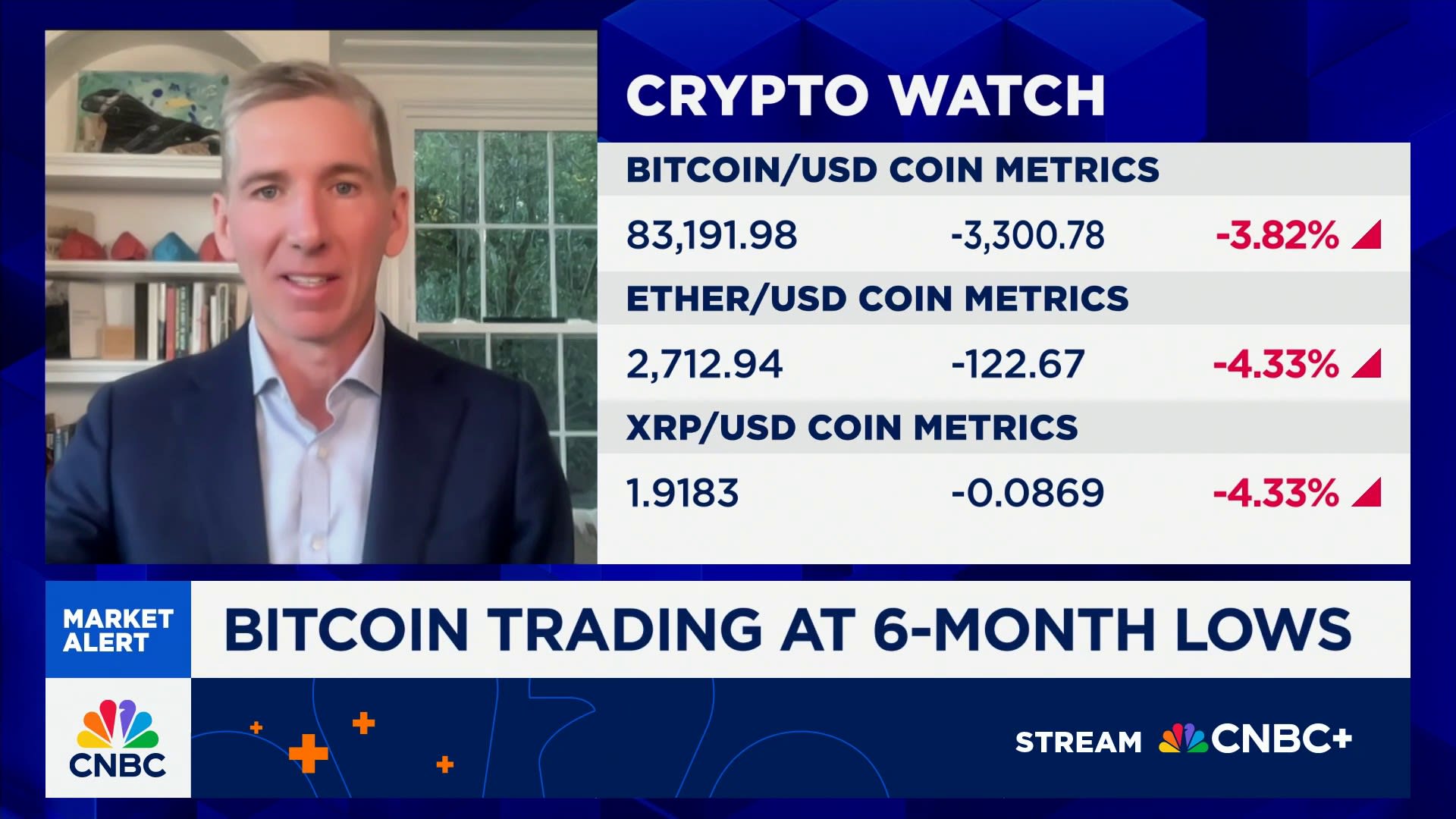 Matt Hougan, the Bitwise CIO states in an interview with CNBC, that this is an excellent buying opportunity for long-term investors.
 Stimmies? AIOZ? New interview just dropped.
 SOL Strategies CEO Leah Wald outlined how Solana-focused digital asset treasury companies can drive institutional adoption and exchange-traded fund (ETF) flows.In an interview with CryptoSlate, Wald noted that multiple Solana treasury companies create a “rising tide” effect similar to Bitcoin miners benefiting alongside Bitcoin ETF inflows.She noted the parallel between Bitcoin ecosystem dynamics, where miners receive inflows alongside spot and futures ETFs, suggesting similar potential for Solana-focused companies.
Sources
18 records from 8 domains
x.com
youtube.com
unit42.paloaltonetworks.com
facebook.com
wublock.substack.com
cryptonews.net
cjr.org
businessesgrow.com
Community notes
Spot something off or out of date? Drop a note. Editors review topic notes daily and roll accepted fixes into the explainer — contributors are recognized in the monthly $SQUID drop.
Loading notes…
Help improve this topic
Have a story or tip about this topic? Submit it. See something missing? Leave a note. Editors review daily; accepted submissions and fixes count toward the monthly $SQUID drop.