
Deep explainer on Tether’s evolution from USDT stablecoin issuer to multi‑vertical crypto conglomerate, covering reserves, USAT, XAUt, aUSDT wind‑down, DeFi uses, regulatory risks, mining, AI robotics and tokenization outlook.
+23 sources across the wider coverage universe
 IMF calls Tether's Bitcoin reserves a vulnerability, warns stablecoins susceptible to runs2026-04
 Tether poaches JPMorgan exec to bolster US stablecoin expansion2026-04
 Tether opens two roles: research analyst and economic policy analyst to quantify stablecoin impact2026-04
 New $11M crypto PAC linked to Tether books millions in ads via firm tied to its US CEO, with early backing from Cantor Fitzgerald and Anchorage Digital2026-04
 Tether to support Drift with $150M recovery plan and new partnership to replace Circle’s USDC2026-04
 Tether-linked $100M super PAC makes first ad buy through firm co-founded by its own US CEO Bo Hines2026-04
Tether: Stablecoins, Tokenized Gold, and the Making of a Crypto Conglomerate
The world’s largest stablecoin issuer sits at the center of the crypto‑dollar economy, with its USDT token functioning as a de facto settlement rail across exchanges, trading venues, and parts of DeFi. Around that core, Tether has evolved into a sprawling digital asset conglomerate spanning tokenized gold, U.S.-regulated stablecoins, bitcoin mining, AI and robotics, and education initiatives.
In the decade since its 2014 launch, Tether has grown from an experimental “crypto dollar” into the dominant issuer in the stablecoin sector, with USDT claiming roughly 60% of the global stablecoin market and a market capitalization approaching or exceeding the mid‑$180 billion range, depending on the snapshot. The company reports tens of billions of dollars in reserves, posts multi‑billion‑dollar annual profits from investing those reserves, and has become deeply embedded in the plumbing of spot and derivatives markets as well as cross‑border payments. At the same time, Tether has steadily broadened its product mix and corporate mandate: launching Tether Gold (XAUt) as a tokenized claim on physical bullion, experimenting with gold‑backed synthetic dollars via the now‑shuttered Alloy/aUSDT platform, creating USAT as a “Made in America” stablecoin for U.S. users, and reorganizing itself into four business divisions—Data, Finance, Power, and Edu—that signal ambitions well beyond stablecoins. Recent initiatives include a gold‑backed Visa card with Fasset, tokenization pilots in Dubai’s DMCC free zone, large equity bets on AI robotics firms such as NEURA Robotics, and renewable‑energy‑powered bitcoin mining in Brazil through Adecoagro. Against this backdrop of rapid expansion, Tether remains controversial: critics scrutinize its reserves, governance, and regulatory posture; regulators and politicians debate its influence; and on‑chain investigators track both its role in crime mitigation—such as freezing tens of millions of USDT linked to alleged laundering—and the centralization trade‑offs that such powers imply. This explainer unpacks how Tether works, how its product stack is evolving, how it compares to rivals such as Circle’s USDC, and what its growing footprint means for stablecoins, DeFi, and the broader crypto ecosystem.
Origins and Evolution of Tether
The story of Tether begins with the search for a reliable crypto‑native representation of the U.S. dollar that could move at internet speed without relying on bank‑run payment rails. Launched in 2014 under the name Realcoin before rebranding, the project aimed to bridge traditional money and blockchain infrastructure by issuing tokens redeemable at a one‑to‑one rate for dollars held in reserve. Early versions of the token were issued on the Omni Layer protocol atop Bitcoin, making Tether one of the first attempts to pair fiat backing with blockchain settlement in a way that retail traders and exchanges could easily integrate. Over time, the idea of a “stable coin” pegged to fiat currencies gained traction, and Tether’s implementation became the template, and eventually the benchmark, for the broader stablecoin industry.
What distinguishes Tether’s trajectory is the pace and scale of its adoption. By 2019, trading volumes in Tether had surpassed those of bitcoin itself, reflecting the token’s emergence as the preferred base asset for crypto‑to‑crypto trading pairs on centralized exchanges. At a time when banking access for many exchanges and market makers was fragile or even nonexistent, USDT offered a liquid, transferable unit of account that could be used across jurisdictions and platforms without the friction of fiat deposits and withdrawals. This utility, combined with aggressive listing by exchanges and OTC desks, quickly turned Tether into the lingua franca of crypto trading. Even as more regulated competitors like Circle’s USDC entered the market, USDT’s first‑mover advantage and entrenched network effects proved durable.
As Tether’s footprint grew, so did scrutiny of its corporate structure and regulatory posture. The company is typically described as operating through Tether Limited and related affiliates, which are closely linked to the crypto exchange Bitfinex through overlapping executives and shareholders. Over the years, Tether and Bitfinex have faced regulatory actions, including settlements with the New York Attorney General and the U.S. Commodity Futures Trading Commission, largely focused on disclosures around reserves and the handling of funds. In response, Tether has incrementally increased its transparency, now publishing daily snapshots of reserves and commissioning regular attestations by an external accounting firm, even as it remains incorporated and operated primarily outside the United States. This offshore posture has historically set Tether apart from U.S.-domiciled competitors like Circle, whose USDC stablecoin is more tightly integrated with U.S. banking and regulatory regimes.
One striking feature of Tether’s evolution is the diversity of blockchains on which USDT circulates. Initially anchored on Bitcoin’s Omni Layer, USDT has expanded to multiple chains including Ethereum, Tron, and several others, with issuance patterns shifting over time based on fees, performance, and exchange integrations. Tron, in particular, has become a major rail for Tether due to its low transaction costs, making it popular for cross‑border transfers and arbitrage activity between exchanges. At the same time, Tether has shown a willingness to prune its footprint, announcing that it would no longer issue or redeem tokens on legacy networks such as Omni, Bitcoin Cash SLP, EOS, Algorand, and Kusama as part of a strategy to focus on chains with stronger community and liquidity support. This multi‑chain but selectively curated approach underscores Tether’s pragmatic orientation: it is less about championing specific networks than about providing liquidity wherever traders demand it.
Recent years have seen Tether move from a single‑product firm to a broad platform with multiple stablecoins and tokenized assets. In addition to USD‑pegged USDT, the firm has issued euro‑ and offshore yuan‑pegged tokens (EURT and CNHT), as well as Tether Gold (XAUt), a token representing ownership of physical gold stored in secure vaults. However, shifting regulation and uneven demand have led Tether to reassess this long tail of products. It has wound down EURT due to European regulatory constraints and announced it will cease redemption obligations for CNHT by early 2027, framing these moves as “strategic changes” to concentrate on higher‑growth offerings. This rationalization is emblematic of Tether’s current transition: a company that once proliferated stablecoin variants is now consolidating and redeploying resources toward more scalable initiatives, including tokenization platforms, U.S.-regulated products, and infrastructure ventures.
To capture this progression, it is useful to view Tether’s corporate history not as a linear march but as a sequence of phases: an experimental launch phase centered on Omni; a hyper‑growth trading phase dominated by USDT’s rise on offshore exchanges; a scrutiny and transparency phase driven by regulatory settlements and calls for attestations; and now a diversification phase in which Tether positions itself as an infrastructure and technology company spanning finance, energy, AI, and education. Each phase has been marked by tensions between decentralization ideals and the practicalities of operating a global, dollar‑linked token at scale under shifting regulatory expectations. The next sections examine how this plays out in Tether’s flagship products and its expanding ecosystem.

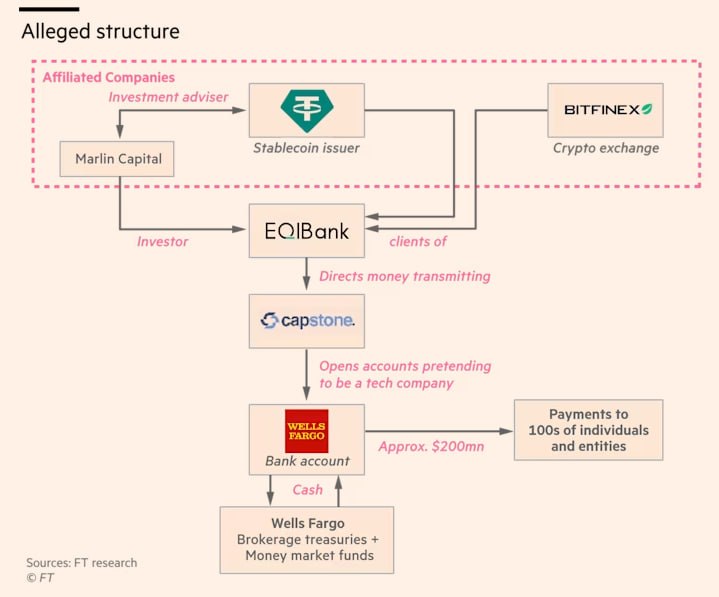
US freezes $84 million tied to Tether and Bitfinex-linked payments firm Capstone, accused of posing as a tech services company.
How Tether’s Core Stablecoins Work
At the heart of Tether’s business model is a straightforward proposition: for every USDT token in circulation, Tether commits to hold an equivalent value in reserves, allowing authorized users to redeem one token for one dollar, subject to terms and conditions. The company emphasizes that its tokens are “100% backed” by reserves and that these reserves are composed primarily of cash and cash equivalents such as U.S. Treasury bills, alongside other assets including secured loans, bitcoin, and gold. While the exact composition and risk profile of the reserve portfolio has evolved over time, the core idea is that USDT functions as a claim on a professionally managed pool of assets rather than as an algorithmic or crypto‑collateralized stablecoin. This design contrasts sharply with the likes of TerraUSD, whose collapse underscored the fragility of purely algorithmic pegs.
USDT enters circulation when Tether mints new tokens in response to deposits from customers, typically institutional trading firms, exchanges, or other large counterparties that have passed Tether’s know‑your‑customer (KYC) and anti‑money‑laundering checks. When these clients wire fiat currency to Tether’s banking partners, Tether credits them with newly created USDT on a chosen blockchain; conversely, when they return USDT to Tether for redemption, tokens are burned and fiat is sent back, minus fees. Retail users generally cannot redeem directly with Tether; instead, they acquire and offload USDT through exchanges, OTC desks, or peer‑to‑peer transfers, relying on secondary market liquidity to maintain the peg. The combination of primary issuance/redemption and liquid secondary markets allows arbitrageurs to keep USDT’s market price close to one dollar, barring extreme stress events.
Transparency around reserves is a key pillar of Tether’s model, particularly given historical controversies over whether tokens were fully backed at all times. In response to regulatory pressure and market skepticism, Tether now publishes daily snapshots of its reserve assets and liabilities, along with periodic attestations by an independent accounting firm attesting that the consolidated assets exceed consolidated liabilities at specific cut‑off dates. By the second quarter of 2026, USD₮ issuance had grown to approximately 184.6 billion dollars, with reserves exceeding liabilities by a buffer of 4.11 billion dollars. Tether posted net operating profit of about 1.5 billion dollars for that quarter alone, led by U.S. Treasury and repo, underscoring how the current high‑rate environment continues to benefit fiat‑backed stablecoin issuers. These profits accrue to Tether’s shareholders rather than to USDT holders, who receive price stability but not a yield.
Technically, USDT is implemented as a series of smart contracts or token contracts on various blockchains, each representing a distinct instantiation of the asset. On Ethereum, USDT conforms to the ERC‑20 standard; on Tron, it follows TRC‑20, and so on. Tether maintains control over the minting and burning functions in these contracts, as well as over administrative functions such as freezing specific addresses. Transfers between chains typically occur through custodial exchanges or third‑party bridges, not via a native cross‑chain mechanism run by Tether. This multi‑chain architecture enables Tether to adapt to evolving user preferences—for example, facilitating cheap transfers on Tron for remittances while maintaining deep liquidity on Ethereum for DeFi applications—but it also introduces fragmentation and bridge risk, since the token’s global liquidity is split across chains.
Risk management for USDT involves both asset‑side and liability‑side considerations. On the asset side, questions revolve around the credit quality, duration, and liquidity of Tether’s reserves: heavy reliance on short‑term Treasuries reduces credit risk but introduces interest‑rate and roll‑over risk; holdings in bitcoin and gold introduce price volatility; and secured loans to third parties introduce counterparty risk. Tether has indicated a shift toward higher‑quality and more liquid reserves over time, reducing exposure to commercial paper and other riskier instruments, though critics continue to press for more granular, real‑time disclosures. On the liability side, the primary risk is a loss of confidence triggering a wave of redemptions or secondary market selling, potentially leading to a depeg if Tether cannot or will not meet redemption demand fast enough. In such a scenario, the concentration of USDT in centralized venues and DeFi protocols could amplify market stress.
One important but sometimes misunderstood aspect of Tether’s architecture is its ability to freeze or “blacklist” specific token addresses. Because Tether controls the admin keys of its token contracts, it can prevent certain addresses from transferring or redeeming USDT in response to law enforcement requests, sanctions lists, or internal risk assessments. This capability has been used in multiple high‑profile cases, including the freezing of approximately 72 million dollars in USDT tied to an on‑chain laundering scheme that routed about 120 million dollars through Tron and other networks and funneled funds into Monero and various exchanges. While such actions demonstrate Tether’s willingness to collaborate on crime mitigation, they also highlight the centralized control inherent in fiat‑backed stablecoins and raise philosophical concerns among users who prize censorship resistance. For many institutions, however, this trade‑off is acceptable, and in some jurisdictions, it is a regulatory requirement.
The economics of USDT issuance are central to understanding Tether’s broader expansion into other sectors. In a low‑yield environment, stablecoin issuers earn modest income on reserves and rely on scale to generate profits; in a high‑yield environment with large outstanding supply, the profit potential becomes substantial. With a circulating USDT supply measured in the hundreds of billions and a reserve portfolio heavily weighted toward interest‑bearing instruments, even a modest net yield translates into billions of dollars of annual income. Tether’s Q2 2026 disclosure of 1.5 billion dollars in quarterly net operating profit illustrates how the stablecoin business can bankroll significant investments in adjacent sectors, from bitcoin mining to AI robotics. This reinvestment of seigniorage‑like profits is a defining feature of Tether’s current strategic arc.
Readers click Tether not primarily for stablecoin mechanics but for the tension between Tether's expanding empire — agriculture, AI, mining, politics, gold — and the unresolved opacity that makes that empire a systemic risk if it ever cracks.
Beyond USDT: Gold, Synthetic Dollars, and U.S.-Regulated Stablecoins
Although USDT remains the flagship product, Tether has increasingly treated its stablecoin stack as a platform for experimenting with new forms of tokenized value. A prominent example is Tether Gold (XAUt), a token that represents ownership of physical gold bars stored in secure vaults in Switzerland. Each XAUt token corresponds to one troy ounce of gold on a specific bar, and token holders can, in principle, arrange for physical redemption in certain jurisdictions, subject to applicable fees and minimums. XAUt allows crypto users to gain exposure to gold without using traditional gold ETFs or futures, and it offers 24/7 transferability across supported blockchains. Tether reports that XAUt is backed by over 22,000 kilograms of physical gold and has a market capitalization around the three‑billion‑dollar mark, placing it among the largest tokenized commodities.
The emergence of XAUt has coincided with broader interest in real‑world assets (RWAs) onchain, particularly tokenized commodities such as gold that can serve as collateral or store‑of‑value instruments within crypto lending markets. Digital asset lender Ledn, for instance, has added Tether Gold as an eligible collateral asset for its loan products, allowing users to secure loans in stablecoins without liquidating their gold exposure. According to Ledn, XAUt is accepted at a one‑to‑one collateral ratio and is not rehypothecated, meaning that the pledged tokens are held in segregated custody rather than being lent out to generate additional yield. This approach seeks to mitigate counterparty and rehypothecation risk while tapping into demand from investors who prefer to borrow against tokenized gold rather than sell it. The move also illustrates how XAUt is migrating from a pure price‑exposure instrument into a component of the broader credit stack in both centralized finance and DeFi.
Tether has also sought to extend the utility of tokenized gold beyond borrowing and price speculation into everyday payments. In collaboration with digital banking and investment platform Fasset, Tether launched what it describes as the world’s first gold‑backed neobanking Visa card. The card allows users to hold tokenized gold—linked to XAUt—while spending in fiat via standard card rails, effectively turning bullion into a medium of exchange in ordinary commerce. On the backend, Fasset’s infrastructure handles the conversion between gold tokens and fiat at the point of sale, while Tether positions the product as a way to “unlock real‑world utility for digital gold.” This initiative resonates with Tether’s broader theme of bridging tokenized assets and traditional financial rails, and it hints at how tokenized commodities could play a role in remittances and savings products in emerging markets where trust in local currencies is weak.
A more experimental offshoot of Tether’s gold strategy was Alloy by Tether, a platform that allowed users to mint an overcollateralized synthetic dollar, aUSDT, backed by XAUt. In this design, users deposited Tether Gold into smart contracts on Ethereum and minted aUSDT at a conservative collateralization ratio, meaning that the value of locked XAUt exceeded the value of the synthetic dollars in circulation. This structure resembled decentralized stablecoins like DAI or certain synthetic asset protocols, but with tokenized gold as the underlying collateral and Tether as the orchestrating entity. The idea was to combine the inflation‑hedging appeal of gold with the transactional convenience of a dollar‑denominated token. However, after roughly two years of operation, Tether decided to wind down Alloy and the aUSDT token, citing low user adoption and a desire to focus resources on products with deeper liquidity and stronger long‑term market opportunities, such as XAUt itself.
The winding down of aUSDT is part of a broader “strategic changes” program in which Tether has pruned niche or underperforming assets from its lineup. In early 2024, the company announced the discontinuation of its Chinese yuan stablecoin, CNHT, pointing to evolving market conditions, limited sustained community demand, and a preference to concentrate on more scalable offerings. It has also wound down EURT, attributing that move in part to European regulatory developments that complicate the issuance of euro‑denominated stablecoins by non‑bank entities. Taken together, these decisions show Tether transitioning from a strategy of launching many fiat‑pegged tokens to a more focused portfolio centered on USDT, XAUt, and a handful of growth initiatives in tokenization, yield products, and infrastructure.
One of the most consequential additions to Tether’s portfolio is USAT, a U.S.-regulated, dollar‑backed stablecoin designed explicitly for the American market. USAT is issued by Anchorage Digital Bank under the GENIUS Act framework, making it a “Made in America” stablecoin intended to operate under a dedicated federal regime for dollar‑backed tokens. For years, USDT was effectively off‑limits to many U.S. retail users and institutions due to Tether’s restrictions on serving U.S. persons and the absence of a clear U.S. regulatory category for offshore stablecoins. USAT is Tether’s answer to that constraint: a token that brings the Tether brand and distribution network into compliance with U.S. standards by partnering with a regulated bank issuer. The token has been listed on major exchanges and is now accessible to U.S. users seeking a dollar‑backed token that explicitly fits within an American regulatory framework.
The launch of USAT intensifies the competitive dynamics often described as the “stablecoin wars”. Circle’s USDC, widely seen as the leading U.S.-regulated stablecoin, has built its position by integrating with U.S. banks and payment networks and by marketing itself as a compliant, transparent alternative to offshore issuers. Circle’s leadership has projected that stablecoin adoption could grow at roughly 40% annually, underscoring the perceived size of the opportunity. Tether’s entry into the regulated U.S. space via USAT challenges USDC’s position by offering a Tether‑branded product that sits squarely within the U.S. regime while allowing Tether to maintain its more flexible, offshore USDT for global markets. Early attestations and market data point to rapid growth in USAT’s circulating supply from a small base, with month‑over‑month increases in the triple‑digit percentages, driven by exchange integrations and institutional interest. While USAT’s scale remains modest compared to USDT or USDC, its trajectory suggests that Tether intends to compete head‑on in jurisdictions where regulatory clarity is emerging.
The interplay between USDT, XAUt, aUSDT, USAT, EURT, and CNHT illustrates Tether’s evolving product philosophy. Rather than simply issuing a proliferation of fiat‑pegged tokens, Tether appears to be converging on a dual strategy: a globally oriented, high‑liquidity dollar stablecoin (USDT) and a set of specialized tokens with clear, differentiated roles—gold as an RWA and collateral asset; USAT as a U.S.-regulated onshore dollar; and potentially future tokenized assets launched through its forthcoming tokenization platform. The winding down of aUSDT and certain fiat tokens reflects a willingness to sunset experiments that do not achieve meaningful scale, freeing capital and management attention for products that align with the company’s broader ambitions in tokenized finance and infrastructure.

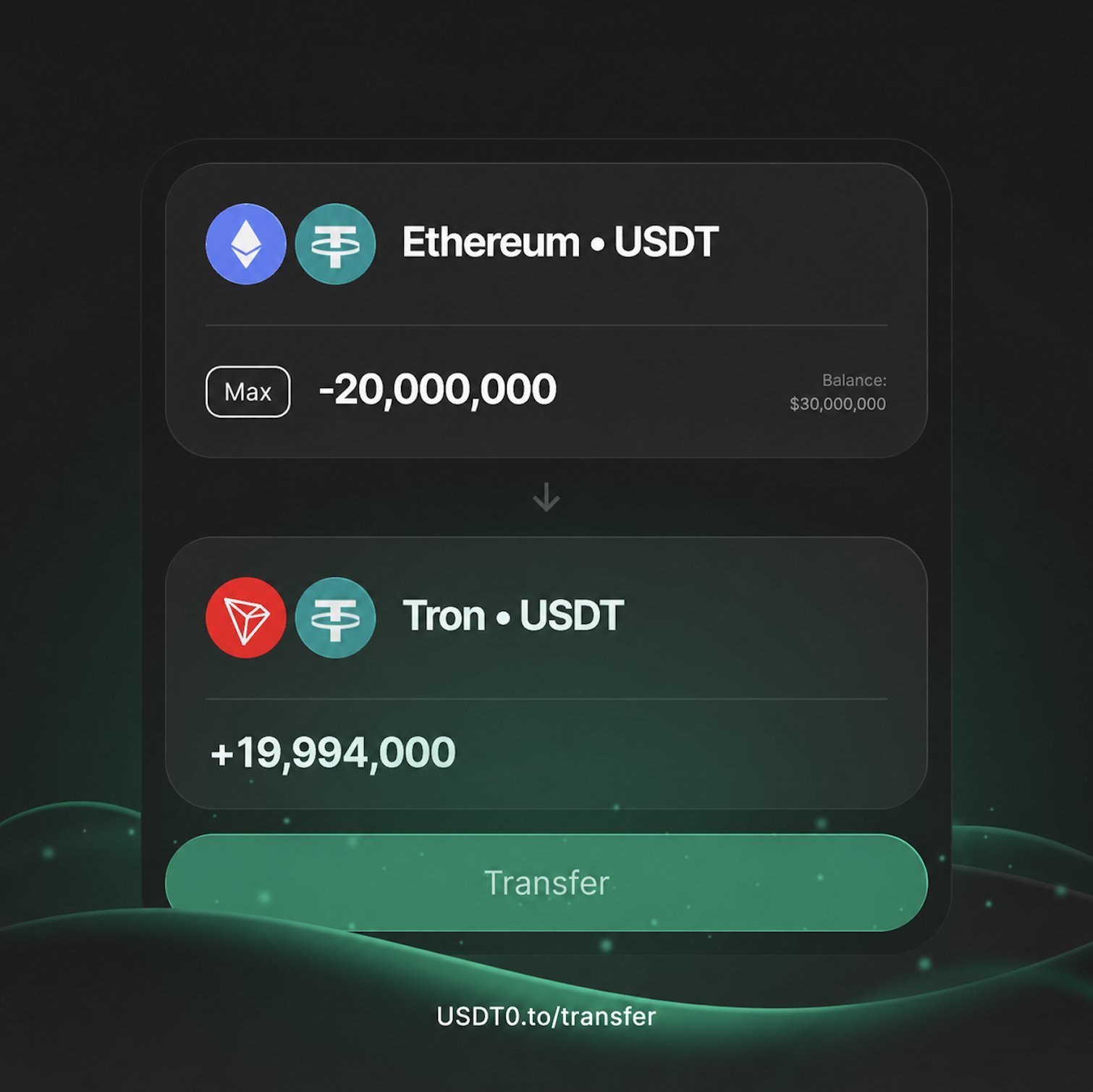
USDT0 boosts Ethereum-Tron liquidity to support single transfers of up to $20M, enabling larger crosschain USDT movements in a few clicks
Tether as a Digital Asset Conglomerate
Tether’s April 2024 announcement that it would “advance beyond stablecoins” marked a formal recognition of a shift that had been underway for several years: the company was no longer content to be a single‑product firm issuing USDT but sought to become a diversified technology and infrastructure company. To reflect this, Tether introduced a new corporate framework organized around four divisions: Tether Data, Tether Finance, Tether Power, and Tether Edu. Each division is meant to house a distinct set of initiatives, from AI and peer‑to‑peer platforms to bitcoin mining and education, under a unified mission of building what Tether describes as “future‑proof” financial and technological systems. This restructuring is as much a branding exercise as an operational one, but it signals to partners and regulators that Tether sees itself as an integrated player in digital infrastructure rather than merely a token issuer.
Tether Finance is the most direct successor to the legacy business, encompassing USDT, XAUt, and other digital asset services. Within this division, Tether has articulated plans to launch a digital asset tokenization platform—codenamed Hadron in earlier communications—that would allow institutions to tokenize real‑world assets ranging from securities to commodities. This move aligns with the broader industry push toward RWA tokenization and positions Tether as a provider of infrastructure for issuers and asset managers who want to bring traditional assets onchain. Tether Finance also encompasses cross‑border payment tools, custodial services in partnership with third parties, and emerging yield products such as Tether‑centric vaults that allocate USDT into short‑term Treasuries and gold‑backed instruments. In this sense, Tether Finance serves as both the ballast of the conglomerate and the capital engine that funds more speculative bets via seigniorage‑driven profits.
The Tether Power division embodies the company’s expansion into energy and bitcoin mining. Tether has argued that bitcoin mining, when paired with renewable or stranded energy, can support grid stability, monetize surplus generation, and secure what it views as the world’s most robust monetary network. To this end, Tether has invested in mining operations and developed a proprietary mining operating system (Mining OS) intended to optimize hardware deployment and energy usage, with plans to open‑source the software to the broader community. A flagship example is its collaboration with Adecoagro, a South American agricultural and renewable energy producer, with which Tether signed a memorandum of understanding to explore bitcoin mining powered by renewable energy in Brazil. According to reports, Adecoagro—of which Tether is now a major shareholder—is preparing a mining facility in the Brazilian state of Mato Grosso do Sul that will use electricity generated from sugarcane waste, starting with a capacity of around 10 megawatts and roughly 1,280 mining machines. The project aims to monetize surplus energy, enhance grid reliability, and integrate agricultural production with digital infrastructure, illustrating Tether Power’s thesis that energy and crypto mining can be synergistic.
Tether’s expansion into Tether Data reflects its conviction that AI, robotics, and peer‑to‑peer platforms will be foundational to the next era of digital economies. The division focuses on strategic investments and in‑house development of technologies such as AI infrastructure, data analytics, and decentralized communication tools. Among its most notable moves is its participation as a lead investor in NEURA Robotics’ record Series C funding round of up to 1.4 billion dollars, one of the largest ever for a full‑stack robotics company. NEURA Robotics develops humanoid robots and what it describes as “physical AI” platforms, aiming to deploy robotic systems capable of operating autonomously and collaboratively in industrial and domestic settings. Investors in the round include Tether, Amazon, Nvidia, Qualcomm Ventures, Bosch, and Schaeffler, reflecting a convergence of crypto capital and traditional tech giants around AI‑driven robotics. NEURA has entered a partnership with Amazon Web Services for infrastructure supporting continuous model training and fleet‑level intelligence, enabling its robots to learn from data across deployments and adapt in real time.
From Tether’s perspective, the NEURA investment is more than a financial bet. Company communications emphasize the goal of embedding self‑custodial wallets, edge AI, and secure communication protocols into robotic platforms, effectively turning robots into autonomous economic agents that can hold and transact digital assets. This vision dovetails with Tether Data’s interest in peer‑to‑peer technologies and could, in theory, create new use cases for stablecoins and tokenized assets—for example, robots paying for energy, services, or maintenance autonomously using USDT or future Tether‑issued tokens. While such scenarios remain speculative, they illustrate how Tether is trying to position itself at the intersection of fintech, AI, and the “machine economy,” leveraging its balance sheet to gain early exposure to potential demand drivers for its core products.
The Tether Edu division underscores the company’s recognition that adoption of digital assets, blockchain, and AI requires significant investment in education and skills development. Tether Edu coordinates training programs, workshops, and partnerships with educational institutions and public‑sector entities to build capacity in digital literacy, blockchain development, and related fields. A recent example is Tether’s memorandum of understanding with the Dubai Multi Commodities Centre (DMCC), a major free zone that hosts over 26,000 companies. Under the MoU, Tether and DMCC will collaborate on blockchain education, tokenization projects, and digital asset innovation, positioning Dubai as a hub for pilots involving tokenized commodities and other digital assets. The initiative is framed as part of Tether Edu’s mission to expand global access to digital skills and to support regulatory sandboxes where new tokenization models can be tested. For Tether, such partnerships provide both brand exposure and a channel for shaping how regulators and businesses in key jurisdictions conceptualize crypto and stablecoins.
The conglomerate strategy is not without challenges. Diversifying into energy, AI, and education increases operational complexity and exposes Tether to new regulatory regimes—from energy and environmental regulation in mining projects to safety and liability frameworks in robotics. It also raises questions about focus: skeptics argue that a stablecoin issuer should prioritize transparency, risk management, and regulatory compliance over far‑flung ventures that may be peripheral to its core mission. Tether’s counterargument is that the seigniorage‑like profits generated by its stablecoin operations enable it to invest in infrastructure and technologies that, in its view, advance financial inclusion, energy efficiency, and innovation. The success or failure of these bets will shape how the market perceives Tether’s evolution from a specialized issuer into a multi‑vertical digital asset conglomerate.
- 01Tether diversification anxiety↗
Headlines about AI, Bitcoin mining, agriculture, and political allies drew top clicks because readers sense Tether is morphing from a stablecoin issuer into an opaque conglomerate, amplifying counterparty risk.
- 02Regulatory and sanctions exposure↗
The $20B Garantex investigation, OFAC wallet freezes, FBI/Secret Service outreach, and JPMorgan warnings signal readers track whether Tether's compliance posture can survive geopolitical scrutiny.
- 03Minting signals and market sentiment↗
Spikes like $1.3B post-Aug-5 bottom and $5B in five days are read as macro confidence indicators, making mint events a proxy for broader crypto market direction.
- 04Ardoino leadership and ideology↗
Readers followed Ardoino's CEO ascension, hyperinflation thesis, and diversification strategy as a window into whether Tether's direction is visionary or reckless.
- 05Reserve scale and Treasury dominance↗
Tether and Circle holding more US Treasuries than sovereign nations under GENIUS Act rules reframes stablecoin reserve policy as a geopolitical story, not just a crypto one.
- 06Litigation and counterparty disputes↗
The Celsius $2.4B BTC lawsuit and Swan Bitcoin mining suit reveal that Tether's aggressive expansion strategy generates high-stakes legal conflicts readers treat as solvency signals.
Tether in the Stablecoin and DeFi Ecosystem
Tether’s centrality to the crypto ecosystem is most evident when viewed in the context of the broader stablecoin market. As of 2026, USDT remains the clear market leader, with an estimated market capitalization around 187 billion dollars and a market share of roughly 60% of the total stablecoin supply. This dominance persists despite the proliferation of competitors including USDC, DAI, and various exchange‑issued or protocol‑issued stablecoins. Circle’s USDC, in particular, is often viewed as Tether’s primary rival, backed by U.S.-domiciled reserves and operating under a more overtly regulated framework. USDC’s market capitalization has hovered in the tens of billions, with estimates around 70 billion in some recent snapshots, significantly smaller than USDT but still substantial enough to be systemically important in DeFi and CeFi. The resulting landscape is one in which Tether remains the global liquidity backbone while USDC and other stablecoins carve out niches in specific jurisdictions, ecosystems, or regulatory regimes.
A simplified comparison of key Tether‑related stablecoins and USDC helps clarify their positioning:
| Token | Issuer / Structure | Primary Jurisdictional Focus | Asset Backing | Approximate Market Role |
|---|---|---|---|---|
| USDT | Tether Finance (offshore) | Global, especially non‑U.S. markets | Fiat reserves (primarily Treasuries, cash, other assets) | Dominant trading and settlement stablecoin on CeFi and parts of DeFi |
| USAT | Issued by Anchorage Digital Bank under GENIUS Act, branded by Tether | U.S. market with federal oversight | Dollar reserves held by a U.S. bank | Emerging regulated onshore stablecoin, competing with USDC |
| USDC | Circle (U.S.-based) | U.S. and regulated global markets | Fiat reserves in U.S. banking system | Leading U.S.-regulated stablecoin, strong presence in DeFi and fintech |
| XAUt | Tether Finance | Global | Allocated physical gold bars | Major tokenized gold asset for store of value and collateral |
This table highlights a key strategic nuance: Tether is effectively segmenting its stablecoin offerings by jurisdiction and asset type, using offshore USDT as a global liquidity instrument while introducing USAT for U.S. users and XAUt for gold‑exposed investors. Circle, by contrast, focuses primarily on fiat‑backed stablecoins under U.S. regulation, with USDC as its flagship. The competition between these models has implications for how stablecoin liquidity is distributed between onshore and offshore venues, as well as for the degree to which regulators can impose standards on reserve composition, disclosure, and risk management.
USDT’s ubiquity is reflected in its myriad use cases. On centralized exchanges, it serves as the base asset for countless trading pairs, from major cryptos like bitcoin and ether to illiquid altcoins. It is the predominant quote currency in many perpetual futures and options markets, and it underpins margining and collateral arrangements in derivatives venues worldwide. Traders use USDT to move capital rapidly between exchanges, arbitrage price discrepancies, and hedge exposures without touching fiat banks. In DeFi, USDT is widely integrated into automated market makers, lending protocols, and derivatives platforms, although its share of DeFi liquidity is somewhat smaller than in CeFi due to competition from USDC and decentralized stablecoins. Nonetheless, USDT remains an important component of liquidity pools and a popular borrowing asset for users seeking dollar exposure.
Beyond speculative trading, USDT has become a tool for cross‑border payments and remittances, particularly in emerging markets where access to dollar accounts is limited or capital controls are strict. Tron‑based USDT, with its low fees and high throughput, is especially popular for this purpose, enabling users to send large amounts quickly and cheaply via both formal and informal channels. NGOs, businesses, and individuals have used stablecoins to navigate crises, inflation, and currency devaluation, although empirical data on the scale of such usage varies. Tether’s role in these contexts is complex: on the one hand, it provides a practical avenue for dollarized savings and international payments; on the other, it introduces dependencies on a private offshore issuer whose governance and regulatory risk may be opaque to end users.
The intersection of Tether and DeFi has been further deepened by the launch of institutional‑grade yield products that treat USDT as core collateral or deposit currency. A notable example is the StableEarn vault, launched by the Tether‑focused blockchain platform Stable, which offers a USDT yield vault backed by U.S. Treasuries and gold. The product, aimed at institutional clients, allocates deposited USDT into a portfolio of short‑dated government securities and gold‑linked instruments, passing a portion of the resulting yield back to depositors while managing liquidity and risk. This model resembles that of tokenized money market funds and RWA‑backed DeFi vaults, with USDT serving as the inflow currency rather than as the underlying reserve asset. It illustrates how Tether’s tokens can be layered into complex financial products that blur the line between onchain and offchain assets.
The rise of tokenized gold as collateral is another key development in which Tether plays a leading role. As mentioned earlier, Ledn’s decision to accept XAUt as collateral for loans—without rehypothecating the pledged tokens—opens a path for gold holders to access stablecoin liquidity while maintaining price exposure. Such structures could be integrated into onchain borrowing platforms, enabling users to deposit XAUt into smart contracts and borrow USDT, USDC, or other stablecoins while relying on oracles to track the underlying gold price. As tokenized commodities gain traction, they may reduce the dominance of crypto‑native collateral (such as BTC and ETH) in lending markets, potentially lowering volatility and broadening participation. Tether, by issuing XAUt and promoting its integration into lending and payments, is positioning itself at the center of this emerging RWA collateral layer.
Tether’s influence also extends into the domain of compliance and law enforcement, sometimes in ways that are controversial among privacy advocates. The company regularly cooperates with regulators and investigators by freezing tokens associated with hacks, thefts, or sanctions violations. A recent case involved a sophisticated laundering scheme in which a wallet received approximately 120 million dollars in USDT on Tron, rapidly moved the funds across multiple platforms, and converted a significant portion into privacy‑focused cryptocurrency Monero (XMR). On‑chain investigator ZachXBT traced the flows, showing that more than 12 million dollars went to KuCoin deposit addresses, over 8 million to instant exchanges, and another 8 million across bridges from Tron to Bitcoin and Ethereum using intermediaries such as Near‑based intents. As Monero’s price spiked from the low 300‑dollar range into the 430‑plus range amid this activity, Tether ultimately froze about 72 million dollars in USDT linked to the scheme, effectively locking up a large chunk of the laundered funds.
This case illustrates both the strengths and trade‑offs of centralized stablecoins. From an enforcement perspective, the ability to freeze funds is a powerful tool for mitigating crime and responding to real‑time threats. From a decentralization perspective, it underscores that users of fiat‑backed stablecoins are relying on corporate discretion and regulatory compliance rather than purely trustless protocols. For many institutional and mainstream users, that trade‑off is acceptable; for others, it is a reason to favor decentralized or privacy‑preserving alternatives. Either way, Tether’s actions have helped to define expectations around what stablecoin issuers can and will do in response to questionable activity, setting norms that regulators are increasingly codifying into formal guidance.
Binance Wallet now lets users pay gas fees with USDT on BNB Chain, Ethereum, Solana and TRON
Regulation, Transparency, and Systemic Risk
Regulatory scrutiny has been a constant backdrop to Tether’s rise. Early controversies centered on questions about whether USDT was fully backed by reserves at all times, compounded by Tether’s limited disclosures and complex banking arrangements. Investigations by the New York Attorney General and the U.S. Commodity Futures Trading Commission led to settlements in which Tether and related entities agreed to pay fines and to improve transparency around reserves, including regular attestations and public reporting. Since then, Tether has sought to recast itself as a leader in stablecoin disclosure, publishing daily data on total reserves and token liabilities and commissioning independent attestations to confirm that its consolidated assets exceed its obligations. The attestation‑only era ended on August 13, 2026, when Tether announced that KPMG had issued an unqualified opinion on the company’s full financial statements for the year ended December 31, 2025 — the auditor’s opinion, as reported by the audited party. The engagement covered the complete balance sheet, income statement, and cash‑flow statements, including a physical count of every gold bar in the vaults, rather than another point‑in‑time snapshot, and found reserves exceeding liabilities by 6.814 billion dollars. That answers the specific objection critics had been raising for years — an attestation confirms assets covered liabilities on one date, an audit tests the systems and transactions behind that number — but a single annual audit is still not the continuous monitoring or regulatory supervision applied to banks and money market funds. Whether the inaugural audit becomes an annual habit rather than a one‑off is now the open question.
Tether’s reserve disclosures nonetheless reveal important dynamics about its business model and systemic role. With a reserve portfolio dominated by short‑term U.S. Treasuries and other cash‑equivalent instruments, Tether is effectively one of the larger non‑sovereign holders of U.S. government debt. This positioning gives it both stability and influence: on the one hand, Treasuries are highly liquid and low‑risk, supporting the integrity of the peg; on the other, concentration of reserves in a single asset class and jurisdiction exposes Tether to shifts in monetary policy, geopolitical risk, and changes in U.S. regulations governing foreign holders of Treasuries. The company’s decision to hold some reserves in bitcoin and gold adds diversification but also introduces mark‑to‑market volatility; during periods of falling crypto or gold prices, the contribution of these holdings to excess reserves and net equity may shrink.
In parallel, regulators and lawmakers around the world are grappling with how to classify and oversee stablecoins. Proposals range from treating stablecoin issuers as banks, requiring full deposit insurance and capital requirements, to creating bespoke licensing regimes that focus on reserve quality, segregation, and redemption rights. In the United States, legislative efforts have contemplated regimes in which stablecoins could be issued either by depository institutions or by non‑bank entities under strict reserve and supervision standards. Tether’s launch of USAT under the GENIUS Act framework can be seen as an attempt to position itself within the latter category by associating with a federally regulated bank issuer while preserving flexibility for its offshore operations via USDT. This dual‑track approach acknowledges that regulatory arbitrage opportunities may narrow over time and that having at least one fully onshore, compliant product is strategically important.
One of the key systemic risks discussed in relation to Tether is the possibility of a sudden loss of confidence leading to a “run” on USDT. In such a scenario, large holders might rush to redeem tokens for fiat or dump them on secondary markets, potentially driving the token’s price below one dollar and forcing Tether to liquidate reserves rapidly. If reserves are indeed held in highly liquid instruments like short‑term Treasuries, Tether should be able to meet redemptions without destabilizing markets, but stress tests have not been fully observed at the current scale. Moreover, questions remain about legal enforceability of redemption rights for different categories of users, especially retail holders who cannot interact directly with Tether. A severe depeg could trigger cascading liquidations in DeFi protocols where USDT is used as collateral or as a reference asset, and it could impair the solvency of exchanges that hold significant USDT balances.
Another risk vector concerns regulatory actions that could restrict Tether’s access to banking or force it to change the composition of its reserves. Past episodes in which Tether’s banking relationships were disrupted led to temporary market dislocations and raised concerns about how dependent stablecoin issuers are on a small set of correspondent banks and custodians. If regulators were to impose stricter limits on non‑U.S. entities holding large volumes of U.S. Treasuries or require stablecoin issuers to hold reserves in segregated accounts at central banks, Tether would need to adjust its operations and possibly accept lower yields on reserves. Conversely, if regulators explicitly recognize certain stablecoins as acceptable settlement assets—for example, for regulated broker‑dealers or payment institutions—Tether could see expanded demand but also greater oversight and capital requirements.
From a market‑structure perspective, Tether’s scale means that its actions can have ripple effects across multiple asset classes. By accumulating large positions in short‑term Treasuries, it participates—albeit modestly relative to sovereigns and large funds—in the demand side of U.S. government funding. By reinvesting profits into bitcoin mining, robotics, and tokenization platforms, it channels capital into frontier sectors, potentially accelerating their development but also concentrating influence. The interplay between Tether’s stablecoin operations and its conglomerate investments raises governance questions: how are investment decisions made, what risk limits apply, and how insulated are the reserves backing USDT from the performance of Tether’s venture‑style bets? The company asserts that reserves are segregated and fully backing tokens, but external observers have limited visibility into internal risk management processes.
Comparing Tether’s model to that of Circle’s USDC highlights different approaches to managing these risks. Circle emphasizes its U.S. regulatory oversight, integration with banking partners, and transparency around reserve custodians and composition, positioning USDC as a lower‑risk, institution‑friendly stablecoin. Tether emphasizes its track record of maintaining the peg through various market cycles, its global reach, and its ability to innovate and invest at scale using profits derived from reserves. In practice, many market participants hold both USDT and USDC, using them interchangeably for different purposes: USDT for liquidity on certain exchanges and in emerging‑market corridors, USDC for DeFi protocols and integrations with fintechs. This diversification mitigates single‑issuer risk but does not eliminate it—USDT’s dominance means that a severe disruption could still have systemic implications.
To conceptualize Tether’s risk landscape, it is helpful to categorize key risk types and their potential impacts:
| Risk Type | Description | Potential Impact on Tether and Markets |
|---|---|---|
| Reserve Risk | Losses or illiquidity in reserve assets (e.g., credit events, rate shocks) | Erosion of excess reserves, potential shortfall relative to liabilities, pressure on peg |
| Redemption / Liquidity Risk | Sudden spike in redemptions or secondary market selling | Forced asset sales, temporary depegs, stress on exchanges and DeFi collateral |
| Regulatory / Legal Risk | Adverse regulatory actions, fines, or restrictions on operations | Loss of banking access, need to restructure products, reputational damage |
| Operational / Governance Risk | Internal failures, key‑person risk, governance conflicts | Errors in minting/burning, mismanagement of reserves, loss of trust |
| Technological / Security Risk | Smart contract bugs, admin key compromise, chain outages | Frozen or lost tokens, exploits, chain‑specific disruptions |
| Conglomerate Investment Risk | Losses in non‑core ventures (mining, AI, robotics, tokenization) | Reduced shareholder equity, potential political scrutiny, indirect effects on confidence |
This schema underscores that Tether’s systemic importance arises not only from its scale but also from the interdependence of its stablecoin operations with broader financial and technological ecosystems. Effective risk management requires coordinating across legal, financial, and technical domains—a task that becomes more complex as Tether’s scope expands.
Paolo Ardoino named CEO of Tether
Tether proactively freezes all OFAC-sanctioned wallets
Alloy (aUSDT) gold-collateralized stablecoin launched
$1.3B USDT minted following Aug 5 market bottom
USDT and XAUT go live on Telegram's TON blockchain
Cantor Fitzgerald, SoftBank, Tether, and Bitfinex announce $3B Bitcoin venture
Tether reports $5B Q1 profit; USDT0 cross-chain product introduced
Tether and Circle collectively hold $160B+ in US Treasuries under GENIUS Act rules
Outlook
Looking ahead, Tether’s trajectory will likely be shaped by three interlocking forces: regulatory convergence, competitive dynamics in the stablecoin market, and the maturation of tokenization and AI‑driven infrastructure. On the regulatory front, a gradual convergence toward clearer stablecoin frameworks seems probable in major jurisdictions, with requirements around reserve quality, segregation, redemption rights, and governance. Tether’s launch of USAT suggests that it is preparing for a future in which access to key markets, especially the United States, depends on having fully compliant, onshore products issued under bank‑like supervision. At the same time, USDT is likely to remain a key instrument in less regulated or emerging markets where its liquidity and existing network effects are strongest, effectively creating a two‑tier structure of onshore regulated and offshore market‑driven stablecoins.
In the competitive arena, the “stablecoin wars” will intensify as banks, fintechs, and existing issuers vie for market share in payments, remittances, and DeFi. Circle’s USDC will continue to position itself as the default for regulated DeFi and fintech integrations, while Tether leverages its scale and profitability to deepen liquidity, expand its ecosystem, and refine its products. New entrants, including bank‑issued tokens and central bank digital currencies (CBDCs), will add complexity but are unlikely to displace USDT and USDC overnight, given the latter’s entrenched roles and existing integrations. Instead, we may see a multipolar stablecoin landscape, with different tokens dominating in different corridors, sectors, and regulatory regimes.
Tether’s ventures into tokenized gold, RWA collateral, bitcoin mining, robotics, and education will serve as test cases for how a stablecoin issuer can evolve into a broader digital asset conglomerate. If initiatives like the Fasset gold‑backed card, the Adecoagro sugarcane‑powered mining project, and the NEURA Robotics investment achieve meaningful scale, they could create new demand channels for Tether’s tokens and cement its role as an infrastructure provider across multiple industries. Conversely, if these ventures underperform or face regulatory headwinds, Tether may need to recalibrate its diversification strategy and refocus on core financial services. Either way, the company’s large profit base from reserves provides a cushion for experimentation and a war chest for strategic acquisitions.
For the crypto ecosystem, Tether’s evolution poses both opportunities and challenges. On the opportunity side, a well‑capitalized, globally integrated stablecoin issuer that invests in infrastructure could accelerate the development of tokenization, DeFi, and AI‑driven automation, particularly in regions where traditional financial infrastructure is weak. On the challenge side, concentration of liquidity and influence in a single private issuer raises systemic risk and governance concerns. Market participants and regulators will need to balance the efficiency gains of Tether’s scale and innovation against the need for redundancy, transparency, and robust oversight.
Ultimately, Tether’s significance is no longer confined to the question of whether USDT is “fully backed.” It now encompasses a broader inquiry into how private entities can issue and manage digital representations of money and assets at global scale, how they should be regulated, and how their profits and influence should be channeled. As stablecoins continue to weave themselves into the fabric of crypto markets, payments, and, potentially, machine‑to‑machine commerce, Tether will remain a central, if sometimes contentious, protagonist in the story.
Active US/UK investigations into Garantex flows, absence of a full third-party audit, and evolving GENIUS Act reserve mandates create sustained regulatory overhang.
Tether commands over 75% of the stablecoin market; a single operational or legal failure concentrates systemic risk across the entire crypto settlement layer.
Tether publicly holds reserves including US Treasuries and Bitcoin but lacks real-time third-party attestation, leaving redemption confidence dependent on self-reported transparency reports.
Experts including Cyber Capital's Justin Bons have drawn FTX-like comparisons given the scale of undisclosed counterparty exposure and reliance on affiliated entities like Bitfinex.
Celsius's $2.4B BTC restitution demand and the Swan Bitcoin mining lawsuit expose Tether's partnership and collateral practices to adversarial judicial discovery.
USDT is primarily custodial and centrally issued; smart-contract risk is limited to bridging infrastructure and newer products like USDT0 and Alloy rather than core issuance.
Conclusion
Tether’s journey from an obscure Omni‑based token to the dominant stablecoin issuer and a multi‑vertical digital asset conglomerate encapsulates the rapid evolution of crypto finance over the past decade. Its flagship USDT stablecoin has become an essential piece of market infrastructure, underpinning liquidity on centralized exchanges, powering cross‑border flows, and serving as a primary unit of account in much of the crypto economy. Alongside this, Tether has built a growing portfolio of products—XAUt, USAT, and experimental platforms like Alloy—that explore the tokenization of gold, the localization of stablecoins under specific regulatory regimes, and the synthesis of real‑world assets with onchain liquidity. These initiatives reflect a strategic shift from a single‑product focus to a platform approach in which stablecoins are one layer in a broader stack of financial and technological services.
The creation of Tether’s four divisions—Data, Finance, Power, and Edu—signals an ambition to shape not just the monetary layer of crypto but also the underlying infrastructure for energy, AI, robotics, and digital literacy. Investments in NEURA Robotics, renewable‑powered bitcoin mining via Adecoagro, and tokenization pilots in hubs like Dubai’s DMCC exemplify this broader vision. Tether is using the profits generated by its reserve portfolio to finance ventures that it believes will define the next wave of digital economies, including machine‑to‑machine payments and tokenized real‑world assets. Whether these bets succeed or not, they demonstrate how stablecoin seigniorage can create new centers of private-sector influence spanning finance and technology.
At the same time, Tether’s scale and centralization mean that it is a focal point for regulatory scrutiny and systemic risk debates. Its reserve disclosures, once limited to point‑in‑time attestations, cleared that bar in August 2026 when KPMG’s unqualified audit opinion confirmed the full balance sheet rather than a snapshot, though its offshore corporate structure still complicates oversight compared to U.S.-domiciled issuers like Circle. The ability to freeze tokens, as in the case of the 72‑million‑dollar USDT freeze linked to an alleged laundering operation, underscores both its effectiveness in crime mitigation and the trade‑offs involved in relying on centralized stablecoins. The potential for redemption runs, regulatory shocks, or operational failures remains an ongoing concern for market participants and policymakers alike.
For a crypto news audience, the key takeaway is that Tether is no longer simply a question of “Is USDT safe?” but a complex, evolving institution whose decisions and strategies reverberate across markets, technologies, and jurisdictions. Understanding Tether today requires tracking not just its attestations and market cap, but also its branching ventures into tokenized gold collateral, U.S.-regulated stablecoins, mining infrastructure, and AI‑driven robotics. As the stablecoin sector matures and integrates more deeply with traditional finance and real‑world assets, Tether will continue to be a central actor—one whose moves will both respond to and shape the trajectory of the broader digital asset landscape.
Latest Tether news
US freezes $84 million tied to Tether and Bitfinex-linked payments firm Capstone, accused of posing as a tech services company.USDT0 boosts Ethereum-Tron liquidity to support single transfers of up to $20M, enabling larger crosschain USDT movements in a few clicksBinance Wallet now lets users pay gas fees with USDT on BNB Chain, Ethereum, Solana and TRON Tether discusses USDT on Bitcoin with Morgan Stanley at Washington dinner
 Tether signs MoU with Pave Bank and GFTN to launch the Georgia–Singapore Fintech Scholars Program
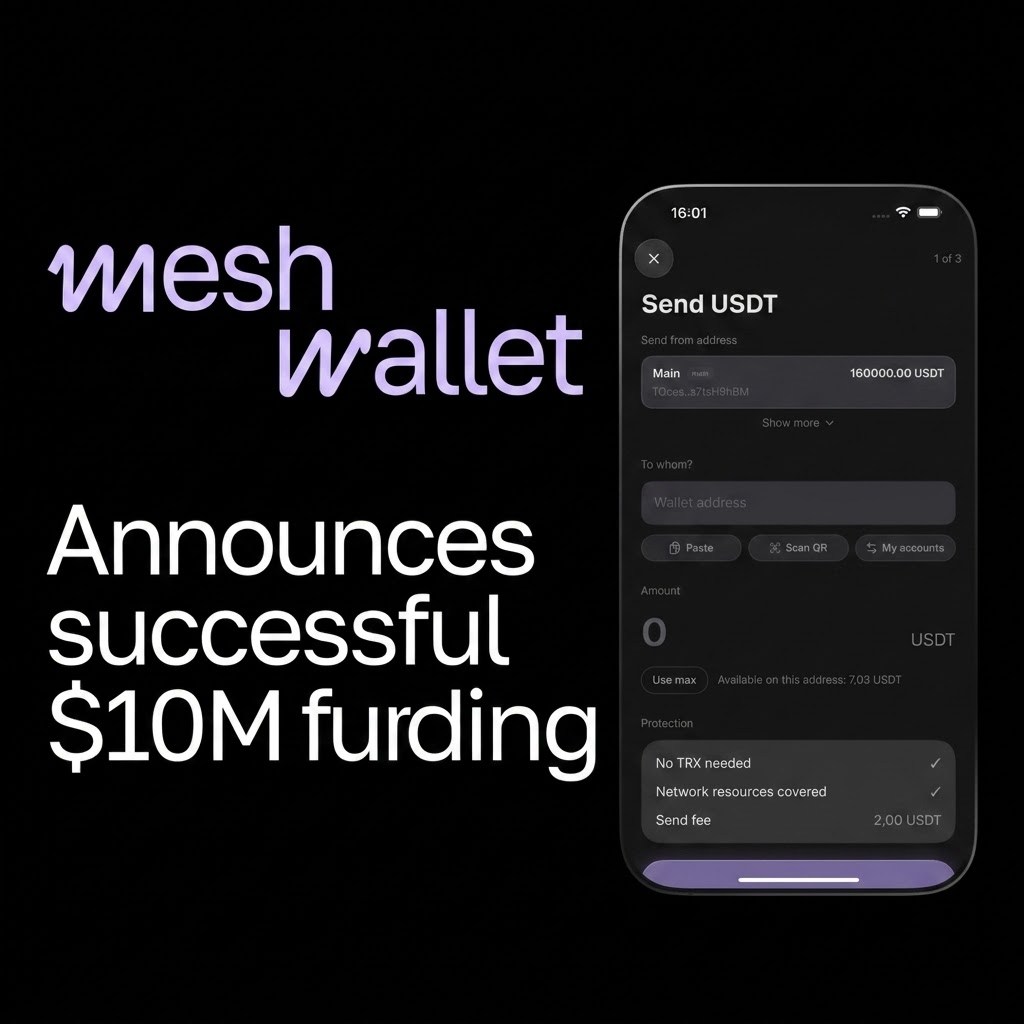 Gasless USDT wallet MeshWallet closes $10m private funding round
Sources
21 records from 17 domains
en.wikipedia.org
tether.to
cryptonews.net
dlnews.com
gold.tether.to
vestbee.com
x.com
ir.adecoagro.com
binance.com
pluang.com
cryptorank.io
adalytica.com
neura-robotics.com
instagram.com
bitcoinmagazine.com
kavout.com
tether.io
- tether.io· news / tether-advances-beyond-stablecoins-introduces-new-framework-embracing-core…
- Tether Completes the Largest Inaugural Financial Audit in History
- Tether Posts Strong Q2 Performance, Generates $1.5B Net Operating Profit, Maintains $4.11B Reserve Buffer, and Expands Gold Holdings to More Than 146 Tons
Community notes
Spot something off or out of date? Drop a note. Editors review topic notes daily and roll accepted fixes into the explainer — contributors are recognized in the monthly $SQUID drop.
Loading notes…
Help improve this topic
Have a story or tip about this topic? Submit it. See something missing? Leave a note. Editors review daily; accepted submissions and fixes count toward the monthly $SQUID drop.