
In-depth explainer on Anchorage Digital, the first federally chartered U.S. crypto bank, covering its custody and settlement platform, stablecoin issuance for partners like Tether and Ethena, AI-driven “Agentic Banking,” and role in institutional crypto adoption.
+12 sources across the wider coverage universe
 New $11M crypto PAC linked to Tether books millions in ads via firm tied to its US CEO, with early backing from Cantor Fitzgerald and Anchorage Digital2026-04
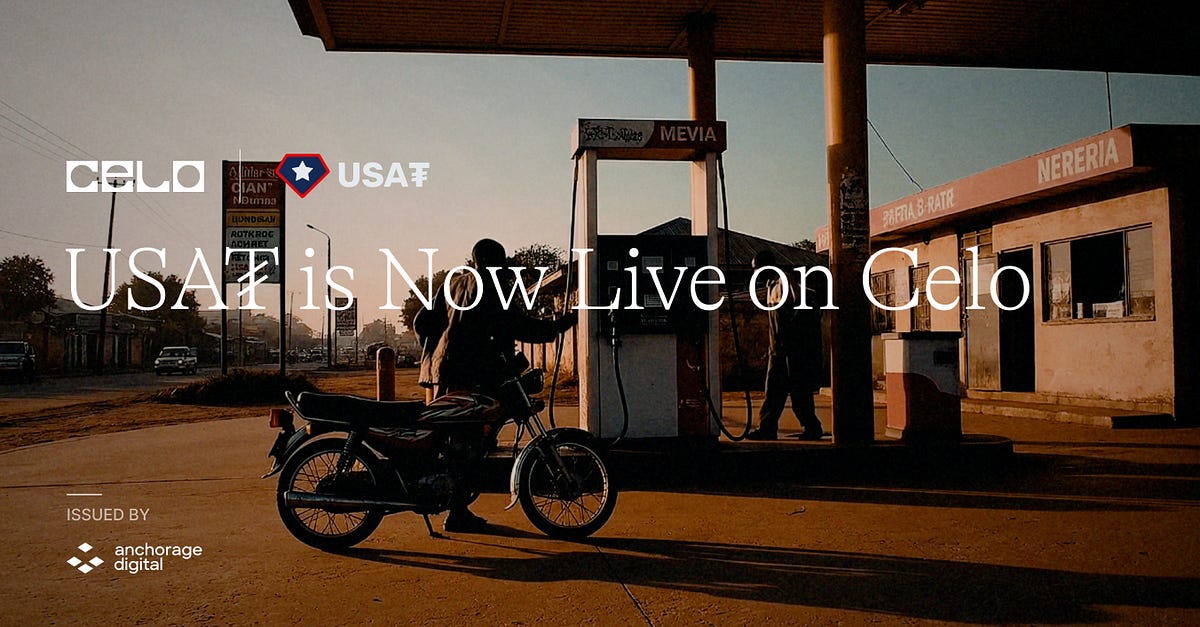 Anchorage-issued USA₮ goes live on Celo with native minting, burning and gas payments2026-07
 Anchorage Digital launches Coordinated Multiparty Settlement enabling institutions to trade on non-custodial venues without moving assets offshore or prefunding exchanges2026-06
 Binance adds Anchorage Digital's Atlas to triparty banking network for institutional settlement2026-06
 Anchorage Digital unveils “Agentic Banking” to give AI agents regulated access to capital, partnering with Google Cloud to power identity, policy enforcement, and settlement2026-05
 Anchorage Digital adds Lido support, giving institutional clients direct access to wstETH and Ethereum liquid staking through its regulated crypto banking platform2026-07
Anchorage Digital: How a Federally Regulated Crypto Bank Became Core Infrastructure for Institutional Digital Assets
Anchorage Digital is a regulated crypto platform built around Anchorage Digital Bank N.A., the first federally chartered digital asset bank in the United States, providing institutions with custody, staking, trading, settlement, governance, and stablecoin issuance under bank-grade oversight. By combining an Office of the Comptroller of the Currency (OCC) national trust bank charter with a global footprint in New York, Singapore, and Europe, Anchorage has positioned itself as a central piece of infrastructure for institutional crypto, stablecoins, and the emerging onchain capital markets.
Origins and Regulatory Positioning
Anchorage Digital emerged in 2017 in San Francisco, at a moment when institutional interest in crypto was rising but trusted infrastructure was still thin. The company initially operated as Anchorage Trust Company, a South Dakota chartered trust company focused on digital asset custody for institutional clients such as funds, corporate treasuries, and high-net-worth investors. This early period was defined by a core thesis: institutions would only enter crypto at scale if they could work with entities that looked and behaved like regulated financial institutions, not informal service providers. The South Dakota trust structure allowed Anchorage to begin under a recognized regulatory framework while it built out security infrastructure, client relationships, and operational track record in crypto custody.
The turning point for Anchorage’s regulatory trajectory came in January 2021, when the OCC granted conditional approval for Anchorage Trust Company to convert into Anchorage Digital Bank, National Association. This approval gave Anchorage a national trust bank charter, making it the first federally chartered digital asset bank in the United States. As part of the approval, Anchorage entered into an enforceable operating agreement that set specific capital and liquidity requirements and defined risk management expectations, signaling that its crypto operations would be supervised under the same structural logic as other OCC-regulated national trust banks. The significance of this milestone extended beyond Anchorage itself: it demonstrated that federal banking regulators were willing to bring digital asset custody and related services inside the perimeter of traditional bank supervision, an important signal for cautious institutional allocators.
It is important to understand what a national trust bank charter means in practice. A national trust bank supervised by the OCC is typically not a deposit-taking institution in the way a full national bank is, and it does not offer insured deposits backed by the Federal Deposit Insurance Corporation (FDIC). Instead, its core business is fiduciary and custody services, including safekeeping of customer assets and execution of transactions under a high standard of care, with assets held off the custodian’s balance sheet. In Anchorage’s case, this structure is well aligned with the way institutional crypto custody is expected to operate, where clients require both legal separation of their assets and robust risk management. The OCC’s approval, combined with ongoing oversight, therefore gives Anchorage a regulatory profile that many institutional investors and corporate treasuries view as more familiar than that of unregulated exchanges or offshore entities.
Anchorage has also expanded beyond the United States, building a regulatory footprint that mirrors the global nature of institutional capital flows. The firm operates Anchorage Digital Singapore, which is licensed by the Monetary Authority of Singapore (MAS) to serve institutional clients in Asia, and Anchorage Digital New York, which holds a BitLicense from the New York Department of Financial Services (NYDFS) to operate within one of the most demanding digital asset regulatory regimes in the world. This combination of an OCC national trust charter, MAS licensing in Singapore, and NYDFS authorization in New York makes Anchorage one of the relatively few crypto-native firms operating simultaneously under top-tier U.S. federal, U.S. state, and major international regulatory frameworks. For global banks, asset managers, and payments companies, this multi-jurisdictional posture is a practical prerequisite for integrating digital asset services into their existing compliance and governance systems.
A central piece of Anchorage’s market positioning is its claim to be an “unequivocal qualified custodian”, a term that carries specific weight under U.S. securities regulation. Under the SEC’s custody rule and related interpretations, many registered investment advisers must hold client assets, including certain digital assets, with a “qualified custodian” such as a bank, broker-dealer, or certain trust companies. By operating Anchorage Digital Bank N.A. under OCC supervision, Anchorage can credibly present itself as a qualified custodian for digital assets, which is critical for asset managers who need to satisfy both fiduciary obligations and enforcement-sensitive regulators. This status, combined with its crypto-native technology stack, is one of the main reasons Anchorage is often selected as a back-end custodian for institutional products ranging from Bitcoin treasury strategies to tokenized assets and stablecoins.
Finally, Anchorage’s physical and operational footprint underscores its ambition to be a global infrastructure provider rather than a niche local player. The firm was founded in San Francisco and maintains offices in New York, Porto (Portugal), Singapore, and Sioux Falls, South Dakota, reflecting both its U.S. regulatory base and its European and Asian client communities. This dispersion matters because institutional crypto is not confined to one geography; global asset managers may structure funds in Europe, hold custody in the United States, and trade across venues worldwide. By locating staff, operations, and regulatory entities across those hubs, Anchorage aims to embed itself wherever institutional capital is moving into crypto and stablecoins.

Anchorage selects LayerZero as interoperability partner for regulated stablecoin issuance, expanding cross-chain access for compliant digital dollars
The Core Platform: Custody, Trading, Staking, and Settlement
Anchorage’s core business is to provide an integrated platform that lets institutional clients hold, move, and deploy digital assets with bank-like governance and security. At the center of this platform is its custody system, which is described as combining secure key management with policy controls and operational workflows tailored to institutional needs. While the firm does not publish every technical detail of its security architecture, its public materials emphasize hardware-backed security, multi-person approvals, and segregation of client assets, along with systems to support large-scale staking, governance participation, and transaction settlement. The promise to clients is that they can treat Anchorage as a long-term infrastructure partner for large, complex digital asset portfolios in a way that is auditable and compatible with their own internal controls.
A differentiating feature of Anchorage’s custody offering is its broad asset and network coverage, which includes core assets such as Bitcoin and Ethereum, but also extends to emerging ecosystems such as Mantle, an Ethereum Layer 2 network whose native token MNT is now supported in Anchorage’s custody platform. Institutions can hold MNT through Anchorage’s regulated custody or manage it independently using Porto, Anchorage’s institutional-grade self-custody wallet, which is designed to give clients more direct control while preserving institutional security standards. This combination of bank custody and self-custody tooling reflects the reality that different institutions have different appetites for operational control and regulatory structuring; some may prefer direct qualified custody for everything, while others may want a mix of custodied assets and self-custodied positions for use in onchain DeFi strategies.
Staking and governance services are another pillar of Anchorage’s offering. The platform enables institutional clients to stake assets such as proof-of-stake tokens and to participate in network governance—activities that are increasingly important for Ethereum and other decentralized networks. In practice, this means that Anchorage handles the technical complexity of staking and validator operations, while institutions focus on allocation and risk. Anchorage’s positioning as a regulated bank can be especially relevant for staking, since some institutions are sensitive to the legal and accounting treatment of staking rewards, and prefer to work with a counterparty that operates under recognized fiduciary standards. Although staking yields are not guaranteed and are subject to network risk, they have become a core part of the “crypto yield” story for institutional portfolios seeking to move beyond passive holding of Bitcoin and Ethereum.
Trading and settlement are where Anchorage pushes beyond traditional custody to function more like a prime broker or central clearing node for institutional crypto markets. Anchorage offers trading services that allow clients to execute crypto transactions while assets remain in bank custody, reducing the operational risk of sending funds to exchanges or OTC desks. The firm’s flagship innovation in this area is Coordinated Multiparty Settlement (CMS), a settlement infrastructure designed specifically for institutional crypto trading. CMS allows multiple parties—such as funds, market makers, and liquidity venues—to coordinate trade execution and settlement without requiring clients to pre-fund exchanges or move assets offshore. Instead, Anchorage can hold assets in custody and settle obligations across counterparties in a synchronized, risk-controlled way.
In practical terms, CMS is meant to address one of the core institutional objections to crypto trading: bilateral counterparty risk and the need to send assets onto exchange balance sheets that may be opaque or offshore. Under a CMS model, institutions can maintain their assets at Anchorage Digital Bank while still accessing liquidity on non-custodial or third-party venues, with settlement occurring through Anchorage’s rails once trades are matched. By concentrating settlement in a regulated, bank-supervised entity, CMS seeks to separate trading venues from custody risk and to make crypto markets look more like traditional capital markets, where clearinghouses and custodians play distinct roles from trading venues. For institutions wary of another FTX-style counterparty failure, this coordinated settlement model is a critical enabler of deeper participation.
Anchorage also speaks directly to the needs of startups and crypto-native companies through its emphasis on treasury and yield management. In public commentary amplified by crypto media, the firm has argued that many founders treat runway as a fixed quantity—assuming that what they raise is what they will burn—rather than considering how treasury management and institutional yield strategies can extend that runway. By encouraging startups to earn conservative yields on stablecoins, treasuries, or staked assets, while preserving liquidity and risk controls, Anchorage is positioning itself not only as a custodian but as a partner in corporate treasury optimization. This aligns with the broader shift in crypto, where token treasury management, staking, and onchain lending are no longer niche activities but central levers of project sustainability.
Credit and lending are another dimension of Anchorage’s infrastructure role, particularly through its collaboration with Ethena Labs. Through Atlas Collateral Management, Anchorage serves as collateral manager for Ethena’s institutional investment lending activity, enabling Ethena to invest in loans while borrower collateral remains held at Anchorage rather than being deposited onchain. This means that institutional counterparties can participate in loan structures where collateral is custodied under bank supervision, while the investment strategy itself may be expressed in a mix of onchain and offchain instruments. The design is intended to address concerns about smart-contract risk and onchain collateral rehypothecation by leaving collateral under the control of a regulated custodian. For institutional lenders and borrowers, this structure is an example of how Anchorage aims to bridge traditional credit markets and onchain strategies without sacrificing prudential safeguards.
Anchorage’s infrastructure is also being used to unlock yield and lending strategies for Bitcoin, which historically has been more difficult to integrate into structured institutional yield products compared to Ethereum-based assets. Mezo, a Bitcoin-focused protocol, offers “Mezo Enclaves,” segregated Bitcoin vaults designed for institutional depositors, with custody provided through Anchorage Digital and available directly to Anchorage Digital Bank clients. These enclaves are tied to Bitcoin yield and lending strategies, allowing institutions to earn returns on BTC while maintaining regulatory-grade custody and segregation of assets. This arrangement demonstrates Anchorage’s broader thesis: yield opportunities in crypto—from staking to lending—will only become mainstream for institutions when combined with robust, segregated custody and clear operational controls.
Readers click Anchorage not for custody mechanics but for the question of whether the only OCC-chartered crypto bank is building a genuine regulatory moat or monetizing that moat through conflicted rankings, pay-to-play stablecoin reports, and politically entangled capital.
Agentic Banking and AI-Native Finance
One of Anchorage’s more forward-looking initiatives is its move into what it calls Agentic Banking—a new category of institutional infrastructure meant to let AI agents interact with capital in a secure and compliant way. In partnership with Google Cloud, Anchorage is building a full-stack, cloud-native platform that pairs Google’s AI infrastructure with Anchorage’s regulated financial rails, with the goal of powering the emerging “agentic economy.” In practical terms, this could mean AI-driven treasury management, automated trading strategies, or machine agents that manage recurring payments and liquidity across networks, all executed on digital asset rails but supervised under familiar bank controls.
The Agentic Banking initiative reflects an important convergence: the growing sophistication of AI agents and the programmable nature of digital assets and stablecoins. Google Cloud brings scalable AI models, data infrastructure, and orchestration tools, while Anchorage provides the underlying bank accounts, custody, settlement, and compliance functions. This pairing is meant to ensure that AI agents operating in financial contexts are not rogue scripts on permissionless networks, but are instead embedded in systems that enforce identity, KYC/AML policies, transaction limits, and real-time monitoring. In other words, Anchorage and Google Cloud are trying to create a platform where agents can act autonomously within bounded, policy-controlled environments dictated by institutional clients and regulators.
Yet Agentic Banking also raises governance and risk questions that are very much alive in industry debates. On one hand, giving AI agents access to stablecoins, Bitcoin, and Ethereum-based assets through a regulated bank could unlock powerful automations, from real-time hedging of treasury exposures to AI-driven liquidity routing across onchain venues. On the other hand, it introduces new attack surfaces and failure modes: misconfigured policies could allow agents to take excessive risk; adversarial inputs could trick agents into undesirable actions; and the speed of automated decision-making might outpace human oversight in volatile markets. Anchorage’s partnership with Google Cloud is therefore not only a commercial move but a statement that AI-driven finance should be built on verifiable identity, policy enforcement, and supervised settlement, rather than purely on anonymous smart contracts.
For the broader institutional crypto ecosystem, Agentic Banking is an early indicator of how AI and digital assets could intersect at scale. In the near term, institutions may use Anchorage’s rails and Google’s AI tools to automate operational tasks such as reconciliation, transaction monitoring, and basic execution strategies, all while continuing to treat Anchorage Digital Bank as the qualified custodian and primary risk gatekeeper. Over time, more sophisticated AI agents could manage portfolios of stablecoins, tokenize traditional assets, and interact with onchain lending protocols, always subject to pre-defined compliance and risk frameworks. This vision is still developing, and governance concerns remain front and center, but Anchorage’s move into agentic finance underscores how crypto infrastructure is increasingly intertwined with advances in AI.
Stablecoins and Digital Dollars: Anchorage as Issuer and Infrastructure
Stablecoins have become one of the most important pillars of institutional crypto adoption, and Anchorage has steadily positioned itself as a key issuer and infrastructure provider for regulated digital dollars. As a federally regulated digital asset bank, Anchorage is in a rare position: it can both custody fiat reserves and digital assets, and act as an issuer or co-issuer of stablecoins under U.S. oversight. This has attracted a range of partners looking to launch or “onshore” stablecoin products into regulated U.S. environments while preserving flexibility to operate across chains such as Ethereum, Solana, and Avalanche.
The collaboration with Ethena Labs illustrates this strategy well. Anchorage Digital Bank N.A. serves as the U.S. issuer of USDtb, an institutional-grade stablecoin associated with Ethena’s ecosystem. In describing this partnership, Anchorage and Ethena emphasize that onshoring USDtb through Anchorage’s federally chartered bank marks a pivotal moment for the future of stablecoins under U.S. oversight, demonstrating that innovation and regulation can advance together. By issuing USDtb through Anchorage, Ethena brings a component of its synthetic dollar ecosystem into a framework where U.S. regulators have clear visibility into reserve management, issuance practices, and risk controls, even as the stablecoin continues to interact with DeFi protocols and institutional credit structures via Atlas Collateral Management.
Anchorage has also become an important partner for Tether as the stablecoin giant moves to launch USA₮, described as the first stablecoin specifically “built for the United States.” In public statements highlighted on Anchorage’s site, Tether emphasizes Anchorage Digital Bank’s role as the first and only federally regulated crypto bank and issuer supporting the launch of USA₮, and frames this as part of its commitment to a “fully regulated foundation” for bringing digital dollars to America. This represents a notable shift in Tether’s strategy: whereas the original USDT grew largely outside U.S. bank-regulated structures, USA₮ is being anchored in a U.S. national trust bank with OCC oversight, responding to intensifying regulatory scrutiny of stablecoin reserves, transparency, and systemic importance. For Anchorage, the USA₮ collaboration reinforces its positioning as a neutral “stablecoin harbor” where multiple issuers—from DeFi-native projects to global giants like Tether—can anchor their products under a common regulatory and custodial framework.
The partnership with Falcon Finance further extends Anchorage’s stablecoin footprint into the intersection of DeFi-native synthetic dollars and regulated payment rails. Falcon Finance operates USDf, a crypto-native synthetic dollar, and has now launched fUSD, a U.S. dollar-backed payment stablecoin issued by Anchorage Digital Bank N.A. fUSD is designed for institutional trading, collateral, and treasury use cases, effectively extending Falcon’s product suite from onchain synthetic dollars into federally regulated U.S. issuance. The idea is that USDf can serve DeFi-native, multi-collateral use cases, while fUSD provides a regulated dollar rail for institutions that need clear legal and regulatory grounding, with reserves and issuance supervised under Anchorage’s OCC-regulated bank framework.
Falcon and Anchorage present fUSD as “GENIUS-ready,” signaling that it is built to integrate with emerging institutional settlement and payment standards, and they highlight that the stablecoin is launched on Ceffu’s institutional custody and collateral infrastructure. For institutional holders, fUSD offers a pathway to earn rewards targeting around 3% annually while still operating within a regulated framework, though the exact yields and risk exposures will depend on how reserves are managed and how fUSD is deployed in trading and collateral workflows. This two-rail structure—USDf for DeFi-native risk and fUSD for regulated payments—captures a broader trend in stablecoins: sophisticated ecosystems are increasingly building both crypto-native and bank-anchored stablecoins that can move in parallel, sometimes even within the same user base.
Anchorage’s role also extends into the global payments sector through collaborations such as Western Union’s USDPT stablecoin on Solana. Western Union has announced USDPT as an always-on settlement asset built on Solana’s high-performance blockchain, intended to reduce latency and improve efficiency in cross-border payments. In the context of this launch, Anchorage is presented as a global crypto platform providing trading, custody, settlement, and stablecoin issuance infrastructure for institutions, highlighting the role of regulated crypto banks in supporting payment companies that want to harness blockchain rails without becoming crypto infrastructure operators themselves. While specific functional details vary, the general pattern is clear: Western Union focuses on customer-facing remittance services and regulatory licensing in money transmission, while Anchorage provides the digital asset custody and banking infrastructure needed to manage USDPT reserves and settlement flows in a way that satisfies institutional risk standards.
Anchorage’s stablecoin influence is not limited to individual partnerships; it also plays a role in broader ecosystem initiatives such as the Avalanche Payments Collective. This collective brings together about 28 organizations, including asset managers like Franklin Templeton and VanEck, digital-asset specialists such as Paxos and Ethena, fintechs, and infrastructure providers like Tassat, Nonco, and Anchorage. Within this group, Anchorage provides regulated custody and banking infrastructure supporting institutions that adopt stablecoin payments, digital asset settlement, and modern treasury operations on the Avalanche network. The collective spans settlement, liquidity, asset management, foreign exchange, treasury infrastructure, digital-dollar issuance, merchant acceptance, and public-sector innovation, including experimentation by entities like the Wyoming Stable Token Commission.
By participating in such networks, Anchorage positions itself as a cross-chain stablecoin infrastructure provider rather than a single-chain specialist. It supports Ethereum-based tokens such as MNT and USDtb, Solana-based assets such as USDPT, and payment and settlement networks built on Avalanche, among others. For institutional clients, this cross-chain stance matters because their strategies increasingly involve multiple ecosystems, from Ethereum DeFi to Solana payments to Avalanche-based treasuries. Anchorage’s value proposition is that they can obtain consistent custody, settlement, and policy controls across these networks, anchored in a single bank relationship.
From a governance perspective, regulated stablecoins issued or supported by Anchorage offer clear advantages and tradeoffs relative to more decentralized or offshore alternatives. On the positive side, bank supervision, enforceable capital requirements, and formal operating agreements with regulators create a framework for reserve safety, auditability, and consumer protection that many institutions find necessary. The involvement of entities like Tether, Ethena, Falcon, and Western Union suggests that large players see strategic value in anchoring at least part of their stablecoin businesses within such frameworks. On the tradeoff side, these stablecoins are more centralized and amenable to regulatory direction, including potential blacklisting or freezing of addresses, and are subject to evolving U.S. and international policy on stablecoins. Institutions must weigh these factors when choosing which stablecoins to integrate into their strategies, balancing regulatory comfort against programmability and censorship resistance.
- 01Institutional BTC mega-trades↗
A $1.19B Bitcoin block executed via OTC desks and dark pools in nine hours was the clearest live proof that Anchorage's regulated rails can absorb whale-scale flow without touching public order books.
- 02Stablecoin rankings Pay-to-Play
Agora's CEO publicly accused Anchorage of delisting USDC and AUSD from its Stablecoin Safety Report while hiding undisclosed ties to Paxos, turning a compliance document into a controversy about editorial independence.
- 03Ethena and DeFi custody rails↗
Ethena shifting billions in USDe backing to regulated custodians—and naming Anchorage specifically for Atlas collateral management—signaled that institutional-grade DeFi is routing through chartered banks, not self-custody.
- 04Ventures unit and acquisitions↗
Launching Anchorage Digital Ventures while simultaneously acquiring Securitize for Advisors and Mountain USDM showed readers a firm using its regulatory charter as an M&A wedge into wealth management and stablecoin issuance.
- 05Agentic banking and AI capital↗
Partnering with Google Cloud to give AI agents regulated access to capital and settlement under a federal bank charter was a genuinely novel product category that no other custodian had announced.
- 06Western Union global stablecoin↗
Anchorage issuing a federally regulated USDPT stablecoin that rides Western Union's 200-country payments network collapsed the gap between legacy remittance infrastructure and on-chain settlement.
Networks, Assets, and Institutional Adoption
Anchorage’s business is ultimately about institutional adoption of crypto, and that adoption is happening across multiple networks and asset types. Bitcoin remains a central pillar, especially as corporations and funds explore Bitcoin treasury allocations and yield strategies. Anchorage’s long-standing relationship with Strategy (formerly MicroStrategy), one of the world’s largest institutional holders of Bitcoin, illustrates this dynamic: Anchorage has served as a trusted trade and custody partner for Strategy, and has even purchased STRC, Strategy’s stock, for its own balance sheet, signaling conviction in Bitcoin and in the infrastructure required to hold it securely at scale. Combined with Mezo Enclaves’ segregated Bitcoin vaults—whose custody is provided through Anchorage—this paints a picture of Anchorage as a critical node in institutional Bitcoin strategies spanning buy-and-hold, trading, and yield generation.
Ethereum and its expanding ecosystem of Layer 2 networks are equally important to Anchorage’s institutional footprint. As noted earlier, Anchorage now offers custody support for Mantle (MNT), the native token of an Ethereum Layer 2 that explicitly aims to bridge decentralized finance and traditional finance. Institutions can choose to hold MNT via Anchorage’s secure custody platform or through the Porto self-custody wallet, reflecting different risk and operational models. More broadly, Ethereum is a primary venue for many of the stablecoins and tokenized assets that Anchorage supports, including USDtb and various DeFi integration assets connected to Ethena, Falcon, and other partners. For institutions seeking exposure to Ethereum-based DeFi, Anchorage serves as both a gateway and a risk manager, helping to segregate assets, monitor exposures, and coordinate settlement.
Porto, Anchorage’s institutional-grade self-custody wallet, deserves particular attention because it reflects a nuanced view of what “custody” means in a crypto-native context. Rather than insisting that all assets must sit in bank custody accounts, Anchorage has built Porto to allow institutions to manage some assets directly while still benefiting from Anchorage’s security tooling and governance frameworks. In practice, Porto is aimed at institutions that want more flexible access to onchain DeFi protocols, governance participation, or experimental networks, where bank custody may be operationally or legally more complex. By offering both fully custodied and self-custodial options, Anchorage allows institutions to segment their crypto portfolios: core holdings may remain in bank custody for regulatory and risk reasons, while more active strategies are conducted via Porto with clear internal policies and limits.
On the credit and real-world asset (RWA) front, Anchorage’s collaboration with Ethena’s Atlas Collateral Management system is emblematic of how tokenized capital markets are taking shape. Under this structure, Anchorage acts as collateral manager for Ethena’s institutional investment lending activity, meaning that borrower collateral is held in custody at Anchorage rather than deposited onchain. Ethena can then invest in loan assets while relying on Anchorage to ensure that collateral is adequately managed, segregated, and enforceable in default scenarios. This arrangement mirrors traditional collateralized lending structures, but with digital assets and tokenized instruments as the underlying collateral and loan exposures. It also underscores that RWAs and onchain credit can be built in ways that do not require all collateral to be locked in smart contracts; instead, custody banks like Anchorage can integrate with onchain systems while maintaining offchain control and legal clarity.
Anchorage is also investing directly in the ecosystem through Anchorage Digital Ventures (ADV), which writes strategic checks to early-stage teams building institutional-grade crypto infrastructure. ADV has published a “Request for Startups,” inviting founders to build the next generation of rails across DeFi, real-world assets, stablecoins, and AI-driven finance. The focus is on startups that extend institutional-grade crypto services, including modernized capital markets infrastructure and tools that support the migration of global capital onchain, often in ways that tie back into Anchorage’s custody, settlement, and agentic banking stack. By combining balance-sheet investment with banking relationships, Anchorage aims to shape an ecosystem of protocols and platforms that are “institution-ready” from day one, easing integration for large clients who might otherwise hesitate to work with younger, less regulated projects.
Anchorage’s role in cross-border payments and merchant settlement is further highlighted by its participation in the Avalanche Payments Collective and collaborations like USDPT on Solana. Within the Avalanche Payments Collective, Anchorage provides regulated custody and banking infrastructure to institutions adopting stablecoin-based payment and settlement flows, while other members provide digital-dollar issuance, FX, liquidity, merchant acceptance, and public sector experimentation. This architecture suggests a future in which global payments are handled by networks of specialized providers: token issuers, liquidity providers, payment processors, and regulated crypto banks like Anchorage, all interconnected by shared settlement and compliance standards. For institutions, this makes crypto and stablecoins less of a speculative add-on and more of a structural part of their payments and treasury stack.
Anchorage Digital partners with Stacks to bring Bitcoin staking to institutions, with PoX-5 enabling BTC rewards while assets remain in secure Bitcoin L1 custody

Governance, Policy, and Industry Influence
Anchorage’s emergence as a regulated crypto bank has inevitably drawn it into broader policy and governance debates around crypto, stablecoins, and digital assets. Its national trust bank charter means that it maintains an ongoing relationship with the OCC and, by extension, with other U.S. regulators who are shaping the future of digital asset regulation. The operating agreement accompanying its charter spells out capital, liquidity, and risk management standards, making Anchorage a test case for how prudential regulators can supervise digital asset activities within bank-like frameworks. As policymakers consider stablecoin legislation, SEC custody rules, and bank capital treatment for crypto exposures, Anchorage’s experience provides both a proof point and a set of lessons for what works and what is challenging in integrating crypto into traditional regulatory regimes.
Beyond direct supervision, Anchorage also participates in industry-level political processes. A notable example is its backing of a crypto-focused political action committee (PAC) alongside Chainlink, as reported by industry media. The Blockchain Leadership Fund, backed by Chainlink and Anchorage, has made endorsements across both major U.S. political parties, aiming to support candidates who favor constructive, bipartisan approaches to blockchain and digital asset regulation. This involvement illustrates how regulated industry players, not just protocols and exchanges, are increasingly active in shaping the legislative environment, particularly around stablecoins, DeFi, and institutional crypto adoption. For a federally regulated bank like Anchorage, such activity must be carefully balanced with its supervisory relationships, but it also reflects a recognition that policy outcomes directly affect the viability of its business model and the broader market.
Anchorage’s partnerships with traditional finance and big tech players—such as Western Union, Franklin Templeton, VanEck, and Google Cloud—also function as a form of soft governance. When asset managers and payments companies choose Anchorage as an infrastructure provider, they are implicitly endorsing its compliance posture, operational standards, and approach to risk. Membership in the Avalanche Payments Collective, alongside firms like WisdomTree, Paxos, and public-sector bodies such as the Wyoming Stable Token Commission, positions Anchorage within a network that is actively experimenting with regulated digital-dollar infrastructure for payments, settlement, and treasuries. At the same time, the Agentic Banking partnership with Google Cloud places Anchorage in the center of emerging debates over how AI agents should be governed when they control money and assets. These cross-industry relationships both reinforce Anchorage’s institutional credibility and subject it to wider scrutiny and expectations from stakeholders who are themselves heavily regulated.
Anchorage Digital Ventures adds another dimension of influence, as it effectively curates an ecosystem of startups aligned with its vision of institutional-grade onchain finance. By explicitly calling for startups in areas such as DeFi for institutions, real-world asset tokenization, regulated stablecoin infrastructure, and AI-enabled capital flows, ADV signals where Anchorage believes the market is heading and what kinds of projects will be easiest to integrate into its bank infrastructure. These investment and guidance decisions can shape the direction of innovation by channeling early capital and attention to projects that embrace compliance, segregation of collateral, and coordination with regulated custodians, rather than purely permissionless experimentation.
Anchorage has also made strategic decisions about where it will and will not take a central role in stablecoin initiatives. In public remarks captured in a media interview, Anchorage co-founder and CEO Nathan McCauley explained that Anchorage would be stepping back from the Global Dollar (USDG) stablecoin consortium, which includes firms like Robinhood and Kraken. Rather than being a leading architect of this particular stablecoin project, Anchorage has chosen to “take a back seat,” focusing on its core role as regulated infrastructure provider and leaving front-facing stablecoin brand and distribution decisions to other members of the consortium. This illustrates a broader pattern: while Anchorage is willing to act as issuer or co-issuer for some stablecoins, as in the case of USA₮, USDtb, fUSD, and USDPT, it is equally comfortable providing foundational custody and banking rails without being the public face of every token it touches.
From a competitive standpoint, Anchorage operates alongside other large custodians, exchanges, and stablecoin issuers, including crypto-native firms and incumbent financial institutions. It competes with large exchanges that offer custodial services, with specialized custody providers, and increasingly with traditional banks exploring digital asset custody. Its distinguishing features are its OCC national trust bank charter, its positioning as an “unequivocal qualified custodian,” and its deep involvement in stablecoin issuance under U.S. oversight. However, this regulatory advantage also comes with constraints, including close supervision and the inability to move as quickly or as flexibly as unregulated entities in some market segments. For institutions, this tradeoff is often acceptable, but it does shape Anchorage’s strategic choices in areas such as DeFi integration, yield strategies, and agentic finance.
Case Studies: How Institutions Actually Use Anchorage
To understand Anchorage’s role in practice, it is helpful to walk through concrete scenarios—some grounded in public partnerships, others illustrative—showing how institutions can integrate crypto, stablecoins, and yield strategies via Anchorage’s platform.
One clear real-world example involves Strategy (formerly MicroStrategy), a publicly traded company known for its large Bitcoin treasury. Anchorage serves as a long-standing trade and custody partner for Strategy, helping the company acquire and safekeep significant Bitcoin holdings. Anchorage has also purchased STRC, Strategy’s stock, for its own balance sheet, underscoring conviction in Bitcoin and in the business models built around large corporate Bitcoin treasuries. In such a relationship, Anchorage’s role goes beyond mere safekeeping: it may facilitate block trades, coordinate settlement with counterparties, and support corporate governance processes related to Bitcoin holdings—all within the governance and risk frameworks expected of a federally regulated bank.
Now consider a hypothetical but realistic scenario involving an institutional Bitcoin yield strategy. An asset manager or corporate treasurer might allocate a portion of its BTC holdings into Mezo Enclaves, which are segregated Bitcoin vaults designed for institutional depositors, with custody through Anchorage Digital. Through these enclaves, the institution could earn yield by lending BTC or participating in structured products, while keeping assets in vaults whose custody and segregation are overseen by Anchorage as a qualified custodian. The institution’s risk committee would evaluate the exposure much as it would any other yield product, but the presence of Anchorage as custodial gatekeeper could make the strategy more palatable than sending BTC directly to opaque lending platforms or onchain protocols.
A second scenario centers on DeFi-native stablecoin ecosystems. Ethena Labs operates an ecosystem of synthetic dollars and yield-bearing structures that can be complex for institutions to integrate directly. By designating Anchorage Digital Bank N.A. as the U.S. issuer of USDtb and appointing Anchorage as collateral manager through Atlas Collateral Management, Ethena creates a structure where institutional investors can hold and use USDtb under U.S. bank oversight while participating in loan investment strategies backed by collateral held at Anchorage. In practice, an institutional counterparty might subscribe to USDtb through Anchorage, deploy it in strategies that Ethena offers (such as exposure to tokenized U.S. Treasuries or delta-hedged positions), and rely on Anchorage’s collateral management and custody to ensure that assets backing those strategies remain segregated and enforceable. From the institution’s perspective, this structure transforms what might otherwise be an opaque DeFi strategy into something closer to a structured credit product with a qualified custodian and clear legal arrangements.
A third case involves payment-focused stablecoins like Falcon’s fUSD and Western Union’s USDPT. A fintech or merchant acquirer could use Anchorage to integrate fUSD into its treasury and settlement systems for institutional clients, taking advantage of Anchorage’s bank issuance and custody while connecting to Ceffu’s infrastructure for collateral and exchange integration. This would allow the fintech to settle customer balances or merchant payouts in fUSD, earning modest yield on reserves while maintaining regulatory comfort and audit trails. At the same time, cross-border remittance providers like Western Union can use USDPT on Solana, with Anchorage providing underlying custody and banking infrastructure that supports always-on settlement across jurisdictions without sacrificing the control and oversight expected of a publicly traded financial services company. In both cases, Anchorage sits between the consumer-facing or business-facing application and the underlying blockchain, providing a layer of risk management and operational consistency.
A fourth, more experimental scenario involves Agentic Banking. Imagine an asset manager that wants to deploy AI agents to manage a portfolio of Ethereum-based stablecoins, tokenized T-bills, and DeFi positions, rebalancing exposure in response to market conditions and client mandates. Using the Agentic Banking platform developed with Google Cloud, the manager could define strict policies—such as allowable assets, maximum position sizes, risk limits, and approved venues—while letting AI agents execute within those constraints. Anchorage’s role would be to maintain custody of the underlying assets, enforce policy at the transaction and account level, and provide real-time settlement and reporting. Google Cloud would supply the AI models and orchestration. This setup could significantly increase operational efficiency, but only because the underlying rails are built with compliance, identity, and settlement integrity in mind, rather than relying solely on permissionless smart contracts.
These case studies highlight a common theme: institutions are not simply “buying crypto”; they are integrating digital assets, stablecoins, and yield strategies into portfolios, treasuries, and business models that are subject to stringent regulatory, operational, and fiduciary constraints. Anchorage’s value proposition is to serve as the infrastructure layer that makes those integrations possible, across Bitcoin, Ethereum, stablecoins, yield products, and even AI-driven strategies, without requiring institutions to compromise on the governance standards they apply in traditional finance.
OCC grants first federal crypto bank charter to Anchorage
Anchorage Digital Ventures launches; issues RFS for institutional DeFi, RWA, and AI rails
Ethena taps Anchorage Atlas for offchain collateral management on institutional lending
- 2026-02milestone
Anchorage acquires Mountain USDM to expand institutional stablecoin strategy
- 2026-03milestone
Tether makes $100M strategic equity investment in Anchorage Digital
Anchorage launches Agentic Banking with Google Cloud for AI-agent regulated capital access
Western Union launches federally regulated USDPT stablecoin on Solana, issued by Anchorage
- 2026-06governance
Anchorage Stablecoin Safety Report draws Pay-to-Play accusations from Agora CEO over Paxos ties
Risks, Challenges, and Strategic Tradeoffs
Despite its advantages, Anchorage faces material risks and challenges that reflect both the volatility of crypto markets and the evolving nature of financial regulation. Technically, operating a large-scale digital asset custodian and settlement platform requires constant vigilance against cybersecurity threats, hardware and software failures, and operational errors. While Anchorage’s reputation rests on its security infrastructure and segregation of client assets, no system is entirely immune to risk. Institutions working with Anchorage must perform their own due diligence on key management, disaster recovery, incident response, and third-party dependencies, particularly as new services such as Agentic Banking introduce additional complexity.
Regulatory uncertainty remains a structural challenge. Even with an OCC national trust bank charter and clear roles in specific stablecoin and credit structures, Anchorage operates in a landscape where U.S. policy on stablecoins, DeFi, and bank involvement in crypto is still evolving. Legislative proposals on stablecoins may introduce new requirements for reserve composition, disclosure, and systemic risk management. Changes in SEC interpretations of the custody rule or in bank capital rules for crypto exposures could alter how institutions are allowed to interact with digital asset custodians and stablecoins. Internationally, differences between regimes such as the EU’s Markets in Crypto-Assets (MiCA), Singapore’s MAS framework, and U.S. rules can complicate cross-border deployments. Anchorage’s multi-jurisdictional licensing helps, but it also means the firm must continuously adapt to regulatory changes across several regimes.
Market and competitive pressures are also significant. As more traditional banks explore digital asset custody and stablecoin issuance, Anchorage may face competition from institutions with deeper balance sheets, broader client relationships, and lower funding costs. At the same time, crypto-native firms—exchanges, prime brokers, and custodians—continue to innovate at high speed, sometimes in ways that are difficult for heavily regulated entities to match. Anchorage’s bet is that its combination of crypto-native technology and bank-grade regulation will remain attractive to institutions even as other players emerge. But it must navigate pricing pressures, client demands for new features, and the need to maintain conservative risk management in a sector that often rewards rapid experimentation.
A more philosophical challenge lies in balancing crypto’s decentralization ethos with the centralizing tendencies of bank-regulated infrastructure. By design, Anchorage’s model centralizes custody, settlement, and often collateral management under a single institution, even when assets live on decentralized networks such as Ethereum and Solana. For some in the crypto community, this runs counter to the goal of eliminating trusted intermediaries and censorship risk. For institutions and regulators, however, this centralization is often seen as necessary for accountability and safety. The tension between these two perspectives is unlikely to disappear, and Anchorage must continue to demonstrate that it can support DeFi ecosystems, onchain governance, and tokenized assets without becoming a single point of failure or a bottleneck for innovation.
Anchorage’s deep involvement with stablecoins illustrates these tradeoffs vividly. On one side, its work with Tether, Ethena, Falcon, and Western Union is helping to “onshore” major stablecoin products into U.S. bank-supervised structures, which many policymakers and institutions see as a way to reduce systemic risk and increase transparency. On the other side, concentrating multiple major stablecoin issuers within a single bank’s infrastructure increases the importance of that bank as a systemic node, raising questions about concentration risk, regulatory reliance, and the potential impact of any disruptions. This is not unique to Anchorage—traditional finance has similar issues with major custodians and clearinghouses—but it is a reminder that the architecture of stablecoin markets is still being designed, and that design choices have long-term implications.
Finally, the move into AI-driven Agentic Banking presents both opportunity and risk. If executed well, AI agents operating on Anchorage’s rails could dramatically improve efficiency, reduce human error, and enable new products and strategies that operate around the clock with fine-grained policy controls. If mismanaged, however, AI-driven finance could amplify errors, create new forms of market manipulation, or produce opaque risk exposures that are hard for regulators and institutions to understand. Governance, transparency, and model risk management will therefore be critical components of any agentic finance offering, and Anchorage’s success in this area will depend on its ability to integrate AI into its existing compliance and risk culture rather than treating it as a separate, experimental silo.
Conclusion
Anchorage Digital occupies a distinctive position at the intersection of crypto, stablecoins, institutional adoption, and emerging AI-driven finance. As the first federally chartered digital asset bank in the United States, operating under an OCC national trust bank charter, Anchorage brings traditional banking oversight and qualified custodian status to markets that were once dominated by unregulated or offshore entities. Through its global footprint, including licensed operations in Singapore and New York, it supports institutions that must navigate complex regulatory regimes while gaining exposure to Bitcoin, Ethereum, stablecoins, and DeFi.
Anchorage’s integrated platform—combining custody, staking, trading, and settlement—has enabled it to serve as a core infrastructure provider for institutional strategies, from corporate Bitcoin treasuries to DeFi-adjacent yield products and credit structures where collateral remains in custody under bank supervision. Its innovations in Coordinated Multiparty Settlement seek to reduce counterparty risk in crypto markets by separating trading from custody and concentrating settlement in a regulated bank environment. Meanwhile, its emphasis on treasury and yield management speaks directly to startups and crypto-native companies seeking to treat treasury as a strategic asset rather than idle capital.
Perhaps most notably, Anchorage has become a central node in the evolving stablecoin landscape. By serving as issuer or co-issuer for products like USDtb, USA₮, fUSD, and USDPT, and by providing custody and banking infrastructure for payment ecosystems such as the Avalanche Payments Collective, it is helping to bring digital dollars into regulated, bank-supervised structures while maintaining interoperability with DeFi and multi-chain environments. At the same time, it is pushing into new frontiers such as Agentic Banking with Google Cloud, signaling an ambition to be not only a custodian but also a foundational platform for AI-native financial applications.
Anchorage’s trajectory underscores an important reality about institutional crypto: the future of digital assets is unlikely to be purely decentralized or purely centralized. Instead, it is taking shape as a layered architecture, in which regulated banks like Anchorage provide custody, settlement, and policy enforcement, while tokenized assets, stablecoins, and DeFi protocols provide programmability and global reach. For institutions that must satisfy regulators, boards, and risk committees, Anchorage offers a path into crypto and stablecoins that looks and feels like traditional finance, even as it connects to some of the most experimental parts of the onchain ecosystem.
Outlook
Looking ahead, Anchorage Digital is poised to remain a key infrastructure provider as institutional adoption of crypto, stablecoins, and tokenized assets deepens. The expansion of regulated stablecoins such as USA₮, USDtb, fUSD, and USDPT suggests that more issuers will seek to anchor their products in bank-supervised structures, and Anchorage’s role as a qualified custodian and issuer makes it a natural partner for these launches. As policy frameworks for stablecoins solidify in the United States and abroad, Anchorage’s early experience with OCC oversight and multi-jurisdictional licensing should give it a strong base from which to adapt to new requirements.
The growth of AI-driven finance is likely to push Agentic Banking from concept to reality for a subset of institutions, particularly those willing to experiment with AI-managed treasuries and portfolios under strict policy controls. Simultaneously, the continued maturation of Ethereum, Bitcoin, Layer 2 networks, and multi-chain payment systems like Avalanche and Solana will create more demand for integrated custody, settlement, and yield solutions that can bridge onchain and offchain finance. Anchorage’s challenge will be to maintain its regulatory and risk discipline while innovating at a pace that keeps it relevant in a rapidly shifting market.
In this environment, Anchorage Digital is likely to be judged not only on the services it offers, but on how well it navigates the tensions between decentralization and regulation, innovation and prudence, AI autonomy and human oversight. For institutional players looking to engage with crypto, stablecoins, and onchain yield without abandoning the governance frameworks of traditional finance, Anchorage will continue to serve as a prominent—and closely watched—anchor point in the evolving digital asset ecosystem.
Latest Anchorage Digital news
Anchorage selects LayerZero as interoperability partner for regulated stablecoin issuance, expanding cross-chain access for compliant digital dollarsAnchorage Digital partners with Stacks to bring Bitcoin staking to institutions, with PoX-5 enabling BTC rewards while assets remain in secure Bitcoin L1 custodySources
16 records from 8 domains
anchorage.com
- anchorage.com· about
- anchorage.com· insights / anchorage-digital-issues-fusd-falcon-finances-new-u-s-federally-regula…
- anchorage.com· insights / anchorage-digital-launches-agentic-banking-and-partners-with-google-cl…
- anchorage.com· insights / rebuilding-the-rails-for-institutional-crypto-trading
- anchorage.com· insights / anchorage-digital-expands-institutional-access-mantle-mnt-custody-support
- anchorage.com· insights / anchorage-digital-highlights-relationship-with-strategy-strengthening-…
- anchorage.com· insights / anchorage-digital-and-ethena-labs-expand-institutional-lending-through…
- anchorage.com
- anchorage.com· insights / anchorage-digital-ventures-request-for-startups
occ.gov
ir.westernunion.com
mezo.org
avax.network
x.com
bankless.com
youtube.com
Community notes
Spot something off or out of date? Drop a note. Editors review topic notes daily and roll accepted fixes into the explainer — contributors are recognized in the monthly $SQUID drop.
Loading notes…
Help improve this topic
Have a story or tip about this topic? Submit it. See something missing? Leave a note. Editors review daily; accepted submissions and fixes count toward the monthly $SQUID drop.