
In‑depth explainer on how Bitcoin payments work, from on‑chain and Lightning to stablecoins, POS integrations, AI agents and mortgages, examining real‑world use, risks, regulation and how BTC fits alongside Ethereum and fiat rails.
+9 sources across the wider coverage universe
 U.S. sanctions two Iranian maritime insurers, citing Bitcoin payments in IRGC-backed Strait of Hormuz scheme2026-07
 Ethereum's biggest advantage isn't payments or DeFi alone; it's the "Long Tail" of programmable money, enabling countless niche economies that USD and Bitcoin can't easily support2026-05
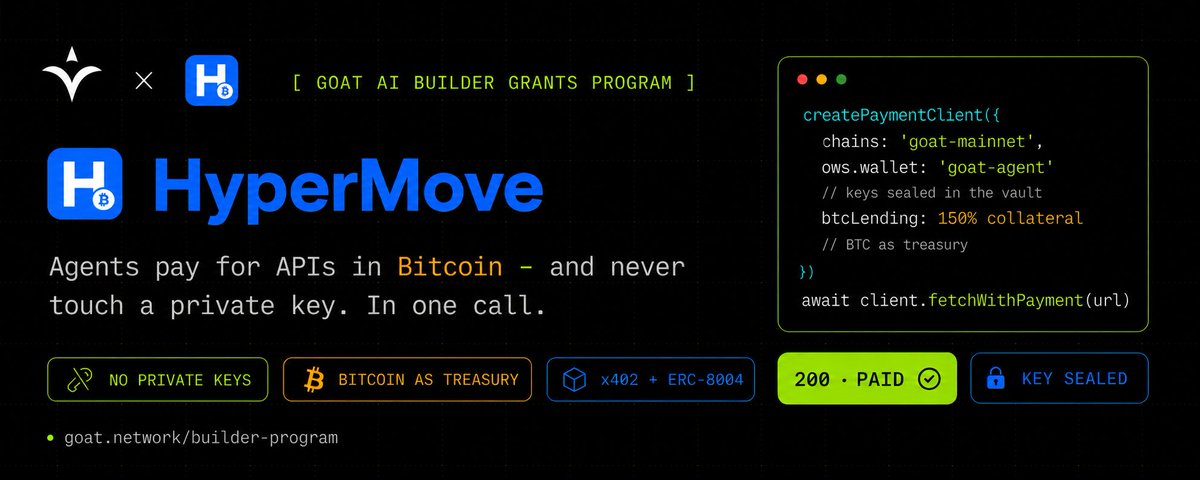 HyperMove launches Bitcoin-backed payment SDK for AI agents, enabling API payments via BTC collateral, x402 rails and vault-secured signing without private keys2026-06
 Grayscale argues Strategy's Bitcoin monetization program could help BTC establish a durable price bottom by building cash reserves and securing dividend payments2026-07
 Lightning Network is evolving into a Bitcoin-native B2B settlement rail, with average transaction size jumping from $24 to $265 as USDT on RGB unlocks institutional stablecoin payments2026-06
 Japan’s Bitbank launches crypto-linked Visa card enabling users to settle bills directly in Bitcoin from exchange balances, marking a first in the domestic payments market2026-04
Bitcoin Payments: From Peer‑to‑Peer Cash to Global Settlement Rail
In its simplest form, the phrase “Bitcoin payments” describes using the Bitcoin network and its native asset, BTC, to settle value between parties without relying on a traditional bank or card network. Over the past decade, that basic idea has expanded into a layered ecosystem of on‑chain transfers, Lightning Network channels, stablecoin overlays, merchant point‑of‑sale integrations, AI‑driven machine payments, and even mortgage collateral, all built around Bitcoin’s role as a censorship‑resistant, globally accessible settlement asset. While early use cases were small and experimental—famously including journalists like Edward Snowden using BTC to pay for servers that hosted government leaks—today the same technology underpins payment products from public companies such as Block’s Square, regional fintechs like Coins.ph, and infrastructure specialists including GoMining and HyperMove. At the same time, players like Tether are working to bring dollar‑denominated stablecoins natively onto Bitcoin via protocols such as RGB and the Lightning Network, allowing the system to support both volatile BTC and fiat‑pegged tokens as complementary payment instruments. This explainer traces how Bitcoin payments work under the hood, how the landscape has evolved from cypherpunk experiments to mainstream merchant adoption, how they compare to Ethereum and stablecoin‑based payment systems, and what risks, regulatory questions, and long‑term opportunities remain for BTC as a medium of exchange and global settlement rail.
Foundations: What Bitcoin Payments Actually Are
Bitcoin, BTC and the Idea of Paying with Crypto
Any discussion of Bitcoin payments has to start with a clear distinction between Bitcoin the network, BTC the asset, and payments as a use case. Bitcoin is a decentralized peer‑to‑peer network that maintains a shared ledger of unspent transaction outputs, or UTXOs, using proof‑of‑work mining to secure consensus over which transactions are valid. BTC is the native unit of account on that ledger, divisible into satoshis, and can be transferred between addresses without the permission of any central intermediary. A Bitcoin payment, in turn, is simply a transfer of BTC (or a BTC‑anchored asset) from one party to another, often in exchange for goods, services, or to settle a financial obligation.
In practice, this means that paying with Bitcoin involves signing a transaction with the private keys controlling one or more UTXOs and broadcasting that transaction to the network, where it is validated and eventually included in a block. The recipient then treats that transaction as final once it has sufficient confirmations, which is a probabilistic measure of settlement assurance. At a higher level, the core innovation is that two parties can settle value over the internet without using banks, card networks, or digital wallets operated by a single corporation. The payment system is instead coordinated by a global network of nodes running open‑source software and incentivized through mining rewards and transaction fees.
Historically, this permissionless architecture mattered most to early adopters who were concerned with censorship resistance and financial autonomy. A striking example came in 2013, when Edward Snowden later revealed that he used BTC to pay for the servers that hosted his first National Security Agency document leaks, leveraging Bitcoin as a censorship‑resistant way to finance a politically sensitive operation without relying on traceable traditional rails. This kind of use case underscored a fundamental promise of Bitcoin payments: if you control the private keys, you can pay anyone with an internet connection, regardless of their geography, credit history, or political standing. That attribute continues to shape Bitcoin’s role in commerce, remittances, and even state‑level geopolitics.
Types of Bitcoin Payments in Today’s Ecosystem
Although all Bitcoin payments ultimately involve moving BTC (or BTC‑anchored assets) on a ledger, the ways people make those payments have diversified dramatically. On one end of the spectrum are on‑chain transactions, where a user sends BTC directly to a recipient’s address and waits for confirmations on the base layer. On‑chain payments are highly secure and transparent, but they inherit the base layer’s limitations: block space is scarce, confirmation times are measured in minutes, and fees fluctuate with network demand, which can make small everyday transactions impractical during congested periods.
To address those constraints, the industry has developed off‑chain or second‑layer payment systems that still ultimately rely on Bitcoin for settlement. The most prominent is the Lightning Network, a web of bidirectional payment channels where users lock BTC into smart contracts and then update balances between themselves off‑chain, with only channel openings and closures touching the main blockchain. This design allows Lightning payments to be effectively instant and extremely low‑cost, enabling use cases such as microtransactions, streaming payments, and high‑frequency point‑of‑sale activity that would be infeasible on the base layer.
In parallel, a growing subset of what people call “Bitcoin payments” actually involves stablecoins and tokenized assets that are anchored to Bitcoin or routed over Bitcoin‑adjacent infrastructure. Tether has invested in bringing its USDT stablecoin natively to Bitcoin using the RGB protocol and the Lightning Network, enabling dollar‑denominated payments that still inherit Bitcoin’s settlement assurances and liquidity. It has also launched tether.wallet, a self‑custodial application that supports BTC alongside stablecoins like USD₮, USA₮ and XAU₮ across chains such as Ethereum, Polygon and Arbitrum, explicitly positioning this multi‑asset stack as a global payments and settlement infrastructure for end users. This blending of BTC and stablecoins complicates the picture but also expands the range of payment use cases that can sit on top of Bitcoin‑centric rails.

Block joins x402 Foundation, contributes Bitcoin Lightning for agentic payments

How Bitcoin Payments Work Under the Hood
On‑Chain Transactions and Settlement Finality
On‑chain Bitcoin payments are the simplest to understand but are often the least visible in consumer applications. When a user initiates an on‑chain payment, they typically do so from a wallet that derives public addresses from their private keys, constructs a transaction using available UTXOs, and signs it with those keys. The transaction specifies inputs (the coins being spent), outputs (the recipient addresses and any change back to the sender), and a fee that incentivizes miners to include it in a block. Once broadcast, the transaction propagates across the network and is validated by nodes against Bitcoin’s consensus rules before miners compete to package it in the next block.
Settlement finality in this model is probabilistic rather than absolute. The deeper a block is buried under subsequent blocks, the more computational work would be required to reorganize the chain and reverse the transaction, making it increasingly secure. In practice, many merchants and services consider a Bitcoin payment final after one to six confirmations, depending on the value at risk and their risk tolerance. This model offers very strong assurances against double‑spending and fraud but introduces latency; each confirmation takes roughly ten minutes on average, though actual times vary with block discovery and mempool congestion. For large, high‑value transfers, that delay is often acceptable; for point‑of‑sale or high‑frequency commerce, it can be a limiting factor.
Fee dynamics also matter for on‑chain payments. When demand for block space spikes—often during bull markets or when new protocols such as inscriptions or token standards drive transaction volume—fees can rise to levels that make smaller payments uneconomical. This has historically created a tension between Bitcoin’s narrative as “peer‑to‑peer electronic cash” and the reality of it functioning more like a high‑value settlement layer. That tension is one reason why much of the innovation in Bitcoin payments over the past several years has moved to Layer 2 systems and integration with stablecoins, rather than expecting the base layer to carry every retail transaction.
Lightning Network and the Shift to Layer 2 Payments
The Lightning Network was designed specifically to address the scalability and latency limitations of on‑chain payments while preserving Bitcoin’s trust model. Lightning participants open channels by committing BTC in a multi‑signature transaction on the base layer, and once the channel is established, they can send funds back and forth by exchanging updated, signed commitment transactions that represent the new distribution of funds. Because these updates do not need to be broadcast to the blockchain unless there is a dispute or the channel is closed, Lightning payments can be conducted off‑chain, instantly, and at very low cost. Routing nodes connect many such channels into a network, allowing payments to be sent between parties who do not share a direct channel, with intermediate nodes forwarding payments and earning small routing fees.
Over time, the character of Lightning payments has evolved beyond the initial vision of tiny, frequent microtransactions. As of May 2026, one industry analysis estimated that the average transaction size on Lightning had reached about 265 dollars, up from roughly 24 dollars earlier in the network’s history. That tenfold increase suggests that Lightning is increasingly being used for larger retail purchases, business‑to‑business settlements, and perhaps even institutional flows, rather than just experiments and tipping. Some of this shift appears to be driven by the emergence of stablecoin‑like assets on Lightning, such as USDT issued using the RGB protocol, which can ride over Bitcoin’s second layer while denominating value in dollars.
From an architectural perspective, Lightning integrates most naturally into merchant point‑of‑sale systems, payment gateways, and machine‑to‑machine protocols. Merchants can run their own Lightning nodes, connect to hosted providers, or rely on integrated platforms that abstract channel management away. For users, the experience is often similar to scanning a QR code or clicking a link and confirming payment from a wallet; behind the scenes, routing algorithms and channel liquidity management determine a viable path through the network. This decoupling of user experience from the underlying complexity is crucial if Lightning is to underpin mass‑market Bitcoin payments, and it has led to a wave of integrations by financial technology firms, processors, and software development kit providers.
Wallets, Custody and Payment Processors
All Bitcoin payments ultimately originate from and terminate in some form of wallet, but the custody and trust model can vary widely. Pure self‑custodial wallets store private keys on the user’s device or hardware, allowing them to initiate on‑chain or Lightning transactions without relying on any centralized custodian. By contrast, many consumer applications and exchange‑linked wallets operate on a custodial basis, internally crediting and debiting balances in a database while batching or netting actual on‑chain movements. Tether’s launch of tether.wallet as a self‑custodial application that supports multiple Tether tokens and BTC reflects an effort to put more control back into users’ hands while still connecting them to the company’s broader payments and settlement infrastructure.
Payment processors and gateway providers sit on top of this wallet layer, offering tools for merchants to accept BTC and other digital assets without needing to manage node operations, key management, or direct chain interactions themselves. Companies like GoMining have launched complete Bitcoin payment infrastructure stacks, including the GoBTC Pay SDK and API, to help merchants and wallet providers integrate native Bitcoin payments into their products. These stacks often handle address generation, invoice creation, exchange‑rate calculation, and optional automatic conversion into fiat, allowing businesses to treat BTC acceptance as one more payment method alongside cards and bank transfers.
The trade‑offs between self‑custody, custodial wallets, and processor‑mediated flows are central to Bitcoin payments. Self‑custody maximizes censorship resistance and user control but increases operational complexity and risk of key loss. Custodial and processor‑based models simplify user experience and can offer features like chargeback‑style dispute resolution or instant conversions, but they reintroduce trusted intermediaries and regulatory exposure. The current landscape reflects a spectrum rather than a binary, with many services allowing users to move between models as their needs and risk tolerance change.
Readers click Bitcoin payment stories most when adoption is institutionally compelled — government mandates, court-ordered settlements, and fintech super-app ambitions — not voluntary merchant experimentation, revealing that legitimacy pressure from above, not grassroots uptake, is the actual market driver.
From Cypherpunk Experiments to Mainstream Merchants
Early Use Cases and the Censorship‑Resistance Narrative
The earliest high‑profile uses of Bitcoin payments tended to revolve around scenarios where traditional financial rails were unavailable, prohibitively slow, or vulnerable to censorship. Edward Snowden’s admission that he used BTC to pay for the servers that hosted his first NSA leaks in 2013 is emblematic. At that time, accepting funds via credit card or bank transfer for such a project would have been risky, as intermediaries could freeze accounts under pressure from governments or corporate partners. Bitcoin provided a censorship‑resistant alternative: funds could be raised and spent without asking permission from any central authority, as long as both sender and receiver controlled their keys.
This pattern repeated in other early contexts, ranging from independent media organizations to politically sensitive causes and regions facing capital controls. The point was not that Bitcoin payments were easier or cheaper than credit card payments for everyday purchases, but that they offered a viable option where traditional rails were closed or fragile. Over time, this use case broadened into a more general narrative that Bitcoin is “money for enemies,” capable of settling value between parties who do not trust each other and may be separated by hostile legal regimes. That narrative continues to drive adoption in situations where access and neutrality matter more than user experience polish.
State‑level actors have also started to explore Bitcoin and other cryptocurrencies as tools to route around traditional financial chokepoints. Reporting has indicated, for instance, that Iran intends to require shipping companies to pay tolls in cryptocurrency for laden oil tankers transiting the Strait of Hormuz. While details on exact assets and implementation remain fluid, the broad idea is that crypto payments, potentially including BTC, can provide a way to receive value from international counterparties without routing through banks vulnerable to sanctions or asset freezes. This kind of geopolitical use case is controversial and raises substantial regulatory and compliance concerns, but it underscores how Bitcoin’s original design goals continue to have real‑world relevance more than a decade after its launch.
Data from a Decade of Bitcoin Commerce
While headline‑grabbing stories about censorship resistance draw attention, much of the story of Bitcoin payments over the past decade is told in quieter, aggregate data from payment processors and merchant gateways. CoinGate, a well‑known crypto payment processor, has published an eleven‑year overview of payment data from 2014 to 2025, shedding light on how BTC has fared relative to other digital assets in actual commerce. According to their analysis, Bitcoin regained its status as the most popular currency on the platform in 2025, accounting for about 22.7 percent of all payments processed that year. That share is notable given the proliferation of alternative cryptocurrencies and stablecoins, and it suggests that BTC remains a core payment asset even as the broader crypto landscape has diversified.
The CoinGate data also illustrate how merchant and consumer preferences ebb and flow with market cycles. During periods when alternative Layer 1 coins or stablecoins are in vogue, some share of payment volume migrates to those assets, especially in sectors where price volatility or transaction fees are particularly salient. However, Bitcoin’s liquidity, brand recognition, and deep integration with exchanges and fiat on‑ramps help it retain a substantial role in commerce over the long term. The returning dominance of BTC in 2025 may reflect renewed interest in using “blue chip” crypto assets for payments as regulatory clarity improves and infrastructure matures.
Moreover, the aggregate data suggest that Bitcoin payments are moving beyond a purely speculative or novelty phase into more regularized usage patterns. As more financial technology firms and merchant platforms integrate BTC as a payment method, the barrier to entry for consumers declines. Surveys of merchants in the United States have found that around four in ten now accept some form of digital asset as payment, and nearly eighty percent agree that accepting crypto could help them attract new customers, highlighting the perceived marketing and competitive value of offering Bitcoin and other crypto payment options at checkout. This environment creates a kind of feedback loop: as more merchants accept BTC, more consumers consider acquiring or holding some, which in turn motivates further integration.
Lightning’s Evolution into a B2B Settlement Rail
In parallel with on‑chain merchant adoption, the Lightning Network has quietly evolved from a niche experiment into a significant settlement rail, especially for business‑to‑business and cross‑border flows. As noted earlier, one recent data point suggested that the average transaction size on Lightning had grown from about 24 dollars to approximately 265 dollars by mid‑decade. Such an increase would be difficult to explain purely through higher consumer spending; instead, it points to more professionalized usage, including payroll disbursements, supplier payments, liquidity rebalancing between exchanges, and other B2B use cases.
Adding stablecoins and tokenized assets into the mix amplifies this trend. Tether’s backing of a 7.5 million dollar funding round for Utexo, a company focused on bringing USDT stablecoin natively to Bitcoin via the RGB protocol and Lightning, is a deliberate bet on Bitcoin as an institutional payments rail. By allowing dollar‑denominated tokens to move over Bitcoin‑anchored infrastructure, such projects aim to marry the low latency and low cost of Lightning with the unit‑of‑account stability of USD‑pegged assets. For businesses, that combination can be attractive: they gain access to a global, bank‑agnostic settlement network while avoiding the balance‑sheet volatility associated with directly holding BTC.
In this sense, Lightning is becoming less of a pure “Bitcoin payments” system and more of a general‑purpose value transfer fabric that happens to use BTC and Bitcoin‑anchored tokens as its base liquidity source. The interplay between native BTC payments, BTC‑collateralized flows, and stablecoin transfers over the same network is blurring the line between cryptocurrency payments and broader digital asset settlement systems. For users, this manifests as a growing array of wallets and applications that allow them to send either BTC or dollar‑equivalent tokens across the same QR codes, invoices, and payment links, with the underlying routing and asset management abstracted away.
The Modern Bitcoin Payment Stack
Merchant Point‑of‑Sale and QR‑Based Commerce
One of the clearest signs that Bitcoin payments have moved into the mainstream is their integration into established merchant point‑of‑sale systems and national QR payment frameworks. In the Philippines, for example, exchange and wallet provider Coins.ph has integrated Bitcoin and Ethereum payments into the country’s QRPh national QR payment network. This integration allows users to make payments at an estimated 700,000 QRPh‑enabled merchants by scanning a standardized QR code, with the underlying system handling the conversion and settlement of BTC or ETH into the merchant’s preferred currency. For consumers, the experience resembles other QR‑based payment apps; for merchants, it means they can accept crypto payments without fundamentally altering their existing checkout flows.
In the United States, Block’s Square has embarked on a similar integration at the point‑of‑sale level. The company announced that its Square Point of Sale app would allow eligible merchants to accept Bitcoin payments directly through existing Square hardware, offering near‑instantaneous, low‑cost transactions. The rollout includes a promotional period of zero percent processing fees for Bitcoin payments through 2026, reducing the cost barrier for sellers experimenting with BTC acceptance. For many small businesses, Square is effectively their entire payment stack; enabling Bitcoin within that familiar environment dramatically lowers the friction of adding BTC as an option alongside cards and tap‑to‑pay mobile wallets.
Japan provides another illustrative example. Bitbank, a Japanese crypto exchange, has launched a crypto‑linked Visa card that allows users to settle bills directly in Bitcoin using their exchange balances, marking a first in that domestic payments market. Instead of forcing users to manually sell BTC for yen and then spend via a separate card, the Bitbank product abstracts that process into a single payment flow, with the card network and exchange coordinating real‑time conversion and settlement. This kind of card‑based integration connects Bitcoin’s global liquidity to established retail networks, allowing users to “spend Bitcoin” at any merchant that accepts Visa, even though the merchant itself may receive local currency.
Infrastructure Providers: SDKs, APIs and Turnkey Stacks
Behind these consumer‑facing integrations sits an expanding layer of infrastructure providers offering software development kits, APIs, and turnkey stacks to handle the complexities of Bitcoin payments. GoMining is a notable recent entrant in this space. The company has launched a Bitcoin payment infrastructure stack that includes the GoBTC Pay SDK and API, designed to let merchants, wallet providers, and other developers integrate native Bitcoin payments without building everything from scratch. These tools abstract away functions such as invoice generation, address management, transaction monitoring, and perhaps even Lightning channel operations, exposing them through developer‑friendly interfaces that can be embedded into web services, mobile apps, or in‑store systems.
The value proposition of such stacks is that they turn Bitcoin into a programmable payment method that can be slotted into existing financial products similarly to how card processors or bank APIs are used today. Rather than treating BTC acceptance as a bespoke engineering challenge, businesses can consume it as a service, choosing parameters like whether to hold BTC on their balance sheet or automatically convert to fiat, and how to handle exchange‑rate volatility and tax reporting. For wallet providers, white‑label SDKs enable features such as merchant payments, bill settlement, and cross‑border transfers without requiring deep in‑house expertise in Bitcoin protocol details.
This infra‑as‑a‑service model extends beyond traditional merchants into emerging domains such as AI agents and machine‑to‑machine payments. HyperMove, for instance, has introduced a Bitcoin‑backed payment SDK targeted at autonomous AI agents that need to pay for APIs or other online services. In this design, agents can post Bitcoin as collateral and use it to facilitate payments over specialized rails, described as x402, without ever directly controlling the underlying private keys; instead, payments are authorized through vault‑secured signing mechanisms that preserve security while enabling programmability. This approach treats Bitcoin more like programmable collateral and a settlement guarantee for automated systems than as a simple spendable balance, broadening the concept of “Bitcoin payments” into machine‑scale financial interactions.
Stablecoin Payments on Bitcoin‑Anchored Rails
While BTC remains the canonical asset associated with Bitcoin payments, there is a growing recognition that many users and businesses prefer to denominate their transactions in fiat currency, especially the US dollar. Stablecoins like Tether’s USDT have become dominant instruments for crypto‑denominated payments and trading on networks such as Ethereum, Tron, and various Layer 2s. Tether’s recent moves to bring USDT natively to Bitcoin via RGB and Lightning, and to distribute it through tools like tether.wallet, are an attempt to bridge that stablecoin‑driven payments world with Bitcoin’s settlement assurances.
RGB is a protocol that allows the issuance and transfer of client‑side validated assets anchored to Bitcoin transactions, effectively enabling a token layer on top of the Bitcoin blockchain without requiring every token transfer to be publicly recorded in the same way as BTC transfers. By backing a 7.5 million dollar funding round for Utexo, a company focused on this technology, Tether is betting that Bitcoin can host stablecoins in a way that preserves privacy and scalability while leveraging Lightning for fast, low‑cost transfers. Once mature, such a system could allow users to send and receive dollar‑denominated tokens over the same QR codes, payment channels, and merchant integrations currently used for BTC Lightning payments, with routing and asset selection handled in the background.
Tether’s self‑custodial tether.wallet further reinforces this multi‑asset approach. The wallet directly connects end users to Tether’s global payments and settlement infrastructure, supporting not only USD‑pegged tokens like USD₮ and USA₮ but also gold‑backed XAU₮ and Bitcoin itself, all across multiple chains including Ethereum, Polygon, and Arbitrum. In practice, this means users can hold a mixture of BTC and stablecoins and choose at the moment of payment which asset to spend, while benefiting from the same underlying wallet and, increasingly, the same merchant and protocol integrations. The blurring of lines between “Bitcoin payments” and “stablecoin payments” in such wallets reflects a broader reality: for many people, the important question is not which network a payment traverses, but whether it is fast, cheap, reliable, and denominated in an asset whose value they understand.
Real‑World Use Cases: People, Businesses and Machines
Retail, E‑Commerce and everyday spending
At the consumer level, Bitcoin payments span a broad continuum from one‑off novelty purchases to routine everyday spending. For many years, technical friction, volatility, and limited acceptance kept BTC payments in the realm of enthusiasts. As large merchant processors and fintechs have integrated Bitcoin alongside existing rails, however, this has begun to change. In the US, the decision by Block’s Square to roll out Bitcoin payments across its Point of Sale app means that potentially millions of small businesses can accept BTC through the same terminals they already use for card and contactless payments. Combined with a promotional zero‑fee period through 2026, this gives merchants an incentive to experiment with BTC acceptance without incurring higher transaction costs.
In markets like the Philippines, Bitcoin and Ethereum acceptance through Coins.ph and the QRPh network transforms crypto from a niche investment into a payment option at hundreds of thousands of merchants, from small neighborhood shops to larger chains. Consumers can pay by scanning QR codes and choosing to spend BTC or ETH from their wallets, while the network handles conversion and settlement. This mechanism not only broadens the utility of crypto holdings but also offers a potential bridge between digital asset ecosystems and national payment infrastructures, which is especially relevant in countries with high remittance inflows and mobile‑first payment cultures.
Card‑based products like Japan’s Bitbank Visa card further lower the barrier to everyday spending by allowing users to pay at any card‑accepting merchant while settling their bills directly in Bitcoin from exchange balances. For many users, this feels indistinguishable from using a debit or credit card; the fact that the underlying source of funds is BTC rather than yen is abstracted away. Yet, from the perspective of the Bitcoin ecosystem, such arrangements effectively convert spendable BTC holdings into an instantly liquid funding source for real‑world transactions, encouraging a shift from “hodling” to more active usage.
Cross‑Border Payments and Geopolitics
Cross‑border payments remain one of the most promising and controversial application areas for Bitcoin. In a world where bank wires can be slow, costly, and subject to capital controls, sending BTC or BTC‑anchored assets over the internet offers an alternative path. Migrant workers can, in principle, send value home in minutes rather than days, potentially at lower cost than traditional remittance channels, especially on second‑layer systems like Lightning. By connecting to local exchanges, wallet providers, or payment integrators such as Coins.ph, recipients can convert BTC into local fiat or spend it directly at merchants participating in QR or POS schemes.
On a more contentious front, state‑level actors are exploring crypto payments, including Bitcoin, as tools to route around sanctions or financial chokepoints. The reported plan by Iran to demand that shipping companies pay tolls in cryptocurrency for laden oil tankers passing through the Strait of Hormuz is an example of this trend. While the specifics of implementation and asset choices are unclear, the intention is to accept digital assets from international shipping companies in a way that does not depend on banks or channels vulnerable to Western pressure. Bitcoin’s pseudonymous, censorship‑resistant qualities make it an obvious candidate, though such uses raise significant legal and policy challenges for participants in regulated jurisdictions.
These geopolitical use cases illustrate a double‑edged nature of Bitcoin payments. On one hand, they validate Bitcoin’s core design goals of neutrality and resistance to centralized control, demonstrating that the network can route around restrictions that would constrain traditional payment systems. On the other hand, they invite regulatory pushback and can lead to efforts to surveil or restrict flows involving sanctioned entities, affecting the broader ecosystem. Payments infrastructure providers, exchanges, and wallet developers must navigate this terrain, implementing compliance frameworks while preserving as much of Bitcoin’s open, permissionless character as possible.
Finance, Collateral and Crypto‑Backed Credit
Bitcoin payments have also begun to seep into more traditional corners of finance, particularly through the use of BTC as collateral rather than a direct medium of exchange. One notable development is the emergence of crypto‑backed mortgages. Better Home & Finance and Coinbase have announced a partnership with Fannie Mae to offer mortgages backed by cryptocurrency collateral, structured to meet Fannie Mae’s standards. Under this model, borrowers can pledge digital assets, including Bitcoin, as collateral while still obtaining conventional home loans that are originated and serviced by regulated lenders like Better.
Although the loan itself is denominated and repaid in fiat currency, the use of BTC as collateral links Bitcoin’s capital markets to the traditional mortgage ecosystem. Payments on such loans might be made via traditional bank rails, but the underpinning security is digital; this arrangement allows long‑term crypto holders to access liquidity without selling their BTC, effectively using it as a productive asset within the broader financial system. Over time, similar structures may support business loans, lines of credit, or other instruments where BTC collateral sits in regulated custody while fiat payments flow through standard channels.
Corporate treasuries and crypto companies are also using Bitcoin holdings more actively to fund payment‑related expansion and investor distributions. Exodus Movement, for example, has disclosed that it reduced its Bitcoin holdings by 1,076 BTC in a quarter while increasing its exposure to assets like SOL, framing the shift as part of a strategy to reallocate balance sheet resources toward building a “payments empire.” Such moves underscore how firms that began as pure wallet providers are repositioning themselves as integrated payment companies, using their BTC treasuries as a source of capital to fund development, acquisitions, and network incentives. Similarly, debates at large corporate Bitcoin holders about whether to sell small portions of their BTC to fund cash dividends, while continuing to accumulate more overall, highlight how Bitcoin’s role in corporate finance is evolving from static treasury reserve to dynamically managed asset pool.
Machine‑to‑Machine and AI Agent Payments
Looking ahead, one of the more novel frontiers for Bitcoin payments lies in machine‑to‑machine interactions. As AI agents proliferate and begin to consume APIs, data feeds, and cloud resources on behalf of users or organizations, they need a way to pay counterparties autonomously. HyperMove’s Bitcoin‑backed payment SDK is an early response to this challenge. Its “n‑payment” model allows autonomous agents to post Bitcoin as collateral and use it to pay for APIs using Bitcoin‑anchored rails like x402, without ever directly holding or signing with a private key in the conventional sense. Instead, vault‑secured signing mechanisms and programmable policies govern how and when payments are authorized.
This design tackles two problems at once. First, it enables agents to transact with counterparties that may not share a traditional banking relationship, using a globally recognized asset (BTC) as the settlement medium. Second, it reduces the attack surface associated with embedding private keys directly into software agents, which could be compromised or cloned. By separating collateral custody from payment permissions and enforcing rules at the protocol layer, such systems aim to make machine‑scale Bitcoin payments safer and more controllable.
If this approach gains traction, it could lead to a world where a significant share of Bitcoin payment volume is not between human‑operated wallets but between services, bots, and IoT devices. Layer 2 networks like Lightning are particularly well suited to this paradigm, providing the high throughput, low latency, and programmability needed for machines to settle small, frequent obligations programmatically. Stablecoin overlays may also play a role, allowing agents to denominate payments in dollars while still using Bitcoin‑anchored rails as their substrate.
- 01sovereign and government mandates
Argentina, Virginia, France, and Liechtenstein stories dominated clicks because readers are tracking whether states will make Bitcoin payments legally binding — not just permissible — which changes the calculus for every business operating in those jurisdictions.
- 02Lightning Network infrastructure buildout↗
Revolut's Lightspark integration, Square's Lightning pilots, Ark protocol, and Lightning's jump to B2B settlement drew readers tracking whether the payment layer is finally production-ready beyond retail tips.
- 03real estate and luxury merchant adoption
La Rosa Holdings, RAK Properties, Gucci/LVMH, and private jet operators attracted clicks because high-ticket-item adoption signals Bitcoin's crossover from speculation into actual large-denomination purchase settlement.
- 04fintech super-app platform war↗
Coinbase, Revolut, World App, and Square stories all converge on the same race to own crypto-native everyday payments, and readers sense a winner-take-most platform battle forming around payment rails.
- 05stablecoin displacement of Bitcoin payments↗
The BIS paper and USDT-on-Lightning RGB stories crystallized reader anxiety that stablecoins are capturing cross-border payment volume while Bitcoin remains speculative — making the 'Bitcoin as payment' thesis structurally contested.
- 06legal settlement and creditor payouts
Mount Gox repayments and the Tether-Celsius settlement pulled readers in because these are moments when Bitcoin 'payments' become involuntary, court-mandated, and directly market-moving.
Bitcoin, Ethereum and the Role of Stablecoin Payments
BTC as Reserve Asset and Settlement Rail
As the ecosystem has matured, Bitcoin has increasingly been framed less as day‑to‑day “spending money” and more as a kind of digital reserve asset or high‑value settlement rail. In this view, BTC functions analogously to high‑denomination reserves between banks or central banks, while higher‑frequency retail payments are handled indirectly via second layers or asset overlays. Lightning exemplifies this structure, locking BTC into channels that then facilitate many off‑chain payments; RGB‑based stablecoins and tether.wallet add an additional layer where dollar‑pegged tokens can move over Bitcoin‑anchored infrastructure.
This layered model recognizes Bitcoin’s strengths and limitations. On the plus side, Bitcoin offers unmatched decentralization, liquidity, and censorship resistance relative to most other digital assets. Its monetary policy is transparent and credibly neutral, and its ecosystem of miners and full nodes is geographically and institutionally diverse. These attributes make BTC well suited to serve as a neutral settlement asset between counterparties who do not fully trust one another or who operate under different legal regimes. On the downside, Bitcoin’s base layer transaction throughput is limited, and its scripting capabilities are intentionally constrained, making it less flexible as a platform for complex financial logic than some competing networks.
As a result, many payment innovations involving Bitcoin prioritize using BTC as the ultimate settlement and collateral layer, while offloading programmability, UX, and currency denomination to higher layers, sidechains, or external systems. Whether a consumer is “paying with Bitcoin” in such a context becomes a semantic question: they may be funding a Lightning channel with BTC while spending dollar‑pegged tokens issued on RGB, or using a card that instantly sells BTC for fiat at the moment of purchase. From a user’s perspective, what matters is the experience and the economic exposure; from a systemic perspective, Bitcoin remains the backbone securing value and anchoring trust.
Ethereum’s “Long Tail” of Programmable Money
If Bitcoin has gravitated toward the roles of reserve asset and settlement rail, Ethereum has leaned into being a general‑purpose platform for programmable money. Ethereum’s account‑based model, Turing‑complete smart contracts, and vibrant developer ecosystem have made it the default home for decentralized finance, non‑fungible tokens, and a vast array of experimental economic designs. One of Ethereum’s often overlooked advantages is its ability to support a “long tail” of niche, programmable money use cases that are hard to replicate with Bitcoin’s more constrained scripting environment. These range from in‑game currencies and experimental DAOs to application‑specific tokens and complex conditional payment schemes.
In the payments arena, this manifests most clearly in the proliferation of ERC‑20 tokens and Layer 2 rollups optimized for low‑cost, high‑throughput transfers. Merchants and users can accept a variety of stablecoins, reward points, or app‑specific tokens, all governed by smart contracts that can enforce spending conditions, revenue sharing, or dynamic pricing. While some of these experiments fail or remain niche, the sheer diversity of Ethereum‑based economic arrangements underscores how payments and money can be embedded into many kinds of application logic. In everyday language, this is sometimes described as Ethereum’s advantage being less about “payments or DeFi alone” and more about enabling countless niche economies that USD and BTC cannot easily support natively.
For Bitcoin payments, the rise of Ethereum and its long tail of programmable money has two implications. First, it creates competitive pressure: for some use cases, Ethereum or its Layer 2s simply offer a better fit, especially where complex conditional logic or rapid iteration is required. Second, it encourages cross‑chain architectures in which Bitcoin serves as a reserve or collateral asset while programmable payment logic lives on other networks. Projects like tether.wallet, which supports BTC alongside stablecoins issued on Ethereum and other chains, exemplify this multi‑chain reality. Users may choose different networks and assets for different payment contexts, treating BTC as their long‑term store of value while using Ethereum‑based stablecoins for high‑frequency spending.
Stablecoin Payments as the Bridge
Stablecoin payments have emerged as a crucial bridge between the crypto asset world and everyday economic activity. By pegging tokens like USDT to fiat currencies, issuers provide users with a way to transact on blockchain rails without bearing the day‑to‑day volatility of BTC or ETH. On networks like Ethereum, Tron, and various high‑throughput chains, stablecoins have become dominant in both trading volumes and payments, particularly in regions with unstable local currencies or capital controls.
The move to bring stablecoins natively onto Bitcoin’s infrastructure via RGB and Lightning can be seen as an attempt to merge the best of both worlds: Bitcoin’s settlement assurances and liquidity with the user‑friendly denomination of dollars. If successful, this would allow Bitcoin‑anchored rails to capture more of the stablecoin payment volume that currently flows across other networks. For Bitcoin payments specifically, this implies a more diversified future where “paying over Bitcoin” does not always mean paying with BTC itself, but may involve USDT or other tokens issued and routed over Bitcoin‑centric protocols.
At the same time, stablecoin adoption raises its own regulatory, counterparty, and systemic risk questions. Users must trust that issuers like Tether maintain adequate reserves and manage their operations prudently. Regulatory scrutiny of stablecoins has increased in many jurisdictions, and any constraints on issuance or redemptions could ripple into the payment systems that depend on them. For Bitcoin payments, the challenge will be to integrate stablecoin functionality in ways that preserve Bitcoin’s open, permissionless ethos, while recognizing that stablecoins themselves involve centralized issuers and off‑chain legal obligations.
Risks, Frictions and Policy Constraints
Volatility, Taxation and Accounting
One of the most cited obstacles to broader adoption of direct BTC payments is volatility. The price of Bitcoin against major fiat currencies can move significantly over short periods, which complicates its use as a unit of account for day‑to‑day commerce. Merchants may be reluctant to quote prices in BTC, and consumers may be hesitant to spend if they expect BTC’s value to rise. Payment processors often address this by instantly converting incoming BTC payments into fiat, allowing merchants to avoid price risk at the cost of treating Bitcoin more like a transient bridge asset than a currency.
Taxation further complicates the picture, particularly in jurisdictions that treat spending BTC as a taxable event, triggering capital gains or losses relative to the asset’s cost basis. This means that every coffee purchased with BTC not only settles a commercial transaction but also creates a potential tax reporting obligation. For high‑frequency retail usage, this friction is significant. Some policymakers have considered exemptions for small transactions, but regulatory regimes remain patchy and evolving. For businesses, accounting for Bitcoin holdings and BTC‑denominated liabilities also poses challenges, as existing accounting standards were not designed with volatile digital assets in mind.
These issues partially explain why stablecoins have gained traction for everyday payments, and why many Bitcoin payment solutions emphasize either instant fiat conversion or the use of BTC primarily as collateral rather than spendable currency. Over time, changes in regulation, the development of better tax tooling, and increased financial literacy around digital assets may reduce these frictions, but they remain important considerations for any merchant or individual contemplating regular Bitcoin payments.
Custody, Security and Operational Risk
Security is another central concern. Controlling BTC means controlling private keys, and the loss or compromise of those keys can lead to irreversible loss of funds. For individuals, managing self‑custodial wallets requires careful operational practices, from storing seed phrases securely to avoiding phishing attacks. For businesses handling Bitcoin payments, the stakes are even higher, as they may be managing substantial balances on behalf of customers or facing continuous exposure at payment terminals and in back‑office systems.
Custodial solutions and hardware security modules mitigate some of these risks by centralizing key management in professionally operated environments, but they introduce counterparty and regulatory risk. Tether’s tether.wallet, which is explicitly framed as self‑custodial, reflects a recognition that many users prefer to retain direct control over their assets, even when they rely on an issuer’s infrastructure for payments and settlement. Infrastructure providers like HyperMove, which separates Bitcoin collateral custody from agent‑level payment permissions via vault‑secured signing, are experimenting with architectures that combine programmability with strong security controls.
Operational risk also encompasses backup procedures, disaster recovery, fraud detection, and continuity planning. For Bitcoin payments to be reliable at scale, especially in consumer contexts, providers must design systems resilient to outages, attacks, and human error. This is particularly important where Bitcoin is integrated into national payment systems or widely used merchant platforms; a failure could have reputational and regulatory consequences beyond the immediate financial loss.
Network Capacity, Fees and Technical Complexity
Even as Layer 2 solutions like Lightning expand capacity, Bitcoin payments must contend with technical constraints and complexity. Lightning channels require liquidity on both ends to function smoothly; uneven channel balances can lead to routing failures, while managing channels at scale demands tooling and expertise. While end‑user wallets increasingly hide this complexity, infrastructure providers and large merchants integrating Lightning still need to build or adopt sophisticated liquidity management systems.
On the base layer, fees and block space remain scarce resources. High‑value or batched payments can be timed and structured to minimize costs, but sudden spikes in demand—driven by speculative activity or new protocol usage—can crowd out low‑fee transactions. Protocols like RGB, which anchor only succinct commitments to the blockchain while keeping most token logic off‑chain, are one attempt to leverage the security of Bitcoin without overburdening its limited capacity. However, integrating such protocols with real‑world payment systems requires careful engineering and user education.
Technical complexity also intersects with standards and interoperability. QR formats, invoice schemas, address types, and payment request formats must be harmonized enough that wallets, POS systems, and online merchants can communicate seamlessly. Projects like Coins.ph’s integration with QRPh, and Square’s embedding of Bitcoin payments into its POS app, demonstrate that it is possible to abstract this complexity into user‑friendly experiences, but achieving global interoperability remains an ongoing task.
Compliance, Regulation and Policy Risk
Finally, Bitcoin payments operate within evolving regulatory and policy frameworks that vary widely across jurisdictions. Anti‑money‑laundering and counter‑terrorist financing rules require exchanges, payment processors, and many wallet providers to implement know‑your‑customer procedures, transaction monitoring, and reporting. These obligations can sit uneasily with Bitcoin’s pseudonymous, borderless design. Integrations with national payment systems or partnerships with regulated entities like Fannie Mae in the mortgage context further increase compliance expectations.
Geopolitical uses of crypto, such as Iran’s reported plan to require tolls in cryptocurrency for oil tanker passage, heighten regulatory scrutiny and fuel policy debates about the risks and benefits of permissionless payment systems. Regulators may respond with tighter controls on fiat on‑ramps and off‑ramps, more aggressive enforcement against mixers and privacy tools, or new rules specific to stablecoins and digital asset payments. Payment providers and merchants must therefore evaluate not only the technical and economic aspects of Bitcoin payments but also the legal and reputational implications.
At the same time, the fact that four in ten US merchants reportedly accept some form of digital asset, and that nearly eighty percent view crypto acceptance as a way to attract new customers, suggests a growing comfort with navigating these regulatory complexities. As guidelines become clearer and compliance technology improves, regulated Bitcoin payment activity is likely to expand, even as certain high‑risk use cases remain contested.
Building a Bitcoin Payment Strategy
For Merchants and Service Providers
Merchants considering whether to accept Bitcoin payments face a series of strategic decisions. They must decide whether to receive BTC directly, accept it only through processors that immediately convert to fiat, or focus on stablecoin payments that may ride over Bitcoin‑anchored rails but do not expose them to BTC price volatility. Platforms like Square’s POS integration, Coins.ph’s QRPh connectivity, and Bitbank’s crypto settlement card offer multiple models, from direct BTC acceptance to behind‑the‑scenes conversion.
Key considerations include customer demand, competitive differentiation, cost, and operational complexity. For some businesses, especially those in tech‑savvy or international niches, Bitcoin acceptance may be a meaningful differentiator that aligns with brand values and attracts a specific customer segment. For others, especially where margins are tight and customers are indifferent, the value may lie primarily in reduced fees or access to new cross‑border customer bases. The promotional zero‑fee period for Square’s BTC payments illustrates how cost incentives can catalyze experimentation.
Merchants must also plan for integration with existing accounting, tax, and compliance systems. They may choose to rely on infrastructure providers like GoMining, which offer SDKs and APIs that handle much of the complexity of transaction monitoring and back‑office reconciliation. Over time, as Bitcoin and stablecoin payments become more common, standard accounting tools and enterprise resource planning systems are likely to offer native support, further reducing friction.
For Wallets, Exchanges and Fintech Platforms
Wallet providers, exchanges, and fintechs occupy a pivotal position in the Bitcoin payments stack, as they mediate between end users, merchants, and underlying protocols. For them, the strategic question is not whether to support Bitcoin payments at all, but how deeply to integrate payment functionality and what value‑added services to build on top.
Some firms may focus on providing self‑custodial wallets with basic on‑chain and Lightning capabilities, trusting that merchant infrastructure will mature independently. Others, like Exodus and Tether, are moving toward becoming full‑stack payment platforms, combining custody, asset issuance, and settlement infrastructure under a single brand. Tether’s tether.wallet and USDT on Bitcoin initiatives exemplify a vertically integrated approach in which the same actor issues the stablecoin, provides the wallet, and operates key parts of the settlement infrastructure, albeit within a permissionless base‑layer environment.
Exchanges and wallets also need to decide how to handle Bitcoin’s role as collateral. Integrations like the crypto‑backed mortgages offered through partnerships involving Coinbase and Better demonstrate that there is demand for products that allow users to put their BTC to work without selling it. Fintechs may choose to support such products by offering collateral management, credit risk assessment, and automated margin monitoring, effectively turning Bitcoin balances into building blocks for more traditional financial services. In doing so, they expand Bitcoin’s role in payments by linking it to longer‑term obligations and cash flow structures.
For Users and Communities
For individual users and communities, Bitcoin payment strategies are often shaped by local economic realities, regulatory environments, and cultural attitudes toward money. In some regions, where inflation is high or access to banking is limited, holding and spending BTC or stablecoins on Bitcoin‑anchored rails can provide greater financial autonomy. In others, where banking systems are efficient and stable, Bitcoin’s appeal may lie more in cross‑border payments, online commerce, or as a hedge and speculative asset.
Communities can play a significant role in driving adoption by encouraging local merchants to accept BTC, educating users on self‑custody and security, and building grassroots Lightning or stablecoin payment networks. Integrations with national QR systems, as seen in the Philippines, show how community‑level and national‑level infrastructure can work together to bring Bitcoin and Ethereum payments into everyday life. Similarly, localized campaigns to onboard merchants onto platforms like Square or to promote crypto‑settlement cards can create clusters of acceptance that make it easier for users to spend digital assets in their daily routines.
Ultimately, users must weigh the benefits of Bitcoin payments—such as censorship resistance, global reach, and potentially lower fees—against the risks of volatility, regulatory uncertainty, and operational complexity. As tools improve and education spreads, more individuals are likely to treat Bitcoin not only as a long‑term investment but as one component of a diversified digital payment toolkit, used alongside stablecoins, traditional bank accounts, and card networks.
- 2024-07milestone
Mount Gox begins creditor Bitcoin repayments; BTC price falls to ~$54K
Square processes first Bitcoin Lightning payment at US coffee chain; global merchant rollout begins Nov 10
PayPal survey: 4 in 10 US merchants now accept digital assets
- 2026-01regulatory
Tether settles Celsius lawsuit for $299.5M, resolving Bitcoin liquidation disputes
Square launches Bitcoin payments to 4M+ merchants across 8 countries
GoMining launches GoBTC Pay SDK and API for native instant Bitcoin payments
Conclusion
Bitcoin payments have traveled a long arc from the early days when they were primarily an experiment in censorship‑resistant value transfer. The same technology that enabled figures like Edward Snowden to pay for servers outside traditional financial rails now underpins mainstream merchant integrations, cross‑border remittance corridors, collateralized lending products, and emerging machine‑to‑machine payment protocols. This evolution has been driven not only by Bitcoin’s own maturation as a network but also by the development of Layer 2 systems like Lightning, infrastructure stacks from companies such as GoMining, and the growing convergence of BTC with stablecoin ecosystems led by issuers like Tether.
At the core of this story is a redefinition of what it means to “pay with Bitcoin.” In many cases, the user experience now involves scanning a QR code or swiping a card, with the decision of whether the merchant receives BTC, fiat, or stablecoins handled invisibly by processors and wallets. In others, Bitcoin functions primarily as collateral or a settlement asset, underpinning credit structures and automated payment flows without being directly visible to end users. The line between Bitcoin payments, stablecoin payments, and broader digital asset settlement is increasingly blurred, as multi‑asset wallets and cross‑chain infrastructures allow value to flow wherever it is most useful.
At the same time, the ecosystem faces significant challenges. Volatility, tax and accounting complexity, custody risks, network capacity constraints, and regulatory uncertainty all constrain how far and how fast Bitcoin can expand as a medium of exchange. Geopolitical uses and state‑level adoption experiments raise additional policy questions, even as mainstream merchants and financial institutions continue to integrate BTC into their offerings. Navigating these tensions will require ongoing innovation in both technology and governance, as well as careful collaboration between industry participants and regulators.
Outlook
Looking ahead, the most likely trajectory for Bitcoin payments is not a wholesale replacement of existing fiat systems, but a gradual infiltration of global commerce as a parallel, programmable settlement layer. In retail, products like Square’s POS integration, QR‑based networks such as QRPh, and crypto‑settlement cards in markets like Japan point toward a future where paying with BTC or Bitcoin‑anchored assets is as simple as using a contactless card, even if the merchant never directly touches the crypto. In cross‑border contexts, Lightning and Bitcoin‑based stablecoins are poised to become important rails for remittances and B2B settlements, particularly in regions underserved by traditional banking.
In parallel, Bitcoin is likely to play an expanding role as collateral and a reserve asset underlying more traditional financial products, as demonstrated by crypto‑backed mortgages and corporate treasury strategies that treat BTC holdings as both long‑term reserves and flexible funding sources. The rise of AI agents and machine‑to‑machine commerce creates additional demand for neutral, programmable settlement assets, a niche for which Bitcoin is well suited when combined with secure payment SDKs and Layer 2 networks.
The interplay between Bitcoin, Ethereum, and stablecoin ecosystems will shape this landscape. Ethereum’s strength in programmable money and niche economies complements Bitcoin’s role as a neutral, censorship‑resistant base asset, while stablecoins act as the user‑friendly bridge that brings familiar units of account into crypto payment systems. Over the coming years, users and businesses are likely to think less in terms of a single “Bitcoin payments” narrative and more in terms of a multi‑asset, multi‑network digital payment stack, in which BTC remains a foundational building block—even when it is not the asset being visibly spent at the checkout.
Latest Bitcoin Payments news
Sources
18 records from 12 domains
intellectia.ai
coingate.com
x.com
tradingview.com
squareup.com
cryptonews.net
pluang.com
facebook.com
consumerfinanceinsights.com
youtube.com
newsroom.paypal-corp.com
lightning.network
Community notes
Spot something off or out of date? Drop a note. Editors review topic notes daily and roll accepted fixes into the explainer — contributors are recognized in the monthly $SQUID drop.
Loading notes…
Help improve this topic
Have a story or tip about this topic? Submit it. See something missing? Leave a note. Editors review daily; accepted submissions and fixes count toward the monthly $SQUID drop.