
An evergreen guide to crypto education—how exchanges, foundations, governments, philanthropy, AI tutors, and policy groups like the DeFi Education Fund teach blockchain, DeFi, and digital assets, and the tensions shaping the field.
- x.com8
- theblock.co5
- learn.microsoft.com1
- investor.gov1
- tether.to1
- cointelegraph.com1
- defieducationfund.org1
+11 sources across the wider coverage universe
 Dunamu and Circle sign MOU to launch stablecoin education programs in South Korea2026-04
 DeFi education fund and other crypto leaders urge SEC to formalize broker guidance after wallet exemption clarity, warning current stance may lack durability without official rulemaking2026-04
 DeFi Education Fund, SEAL and Asymmetric Research launch OPSeC coalition to boost crypto cybersecurity, educate lawmakers and strengthen protocol defenses2026-06
 WhiteBIT signs five-year deal with FC Barcelona to drive crypto adoption in sports, focusing on fan engagement, education, and real-world digital finance use cases2026-04
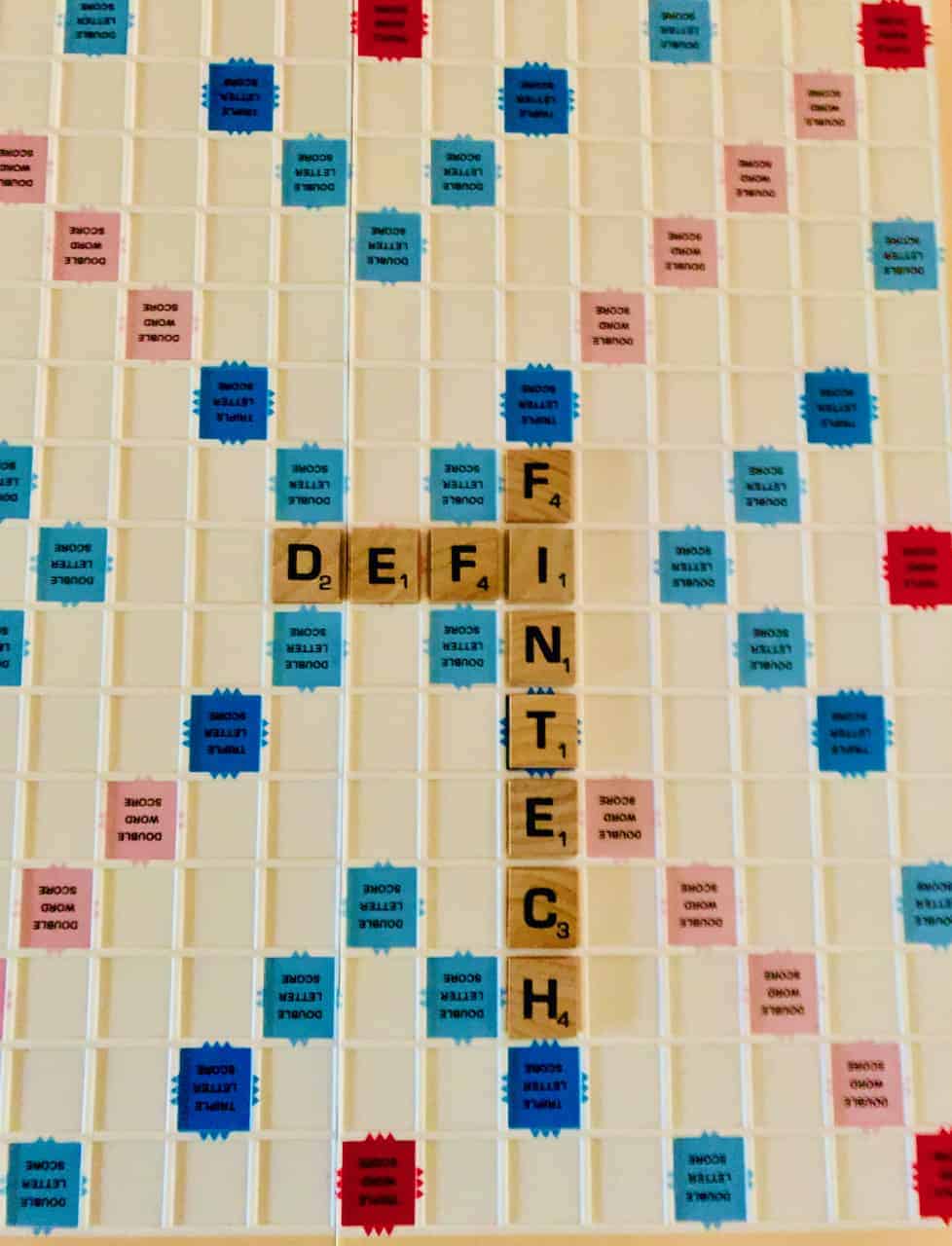 DeFi Education Fund and Digital Chamber petition SEC to codify broker carve-outs for validators, oracles, and RPC providers2026-04
 Ethereum highlights 34 resources for building trustless AI agents using ERC-8004, covering education, research, marketplaces, and dev tooling2026-03
Education in Crypto: How an Industry Teaches Itself
Crypto education is the broad set of programs, content, and institutions that help people understand blockchains, digital assets, and decentralized finance (DeFi)—ranging from free university courses and exchange "academies" to regulatory advocacy groups and AI-powered tutors. As the technology matures, education has shifted from speculative hype-cycle marketing toward a durable layer of public goods, talent pipelines, and policy literacy that the sector now depends on.

a16z and DeFi Education Fund propose DEX safe harbor as SEC advances Project Crypto
Why Education Became Core Infrastructure
For most of crypto's first decade, "education" was largely a euphemism for onboarding—funnels designed to convert curious newcomers into traders. That framing has weakened. The complexity of the modern stack (Layer 2 rollups, restaking, real-world asset tokenization, stablecoins, onchain identity) means users, builders, and regulators all face steep learning curves, and superficial explainers no longer suffice.
Three forces pushed education toward the center. First, regulatory scrutiny made literacy a compliance necessity: institutions cannot adopt what their lawyers and risk officers do not understand. Second, the builder shortage—blockchain engineering remains a niche skill—turned developer education into a competitive moat for ecosystems. Third, the reputational stakes of repeated collapses (exchange failures, bridge hacks, depegging events) made trustworthy, neutral information a defensive priority for an industry eager to shed its casino image.
The result is a maturing field where foundations, exchanges, research firms, and nonprofits increasingly treat education as long-term infrastructure rather than a marketing line item.
Readers click 'education' stories not for learning content but because 'education' functions as a legal and financial instrument — the DeFi Education Fund wields it as a lobbying shield against developer liability, while corporate treasuries use education-sector companies as Bitcoin acquisition vehicles.
The Major Players and Program Types
Crypto education today spans several overlapping categories.
Exchange and protocol academies. Large platforms run free learning portals, often paired with "learn-to-earn" token rewards. These reach enormous audiences but carry an inherent conflict of interest: the educator also sells the product. The more credible programs separate neutral explainers from promotional content and disclose incentives clearly.
Research and data partnerships. Independent research is itself a form of education. Newsrooms and analytics providers increasingly partner to widen access to vetted data—for example, collaborations aimed at expanding "trusted crypto research and education worldwide." The value here is curation: filtering signal from the noise of an information environment dense with marketing.
Ecosystem and foundation programs. Blockchain foundations fund cohorts, hackathons, and community builders to grow developer mindshare. The Avalanche Foundation's Team1 community program, which has grown past 450 members supporting builders and newcomers through events and content, is representative of how ecosystems use education to compound network effects (Avalanche Foundation). Similar logic drives ambassador programs and regional initiatives, such as onchain-finance education pushes targeting Korean and other Asian markets.
Sponsorships and mainstream outreach. Some firms pursue education through cultural reach. WhiteBIT's five-year agreement with FC Barcelona, for instance, frames fan engagement and "real-world digital finance use cases" as an adoption-and-education play in sports. These deals trade on attention; whether they produce durable understanding or merely brand exposure is an open question worth watching.
Government, Free Zones, and Institutional Literacy
A notable 2026 trend is the formalization of education through government and quasi-government channels.
In Dubai, Tether signed a Memorandum of Understanding (MoU) with the Dubai Multi Commodities Centre (DMCC) on June 16, 2026, to advance blockchain education, tokenization, and innovation. The agreement contemplates specialized workshops, advisory sessions, pilot programs, and hackathons across the DMCC network, which spans more than 26,000 companies—roughly 15% of Dubai's foreign direct investment (Tether, crypto.news). An MoU is a non-binding statement of intent rather than a funded program, so its real significance is signaling: a major stablecoin issuer and a regulated free zone publicly aligning on digital-asset literacy.
National institutions are moving too. The Cardano Foundation partnered with SERPRO, Brazil's federal data-processing service, on blockchain education and digital transformation—an example of a foundation embedding itself in public-sector capacity-building rather than retail onboarding. These arrangements matter because institutional adoption tends to follow institutional understanding; teaching procurement officers and civil servants is slower but stickier than chasing retail sign-ups.
- 01DeFi Education Fund as lobby
The DEF appears as the named actor in five distinct regulatory battles — Uniswap ruling, Senate tailoring push, SEC broker carve-outs, patent troll defense, and Tornado Cash amicus — making it the most recurring institution in the clicked set.
- 02Education-sector Bitcoin proxies
Tether's $100M agriculture/education diversification and Jetking's ₹6.6 crore preferential-share raise to buy Bitcoin show readers tracking education companies as indirect crypto treasury plays.
- 03Developer liability DeFi wins
The Risley v. Uniswap ruling and Roman Storm amicus briefs attracted clicks from readers watching whether code-writing equals legal culpability — a precedent-setting question for every DeFi builder.
- 04AI-native education disruption
OpenAI's Cal State rollout, Microsoft's generative AI series, and Karpathy's Anthropic move collectively signal that AI is restructuring the education delivery layer, pulling in readers who track AI-crypto overlap.
- 05Crypto brand education grants
CZ's Giggle Academy, Kraken's Wyoming education grant, and WhiteBIT's FC Barcelona deal show exchanges and founders using education as a soft-power PR and regulatory goodwill mechanism.
Policy Literacy and the DeFi Education Fund
One of the most consequential education efforts is aimed not at users but at regulators. The DeFi Education Fund (DEF), a nonprofit policy and advocacy organization, exists to explain decentralized finance to lawmakers and courts—a reminder that "education" in crypto increasingly includes shaping the legal vocabulary used to govern it.
In April 2026, DEF—alongside the Digital Chamber and a coalition including Aave Labs, Uniswap Labs, Paradigm, and Andreessen Horowitz—pressed the SEC to formalize its broker guidance through notice-and-comment rulemaking. After a staff statement clarified the treatment of certain non-custodial user interfaces, the coalition argued that informal guidance is too fragile: it is explicitly temporary and could be withdrawn absent Commission action, leaving businesses making multi-year bets exposed (crypto.news, The Block).
The substance is a definitional question with real stakes: the coalition urged the SEC to codify carve-outs so that validators, oracles, RPC and API providers, and other neutral infrastructure—participants that never take custody or exercise trading discretion—are not swept into the legal definition of a "broker" (SEC submission). DEF has made parallel arguments abroad, urging the UK's Financial Conduct Authority to regulate only protocols with genuine unilateral control. This kind of advocacy is education in its highest-leverage form: teaching the people who write the rules how the technology actually works.
Philanthropy and the RLUSD Experiment
Crypto's wealth has also flowed into traditional education philanthropy, sometimes as a proof point for the technology itself.
Ripple's $25 million commitment to DonorsChoose and Teach For America, announced in May 2025 and delivered largely in its RLUSD stablecoin, is the clearest case. One year on, Ripple reported the donation helped fund roughly 48,000 classroom projects across all 50 states—86% of them at schools where most students come from low-income households—and supported thousands of new teachers reaching hundreds of thousands of students (Ripple). The initiative doubles as a demonstration that a stablecoin can serve as a practical rail for large-scale charitable disbursement.
Other examples blur the line between crypto fortunes and general education giving—from individual founders quietly funding free education in U.S. prisons to ecosystem campaigns unlocking learning access for hundreds of thousands of children. The throughline is that crypto-native capital is increasingly directed at conventional educational outcomes, with the technology sometimes the medium and sometimes merely the funding source.
- 2023-09launch
CZ announces Giggle Academy free K-12 education project
- 2024-02regulatory
DeFi Education Fund petitions USPTO over patent troll actions against MakerDAO and Compound
- 2024-07regulatory
Risley v. Uniswap Labs ruling backs developer non-liability in DeFi
- 2024-09regulatory
Coin Center, Blockchain Association, and DeFi Education Fund file Tornado Cash amicus briefs
- 2024-11governance
DeFi Education Fund and crypto coalition urge Senate to distinguish developers from intermediaries
- 2025-03milestone
Tether announces $100M investment in agriculture firm, citing digital education among diversification goals
- 2025-06regulatory
DeFi Education Fund and Digital Chamber petition SEC to codify broker carve-outs for validators and RPC providers
AI and the Reshaping of How Crypto Is Taught
The most disruptive force in education broadly—and crypto education specifically—is artificial intelligence (AI). The appeal is the old dream of one-to-one tutoring at scale: a system that, like the best human teacher, can infer from a single wrong answer exactly where a learner lost the thread, then reach a thousand learners at once rather than the few a calendar allows.
The capital backing this vision is substantial. In May 2026, Anthropic and the Gates Foundation announced a four-year, $200 million partnership applying the Claude AI model to global health, education, and economic mobility—including K-12 tutoring, college advising, and curriculum-design tools, plus literacy and numeracy apps in sub-Saharan Africa and India. Benchmarks and datasets, including for AI math tutoring, are slated for release as public goods (Anthropic, Gates Foundation).
Two cautions temper the optimism. First, the evidence base is fragile: a widely cited 2026 study on ChatGPT in education was retracted amid an adoption surge, a reminder that AI research can outpace its own quality controls. Second, prominent researchers urge restraint—AI pioneer Yann LeCun has argued for ignoring CEO hype, continuing to invest in human education, and staying calm about labor-market disruption. For crypto specifically, AI tutors and agents promise to make a notoriously opaque subject more navigable, but they can also confidently explain protocols incorrectly—a serious risk when the topic involves irreversible transactions and real money.
Persistent Tensions
Several unresolved tensions define the field. The conflict-of-interest problem is structural: much crypto education is funded by entities that profit from adoption, so neutrality must be actively engineered, not assumed. The accuracy problem is acute in a fast-moving space where last year's best practice can become this year's security hole. And the measurement problem is real: sponsorships and ambassador programs generate reach metrics easily but learning outcomes rarely, making it hard to distinguish genuine literacy from marketing.
Readers and builders can apply simple filters: favor sources that disclose their incentives, that separate explanation from promotion, that cite primary documents (regulatory filings, audited code, foundation reports), and that update content as the technology changes.
Outlook
Crypto education is consolidating into a recognized public good, pulled by regulation, talent needs, and the reputational cost of misinformation. Expect three trajectories to continue: deeper institutional and government-led programs as free zones and national agencies formalize literacy efforts; sharper policy advocacy as groups like the DeFi Education Fund push informal guidance toward durable rules; and rapid, uneven AI integration that promises personalized tutoring while raising fresh questions about accuracy and evidence. The winners will be the programs that treat education as a long-term commitment to understanding rather than a short-term funnel to conversion.
Latest education news
Community notes
Spot something off or out of date? Drop a note. Editors review topic notes daily and roll accepted fixes into the explainer — contributors are recognized in the monthly $SQUID drop.
Loading notes…
Help improve this topic
Have a story or tip about this topic? Submit it. See something missing? Leave a note. Editors review daily; accepted submissions and fixes count toward the monthly $SQUID drop.