
In‑depth explainer on CNBC’s role in crypto: how its global business coverage, shows, interviews and regulatory focus shape Bitcoin, stablecoin and tokenization narratives for traders, institutions and policymakers.
+4 sources across the wider coverage universe
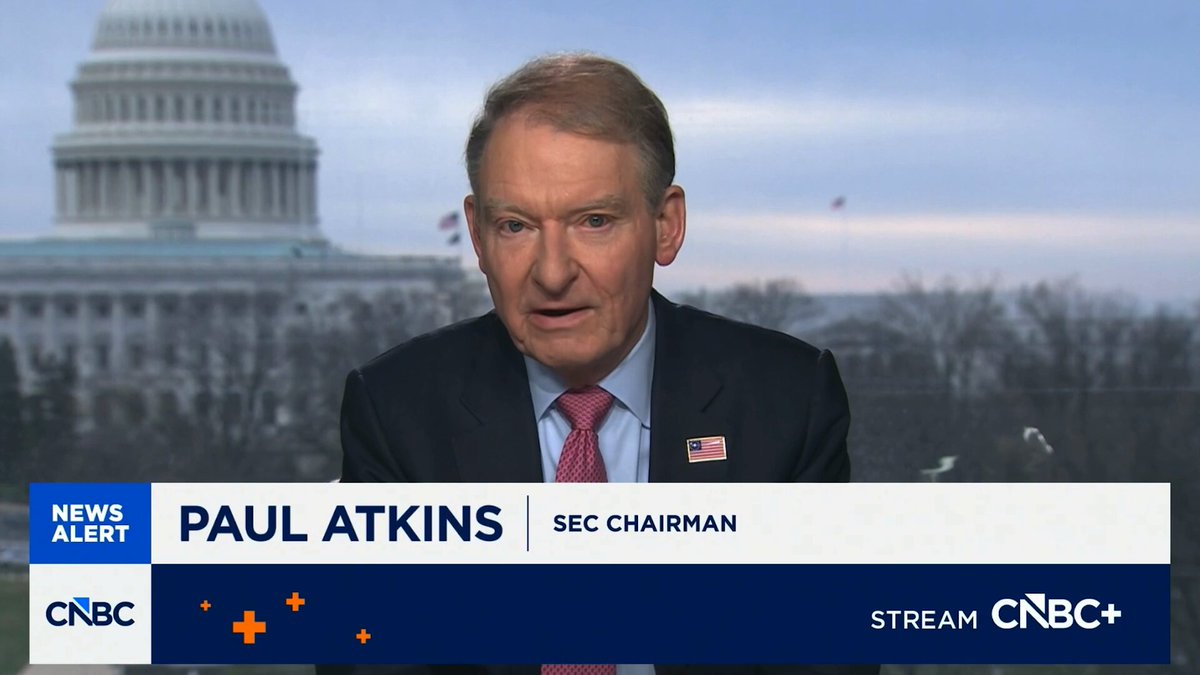 Today on CNBC Chairman SEC PaulSAtkins regarding the Commission’s interpretation on crypto assets.2026-03
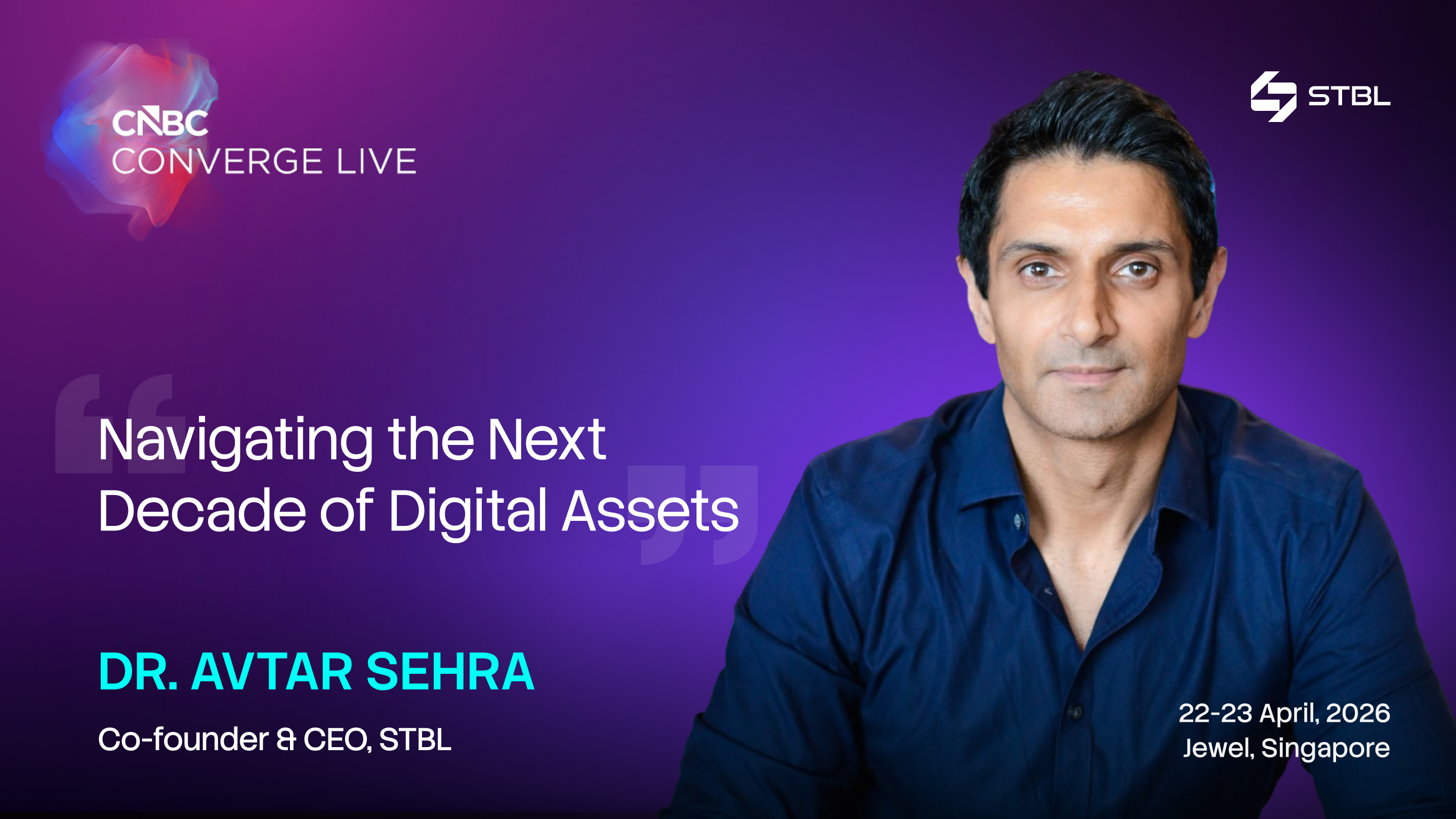 STBL CEO Avtar Sehra heads to CNBC Converge to outline how stablecoins and tokenization will reshape global finance, as onchain systems redefine value issuance and movement2026-04
 Kalshi makes move to court crypto traders with tokenized betting contracts, Kalshi told CNBC. The move mirrors features popularized by crypto-native prediction platform Polymarket and is designed to appeal to on-chain traders. The company said tapping crypto liquidity could help scale its markets as prediction-market volume surges.2025-12
 Ripple President Monica Long discusses the company’s stablecoin, tokenization of real-world assets, and what Trump’s return could mean for crypto in a new CNBC interview.2025-04
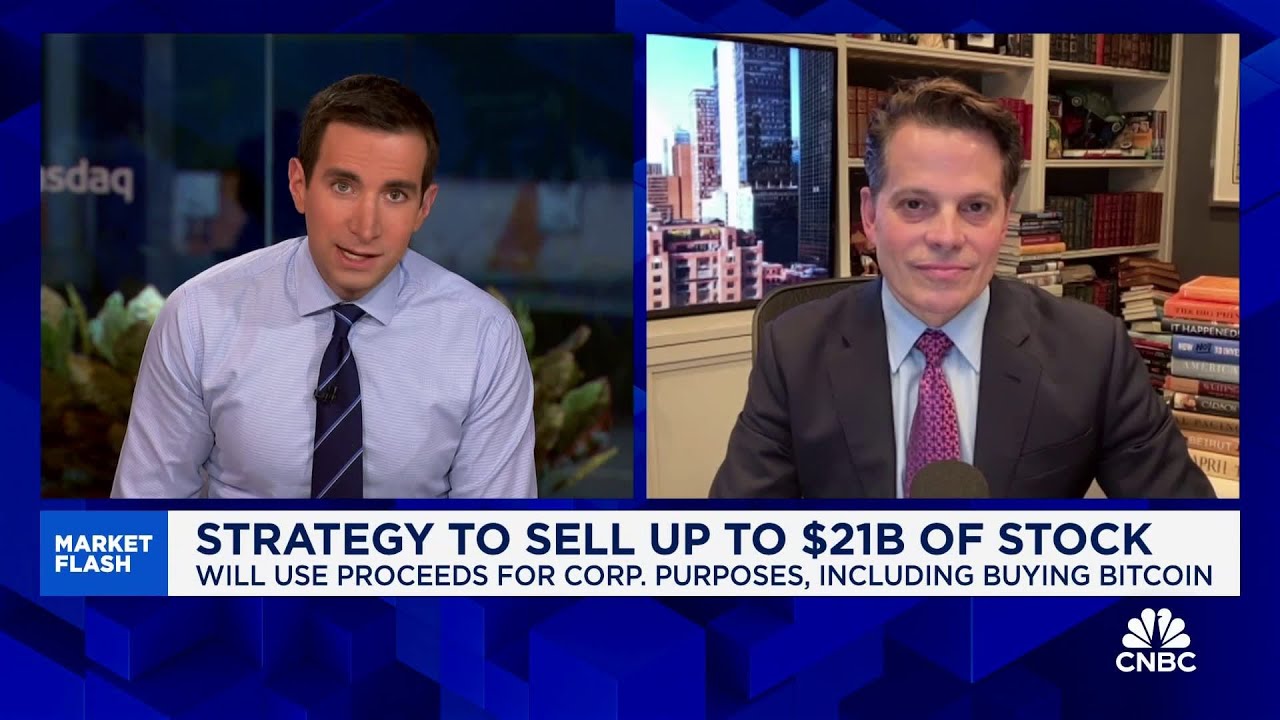 In his CNBC interview, SkyBridge Capital's Anthony Scaramucci calls Bitcoin “a crucial long-term strategic asset” and advocates for a U.S. strategic Bitcoin reserve.2025-03
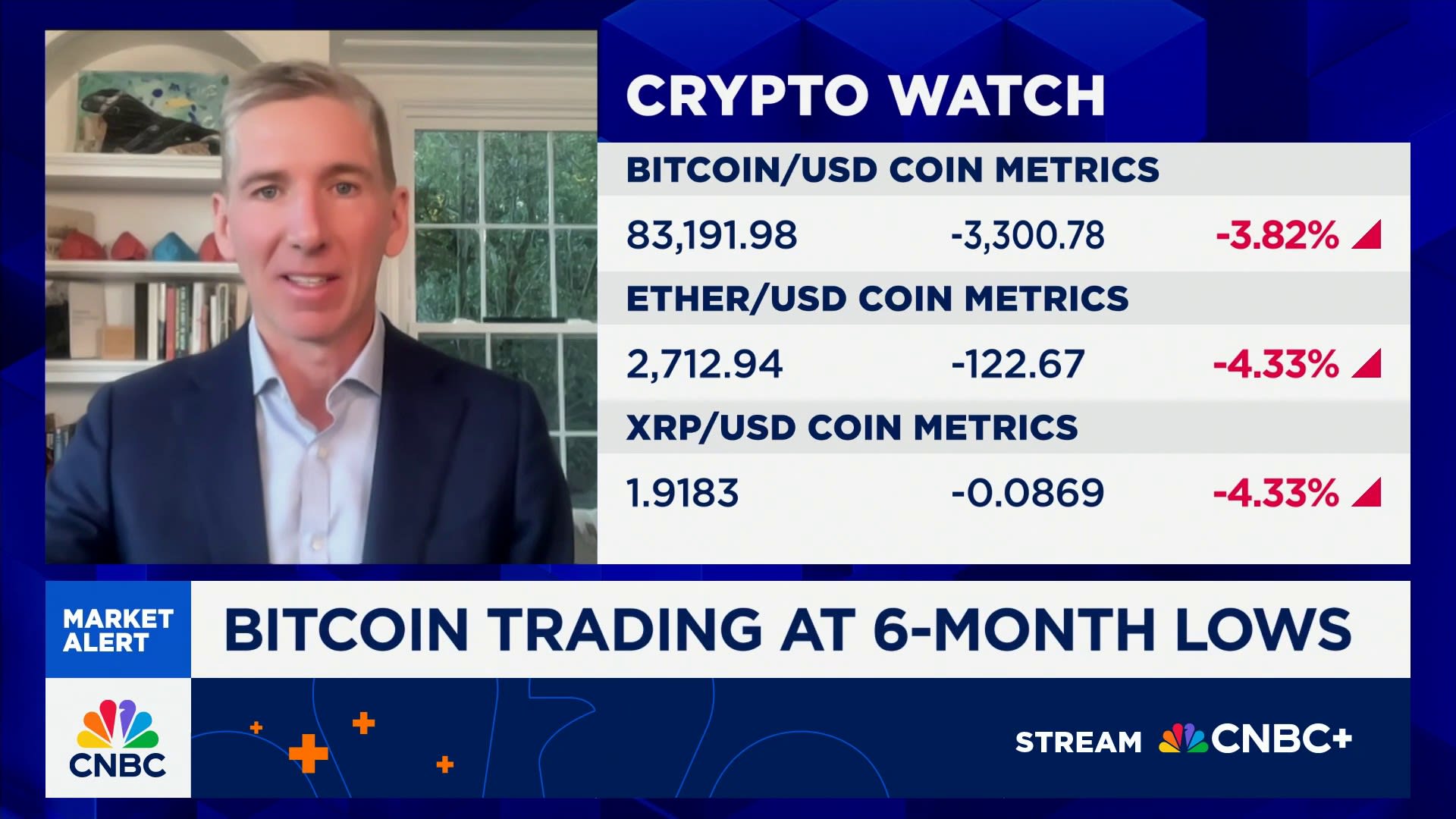 Matt Hougan, the Bitwise CIO states in an interview with CNBC, that this is an excellent buying opportunity for long-term investors.2025-11
CNBC and Crypto: An Evergreen Explainer for Digital Asset Investors
CNBC is a global business and financial news network that has become one of the most visible mainstream platforms for covering Bitcoin, cryptocurrencies, and the broader digital asset ecosystem. For crypto traders and builders, it functions both as a real‑time macro dashboard and as a stage where regulators, CEOs, and asset managers shape narratives that can move markets.
What CNBC Is, In A Crypto Context
At its core, CNBC is a television and digital news brand focused on markets, companies, and the global economy, built around the idea of being “first in business worldwide,” a motto it reinforces across its social and international channels. It was launched by NBC in 1989 under the name “Consumer News and Business Channel,” a positioning that signaled from the outset its focus on financial information rather than general news. Over time, it has evolved from a U.S. cable network into a multi‑platform operation that includes international feeds, streaming, social media, and digital verticals that range from stock markets to technology and digital assets. For crypto market participants, CNBC is not just another news outlet; it is one of the main bridges between the legacy financial system and the still‑maturing world of digital currencies and blockchain‑based finance. Its coverage both reflects and shapes how institutional investors, policymakers, and the broader investing public perceive crypto’s risks and opportunities.
This dual role is particularly important in a market where regulatory decisions, macroeconomic shifts, and institutional flows can drive price action as much as on‑chain fundamentals. When the Federal Reserve holds rates steady or signals future hikes, CNBC treats the decision as a central market event, providing instant analysis that traders apply to everything from equities to Bitcoin. When geopolitical shocks emerge—such as tensions or conflicts involving Iran—CNBC often connects the dots between risk sentiment, safe‑haven flows, and crypto price moves, as seen in segments where reporters link uncertainty around an Iran war to weekly declines in Bitcoin and ether. And when major political developments occur, such as the cancellation of U.S.–Iran talks in Switzerland and aggressive rhetoric from the White House, CNBC’s coverage situates digital assets within the broader risk‑on/risk‑off dynamics of global markets, even when crypto is not the explicit focus. In this way, understanding CNBC’s role is part of understanding how the “macro layer” interacts with the crypto economy.

Today on CNBC Chairman SEC PaulSAtkins regarding the Commission’s interpretation on crypto assets.

This is the clarity we need
Origins, Ownership, and Global Footprint
CNBC’s roots in legacy broadcast media matter for how it covers emerging technologies like cryptocurrencies. The network was created in 1989 as NBC’s Consumer News and Business Channel, an experiment in providing round‑the‑clock financial news on cable at a time when real‑time market data was mostly limited to professional terminals. Its mission was to explain markets, companies, and economic policy to investors and executives, and that remains the organizing principle even as the asset classes under discussion have expanded to include Bitcoin, stablecoins, and tokenized assets. Unlike purely crypto‑native outlets, CNBC is structurally oriented toward the intersection of markets, policy, and corporate strategy, which shapes the kind of stories it elevates.
In corporate terms, CNBC has been part of the broader Comcast media empire, which has periodically reorganized its holdings. A notable recent development was Comcast’s completion of the separation of Versant Media, an entity that owns CNBC, MSNBC, and USA Network and is set to trade on Nasdaq as an independent company. While the details of that restructuring are primarily of interest to media investors, the key takeaway for crypto readers is that CNBC is integrated into a large, publicly scrutinized media group. That context brings both resources—global bureaus, high‑profile guests, access to policymakers—and constraints, including compliance, legal standards, and corporate risk management that differ from crypto‑native social media discourse. It also means that CNBC is attuned to how its own parent company and peers view technologies like blockchain, tokenization, and AI.
The network’s global footprint extends well beyond the United States. CNBC International distributes business news across Europe, the Middle East, and Asia, positioning the brand as a worldwide hub for market information and executive interviews. In Africa, for example, CNBC licenses its brand to a regional pay‑television network, CNBC Africa, which launched in 2007 and covers African economies through a localized business‑news lens. In a crypto context, that global reach matters because digital assets trade 24/7 across jurisdictions, and adoption patterns vary dramatically by region. A feature on tokenized dollar payments in Asia, a panel on mobile money and Bitcoin in Africa, or a segment on European regulation will all reach different local audiences through CNBC’s regional feeds but feed into a converging narrative about crypto as a global market.
In addition to broadcast channels, CNBC maintains a significant social media presence that amplifies its influence in crypto discussions. Its main X (formerly Twitter) account headlines itself as “First in business worldwide,” pushing breaking market headlines and clips from interviews to millions of followers in real time. On Instagram, CNBC similarly highlights market stories, executive quotes, and economic graphics to millions more. CNBC International leverages Facebook to showcase quotes and segments from across its global programming, further extending its reach into emerging markets where mobile access to social platforms may far outstrip cable penetration. For crypto audiences that live on platforms like X and Telegram, CNBC’s social feeds serve as a rapid distribution channel for its coverage, ensuring that a pointed comment about Bitcoin from a regulator or a CEO during a morning show can become a widely shared sound bite minutes later.
Leviathan readers click CNBC crypto coverage not for market data but for legitimacy arbitrage — they want to see which institutional figures CNBC platforms, because those appearances signal which narratives (Bitcoin reserve, stablecoin policy, RWA tokenization) are crossing into mainstream finance credibility.
How CNBC Covers Crypto: Shows, Segments, and Events
CNBC’s coverage of cryptocurrencies began as occasional mentions of Bitcoin during broader discussions of technology or speculative markets. Over time, as crypto market capitalization expanded and institutional interest grew, the network developed more structured coverage, culminating in dedicated segments and shows. A central pillar of this evolution is “CNBC Crypto World,” a recurring program that focuses specifically on digital currencies, market data, and interviews with industry figures. In these episodes, anchors provide daily price updates for assets like Bitcoin and ether, contextualizing them against macro developments and regulatory news, and bring on guests ranging from exchange executives to on‑chain analysts.
In one Crypto World segment, for instance, anchors noted that Bitcoin and ether were “bouncing back” yet still closing a week in the red as uncertainty around an Iran war weighed on risk assets. The episode moved fluidly from price charts to policy developments, highlighting a proposed rule change that would allow alternative assets such as real estate, private markets, and cryptocurrencies in retirement accounts, and then to a story about Fannie Mae accepting crypto‑backed mortgages via a partnership with Better Home & Finance and Coinbase. This format—linking macro events, regulatory shifts, and product innovation in quick succession—demonstrates how CNBC packages crypto stories for an audience that may not be native to on‑chain culture but is deeply interested in how new instruments affect portfolios and financial infrastructure.
Other Crypto World episodes focus on episodes of sharp volatility, treating digital assets as both an extension of and a distinct corner of the broader risk‑asset universe. In coverage of a “deepening sell‑off,” for example, the show relayed expert commentary suggesting a two‑stage downturn: first, a macro‑driven sell‑off tied to broader market weakness, followed by forced liquidations in leveraged positions. Guests emphasized the importance of monitoring ETF flows, corporate treasury purchases, and derivatives metrics such as open interest to judge whether the downturn was driven by structural deleveraging or shorter‑term sentiment. Options market data was used to argue that Bitcoin might be rangebound in the short term while still leaving room, in one guest’s view, for a move toward six‑figure prices later in the year based on positioning. The takeaway for crypto readers is that CNBC’s framing of price moves leans heavily on institutional tools—ETF flows, options skew, macro drivers—rather than purely on on‑chain metrics.
The channel also highlights extreme price moves and bold forecasts, often by inviting high‑profile guests who are strongly associated with Bitcoin. In one segment, Fundstrat’s Tom Lee called a pullback in Bitcoin down toward the 90,000 level an opportunity, arguing on Squawk Box that even a further slide toward 70,000 would not negate Bitcoin’s potential to be “one of the best‑performing assets” of the following year. In another appearance, MicroStrategy’s Michael Saylor told CNBC television that he expects Bitcoin to outperform the S&P 500 over time, effectively positioning it as a superior long‑term store of value and growth asset compared with a diversified stock index. In separate coverage highlighted in crypto circles, Saylor went further in a different CNBC conversation by speculating that, over a very long horizon, Bitcoin could reach multi‑million‑dollar valuations, a headline that circulates widely as an example of the more extreme bullish narratives that can emerge from CNBC’s guest segments. For traders, these sound bites can fuel sentiment; for long‑term investors, they serve as inputs into debates about Bitcoin’s role in portfolios.
Beyond its daily shows, CNBC runs conferences and live events that have become forums for crypto discussions alongside broader themes like AI, fintech, and macroeconomics. At CNBC’s CONVERGE LIVE event, for example, Tan Su Shan, the chief executive of Southeast Asia’s largest bank, described crypto as being “like the gold rush,” signaling both the perceived opportunity and the risk of speculative excess in the sector. The same event series has featured roundtables where investors warn of digital asset risks amid volatility and regulatory threats, offering more cautious counterpoints to the growth narratives often highlighted in bull markets. These conferences are increasingly venues where stablecoin issuers, tokenization startups, and traditional financial institutions explain their strategies to an audience that spans both Wall Street and the tech world.
Crypto‑specific conferences covered by CNBC, such as the Bitcoin 2025 gathering, magnify the network’s access to industry leaders. At that event, Tether CEO Paolo Ardoino told CNBC that the stablecoin issuer had amassed around 100,000 Bitcoin on its balance sheet and was reinvesting part of its profits into Bitcoin, Bitcoin mining, and related technology. This kind of disclosure, delivered live on a mainstream business channel, is significant because it moves information about on‑chain treasuries and corporate strategy into the view of traditional investors who may not track blockchain addresses or specialist research. Similarly, CNBC has aired interviews with Bitcoin leaders live from conferences in Las Vegas, highlighting narratives around digital scarcity, institutional adoption, and the future of crypto mining. These interactions demonstrate how CNBC acts as a conduit between crypto conferences and the broader capital markets.
STBL CEO Avtar Sehra heads to CNBC Converge to outline how stablecoins and tokenization will reshape global finance, as onchain systems redefine value issuance and movement
Themes in CNBC’s Crypto Coverage
While CNBC’s crypto coverage spans a wide range of stories, several recurring themes are especially relevant for digital asset investors: Bitcoin as a macro asset, regulation and the SEC, stablecoins and tokenization, and the evolution of trading infrastructure.
One dominant theme is the portrayal of Bitcoin as a macro‑sensitive asset increasingly integrated into the institutional investment universe. In an interview with CNBC Crypto World, Bitwise CIO Matt Hougan argued that Bitcoin’s traditional four‑year price cycle may be changing as institutional capital enters, pointing to what he described as persistent, slow‑moving institutional buying that can dampen volatility on the downside. He characterized Bitcoin as “very much a macro asset” with relatively clear regulatory status in the United States as a commodity, suggesting that liquidity conditions and broader risk sentiment may matter more for its price than the politics of any given administration. This framing—Bitcoin as a macro‑linked commodity held by institutional investors and corporate treasuries—recurs across CNBC’s programming and informs how it presents both bull runs and drawdowns.
Regulation is another central pillar, with the U.S. Securities and Exchange Commission (SEC) often in the spotlight. CNBC has repeatedly interviewed SEC Chair Gary Gensler about his views on Bitcoin, crypto trading platforms, and the limits of existing securities law, giving him a high‑profile venue to articulate enforcement priorities and concerns about investor protection. Older interviews with Gensler, including from his time as a former regulator discussing Chinese listings and tariffs, underscore that CNBC treats him as a key voice on market structure issues more broadly. More recently, his tenure has drawn criticism over cybersecurity missteps and accusations of unethical behavior by members of Congress, a controversy that CNBC has also covered, highlighting tensions between the agency and parts of the financial industry. Parallel interviews with other policymakers—such as SEC chairs or commissioners in different administrations, including figures like Paul Atkins who comment on how the Commission interprets crypto assets—illustrate the network’s role as a forum where regulatory doctrine is debated in public.
Stablecoins and tokenization have become increasingly prominent in CNBC’s reporting, reflecting a shift from viewing crypto solely as a speculative asset class toward seeing it as plumbing for payment and capital markets. CNBC’s interview with Tether’s Paolo Ardoino, in which he discussed reinvesting profits into Bitcoin and Bitcoin‑related infrastructure, underscored how large stablecoin issuers are becoming significant holders of BTC and potential market participants in mining and Layer‑1 ecosystems. Separate interviews with executives like Ripple President Monica Long have explored the tokenization of real‑world assets and the launch of enterprise‑oriented stablecoins, along with the implications of political changes—such as a potential Trump return to office—for stablecoin regulation and cross‑border payments. At CNBC CONVERGE, STBL CEO Avtar Sehra described how stablecoins and tokenization could reshape global finance, emphasizing a future in which on‑chain systems re‑define how value is issued and moved, while simultaneously raising questions about oversight, risk management, and interoperability with existing banking rails.
Trading infrastructure and derivatives represent another major thread, particularly as crypto markets adopt structures long familiar in traditional finance. CNBC’s coverage of CME Group’s plan to sue the U.S. Commodity Futures Trading Commission (CFTC) over the approval of perpetual futures products illustrates how the network treats disputes about crypto derivatives as part of a broader conversation about market integrity and regulatory boundaries. Similarly, its reporting on Kalshi’s move to court crypto traders with tokenized betting contracts—mirroring features popularized by prediction platforms like Polymarket—situates crypto‑inspired market designs within U.S. regulatory debates about event contracts, gambling, and market manipulation. These stories highlight CNBC’s focus on the institutionalization and regulation of crypto trading, rather than on retail speculation alone.
- 01stablecoin RWA Trump policy↗
Ripple's Monica Long interview dominated clicks because it bundled three high-stakes questions at once: a new RLUSD stablecoin product, real-world asset tokenization, and how a returning Trump administration might reshape the regulatory landscape.
- 02Bitcoin reserve advocacy↗
Scaramucci and Saylor appearances pulled readers seeking confirmation that Bitcoin's legitimacy as a macro asset was being pressed on mainstream financial television, with Saylor's $13M price target adding speculative fuel.
- 03SEC leadership accountability↗
Gensler's CNBC appearance drew clicks because readers wanted to see a regulator they viewed as hostile and scandal-touched face scrutiny on a platform that couldn't avoid the Congressional ethics accusations surrounding him.
- 04crypto theft forensics↗
Both the $3B Bitcoin documentary and the Bybit $1.5B hack tracking piece attracted readers interested in the investigative mechanics of blockchain forensics — tracing stolen funds in public ledgers is a uniquely crypto story.
- 05institutional blockchain adoption↗
JPMorgan's agentic AI demo and Alibaba's blockchain payment rails with JPMorgan signaled to readers that TradFi incumbents were operationalizing crypto infrastructure, not merely experimenting with it.
- 06Tether CEO platform access↗
Paolo Ardoino's CNBC interview at Bitcoin 2025 drew clicks because Tether's opacity makes any on-the-record appearance from its CEO a rare primary source event for readers tracking stablecoin systemic risk.
Using CNBC as a Signal in Crypto Markets
For crypto investors, the practical question is not simply what CNBC is, but how its coverage can be used as an input into trading and investment decisions. Because CNBC sits at the intersection of macroeconomics, policy, and institutional portfolios, its programming often functions as a real‑time sentiment gauge for traditional finance. Understanding how to read that signal—and its limits—is a key skill for a crypto audience.
Macro, interest rates, and geopolitics are central to this. When the Federal Reserve leaves rates unchanged, as in a recent meeting that CNBC covered with emphasis on “positive economic talk” and a decision to decline cutting rates, the network immediately extrapolates to risk assets, including tech stocks and digital currencies. Bitcoin’s correlation with equities tends to rise in periods when macro events dominate, and CNBC’s framing often reflects that interconnectedness. For example, in the Iran‑war‑linked segment of Crypto World, anchors discussed how digital currencies had pared losses but still ended the week down—Bitcoin off about 2.9 percent and ether 1.7 percent—while tying those moves explicitly to geopolitical uncertainty. In another case, a sell‑off in chip stocks was discussed on CNBC by Fundstrat’s Tom Lee as being driven primarily by positioning ahead of a much‑anticipated SpaceX IPO, reinforcing the idea that portfolio‑level reallocations in advance of major events can ripple into crypto as funds rebalance risk.
Political developments and international diplomacy also enter the frame. CNBC’s reporting on Switzerland’s confirmation of the cancellation of planned U.S.–Iran talks in Bilbergen, coupled with coverage of former President Trump’s posts demanding “unconditional surrender,” illustrates how rapidly changing geopolitical standoffs can affect risk sentiment. For crypto traders who watch Bitcoin as a potential hedge or speculative vehicle around such events, CNBC’s analysis of market reactions to these developments provides context that is difficult to glean from on‑chain data alone. The same applies to stories about sanctions, capital controls, or currency crises, where CNBC’s coverage of foreign exchange markets and sovereign risk may signal conditions that historically have driven localized demand for stablecoins and BTC.
Institutional flows, ETFs, and IPOs form another layer of CNBC’s signaling function. In Crypto World episodes about Bitcoin downturns, anchors and guests repeatedly point to ETF flows as a key variable, noting that substantial inflows can cushion drawdowns while persistent outflows may exacerbate selling pressure. They highlight corporate treasury activity—what they call “treasury companies buying”—as another driver, reflecting the growing importance of firms like MicroStrategy or Tether that hold significant Bitcoin reserves. CNBC interviews with executives such as Strategy CEO Phong Le make this tangible, as he explains that the company would only sell portions of its Bitcoin holdings under specific conditions, such as funding an 11.5 percent dividend on its preferred stock or for tax optimization, reinforcing to CNBC’s audience that corporate BTC sales are strategic and constrained rather than opportunistic. At the same time, Kraken’s confirmation on CNBC that it has confidentially filed for a U.S. IPO, following a prior draft S‑1, signals that large centralized exchanges are seeking more regulated capital market access, a development that can influence how investors assess the durability and governance of crypto trading venues.
The IPO lens extends beyond crypto‑native firms. When CNBC reports on Alibaba’s plan to use JPMorgan’s blockchain for tokenized dollar and euro payments, it frames the move as a way to expedite transactions and eliminate intermediaries by enabling direct transfer of digital currencies over a bank‑issued, blockchain‑based system. That story highlights how a major e‑commerce and cloud provider is initially focusing on bank‑issued digital tokens, rather than public stablecoins, to maintain regulatory clarity while leaving open the possibility of exploring stablecoins in the future. Similarly, coverage of OpenAI CEO Sam Altman’s talks with the White House over a potential government stake in OpenAI underscores CNBC’s focus on how frontier technologies and state power intersect—context that is increasingly relevant for crypto, where issues of central bank digital currencies, state‑backed stablecoins, and national strategic Bitcoin reserves are being debated. When SkyBridge Capital’s Anthony Scaramucci tells CNBC that Bitcoin is a crucial long‑term strategic asset and advocates for a U.S. strategic Bitcoin reserve, the network is thus not just relaying a personal view but contributing to a broader conversation about whether digital assets will become part of sovereign balance sheets.
Sentiment and narratives round out CNBC’s utility. Interviews with market strategists like Matt Hougan, who tells CNBC that current weakness represents an “excellent buying opportunity for long‑term investors,” provide qualitative sentiment markers that crypto traders often watch as contrarian indicators. Hyper‑bullish forecasts like Michael Saylor’s multi‑million‑dollar Bitcoin targets, aired on CNBC, can fuel speculative enthusiasm but also provoke skepticism about unsustainable narratives. Conversely, segments where investors warn of digital asset risks at CNBC’s CONVERGE LIVE roundtables—citing volatility and regulatory threats—provide a measure of institutional caution that may signal shifts in risk appetite. These narratives, amplified through CNBC’s broadcast and social channels, often become the shared language in which both bulls and bears frame their theses.

Kalshi makes move to court crypto traders with tokenized betting contracts, Kalshi told CNBC. The move mirrors features popularized by crypto-native prediction platform Polymarket and is designed to appeal to on-chain traders. The company said tapping crypto liquidity could help scale its markets as prediction-market volume surges.

"Kalshi bettors can now buy and sell tokenized versions of their wagers on Solana, the company told CNBC exclusively on Monday. It’s the latest sign the prediction market company is deepening its push to win over the same cryptocurrency holders that have pumped billions of dollars of digital assets into its rival Polymarket."
Strengths, Limitations, and Criticisms
Because CNBC sits at the heart of legacy financial media, it is both influential and contested within the crypto community. Understanding its strengths and limitations helps digital asset investors calibrate how much weight to give its coverage.
On the strengths side, CNBC offers unparalleled access to policymakers and senior executives. SEC Chair Gary Gensler has repeatedly used CNBC to explain his views on Bitcoin and crypto exchanges, giving investors early insight into how enforcement may evolve. Senators like Cynthia Lummis have told CNBC they expect comprehensive crypto market structure legislation and tax reforms within specific timeframes, providing a window into legislative timelines and priorities. Central bank officials routinely appear on the network to discuss interest rates and inflation, and CNBC’s Fed coverage, such as its reporting on meetings where rates are left unchanged despite positive economic data, helps crypto investors interpret how real‑world yields and liquidity conditions might impact digital asset valuations. The channel also provides on‑the‑record statements from corporate leaders in crypto and adjacent industries, from Tether’s disclosure of its Bitcoin holdings and mining investments to JPMorgan’s demonstration of its AI tools that can build an investment banking deck in seconds. These appearances turn CNBC into a primary source for understanding how large institutions are approaching blockchain, AI, and digital assets.
CNBC also brings significant analytical infrastructure to bear on markets. Its All‑America Economic Survey, for example, is regularly discussed on air as a way to gauge how Americans view the stock market and the economy, which in turn influences risk appetite. The network’s use of options data, ETF flows, and macro models in explaining crypto price action, as seen in segments about Bitcoin downturns and potential rangebound trading, offers a window into how traditional desks think about digital assets. For crypto traders who may mainly follow on‑chain metrics, this perspective is valuable because it reflects the frameworks of the funds and desks whose flows increasingly dominate volumes.
However, there are clear limitations and criticisms. One recurrent critique is that the demands of live television push coverage toward sound bites and extreme narratives. When bullish guests predict Bitcoin at 200,000 or even far higher on air, or when price calls like Tom Lee’s expectations of Bitcoin being “significantly higher” with targets in the 200,000–250,000 range are highlighted in headlines, skeptics argue that CNBC may inadvertently amplify speculative exuberance. Conversely, in sharp downturns, segments emphasizing forced liquidations and “deepening sell‑offs” can contribute to panic, especially when clipped and shared on social media in isolation. The rapid toggling between macro fears, regulatory crackdowns, and dramatic price charts can heighten emotional responses among retail traders.
CNBC has also faced criticism over accuracy and framing in specific instances. In one high‑profile example, the network incorrectly reported that Nvidia CEO Jensen Huang had not been invited to a major business leaders’ trip to China, a claim publicly contradicted by former President Trump, who stated that Huang was actually on Air Force One and would attend unless asked not to. The incident fueled debate about CNBC’s sourcing and the speed at which it publishes breaking news about powerful companies and executives. In crypto, where misinformation can drive large price swings in thinly traded tokens, such episodes reinforce the need for viewers to cross‑check CNBC headlines with primary sources, official filings, and on‑chain data where relevant.
A further criticism within crypto circles concerns perceived regulatory bias. Some market participants view CNBC’s interviews with figures like Gary Gensler as too deferential, arguing that tough questions about enforcement inconsistencies, innovation flight, or the impact of regulation on decentralized protocols are not always pursued aggressively. Conversely, regulators and skeptics sometimes accuse CNBC of giving too much airtime to promoters and speculative narratives, particularly when guests with large crypto holdings or business interests make extreme claims without being challenged on their assumptions or incentives. The balance between access and scrutiny is thus a constant tension.
These strengths and weaknesses can be summarized, at a high level, in a comparative way. The table below places CNBC alongside crypto‑native media and on‑chain analytics as information sources for digital asset investors.
| Source Type | Primary Strengths | Primary Limitations |
|---|---|---|
| CNBC | Access to policymakers and CEOs; macro and regulatory context; broad distribution | Sound‑bite bias; occasional errors; less granular on‑chain or protocol detail |
| Crypto‑native media | Deeper technical coverage; closer to developer and DeFi communities | May lack mainstream regulatory access; sometimes more partisan or tribal |
| On‑chain analytics | Direct view of flows and protocol activity | Limited macro context; requires interpretation by experienced analysts |
For a sophisticated crypto audience, the implication is not to choose one source over another, but to understand how CNBC fits into a broader information stack and to compensate for its weaknesses with complementary tools and perspectives.
- 2023-03milestone
Swiss National Bank hikes 50bps amid Credit Suisse turmoil
Trump elected; Ripple and Bitcoin reserve advocates cite policy tailwinds on CNBC
Paul Atkins confirmed as SEC chair, CNBC covers Commission's revised crypto asset stance
Bybit $1.5B hack; Elliptic chief scientist traces funds live on CNBC Crypto World
JPMorgan demos agentic AI building investment banking deck in 30 seconds on CNBC
Bitcoin 2025 Vegas conference: CNBC interviews Tether CEO Ardoino and Bitcoin leaders live
Alibaba adopts JPMorgan blockchain for tokenized dollar and euro payments
Sen. Lummis tells CNBC crypto market structure legislation expected by December
Regional and International Angles: CNBC Africa and Beyond
Crypto is inherently global, and CNBC’s regional networks provide different lenses on how digital assets are being adopted and regulated around the world. CNBC Africa offers a clear example. Launched in 2007 as a pay‑television network operating under license from CNBC International, it focuses on African business news and financial markets, including commodities, currencies, and increasingly fintech and digital assets. As African countries experiment with mobile money, central bank digital currencies, and Bitcoin as a store of value against local inflation, CNBC Africa’s coverage provides context that differs from U.S. or European programming, emphasizing issues like financial inclusion, cross‑border remittances, and infrastructural gaps.
Recent coverage from CNBC Africa around crypto trends and regional market growth forecasts for 2026 illustrates how the network is incorporating digital assets into its broader narrative about Africa’s economic trajectory. In these discussions, Bitcoin and stablecoins are often presented less as speculative instruments and more as tools for moving value and hedging against currency risk, reflecting local realities. For a global crypto audience, paying attention to this coverage through CNBC’s international feeds offers insight into how adoption may progress in markets that are demographically young and mobile‑first, but also subject to regulatory experimentation and capital controls.
In Asia, CNBC International’s presence allows it to capture stories that sit directly at the intersection of big tech, banking, and blockchain. Coverage of Alibaba’s use of JPMorgan’s blockchain for tokenized dollar and euro payments, with an emphasis on faster transactions and the removal of intermediaries through bank‑issued digital tokens, reflects an emerging pattern where large corporations test tokenization within tightly regulated frameworks rather than jumping straight to public stablecoins. The reporting underscored that Alibaba would initially focus on bank‑issued tokens for regulatory clarity, while remaining open to exploring stablecoins in the future, a nuance that matters for assessing the competitive landscape between private stablecoin issuers and bank‑backed digital money.
Meanwhile, in Southeast Asia, guests like Tan Su Shan of DBS Bank appear on CNBC’s regional programming and at CNBC CONVERGE to describe crypto as akin to a modern “gold rush,” combining opportunity with a need for robust gatekeeping and risk management. This framing resonates in a region where banks and regulators have often been early in experimenting with blockchain payment rails and tokenized bonds, but also wary of speculative retail mania. For crypto investors, CNBC’s regional coverage can signal where infrastructure is being built, which markets are tightening or loosening regulations, and which institutions are moving from pilot projects to scaled deployments.
European programming similarly emphasizes regulation and the integration of crypto with existing financial market infrastructures. Stories about Deutsche Börse investing heavily in crypto‑adjacent ventures, including a reported $200 million stake tied to a major U.S. exchange’s IPO plans as conveyed on CNBC, highlight how traditional exchanges are positioning themselves in anticipation of MiCA and other regulatory frameworks that bring crypto into the mainstream of capital markets. Combined with reporting on prediction‑market regulation affecting platforms like Kalshi, these segments underscore how legal regimes in Europe and the U.S. are shaping the contours of what institutionalized crypto markets will look like.
SEC chair transition from Gensler to Atkins, combined with pending stablecoin and market structure legislation flagged by Sen. Lummis, creates a high-uncertainty environment where rule changes could reprice entire asset classes mid-cycle.
Competing CNBC narratives — Saylor's $13M Bitcoin target versus Bitwise CIO calling a buying opportunity during a dip — reflect genuine price-discovery uncertainty rather than coordinated bullish consensus.
Tether's dominant stablecoin position and Ripple's push into the stablecoin market concentrate systemic risk in a small number of issuers whose reserve transparency remains contested.
The Bybit $1.5B hack and the $3B Bitcoin theft documentary both illustrate that custody and protocol-layer exploits at scale remain unsolved, with forensic recovery being probabilistic rather than guaranteed.
Kalshi's move to tokenize prediction contracts to tap crypto liquidity pools signals that on-chain capital is being recruited into new structured products, expanding surface area for liquidity fragmentation under stress.
The Future Relationship Between CNBC and Digital Assets
Looking ahead, CNBC’s relationship with the crypto ecosystem is likely to deepen and diversify as digital assets permeate more corners of finance and technology. Several trends point in this direction.
First, the integration of AI into financial services, which CNBC has extensively covered through stories like JPMorgan’s rollout of “agentic AI” tools that can automate complex tasks and even generate investment banking pitch decks in seconds, is converging with crypto in multiple ways. AI‑driven trading strategies, risk models, and content generation will increasingly be applied to tokenized assets, DeFi protocols, and on‑chain data. CNBC’s reporting on AI adoption by megabanks suggests it will pay close attention to how these tools reshape both traditional markets and crypto trading, whether through smarter execution algorithms, real‑time compliance systems, or AI‑assisted DeFi interfaces. For viewers, this means that future CNBC segments may simultaneously address AI, crypto, and regulation, treating them as interlocking parts of a broader transformation in finance.
Second, the tokenization of real‑world assets and the institutionalization of stablecoins are likely to move from niche segments to core business stories. Interviews with leaders such as Ripple’s Monica Long and STBL’s Avtar Sehra on CNBC already frame stablecoins and tokenized assets not merely as crypto products but as new forms of financial infrastructure designed to reshape cross‑border payments, collateral management, and asset issuance. As tokenized treasuries, tokenized funds, and bank‑issued digital currencies grow, CNBC’s coverage will have to grapple with questions familiar to crypto‑native audiences: composability, smart‑contract risk, custody, and governance. It will also increasingly cover how regulations evolve around these products, from Basel capital treatment of tokenized assets to tax rules for digital asset transactions—areas already flagged by policymakers like Senator Lummis in CNBC interviews as needing an overhaul.
Third, regulatory dynamics will remain central. As CME Group challenges the CFTC over perpetual futures approvals and platforms like Kalshi roll out tokenized betting contracts designed to attract crypto traders, CNBC is likely to be a venue where the future of derivatives and prediction markets is debated. The SEC’s interpretation of what constitutes a security in the context of tokens, as articulated by chairs like Gensler or his successors, will continue to be scrutinized on air. Moreover, as Congress considers comprehensive crypto market structure bills, CNBC’s interviews with lawmakers and industry lobbyists will shape how mainstream investors perceive the balance between innovation and protection in the regulatory response.
Fourth, the maturation of crypto‑native companies into public‑market entities will further tie CNBC’s coverage to on‑chain developments. Kraken’s confidential IPO filing, reported on CNBC after earlier pauses and draft submissions, is part of a broader trend of exchanges, miners, and infrastructure providers seeking to list on major stock exchanges. Each such listing will bring quarterly earnings calls, analyst coverage, and valuation debates that CNBC will cover just as it does for any other sector. Crypto investors will increasingly find that information about protocol‑level activity is filtered through the earnings narratives of listed companies that build on or around those protocols.
Finally, the politicization of crypto policy ensures that CNBC will remain a critical stage for ideological debates as well as market analysis. Interviews with SEC chairs facing criticism over ethics or mismanagement, with former officials like Gary Gensler defending their records, or with advocates of strategic Bitcoin reserves such as Anthony Scaramucci, guarantee that digital assets will be discussed not only as investments but as elements of national strategy and governance. As presidential administrations change, CNBC will be among the first places where new Treasury secretaries, SEC chairs, and CFTC leaders articulate their positions on crypto, affecting how markets price regulatory risk.
Conclusion
For a crypto‑focused audience, CNBC is best understood as a powerful but partial lens on digital assets. It is a mainstream business network, born in 1989 as the Consumer News and Business Channel and grown into a global brand that bills itself as “first in business worldwide,” with regional feeds like CNBC Africa and a sprawling social media presence. Its core strengths lie in access—to regulators, legislators, CEOs, and large asset managers—and in its ability to contextualize crypto within the broader macro, regulatory, and technological environment. Through shows like CNBC Crypto World, through interviews at conferences such as CONVERGE and Bitcoin 2025, and through in‑depth conversations with figures ranging from Tether’s Paolo Ardoino to SEC Chair Gary Gensler, CNBC provides information and perspectives that materially influence how institutional and retail investors think about Bitcoin, stablecoins, and tokenized assets.
At the same time, CNBC’s coverage reflects the constraints and biases of live television and legacy media. The need for compelling narratives and clear heroes and villains can encourage the amplification of extreme price targets, bold predictions about regulatory outcomes, or stark warnings about digital asset risks, sometimes at the expense of nuance. Occasional errors, such as misreporting the presence of high‑profile executives at diplomatic events, underscore that speed can come at the cost of precision, a trade‑off that is particularly consequential in markets as reflexive and sentiment‑driven as crypto. And the regulatory lens through which CNBC often approaches crypto—focusing on enforcement actions, registration battles, and compliance—can sometimes feel out of step with the permissionless, open‑source ethos that animates much of the on‑chain world.
The most effective way for crypto traders, builders, and long‑term investors to use CNBC is as one component of a diversified information strategy. CNBC’s macro coverage and access to policymakers make it invaluable for tracking how interest rates, geopolitics, and regulation are likely to affect digital assets. Its interviews with corporate leaders and founders provide early insights into how major institutions are adopting blockchain, whether through tokenized payments, AI‑driven trading tools, or strategic Bitcoin reserves. But its narratives should be cross‑checked against on‑chain analytics, protocol documentation, and crypto‑native reporting to avoid overreacting to sound bites or incomplete frames. In an environment where Switzerland’s cancellation of U.S.–Iran talks, CME’s legal challenges to the CFTC, Kraken’s IPO plans, and OpenAI’s negotiations with the White House can all bear on crypto valuations in different ways, CNBC functions as an important map of how the traditional financial world is responding to the rise of programmable money.
As digital assets continue their uneven shift from the fringes of finance to its core, CNBC’s role as interpreter, amplifier, and sometimes critic of crypto is likely to expand. Its cameras will be present when the next major Bitcoin ETF is approved or rejected, when new SEC chairs or Treasury secretaries announce their stances on DeFi and stablecoins, and when global banks unveil blockchain‑based payment systems. For crypto market participants who want to understand not just what is happening on‑chain but how those events are perceived by regulators, institutional investors, and the broader investing public, CNBC will remain a channel worth watching—critically, contextually, and alongside the many other sources that together form a coherent view of this rapidly evolving market.
Latest CNBC news
Today on CNBC Chairman SEC PaulSAtkins regarding the Commission’s interpretation on crypto assets.STBL CEO Avtar Sehra heads to CNBC Converge to outline how stablecoins and tokenization will reshape global finance, as onchain systems redefine value issuance and movementKalshi makes move to court crypto traders with tokenized betting contracts, Kalshi told CNBC. The move mirrors features popularized by crypto-native prediction platform Polymarket and is designed to appeal to on-chain traders. The company said tapping crypto liquidity could help scale its markets as prediction-market volume surges.Matt Hougan, the Bitwise CIO states in an interview with CNBC, that this is an excellent buying opportunity for long-term investors. Alibaba to use JPMorgan’s blockchain for tokenized dollar and Euro payments: CNBC. The technology aims to expedite transactions and eliminate intermediaries, enabling the direct transfer of digital currencies over a blockchain-based system. Alibaba will initially focus on bank-issued digital tokens, rather than stablecoins, for regulatory and operational clarity, and may explore stablecoins in the future.
 JPMorgan Chase is rolling out agentic AI to automate complex tasks, part of its push to become the first fully AI-powered megabank. In a CNBC demo, its platform built an investment banking deck in just 30 seconds.
Sources
20 records from 5 domains
x.com
facebook.com
- facebook.com· groups / tvrandywest / posts / 1268272583287848
- facebook.com· deadline / posts / comcast-has-completed-its-separation-of-versant-media-which-ow…
- facebook.com· cnbc / posts / kevin-warshs-first-meeting-as-federal-reserve-chairman-concluded-w…
- facebook.com· cnbcinternational / videos / crypto-is-like-the-gold-rush-tan-su-shan-the-chief-e…
- facebook.com· cnbc / videos / all-of-the-positive-economic-talk-out-of-this-weeks-federal-reser…
- facebook.com· cnbcinternational
en.wikipedia.org
youtube.com
instagram.com
Community notes
Spot something off or out of date? Drop a note. Editors review topic notes daily and roll accepted fixes into the explainer — contributors are recognized in the monthly $SQUID drop.
Loading notes…
Help improve this topic
Have a story or tip about this topic? Submit it. See something missing? Leave a note. Editors review daily; accepted submissions and fixes count toward the monthly $SQUID drop.