
Crypto media spans legacy outlets, native publications, and social platforms—each with distinct incentives that shape narratives, move markets, and create both legitimacy and manipulation risks for participants.
- x.com37
- theblock.co5
- globenewswire.com4
- leviathannews.substack.com4
- decrypt.co3
- coindesk.com3
- reuters.com3
+34 sources across the wider coverage universe
 Cross River powers X Money, the first P2P payments experience built into a U.S. social media platform.2026-07
 Legend.trade partners with Polymarket Esports to build a new financial media platform2026-04
 Metaplex Foundation and K Wave Media partner to advance tokenization of Korean pop culture on Solana2026-03
 David Bailey's Nakamoto shuts down its inherited healthcare clinics, completing its transition into a Bitcoin-focused operating company spanning media, asset management, and advisory services2026-06
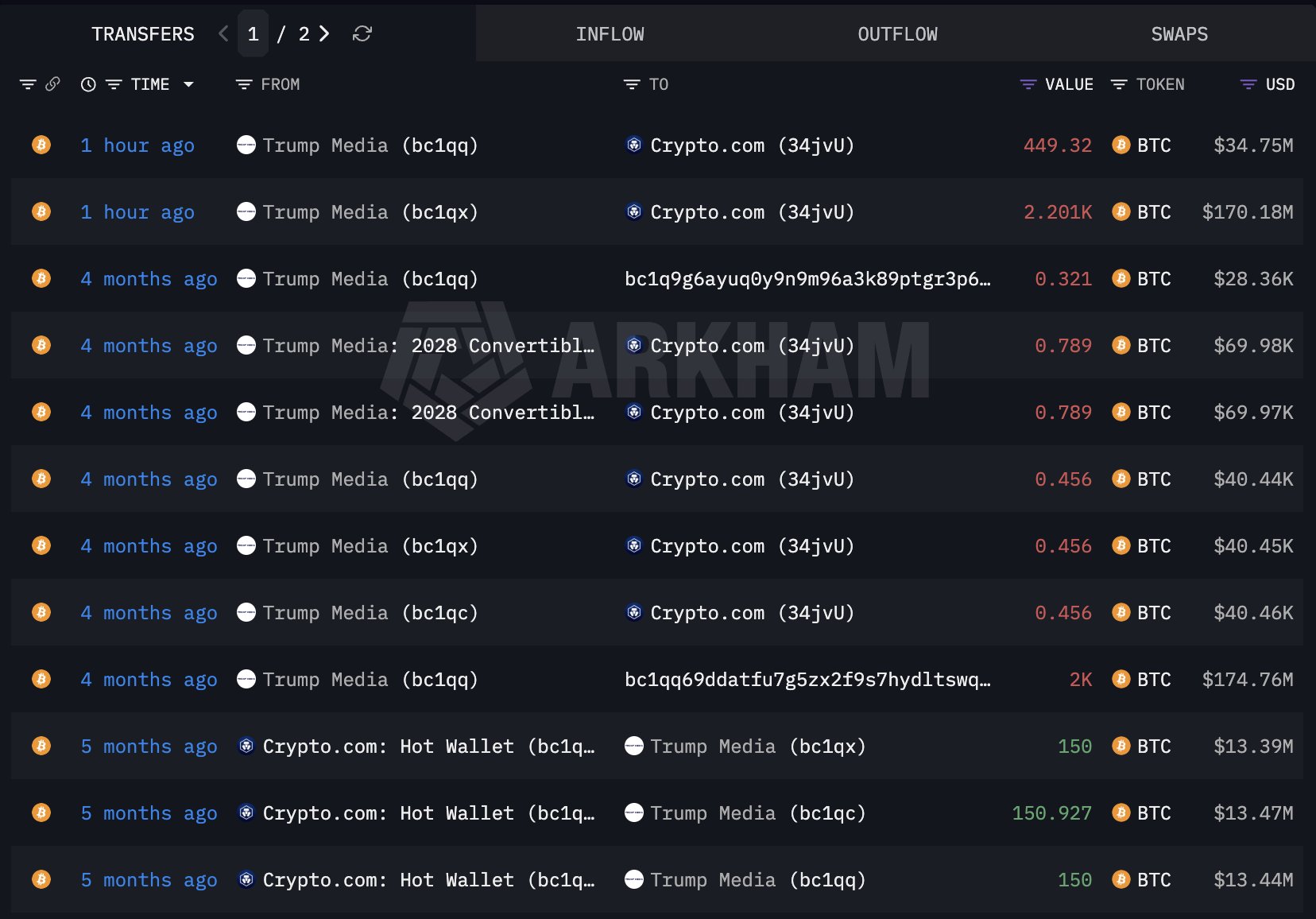 Trump Media sends 2,650 BTC to Crypto.com as Lookonchain estimates $455M BTC loss2026-05
 Leviathan News joins LinkedIn, raising questions about crypto coverage on corporate social media2026-07
How Media Shapes Crypto Markets, Narratives, and Trust
The relationship between media and cryptocurrency is uniquely volatile: a single headline can move Bitcoin's price by double digits, while coordinated narrative campaigns have launched—and buried—entire ecosystems.
What "Media" Means in a Crypto Context
In traditional finance, "the media" refers to a relatively stable set of institutions—wire services, newspapers, broadcast networks. In crypto, the media landscape is far more fragmented and contested. It encompasses legacy financial outlets (Bloomberg, Reuters, the Wall Street Journal), dedicated crypto-native publications (CoinDesk, The Defiant, Messari), social platforms (X/Twitter, Telegram, YouTube), on-chain data aggregators, and increasingly, AI-generated content pipelines.
Each layer carries different incentive structures. Legacy media operates on advertising and subscription revenue, which can create pressure to sensationalize or oversimplify. Crypto-native outlets often depend on token project sponsorships or native token economies. Social media rewards engagement over accuracy. Understanding which type of media is speaking—and who funds it—is foundational to reading the space.

Bybit teases 'new financial platform' in social media post

Why Narrative Moves Markets
Cryptocurrency is, more than most asset classes, a narrative-driven market. Bitcoin's value proposition is philosophical before it is financial. Ethereum's worth depends partly on developers believing in its roadmap. Memecoins exist almost entirely as media phenomena.
This means the media's role in crypto is not merely to report on price—it actively shapes price. Research into attention economics shows that the volume of media mentions for a given token correlates with short-term trading volume and volatility, often more strongly than underlying fundamentals. When Polymarket began paying some of social media's biggest political influencers to promote its prediction markets, the platform's volume responded accordingly. The line between earned coverage and paid amplification is rarely disclosed.
The Trump Media phenomenon illustrates this dynamic acutely. Trump Media & Technology Group made headlines repeatedly in 2026 as it transferred batches of Bitcoin to Crypto.com addresses—including a 2,650 BTC transfer worth roughly $205 million—while accumulating an estimated $455 million in unrealized losses on holdings purchased at an average of $118,522 per coin. The story was simultaneously a political narrative, a market signal, and a case study in how mainstream attention attaches to crypto regardless of underlying financial logic. Legacy outlets covered the transfers; crypto-native analysis sites unpacked the on-chain forensics.
Readers click 'Media' stories not for publishing business news but for power-and-accountability collisions — platforms restricting crypto users, regulators spreading misinformation, and media figures caught inflating or plagiarizing — revealing that the audience treats 'crypto media' as a proxy battleground for who controls the narrative.
The Credibility Problem
Trust in media institutions has eroded broadly, and that erosion hits crypto coverage particularly hard. Surveys consistently find low confidence in mainstream outlets among crypto-native audiences. A recurring complaint is that legacy media either ignores crypto developments entirely or engages only when prices crash or fraud surfaces—what some in the community call "obituary journalism."
This credibility gap has real consequences. When the ECB President reportedly opposed Binance's entry into the EU market—a story surfaced by French crypto outlet The Big Whale citing sources familiar with internal discussions—the story circulated widely in crypto media before mainstream financial press picked it up. Crypto-native outlets with primary sourcing reached the audience that most needed the information first. But those same outlets operate with smaller editorial teams, less legal protection for sources, and variable fact-checking standards. The speed advantage comes with accuracy risk.
The accusation of partisan bias flows both directions. Critics of mainstream outlets argue that coverage of regulatory enforcement—ICE actions, SEC enforcement, Treasury sanctions—is filtered through ideological lenses that distort the facts reaching readers. Others point to the opposite problem: that crypto-native media uncritically amplifies project founders and ecosystem insiders. Both critiques contain real observations about how financial incentives and community loyalty shape editorial judgment.
Social Media as Price Oracle and Risk Surface
For most retail participants, social media—specifically X, Telegram, and YouTube—is the primary news source for crypto. This creates structural vulnerabilities.
AI-powered phishing has emerged as a specific threat vector. Attackers compromise high-follower Web3 accounts, then use those accounts to push fake token launches, fraudulent contract addresses, or exchange impersonations. A compromised account with 200,000 followers can move a small-cap token's price before anyone identifies the breach. Security researchers have documented five common signs that a Web3 social account has been compromised by AI-assisted phishing: sudden changes in posting frequency, unfamiliar wallet addresses promoted in replies, contract addresses that don't match official documentation, posts that appear at unusual hours inconsistent with the account holder's timezone, and language patterns inconsistent with prior posts.
The DARPA and CIA declassified program disclosures reignited a related debate: social media algorithms are not neutral pipes. They are engineered to maximize engagement, which favors emotionally charged content—fear, greed, outrage—over accurate, measured reporting. In crypto, those emotional registers map directly onto buy and sell pressure. An algorithmically amplified rumor about a regulatory crackdown can trigger liquidations before any official statement exists.
Crypto journalist Joe Nakamoto raised a more personal dimension of this in May 2026, advising investors to stop publicly discussing their Bitcoin holdings on social media or in social settings. The concern is "wrench attacks"—physical coercion targeting people whose holdings are publicly known. The media act of disclosing one's position, in other words, carries physical security implications that don't apply to most other asset classes.
- 01Platform censorship of crypto users
Coinbase's VPN account restrictions and Spain's Telegram suspension framed mainstream platforms as active antagonists to crypto access, making readers feel personally implicated.
- 02Social media fraud and impersonation
Stories about MEXC fraud recruitment via social media, the Serpent McDonald's account hack netting $3.5M in memecoins, and Professor Crypto's bot-inflated metrics tapped reader anxiety that social media is a primary attack surface in crypto.
- 03Crypto media company drama and consolidation
Bankless founders burning tokens to exit their own brand, Decrypt merging with Rug Radio, and Leviathan's own partnership announcements gave readers insider access to the messy business of building crypto-native media.
- 04Regulatory misinformation on social media
Senators demanding a probe into the SEC's misleading Bitcoin ETF post crystallized how official social media channels can move markets and distort public understanding, with real accountability stakes.
- 05Copyright battles over AI and crypto content
The NY Times lawsuit against OpenAI and Spain's Telegram copyright suspension both raised existential questions about who owns content in an AI-and-blockchain era, resonating with crypto-native creators.
- 06AI agents replacing social media posting
Franklin Templeton's prediction that AI agents will revolutionize social media and Leviathan's own launch of an AI posting tool signaled to readers that automated content is an imminent economic shift, not a distant concept.
Institutional Media and the Legitimization Cycle
When Coinbase announced participation in the J.P. Morgan Global Technology, Media and Communications Conference, it was a deliberate legitimization signal. Institutional conferences—and the mainstream financial press coverage they generate—serve as credibility infrastructure for assets that still struggle with regulatory ambiguity.
This legitimization cycle works in both directions. Mainstream media coverage lowers the psychological barrier for institutional allocators. When the Wall Street Journal or Financial Times covers a stablecoin framework seriously, compliance officers at pension funds and family offices read it as a permission signal. Conversely, when mainstream outlets cover crypto primarily through the lens of fraud, scam, or speculation, it reinforces internal risk committee objections that block institutional participation.
The stablecoin sector illustrates how media framing shapes institutional reception. Coverage of products like USDf and fUSD—designed to serve DeFi composability and regulated institutional rails simultaneously—tends to get simplified into "stablecoin" without distinguishing between reserve structures, regulatory status, or use-case targeting. Nuance in financial media coverage of stablecoin architecture has a direct effect on which products institutions feel comfortable evaluating.
AI and the Transformation of Crypto Media Production
The 2026 World Cup became a reference point for a broader cultural shift: AI is now embedded in content production pipelines across sports, finance, and news. For crypto media specifically, this introduces both efficiency gains and new integrity risks.
On the production side, AI tools are being used to summarize on-chain data, generate market recaps, translate content for global audiences, and surface relevant historical context in real time. Platforms like Venice are building agentic interfaces that handle text, image, video, and research in a single workflow, collapsing the separation between content types. The Saga AI Labs launch received coverage across gaming, AI, financial, and technology media simultaneously—an indication that AI-native product launches now have a broader media surface area than crypto-native launches alone.
On the integrity side, AI-generated content is increasingly difficult to distinguish from human-written analysis. Fake expert quotes, synthetic price predictions attributed to real analysts, and AI-written project endorsements have all circulated on social media. The absence of a reliable provenance layer for AI-generated content creates an attack surface for market manipulation that regulators and platforms are still working to address.
Crypto-native outlets that publish on decentralized or blockchain-anchored platforms—like those building on $SQUID token economies where contributors earn for verified submissions—argue that on-chain attribution and community moderation create a more tamper-resistant record than centralized editorial systems. The model remains early, but the incentive design addresses a real problem: legacy media's credibility depends on institutional reputation, which can be captured; decentralized media's credibility depends on cryptographic attribution and token-weighted community review.
- 2023-12regulatory
NY Times sues OpenAI and Microsoft for copyright infringement
- 2024-01regulatory
SEC's X account posts false Bitcoin ETF approval; Senators demand probe
- 2024-03regulatory
Spain's High Court orders temporary Telegram suspension over copyright claims
- 2024-04governance
Professor Crypto deletes X account after bot-inflation accusations at Token2049
- 2024-06milestone
Decrypt Media and Rug Radio merge into global Web3 publishing firm
- 2024-09milestone
Arweave acquires decentralized video platform Odysee
- 2025-06launch
Leviathan launches TL;DR Buccaneer AI social media posting skill
- 2025-07milestone
Bitchat downloads spike 1,400% in Nepal and Indonesia amid protest social media bans
Media Rights, Tokenization, and the Ownership Economy
Sports media rights have historically been among the most valuable and least accessible assets in entertainment—locked up in stadium equity, broadcast deals, and brand IP that fans fund but never share. Tokenization frameworks are beginning to challenge this structure. A $500 billion-plus ownership economy is emerging around the idea that fractional, on-chain ownership of media rights could distribute value to the communities that generate demand for those rights.
This is not yet mainstream, but it represents a structural shift in how media assets might be financed and distributed. If a sports league's media rights can be tokenized, the same logic applies to music catalogs, film libraries, and news archives. The crypto media sector is both covering this trend and, in some cases, participating in it—building token models that give readers and contributors economic stakes in the platforms they use.
Outlook
The media landscape for crypto is fragmenting further, not consolidating. AI-accelerated content production will lower barriers to entry for new outlets while raising the baseline noise level. Institutional legitimization via mainstream financial press will continue, but will lag behind on-chain developments by weeks or months. Social media will remain the primary information surface for retail participants, with attendant manipulation risks.
The most durable advantage for any participant—reader, trader, or builder—is source literacy: the ability to identify who is publishing, what incentives they carry, and whether claims are grounded in verifiable on-chain data or anonymous sourcing. In a market where a single media cycle can erase or create billions in value, that skill is not optional.
Latest Media news
Community notes
Spot something off or out of date? Drop a note. Editors review topic notes daily and roll accepted fixes into the explainer — contributors are recognized in the monthly $SQUID drop.
Loading notes…
Help improve this topic
Have a story or tip about this topic? Submit it. See something missing? Leave a note. Editors review daily; accepted submissions and fixes count toward the monthly $SQUID drop.