
Deep dive explainer on what “Wall Street” really means, how it shapes markets, and why its push into Bitcoin, stablecoins, tokenization and 24/7 trading matters for crypto, DeFi builders and institutional adoption.
+34 sources across the wider coverage universe
 a16z’s Guy Wuollet says Wall Street is embracing blockchains not for ideology, but to solve finance’s massive coordination and settlement problems2026-05
 Avalanche gains Wall Street access as Bitwise Asset Management lists AVAX ETF on NYSE, unlocking institutional exposure and staking yields2026-04
 Crypto perpetuals predict Monday Wall Street opens with 89% accuracy as weekend markets absorb 57% of moves2026-04
 European asset manager CoinShares begins U.S. push after Nasdaq listing, managing $6B+ AUM and aiming to compete with Wall Street giants in crypto ETF market2026-04
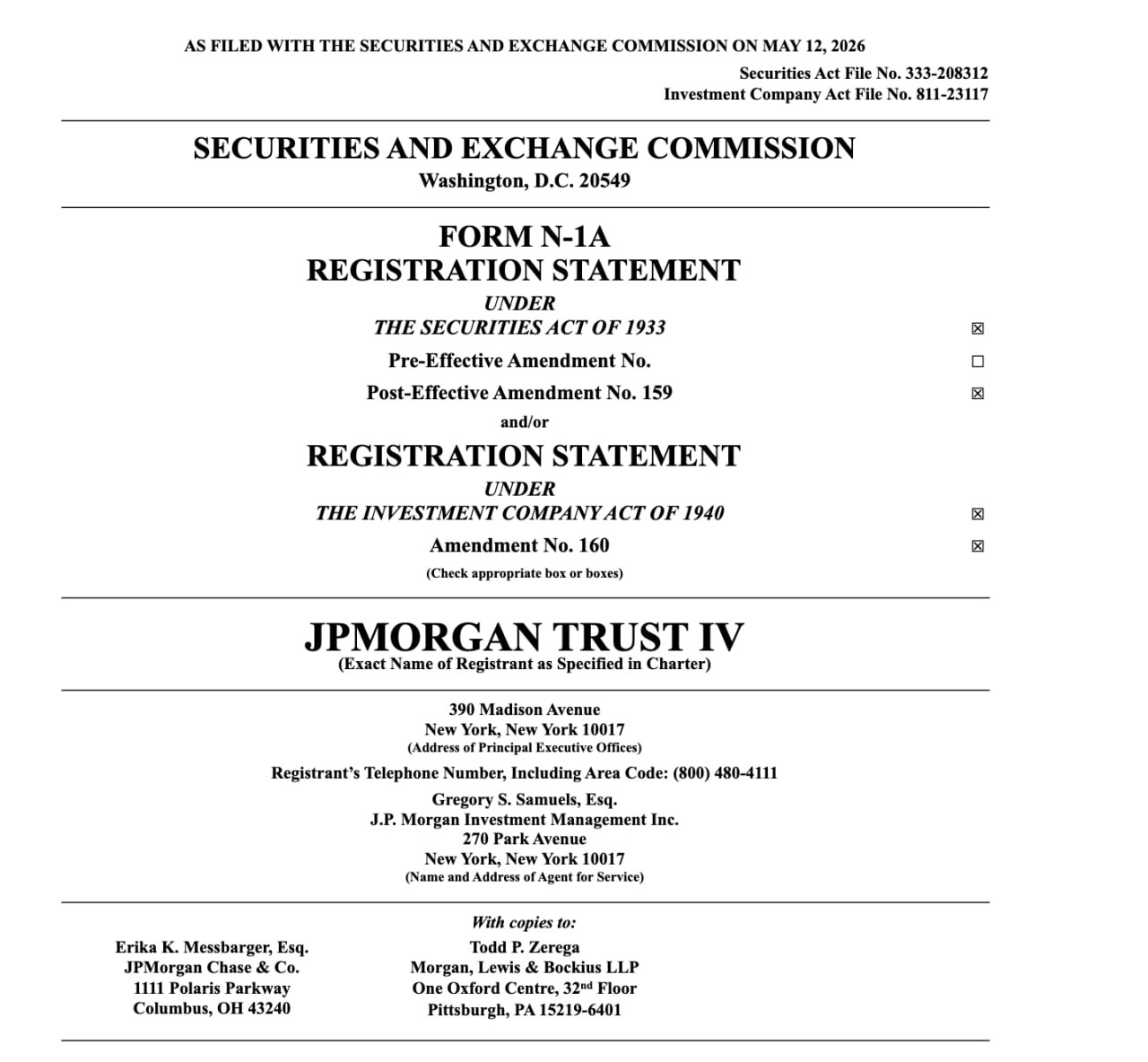 JPMorgan files to launch new tokenized fund as Wall Street tokenization race heats up.2026-05
 AI agents are beginning to replace expensive Wall Street research workflows as one autonomous system produced a SpaceX IPO memo using paid onchain APIs2026-05
A global shorthand for U.S. high finance, the term “Wall Street” refers both to a literal street in lower Manhattan and to the dense network of banks, brokers, exchanges, asset managers, and regulators that shape much of modern capital markets. For crypto natives, it has become the symbol of a legacy system that is now increasingly intersecting with Bitcoin, blockchain-based markets, and tokenized assets.
Wall Street, Crypto, and the Future of Global Markets
At its core, Wall Street is an infrastructure for organizing capital, risk, and information—and that is precisely why it matters so much to digital assets. While Bitcoin and public blockchains began as a parallel financial universe, today the world’s largest brokerages, asset managers, and banks are building products around crypto, experimenting with tokenization, and reshaping their own market plumbing to borrow from crypto’s 24/7, on-chain design. For the crypto industry, understanding what “Wall Street” actually means—historically, institutionally, and politically—is essential to decoding institutional adoption, reading market signals, and anticipating how tokenomics will evolve as trillions of dollars in traditional assets begin to move on-chain.
Origins and Meanings of “Wall Street”
From Colonial Wall to Financial District
The name itself is not metaphorical. In the mid‑17th century, Dutch colonists in New Amsterdam constructed a defensive wall across the northern boundary of their settlement, roughly along the line of what is now Wall Street. The barrier was meant to protect against potential incursions by Native American groups and rival European powers, giving the street its literal origin as a physical fortification rather than a financial symbol. Over time, as the city grew and the wall was dismantled, the area retained the name and gradually became a focal point for commerce, trade, and eventually securities dealing.
By the 18th century, the street had taken on a darker role as a site for both a slave market and early securities trading. Historical records show that enslaved people were bought and sold near the intersection of Wall and Pearl Streets, underscoring how the roots of American finance are tightly interwoven with slavery and colonial exploitation. At the same time, brokers began to meet outdoors under a buttonwood tree at 68 Wall Street, eventually formalizing their association as the New York Stock Exchange, one of the world’s most influential equity markets. The coexistence of slave trading and securities dealing in the same geographic space is an important reminder that financial innovation and social injustice have long overlapped in the history of Wall Street.
As New York became the United States’ commercial and financial hub, Wall Street evolved into a dense cluster of banks, brokers, and exchanges. By the late 19th and early 20th centuries, major investment banks and brokerage houses had established headquarters or key offices in the district, helping to channel domestic and international capital into American railroads, industrial firms, and later multinational corporations. The skyscrapers and trading floors that came to define the area created a physical and symbolic center of gravity for U.S. and eventually global finance.
Wall Street as a Metonym for U.S. Finance
Today, when media outlets or policymakers refer to “Wall Street” or simply “the Street,” they almost never mean the few blocks in lower Manhattan in a literal sense. Instead, the phrase operates as a metonym for the U.S. financial industry as a whole, encompassing investment banks, broker‑dealers, hedge funds, asset managers, high‑frequency trading firms, credit rating agencies, and an array of other market intermediaries. Many of the biggest firms that define “Wall Street”—from behemoth asset managers to high‑tech trading outfits—are headquartered in other cities or even other countries, but they still get grouped under that label because they participate in and shape U.S. capital markets.
This metonymic usage is not merely journalistic shorthand; it reflects how corporate leaders and investors think. In everyday corporate finance discussions, executives talk about how “Wall Street” will react to earnings, to an acquisition, or to a new share issuance, as if the entire network of investors and analysts could be treated as a single, judgmental audience. The phrase condenses the ecosystem of analysts, institutional investors, and trading desks whose collective buying and selling decisions determine a firm’s share price, cost of capital, and in many cases the tenure of its leadership. For a crypto audience, the equivalent might be talking about “the market” or “Crypto Twitter,” but with vastly higher stakes for multi‑trillion‑dollar corporations.
Even in regulatory and political debates, “Wall Street” functions as an umbrella term. Legislators speak of “cracking down on Wall Street” or “protecting Main Street from Wall Street” when discussing reforms to banking regulations, capital requirements, or securities law. In crypto policy, similar rhetoric is emerging: lawmakers and advocates invoke “Wall Street” as both potential ally and antagonist in debates over stablecoin legislation, ETF approvals, and the regulatory perimeter for DeFi. The metonym carries connotations of concentrated power, deep liquidity, and institutional conservatism, all of which shape how the crypto industry interprets Wall Street’s moves into Bitcoin, Ethereum, and tokenized assets.
Cultural Image and Criticisms
Beyond its institutional meaning, Wall Street has become a powerful cultural symbol. It is often cast as the embodiment of capitalism in movies, television, and popular discourse, alternately glamorized for its wealth and vilified for its excesses and crises. Scandals such as insider trading cases, the 1987 crash, the dot‑com bust, and the 2008 financial crisis have cemented an image of Wall Street as a locus of both innovation and systemic risk. For many Bitcoin advocates, this symbolism is precisely what the original cypherpunk movement set out to escape: a sense that the financial system was opaque, fragile, and captured by a small elite.
Critiques of Wall Street typically focus on short‑termism, financialization, and inequality. Scholars and practitioners note that pressure from Wall Street analysts and investors can push public companies to prioritize quarterly earnings and stock price performance over longer‑term investment in innovation, workers, or sustainability. The dominance of financial metrics like earnings per share, and the centrality of the stock price as a performance scorecard, reinforce a feedback loop where corporate strategy is continually adjusted to meet “the Street’s” expectations. In crypto circles, similar concerns arise around token price obsession and short‑term “number‑go‑up” dynamics, but often with far less institutional constraint and much more volatility.
From the vantage point of crypto and DeFi, Wall Street’s cultural baggage cuts both ways. On one hand, association with Wall Street can lend legitimacy and scale: ETFs, custody solutions, and prime brokerage services backed by household‑name firms help pension funds, insurance companies, and sovereign wealth funds justify their Bitcoin allocations. On the other hand, the fear that Wall Street will co‑opt, tame, or “paper over” crypto’s core innovations is never far from the surface. This tension—between validation and dilution—is central to how crypto news audiences interpret every new product launch or tokenization initiative that bears a Wall Street brand.

a16z’s Guy Wuollet says Wall Street is embracing blockchains not for ideology, but to solve finance’s massive coordination and settlement problems
How Wall Street Organizes Capital and Markets
Corporate Finance and the Logic of “The Street”
To understand why Wall Street’s engagement with Bitcoin, Ethereum, and tokenized assets matters, it helps to see how Wall Street already structures corporate finance. In the traditional model, companies raise capital through equity and debt issuance in public or private markets, with investment banks underwriting the deals, institutional investors providing the capital, and exchanges facilitating trading. The prices at which securities trade in these markets feed directly into a firm’s cost of equity and cost of debt, which in turn shape decisions about everything from hiring and R&D to dividends and share buybacks.
Wall Street’s influence is not merely about providing capital; it is also about setting norms. Sell‑side analysts from major banks publish detailed research, earnings models, and price targets, which become reference points for management teams and buy‑side investors. When a company deviates from these expectations—by missing earnings, changing guidance, or announcing a major acquisition—its stock price can move sharply, sending a signal that often prompts internal strategy reviews and, in some cases, activist investor campaigns. This feedback loop, often described as “managing to the Street,” is a defining feature of how large corporations operate.
This logic has begun to spill into the crypto sector as well. As tokenized businesses and protocols—think centralized exchanges like Coinbase or DeFi governance tokens—seek to attract institutional capital, their leaders increasingly reference metrics and narratives that mirror Wall Street norms: revenue multiples, discounted cash flows, and long‑term total addressable markets. At the same time, Wall Street analysts are now producing research on Bitcoin ETFs, crypto exchanges, and selected layer‑1 and DeFi tokens, treating them as investable assets that can be modeled and compared, rather than purely speculative curiosities. The cross‑pollination of analytical frameworks is one way traditional corporate finance is already shaping crypto tokenomics.
Trading, Derivatives, and Market Infrastructure
Another pillar of Wall Street’s influence lies in its trading, derivatives, and market infrastructure. The ecosystem includes exchanges like the New York Stock Exchange and Nasdaq, futures and options markets operated by firms such as Cboe Global Markets, and a web of clearinghouses, custodians, and prime brokers that manage collateral, leverage, and settlement risk. These institutions make it possible for institutional investors to move large positions in equities, bonds, and derivatives with relatively low friction and high reliability.
Derivatives are a particularly important area where Wall Street expertise now intersects with crypto. Traditional options and futures allow investors to hedge exposures, express directional views, or generate income through strategies like covered calls. This playbook is now being applied to Bitcoin via products like BlackRock’s iShares Bitcoin Premium Income ETF (BITA), which aims to deliver bitcoin exposure while generating monthly income by selling options linked to its bitcoin holdings. In practice, the fund does this by writing call options on the spot bitcoin ETF IBIT, collecting premiums and distributing them as income to investors. The design mirrors established equity income strategies on Wall Street, effectively turning Bitcoin into a yield‑generating asset for income‑oriented portfolios, albeit with higher risk and volatility.
The expansion of derivatives and structured products is not limited to Bitcoin. Wall Street firms are also experimenting with binary options and prediction‑market‑like contracts tied to broad indexes. According to reporting cited by WuBlockchain, Charles Schwab, one of the largest U.S. brokerages, is working with Cboe Global Markets to launch all‑or‑nothing binary options that allow customers to place yes‑or‑no wagers on whether the S&P 500 will close above or below a specified level. These contracts function similarly to event contracts popular on crypto‑native platforms like Kalshi or Polymarket, paying a fixed cash settlement or nothing depending on the outcome, but they are engineered to fit within the existing regulatory perimeter for listed options. The move illustrates how Wall Street is importing elements of crypto’s speculative culture into regulated markets while retaining control over distribution and compliance.
Macro Shocks, Risk Sentiment, and Benchmarks
Because Wall Street intermediates so much global capital, its markets are both barometer and transmission channel for macroeconomic shocks. U.S. equity benchmarks like the S&P 500 often react sharply to economic data such as jobs reports, inflation readings, or central bank announcements, with ripple effects across bonds, currencies, and increasingly crypto assets. For example, a strong U.S. employment report recently triggered a 2.6% drop in the S&P 500, accompanied by notable declines in major technology names like Nvidia and Broadcom, as investors reassessed the likelihood of near‑term interest rate cuts. Episodes like this highlight how macro surprises can quickly shift risk appetite across asset classes.
Crypto markets are now firmly wired into this macro‑Wall Street complex. Bitcoin’s price often responds to the same macro drivers that move equities and credit, reflecting its role as a high‑beta risk asset in the eyes of many institutional investors, even as some advocates pitch it as “digital gold.” When Wall Street becomes more risk‑averse—because growth is slowing, inflation is high, or financial conditions tighten—allocations to volatile assets like tech stocks and crypto tend to contract. Conversely, when liquidity is abundant and risk sentiment is strong, Bitcoin, altcoins, and DeFi tokens often benefit from renewed capital inflows, especially as ETFs and other Wall Street‑approved wrappers make access easier. Understanding this interplay is crucial for crypto participants who want to interpret price moves not just as crypto‑native phenomena but as reflections of broader risk cycles anchored in Wall Street’s benchmarks.
Readers click Wall Street × crypto stories not for token price signals but to track structural capture: who from traditional finance is moving settlement, liquidity, and research infrastructure onto blockchains, and what that means for the decentralization thesis.
Crypto Arrives on Wall Street’s Radar
From Bitcoin’s Outsider Status to ETFs
Bitcoin emerged in 2009 as a peer‑to‑peer electronic cash system that operated entirely outside of the traditional financial system, with early adopters often motivated by distrust of banks and central authorities. For years, major Wall Street institutions either ignored or openly derided the asset, emphasizing its volatility, lack of intrinsic value, and association with illicit activity. Over time, however, the growth of market capitalization, trading volumes, and infrastructure around Bitcoin and other digital assets made it increasingly difficult for institutional investors to dismiss the sector outright. The entrance of regulated exchanges, custodians, and compliance providers laid the groundwork for Wall Street’s eventual pivot from skepticism to cautious engagement.
A key turning point has been the approval of spot Bitcoin and Ethereum exchange‑traded funds (ETFs) by the U.S. Securities and Exchange Commission, which occurred in 2024 according to Morgan Stanley’s Global Investment Committee. These ETFs allow investors to gain exposure to the underlying assets through familiar brokerage and retirement accounts, without having to manage private keys or interact with crypto exchanges directly. For many institutional investors, especially those with strict compliance requirements, ETF structures are far more palatable than holding tokens on a crypto exchange. The result has been a wave of new products and flows that embed Bitcoin and, increasingly, Ethereum into the same portfolios that hold stocks, bonds, and commodities.
The ETFization of Bitcoin has also paved the way for more specialized products like BlackRock’s BITA, which aims to generate income from options while maintaining bitcoin exposure. When combined with the broader growth of derivatives, futures, and structured notes linked to digital assets, it is clear that Wall Street is moving from a binary question of “Bitcoin: yes or no?” to a far more granular menu of exposures, durations, and risk profiles. For crypto markets, this evolution matters because it can change the composition, time horizon, and behavior of the investor base—potentially dampening some volatility while also introducing new feedback loops tied to options positioning and risk‑parity strategies.
Digital Assets as an Emerging Asset Class
Wall Street’s gradual warming to crypto is not happening in isolation; it is part of a broader recognition that digital assets—cryptocurrencies, stablecoins, and tokenized securities—are becoming a distinct but interconnected asset class. Morgan Stanley characterizes digital assets as a “multi‑trillion‑dollar business” that is increasingly influencing how markets operate and how money moves. The firm notes that institutional adoption is accelerating, with investment banks and wealth managers offering clients exposure to digital assets, and with pension funds, endowments, and foundations beginning to make small allocations to Bitcoin as a potential inflation hedge or diversifier.
This institutional perspective is cautious rather than euphoric. Morgan Stanley’s Global Investment Committee projects that cryptocurrencies may deliver average annual returns of around 6% over a seven‑year horizon, but with substantial risk: an estimated annualized volatility of about 55%, roughly four times that of the S&P 500. From a Wall Street risk‑management point of view, such volatility demands modest position sizes, rigorous diversification, and stress testing under adverse scenarios. For the crypto industry, this framing underscores that institutional adoption is not a one‑way march toward ever‑greater allocations; it is constrained by risk models, regulatory capital requirements, and fiduciary duties.
Within this emerging asset class, distinctions between different types of digital assets are becoming more salient. Cryptocurrencies like Bitcoin and Ethereum, which rely on open, permissionless blockchains, coexist with fiat‑backed stablecoins designed mainly as payment and settlement instruments, as well as with security tokens and tokenized funds representing claims on traditional assets. Wall Street’s involvement tends to be greatest where there is a clear business model—such as ETF fees, custody revenue, derivatives trading spreads, or asset‑management fees—and where regulatory clarity is improving. This is part of why stablecoins and tokenized money‑market funds have become such important arenas for Wall Street’s digital‑asset push.
24/7 Markets and the Crypto Effect on Trading Norms
One of the most visible ways crypto has challenged Wall Street norms is through its trading hours. Crypto assets trade 24 hours a day, 7 days a week, across centralized exchanges and decentralized protocols, creating a continuous price discovery process that never pauses for weekends or holidays. Traditional equity and bond markets, by contrast, have historically operated on limited trading schedules, typically closing in the late afternoon and remaining shut for entire days on weekends and public holidays.
This gap is starting to narrow. According to reporting highlighted by Bloomberg, traditional finance firms are increasingly exploring round‑the‑clock trading for a range of assets, with some platforms extending their hours and experimenting with 24/7 trading models inspired by crypto markets. The push reflects both competitive pressure—investors who can trade crypto any time may expect similar flexibility for tokenized stocks or ETFs—and technological advances that make continuous trading and clearing more feasible. It also reflects the growing importance of global capital flows, where major macro events can occur at any time zone and investors may want to adjust exposures immediately.
For crypto markets, the encroachment of 24/7 trading into traditional assets has two implications. First, it reduces the uniqueness of crypto’s always‑open nature as a selling point, potentially normalizing the idea that all asset classes should be tradable at any time, whether on centralized venues or on-chain. Second, it may create new arbitrage and contagion channels: if tokenized versions of U.S. equities or funds trade continuously on blockchains while their underlying markets are still intermittent, price gaps and synchronization issues could emerge. Wall Street’s attempt to emulate crypto’s trading cadence thus raises complex questions about settlement, liquidity, and systemic risk that both ecosystems will need to address.
Tokenization, Stablecoins, and the New Market Plumbing
Real-World Asset Tokenization and Settlement
Tokenization—the process of creating digital tokens on a blockchain that represent claims on real‑world assets—is one of the most active frontiers in Wall Street’s engagement with crypto technology. In practice, tokenization can apply to a wide range of assets, from government bonds and money‑market funds to equities, real estate, and private credit. The core promise is that by representing these assets as on‑chain tokens, institutions can enable faster settlement, more granular ownership, and programmable features like automated compliance or revenue distributions.
Traditional market infrastructure providers are increasingly embracing this vision. Digital Asset, a company known for its work on distributed ledger technologies for financial institutions, has raised approximately $355 million to scale the Canton Network, which it positions as on‑chain infrastructure for global finance. The Canton Network enables interoperability between different institutional blockchain applications while preserving privacy and regulatory controls, making it suitable for regulated entities that need to manage identities, permissions, and confidential data. Canton is being used or explored by major financial market participants as a way to bring the benefits of blockchain—such as atomic settlement and real‑time reconciliation—into the heart of Wall Street’s back‑office plumbing.
A particularly significant vote of confidence came when the Depository Trust & Clearing Corporation (DTCC), the key post‑trade utility for U.S. securities markets, selected Canton as the blockchain infrastructure for certain tokenization initiatives. DTCC’s role as the central clearinghouse for U.S. equities and many other securities means its technology choices can influence how trillions of dollars in assets are settled and recorded. By working with a privacy‑focused network like Canton, DTCC aims to capture efficiency gains from tokenization—such as reduced settlement times and lower reconciliation costs—while satisfying the stringent confidentiality and compliance requirements that govern Wall Street operations.
Tokenized Equities and Private Markets
Tokenization is not limited to the plumbing of public markets; it is also reshaping how private securities are issued and traded. Citigroup, for example, has launched a blockchain‑based platform that allows wealthy and institutional clients to trade tokenized depositary receipts on private company shares. These digital depositary receipts represent interests in underlying private equities but are issued and recorded on a distributed ledger, enabling more efficient settlement and potentially broader access for global investors. The platform initially targets foreign investors and select private companies, with Citi expressing hopes that other Wall Street firms will adopt the infrastructure as well.
This move is notable for several reasons. First, it brings one of Wall Street’s core competencies—structuring depositary receipts that give investors access to foreign or otherwise restricted shares—into the blockchain era. Second, it demonstrates that tokenization is not only about public, liquid assets but also about making traditionally illiquid markets more accessible and transparent. Finally, it sets the stage for potential integration with DeFi protocols: in principle, tokenized private‑equity receipts could be used as collateral in decentralized lending markets or combined with automated market makers, though regulatory and compliance constraints will likely limit such use cases in the near term.
The broader theme is that Wall Street is beginning to treat blockchains as an alternative registry and settlement layer for securities, not just a place where cryptocurrencies live. Whether through tokenized depositary receipts, on‑chain fund shares, or tokenized commercial paper, the potential is to create a parallel stack where asset ownership, transfers, and corporate actions are recorded and executed using smart‑contract logic. For crypto audiences, this raises important questions about composability: how much of this tokenized Wall Street will be interoperable with public DeFi, and how much will remain locked inside permissioned, institution‑only networks?
Stablecoins, Reserve Management, and Money-Market Funds
Stablecoins—tokens designed to maintain a stable value relative to a reference asset, typically the U.S. dollar—have become essential infrastructure for crypto markets and increasingly for cross‑border payments. Their promise hinges on credible, liquid reserves backing each token. That need for high‑quality, regulated reserves has opened a major new opportunity for Wall Street asset managers. Fidelity Investments, for instance, has launched the Fidelity Reserves Digital Fund, a money‑market fund designed specifically to help stablecoin issuers meet reserve requirements under the recently enacted GENIUS Act.
The Fidelity Reserves Digital Fund holds liquid assets appropriate for backing payment tokens and offers a regulated vehicle where issuers can park the assets that collateralize their stablecoins. This product places Fidelity squarely in the race among Wall Street firms to manage the reserves behind rapidly growing tokenized dollars, positioning the asset manager to earn fees while providing a service that regulators and policymakers see as critical to financial stability. Other firms are pursuing similar strategies, as managing stablecoin reserves becomes one of the fastest‑growing corners of digital assets for traditional asset managers.
The GENIUS Act itself, by imposing reserve requirements and encouraging the use of regulated vehicles, effectively channels stablecoin growth into the orbit of Wall Street’s largest asset managers. For the crypto ecosystem, this dynamic has both benefits and risks. On the positive side, it can improve the quality and transparency of reserves, reducing the risk of runs or de‑peggings that could destabilize DeFi. On the negative side, it increases dependence on a small set of large institutions and embeds stablecoins more deeply into the broader money‑market complex, potentially importing traditional systemic risks into on‑chain finance.
DeFi Protocols as Institutional-Grade Infrastructure
While Wall Street firms are bringing tokenization and stablecoins into their existing architectures, some DeFi protocols are moving in the opposite direction: building on‑chain infrastructure designed to be palatable to institutional users. Morpho, a decentralized lending and borrowing protocol, is a prominent example. The project allows users to create customizable lending markets with their own risk parameters, effectively offering a modular, on‑chain alternative to traditional securities lending and margin financing. Morpho has grown to manage billions of dollars in assets and is already used by major crypto platforms such as Coinbase, Kraken, Anchorage Digital, and Galaxy Digital.
In a reflection of Wall Street’s increasing comfort with such infrastructure, Morpho recently raised approximately $175 million in a funding round led by Paradigm, a16z crypto, and Ribbit Capital, with participation from Apollo Funds, Circle’s venture arm, and VanEck. The investment, structured via Morpho’s cryptocurrency, valued the protocol at up to $2 billion. The presence of Apollo and VanEck—a major credit investor and a traditional asset manager, respectively—alongside crypto‑native backers underscores how DeFi is becoming part of the institutional capital stack, not just a retail or speculative playground.
Morpho’s ascent comes amid a broader pattern of traditional financial institutions aligning with crypto infrastructure. The parent company of the New York Stock Exchange has invested in the crypto exchange OKX, BlackRock has embraced digital‑asset ETFs, and banks are exploring how to put customer deposits on blockchains. In this context, Morpho and similar protocols are not only competing with Wall Street but also, increasingly, serving as the “plumbing” that traditional firms use when they venture onto public blockchains. This blurring of boundaries suggests that the distinction between “Wall Street” and “DeFi” may become less about technology and more about governance, regulation, and access.
Avalanche gains Wall Street access as Bitwise Asset Management lists AVAX ETF on NYSE, unlocking institutional exposure and staking yields
Evolving Product Suites: How Wall Street “Productizes” Crypto
Bitcoin Income Products and Structured Strategies
As Wall Street becomes more comfortable with Bitcoin, the product set around it is rapidly diversifying. Beyond simple spot ETFs, asset managers are designing strategies that use options, futures, and other derivatives to tailor risk and return profiles. BlackRock’s iShares Bitcoin Premium Income ETF (BITA) exemplifies this trend. The fund seeks to give investors exposure to Bitcoin while also generating monthly income by selling options linked to its bitcoin exposure. Specifically, BITA earns income by selling call options, collecting the premiums, and distributing them to investors, although the amount of income can vary from month to month depending on market conditions.
This approach is familiar to Wall Street portfolio managers, who have long used covered call strategies on equities and indexes to enhance income at the cost of capping upside. Applied to Bitcoin, it effectively transforms the asset into an income‑generating instrument, which may appeal to income‑oriented investors who otherwise would avoid such a volatile asset. However, the trade‑off is that in strong bull markets, the fund will underperform pure spot Bitcoin exposure because upside is partly sold away via options. For crypto participants, the emergence of such products matters because it can change the behavior of institutional investors: rather than buying and holding spot, they may rely on income‑oriented vehicles, altering supply‑demand dynamics in derivatives markets and potentially influencing volatility patterns.
These structured products also exemplify what many in crypto mean when they say Wall Street is “productizing” Bitcoin. The asset ceases to be only a self‑custodied, censorship‑resistant bearer asset and becomes one more building block inside a vast catalogue of funds, options overlays, and structured notes. This does not necessarily undermine Bitcoin’s core properties, but it does shift how most investors experience it: through ticker symbols in brokerage accounts, prospectuses, and risk disclosures rather than through private keys and on‑chain transactions. For DeFi builders focused on tokenomics, this suggests that institutional capital may engage with tokens through wrappers and synthetic exposures more than through direct interaction with on‑chain governance or protocol usage.
Crypto Prime Brokerage and Off-Exchange Settlement
The concept of prime brokerage—providing institutional clients with leveraged financing, securities lending, and centralized collateral management—has long been central to Wall Street’s structure. As crypto markets mature, they are increasingly adopting a similar model. A recent collaboration between FalconX and Copper, for instance, introduced ClearLoop Loans, a financing framework that allows eligible clients to borrow directly from FalconX while keeping their assets within Copper’s off‑exchange settlement network. The structure aims to reduce counterparty risk by separating trading venues from custody and enabling net settlement across multiple exchanges, much like traditional prime brokerage consolidates exposures across multiple counterparties.
Financial commentators have described this development as another step toward a market structure in which crypto prime brokerage begins to resemble the mature infrastructure of Wall Street. For institutional traders, the benefits include more efficient use of collateral, reduced risk of exchange failures, and the ability to deploy leverage without constantly moving assets between platforms. For regulators, prime‑broker‑like structures can provide clearer lines of responsibility and potentially improve oversight, though they also raise familiar questions about rehypothecation, systemic risk, and conflicts of interest.
From a crypto‑native perspective, the rise of prime brokerage is a double‑edged sword. On one hand, it is a prerequisite for large institutional adoption: pension funds and hedge funds are accustomed to dealing with a small number of prime brokers rather than dozens of individual exchanges, and they expect robust risk reporting and financing options. On the other hand, consolidating functions in a few large intermediaries can recreate some of the vulnerabilities that decentralized finance set out to avoid. DeFi‑based prime brokerage models and on‑chain margining mechanisms will thus be important areas to watch as Wall Street and crypto converge.
Prediction Markets, Binary Options, and New Retail Products
Retail brokerage innovation is another front where Wall Street is taking cues from crypto. The planned rollout of binary options by Charles Schwab and Cboe Global Markets, which allow customers to make yes‑or‑no bets on whether the S&P 500 will close above or below a target level, is structurally reminiscent of crypto prediction markets. Although the contracts differ from event markets offered by platforms like Kalshi and Polymarket, they function similarly in economic terms: they offer a fixed payout if a specified condition is met and zero otherwise. The products are expected to launch in the coming months and will be offered through mainstream brokerage channels.
This convergence highlights how behavior popularized in crypto—short‑term speculation on binary outcomes, gamified interfaces, and social trading—can migrate into regulated Wall Street environments. At the same time, regulatory oversight remains far stricter in traditional markets. In the United States, the Commodity Futures Trading Commission (CFTC) has substantial authority over derivatives, including event contracts and prediction markets, and has taken an increasingly active role in setting policy for crypto‑related derivatives under the current administration. As Politico has reported, the CFTC’s leadership dynamics, including periods when a single commissioner held outsized influence, have important implications for how crypto derivatives and prediction markets are regulated.
For crypto builders, Wall Street’s embrace of prediction‑market‑like products poses both competition and validation. On one side, regulated binary options accessible through major brokerages could siphon retail activity away from on‑chain platforms. On the other side, their success could normalize event‑based trading and spur demand for more diverse and censorship‑resistant markets that only decentralized protocols can provide. The interplay between centralized, regulated products and open, blockchain‑based prediction markets will be a key area to watch as both ecosystems evolve.
- 01TradFi settlement tokenization↗
DTCC, NYSE, Tradeweb, and Canton Network running production repo and Treasury settlement on-chain signals that blockchain is absorbing finance's plumbing, not just its speculation layer.
- 02Institutional crypto product race↗
CoinShares, Morgan Stanley MSBT, and BlackRock BUIDL represent a bracket of competing Wall Street firms rushing to own the ETF and tokenized-fund shelf space before it consolidates.
- 03DeFi absorbed by incumbents
BlackRock buying UNI and bringing BUIDL to Uniswap, plus S&P 500 perps on Hyperliquid, show DeFi protocols becoming distribution rails for traditional asset classes rather than alternatives to them.
- 04AI agents replacing research
Autonomous systems producing institutional-grade IPO memos via paid on-chain APIs threaten the high-margin sell-side research business that defines Wall Street's information edge.
- 05Deregulation enabling bank crypto↗
Planned rollbacks of post-2008 capital rules and GENIUS Act stablecoin clarity remove the compliance moat that kept banks on the sidelines, accelerating their on-chain moves.
- 06Prediction markets vs economists
Kalshi and Polymarket outperforming Wall Street consensus forecasts on macro data challenges the authority and fee justification of traditional financial research.
Regulation, Power, and the Wall Street–Crypto Clash
Competing Visions of Crypto Regulation
Regulation is the arena where Wall Street’s interests and crypto’s aspirations most visibly collide. Banks and large broker‑dealers generally favor clear, predictable rules that define what is permissible and what is not, even if those rules are strict, because regulatory certainty allows them to plan products, allocate capital, and manage risk. Many crypto founders and investors, especially in the early years, favored a more permissive environment, arguing that heavy regulation would stifle innovation or entrench incumbents. These differences have surfaced in debates over proposed legislation such as the CLARITY Act, which seeks to define regulatory frameworks for crypto in the United States.
According to commentary shared by broadcaster Maria Bartiromo, the CLARITY Act was crafted by a coalition of policymakers and industry stakeholders to bring more legal certainty to crypto activities, but it has drawn criticism from figures like JPMorgan CEO Jamie Dimon. While details continue to evolve, the thrust of such legislation is to delineate which digital assets fall under securities law, how stablecoins should be regulated, and what oversight applies to exchanges and custodians. Wall Street banks, facing their own regulatory capital and compliance constraints, may support some aspects of clarity but oppose others that threaten their business models or expand competition from non‑bank entities.
The crypto industry’s response has been similarly mixed. Some firms welcome legislation that would finally clarify the legal status of their products, reduce enforcement uncertainty, and enable institutional adoption. Others fear that rules shaped by Wall Street‑aligned lobbyists and traditional regulators will favor large incumbents and impose burdensome requirements on smaller, open‑source projects. As more Wall Street firms offer Bitcoin and stablecoin products, they gain a louder voice in the regulatory process, raising questions about how far crypto can maintain its original ethos of permissionless innovation within a framework increasingly shaped by legacy interests.
The CFTC, Prediction Markets, and Derivatives Oversight
The Commodity Futures Trading Commission plays a particularly important role in the intersection of Wall Street and crypto because it oversees futures, options, and certain types of event contracts. Under recent political dynamics, the agency has at times operated as a “commission of one,” with a single commissioner wielding outsized influence due to vacancies or delays in appointments. This concentration of power can significantly shape policy on crypto derivatives, stablecoin‑based margining, and prediction markets, which are areas of intense innovation in both TradFi and DeFi ecosystems.
Wall Street firms tend to favor robust CFTC oversight of derivatives because they rely on regulated futures and options markets for hedging and speculation across asset classes. Crypto exchanges and DeFi protocols, by contrast, often operate platforms for perpetual futures and synthetic leverage that resemble derivatives but exist beyond traditional regulatory perimeters. As regulators seek to assert authority over these products, they face tough questions about jurisdiction, extraterritorial reach, and the appropriate treatment of decentralized protocols.
Prediction markets have become a focal point in this debate. Platforms like Kalshi have sought CFTC approval for event contracts on topics ranging from elections to macroeconomic data, while decentralized markets like Polymarket operate largely outside the traditional regulatory perimeter. The Schwab‑Cboe binary options and similar Wall Street offerings provide a regulated alternative that competes for the same speculative activity. Whether regulators choose to accommodate, restrict, or transform these markets will shape the competitive landscape between Wall Street and crypto and influence how much of the prediction‑market economy ends up on centralized, KYC‑compliant platforms versus open blockchains.
Compliance, Custody, and Institutional Adoption
For institutional investors, regulatory clarity is inseparable from practical concerns about custody, compliance, and risk management. Investment banks and asset managers must ensure that any crypto products they offer or hold comply with anti‑money‑laundering (AML) and know‑your‑customer (KYC) rules, fiduciary standards, and operational risk requirements. This is one reason why Wall Street has gravitated toward regulated ETFs, custodian partnerships, and tokenization platforms that can incorporate identity and permission controls. It is also why many tokenization initiatives run on permissioned blockchains or hybrid architectures like Canton, which combine smart‑contract functionality with enterprise‑grade privacy and governance.
Custody is a particularly sensitive issue. Institutions need assurance that digital assets will not be lost, hacked, or mismanaged, and that they have clear legal claims to assets in the event of custodian insolvency. This has led to the rise of specialized crypto custodians and the involvement of traditional custodial banks, as well as to regulatory guidance on how digital assets should be held and reported on balance sheets. The interplay between on‑chain self‑custody and institutional custody solutions is thus central to how Wall Street engages with Bitcoin and other tokens.
From the perspective of crypto’s original ideals, the march of compliance and institutional custody may feel like a retreat from self‑sovereignty and censorship resistance. Yet for large pools of capital—pension funds, insurance companies, endowments—these structures are non‑negotiable prerequisites. The challenge for the crypto ecosystem is to design protocols and tokenomics that can interoperate with institutional constraints without forfeiting the benefits of decentralization. This balancing act is evident in projects like Morpho, which combine decentralized lending mechanisms with features and risk frameworks that appeal to institutional users. It will likely become more important as Wall Street’s share of on‑chain activity grows.
Comparing Market Structures: TradFi versus On-Chain Finance
Trading Hours, Settlement Cycles, and Custody
At a structural level, traditional financial markets and crypto markets differ in several core dimensions, though these gaps are narrowing as each side borrows from the other. One major difference is trading hours. Traditional equity markets historically operate on fixed daily sessions, whereas crypto trades 24/7. Another is settlement speed: while U.S. equities have moved to a T+1 settlement cycle, meaning trades settle one business day after execution, on‑chain transfers and many DeFi trades settle almost instantly once a block is confirmed. Custody models also diverge, with Wall Street relying on central securities depositories and custodial banks, and crypto enabling self‑custody via private keys alongside centralized custodians.
These contrasts can be summarized conceptually as follows:
| Dimension | Traditional Wall Street Markets | Crypto / On‑Chain Markets |
|---|---|---|
| Trading hours | Limited daily sessions, closed on weekends and holidays | Continuous 24/7 trading on centralized exchanges and DeFi protocols |
| Settlement speed | Typically T+1 (or longer in some markets) | Near‑instant settlement once transactions are confirmed on the blockchain |
| Custody model | Centralized custodians and depositories (e.g., DTCC) | Mix of self‑custody, centralized custodians, and smart‑contract‑based custody |
| Access | Broker‑mediated, KYC‑dependent | Open access to permissionless protocols; KYC on centralized venues |
| Transparency | Post‑trade reporting, limited order‑book visibility | On‑chain transaction history; protocol‑level transparency; off‑chain order books |
The table reflects general patterns; in practice, the lines are blurring. As noted earlier, traditional firms are experimenting with extended and even 24/7 trading hours, driven in part by competition from crypto and tokenized markets. At the same time, centralized crypto exchanges often operate with opaque order books and internalized order flow, more akin to dark pools than to the fully transparent ideals sometimes associated with blockchains. Meanwhile, tokenization projects led by DTCC, Citi, and others are pulling settlement and custody functions onto distributed ledgers while preserving institutional control and privacy.
For crypto participants, these structural differences have strategic consequences. The ability to settle instantly can reduce counterparty risk but may also increase operational risk and the potential for irreversible errors. Open access and pseudonymity can promote inclusion but also complicate compliance. As Wall Street builds more tokenized platforms and as DeFi protocols seek institutional capital, we can expect continued hybridization: custodial services layered over on‑chain assets, permissioned DeFi pools gated by KYC, and traditional trading venues that settle trades on blockchains rather than in legacy databases.
Leverage, Prime Brokerage, and Perpetual Futures
Leverage is another area where market structures diverge yet increasingly resemble each other. Wall Street has long offered margin trading, securities lending, and derivatives that allow participants to take leveraged positions in equities, bonds, and commodities. These activities are typically mediated through prime brokers, which manage collateral, provide financing, and net exposures across multiple positions and venues. In crypto, leverage emerged through margin trading on exchanges and the development of perpetual futures—swap contracts without expiry that are now central to price discovery for assets like Bitcoin and Ethereum.
As noted earlier, crypto prime brokerage offerings like FalconX’s ClearLoop Loans and Copper’s off‑exchange settlement network are moving the market structure closer to Wall Street, consolidating collateral management and enabling cross‑venue leverage. At the same time, on‑chain perpetual futures platforms, such as those built on newer high‑performance chains, are attracting institutional traders who value transparency and composability. Newsroom coverage has highlighted how a “Wall Street flotilla” of market‑making firms is eyeing the dominance of crypto‑native perpetual futures platforms like Hyperliquid, suggesting that traditional liquidity providers are increasingly comfortable deploying capital on‑chain.
The convergence of leverage models raises concerns about systemic risk. In both ecosystems, high leverage can amplify price swings and create cascading liquidations, especially when collateral values fall rapidly. The presence of prime brokers—central intermediaries that sit at the nexus of multiple leveraged relationships—can enhance efficiency but also create potential single points of failure, as history has shown in episodes like the 2008 crisis and various hedge fund blow‑ups. DeFi protocols mitigate some of these risks by enforcing transparent, algorithmic margin rules, but they are not immune to liquidity crises and smart‑contract vulnerabilities. As Wall Street firms trade more crypto derivatives and as DeFi protocols pursue institutional users, the interplay between these leverage systems becomes a key area for risk management.
Data, Transparency, and Market Surveillance
Data and transparency are often cited as areas where blockchains offer advantages over traditional markets. On‑chain transactions create an immutable, publicly accessible record of transfers, protocol interactions, and, in many cases, positions. This allows for new forms of analytics, from real‑time measurement of liquidity flows to granular analysis of protocol usage and tokenomics. Wall Street markets, by contrast, rely on a mix of exchange feeds, consolidated tape data, and regulatory reporting, with much of the granular order‑book and position information held privately by brokers, market makers, and regulators.
However, the reality is more nuanced. While on‑chain data is transparent at the transaction level, identities are often pseudonymous, making it challenging to map activity to specific entities without sophisticated chain‑analysis tools. Centralized crypto exchanges can also operate with opaque internal practices, just as some Wall Street venues do. Conversely, regulator‑only transparency in traditional markets—through trade reporting, surveillance systems, and audits—can provide robust oversight even if the public does not see every detail.
As Wall Street tokenizes assets and deploys blockchain‑based platforms, questions about who has access to what data become more complex. Permissioned networks like Canton are designed to provide selective transparency, allowing participants and regulators to see what they need while preserving confidentiality for sensitive information. For the crypto industry, the risk is that tokenized Wall Street may adopt the blockchain form factor without embracing the open‑data ethos that makes DeFi so analyzable and composable. The challenge for regulators will be to balance market integrity and privacy with the benefits of broader transparency that blockchains can provide.

Crypto perpetuals predict Monday Wall Street opens with 89% accuracy as weekend markets absorb 57% of moves
How Crypto Natives and Wall Street View Each Other
Crypto’s Narrative About Wall Street
Within crypto communities, Wall Street has long served as both foil and aspiration. The original Bitcoin narrative framed the asset as an escape hatch from a financial system perceived as corrupt, fragile, and beholden to central banks and big banks. This narrative was reinforced by episodes like the 2008 crisis and subsequent bailouts, which many saw as evidence that Wall Street privatizes gains while socializing losses. DeFi emerged with a similar ethos: protocols would replace intermediaries with code, yield would be returned to users and liquidity providers, and market access would be determined by wallet addresses rather than accreditation status.
At the same time, there has always been a counter‑current within crypto that views Wall Street not as an enemy but as a distribution channel. From this perspective, the long‑term success of Bitcoin and major smart‑contract platforms depends on attracting institutional capital and integrating with global portfolios. This view has been validated as products like Bitcoin ETFs have launched and as blue‑chip firms like BlackRock, Fidelity, and Citi have built out digital‑asset offerings. For many projects, a “launch on Wall Street” in the form of a listed ETF, ETP, or tokenized fund is now considered a key milestone, just as a Coinbase listing once was for exchange liquidity.
The tension between these narratives—disruption versus integration—shows up in debates about tokenomics and protocol design. Should protocols prioritize censorship resistance and self‑custody even if it limits institutional adoption, or should they build in features like compliance hooks and admin keys that make institutional use easier but potentially compromise decentralization? As Wall Street moves more assets onto blockchains and participates in DeFi‑adjacent infrastructure, these questions are becoming less theoretical and more immediate for project teams.
Wall Street’s Narrative About Crypto
On the other side, Wall Street’s view of crypto has evolved from dismissal to grudging respect to strategic engagement. Early commentary from prominent bankers often emphasized Bitcoin’s volatility, lack of cash flows, and susceptibility to use in illicit finance. The spectacular collapses of certain exchanges and lending platforms reinforced perceptions that crypto was a Wild West unsuited for institutional capital. Yet as market capitalization grew, as regulatory frameworks tightened, and as client demand persisted, it became harder for Wall Street institutions to ignore the space.
Today, many large firms frame crypto as a high‑risk, high‑volatility asset class that warrants exploration but careful sizing. Morgan Stanley’s Global Investment Committee, for example, acknowledges that digital assets are reshaping global finance and that adoption is accelerating, but it projects modest long‑term returns relative to the volatility and highlights the need for disciplined strategies. This tone reflects a broader institutional stance: crypto may be a strategic hedge or diversifier, but it is not yet a core asset class like equities or bonds in most portfolios.
Individual Wall Street veterans remain divided. Some, like outspoken bank CEOs, continue to criticize Bitcoin as a speculative bubble or even a “fraud,” while others have become vocal advocates or at least pragmatic adopters, launching funds, ETFs, and research coverage. The internal debate often hinges on whether crypto represents a genuine technological and financial innovation or simply a new venue for risk‑taking that will eventually be subsumed into existing regulatory and market structures. As institutional adoption grows, the balance of opinion appears to be shifting toward the view that crypto, particularly Bitcoin and certain forms of tokenization, is here to stay, even if many tokens and protocols will not survive.
Bridging the Gap: Tokenomics for Institutional Capital
One of the most interesting areas of convergence is tokenomics—the economic design of tokens and protocols. As Wall Street capital increasingly flows into crypto, project teams face pressure to design tokens that can be understood, valued, and held by institutional investors. This includes clear revenue models, governance structures, and pathways for value accrual. It also includes legal and technical architectures that minimize regulatory risk. For example, Standard Chartered’s digital‑asset research unit has reportedly set an ambitious price target for UNI, Uniswap’s governance token, based on a thesis that Wall Street will build on top of Uniswap’s infrastructure rather than replicate it from scratch. The idea is that as institutional flows and tokenized assets migrate onto decentralized exchanges, the value of protocols with strong network effects could increase dramatically.
Realizing such a thesis requires tokenomics that align the interests of liquidity providers, traders, protocol governors, and institutional partners. That may mean introducing or refining fee‑sharing mechanisms, implementing more formal governance processes, or building compliance‑aware pools that can handle tokenized securities alongside native crypto assets. For institutions like banks and asset managers, the primary questions are whether token exposure offers a risk‑adjusted return commensurate with its volatility and regulatory profile, and whether holding the token is necessary to use the underlying protocol.
DeFi protocols like Morpho, which explicitly target institutional use cases while maintaining on‑chain, non‑custodial architectures, exemplify one path forward. By allowing customizable risk parameters and integration with institutional partners like Coinbase and Kraken, Morpho attempts to bridge the gap between DeFi’s openness and Wall Street’s risk and compliance requirements. Whether such models will become the norm or whether a bifurcated ecosystem will emerge—one purely permissionless, one heavily institutionalized—remains an open question.
- 2024-01regulatory
SEC approves spot Bitcoin ETFs; BlackRock, Fidelity lead inflows
- 2024-03launch
BlackRock launches BUIDL tokenized Treasury fund on Ethereum
Canton Network reports $350B+ daily repo settlement by Wall Street institutions
- 2026-01launch
S&P Dow Jones licenses S&P 500 to Hyperliquid for 24/7 perpetual futures
- 2026-03milestone
BlackRock brings BUIDL to Uniswap and acquires UNI tokens
Digital Asset raises $355M to scale Canton Network for institutional markets
Fidelity launches money market fund for stablecoin issuers under GENIUS Act
Citi executes market-first tokenized depositary receipts linking private companies to investors
Reading Wall Street Signals as a Crypto Participant
Interpreting Product Launches and ETFs
For crypto investors and builders, Wall Street developments are not just background noise; they are signals that can inform strategy and risk management. The launch of new ETFs, structured products, or custody services often indicates shifting institutional attitudes and can foreshadow changes in capital flows. For example, the approval of spot Bitcoin and Ethereum ETFs marked a step‑change in accessibility, allowing a much broader swath of investors to gain exposure through familiar vehicles. Subsequent innovations like BlackRock’s BITA ETF signaled a move toward more sophisticated demand for yield and options‑based strategies in bitcoin exposure.
Similarly, when major brokerages like Charles Schwab introduce binary options or other novel derivatives that echo crypto trading behavior, it suggests that Wall Street sees sustained appetite for speculative, event‑driven betting. These offerings may draw some activity away from on‑chain platforms but also validate the underlying demand patterns that DeFi protocols can serve in more permissionless ways. For on‑chain builders, tracking such launches can help identify where traditional markets are converging with crypto and where gaps remain for decentralized solutions.
Tokenization Projects as Bellwethers
Tokenization initiatives by major institutions are another important category of signal. DTCC’s selection of the Canton Network for tokenization projects, Citi’s launch of tokenized depositary receipts, and Fidelity’s money‑market fund for stablecoin reserves each illustrate different facets of Wall Street’s blockchain strategy. DTCC’s involvement highlights how post‑trade utilities are experimenting with blockchains to improve settlement and reconciliation. Citi’s project underscores the potential for tokenization to open up private markets and cross‑border access. Fidelity’s fund exemplifies how asset managers see stablecoin reserve management as a new fee‑generating niche within digital assets.
For crypto audiences, the key questions around these projects are: Which blockchains or networks are being used? Are they public, permissionless chains like Ethereum, or permissioned consortia like Canton? How interoperable are these tokenized assets with DeFi protocols? Do the initiatives include stablecoins, tokenized funds, or other assets that might eventually circulate in on‑chain ecosystems? The answers inform how likely it is that “Wall Street on blockchain” will plug into the open crypto economy versus operating in parallel walled gardens.
Macro Data, Risk Cycles, and Correlations
Finally, Wall Street’s reactions to macroeconomic data provide important context for crypto price action. The recent 2.6% drop in the S&P 500 following a strong jobs report—driven by concerns that robust employment could delay interest rate cuts—illustrates how quickly risk sentiment can shift across equities and technology stocks. Bitcoin and other cryptocurrencies, which are increasingly held by investors who also trade stocks and bonds, are often swept up in these risk‑on/risk‑off cycles, even if crypto‑specific narratives remain strong.
For crypto participants, tracking key Wall Street macro events—jobs data, inflation reports, central bank meetings—is essential to understanding short‑term volatility and correlation patterns. When Wall Street “seeks a floor” for risk assets after sharp declines, that search often extends to Bitcoin and major altcoins as investors look for signals of capitulation or recovery. Over longer horizons, strategic narratives, such as the idea that capital is currently flowing into AI‑related equities but could pivot back toward Bitcoin once certain financing cycles mature, underscore how crypto and Wall Street assets compete and coexist within broader portfolios.
Conclusion
The term “Wall Street” compresses a vast, evolving ecosystem into a single phrase: physical streets and skyscrapers in lower Manhattan; global investment banks, brokers, hedge funds, and asset managers; and the cultural, regulatory, and political apparatus that governs modern capital markets. For the crypto industry, this ecosystem has moved from distant antagonist to active counterpart and, increasingly, collaborator. Bitcoin ETFs, stablecoin reserve funds, tokenized depositary receipts, and on‑chain lending protocols backed by Wall Street capital all testify to a world in which crypto and traditional finance are no longer separate universes but overlapping layers of a single, complex system.
As Wall Street moves more of its assets and infrastructure onto blockchains—through networks like Canton, tokenization initiatives by DTCC and Citi, and institutional‑grade DeFi integrations—the boundary between “on‑chain” and “off‑chain” finance will continue to blur. At the same time, crypto markets are adopting Wall Street’s tools and structures, from prime brokerage to structured products and compliance frameworks, even as they experiment with radically open, permissionless alternatives. The resulting hybrid world brings new opportunities for liquidity, efficiency, and inclusion, but also new risks of concentration, systemic feedback loops, and regulatory capture.
For a crypto news audience, the task is not to romanticize or demonize Wall Street but to understand it: to see how its incentives, constraints, and innovations shape the environment in which Bitcoin, DeFi, and tokenization must operate. Wall Street is neither the inevitable end‑state of crypto nor an immovable obstacle to change. It is a powerful, adaptive set of institutions that will co‑evolve with blockchain technology, sometimes in harmony, sometimes in conflict. The outcomes will depend on the strategic choices made by regulators, bankers, developers, and users across both worlds.
Outlook
Looking ahead, the most plausible future is not one in which Wall Street disappears into DeFi, nor one in which blockchains recede into irrelevance, but rather a layered financial system where traditional institutions and on‑chain protocols specialize and interoperate. Some industry leaders predict that Wall Street will run largely on blockchain rails by the early 2030s, with tokenized securities, on‑chain settlement, and programmable money forming the backbone of global markets. Whether or not timelines like “2030” prove accurate, the direction of travel is clear in the actions of firms like DTCC, Citi, Fidelity, and BlackRock.
For crypto builders and investors, the strategic question is how to position within this convergence. Protocols that can integrate institutional capital without sacrificing the core benefits of decentralization—censorship resistance, composability, and global access—are likely to play an outsized role in the next phase of market evolution. Conversely, projects that depend solely on regulatory arbitrage or speculative mania may struggle as Wall Street’s presence and regulatory frameworks mature. In this environment, understanding Wall Street is no longer optional for crypto; it is a prerequisite for navigating how Bitcoin, Ethereum, tokenized dollars, and on‑chain markets will interact with the broader global financial system in the decade ahead.
Latest Wall Street news
a16z’s Guy Wuollet says Wall Street is embracing blockchains not for ideology, but to solve finance’s massive coordination and settlement problemsAvalanche gains Wall Street access as Bitwise Asset Management lists AVAX ETF on NYSE, unlocking institutional exposure and staking yieldsCrypto perpetuals predict Monday Wall Street opens with 89% accuracy as weekend markets absorb 57% of moves Bitget in talks with Wall Street giants including BlackRock to expand distribution of tokenized ETFs across Asian marketsEuropean asset manager CoinShares begins U.S. push after Nasdaq listing, managing $6B+ AUM and aiming to compete with Wall Street giants in crypto ETF marketJPMorgan files to launch new tokenized fund as Wall Street tokenization race heats up.
Sources
20 records from 19 domains
en.wikipedia.org
getonline.uwf.edu
morganstanley.com
youtube.com
blockhead.co
ishares.com
x.com
fortune.com
blog.digitalasset.com
citigroup.com
facebook.com
instagram.com
financefeeds.com
bloomberg.com
canton.network
cryptonews.net
alpha-maven.com
proceso.com.mx
politico.com
Community notes
Spot something off or out of date? Drop a note. Editors review topic notes daily and roll accepted fixes into the explainer — contributors are recognized in the monthly $SQUID drop.
Loading notes…
Help improve this topic
Have a story or tip about this topic? Submit it. See something missing? Leave a note. Editors review daily; accepted submissions and fixes count toward the monthly $SQUID drop.