
Protocol revenue has become crypto's defining credibility metric — from Solana's $68M monthly fees to Aave's $60M annual projection, this guide explains how onchain cash flows are valued, distributed via buybacks and burns, and why they now drive capital allocation.
+34 sources across the wider coverage universe
 New report breaks down leverage models in prediction markets, highlighting $15M–$50M revenue potential while exposing risks tied to venue architecture, liquidation design, and jump volatility2026-04
 StarkWare cuts staff and restructures into two units to drive revenue, splitting into applications and Starknet development teams as it pivots beyond infrastructure2026-04
 Scroll cuts costs after losing top protocol to Optimism, triggering $160M TVL outflows and $13M revenue hit as DAO moves to dissolve security council2026-04
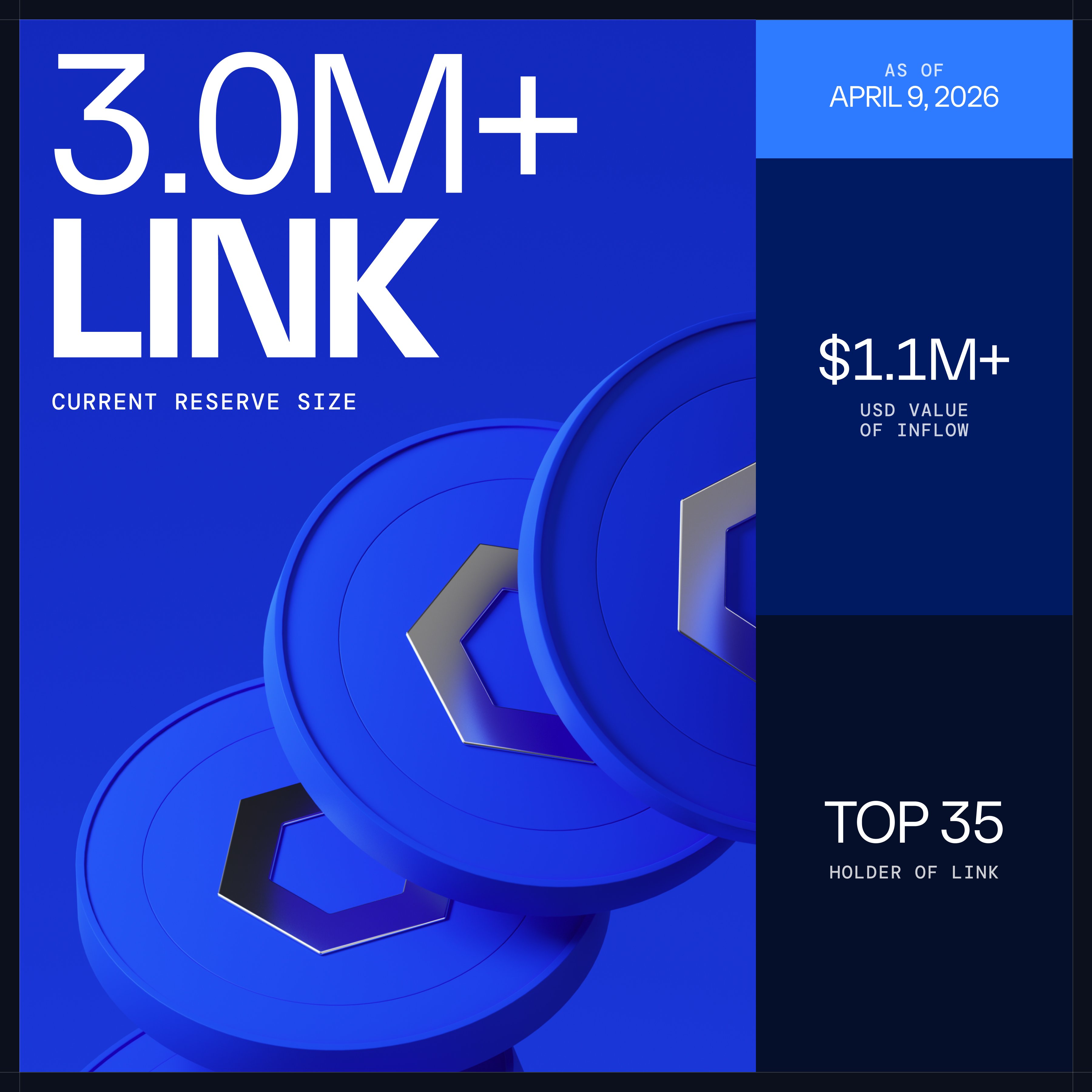 Chainlink Reserve adds 131,656 LINK worth $1.1M+, pushing total holdings above 3M LINK and entering top-35 holders as it accumulates tokens from enterprise and onchain revenue2026-04
 Aero unveils Predictive Allocation to stream rewards and revenue across liquidity pools in real time2026-07
 Orbs launches DAO to hand protocol governance and multi-million dollar revenue stream to token holders, introducing seasonal onchain decision-making for its Layer-3 network2026-04
Protocol revenue — the fees, spreads, and service charges that blockchain networks and decentralized applications collect from real users — has become the defining measure of credibility in the current crypto market cycle.
The shift is not subtle. After years in which token prices were driven largely by narrative, whitepaper promises, and liquidity incentives, the market has entered what a16z Crypto's Paul Cafiero calls the "Show Me Era": traction, users, and verifiable cash flows now matter more than roadmaps. A Solana Foundation researcher put it more starkly, arguing that revenue is "crypto's new north star" — chains that fail to generate real onchain fees risk losing capital, builders, and long-term relevance.
What "Revenue" Means in a Crypto Context
In traditional finance, revenue is straightforward: money a company collects from selling goods or services. In crypto the concept maps, but the plumbing is different.
Protocol fees are the most direct analogue. When a user swaps tokens on a decentralized exchange, bridges assets across chains, borrows against collateral, or trades a prediction market, the underlying protocol charges a fee. That fee — denominated in a stablecoin like USDC, in ETH, in SOL, or in the protocol's native token — is revenue.
Several distinct revenue streams have emerged:
- Transaction fees / gas: Layer-1 and Layer-2 networks collect base fees on every transaction. Ethereum's EIP-1559 burns a portion of gas fees, permanently removing ETH from supply as a form of deflationary revenue recycling.
- Protocol trading fees: DEXes, perpetuals platforms, and lending protocols take a cut of volume. Aave, for example, collected roughly $60 million in projected 2026 revenue from interest spread on loans, according to Grayscale Research.
- Marketplace fees: NFT platforms, tokenized asset markets, and prediction markets charge listing or settlement fees. Kalshi — the regulated prediction market — surpassed $2 billion in annualized revenue in 2026, a figure that prompted IPO talks with investment banks at a reported $22 billion valuation.
- Validator / sequencer economics: Ethereum's PBS (proposer-builder separation) model unlocks new revenue for validators through MEV (maximal extractable value), strengthening network economics beyond simple transaction fees.
- AI compute fees: A new category has emerged where AI inference networks charge for GPU-backed computation. USD.AI's 2026 report showed borrower demand for GPU-backed loans generating measurable yield distributed to stablecoin holders, blurring the line between DeFi lending and AI infrastructure revenue.

AI agents could capture $1T in annual financial services revenue by 2030 and $4T by 2035, per new model

Why Revenue Became the Market's Yardstick
The 2020–2021 bull market rewarded storytelling. Projects launched tokens before shipping products; valuations were extrapolations from whitepapers. The subsequent bear market and the collapse of several high-profile protocols with unsustainable tokenomic incentives changed institutional appetite.
As Tiger Research notes, major exchanges are abandoning their traditional role as altcoin-backing market makers, pushing projects toward survival on genuine revenue. Liquidity is rotating toward equities and real-world assets (RWAs), which means crypto protocols must compete on fundamentals, not on liquidity subsidies.
The Bitcoin framework is instructive here. Grayscale positions BTC as a digital commodity valued by supply and demand dynamics — scarcity and monetary premium, not cash flows. But for the broader ecosystem of application-layer tokens, protocols, and smart-contract platforms, revenue-based valuation is increasingly the default lens. Grayscale's own analyst note placed tokens like HYPE — the native token of the Hyperliquid perpetuals exchange — squarely in the revenue-generating, cash-flow-valued category.
Solana's application layer generated $68 million in fees in May 2026 alone, up 16% month-over-month, with collectibles marketplace Collector Crypt reaching a $9 million monthly revenue all-time high. Tokenized asset volumes on Solana hit $1.1 billion in the same month. These are not theoretical projections; they are auditable onchain numbers.
Readers click revenue stories not for the raw numbers but for the governance inflection point — the moment a protocol decides whether to keep revenue or redistribute it to token holders, which is where price action, tokenomics legitimacy, and DAO power all collide at once.
How Protocols Deploy Revenue: Buybacks and Burns
Revenue without a distribution mechanism is incomplete. The two dominant models for returning value to token holders are buybacks and burns, and increasingly they operate together.
Burns permanently remove tokens from circulating supply. Ethereum's EIP-1559 has destroyed millions of ETH since its 2021 activation, funded directly by base-fee revenue. DoubleZero protocol burns a portion of network revenue every epoch, having removed over 1.5 million tokens from a 10-billion genesis supply — a figure anyone can verify onchain by comparing live supply data. BEAT token reported 771,000 BEAT burned against 773,000 BEAT in revenue in a single week, with cumulative supply removal topping 13.12 million tokens.
Buybacks use protocol revenue to repurchase tokens from the open market, similar to corporate share buybacks. Blocmates introduced the "Holder Multiple," a crypto-native valuation metric that adjusts for token unlocks and buybacks together, giving institutions a cleaner way to compare token value beyond raw revenue figures. FLock's FOMO Season 2 model explicitly uses inference revenue to buy back and burn model tokens, creating a demand flywheel tied directly to AI compute usage.
The synthesis of these mechanisms — revenue → buyback → burn — is becoming a design pattern rather than an afterthought. As one market participant noted, crypto finance now lets protocols build buybacks in as a first-class feature from launch, not something bolted on post-revenue.
Valuing Tokens on Revenue Multiples
Traditional equity valuation uses price-to-earnings (P/E) or price-to-sales (P/S) ratios. Crypto is developing its own equivalents.
Grayscale's framework applies a 20x–25x fintech earnings multiple to Aave's projected $60 million in 2026 revenue, arriving at a fair-value range of $80–$100 per AAVE — implying meaningful upside from current prices. VanEck applied similar logic to BNB, citing $160 million in annualized revenue and 33 million monthly active users as the core investment case for a proposed VBNB ETF.
The inputs that matter for these models: 1. Annualized protocol fees (trailing and forward) 2. Token dilution rate from unlock schedules (Blocmates' Holder Multiple adjusts for this) 3. Revenue distribution ratio — what percentage flows to token holders vs. to a treasury 4. User growth trajectory — revenue without user growth is a ceiling, not a floor
The challenge is consistency. Unlike publicly audited corporate financials, onchain revenue data requires interpretation: fee captures that go to LPs rather than the protocol treasury are often excluded; MEV revenue can distort comparisons; cross-chain fee aggregation is still imprecise. Crypto-native analytics platforms like Token Terminal, DeFiLlama, and Dune Analytics have become the de facto source of standardized protocol revenue data.
- 01Fee switch governance votes
Protocols flipping revenue from treasury accumulation to token-holder distribution (Aave, Frax, CoW Swap, Pump.Fun, Usual) represent a concrete, dateable catalysts that directly links governance participation to financial upside.
- 02Protocol revenue benchmarks
Readers use raw revenue figures — Hyperliquid's $9.5M single day, Farcaster's $600K milestone, Friend.tech's $20M — as competitive scorecards to judge whether a protocol's valuation is grounded.
- 03Stablecoin issuer rate sensitivity
The framing that each 50 bps Fed rate cut costs Tether $488M and Circle $144M made macro interest-rate policy suddenly legible as a direct threat to the largest stablecoin balance sheets.
- 04Tokenomics revamps tied to buybacks
Proposals pairing revenue redistribution with token buybacks (Aave's Umbrella system, AAVE's 45% surge) show readers track the mechanism change, not just the yield, because buybacks are a credible commitment device.
- 05RWA revenue as DeFi legitimacy signal
MakerDAO generating $1.5M in Swiss tax revenue from real-world assets framed DeFi earnings as entering the same accountability layer as traditional finance, which readers found novel and bullish.
- 06CeFi earnings versus analyst estimates
Coinbase's Q1 2025 revenue miss against consensus drew clicks because centralized exchange earnings are the clearest apples-to-apples benchmark linking crypto activity to reported financial performance.
Where Revenue Is Actually Being Generated
Several sectors have demonstrated durable fee generation in 2026:
Decentralized exchanges and perps: Volume-driven, cyclical, but increasingly baseline-robust. High-throughput chains like Solana and Base attract volume that translates directly into protocol fee revenue.
Lending protocols: Aave's projected $60 million in 2026 revenue comes from interest spread. The model is structurally similar to a bank's net interest margin — simple, auditable, and relatively predictable.
Prediction markets: Kalshi's $2 billion annualized figure is the headline, but it operates under CFTC regulation, making it a distinct category from permissionless onchain prediction markets. The blending of regulated and onchain prediction infrastructure is a frontier for fee generation.
AI infrastructure: Networks charging for GPU compute, model inference, and AI-backed lending (like USD.AI's GPU loan book) represent a new revenue category. The IDE launch covered by CoinDesk — framed as "real utility, real revenue, real burns" — exemplifies how AI compute networks are positioning revenue as the proof-of-work for their business model.
Music and creator platforms: Top music NFT platforms passing 95% of revenue directly to independent artists demonstrate that protocol design determines how revenue splits between creators, platforms, and token holders — a differentiation that will matter as Web3 creator economies mature.
Stablecoins and RWAs: USDC and similar regulated stablecoins generate revenue from the yield on underlying treasury reserves. Coinbase, as Circle's distribution partner for USDC, captures a portion of this float revenue — a meaningful and growing line item in Coinbase's financials that ties TradFi interest rates directly to crypto infrastructure economics.
The Monetization Gap: Users Without Revenue
Having users is necessary but not sufficient. ChangeNOW's Yana Mar identified four structural reasons monetization breaks down: product-market fit that doesn't extend to willingness-to-pay; pricing models that subsidize growth with token inflation; fee avoidance driven by competitive pressure from zero-fee forks; and misaligned incentives where builders are rewarded for launch metrics rather than revenue.
The 2026 cohort of top-performing crypto assets shares one characteristic, as market observers have noted: genuine revenue generation separating them from token projects still relying on inflationary incentives. Robinhood cutting 10% of its workforce explicitly to streamline operations amid declining crypto revenue is the inverse case — a centralized platform whose crypto revenue is exposed to market-cycle volatility rather than structural fee growth.
- 2022-01governance
Frax Finance disables veFXS revenue sharing
- 2023-08launch
Friend.tech launches; accumulates $20M revenue within months
- 2024-03regulatory
US Treasury releases 2025 Greenbook with crypto tax modernization proposals
- 2024-06milestone
LayerZero ZRO distribution spikes Arbitrum daily revenue to $3.4M
- 2024-08governance
Aave proposes Umbrella tokenomics revamp with revenue redistribution and Anti-GHO
- 2024-09milestone
Ethereum staker revenue falls 30% from March peak to $174M as activity cools
- 2024-11milestone
Curve Finance revenue surges on post-election crypto demand spike
- 2025-05milestone
Coinbase reports Q1 2025 revenue of $2.0B, missing consensus estimate
Risks and Caveats
Revenue-based valuation in crypto carries real risks that traditional P/E frameworks don't fully capture:
- Cyclicality: Protocol fees track volume, which tracks market sentiment. Revenue figures from bull-market peaks create misleading baseline expectations.
- Token inflation offset: High protocol revenue can be more than offset by token emissions to liquidity providers, making "revenue" accretive only on paper.
- Regulatory reclassification: If protocol fees are reclassified as securities-related revenue under evolving regulation, the legal structure of fee distribution may need to change.
- Smart contract risk: Revenue-generating protocols carry exploit risk. A single hack can zero out months of fee accumulation and destroy the user base generating that revenue.
- AI revenue immaturity: GPU-backed lending and AI inference networks are early-stage. Revenue projections carry higher uncertainty than established DeFi protocols with years of auditable fee history.
Outlook
The structural shift toward revenue-based evaluation of crypto assets appears durable. Institutional capital — via ETF structures, venture allocation, and treasury diversification — increasingly demands auditable cash flows rather than narrative premiums. The Grayscale, VanEck, and Blocmates frameworks described above are early but concrete evidence that the valuation toolkit is maturing.
The near-term frontier is standardization: agreed-upon methodologies for measuring protocol revenue net of token emissions, adjusted for unlock dilution, and comparable across chains. Once that infrastructure exists, the gap between "crypto valuations" and "technology company valuations" will narrow considerably — benefiting protocols that have already built genuine revenue engines, and accelerating the exit of those that have not.
Latest Revenue news
Community notes
Spot something off or out of date? Drop a note. Editors review topic notes daily and roll accepted fixes into the explainer — contributors are recognized in the monthly $SQUID drop.
Loading notes…
Help improve this topic
Have a story or tip about this topic? Submit it. See something missing? Leave a note. Editors review daily; accepted submissions and fixes count toward the monthly $SQUID drop.