
In‑depth explainer on crypto token buybacks, covering mechanics, funding, burns, ve‑models, legal risks, and case studies from Hyperliquid to Uniswap and Aster, with guidance for investors and builders on evaluating sustainable value accrual.
+8 sources across the wider coverage universe
 Tom Lee’s Bitmine uplists to NYSE, revealing 4.8M ETH holdings and expanding share buyback program to $4B in a major crypto-linked corporate treasury move2026-04
 DeFi's dirty secret in 2026: Builders vs. buyback machines, why most of you are holding exit liquid.2026-04
 Researcher argues crypto's next cycle will favor revenue-generating assets over speculative tokens, with protocols like AAVE and Jupiter outperforming through buybacks and value accrual2026-06
 Former Hyperliquid skeptic Pavel Paramonov argues HYPE is among crypto's few truly investable assets, citing its no-VC structure, token buybacks and growing challenge to Binance's dominance2026-06
 Aster directs 99% of daily fees to ASTER buybacks, matching each with reserve burns2026-06
 Blocmates unveils the “Holder Multiple,” a crypto-native valuation metric adjusting for token unlocks and buybacks to help institutions compare tokens beyond revenue2026-06
Crypto Token Buybacks: How DeFi Is Turning Repurchases Into a Core Primitive
Token buybacks in crypto occur when a protocol, DAO, or related entity uses capital to repurchase its own token, usually on the open market, and then holds, distributes, or destroys those tokens as part of its tokenomics design. In practice, buybacks sit at the intersection of revenue sharing, burning, governance, and market structure, and have become one of the main ways DeFi projects attempt to turn speculative cryptoassets into cash‑flowing, value‑accruing instruments tied to real economic activity.
From Wall Street Tool to On‑Chain Primitive
In traditional finance, share buybacks allow a company to repurchase its outstanding stock, reducing free‑float supply and indirectly returning capital to shareholders by boosting earnings per share. Crypto teams borrowed this vocabulary, but transplanted it into a very different environment: tokens trade on 24/7 global markets, issuance and burns can be automated in smart contracts, and many projects are not incorporated entities in any single jurisdiction. As a result, what looks like a familiar corporate finance mechanic quickly mutates into something more programmable, transparent, and experimental once it lives on‑chain.
At its simplest, a crypto token buyback is exactly what it sounds like: a protocol, DAO, or foundation uses assets it controls—typically protocol revenue, treasury reserves, or occasionally debt—to buy its native token on the secondary market. Those repurchased tokens might then sit in a treasury wallet, be redistributed to stakers or lock‑up participants, be permanently locked, or be sent to a burn address and destroyed. The overarching goal is usually some combination of value accrual, supply management, and signaling: tying token value to protocol usage, offsetting inflation from emissions and unlocks, or signaling confidence after stress events like hacks or market drawdowns.
The concept would be incomplete without understanding burns. Burning refers to sending tokens to an unusable “eater” or zero address from which they can never be recovered, effectively removing them from circulation forever. Some consensus mechanisms even embed burning in block production; in proof‑of‑burn systems, miners deliberately destroy tokens to earn the right to add new blocks. In DeFi tokenomics, buybacks and burns often appear together as “buyback and burn” programs, where the project first reacquires its token in the market and then sends it to a burn address to engineer a deflationary supply schedule. Other teams, influenced by research like Placeholder’s “buyback and make” thesis, argue that it can be more productive to recycle repurchased tokens back into the protocol rather than destroying them.
Because these decisions affect both the token’s supply trajectory and its cash‑flow profile, buybacks sit at the core of modern governance debates. Many tokens that launched as pure governance chips with no explicit claim on revenue are now revisiting that design, as holders push for fee switches and buyback programs to compete with protocols that already offer direct value accrual. Examples such as Uniswap’s fee switch, Ethena’s ENA fee redirection, and LayerZero’s ZRO referendum show buybacks evolving from a post‑launch afterthought into a central part of protocol roadmaps.

Treasury doubles long-bond buybacks as Bessent says he is 'the house

Mechanics: Where the Money Comes From and How Buybacks Execute
Funding sources: revenue, treasuries, and leverage
The first question in any buyback discussion is simple: what pays for it? In DeFi, the most sustainable answer is protocol revenue. Hyperliquid, for example, directs more than 90% of its platform fees into an Assistance Fund that systematically repurchases its HYPE token on the open market, a model that has led the exchange to account for nearly half of all token buyback activity in 2025 by some measures. Aster recently overhauled its tokenomics so that 99% of daily platform fees are automatically used to buy ASTER, directly linking protocol usage to token demand. Jupiter routes 50% of trading fee revenues into a JUP buyback program that Blockworks Research estimates could correspond to roughly 40% of circulating supply at current run‑rate revenues.
Other protocols source buybacks from more complex yield streams. Ethena’s fee switch, approved in a November 2024 governance proposal, captures a portion of the yield generated by its synthetic dollar sUSDe and channels it into ENA buybacks, with potential redistribution to staked sENA holders. This structure effectively transforms part of a derivatives‑driven stablecoin yield into a token buyback pipeline. AI‑adjacent projects like FLock do something similar with inference revenue, using income from model APIs to buy back and burn model‑specific tokens while also powering buybacks of the FLOCK governance token.
Treasury‑funded buybacks, where a foundation or DAO spends previously raised capital or token reserves to support the market, are also common, especially around key events like hacks or unlocks. After security incidents, some teams pair compensation with buyback‑and‑burn programs that target a fixed percentage of total supply, attempting to restore confidence by tightening token supply and signaling long‑term commitment. In the listed‑equity world, Bitcoin‑focused public companies have authorized share buybacks funded by selling some BTC and paying down debt, underscoring that treasury management and repurchases are closely intertwined even outside DeFi.
A more controversial variant involves leveraged buybacks, where a project or corporate parent borrows—directly in fiat, in stablecoins, or against its token holdings—to fund repurchases. Debt‑financed share buybacks are a familiar feature in traditional markets, and similar dynamics can appear around Bitcoin‑exposed firms using debt to buy back stock. In crypto, this approach heightens reflexivity: if the token price falls after a debt‑funded buyback, collateral values shrink and repayment burdens grow, raising the specter of Terra‑style doom loops where financial engineering accelerates a drawdown rather than cushioning it.
Execution: from manual buys to on‑chain TWAP and auctions
Once funds are earmarked, the next design choice is execution. Some projects opt for relatively simple open‑market purchases via centralized exchanges (CEXs) or decentralized exchanges (DEXs). Others encode buybacks as on‑chain routines that execute against automated market makers according to predefined parameters. Aster’s revamped model, for instance, uses an automated time‑weighted average price (TWAP) mechanism to execute daily fee‑funded buybacks of ASTER on the open market, smoothing market impact and reducing the risk of slippage and manipulation. Purchased tokens flow into a public buyback wallet before being distributed to veASTER holders during reward epochs.
Auction‑based mechanisms offer a more market‑driven approach. Injective’s tokenomics include an auction module that periodically sells a basket of tokens (collected fees and other assets) in exchange for bids denominated in INJ; the winning INJ bid is then burned. Rather than a protocol passively buying in the market, here users compete to spend INJ, and the protocol destroys the winning bids, turning auction demand into a continuous burn mechanism. This design merges revenue collection, price discovery, and burning into a single on‑chain primitive.
Programmatic execution is not just a matter of convenience. It also addresses regulatory and ethical concerns. In a widely viewed explainer, attorney Adam Tracy notes that while there is no clear “black‑letter law” governing token buybacks, best practices can be borrowed from U.S. securities law Rule 10b‑18, which shapes how stock buybacks should be executed to avoid manipulation claims. Those norms emphasize limiting daily volume participation, avoiding trades around the open and close, and, crucially, disclosing the program’s parameters. Crypto equivalents, such as automated TWAP buying directly tied to verifiable on‑chain fee flows, can reduce discretionary timing by insiders and make it easier for markets and regulators to observe what is happening in real time.
What happens to the repurchased tokens?
The fate of repurchased tokens is where design choices most directly shape value accrual. At least four broad patterns have emerged.
The first is buyback‑and‑hold, in which the protocol or foundation holds the tokens in treasury or locks them in smart contracts. Aerodrome offers a clear example: the protocol has acquired and locked around 190 million AERO through its buyback program as part of a broader merger and upgrade process, reducing circulating supply ahead of changes that include rebase elimination and other deflationary mechanics. Locking repurchased tokens supports tokenomics by shrinking effective float while preserving optionality to use them later for liquidity, grants, or further incentives.
The second is buyback‑and‑distribute. Pendle, a protocol for tokenized yield, has acquired more than 1.7 million PENDLE from the open market since launching its sPENDLE staking system and has distributed every token to sPENDLE holders. Here buybacks turn protocol revenue or activity into direct rewards for long‑term participants, conceptually closer to dividends than to pure deflation. Aster’s model does something similar, sending buybacked ASTER to veASTER stakers as additional rewards each epoch. This aligns with the broader “real yield” narrative, where holders receive a share of genuine cash flows rather than dilutionary token emissions.
The third pattern is buyback‑and‑burn, where the repurchased tokens are destroyed. Aster couples its fee‑funded buybacks with matched burns from its reserve allocations, executing burns every two weeks and aiming to reduce total supply from 8 billion tokens to 3 billion over time. FLock’s model likewise uses revenue to buy back and burn specialized Model Tokens, permanently removing them from circulation as model usage grows. Uniswap’s fee switch ties a portion of protocol fees to UNI supply reduction, converting protocol usage into recurring UNI burns estimated at roughly 4–5 million UNI annually during the initial observation period. Injective’s auction mechanism also results in a steady burn of INJ as users compete to spend tokens in auctions.
A fourth category, sometimes called buyback‑and‑make, has been articulated by venture firm Placeholder. Rather than burning, a protocol uses repurchased tokens as productive capital, recycling them into activities such as liquidity provision, lending, or funding of ecosystem projects. The idea is that permanently destroying tokens might create speculative scarcity but does nothing to deepen the protocol’s economic moat, whereas reinvesting repurchased tokens can grow the underlying business and ultimately benefit holders more. This approach often overlaps with “ve‑token” models in which locked tokens confer rights to fee flows, emissions, and governance influence.
These design choices are not purely mechanical. They shape the token’s narrative: is it a deflationary asset akin to Bitcoin’s halving‑driven scarcity, an income‑generating stake in protocol revenue, or a governance chip whose power depends on long‑term locking? Buybacks, burns, and recycling into ve‑systems are now primary tools for answering that question.
Readers click buyback stories hardest when a DAO vote or governance proposal converts protocol inflation or accumulated treasury fees into token demand — the draw is the implicit admission that revenue is real and durable enough to return to holders, not the buyback mechanism itself.
Why Protocols Lean on Buybacks
Aligning tokens with revenue and usage
The most compelling argument for buybacks is simple: they connect token value to protocol revenue and usage. For much of the last cycle, many tokens functioned primarily as governance abstractions with little or no direct link to cash flows. Research from Novora, covering a dataset of dozens of major tokens, concludes that “active value accrual” models—combining direct fee sharing, buyback‑and‑burn, buyback‑and‑hold, or ve‑models—on average outperformed governance‑only tokens by around ten percentage points, while the median governance‑only token returned roughly negative sixty‑seven percent, with only one positive performer in the cohort. In the same study, the authors emphasize that revenue scale, more than any particular accrual mechanism, explained most of the variation in outcomes: tokens attached to genuinely productive, high‑revenue protocols outperformed regardless of the exact mechanics.
A growing share of DeFi blue chips have taken this lesson to heart. Uniswap’s activation of its fee switch turned UNI from a pure governance token into one with a programmatic link between trading activity and token supply reduction, as protocol fees now contribute to ongoing UNI burns rather than purely inflationary issuance. Jupiter’s JUP program, which directs half of trading fee revenue into buybacks that could retire a significant fraction of circulating supply at current volumes, explicitly markets the token as a claim on aggregator revenues rather than as a mere voting right. Hyperliquid’s revenue‑driven buybacks have been central to bullish theses that describe HYPE as one of the few “truly investable” exchange tokens thanks to its legitimate cash flows and aggressive repurchase policy.
Newer governance debates follow the same pattern. Ethena’s fee switch shifted part of the sUSDe yield into ENA buybacks and potential distributions to long‑term stakers, and LayerZero has asked ZRO holders to vote on a referendum that would activate a protocol fee in order to fund ZRO buybacks and burns. In both cases, communities are explicitly weighing whether to leave fees in the protocol treasury or to route them, directly or indirectly, to token holders. The directional trend is clear: revenue‑driven buybacks are becoming a default expectation for mature DeFi protocols.
Stabilizing markets and managing supply
Buybacks are also a tool for managing supply in a landscape dominated by emissions, unlocks, and mercenary liquidity. Many protocols launch with generous token incentives, vesting schedules for investors and teams, and low initial float, which can create persistent sell‑side pressure as cliffs vest and farming rewards enter the market. Delphi‑style research has highlighted that insider unlocks and poorly aligned listings often generate substantial negative excess returns around those events, while protocols that route a meaningful share of fees back to holders through buybacks or burns fare better over time.
In this context, buybacks function as an offset to dilution. Aster’s plan to use 99% of daily platform fees to buy ASTER, while burning an equal amount from reserves until supply falls from 8 billion to 3 billion, is an explicit attempt to counteract past token issuance and re‑anchor tokenomics around sustainable revenue. Hyperliquid’s large‑scale buybacks, representing nearly half of total token buyback volume in 2025 by some measures, similarly reduce free‑float over time as the platform grows. Aerodrome’s accumulation and locking of 190 million AERO ahead of its July merger reduce the circulating base of tokens even before additional deflationary mechanics take effect.
Core blockchain assets like Bitcoin addressed supply management at the protocol level with a fixed issuance schedule and periodic halvings. In contrast, DeFi tokens often rely on discretionary, governance‑driven supply policy, making buybacks and burns politically mediated tools rather than hard‑coded monetary policy. That flexibility cuts both ways. When markets are strong and fees are high, aggressive buybacks can help dampen volatility and keep circulating supply in check. When revenues fall, buybacks shrink or disappear, and token holders discover that prior repurchases were less a permanent floor and more a function of cyclical cash flows.
Repairing trust after hacks and stress events
Beyond everyday tokenomics, buybacks often appear as emergency tools after crises. Following hacks, oracle failures, or governance missteps, teams may deploy treasury funds to buy back and burn a portion of supply, framing the move as a way to compensate affected users or to offset security‑related dilution. By removing tokens from circulation, such programs can signal that insiders are willing to bear some of the cost of remediation, not just external holders.
In the Bitcoin and listed‑equity space, related dynamics arise when highly leveraged BTC‑treasury firms use debt buybacks and share repurchases as part of complex capital‑structure management. When these maneuvers send signals of over‑confidence or stretch balance sheets, markets can respond violently; recent drawdowns following debt buyback announcements illustrate how reflexive feedback loops between asset price, collateral value, and leverage can resemble the dynamics of algorithmic stablecoin collapses, even if the instruments are very different.
DeFi has not seen a Terra‑scale doom loop triggered by buybacks alone, but the cautionary lesson is relevant. A buyback funded from sustainable, recurring revenue is fundamentally different from one financed by leverage or one‑time treasury depletion. Markets increasingly distinguish between the two.
Narrative, competition, and “investable” tokens
Finally, buybacks are about narrative and competition. Research from both independent analysts and sell‑side firms often highlights protocols with robust, transparent buyback programs as more “investable” than those relying solely on governance and emissions. Citrini Research’s report on Hyperliquid, widely cited in industry commentary, describes the combination of high fee capture, aggressive buybacks, and no‑VC token structure as a compelling investment case in a sea of poorly designed exchange tokens. Blockworks’ coverage of Jupiter’s JUP emphasizes that its buyback scale is comparable to high‑dividend or high‑repurchase equities, reframing a DeFi token in terms familiar to traditional asset managers.
Tools like Blocmates’ proposed Holder Multiple metric formalize this intuition by adjusting a token’s effective valuation for expected emissions and buybacks. Their approach takes current market capitalization, adds projected supply from investor and team unlocks and token rewards, and subtracts estimated buyback volume to arrive at a more realistic picture of what long‑term holders will own. For institutions exploring token allocations, metrics that explicitly model how buybacks and unlocks interact are critical to comparing tokens not just by headline revenue, but by the net value that actually accrues to circulating holders over time.
In this competitive environment, tokens that lack any credible path to value accrual via fees, buybacks, or equivalent mechanisms increasingly struggle to attract attention or maintain valuations once speculative froth recedes. Governance alone is no longer enough; buybacks have become a shorthand for “this token is tethered to something real.”
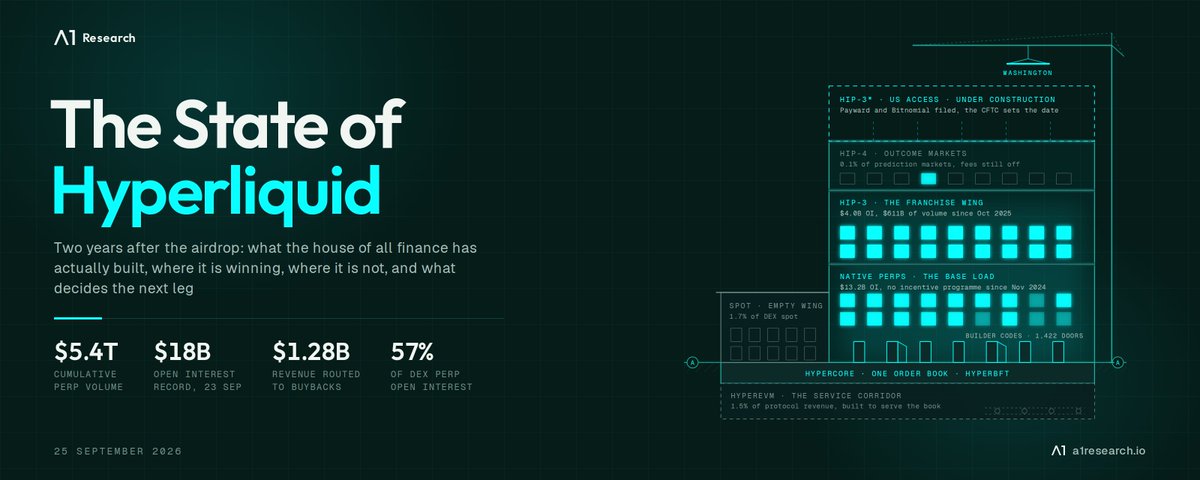
Two years after Hyperliquid's airdrop: $5.4T in perp volume, $1.28B in HYPE buybacks, and rooms still empty
Design Patterns: Burn, ve‑Models, and “Buyback and Make”
Buyback‑and‑burn: engineered scarcity
The most straightforward pattern is buyback‑and‑burn. Here, a fixed or variable portion of protocol revenue is used to buy back tokens, which are then sent to a burn address. This creates explicit, observable deflation. Aster’s matching mechanism—using 99% of daily fees to buy ASTER while burning an equal amount from reserves every two weeks until supply falls from 8 billion to 3 billion—is a textbook example of combining demand‑side support with scheduled supply reduction. FLock channels revenue from its AI inference marketplace into buybacks and burns of specialized Model Tokens, so that model usage translates into permanent supply removal as well as powering FLOCK buybacks. Uniswap’s fee switch effectively turns a slice of trading fees into recurring UNI burns, replacing a purely inflationary token issuance schedule with one that, at the margin, can be net deflationary under high usage.
Burning has strong optical appeal. It is simple to explain, easy to verify on‑chain, and maps neatly onto narratives of digital scarcity that Bitcoin popularized. When tokens are sent to a verifiable burn address—an account without known private keys and typically with a distinctive format—they are, in practical terms, unrecoverable. In systems like Injective’s auction module, users themselves create the burn by competing to spend INJ in auctions, which the protocol then destroys. The result is a supply curve that is not only capped but actively driven down by economic activity, a feature some compare to Ethereum’s post‑EIP‑1559 fee burn dynamics.
However, burning is also irreversible. Critics argue that removing tokens from circulation may maximize speculative upside but forecloses opportunities to use those tokens productively in future ecosystem growth. It can also be misleading if burn rates are small relative to inflation. A protocol that trumpets its burn program while quietly emitting far greater quantities of new tokens through liquidity mining or unlocks is not truly deflationary; only a comprehensive view of net issuance reveals whether buyback‑and‑burn is more than a marketing slogan.
Buyback‑and‑hold: treasury as strategic asset
Under buyback‑and‑hold, the protocol retains repurchased tokens in a treasury, multisig, or locking contract rather than burning them. Aerodrome’s choice to acquire and lock roughly 190 million AERO tokens ahead of its July merger and upgrade is a representative case. Locking those tokens reduces effective float and supports price resilience, while preserving flexibility to deploy them later for incentives, partnerships, or further protocol mergers. In ve‑token systems, locked treasury holdings can also be used to direct governance and fee flows across interconnected protocols.
From a balance‑sheet perspective, buyback‑and‑hold resembles a firm retiring shares but keeping them in treasury stock rather than canceling them outright. It can support valuations by reducing supply available to trade without committing to permanent destruction. Yet it also introduces a future overhang: if governance later votes to re‑emit or sell those tokens, today’s buybacks may become tomorrow’s dilution. The credibility of a buyback‑and‑hold program therefore depends heavily on governance constraints, transparency, and the protocol’s long‑term strategy.
Buyback‑and‑distribute: real‑yield style rewards
Buyback‑and‑distribute turns repurchases into a direct cash‑flow channel for active participants. Pendle’s model, where the protocol has acquired over 1.7 million PENDLE from the open market since launching its sPENDLE system and has distributed every token to sPENDLE holders, exemplifies this approach. Rather than destroying tokens or hoarding them, the protocol effectively recycles trading fees and yield‑related revenues into additional PENDLE for those who commit to the ecosystem via staking. Aster’s buyback program similarly sends repurchased ASTER to veASTER stakers as additional rewards, letting active participants capture a high percentage of fee‑driven buybacks at maximum lock weight.
This pattern resembles a dividend in equity markets but in token form. It avoids some regulatory sensitivities around direct fee sharing by routing value via buybacks and token redistribution rather than explicit payment streams in stablecoins or fiat. Economically, however, the effect is similar: revenue supports token price both through reduced float and through increased token balances for long‑term holders.
Vote‑escrowed (ve) models and compounded buybacks
ve‑Models—originating with Curve’s veCRV—layer time‑based locking and governance power on top of value accrual. In these systems, users lock tokens for a fixed period to receive a non‑transferable ve‑token that confers voting rights and a share of protocol fees, incentives, or external “bribes.” Protocols like Curve, Aerodrome, Velodrome, Balancer, and Convex use ve‑architectures that can incorporate buyback flows either directly, by routing repurchased tokens to lockers, or indirectly, by letting ve‑holders direct emissions and thus influence where buyback‑funded liquidity is deployed.
Aster’s veASTER exemplifies a design where buybacks and ve‑locking are deeply intertwined. Fee‑funded buybacks accumulate ASTER in a public wallet and then distribute those tokens to veASTER holders during reward epochs, while matched burns reduce long‑term supply. The result is a triple flywheel: protocol revenue lifts buyback capacity, buybacks and burns lower float, and ve‑lockers receive an increasing share of a scarcer asset.
Novora’s research groups these systems under “active value accrual” and finds that, as a class, they materially outperform governance‑only tokens, though again, the magnitude of revenue matters more than the exact ve implementation. Still, ve‑models combined with buybacks tend to attract a committed base of long‑term participants willing to endure illiquidity in exchange for compounding exposure to protocol success.
“Buyback and make”: recycling tokens into productive capital
Placeholder’s “Stop Burning Tokens – Buyback and Make Instead” essay critiques the reflexive assumption that burning is always the optimal use of buybacks. Their core argument is that repurchased tokens can act as productive capital if reinvested creatively: for instance, by seeding liquidity pools, backing stablecoins, underwriting insurance, or funding ecosystem development in ways that increase protocol revenue. In this framing, burning is akin to distributing all profits as dividends, while “make” functions more like retained earnings deployed into growth projects.
For example, a lending protocol could buy back its governance token and then stake those tokens to secure the protocol, channeling the resulting yield back into reserves. A DEX might accumulate its token and pair it with stablecoins in liquidity pools, deepening markets and generating trading fees. While many current systems still default to burn‑heavy narratives, “buyback and make” offers a blueprint for more capital‑efficient, growth‑oriented use of repurchased tokens, particularly for younger protocols still chasing market share.
Fee switches and staged value accrual
An important nuance is timing. Several flagship protocols launched with no value accrual to token holders beyond governance, only later introducing fee switches and buybacks once they achieved product‑market fit and navigated early regulatory uncertainty. Uniswap is the clearest case: UNI initially conferred only governance rights, with protocol fees either disabled or flowing to a treasury; the later fee switch flipped UNI into a token where usage generated supply‑reducing burns. Ethena’s ENA and LayerZero’s ZRO are following a similar arc, with communities debating how and when to route protocol fees into buybacks and burns.
This staged approach reflects both legal and strategic considerations. From a legal standpoint, deferring explicit revenue linkage may reduce the risk that a token is classified as a security at launch. From a strategic perspective, it allows teams to first prove out usage and revenue, then deploy buybacks when the economic engine is running at scale. The trade‑off is that early holders must tolerate a period of weak or nonexistent value accrual, which Novora’s data suggests can be painful in bear markets. As the regulatory environment evolves, more teams may choose to bake fee‑funded buybacks into their design from day one rather than as an afterthought.
- 01Fee switch → buyback governance votes↗
AAVE, Jupiter, Ether.Fi, and Uniswap all proposed redirecting live protocol revenue to buybacks via DAO vote, making each announcement a litmus test on whether the protocol's revenue was credible enough to distribute.
- 02Inflation replaced by buybacks↗
Synthetix eliminating SNX token inflation and Pendle overhauling vePENDLE to route up to 80% of revenue to buybacks signaled a sector-wide shift from dilutive emission models to deflationary value accrual.
- 03Corporate and institutional buybacks
The top-clicked headline was Robinhood repurchasing SBF's seized equity, not a DeFi story at all — readers track buybacks across both TradFi-adjacent crypto firms and mining companies like MARA and Bitmine as signals of balance-sheet confidence.
- 04Distressed protocol rescue buybacks
Movement Network deploying $38M recovered from a rogue market maker, Mango Markets' contested vote, and Sky gutting its own buyback 87% after a credit-rating shock drew clicks because buybacks in crisis reveal whether governance can act under pressure.
- 05Skeptic case: buybacks over building↗
DWF Ventures' research questioning whether buybacks actually deliver for holders, and the 'DeFi's dirty secret' framing of protocols as exit-liquidity machines, attracted engaged readers who wanted a contrarian stress-test of the prevailing narrative.
- 06Buyback-and-burn as permanent supply reduction↗
Hyperliquid proposing to burn 13% of circulating HYPE, Uniswap's fee switch targeting up to 100M UNI, and Quickswap's 26.7M QUICK burned drew readers chasing the hardest form of value accrual — tokens permanently removed from supply.
Measuring Impact: Beyond “Number Go Up”
Token‑level valuation: emissions, unlocks, and buybacks
Investors assessing buybacks need tools that go beyond headlines. A token with aggressive emissions and unlocks can still see net dilution even if it touts an active buyback program. This is where metrics like Blocmates’ Holder Multiple enter the picture. Their methodology, designed for institutional comparison of tokens, essentially adjusts a project’s valuation by taking the current market cap, adding projected supply from investor and team unlocks and token‑based rewards, and subtracting expected buybacks tied to credible revenue forecasts. The result is a “holder‑adjusted” measure of how much economic exposure current and future holders actually receive after accounting for all in‑ and out‑flows.
In such a framework, a protocol like Jupiter, with an estimated annualized buyback budget of roughly three‑quarters of a billion dollars at current fee levels, which could retire around forty percent of circulating supply in a year, scores very differently from a project with similar market cap but minimal revenue and purely inflationary emissions. Hyperliquid’s choice to direct over ninety percent of fees into buybacks likewise improves its Holder Multiple profile, as large chunks of future fee flows are effectively pre‑committed to counteracting dilution. Conversely, projects that wrap small or irregular buybacks around substantial unlocks may look worse on a Holder Multiple basis than their branding suggests.
On‑chain observable metrics: burn rates, locked supply, and participation
On‑chain data makes it possible to track buyback programs with a granularity impossible in traditional markets. Analysts can measure the rate of supply reduction from burns, the proportion of outstanding tokens held in locked treasury or ve‑contracts, and the share of protocol fees actually used for buybacks versus retained in treasuries. Uniswap’s initial post‑UNIfication data, for instance, showed that ongoing burns corresponded to an annualized rate of roughly 4–5 million UNI per year, giving markets a concrete sense of the program’s scale relative to total supply and daily trading volume.
Similarly, Aster’s commitment to burn tokens every two weeks until supply falls from 8 billion to 3 billion defines a clear, trackable trajectory. Aerodrome’s accumulation and locking of 190 million AERO can be monitored directly in the smart contracts that hold those tokens. Pendle’s periodic updates on the aggregate amount of PENDLE repurchased and distributed to sPENDLE holders provide another stream of measurable data for evaluating program efficacy. Lista’s weekly recaps that include the total amount of LISTA bought back each week are a more centralized but still transparent form of disclosure, helping holders understand how much capital is being returned to the token versus held back for growth.
The Hyperliquid case illustrates the importance of relative metrics. Citrini’s research finding that Hyperliquid’s buybacks account for nearly half of all crypto token buyback activity in 2025 underscores that absolute numbers matter, but so does scale relative to the rest of the market. A protocol capturing a large share of aggregate buyback volume is, by definition, routing more of the ecosystem’s real revenue into its token than peers are, a fact that any cross‑protocol analysis should account for.
Market reaction: Ethena, BitGo, and the limits of financial engineering
Despite the appeal of neat models and impressive burn dashboards, market reaction to buybacks is far from automatic. Ethena’s price action, plunging close to eight percent around the time it announced a new buyback program funded by sUSDe yield, shows that investors may remain skeptical if they question the sustainability of revenue, the scale of buybacks relative to dilution, or the governance structure controlling the switch. In some cases, buybacks are interpreted as a sign that the team lacks better growth opportunities or is attempting to prop up price rather than address deeper structural issues.
In the broader crypto capital markets, publicly listed firms like custody providers have seen their shares climb on buyback announcements, echoing the traditional equity market pattern where repurchases are often read as a signal of management’s confidence. Yet these rallies can fade quickly if markets reassess fundamentals. Gate.io’s “Why Can’t Buybacks Save Decentralized Finance?” commentary emphasizes that repurchases are not a cure‑all: they cannot fix missing product‑market fit, weak risk management, or unsustainable business models. In DeFi especially, where underlying usage can evaporate rapidly, buybacks are only as durable as the cash flows that fund them.
Bitcoin’s own price dynamics around leveraged debt and treasury strategies underscore this point. When a heavily indebted BTC‑treasury firm announces aggressive buybacks or complex debt reduction plans, markets scrutinize whether these moves genuinely de‑risk the balance sheet or simply rearrange leverage. A buyback that improves per‑share metrics in the short term but leaves the issuer exposed to a 20–30% BTC drawdown may ultimately increase risk rather than reduce it, a pattern observers have likened to the reflexive doom loops seen in failed algorithmic stablecoins.
Governance, fairness, and transparency
Because buybacks sit at the junction of capital allocation and market microstructure, governance and disclosure are central to their legitimacy. Adam Tracy’s legal analysis highlights that, even in the absence of specific token‑buyback case law, regulators will likely examine whether projects disclosed the source of funds, the timing and size of buybacks, and any insider advantages in execution. Traditional Rule 10b‑18 guidelines for corporate buybacks exist precisely to prevent manipulative practices; the crypto analog is transparent smart‑contract logic and public reporting of execution details.
Protocols like LayerZero have pushed core buyback decisions directly to token holders. The ZRO fee switch referendum, for example, asks holders to vote on whether to activate a protocol fee that, if approved, would be routed into ZRO buybacks and burns, with a specified quorum threshold. Ethena’s ENA fee switch was likewise decided via governance, with community debates about optimal buyback frequency and size before adoption. Lista’s regular public updates on weekly buyback amounts and third‑party security scores add another layer of signaling, combining quantitative disclosures with audits and transparency ratings.
On the other hand, discretionary, opaque buybacks executed solely at team discretion and funded from treasury raise concerns about insider trading and unequal access to information. If insiders know the timing and scale of repurchases in advance, they can trade ahead of the market. Programmatic, revenue‑linked buybacks executed via on‑chain mechanisms can mitigate this by tying repurchases to observable variables like daily fees rather than private decisions.

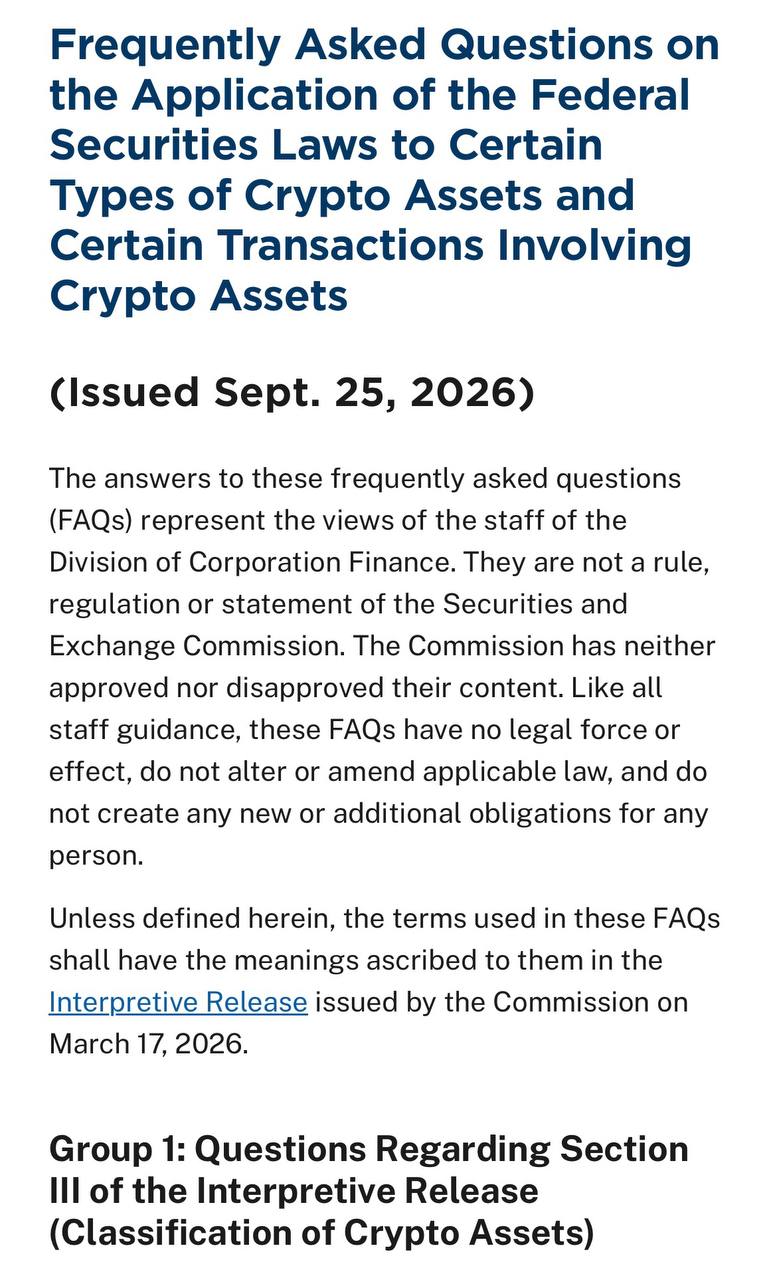
SEC says buybacks don't turn commodity tokens into securities, and liquid staking tokens for commodities aren't securities
Legal, Regulatory, and Ethical Considerations
Market manipulation and the shadow of securities law
Legally, token buybacks exist in a grey zone. Adam Tracy notes that there is no specific enforcement action or precedent in crypto that defines how token buybacks should operate, nor a dedicated set of “black‑letter” rules comparable to those governing corporate stock repurchases. Nonetheless, regulators are likely to view them through the lens of existing securities and market‑manipulation frameworks. If a token is deemed a security under tests like Howey, buybacks could be scrutinized as potential attempts to support the price or mislead investors, especially if executed around key events such as listings, unlocks, or earnings announcements.
Rule 10b‑18 in the United States provides public companies with a “safe harbor” for stock buybacks, prescribing conditions on volume, timing, and pricing to reduce manipulation concerns. Tracy suggests that, in the absence of specific token guidance, crypto projects should voluntarily adopt analogous practices: clear disclosure of buyback plans, limits on the proportion of daily volume they represent, and avoidance of opportunistic timing that could disadvantage ordinary traders. While these norms are not legally binding for tokens, teams that ignore them may attract unwelcome attention from regulators, particularly if token holders are predominantly retail.
Value accrual and the risk of being a de facto security
Buybacks also intersect with the question of whether a token is a security. When a protocol generates revenue and uses that revenue to buy back and burn tokens or to redistribute them to stakers, holders begin to resemble equity investors benefiting from share repurchases or dividends. Novora’s conclusion that “governance‑only is a dead model” from a returns perspective suggests that many tokens will move in this direction. But each step toward explicit value accrual can strengthen the argument that the token represents an investment contract tied to the efforts of a managerial team.
Some protocols have attempted to thread this needle by avoiding direct fee sharing in stablecoins or ETH and instead routing value through tokens (via buybacks and emissions) or ve‑structures where benefits are intertwined with governance responsibilities. Others delay fee switches until the protocol is meaningfully decentralized, hoping that a sufficiently diffuse governance set will help differentiate tokens from traditional securities. None of these strategies provide legal certainty, and jurisdictional approaches vary widely. Projects contemplating large‑scale, revenue‑funded buybacks should seek specialized legal advice rather than assume that clever tokenomics can outrun regulatory scrutiny.
Information asymmetry, insiders, and fair markets
Ethically, buybacks raise questions about fairness and information asymmetry in markets that already struggle with insider advantages. Founders, core contributors, and large investors often have privileged knowledge of protocol financials, upcoming feature launches, and governance proposals that could materially affect revenue and, by extension, buyback capacity. If those insiders can also control or anticipate buyback execution, the risk of front‑running or unfair enrichment grows.
Programmatic buybacks tied directly to observable metrics—such as “X% of daily fees are automatically used to buy back the token via an on‑chain TWAP contract”—reduce discretionary room for abuse. Transparent reporting, such as Pendle’s public accounting of total PENDLE bought back and distributed to sPENDLE holders or Lista’s weekly recaps of LISTA buyback volumes, gives outside participants a clearer picture of capital flows. Still, governance structures must grapple with who can adjust these parameters, how quickly changes can take effect, and what safeguards exist against governance capture.
Can buybacks “save” DeFi?
Finally, there is a broader ethical and strategic question: what are buybacks for? Gate.io’s skeptical essay asks why buybacks cannot “save” decentralized finance, arguing that they are often deployed as cosmetic fixes when deeper problems go unaddressed. A protocol without sustainable product‑market fit, robust risk controls, and a coherent roadmap will not become healthy simply by allocating more of its thin revenue to token buybacks. Indeed, starving development budgets to fund repurchases can worsen long‑term outcomes if it slows innovation or undermines security audits.
Research from Novora and others underscores that the main predictor of token outperformance is revenue scale, not the cleverness of the buyback or value‑accrual mechanism. In that light, buybacks are best understood as capital allocation tools for protocols that have already found real demand, not as panaceas for struggling ones. Ethically designed buybacks share revenue with those who support and govern the protocol without jeopardizing its ability to invest in growth, security, and ecosystem health.
- 2023-09regulatory
Robinhood buys back SBF's 605.8M seized shares from US government
- 2024-11governance
Aave DAO proposes $50M annual buyback program; AAVE surges ~45%
- 2024-12governance
Synthetix passes SIP-2043, eliminating SNX inflation and reallocating to buybacks and burns
- 2025-01milestone
Jupiter announces 50% of protocol fees directed to JUP token buybacks
- 2025-02governance
Aave DAO formally approves Buy and Distribute program; Aave Finance Committee begins $1M/week buybacks
Pendle replaces vePENDLE with sPENDLE, routing up to 80% of protocol revenue to buybacks
- 2025-05governance
Uniswap DAO activates fee switch with buyback-and-burn targeting up to 100M UNI
- 2025-06milestone
Movement Network announces $38M token buyback using funds recovered from rogue market maker
Case Studies Across the Stack
Hyperliquid: revenue‑maximalist buybacks
Hyperliquid offers perhaps the clearest expression of a revenue‑maximalist buyback model. According to Citrini Research, more than ninety percent of the DEX’s platform fees flow into an Assistance Fund that uses them to repurchase HYPE on the open market. These buybacks have been so large relative to the rest of the ecosystem that Hyperliquid has accounted for nearly half of all token buyback activity in 2025 by some metrics. A separate proposal to burn roughly thirteen percent of circulating supply adds a deflationary dimension on top of continuous repurchases.
For holders, this structure means that nearly every trade on Hyperliquid creates incremental demand for HYPE, while sustained burns chip away at supply. From a valuation perspective, it is straightforward to model: as long as trading volumes and fee rates are known, one can estimate annual buyback capacity and compare it to market cap and float. This simplicity, combined with sizable realized buyback volumes, underpins arguments that HYPE is a “truly investable” token in a sector where many exchange tokens have historically failed to accrue value.
At the same time, Hyperliquid’s model illustrates the dependence of buybacks on cyclical revenues. Should derivatives volumes fall, fee‑funded repurchases would slow, and the token’s support from buybacks would weaken. The Assistance Fund also concentrates capital and decision‑making, raising questions about how governance will manage this pool in down markets.
Aster: fee‑funded TWAP buybacks plus matched burns
Aster’s June 2025 tokenomics overhaul exemplifies a hybrid buyback‑and‑burn with ve‑distribution design. The protocol committed to using 99% of daily platform fees to buy ASTER on the open market via an automated TWAP mechanism, sending the purchased tokens to a public buyback wallet. Those buybacked tokens are then distributed to veASTER holders as rewards, giving lockers a direct share of fee‑driven demand. At the same time, the protocol burns an equal number of ASTER from its reserve allocations every two weeks, continuing until total supply declines from 8 billion to 3 billion tokens.
This creates a layered incentive stack. Users who lock ASTER into veASTER gain exposure to both ongoing buybacks and structural supply reduction. Because the buys are executed via TWAP and tied to daily fees, the program is relatively resistant to manual manipulation and easy for outsiders to monitor. The matching burn from reserves ensures that long‑term supply shrinks even if circulating float remains relatively stable due to redistribution.
The Aster example also highlights a broader trend: complex, carefully parameterized tokenomics upgrades that treat buybacks as a programmable economic policy rather than an occasional manual intervention. As protocols mature, tokenomics increasingly resemble macro‑policy decisions, with buybacks, burns, emissions, and ve‑lock incentives all interacting in a quasi‑monetary system.
Aerodrome: accumulation and locking ahead of structural change
Aerodrome’s buyback program demonstrates how repurchases can accompany major architectural transitions. In the lead‑up to a July merger and upgrades, including the elimination of rebasing and introduction of other deflationary mechanics, the protocol accumulated and locked about 190 million AERO tokens. By taking this supply off the market and effectively sequestering it in preparation for its unified platform, Aerodrome reinforced the credibility of its new tokenomics, which emphasize long‑term alignment and reduced inflation.
Because Aerodrome is part of the broader ve‑ecosystem alongside protocols like Velodrome and Balancer, its buyback‑and‑lock strategy also feeds into governance politics: locked AERO can help direct future fee flows and emissions. As a case study, Aerodrome illustrates how buybacks can be used not only to return capital but to re‑denominate power within a protocol and its surrounding ecosystem.
Pendle: buyback‑driven real yield
Pendle’s approach looks more like a real‑yield income stream. Since the launch of the sPENDLE system, the protocol has acquired over 1.7 million PENDLE from the open market and distributed every token to sPENDLE holders. This effectively converts trading fees and yield‑splitting revenues into incremental PENDLE balances for long‑term stakers, who bear lock‑up risk in exchange for a claim on protocol success.
Pendle also shows how buybacks can integrate smoothly into a broader modular design. Because the protocol’s core business is tokenized yield and fixed‑rate markets, revenues naturally fluctuate with interest‑rate cycles and crypto credit conditions. Tying buybacks to actual usage rather than to fixed schedules helps avoid over‑promising. As usage grows, buybacks grow; when activity slows, buybacks contract, aligning rewards with genuine performance.
Uniswap, Jupiter, and the consolidation of value‑accrual norms
Uniswap’s fee switch and Jupiter’s buyback commitments occupy a special place because they are benchmarks in their respective domains. Uniswap, the flagship Ethereum DEX, moved UNI from a governance‑only token toward a deflationary asset where protocol fees flow into UNI supply reduction rather than purely into treasury, with an early annualized burn rate around 4–5 million UNI observed. Jupiter, the dominant aggregator on Solana, has articulated a JUP program that channels half of fee revenue into buybacks, which Blockworks estimates could remove around forty percent of circulating supply per year at current market conditions.
Together with Hyperliquid, these protocols set expectations across DeFi’s core exchange infrastructure. Exchange tokens that do not share fees via buybacks or burns must justify that omission to increasingly sophisticated investors. Their decisions also shape how newer projects structure launches. Rather than debuting with vague promises of future value accrual, many teams now specify from day one what share of fees will be routed to holders and through which mechanism.
Injective and burn‑heavy models
Injective’s auction‑and‑burn mechanism represents a burn‑heavy approach where buybacks happen implicitly rather than via explicit purchases. The protocol periodically auctions a basket of tokens—representing fees and other revenues—in exchange for bids denominated in INJ. The winning INJ bid is burned, turning user demand for auctioned assets into permanent supply reduction for INJ. This method has the advantage of integrating price discovery, user engagement, and burning in one process, with burns scaling naturally with activity and competitive bidding.
Compared to Hyperliquid’s direct buybacks, Injective’s model relies more on user behavior and auction dynamics. It shows that engineered scarcity can be achieved through multiple pathways, and that a protocol’s choice among them shapes both narrative and actual distribution of costs and benefits across users and holders.
AI model economies: FLock’s dual buybacks
FLock’s design sits at the intersection of AI and DeFi, using model inference revenue to buy back and burn Model Tokens while also powering buybacks of the overarching FLOCK token. As users call model APIs, revenue is collected and then partially spent repurchasing tokens associated with those models, which are subsequently burned, and partially used to buy back FLOCK, creating a flywheel where increased model usage drives both deflation and governance‑token demand.
This case underscores how buybacks are spreading beyond traditional DeFi into application‑layer protocols. They are becoming a standard lever for aligning end‑user activity with tokenholder value, whether the underlying product is trading, lending, or AI inference.
Governance‑driven midcaps: Ethena, LayerZero, Lista
Ethena, LayerZero, and Lista illustrate governance‑intensive adoption of buybacks. Ethena’s ENA fee switch debate culminated in a governance vote to divert a portion of sUSDe’s yield into ENA buybacks and potential rewards for sENA stakers, though subsequent market reaction showed that the mere existence of a buyback program does not guarantee price appreciation if concerns about sustainability or design remain. LayerZero’s ZRO holders are scheduled to vote on whether to activate a protocol fee that would fund ZRO buybacks and burns, with a specified quorum requirement, reflecting careful attention to collective decision‑making and legitimacy. Lista, meanwhile, adopts a more incremental approach, reporting weekly LISTA buyback amounts as part of its regular governance and transparency updates.
These examples highlight how mid‑cap protocols integrate buybacks into broader governance narratives. Rather than being unilateral executive decisions, buyback parameters are increasingly subject to community debate, modeling, and iteration, as seen in external research that questions whether intermittent buybacks may be more harmful than none in certain regimes.
Outlook
Crypto token buybacks have evolved from a borrowed Wall Street trick into a foundational DeFi primitive. They connect tokens to revenue, offer tools for managing supply in a world of emissions and unlocks, and give protocols a programmable way to share success with long‑term participants. Case studies from Hyperliquid, Aster, Aerodrome, Pendle, Uniswap, Jupiter, Injective, FLock, and others show an expanding design space that ranges from burn‑heavy scarcity plays to nuanced ve‑systems and “buyback and make” growth models.
At the same time, the limits of financial engineering are clear. Buybacks cannot substitute for real product‑market fit, robust risk management, or sustainable revenue, and they carry legal, regulatory, and ethical risks if executed opaquely or funded unsustainably. As the token asset class matures and institutions adopt evaluation frameworks like the Holder Multiple, markets are likely to reward protocols that pair meaningful, recurring cash flows with transparent, well‑governed buyback policies, while punishing those that rely on cosmetic repurchases or unsound leverage.
Looking ahead, the most important evolution may be increased automation and integration. On‑chain fee switches, TWAP contracts, and auction modules will continue to turn buybacks into predictable, rule‑driven policy rather than ad hoc decisions, while governance frameworks refine how parameters can be changed without inviting abuse. In parallel, regulatory clarity around tokenized cash flows will shape how aggressively protocols can tie buybacks to revenue without becoming de facto securities. In that environment, DeFi projects that treat buybacks as one tool among many—alongside burns, emissions, ve‑locks, and reinvestment—are best positioned to offer tokens that behave less like casino chips and more like coherent claims on productive crypto networks.
Latest Buybacks news
Sources
19 records from 12 domains
youtube.com
placeholder.vc
thedefiant.io
x.com
oakresearch.io
cryptonews.net
metamask.io
talos.com
blockworks.com
novora.co
findas.org
gate.com
Community notes
Spot something off or out of date? Drop a note. Editors review topic notes daily and roll accepted fixes into the explainer — contributors are recognized in the monthly $SQUID drop.
Loading notes…
Help improve this topic
Have a story or tip about this topic? Submit it. See something missing? Leave a note. Editors review daily; accepted submissions and fixes count toward the monthly $SQUID drop.