
Deep-dive explainer on crypto “burns”: how tokens are permanently removed from supply, how buyback-and-burn and fee burns work, their role in tokenomics, governance and revenue, and how to interpret burn headlines, onchain data and risks.
+19 sources across the wider coverage universe
 Venice automates VVV buy-and-burn with per-subscription triggers as 42.9% of total supply already removed2026-04
 U.S. government moves $606K in 2016 Bitfinex hack bitcoin to Coinbase; exchange to redeem all RRTs and burn LEO2026-04
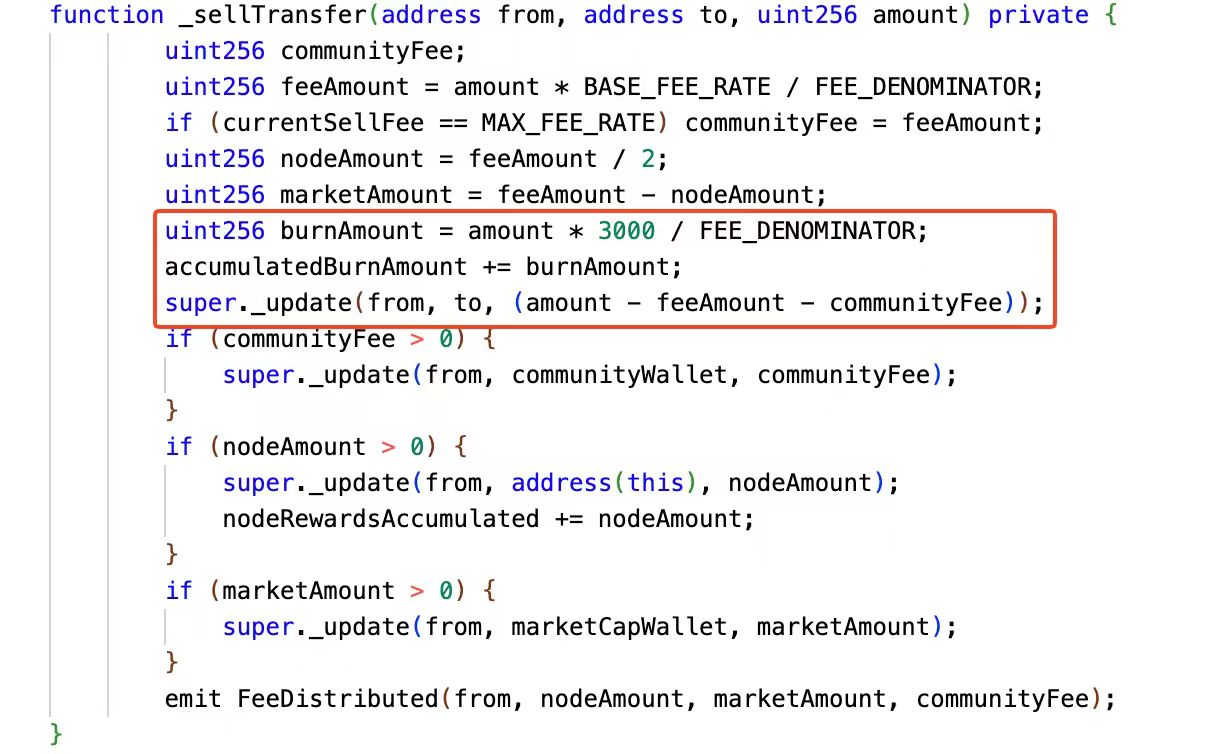 AIDC burn bug lets attacker drain 220.12 WBNB from PancakeSwap pair by abusing sync()2026-06
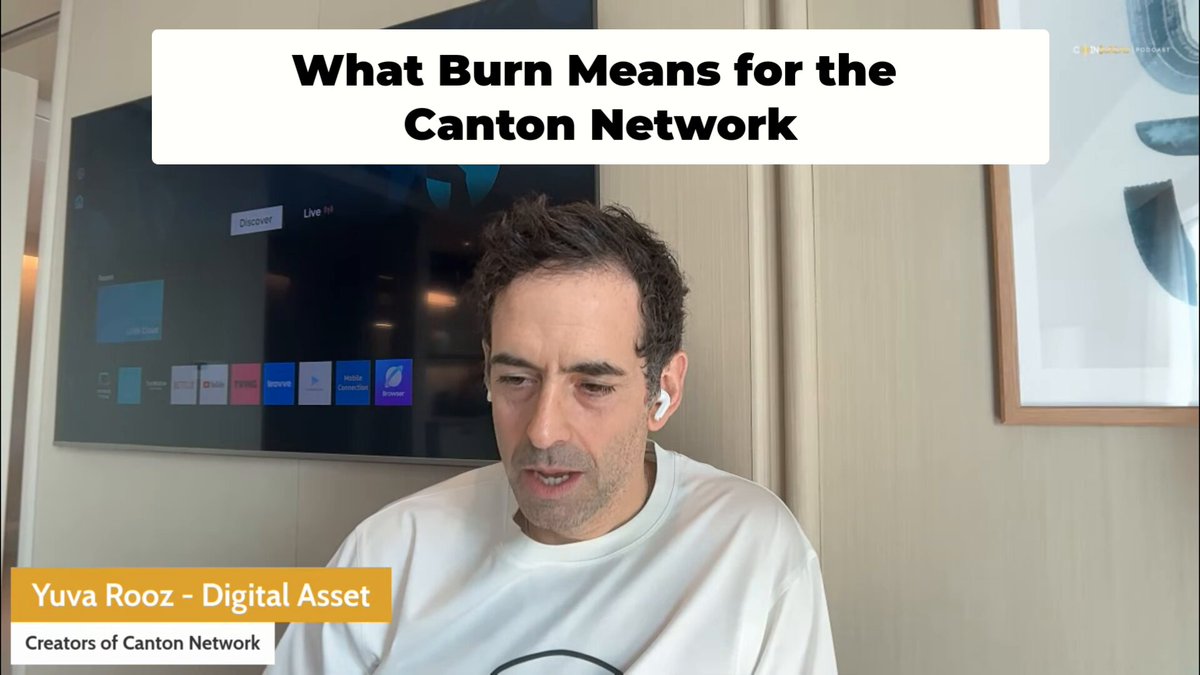 Canton burns nearly 9% of total supply in under two years as institutional transaction volume builds2026-06
 Three options for Kelp to socialize $292M exploit losses: burn bridged rsETH holders, haircut all holders, or pre-exploit snapshot2026-04
 Solv Protocol is shutting down burn-mint permissions for SolvBTC assets across major chains, urging users to redeem and withdraw underlying assets before June ends2026-05
In crypto, a burn is the permanent removal of coins or tokens from circulation, usually by sending them to an address that nobody can spend from, in order to change an asset’s supply and incentive structure. Burns sit at the intersection of tokenomics, revenue, governance, and narrative, and increasingly link onchain activity and protocol fees to value accrual for token holders.
What “burn” means in crypto
At its core, a token burn is a deliberate, irreversible destruction of digital units recorded on a blockchain. In technical terms, this usually means transferring tokens to a verifiably unspendable or “eater” address whose private key is unknown or provably non‑existent. Once the transaction is confirmed onchain, those tokens can never be moved again, so the asset’s total supply is permanently reduced. Because the ledger is public, anyone can verify that the burn occurred, how many units were destroyed, and when.
This basic operation shows up in many very different contexts. Some projects burn their own native tokens from treasury as a way to offset inflation or signal commitment to holders. Others design mechanisms where a portion of every transaction fee is automatically burned, tying network usage directly to ongoing supply reduction. Stablecoins such as USDC burn tokens when users redeem back into fiat, keeping circulating supply in line with the real dollars backing the asset. There are also consensus protocols, bridges, and synthetic assets that rely on mint‑and‑burn logic to track value across chains or reward miners.
From an economic perspective, burning is a deflationary mechanism that changes the supply side of the usual supply‑and‑demand equation. If demand for a token is steady or rising, reducing supply can put upward pressure on price; if demand is weak, burns may have little or no long‑term impact. This is why tokenomics discussions rarely stop at “is it deflationary?” and instead focus on what actually drives usage, fees, and cash‑flow into the burn mechanism. Modern designs increasingly attempt to link burns to real revenue, protocol adoption, or external events in ways that can be measured onchain.

Polygon burns 100M POL in a week with 37.6M transactions and $544K in fees
How burns work onchain
Although the economic story is intuitive, the implementation details matter for security and trust. The simplest pattern is a burn address, typically a standard blockchain address generated in such a way that it has no known private key and often includes a recognizable string like “0x0000…dead.” When tokens are sent to this address, the transaction looks like a normal transfer, but the destination is effectively a one‑way sink. Because blockchains provide a complete account of balances, anyone can confirm that the tokens remain stuck there forever.
Some chains or token standards instead implement explicit “burn” functions in their smart contracts. A contract might expose a burn(uint256 amount) method that reduces the caller’s balance and the total supply variable simultaneously, without sending tokens to a separate address. In both cases, the key properties are the same: the operation is irreversible, publicly auditable, and reflected in the asset’s total supply figure. For centralized issuers, such as stablecoin providers, the burn may also be mirrored in off‑chain accounting systems to keep the books aligned with onchain balances.
Stablecoins provide a good illustration of this dual accounting. For USDC, new tokens are minted when users deposit dollars with Circle, and tokens are burned when users redeem USDC back into fiat. When a redemption occurs, Circle removes the corresponding USDC from circulation, burning it onchain so that the circulating supply tracks the outstanding liabilities backed by cash and equivalents. In this case, burning is not primarily about price appreciation or deflationary tokenomics; it is a supply‑management tool used to maintain a tight peg and transparency around backing.
Cross‑chain systems rely on burn or lock operations in a different way. In many bridge designs, tokens on the source chain are locked or burned when a wrapped representation is minted on the destination chain, so that the total claims across both networks do not exceed the underlying collateral. When bridging is shut down, or when something goes wrong, protocols often fall back on controlled burns to reconcile supply. For example, after a cross‑chain liquid staking derivative like rsETH sunsets bridging on multiple networks, users who missed the final migration window may be asked to burn their rsETH on the source chain and pay a fixed fee on Ethereum; once the burn and fee are verified, the issuer remints rsETH back on the main chain and settles users periodically. Here, burning is part of a recovery and accounting process rather than an investor‑facing deflation play.
A related pattern appears in synthetic and bridged assets that use a burn‑and‑mint equilibrium. When an asset moves from chain A to chain B, the bridge may burn the representation on chain A and mint an equivalent amount on chain B, keeping the global supply constant even though each local chain sees supply change. Some networks now route all EVM‑style transactions through an internal synchronizer or settlement layer, which tracks these burns and mints to ensure that no value “leaks” off network even as activity spans multiple chains. In all these cases, the trustworthiness of burn events depends on onchain transparency and consistent supply reporting.
Readers click burn stories hardest when supply destruction is contested, reversed, or accidental — the Cronos un-burn proposal, Lybra DAO controversy, and Slerf accident drew more engagement than routine quarterly burns, revealing that readers treat burn decisions as trust signals about team intent, not just deflationary mechanics.
Burns within tokenomics and supply design
In crypto, tokenomics refers to the economic design of a token, including how and when tokens are created (minted), distributed, vested, and destroyed (burned). One of the central questions is whether a token is inflationary, deflationary, or something in between over time. A token is inflationary if the rate of minting exceeds the rate of burning, deflationary if burns consistently outpace issuance, and effectively neutral if the two are roughly in balance. Bitcoin’s fixed issuance schedule and hard cap at 21 million make it disinflationary and eventually non‑inflationary; by contrast, some tokens have open‑ended supply but impose annual issuance caps or rely on burns to restrain long‑term inflation.
Burns expand the design space in several directions. A project can implement scheduled burns from its treasury to offset ongoing emissions, such as staking rewards or ecosystem grants. It can deploy automatic fee burns that destroy a fraction of every transaction, staking reward, or protocol fee, tethering supply reduction directly to onchain activity. It can also use event‑driven burns, for example destroying a portion of a fan token treasury when a national team wins a match, as seen in soccer‑themed fan token ecosystems. Each of these choices reflects a different philosophy about who should benefit from protocol revenue and how strongly token holders’ interests should be tied to network usage.
Major networks illustrate these trade‑offs in practice. Binance Coin (BNB) launched with a total supply of 200 million tokens and a long‑term goal of reducing that number to under 100 million. To achieve this, Binance runs quarterly burns using a formula that takes into account the average market price of BNB and the number of blocks produced on BNB Chain during the period, an “auto‑burn” mechanism designed to be objective and predictable. As of April 2026, repeated burns had reduced BNB’s supply to roughly 134.8 million, with the most recent event destroying about 1.57 million BNB. This slow, formula‑driven reduction is a cornerstone of BNB’s tokenomics.
DeFi protocols experiment with more granular approaches. PancakeSwap tracks net minting of its CAKE token, aiming for negative net issuance by burning more CAKE than is minted through product fees and other mechanisms. Weekly summaries highlight metrics such as net CAKE minted, total product burns, and contributions from different product lines, signaling that token emissions are being offset by burns linked to actual protocol usage. The end result is a token whose supply path is tied to the health of the underlying trading, prediction, and derivatives products rather than purely discretionary team decisions.
Osmosis, a Cosmos‑based DEX, similarly emphasizes ongoing burns as part of a deflationary narrative. The protocol has highlighted milestones like having more than 22 million OSMO burned and permanently removed from circulation, describing the asset as deflationary as a result. Here, fee‑funded burns work alongside other tokenomics changes—such as reductions in inflationary issuance—to reshape the long‑term supply curve. The key point for users is that burn mechanics need to be understood in context: a burn only matters in relation to new issuance and the demand that might support the token at a different supply level.
More complex designs explicitly bake in a supply ceiling that is approached from above in real time. For instance, Astar’s “Tokenomics 3.0” introduced a model in which ASTR’s supply tends toward a fixed ceiling on every block as new issuance is offset by fee burns on transactions. In such models, each block contains both a small amount of new issuance and an automatic burn of accumulated fees, with the net effect being that the supply asymptotically approaches but does not exceed the preset ceiling. This framework can reassure holders that dilution is bounded while still leaving room for network incentives.
- 01Buyback-and-burn protocol mechanics↗
Uniswap fee switch, BNB quarterly burns, QuickSwap, and the Inferno privacy-burn concept all drew clicks because readers track how protocols redirect revenue into supply destruction as a value-accrual signal.
- 02Contested and reversed burns↗
The Cronos proposal to undo a 2021 70B CRO burn and the Lybra DAO 'malicious intent' allegation drew strong engagement because reversals reframe burns as revocable team decisions rather than permanent supply commitments.
- 03ETH burn rate and EIP-1559 trajectory↗
Readers tracked Ethereum's cumulative $12.7B burn and its drop to historic lows as a real-time gauge of network demand and deflationary pressure on ETH supply.
- 04Ve-tokenomics versus buy-and-burn debate↗
Research comparing ve-tokenomics to buy-and-burn and the veCRV article both clicked because readers are weighing which model produces sustainable protocol value rather than short-term price pops.
- 05Viral and stunt burns
The accidental Slerf $10M burn, the 500 ETH protest transaction, and the artist minting ERC20s for burned legal tender all clustered around burns used as spectacle or statement rather than tokenomics.
- 06Proof-of-burn as utility primitive↗
BETH tokenized burn receipts and the WORM privacy-exit concept attracted clicks by framing burn not as destruction but as a verifiable on-chain input — for institutions or whale privacy.
Major burn models in modern protocols
Although burn events all reduce supply, the mechanisms and incentives differ substantially. It is useful to distinguish between simple treasury burns, buyback‑and‑burn programs funded by revenue, automatic fee burns at the protocol layer, elastic mint‑and‑burn systems, and more specialized constructions like proof‑of‑burn consensus.
Treasury burns and launch‑stage supply cleanup
The most straightforward burn is a one‑time or periodic destruction of tokens held in a project’s own treasury. This often happens around a token launch, where unsold allocation from a sale, airdrop, or community pool is burned to prevent future dilution. From a mechanics standpoint, the project’s multisig or foundation wallet sends a known quantity of tokens to a burn address, and the transaction is widely publicized so that markets can update their expectations.
Treasury burns can also be linked to exogenous events as part of a gamified tokenomics design. Fan tokens issued on sports‑focused platforms such as Chiliz increasingly embed onchain mint‑and‑burn logic tied to match results. In one model, tokens are burned when a team wins and newly minted when the team loses, with draws leaving supply unchanged, so that a team’s on‑field performance directly shapes the available supply of its token. During international tournaments, some national team fan tokens implement a “burn to glory” mechanic in which each win triggers a pre‑defined burn of treasury tokens, with the percentage rising as the team advances; a group stage win might burn 1% of the treasury, while a championship victory can burn up to 10%. This transforms sports outcomes into onchain scarcity events, with every win recorded not only in the standings but also in token supply.
These designs highlight an important feature of burns: they are programmable. Smart contracts can encode rules like “if win, burn 1% of treasury; if loss, mint X new tokens to treasury,” with the contract triggered by an oracle supplying match results. Over time, this can shift a token from a static supply curve to a dynamic one, reinforcing fan engagement while maintaining guardrails such as minimum supply thresholds and vesting caps. Yet the economic substance remains a redistribution of scarcity; on their own, such burns do not guarantee growing demand or long‑term value.
Buyback‑and‑burn funded by revenue
A more financially oriented model is buyback‑and‑burn, which mirrors corporate share buybacks in traditional markets. In this approach, the protocol uses a portion of its revenue or fee income to purchase its own tokens on the open market and then destroys them. The process typically unfolds in two stages: tokens are bought back from circulating supply using revenue denominated in another asset (such as ETH or stablecoins), and then the acquired tokens are sent to a burn address or burned via a smart contract call. This reduces both total and circulating supply, concentrating ownership among remaining holders and potentially supporting price if market demand remains robust.
Protocols implement this in increasingly automated ways. ASTER, for example, has introduced a tokenomics update under which 99% of daily platform fees are directed into direct market purchases of its ASTER token, with each buyback matched by an equivalent burn from reserve holdings. The project aims to contract total supply from 8 billion to 3 billion tokens over time, with burns executed on a regular bi‑weekly cadence. Because the mechanism is tied to real fee revenue, and because both buybacks and burns occur onchain, observers can verify that supply contraction is funded by actual protocol usage rather than arbitrary treasury spending.
Centralized and hybrid platforms also rely on buyback‑and‑burn. Binance explicitly uses a portion of the revenue generated by its centralized exchange and other products to fund quarterly BNB burns, on top of the auto‑burn formula. The result is a combination of formulaic and revenue‑linked destruction that has cut BNB’s supply substantially since launch. In the DeFi realm, Uniswap’s long‑debated “fee switch” was eventually activated to redirect a portion of protocol fees into UNI supply reduction, converting UNI from a pure governance token into one with direct value accrual via burns. Early data suggests that post‑activation burns ran at an annualized pace of roughly 4–5 million UNI per year, on top of an earlier 100 million UNI burn, amounting to around 10% of the original 1 billion UNI supply destroyed over time.
Buyback‑and‑burn mechanisms have clear investor appeal because they resemble dividends paid in the form of reduced dilution. However, they also pose design challenges. Over‑allocating revenue to buybacks can starve a protocol of funds for development, security, or incentives. If buybacks are discretionary and opaque, teams can time them to manipulate price or create misleading scarcity signals. To mitigate this, more projects are codifying buyback percentages, schedules, and data disclosures in governance‑approved frameworks and timelocked contracts, as seen in referenda around protocol fee switches and burn parameters.
Fee burns at the protocol layer
The next family of mechanisms sits at the core of the protocol itself: every transaction pays a fee, and a deterministic portion of that fee is burned. Ethereum’s EIP‑1559, activated in 2021, pioneered this model at scale. Under EIP‑1559, each block includes a dynamically adjusted base fee that must be paid by all transactions and is burned, plus an optional priority fee (tip) that goes to the block producer. The base fee adjusts up or down depending on how full recent blocks have been, functioning as a posted price for block space rather than a pure auction. Burning the base fee means that heavy network usage can offset or even exceed ETH’s issuance to validators, leading to periods of net ETH deflation.
Some newer chains have pushed this logic further. CROSS, for example, has highlighted a configuration where 100% of base transaction fees are burned and there is zero new issuance, implying that staking rewards must come from somewhere other than inflation. In such a system, staking APR might be funded by explicit budgeted emissions from a finite reserve or by protocol revenue in other assets, rather than by perpetual token inflation. Other chains like Osmosis and ecosystem platforms such as PancakeSwap similarly burn a share of trading or swap fees to keep supply in check while still paying out staking or liquidity incentives from separate pools.
BNB Chain blends protocol fees with the auto‑burn system described earlier. The BNB auto‑burn formula takes into account the number of blocks produced during a quarter—a proxy for network activity—and the average BNB price, adjusting the burn amount accordingly. On top of that, a real‑time burn mechanism destroys a portion of gas fees paid on BNB Chain, tying immediate usage to supply reduction each block. Together, these mechanisms have cut BNB’s supply from 200 million at launch to about 134.8 million as of April 2026, with a long‑term target below 100 million.
For DeFi protocols, fee burns often coexist with other fee recipients. Uniswap’s fee switch directs a portion of protocol fees away from liquidity providers and toward UNI supply reduction, while leaving the rest untouched. Other platforms route slices of fees to treasuries, insurance funds, or ecosystem grants, with the remainder burned. The balance between these allocations is both an economic and a governance question, since each percentage point represents a trade‑off between immediate payouts, long‑term sustainability, and deflationary pressure.
Elastic and event‑driven mint‑and‑burn systems
Not all burn mechanisms are one‑way. Some tokens operate under elastic supply regimes where the supply can increase or decrease based on external conditions, with mint and burn events offsetting each other over time. Sports fan tokens on Chiliz provide an illustrative example. Under its “Fan Token Play” framework, certain tokens see their supply adjusted after each match: a win triggers a burn of tokens, a loss triggers minting, and a draw leaves supply unchanged. The magnitude of each adjustment is determined algorithmically, with the total supply constrained by parameters such as a minimum threshold and treasury safeguards.
The mint‑and‑burn logic in these systems is often coupled with prediction markets and onchain games. Before each match, a portion of the team’s fan tokens might be pre‑liquidated and the proceeds used to take positions on external prediction markets; if the team wins, the winnings are used to buy back and burn tokens, while if the team loses, an equivalent amount is minted back to the treasury. Over a full season, this creates a dynamic where real‑world performance, market odds, and onchain trading all feed into the evolution of token supply.
Stablecoins also rely on mint‑and‑burn, though with a different goal. Fiat‑backed stablecoins like USDC are minted when users deposit dollars and burned on redemption, keeping circulating supply broadly in line with reserves. Algorithmic stablecoins have experimented with burning volatile collateral tokens to defend a peg, but many of these designs have failed under stress. The key distinction is that in most robust systems, mint‑and‑burn pairs are tightly controlled and fully collateralized, whereas more experimental algorithms can over‑rely on expectations of future demand.
Proof‑of‑burn and other niche uses
Beyond tokenomics, burn operations can be embedded in consensus and mining mechanisms. Proof‑of‑Burn (PoB) is a consensus scheme where miners or validators destroy coins to gain the right to produce new blocks. In a PoB chain, participants send tokens to an eater address, and their probability of being chosen to mine the next block is proportional to the amount they have burned. This burn acts as a kind of virtual hash power: the more coins a participant commits and destroys, the more “mining power” they are considered to have, and the more rewards they can earn.
PoB is often framed as an energy‑efficient alternative to Proof‑of‑Work because it replaces physical resource expenditure with capital sacrifice. However, it has seen limited adoption compared to Proof‑of‑Work and Proof‑of‑Stake. Some projects borrow PoB‑like mechanics for token launches, allowing users to burn an existing asset to receive a new one in a fair distribution. In such cases, the burn both reduces the supply of the old token and bootstraps the new ecosystem, at the cost of requiring participants to permanently part with value.
In bridge security and hack remediation, burns can be used to neutralize compromised or excess tokens. After bridge exploits, projects sometimes negotiate the return of stolen tokens and immediately burn them, preventing the attacker—or anyone else—from spending those units and helping to realign onchain supply with backed reserves. In other cases, as mentioned earlier, users who missed migration deadlines may be able to recover value by burning their stranded wrapped tokens on a source chain and having the issuer honor those burns by reminting on the main chain, often with a fee and a delay. These operations underscore that burning is not just a speculative tool but a core primitive for repairing and maintaining complex multi‑chain systems.

Stealf launches privacy layer mainnet on Solana, burns 1% of total supply

Why protocols burn: incentives, governance, and narrative
From a project’s perspective, choosing to burn—or not burn—tokens is ultimately an exercise in incentive design. One motivation is to align token holders with protocol usage. When a protocol routes a share of its fees into buyback‑and‑burn, token holders effectively receive a pro‑rata claim on future fee streams, similar to how equity holders benefit from buybacks funded by profits. This can make governance tokens feel more like productive assets, especially when burns are clearly tied to revenues rather than just treasury reshuffling.
Uniswap’s shift from a pure governance token to one with supply burns funded by protocol fees illustrates this evolution. Before the fee switch, UNI holders mainly influenced parameters and upgrades but had no direct economic claim on the protocol’s success. After the governance decision to activate the fee switch, a portion of swap fees began to flow into UNI destruction, so that higher trading volume translates into faster supply reduction. Similarly, LayerZero has put to vote a fee switch referendum where ZRO holders decide whether to activate a protocol fee, with the proposal specifying that if activated, those fees would be used for buyback‑and‑burn of ZRO. In both cases, burn decisions are not just tokenomics tweaks but fundamental choices about how value accrues and who controls that flow.
Other protocols explicitly brand themselves around their burn mechanics. Vulcan’s Elysium ecosystem, for example, emphasizes that every transaction and in‑game activity routes value into PYR burns, with an onchain “Incinerator” interface allowing users to watch PYR being bought and burned in real time as usage flows through the system. This kind of UX makes the usually abstract concept of deflation tangible, allowing users to see each burn and its effect on supply. Likewise, PancakeSwap’s regular “CAKE stats” updates, showing net mint and total product burns across AMMs, prediction markets, and perpetuals, turn burn data into a recurring narrative around platform health and capital efficiency.
Fan token ecosystems push this further by turning burns into spectacles tied to match results. Announcements of upcoming “burn to glory” events—where a win by a national team like Argentina or Scotland locks in a fixed percentage burn of the fan token treasury—create short‑term anticipation and a sense that on‑field performance has a direct onchain consequence. When the team wins, posts highlight the exact number of tokens burned and the new total supply, reinforcing the link between sporting glory and token scarcity. While this may or may not drive long‑term demand, it demonstrates how burn mechanics can be woven into storytelling and fandom.
Burns also intersect with launch strategies and post‑incident governance. After security breaches or hacks, some protocols commit to using a portion of future revenue to buy back and burn tokens as a way to compensate holders and signal long‑term confidence. Others, like GUA in the wake of a hack, may introduce a formal buyback‑and‑burn of a fixed percentage of supply, both to address perceived excess circulation and to reset tokenomics under community scrutiny. Because these moves are costly in terms of treasury and future flexibility, they are often debated and ratified through onchain governance, making the burn itself a political decision.
Finally, burns tie into the broader conversation about real yield and onchain revenue. As tokenization brings more capital onchain, protocols that generate sustainable income—from trading fees, credit spreads, or financial services—face a choice about how to distribute that value. Some pay it out directly in stablecoins or ETH; others cap treasury yields and route excess into supply‑reducing burns. The promise is that burns funded by genuine onchain cash flow can support price in a more durable way than inflationary rewards, though this still depends on user demand, competitive dynamics, and market cycles.
Ethereum London Hard Fork activates EIP-1559 base-fee burn
- 2021-11milestone
Crypto.com burns ~70 billion CRO tokens, reducing supply
- 2024-03milestone
Slerf memecoin presale tokens accidentally burned, $10M destroyed
- 2025-04governance
MANTRA announces 150M OM token burn post-unstaking period
- 2025-04governance
Cronos proposes minting 70B CRO to undo 2021 supply burn
- 2025-10milestone
Sonic sets October 15 final claim deadline; 32.7M unclaimed S tokens burned
Risks, limitations, and common misunderstandings
Despite their popularity, burns are not a magic value machine. Basic economics implies that reducing supply can support price only if demand is stable or growing; if demand falls, burning tokens merely slows the decline. In fact, aggressive burns without corresponding increases in utility can create a token cost illusion, where the unit price looks stronger while the fundamental cash flows or usage do not justify it. This is why sophisticated tokenomics analysis considers metrics like revenue per token, protocol fees, and user growth alongside burn rates.
One key limitation is that burns do not improve a project’s fundamentals on their own. As tokenomics researchers often note, buyback‑and‑burn does not generate innovation, adoption, or new use cases; it only changes ownership percentages and supply. If a protocol lacks compelling products, network effects, or a clear revenue model, burns may create a temporary spike in price but are unlikely to sustain value long‑term. Overemphasis on deflation can also constrain a protocol’s ability to incentivize new users or contributors, especially if treasury resources are continually sacrificed to burn events.
Transparency and trust are crucial. Because teams often control large treasuries and have discretion over when and how to burn, there is scope for opportunistic timing aimed at price manipulation. For example, a project could repurchase tokens at moments of low liquidity to engineer short‑term squeezes, or announce large future burns to pump expectations without a credible plan to fund them. To mitigate this, robust designs specify burn rules in smart contracts, publish clear schedules, and provide onchain data about fee flows, buybacks, and treasury balances.
Burns also interact with market liquidity in nuanced ways. A significant reduction in circulating supply can reduce depth on order books and DeFi pools, amplifying volatility for both upside and downside moves. This can deter institutional or conservative users who prioritize liquidity and price stability, particularly in tokens meant to serve as collateral or medium of exchange. In extreme cases, shrinking liquidity can trigger reflexive dynamics where each new burn announcement attracts speculators who then find it difficult to exit in size.
Another class of risks arises in bridged and wrapped assets. If burns on a destination chain are not properly coordinated with mints and burns on the source chain, assets can become under‑ or over‑collateralized. Bridge hacks often exploit flaws in this accounting, resulting in unbacked wrapped tokens or stranded collateral. When bridges are shut down, protocols may resort to manual burn‑and‑refund procedures, where users burn wrapped tokens and then rely on the issuer to remit equivalents on the main chain after off‑chain verification and delays. While this can restore balance, it introduces operational and trust dependencies that do not exist in simpler single‑chain tokens.
Stablecoin burns can also be misinterpreted. Large USDC burns are usually the result of big redemptions, meaning that capital is leaving the crypto ecosystem and returning to bank accounts, not that value is somehow being created. While these burns do reduce supply and might theoretically make remaining units more scarce, they signal a reduction in onchain demand for the asset. For traders, the key is to read such events as indicators of flows and sentiment rather than as inherently bullish or bearish on their own.
Finally, PoB and burn‑based launches pose their own challenges. Requiring users to burn valuable assets to receive a new token can create a high barrier to entry and concentrate participation among large holders willing to take that risk. If the new chain or application fails to gain traction, participants are left with no recourse, having permanently destroyed their original holdings. As with any experimental consensus or distribution mechanism, careful analysis of incentives, security assumptions, and alternative uses of capital is essential.
Burn addresses are simple but fee-switch and buyback routing contracts introduce composable attack surface; a misconfigured burn route can permanently destroy treasury funds with no recovery path.
Most project burns remain foundation- or team-controlled decisions, as shown by unilateral proposals from Cronos, MANTRA, Astar, and BNX — a single insider can propose reversals or manipulate burn timing to move price.
Scheduled buyback-and-burn programs that correlate with price appreciation may draw market-manipulation scrutiny from regulators, particularly where the burning entity holds significant supply.
Aggressive burn schedules reduce circulating supply and can amplify price volatility in both directions; the Slerf accidental burn produced a $479M valuation spike from a thin-float illusion.
ETH's burn rate is mechanically tied to gas demand, meaning deflationary pressure evaporates during low-activity periods — Ethereum's burn fell to historic lows as active addresses declined, turning a deflationary asset inflationary again.
DAO-controlled burn proposals (RSR, Uniswap fee switch, Lybra token burn) create governance capture risk where a motivated bloc can redirect or block supply destruction to benefit their own position.
How to read burn announcements and onchain data
For a crypto‑savvy audience, burn announcements and dashboards are now part of the daily information flow. Making sense of them requires a few basic frameworks. The first is to distinguish between gross and net supply changes. If a token mints 10 million units per year and burns 5 million, the net inflation is still positive at 5 million, even though the project can claim “we burned 5 million tokens.” Conversely, if burns exceed new issuance, the token is net deflationary; PancakeSwap’s net CAKE mint figures periodically go negative when product burns outweigh emissions, indicating supply contraction.
A simple way to formalize this is to think of net annual supply change \( \Delta S \) as \( \Delta S = M - B \), where \( M \) is total minted tokens in a period and \( B \) is total burned. A negative \( \Delta S \) means the asset is deflationary over that period, while a positive \( \Delta S \) means it is inflationary. Investors should also consider where burns are coming from: a burn funded by organic revenue or protocol fees is different from a one‑off treasury burn with no connection to usage. The former suggests a sustainable deflation mechanism tied to actual cash flow, while the latter may be more cosmetic.
Onchain data can help verify claims. For Ethereum‑based tokens, explorers show token transfers to burn addresses, total supply over time, and often labels for known treasury wallets. Projects like Binance and PancakeSwap publish detailed burn reports that can be cross‑checked against onchain transactions. DeFi analytics dashboards increasingly expose metrics such as cumulative fee burns, fee‑to‑burn ratios, and realized deflation rates for tokens like ETH, BNB, UNI, and others. When a protocol claims to be “deflationary,” it is worth checking whether the cumulative burns actually outweigh new issuance over relevant timeframes.
Governance context also matters. The activation of a fee switch or burn mechanism via token holder vote, as with Uniswap’s UNI and LayerZero’s proposed ZRO fee switch, can signal a new era of value accrual and a shift in power dynamics between users, liquidity providers, and token holders. However, these decisions can be revisited in future votes, and the specific parameters (fee percentages, distribution splits, burn shares) often evolve over time. Reading the underlying governance proposals, not just the headline “burn activated,” is essential.
For bridge‑related burns, users should pay close attention to instructions and deadlines. When a protocol sunsets bridging on multiple networks and asks users to burn wrapped assets on the source chain, pay a fixed fee on the main chain, and then wait for quarterly settlements, as in the rsETH recovery process, the burn itself is only one step in a larger off‑chain workflow. Users must ensure they follow all steps, keep transaction records, and understand the issuer’s commitments and timelines. Mistakes can result in unrecoverable losses, since burns are irreversible.
Finally, narrative framing around burns should be contextualized. Sports‑linked “burn to glory” campaigns, real‑time incinerator dashboards, and celebratory posts about milestone burns can be engaging and informative. But the deeper questions remain: what drives demand for this token, how sustainable is the revenue feeding the burns, what is the governance structure around these mechanisms, and how does the token compete in its category? Burns are one variable in a much broader equation.
To synthesize some of these considerations, it can be helpful to compare common burn models:
| Burn model | Funding source | Primary goal | Key risks |
|---|---|---|---|
| Treasury burn | Existing token treasury | Reduce dilution, signal commitment | Cosmetic if not tied to usage |
| Buyback‑and‑burn | Protocol revenue, fees | Value accrual, link usage to holders | Over‑spending, manipulation, opacity |
| Protocol fee burn (base fee) | Transaction fees | Offset issuance, tighten supply | Impacts user costs, validator economics |
| Elastic mint‑and‑burn | Events, oracles, algorithms | Gamification, dynamic supply | Oracle risk, complexity, unclear value |
| Proof‑of‑Burn consensus | Burned capital | Secure chain, fair distribution | Capital inefficiency, adoption uncertainty |
This table is not exhaustive but illustrates that “burn” is not a single strategy; it is a toolkit whose effects depend on context.
Outlook
Burn mechanisms have evolved from occasional marketing events into core components of many protocols’ economic architecture. As more value moves onchain and tokenization expands into traditional assets, we should expect fee‑funded burns, revenue‑linked buyback‑and‑burn programs, and elastic supply models to proliferate. Governance will play a central role, as token holders decide how much of protocol revenue to allocate to burns versus development, security, and direct rewards.
At the same time, the industry is likely to become more skeptical of burn headlines that are not backed by transparent data and real cash flows. Tools for tracking net issuance, fee burns, and onchain revenue are improving, making it easier to separate superficial deflation narratives from genuinely sustainable value accrual. For builders, the challenge is to design burn mechanisms that enhance, rather than substitute for, product‑market fit. For users and investors, the task is to read burns not as automatic “number‑go‑up” triggers but as one signal among many about how a protocol manages its economics, aligns incentives, and shares the upside of onchain activity.
Latest Burn news
Sources
19 records from 13 domains
homaio.com
tokenomics-learning.com
dl.acm.org
bitstamp.net
chiliz.com
coinbase.com
binance.com
hackenproof.com
x.com
layerzero.foundation
bitget.com
talos.com
artefact.com
Community notes
Spot something off or out of date? Drop a note. Editors review topic notes daily and roll accepted fixes into the explainer — contributors are recognized in the monthly $SQUID drop.
Loading notes…
Help improve this topic
Have a story or tip about this topic? Submit it. See something missing? Leave a note. Editors review daily; accepted submissions and fixes count toward the monthly $SQUID drop.