
In‑depth guide to how Telegram became crypto’s core messaging hub, covering TON/Gram integration, bots and mini apps, trading communities, scams, regulation and best practices for users and builders in Web3.
+14 sources across the wider coverage universe
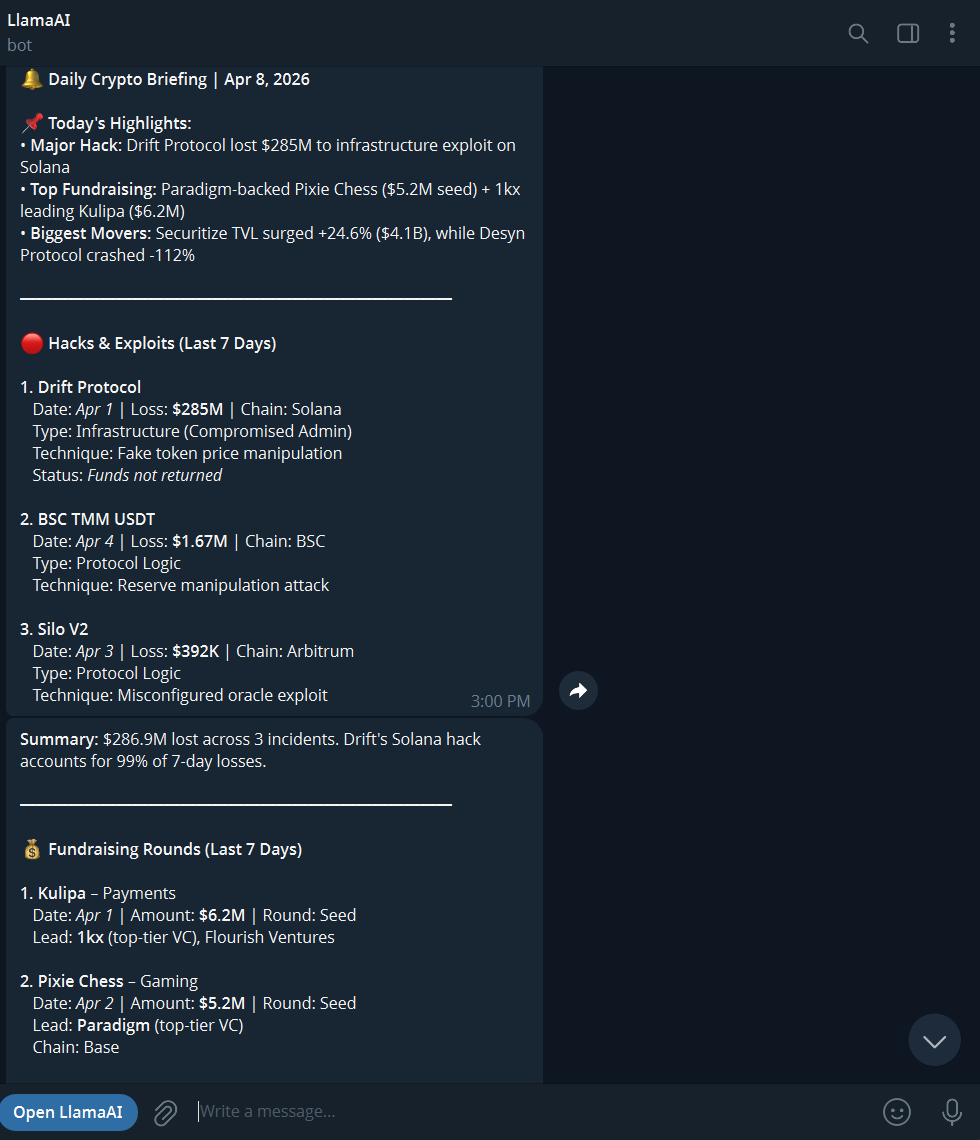 DefiLlama integrates LlamaAI alerts into Telegram, enabling customizable daily notifications for onchain trends and DeFi news2026-04
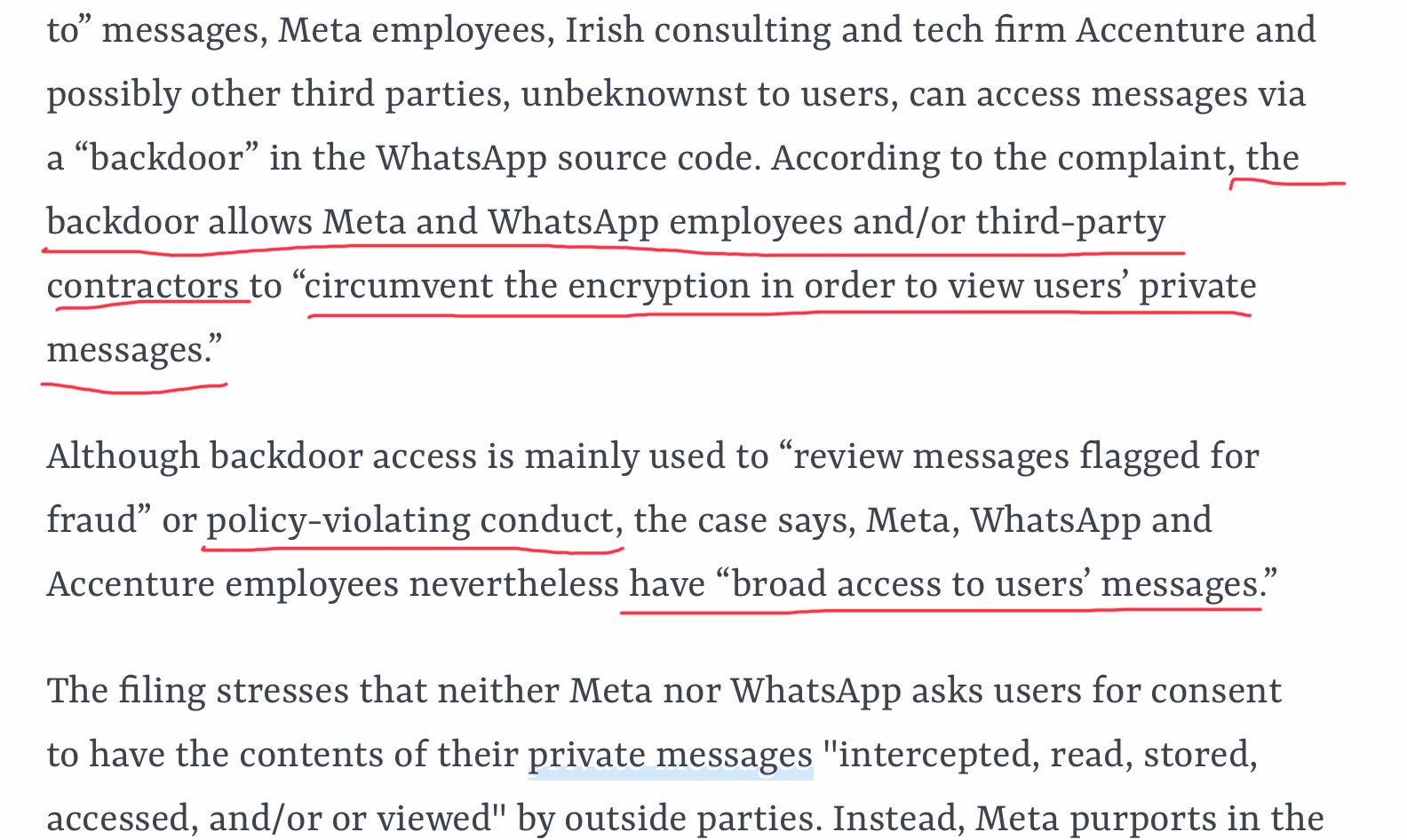 Telegram CEO Pavel Durov claims WhatsApp’s encryption is deceptive, alleging the platform reads user messages and shares data externally, calling it a major consumer fraud while positioning Telegram as a secure alternative2026-04
 Telegram rolls out 2-tap agentic bot creation, enabling users to deploy autonomous bots instantly as platform pushes developers to integrate new bot features2026-04
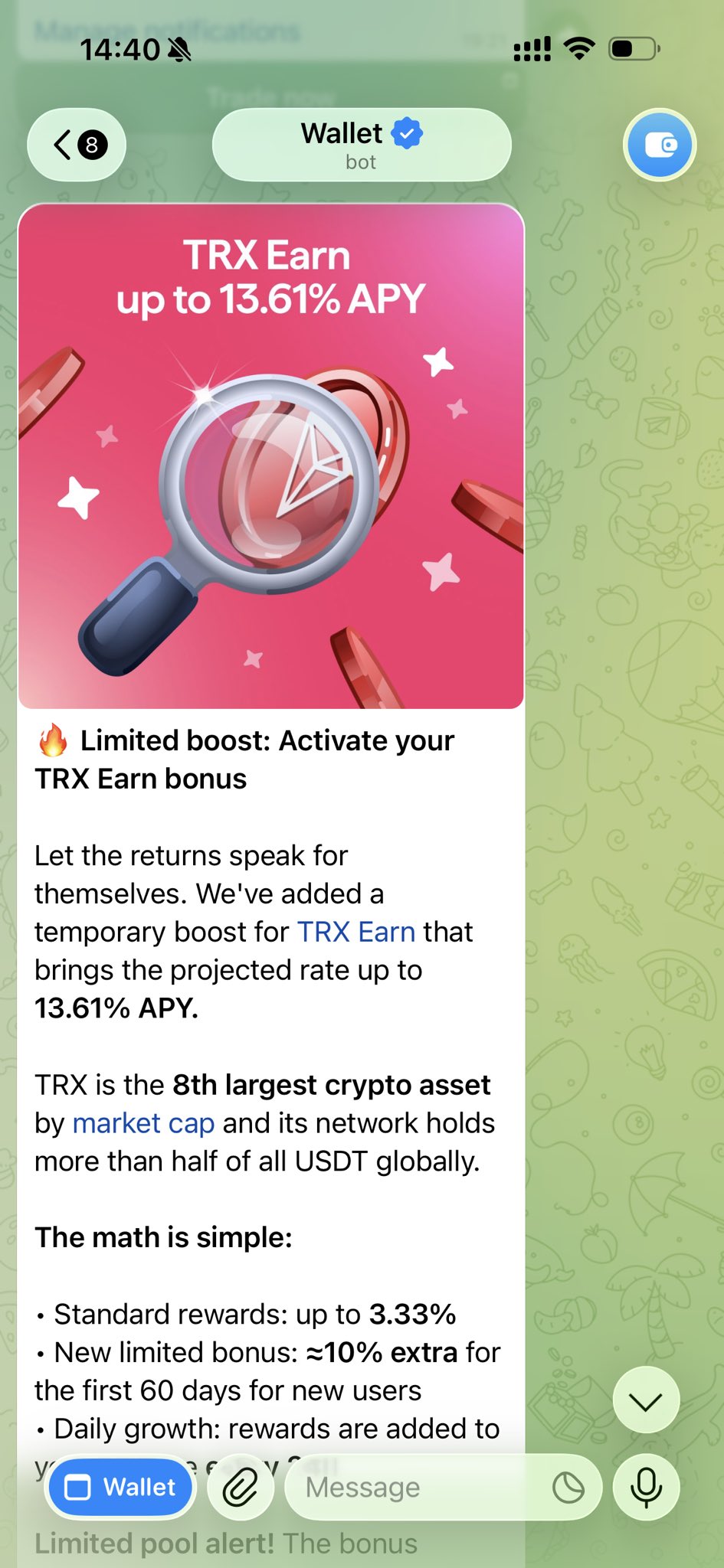 TRON’s Justin Sun launches TRX Earn on Telegram with boosted yields up to 13.61% APY, combining base rewards and a limited 60-day bonus for new users2026-04
 SlowMist uncovers macOS malware that steals Telegram sessions and swaps Ledger, Trezor apps for phishing loaders2026-07
 Australia's eSafety regulator sues Telegram, seeking A$54.6M over alleged failures to remove pro-terror content flagged by users under the Online Safety Act2026-07
Telegram, TON and Crypto: An Evergreen Guide to Web3’s Favorite Messaging App
A cloud‑based messaging platform with hundreds of millions of users, Telegram has evolved from a privacy‑focused chat app into crypto’s default coordination layer for trading, airdrops, SocialFi, gaming and on‑chain identity. At the same time, its deep integration with The Open Network (TON), the rebranded Gram token, and a fast‑growing ecosystem of bots and mini apps is turning Telegram into a full Web3 operating system embedded directly inside chat.
Overview: Why Telegram Matters So Much In Crypto
For most crypto participants, Telegram sits alongside X (Twitter) as a primary source of market information, community interaction and early access to new projects. Crypto traders join exchange communities, NFT holders coordinate via token‑gated groups, and DeFi protocols run AMAs, trading contests and governance communications in public channels that can reach hundreds of thousands of subscribers. The result is that much of Web3’s “social layer” has consolidated inside Telegram’s interface, even when the actual transactions settle on blockchains elsewhere.
Telegram’s core architecture helps explain this role. The app is a cloud‑based instant messenger with multi‑device support, large group chats, and broadcast‑style channels, combined with optional end‑to‑end encryption for voice and video calls and for “secret chats” on mobile devices. Its open and well‑documented bot API allows developers to build automated agents that can respond to user commands, query external APIs, or interact with smart contracts, all from within a chat thread. This combination of scale, programmability and mobile‑first design makes Telegram uniquely suited as a front end for crypto activity.
Over the past several years, Telegram’s relationship with The Open Network (TON) has deepened that connection. Originally conceived inside Telegram and later spun out after regulatory pushback, TON now operates as a separate, community‑run blockchain that nonetheless remains tightly associated with the Telegram brand. The network’s native token, historically known as Toncoin, is being rebranded back to Gram, reviving the original name from Telegram’s 2018 white paper and cementing the idea of a “Telegram‑native” currency identity. In parallel, Telegram has rolled out Wallet in Telegram and its self‑custodial DeFi Account on TON, as well as mini apps and games like Notcoin and Hamster Kombat that onboard millions of users into Web3 without leaving chat.
As exchanges and protocols increasingly embed trading tools and support desks into Telegram, and as AI agents begin to read, summarize and act on messages in real time, the platform is becoming more than a communications tool. It is turning into a user interface layer for the crypto economy, with its own risks, regulations and design patterns. For a crypto‑native audience, understanding Telegram today means understanding the infrastructure on which large parts of Web3 culture and coordination actually run.

Hunch launches unified prediction market trading on Telegram, allowing users to search markets, access multiple venues and trade from a single balance
From Private Messenger To Crypto Hub
Origins, Architecture and Core Features
Telegram was created by brothers Nikolai and Pavel Durov, who previously founded the Russian social network VKontakte, with the explicit goal of building a fast, secure and independent messaging platform. Launched in 2013, the service differentiated itself through speed, cross‑platform support and a strong privacy narrative, promising that it would never sell user data or display traditional advertising. Telegram employs a proprietary encryption protocol and a distributed server infrastructure designed to keep data outside the direct reach of any single government, although its exact technical choices have sometimes sparked debate among cryptographers.
From an end‑user perspective, Telegram’s feature set is richer and more flexible than many competing messaging apps. Users can create one‑on‑one chats, private or public groups, and broadcast channels where only administrators post but anyone can subscribe. File sharing supports large attachments, including videos and archives that can be several gigabytes in size, and the app runs on mobile, desktop and web clients that stay in sync via Telegram’s cloud. Voice and video calls, along with secret chats between two mobile devices, are end‑to‑end encrypted, while regular cloud chats trade some privacy for convenience and multi‑device continuity.
Critically for crypto, Telegram built openness into its architecture from early on. The company provides a comprehensive Bot API that allows developers to create automated accounts capable of sending and receiving messages, handling inline commands, and delivering interactive experiences with buttons and web views embedded directly in chat. This makes it straightforward to build price‑alert bots, portfolio trackers, NFT marketplaces or governance assistants that feel native to the messaging experience. Combined with username‑based identity and the absence of a real‑name requirement, this has helped Telegram become a natural home for pseudonymous crypto communities.
As the platform matured, new devices joined the ecosystem. Telegram’s founder Pavel Durov recently announced a fully native Telegram app for Apple Watch, bringing back dedicated watchOS support after a multi‑year absence and further extending the app’s reach into everyday contexts. For crypto users, this kind of pervasiveness means market alerts, governance votes or security notifications can reach them literally on their wrists, reinforcing Telegram’s role as real‑time infrastructure.
Why Crypto Migrated To Telegram
The migration of crypto discussion from IRC, Reddit and later Discord into Telegram was driven by a mix of usability and network effects. Commentators now routinely describe Telegram as the “go‑to hangout spot for the crypto community” after X, emphasizing that almost every major project and trading group maintains a presence there. One reason is that Telegram combines the immediacy of mobile chat with broadcast tools: a protocol can operate a read‑only announcement channel for critical updates and a separate discussion group where community members interact, all tied to the same brand.
For traders, Telegram’s speed and portability matter. Push notifications can alert users to liquidation risks, governance deadlines or airdrop snapshots without requiring them to keep a browser open. Exchanges and DeFi platforms increasingly run structured campaigns through Telegram, from trading competitions to weekly quizzes and AMAs that award small amounts of USDT or futures credits to keep users engaged. The effect is to turn Telegram groups into always‑on marketing and support channels that blend community building with direct response campaigns.
NFT projects and SocialFi brands have also embraced Telegram as a place to extend their identity. Collections such as Pudgy Penguins, for example, have built out ecosystems of official channels, collectible stickers and branded bots, treating Telegram as a core touchpoint for their IP rather than a secondary support forum. This pattern is mirrored by emerging SocialFi games and storytelling projects, which use Telegram minigames and bots to onboard users into broader ecosystems spanning dApps, webcomics and token economies.
The tone and tempo of Telegram also align with crypto’s speculative culture. Groups dedicated to “alpha” sharing, on‑chain surveillance, options strategy or meme‑coin hunting thrive in an environment where messages can be forwarded instantly, cross‑posted between channels and annotated with inline bots that show token prices or contract risk scores. While this dynamic can amplify rumor and herd behavior, it also makes Telegram a powerful distribution network for genuine research and real‑time alerts.
Readers click Telegram crypto stories not for the technology but for the collision of scale and impunity — 100-million-user games, automated bot exploits, and a CEO arrest all expose the same tension: Telegram's refusal to moderate is simultaneously its crypto growth engine and its existential liability.
TON, Gram and Telegram‑Native Web3
The Open Network And The Gram Rebrand
The Open Network, or TON, is a high‑throughput, sharded blockchain originally designed by Telegram to handle payments, smart contracts and decentralized applications at the scale of a global messaging platform. Although regulatory pressure from the U.S. Securities and Exchange Commission forced Telegram to formally abandon its role in TON’s initial token offering, community developers continued the project, maintaining the TON blockchain as an independent, open network. Over time, the ecosystem has grown to include not only payments and DeFi but also gaming, identity and content applications tightly integrated with Telegram’s interface.
TON’s native token has been central to this identity. After operating for several years under the name Toncoin with the ticker TON, the ecosystem moved to revert to the token’s original branding as Gram. Telegram’s CEO Pavel Durov announced that TON’s native token would be renamed Gram, reviving the brand from the 2018 white paper that the SEC had previously blocked, and markets responded with a sharp price rise of around 19 percent at the time of the announcement. A community governance process subsequently saw more than 80 percent of voters approve the change, confirming that the ticker would move from TON to GRAM while the network name, TON, would stay the same.
Service providers have aligned around this transition. For example, OSL Global, a digital asset platform, publicly confirmed that it would support the rebranding of Toncoin to Gram, indicating that for existing holders no action would be required and that balances would be updated to GRAM at a specified time and date. This kind of coordinated rebrand signals a bid to solidify Gram as the canonical currency of the TON ecosystem, closely associated in users’ minds with Telegram even if the company itself maintains formal separation from the blockchain.
From a strategic perspective, the Gram rebrand underscores TON’s ambition to be more than just another smart‑contract chain. By adopting a name explicitly rooted in Telegram’s early crypto vision, the network is positioning itself as the “native” Web3 layer for a messaging app that already commands massive distribution. Commentators often point out that Telegram’s user base, cited at around 900 million in some recent gaming coverage, gives TON‑based applications a potential reach that rivals or exceeds other consumer blockchains. As more of those applications are integrated directly into Telegram via wallets and mini apps, the brand alignment between Gram, TON and Telegram becomes a key part of the ecosystem’s story.
Wallet in Telegram and the DeFi Account
Perhaps the most visible manifestation of the Telegram–TON relationship is Wallet in Telegram, an in‑app interface that allows users to hold and transfer digital assets. Within this product, Telegram and TON ecosystem developers have introduced what is now called the DeFi Account, a self‑custodial wallet built into Wallet in Telegram. Being self‑custodial means that the user’s wallet exists on the TON blockchain rather than as a ledger entry maintained by Telegram servers, and that cryptographic keys—typically managed through a seed phrase or hardware integration—ultimately control the funds.
The DeFi Account is designed to make on‑chain activity accessible from within a familiar chat environment. Users can manage TON‑based tokens, interact with DeFi protocols and authorize transactions through interfaces that appear as Telegram web views or bot‑driven dialogues, while the underlying logic is executed by smart contracts on the TON network. This stands in contrast to purely custodial arrangements where an exchange or fintech app simply updates off‑chain balances when users tap buttons. Because the DeFi Account is anchored in TON’s consensus, it can in principle interoperate permissionlessly with any smart contract deployed on the chain, from lending markets to decentralized exchanges.
From an adoption standpoint, embedding a self‑custodial wallet into Telegram lowers friction for mainstream users who might be intimidated by browser extensions or hardware devices. At the same time, it raises questions about user education and safety, since signing a malicious transaction from within a chat can have the same irreversible consequences as copying a wrong address in a traditional wallet. For Gram and other TON assets, however, the integration creates a powerful distribution channel: anyone with Telegram can be introduced to on‑chain finance through simple workflows like sending a small amount of tokens to a friend or claiming rewards from a mini app.
Mini Apps, Tap‑to‑Earn Games and Mass Onboarding
Another major driver of TON’s growth has been the rise of Telegram Mini Apps: lightweight, web‑based applications that run inside Telegram’s interface and use TON for value transfer under the hood. Developers can build mini apps that present game UIs, financial dashboards or marketplace views as embedded web pages invoked by a bot, while relying on Telegram for authentication and TON for asset management. This pattern has produced a wave of tap‑to‑earn and SocialFi games that use Telegram as their only user interface.
An article by Antier, a blockchain development firm, highlights several flagship mini apps in the TON ecosystem, including Notcoin, Hamster Kombat, Catizen, Yescoin, TapSwap and a Tonkeeper Mini App that brings wallet functionality into chat. These applications leverage Telegram’s massive user base and frictionless onboarding—often allowing users to start playing with just a tap on a bot link—while progressively introducing blockchain mechanics such as token rewards, upgrades and staking. For many users, these games represent their first interaction with on‑chain assets, even if the blockchain component is initially abstracted away.
Hamster Kombat is a particularly instructive case. To play, users search for the official Hamster Kombat bot inside Telegram and start a chat session. The bot walks them through profile setup, including a prompt to select a favorite cryptocurrency exchange from options like Binance, KuCoin, Bybit, Gate.io, OKX and others, thereby framing the game’s narrative around running a virtual trading venue. Players then begin tapping on a cartoon hamster to “mine” in‑game coins, which can be spent on upgrades to their virtual exchange, such as purchasing Web3 cards or special items that increase mining efficiency and earning potential.
Daily challenges and tasks encourage continued engagement, and at a certain stage users are invited to connect a TON wallet via the game’s airdrop tab. Connecting the wallet typically involves selecting a preferred TON wallet provider, authorizing the link, waiting for confirmation that the wallet is connected, and then continuing to play to accumulate points or tickets that determine the eventual airdrop allocation. Later, when the project enables withdrawals, players can initiate a withdrawal of their HMSTR tokens to the linked TON wallet, confirm the transaction and pay any associated gas fees in TON, then monitor their wallet to see the tokens arrive. In this way, a simple tapping game inside Telegram becomes a funnel into real on‑chain token ownership.
Digital Identity and Username Auctions
Beyond gaming and DeFi, TON supports a novel approach to digital identity within Telegram through the tokenization of usernames. Telegram has enabled certain usernames to be minted as collectible assets on TON and traded on specialized marketplaces, most notably Fragment, which integrates directly with both TON wallets and Telegram accounts. A YouTube tutorial on buying and selling Telegram usernames demonstrates how this works in practice: users connect both their TON wallet and their Telegram account to Fragment, then browse available usernames sorted by criteria such as price.
When a user finds a desirable username, they can view its ownership history, auction details and current buy‑now price, then purchase it using TON tokens by confirming a transaction in their connected wallet. After the purchase, the username appears in the user’s Fragment asset list and can be assigned to a personal account, channel or group by selecting “assign to Telegram” and choosing the appropriate destination. To make the new handle primary, the user then visits the relevant Telegram settings, navigates to the username or channel type section, and moves the collectible username to the top of the list so it becomes the main visible identifier.
Fragment also enables users to auction off usernames they already own. From the “convert to collectibles” or asset section, an owner can select a username, choose to put it up for auction, and be redirected to a Telegram bot that confirms the listing. The process may involve two‑step verification via the user’s Telegram password, after which they can set a minimum bid and let the auction run, with the option to cancel before the first bid is placed. Once sold, proceeds are received in TON, and users can also list these username NFTs on external marketplaces such as Getgems by connecting their wallet and specifying the desired sale price and token.
This system turns Telegram usernames into scarce, tradable digital goods secured by a public blockchain. It creates incentive structures around branded handles, potentially democratizes access to vanity names via transparent auctions, and introduces a new surface where speculation and identity intersect. At the same time, it raises questions about squatting, brand protection and the role of token markets in what many users experience as basic messaging infrastructure.
NFT Marketplaces Built Directly Into Telegram
The same building blocks that power username auctions can be generalized to full NFT marketplaces within Telegram. A technical article on developing Telegram bots for NFT marketplaces describes how platforms for trading non‑fungible tokens, traditionally delivered as websites or mobile apps, can now be implemented entirely inside the messenger using specially programmed bots. The development process mirrors that of any complex software system: teams begin by collecting requirements and analyzing the feasibility of desired features, then produce technical documentation outlining functionality, technology stack choices, development milestones and security considerations.
Backend development includes implementing blockchain connectivity, indexing NFT collections, managing user sessions and programming smart contracts that handle minting, listing, bidding and settlement. On the front end, Telegram bots present interactive menus and web views that allow users to browse collections, view item details and execute trades without leaving the chat environment. Before launch, the marketplace undergoes multi‑level testing in a quality assurance process where specialists verify each function, evaluate interface usability, measure performance and probe for security vulnerabilities. Once deployed, such bots can turn any Telegram group or channel into a gateway to on‑chain NFT trading, blurring the line between social feed and marketplace.
For crypto builders, these examples illustrate how deeply Telegram is entwined with TON and, by extension, with Web3 infrastructure. The messenger is no longer just a communication layer; it is a distribution channel, interface toolkit and identity layer all at once.
Bots, AI Agents and SQUID‑Powered Curation
Classic Bots As Crypto Infrastructure
Telegram’s Bot API has long been a workhorse for crypto tooling. Developers use bots to deliver price alerts, on‑chain analytics, wallet balances and governance notifications in real time, often in response to simple slash commands or inline mentions. A user might type a ticker symbol into a group chat and have a bot respond with a miniature order book and recent trades, or query a DeFi protocol’s health with a single tap. For projects, bots can handle routine onboarding tasks, such as verifying that new participants are human, distributing documentation links, or routing support tickets.
In the context of NFTs and DeFi, bots act as both user interfaces and middleware. As described in the NFT marketplace development article, bots can encapsulate complex flows like bidding on an NFT, approving token allowances or claiming staking rewards in a series of guided prompts and confirmations. Users interact with these flows in the familiar chat interface rather than switching to a separate dApp, which can significantly reduce friction—especially on mobile devices. For analytics and risk management, bots that monitor contract activity or wallet movements can push alerts into trading groups when large positions move, when protocol parameters change or when suspicious contracts are deployed.
As TON and Gram become more tightly integrated into Telegram, these bots increasingly act not only as read‑only dashboards but as execution front ends. A DeFi lending bot on TON, for example, can show current interest rates and simultaneously present inline buttons to deposit, withdraw or borrow, with all actions settled via the user’s DeFi Account. This convergence of information, decision and execution into a single chat flow is reshaping how some traders interact with markets.
AI Trading Assistants and Conversational Execution
The next step in this evolution is the rise of AI‑powered agents that live inside Telegram and help users interpret markets, not just access them. LBank, a global cryptocurrency exchange, has launched BK Genie, an AI trading agent built specifically for the Telegram ecosystem. According to the exchange, BK Genie combines conversational AI with real‑time market interaction and Telegram‑native social distribution, allowing users to complete the entire trading journey within Telegram—from discovering trending narratives and assessing sentiment to actually executing trades.
BK Genie is portrayed as more than a simple signal bot. By ingesting news, social media and on‑chain data, the agent can surface emerging themes, explain market dynamics in natural language and suggest possible strategies, all within a chat dialogue that feels similar to messaging a human analyst. Because it is integrated with LBank’s trading infrastructure, users can move from discussion to order placement without navigating separate, complex interfaces, effectively turning Telegram into an execution venue as well as an information hub.
This model is being replicated by independent AI platforms that treat Telegram as one channel among many. Some agent frameworks now allow developers to launch bots that can be paired asynchronously with Telegram, Slack or Feishu channels, reading and writing live messages and performing tasks such as summarizing discussions, monitoring risk or routing alerts. For crypto teams, this enables workflows where an AI agent watches a governance channel for new proposals, fetches relevant documentation, drafts impact analyses and posts them back into the group in near real time.
The implication is that Telegram’s role in crypto is expanding from static communication to dynamic decision support. As AI agents become more sophisticated and more tightly coupled to on‑chain permissions, they may eventually be able to propose and even execute certain transactions subject to human approval.
Media, Leviathan and SQUID‑Tokenized Curation
News and research consumption are also being reshaped by Telegram‑embedded agents. The Leviathan News project, for example, is building a decentralized crypto and DeFi news platform where contributors earn SQUID tokens for their work. A GitHub repository associated with the project describes “be‑benthic” as a white‑label news curation agent for Leviathan News, suggesting a modular system that can curate and disseminate stories across different brand surfaces. Although the repository itself does not prescribe a specific deployment channel, such agents are well suited to live inside Telegram channels and groups, where they can post curated news, solicit community reactions and potentially distribute token rewards.
Tokenized curation models like Leviathan’s tie into broader SocialFi trends, where participation in information discovery and dissemination is directly incentivized. In a Telegram context, this might mean a channel where members upvote or annotate stories, with their contributions tracked and rewarded in SQUID or similar tokens. Bots and mini apps can record these interactions, update token balances and surface reputation scores, while moderators and AI agents work together to filter spam and maintain quality.
For trading desks and research teams, Telegram‑native news agents offer a way to centralize critical information flows. Instead of each analyst monitoring a personal Twitter feed or RSS reader, a Telegram bot can aggregate feeds, prioritize items based on portfolio exposure or watchlists, and push alerts into a dedicated group. Over time, such systems could learn preferences and risk tolerances, tailoring the news stream to the unique needs of a given desk or DAO.
- 01TON gaming airdrop speculation↗
Hamster Kombat's 100M-user milestone made it the clearest proof point that Telegram mini-app games could drive mass crypto onboarding, and airdrop anticipation amplified reader urgency.
- 02Pavel Durov arrest fallout↗
Durov's Paris detention and subsequent courtroom appearances created a sustained narrative arc — arrest, political denials, rule changes, South Korean pressure — that readers followed as a live regulatory drama rather than a one-off event.
- 03Telegram trading bot risk
The juxtaposition of Paloma Bot's cross-chain ambitions against Banana Gun's fund-draining exploit made automated Telegram trading bots feel simultaneously promising and dangerous to readers.
- 04TON blockchain exclusivity and expansion↗
Telegram's move to bar non-TON networks from mini-apps, paired with USDT/XAUT launches and the MEXC investment, framed TON's growth as both an opportunity and a walled-garden risk.
- 05Telegram scam and malware surge↗
A reported 2,000% spike in Telegram-based malware crypto scams — outpacing phishing — and the Huione illicit marketplace's stablecoin launch signaled to readers that Telegram had become the dominant criminal infrastructure layer in crypto.
- 06Telegram as crypto community signal
Curated channel lists from LobsterDAO and crypto_condom, plus follower milestones for analysts like Shoal Research, showed readers using Telegram channel curation as a proxy for edge in crypto information.
Communities, Trading Contests and Market Structure
Exchanges, Perpetuals and Gamified Engagement
Major centralized exchanges and derivatives platforms increasingly treat Telegram as a primary customer‑facing surface. Official exchange channels broadcast product updates, new listings and maintenance notices, while interactive groups allow users to ask questions, share strategies and report issues. To deepen engagement, many exchanges run recurring campaigns inside Telegram: daily trading check‑ins where the first users to post PnL screenshots win small spot rewards, weekly quizzes that test knowledge of platform features and award futures credits, and text‑based AMAs where executives or product leads answer community questions.
These campaigns serve multiple purposes. They familiarize users with complex products such as perpetual swaps and options, generate user‑generated content that can be shared on social media, and provide a steady drip of small incentives that keep traders active on the platform. Some promotions cover users’ first losses up to a certain amount on new products, encouraging them to experiment with perps or cross‑margin features without fear of immediate downside. Telegram’s immediacy and informality make it easier to run such experiments than on more formal channels like email.
DeFi protocols replicate these patterns in a decentralized context. A perpetual DEX might coordinate a “King of PnL” competition through its Telegram group, where traders post leaderboard positions or share transaction hashes to verify their performance. Governance‑oriented chats serve as venues for discussing parameter changes, risk frameworks and incentives, often in conjunction with formal on‑chain voting systems. Telegram thus complements on‑chain transparency with off‑chain narrative and coordination.
SocialFi, Gaming and Branded Ecosystems
Telegram’s reach also makes it attractive to SocialFi and gaming projects that straddle the line between entertainment and finance. Teams building AI‑driven entertainment ecosystems, for instance, may use Telegram minigames as a first point of engagement, rewarding users with points or tokens for participating in quizzes, sharing content or inviting friends. These mini apps can tie into broader universes that include webtoons, metaverse experiences or standalone dApps, but Telegram remains the central hub where announcements are made, lore is expanded and fans interact.
Meme‑driven ecosystems like BONK on Solana have explored partnerships to bring sports prediction markets and casino‑style games into Telegram chats, enabling users to place bets or spin virtual wheels without leaving the messaging interface. Prediction markets can be particularly well suited to chat because they resemble conversational polling, with users expressing views on sports, politics or token prices through simple interactions that map to on‑chain positions. By hosting these experiences in Telegram, projects tap into the same social dynamics that drive meme propagation and community formation.
NFT brands leverage Telegram to solidify their cultural presence beyond marketplaces. As noted earlier, collections like Pudgy Penguins have deployed official channels, community hubs and bots such as “PenguBot” to manage role assignments, gamified tasks and content drops. Stickers and emojis featuring collection characters circulate in chats, reinforcing visual identity and creating inside jokes. In this way, Telegram becomes part of the brand’s storytelling toolkit, not just its customer support infrastructure.
Bridging On‑Chain Platforms and Telegram Chat
Some on‑chain platforms are going a step further by directly bridging their application front ends with Telegram chat systems. Trading protocols have described product updates where strategy builders, exotic options like pre‑IPO contracts, and revamped order forms are accompanied by a real‑time chat layer that can be mirrored into Telegram. This architecture allows users to discuss strategies and market conditions in either the dApp or the Telegram group, with messages relayed between them so no one misses critical information.
Prop trading platforms and funding providers likewise use Telegram to manage relationships with traders. A perpetual DEX that supports third‑party prop programs might allocate a handful of free evaluation accounts to community members, asking them to reply in a thread or DM a Telegram moderator to apply. Coordinators then handle onboarding via chat, sharing account credentials, risk rules and performance tracking links. Because Telegram is already where many traders spend their time, this model minimizes friction compared to proprietary dashboards.
The same is true for infrastructure projects and security firms. When exploits occur—such as the DxSale Legacy Locker incident, where attackers drained millions of dollars and Telegram channels surfaced advertising “insider‑connected” services to unlock legacy LP tokens—risk analytics teams use Telegram both to monitor emerging scams and to broadcast emergency guidance. In urgent situations, the combination of push notifications and viral forwarding makes Telegram an effective channel for disseminating warnings, even if it is also the medium used by scammers to recruit victims.
Information Leaks and Market Manipulation Risks
The centrality of Telegram to crypto communications has drawn regulatory scrutiny, particularly when private channels become conduits for market‑moving information. Newly unsealed court filings reported by CoinDesk allege that trading firm Jane Street used a private Telegram channel called “Bryce’s Secret” to obtain insider information from Terraform Labs before dumping approximately 192 million dollars’ worth of UST near par and then profiting by around 134 million dollars from short positions as Terra’s ecosystem collapsed. If accurate, such allegations illustrate how Telegram conversations can sit at the heart of major market events.
From a legal perspective, these episodes reinforce that Telegram chats are not beyond reach. Regulators and courts can obtain message histories through cooperating parties, seized devices or legal processes in relevant jurisdictions, and then use those records as evidence in enforcement actions. For market participants, this means that schemes conceived in “private” Telegram groups—whether pump‑and‑dump rooms, insider trading rings or collusive governance cabals—carry the same, if not higher, legal risks as similar behavior conducted via email or phone.
For legitimate projects, the lesson is twofold. First, internal and community channels should be treated as part of an organization’s compliance perimeter, with appropriate policies about sharing material non‑public information, using disclaimers and controlling access. Second, over‑reliance on closed Telegram groups for critical operations can backfire if accounts are compromised, groups are deleted, or governments restrict access to the platform. Redundancy across communication channels, along with clear record‑keeping where required, becomes important as the stakes of on‑chain finance rise.
Scams, Security and Staying Safe
How Telegram’s Design Enables Both Trust and Abuse
Telegram’s openness and rich feature set are a double‑edged sword. The same design choices that make it attractive for open‑source communities, pseudonymous collaboration and rapid tool development also create fertile ground for scammers and social engineers. Aura, a cybersecurity firm, notes that Telegram’s support for user‑created bots allows scammers to automate attacks and data harvesting, sending out phishing links, fake verification prompts and malicious files at scale. Because bots can be embedded convincingly in group workflows, inexperienced users may mistake them for official tools.
One common pattern in crypto scams involves a channel or group admin—often an impersonator—sending direct messages to users with links or requests for personal information. The scammer might claim there is a problem with a user’s account, a delayed withdrawal or an upcoming airdrop, and then ask for login credentials, SMS codes, wallet seed phrases or even intimate photos and videos under some pretext. Keeping these conversations in private DMs helps scammers avoid detection by genuine admins and community members.
Another vector is fake “airdrops” and investment opportunities promoted in channels that look legitimate, complete with copied branding from reputable exchanges or DeFi protocols. These schemes typically promise free tokens or extraordinary returns in exchange for small upfront payments, connection of a wallet to a malicious dApp, or sharing of API keys. Once victims comply, their funds may be siphoned off via unauthorized trades, approvals or withdrawals. Because blockchain transactions are designed to be irreversible, recovering stolen crypto is extremely difficult.
Telegram’s default reliance on phone numbers for account creation introduces additional risks. Attackers who gain access to a victim’s SMS messages—for example through SIM‑swapping, stolen devices or malware—can hijack Telegram accounts, impersonating the victim in contact lists and group chats. Without additional protections like two‑factor authentication (2FA) and local passcodes, this can lead to cascade compromises where friends, colleagues or community members are tricked by someone they believe they know.
Practical Security Hygiene for Telegram Users
Despite these risks, there are practical steps users can take to make their Telegram experience safer. Security experts emphasize a few simple behavioral rules. First, if someone sends a direct message claiming to be an admin or support representative, it is wise to ask them to repeat their request in the main group or channel. Legitimate admins usually have no reason to handle sensitive matters privately, and scammers often resist moving to public conversations because other members may expose them. Second, if an “admin” requests personal data, screenshots of wallets, login codes or money, users should pause and consider why such information would be needed at all; in most cases, genuine support staff will never ask for passwords or seed phrases.
Checking the profile of anyone requesting sensitive information is another key step. Aura recommends scrutinizing profile photos, usernames and activity history for red flags such as generic or stolen images, mismatched display names and low engagement. Because Telegram does not allow duplicate usernames, subtle spelling differences, extra characters or unusual domain names can signal impersonation. When in doubt, users can take a screenshot of the profile and send it to a known, verified admin in the main group for confirmation.
On the technical side, enabling two‑factor authentication on Telegram adds an extra layer of security. With 2FA, even if an attacker obtains a user’s SMS code or password, they still cannot log in without the additional factor, which is typically a separate password or an authenticator app code. Setting a local passcode or fingerprint/face ID lock on the Telegram app further protects against prying eyes if a device is lost or shared, ensuring that even an unlocked phone does not automatically reveal sensitive chats. Keeping the app updated to the latest version ensures that security patches for known malware vectors are applied and that new protective features are available.
Good digital hygiene extends beyond the app itself. Using antivirus software, anti‑tracking tools and virtual private networks (VPNs) can reduce exposure to malware and eavesdropping when browsing the web or downloading files linked from Telegram. Users should be cautious about clicking on links, especially shortened URLs or those from unfamiliar sources, and can use long‑press gestures to preview destinations where supported. Because Telegram’s cloud chats are not end‑to‑end encrypted by default, users should avoid sharing highly sensitive information or long‑term secrets in ordinary conversations, reserving secret chats or offline channels for anything truly confidential.
Responding To Scams and Account Compromise
If a user realizes they have been interacting with a scammer, the appropriate response depends on what information has been shared. Aura notes that merely sending messages to a scammer or bot without revealing sensitive data is usually harmless; in such cases, the best course is to break off contact, block the account and move on. However, if a user has sent personal information, account credentials or funds, prompt action is necessary to limit damage. This may include changing Telegram passwords, revoking active sessions on other devices, enabling or updating 2FA, and reviewing connected apps or bots for suspicious permissions.
For financial exposure, users should contact relevant service providers. If stolen funds were sent from a centralized exchange, the user can report the transaction as fraudulent in hopes that the exchange may freeze or flag associated addresses, though success is far from guaranteed. In traditional finance, users may need to notify banks or credit card issuers, and in serious identity theft cases, they may choose to freeze their credit by contacting major credit bureaus individually. If cash or valuables were physically mailed—as some scams still request—victims in the United States can contact the U.S. Postal Inspection Service to attempt a “Package Intercept,” though this is only possible before delivery is completed.
Telegram itself provides mechanisms to block and report scam accounts. Users can visit a scammer’s profile, tap on the menu and select “Block user” to prevent further contact. For reporting, Telegram operates an official anti‑scam bot, @notoscam, to which users can forward scam messages or provide account details; they can also send detailed evidence, including screenshots, to the [email protected] email address. While these measures do not guarantee recovery of losses, they help platform moderators identify and shut down malicious networks, potentially preventing further harm to others.
If a user finds themselves locked out of their Telegram account, recovery usually starts with the phone number associated with the account. Upon entering their number and confirming it, they can request a login code via SMS and then enter it along with any 2FA password they have set. In cases where attackers have hijacked the account and changed settings, recovery may be more complex and may require contacting Telegram support. Regardless of the outcome, users who have experienced a compromise should assume that scammers may try to reuse harvested information later and should monitor financial and online accounts for unusual activity.
Spain High Court orders temporary Telegram suspension over copyright claims
Hamster Kombat reaches 100 million users on TON
Tether USDT and XAUT launch on TON blockchain
Pavel Durov arrested in Paris; France opens criminal investigation
- 2024-09exploit
Banana Gun trading bot taken offline after live fund drain
Telegram updates moderation rules for private chats following Durov arrest
Telegram bars non-TON blockchains from mini-apps and games
- 2025-03launch
Hoskinson's Midnight privacy chain launches mainnet with Telegram running nodes
Regulation, Jurisdiction and Platform Risk
Telegram As Regulated Infrastructure
As messaging platforms like Telegram become central to financial communication and even transaction execution, governments are increasingly treating them as regulated infrastructure rather than neutral utilities. This has played out in various ways around the world, from demands for content moderation and data access to outright blocks when authorities perceive non‑compliance. In India, for example, Reuters reporting cited in social media posts described how the government sparred with Telegram over legal demands in the days before the app was temporarily blocked, highlighting tensions around user privacy, law enforcement needs and platform responsibility.
The Indian government has also had to issue public clarifications about the scope of its regulatory ambitions. An Instagram post from an official fact‑checking account, referencing a Reuters news report, labeled as fake the claim that India had proposed forcing smartphone manufacturers to share their source code, emphasizing that no such measure was being considered. While not directly about Telegram, this episode illustrates how quickly narratives about tech regulation can become distorted and how important official communication channels are in setting the record straight. For platforms like Telegram, which may be caught between national legislation and global user expectations, this environment creates operational uncertainty.
Crypto projects that build heavily on Telegram must recognize that their communication channels are subject to the legal regimes of the countries where their users reside and where Telegram servers or business entities operate. Changes in local law, court orders or enforcement priorities can result in account suspensions, content takedowns or network blocks that disrupt community access. For example, if a jurisdiction decides that certain trading signals, leveraged derivatives promotions or unregistered securities offerings are illegal, Telegram may be compelled to remove related content or cooperate with investigations, particularly when formal complaints are filed.
Lessons From Gram and Securities Regulation
Telegram’s own history with securities regulation underscores these risks. The original Gram token sale associated with the first version of TON attracted significant attention from the U.S. Securities and Exchange Commission, which argued that the offering constituted an unregistered securities sale. The regulatory pressure ultimately led Telegram to abandon its direct role in launching TON’s token, leaving the community to continue development independently. Although the network survived, the episode highlighted the legal complexities of tying a global messaging platform with hundreds of millions of users to a newly issued cryptocurrency.
The recent decision to rename Toncoin back to Gram, with explicit references to the 2018 white paper and the SEC’s earlier intervention, suggests that the ecosystem believes it can now navigate these complexities more safely. The key difference is that TON’s governance is positioned as community‑driven and distinct from Telegram’s corporate structure, even as Telegram provides integration points such as wallets and mini apps. For regulators, the question may become whether such separation is substantive enough when the user experience increasingly blurs the line between chat and financial services.
For builders, the implication is that launching tokens or financial products closely tied to Telegram’s brand and distribution requires careful legal analysis. Even when tokens are issued on TON and accessed via Telegram mini apps, they may still fall under securities, commodities or gaming regulations in various jurisdictions. Transparent documentation, jurisdiction‑aware design and, where appropriate, registration or licensing can reduce the risk of future enforcement actions that might affect not only the project but also its Telegram‑based user community.
Surveillance, Evidence and User Expectations
Another regulatory dimension concerns surveillance and evidence collection. As the Jane Street–Terraform Labs case suggests, private Telegram channels can become central to investigations into market abuse or fraud. When courts authorize the seizure of devices or when cooperating witnesses provide chat logs, the content of supposedly private groups may be scrutinized in detail. Users who treat Telegram as a casual backchannel for sensitive discussions may be surprised to find their messages quoted in legal filings years later.
At the same time, Telegram’s technical design—which offers end‑to‑end encryption for secret chats and calls but not for ordinary cloud chats—can create misunderstandings about privacy guarantees. Participants in a group may assume that their messages are protected from external access, when in fact they are stored on Telegram’s servers and potentially subject to legal disclosure in some jurisdictions. Secret chats, which are device‑specific and opt‑in, provide stronger protections but are not available for groups and channels, limiting their usefulness for large communities.
For crypto users, this means calibrating expectations. Telegram is more private than many web‑based forums in the sense that pseudonymous accounts are easy to create and content is less easily indexed by search engines, but it is not an anonymity network or an impenetrable black box. Sensitive operational details, material non‑public information and long‑term secrets are better handled through more secure channels with robust encryption guarantees and clear access controls. Telegram can still be the main coordination layer, but teams should design workflows that keep the most sensitive data off cloud chats.
Practical Guidance For Crypto Users and Builders
Using Telegram Effectively As a Crypto Participant
For everyday crypto users, Telegram is both indispensable and potentially overwhelming. Thousands of channels compete for attention with hype, noise and genuine insight mixed together. A practical approach starts with curation. Users should prioritize joining official channels and groups linked from a project’s website, documentation or verified social media profiles rather than relying on search results inside Telegram, which are easily gamed. Pinned messages and channel descriptions often contain important information about rules, security practices and links to other resources; taking the time to read them can prevent misunderstandings.
Balancing information intake is equally important. Joining too many high‑volume groups can lead to notification fatigue and reduce the ability to spot genuinely important updates. Many users find it effective to maintain a small set of high‑signal channels for core projects they follow closely, supplemented by a handful of research or news channels, while muting or archiving less critical chats. Inline bots and AI summarization tools can help by condensing long discussions into key points, but users should still dive into original context for decisions involving significant capital.
When interacting in public groups, basic netiquette applies. Clear questions, respectful dialogue and a willingness to search for answers before posting can improve the quality of discussion and build a positive reputation. Sharing personal contact information, wallet addresses or screenshots of balances in open chats should be avoided unless absolutely necessary; even then, obfuscating sensitive details is prudent. Users should also be cautious about following links shared by unknown accounts, particularly those that lead to external dApps requesting wallet connections or approvals.
Building Robust Telegram Presences as a Project
For teams launching or maintaining crypto projects, Telegram strategy is now a core part of product and community design. At a minimum, most projects operate an announcement channel for official updates and a separate discussion group for community interaction. Clear branding, consistent usernames across platforms and verification badges where available help users distinguish official spaces from copycats. Teams may also maintain region‑specific groups to serve local languages and regulatory environments, as seen with protocols that launch dedicated Telegram communities for countries like Malaysia, the Philippines and Thailand.
Moderation is critical. Appointing trusted moderators across time zones, setting clear group rules and deploying anti‑spam bots can keep conversations constructive and reduce the risk of users falling prey to impersonators. For support flows, teams should make it explicit that admins will never DM first to ask for passwords or seed phrases, and they can use pinned messages or recurring reminders to reinforce this policy. Where feasible, integrating support ticket systems or FAQ bots can divert routine queries away from public channels, reducing clutter.
Product integration with Telegram should be purposeful rather than gimmicky. Builders should identify which parts of their user journey are well suited to chat—such as notifications, simple approvals, or social games—and which are better handled in dedicated dApps with richer interfaces. For example, a complex options trading strategy builder may be clumsy to operate entirely in Telegram, but alerts, confirmation prompts and performance summaries can work well as bot messages. Designing these flows with security and clarity in mind can improve user experience and reduce errors.
Finally, projects that rely heavily on Telegram for governance or mission‑critical coordination should plan for contingencies. This might mean maintaining mirrors of key announcement channels on other platforms, archiving important discussions in more permanent formats, and providing alternative communication methods in case of regional Telegram disruptions. As regulators increasingly view messaging platforms as infrastructure subject to policy decisions, resilience becomes a competitive advantage.
Outlook
Telegram’s trajectory within crypto points toward deeper integration, greater sophistication and heightened scrutiny. On the integration front, the TON ecosystem and the rebranded Gram token are likely to become even more tightly woven into the Telegram experience, especially as the DeFi Account and mini apps mature. Tap‑to‑earn games and SocialFi experiences like Notcoin and Hamster Kombat have already demonstrated that millions of users can be onboarded into on‑chain interactions through simple, chat‑based interfaces. Future iterations may blend gaming, governance and real economic activity even more seamlessly.
AI agents such as LBank’s BK Genie illustrate a parallel trend in which Telegram evolves from a human‑only messaging network into a hybrid environment where bots and machine learning models are active participants in financial decision‑making. As these agents gain access to users’ portfolios and trading permissions, the line between chat and trading terminal could blur further. Combined with SQUID‑powered curation models and projects like Leviathan News, this suggests a future in which information discovery, analysis and execution all happen inside conversational interfaces.
At the same time, the risks and regulatory pressures surrounding Telegram are unlikely to diminish. Scam tactics will continue to evolve, leveraging AI for more convincing impersonations and wider reach, making security hygiene and platform‑level countermeasures even more important. Governments are poised to treat messaging apps as critical infrastructure, subject to compliance obligations that may conflict with crypto’s preference for pseudonymity and open access. High‑profile cases like the alleged use of private Telegram channels for insider trading in the Terra ecosystem show that regulators are willing to look closely at how the platform is used in market manipulation.
For crypto users and builders, the challenge is to harness Telegram’s strengths—global reach, programmability, immediacy—while mitigating its vulnerabilities through thoughtful design, robust security practices and legal awareness. Done well, Telegram can remain Web3’s de facto town square, a place where communities coordinate, protocols evolve and innovation is distributed at the speed of chat. Done carelessly, it can be a vector for scams, misinformation and regulatory backlash. The balance that emerges over the coming years will shape not only the user experience of crypto, but also the broader relationship between social platforms and financial infrastructure.
Latest Telegram news
Sources
18 records from 13 domains
en.wikipedia.org
thedefiant.io
youtube.com
facebook.com
aura.com
instagram.com
antier.com
github.com
x.com
wallet.tg
bitget.com
cryptonislabs.com
markets.businessinsider.com
Community notes
Spot something off or out of date? Drop a note. Editors review topic notes daily and roll accepted fixes into the explainer — contributors are recognized in the monthly $SQUID drop.
Loading notes…
Help improve this topic
Have a story or tip about this topic? Submit it. See something missing? Leave a note. Editors review daily; accepted submissions and fixes count toward the monthly $SQUID drop.