
How cloud infrastructure — hyperscalers, decentralized compute, confidential VMs, and agentic platforms — underpins crypto and AI development, with pricing, trust, and security trade-offs explained.
+32 sources across the wider coverage universe
 Jane Street signs $6B CoreWeave AI cloud deal, takes $1B equity stake at $109 per share2026-04
 MoonPay integrates crypto payments into OpenClaw AI agents on Rumble Cloud, enabling users to buy, swap, and manage crypto directly via chat with zero setup2026-04
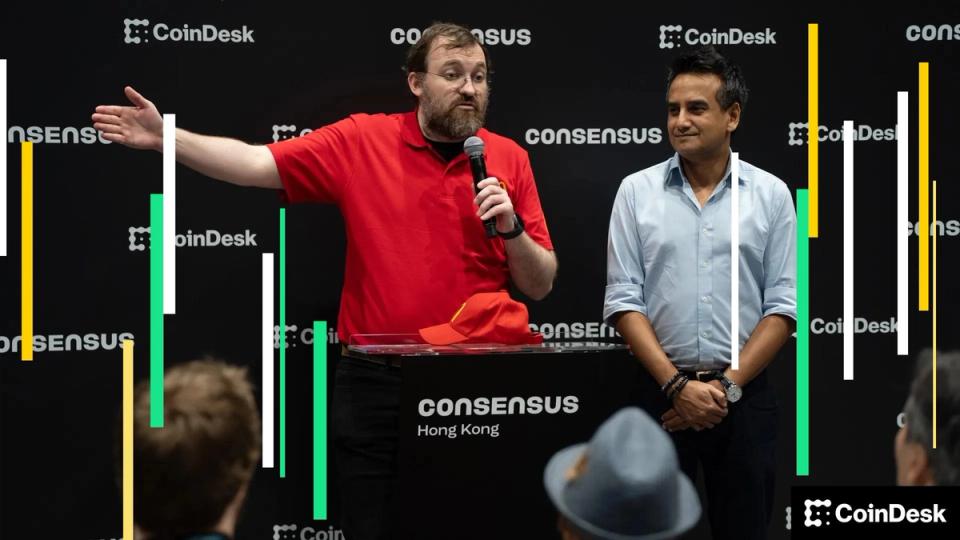 Hoskinson's $200M privacy chain Midnight launches mainnet with Google Cloud, Telegram, MoneyGram running nodes2026-03
 Anchorage Digital unveils “Agentic Banking” to give AI agents regulated access to capital, partnering with Google Cloud to power identity, policy enforcement, and settlement2026-05
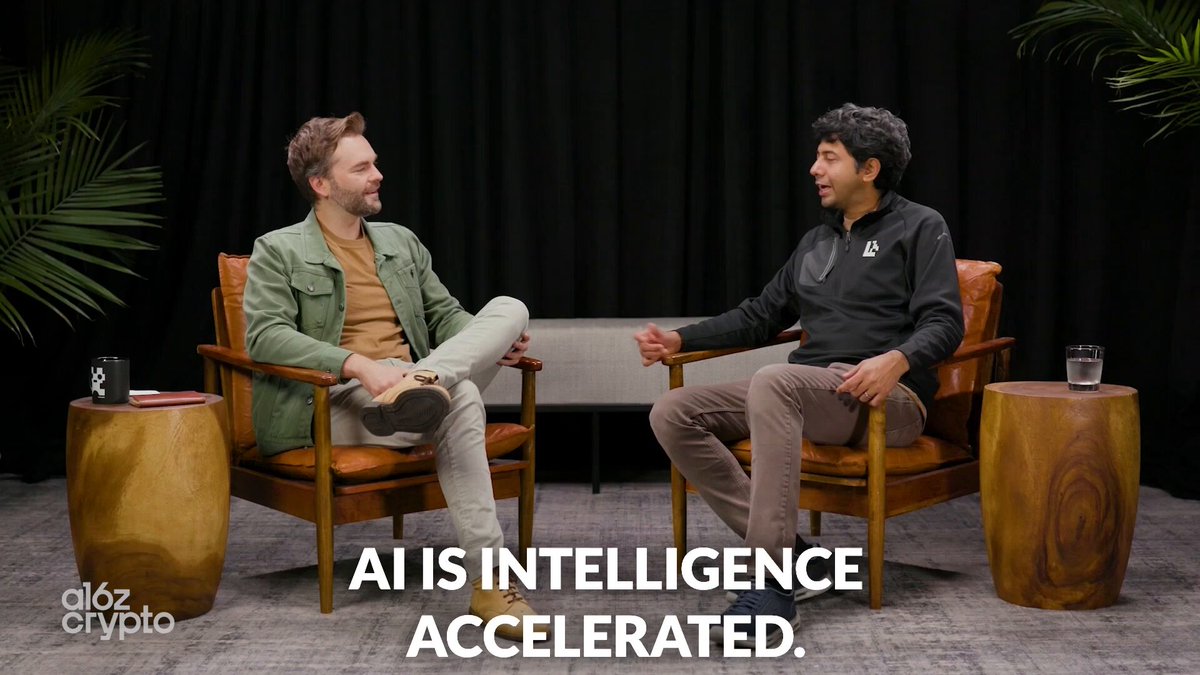 Eigen cloud founder Sreeram Kannan argues AI agents will rely on crypto rails for payments, accountability and verification as autonomous systems evolve beyond human oversight2026-05
 Researchers uncover how hackers used over 34 fake npm, PyPI and Rust packages in “TrapDoor” attack targeting Solana, Sui and Aptos developers to steal wallets and cloud credentials2026-05
Distributed compute infrastructure has become the foundational layer on which both modern AI and decentralized finance are built — and how those two worlds collide is reshaping what "the cloud" means for Web3 builders.
What Cloud Infrastructure Actually Is
At its simplest, cloud computing is the delivery of compute, storage, networking, and managed services over the internet, billed on consumption. Rather than owning physical servers, developers rent capacity from providers who operate data centers at scale. The dominant hyperscalers — Amazon Web Services (AWS), Google Cloud Platform (GCP), and Microsoft Azure — together hold the majority of the global market. For crypto and Web3 teams, these platforms have long provided the hosting backbone for RPC nodes, indexers, APIs, and backend services.
What has changed dramatically since 2023 is the type of workload demanding cloud capacity. AI model training and inference are now the fastest-growing cost centers on every major cloud bill, and that shift is forcing a reappraisal of pricing, vendor lock-in, and trust assumptions across the tech stack.

Google Cloud showcases four patterns for real-time AI voice agents that can see, talk, think and code using Gemini 3.8 Live and the Agent Development Kit
The Hyperscaler Pricing Problem
One of the sharpest critiques circulating in developer communities concerns data egress: Google Cloud charges roughly six times more to move training data out of storage than to store it in the first place. AWS charges steep API fees simply for a model reading its own training data back — figures cited in recent infrastructure discussions put this at roughly $20,000 per large-scale retrieval cycle.
For AI teams running iterative training loops, these fees compound quickly. A model that trains over a large dataset and requires multiple passes can generate egress costs that dwarf the compute bill itself. This creates a structural incentive to never leave a hyperscaler's ecosystem once you're in — a dynamic critics describe as vendor lock-in enforced through pricing rather than technical constraint.
The argument gaining traction among open-source AI advocates is that open-weight models deserve open infrastructure. If the weights are public and the architecture is reproducible, the data layer should carry similar properties: content-addressable, redundant, and priced at marginal cost. Projects like Filecoin position themselves as an answer here — a decentralized storage network designed to serve as a data layer that aligns with open-model principles rather than hyperscaler economics.
Readers click cloud-crypto stories not for infrastructure specs but for the power-concentration question: when Google Cloud runs EigenLayer nodes, settles CME tokenization, and issues its own Layer 1, the decentralization thesis of crypto is being quietly outsourced to the same three hyperscalers crypto was built to escape.
AI Reshapes the Developer Stack
The cloud's relationship to software development itself is in flux. Google Cloud's Director of Engineering, Addy Osmani, has publicly argued that AI has shifted the engineering bottleneck from writing code to reviewing it. In his framing, verification, risk assessment, and trust judgment are now the most valuable developer skills — not the ability to type syntax quickly.
Osmani has gone further, describing "loop engineering" as the emerging discipline: developers are increasingly building autonomous AI workflows that discover tasks, execute them, verify the output, and iterate — all without continuous human input. This isn't prompt engineering in the traditional sense; it's closer to systems design where the human defines goals and the AI agent handles implementation details.
For Web3 builders, this matters because the cloud is where these autonomous loops run. Whether a team is building a trading bot, a cross-chain bridge monitor, or an on-chain data indexer, the agentic workflows they deploy will consume cloud compute, and the cost and trust properties of that compute are no longer trivial concerns.
Multi-Agent Infrastructure: The Swarms Example
A concrete example of what agentic cloud infrastructure looks like in practice is Swarms Cloud, which launched publicly in June 2026. The platform provides a unified control plane for building, deploying, and managing multi-agent AI systems — allowing teams to create specialized agents, orchestrate them in coordinated swarms, and monitor every agent they've deployed through a single interface.
The Swarms v13 "Kizuna" release, shipped alongside the cloud platform, added day-one support for Anthropic's newest models and a marketplace where creators can monetize agent configurations. The architecture reflects a broader pattern: rather than monolithic AI services, the emerging infrastructure model is composable agent teams where different agents handle research, execution, verification, and communication in parallel.
This is the "agentic infrastructure" category — cloud platforms purpose-built not for static applications but for autonomous systems that spin up resources, call external APIs, and coordinate across tasks dynamically.
- 01Google Cloud blockchain infrastructure dominance
Google Cloud appeared as the named actor in five distinct headlines — EigenLayer nodes, BigQuery chain data, GCUL Layer 1, CME tokenization, Intel partnership — signaling readers are tracking one company's systematic capture of crypto's backend.
- 02Big tech legitimizing Web3 partnerships
Amazon–Immutable, Oracle–OpenAI, and Microsoft–OpenAI headlines show readers watching whether hyperscaler money and credibility transforms crypto from speculation to enterprise infrastructure.
- 03Cloud credential theft and supply chain attacks
The node-ipc attack, TrapDoor npm packages, Oracle breach, and Coin Cloud data leak all targeted developer or cloud credentials, revealing readers' fear that crypto's open-source toolchain is the weakest link.
- 04Cryptojacking prosecution and cloud fraud accountability
Parks III's prison sentence and HashFlare's guilty pleas drew clicks for the same reason: after years of anonymous cloud-resource theft, readers wanted to see named individuals face real consequences.
- 05Decentralized cloud as hyperscaler alternative
Aethir, Filecoin, FlashClaw, and Asphere/Heurist Chain positioned themselves explicitly against AWS and GCP, and readers engaged with whether decentralized compute can credibly compete on price and reliability.
- 06AI workload demand driving cloud-crypto convergence
Oracle's $300B OpenAI deal, Nebius–NVIDIA robotics cloud, and Alibaba Cloud's AI video investment revealed readers connecting crypto infrastructure narratives to the AI power-and-compute supercycle.
Trust Boundaries and Confidential Compute
As AI agents gain more autonomy and handle more sensitive data, the question of what happens inside a cloud instance has become a genuine security concern. Apple's expansion of its Private Cloud Compute infrastructure — now extending to Google Cloud with NVIDIA GPU support — signals that attestation, confidential compute, and verifiable runtime guarantees matter at scale.
Confidential computing allows code to run inside a hardware-isolated enclave that even the cloud provider cannot inspect. For Web3 applications handling private keys, oracle data, or cross-chain messaging, this provides a meaningful trust upgrade over standard virtual machines.
The limits of this model were illustrated in June 2026 when Phala Network disclosed a vulnerability in its Phala Cloud API that allowed an attacker to alter Confidential Virtual Machines (CVMs) and put Offchain KMS secrets at risk. The incident underscores that confidential compute is a meaningful protection — but only when the surrounding API layer and key management infrastructure are equally hardened. A bug at the orchestration layer can undermine hardware-level isolation entirely.
Supply chain attacks have emerged as a related vector. Researchers in mid-2026 uncovered a "TrapDoor" attack involving more than 34 fake npm, PyPI, and Rust packages targeting developers building on Solana, Sui, and Aptos — with the goal of stealing both wallet credentials and cloud credentials. The pattern is significant: attackers treat developer cloud access as equivalent in value to private keys, because in production environments, they often are.

Puffer Finance taps Google Cloud as infrastructure partner for UniFi execution layer

Web3 Infrastructure and Major Cloud Integrations
The major cloud providers are not standing apart from crypto — they are active participants. Google Cloud, AWS, Alibaba Cloud, Chainlink, Binance, Solana, and Tron have all been cited as infrastructure partners for ChainGPT's AI layer for Web3, illustrating how deeply hyperscaler relationships have penetrated the on-chain ecosystem. Node operators for major L1s and L2s routinely run on AWS or GCP, a geographic and vendor concentration that has been a persistent criticism of the decentralization narrative.
Anthropic's $65 billion Series H fundraise in 2026, valuing the company at roughly $965 billion, was accompanied by expanded multi-cloud compute deals with AWS, Google, and Azure simultaneously — a deliberate strategy to avoid dependency on any single provider and secure capacity for scaling Claude's inference workloads. This "multi-cloud" approach is becoming standard for serious AI operators.
The emerging Google and Blackstone AI cloud joint venture is expected to focus primarily on inference rather than training — a reflection of where demand is heading as foundational models mature and the economics shift toward serving predictions rather than producing them.
Decentralized Compute as an Alternative
The centralization of cloud infrastructure in a handful of hyperscalers has motivated multiple attempts at decentralized alternatives. Filecoin and IPFS address the storage layer. IO.net and similar GPU aggregation networks aim to pool idle consumer and data center GPU capacity into a unified market, competing on price against GCP's and AWS's GPU instance pricing.
On the verification side, Eigen Cloud's founder Sreeram Kannan has argued that AI agents will rely on crypto rails — specifically for payments, accountability, and verifiability — as autonomous systems evolve beyond human oversight. If an agent executes a task and generates a bill, settling that payment on-chain creates an auditable record that traditional cloud invoices do not. Kannan's team demonstrated this direction concretely in mid-2026, when open agentic independent researchers using AI agents surpassed Google's withheld quantum benchmark for breaking Bitcoin signatures — completing the analysis in 73 hours on decentralized infrastructure.
For builders choosing between hyperscaler and decentralized compute, the practical trade-offs remain real: hyperscalers offer better uptime SLAs, more mature tooling, broader geographic reach, and compliance certifications that enterprise customers require. Decentralized networks offer lower egress costs, censorship resistance, and alignment with Web3 values — but typically require more operational work to achieve comparable reliability.
- 2021-08exploit
Parks III cryptojacking operation ends — nearly $1M ETH/LTC/XMR mined on stolen cloud accounts
- 2024-01milestone
Google Cloud partners with 65+ operators to test EigenLayer mainnet node deployment
- 2024-03milestone
Aethir decentralized cloud raises funding at $150M valuation led by Arthur Hayes
- 2024-06launch
Google Cloud adds 11 blockchains to BigQuery analytics service
- 2024-09regulatory
HashFlare cloud mining operators plead guilty to $577M crypto fraud in FBI crackdown
- 2025-03launch
Midnight privacy chain launches mainnet with Google Cloud, Telegram, and MoneyGram as node operators
- 2025-06exploit
Oracle hit by two major breaches exposing cloud and healthcare data across thousands of organizations
- 2025-09launch
Google Cloud Universal Ledger (GCUL) launched as compliance-first Layer 1 for cross-border payments
Solana and On-Chain Infrastructure Demands
Solana's architecture places unusually high demands on infrastructure. Its parallel transaction processing model and sub-second block times require RPC nodes with low latency and high bandwidth — characteristics that favor well-provisioned cloud deployments over commodity hardware. Validator operators running Solana nodes on major cloud providers benefit from dedicated network interconnects and proximity to other major network participants.
The supply chain attack patterns targeting Solana developers also point to the cloud as a vector: developer workstations that have both on-chain wallet access and cloud IAM credentials are attractive targets because compromising one often means compromising the other.
Security Considerations for Cloud-Hosted Crypto Infrastructure
Running blockchain infrastructure on cloud providers introduces a distinct threat model:
- Shared tenancy risk: Standard cloud VMs share physical hardware. Side-channel attacks, though rare, are a documented class of vulnerability. Confidential computing addresses this.
- Credential exposure: Cloud IAM credentials stored alongside private keys or seed phrases create compound risk. Compromised cloud access can mean compromised wallets.
- Availability concentration: Node operators clustered in AWS
us-east-1oreu-west-1create correlated failure risk. A regional outage can degrade network performance across multiple unrelated protocols simultaneously. - Egress and logging: Cloud providers log traffic metadata. For privacy-sensitive applications, this is a relevant consideration.
- API surface area: The Phala Cloud incident shows that management APIs are part of the attack surface — not just the application layer.
Outlook
Cloud infrastructure is not becoming less important to crypto — it is becoming more central, and more contested. The near-term pressures are clear: egress pricing is driving experimentation with decentralized storage, AI inference demand is creating new GPU capacity markets, and the rise of autonomous AI agents is forcing a rethink of what "deploying an application" means.
The trust question will define the medium term. Confidential compute, cryptographic attestation, and verifiable execution environments are moving from niche research topics to production requirements as agents handle higher-value decisions with less human supervision. Projects that can credibly demonstrate what ran where and on whose hardware will have a meaningful advantage in an ecosystem where trust is both scarce and commercially valuable.
For developers building in this environment, the practical stance is to understand cloud pricing structures deeply, treat cloud credentials as equivalent in sensitivity to private keys, and watch the GPU aggregation and decentralized storage markets — not as replacements for hyperscalers today, but as credible components of a more distributed infrastructure stack over the next two to three years.
Latest cloud news
Community notes
Spot something off or out of date? Drop a note. Editors review topic notes daily and roll accepted fixes into the explainer — contributors are recognized in the monthly $SQUID drop.
Loading notes…
Help improve this topic
Have a story or tip about this topic? Submit it. See something missing? Leave a note. Editors review daily; accepted submissions and fixes count toward the monthly $SQUID drop.