
Deep dive explainer on crypto developers: who they are, what they build across Bitcoin, Ethereum, USDC, crosschain bridges and APIs, how security, governance and regulation shape their work, and why their choices define the future of blockchain.
+15 sources across the wider coverage universe
 Ethereum Foundation Launches Audit Subsidy Program to Lower Security Costs for Developers2026-04
 Uniswap Labs launches beta developer platform, enabling builders to generate API keys for embedding swap and LP functionality2026-02
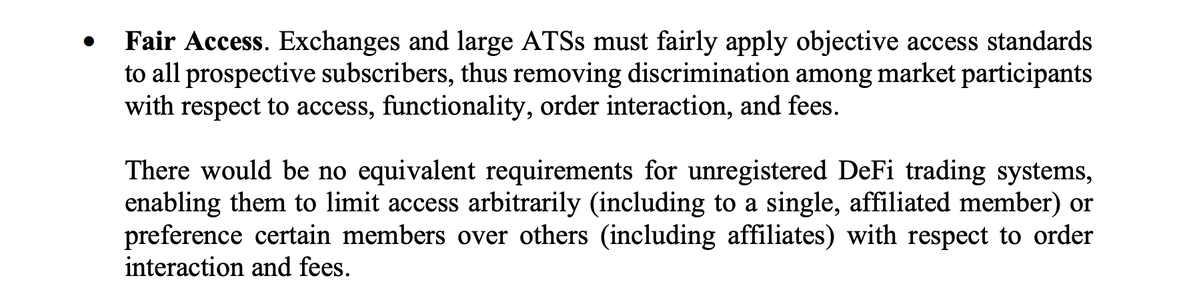 Ken Griffin Urges SEC to Regulate DeFi Developers as Intermediaries, Arguing the Sector Can’t Provide “Fair Access.”2025-12
 Uniswap’s Hayden Adams blasted Citadel for urging the SEC to regulate DeFi developers like Wall Street intermediaries, mocking its claim that open protocols lack “fair access.” The clash highlights rising tension over tokenized equities and DeFi oversight.2025-12
 Sony files patent for AI-powered censorship tech to alter video game content as part of its push to future-proof PlayStation as it prepares for the next console generation Playstation 6 era. Sony’s approach could allow players to customize what they see and hear without developers creating separate game versions.2025-12
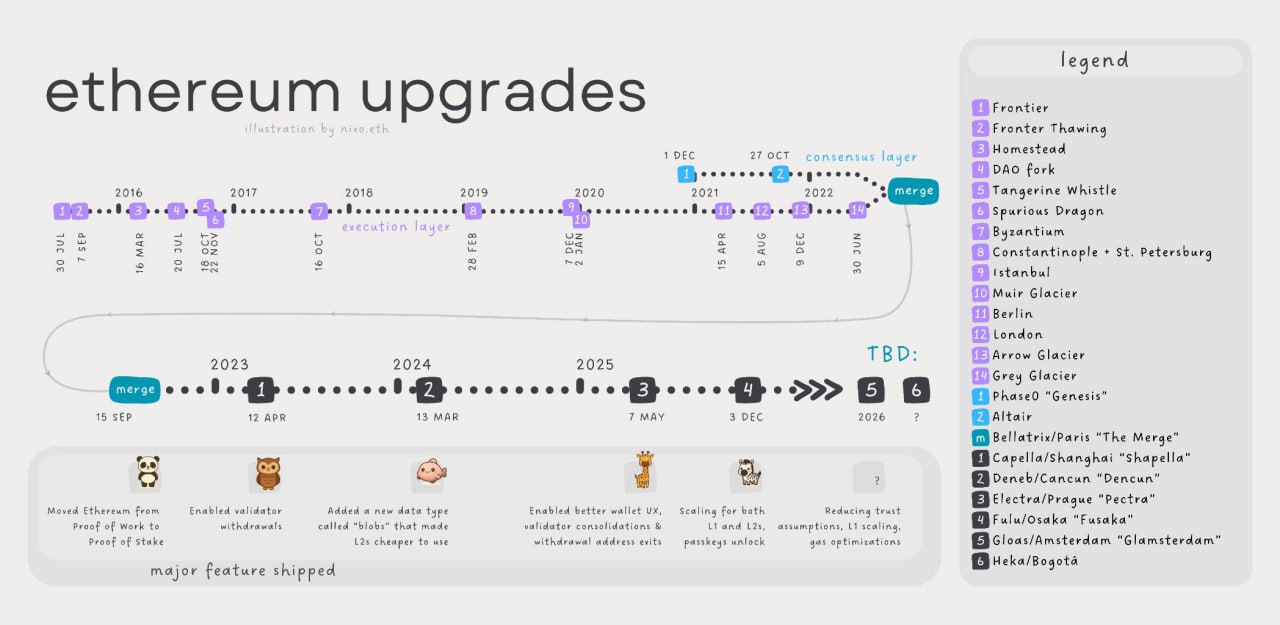 Ethereum’s ‘Glamsterdam’ upgrade aims to fix MEV fairness. Glamsterdam is a two simultaneous upgrades taking place on Ethereum’s two core layers. At the heart of the upgrade is ePBS and Block-level Access Lists. The full scope of the upgrade has not yet been finalized, but developers are targeting it to go live in 2026.2025-12
Developers in Crypto: The Builders Behind Blockchains
Developers are the engineers, product thinkers, and security researchers who design, implement, and maintain the software that makes Bitcoin, Ethereum, stablecoins like USDC, crosschain bridges, and the wider crypto ecosystem actually work. They sit behind every protocol release, every Ethereum upgrade, every new DeFi API, and every embedded wallet, quietly shaping what users experience on-chain today and what becomes possible tomorrow.
From Hobbyists to Critical Infrastructure
In the earliest years of Bitcoin, “developer” usually meant a small group of volunteers maintaining a single codebase and debating protocol changes on mailing lists and forums. That picture has changed radically. Today, crypto development spans hundreds of public blockchains and thousands of applications, from global settlement layers like Bitcoin and Ethereum to high-throughput layer‑2s, appchains, and highly specialized DeFi and NFT platforms. Developer effort is now one of the main indicators analysts use to judge whether a crypto network is alive, growing, or stagnating, because open-source code is the clearest evidence of ongoing innovation and maintenance.
Electric Capital’s long-running Developer Report illustrates that shift with hard numbers, analyzing more than one hundred million open-source commits across tens of thousands of repositories to track where contributors are spending their time. Their 2024 edition shows that while headline token prices cycle, the number of monthly active open-source developers in crypto has been far more resilient, with Ethereum, Bitcoin, and a handful of other ecosystems consistently attracting the largest and most durable contributor communities. This kind of longitudinal data makes an important point: developers, not price charts, are what keep protocols usable, secure, and adaptable to new demands.
As capital markets have recognized that reality, developer time has become a scarce resource. Large foundations, venture-backed startups, and established exchanges now compete aggressively for experienced protocol engineers and security experts. Reports focused on specific language communities, like coverage of “Top 10 high‑paying Web3 jobs for Rust developers,” indicate that specialized skills can command notable salary premiums, especially for work on high-assurance systems, infrastructure, and crosschain protocols. In parallel, grants programs, hackathons, and retroactive public goods funding all try to attract new contributors to open-source, because an ecosystem with too few active developers is exposed to security issues, slow feature development, and governance capture.
Seen from the outside, it is easy to treat “developers” as a single, homogenous group. In practice, that label covers many different roles and responsibilities. Some engineers focus on the Bitcoin or Ethereum protocol itself; others write Solidity or Rust smart contracts; still others build APIs, SDKs, data nodes, wallets, or audit tools. This diversity of work explains why our newsroom’s “Developers Office Hour” coverage ranges from highly specialized Cardano data nodes, to type‑safe Elm frontends, to new standard libraries for smart contract languages, and to .NET‑based toolchains. These sessions are a reminder that every user-facing crypto app depends on layers of tooling and infrastructure that most people never see.
Understanding who these developers are and what they actually do is essential context for any crypto news audience. It clarifies why Ethereum upgrades cannot be rushed, why Bitcoin developers worry about quantum computers, why USDC’s crosschain behavior matters, and why policy proposals that criminalize “writing code” are so contentious. It also provides a reality check: for all the talk about tokens and narratives, the core constraint on what crypto can become is the amount of high-quality software that developers can design, implement, secure, and maintain over time.

Ethereum Foundation Launches Audit Subsidy Program to Lower Security Costs for Developers
The Ethereum Foundation is rolling out the "Ethereum Audit Subsidy" program to subsidize security audit fees, directly tackling the cost barrier that leaves smaller teams shipping unaudited code. Applications will be reviewed jointly by Areta — which has managed similar subsidy funds for Arbitrum ($10M), Uniswap ($1.2M), and Solana ($1M) — alongside Nethermind, Chainlink Labs, and other partners. This is a meaningful infrastructure play: professional audits typically run $50K-$500K+, pricing out most early-stage builders and leaving DeFi's long tail dangerously under-reviewed.
What Crypto Developers Actually Do
Protocol and Core Client Developers
At the base of every blockchain are the protocol and core client implementations that define consensus rules, networking behavior, and transaction validation. Developers in this layer write and maintain software such as Bitcoin Core, Ethereum clients, and full nodes for alternative layer‑1s and layer‑2s. Their work is less visible than flashy app launches, but it is existentially important: a subtle consensus bug in a widely used client can split a network or enable fund-stealing attacks.
Bitcoin Core’s security advisories page offers a window into how this group operates. The project maintains a responsible disclosure process, encourages researchers to report vulnerabilities privately to a dedicated security email address, and publishes post‑hoc summaries of historical issues once fixes are widely deployed. This culture of careful, incremental change is one reason Bitcoin’s base layer has remained relatively conservative, even as new features like Taproot have slowly expanded its capabilities. Bitcoin core developers also spend significant effort debating and implementing Bitcoin Improvement Proposals (BIPs), reviewing patches from new contributors, and hardening the codebase against implementation bugs and denial‑of‑service vectors.
Ethereum’s core developer community faces a different set of challenges. Because Ethereum is a general‑purpose smart contract platform and the primary home for DeFi, NFTs, and stablecoins like USDC, it must support more frequent upgrades to improve scalability, security, and execution capabilities. Each Ethereum upgrade, from the Merge to rollup-centric roadmaps, represents years of work in research, client implementation, testing networks, and coordination across multiple teams. Vitalik Buterin has described a long‑term goal in which Ethereum becomes robust enough that it can “withstand the day all core developers leave,” emphasizing that the network should be a neutral, secure base layer rather than a playground for high‑frequency trading. That ambition shapes how core teams approach upgrades: they prioritize correctness, security, and long‑term sustainability over short‑term performance gains.
Other ecosystems mirror these dynamics with their own nuances. Cardano, for instance, has an active ecosystem of core and infrastructure developers building alternative data nodes in languages like Rust and .NET, reflecting a philosophy that multiple independently implemented clients and tools can improve resilience. Similarly, emerging “agentic” layer‑1s and modular stacks rely on core development teams to define how on‑chain agents, intents, and crosschain messaging are encoded at the protocol level. Across these projects, core developers tend to share a few traits: deep comfort with distributed systems, a bias toward minimizing consensus-layer changes, and a willingness to say “no” to features that might compromise long‑term security.
Smart Contract and Application Developers
Above the protocol layer sit smart contract and application developers. These are the engineers who write Solidity or Vyper contracts on Ethereum, Plutus- or Aiken‑based scripts on Cardano, Move modules on certain newer chains, or Rust smart contracts on platforms that support WebAssembly runtimes. Their work is what most users interact with directly: decentralized exchanges, lending protocols, NFT marketplaces, gaming apps, and DAO governance systems.
Smart contracts are often described as self‑executing agreements, where the terms of a deal are encoded in code that runs on the blockchain without further human intervention. That property is powerful: it enables permissionless composability, automated liquidations, and cross‑protocol integrations that would be impossible in traditional financial infrastructure. It also creates unforgiving failure modes. The World Economic Forum has highlighted that even minor flaws in smart contract code can lead to severe consequences such as unauthorized access, fund misappropriation, or accidental legal obligations when contracts behave in ways parties did not anticipate. Because smart contracts are usually immutable once deployed, developers must treat them more like firmware than web apps: extensive pre‑deployment testing, formal verification where possible, and careful consideration of upgrade mechanisms are standard best practices.
Security-focused organizations like OWASP have recognized this distinct risk profile and maintain a “Smart Contract Top 10” to help teams understand the most common and critical vulnerabilities. These include familiar software issues like integer overflows, reentrancy, and inadequate access control, as well as blockchain‑specific pitfalls involving improper use of randomness, broken upgrade patterns, or unsafe reliance on oracles. For smart contract developers, avoiding these flaws is not an optional extra; it is central to their role. Our newsroom’s coverage often returns to this theme, warning that developers who clone unaudited code or repeat known pattern mistakes risk not only hacks and staking delays but also user attrition and reputational damage that can be hard to recover from.
Application developers also handle user experience and product logic. They design how wallets, dapps, and dashboards present complex on‑chain operations in ways that mainstream users can understand. Recent coverage of projects building type‑safe Elm frontends for Cardano, for example, underscores a trend toward strongly typed, declarative interfaces that reduce whole classes of errors at compile time. These developers must bridge two worlds: the deterministic, resource‑constrained environment of smart contracts and the more flexible, rapidly evolving world of web and mobile frontends.
Infrastructure, Tooling, and Security Engineers
Another large segment of the developer population focuses on infrastructure and tooling: the connective tissue that allows protocols and applications to function in real‑world environments. These engineers build indexers, data nodes, block explorers, transaction builders, key management systems, and monitoring pipelines. In Cardano, for example, tools like lightweight Rust‑based data nodes or .NET‑implemented node suites reflect a design philosophy aimed at optimizing ledger data access for downstream services like wallets, explorers, or analytics platforms. Such tools offload heavy consensus responsibilities while making it easier for application teams to query and interpret on‑chain data.
Infrastructure developers also include teams working on off‑chain compute and oracle networks. Our coverage of Acurast’s “Tunnel,” which allows developers to create secure paths between processors and the public internet, illustrates how these projects extend blockchain applications into traditional web environments. By enabling services to be exposed on web domains and accessed through remote terminals without traditional VPN-style infrastructure, such tooling blurs the line between on‑chain logic and off‑chain services. This is particularly important for applications that need to ingest real‑world data or perform computation that would be too expensive or slow on-chain.
Security engineers span auditing firms, in‑house protocol security teams, and independent researchers. They review code for vulnerabilities, design fuzzing and formal verification tools, and respond to live incidents. The Ethereum Foundation’s recently launched audit subsidy program is a recognition of how central these specialists are. By committing one million dollars to subsidize up to 30 percent of smart contract audit costs for projects building on Ethereum mainnet, and by partnering with a pool of more than 20 vetted audit firms, the Foundation is effectively lowering the barrier for smaller teams to access high‑quality security reviews. Applications are handled through the Areta Market platform, where an expert committee including representatives from the Foundation, Areta, Nethermind, Chainlink Labs, and audit partners screens submissions and allocates subsidies on a first‑come basis until funds are exhausted. This kind of program has a multiplier effect: well‑audited contracts reduce systemic risk for the entire ecosystem, not just the projects that commission them.
Readers click developer stories most when a decision is irreversible — a bug already shipped, a contract already renounced, a fork already delayed — revealing that the audience treats developers not as builders to cheer but as counterparties whose choices carry permanent consequence.
Key Technologies: Ethereum, Bitcoin, and Beyond
Ethereum and the EVM Stack
Ethereum is the dominant smart contract platform within crypto and the primary home for USDC liquidity, DeFi, and NFT activity, which makes its developer ecosystem a focal point for the industry. Most Ethereum application developers target the Ethereum Virtual Machine (EVM), a deterministic execution environment that enforces gas-based metering and strict rules for contract interaction. Solidity remains the most widely used EVM language, but alternatives like Vyper, Huff, and various domain-specific languages have emerged as developers seek better ergonomics or stronger safety guarantees.
From a developer’s perspective, Ethereum’s history is a series of major protocol upgrades designed to balance scalability, security, and decentralization. The transition from proof-of-work to proof-of-stake, the separation of consensus and execution clients, and ongoing work toward rollup-centric scaling have all required close coordination across multiple independent client teams. Each Ethereum upgrade produces waves of activity: client implementers must ship new releases, infrastructure teams must update nodes and monitoring, and application developers must test their contracts and integrations under new conditions. The stakes are high; changes that affect gas costs, opcode behavior, or transaction ordering can have unexpected effects on DeFi protocols and wallets.
Security has therefore become a first-class concern. The Ethereum Foundation’s audit subsidy initiative, mentioned earlier, fits into a broader pattern of emphasizing best practices for secure smart contract development. Through the Areta Market platform, developers can quickly obtain quotes from trusted auditors like Certora, BlockSec, Quantstamp, Spearbit, Sherlock, Zellic, Hacken, Cyfrin, Dedaub, Immunefi, and Nethermind Security, often within 48 hours. By aligning subsidy decisions with CROPS principles (Censorship Resistance, Open Source, Privacy, and Security), the Foundation is also signaling the types of projects it views as most aligned with Ethereum’s core values. This combination of technical evolution and security-focused support exemplifies how Ethereum’s developer community tries to move quickly without breaking the social contract that users depend on.
Vitalik Buterin’s remark that Ethereum should ultimately withstand a future where all current core developers have left captures a deeper design philosophy. Developers today must write code, documentation, and processes in ways that minimize ongoing human coordination, relying instead on clearly specified protocols, robust clients, and transparent governance. That view encourages designing for upgradability where needed, but also for ossification of critical base-layer guarantees. In practice, it pushes developers toward standardization through Ethereum Improvement Proposals (EIPs), modular client architectures, and defensive programming patterns that make it easier for future contributors to reason about the system.
Bitcoin Development and Security Culture
Bitcoin’s developer ecosystem is smaller and more conservative than Ethereum’s, but its influence is outsized because it secures the oldest and most valuable cryptocurrency. Bitcoin developers tend to prioritize simplicity, predictability, and minimalism. New features are added only after extensive discussion and multi‑year review cycles, and backwards compatibility is treated as sacred whenever possible.
The Bitcoin Core project’s security disclosures reflect this ethos. Rather than advertising every bug found, the project focuses on quiet, responsible remediation. Vulnerabilities are reported to a dedicated security email address, triaged by trusted maintainers, and fixed in new releases; only once most of the network has upgraded are public advisories and detailed write‑ups released. This balance between transparency and operational security is a key part of how Bitcoin attempts to minimize the risk of chain‑splitting bugs or exploitable vulnerabilities in the reference client.
Bitcoin developers also contend with unique long‑term threats. One widely discussed risk is that future large-scale quantum computers might break the elliptic curve digital signature algorithm (ECDSA) used for Bitcoin addresses. In a 2026 technical discussion, Bitcoin engineers noted that quantum computers could, in principle, solve the elliptic curve discrete logarithm problem much more quickly than classical machines, potentially allowing attackers to forge signatures and spend others’ coins, even though proof‑of‑work mining remains largely unaffected. At the same time, current post‑quantum signature schemes come with significant trade‑offs: transactions could become roughly one hundred times larger, verification an order of magnitude more expensive, and key generation slower. Some experts therefore advocate for cautious, phased adoption of conservative hash‑based schemes, starting with large custodians and exchanges, rather than rushing a network‑wide signature change.
Beyond quantum concerns, Bitcoin developers routinely analyze new attack surfaces, such as the possibility of “attack blocks” that exploit transaction relay policies or mempool dynamics. This research often informs subtle client changes that most users never notice but which reduce incentives for malicious miners or improve resistance to censorship. As with Ethereum, the defining feature of Bitcoin development is not any single upgrade but the cumulative effect of many careful, incremental improvements by a relatively small group of deeply specialized contributors.
Alternative Layer‑1s, Layer‑2s, and Agentic Chains
Outside the two largest networks, an increasingly diverse landscape of layer‑1 and layer‑2 protocols has emerged, each with its own developer community and design trade‑offs. Some chains aim for high throughput and low fees, optimizing for consumer apps and games. Others, like Cardano, focus on formal methods, peer‑reviewed protocol design, and domain‑specific languages that emphasize correctness. Still others market themselves as “agentic” chains, designed from the ground up for on‑chain autonomous agents and crosschain coordination.
These ecosystems often differentiate themselves through their developer tooling. Our coverage of Cardano’s Elm‑based frontends, Rust data nodes like Dolos, and .NET‑based node toolchains such as Razor highlights how language choice and architecture can target specific developer audiences. A strongly typed functional frontend can reduce UI‑level bugs; a lightweight Rust data node can make it easier to embed ledger data in other systems; a .NET tool suite can welcome enterprise developers already invested in Microsoft’s ecosystem. Similarly, new smart contract languages like Aiken try to improve developer experience and performance simultaneously, offering standard libraries that evolve through careful versioned releases and developer feedback.
Telegram‑native ecosystems like TON provide another example of how different stack choices shape developer work. The announcement of native embedded wallet support for TON means developers can now ship payment applications, trading platforms, and commerce experiences directly inside Telegram without having to build their own wallet infrastructure from scratch. This reduces onboarding friction and lets application developers focus on business logic rather than key management, but it also centralizes some UX and dependency risk around a single messaging platform. Developers in such ecosystems must be comfortable working with both blockchain abstractions and platform‑specific constraints like app store policies and messaging APIs.
Across all of these chains, developers face a common strategic question: which base layer and scalability stack will remain relevant over the time horizon of their project? Choosing an ecosystem is both a technical and a career decision. Teams that select a smaller chain with strong developer tools and clear upgrade roadmaps might ship faster, but they also assume greater platform risk. Conversely, building on a dominant chain like Ethereum or Bitcoin offers more stability and liquidity, but also more competition and higher user expectations.
APIs, SDKs, and Data Pipelines
Exchange and Market Data APIs
One of the most familiar touchpoints between developers and the crypto ecosystem is the exchange API. Market data feeds, order placement endpoints, and account management APIs allow applications to integrate price discovery, execution, and portfolio tracking into their own products. Even centrally run platforms now frame their APIs as developer products, complete with SDKs, documentation, and sandbox environments.
Upbit’s “Make Your First API Call” guide is representative of the kind of onboarding experience developers encounter. The documentation walks newcomers through configuring their environment, confirming that curl is installed, and then issuing a simple GET request to retrieve the list of all supported trading pairs for a given region. Developers learn that the base URL differs by region, such as https://sg-api.upbit.com for Singapore or equivalents for Indonesia and Thailand, and that they must specify the correct regional code in their requests. Subsequent examples show how to query specific tickers, like SGD-BTC, or obtain candlestick data for historical analysis. Even these seemingly mundane details, such as proper URL encoding for timestamps and query parameters, shape how quickly new developers can integrate exchange functionality into their applications.
As exchanges roll out official SDKs, they further lower the barrier to entry. Our newsroom has covered launches of SDKs designed to make Upbit integration even easier for developers, abstracting away raw HTTP calls into higher-level functions in popular languages. This shift mirrors broader trends in software engineering: teams increasingly expect robust libraries, typed interfaces, and test environments rather than barebones REST endpoints. For crypto developers building trading bots, portfolio dashboards, or accounting tools, the quality of exchange APIs and SDKs often determines how much time they spend on business logic versus plumbing.
APIs extend beyond exchanges. Indexing services, on-chain analytics providers, NFT metadata hosts, and KYC/AML vendors all expose APIs that crypto developers must integrate. Together, these services form a complex dependency graph. A failure or policy change at any point—say, an exchange restricting certain jurisdictions, or a data provider changing rate limits—can ripple through dependent applications. Savvy developers therefore design their systems to be resilient: caching data where possible, abstracting API integrations behind interfaces that can be swapped out, and monitoring for changes in third‑party services.
DeFi Aggregators, Routing, and Liquidity APIs
In decentralized finance, developers rely heavily on aggregator and routing APIs that abstract the complexity of finding the best liquidity or bridging route. Rather than manually integrating dozens of DEXs and bridges, a developer can call a single API that returns recommended paths and executes multi‑hop swaps under the hood.
KyberSwap’s DEX Aggregator API is a typical example. As of its April 2025 recap, KyberSwap reported more than 3.3 billion dollars in monthly trading volume routed through its aggregator, operating across a total of 14 blockchains and steadily adding new chains like Unichain. These figures matter to developers because they indicate whether an aggregator can deliver meaningful liquidity and competitive pricing on the networks they care about. The same recap highlighted that over 317,000 users interacted with KyberSwap in a single month and that multiple new projects had integrated its infrastructure, suggesting a degree of ecosystem traction and reliability that developers can factor into their own risk assessments.
Crosschain liquidity routing goes a step further. Somnia’s recent integration with LI.FI, for instance, gives developers on its “Agentic L1” access to crosschain swap, bridge, and deposit routing across more than 60 chains via APIs and SDKs. From a developer’s perspective, this kind of integration turns a complex, multi-step process—bridging assets, swapping on a destination chain, handling gas payments—into a unified API call that can be embedded in a wallet or dapp. As with exchange SDKs, the existence of robust crosschain routing APIs shifts developer focus up the stack, away from low-level transaction choreography and toward UX design, risk controls, and application-specific logic.
Stablecoin issuers are also becoming major infrastructure providers. Circle’s introduction of Gateway and the Circle Cross‑Chain Transfer Protocol (CCTP) with a Forwarding Service for USDC illustrates how stablecoin APIs are evolving into foundational liquidity primitives. Gateway lets developers treat USDC balances held across multiple chains as a unified pool, offering sub‑second access to liquidity on destinations like Circle’s Arc environment by using off‑chain “burn intents” signed under EIP‑712 and submitted via a backend API. The Forwarding Service, by contrast, wraps CCTP’s standard on‑chain depositForBurnWithHook calls in a mechanism that automatically handles destination‑chain minting after source‑chain finality, optimizing for ease of use rather than absolute speed. These two modes allow developers to choose between pre‑positioned, instant liquidity and per‑transfer, linear crosschain movement depending on whether they are building latency‑sensitive flows like trading or more routine operations like payouts and treasury rebalancing.
To clarify these differences, it can be useful to summarize them in a simple table:
| Primitive | Latency and Finality | Liquidity Model | Onboarding Pattern | Integration Style |
|---|---|---|---|---|
| Circle Gateway | Sub‑second, behaves like local transfer once deposits are finalized on source chains | Aggregated global USDC balance across chains | Requires initial deposits into a Gateway wallet | Pull‑based, off‑chain API using signed burn intents |
| CCTP + Forwarding Service | Seconds, bounded by source‑chain finality | Linear, per‑transfer linking of source and destination | Single‑step initiation from a standard wallet | Push‑based, on‑chain depositForBurnWithHook call |
For developers building crosschain USDC experiences, understanding these trade‑offs—speed versus simplicity, aggregated versus linear capital flow, off‑chain API calls versus on‑chain hooks—is critical. Choosing the wrong primitive can lead to UX friction, idle capital, or operational complexity when scaling to multiple chains.
Low‑Level Cryptography and System APIs
Beneath high-level APIs and SDKs, many crypto developers must interact with lower-level cryptographic and system interfaces. Node clients, hardware wallets, and some performance‑sensitive applications depend on operating system facilities for encryption, hashing, and secure randomness.
On Linux, the kernel’s Crypto API is one important example. It provides implementations of block ciphers, hash functions, compression algorithms, and random number generators, which can be accessed by both kernel modules and user-space applications through mechanisms like AF_ALG sockets. Developers can inspect the available algorithms on a running system by reading /proc/crypto, and then configure their applications to use specific primitives or offload cryptographic operations to hardware accelerators when available. For wallet and node developers, relying on a standardized kernel crypto framework can simplify maintenance and reduce the risk of inadvertently misusing low-level primitives like AES or SHA‑2.
Understanding these layers matters because many security vulnerabilities in crypto do not originate in Solidity or JavaScript but in misuse of cryptographic APIs, improper random number generation, or unsafe key storage. Developers implementing custom signing schemes, multisig wallets, or threshold cryptography must carefully choose and configure primitives, sometimes at the level of operating system syscalls or specialized library bindings. The better these low‑level APIs are documented and the more they align with secure defaults, the easier it is for developers to build robust wallets, nodes, and infrastructure services that correctly implement the cryptographic assumptions on which entire networks rely.
System-level APIs intersect with regulatory and operational concerns as well. For example, enterprises integrating Bitcoin or Ethereum nodes into existing data centers must ensure that cryptographic modules meet compliance standards, that hardware security modules (HSMs) are properly configured, and that backups, restoration procedures, and monitoring are in place. Developers in these environments often bridge the gap between traditional IT security teams and blockchain-specific requirements, explaining why, for instance, a failure in randomness generation can have catastrophic consequences for on‑chain assets.

Solana Developers launches Solana School Fall Class, a seven-week program with hands-on building, weekly programs, DevRel office hours and a final Demo Day

Security‑First Development: From OWASP to Ethereum Audits
Common Smart Contract Vulnerabilities
Smart contract security has matured into a specialized field because bugs on-chain can lead to irreversible financial loss. As mentioned earlier, OWASP’s Smart Contract Top 10 frames the most common vulnerabilities in a way familiar to application security professionals. Issues range from reentrancy (where an external call re‑enters a function before its state has been fully updated) to unchecked external calls, inadequate input validation, and misuse of access control patterns. Other entries highlight blockchain‑specific risks, such as relying on manipulable sources of randomness, incorrectly handling upgradeable proxies, or exposing sensitive governance mechanisms without appropriate safeguards.
Developers who treat smart contract programming as “just another web framework” often fall into these traps. For example, copying and modifying code from existing DeFi protocols without understanding its assumptions can introduce subtle inconsistencies in collateral accounting or liquidation logic. Likewise, underestimating the complexity of staking and slashing systems can lead to misconfigured incentives and “staking delays” that harm user trust. Our newsroom’s analysis of repeated failure patterns emphasizes that many high‑profile exploits could have been avoided if teams had internalized known attack vectors, conducted proper testing, and engaged experienced auditors or peer reviewers before deploying contracts controlling significant value.
The World Economic Forum’s analysis reinforces that the consequences of smart contract flaws are not purely technical. Because contracts can encode legally relevant obligations or financial rights, a bug can trigger not only on‑chain fund loss but also off‑chain disputes about intent, liability, and regulatory classification. Developers must therefore think beyond “does the code compile” toward broader questions: does this upgrade path allow emergency intervention without violating decentralization promises? Does this governance module expose tokenholders or delegates to unanticipated duties? Have oracles and crosschain dependencies been assessed for correlated failure modes?
Audits, Bug Bounties, and Responsible Disclosure
Given these risks, security audits and bug bounty programs have become standard practice, particularly for Ethereum and EVM‑based protocols. However, audits are expensive, and not all projects have equal access to top-tier firms. The Ethereum Foundation’s audit subsidy program is one attempt to address that inequity. By offering to cover up to 30 percent of total audit costs for selected projects and potentially more on a case‑by‑case basis, the program makes it more feasible for early‑stage teams to commission thorough reviews. Through the Areta Market platform, projects can apply via a simple form, be evaluated by an expert committee, and then receive subsidies directly applied to audit invoices from vetted partners.
The program’s design is notable for how it tries to minimize bureaucratic friction: there is no fixed deadline for applications, subsidies are allocated on a first‑come basis until the dedicated pool is exhausted, and new cohorts are selected monthly. For developers, that means security planning can be integrated into normal product roadmaps rather than being constrained by infrequent grant cycles. It also signals a cultural expectation: on Ethereum mainnet, serious projects are expected to invest in audits, and the community is willing to help defray those costs for teams that align with its values.
Even with audits, vulnerabilities will sometimes slip through. That is where bug bounty platforms, responsible disclosure processes, and emergency response practices come in. Bitcoin Core’s security advisory model, which encourages private reporting and coordinated patches before public disclosure, provides a template that many projects emulate. On Ethereum and other chains, platforms like Immunefi coordinate bounties and reporting for hundreds of projects, creating economic incentives for white‑hat hackers to search for flaws before attackers do. Developers must design contracts and infrastructure with these processes in mind, including implementing pause mechanisms, timelocks, and upgradable modules where appropriate so that discovered vulnerabilities can be mitigated quickly.
Crosschain Bridge Design and Failure Modes
Crosschain bridges and interoperability protocols are among the riskiest components in the crypto stack, because they often control large pools of locked assets and are exposed to both on‑chain and off‑chain attack surfaces. In 2026, industry analysis has emphasized how a single misconfigured trust assumption in a bridge can unlock nine‑figure sums and freeze lending markets across multiple chains. For developers designing crosschain systems, thinking explicitly about invariants, limits, and recovery paths is non‑negotiable.
Autheo’s discussion of bridge risk outlines several core principles. First, teams should articulate explicit invariants, such as never minting more than a certain amount of a wrapped asset on a destination chain without independent confirmation, or requiring that the system pause within a defined number of minutes if verifiers disagree about message validity. These invariants must be grounded in actual operational numbers; for example, if the total token supply on layer‑2s is 500 million dollars and the worst‑case risk budget is 1 percent, then the per‑epoch mint ceiling should be around 5 million dollars until faster detection and response can be proven. Mathematically, this is simply \(500\,\text{M} \times 0.01 = 5\,\text{M}\), but expressing it concretely helps keep risk management grounded in reality rather than “vibes.”
Second, bridge verification should rely on genuinely independent paths, not just multiple servers running the same software stack. Using M‑of‑N verifiers with different operators, infrastructure, and ideally client implementations reduces the risk of correlated failures. Liveness should be separated from safety: if verifiers disagree, the system should pause rather than accept the fastest answer, even if that introduces short‑term UX friction. Additional controls like per‑message and per‑epoch mint caps, rate limits, and destination‑specific liquidity ceilings can bound losses in the event of a compromise.
Third, recovery paths must be designed in advance. Developers should specify who has authority to trigger emergency pauses, how haircuts would be applied if an asset becomes partially unbacked, and what procedures lending protocols and exchanges should follow when a bridge incident occurs. This perspective aligns with guidance from major exchange ecosystems, which highlight that trustless interoperability solutions like zero‑knowledge (ZK) bridges or IBC can improve security and efficiency but still require careful risk management and clear failure‑handling logic. Our newsroom’s coverage of crosschain infrastructure providers like Across, which emphasize zero exploits and large bridged volumes, underscores that security track records and transparent risk models are increasingly central to developer decisions about which bridges and routers to integrate.
Quantum and Cryptographic Risks
While bridge exploits and contract bugs are front‑of‑mind, developers must also consider longer‑horizon cryptographic risks. The Bitcoin 2026 panel on quantum attack vectors provides a good example of how protocol engineers are thinking about this. As discussed earlier, Bitcoin’s use of elliptic curve signatures means that a sufficiently powerful quantum computer could potentially derive private keys from public keys, enabling counterfeit signatures and theft. This threat does not directly compromise proof‑of‑work mining, which is built on hash functions that are more resistant to known quantum speedups, but it does undermine the foundational assumption behind account ownership.
The panelists noted that current post‑quantum (PQ) signature schemes impose substantial costs: signatures can be around one hundred times larger, verification roughly ten times more computationally expensive, and key generation slower by a similar factor. On-chain, this translates to larger transaction sizes, increased bandwidth usage, and higher fees. It could also complicate light client behavior and block propagation. Accordingly, some experts argue for cautious adoption of more conservative, hash‑based signatures in specific contexts, such as allowing major custodians or exchanges to migrate first, while giving protocol researchers more time to optimize PQ schemes before they become ubiquitous.
Developers in other ecosystems must grapple with similar trade‑offs. Ethereum, for instance, may eventually need to support PQ signature schemes at the account abstraction layer, Ethereum Virtual Machine opcode level, or as part of new cryptographic precompiles. Smart contract developers who rely on signature verification for meta‑transactions, permit flows, or custom authorization logic will need to understand how these changes affect gas costs, verification times, and user flows. Even application teams far removed from protocol research should at least track these discussions, because major cryptographic migrations can impact wallet formats, backup procedures, and interoperability with older contracts and chains.
- 01Ethereum upgrade delays and launches
Multiple high-click headlines tracked each milestone of Dencun and Pectra from testnet to mainnet delay to eventual release, showing readers follow upgrade cadence like a ship schedule — any slip is news.
- 02Smart contract 'God Mode' and renouncement↗
Headlines about hidden admin keys and Friend.Tech's contract renouncement pulled readers by exposing the gap between decentralization promises and the reality of developer override switches.
- 03Core software security vulnerabilities↗
The Bitcoin Core spammy-headers bug and North Korean operatives infiltrating blockchain dev teams both landed because readers understand that a flaw in infrastructure-layer code has no easy rollback.
- 04Bitcoin governance and protocol scope debate
Headlines on OP_Return limits and minimal governance standards drew clicks because they frame Bitcoin's identity crisis — whether developer decisions can expand Bitcoin's purpose without community consensus.
- 05Developer ecosystem growth metrics↗
Sui's DeFi rise, Base's 25k-developer target, and Web3 gaming's $2.3B quarter all attracted readers benchmarking which chains are actually converting developer attention into on-chain activity.
- 06Regulatory pressure on developer obligations↗
French regulators demanding smart contract rewrites and certification, plus Google Play's wallet licensing ban, surfaced the fear that code authorship is becoming a legal liability.
Governance, Law, and the Politics of Building
Developers as Stewards, Not Controllers
A recurring theme in crypto is the tension between the power developers wield and the decentralization ideals many protocols espouse. On the one hand, core developers and maintainers control repositories, release schedules, and upgrade implementations. On the other hand, projects like Ethereum and Bitcoin emphasize that no single group should have unilateral authority over the network’s rules. Vitalik Buterin’s assertion that Ethereum must be able to withstand a future where all current core developers have left underscores this tension.
Developers often describe themselves as stewards rather than rulers. They propose changes through formal mechanisms like EIPs or BIPs, implement them in clients, and then leave it to node operators, validators, and miners to decide whether to upgrade. In practice, the social and technical capital held by leading developer teams gives them substantial influence, but community governance and the threat of forks provide counterweights. For application developers, this dynamic means that building on a “decentralized” network still involves trusting a small number of teams to maintain critical infrastructure, respond to incidents, and maintain backward compatibility.
Our coverage sometimes highlights internal ecosystem debates where developers push back against expectations to cater to every community demand. The Syscoin community letter framed as “This Is Not for Developers,” for instance, reflects a view that infrastructure should ultimately serve real‑world use cases and users, not just developer preferences. At the same time, heavy recent coverage of technical stacks, deployment environments, and project deliverables shows that builders deserve detailed scrutiny and recognition. Balancing these perspectives—respecting developer autonomy without treating them as benevolent dictators—is an ongoing challenge for many crypto communities.
Regulatory Uncertainty and Legal Exposure
In traditional software engineering, writing code is rarely seen as a regulated activity. In crypto, by contrast, developers sometimes find themselves at the center of legal battles and policy debates. One prominent example discussed by Coin Center is their support for software developer Michael Lewellen’s civil lawsuit against the U.S. Department of Justice, which seeks clarity on the limits of licensing obligations for open-source contributors. The core question is whether writing and publishing code that others might use in regulated activities, such as operating a mixer or a DEX, can itself trigger licensing or registration requirements.
Coin Center has also warned that certain policy directions—such as proposals under the Trump administration that could broaden liability for “privacy developers”—risk driving independent developers out of the United States or chilling open-source work. Our newsroom has covered related tensions, including the fact that some enforcement officials, like Attorney General Todd Blanche, have reportedly owned Bitcoin personally while pursuing cases against crypto developers. This duality reflects a broader societal ambivalence: crypto as an asset class is increasingly mainstream, but some of the technologies that preserve user privacy or resist censorship remain politically controversial.
For developers, the practical implication is that legal risk is now an explicit part of threat modeling. Teams building privacy tools, mixers, or non‑custodial financial infrastructure must consult legal counsel early, consider jurisdictional arbitrage, and design their protocols to minimize centralized control that might make them easy targets. Even relatively benign applications can be ensnared if they integrate with sanctioned protocols or fail to implement compliance features demanded by regulators or banking partners.
Policy Advocacy and Industry Groups
Given these pressures, developer communities have become more organized in policy advocacy. Organizations like Coin Center focus on educating lawmakers, filing amicus briefs, and supporting litigation that clarifies the legal status of open-source development and decentralized protocols. Their work, and that of similar groups globally, gives developers a voice in policy conversations that might otherwise be dominated by large financial institutions or enforcement agencies.
Developers themselves also contribute to public debates, whether by speaking at events like the Hong Kong Web3 Festival, publishing technical explainers that inform policy discussions, or participating in standards bodies. Vitalik Buterin’s comments about Ethereum’s purpose, for instance, are as much political as technical: emphasizing security and decentralization over speed is a choice that shapes what kinds of applications the ecosystem will prioritize. Similarly, Bitcoin developers’ cautious approach to new features and quantum migrations reflects a view about social contract stability that regulators and institutions must understand when considering Bitcoin’s role in financial systems.
In parallel, some developers choose to align with explicitly regulated environments, such as permissioned chains or enterprise consortia, where the legal framework and compliance expectations are clearer. Others deliberately build in more permissionless contexts, accepting higher regulatory uncertainty in exchange for greater censorship resistance. Understanding these orientations helps crypto news audiences interpret why certain projects make particular design choices and how they may fare under evolving policy regimes.
Developer Experience, Tooling, and Community
Language and Framework Ecosystem
Developer experience (DX) is a competitive battleground in crypto. Languages, frameworks, and tooling directly influence how quickly teams can ship features, how easy it is to avoid bugs, and how inclusive an ecosystem is to newcomers. Over the past several years, Rust has emerged as a favored language for systems‑level crypto work, powering everything from high‑performance validators to alternative Cardano data nodes and Solana programs. Coverage of high‑paying Web3 jobs targeting Rust developers reflects this trend. Rust’s strong type system, ownership model, and performance characteristics are a natural fit for building secure, concurrent systems like nodes and high‑throughput chains.
At the application layer, Ethereum’s Solidity remains dominant, but developers increasingly rely on robust frameworks that bundle compilation, testing, deployment, and scripting. On other chains, domain‑specific languages like Aiken or Elm-embedded DSLs attempt to bring familiar paradigms, such as functional programming and algebraic data types, into smart contract development. Our Developers Office Hour series with figures like Matthieu Pizenberg and Matthias Benkort has highlighted how these language communities iterate on standard libraries, improve performance, and refine type systems to reduce developer error rates.
Frontend frameworks and mobile toolkits are another key part of DX. Developers who build wallets, dashboards, or dapps need libraries that simplify account management, transaction signing, and integration with multiple chains. TON’s native embedded wallet support inside Telegram is one example of how ecosystems can radically simplify application developers’ burdens. By providing a wallet that is deeply integrated into a widely used messaging app, TON allows developers to focus on business logic while delegating key storage, transaction creation, and some UX elements to shared infrastructure. The trade‑off, as always, is that centralized dependencies and platform policies can shape what is possible—or permissible—on-chain.
Release Management, Upgrades, and Backwards Compatibility
Good developer experience extends beyond languages to include how projects manage releases and upgrades. In decentralized environments, shipping new software is not as simple as pushing a new version to a cloud server; it requires coordination with node operators, validators, exchanges, and users. Ethereum upgrades, for instance, are announced well in advance, tested on public testnets, and implemented across multiple clients before being activated at a scheduled block height. Client developers must carefully handle edge cases like nodes that miss upgrades, blocks produced under old rules, or interactions with layer‑2 rollups.
Application developers must also manage their own release cycles. DeFi protocols often use upgradeable proxy patterns, timelocked governance, or multisig‑controlled emergency modules to deploy new logic or patch vulnerabilities. While these mechanisms provide flexibility, they also introduce trust assumptions and potential governance attack surfaces. Developers must balance the need for agility—quickly shipping fixes or new features—with the need to maintain user confidence that contracts cannot be arbitrarily changed. This is particularly challenging for crosschain protocols, where upgrades on one chain must be coordinated with counterparts on others to avoid desynchronization.
Our coverage of standard library releases for smart contract languages, node toolchain updates, and data node architecture changes illustrates the day‑to‑day reality of release management. Seemingly small improvements, like new “expect” functions in a standard library that simplify error handling, can significantly improve performance and developer ergonomics. At the same time, each new version must be tested in diverse environments, documented, and adopted by downstream projects. Mature ecosystems invest heavily in continuous integration, reproducible builds, and comprehensive test suites to support this cadence.
Learning Resources, Office Hours, and Mentorship
Because crypto development involves novel concepts—consensus, cryptographic primitives, MEV, crosschain messaging—ongoing education is essential. The industry has gradually built a rich ecosystem of learning resources: official documentation, open-source codebases, hackathons, online courses, and community calls. Our “Developers Office Hour” series fits into this landscape by giving builders a venue to present their work, explain architectural decisions, and answer questions in real time. Watching a Cardano data node implementer discuss ledger indexing trade‑offs or a smart contract language maintainer unpack a new release offers insights that formal documentation rarely captures.
Mentorship and community support are especially important for underrepresented groups and regions. Open-source projects that actively welcome new contributors, label “good first issues,” and provide clear contribution guidelines are more likely to grow sustainable developer communities. Conversely, ecosystems that rely heavily on a small group of insiders or opaque decision‑making can struggle to scale. Developer tooling, such as clear error messages, IDE integrations, and testing frameworks, also plays a significant role in lowering the barrier to entry.
APIs and SDKs geared toward developers, like the Upbit SDK or KyberSwap’s aggregator tools, double as educational resources by offering concrete examples of how to interact with complex systems. Code samples, sandbox environments, and interactive tutorials demonstrate best practices, while official forums and Discord servers allow developers to ask questions and share solutions. Over time, these social and technical structures create a feedback loop: better tools attract more developers, who in turn suggest further improvements and build higher-level abstractions for the next cohort.

Uniswap Labs launches beta developer platform, enabling builders to generate API keys for embedding swap and LP functionality
Uniswap setting the stage already
Careers and Pathways into Crypto Development
Who Becomes a Crypto Developer?
Crypto developers come from diverse backgrounds. Some are long‑time open-source contributors who discovered Bitcoin or Ethereum early and gradually shifted their focus. Others are former web, mobile, or enterprise engineers drawn by the challenge of building new financial infrastructure. A growing number are students or early‑career developers who start directly in Web3, sometimes after participating in hackathons or online courses.
Electric Capital’s developer reports suggest that Ethereum, Bitcoin, and a handful of newer ecosystems account for most of the active contributor base, but that developers are globally distributed, with strong communities in North America, Europe, Asia, and elsewhere. Many contributors work remotely for protocol foundations, startups, or DAOs, while others remain independent, funded by grants or bounties. The availability of transparent on-chain metrics and open-source repositories means that developers can build reputational capital by shipping code, regardless of their formal credentials or location.
The kinds of roles available have expanded as the industry has matured. Beyond core protocol work and dapp development, there are now career paths in infrastructure engineering, security research, DevRel (developer relations), technical writing, and policy advocacy. Coverage of high‑paying Web3 roles for Rust developers highlights that specialized skills in performance‑sensitive systems, cryptography, and crosschain infrastructure are particularly valued. At the same time, there is demand for developers who can bridge technical and non‑technical audiences, explaining complex systems to users, regulators, and business stakeholders.
Skills and Daily Workflows
Regardless of specialization, crypto developers share certain foundational skills. They must be comfortable with version control, peer review, and open-source collaboration, since much of the work happens on public repositories. They need to understand the basics of blockchain architecture—blocks, transactions, consensus, and finality—and how those concepts manifest in specific networks. For smart contract developers, that includes familiarity with gas models, reentrancy risks, and the interplay between on‑chain state and off‑chain components like oracles or relayers.
Day‑to‑day workflows vary by role. A protocol engineer might spend much of their time reading and writing specifications, implementing consensus changes, and running testnets. A DeFi application developer might focus on contract design, integrating DEX aggregator APIs, and building frontends that hide crosschain complexity from users. An infrastructure engineer might work on indexing pipelines, data APIs, and monitoring systems that track validator health and network performance. Security engineers split their attention between code review, tooling development, and incident response.
Crypto developers also spend significant time evaluating dependencies: which bridges to trust, which oracles to integrate, which wallets to support, and which stablecoins to accept. As we have seen, these choices involve not just API ergonomics and fees but also security track records and governance models. Developers must keep up with a constant stream of updates, advisories, and deprecations, adjusting their integrations when protocols change endpoints, roll out new features, or sunset old contracts.
Job Market, Compensation, and Risks
Compensation for crypto developers can be attractive, particularly for experienced engineers in high‑demand niches like Rust-based systems, security research, or crosschain infrastructure. Many roles include both salary and token-based incentives, which can significantly increase upside in bull markets but also expose developers to volatility and lockup risks. Remote work is common, with teams distributed across time zones and jurisdictions.
However, working in crypto also entails unique risks. Regulatory uncertainty, as discussed earlier, can affect not only projects but also individual contributors, especially those associated with privacy-enhancing technologies. Market cycles can lead to abrupt funding cuts, layoffs, or project shutdowns. Security incidents can have personal and reputational consequences for developers, even when they are not directly at fault.
Prudent developers manage these risks by diversifying income, carefully considering the jurisdictions where they live and work, and choosing projects whose legal and operational strategies they understand. They also invest in their own education, staying current with best practices in security, crosschain design, and protocol governance. Many view crypto as a high‑variance but high‑impact career path: the chance to shape an emerging financial and computational layer of the internet, balanced against the reality of regulatory flux and technical complexity.
- 2023-09launch
Ethereum Holesky testnet launches for smart contract testing
- 2024-02milestone
Ethereum Dencun upgrade goes live on Holesky, final testnet before mainnet
- 2024-03regulatory
Craig Wright ruled not Satoshi, blocking IP suits against developers
- 2024-03launch
Ethereum Dencun (EIP-4844 blobs) activates on mainnet
- 2024-10governance
Friend.Tech developers renounce smart contracts, platform shuts down
- 2025-02milestone
Ethereum Pectra client software released for Holesky and Sepolia testnets
- 2025-03governance
Ethereum Pectra upgrade delayed after two buggy testnet runs
- 2025-04launch
Ethereum Pectra upgrade activates on mainnet
Conclusion
Developers are the central protagonists in crypto’s ongoing story. They design and maintain the core protocols that define Bitcoin’s monetary policy and Ethereum’s execution environment. They write the smart contracts that power DeFi, NFTs, and DAOs, and they build the APIs, SDKs, and data pipelines that connect these systems to exchanges, wallets, and traditional web infrastructure. They shoulder responsibility for security, from anticipating quantum threats to implementing robust crosschain bridges, and they navigate a policy landscape that sometimes treats code as speech and sometimes as a regulated service.
The ecosystems that thrive over the long term are those that attract and retain strong developer communities. Metrics like Electric Capital’s developer counts, audit subsidy programs from the Ethereum Foundation, and the growth of tooling ecosystems around languages like Rust and Aiken are all proxies for this underlying health. Conversely, networks that fail to support developers with clear documentation, robust tooling, and predictable governance tend to see their ecosystems stagnate or fragment.
For a crypto news audience, paying attention to developers means looking beyond token prices and headline partnerships. It involves reading release notes, tracking roadmap discussions, understanding the implications of Ethereum upgrades or Bitcoin’s cautious approach to new features, and watching how infrastructure providers like KyberSwap, Somnia+LI.FI, Circle, and major exchanges evolve their APIs. It also means recognizing that debates about decentralization, privacy, and regulation are not abstract; they directly affect the work that developers can do and the kinds of applications they can safely build.
Ultimately, developers are both constrained by and shaping the socio‑technical environment in which they operate. Their decisions about protocol design, security models, crosschain architecture, and user experience will determine whether crypto matures into a resilient, widely used layer of internet infrastructure or remains a niche domain punctuated by booms, busts, and avoidable crises. Understanding their role is therefore essential for anyone trying to make sense of where this technology is headed.
Outlook
Looking ahead, several trends are likely to define the developer experience in crypto. On Ethereum and EVM‑compatible chains, we can expect continued investment in security infrastructure—more audit subsidies, better static analysis tools, and standardized patterns informed by frameworks like OWASP’s Smart Contract Top 10. Crosschain USDC primitives like Circle’s Gateway and Forwarding Service will keep evolving, giving developers more nuanced control over latency, capital efficiency, and UX as multichain applications become the norm.
On Bitcoin, debates about quantum resilience and incremental upgrades will continue, with developers weighing the costs and benefits of post‑quantum signatures and other protocol changes. Alternative layer‑1s and layer‑2s will likely differentiate themselves through improved developer tooling, embedded wallets, and integration with emerging architectures like agentic chains, as seen in TON’s Telegram‑native approach and Somnia’s crosschain routing integration.
Regulatory developments will remain a wild card. Court cases and advocacy efforts supported by groups like Coin Center will help clarify the legal status of open-source development and decentralized protocols, but developers building privacy‑preserving or cross‑border applications should not expect a smooth path. At the same time, mainstream institutions and governments are increasingly interested in blockchain infrastructure, creating opportunities for developers who can bridge decentralized and traditional finance.
For aspiring and current developers alike, the key is to stay grounded in fundamentals—security, sound architecture, and clear threat modeling—while remaining adaptable to new tools, protocols, and policy environments. The specifics of today’s hot chain or library will change, but the need for careful, principled engineering will not. In that sense, the long‑term outlook for crypto developers is both challenging and remarkably open‑ended: the infrastructure they build over the coming decade will shape not only the trajectory of crypto markets, but potentially the future of how value and information move across the internet.
Latest Developers news
Ethereum Foundation Launches Audit Subsidy Program to Lower Security Costs for DevelopersSolana Developers launches Solana School Fall Class, a seven-week program with hands-on building, weekly programs, DevRel office hours and a final Demo DayUniswap Labs launches beta developer platform, enabling builders to generate API keys for embedding swap and LP functionalityKen Griffin Urges SEC to Regulate DeFi Developers as Intermediaries, Arguing the Sector Can’t Provide “Fair Access.”Uniswap’s Hayden Adams blasted Citadel for urging the SEC to regulate DeFi developers like Wall Street intermediaries, mocking its claim that open protocols lack “fair access.” The clash highlights rising tension over tokenized equities and DeFi oversight.Sony files patent for AI-powered censorship tech to alter video game content as part of its push to future-proof PlayStation as it prepares for the next console generation Playstation 6 era. Sony’s approach could allow players to customize what they see and hear without developers creating separate game versions.Sources
19 records from 15 domains
developerreport.com
rareevo.io
circle.com
x.com
autheo.com
youtube.com
financefeeds.com
buttondown.com
blog.kyberswap.com
global-docs.upbit.com
binance.com
bitcoincore.org
coincenter.org
owasp.org
weforum.org
Community notes
Spot something off or out of date? Drop a note. Editors review topic notes daily and roll accepted fixes into the explainer — contributors are recognized in the monthly $SQUID drop.
Loading notes…
Help improve this topic
Have a story or tip about this topic? Submit it. See something missing? Leave a note. Editors review daily; accepted submissions and fixes count toward the monthly $SQUID drop.