
In-depth explainer on blockchain mainnets: what they are, how they differ from testnets, how Ethereum and L2 mainnets work, the role of USDC and bridges, launch and audit practices, onchain AI trends, and key security and governance risks.
+46 sources across the wider coverage universe
 Talus Protocol v1.0 launches on Sui mainnet, introducing verifiable AI agents executing onchain with transparent, accountable actions in closed mainnet phase2026-04
 OP Mainnet logs largest TVL surge in history as Etherfi migrates $200M, bringing 70K cards and 300K users to Optimism to scale real-world crypto payments2026-04
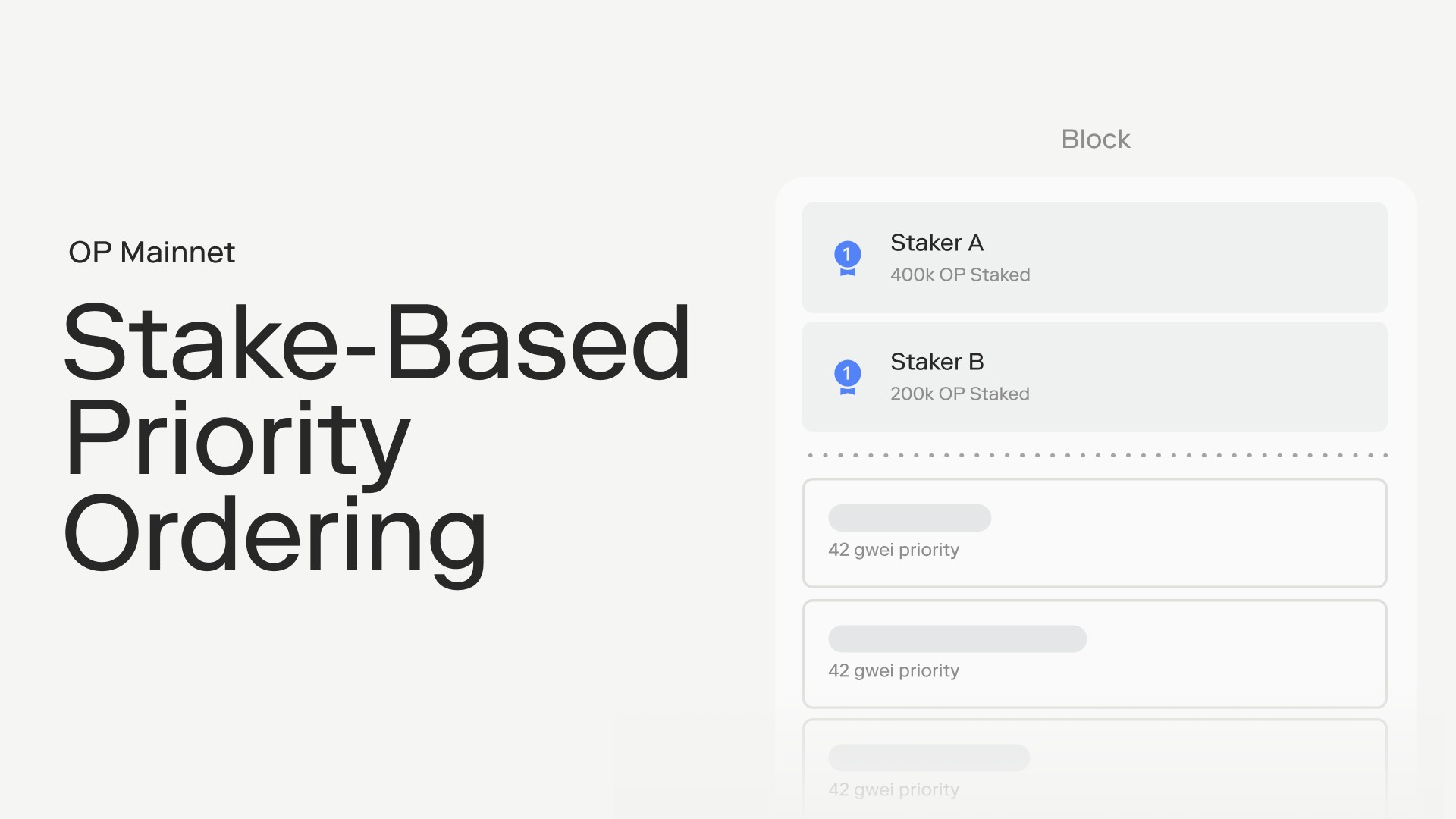 Optimism launches stake-based transaction ordering on OP Mainnet, with 100,000 OP staked unlocking priority block access2026-04
 Tempo ships Zones on testnet: private EVM chains running parallel to mainnet for enterprise stablecoin payments2026-04
 Solana will raise its mainnet block compute limit by 66% to 100M compute units as SIMD-0286 activates in Epoch 1009, expanding network throughput and execution capacity2026-07
 SOON fully restores mainnet after July 12 offchain infrastructure incident, says no user assets were affected2026-07
Inside blockchain mainnets: the live layer of crypto networks
In blockchain, a mainnet is the live, production network where real assets move, smart contracts execute with economic consequences, and onchain activity is finalized and recorded forever. It is the environment that turns a crypto project from a prototype into infrastructure that users, developers, institutions, and increasingly AI systems can rely on.
What is a mainnet?
In its simplest form, a mainnet is an independent blockchain running its own network with its own technology and protocol, where the native cryptocurrency or tokens have real-world value and can be transferred, traded, or used in applications. Unlike a prototype or demonstration chain, a mainnet is the canonical ledger for that ecosystem: it defines the authoritative state of balances, smart contracts, and governance decisions. When people talk about “going live on mainnet,” they are talking about moving code or assets into this high-stakes environment, where bugs can translate directly into financial loss or protocol failure. This is why the concept of mainnet is central not only to developers but also to traders, DeFi users, and regulators trying to understand where value actually resides.
Mainnet is often contrasted with other network types used in the development lifecycle, particularly testnet, devnet, and simnet. Whereas a mainnet is the production environment, simnet and devnet are local or private environments that run on a developer’s machine or a controlled cluster, optimized for rapid iteration, debugging, and integration with front-end code. Testnets sit in between: they are public blockchain networks that mimic their corresponding mainnet as closely as possible but use valueless test tokens, allowing anyone to experiment with transactions or smart contracts without risking real capital. In this layering, mainnet is the final destination: once code is deployed there, the assumption is that it is production-ready and that users can interact with it for real.
Crucially, “mainnet” is not limited to monolithic layer-1 chains like Bitcoin or Ethereum. Any production blockchain—including layer-2 rollups, appchains, and even some sidechains—will typically refer to its live, externally accessible environment as its mainnet. Ethereum itself has a mainnet that serves as the base layer for a growing ecosystem of layer-2 networks, many of which also have their own mainnets that settle back to Ethereum. In that sense, mainnet is a relative term: it always refers to the production network for a given protocol, even when that protocol is itself built on a larger base chain.
The term is also used more flexibly when projects stage their rollouts. Some teams launch “alpha mainnets” or “mainnet betas,” indicating that the network is live and handling real value but still subject to faster upgrade cycles or explicit limits. For example, Polygon’s zkEVM Mainnet Beta has been characterized as a production environment yet is already on a published sunset path, with users urged to migrate assets before the sequencer is shut down. Similarly, Galxe’s Gravity chain began with an Alpha Mainnet that processed millions of real transactions as a proving ground before transitioning toward a more permanent Gravity L1 mainnet. These qualifiers do not change the fact that real value is at stake; instead they signal that the protocol considers its mainnet to be in an early, still-evolving stage.
Finally, some networks distinguish between a “closed” or firewalled mainnet and an “open” mainnet. Pi Network, for instance, initially operated its mainnet behind a firewall, only later opening it so that its native PI token could trade externally and integrate with the broader crypto market, at which point PI rapidly found a market price. This illustrates that even once a blockchain’s mainnet is live, decisions about connectivity to exchanges, bridges, and other chains can profoundly affect how and when users experience that mainnet as part of the wider crypto economy.
Mainnet versus testnet, devnet, and simnet
The distinction between mainnet and other development networks is best understood through their differing goals, risk profiles, and user bases. A simnet, or simulated network, is usually a purely local environment running on a developer’s machine and tuned for very fast feedback loops, including contract analysis and detailed reports on execution costs. Because it is fully under the developer’s control, simnet is ideal for unit tests and early-stage debugging, but it does not capture the complexity of a public network.
A devnet, sometimes called a mocknet, is typically a local or semi-public blockchain environment where an application’s back end and front end can be developed together. Devnets simulate network entities such as miners or validators, nodes, fees, and block production, but they are designed primarily for internal iteration rather than broad community testing. In this phase, the codebase changes frequently, and stability or security guarantees are not yet a primary concern.
Testnets occupy a different niche: they are public networks that run in parallel to mainnet and are built to closely simulate real-world usage, including participation by external developers and users. Testnets often have their own explorers, faucets, and tooling, and anyone can deploy contracts or send transactions using free or valueless tokens. Their purpose is to expose code to live, adversarial conditions before it goes to mainnet, allowing teams to discover performance bottlenecks, integration bugs, or security issues in a setting that nonetheless safeguards real assets.
Mainnet sits at the apex of this hierarchy, functioning as the production environment where all prior testing converges. When developers deploy code to mainnet, that code becomes publicly available in the strongest sense: users can now move real capital through it, and other contracts and protocols can compose with it in ways that may not have been anticipated. This is why the mainnet designation carries a heavy implication of readiness and responsibility. In web2 terms, moving to mainnet is not just flipping a feature flag; it is akin to pushing code directly into a global financial market where failures can be both irreversible and publicly visible.
Because each network type serves a distinct role, professional teams building serious Web3 applications will typically use all of them in sequence: simnet for initial debugging, devnet for integrating back-end and front-end, testnet for stress testing and beta users, and mainnet for production. For a crypto news audience, the key point is that when a project announces a “mainnet launch,” it is signalling the end of this progression and the beginning of a new phase where its technology can directly affect users’ balances, DeFi positions, and risk exposure.

Nillion begins Blacklight node migration from its L2 to Ethereum L1, with operators moving ahead of the Blacklight L1 mainnet launch on October 5
How mainnets are architected
At a technical level, a mainnet is a distributed system composed of nodes that share a consensus protocol, validate transactions, and agree on the evolving state of the ledger. On a general-purpose platform like Ethereum, this state includes account balances, smart contract code, and the data these contracts store, all of which together power a wide array of decentralized applications. Each node maintains a local copy of this state and participates in a consensus mechanism—proof of work in early systems, increasingly proof of stake—that determines which proposed blocks of transactions become canonical. The mainnet is therefore both a communication network and a shared database whose integrity depends on the operation of thousands of independent participants.
Ethereum’s mainnet illustrates how this architecture supports programmable money and applications at global scale. Users submit transactions to the network, which are propagated through nodes and eventually bundled into blocks proposed by validators. Each transaction specifies operations to be performed, such as transferring ETH, calling a smart contract function, or deploying new contract code. The Ethereum Virtual Machine (EVM) executes these operations deterministically on each node, updating the global state in lockstep. The result is a single, agreed-upon view of balances, contract storage, and logs, all anchored in Ethereum’s mainnet consensus.
Layer-2 networks introduce an additional architectural twist. In the Ethereum ecosystem, layer-2s are separate blockchains that extend Ethereum’s capabilities by processing transactions off the layer-1 while still relying on Ethereum mainnet for security guarantees. These L2 mainnets handle transaction execution on their own infrastructure but periodically post data or proofs back to Ethereum, anchoring their state in the underlying base layer. The effect is that an L2 mainnet can be faster and cheaper than Ethereum while still inheriting Ethereum’s security, at least to the degree that its design and trust assumptions hold.
Mainnet architecture is also closely tied to the handling of assets and tokens. On Ethereum, USDC exists as a native ERC-20 token contract on mainnet, issued and redeemed by Circle and widely used across DeFi protocols. This ERC-20 contract embodies the canonical ledger of USDC balances on Ethereum, and all compliant wallets, exchanges, and smart contracts interact with it to move or hold USDC. The robustness and composability of this token on mainnet makes it a core building block for lending markets, automated market makers, and onchain payments.
Gas and transaction fees provide the economic spine of mainnet architecture. Every operation on a smart contract platform consumes computational and storage resources, which are priced in units of gas; users pay fees in the chain’s native token to cover this resource usage. On Ethereum, for example, each transaction includes a gas limit and fee parameters, and validators prioritize transactions that pay higher fees in periods of congestion. This market for blockspace aligns the incentives of validators, who are compensated for securing the network, with users and protocols, who compete for inclusion in blocks. On L2 mainnets like Optimism (OP Mainnet) or Base, gas is typically paid in ETH as well, but the cost structure reflects the rollup’s own capacity and its costs of publishing data back to Ethereum.
Because mainnet is a live, permissionless environment, its architecture must balance several competing goals: decentralization, security, throughput, and developer usability. Protocol upgrades—whether simple parameter changes or complex hard forks—are coordinated through governance processes that vary from chain to chain. When Ethereum introduces changes such as gas price adjustments, new opcodes, or consensus upgrades, these are rolled out to the mainnet through client updates and activation at agreed block heights, often after being tested on public testnets. Layer-2 networks like Starknet follow a similar pattern, deploying new versions first to testnet and then scheduling mainnet activations that adjust gas models, block production speed, and API standards. This iterative upgrade path underscores that mainnet is not static infrastructure but an evolving platform.
Readers click mainnet launches almost exclusively when they carry direct financial upside for existing holders — staking pools, token airdrops to current holders, or bridges that unlock capital they already own — revealing that 'mainnet is live' alone is not the hook; 'mainnet is live and here is what you earn' is.
Launching a mainnet: from testnet to production
For most projects, “mainnet launch” is the most visible milestone in their lifecycle, marking the transition from experiment to production. The path to that launch typically begins with local development and simulation, progresses through devnets and public testnets, and culminates in a decision that the codebase is stable and secure enough to handle real value. At this point, a genesis block is created or, for existing networks, a significant upgrade is activated, and the project invites users to deploy capital, trade tokens, or use applications in the live environment.
Testnets are the last major proving ground before this point. Because they are public and permissionless, they expose code to a diversity of transaction patterns, integration scenarios, and adversarial testing that is difficult to simulate in local environments. Projects use testnets to validate how their smart contracts behave under stress, how their front ends perform under real load, and how their systems interact with external services such as oracles and bridges. In many ecosystems, testnets also host “beta” user communities who are willing to experiment with new protocols, providing valuable feedback before mainnet launch.
Smart contract audits are a critical precondition for many mainnet deployments, especially in DeFi, where contract logic directly controls user funds. A smart contract audit is a detailed analysis of the contract’s code, aiming to identify security vulnerabilities, incorrect logic, and inefficient patterns, and to suggest ways to resolve these issues. The process typically begins with auditors reviewing documentation such as whitepapers, specifications, and codebases to understand the intended design. After agreeing on a code freeze, auditors run automated tools to perform unit tests, integration tests, and even penetration testing, looking for known classes of exploits or edge cases. This is followed by manual code review, where human experts examine critical paths and compare the implementation against the specification, often uncovering subtle issues that automated tools miss. The output is an audit report that details findings and recommendations; the project team then fixes issues and may undergo re-audits to verify that vulnerabilities have been addressed.
Audits, however, are not infallible. Recognizing this, some ecosystems increasingly emphasize formal verification, which uses mathematical methods to prove that a smart contract satisfies certain properties across all possible inputs and states. Vitalik Buterin has publicly urged teams building complex options protocols to formally verify their designs before deploying them to mainnet, arguing that testing and audits can miss cases that exhaustive formal methods can catch. In the Move-based Aptos ecosystem, the Aptos Move Prover is promoted as a tool that can mathematically prove correctness for every possible case generated by the contract’s logic, adding a “trust layer” before mainnet deployment. Formal verification does not eliminate all risk—it depends on correct specifications and models—but it can significantly reduce the likelihood of catastrophic bugs in critical financial contracts.
Mainnet launches also intersect with token economics and market structure. Many projects coordinate token generation events, airdrops, or liquidity bootstrapping around mainnet go-live, aligning user incentives to populate the new network. Over time, token unlock schedules then expand the circulating supply as previously locked tokens—for teams, investors, or community treasuries—become transferable. When tokens unlock, they join the circulating supply and can be traded or transferred, which can affect liquidity, price dynamics, and governance power on mainnet. Sophisticated investors and protocols pay close attention to these calendars, as large unlocks can change incentives or risk profiles for interacting with a given mainnet.
Operational security at launch is another critical but sometimes overlooked dimension. Incidents in which malware or poor key management on developer machines compromised private keys and allowed attackers to drain tokens during or shortly after mainnet launch underscore that the security boundary is not only in code but in operational practices. In one widely discussed case, attackers gained root access to multiple private keys because developers had backed up keys to an insecure device, leading to losses exceeding tens of millions of dollars across Ethereum, BNB Chain, and a custom mainnet. Such failures highlight that even formally verified and audited contracts cannot compensate for compromised signing infrastructure, especially when deployer or treasury keys control large token allocations or protocol parameters.
The variety of recent mainnet launches illustrates both the breadth of use cases and the common patterns. Galxe’s Gravity chain moved from an Alpha Mainnet, which processed millions of transactions and demonstrated high throughput, toward a more permanent Gravity L1 as it sought to bring its ecosystem fully onchain. AI-focused projects such as Allora have launched mainnets designed specifically as inference layers for onchain AI, quickly integrating with dozens of partners across the “onchain AI stack.” On Sui and other newer smart contract platforms, consumer-facing applications like prediction markets have gone live on mainnet from day one, leveraging parallel transaction processing to build responsive user experiences. Across these cases, the mainnet launch marks the moment when experimental technology becomes infrastructure with real users and real capital at stake.

Fhenix to launch quantum-safe privacy stack on Ethereum mainnet in October 2026, teasing dual mode money

Mainnet in the multi-chain era: Ethereum, L2s, bridges, and USDC
As the crypto ecosystem has shifted from single-chain dominance to a multi-chain and multi-layer environment, the meaning of “mainnet” has become more nuanced. Ethereum remains a global, decentralized platform for money and applications, with its mainnet serving as a base settlement layer for a wide range of assets and protocols. At the same time, a growing set of layer-2 networks—such as Optimism’s OP Mainnet, Base, Arbitrum, and Polygon’s various solutions—operate their own mainnets that connect back to Ethereum for security and settlement. In this structure, there is an Ethereum mainnet and many L2 mainnets, all interlinked by bridges and shared assets.
Layer-2 mainnets are separate blockchains that extend Ethereum’s capacity while inheriting its security guarantees through mechanisms like rollups. They execute transactions off Ethereum layer 1 but post transaction data or succinct proofs back to Ethereum, allowing disputes to be resolved or fraud detected at the base layer. Users interact with these L2 mainnets much like they do with Ethereum: they send transactions from wallets, pay gas fees (often in ETH), and use smart contracts for DeFi, NFTs, and other applications. OP Mainnet, for example, is Optimism’s production network, running an EVM-compatible chain that batches and settles its state to Ethereum, thereby giving users a cheaper environment for onchain activity while keeping Ethereum mainnet as the ultimate arbiter.
Base, the Ethereum L2 incubated by Coinbase, provides a clear example of how “mainnet” can refer both to the initial network launch and to major upgrades. After its initial mainnet go-live, Base has continued to evolve; one prominent upgrade, known as Beryl, introduces the B20 token standard directly into the chain’s node software rather than implementing it only as a smart contract. This design choice illustrates a trend where some token capabilities are being embedded at the protocol layer on L2 mainnets, potentially improving efficiency or security for native assets. The fact that such an upgrade is explicitly described as a “mainnet launch” reinforces that mainnet is not a static endpoint but an evolving production system.
Bridges are the connective tissue of this multi-chain world, and they rely heavily on mainnet contracts. Consider the case of USDC, one of the most widely used stablecoins. On Ethereum, USDC exists as a native ERC-20 token contract, backed 1:1 by reserves and redeemable through Circle’s infrastructure. To bring USDC liquidity to L2s and other chains, earlier approaches used “lock-and-mint” bridges: USDC is locked in a vault contract on Ethereum mainnet, and a corresponding wrapped token—often with the suffix “.e” to denote its Ethereum origin—is minted on the destination chain. USDC.e on Arbitrum or Avalanche, for instance, is created in this way, with the bridge contract controlling minting and burning to maintain a 1:1 relationship with the underlying USDC locked on Ethereum.
This bridging design introduces specific risks. Because USDC.e is controlled by the bridge contract, not directly by Circle, it cannot be redeemed with Circle without first being unwrapped back to Ethereum, and its safety depends on the security of the bridge’s smart contracts. The primary risks identified for USDC.e and similar bridged stablecoins include the possibility of a smart contract exploit of the bridge vault, liquidity fragmentation between bridged and native forms of the asset, and potential regulatory mismatches for compliance-focused users. While canonical bridges to date have maintained the peg and avoided major exploits for USDC.e on major L2s, the mere existence of these additional layers of risk illustrates why users need to understand exactly which mainnet—or which bridge contract—stands behind a token they hold.
As native USDC becomes available on more chains through burn-and-mint mechanisms that do not require a bridge vault, there has been a gradual incentive-driven migration away from USDC.e on chains that support native issuance. However, there is no fixed “sunset date” for USDC.e; instead, its relevance declines as liquidity migrates and protocols update their canonical asset choices. This dynamic underscores that in a multi-chain, multi-mainnet world, the question of which contract on which mainnet is canonical for a given asset is partly a technical question and partly a governance and market convention.
Mainnet sunsets and network migrations add another layer of complexity. Polygon’s zkEVM Mainnet Beta offers an instructive example: Polygon Labs has announced that the Mainnet Beta sequencer will be shut down on a specific date, after which new transactions will not be processed. Users are encouraged to bridge assets back to Ethereum before the shutdown, and Polygon has committed to taking a snapshot of wallet-held balances and automatically migrating those to Ethereum L1 through a dedicated claim interface. However, assets locked in DeFi protocols, liquidity pools, multisignature wallets, or other contract-controlled addresses cannot be automatically migrated and may become inaccessible after the sequencer is switched off. This shows how the interplay between a mainnet’s operational status and protocol-level asset custody can create unrecoverable losses if users do not act in time.
Bridging programs and cross-chain staking strategies similarly face lifecycle changes that can strand inattentive users. KelpDAO, for example, has sunset its rsETH bridging on 20 networks, introducing a recovery path where users must burn rsETH on the source chain, pay a flat USDC fee on Ethereum mainnet, and submit proof to reclaim their backing. While the underlying backing remains safe, the user experience becomes more manual and time-bound, emphasizing that “set-and-forget” assumptions about bridged assets can be dangerous when bridge programs or networks evolve. Major exchanges also participate in these migrations, as when Coinbase supports the movement of INJ from an Ethereum ERC-20 representation to native INJ on the Injective EVM mainnet, giving users a clear window to consolidate their holdings on the new canonical mainnet contract.
These examples highlight a broader point: in the multi-chain era, “mainnet” is always embedded in a wider network of bridges, wrapped tokens, and governance decisions. For a crypto news audience, understanding which mainnet is the source of truth for a given protocol, how assets move between mainnets, and what happens when a mainnet is upgraded or sunsetted is essential to evaluating risk and opportunity across the ecosystem.
Comparative view: development networks and mainnet
To consolidate the distinctions among network types, it is helpful to view them side by side. The following table summarizes key characteristics of simnet, devnet, testnet, and mainnet as described in developer-focused documentation.
| Network type | Visibility and scope | Asset value | Primary purpose |
|---|---|---|---|
| Simnet | Local, single-developer | None | Fast feedback, unit testing, contract analysis |
| Devnet | Local or small shared environment | None | Rapid app and front-end development with mock entities |
| Testnet | Public, permissionless | Valueless test tokens | Stress testing, community experimentation, beta users |
| Mainnet | Public, permissionless | Real economic value | Production use, real users, real assets and risk |
In practice, movement between these environments culminates at mainnet, which serves as the reference point for all asset valuations and many governance decisions. Understanding where a particular deployment sits on this spectrum is crucial: “live on testnet” invites experimentation; “live on mainnet” implies that mistakes can have irreversible financial consequences.
- 01Token rewards tied to launch↗
The two highest-clicked headlines both led with token distribution mechanics — 500MM ARPA staking rewards and the VELO/AERO split ratio — showing readers evaluate mainnet launches as yield events first.
- 02L2 and ZK rollup go-lives↗
OKX X Layer, Cronos zkEVM, Unichain, and Aave V3 on ZKsync Era all drew strong clicks, reflecting sustained reader demand for tracking which ZK-based execution environments are production-ready.
- 03Cross-chain bridge activation↗
Sui bridge, USDC CCTP on Cosmos Noble, and THORChain XRP integration pulled consistent clicks because they unlock capital movement readers were waiting on.
- 04Bitcoin mainnet scaling↗
Fractal Bitcoin's launch as a codebase-native scaling layer backed by Unisat attracted 400 clicks, signaling that Bitcoin-native scalability is a distinct reader concern separate from Ethereum L2s.
- 05DeFi blue-chip protocol expansions↗
EigenLayer, Aave V3, GMX V2, and Curvance on Monad all drew clicks not for novelty but because readers track when established protocols extend to new execution environments.
- 06Ethereum mainnet health signals↗
Headlines on transaction volume near all-time highs and L2 TVL hitting $47B attracted readers validating whether Ethereum's base layer remains relevant alongside growing L2 activity.
Onchain applications on mainnet: DeFi, AI, privacy, and onramps
When people say something is “onchain,” they usually mean that key aspects of its logic and state live on a public mainnet and are enforced by its consensus rules. DeFi protocols exemplify this: lending markets, automated market makers, derivatives platforms, and stablecoin issuers deploy smart contracts to mainnet, and users interact with these contracts directly from their wallets. Every loan issuance, trade, or collateral liquidation is recorded on mainnet, creating a transparent trail of financial activity. On networks like Ethereum and leading L2 mainnets, this has given rise to complex ecosystems where protocols compose with one another, using the tokens and contracts of one application as building blocks for another.
Mainnet DeFi, however, is tightly coupled to network risk and upgrade paths. When a mainnet such as Polygon zkEVM Mainnet Beta announces a sunset, assets held directly in user wallets can often be migrated or recovered through planned processes, but funds locked in DeFi contracts may be effectively stranded if those contracts are not upgraded or if there is no mechanism to bridge their underlying assets. The experience of users whose assets were trapped in DeFi protocols on soon-to-be-retired networks underscores that “onchain” composability can become a liability when the underlying mainnet itself changes status. For traders and liquidity providers, monitoring mainnet-level roadmaps and governance proposals is therefore as important as tracking protocol-level risk parameters.
Beyond finance, AI-driven applications are increasingly using mainnets as coordination layers and trust anchors. Allora Network, for instance, has launched a mainnet designed as an inference layer for onchain AI, powering a growing ecosystem of partners who rely on it to supply predictions or model outputs to smart contracts. In such designs, the mainnet provides a verifiable ledger of AI inferences, rewards, and reputation scores, making it possible to build markets and coordination mechanisms around machine-generated signals. The result is a new class of “AI-native” protocols whose economic logic is enforced on mainnet while their computational heavy lifting may occur offchain or on specialized infrastructure.
As AI agents begin to transact autonomously on mainnet, questions of safety and control take on new urgency. Chainlink has framed “onchain AI agent safety” as the combination of frameworks and cryptographic guardrails needed to ensure that autonomous AI programs interacting with smart contracts operate predictably and avoid catastrophic errors. Ensuring such safety involves secure infrastructure, reliable and cryptographically verified data inputs, and layered security models that may include multisignature wallets, human-in-the-loop oversight for high-value actions, and strict limits on what an AI agent can do without additional verification. These considerations are not theoretical: AI-driven trading bots, rebalancing agents, and yield optimizers already interact with DeFi on mainnet, and poor design can amplify losses or create feedback loops in volatile markets.
Privacy-focused innovations are also emerging at the mainnet layer. Aptos, for example, has launched Confidential APT on its mainnet, introducing opt-in privacy features that encrypt token amounts and balances while keeping sender and recipient addresses visible onchain. By integrating this functionality with a mainstream mobile wallet such as Petra, available on both Android and iOS, Aptos demonstrates a path where privacy-enhancing technology can be directly accessible to everyday users rather than confined to specialized privacy coins or mixers. This pattern may spread to other mainnets, especially as developers experiment with zero-knowledge proofs and other cryptographic techniques to balance regulatory expectations for traceability with user demands for financial privacy.
Onramps—the bridges between fiat systems and crypto mainnets—represent another important front. While centralized exchanges and custodial services have historically dominated this space, they often require users to surrender both funds and personal data, potentially undermining crypto’s promise of minimizing intermediaries. In response, some projects are building zk-enabled, non-custodial fiat-to-crypto ramps that live on mainnet, allowing users to move from bank accounts to onchain assets without centralized custody. Horizen’s mainnet, for instance, hosts experiments in this direction, where zero-knowledge proofs are used to provide compliance assurances without exposing full transaction histories to intermediaries. Although these designs are still emerging, they point to a future in which the path from fiat to mainnet-native assets is more aligned with the self-custodial ethos of crypto.
Taken together, these trends show mainnets evolving from simple ledgers of token balances to rich execution environments for a wide variety of onchain logic, from DeFi and NFTs to AI and privacy tech. For users, the key implication is that what happens on mainnet is no longer just transfers of value; it is the execution layer for increasingly complex digital institutions.
Nillion plans encrypted markets on Ethereum mainnet to hide onchain orders, strategies, and agent logic
Security, risk, and governance on mainnet
The move from testnet to mainnet magnifies risk, because the same code that once manipulated valueless test tokens now controls real assets and potentially interacts with a complex web of other protocols. Deloitte has suggested that blockchain risks for financial organizations can be understood in three broad categories: standard risks that resemble those in traditional processes but with new nuances, value transfer risks associated with peer-to-peer movement of assets and data, and smart contract risks arising from encoding complex arrangements directly onchain. Each of these categories plays out differently on mainnet than on testnet because failures are no longer hypothetical—they result in immediate financial losses, regulatory exposure, or reputational damage.
Standard risks include familiar issues such as IT outages, key mismanagement, and operational mistakes, but these tend to have sharper consequences in a permissionless mainnet environment. For example, losing access to a wallet that controls keys for a major DeFi protocol treasury is not equivalent to losing a password in web2; without backup mechanisms, it may permanently lock funds or governance power. Malware on developer machines that compromises deployment keys can enable attackers to upgrade contracts maliciously at the moment of mainnet launch, as seen in high-profile incidents where misconfigured backups and insufficient segregation of duties led to the theft of tens of millions of dollars. These are not failures of the blockchain itself but of the human and organizational layer that interfaces with mainnet.
Value transfer risks arise because mainnets enable direct peer-to-peer movement of assets, identities, and information without central intermediaries to absorb or manage risk. While this can reduce counterparty and settlement risk in some contexts, it amplifies others: a transaction sent to the wrong address is usually irreversible, and undercollateralized positions can be liquidated algorithmically if price conditions are met. Bridges add another dimension, because they often lock assets on one mainnet and mint wrapped representations on another; if a bridge’s contract is exploited, both hands of that lock-and-mint relationship can be compromised. In such cases, the existence of multiple mainnets can multiply the impact of a single failure, propagating contagion through wrapped assets and intertwined DeFi positions.
Smart contract risks are perhaps the most discussed in the context of mainnet, because contracts are often immutable or only upgradable under restrictive governance processes. Encoding legal, financial, or business arrangements directly in smart contract code removes the interpretive flexibility and discretionary intervention that exist in traditional systems. A bug in a collateralization function, a mis-specified oracle, or a missing access control check can produce outcomes that are technically “by the code” but economically disastrous. Audits and formal verification can mitigate these risks, but they require discipline: code freezes before audits, adherence to audit recommendations, and careful governance around upgrade keys. When teams rush to mainnet without these safeguards, they are effectively asking users to bear the tail risk of unvetted code.
Governance and upgrade mechanisms are themselves major risk factors on mainnet. Some networks emphasize strong social consensus and conservative upgrade paths, as in Bitcoin or Ethereum, where hard forks follow extensive community deliberation and testing. Others use more agile governance, with token-weighted voting enabling rapid parameter changes or contract upgrades. In the latter case, governance risk includes not only the possibility of capture or voter apathy but also simple mistakes in executing upgrades. When a mainnet upgrade such as Base’s Beryl release or Starknet’s gas model changes is planned, node operators must coordinate to adopt new client versions, and users may need to adjust their assumptions about fees or performance. Failures in this process can lead to temporary chain splits, degraded performance, or confusing UX.
Mainnet sunsets and network transitions represent a particularly challenging governance scenario. Polygon’s phased retirement of its zkEVM Mainnet Beta, for example, demonstrates governance and operational planning done in advance: users were given a year-long migration window, clear communication that wallet-held assets would be auto-migrated to Ethereum L1, and a claim interface to recover those funds on Ethereum. Yet even with such planning, assets left in DeFi protocols on zkEVM after shutdown are expected to become inaccessible, illustrating that no amount of governance process can fully protect users who are not actively monitoring changes at the mainnet level. Gravity L1’s transition from an Alpha Mainnet to a more mature network similarly reflects the need for clear migration paths and communication when early-stage mainnets reach the end of their intended lifecycle.
User-level risk management on mainnet therefore depends on a combination of tooling, practices, and awareness. From a tooling perspective, hardware wallets, multi-signature schemes, and permissioned modules can limit the damage of key compromise. On the practice side, using audited protocols, avoiding excessive reliance on wrapped assets when native alternatives exist, and diversifying across mainnets and bridges can all reduce single-point-of-failure risk. Awareness involves tracking not only protocol-level announcements but also mainnet-level roadmaps: knowing when a network is planning a hard fork, a sequencer change, or a sunset can be critical to securing assets. As AI agents become more active on mainnet, some of these risk management tasks may themselves be delegated to software, but this only amplifies the need for frameworks like those described by Chainlink to ensure onchain AI behaves within safe boundaries.
Ultimately, mainnet risk is an emergent property of technology, governance, and user behavior. The same architecture that enables trust-minimized, global coordination can magnify the impact of design errors or misaligned incentives. For a crypto news audience evaluating new mainnet launches, upgrades, or incidents, the key is to ask how each of these layers—technical, organizational, and economic—has been addressed.
EigenLayer + EigenDA live on Ethereum mainnet
OKX X Layer ZK rollup mainnet launch
Fractal Bitcoin scaling mainnet goes live
Sonic mainnet launch
Ethereum Pectra upgrade deploys to Holesky testnet
Unichain public mainnet goes live as Superchain L2
Ethereum Pectra upgrade activates on mainnet
- 2025-05launch
YieldNest mainnet launch on May 14
Conclusion
Mainnets are the beating heart of crypto networks: they are where ideas leave the controlled safety of testnets and enter the unforgiving terrain of real economic value. As independent blockchains running their own protocols and securing their own assets, mainnets serve as canonical sources of truth for balances, contracts, and transaction histories, whether at the layer-1 level or in the increasingly important layer-2 ecosystem. They are also evolving, from monolithic ledgers into sophisticated execution environments that host everything from DeFi and NFTs to AI-driven inference markets and privacy-preserving assets.
The path to mainnet involves more than writing and deploying code. It requires disciplined use of simnets, devnets, and testnets, rigorous audits and, where appropriate, formal verification to manage smart contract risk, and careful attention to operational security around key management and deployment processes. Token launches, unlock schedules, and migration plans further shape how users interact with mainnet and how value flows through its contracts, turning technical decisions into market realities. The experience of networks like Pi, Gravity L1, and various L2s shows that mainnet launches can be staged, firewalled, or framed as beta phases, but they all share a common trait: once real assets are at stake, the margin for error narrows sharply.
In a multi-chain world, understanding mainnet also means understanding bridges, wrapped assets, and the governance processes that declare one contract or network canonical for a given asset. The contrast between native USDC on Ethereum, bridge-based representations like USDC.e, and emerging burn-and-mint cross-chain mechanisms exemplifies how mainnet-level design choices impact everyday users’ exposure to risk. Network sunsets and migrations, as seen in Polygon’s zkEVM Mainnet Beta plan and bridge program changes from projects like KelpDAO, reinforce that no mainnet or bridging scheme is guaranteed to last indefinitely and that users must remain engaged to protect their assets.
Security and governance on mainnet remain active frontiers. Deloitte’s taxonomy of standard, value transfer, and smart contract risks captures only part of the picture; new dimensions are emerging as AI agents transact autonomously, privacy layers become more sophisticated, and app-specific chains proliferate. For journalists, analysts, and informed users, the task is to look past the marketing of “mainnet launch” announcements and ask how a given network or protocol addresses the intertwined challenges of security, upgradability, and user safety.
Newly deployed mainnet contracts — especially DeFi protocols launching simultaneously across multiple chains — compress audit timelines, increasing the window for undetected logic flaws before TVL accumulates.
Most ZK rollup mainnets launch with a single sequencer operated by the project team, giving that entity unilateral power over transaction ordering and censorship until decentralization roadmaps mature.
Cross-chain bridges represent the highest concentration of exploitable value at mainnet launch; a canonical bridge vulnerability can drain TVL from both the L2 and its connected chains simultaneously.
Launch-day token incentives draw bootstrapped TVL that is structurally mercenary; once emissions taper, liquidity can exit faster than protocol utilization can organically replace it.
Public mainnet launches that include native stablecoin minting or cross-border token distribution — such as USDC on Cosmos Noble — attract scrutiny over money-transmission licensing across jurisdictions.
Distributed validator technology deployed by networks like SSV reduces single-operator slashing risk on Ethereum, though novel restaking protocols such as EigenLayer introduce correlated slashing exposure across operators running multiple AVSs.
Outlook
Looking ahead, mainnets are likely to become both more specialized and more interconnected. General-purpose layer-1s like Ethereum will continue to serve as neutral settlement layers and hubs for high-value assets, while layer-2 mainnets and app-specific chains take on domain-specific workloads, from high-frequency trading to AI inference and gaming. In this landscape, the term “mainnet” will increasingly be contextual: what matters is not only that a network is live but also what role it plays in a broader constellation of chains and how its security and governance stack up.
At the same time, user expectations for safety and predictability on mainnet are rising. Formal verification, onchain AI safety frameworks, and more mature governance processes are likely to become standard for protocols that aspire to manage significant value. Stablecoin architectures and cross-chain transport mechanisms will continue to converge toward models that minimize bridge-vault risk, as seen in the evolution from USDC.e toward native, burn-and-mint stablecoin issuance across chains. And as regulators deepen their understanding of how value and risk concentrate on mainnet, compliance and reporting obligations will increasingly be designed around the realities of onchain activity rather than legacy abstractions.
For a crypto news audience, the implication is clear: mainnets will remain the primary arena where the promises and pitfalls of Web3 are tested in production. Understanding how mainnets work, how they launch, and how they evolve is essential to making sense of everything from new DeFi protocols and AI agents to network sunsets and cross-chain migrations. As the ecosystem matures, the story of crypto will, in many respects, be the story of how its mainnets rise to meet these challenges.
Latest Mainnet news
Nillion begins Blacklight node migration from its L2 to Ethereum L1, with operators moving ahead of the Blacklight L1 mainnet launch on October 5Fhenix to launch quantum-safe privacy stack on Ethereum mainnet in October 2026, teasing dual mode moneyNillion plans encrypted markets on Ethereum mainnet to hide onchain orders, strategies, and agent logic Prediction markets go live on TxFlow mainnet, powered by ProblyHQ
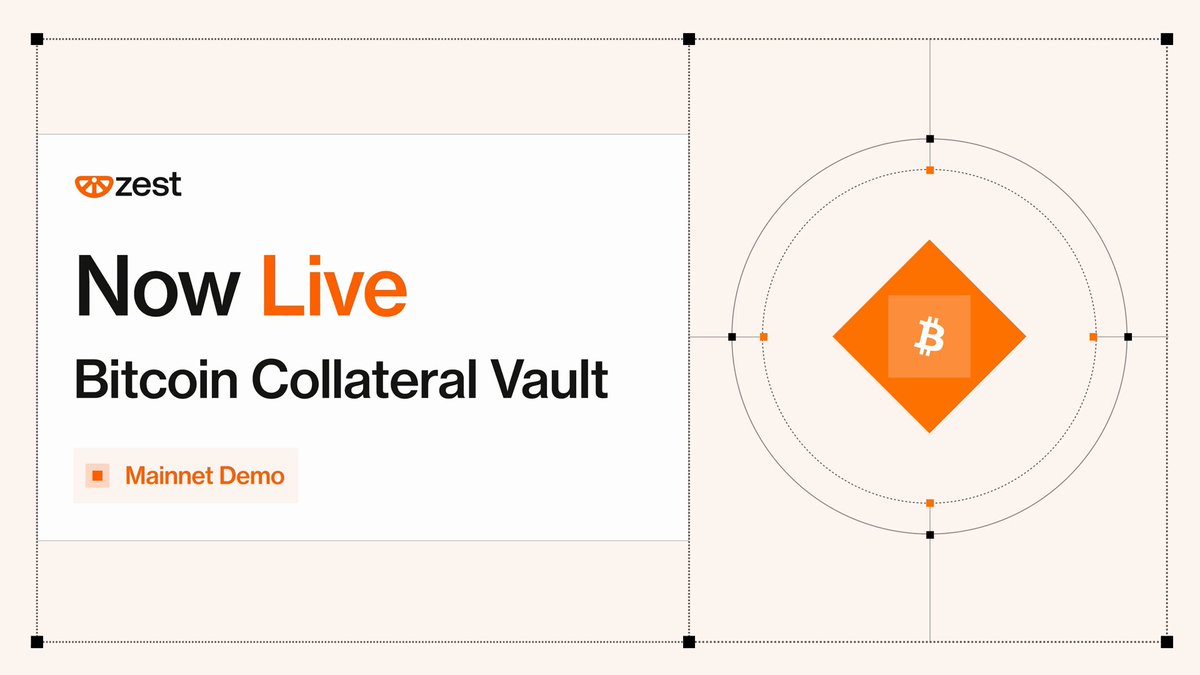 Zest Protocol launches Bitcoin collateral vaults demo on mainnet. Users deposit BTC into personal Taproot vaults on Bitcoin Layer 1 and borrow USDC from Ethereum liquidity.
 Trueo is migrating its prediction market from Base to Ethereum mainnet, citing network effects and oracle goals
Sources
20 records from 13 domains
coinmarketcap.com
hiro.so
ethereum.org
deloitte.com
crypto.news
circle.com
chain.link
hedera.com
tradersunion.com
x.com
- x.com· TheBlockCo / status / 2067922579889766453
- x.com· AptosLabs / status / 2066581537257300432
- x.com· AptosLabs / status / 2068000985080045767
- x.com· CoinbaseMarkets / status / 2067313744741355774
- x.com· Galxe / status / 2062529067451060328
- x.com· KelpDAO / status / 2068047308806385688
- x.com· AlloraNetwork / status / 2064408665449226519
cryptonews.net
tokenomist.ai
eco.com
Community notes
Spot something off or out of date? Drop a note. Editors review topic notes daily and roll accepted fixes into the explainer — contributors are recognized in the monthly $SQUID drop.
Loading notes…
Help improve this topic
Have a story or tip about this topic? Submit it. See something missing? Leave a note. Editors review daily; accepted submissions and fixes count toward the monthly $SQUID drop.