
In-depth explainer on Ethereum blobs: how EIP‑4844 introduced cheap, ephemeral data space for rollups, how upgrades like Pectra and Fusaka scale blob capacity, and how blobs are reshaping L2 fees, validator load and long-term network design.
+2 sources across the wider coverage universe
 Ethereum researchers propose “Block-in-Blobs” (EIP-8142) to shift execution data into blobs, reducing validator load while preserving availability in next-gen network scaling push2026-04
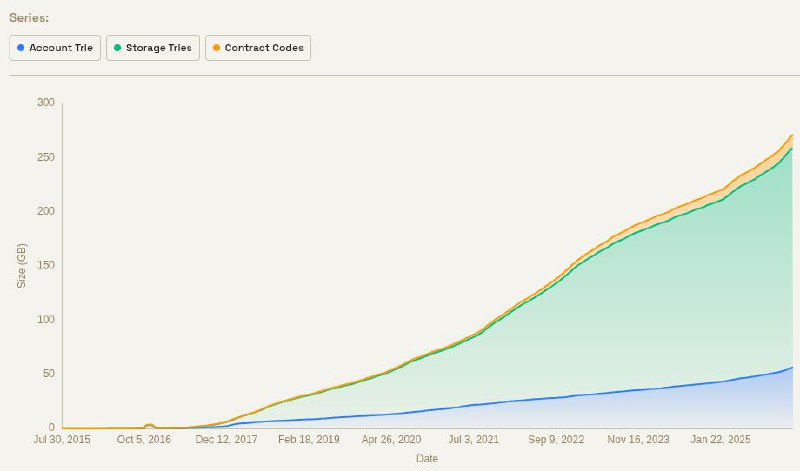 Vitalik maps Ethereum scaling path from Glamsterdam multidimensional gas and ePBS to ZK-EVM multi-proof validation and 8 MB/sec blobs2026-02
 Ethereum L2s entered a brutal post-blob era in 2025, where collapsing fees turned scaling into a knife fight. Despite shrinking profits, Base, Arbitrum, Polygon, Optimism, and Starknet emerged as the Big 5 by capturing real users, apps, and revenue.2026-01
 Ethereum activated a planned fork raising its blob target to 14 and blob limit to 21, boosting data availability for Layer 2 rollups such as Base, Optimism, Arbitrum, and Mantle. On-chain data shows blob usage remains far below capacity.2026-01
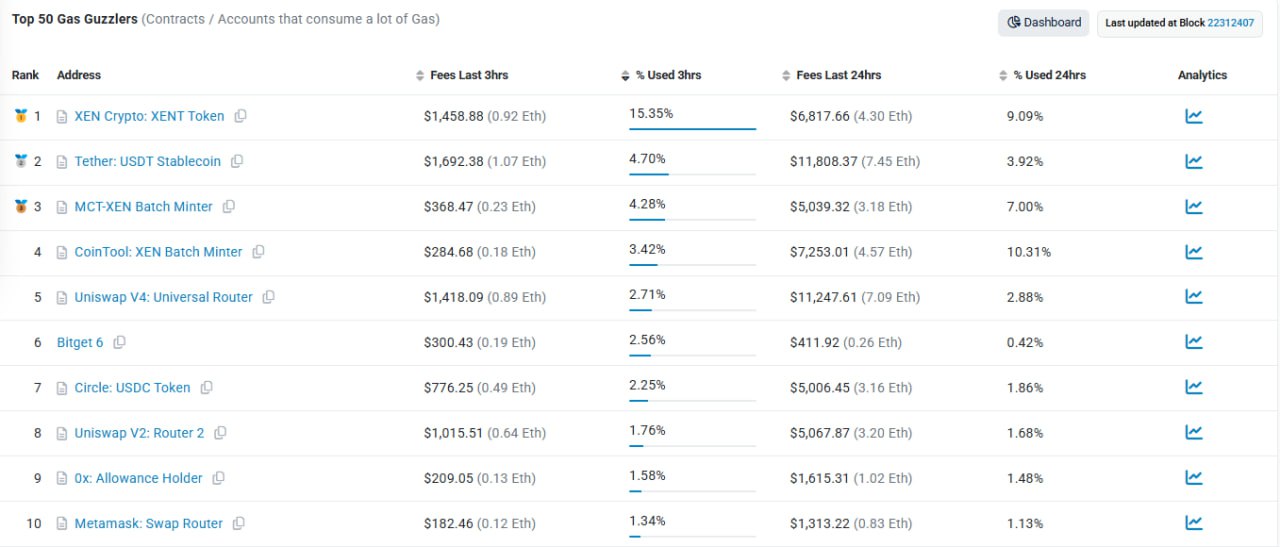 Top L1 gas spenders aren’t L2s, they’re dApps and MEV bots, sparking calls to scale the base layer instead of relying on blobs and endless L2 solutions.2025-04
 Blobs go live on Gnosis Chain ahead of Ethereum’s Dencun upgrade. The developers at Gnosis Chain deployed a version of the Dencun upgrade on the network, activating type 3 blob transactions on the sidechain to help further scale dapps.2024-03
On Ethereum, “blobs” are a special kind of temporary, low-cost data space designed mainly for rollups to publish transaction data securely without clogging the main chain. They sit alongside ordinary transactions, carry large chunks of data, and are pruned after a short time while their cryptographic commitments remain on-chain.
Blobs on Ethereum: The New Unit of Data Availability
What blobs are, in plain language
In the simplest terms, a blob on Ethereum is a big, temporary data packet attached to a block, whose contents the Ethereum Virtual Machine (EVM) never executes and never stores permanently. Blobs were introduced with Ethereum Improvement Proposal 4844 (EIP‑4844), as part of the Dencun upgrade, to give rollups a cheaper way to publish the data they need for security while decoupling that data from the core execution layer. Each blob can hold up to 128 kilobytes of arbitrary binary data, and several blobs can be attached to a single block, making them much larger than a typical transaction payload. Unlike traditional calldata, which lives forever in the chain’s history, blob contents are only required to be stored by nodes for about 4096 epochs, roughly 18 days at current parameters. The permanent part is a cryptographic commitment to the blob, so anyone can later verify that whatever data they retrieved really is the data Ethereum once attested to.
The term “blob” is shorthand for “binary large object,” but it has taken on a specific meaning in the Ethereum protocol. Blobs are a new data structure sitting beside the execution layer in what Ethereum’s roadmap calls Proto‑Danksharding, the precursor to full Danksharding. They are not visible to smart contracts: EVM opcodes cannot read blob contents directly, and JSON‑RPC APIs only expose the commitments rather than raw blob data. That constraint is deliberate. By treating blobs as pure data availability rather than execution inputs, the protocol can scale how much data it carries without forcing every node to execute or store that data indefinitely. The result is a new “blobspace” market, priced separately from normal gas, that Layer 2 (L2) rollups can use to post large batches of transaction data at a fraction of the historical cost of calldata.
From a user’s point of view, blobs are invisible, but their impact shows up in transaction fees and throughput. Major rollups such as Arbitrum began shifting their batch data from calldata into blobs as soon as EIP‑4844 went live, cutting the L1 component of their costs by roughly an order of magnitude. Analytics and tool providers now track blob usage and “blob gas” prices alongside traditional gas metrics, and explorers like Etherscan expose blob-aware views to show how many blobs each block carries and how much rollups are paying to use them. In this way, blobs have quietly become the fundamental unit of Ethereum’s data availability layer, even though the average user never interacts with them directly.

Ethereum researchers propose “Block-in-Blobs” (EIP-8142) to shift execution data into blobs, reducing validator load while preserving availability in next-gen network scaling push

14/21 blobs after BPO2 still got eaten so fast that blob prices spiked instead of falling, so turning execution payloads into blob demand makes the data-gas market the new knife fight for Base, OP Mainnet, and Arbitrum sequencers. BiB matters because Ethereum's >100M gas roadmap and zk-attester future both break on bandwidth before they break on execution. The proving notes showing roughly 40% compression on sampled L1 payloads are more than trivia; if that ratio holds, compression decides whether this is a clean validator win or another blob-fee tax passed straight to rollup users.
Ethereum’s rollup-centric roadmap and the role of blobs
Blobs only make sense in the context of Ethereum’s long-term scaling strategy, which has shifted decisively toward a rollup-centric roadmap. Rather than trying to process all transactions on mainnet, Ethereum now envisions many L2s handling execution while the base layer focuses on security, consensus, and data availability. Rollups execute transactions off-chain, but to inherit Ethereum’s security they must publish enough data on L1 for anyone to reconstruct the L2 state and verify fraud proofs or validity proofs. That requirement makes data availability, not computation, the main bottleneck for scaling. Before EIP‑4844, rollups had to publish that data as calldata in regular transactions, paying the same high per-byte gas cost as any other application.
Because calldata is stored forever and must be downloaded and indexed by every full node, Ethereum priced it aggressively: about 16 gas per byte under the pre‑blob regime. Research and L2 operators repeatedly found that for popular rollups, data posting to Ethereum could represent the majority of total costs, sometimes dwarfing the cost of actually executing the transactions on the L2 itself. BlobKit, a developer toolkit focused on blob transactions, summarises this gap bluntly: calldata can cost on the order of 2–20 dollars per kilobyte, whereas blobspace targets roughly 0.10–2 dollars per kilobyte, corresponding to about one gas per byte. The economic pressure from that discrepancy, combined with the desire to keep mainnet nodes lightweight, pushed protocol designers to carve out a dedicated, cheaper lane for data that only needs to be available for a limited time.
Proto‑Danksharding via EIP‑4844 was the first concrete step. It created a new transaction type (type‑3) that carries references to blobs and a separate gas market for blob usage, while leaving full Danksharding’s more complex data distribution mechanics for later. The Dencun upgrade rolled this system out in stages on testnets like Goerli, Sepolia, and Holesky in early 2024, then activated it on mainnet in March. Dencun’s headline feature on the execution side was precisely these “ephemeral data blobs” designed to cut L2 transaction fees by providing an inexpensive data availability substrate. By design, the initial parameters were conservative: a target of three blobs and a hard limit of six blobs per block, each 128 kilobytes in size, translating to a target of about 0.375 megabytes and a maximum of roughly 0.75 megabytes of blob data per block.
Full Danksharding remains several years away, but the roadmap is clear. In the fully realised design, Ethereum will expand from a handful of blobs per block to dozens, with data availability sampling and other techniques ensuring that no single node has to download everything. Ethereum.org’s roadmap materials project that this will eventually allow the network to support hundreds of individual rollups and millions of transactions per second when combined with rollup compression. Blobs are the stepping stone: they give rollups cheaper data and a protocol-level abstraction that will remain compatible as the underlying data availability machinery evolves from “everyone downloads everything” to a sampled, sharded model.
For L2 ecosystems, that roadmap has immediate and strategic implications. By lowering the marginal cost of data, blobs reduce the “rent” that rollups pay to Ethereum to inherit its security and free up margin that can be passed through as lower user fees or reinvested in ecosystem growth. Research from independent analytics groups has estimated that rollups collectively earned hundreds of millions of dollars in 2024 while paying a substantial chunk of that to Ethereum in transaction costs, with “rent to L1” dropping sharply right after EIP‑4844 and then rising again later as blob gas prices moved. Ethereum’s scaling debate increasingly centres not on whether to support rollups, but on how aggressively to expand blob capacity while keeping mainnet decentralised and secure.
Readers click blobs not for the cryptography but for the economic conflict: every upgrade milestone is shadowed by a counter-narrative — blobs are either too cheap (compressing ETH value accrual), too congested (inscriptions and txpool blocking), or solving the wrong layer (MEV bots and dApps, not L2s, are the real L1 gas burden).
Inside a blob transaction: mechanics, fees, and lifecycle
To understand blobs as more than a buzzword, it helps to look at what actually happens inside a blob transaction. EIP‑4844 introduces a new transaction type, often called “type‑3,” that includes fields for blob versioned hashes—cryptographic references to the blobs that carry the actual data. The transaction itself remains relatively small and is processed by the EVM like any other, but the blob data is handled on the consensus layer and attached to the corresponding beacon block as a sidecar. From the EVM’s perspective, the only thing that matters is the commitment: an opaque value that can be used to verify proofs about the blob’s contents. Applications cannot directly inspect or modify blob data within smart contract logic, which is a sharp contrast to calldata, where bytes are fed straight into contract execution.
The integrity of blob data is enforced using KZG polynomial commitments, a cryptographic scheme that lets verifiers check that a given piece of data matches a commitment with very small proofs. At a high level, the blob’s contents are encoded as evaluations of a polynomial; the commitment is a single group element encoding that polynomial; and provers can later supply short proofs that a certain evaluation belongs to the committed polynomial. This structure is crucial for both fraud/validity proofs in rollups and for the future data availability sampling designs in Danksharding. A node can, for example, sample a few pieces of blob data and ask for proofs that these pieces match the commitment; if all checks pass and the sampling scheme is robust, the node can be confident the entire blob is available without downloading every byte.
Fees for blob usage are governed by a separate EIP‑1559-style mechanism, distinct from the normal gas fee market for computation and calldata. Each blob consumes “blob gas,” and the protocol maintains a target number of blobs per block along with a maximum. When blocks include more blobs than the target, the blob base fee increases; when they include fewer, it decreases; and if usage hits the target exactly, the fee stays flat. The adjustment factor is capped at plus or minus 12.5% per block relative to the previous blob base fee, mirroring the design of EIP‑1559 but applied to blob counts rather than the total gas used by transactions. This separation is intentional: it ensures that congestion in standard execution does not automatically spill into higher blob prices, and vice versa, allowing rollups to benefit from cheap data even when DeFi or NFT trading is driving up normal gas.
Because blobspace is priced per blob and blobs have a fixed size, roughly 128 kilobytes, there is an interesting granularity effect. A rollup that only needs, say, 10 kilobytes of data for a batch must still pay for a full blob, which is wasteful if it cannot pack other data into the same blob. This is a key motivation behind “blob sharing” schemes, where multiple small rollups or applications cooperate to pack their data into shared blobs and split the costs. An academic study that analysed roughly six months of blob usage after EIP‑4844 found that simulated blob sharing could reduce data availability costs by 80% to 99% for both small and large rollups by smoothing the blob base fee and reducing the total number of blobs submitted. That work underscored how the blob fee market, like any other resource market, has economies of scale and benefits from coordination.
The lifecycle of a blob is also quite different from that of calldata. When a type‑3 transaction is included in a block, the blob data is gossiped across the network, stored by consensus nodes, and kept available for a protocol-defined retention period—currently set so that blobs can be safely pruned after approximately 4096 epochs, or about 18 days. After that, nodes are free to discard the data, though some archival nodes or external services may choose to store it longer. The KZG commitment, however, remains in Ethereum’s state and history indefinitely, providing a permanent reference for fraud proofs, state reconstruction, or historical analysis. For rollups, this means they must maintain their own data archives or rely on third parties to keep blob contents beyond the protocol’s retention window; otherwise, they risk losing the ability to fully reconstruct their chain from Ethereum alone.
From the perspective of wallets and tooling, blob transactions introduce new complexity. Standard Web3 APIs and block explorers must be updated to recognise type‑3 transactions, display their blob-related fields, and, in some cases, fetch blob data via separate endpoints or storage providers. Etherscan, for instance, now distinguishes between the calldata portion and blob portion of a transaction fee, showing how much was paid for execution versus data availability. Developer libraries and SDKs, such as BlobKit, wrap this complexity by offering high-level functions to create, sign, and submit blob transactions while handling encoding, fee estimation, and commitment calculations under the hood. The net effect is that blobs become just another resource in the stack—much like gas or storage—albeit one with very different economic and temporal properties.

Vitalik maps Ethereum scaling path from Glamsterdam multidimensional gas and ePBS to ZK-EVM multi-proof validation and 8 MB/sec blobs
Let's see how they achieve this Goodluck on it Vitalik
From EIP‑4844 to PeerDAS: how blob capacity is scaling
Blobs did not arrive fully formed at their current capacity; they are part of a staged scaling plan that ratchets up data throughput as the network proves it can handle it. The Dencun upgrade and EIP‑4844 started with a deliberately low blob limit: a target of three blobs per block and a hard cap of six. Given the 128 kilobyte blob size, that meant a target of about 0.375 megabytes and a maximum of about 0.75 megabytes of blob data per block, which translated to roughly 5.5 gigabytes of daily blob capacity across the network. The idea was to provide immediate relief to rollups without dramatically increasing bandwidth or storage requirements for nodes, then gradually increase those limits through subsequent upgrades as telemetry and client implementations matured.
The next big step came with the Pectra upgrade, a combined Prague (execution) and Electra (consensus) hard fork that went live on mainnet on May 7, 2025. Among other EIPs, Pectra implemented EIP‑7691, which doubled the blob target from three to six per block and raised the maximum from six to nine. At 128 kilobytes per blob, this increased theoretical daily blob capacity from about 5.5 gigabytes to roughly 8.15 gigabytes, significantly reducing the scarcity of blobspace rollups were competing for. Galaxy’s analysis of on-chain data after Pectra found that actual blob usage remained about one-third below the new six-blob target, with rollups collectively averaging fewer than six blobs per block. As a result, the blob base fee collapsed, making blobs “virtually free” again for the first time since mid‑April 2025: median blob object costs in the days after Pectra were on the order of 3.5 × 10⁻¹⁰ dollars per blob, and daily blob object fees dropped by nearly 100% compared to the prior two months.
A distinctive feature of Ethereum’s blob roadmap is the notion of “Blob‑Parameter‑Only” (BPO) forks, which change only blob-related constants such as the target and maximum blob counts without altering execution semantics. Because these forks only touch configuration values and blob capacity in the consensus layer, they can be pre-programmed and deployed with minimal ecosystem coordination relative to more invasive changes. Over time, BPO forks have pushed blob limits well beyond the original nine. A recent BPO hard fork raised the maximum blob count per block from 15 to 21 and the target from 10 to 14, allowing up to 2,688 kilobytes of blob data in a single block and further increasing data availability for rollups. While developers caution that persistently hitting the 21‑blob ceiling could strain node bandwidth and storage, so far on-chain data suggests blob usage remains comfortably below these new thresholds.
In parallel with these parameter tweaks, Ethereum’s core protocol is being re‑architected to support much higher blob counts without sacrificing decentralisation. The Fusaka upgrade, which went live on mainnet in December 2025 after testnet deployments on Holesky, Sepolia, and Hoodi, exemplifies this trend. Fusaka increased the block gas limit from 45 million to 150 million, enabling more execution per block, and introduced two major data management innovations: Peer Data Availability Sampling (PeerDAS) and Verkle trees. PeerDAS changes how blob data is propagated and checked. Instead of every node downloading and storing every byte of every blob, blobs are extended and split into 128 columns, and each node only downloads a randomly selected subset of these columns via a dedicated gossip protocol. With appropriate redundancy and sampling, nodes can be statistically confident that the full data is available without bearing the full bandwidth cost.
PeerDAS has profound implications for blob scaling. Ethereum Foundation research describes PeerDAS as enabling roughly an eightfold increase in blob throughput compared to the pre‑Fusaka “everyone downloads everything” scheme, raising the theoretical data rate from around 64 kilobytes per second to about 512 kilobytes per second. To avoid shocks, Fusaka itself did not immediately jump to this theoretical maximum. Instead, it laid the groundwork for a series of BPO forks that will gradually raise blob counts over time, potentially up to 48 blobs per block, while client teams monitor network health and validator load. If each blob remains 128 kilobytes, 48 blobs per block would correspond to more than six megabytes of blob data per block, or tens of gigabytes per day, all while individual nodes only download a fraction of that thanks to data availability sampling.
Looking ahead, further upgrades under code names like “Glamsterdam” aim to build on PeerDAS with advanced networking techniques, mempool sharding, and multi-dimensional gas accounting. Developers have discussed raising the gas limit to 200 million under Glamsterdam, alongside mechanisms like Block Access Lists and enshrined proposer‑builder separation (ePBS) to enable more parallelism and reduce cross‑resource contention. Vitalik Buterin has sketched a long‑term vision in which scaling has two main pillars: increasingly powerful ZK‑EVMs for execution and an aggressive expansion of blob throughput, potentially up to around 8 megabytes per second of data. In this picture, Ethereum’s base layer becomes a high‑bandwidth data availability engine, with blobs as its primary output and rollups as its primary consumers.
To situate these changes, it is useful to compare the major blob-related upgrades in a compact way:
| Upgrade | Approx. activation | Blob target / max per block | Approx. daily blob capacity | Key blob-related change |
|---|---|---|---|---|
| Dencun (EIP‑4844) | Mar 2024 | 3 / 6 | ~5.5 GB | Introduced blobs and separate blob gas market |
| Pectra (EIP‑7691) | May 2025 | 6 / 9 | ~8.15 GB | Doubled blob target, raised cap to 9, blob fees collapsed |
| BPO fork 2 | Late 2025 | 14 / 21 | >8 GB (higher per block) | Raised max to 21 blobs, target to 14 blobs per block |
| Post‑Fusaka plan | 2025+ | Up to 48 (theoretical) | Tens of GB | PeerDAS plus BPO forks allow much higher blob counts |
Data capacity figures are approximate and depend on the exact number of blocks per day and effective blob usage.
- 01L2 fee collapse, real numbers↗
Arbitrum's $0.05 median swap and the $270M L2 revenue breakdown gave readers a concrete before/after that validated or disproved the blob promise.
- 02Base layer vs L2 scaling debate↗
The revelation that top L1 gas spenders are dApps and MEV bots — not L2s — reframed whether blobs address the actual bottleneck, pulling readers into a foundational scalability argument.
- 03Blob congestion and capacity limits↗
Inscriptions saturating blob capacity and blobs blocking txpool showed readers that the new data lane has its own demand ceiling, making 'blobs = solved' feel premature.
- 04Upgrade deployment milestones↗
Readers tracked each testnet and mainnet activation — Goerli, Dencun, Pectra, Fusaka — as concrete checkpoints confirming the roadmap was real and on schedule.
- 05ETH value accrual post-blobs↗
EIP-4844 slashing L2 fees to near-zero reignited debate over whether cheap blobspace cannibalizes ETH burn, making blob success a potential headwind for ETH holders.
- 06Future blob roadmap (PeerDAS, EIP-8142)↗
Vitalik's post-blob scaling map and proposals like Block-in-Blobs signaled blobs are a floor, not a ceiling, drawing readers tracking where Ethereum goes next.
Rollup economics in the blob era
The economic story of blobs is, in practice, the story of modern Ethereum rollups. Before EIP‑4844, optimistic rollups like Arbitrum and Optimism, as well as zk‑rollups like Starknet and zkSync, had to publish their batch data as calldata. Calldata is permanently stored, fully indexed, and priced accordingly, with gas costs per byte high enough that data posting dominated many rollups’ cost structures. This “rent to L1” was the price rollups paid for Ethereum-grade security: as long as all transaction data was widely available on L1, anyone could recalculate the rollup’s state and validate fraud proofs or zero‑knowledge proofs. But it also meant that a substantial share of rollup revenue flowed straight to Ethereum, constraining how low L2s could push end-user fees without operating at a loss.
Blobs dramatically changed that calculus by cutting data availability costs. With blobspace costing on the order of one gas per byte versus roughly sixteen gas per byte for calldata, the raw cost of posting an L2 batch to Ethereum dropped by roughly 10–100×, depending on the environment and compression. Offchain Labs has reported that Arbitrum switched its batch data to blob-carrying transactions after EIP‑4844 and saw its per‑transaction L1 cost fall by around a factor of ten compared to calldata. Etherscan’s blob documentation notes that once rollups began using blobs, the cost of a simple ETH transfer on many L2s fell below one US cent, a dramatic improvement relative to pre‑blob conditions and a key driver of L2 consumer adoption. Early field reports from Arbitrum’s “Atlas” upgrade, which enabled blob usage on Arbitrum One, highlighted median swap fees on the order of a few cents, reflecting both blob cost savings and separate execution-layer optimisations.
Yet lower L2 user fees did not automatically translate into higher L2 profits. As blobs commoditised data availability, they intensified competition among rollups. In 2025, Ethereum’s L2 landscape entered what some observers called a brutal “post‑blob era,” in which Base, Arbitrum, Optimism, Polygon’s rollup solutions, and Starknet emerged as a de facto “big five” by capturing real users and revenue, but did so in a knife fight over margins. Rollups used cheap blobs to slash fees, offer incentives, and experiment with new pricing models, often giving away much of the savings to attract activity rather than capturing them entirely as profit. At the same time, new rollups continued to launch, further fragmenting liquidity and putting pressure on incumbents to differentiate on more than just fee levels.
On the flip side, Ethereum’s own blob fee revenue evolved in a less linear way than early models assumed. Research on blob usage in the months following Dencun found that rollups initially used blobs relatively sparsely, then ramped up as more L2s integrated them and user adoption grew. Blob fees rose during periods of high utilization, including speculative waves of “inscriptions” and other non‑rollup uses that pushed blob usage toward its capacity limits and temporarily made blobspace scarce. Later, after Pectra doubled the blob target and raised the cap to nine, the increased supply of blobspace caused blob object fees to collapse. Galaxy’s post‑Pectra analysis estimated that rollups’ daily blob object fees dropped by nearly 100%, from an average of more than $16,000 per day in the 60 days before Pectra to almost negligible levels after the upgrade, with median blob object costs effectively indistinguishable from zero.
For rollups, this was a windfall. By mid‑2025, L2 operators were paying a fraction of their previous data costs, even when including both blob object fees and the execution-layer fees for type‑3 transactions. The same analysis found that total daily costs for blobs, including both components, fell by about 51% compared to the pre‑Pectra period, boosting rollup net income even as they kept user fees low. Base, Coinbase’s L2, was singled out as a particular beneficiary in terms of net income after on-chain costs, a reflection of both its transaction volume and its early adoption of blob-centric batch posting. However, this dynamic also reduced the amount of ETH burned by blob fees, with daily ETH burn from blobs alone dropping by roughly 71% after Pectra. Debates around ETH’s value accrual and “ultrasound money” narratives increasingly had to take blob economics into account.
The fixed 128‑kilobyte size of blobs introduced a new efficiency problem, especially for smaller rollups. A rollup that could only fill a fraction of a blob faced a dilemma: either post more frequently, wasting capacity and paying for unused bytes, or post less often, increasing latency and degrading withdrawal times or security expectations. Blob sharing emerged as a promising solution. In a blob sharing scheme, multiple rollups or applications pack their data into a single blob and share the costs, smoothing out usage fluctuations and making better use of each blob. The “180 Days After EIP‑4844” study simulated simple blob sharing on real blob usage data and found that both small and large rollups could reduce their data availability costs by approximately 80% to 99%, largely due to a smoothing effect on the blob base fee and a reduction in total blobs submitted. This suggested that coordination among rollups, whether via third‑party blob packing services or native protocol features, could significantly improve the economics of blob usage.
Blob usage also exposed interesting edge cases in fee dynamics. Ethresear.ch contributors have pointed out that while blobs are usually cheaper than calldata for data availability, there are exotic situations where calldata can be cheaper. One scenario is when blob gas prices spike due to short‑term congestion—say, a burst of inscriptions or speculative blob‑heavy activity—while calldata demand remains low. Another is when blob utilization is extremely low and the base fee has decayed enough that the combined cost of calldata plus a minimal blob becomes comparable. In practice, these windows tend to be temporary and narrow, but they illustrate that blobs are not a static “always better” replacement for calldata; rollups and other applications must monitor both markets and choose their data strategy dynamically.
Finally, blobs have sharpened the contrast between different data availability models across L2s. Arbitrum One, for example, publishes all of its transaction data to Ethereum, giving it a “full DA” security model at the cost of paying blob or calldata fees for every batch. Arbitrum Nova, by contrast, uses an AnyTrust committee to store data off-chain, falling back to Ethereum only if the committee misbehaves, which lowers costs further but introduces additional trust assumptions. Other rollups experiment with off-chain data committees, alternative DA layers, or hybrid models. Cheap blobspace makes full DA models more attractive by narrowing the cost gap, but does not eliminate the trade-off entirely. As blob capacity increases and blob fees fall, the relative appeal of Ethereum‑native data availability versus off‑chain alternatives is likely to remain a central strategic question in the rollup ecosystem.
Ethereum L2s entered a brutal post-blob era in 2025, where collapsing fees turned scaling into a knife fight. Despite shrinking profits, Base, Arbitrum, Polygon, Optimism, and Starknet emerged as the Big 5 by capturing real users, apps, and revenue.
Beyond rollups: new blob‑native designs and applications
While rollups account for the majority of blob usage—one ethresear.ch analysis estimates roughly 87% of observed blobs are used for rollup data—blobs are not limited to rollups. The remaining slice of usage includes experimental applications, data availability schemes for non‑rollup protocols, and early explorations of blob‑native patterns that treat blobspace as a general-purpose, ephemeral data layer. These experiments have ranged from inscription‑style protocols that treat blobs as a canvas for embedding arbitrary data or artefacts, to application‑specific chains leveraging blobs for checkpoints or batched attestations, to oracle and bridging protocols exploring blobspace as a way to anchor large off-chain datasets on Ethereum without paying calldata prices.
One of the most ambitious proposals to extend blobs beyond rollups is EIP‑8142, “Block‑in‑Blobs” (BiB). BiB would require execution-payload data—the transactions and their associated payloads that make up each block—to be published in blob data in the same beacon block that carries the execution payload’s header. In effect, this would move the core block data itself into blobs, while ensuring availability through the same KZG commitment machinery that protects rollup blobs. The goal is to guarantee that execution payloads and their data are always made available, even when validators no longer need them locally to verify the state transition function, thereby reducing the storage burden on validators and better aligning core block data with Ethereum’s evolving data availability layer. To support this, block headers would gain a field such as payload_blob_count to track how many blobs are used for the execution payload, and the protocol’s MAX_BLOBS_PER_BLOCK constant would be understood as covering both payload blobs and type‑3 transaction blobs.
EIP‑8142 is part of a broader research trend that some commentators have shorthanded as “ditching blocks for blobs”—not in the sense of removing blocks, but in the sense of shifting more of the block’s data payload into blobspace to take advantage of the same scalability tools being built for rollups. If the execution layer’s data is itself encoded into blobs, then PeerDAS, BPO forks, and mempool sharding can all be applied to core block data as well as to rollup batches. This would further separate the concerns of execution and data availability, allowing block proposers and builders to focus on assembling valid blocks while the underlying protocol efficiently distributes the associated data through its blob network. It also raises new design questions, such as how to prioritise between payload blobs and rollup blobs when MAX_BLOBS_PER_BLOCK is binding, and how to adjust blob fee markets to account for core protocol data.
Tools like BlobKit point toward another axis of innovation: making blobspace directly usable by application developers beyond rollup operators. BlobKit offers a TypeScript SDK for working with blob transactions, positioning blobspace as “temporary data storage with cryptographic guarantees.” It emphasises that blob data expires in about two weeks, costs 10–100× less than calldata, and inherits Ethereum mainnet security. A developer can, for example, compress logs, game states, or batched event data into a blob, publish it once for a cohort of verifiers to ingest, and then rely on off-chain storage for long-term archival—all while knowing that the published data matched the on-chain commitment at the time. This pattern could be useful for high‑throughput applications like on-chain games, social media platforms, or AI agent coordination layers, where large volumes of data need to be verifiable but not permanently stored on-chain.
Blob experiments have not been limited to Ethereum mainnet. Before Dencun went live, Gnosis Chain implemented a Dencun-like upgrade on its own network, activating type‑3 blob transactions early as a way to stress-test blob mechanics and provide cheaper data availability for its own dapps. On Ethereum’s side, Dencun was rolled out progressively across Goerli, Sepolia, and Holesky testnets, giving client teams and protocol researchers a sandbox for testing blob propagation, fee markets, and tooling. Later testnet campaigns around Fusaka similarly exercised PeerDAS and higher blob loads on Holesky, Sepolia, and Hoodi before the mainnet launch. These testbed deployments have helped surface issues ranging from blob‑related mempool congestion to client performance bottlenecks, informing subsequent optimizations and protocol refinements.
The inscription craze that hit blobspace at various points illustrates both the flexibility and the fragility of blob usage. Inspired by Bitcoin Ordinals and similar protocols, developers began using blobs to inscribe arbitrary data—images, text, or other artefacts—into Ethereum’s data availability layer, often with no connection to rollup security. During some of these waves, blob transactions spiked, quickly hitting the then‑current blob capacity limits and driving up blob gas prices. Coverage noted periods when blobs reached their set utilisation cap, and blobspace started to resemble a speculative commodity as much as an infrastructure resource. While this demonstrated that blobs can host a wide range of cultural and experimental data, it also forced rollups to confront the reality that they share a finite blobspace pool with other use cases, some of which may be short‑lived manias rather than core infrastructure needs.
In the longer run, many developers expect blobs to become a standard building block for a variety of protocol designs beyond classic rollups. These could include aggregated proof systems where large batches of zero‑knowledge proofs or machine learning model updates are posted in blobs, optimistic bridges that checkpoint state roots and proof data via blobs, or cross‑chain coordination layers that rely on blobs as a neutral, verifiable bulletin board. As blob capacity grows and developer tooling matures, the line between “rollup DA” and “general-purpose blobspace” is likely to blur, and Ethereum’s role as a data availability provider may extend to systems that are not recognisably rollups at all.
Dencun activates on Goerli testnet
Dencun / EIP-4844 live on Ethereum mainnet; Arbitrum blobs active, median swap ~$0.05
ArbOS 20 'Atlas' deployed; blob-based data posting cost reductions take effect on Arbitrum One
Pectra upgrade on Ethereum mainnet (epoch 364032); blob count doubled via EIP-7691
Ethereum fork raises blob target to 14 and blob limit to 21
Fusaka upgrade activates on Holesky testnet, introducing PeerDAS and expanded blob capacity
Fusaka hard fork on Ethereum mainnet, further doubling blob capacity with PeerDAS
Risks, open questions, and points of debate
Blobs have unlocked a major scalability lever for Ethereum, but they have also surfaced new risks and unresolved design tensions. One prominent debate concerns the balance between scaling via L2s and scaling the base layer directly. Some on-chain analyses have shown that the top gas spenders on Ethereum are often not rollups but dapps, arbitrage bots, and MEV‑driven strategies, leading critics to argue that focusing on blobs and externalising most activity to L2s leaves mainnet users and applications still contending with high fees. They advocate for more aggressive increases to the base gas limit and execution parallelism so that mainnet itself can support more activity, rather than relying almost entirely on rollups. Recent upgrades have moved in this direction—Fusaka’s tripling of the gas limit to 150 million and future plans to raise it further to around 200 million under Glamsterdam, combined with parallel execution techniques like Block Access Lists—but the trade-offs with node resource requirements and decentralisation remain contentious.
Another concern is validator and node operator load as blob counts increase. Even with PeerDAS, which ensures individual nodes only download a subset of blob data, the overall network still has to collectively handle far more data as BPO forks push blob limits toward 48 per block and beyond. Bandwidth, disk I/O, and memory requirements for validators and full nodes may grow, especially for those that choose to store blobs beyond the minimum retention period or run additional services like archival nodes. Ethereum.org’s PeerDAS documentation frames the change as a “decentralised division of labour,” where each node performs smaller, manageable tasks rather than downloading everything, but the system’s resilience will depend on a healthy, geographically and topologically diverse node set. If blob throughput ramps faster than node capabilities, there is a risk that running a full node becomes too resource-intensive for hobbyists, pushing the network toward de facto centralisation among large operators.
Operational incidents have already hinted at the complexity blobs introduce. Client teams and block explorers have reported cases where heavy blob usage or misconfigured blob handling impacted transaction pools and, in some instances, block production. With blobs carried in beacon blocks and handled through separate gossip channels, there are more moving parts that can fail or fall behind. Situations where blob sidecars are slow to propagate or where client implementations mis-estimate blob gas can lead to temporarily clogged mempools, empty or underfilled blocks, or even missed slots. While these issues have so far been manageable and typically resolved through client updates and configuration tweaks, they underscore that as Ethereum’s data layer becomes richer, the operational envelope becomes more complex.
The ephemeral nature of blobs raises subtle security and user-experience questions as well. For rollups, the fact that blob data is pruned after roughly 18 days means that complete state reconstruction from Ethereum alone is only possible if someone has archived the relevant blobs. In practice, rollups run their own archivers and third parties like data providers and explorers maintain copies, but users must trust that someone will preserve this data, especially for mission-critical or high-value systems. If all external archives were to disappear after blob expiry, Ethereum would still store the commitments and state roots, but it might be impossible to reconstruct the full history or prove some classes of fraud. Applications that rely on blobs for non-rollup data must also design their own archival strategies and communicate clearly to users what guarantees they are actually getting.
The blob fee market, though robust in design, is also subject to speculative and adversarial behaviour. The same separate EIP‑1559-style mechanism that protects blobs from execution-layer congestion can be gamed by actors who flood blobspace for short periods to drive up the base fee, potentially squeezing rollups that cannot easily shift back to calldata. Episodes of inscription-driven blob spikes are one example: speculative blob usage pushed blob counts to their capacity limit, causing fees to surge even as overall rollup demand remained steady. Over the long term, higher blob capacity via BPO forks and PeerDAS should mitigate such shocks by making blobspace less scarce, but if demand grows as fast as or faster than capacity, blobs could remain a contested resource with volatile pricing. Some researchers have suggested additional safeguards or differentiated fee markets to prioritise security-critical rollup data over more frivolous uses, but such mechanisms risk re‑introducing complexity and governance overhead.
There is also the question of ETH value capture. By design, EIP‑4844 made data availability cheaper for rollups, which in the short term reduced the amount of ETH burned and the direct fee revenue Ethereum collected from rollup DA. Galaxy’s Pectra report quantified a roughly 71% decline in daily ETH burned from blob object fees after the upgrade, with most of the remaining burn coming from the base fees of type‑3 execution-layer transactions rather than the blobs themselves. Advocates argue that cheaper blobspace drives more total activity across L2s and L1, increasing aggregate fee revenue and strengthening Ethereum’s moat as a settlement and DA layer. Critics worry that, in a world where most user activity happens on L2s and blob fees are kept intentionally low, Ethereum may capture a smaller slice of the total economic value in its ecosystem, potentially weakening narratives around ETH as a yield‑bearing or deflationary asset.
Finally, blobs have become a cultural and speculative object in their own right. Visualisations of blob usage and fees, such as Eric Wall’s widely shared charts, have portrayed blobspace as going through “hockey stick” phases of rapid adoption followed by long plateaus. Social media posts joking “if blobs were tokens…” capture a certain irony: although blobs are a technical resource rather than an asset, their usage patterns and fee dynamics at times resemble those of highly financialised primitives. Some projects have even attempted to wrap blob usage into tokenised forms or financial derivatives. While this is largely peripheral to the core protocol, it reflects a broader theme in crypto: even infrastructure-level features quickly become entangled with speculative narratives, which can in turn influence usage and stress patterns on the underlying system.
Outlook
Blobs have quietly become one of the most important concepts in Ethereum’s scaling story. They encode a shift from storing and executing everything on mainnet to treating Ethereum as a high‑bandwidth, high‑assurance data availability engine for a constellation of rollups and other protocols. EIP‑4844 and Dencun delivered the first version of this idea, Pectra and BPO forks have expanded its capacity, and Fusaka’s PeerDAS has begun to address the bandwidth and decentralisation challenges of scaling blob throughput further. At the same time, research lines like Block‑in‑Blobs push blobs deeper into the core of the protocol, while tools like BlobKit and early blob‑native applications explore blobs as a general‑purpose, ephemeral storage layer rather than just a rollup primitive.
For crypto markets and projects, the medium‑term implications are clear. L2s will continue to compete fiercely on fees, UX, and ecosystem depth, with cheap blobspace making it easier for newcomers to launch and harder for incumbents to rest on cost advantages alone. Periods of overcapacity, as seen after Pectra when blobs became effectively free, will favour experimentation and aggressive growth strategies, but they may also compress rollup profit margins and put more emphasis on capturing value through governance tokens, sequencer revenue, and vertical integration. As blob capacity ratchets up through successive BPO forks and PeerDAS matures, the window for “rent extraction” from data availability will likely narrow further, making efficiency and product-market fit more important than raw fee spreads.
For Ethereum itself, the path forward runs through careful stewardship of blob capacity and node requirements. Vitalik’s vision of an eventual 8 megabytes per second of blob throughput is technically plausible within the PeerDAS framework, but reaching it without centralising the network will require incremental tuning, robust client implementations, and ongoing investment in bandwidth and networking optimisations. Glamsterdam’s planned multi-dimensional gas and parallel execution features, combined with deeper integration of blobs into block structure via proposals like EIP‑8142, will test the protocol’s ability to juggle many interdependent scaling levers at once. Community debates over how much to prioritise L2s versus L1, how to handle speculative blob usage, and how to ensure long‑term data availability guarantees in a world of ephemeral blobs will likely shape Ethereum’s governance agenda for years.
From an editorial standpoint, blobs are a textbook example of how a seemingly technical change can reshape an entire ecosystem. They have altered L2 economics, reframed Ethereum’s value proposition, and opened new design space for both infrastructure and applications. Yet they remain a work in progress: parameters are still being tuned, new upgrades are on the horizon, and the full implications of blob‑native designs like Block‑in‑Blobs and large‑scale PeerDAS have yet to play out. For readers tracking Ethereum’s evolution, understanding blobs—what they are, how they work, and why they matter—is no longer optional. It is a prerequisite for making sense of where Ethereum and its rollup ecosystem go next.
Latest Blobs news
Ethereum researchers propose “Block-in-Blobs” (EIP-8142) to shift execution data into blobs, reducing validator load while preserving availability in next-gen network scaling pushVitalik maps Ethereum scaling path from Glamsterdam multidimensional gas and ePBS to ZK-EVM multi-proof validation and 8 MB/sec blobsEthereum L2s entered a brutal post-blob era in 2025, where collapsing fees turned scaling into a knife fight. Despite shrinking profits, Base, Arbitrum, Polygon, Optimism, and Starknet emerged as the Big 5 by capturing real users, apps, and revenue.Ethereum activated a planned fork raising its blob target to 14 and blob limit to 21, boosting data availability for Layer 2 rollups such as Base, Optimism, Arbitrum, and Mantle. On-chain data shows blob usage remains far below capacity. Ethereum’s Fusaka upgrade has launched on its final testnet, Hoodi, ahead of a December mainnet rollout introducing Verkle Trees, PeerDAS, and expanded blob capacity for improved scalability.
 Ethereum’s Fusaka upgrade is slated for a Dec. 3 mainnet launch, following testnet rollouts on Holesky (Oct. 1), Sepolia (Oct. 14) and Hoodi (Oct. 28). The hard fork will boost scalability—doubling blob capacity—while preserving decentralization and security.
Sources
19 records from 15 domains
eips.ethereum.org
ethereum.org
galaxy.com
arxiv.org
nervos.org
info.etherscan.com
ethresear.ch
blog.ethereum.org
x.com
consensys.io
coinmarketcap.com
binance.com
blobkit.org
youtube.com
eco.com
Community notes
Spot something off or out of date? Drop a note. Editors review topic notes daily and roll accepted fixes into the explainer — contributors are recognized in the monthly $SQUID drop.
Loading notes…
Help improve this topic
Have a story or tip about this topic? Submit it. See something missing? Leave a note. Editors review daily; accepted submissions and fixes count toward the monthly $SQUID drop.