
Nvidia dominates AI chip supply with $81.6B quarterly revenue, but faces China export controls, rising custom silicon competition, and geopolitical pressure as GPU compute becomes critical national infrastructure.
+22 sources across the wider coverage universe
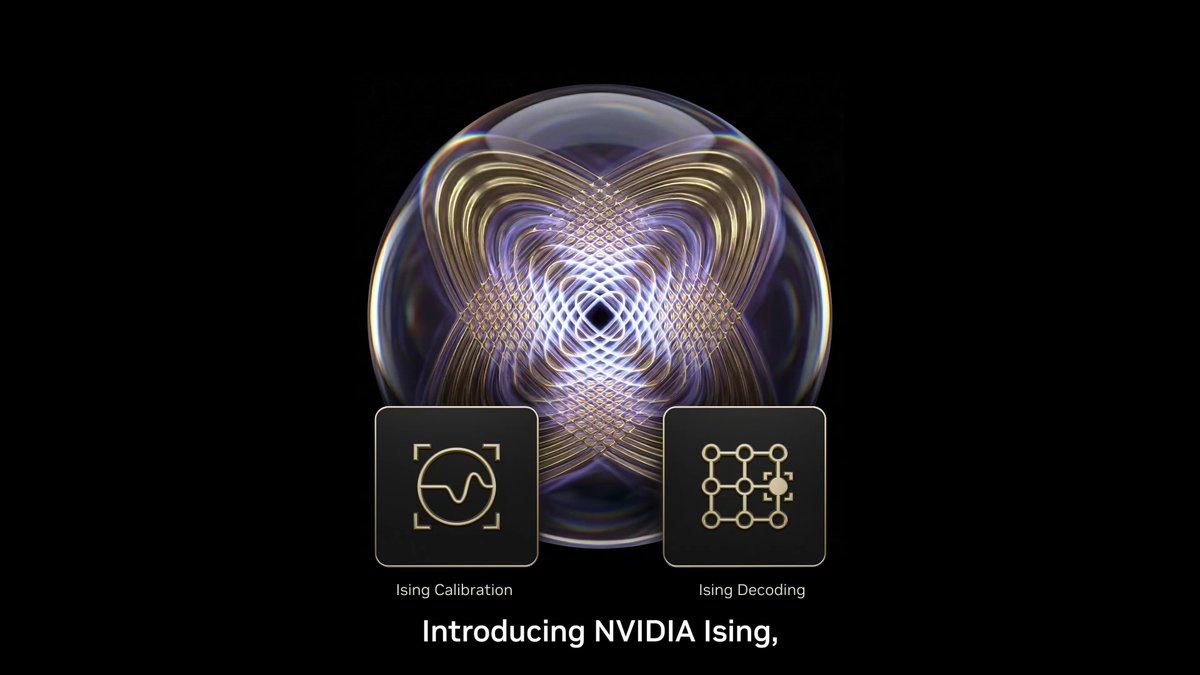 NVIDIA unveils Ising, first open AI models for quantum computing, enabling scalable systems with AI-driven calibration and error-correction to accelerate practical quantum use2026-04
 Bitdeer pivots into AI infrastructure with deal to build Norway’s largest data center, supporting Nvidia next-gen chips2026-03
 Ornn launches compute forward curves for Nvidia H100, H200, and B200 GPUs, bringing transparent market-based pricing to future AI compute demand and supply2026-07
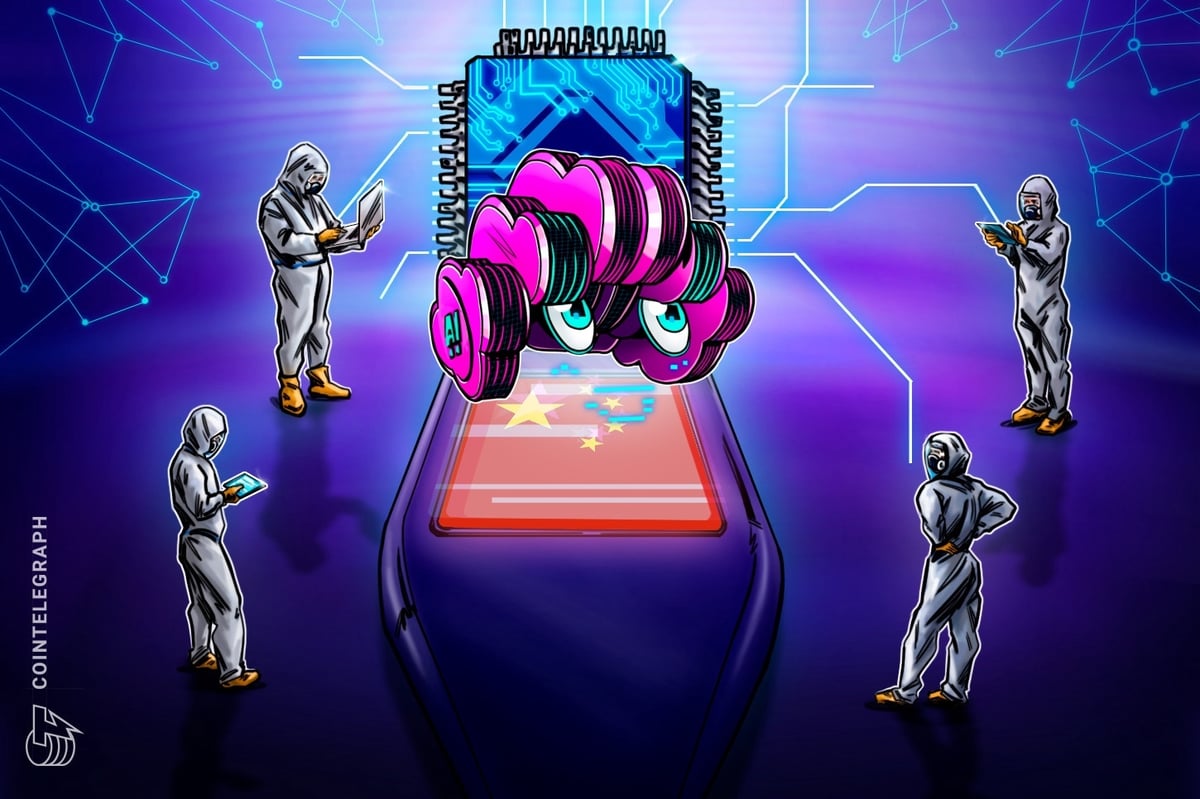 NVIDIA CEO Jensen Huang says China already has the compute capacity to train Claude Mythos-level AI, raising cybersecurity concerns2026-04
 Google in talks with Marvell to build next-gen AI chips, including a memory processing unit and new TPU, aiming to boost efficiency and rival Nvidia’s dominance in GPUs2026-04
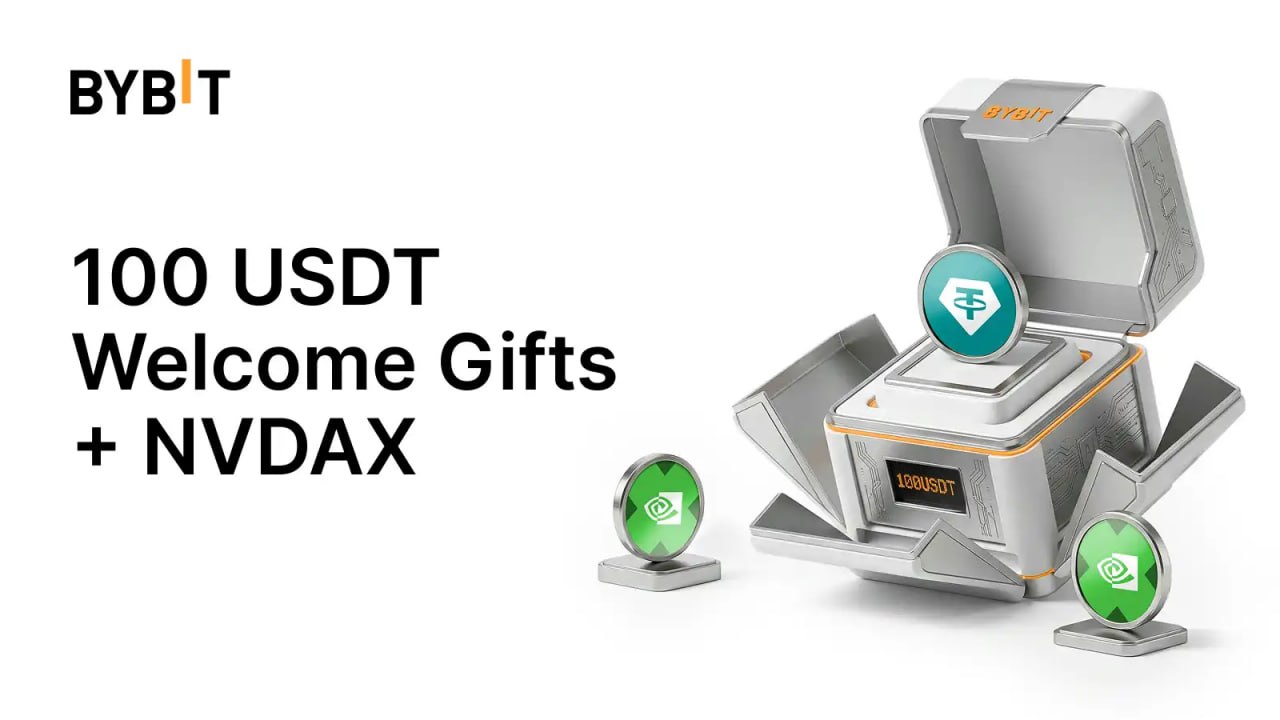 Bybit welcomes new users with NVDAX tokenized NVIDIA equity giveaway: Earn $20 NVDAX by completing tasks plus 100 USDT rewards for ai boom exposure2026-04
Nvidia Corporation is the dominant supplier of graphics processing units (GPUs) that power modern artificial intelligence infrastructure, having evolved from a gaming chipmaker into the central hardware node of the global AI economy.
From Graphics Cards to AI Infrastructure
Founded in 1993 and headquartered in Santa Clara, California, Nvidia spent its first two decades building GPUs for video games. The pivot came quietly in the early 2010s when researchers discovered that the same massively parallel architecture that renders game pixels could accelerate machine learning training at orders of magnitude beyond traditional CPUs.
That structural insight — that AI training is fundamentally a matrix multiplication problem well-suited to GPU parallelism — transformed Nvidia's addressable market from consumer electronics into critical national infrastructure. Today its H100 and successor Blackwell-series chips sit at the center of data centers operated by Amazon Web Services, Microsoft Azure, Google Cloud, and virtually every frontier AI lab on the planet.
The company's CUDA software platform, introduced in 2006, deepened the moat. CUDA gave developers a programming model tightly coupled to Nvidia hardware, and two decades of optimization, tooling, and trained engineers have made switching costs enormous. Competitors selling technically competitive silicon frequently find that the software ecosystem alone pushes buyers back toward Nvidia.

NVIDIA unveils Ising, first open AI models for quantum computing, enabling scalable systems with AI-driven calibration and error-correction to accelerate practical quantum use
Revenue: The $81 Billion Quarter
Nvidia's financial trajectory since 2022 has been unlike anything in semiconductor history. When ChatGPT launched in late 2022 and triggered a wave of enterprise AI adoption, orders for H100 clusters overwhelmed supply chains for over a year.
In its fiscal first quarter of 2026, Nvidia reported $81.62 billion in revenue, up 85 percent year-over-year and above Wall Street consensus. The Data Center segment — covering AI training and inference chips sold to cloud providers, enterprises, and governments — accounted for the vast majority of that figure. For context, Nvidia's total annual revenue in fiscal 2021 was $16.7 billion. The company generated more than five times that in a single quarter four years later.
AI infrastructure demand has also broadened beyond the hyperscalers. Sovereign AI programs — where national governments build domestic compute capacity — have emerged as a distinct demand category, supplementing the cloud provider orders that initially drove the super-cycle.
Leviathan readers treat Nvidia not as a tech stock but as a macro contagion lever for crypto — the highest-clicked stories are those where Nvidia's fate directly moves Bitcoin prices or unlocks on-chain exposure to AI chip dominance.
The China Complication
No strategic question looms larger over Nvidia's long-term outlook than China. The U.S. government has progressively tightened export controls on advanced AI chips since October 2022, restricting the sale of Nvidia's highest-performance products to Chinese buyers. The H100, A100, and their successors are effectively prohibited for most Chinese end-users under current rules.
The restrictions create a genuine strategic tension. China represented a significant revenue source before controls tightened, and Nvidia has repeatedly had to develop lower-specification variants — the H20 being the most notable — calibrated to remain just inside export thresholds. Those products have themselves faced additional scrutiny as regulators adjusted rules.
Nvidia CEO Jensen Huang has been direct about the risk: he has publicly stated that Chinese companies already possess sufficient compute capacity to train models at frontier scales. His presence on Air Force One alongside other U.S. tech executives during diplomatic engagement with China underscores how central Nvidia has become to geopolitical negotiation, not just commercial trade.
The competitive response from China has accelerated in parallel. Chinese AI lab Z.AI released GLM-5.2, a model reported to rival Claude Opus in benchmark performance — developed using zero Nvidia chips. Huawei's Ascend line and a cluster of domestic fabless designers are iterating rapidly. Whether domestic Chinese silicon can match Nvidia's full software-hardware stack at scale remains contested, but the trajectory has clearly shifted.
Bitdeer pivots into AI infrastructure with deal to build Norway’s largest data center, supporting Nvidia next-gen chips
Government and Defense Markets
Nvidia's expansion into classified and defense workloads marks a qualitatively new phase. The White House has backed a reported $9 billion push to secure Nvidia-class AI chips for the CIA and NSA, enabling frontier model deployment on classified cloud infrastructure. The Pentagon has separately designated Nvidia, alongside Microsoft and AWS, as partners for classified AI deployments — a formal recognition that military advantage now flows through commercial AI hardware.
These partnerships carry their own complications. Civil liberties advocates have raised questions about the concentration of surveillance capability that frontier AI inference on classified clouds enables. Supply chain risk — the same export-control regime that constrains China also governs U.S. government procurement of chips manufactured at TSMC's Taiwan fabs — adds another layer of strategic exposure.
Nvidia's Role in the Broader AI Ecosystem
Nvidia is not simply a chip seller. The company has constructed an ecosystem of hardware, software, and capital relationships that function more like a platform than a product line.
OpenAI has been among Nvidia's largest and most strategically important customers, relying on H100 and Blackwell clusters for GPT-4 and subsequent model training runs. The relationship is commercially symbiotic: OpenAI's success validates demand for Nvidia hardware, and Nvidia's supply constraints have historically shaped OpenAI's training timelines.
Amazon has emerged as both a major customer and a long-term hedge against Nvidia dependence. AWS purchases large quantities of Nvidia GPUs while simultaneously developing its own Trainium and Inferentia chips, and has entered talks with Marvell to build next-generation AI silicon. Google is pursuing a similar dual-track strategy with its TPU line. The cloud providers are motivated buyers of Nvidia today and motivated competitors to Nvidia's dominance tomorrow.
Beyond cloud infrastructure, Nvidia has deployed its balance sheet as a venture instrument. The company participated in NEURA Robotics' $1.4 billion funding round alongside Tether and Amazon, backing the humanoid robotics space where GPU-accelerated simulation and inference are becoming core requirements. Nvidia also backed SiFive, which reached a $3.65 billion valuation after a $400 million oversubscribed round advancing open RISC-V chip designs — a strategic hedge into alternative instruction set architectures that could complement or challenge ARM-based AI accelerators.

Ondo enables 24/7 minting and redemption for 20+ stocks, including Nvidia, Tesla, Apple and SpaceX

Crypto, Mining, and the Onchain Angle
Nvidia's relationship with cryptocurrency is long and complicated. The 2020–2021 crypto mining boom created a secondary GPU demand surge that depleted consumer gaming card inventory and inflated prices, generating both revenue and significant reputational friction with the gaming community Nvidia originally served. The company introduced mining-limited variants and later claimed it could algorithmically restrict mining performance, though those limitations proved porous.
The current cycle has a different character. GPU-based proof-of-work mining became structurally less relevant after Ethereum's Merge to proof-of-stake in September 2022, which eliminated the largest GPU mining network. AI inference has substantially replaced mining as the marginal demand driver for GPU compute.
The intersection now shows up differently: IREN, a publicly traded Bitcoin mining and AI cloud company, secured a $3.4 billion AI cloud contract with Nvidia and a $2.1 billion share purchase option, with Nvidia backing expansion via warrants tied to 30 million shares. The deal triggered a significant surge in IREN stock and illustrates how crypto infrastructure companies are pivoting GPU capacity from mining toward AI workloads — often with Nvidia as both vendor and equity participant.
More broadly, crypto-native platforms are now offering leveraged exposure to Nvidia stock onchain, positioning the company alongside Tesla, Google, and Amazon as a target asset for decentralized trading infrastructure.
- 01DeepSeek crypto market contagion
Three separate DeepSeek-related headlines totaling 358 clicks show readers are acutely wired to how AI efficiency shocks cascade from Nvidia's stock into BTC liquidations and altcoin dumps.
- 02Nvidia Bitcoin treasury rumors
A rumored NVDA move into BTC as a treasury asset drew 205 clicks, revealing strong appetite for TradFi legitimacy signals that mirror the MicroStrategy playbook.
- 03Tokenized NVDA on-chain products
Bybit's NVDAX giveaway, Coinbase stock perps, and Mag7 index futures together show readers seeking crypto-native leveraged exposure to Nvidia without touching a brokerage account.
- 04Crypto miners pivoting to AI infra
Bitdeer's Norway data center deal and Nvidia's $683M investment in ex-crypto-miner Arkon's Nscale arm signal that the GPU hardware stack is the new mining rig, pulling readers who track capital flows out of PoW.
- 05Nvidia AI bubble criticism
The $610B bubble framing — unpaid bills, unsold inventory, circular AI spending — resonated with 103 clicks from readers primed by crypto cycles to recognise reflexive hype inflating valuations.
- 06Competing silicon AI disruption
Google Ironwood and quantum computing breakthroughs attracted combined attention as readers assess whether Nvidia's chip moat can survive alternative architectures that would reshape GPU demand curves.
Competitive Threats and Quantum
The most credible near-term competitive threat to Nvidia's GPU dominance comes from custom silicon. Google's TPUs, Amazon's Trainium, and Meta's MTIA chips are all purpose-built for specific inference or training workloads and lack the generality of Nvidia's CUDA ecosystem. The tradeoff: they can be substantially more efficient for the specific tasks they're designed to perform.
AMD's MI300X and MI325X have made genuine inroads at certain hyperscalers, particularly for inference workloads. The software gap relative to CUDA has narrowed, though it has not closed.
Nvidia has also moved to extend its platform into emerging compute paradigms. The company unveiled Ising, its first open AI models for quantum computing, enabling AI-driven calibration and error-correction for quantum systems. While practical quantum advantage for AI workloads remains years away at minimum, the move positions Nvidia to be present at whatever the post-GPU compute era looks like.
On the open-weight model front, Nvidia released what it describes as its best open AI model yet — though the release was received with the note that it still trails Chinese competitors in certain benchmarks, a signal of how quickly the frontier is moving across geographies.
The Jensen Huang Factor
Any honest account of Nvidia must engage with its CEO. Jensen Huang co-founded the company and has led it for over thirty years, an unusual tenure in a sector that cycles through leadership rapidly. His technical credibility with engineers, his early and sustained conviction about GPU computing's generality, and his willingness to make long hardware bets — Blackwell was designed before the AI super-cycle made its commercial case obvious — have been central to Nvidia's positioning.
Huang's public statements carry market-moving weight. His comment that China already possesses compute capacity for frontier-scale training was treated as a significant geopolitical signal, not merely a CEO observation. His presence on diplomatic missions reflects a reality that Nvidia's product decisions now directly affect national security calculations in multiple countries.
- 2024-11regulatory
North Korea deploys banned Nvidia GPUs for AI-powered crypto theft
- 2025-01milestone
DeepSeek V3 triggers $560B Nvidia wipe and $850M crypto liquidations
- 2025-10regulatory
UK FCA launches Supercharged Sandbox with Nvidia for bank AI experiments
- 2025-12launch
Singularity Compute launches enterprise Nvidia GPU cluster in Sweden
- 2026-01governance
Nvidia rumoured to consider Bitcoin as treasury reserve asset
- 2026-02milestone
Nvidia snaps up 300K H20 GPUs from TSMC after US lifts China sales ban
- 2026-04milestone
Nvidia surpasses $5 trillion valuation; Jensen Huang announces $500B in orders
- 2026-05launch
Nvidia invests $683M in Nscale (spun off from crypto miner Arkon Energy) for UK AI infra
Outlook
Nvidia enters the next phase of the AI buildout from a position of structural advantage, but that advantage is not permanent. The export control environment will continue to evolve, and its net effect on Nvidia — restricting a large market while potentially accelerating domestic Chinese alternatives — is genuinely ambiguous. Custom silicon from cloud providers is maturing. The open-source model ecosystem, partly enabled by non-Nvidia compute in China, is eroding the premium on proprietary model access.
What Nvidia has that competitors lack is time in the ecosystem. CUDA's two-decade head start, the breadth of software optimized for its hardware, and the institutional knowledge embedded in thousands of AI engineering teams represent a compounding advantage that chip benchmarks alone do not capture. The question for the medium term is whether that advantage persists as inference displaces training as the dominant workload — inference being a domain where custom, efficient silicon has a stronger comparative case.
For crypto-native observers, Nvidia matters both as a barometer of AI infrastructure spending and as an increasingly direct participant in the onchain economy, through mining-to-AI pivots, equity partnerships with crypto companies, and its chips running the inference workloads that power the AI agents increasingly intersecting with DeFi and Web3 infrastructure.
Latest Nvidia news
NVIDIA unveils Ising, first open AI models for quantum computing, enabling scalable systems with AI-driven calibration and error-correction to accelerate practical quantum useBitdeer pivots into AI infrastructure with deal to build Norway’s largest data center, supporting Nvidia next-gen chipsOndo enables 24/7 minting and redemption for 20+ stocks, including Nvidia, Tesla, Apple and SpaceX Bybit expands 24/7 options trading to stock perpetuals, starting with SpaceX and NvidiaOrnn launches compute forward curves for Nvidia H100, H200, and B200 GPUs, bringing transparent market-based pricing to future AI compute demand and supplyNVIDIA CEO Jensen Huang says China already has the compute capacity to train Claude Mythos-level AI, raising cybersecurity concerns
Community notes
Spot something off or out of date? Drop a note. Editors review topic notes daily and roll accepted fixes into the explainer — contributors are recognized in the monthly $SQUID drop.
Loading notes…
Help improve this topic
Have a story or tip about this topic? Submit it. See something missing? Leave a note. Editors review daily; accepted submissions and fixes count toward the monthly $SQUID drop.