
In-depth explainer on how Google’s cloud, AI, quantum research, and payment rails intersect with crypto, from Gemini agents and BigQuery chain data to Google Pay on-ramps and quantum risks to Bitcoin, with guidance for Web3 builders.
+42 sources across the wider coverage universe
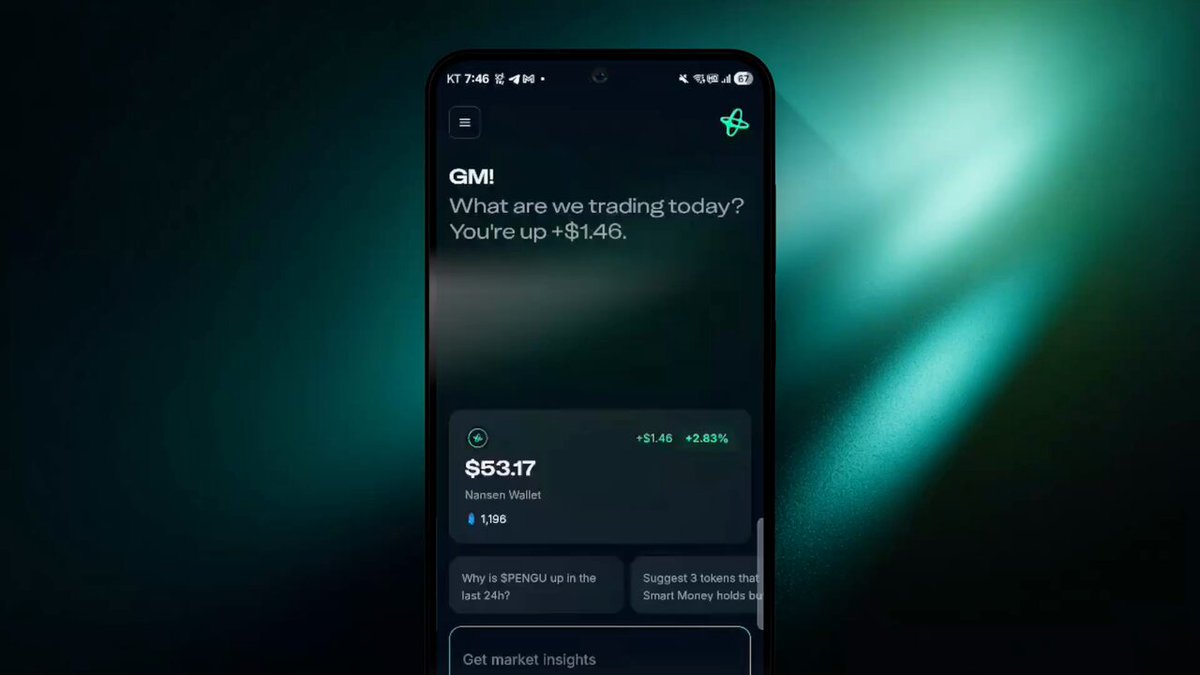 Nansen integrates MoonPay fiat on-ramp, enabling seamless in-app crypto purchases via card, Apple Pay, and Google Pay without leaving platform2026-04
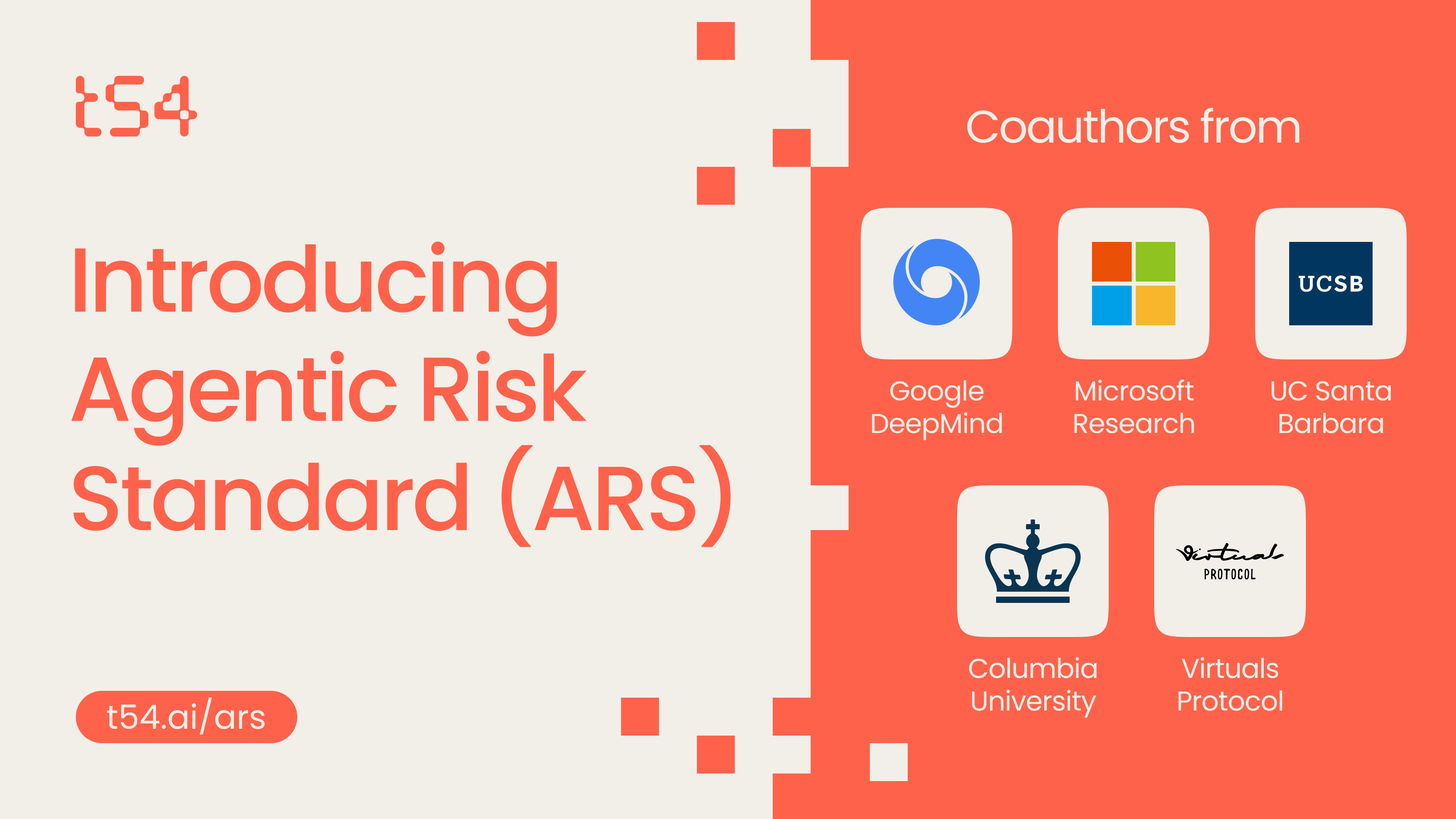 New ARS research by t54 Labs and collaborators from Google DeepMind and Microsoft aims to standardize risk with escrow and collateral systems for agent-based economies2026-04
 MetaMask flags rise of AI-driven crypto attacks, from fake Google security pages to malware hitting 850+ extensions, exposing growing risks in automated fraud2026-04
 Eigen Labs launches an open quantum challenge after AI agents built by non-experts reproduced 80% of Google's unpublished Bitcoin-breaking cryptography breakthrough2026-06
 Hoskinson's $200M privacy chain Midnight launches mainnet with Google Cloud, Telegram, MoneyGram running nodes2026-03
 Security analyst reveals how Lazarus Group uses a macOS malware kit “Mach-O Man,” luring victims via fake Zoom and Google Meet links to execute malicious commands and gain full system access2026-04
Google, AI, And Crypto: An Evergreen Explainer
As blockchains mature into a full-stack financial and computing layer, Google has quietly become one of the most important—and controversial—dependencies in crypto. The company is simultaneously a cloud landlord for exchanges and node operators, an AI frontier lab via DeepMind and Gemini, a potential adversary through quantum computing research, and a payment and identity gateway through Android, Chrome, and Google Pay. Understanding how Google operates across cloud, AI, security, and consumer platforms is now part of understanding the real trust and risk model of modern crypto markets.
What Google Is And Why It Matters To Crypto
At its core, Google is a global technology conglomerate whose business spans internet search, advertising, cloud computing, mobile operating systems, productivity software, and increasingly artificial intelligence and custom silicon. For crypto, those headline products matter less than the underlying infrastructure and research agenda: Google Cloud hosts critical Web3 workloads, Google DeepMind sets expectations for the pace and control of AI agents, Google Quantum AI influences how the industry thinks about long-term signature security, and Google Pay serves as a consumer on-ramp to stablecoins and exchanges. The company’s reach means that even protocols that never integrate a Google API directly may still rely on Google-operated cables, data centers, compilers, or mobile platforms.
The rise of Gemini as Google’s flagship model family illustrates how quickly the company has pivoted from “AI-first” to “AI-platform-first.” Gemini is delivered as a consumer assistant through a dedicated app and through AI Mode in Google Search, and as an API surface for developers via Google AI Studio and the Gemini API. The 3.5 Flash variant is optimized for speed and cost and is now the default model in the Gemini app and AI Mode in Search globally, and it is also exposed through an agent-first development stack—Google Antigravity and the Gemini Enterprise Agent Platform—designed specifically for building multi-step workflows and AI agents that call tools and other services. For crypto teams, this turns Google from a mere hosting provider into a provider of decision-making and execution logic that might one day submit trades, propose governance actions, or orchestrate cross-chain strategies.
DeepMind, now tightly integrated into Google’s broader AI efforts, adds another layer of strategic importance. Its chief executive has argued that artificial general intelligence could plausibly emerge within just a few years, suggesting a rough timeline around the end of this decade. Whether or not that forecast proves accurate, it signals how Google’s leadership thinks about the stakes of AI, and by extension the stakes of controlling data centers, codebases, and agents that interface with financial rails. For crypto traders who increasingly rely on AI for market research, coding bots, and even governance simulations, the alignment and control structures of labs like DeepMind are becoming material risk factors, not academic curiosities.
There is also a basic structural reason Google matters to blockchains and DeFi: centralization of compute and data. The same forces that made Google one of the dominant gatekeepers of web search are now at work in AI infrastructure. Analysts estimate that a handful of leading AI startups generate nearly 80 billion dollars in annualized revenue, with just two firms—Anthropic and OpenAI—capturing around 89 percent of that startup segment. While Google itself is not categorized as a startup, its AI products compete in the same market, and together these firms define the de facto standards for models, tooling, and cloud environments. Crypto’s promise of decentralization runs headlong into an AI landscape dominated by a few U.S.-based platforms whose incentives do not always align with permissionless systems.
For a crypto-native audience, then, the question is not whether to “use Google” or “avoid Google” in some binary sense. Rather, the challenge is understanding precisely where Google sits in the stack—hosting, identity, AI inference, data analytics, payments—and assessing how those dependencies interact with decentralization goals, regulatory exposure, and the evolving threat model of quantum and autonomous agents. That requires zooming in on Google Cloud, Gemini and DiffusionGemma, quantum research, consumer payments, and partnerships with companies like Apple, all of which now intersect with Web3.

Google and Apple are hiring crypto talent as job listings point to potential projects involving stablecoins, tokenized deposits and blockchain infrastructure
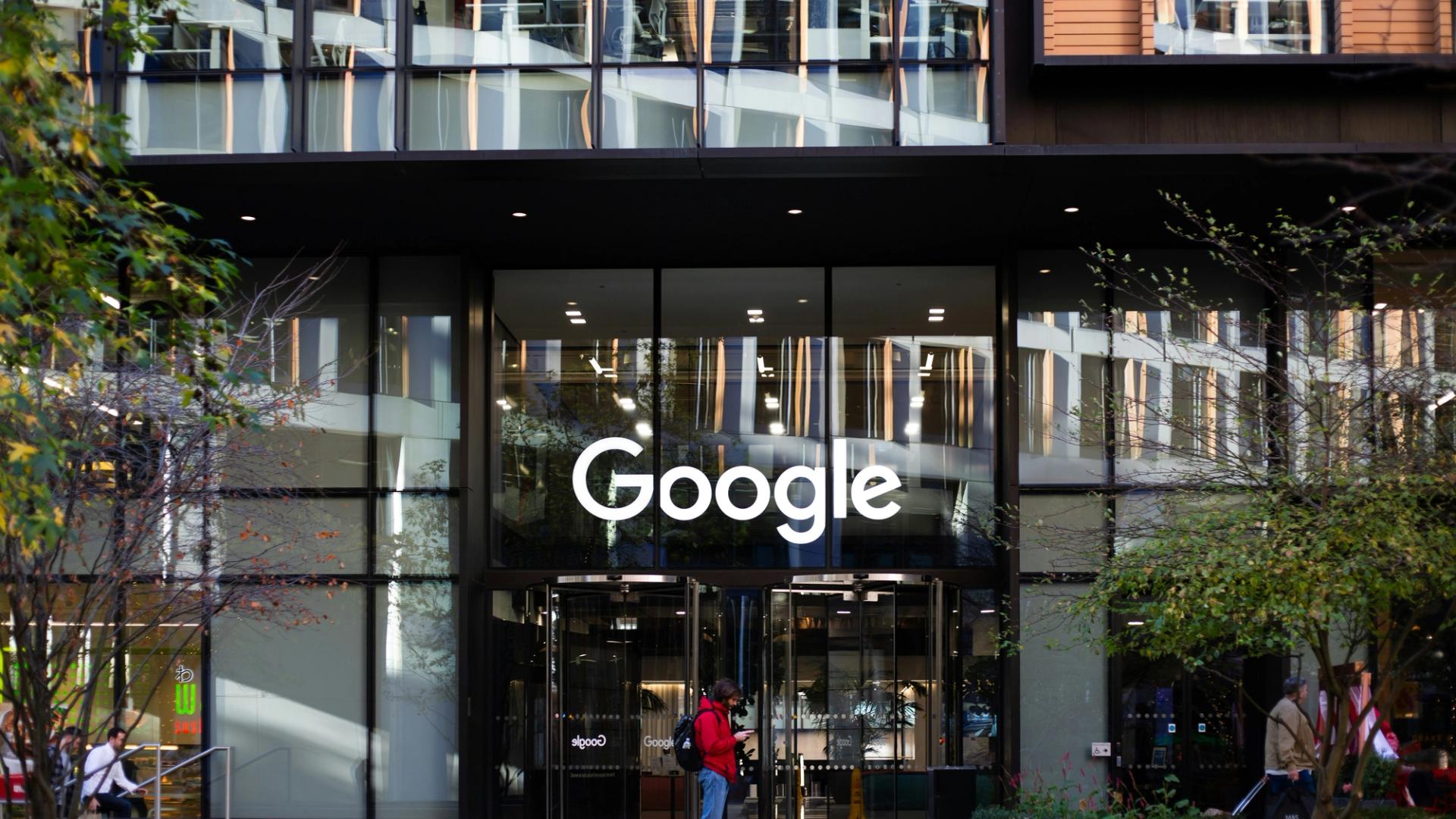
Google Cloud As Crypto Infrastructure
From the perspective of a typical exchange, DeFi front end, or NFT marketplace, Google increasingly appears first as a cloud vendor. Google Cloud competes with Amazon Web Services and Microsoft Azure to host application servers, back-end services, analytics pipelines, and in some cases blockchain nodes themselves. To court Web3 projects, Google Cloud operates a dedicated Web3 program that emphasizes simple, secure tooling and infrastructure for building decentralized apps, Web3 tooling, and related services. The pitch is that developers can get the reliability and security of a hyperscale data center while still interacting with public blockchains and decentralized storage.
Google Cloud’s Web3 pages highlight several recurring themes: integration with popular chains, managed data services, and co-sell and growth opportunities such as exposure through Google Cloud Marketplace. On the data side, Google has extended BigQuery—its flagship serverless analytics warehouse—to include public datasets for major blockchains. Polygon, for example, has its on-chain data mirrored into BigQuery, allowing developers, analysts, and researchers to run SQL queries over transactions, addresses, and contract events with up to one terabyte per month of free processing for many customers. This abstraction layer turns blockchains like Polygon into something that looks and feels like a familiar corporate data warehouse, which in turn lowers the barrier for institutions that want to explore on-chain flows or build dashboards without running their own archival nodes.
For platforms like Polymarket, which runs prediction markets on top of blockchains, this kind of analytics layer is strategically significant. Market makers, risk managers, and even regulators can perform complex historical analysis—correlating order flow with external events, measuring the liquidity response to news, or tracking the behavior of specific wallets—using tools their data science teams already understand. The flip side is that the more critical these Google-hosted mirrors become, the more a nominally decentralized protocol depends on a single corporation’s data pipeline as a source of “truth” for business intelligence and, in some cases, for compliance reporting.
Web3 Programs And A Multi-Chain Strategy
Google Cloud’s Web3 startup program formalizes its desire to be a first-choice provider for crypto projects by bundling credits, community access, and co-marketing support. Startups can apply to receive cloud credits, introductions to other ecosystem partners, and assistance with architecture and security best practices. The program explicitly targets builders of decentralized apps, tooling, and services, which may include everything from NFT marketplaces and DeFi aggregators to layer-two infrastructure companies and oracle networks. The presence of large crypto-native names touting integrations with Google Cloud—such as ChainGPT, which markets itself as an AI infrastructure layer for Web3 and lists Google Cloud alongside Binance, Solana, Tron, Chainlink, and Alibaba Cloud—signals that many teams see value in anchoring their AI and analytics workloads in a familiar hyperscale environment.
Beyond Polygon, Google has steadily expanded its BigQuery public dataset collection to include other chains, and independent ecosystems such as Filecoin increasingly position their own networks as complements or alternatives to centralized cloud databases. Filecoin’s community, for instance, describes its storage layer as verifiable, community-run, and “AI-ready,” highlighting that data is stored across hardware operated by independent providers rather than in a handful of proprietary data centers. For crypto projects that want to combine Google Cloud’s compute with Filecoin or other decentralized storage for persistence, the architecture starts to resemble a hybrid model: centralized CPUs and GPUs for compute-intensive workloads and decentralized networks for long-term, censorship-resistant storage and retrieval.
The Economics Of Data: Storage, Egress, And Training
The tension between centralized cloud and decentralized storage is not merely ideological; it is deeply economic. Google Cloud’s network service tiers illustrate a basic dynamic of cloud pricing that has become especially salient in the AI era: storing data is far cheaper than moving it. Public documentation emphasizes that egress charges—fees for data leaving Google’s network—are billed per gibibyte delivered and vary by region and tier, while ingress (data coming into Google Cloud) remains free. Representative pricing for standard egress shows that the first 200 GiB per month might be free, but beyond that thresholds, prices ramp across bands, with marginal rates of a few cents per GiB for larger volumes. For AI training runs that need to repeatedly stream multi-terabyte datasets from storage to compute or between regions, these costs compound quickly.
A simplified comparison of the economic logic looks like this:
| Item | Typical Cloud Characteristic |
|---|---|
| Object storage per GiB per month | Low unit price; predictable and falling over time |
| Network egress per GiB | Higher unit price; depends on region and tier; can dominate costs |
| Ingress | Typically free |
| Localized compute to storage path | Cheaper; less egress; often preferred for AI training |
These dynamics help explain why many AI practitioners argue that cloud vendors charge “six times more to move your training data than to store it,” and why data egress has become a strategic line item for both centralized AI labs and decentralized data projects. When you combine this with estimates that Google, Microsoft, Meta, and Amazon could collectively spend on the order of seven hundred billion dollars in capital expenditures in a single year by the mid-2020s—primarily to build AI-optimized data centers—the economic pressures become even clearer. Those costs must be recouped through usage fees, which creates incentives to keep workloads within proprietary silos and penalize data portability.
Decentralized storage projects such as Filecoin position themselves as a counterweight to this trend by arguing that open-weight models deserve open infrastructure, where storage and retrieval markets are competitive, verifiable, and not tied to a single corporate balance sheet. The result is a developing pattern in which models might be trained or fine-tuned on centralized clusters, but their training data, prompts, and outputs are archived or streamed from decentralized networks, potentially with cryptographic proofs of integrity attached. For crypto teams designing AI-powered agents that need to read on-chain state, historical data, or user-specific memories, the question becomes whether to anchor those memories in centralized storage systems optimized for latency and convenience, or in decentralized networks optimized for durability, neutrality, and verifiability.
Confidential Compute, Private Cloud, And Trust Boundaries
Cloud economics are only one side of the story; the other is trust. For any crypto business that handles sensitive financial data, user identities, or proprietary trading strategies, the ability to prove that data is processed in a secure environment underpins both regulatory compliance and user trust. This is where confidential computing and trusted execution environments enter the picture.
Apple’s recent evolution of its Private Cloud Compute architecture offers a case study in how this is playing out with Google. Apple has announced that its privacy-preserving cloud infrastructure for running Apple Intelligence—its suite of AI capabilities integrated into iOS, macOS, and other platforms—is expanding onto Google Cloud, with specific emphasis on using NVIDIA’s confidential computing features on GPUs, Intel CPUs with TDX (Trust Domain Extensions), and Google’s own confidential computing stack. Apple’s security research blog describes how this infrastructure uses hardware-level isolation, remote attestation, and other methods to ensure that even Apple cannot inspect user data processed within those environments, while still leveraging the scale and performance of Google’s GPU fleets.
From a crypto perspective, this is significant for two reasons. First, it shows that even a company as vertically integrated as Apple is willing to outsource parts of its AI compute to Google, provided it can enforce strong, verifiable isolation guarantees. Second, it reinforces a broader trend in “private AI” in which the key trust boundary is not only between user and application provider, but between user and cloud operator. For crypto applications, similar concerns arise when using centralized providers to perform zero-knowledge proof generation, MPC key ceremonies, or off-chain order matching. Techniques like remote attestation, confidential VMs, and eventually verifiable computation via zk-proofs are becoming tools for narrowing that trust boundary, even when workloads run in Google’s facilities.
In practice, crypto companies that run on Google Cloud can already take advantage of confidential computing offerings to reduce the risk that hypervisors or administrators can exfiltrate secrets. When combined with on-chain verification of proof artifacts and robust key management practices, this opens the door for hybrids where critical cryptographic operations take place in attestable enclaves, while their outputs are anchored to blockchains. The Apple–Google collaboration around Private Cloud Compute underlines that large consumer technology companies see verifiable runtime guarantees as essential at cloud scale, a lesson that maps cleanly onto Web3’s own trust-minimization agenda.
Readers treat Google not as a single crypto actor but as three simultaneous forces — an infrastructure landlord whose Cloud nodes underpin major chains, a regulatory chokepoint whose app-store and Play Store policies can delist wallets overnight, and an attack surface whose ad platform and quantum roadmap are the two fastest-moving threats to crypto's security stack.
Google’s AI Stack: Gemini, DiffusionGemma, And Agents
If Google Cloud is the substrate, Gemini and related models form the visible AI surface that many crypto teams actually touch. Gemini began as a family of large language and multimodal models and has since matured into a product portfolio that spans consumer assistants, developer APIs, and enterprise agent platforms. This stack represents Google’s attempt to embed AI across search, productivity tools, mobile devices, and third-party applications, and it increasingly emphasizes not just conversation but action: calling external tools, composing multi-step plans, and orchestrating workflows in response to user goals.
Gemini’s developer-facing incarnation lives in Google AI Studio and through the Gemini API, where model variants such as Gemini 3.5 Flash are exposed with different latency and cost profiles. Flash is tuned for fast, scalable inference, making it attractive for chatbots, interactive assistants, and real-time decision engines that need to run across large user bases. For enterprises, Google offers a more curated environment via the Gemini Enterprise Agent Platform and the Gemini Enterprise app, which bundle access control, logging, and integrations with Google Workspace and other business systems. This is where crypto firms might plug in, for example, by connecting Gemini-based agents to internal research archives, compliance playbooks, or trading tools.
Gemini As An Agentic Platform
The shift from static LLMs to AI agents is central to how Google now markets Gemini. Rather than treating models as oracles that emit text, the company stresses “frontier intelligence with action,” positioning Gemini 3.5 as an engine that can plan, execute, and iterate on tasks using external tools and services. In practice, this means Gemini can be given function schemas that represent actions such as querying on-chain data, submitting a transaction through a wallet API, posting a limit order on a DEX aggregator, or signing a message for governance. When integrated into agent frameworks—whether Google’s own Antigravity platform or open agent runtimes in the crypto ecosystem—Gemini becomes a policy layer on top of blockchains.
This power raises obvious safety and governance questions, which Google DeepMind has begun to address in its AI Control Roadmap. That roadmap frames AI control as a defense-in-depth problem focused on detection and response, with emphasis on continuous monitoring of agent reasoning and actions by other “supervisor” AI systems. In DeepMind’s description, these supervisors review an agent’s plans and behavior for indications that it is veering toward harmful or unintended outcomes, intervening when necessary to block or modify actions. Intriguingly, DeepMind reports that most of the issues flagged in its testing did not stem from adversarial agents but from misinterpretations or overzealous attempts to satisfy user goals, which resonates with concerns in DeFi about bots that “do exactly what you asked” but in ways that exploit protocol assumptions.
For crypto, this suggests that deploying Gemini-based agents into an “agentic economy”—where they can access wallets, lending protocols, and governance systems—will require the same sort of oversight and audit trails. Teams need records showing what an agent did, what policies or safety layers applied, and how particular outcomes were reached. On-chain, some of this transparency comes for free: transactions and contract calls are public. Off-chain, logs, telemetry, and perhaps even cryptographic attestations of an agent’s internal state at decision time will likely become standard. The DeepMind roadmap anticipates this by emphasizing tooling for monitoring and response, but crypto adds an additional edge: once an on-chain transaction is finalized, it cannot be rolled back by a cloud operator.
DiffusionGemma And Open-Weight Models
While Gemini is primarily delivered as a proprietary service, Google has also begun exploring open-weight models with DiffusionGemma, an experimental text generation system that diverges from traditional autoregressive LLM architectures. DiffusionGemma uses a diffusion-based approach to generate blocks of text in parallel rather than token by token, enabling significantly higher throughput on GPUs. Google reports that a 26-billion parameter mixture-of-experts version of DiffusionGemma, released under an Apache 2.0 license, can generate over one thousand tokens per second on a single NVIDIA H100 GPU and around seven hundred tokens per second on an RTX 5090.
Technically, this is notable because it suggests a path to faster, more scalable text generation that might be more amenable to certain hardware configurations. Strategically, it matters because open-weight, Apache-licensed models can be self-hosted, fine-tuned, and integrated into decentralized workflows without relying on Google’s APIs or governance decisions. Crypto teams that care about minimizing centralized dependencies can, in principle, run DiffusionGemma or similar models on their own hardware, on decentralized GPU markets, or in TEEs with remote attestation, while still benefiting from research advances originating at Google. The open licensing also makes it easier to combine these models with on-chain incentives: one might imagine a protocol that rewards node operators for hosting and serving DiffusionGemma instances, with quality and safety metrics enforced on-chain.
The contrast between Gemini and DiffusionGemma encapsulates a broader tension in AI: powerful frontier models are often proprietary and guarded, while open models offer more sovereignty at the cost of potentially lagging capabilities. Crypto’s instincts generally favor openness, but the performance and tooling advantages of proprietary systems are compelling. Many Web3 builders therefore adopt a hybrid strategy, using open-weight models where control and composability matter most and relying on Gemini-class APIs for tasks where latency, reliability, and cutting-edge abilities are paramount.
Loop Engineering, Verification, And AI-Crypto Workflows
As AI agents move from suggestion to action, Google’s own engineering leadership has argued that the bottleneck in software development has shifted from code generation to verification and review. The emerging practice sometimes dubbed “loop engineering” focuses on designing closed feedback loops in which agents propose changes, run tests, evaluate results, and refine their own behavior under human or automated oversight. For crypto, this maps closely onto existing practices in security review, formal verification, and staged deployments. Smart contract engineers already think in terms of invariants, property-based testing, canary deployments, and bug bounty programs; agent engineers are now applying similar concepts to AI workflows.
When a Gemini-based coding agent suggests a change to a staking contract, for instance, the critical skill is not writing the initial patch but constructing a verification harness that proves the change does not introduce a re-entrancy vector or break a critical assumption. In DeFi protocol governance, AI-generated proposals must be scrutinized not just for economic soundness but for subtle attack surfaces they might inadvertently open. Addy Osmani’s observation that reviewing AI outputs has become the scarce skill in software engineering underscores that AI-native development cultures will increasingly resemble the security and risk disciplines that crypto teams already practice, rather than traditional “move fast and break things” startup engineering.
Quantum Computing, Google, And Blockchain Security
Beyond cloud and AI, Google’s quantum computing research has become a focal point for the crypto community because it directly addresses the hardness of the elliptic curve discrete logarithm problem that underlies Bitcoin, Ethereum, and many other chains’ signature schemes. The key question is when, if ever, large-scale fault-tolerant quantum computers will be capable of running Shor’s algorithm against real-world public keys, thereby allowing an attacker to derive private keys and spend funds without authorization.
In a recent technical whitepaper, Google’s Quantum AI team provided updated resource estimates for breaking the 256-bit elliptic curve discrete logarithm problem over the secp256k1 curve, which is used by Bitcoin and many other cryptocurrencies for ECDSA signatures. The authors describe quantum circuits that, when executed on a suitably capable quantum computer, could in principle solve the discrete log problem with either roughly 1,200 logical qubits and 90 million Toffoli gates or roughly 1,450 logical qubits and 70 million Toffoli gates. They emphasize that these figures refer to logical, error-corrected qubits; when mapped onto a realistic superconducting architecture with surface code error correction and physical error rates on the order of \(10^{-3}\), the total number of physical qubits required rises to under half a million.
These results represent a substantial reduction in resource estimates compared to earlier work, which sometimes projected requirements on the order of millions of logical qubits and tens of millions of physical qubits, and in some cases more than one hundred billion Toffoli gates. To put the contrast in perspective:
| Approach / Estimate | Logical Qubits (n=256) | Toffoli Gates | Approx. Physical Qubits (Superconducting) |
|---|---|---|---|
| Earlier Litinski-style approach | ~1,100 | >100 billion | ~9 million |
| Google Quantum AI (qubit-optimized) | ~1,200 | ~90 million | <500,000 |
| Google Quantum AI (gate-optimized) | ~1,450 | ~70 million | <500,000 |
These values are approximate and depend on several architectural assumptions, but they illustrate the magnitude of the improvement. Google’s team also used zero-knowledge proofs to validate their circuit compilation results without disclosing specific attack vectors, underscoring how even quantum attack research is beginning to incorporate cryptographic techniques to balance openness and security.
Interpreting The Quantum Risk
For Bitcoin and other ECDSA-based chains, the immediate question is how to interpret these resource estimates. On the one hand, a requirement of hundreds of thousands of high-fidelity physical qubits and tens of millions of logical operations still places large-scale key recovery well beyond current hardware capabilities. Contemporary quantum processors operate with at most a few thousand noisy physical qubits and cannot maintain the error correction necessary for the depths of circuits described in Google’s paper. Even assuming aggressive progress, most experts still view practical, large-scale quantum attacks on mainnet cryptocurrencies as a multi-year to decade-scale prospect.
On the other hand, the trend line is unmistakable: theoretical resource requirements are falling, and large technology companies such as Google have both the scientific talent and the financial means to push hardware forward. The same capex arms race driving GPU and data center buildouts for AI—hundreds of billions of dollars across Google, Microsoft, Meta, and Amazon in a single year—could support quantum infrastructure as well. For blockchains with billions to trillions of dollars in assets secured by classical signatures, even a small probability that quantum capabilities arrive faster than expected becomes a governance challenge.
One particularly acute concern involves coins held in addresses whose public keys have already been revealed on-chain, such as legacy non-hardened wallet schemes or outputs that have been spent once and then reused. Industry observers estimate that millions of bitcoins remain in such potentially vulnerable states, often in early addresses controlled by long-term holders or lost keys. While addresses where the public key remains hashed and unpublished are safer under many quantum threat models, the existence of large, exposed balances could create a scramble if credible quantum capabilities emerge earlier than expected. The prospect of “first come, first served” quantum theft on exposed public keys highlights that risk is not evenly distributed; it depends heavily on usage patterns and wallet hygiene.
Governance, Not Just Cryptography
Many crypto commentators have argued that quantum risk is ultimately less a cryptographic problem—since post-quantum signature schemes and key exchange algorithms already exist—than a governance and migration problem. In principle, Bitcoin, Ethereum, and other chains can upgrade their transaction formats and consensus rules to support post-quantum signatures or hybrid schemes. In practice, such upgrades require social consensus, careful implementation, and a migration timeline that users can realistically follow. The Google Quantum AI paper’s lowered resource estimates compress the perceived margin for error, intensifying debates about when and how to plan migrations.
For Bitcoin, a transition might involve introducing new script opcodes that accept post-quantum signatures, encouraging users to move funds into quantum-resistant outputs, and eventually deprecating or disincentivizing legacy signatures. Ethereum and other smart contract platforms might embed post-quantum verification logic at the EVM or VM level and create incentives for contracts to use hybrid schemes that mix classical and quantum-resistant cryptography. These are not purely technical decisions; they affect UX, fee markets, and even cultural narratives about immutability versus adaptability.
Prediction markets such as Polymarket could play a role by allowing traders to price timelines for quantum capabilities or migration milestones, creating market-based signals to complement expert forecasts. But markets cannot substitute for protocol stewardship. Ultimately, the Google Quantum AI estimates underscore that planning for quantum is not optional, and waiting until hardware reaches intimidating thresholds would likely be too late. Crypto communities must decide what level of confidence they need in time horizons, how to communicate risks to non-technical users, and how to coordinate migrations without triggering panic or opportunistic attacks.
Google Cloud showcases four patterns for real-time AI voice agents that can see, talk, think and code using Gemini 3.8 Live and the Agent Development Kit
Google As Payments, On-Ramp, And Identity Layer
While much of Google’s influence on crypto is invisible infrastructure, millions of users encounter it directly through payments and identity flows. Android devices, Chrome, and Google Accounts serve as gateways into exchanges, wallets, and NFT platforms. Google Pay, in particular, has become a convenient fiat on-ramp for stablecoins and crypto trading apps, effectively embedding crypto access inside mainstream payment experiences.
Third-party services demonstrate how this works. Banxa, a payment and compliance provider, allows users to purchase USD Coin (USDC) using Google Pay, alongside other methods such as credit and debit cards. Users can choose how much USDC they want to buy in their local currency, complete the transaction through familiar Google Pay interfaces, and receive tokens into their specified wallet addresses. Similarly, crypto-native products such as dYdX’s mobile app have integrated fiat deposit flows in partnership with companies like MoonPay, enabling instant funding via Apple Pay and Google Pay in addition to traditional card payments. These integrations turn Google Pay into an invisible backbone for moving fiat into on-chain positions.
NFT and digital art platforms have followed a similar pattern. By listing works in USDC and enabling card or wallet-based payments, marketplaces can offer collectors the option to pay with a debit or credit card through services that, under the hood, rely on Apple Pay, Google Pay, or equivalent. Once the payment clears, the platform handles stablecoin minting or transfer and delivers the NFT to the user’s connected wallet. From a UX standpoint, the process feels like any other in-app purchase, but in the background it stitches together card networks, Google’s tokenized payment rails, stablecoin contracts, and marketplace escrow logic.
This duality—familiar UX over novel rails—has several implications for crypto. It dramatically lowers onboarding friction for users who do not want to manage on-ramps manually, making it easier for DeFi protocols, NFT projects, and gaming apps to attract a mainstream audience. At the same time, it introduces another layer of platform dependency: regulators or payment networks that pressure Google or Apple to restrict certain categories of crypto transactions can indirectly control user access. For privacy-focused users, there is also concern about data trails: Google Pay transactions linked to exchange accounts or NFT purchases could create rich data sets about user holdings and behaviors, even if on-chain addresses are ostensibly pseudonymous.
Identity is a related axis. Many crypto dapps allow users to “log in with Google,” relying on OAuth to create or associate accounts alongside wallet-based authentication. Creator platforms for AI-generated video and art, for example, sometimes let users sign in with Google or connect a wallet via MetaMask Snaps, blending Web2 and Web3 identity models. This can simplify account recovery and multi-device use, but it also ties a user’s creative and financial activity to a centralized identity provider. As AI-native platforms accumulate detailed “AI memories” about user behavior, preferences, and generated content, some cryptographers argue that these emergent memory graphs will be more valuable than traditional social or email histories, sharpening debates about who controls them and how they are stored.
From a crypto governance perspective, these patterns suggest a careful balance. Using Google Pay and Google sign-in can be a rational trade-off for maximizing reach and simplifying onboarding, especially for consumer apps and marketplaces. But protocols that claim strong decentralization and self-sovereign identity must think critically about how deep their reliance on these systems should go, and whether alternative login and payment routes—such as direct stablecoin rails, passkeys, or decentralized identity credentials—are available for users who prefer them.
- 01Google Cloud blockchain node deals↗
Headlines showing Google Cloud as an Eigenlayer operator, GCUL ledger, BigQuery chain datasets, and Midnight mainnet node drew sustained clicks because readers are tracking whether Google is becoming load-bearing infrastructure for DeFi.
- 02App-store wallet gatekeeping
Wallet of Satoshi's US exit and Play Store's banking-license ban landed the two highest and eleventh-highest click counts, revealing that readers see Google (and Apple) as the most immediate regulatory chokepoint — more proximate than legislators.
- 03Quantum threat to Bitcoin encryption↗
Two separate quantum-breach headlines (RSA crack timeline, 13,000x algorithm speed) each cleared 100+ clicks, signalling readers want a concrete timeline on when Google's hardware actually endangers wallet key security.
- 04Google as crypto phishing vector
Fake Token2049 sponsored results and a $58M wallet-drainer phishing campaign running through Google Ads show readers are aware the world's largest ad network is being weaponised against them directly.
- 05Google AI payments and agent protocols
The open-source AI payments protocol (with Coinbase and the Ethereum Foundation) and the Agent2Agent standard attracted clicks because they represent Google making stablecoins a first-class payment rail inside its own developer ecosystem.
- 06Google as Web2-to-crypto on-ramp↗
Headlines on Google Pay for Binance euro deposits, MiniPay Card integration, and Google diving into the Bitcoin wallet experience collectively show readers tracking whether Google normalises crypto spending for mainstream users.
Apple, Google, And The Battle For Private AI
The relationship between Apple and Google has long been characterized by both competition and deep interdependence: Apple uses Google’s search in Safari, while Android competes directly with iOS. In the AI era, this dynamic has intensified, with Apple relying on Google’s AI capabilities in some contexts even as it seeks to differentiate its own privacy and on-device intelligence story.
Apple Intelligence, the company’s umbrella branding for integrating AI into everyday user experiences, offers a concrete example. These capabilities include contextual writing tools, image generation, summaries, and proactive assistance baked into iOS, iPadOS, and macOS. Under the hood, Apple Intelligence is powered by new Apple Foundation Models, but in some configurations, particularly for more demanding tasks, Apple has announced that it will use models provided by Google’s Gemini family, making Gemini available within Apple’s operating systems for certain features. This collaboration effectively brings Google’s models into the heart of Apple’s user experience, including on the Dynamic Island of iPhones where a revamped Siri can tap into Gemini for more sophisticated tasks.
To preserve its privacy posture, Apple wraps this Gemini integration within its Private Cloud Compute model. When a user request cannot be handled entirely on-device, it can be sent to Apple-operated or Apple-controlled servers that run in secure, attested environments, including on infrastructure hosted by Google Cloud but configured with NVIDIA GPUs using confidential computing, Intel CPUs with TDX, and Google’s own confidential computing offerings. Apple’s security documentation emphasizes that these environments are designed so that neither Apple nor Google engineers can inspect user data during processing, and that the software stack is publicly auditable.
For crypto observers, this partnership is a powerful illustration of how trust can be decomposed. Apple, despite its history of emphasizing vertical integration and on-device processing, has decided that the performance benefits of leveraging Google’s GPU fleets are worth it, provided that strong hardware-level protections and attestation mechanisms are in place. Google, for its part, gains a massive distribution channel for Gemini, as it becomes an invisible engine behind Apple’s AI features. The resulting system relies on a blend of cryptography, hardware security, and institutional commitments—concepts that mirror those underpinning decentralized finance and cross-chain bridges.
The lesson for Web3 is that “private AI” is increasingly a trust-boundary problem, not merely a model architecture question. Whether running in Apple’s PCC environment on Google Cloud or in a decentralized network of TEEs, AI services must offer verifiable guarantees about where code runs, what data it accesses, and how logs and outputs are handled. As open agents and decentralized AI platforms improve, some will inevitably benchmark themselves against Google’s closed systems, claiming better transparency or performance. For instance, open agent collectives have already attempted to reproduce and surpass proprietary quantum circuit designs in public competitions, highlighting a cultural and technical contest between closed research and open, community-driven optimization.
Crypto protocols that rely on AI for order routing, risk modeling, or governance analysis can draw clear design patterns from this space. One pattern is to keep sensitive data and key material on-device or in user-controlled environments, using remote AI services only for tasks that can tolerate exposure. Another is to run AI inference inside confidential compute environments with remote attestation and to publish attestation hashes or metadata on-chain so that users and auditors can verify that specific computations occurred in approved environments. In all cases, the Apple–Google AI collaboration underscores that even among titans, trust is being re-architected through a combination of hardware security and cryptographic proof, not through blind faith in brands.
Prediction Markets, Data, And The Google–Polymarket Nexus
Prediction markets such as Polymarket occupy a unique niche at the intersection of crypto, information, and governance. By allowing users to trade on the outcomes of future events, they produce market-implied probabilities about everything from elections and interest rate decisions to crypto protocol upgrades and AI milestones. These signals can, in turn, inform decisions by individuals, DAOs, and companies. Google’s role here operates on at least two levels: as an infrastructure provider and as an AI model source that traders might use to process information.
On the infrastructure side, Polymarket and similar platforms leverage blockchains like Polygon for settlement and position tracking. Google’s hosting of Polygon datasets in BigQuery makes it far easier to analyze liquidity, user behavior, and systemic risk across these markets. Quantitative researchers can ingest on-chain data via familiar SQL queries rather than running and maintaining full nodes, then join that data with off-chain information such as economic indicators or polling averages. Exchanges and market makers can monitor flows across thousands of markets, identify correlated exposures, and adjust their risk parameters accordingly. Regulators, too, can leverage these data pipelines to monitor cross-border flows and potential misuse.
On the AI side, Gemini and open models like DiffusionGemma provide building blocks for agentic trading systems. A developer can construct an agent that reads Polymarket’s market data feeds, scrapes relevant news, summarizes complex policy documents, and evaluates sentiment on social platforms, all orchestrated through Gemini’s planning and tool-use capabilities. In a more advanced configuration, the agent could propose or even execute trades, subject to risk limits, leveraging the same AI verification loops described earlier to ensure that its strategies remain within human-specified constraints.
Crypto-native AI frameworks are already exploring these possibilities, offering libraries and resource hubs that show how to integrate Gemini Pro or similar models into agents that communicate over decentralized protocols, execute actions, and share skills. In such an “agentic economy,” Google becomes both an upstream provider of intelligence and a downstream influence on the market microstructure of decentralized prediction markets. The interplay raises questions about reflexivity: if many market participants rely on similar AI models for information processing, their errors, biases, or misalignments could propagate quickly into price signals, potentially leading to synchronized mispricings or cascades.
From a governance perspective, prediction markets themselves may become part of how crypto communities decide on upgrades involving Google-adjacent risks, such as quantum migrations or changes to how protocols use centralized clouds. By spinning up markets on whether a quantum-capable demonstration exceeding Google’s threshold estimates will occur by a given date, or whether a major DeFi protocol will exit Google Cloud by a certain year, communities can crowdsource probabilities that reflect both technical assessments and political expectations. In this way, Polymarket and Google become entangled not only through infrastructure but through information feedback loops.

Google to launch TPU-powered AI data center test in orbit on SpaceX Falcon 9 next week

Centralization, Regulation, And The Political Economy Of Google In Crypto
The structural theme running through all these domains—cloud, AI, quantum, payments, and prediction markets—is the centralization of power and revenue. The Information has reported that leading AI startups now generate nearly eighty billion dollars in annualized revenue, with Anthropic and OpenAI alone capturing around eighty-nine percent of that subset. While Google is not in that startup category, its AI and cloud businesses are even larger by many measures, and together the big AI and cloud providers function as an oligopoly in infrastructure and model access. Crypto’s aspiration to build an open, permissionless financial system sits in tension with this reality.
Capital expenditure numbers reinforce that tension. Analysts project that Google, Microsoft, Meta, and Amazon could collectively spend roughly seven hundred twenty-five billion dollars on capex in a single year, up more than seventy percent from the year before, with most of that spending directed toward AI-optimized data centers, networking, and chip purchases. Such massive outlays must be recouped, whether through AI API pricing, cloud service margins, or new consumer products. For global macro investors, this AI buildout has become a core thesis, influencing allocations between equities, bonds, and alternative assets such as Bitcoin. Well-known Bitcoin advocates have argued that large capital raisings and potential IPOs by AI and space companies—including Google’s ecosystem partners—could temporarily divert liquidity away from Bitcoin, contributing to short-term price corrections even as long-term narratives remain bullish.
Regulatory and legal dynamics form another layer. Google has already confronted cases in which malicious actors attempted to use Gemini-branded interfaces or phishing campaigns that mimic Gemini to defraud users, leading the company to pursue legal remedies against alleged crime groups. These incidents serve as early indicators of how AI-branded scams will intertwine with crypto scams, as attackers lure victims into signing malicious transactions, sharing seed phrases, or interacting with fake DeFi interfaces under the guise of “AI trading assistants” or “Gemini-powered bots.” For regulators, the question becomes how much responsibility companies like Google bear for misuse of their brands and technologies in the crypto space, and what obligations they have to monitor, detect, and intervene.
At the same time, critics of centralized AI have warned that “we” as a global public never truly controlled AI development; rather, a small cluster of companies—OpenAI, Anthropic, and Google among them—have steered the trajectory while capturing the lion’s share of economic gains. This mirrors critiques of centralized exchanges and large custodians in crypto, where a small number of entities manage disproportionate amounts of user funds and dominate liquidity. The interplay of these centralizations—AI and crypto—creates compounded systemic risks: an outage or security incident in Google Cloud could simultaneously affect AI agents and DeFi infrastructure; a regulatory crackdown on AI services could indirectly impair trading tools that many crypto market participants rely on.
In response, parts of the crypto ecosystem are doubling down on decentralizing both compute and AI governance. Projects focused on decentralized GPU markets, open agent platforms, and verifiable AI pipelines see themselves as alternatives or complements to Google’s offerings, aiming to provide builders with a way to run models, manage data, and orchestrate agents without relying entirely on a single corporate platform. These projects often look to Web3-native storage networks like Filecoin as reference architectures for how to build community-run, verifiable data layers that can support AI workloads without massive centralized capex. The contest is not merely technical; it is political and economic, pitting different visions of how intelligence and data should be governed against each other.
Google Cloud joins Solana validator set as partner node
Google Cloud becomes EigenLayer mainnet operator at launch
Google Cloud expands BigQuery to 11 additional blockchains
Google Willow quantum chip runs benchmark 13,000× faster than top supercomputers
- 2025-04launch
Google launches Agent2Agent (A2A) open protocol backed by Coinbase and 50+ partners
- 2025-05launch
Google unveils open-source AI payments protocol supporting stablecoins with Coinbase and Ethereum Foundation
Google Cloud GCUL Layer 1 ledger for cross-border payments offered via public API
- 2025-06launch
Midnight privacy chain mainnet goes live with Google Cloud, Telegram, and MoneyGram as node operators
Practical Takeaways For Crypto Builders And Traders
For builders and traders operating in this landscape, a few practical patterns emerge from the entanglement of Google and crypto. First, treat Google Cloud and Gemini as powerful but non-neutral utilities. Use them where their strengths—reliability, performance, ecosystem integrations—are decisive, such as rapid prototyping, analytics, and certain consumer-facing features, but design architectures that avoid single points of failure. Multi-cloud deployments, hybrid storage combining Google Cloud with decentralized networks, and modular agent designs that can swap out Gemini for other models can all reduce vendor lock-in.
Second, when integrating AI agents into on-chain systems, adopt a security posture at least as strict as for smart contracts themselves. DeepMind’s AI Control Roadmap, with its emphasis on monitoring and supervisor models, can be adapted to on-chain contexts where transaction logs already provide some visibility. Require agents to operate through constrained interfaces that enforce limits on position sizes, allowed protocols, and actions, and maintain detailed logs of agent decisions and the standards they applied. Where feasible, use confidential computing and remote attestation to ensure that sensitive agent logic or key material runs in secure environments, and consider anchoring attestation data on-chain for auditability.
Third, incorporate quantum risk and migration planning into long-term protocol roadmaps. Google’s reduced resource estimates for quantum attacks on secp256k1 do not imply imminent catastrophe, but they do underscore that naive “it will be decades” assumptions are no longer defensible. Engage with post-quantum cryptography research, experiment with hybrid signature schemes, and educate users—especially large holders whose funds reside behind exposed public keys—about future migration paths. Prediction markets and governance processes can be used to elicit community views on acceptable timelines and thresholds for action, but they cannot replace the hard work of engineering and social consensus.
Fourth, for user onboarding and payments, be clear-eyed about the trade-offs of relying on Google Pay and Google sign-in. These tools can dramatically accelerate growth, especially in consumer-facing apps, but they also concentrate control and data. Offer alternative paths—direct stablecoin payments, passkey-based logins, decentralized identity credentials—for users who prefer to minimize platform dependencies. Be transparent in your privacy policies about how Google-linked interactions are handled and what data might be shared or inferred.
Finally, recognize that AI centralization and crypto centralization are intertwined. When building AI-powered trading tools, governance assistants, or research dashboards, explore open-weight models like DiffusionGemma that you or your users can self-host. Combine them with decentralized storage and compute where possible, and reserve calls to proprietary APIs like Gemini for tasks where their unique capabilities justify the dependency. In doing so, you not only manage immediate business risks but contribute to an ecosystem that treats both intelligence and value as commons to be governed, rather than as assets to be monopolized.
Outlook
Over the coming years, Google’s footprint in crypto will likely expand along three intertwined fronts: infrastructure, intelligence, and influence. On the infrastructure side, continued investment in AI-optimized data centers will make Google Cloud even more attractive for hosting Web3 services and for powering confidential AI inference, especially as partnerships like Apple’s Private Cloud Compute on Google Cloud mature. On the intelligence side, Gemini and its successors will become increasingly agentic, enabling automated systems that can navigate DeFi, NFT, and governance ecosystems with minimal human intervention, provided builders implement robust control and verification loops. On the influence side, Google’s research agendas in quantum computing and AI alignment will shape how crypto communities perceive and manage long-term risks to signature schemes, data sovereignty, and autonomy.
For crypto builders and traders, the challenge is not to insulate themselves entirely from Google—an unrealistic goal given the pervasiveness of its infrastructure—but to engage from a position of informed skepticism and strategic optionality. By understanding how Google’s cloud, AI, quantum, and payment systems intersect with blockchains, and by investing in decentralized complements where it matters most, the crypto ecosystem can harness the benefits of Google’s scale without ceding its core commitments to openness, composability, and user sovereignty.
Latest Google news
Google and Apple are hiring crypto talent as job listings point to potential projects involving stablecoins, tokenized deposits and blockchain infrastructureGoogle Cloud showcases four patterns for real-time AI voice agents that can see, talk, think and code using Gemini 3.8 Live and the Agent Development KitGoogle to launch TPU-powered AI data center test in orbit on SpaceX Falcon 9 next week Puffer Finance taps Google Cloud as infrastructure partner for UniFi execution layer
Sources
19 records from 15 domains
gemini.google.com
deepmind.google
quantumai.google
cloud.google.com
x.com
banxa.com
polymarket.com
apple.com
security.apple.com
blog.google
businessinsider.com
filecoin.io
theinformation.com
polygon.technology
tomshardware.com
Community notes
Spot something off or out of date? Drop a note. Editors review topic notes daily and roll accepted fixes into the explainer — contributors are recognized in the monthly $SQUID drop.
Loading notes…
Help improve this topic
Have a story or tip about this topic? Submit it. See something missing? Leave a note. Editors review daily; accepted submissions and fixes count toward the monthly $SQUID drop.